Posted tagged ‘Gaza’

Report: Hamas fully restocked its missile arsenal

March 4, 2016

Hamas said to have fully restocked its missile arsenal Israeli assessment says terror group back at rocket total from before Operation Protective Edge, just 1.5 years later.

By Ari Yashar

First Publish: 3/4/2016, 10:24 AM

Source: Report: Hamas fully restocked its missile arsenal – Defense/Security – News – Arutz Sheva

Hamas terrorists parade rockets (file)
Flash 90

Just over a year-and-a-half has passed since Israel’s government agreed to a ceasefire with the Hamas terrorist organization in August 2014, ending Operation Protective Edge, but new Israeli assessments indicate Hamas has already fully restocked its missile arsenal.

The appraisal, reported by Walla on Friday, notes that most of the missiles that bring Hamas back to the amount it had before it launched its third terror war on the Jewish state are of a shorter-range, and are domestically produced and therefore of a lower quality.

Back in June 2014 the terror group had around 12,000 rockets of various ranges, including long-range missiles. According to reports Hamas used around 4,600 of its rockets during the Operation, and another 4,000 or so were damaged in Israeli strikes, leaving the terrorists with a third of their arsenal by the end of the fighting.

But in the 18 months that have passed, Hamas has worked intensively to rebuild its military capabilities while largely ignoring the civilian population in Gaza that continues to suffer from poor conditions, to the point that the UN has estimated Gaza will be “unlivable” by 2020.

Hamas has been rebuilding its terror tunnel system breaching into Israel, and likewise has ramped up its domestic production of rockets given that the Israeli naval blockade and Egyptian construction of a buffer zone has largely cut off the influx of weapons to the terrorists. However, Hamas is unceasing in its efforts to illegally smuggle in materials for building weapons and digging tunnels.

In addition to the many short-range missiles held by Hamas it has added many mortar shells, which were proven to be lethally effective in the last round of fighting.

Israel estimates that the number of Hamas terrorists and members of the various Hamas mechanisms in Gaza including its civilian police force stands at roughly 40,000 people. Around half of that number are members of the terror group’s Al-Qassam Brigades, with around 1,000 of them working on the tunnel digging project.

Mohammed Deif remains the terror chief for Hamas, after having survived a sixth assassination attempt by Israel against him during Protective Edge, and is playing a key role in rebuilding the terror group’s capabilities. Deif is supported by Yahya Sanwar, who serves as a sort of “defense minister” for him – Sanwar sat in an Israeli jail for 22 years before being released in the 2011 Shalit deal.

Deif, who is missing his legs from previous assassination attempts, had his wife and son killed in the strike that missed him during the Operation.

According to a report as Protective Edge wound down, Israel delayed striking Deif three full days when it had concrete information on his whereabouts due to a ceasefire agreement, thereby missing the chance to take out the elusive terrorist – even though Hamas had breached numerous ceasefires during the war.

Amos Yadlin, formerly the head of Military Intelligence, revealed in August 2014 that in the last attempt on Deif’s life in 2006, “instead of a one ton bomb, we decided to shoot two quarter ton bombs in order to avoid hitting innocent civilians. One of them didn’t explode, and Deif survived.”

Why is Israel sitting around waiting for the next war with Hamas?

March 4, 2016

Why is Israel sitting around waiting for the next war with Hamas? The terror group’s cross-border tunnels represent a grave threat to Gaza-adjacent communities, but for now Israel’s military planners prefer uneasy quiet to war

By Judah Ari Gross March 4, 2016, 10:14 am

Source: Why is Israel sitting around waiting for the next war with Hamas? | The Times of Israel

srael’s Defense Ministry and its army recognize that Hamas in Gaza is gearing up for a fight. Since the end of the 2014 conflict, the terror group has been digging tunnels, improving rockets, amassing weapons, training fighters — and yet Israel’s military has been largely quiet.

Last Tuesday, the head of Military Intelligence Maj.-Gen. Hertzi Halevy warned a Knesset committee that the deteriorating humanitarian crisis in the Gaza Strip could further push the coastal enclave into desperation and war with Israel.

Hamas has set up military outposts right along the border, and last week, Defense Minister Moshe Ya’alon told reporters that Hamas is building “both defensive and attack tunnels — we’re not kidding ourselves.”

The writing is not just on the wall, it is in the newspaper and the parliamentary record.

Palestinian militants from the Islamic Jihad's armed wing, the al-Quds Brigades, squat in a tunnel used for ferrying rockets and mortars back and forth in preparation for the next conflict with Israel, as they take part in military training in the south of the Gaza Strip on March 3, 2015. (AFP/Mahmud Hams)

Palestinian militants from the Islamic Jihad’s armed wing, the al-Quds Brigades, squat in a tunnel used for ferrying rockets and mortars back and forth in preparation for the next conflict with Israel, as they take part in military training in the south of the Gaza Strip on March 3, 2015. (AFP/Mahmud Hams)

“There are inevitable threats coming down the pike. And certainly [Prime Minister Benjamin] Netanyahu and Ya’alon are sure that Israel’s going to be attacked again,” Dr. Natan Sachs, a fellow at the Brookings Institution’s Center for Middle East Policy, told The Times of Israel.

So if conflict is inevitable, the question becomes: Why is Israel allowing its sworn enemy to rearm and better entrench itself for the next round? Why allow Hamas to dig tunnels, when they constitute a significant potential weapon against Israel?

Strictly from a tactical standpoint, it is always preferable to catch your opponents with their pants down. But the strategic gains of another tunnel-busting operation, Israel’s military planners believe, pale in comparison to the cost — especially because a victory for Israel in such a conflict would not completely eliminate its root cause, Hamas.

Palestinians stand near a road flooded with rainwater following heavy rains, in Khan Younis in the southern Gaza Strip on January 24, 2016. (Abed Rahim Khatib/Flash90)

Palestinians stand near a road flooded with rainwater following heavy rains, in Khan Younis in the southern Gaza Strip on January 24, 2016. (Abed Rahim Khatib/Flash90)

Moreover, that conflict would be detrimental to the people of southern Israel and the State of Israel, the very groups such a war would trying to help.

For what would be the umpteenth time, a military operation in Gaza would disrupt the daily lives and economy of southern Israel, which has scarcely recovered from 2014’s Operation Protective Edge; it would again devastate Gaza, catching the Strip’s civilians between the terrorists who use them as human shields and the IDF; it would again wreak diplomatic havoc on Israel as a country, as photographs and videos of war-torn Gaza would appear in newspapers and computer screens around the world.

Though the murmurs and rumors of a possible normalization of ties with Turkey could change the facts on the ground, most experts agree: War with Hamas is inevitable. “But the timing of it is not at all inevitable,” according to Sachs. “It could be two years, it could be very soon — within the next few months — but it could also be in four or five years.”

Escalating towards war

Hamas appears to be stuck in a state of cognitive dissonance. On the one hand it denies intentions to escalate violence, while on the other it does everything in its power to provoke the Israeli public.

“We’re not interested in war. We’re interested in tahdiya (temporary calm) and quiet,” a senior Hamas official told The Times of Israel this month.

‘There are no overt indications that Hamas is intending to start a new confrontation’

Hamas has professed its lack of interest in renewed conflict not only to Israeli news outlets but also, reportedly, to its allies.

“There have been communications from Hamas via Qatar and Turkey that they are not looking for a confrontation,” Mark Heller, a senior analyst at the Institute for National Security Studies, told the Canadian Globe and Mail newspaper in an interview earlier this month.

“There are no overt indications that Hamas is intending to start a new confrontation,” Heller said.

That matches the consensus among the country’s defense officials, including the head of IDF operations, Maj. Gen. Nitzan Alon, who told reporters earlier this month that Hamas is not yet prepared to start a conflict with Israel.

The threat is coming and the threat is real, but Hamas is not interested in war today, Alon said.

But at the same time, the terror group is actively antagonizing Jewish communities surrounding the Gaza Strip.

Palestinian militants of the Izz ad-Din al-Qassam, the armed wing of Hamas, burn a fake Israeli bus during an anti-Israel rally in the southern Gaza Strip city of Rafah on February 26, 2016. (Abed Rahim Khatib/Flash90)

Palestinian militants of the Izz ad-Din al-Qassam, the armed wing of Hamas, burn a fake Israeli bus during an anti-Israel rally in the southern Gaza Strip city of Rafah, February 26, 2016. (Abed Rahim Khatib/Flash90)

Residents claim they can actually hear Hamas digging tunnels. This is unlikely, as the soil and rocks in the area are not capable of transmitting sound well enough. More likely, the industrial and military sounds coming out of the Gaza Strip, which have been recorded within Israel, are a misinformation effort by Hamas designed to terrorize and disturb the population of southern Israel. And it is working.

“For 15 minutes we heard detonations and explosions. Afterwards there was total silence — and then calls in Arabic, that sounded like the war cries of fighters,” a resident of one of the Jewish communities outside the Gaza Strip told the Yedioth Ahronoth newspaper last week. “It is terrifying.”

Those residents, who have been living under the threat of Hamas attacks — previously in the form of Qassam rockets and now in the form of tunnels — are pushing for the government to act before a terror cell enters a Jewish community and carries out an attack.

‘Advanced capabilities’

Under the actual threat of Hamas and the panicked pressure from citizens who read reports of Hamas bragging about its tunnel infrastructure and see photographs of military outposts near the border with Israel, the government has made a variety of statements to reassure the public that it is taking the threat seriously.

Last week, Netanyahu promised local government officials that the army was “likely to find an imminent solution to the problem of tunnels from Gaza.”

Still from an August 2015 Hamas video purporting to show a Gaza tunnel dug under the Israeli border (Ynet screenshot)

Still from an August 2015 Hamas video purporting to show a Gaza tunnel dug under the Israeli border (Ynet screenshot)

Earlier this month, IDF Chief of Staff Gadi Eisenkot hinted at technological developments to detect and eliminate these tunnels, citing “advanced capabilities” and presumably referring to the rumored tunnel detection system that Israel has been developing in response to the underground threat from Gaza.

Perhaps most overtly, Maj. Gen. Yoav Mordechai intimated to Palestinian media about surreptitious efforts by Israel to destroy the tunnels.

When asked if Israel was responsible for the recent rash of tunnel collapses, Mordechai, who serves as Israel’s coordinator of government activities in the territories, responded: “God knows. I would suggest the residents of the Gaza Strip not occupy themselves with the tunnels and get away from them, especially after seeing the results in recent days.”

Eisenkot, during the same speech in which he pointed to “advanced capabilities,” also pointed to the possibility of a preemptive strike, saying the option was “being discussed in the places where it needs to be discussed.”

Hitting them first

Israel has carried out preemptive strikes in the past. By far the clearest example is Israel’s bombing runs against Egyptian planes that helped kick off the Six Day War in 1967, which crippled the Egyptian Air Force and gave Israel near total air superiority throughout the conflict. More recently, when Syria began developing a nuclear reactor, Israeli jets bombed the facility in 2007.

“Preemptive action makes sense if your adversary is getting stronger and you have a certainty — or very high likelihood — that there’s going to be a conflict,” Sachs said over the phone.

Dr. Natan Sachs (Courtesy)

Dr. Natan Sachs (Courtesy)

On the latter there seems to be widespread agreement. The former point, however, is not so clear.

“The question with Hamas is that though they are building their arsenal, are they getting substantially stronger such that a war now would be better for us than a war later?” Sachs asked.

And his answer is no.

Israel is technologically and militarily leaps and bounds beyond a Hamas at full capacity. The terror group is no pushover; another round of conflict will lead to Israeli civilian and military casualties, but regardless of any gains made by Hamas with its tunnels and weaponry, Israel’s advantage over Hamas will remain “overwhelming,” Sachs said.

In an article, “Past Lessons and Future Objectives: A Preemptive Strike on Hamas Tunnels,” Amos Yadlin, director of the Institute for National Security Studies and former head of Military Intelligence, argues in favor of a preemptive strike on Hamas’s tunnels, saying that option is second only to a technological solution to counteract the tunnels that is not yet “ripe for use.”

However, Yadlin said, that strike will only be effective if it has a “a clear strategic objective that, unlike all previous military encounters, has the potential to effect a fundamental change in the balance of power and the dynamics between the sides.”

The problem, however, is that Israel lacks that clear objective, since for Netanyahu and Ya’alon “potential losses loom far larger than potential gains,” Sachs argued.

At this point another conflict would not oust Hamas. It would just be another case of Israel pulling up weeds, knowing they will simply grow back in another few years.

And the cost for a preemptive strike would be dear. In exchange for the comparative benefits of fighting a less prepared Hamas, Israel would have to give up something precious: its quiet.

Not peace, but quiet

The current “quiet” in southern Israel is tense, strained and threatened by the possibility of terrorists infiltrating Jewish communities through underground tunnels and killing the inhabitants. But albeit flawed, the quiet is crucial, and the more of it the better.

Though they may be afraid, the residents of Jewish communities surrounding the Gaza Strip are still working in the fields along the border — producing food and making money.

A few years of respite can allow the south to rebound and rebuild. The difference between a war with Hamas in Gaza today versus one tomorrow is “huge,” Sachs said.

Children in Kiryat Malachi run toward a bomb shelter Friday. A residential building in the southern city was hit by a rocket Thursday, killing three. (photo credit: IDF Spokesperson)

Illustration. Children in the southern Israeli city of Kiryat Malachi run toward a bomb shelter during Operation Pillar of Defense in 2012. (Yuval Haker/IDF Spokesperson)

“If you have to hide every day in a bomb shelter, you can’t have a normal life or much of an economic life,” Sachs said. “Ariel Sharon, who was not a big peacenik, extolled the virtues of just some quiet.”

Sharon was specifically referring to northern Israel, which in the mid-2000s was at risk of rocket fire from Hezbollah in Lebanon, but the same logic applies to the residents of southern Israel.

“That extra amount of time of quiet would be enormous for the people in the south of Israel, and it would be enormous for Israel diplomatically,” Sachs said.

In addition, a preemptive attack or large-scale operation in the vein of 2014’s Protective Edge, 2012’s Operation Pillar of Defense or 2008-2009’s Operation Cast Lead would not actually solve anything.

Israeli army troops operating in Gaza during Operation Protective Edge (IDF Spokesperson's Unit)

Israeli army troops operating in Gaza during Operation Protective Edge (IDF Spokesperson’s Unit)

“Another round, fought by the same rules, is not recommended; it will only exact high costs from both sides while producing no positive results for Israel’s long-term security,” Yadlin wrote in his article for the think tank earlier this month.

“If you’re going to bring down Hamas, if you have a plan for what happens afterward, if you reasonably think you’d be better off, then there would be a logic for going to war. You could end this cycle of recurring conflicts, and then you wouldn’t have another 2,000 dead in two years,” Sachs said.

“But the assessment of Netanyahu and Ya’alon is that they don’t want to bring down Hamas because they don’t see a viable alternative. Therefore, biding their time and postponing the conflict, from their perspective, is the goal,” he said.

Turkey, Egypt and unintended escalation

The nature of Israel’s standoff with Hamas leaves it highly vulnerable to rapid and unwanted escalation, according to Sachs, who is currently writing a book on Israel’s grand strategy and worldview.

“There’s this unofficial tit for tat, this macabre menu of what the price for each thing is,” Sachs said.

A rocket launched from the Gaza Strip that lands in an open field, for instance, “costs” Hamas an Israeli airstrike on one of its unmanned training facilities.

Illustrative. A man holds part of a rocket that exploded and fell inside the Israeli border with the Gaza Strip on August 20, 2014. (photo credit: Edi Israel/Flash90)

Illustrative. A man holds part of a rocket that exploded and fell inside the Israeli border with the Gaza Strip on August 20, 2014. (Edi Israel/Flash90)

A more serious assault on Israel would result in a more serious response against Hamas, which can quickly escalate into all-out war.

That has been the pattern of the ongoing conflict with Hamas, and it will likely remain the modus operandi until something dramatic happens, like an overthrow of Hamas — which is something no one in the Israeli government is seriously considering, Sachs said.

But a possible game-changer in this dynamic could be in the works.

“A lot of these rumblings about changing things in Gaza — which have not been changed in 10 years — have to do with a deal with Turkey,” Sachs said.

Turkish President Recep Tayyip Erdogan addresses a joint press conference with Yemen's president at the presidential complex in Ankara on February 16, 2016. (AFP / ADEM ALTAN)

Turkish President Recep Tayyip Erdogan addresses a joint press conference with Yemen’s president at the presidential complex in Ankara on February 16, 2016. (AFP / ADEM ALTAN)

The ongoing talks with the Turks, who hold some sway over Hamas, and the potential for an export-only seaport for Gaza, which would grant the coastal enclave some economic relief, could alter the nature of the conflict and may be closer than expected.

Ankara and Jerusalem may release a joint statement “in the coming days,” the Turkish Hurriyet Daily News quotes the country’s Foreign Minister, Mevlut Cavusoglu, as saying.

Israel has been largely quiet on the negotiations with Turkey, save for Defense Minister Ya’alon who has displayed a healthy amount of skepticism at the prospect and expressed a generous dose of criticism toward Turkish President Recep Tayyip Erdogan.

“I am not sure that it will be possible to reach an arrangement of relations with Turkey. Perhaps we’ll succeed, but they will have to address our conditions in order to overcome existing obstacles,” Moshe Ya’alon told a press conference in Bern, Switzerland, earlier this month during an official visit.

“Turkey is hosting in Istanbul the terror command post of Hamas abroad. We cannot accept this,” he said, as an example.

Turkey's President Recep Tayyip Erdogan, right, shakes hands with Hamas leader Khaled Mashal, left, prior to their meeting at the Presidential palace in Ankara, Turkey, August 12, 2015 (AP/Press Presidency Press Service)

Turkey’s President Recep Tayyip Erdogan, right, shakes hands with Hamas leader Khaled Mashal, left, prior to their meeting at the presidential palace in Ankara, Turkey, August 12, 2015 (AP/Press Presidency Press Service)

And Ya’alon is not alone in his criticism and general wariness of an agreement with Turkey. Both Russia and Egypt, two crucial allies for Israel, have expressed concerns over the move.

“It is going to annoy the Egyptians tremendously. They have already signaled that they don’t like this because Egypt has very strained relations with Turkey and Hamas, and the Muslim Brotherhood,” Sachs said.

Normalized ties would also mean “giving Turkey a role in Gaza, even an unofficial role in Gaza, which might tie Israel’s hands if and when Hamas violates agreements,” Sachs said.

But there are benefits to normalizing ties with Turkey. Clout with the NATO member-state can help Israel diplomatically around the world and strategically in Syria. Ankara could also become a buyer for Israel’s natural gas fields as they come online, an issue that is of the utmost importance to Netanyahu, Sachs said.

But until some long-term resolution for Gaza can be found, the best Israel can hope for is just some more time until the next conflict.

Another Tunnel Collapse in Gaza, 1 Dead, 1 Missing Following IDF Action [video]

March 4, 2016

The Jewish Press » » Another Tunnel Collapse in Gaza, 1 Dead, 1 Missing Following

By: David Israel Published: March 3rd, 2016

Source: The Jewish Press » » Another Tunnel Collapse in Gaza, 1 Dead, 1 Missing Following IDF Action

IDF tunnel detection and demolition machines
Photo Credit: Screenshot

The Hamas underground construction business continues to suffer blows as yet another tunnel, this one in Khan Yunis, has collapsed Thursday afternoon, News 0404 reported. One terrorist was killed and at least one is missing, possibly under the rubble. Khan Yunis, in the southern part of the Gaza Strip, is about an equal distance from either the Egyptian border to the south or Israel to the east.

Two Hamas terrorists were killed in an earlier tunnel collapse in the southern Gaza Strip on Tuesday night.

One week earlier, seven Hamas terrorists succumbed to a tunnel collapse in northern Gaza.

According to Ma’an, Israeli forces crossed the Gaza border east of Khan Younis on Wednesday morning, advancing 300 feet into the Strip where their bulldozers leveled land. Locals said the soldiers were destroying tunnels.

Hamas has been voicing its suspicions recently that its tunnels aren’t collapsing all by themselves and that Israel or Egypt or both are helping it along. So far this season Hamas has reported the collapse of 11 different tunnels.

Deputy Hamas leader Ismail Haniyeh last month said the terror organization has launched an investigation to discover why so many tunnels have been collapsing, burying so many Hamas martyrs. Haniyeh claimed the military arm of Hamas, the Izz al-Din al-Qassam Brigades, discovered underground cameras and sensors intended to expose the tunnels project and the Hamas activities therein.

Has Israel finally discovered a cure for the tunnels? It’s either that or the Hamas quality control dept. is sleeping on the job.

Hamas claims to have rebuilt many of the tunnels that were destroyed in its 2014 devastating provocation of Israel. Last week, Israel threatened to seal the border crossings to the Gaza Strip as punishment to the terror organization’s obsession with tunnel digging.

In February, Faris Atilla, Israel’s liaison coordinator for Gaza, said in a statement that “Israel knows Hamas and some contractors and dealers use the construction materials for other purposes,” suggesting they were being stolen and used for terror tunnel building.

IDF machinery inside the Gaza Strip during search for terrorist tunnels, February, 2016 (ForISRAEL2014).

Hamas Supplying ISIS w/Bombs, Guns and Communications

March 3, 2016

Hamas Supplying ISIS w/Bombs, Guns and Communications, Front Page Magazine, Daniel Greenfield, March 3, 2016

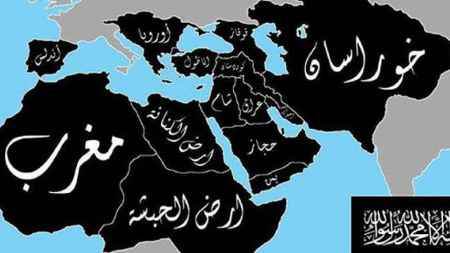
isis_revised_map_of-world_caliphate

There have been plenty of protests that Israel is “strangling” Gaza with its blockade. That Gaza is an “open air prison” or even a “concentration camp”. The truth is that Hamas is facing restrictions because it’s a terrorist organization that keeps trying to kill people.

The following letter published by Memri also reveals that it’s allied with ISIS in the Sinai is supplying guns and bombs to ISIS.

Anyone who calls for ending restrictions on Gaza is calling for more weapons to be transferred to ISIS. They are a traitor and a terrorist supporter in every possible sense of the word.

On February 24, 2016, a letter from an Islamic State (ISIS) fighter to ISIS leader Abu Bakr Al-Baghdadi was posted on social media. In it, the fighter strongly protests the close ties and cooperation between ISIS’s Sinai province and Hamas, particularly Hamas’s military wing.

The letter lays out a variety of Islamic objections to the problem that Hamas has not sworn allegiance to the Caliph of the Islamic State, making them apostates, but Hamas and ISIS in the Sinai nevertheless maintain a close working cooperation. It also lists some of the details of the cooperation between ISIS in the Sinai and Hamas.

“1. Sinai province is smuggling weapons for Hamas in Gaza, because of the province’s fighters’ expert knowledge of the [smuggling] routes from Libya, Sudan, and Egypt.

“2. Sinai province depends very much on Hamas and Al-Qassam for weapons and for explosives and ammunition. There are direct and continuous supply routes from Hamas to Sinai province. The Al-Qassam factories operate assembly lines for manufacturing explosive devices and bombs for the Sinai province, but do not stamp the Al-Qassam logo on them, as they usually do.

The Al-Qassam factories produce most particularly the rather famous Kassam rockets, but other weapons as well. So Hamas is supplying bombs for ISIS attacks on Egyptian forces (so you can see why Egypt has been cracking down so hard on Hamas), but it’s possible that some Hamas weapons filter beyond ISIS in Egypt to core ISIS as well. Certainly to ISIS in Libya.

This is a serious problem that merits investigation, much like the IEDs that Iran supplied to Jihadis in Iraq which killed so many American soldiers.

It also makes it clear that Gaza effectively functions as ISIS’ base in Israel.

“3. Sinai province leaders are regularly visiting the Gaza Strip, and holding cordial meetings with Hamas and Al-Qassam leaders, even [Hamas] government [representatives]. Animals are slaughtered for them, feasts are held, and they are embraced in Gaza.

“4. Hamas and Al-Qassam are accepting all wounded Sinai province [fighters], and they are treated in Gaza Strip hospitals under Al-Qassam’s direct protection.

“5. Hamas is providing wireless communication hubs for Sinai province, because of the difficulty of operating them in Sinai and because they are vulnerable to swift destruction by the Egyptian army.

So Hamas is providing medical care, weapons, communications, supplies and other military support functions to ISIS. It even supplies uniforms to ISIS

“Hamas manufactures the military uniforms for Sinai province – the uniforms we see, and over which we rejoice, in videos are from Hamas, oh our Sheikh Abu Bakr.”

This means that ISIS in Egypt becomes hard to beat without defeating Hamas.

And it means Obama engaged in back channel negotiations with an ISIS ally and that the man responsible for those negotiations, Robert Malley, is now Obama’s anti-ISIS czar.


Cartoon of the Day

March 3, 2016

Via The Jewish Press

Expulsion-Incentive

Treasury Department: Islamic State Building Base In Gaza Strip

February 25, 2016

Treasury Department: Islamic State Building Base In Gaza Strip; Using Palestinian Enclave to Recruit and Deploy Fighters

by Aaron Klein and Ali Waked24 Feb 2016

Source: Treasury Department: Islamic State Building Base In Gaza Strip

TEL AVIV – With little fanfare, the Treasury Department earlier this month imposed financial sanctions on three Islamic State leaders, including a jihadist from the Gaza Strip it said was central to recruiting and deploying foreign fighters and establishing an IS base inside Gaza.

The move highlights the growing threat of the Gaza Strip serving as a central headquarters for IS.

“Treasury and our partners worldwide are aggressively targeting ISIL’s ability to earn and make use of its money, and we are making progress on many fronts,” said Adam J. Szubin, Acting Under-Secretary for Terrorism and Financial Intelligence. Szubin said the new sanctions target “key ISIL leadership figures responsible for oil and gas production, foreign terrorist fighter recruitment and facilitation, and other financial facilitation.”

One of the three newly-sanctioned IS leaders is Gaza-based Salafi jihadist Husayn Juaythini. Treasury accused Juaythini of providing support and services to IS “by facilitating communications and the movement of foreign terrorist fighters and conducting financial activities in support” of the terrorist organization.

The Treasury profile of Juaythini stated that he was “the link” between IS Leader Abu Bakr al-Baghdadi and armed groups in Gaza, and “had money that he was using to build an ISIL presence in Gaza.”

The profile continued:

Juaythini traveled to Syria in September 2014 to pledge allegiance to ISIL and was tasked to return to Gaza and establish a foothold for ISIL there. …

Juaythini not only maintains ties with ISIL, but as of mid-2014 was deputy head of the extremist group and U.S.-designated SDGT Mujahidin Shura Council (MSC). In 2013, Juaythini attempted to acquire supplies for the MSC in the environs of Jerusalem to conduct attacks against Israel and help the group overcome financial difficulties.

He also worked with a Libya-based facilitator, who served as the primary money and weapons facilitator for Juaythini’s activities in Gaza. As of January 2015, Juaythini was instrumental in fostering connections between Gaza- and Libya-based terrorists, and facilitating their travel to Syria.

The Treasury Department also sanctioned Faysal al-Zahrani, a top oil official in Syria and IS recruiter and religious adviser Turki al-Binali.

Just last week, Breitbart Jerusalem reported a Palestinian jihadi militant had been killed while fighting for IS in Libya, the organization said.

Some 100 Palestinians have reportedly fought for IS in Syria, Iraq, and Libya.

Over the last three years, some 30 Gazans have been killed while fighting for IS in Syria and Iraq, and another four in Libya, including Abu Azra.

Aaron Klein is Breitbart’s Jerusalem bureau chief and senior investigative reporter. He is a New York Times bestselling author and hosts the popular weekend talk radio program, “Aaron Klein Investigative Radio.” Follow him on Twitter @AaronKleinShow. Follow him on Facebook.

 Israeli Defense Split on Turkey’s Gaza Port Demands

February 25, 2016

Israeli Defense Split on Turkey’s Gaza Port Demands

By: JNi.Media Published:

February 24th, 2016

Source: The Jewish Press » » Israeli Defense Split on Turkey’s Gaza Port Demands

Artist’s rendering of an offshore harbor and airport for Gaza, under Israeli control
Photo Credit: Minister Israel Katz Facebook page

Israeli negotiations with Turkey on renewal of full economic and diplomatic relations hinge, not surprisingly, on an area that isn’t part of Israel or Turkey, namely the Gaza Strip. Or, more to the point, the Turks insist that Israel must allow the Gazans to build a new port, having lived since 2007 under a tight Israeli blockade. With the Hamas’ track record on abusing whatever shipments Israel does allow through the border crossings, using cement to build terror tunnels instead of rehabilitating residential buildings that collapsed during the 2014 war, it’s obvious why Israel would resist such a demand. However, it appears that at least some in the IDF echo the Turkish sentiment, arguing that something must be done to alleviate the suffering of Gaza’s civilian population, and soon.

Military Intelligence chief Major General Hertzi Halevy on Tuesday told the Knesset Foreign Affairs and Defense Committee that the deteriorating economy in Gaza is liable to cause an explosion which would be turned against Israel. MKs who participated in the closed-door meeting told Ha’aretz that Halevy believes the rehabilitation of Gaza is going too slowly, and stresses that an economic improvement would be the best restraining measure against a new war.

But others in Israel’s security apparatus insist that “Whatever enters the Gaza Strip must undergo an Israeli check. If someone is eager to transport goods by sea, they are invited to bring them through the Ashdod harbor.” Responding to news earlier this week that Israel and Turkey are on the way to some agreement on a Gaza harbor, a source in the defense ministry told Walla that “we have no intention to turn a blind eye on anything that’s going into Gaza.”

Only a month ago Israel’s media reported that Hamas has rebuilt its attack tunnels that had been destroyed by the IDF in the summer of 2014, and that, according to IDF intelligence, some of those tunnels reach well into Israeli territory. Meanwhile, reports on the deterioration of the quality of life inside the Strip suggest most Gazans receive only 3 hours of electricity a day, and the Egyptian flooding of the smuggling tunnels reaching into the northern Sinai have eroded the quality of drinking water, especially in the southern Strip. How long, ask those who support the harbor plan, before the suffering population that has nothing to lose throws itself on the border fences, provoking a ghoulish clash with the Israeli military?

There are five alternatives being discussed by the Israeli leadership, to appease to Turks while helping the Gazans without harming Israeli security. One calls for the harbor to be built in El Arish, a sleepy Egyptian town in the north-western Sinai, which is under Egyptian rule. Another is the exotic idea of building an artificial island that would face the Gaza shore, where ships would unload their goods under strict Israeli control. There’s also an idea to build a Gaza harbor in Cyprus; and, of course, there’s the more intuitive idea of building the harbor in Gaza, but wrapping its operation tightly in long-term ceasefire deals. Naturally, as soon as Hamas starts shooting rockets at Israel, Israel could wipe out their nice harbor.

Defense Minister Moshe Ya’alon and most of the military brass are not impressed by any of the above, and continue to insist on delivering the shipments to Gaza the way God intended it to be done — through Ashdod. They boost their position by regularly releasing stories about the frightening things the customs officials are discovering in those shipments — and they’re not making anything up, there’s a hangar down in Ashdod, packed with an arsenal of cleverly concealed weapons and explosives, chemicals and poisons, and, most recently, toy drones.

The Shabak is also against the harbor in Gaza, but for a different reason: they fear that a Palestinian harbor in Gaza would erode the standing of Mahmoud Abbas or his replacement, and permanently dismantle the separation between Gaza and the PA.

Unless the Turks give up on their Gaza harbor principle, this debate is not likely to just fade away. Gazans are paying for their terrible mistake of voting Hamas into power ten years ago, Hamas is there to stay — but can Israel afford to let those Gazan civilians continue to suffer? Perhaps now would be a good time to put into action one of those programs that advocate paying local Arabs to immigrate to better places. At this point it probably won’t require that much money.

Erdan: IDF plan for peace talks is ‘infuriating’

February 23, 2016

Erdan: IDF plan to beat terror with peace talks is ‘infuriating’ Internal Security Minister discusses IDF Intelligence head’s call for ‘diplomatic process,’ noting periods of peace talks more lethal.

By Ido Ben-Porat

First Publish: 2/23/2016, 3:28 PM

Source: Erdan: IDF plan for peace talks is ‘infuriating’ – Defense/Security – News – Arutz Sheva

Minister Gilad Erdan
Flash 90

Internal Security Minister Gilad Erdan (Likud) on Tuesday denied that IDF Intelligence Corps head Maj. Gen. Herzl (Herzi) Halevi told the Security Cabinet the Arab terror wave will expand if peace talks aren’t launched with the Palestinian Authority (PA).

Halevi appeared at the Security Cabinet on January 24 together with other senior Intelligence Corps officials to deliver the annual intelligence appraisal for 2016, before delivering it again Tuesday to the Knesset’s Foreign Affairs and Defense Committee, according to Channel 10 reports on Monday night.

The report alleged that Halevi told the Cabinet a “diplomatic process” with the PA is the only way to stop the terror wave, as he claims the military has largely done all it can. If peace talks are not advanced, he stated additional forces will join the terror wave, including the Tanzim terror group, which is the “armed wing” of PA Chairman Mahmoud Abbas’s Fatah faction.

“I sat in many meetings that he (Halevi) took part in. I never heard him say something like that,” Erdan told Army Radio on Tuesday, denying the reports.

“If something like that was said in a briefing for military correspondents, I think that’s an infuriating statement because we remember the days of a diplomatic process, in which the attacks and the terror were much stronger.”

Erdan’s statement would appear to be a reference to the 1994 Oslo Accords, in which Israel supplied the newly created PA and its Security Forces with weapons. The Accords led to the 2000 Second Intifada or Oslo War, in which over 1,000 Israelis were murdered; PA officials later bragged that 70% of the attacks were conducted by PA Security Force members.

In the current wave as well a number of the terrorist attackers have been identified as PA policemen.

Erdan also spoke about returning the bodies of terrorists, a move he has generally opposed as a deterrence factor so as to avoid massive funerals encouraging more attacks.

“Since our last talk I think one or two bodies were returned. The reason no one heard about it is because the families agreed to cooperate with the police and hold a respectable funeral…not one with incitement or support for the act of terror that the terrorist conducted,” he said.

“We have no interest in holding these bodies, rather (we do it) simply because we are in a wave of terror in which the glorification of the ‘martyr’ and the imitation by his friends is an integral part. We are not prepared for things like this to happen in funerals and possibly even bring about additional attacks.”

Trump: Israel Is Victim In Conflict With Palestine, If Attacked ‘100% I’d Come to Their Defense’

February 23, 2016

Trump: Israel Is Victim In Conflict With Palestine, If Attacked ‘100% I’d Come to Their Defense’

by Ian Hanchett

23 Feb 2016

Source: Trump: Israel Is Victim In Conflict With Palestine, If Attacked ‘100% I’d Come to Their Defense’ – Breitbart


Republican presidential candidate Donald Trump stated that he sees Israel as the victim in the Israeli-Palestinian conflict and he would “100%” come to its defense if it was attacked in an interview broadcast on Monday’s “Hannity” on the Fox News Channel.

Trump was asked about his comments that he would be “neutral” in the conflict between Israel and Palestine, and whether he sees “that Israel is the victim in this?” Trump said that he does and that he’s “a great friend of Israel.”

He added that making a deal between Israel and Palestine would be “the ultimate deal” if it was possible, and “I have been told by people, very high level people, it’s impossible, because the hatred, especially on the one side, I won’t even say which side –”

After host Sean Hannity cut in with, “On the Palestinian side.” Trump continued, “is so intense. It’s so incredible, and from the time they’re 2 years old they’re told to hate, to hate, to hate. It’s got to be taken away.”

Trump concluded that if Israel was attacked, “100% I’d come to their defense. 100%. Now, you know that under the Iran deal… but under the Iran deal, if Israel ends up attacks Iran because they’re — they see they’re doing the nuclear, or if it’s the other way around, we have to fight with Iran. By the way, that’s not happening, folks. I don’t care. Deals are meant to be broken in some cases, all right?”

Saudi Arabia, Yemen and the Politicized UN

February 16, 2016

Saudi Arabia, Yemen and the Politicized UN, Gatestone InstituteRichard Kemp and Jasper Reid, February 16, 2016

♦ The UN’s assertion that the Saudi-led coalition has committed war crimes in Yemen is unlikely to be true. UN experts have not been to Yemen, depending instead on hearsay evidence and analysis of photographs.

♦ The UN has a pattern of unsubstantiated allegations of war crimes against the armed forces of sovereign states. Without any military expertise, and never having visited Gaza, a UN commission convicted the Israel Defense Force of deliberately targeting Palestinian civilians in the 2014 conflict. It was an assessment roundly rejected by America’s most senior military officer, General Martin Dempsey, and an independent commission.

♦ The Houthis have learned many lessons from Hamas and Islamic Jihad in Gaza, groups also supported by Iran. Those lessons include the falsification of civilian casualty figures and their causes. The UN swallowed the fake Gaza figures hook, line and sinker, and are now making the same error in Yemen.

♦ The Houthis exploit gullible or compliant reporters and human rights groups to facilitate their propaganda, including false testimony and fabrication of imagery.

♦ Forensic analysis shows that rather than deliberately targeting civilians, the Saudis and their allies have taken remarkable steps to minimize civilian casualties.

The United Nations, Amnesty International and other groups have accused the Saudi-led coalition of war crimes in Yemen. A leaked UN report claims the bombing campaign against Iranian-supported Houthi insurgents seeking violently to topple the legitimate government of Yemen has conducted deliberate, widespread and systematic attacks on civilian targets.

If the UN’s assertion is true, and the coalition is deliberately and disproportionately killing thousands of innocent civilians, it is a war crime. But it is unlikely to be true. The UN has produced no actual evidence of war crimes. None of their allegations is based on investigation on the ground. Their experts have not been to Yemen, depending instead on hearsay evidence and analysis of photographs.

The UN has a pattern of unsubstantiated allegations of war crimes against the armed forces of sovereign states. Only last year, without any military expertise, and never having visited Gaza, a UN commission convicted the Israel Defense Force of deliberately targeting innocent Palestinian civilians in the 2014 conflict. It was an assessment roundly rejected by America’s most senior military officer, General Martin Dempsey, the Chairman of the Joint Chiefs of Staff.

Dempsey’s own findings were confirmed by an independent commission of experienced senior military officers and officials from nine countries. The High Level Military Group found that Israel had not committed war crimes, but had in fact set a bar for avoiding civilian casualties so high that other armed forces would struggle to reach it.

Moreover, last September the UN said that a US airstrike against a hospital in Kunduz, Afghanistan, was “inexcusable” and “possibly a war crime.” Few military forces in the world take greater precautions to prevent civilian casualties on the battlefield than the US. Anyone who has actually experienced combat knows that while such incidents are tragic, when carried out by Western forces, they are far more likely to be the result of human error or the chaos of battle than deliberate war crimes.

There is every reason to believe that the UN is again crying wolf. There is no doubt that thousands are dying in Yemen in horrific circumstances. But we cannot just accept the UN’s figures and its attribution of the proportion of deaths being inflicted by the Saudi coalition. Most of the data comes from the Houthi insurgents, either directly or via non-governmental organizations (NGOs), and is simply accepted as fact. The Houthis have learned many lessons from Hamas and Palestinian Islamic Jihad in Gaza, groups also supported by Iran. Those lessons include the falsification and distortion of civilian casualty figures and their causes. The UN swallowed the fake Gaza figures hook, line and sinker, and are now making the same error in Yemen.

As with Israel’s defensive campaign in Gaza in 2014, and the continued U.S. military support to the Afghan regime, the Saudis’ war to defend the government of Yemen and curb Iranian aggression in the region is lawful and legitimate. Therefore, the illegality of civilian deaths must be assessed according to the laws of armed conflict, in particular whether adequate precautions were taken to avoid them, whether they were proportionate to the military objectives and whether they were necessary to achieve legitimate military goals. The UN cannot possibly make such judgements without a more far-reaching and thorough investigation, and especially not on the basis of information provided by Saudi Arabia’s enemies and by interpreting photographs.

Most of us do not like the way that the Saudi regime runs their country according to the strict application of Islamic Sharia law, and we abhor their record on human rights. But the Saudi military ethos is well known and understood by Western military leaders, including from the U.S. and UK, who have worked closely with them for many years. The reality is, as our officers currently serving alongside them will attest, that the Saudis and their allies are not deliberately trying to kill innocent civilians. Indeed, they are doing their best to minimize civilian casualties. The question is whether their best is good enough.

Saudi Arabia and its coalition allies have the most sophisticated Western combat equipment, including planes, attack helicopters, drones and precision-guided munitions. But they lack battle experience. The exception to this is the Emirati forces within the coalition. They have had many years of combat experience alongside Western militaries, including in Somalia, Kosovo, Libya and Afghanistan. Because of that, they have acquitted themselves in Yemen with great professionalism and effectiveness at sea, on the ground and in the air.

But the lack of experience of the other coalition members puts them many years behind our own forces in wielding the highly complex 21st century capabilities of intelligence, surveillance, reconnaissance, communication and targeting.

Yet the coalition faces the same tough challenges that we face on battlefields everywhere. Their Houthi adversaries fight according to the well-developed doctrine of their backers, the Iranian Quds Force. Like Hizballah, Hamas, the Taliban, Al Qaeda and the Islamic State, their techniques include deliberately killing civilians, fighting from within the population and forcing innocents to become human shields.

1474

Completely ignoring the laws of war, they exploit their enemies’ adherence to them. They lure their opponents to attack and kill civilians. They exploit gullible or compliant reporters, international organizations and human rights groups to facilitate their propaganda, including false testimony and systematic fabrication of imagery. The aim is to instigate international condemnation in order to constrain their militarily superior enemies.

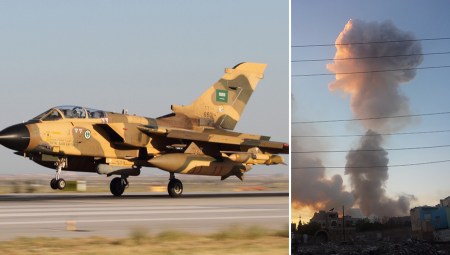
We have seen credible forensic analysis of strikes in Yemen that directly contradict the findings of the UN. Forensic analysis shows that rather than deliberately targeting civilians, the Saudis and their allies have taken remarkable steps to minimize civilian deaths. Of note, they have learned much from Israel’s conduct of operations in Gaza. This has included the use of guided munitions to conduct precision attacks against insurgents while seeking to reduce collateral damage.

Why would coalition forces spend vast amounts of money in a cripplingly expensive conflict firing precision strike munitions, and put their valuable pilots at risk, if they wanted to massacre civilians? Why not use much cheaper unguided munitions or Assad’s indiscriminate barrel-bombs?

The overwhelming majority of civilian deaths caused by the Saudi-led coalition have been due not to deliberate targeting, but to inexperienced pilots and unsophisticated intelligence and targeting capabilities in the face of an enemy that fights from within the civilian population. And to that the friction, confusion, stress and fog of war that leads even the most sophisticated, experienced and restrained military forces, such as American, British and Israeli, to sometimes kill civilians unintentionally. Contrary to the UN’s claim, this is unlikely to amount to war crimes.

Like every conflict in the Middle East, the war in Yemen is almost intractable, takes a heavy toll on innocent civilians, and is unlikely to end in anything approaching a perfect solution. But Saudi Arabia and its allies are making considerable efforts to restore stability to the country and its legitimate government.

Instability in Yemen undermines Western interests, including oil supplies. Instability also allows Al Qaeda and the Islamic State — proven and lethal threats to the US and the West — to flourish there.

By confronting the Houthis in Yemen, Saudi Arabia is also confronting Iran, which represents an even greater threat to the region and to the world. Emboldened by U.S. President Barack Obama’s nuclear deal, enriched by the release of billions of dollars of previously frozen funds, encouraged by the imminent boost in oil revenues, Iranian imperial aggression is today rampant in Iraq, Syria, Lebanon and Yemen.

However unpalatable to many, Saudi Arabia is and will remain a vital ally of the West. We must continue to support them in the fight in Yemen. We must not allow the false, ill-informed and increasingly shrill condemnations by the UN, human rights groups and the media to undermine Saudi’s fighting effectiveness as they have sought to do against other legitimate government forces fighting lawless insurgents in so many other places.