Posted tagged ‘Gaza’

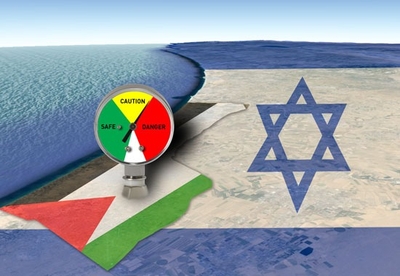
Let’s Create a Real Palestinian State

April 14, 2016

Let’s Create a Real Palestinian State, Front Page Magazine, Daniel Greenfield, April 14, 2016

lets_create_a_real_palestine_state

A Palestinian state has never existed during any period in human history. Let’s change that.

The United States has spent billions of dollars trying to create a Palestinian state. It’s time that we finally got our money’s worth. We’ve been putting money in the broken Palestinian slot machine in the metaphorical Palestinian casino (the real one was shot up when terrorists turned it into a base) for decades. It’s time to finally get our Palestinian jackpot. But to make it happen, we need to be realistic.

Forget the peace process. Forget negotiations. They’ve never worked before. They’re not going to now.

And there’s nothing to negotiate anyway.

There are almost a million Jews living on territory claimed by the PLO. Removing them would be the single greatest act of ethnic cleansing against an indigenous population today. It would also be impossible. But the same people who insist that the United States, a country of 318 million, can’t deport 11 million illegal aliens, think that Israel will somehow deport 1/8th of its own population if they just chant loudly enough about “occupation” outside Jewish businesses in London or San Francisco.

Ethnically cleansing 8,000 Jews from Gaza/Gush Katif led to nationwide civil disobedience, riots and, eventually, the fall of a political party and three straight terms for Prime Minister Netanyahu. Now imagine trying to deport 800,000 people from their homes simply because they’re Jewish.

And it wouldn’t just be the Jews alone being rounded up into trucks, buses and maybe boxcars.

52 percent of Arabs in East Jerusalem would rather be Israeli citizens than live under the PLO. Are we supposed to deport 100,000 Arabs from Jerusalem to make way for this imaginary “Palestinian” state?

How much ethnic cleansing do we have to do to make the Islamic colonial fantasy of Palestine real?

It’s not going to happen.

Let’s create a real Palestinian state instead. And I don’t mean the PLO’s President for Life Mahmoud Abbas going down to the UN to give another speech. Abbas is on his 11th year of a 4-year term.  The US spent $4.5 billion promoting “Palestinian democracy” and the last PLO election was ten years ago.

Hamas won. It would win today all over again.

Current polling shows that 2/3 of “Palestinians” want Abbas to resign. Abbas has no political authority to form a Palestinian state, a Palestinian shawarma stand or a Palestinian anything.

If there’s going to be a Palestinian state, it has to be based on the will of the people. That means it will be a Hamas state. A Palestinian state that is not based on the will of its people has no legitimacy. The only legitimate Palestinian state is therefore a Hamas terror state.

And that’s the only kind of state you can have when 2/3 of “Palestinians” support stabbing Israeli civilians, 89% want to live under an Islamic State run by Sharia law, 84% want to stone adulterers to death and 66% support killing any Muslim who leaves Islam.

Only an Islamic terror state can truly represent the homicidal aspirations of the Palestinian people.

Is this some sort of sick joke? Yes it is. But it’s not my sick joke. It’s the sick joke that is Palestine. Now let’s begin the process of turning this sick twisted joke into its own state.

The first thing to do is dismantle the UNRWA, a UN agency specifically dedicated to catering to “Palestinians”. The UNRWA is one of the key elements of the Palestinian welfare state. And the US kicks in around $300 million to the organization which fulfills many of the functions of a state. But a state doesn’t need its own refugee agency. And a Hamas terror state doesn’t need a further $350 million dollars in US foreign aid to promote “democracy” and improve its infrastructure and institutions.

This is going to be a problem because the imaginary Palestinian state also has a fantasy economy. The largest employer in the Palestinian Authority is the Palestinian Authority. Most of its money comes from America, Europe, Israel and, for some inconceivable reason, Japan.

The terror state gets its electricity from Israel. It gets its water and internet through Israel.

So let’s get a clear look at what a real Palestinian state would look like. It would be Gaza writ large. But without the UNRWA and the rest of the NGOs lining up to provide jobs and social services. It would be an “open air prison”, as anti-Israel activists screech of Gaza, but a prison created and maintained by the inmates. It would be constantly at war with Israel and the rest of the world. The way it is now.

The economy will be a thinly disguised feudal system of Islamists with engineering degrees in mansions paying starvation wages to laborers to harvest olives to be shipped to China. There will be shopping malls for some and little shacks on the edges full of smugglers, drug labs and brothels for everyone else.

That’s the Islamist dream.

Palestine’s political system will consist of Hamas and more Hamas. Or maybe once the Hamas alliance with ISIS in the Sinai lapses, there will finally be a democratic election between Hamas and ISIS to decide just how horrible of a place the misshapen slices of Gaza and the West Bank under terrorist occupation will become. Nothing will function except the religious police and the gallows in the dusty squares.

There will be wars every two years. That will be just long enough to rebuild the hospitals, mosques and schools that were being used as launch sites in the last wars. In between the big wars, the terrorist groups, Hamas factions, ISIS, Islamic Jihad and anybody else, will fight each other in the streets.

It will be glorious.

Imagine the last few decades of terror, bombings, missile strikes, firefights, corruption, thievery and utter dysfunction made into a permanent state of affairs. That’s Palestine. That’s the two-state solution. Just don’t ask what it solves except the Middle East’s severe shortage of terrorist states and terrorists.

If you will it, it is no dream. This nightmare already exists and it can be a real country. It already has an anthem, a flag, no elections and no reason to exist except killing everyone else. It’s a foreign aid funded ISIS with more olive harvests and a more robust campus presence.

Everyone talks about creating a Palestinian state, but no one actually wants to do it.

It’s time for Palestine to stop being a pipe dream full of pipe bombs that we spend billions of dollars on. Just pull out a seat at the UN, hold democratic elections and then step away from the explosions.

A real two-state solution is just that simple. And it can happen tomorrow.

Let’s stop fantasizing about peace. Peace and Palestine go together like oil and water. This is what a real Palestinian state would look like. And the moment it comes into being, any possibility of peace dies.

Hamas’s New Way of Poisoning the Minds of Palestinian Children

April 9, 2016

Hamas’s New Way of Poisoning the Minds of Palestinian Children

by Khaled Abu Toameh

April 8, 2016 at 5:30 am

Source: Hamas’s New Way of Poisoning the Minds of Palestinian Children

  • The preachers, who belong to the Hamas-controlled Wakf (Islamic trust) Ministry in the Gaza Strip, enter schools and ensure, through the exorcism rite, that the children are repentant and faithful to Islam.
  • These are the children who are later recruited as “warriors” in the jihad against Israel and the “infidels.”
  • The Gaza City school video captures on camera the Palestinian leaders’ brainwashing and abuse of their own children.
  • Now the peace process in the Middle East awaits an exorcism of its own.

Hamas has spent years poisoning the hearts and minds of Palestinian children. The Islamist movement is now trying a new brainwashing tactic: exorcism.

The practice, which aims to cast out “demons” that might have wormed their way into the children’s souls, has shocked many Palestinians.

This newest Hamas-perpetrated child abuse was exposed in a video that was leaked to Palestinian social media. The cruelty of the behavior has caused an uproar among Palestinians.

The video shows hysterical children in the company of exorcising preachers belonging to the Hamas-controlled Wakf (Islamic trust) Ministry in the Gaza Strip. This humiliating and invasive rite is being practiced at the Al-Nil School in Gaza City.

Three boys cry as they undergo an exorcism ritual at the Al-Nil School in Gaza City, performed by preachers belonging to the Hamas-controlled Wakf (Islamic trust) Ministry.

The preachers belong to a group called The Ship of Missionary Salvation. They enter schools in the Gaza Strip and ensure, through the exorcism rite, that the children are repentant and faithful to Islam.

The group is managed by the Wakf Ministry’s General Administration for Preaching and Guidance.

Thriller movies come to mind as the video unfolds, shedding light on the nature of religious indoctrination performed by Hamas on schoolchildren in the Gaza Strip.

One of the Hamas preachers is heard in the video declaring that, “We did not come to enact a theater scene, but to expel the devil from the hearts and minds and enter the satisfaction of Allah into hearts.”

The video features terrified teenagers kneeling in the school yard, while others are crying out loudly. At the same time, the Hamas preachers hold microphones and shout the Islamic battle cry, “Allahu Akbar!” [“Allah is Great!”].”

The Hamas abuse of schoolchildren is far from new, and far from a surprise to those who have long been following the Islamist movement in Gaza. These are the children who are later recruited as “warriors” in the jihad (holy war) against Israel and the “infidels.”

Since its violent takeover of the Gaza Strip in 2007, Hamas has been using children as human shields and “soldiers” in the fight against Israel. Children dressed in military uniforms and brandishing automatic rifles and knives have become an integral part of Hamas’s military parades and rallies.

Caught on camera, Palestinian children are taught to hate those who are perceived as enemies of Islam. This is how new generations of Palestinians are raised on the glorification of suicide bombers and jihadists.

PLO Executive Committee member Hanan Ashrawi expressed revulsion over the video, noting that the preachers’ sermons were full of intimidation and horror. This behavior, Ashrawi, stated, demonstrates the “reactionary nature” of the Hamas regime in the Gaza Strip, which would have a negative impact on the development of society and the values of Palestinians. Ashrawi also denounced the practice as a blatant violation of conventions protecting children rights.

Even the Marxist terrorist group, the Popular Front for the Liberation of Palestine (PFLP), has come out against the video. The group voiced outrage at the “inhumane practices” against the children and called for an immediate inquiry into this form of mental torture and degradation. The group also warned against brainwashing the children and indoctrinating them through religious bigotry.

The Gaza City school video captures on camera the Palestinian leaders’ brainwashing and abuse of their own children.

It also captures the march of Palestinian society towards endorsing the tactics and ideology of radical Islam and groups such as ISIS and Al-Qaeda. Now the peace process in the Middle East awaits an exorcism of its own.

Khaled Abu Toameh, an award-winning journalist, is based in Jerusalem.

Report: Hamas taps over 1,000 terror operatives to dig Gaza tunnels

April 8, 2016

Report: Hamas taps over 1,000 terror operatives to dig Gaza tunnels, Jerusalem Post, Staff, April 7, 2016

A Palestinian fighter from the Izz el-Deen al-Qassam Brigades, the armed wing of the Hamas movement, gestures inside an underground tunnel in Gaza August 18, 2014. A rare tour that Hamas granted to a Reuters reporter, photographer and cameraman appeared to be an attempt to dispute Israel's claim that it had demolished all of the Islamist group's border infiltration tunnels in the Gaza war. Picture taken August 18, 2014. REUTERS/Mohammed Salem (GAZA - Tags: POLITICS CONFLICT TPX IMAGES OF THE DAY) - RTR42YJW

A Palestinian fighter from the Izz el-Deen al-Qassam Brigades, the armed wing of the Hamas movement, gestures inside an underground tunnel in Gaza August 18, 2014. A rare tour that Hamas granted to a Reuters reporter, photographer and cameraman appeared to be an attempt to dispute Israel’s claim that it had demolished all of the Islamist group’s border infiltration tunnels in the Gaza war. Picture taken August 18, 2014. REUTERS/Mohammed Salem

Hamas employs more than 1,000 operatives to excavate underground tunnels in the Gaza Strip, Israel Radio reported Thursday.

According to the report, the terrorist organization invests hundreds of thousands of dollars each month in the digging activities, paying each operative engaged in the process some 300 to 400 dollars a month.

Hamas also heavily invests in smuggling building materials, including raw materials and excavation machinery from Egypt and Israel.

To prepare for a possible future incursion with Israel, the Palestinian terrorist organization’s elite ‘Nukhbah’ unit carries out drills practicing different scenarios simulating offenses in the tunnels near the border fence with Israel. Several of the members of the unit have been killed in recent months in tunnel collapses in the coastal Palestinian enclave, according to the Israel Radio report.

The report cited Israeli officials as saying that the funds Hamas uses to invest in rebuilding its network of underground passageways could instead be used to construct full neighborhoods in the Strip.

Earlier this week, Israel temporarily suspended the delivery of cement to Gaza’s private sector after it discovered that Hamas was siphoning the material, which is intended to rebuild destroyed houses.

The Office of the Coordinator of Government Activities in the Territories (COGAT) monitors the flow of cement into Gaza to ensure that Hamas has not used it to construct tunnels to attack Israel.

On Friday, COGAT posted on its Arabic Facebook page that it suspended the transfer of cement to Gaza because some deliveries had been diverted by Imad Elbaz, the deputy director-general for Hamas’s economics office.

The Hamas deputy political bureau chief, Ismail Haniyeh, vowed in February  that his group will never stop digging tunnels and upgrading rockets in preparation for any possible confrontation with Israel.

During the Operation Protective Edge in 2014, the IDF said it had destroyed all the known terror and infiltration tunnels in Hamas’s vast subterranean network .

In March, The Jerusalem Post learned from Palestinian sources that some of the terror operatives digging the tunnels believed Israel was involved in at least some of the various recent tunnel collapses that claimed the lives of several Hamas men.

Official reports from Gaza described the various collapses in recent months as “work accidents” or being caused by flooding from heavy rains; however there are many who believe Israel is responsible.

Palestinians: Presidents for Life, No Elections

April 1, 2016

Palestinians: Presidents for Life, No Elections, Gatestone InstituteKhaled Abu Toameh, April 1, 2016

♦ We hear often that Mahmoud Abbas is keen on having Palestinians vote in a democratic election. Yet Abbas turned 81 last week and appears ready to remain at the helm until his last day — free elections for Palestinians be damned. That makes sense: Hamas could easily best Abbas in such an election.

♦ Hamas and Abbas’s Fatah are still far from achieving any form of reconciliation. This, despite all the talk about “progress” that has been reportedly achieved in talks between the two parties taking place in Doha, Qatar.

♦ Hamas is also cracking down on journalists, academics, unionists and even lawyers in the Gaza Strip.

♦ Yet Abbas’s West Bank rivals Hamas in Gaza, in terms of a lack of human rights and freedom of speech. The idea of free and democratic elections there is a joke. Abbas will leave a legacy of chaos.

Best birthday wishes to Palestinian Authority (PA) President Mahmoud Abbas, who turned 81 last week. The octogenarian appears ready to remain at the helm until his last day — free elections for Palestinians be damned.

Abbas has inherited a tradition of tyranny. His predecessor, Yasser Arafat, was also president for life. Both have plenty of company, joining a long list of African presidents who earned the notorious title of “President for Life” – in Uganda, Equatorial Guinea, Angola, Zimbabwe, Sudan, Chad, Eritrea and Gambia. And let us not forget the Arab dictators in these ranks.

One might hope for at least a deputy — someone to fill the impending and inevitable power vacuum in the PA. Not likely.

Abbas has fiercely resisted demands from leaders of his ruling Fatah faction to name a deputy president or a successor. His reasoning: the time is not “appropriate” for such a move. Palestinians should instead concentrate their energies on rallying international support for a Palestinian state.

The PA president acquired his “private fiefdom,” as it is called by his detractors, in a January 2005 election, when Abbas was given a four-year mandate.

Such mandate seems to have been rewritten by the standing president. January 2016 marked the beginning of the eleventh year of Abbas’s four-year term in office. But it is business as usual in Ramallah.

We hear on a monthly basis that Abbas is keen on having Palestinians cast their ballots in a free and democratic vote. Yet we have seen no evidence to this effect. That make sense: Hamas could easily best Abbas in such an election. Despite his advancing age, Abbas still has clear memories of January 2006, when Hamas was permitted to run in the parliamentary election and won.

Abbas is also acutely aware that Hamas, which holds hostage nearly two million Palestinians in the Gaza Strip, would never allow a free vote there — especially for Abbas loyalists who have been seeking to undermine its rule.

Just a few days ago, a Hamas “military” court in the Gaza Strip sentenced two senior Palestinian Authority security officers, Sami Nisman and Naim Abu Ful, to 15 and 12 years in prison respectively, on charges of spying for the Palestinian Authority and plotting terror attacks against Hamas targets.

The verdicts are yet another sign that Hamas and Abbas’s Fatah are still far from achieving any form of reconciliation. This, despite all the talk about “progress” that has been reportedly achieved in talks between the two parties. Unconfirmed reports earlier this week leaked details of sticking points between Hamas and Fatah negotiators, have been meeting in Doha, Qatar, under the auspices of the Gulf state, towards forming a new unity government and holding new presidential and parliamentary elections. Qatar is the largest source of funds for the Muslim Brotherhood and its offshoot, Hamas.

Abbas’s fear of holding elections in the Gaza Strip is not without justification. In addition to the crackdown on his loyalists and security officers there, Hamas is also cracking down on journalists, academics, unionists and even lawyers.

Last week, Hamas security forces raided the offices of the Palestinian Bar Association in Gaza City and confiscated computers. The raid came as a result of the controversy surrounding the Bar Association not submitting lawyers’ financial and administrative records, in addition to complaints filed by some lawyers against the Bar Association, according to a statement released by the Palestinian Center for Human Rights (PCHR). The raid, some Palestinians claim, is in the context of Hamas’s effort to crack down on lawyers who are affiliated with the rival Fatah faction.

Yet Abbas’s West Bank rivals Hamas in Gaza, in terms of a lack of human rights and freedom of speech. The president’s security forces are in the midst of a massive and ongoing crackdown on political opponents of all stripes, making the idea of free and democratic elections there a joke. Abbas cannot tolerate the idea of having a deputy: how would he consider the establishment of a new party or the emergence of a potential candidate for the presidency.

Senior figures who have dared to challenge Abbas’s autocratic rule have already found themselves targeted by the president and his men. Ask former Prime Minister Salam Fayyad, who had his organization’s bank accounts seized by Abbas, or Mohamed Dahlan, the former Fatah commander and minister who was forced to flee the Palestinian territories after falling out with Abbas and his sons. Perhaps deposed PLO Secretary-General Yasser Abed Rabbo, who overnight was stripped of his powers and thrown to the dogs for speaking out against the president, would have a word to say. In Ramallah, they call them the “Abbas victims.”

909Palestinian Authority President Mahmoud Abbas (left), who turned 81 last week, has fiercely resisted demands from leaders of his ruling Fatah faction to name a deputy president or a successor. Senior figures who have dared to challenge Abbas’s autocratic rule have been targeted by the president — such as Mohamed Dahlan (right), the former Fatah commander and minister who was forced to flee the Palestinian territories after falling out with Abbas and his sons. (Image sources: U.S. State Dept., M. Dahlan Office)

We would need a crystal ball to know what will happen the day after Abbas disappears from the scene. Perhaps, say some, we shall witness a scene reminiscent of the old days of the Soviet Union “Politburo,” with the next president chosen by a group of Fatah and PLO leaders who will meet in Ramallah. This seems the most likely scenario, in the absence of any chance of free and democratic elections, and in light of the continued split between the two Palestinian entities in the West Bank and Gaza Strip.

We do not need a crystal ball, however, to know that Abbas will leave a legacy of chaos. His adamant refusal to name a deputy or even discuss the issue of succession in public has already created tensions among the top brass of the PLO and Fatah. The Palestinian public, for its part, has precious little confidence in its leaders.

The behind-the-scenes power struggle that has been quietly raging in Ramallah for the past few months is likely to lead to a state of paralysis in the Palestinian arena and leave the Palestinians without an acceptable leader. Or, as senior Fatah official Tawfik Tirawi put it, Abbas will be the last president for the Palestinians.

Palestinians are plagued with leaders who desire one thing: personal power. The Palestinians are marching away from achieving a state, partly because they seem incapable of the fundamental political principle of free and democratic elections. The day after does not look promising.

The Gaza Time Bomb

March 30, 2016

The Gaza Time Bomb, Investigative Project on Terrorism, Yaakov Lappin, March 30, 2016

1161

On the surface, the Gaza Strip looks relatively calm, with few security incidents occurring since the end of the protracted 2014 summer conflict between Hamas and Israel.

Behind the scenes, pressure within the Islamist-run enclave is gradually building again, just as it did prior to the 2014 war.

Gaza’s civilian population is hostage to Hamas’s dramatically failed economic policies, and its insistence on confrontation with Israel, rather than recognition of Israel and investment in Gaza’s economic future.

Ultimately, the civilian-economic pressure cooker in Gaza looks likely to explode, leading Hamas to seek new hostilities with Israel, for which it is preparing in earnest.

Right now, Hamas remains deterred by Israel’s firepower, and is enforcing its part of the truce. Hamas security forces patrol the Strip’s borders to prevent Gazans from rioting, to stop them from trying to escape Gaza into Israel, and to stop ISIS-affiliated radicals who fire rockets at Israel.

Hamas is using the current quiet to replenish its rocket arsenal, dig its combat tunnel network, and build up sea-based attack capabilities. It is investing many resources in cooking up new ways to surprise Israel in any future clash. These efforts have not gone unnoticed by the Israel Defense Forces (IDF).

Hamas has not fired a single rocket into Israel since August 2014, but it encourages violence in the West Bank as part of a strategy to destabilize its Palestinian rival, the Fatah-led Palestinian Authority. Hamas in Gaza also works remotely to set up and orchestrate terrorism cells in the West Bank, while plotting way to overthrow Fatah from power. The Shin Bet, Israel’s domestic intelligence agency, has successfully foiled nearly all of these efforts thus far, saving many Israeli lives, and the PA’s rule, too.

A deeper look at processes under way in Gaza reveals why the status quo seems untenable in the long run. Thirty percent (910,000) of Gaza’s population of 1.85 million are aged 15 to 29, and out of these, 65 percent are unemployed. This represents one of the highest unemployment rates for young people in the world. Many are university educated and deeply frustrated. The overall unemployment rate in Gaza is 38.4 percent, and rising steadily. Eighteen thousand Gazan university students graduate every year. Most of them have nothing to do with their degrees, and return home to a life of idle unemployment. Many Gazans dream of leaving. The suicide rate is growing. Under Hamas’s rule, these young people see no change on the horizon.

Out of the total population of Gaza, 1.3 million receive assistance from United Nations aid workers, without which, a humanitarian crisis would likely ensue.

Those who dare complain, such as Gazan bloggers, find themselves whisked away into Hamas police custody, where they receive firm warnings to remain silent, or else.

Meanwhile, the Gazan population is growing at an unsustainable rate. Since Israel pulled out all of its soldiers and civilians in 2005, 600,000 Gazans have been born. This is a generation that has never been to Israel (unlike the older Gazans), and its only experience of Israel is through air force missiles fired at Hamas targets following clashes sparked by the jihadist regime’s military wing.

Many of these young people are exposed to the propaganda of Hamas’s media outlets, like the Al-Aksa television station, which is a major source of incitement. Some are also exposed to the wider world through the Internet, and are aware that life can be different for them.

By 2020, Gaza’s population will hit 2.3 million people. It could run out of drinking water. This might prompt a civilian revolt, which could push Hamas into starting a new war with Israel to distract attention.

To try to relieve the pressure, Hamas leaders make promises that they cannot keep, such as the setting up of a sea port, and the opening of the Rafah crossing with Egypt, which the anti-Hamas Egyptian government opened just 18 times in 2015 for fear of allowing jihadists in Gaza to pour into the restive Sinai Strip.

A Hamas delegation traveled to Egypt earlier this month to try to mend relations with the Cairo government. The effort resulted in failure, after Egyptian officials accused Hamas of failing to acknowledge its collaboration with the ISIS-affiliated Sinai Province insurgents.

Changes are underway within Hamas itself, which are causing the Izzadin Al-Qassam Brigades military wing to gain power at the expense of the political wing, which is led by Ismael Haniyeh.

Yiyhe Sinwar is a senior Hamas member with growing power, operating in the gray zone between both wings. He is close to military wing chief Muhammed Def, and to Haniyeh. Sinwar’s power represents the rise of military wing’s influence, where many members are finding their way into political elite positions in Gaza.

Marwan Isa is another senior Hamas member, influential to both wings. While the political wing has, behind closed doors, been hesitant to support the military wing’s disastrous adventures against Israel, its ability to veto future attacks may vanish.

Additionally, Hamas is running out allies as it did before the 2014 war.

Iran continues to fund its military wing, as well as Palestinian Islamic Jihad. Yet Tehran’s ability to traffic weapons into Gaza has been ruined by Egypt’s tunnel demolition drive.

Iran’s overall influence on Gaza, therefore, is limited.

The Muslim Brotherhood-friendly Qatar has also stepped back from Hamas, limiting its funding projects in Gaza to civilian reconstruction only, building a modern highway in Gaza and a fancy new neighborhood in Khan Younis. However, no Qatari funds go to Hamas’s military build-up. Turkey’s assistance to Hamas is limited, too. It paid for a new Gaza hospital and 11 mosques, but beyond that, its support is mostly rhetorical.

The Arab world is indifferent to Gaza, meaning that Hamas is in strategic distress.

ISIS-inspired ideology is penetrating Gaza, and a few thousand former Hamas, Fatah, and Islamic Jihad members have defected to small Salafist-jihadist groups there. These groups have been responsible for all rocket fire into Israel since the summer of 2014.

In fact, the only state that makes major efforts to care for Gaza’s civilians is Israel. Israel provides 60 percent of Gaza’s electricity (30 percent is locally produced and Egypt provides the remaining 10 percent).

In 2015, Israel allowed 104,000 Gazans through the Erez border crossings to assist traders and humanitarian journeys. At the Kerem Shalom vehicle crossing, 900 trucks pass each day from Israel into Gaza, carrying all manner of goods, from fuel, to construction materials and commercial goods.

For Gaza civilians, the only ray of light seems to shine from the reconstruction mechanism, which Israel quietly set in motion after Hamas cynically used Gazan civilian areas as rocket launching zones and urban combat bases.

Israel set up a computerized reconstruction system that closely monitors and enables the rebuilding, while preventing the use of concrete and dual use items from falling into Hamas’s hands. Gaza contractors who cannot account for their materials on the computerized systems are immediately removed from their positions, a heavy price to pay in the unemployment-rife Gaza Strip.

Funded by international donors and the Palestinian private sector, the mechanism, which Israel pushed to set up, has repaired 80,000 of the 130,000 housing units damaged during the conflict. Another 20,000 are currently being repaired.

Of the 18,000 homes completely destroyed in 2014, nearly 11,000 have already been rebuilt, and material for nearly 2,000 more homes has been bought and paid for.

The reconstruction program is providing jobs and a little hope for Gazans. But it is unlikely to be sufficient to stave off an economic collapse. Again, the rebuilding effort is funded almost entirely by outside sources while Hamas invests tremendous resources into terrorism-guerilla capabilities and denies the Gazan people the opportunity of economic development by refusing to recognize Israel.

Until Gaza is run by people with different priorities, its residents have little hope their lives will improve.

New Iron Dome version can destroy tunnels

March 11, 2016

New Iron Dome version can destroy tunnels, DEBKAfile, March 11, 2016

Anti_tunnel_missile_NEWIran keeps its ballistic missiles in underground bunkers

Israel has started testing a secret new weapon for defeating the tunnel systems which the Palestinian Hamas and Hizballah are busy digging for surprise attacks against Israel. Western sources reported Friday, March 11, that the new weapon, dubbed the “Underground Iron Dome,” can detect a tunnel, then send in a moving missile to blow it up.

US intelligence sources disclosed only that new weapon is equipped with seismic sensors to detect underground vibrations and map their location before destroying them.

Western experts have been talking for years about a secret Israeli weapon capable of destroying Iran’s Fordo nuclear facility, which is buried deep inside a mountain not far from the Shiite shrine city of Qom. They suggested that this hypothetical weapon could be slipped through the Fordo facility’s vents, thread its way through the underground chambers and take down the illicit enrichment facility.

It was discussed again three years ago, when the Israeli Air Force on Aug. 23 2013 blew up the Popular Palestinian Front-General Command underground facility at Al-Naama on the South Lebanese coast, 15 km south of Beirut.

The PPF-GC leader Ahmed Jibril was then taking his orders from Iran’s Revolutionary Guards Corps.

How this operation turned out was never revealed. But Western military sources saw it as a strong Israeli message to Tehran that its underground nuclear facilities were now vulnerable to attack. The secret JIbril command center was constructed in the 1970s by East German military engineers as one of most heavily fortified military sites in the Middle East.

As for the new weapon, the Pentagon spokesman Christopher Sherwood said that the US had allocated $40 million for completing in 2016 the establishment of “anti-tunnel capabilities to detect, map and neutralize underground tunnels that threaten the US or Israel.”

According to the spokesman, the main part of the development work (on the secret weapon) would be conducted in Israel in 2016. The US would receive prototypes and access to the test sites and hold the rights to any intellectual property.

The Israeli firms working on the anti-tunnel weapon are Elbit Systems and Rafael Advanced Defense Systems, which developed the Iron Dome.

Sherwood denied claims from Israeli defense quarters that the US had earmarked $120 for developing the system, or that another $80 million would be available – half in 2017 and half in 2018.

DEBKAfile’s military sources emphasize that the timeline implicit in those estimates doesn’t necessarily represent the tempo of he Underground Iron Dome’s development.

According to past experience, unfinished Israeli weapons have more than once been rushed to the battlefield to meet an emergency war situation. The Iron Dome is one example. This has the advantage of testing innovative systems in real operational conditions, with the result that improvements and adjustments can be introduced much faster than planned.

Our sources add: Both Palestinian Hamas and the pro-Iranian Hizballah are working overtime on tunnels for sneaking terrorists and commando fighters into Israel to attack IDF posts and civilian locations. During Israel’s last counter-terror operation in the Gaza Strip, Hamas staged a deadly tunnel attack on the Israel side of the border and is planning repeats. Hizballah is training commando units for underground surprise incursions to capture parts of Galilee in northern Israel.

The Israeli government has spent more than $250 million since 2004 on efforts to thwart tunnel construction under the Gaza border.

IDF Chief of Staff Gen. Gadi Eisenkot hinted at these efforts in February. “We are doing a lot, but many of [the things we do] are hidden from the public,” he told a conference at Herzliya’s Interdisciplinary Center. “We have dozens, if not a hundred, engineering vehicles on the Gaza border.”

Obama sees Netanyahu as most disappointing of all Mideast leaders

March 11, 2016

Obama sees Netanyahu as most disappointing of all Mideast leaders — report

The Atlantic: Israeli PM is ‘in his own category’ when it comes to those who frustrate US president; article cites ‘condescending’ lecture by PM, asserts that Obama sees Netanyahu as ‘too fearful and politically paralyzed’ to secure two-state solution

By Times of Israel staff March 10, 2016, 4:39 pm

Source: Obama sees Netanyahu as most disappointing of all Mideast leaders — report | The Times of Israel

US President Barack Obama and Prime Minister Benjamin Netanyahu at a welcoming ceremony for the president at Ben Gurion Airport, March 20, 2013. (photo credit: Marc Israel Sellem/Pool/Flash90)

Prime Minister Benjamin Netanyahu “is in his own category” when it comes to the Middle East leaders who have most deeply disappointed President Barack Obama, according to a major overview of the Obama presidency, featuring numerous interviews with the president, published online Thursday by The Atlantic.

In the piece, headlined “The Obama Doctrine,” writer Jeffrey Goldberg goes to great lengths to trace the president’s growing disillusionment, over the course of his presidency, with the possibility of changing the region for the better. “Some of his deepest disappointments concern Middle Eastern leaders themselves,” Goldberg writes. Of these, “Benjamin Netanyahu is in his own category.”

 According to Goldberg, “Obama has long believed that Netanyahu could bring about a two-state solution that would protect Israel’s status as a Jewish-majority democracy, but is too fearful and politically paralyzed to do so.”

To illustrate Obama’s impatience with Netanyahu, one of several Middle Eastern leaders said to have questioned the president’s understanding of the region, Goldberg relates an incident during an undated Obama-Netanyahu meeting, at which the Israeli prime minister “launched into something of a lecture about the dangers of the brutal region in which he lives.”

Obama, relates Goldberg, “felt that Netanyahu was behaving in a condescending fashion, and was also avoiding the subject at hand: peace negotiations. Finally, the president interrupted the prime minister: ‘Bibi, you have to understand something,’ he said. ‘I’m the African American son of a single mother, and I live here, in this house. I live in the White House. I managed to get elected president of the United States. You think I don’t understand what you’re talking about, but I do.’”

Turkish Prime Minister Recep Tayyip Erdogan (left) with US President Barack Obama during a bilateral meeting (photo credit: AP/Pablo Martinez Monsivais)

Turkish Prime Minister Recep Tayyip Erdogan, left, with US President Barack Obama during a bilateral meeting in 2011. (photo credit: AP/Pablo Martinez Monsivais)

The piece does not single out Netanyahu as the only regional leader to “frustrate him immensely.” Obama now thinks of Turkey’s President Recep Tayyip Erdoğan, who he had hoped could bridge the East-West divide, as “a failure and an authoritarian, one who refuses to use his enormous army to bring stability to Syria,” Goldberg writes.

He also says Obama two years ago took Jordan’s King Abdullah II aside at an international summit because he was unhappy that the monarch was badmouthing him. “Obama said he had heard that Abdullah had complained to friends in the U.S. Congress about his leadership, and told the king that if he had complaints, he should raise them directly. The king denied that he had spoken ill of him.”

“In recent days,” Goldberg continues, “the president has taken to joking privately, ‘All I need in the Middle East is a few smart autocrats.’ Obama has always had a fondness for pragmatic, emotionally contained technocrats, telling aides, ‘If only everyone could be like the Scandinavians, this would all be easy.’”

US President Obama delivering his famed Cairo Speech in 2009. The president highlighted the need for social progress in his first major address to the Muslim world. (photo credit: screen capture, YouTube)

US President Barack Obama speaks in Cairo on June 4, 2009. (photo credit: screen capture, YouTube)

According to Goldberg, Obama now acknowledges that a goal of his Cairo speech in 2009, early in his presidency, in which he sought to persuade Muslims to look honestly at the sources of their unhappiness and stop blaming Israel for all their problems, has proved unsuccessful.

He quotes Obama as follows: “My argument was this: Let’s all stop pretending that the cause of the Middle East’s problems is Israel… We want to work to help achieve statehood and dignity for the Palestinians, but I was hoping that my speech could trigger a discussion, could create space for Muslims to address the real problems they are confronting — problems of governance, and the fact that some currents of Islam have not gone through a reformation that would help people adapt their religious doctrines to modernity. My thought was, I would communicate that the U.S. is not standing in the way of this progress, that we would help, in whatever way possible, to advance the goals of a practical, successful Arab agenda that provided a better life for ordinary people.”

What unfolded over the following three years, Goldberg goes on, “as the Arab Spring gave up its early promise, and brutality and dysfunction overwhelmed the Middle East,” left Obama bleak. “The unraveling of the Arab Spring darkened the president’s view of what the U.S. could achieve in the Middle East, and made him realize how much the chaos there was distracting from other priorities,” Goldberg writes.

Undated file image posted on a militant website on January 14, 2014, shows Islamic State fighters marching in Raqqa, Syria. (AP/Militant Website)

Undated file image posted on a militant website on January 14, 2014, shows Islamic State fighters marching in Raqqa, Syria. (AP/Militant Website)

More recently, says Goldberg, the rise of the Islamic State terror group has “deepened Obama’s conviction that the Middle East could not be fixed — not on his watch, and not for a generation to come.”

In the piece, Goldberg quotes Obama castigating Islamic State in the most bitter tones, as “the distillation of every worst impulse.” Says Obama: “The notion that we are a small group that defines ourselves primarily by the degree to which we can kill others who are not like us, and attempting to impose a rigid orthodoxy that produces nothing, that celebrates nothing, that really is contrary to every bit of human progress— it indicates the degree to which that kind of mentality can still take root and gain adherents in the 21st century.”

Obama is also quoted praising Israelis’ ability to withstand a relentless climate of terrorism. Writes Goldberg of the US president: “Several years ago, he expressed to me his admiration for Israelis’ ‘resilience’ in the face of constant terrorism, and it is clear that he would like to see resilience replace panic in American society.”

A worker outside the Bushehr nuclear power plant in Iran (photo credit: Vahid Salemi/AP)

A worker outside the Bushehr nuclear power plant in Iran (photo credit: AP/Vahid Salemi)

Relating to last July’s nuclear agreement with Iran, on which he and Netanyahu disagreed so profoundly and so publicly, Obama told Goldberg as recently as January that he wasn’t bluffing when he said in 2012 that he would have attacked Iran to prevent it from getting a nuclear weapon. “I actually would have,” Goldberg quotes Obama saying, in reference to a strike on the Iranian nuclear facilities, “If I saw them break out… This was in the category of an American interest.”

Where he and Netanyahu differed, Goldberg elaborates, is that “Netanyahu wanted Obama to prevent Iran from being capable of building a bomb, not merely from possessing a bomb.”

Much of the article relates to Obama’s decision not to strike at Syria after President Bashar Assad used chemical weapons against his own people in the summer of 2013 — a landmark volte face in his presidency. Goldberg reveals, however, that Secretary of State John Kerry has continued to press Obama “to violate Syria’s sovereignty” and “launch missiles at specific regime targets, under cover of night, to ‘send a message’ to the regime.” The president has insistently refused these requests, Goldberg writes, “and seems to have grown impatient” with Kerry’s lobbying. “Recently, when Kerry handed Obama a written outline of new steps to bring more pressure to bear on Assad, Obama said, ‘Oh, another proposal?’”

President Barack Obama and John Kerry (photo credit: AP/Carolyn Kaster)

US President Barack Obama and US Secretary of State John Kerry (photo credit: AP/Carolyn Kaster)

Goldberg concludes the piece by arguing that Obama “has placed some huge bets” in foreign policy — notably where the Iran deal is concerned. When Goldberg told him last May that he was “nervous” about the deal, Obama replied: “Look, 20 years from now, I’m still going to be around, God willing. If Iran has a nuclear weapon, it’s my name on this… I think it’s fair to say that in addition to our profound national-security interests, I have a personal interest in locking this down.”

For supporters of the president, Goldberg sums up, “his strategy makes eminent sense: Double down in those parts of the world where success is plausible, and limit America’s exposure to the rest. His critics believe, however, that problems like those presented by the Middle East don’t solve themselves — that, without American intervention, they metastasize.”

Netanyahu: Time to Complete Security Barrier in Jerusalem Area

March 10, 2016

Netanyahu: Time to Complete Security Barrier in Jerusalem Area

by Aaron Klein

9 Mar 2016

Source: Netanyahu: Time to Complete Security Barrier in Jerusalem Area

TEL AVIV – With U.S. Vice President Joe Biden visiting Israel, Prime Minister Benjamin Netanyahu’s office announced on Wednesday that the Jewish state will complete construction of the country’s security barrier in Jerusalem and the southern West Bank.

Haaretz reports:

During security consultations held by Prime Minister Benjamin Netanyahu, the Prime Minister’s Office said it was immediately decided to close gaps in the separation barrier in the Jerusalem area, and to complete construction of the barrier in the Tarkumiya area in the South Hebron Hills.

Gaps in the separation barrier are used by Palestinians to enter Israel illegally without the proper permits. The assailant behind the Jaffa attack entered Israel illegally from a West Bank village near Qalqilya. In recent months, opposition chair MK Isaac Herzog (Zionist Union) called on Netanyahu to close the gaps and complete construction of the barrier.

Netanyahu’s decision comes in the wake of a series of Palestinian terrorist attacks here in the past 24 hours.

On Tuesday, an American tourist was killed and at least ten others wounded, four seriously, in terrorist stabbing attacks perpetrated by the same individual at two locations in Jaffa, the port city located just south of Tel Aviv.

The attacks took place while Biden was in Jaffa speaking at the Peres Center for Peace, Breitbart Jerusalem reported.

The Jaffa stabbing was just one of three attacks that took place within about two hours of each other. One Israeli was moderately wounded in a terrorist attack in Petah Tikva, located about nine miles south of Tel Aviv. Before that, two Israelis were wounded in a shooting attack near Jerusalem’s Damascus Gate, one of the main entrances to the Old City and the scene of scores of attacks and attempted attacks in recent months.

On Wednesday, two terrorists from Kafr Aqab in eastern Jerusalem carried out a combined vehicular and stabbing attack near the Damascus Gate, one of the main entrances to Jerusalem’s Old City. A Palestinian civilian was seriously wounded in the attack.

Last month, Netanyahu said he is working to surround the entire country with fences and barriers “to defend ourselves against wild beasts” that surround the Jewish state.

Netanyahu made the comments during a tour of a barrier being erected on the country’s eastern border with Jordan.

“We are preparing a multi-year project to encircle Israel with a security fence to defend ourselves in the Middle East as it is now, and as it is expected to be,” Netanyahu stated.

“In the end, in the State of Israel, as I see it, there will be a fence that spans it all,” said Netanyahu. “I’ll be told, ‘This is what you want, to protect the villa?’ The answer is yes. Will we surround all of the State of Israel with fences and barriers? The answer is yes. In the area that we live in, we must defend ourselves against the wild beasts.”

He said the plan would take several years to complete and that besides the fence around the country his government will work to close breaches in the security barrier that straddles the West Bank.

“This thing costs many billions, and we’re working on a multi-year plan of prioritization so it will be spread out over years in order to gradually … complete it to defend the State of Israel,” Netanyahu added.

Israel began construction of the security barrier in 2002 at the height of the second Palestinian intifada, a terrorist war of shootings and suicide bombings that targeted Israeli civilians. It was launched after PLO leader Yasser Arafat rejected an Israeli offer of a Palestinian state during U.S.-mediated negotiations in the summer of 2000.

Upon the completion of a significant continuous section of the security fence in 2003, Israel saw a marked decrease in the number of suicide bombers able to penetrate Israeli cities.

About 95% of the barrier consists of a chain-link fence backed up by high-tech surveillance systems and not the concrete barrier routinely shown by the news media.

The concrete barriers are usually only located in areas where the wall intersects with Israeli communities and roads, including areas of previous Palestinian shooting attacks.

Aaron Klein is Breitbart’s Jerusalem bureau chief and senior investigative reporter. He is a New York Times bestselling author and hosts the popular weekend talk radio program, “Aaron Klein Investigative Radio.” Follow him on Twitter @AaronKleinShow. Follow him on Facebook.


Broad support in Knesset for bill to deport terrorists’ families to Gaza

March 9, 2016

Broad support in Knesset for bill to deport terrorists’ families to Gaza

Source: Broad support in Knesset for bill to deport terrorists’ families to Gaza – Israel News – Jerusalem Post

LET IT BE WRITTEN, LET IT BE DONE !

MKs from all coalition parties and some in the opposition signed a bill to deport terrorists’ family members, which Knesset House Committee David Bitan (Likud) submitted Wednesday.

The idea for the bill came from Transportation and Intelligence Minister Yisrael Katz, after Attorney-General Avichai Mandelblit said last week that expelling Palestinian terrorists’ families from the West Bank to Gaza violates Israeli and international law and could play into the hands of those seeking to have Israel tried for war crimes in the International Criminal Court.

Katz said the bill is “a first-rate act of deterrence,” and called on the Attorney-General’s Office to cooperate and allow it to be passed into law quickly.

“Everyone must understand that we are at the height of a war against ISIS-style terrorist attacks by radical Islam,” Katz stated. “This is terrorism by individuals, about which we do not have additional intelligence, and therefore, we need to take additional deterrent and preventative steps.”

According to Katz, support from coalition parties as well as Yesh Atid, including party leader MK Yair Lapid, and Yisrael Beytenu, shows how necessary the bill is and that it has broad public support, giving it a good chance of passing.

Bitan pointed out that two former Shin Bet chiefs – MK Avi Dichter (Likud) and MK Ya’acov Peri (Yesh Atid) – support the bill, indicating its great potential, and said it could be the factor that brings the wave of terror to an end.

The bill states that family members of a terrorist who helped commit the act of terror or knew about it in advance could lose their permanent residence status, if they are residents of sovereign Israel, including east Jerusalem, or be deported from the West Bank, if that is where they live.

Palestinians: The Right Time to Take Big Steps?

March 4, 2016

Palestinians: The Right Time to Take Big Steps? Gatestone InstituteBassam Tawil, March 4, 2016

♦ Despite the “official” surveys taken among Palestinians, which show support for Hamas, the residents of the West Bank are terrified that Hamas will gain control and destroy our lives and property, the way they did in the Gaza Strip.

♦ The BDS organizations are trying to boycott products made in the West Bank, which only throws masses of Palestinians out of good jobs in an effort to force Israel into a hasty withdrawal that has no chance of taking place. The Israelis and everyone else remember all too well that the last Israeli withdrawals — from southern Lebanon and the Gaza Strip — led to the terrorist takeover of the vacuums created.

♦ Ikrima Sabri, the former Mufti of Jerusalem, often said that Palestinians were better off with the Jews in charge of Al-Aqsa mosque and Jerusalem, because in the future they could be removed and killed off, but if the Crusaders returned to Jerusalem — such as an international commission headed by the French — it would be harder to get rid of them.

During a visit to Berlin, German Chancellor Angela Merkel told Israel’s Prime Minister Benyamin Netanyahu that now is not time to move forward with the “two-state solution” and the establishment of a Palestinian state.

Merkel, evidently seeing Israel as a dam protecting Europe from Islamist extremists, told Netanyahu that while the Germans recognized the terrorist threat faced by Israel, and that a peace process had to be advanced based on two states for two peoples, now was not the right time to take big steps.

1494Agreed: It’s not a good time to establish a Palestinian state. Pictured: Israeli Prime Minister Benjamin Netanyahu and German Chancellor Angela Merkel address a press conference in Berlin, Germany, on February 16, 2016. (Image source: Israel Government Press Office)

The Palestinians living in the Gaza Strip are well aware that they are hostages of the terrorist organizations, in particular Hamas. Jibril Rajoub, a senior official in the Palestinian Authority (PA), told Al-Jazeera TV the same thing just last week.

The Palestinians in the West Bank, regardless of public declarations, also secretly support security collaboration with Israel, which protects us from radical Islamist terrorism. Therefore, despite the “official” surveys taken among Palestinians, which show support for Hamas, the residents of the West Bank are terrified that Hamas will gain control and destroy our lives and property the way they did in the Gaza Strip. We do want a Palestinian state, but one that will preserve the lifestyle and accomplishments we have built over the years — not a state that will have them fall to the horrors of Hamas and ISIS.

In light of the quiet, passive public support for the regime of Mahmoud Abbas, Hamas is inciting Palestinians against it. Hamas, in an attempt to overthrow the Palestinian Authority, is portraying Abbas’s security forces as traitors who transmit information to Israel.

Like Germany — and unlike Sweden and France — Britain has recently instituted a more balanced policy. The UK has begun to fight the anti-Israel BDS (Boycott, Divestment and Sanctions) organizations. Matthew Hancock, Britain’s Minister for the Cabinet Office, who coordinates activities between various government ministries, is advancing protocols to prevent the ongoing boycotts by the British establishment.

These BDS organizations are trying to boycott products made in the West Bank, but the boycott only throws masses of Palestinians out of good jobs and great benefits in an effort to force Israel into a hasty withdrawal that has no chance of taking place. The Israelis and everyone else remember all too well that the last Israeli withdrawals — from southern Lebanon and the Gaza Strip — were nothing more than case-studies for the terrorist takeover of the vacuums created, exactly the same way as the U.S. withdrawal from Iraq made room for the Islamic State (ISIS).

As Palestinians we know that the BDS may or may not harm Israel, but it does untold damage to the Palestinians who support their families by working in the settlement factories and would otherwise be unemployed and then, as a scarcity of jobs will have been created, hired by various terrorists. When the SodaStream factory moved out of the West Bank, 500 Palestinians lost their well-paid jobs.

In view of the current U.S. helplessness in dealing with the Russians, Iranians and Syrians, the Obama administration has now chosen to bare its fangs at Israel. Despite what are apparently his predictable personal objections, U.S. President Barack Obama is expected to sign into law the Trade Facilitation and Trade Enforcement Act, which includes anti-BDS provisions. It introduces new policy language by including all “Israeli-controlled territories” as part of Israel. Meanwhile, the American customs authority is still continuing to enforce a 20-year-old law, marking products made in the West Bank and hurting Palestinians. Labeling products hurts the Palestinians, who then are driven look for work in the eager arms of the terrorist organizations radicalizing the region.

The French, as usual, slither and shift. A number of months ago, they tried to build up steam for an international commission of inquiry into the Al-Aqsa mosque. Both the Israelis and the Palestinians objected.

Ikrima Sabri, the former Mufti of Jerusalem, often said that Palestinians were better off with the Jews in charge of Al-Aqsa mosque and Jerusalem, because in the future they could be removed and killed off, but if the Crusaders returned to Jerusalem through the back door — such as an international commission headed by the French — it would be harder to get rid of them.

The French, fearing for their lives at the hands of their own local Islamist enclaves, are in dire straits and doggedly try one maneuver after another to appease them. In desperation, they have proposed peace negotiations for the Palestinians and Israel “with international mediation.” They even brazenly suggested that if the negotiations failed, they would recognize the Palestinian state. The outcome is written on the wall: the Palestinians, who will have no reason to negotiate, will fall over themselves rushing to the conference, then automatically veto every proposal or possible compromise, and then receive the promised recognition of Palestine.

The French are masters of diplomatic flimflam: on the one hand, they will do anything to appease their own Islamists at the expense of Israel, and on the other, they know full well neither Israel nor any other Western country will accept their self-serving suggestion. The French keep revealing their duplicity again and again. They refuse to designate Iranian-backed Hezbollah as a terrorist organization; they instead call it a “political party,” despite its full participation in slaughtering Sunni Muslims in Syria. Hezbollah is also one of the main actors pushing the countless asylum-seekers (and occasional ISIS operative) flooding Europe, Turkey and Jordan.

The atrocities committed today in the Middle East are the direct result of the refusal of Europe (including France) and the United States to intervene, and the stunning silence of the Arab states. Unwilling to fight ISIS, they are more than willing to condemn, slander and criticize Israel, while the Middle East slips into anarchy.

The result for us Palestinians will be bloodletting, either in the Hamas-Fatah rivalry, or as collateral damage in the Israelis’ war against Islamist terrorism, or, when the Palestinian Authority falls, at the hands of ISIS and Al-Qaeda and the Al-Nusra Front as they sweep through the Jordan Valley on their way to attack Israel.

Al-Jazeera TV is also trying to serve its master, Qatar, radicalize the Palestinians by saying that the Palestinian Authority’s security coordination with Israel, which benefits everyone here by keeping out Islamic terrorists, is betraying the Palestinian cause. In addition, Israeli intelligence, by saying that a seaport for Hamas should be built is, for some mysterious reason, trying to kill off the Palestinian Authority by strengthening Hamas. Both the Egyptians and we Palestinians — and even the Israelis — do not need Hamas strengthened at our expense. Hamas and the many other extremist organizations that have infiltrated the Gaza Strip, including ISIS, are what enable Israelis to justify their security concerns as well as those regarding peace negotiations with the Palestinians, and that prevent a withdrawal from the West Bank. Given the current situation in the Middle East, Angela Merkel was correct. It is not the right time now to take big steps.


