Posted tagged ‘Foreign Policy’

Kerry – North Korea can have a great nuke deal like Iran if it becomes as moderate

May 17, 2015

Kerry – North Korea can have a great nuke deal like Iran if it becomes as moderate, Dan Miller’s Blog, May 17, 2015

(The views expressed in this article are mine and do not necessarily reflect those of Warsclerotic or its other editors. — DM)

North Korea played those negotiating its denuclearization for fools, much as Iran has been doing more recently with Obama. It must not have been difficult to do. To continue the process with Iran, and to repeat it with North Korea, makes no sense.

Speaking in the People’s Republic of China on May 16th, Secretary Kerry offered North Korea a nuke deal

Kerry explained that an Iran deal could help in showing North Korea how “your economy can do better, your country can do better, and you can enter into good standing with the rest of the global community by recognizing — just like Iran — that there is a verifiable, irreversible, denuclearization for weaponization, even as you can have a peaceful nuclear power program.”

Iran has not agreed to “a verifiable, irreversible, denuclearization for weaponization” and likely never will. On April 15th, Iran disputed the accuracy of the Obama Administration’s April 2nd “fact sheet,” which had made such claims about the deal. In the highly unlikely event that Iran were it to claim to do accept such terms, it would “cheat” as it has done in the past. In this video, John Bolton speaks about the “deal” with Iran as well as the North Korean connection.

Nevertheless, Iran has already received many of the rewards of essentially irreversible sanctions relief, including augmented power, both military and financial, in the Middle East.

A deal like the one Iran is about to get by virtue of the Iran scam should be welcomed by North Korea. The countries have long cooperated on nukes and missile development, a matter apparently ignored during Obama’s P5+1 “negotiations” with Iran.

Kerry also said,

the United States will continue to work with its partners “to make it absolutely clear to the DPRK that their actions, their destabilizing behavior — unlike Iran’s — is unacceptable against any international standard.” [Emphasis added.]

Iran’s destabilization efforts and successes are, in Kerry’s view, apparently not “against any international standard.” Yet Iran does far more regional destabilizing than does North Korea — North Korea mainly relies upon bellicose bluster (with infrequent military actions against South Korea). Iran — a major if not the most active sponsor of terrorism —  sends its proxies throughout the Middle East while accusing America and others of destabilization. A likely “signing bonus” of up to fifty billion dollars for Iran if and when the “deal” is finalized will substantially further Iran’s hegemonic ambitions and power as well as its missile and nuclear weapons development.

Here’s a video of Iran having some fun:

According to Hossein Salami, Deputy Commander of the Iranian Revolutionary Guard, Iran welcomes war with the United States:

This North Korean propaganda video purports to displays North Korean military prowess:

Conclusions

The rogue nations of Iran and North Korea are both intent upon maximizing their nuclear weapon capabilities. Both are totalitarian and have obscene human rights records. To trust either would be a gross mistake; yet that appears to be what Obama intends to do.

The only thing notably missing from Kerry’s offer is a requirement that North Korea abandon the Religion of Kim and adopt the glorious “Religion of Peace” instead. That would help North Korea to fit even better than at present into Obama’s policy of supporting America’s enemies and rejecting her friends. If Kim Jong-un would merely recognize Allah as the superior power, perhaps he could become the first Korean Ayatollah. Obama would probably be thrilled were North Korea to become the Democratic Islamic Republic of Korea (DIRK).

First US ground operation in Syria kills ISIS oil chief – as Islamists advance on three new fronts

May 16, 2015

First US ground operation in Syria kills ISIS oil chief – as Islamists advance on three new fronts, DEBKAfile, May 16, 2015

USspecialforcesJoran10.6.14US Special Operations forces in Jordan.

America’s first ground operation in the five years of Syrian war was directed against the Islamic State of Iraq and the Levant – ISIS.  US sources report that Special Operations forces mounted a raid Saturday, May 16, on an ISIS convoy in the Deir a-Zour district of eastern Syria, and killed senior Islamist commander and oil and gas chief, Abu Sayyaf, when he resisted capture. His Iraqi wife, Umm Sayyaf, was taken to Iraq for interrogation by the US troops, all of whom returned safely.

Abu Sayyaf’s importance for the Islamist group cannot be overrated as the man in charge of its commandeered oil fields in Syria and Iraq. He also managed their overseas sales in a thriving black market, netting an estimated $5million a day for bankrolling the group’s wars.

Catching him alive was the preferred object of the raid. Under interrogation, he would have been a valuable source of information on the working of the group’s illicit oil and gas trade, how it was managed, the identities of its customers and routes of payment to the ISIS war chest.

DEBKAfile’s military sources report that the US raid was staged from Jordan, not Iraq. In normal circumstances, the Jordanians don’t permit US ground or air operations to be staged directly from their territory. However, a joint 10-day US-Jordanian war game, Eager Lion, was in progress in the Hashemite Kingdom. Some 10,000 troops from various countries, including the US, were practicing special operations against ISIS. And so the US unit was ready to hand a short distance from a high-value target at Deir a-Zour.

DEBKAfile adds that the operation came just two days after the Arab Gulf leaders’ summit convened by President Barack Obama ended at Camp David Thursday, May 14. The war on ISIS was a key item on their agenda.

Sources in Washington disclose that the order for the raid came directly from President Barack Obama on the advice of national security council heads in the White House. The troops landed in the middle of a hotbed of fighting between the Syrian army and ISIS. They were no doubt lifted in and out of the scene at speed by helicopter.

The Islamists are in full flight on three Syrian fronts (as well as the same number in Iraq). The group has overrun Al-Sina’a, Ar-Rusafa and Al-Omal in this district, as well as seizing Saker Island in the middle of the Euphrates River north of Deir a-Zour, from which it is shelling the largest Syrian air base in eastern Syria.

Islamist fighters are also advancing on Syria’s ancient city of Palmyra (Tadmor). This is a 2,000-old desert site with precious remains of antiquity, but also home to Bashar Assad’s infamous Tadmor prison, notorious for torture and summary executions.

ISIS targets near this ancient town are the biggest Syrian air base in central Syria and more oil fields. Most of the Iranian and Russian air transports delivering military equipment for the Syrian army and Hizballah land at this base.

The Islamists are additionally targeting Syrian military positions in eastern Homs.

Kerry: Iran Nuclear Deal Could Be Lesson for North Korea

May 16, 2015

Kerry: Iran Nuclear Deal Could Be Lesson for North Korea, ABC News, Matthew Lee, May 16, 2015

(Please say that you will stop destabilizing the region, have a good human rights record and become moderate like The Islamic Republic of Iran and we will grant all concessions you seek. Pretty please? — DM)

U.S. Secretary of State John Kerry said Saturday he is hopeful that the successful conclusion of a nuclear deal with Iran will send a positive message to North Korea to restart negotiations on its own atomic program.

Speaking at a joint news conference with Chinese Foreign Minister Wang Yi in Beijing, Kerry said he believed an Iran agreement could have “a positive influence” on North Korea, because it would show that giving up nuclear weapons improves domestic economies and ends isolation. He stressed, though, that there was no way to tell if North Korea’s reclusive leadership would be able to “internalize” such a message.

“I am sure Foreign Minister Wang would join me in expressing the hope that if we can get an agreement with Iran, … that agreement would indeed have some impact or have a positive influence” on North Korea, Kerry said.

Although Wang did not appear to respond, Kerry explained that an Iran deal could help in showing North Korea how “your economy can do better, your country can do better, and you can enter into good standing with the rest of the global community by recognizing that there is a verifiable, irreversible, denuclearization for weaponization, even as you can have a peaceful nuclear power program.”

“Hopefully that can be a message, but whether or not DPRK is capable of internalizing that kind of message or not, that’s still to be proved,” he said, referring to North Korea by the acronym of its official name, the Democratic People’s Republic of Korea.

International negotiators are rushing to finalize a nuclear deal with Iran by the end of June under which Iran’s program would be curbed to prevent it from developing atomic weapons in exchange for the lifting of international sanctions that have crippled its economy.

Nuclear talks with North Korea, which has already developed atomic weapons despite previous attempts to forestall it, broke down three years ago as it has continued atomic tests and other belligerent behavior, including ballistic missile launches.

North Korea conducted its first nuclear test in 2006 and is now believed to have at least 10 such weapons despite some of the toughest international sanctions in existence. It conducted its third nuclear test in February 2013, and U.S.-based experts forecast that it could increase its nuclear arsenal to between 20 and 100 weapons by 2020.

Kerry travels on Sunday to South Korea, where North Korea will be a major topic of discussion.

He said the United States will continue to work with its partners “to make it absolutely clear to the DPRK that their actions, their destabilizing behavior is unacceptable against any international standard.”

Islamic Supremacism: The True Source of Muslim ‘Grievances’

May 15, 2015

Islamic Supremacism: The True Source of Muslim ‘Grievances’, Front Page Magazine, May 15, 2015

Indian.Christians

In the ongoing debate (or debacle) concerning free speech/expression and Muslim grievance—most recently on exhibition in Garland, where two “jihadis” opened fire on a “Prophet Muhammad” art contest organized by Pamela Geller—one thing has become clear: the things non-Muslims can do to provoke Islamic violence is limitless—and far exceeds cartoons.

Writes Victor Davis Hanson for example:

[Pamela] Geller, and not the jihadists who sought to kill those with whom they disagreed, was supposedly at fault. Her critics could not figure out that radical Muslims object not just to caricatures and cartoons, but to any iconographic representation of Mohammed. Had Geller offered invitations to artists to compete for the most majestic statue of the Prophet, jihadists might still have tried to use violence to stop it. Had she held a beauty pageant for gay Muslims or a public wedding for gay Muslim couples, jihadists would certainly have shown up.  Had she offered a contest for the bravest Islamic apostates, jihadists would have galvanized to kill the non-believers. Had she organized a support rally for Israel, jihadists might well have tried to kill the innocent, as they did in Paris when they murderously attacked a kosher market.

But it’s even worse than that.  The list of things that non-Muslims can do to provoke Islamic violence grows by the day and accords with the list of things subjugated “infidels” must never do, lest they provoke their Islamic overlords as laid out by Islamic law, or Sharia.

As such, the West needs finally to come to terms with the root source of these ubiquitous, easily sparked “Muslim grievances.”

Enter Muslim supremacism.

Islamic doctrine—which teaches that Muslims are superior to non-Muslims,  who are further compared to dogs and cattle—imbues Muslims with this sense of supremacism over the rest of mankind.  And a good portion of Islamic history—when Muslims were for centuries on the warpath, subjugating large swathes of the Old Word—further enforced it.

This sense of Islamic supremacism was dramatically humbled after European powers defeated and colonized much of the Muslim world.  Bred on the notion that “might makes right,” Muslims, for a time, even began emulating the unapologetic and triumphant West.  Turkey, for example, went from being the epitome of Islamic supremacy and jihad against Christian Europe for five centuries to desperately emulating Europe in all ways.  By the mid-1900s, Turkey became perhaps the most Westernized/secularized “Muslim” nation.

Today, however, as Western peoples willingly capitulate to Islamic mores—in the name of tolerance, multiculturalism, political correctness, or just plain cowardice—Muslims are becoming more emboldened, making more demands and threats, as they realize they need not militarily defeat the West in order to resuscitate their supremacist birthright.  (More appeasement from the bullied always brings about more demands from the bully.)

To understand all this, one need only look to Muslim behavior where it is dominant and not in need of pretense, that is, in the Muslim world.  There, non-Muslim minorities are habitually treated as inferiors.  But unlike the many Western appeasers who willingly accept a subservient role to Islam, these religious minorities have no choice in the matter.

Thus in Pakistan, as Christian children were singing carols inside their church, Muslim men from a nearby mosque barged in with an axe, destroyed the furniture and altar, and beat the children.  Their justification for such violence?  “You are disturbing our prayers…. How dare you use the mike and speakers?”

And when a Muslim slapped a Christian and the latter reciprocated, the Muslim exclaimed “How dare a Christian slap me?!” Anti-Christian violence immediately ensued.

All of this revolves around what I call the “How Dare You?!” phenomenon.  Remember it next time “progressive” media, politicians, and other talking heads tell you that Muslim mayhem and outbursts are products of grievances against the West. Missing from their rationale is the supremacist base of these grievances.

The Conditions of Omar, a foundational medieval Muslim text dealing with how subjugated “infidels” must behave, spells out their inferiority vis-à-vis Muslims.  Among other stipulations, it commands conquered Christians not to raise their “voices during prayer or readings in churches anywhere near Muslims” (hence the axe-attack in Pakistan).  It also commands them not to display any signs of Christianity—specifically Bibles and crosses—not to build churches, and not to criticize the prophet.  (See Crucified Again:Exposing Islam’s New War on Christians for my translation of “The Conditions of Omar.”)

If the supremacist nature of Islamic law is still not clear enough, the Conditions literally commands Christians to give up their seats to Muslims as a show of respect.

By way of analogy, consider when Rosa Parks, a black woman, refused to give up her bus seat to white passengers.  Any white supremacist at the time had sincere grievances: how dare she think herself equal?

But were such grievances legitimate? Should they have been accommodated?  Are the endless “grievances” of Muslims legitimate and should they be accommodated?  These are the questions missing from the debate about easily bruised Muslim sensitivities.

One can go on and on with examples from all around the Islamic world:

In Turkey, a Bible publishing house was once stormed and three of its Christian employees tortured, disemboweled, and finally murdered.  One suspect later said: “We didn’t do this for ourselves, but for our religion [Islam]…. Our religion is being destroyed.”

In Egypt, after a 17-year-old Christian student refused to obey his Muslim teacher’s orders to cover up his cross, the teacher and some Muslim students attacked, beat, and ultimately murdered the teenager.

These Turkish and Egyptian Muslims were truly aggrieved: Islamic law makes clear that Christians must not “produce a cross or Bible” around Muslims. How dare the Egyptian student and Turkish Bible publishers refuse to comply—thus grieving their Muslim murderers?

In Indonesia, where it is becoming next to impossible for Christians to build churches, Christians often congregate outside to celebrate Christmas—only to be attacked by Muslims hurling cow dung and bags of urine at the Christians as they pray.

These Muslims are also sincerely aggrieved: how dare these Christians think they can be a church when the Conditions forbid it?

In short, anytime non-Muslims dare to overstep their Sharia-designated “inferior” status—which far exceeds drawing cartoons—supremacist Muslims will become violently aggrieved.

From here, one can begin to understand the ultimate Muslim grievance: Israel.

For if “infidel” Christian minorities are deemed inferior and attacked by aggrieved Muslims for exercising their basic human rights, like freedom of worship, how must Muslims feel about Jews—the descendants of pigs and apes, according to the Koran—exercising power and authority over fellow Muslims in what is perceived to be Muslim land?

How dare they?!

Of course, if grievances against Israel were really about justice and displaced Palestinians, Muslims—and their Western appeasers—would be aggrieved by the fact that millions of Christians are currently being displaced by Muslim invaders.

Needless to say, they are not.

So the next time you hear that Muslim rage and terrorism are products of grievance—from cartoons to territorial disputes and everything in between—remember that this is absolutely true.  But these “grievances” are not predicated on any human standards of equality or justice, only a supremacist worldview.
Key Iraqi town of Ramadi falls to ISIS, along with Jubbah next door to US training base

May 15, 2015

Key Iraqi town of Ramadi falls to ISIS, along with Jubbah next door to US training base, DEBKAfile, May 15, 2015

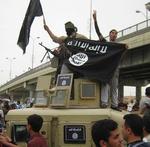
Al_RAMADI-ISIS_14.5.15ISIS rolls into Iraqi town of Ramadi

In the current situation prevailing in western Iraq, the Americans and Iraqis might as well forget about their plans for retaking Iraq’s second city, Mosul, from ISIS control,  this year.

*********************

Ramadi, the provincial capital of western Iraqi Anbar, fell to the Islamic State of Iraq and the Levant Friday, May 15 after its inhabitants were put to mass flight. The town, 110 km west of Baghdad, controls the traffic on the Euphrates River. Small pockets of Iraqi troops are still stranded there after taking hundreds of casualties.

The jihadists are in mid-momentum of a fresh multi-pronged offensive, which they launched shortly after they lost Tikrit last month to the biggest counter-offensive they had faced since seizing large tracts of land in Iraq nearly a year ago.

This momentum has carried the Islamists across Anbar province which touches the Syrian and Jordanian borders to capture another key location – Jubba, next door to Iraq’s biggest air base at Al-Ansar. There, hundreds of US officers and soldiers are training Iraqi troops to fight ISIS and helping the Iraqi army manage the fighting in the province.

Parts of this base have already come under Islamist gun and mortar fire.

Not far from Ramadi, ISIS is threatening the oil-producing town of Baiji where a small Iraqi army force of no more than a few hundred soldiers is surrounded by the jihadists, with slim chances of holding out much longer before they are wiped out or forced to surrender.

Yet another ISIS arm is pushing east towards Baghdad, with the object of disabling the international airport by bringing its runways within mortar range.

To conquer Ramadi, ISIS used bulldozers to knock gaps in the sand earthworks built by the Iraqi army to defend the town, then sending half a dozen bomb cars through the gaps to the Iraqi military command centers where they detonated.

Some of those bomb cars were driven by Muslims from West Europe, who had traveled through Syria to join up with ISIS in Iraq. The jihadists named one of them as “Abu Musa al-Britani.”

Just Thursday, May 14, the British police revealed that more than 700 potential terror suspects had traveled to Syria from the U.K. to fight or support extremists, and about half are believed to have returned, primed for terrorist operations on home ground.

In response to the British police statement, ISIS released a video recording of a message delivered by its leader Abu Bakr al-Baghdadi calling on supporters around the world to join the fight in Syria and Iraq or to “take up arms wherever they live.”

It was Baghdadi’s first message since a number of media reports said he was killed or critically injured, and was intended to refute claims that he was no longer in active charge of the group.

DEBKAfile’s counter-terror sources outline the common operational tactic, modus operandi, employed by the Islamist group in all its Iraq offensives.

After singling out a targeted location, their fighters first seize control of its environs. That way, they can block off in advance any incoming and outgoing movements of Iraqi troops – whether in retreat or for bringing up reinforcements. Next, their fighters storm into the core of the targeted location. Fleeing Iraqi soldiers and their local allies and civilians are summarily put to death.

This new ISIS impetus in Iraq has wiped out the military advantages the Iran-backed Shiite militias and US air force gained from the capture of the central Iraqi town of Tikrit in late March and early April. When the Shiie mlitias turned on the local Sunni populace for murder, burning and looting, the Obama administration turned to Tehran and Baghdad and demanded those militias be removed from the city.

Since the Iraqi army is incapable of recovering control and holding Tikrit after the Islamists were driven out, the town has sunk into anarchy with innumerable armed gangs battling each other for control of its quarters, some of them ISIS loyalists.

In the current situation prevailing in western Iraq, the Americans and Iraqis might as well forget about their plans for retaking Iraq’s second city, Mosul, from ISIS control,  this year.

Obama’s Not-So-Ironclad Guarantee

May 15, 2015

Obama’s Not-So-Ironclad Guarantee, Commentary Magazine, May 15, 2015

Now that the nuclear deal makes an Iranian bomb only a matter of when rather than if, the Gulf nations were hoping for more than just a carefully worded expression of American indifference.

***********

This was supposed to be the week when President Obama put on a show of his desire to reaffirm America’s support for its Arab allies. Saudi Arabia and the other Gulf states have spent the last year in the unusual position of agreeing more with Israel than the United States, as Obama pushes for détente with Iran. Like the Israelis, the Arabs are pondering their future in a region dominated by an Iranian nuclear threshold state that appears to be the lynchpin of the president’s foreign policy legacy. So to demonstrate his good will, Obama invited these nations to a summit at which he would convince them they had nothing to fear. But with the U.S. putting nothing on the table of substance that would allay those concerns about the weak nuclear deal being negotiated with Iran, the Saudi king and other leaders snubbed the event, turning it into a fiasco even before it began. But it turned out King Salman didn’t miss much. Though Obama offered what he called an “ironclad guarantee’ of America’s support for the Arabs, it was phrased in the kind of ambiguous language that rendered it meaningless. The meeting and especially the statement epitomized an Obama administration foreign policy that puts a premium on appeasing foes and alienating friends.

The wording of the president’s “guarantee” is a marvel of lawyerly ambiguity that any connoisseur of diplomatic doubletalk must appreciate:

In the event of such aggression or the threat of such aggression, the United States stands ready to work with our GCC partners to determine urgently what action may be appropriate, using the means at our collective disposal, including the potential use of military force, for the defense of our GCC partners.

Let’s unpack this carefully so we’re clear about what the United States isn’t promising its Arab allies. As even Obama’s cheerleaders at the New York Times noted, this “carefully worded pledge that was far less robust than the mutual defense treaty the Gulf nations had sought.” In the event of aggression, the U.S. isn’t going to spring into action to defend them. Instead it will “work” with them to “determine” what they might do. That falls quite a bit short of a hard promise of collective action, let alone the drawing of a line in the sand across which the Iranians may not cross. In other words, if something bad happens, Obama will talk with the threatened parties but he won’t say what he will do in advance or if he will do anything at all. If that is an “ironclad guarantee,” I’d hate to see what a less binding promise might sound like.

To understate the matter, this is not the sort of pledge that will deter an Iran that is emboldened by its diplomatic victory in the negotiations that let them their nuclear infrastructure and continuing working toward a bomb. Iran’s push for regional hegemony has also been boosted by the triumph of their Syrian ally Bashar Assad with the help of Tehran’s Hezbollah terrorist auxiliaries. With the Iran-backed Houthi rebels threatening to take over Yemen and Iran also resuming its alliance with Hamas in Gaza, the axis of Iranian allies has Arab states understandably worried about their future. Now that the nuclear deal makes an Iranian bomb only a matter of when rather than if, the Gulf nations were hoping for more than just a carefully worded expression of American indifference.

That’s why the statement at the end of the summit made no mention of America’s chief worry about the Gulf states: the possibility that the Saudis will, either acting alone or in concert with their neighbors, seek to match Iran’s nuclear potential. As critics of the Iran deal foretold, far from saving the Middle East from an Iranian bomb, it has set off an arms race that has will make the world a fare more dangerous place.

This omission will likely make the Iranians even more reluctant to give in to U.S. demands about sanctions, Tehran’s military research and the disposition of its stockpile of enriched uranium in the final stages of the nuclear talks. A better guarantee for the Arabs might have convinced the Islamist state that the president really meant business about strengthening the deal. In its absence, they have no reason to think Obama won’t fold as he has at every other stage of the negotiations.

Under the circumstances, it’s little wonder that Bahrain’s King Hamad preferred to go to a horse show London rather than confer with Obama. Just as Israel has learned that the United States is more interested in a new Iran-centric policy than it backing its traditional allies, so, too, must the Arabs come to grips with a new reality in which their Iranian foe is no longer restrained by the United States.

FIG LEAVES FALLING

May 15, 2015

Fig leaves falling, Power LineScott Johnson, May 14, 2015

Certain impediments complicate Barack Obama’s selling of the arrangement with the Islamic Republic of Iran. Obama seeks to camouflage the arrangement as one that deters Iran from the acquisition of nuclear weapons. In reality, the arrangement will finance and expedite the mullahs’ acquisition of nuclear weapons.

John Kerry has issued ludicrous “guarantees” in connection with the arrangement. One such guarantee is categorical, but it’s not a money-back sort of a guarantee: “I say to every Israeli that today we have the ability to stop [the Iranians] if they decided to move quickly to a bomb and I absolutely guarantee that in the future we will have the ability to know what they are doing so that we can still stop them if they decided to move to a bomb.”

We may doubt the omniscience that is the predicate of Kerry’s guarantee. But this is strictly a limited warranty. Kerry doesn’t even “guarantee” that his boss would do anything about it if Iran were to break out. Kerry only guarantees that “we” could. Good to know. Kerry’s “guarantee” amounts to nothing more than meaningless verbiage two or three time over.

The arrangement will also provoke an equal and opposite reaction from the Sunni rivals of Iran such as Saudi Arabia. The Sunni rivals understand the nature of the arrangement in process. Their understanding accounts for Obama’s “lonely Arab summit.”

President Obama’s dubious fact-sheet setting forth Parameters for a Joint Comprehensive Plan of Action reflects the fig leaves with which the president seeks to cover the nuts of the deal. Senator Rubio couldn’t get to first base in his proposal requiring any final deal to include the fig leaves. (Eli Lake dubbed it “Rubio’s new and improved poison pill.”)

The fig leaves are falling. The official Farsnews outlet reports that inspection of military sites is not included in the arrangement in process — this according to Iranian envoy to the IAEA Reza Najafi and despite the alleged parameter requiring Iran “to grant access to the IAEA to investigate suspicious sites or allegations of a covert enrichment facility, conversion facility, centrifuge production facility, or yellowcake production facility anywhere in the country.”

The alleged parameters regarding sanctions provide that Iran “will receive sanctions relief, if it verifiably abides by its commitments” and that “•U.S. and E.U. nuclear-related sanctions will be suspended after the IAEA has verified that Iran has taken all of its key nuclear-related steps. If at any time Iran fails to fulfill its commitments, these sanctions will snap back into place.”

We have already learned that President Obama intends to reward Iran with a huge “signing bonus” at the outset of the arrangement. He will agree to the removal of all United Nations sanction on Iran at the same time. He will also waive our own statutory sanctions on Iran. Just about the last fig leaf remaining on this element of the deal is the (utterly meaningless) assertion: “If at any time Iran fails to fulfill its commitments, these sanctions will snap back into place.”

Now Bloomberg News reports that this fig leaf is falling too: “Russia rejects automatic sanctions return if Iran cheats on deal.” Bloomberg quotes Russia’s UN Ambassador Vitaly Churkin bluntly asserting yesterday, “There can be no automaticity, none whatsoever” in reimposing UN sanctions if Iran violates the terms of an agreement to curb its nuclear program.

Omri Ceren writes to comment this morning (footnotes omitted):

The statement really shouldn’t count as breaking news, even though it is. Reuters reported toward the very end of Lausanne that the Russians and Chinese were still rejecting the multilateral snapback. But then the Lausanne announcement happened, and President Obama declared from the Rose Garden that in fact “if Iran violates the deal, sanctions can be snapped back into place.” But then a week later the Associated Press reported that, no, “Russia and China are unlikely to accept any process that sees them sacrifice their veto power.”

At the end of April the American Enterprise Institute quoted Russian Deputy Foreign Minister Sergey Ryabkov saying the exact same thing that Churkin just told Bloomberg News: “in the hypothetical situation that Iran should fail to honour its commitments, then this process should not in any way be automatic.”

And yet the policy conversation has been proceeding as if multilateral snapback is actually a real thing that could happen in our reality.

Part of the reason is that snapback is all the Obama administration has left on the sanctions debate. White House officials had assured lawmakers for literally years that sanctions relief would be phased out only as Iran met a series of nuclear obligations. But after Lausanne, Supreme Leader Ayatollah Ali Khamenei set a new red line, in which he demanded that the relief must be immediate. The administration began trying to find ways to concede to his demand without violating its previous “phase out” promises, which is how the WSJ’s scoop about a $50 billion signing bonus came to be.

That apparently didn’t work, and so instead the administration went all-in on snapback. At his press conference with Renzi in the middle of April the President signaled the that he was prepared to cave on upfront sanctions relief because – he told journalists – what was actually important was snapback: “with respect to the issue of sanctions coming down, I don’t want to get out ahead of John Kerry and my negotiators… [o]ur main concern here is making sure that if Iran doesn’t abide by its agreement that we don’t have to jump through a whole bunch of hoops in order to reinstate sanctions. That’s our main concern.”

The arrangement’s alleged Iranian concession are, you might say, phony baloney all the way down.

Czechs stopped potential nuclear tech purchase by Iran

May 14, 2015

Czechs stopped potential nuclear tech purchase by Iran, Reuters via Ynet News, May 14, 2015

(But they won’t cheat after Obama gets his legacy deal. Right. — DM)

Czechs stopped potential nuclear tech purchase by Iran.UN report says Tehran attempted to buy centrifugal compressors from company in Czech Republic, using false documentation to hide destination of order.

UNITED NATIONS/PRAGUE – The Czech Republic blocked an attempted purchase by Iran this year of a large shipment of sensitive technology useable for nuclear enrichment after false documentation raised suspicions, UN experts and Western sources said.

The incident could add to Western concerns about whether Tehran can be trusted to adhere to a nuclear deal being negotiated with world powers under which it would curb sensitive nuclear work in exchange for sanctions relief.

The negotiators are trying to reach a deal by the end of June after hammering out a preliminary agreement on April 2, with Iran committing to reduce the number of centrifuges it operates and agreeing to other long-term nuclear limitations.

562262409915100640360noNuclear plant in Iran’s Bushehr (Photo: Reuters)

Some details of the attempted purchase were described in the latest annual report of an expert panel for the United Nations Security Council’s Iran sanctions committee, which has been seen by Reuters.

The panel said that in January Iran attempted to buy compressors – which have nuclear and non-nuclear applications – made by the US-owned company Howden CKD Compressors.

A Czech state official and a Western diplomat familiar with the case confirmed to Reuters that Iran had attempted to buy the shipment from Howden CKD in the Czech Republic, and that Czech authorities had acted to block the deal.

It was not clear if any intermediaries were involved in the attempt to acquire the machinery.

There was no suggestion that Howden CKD itself was involved in any wrongdoing. Officials at Prague-based Howden declined to comment on the attempted purchase.

The UN panel, which monitors compliance with the UN sanctions regime, said there had been a “false end user” stated for the order.

“The procurer and transport company involved in the deal had provided false documentation in order to hide the origins, movement and destination of the consignment with the intention of bypassing export controls and sanctions,” it added.

The report offered no further details about the attempted transaction. Iran’s UN mission did not respond to a query about the report.

Contract worth $61 million

The Czech state official said the party seeking the compressors had claimed the machinery was needed for a compressor station, such as the kind used to transport natural gas from one relay station to another.

The official declined to say exactly how the transaction was stopped, provide specifications of the compressors or confirm the intended purchaser. However, he made clear it was the Czech authorities who halted the deal

The official, who spoke on condition of anonymity, said the total value of the contract would have been about 1.5 billion Czech koruna ($61 million).

This was a huge amount for the company concerned, the previously named CKD Kompresory, a leading supplier of multi-stage centrifugal compressors to the oil and gas, petrochemical and other industries.

The firm was acquired by Colfax Corp. of the United States in 2013 for $69.4 million. A spokesman for Colfax declined to comment.

The United States and its Western allies say Iran continues to try to skirt international sanctions on its atomic and missile programs even while negotiating the nuclear deal.

The UN panel of experts also noted in its report that Britain informed it of an active Iranian nuclear procurement network linked to blacklisted firms.

While compressors have non-nuclear applications in the oil and gas industry, they also have nuclear uses, including in centrifuge cascades. Centrifuges purify uranium gas fed into them for use as fuel in nuclear reactors or weapons, if purified to levels of around 90 percent of the fissile isotope uranium-235.

“Such compressors can be used to extract enriched uranium directly from the cascades,” Olli Heinonen, former deputy director-general of the International Atomic Energy Agency and a nuclear expert currently at Harvard University, told Reuters.

“In particular, they are useful when working with higher enrichment such as 20 percent enriched uranium,” he said, adding that precise specifications of the compressors in question would be necessary to make a definitive assessment.

Iran has frozen production of 20 percent enriched uranium, a move that Western officials cite as one of the most important curbs on Iranian nuclear activities under an interim agreement in 2013.

Tehran rejects allegations by Western powers and their allies that it is seeking the capability to produce atomic weapons and says its nuclear program is for peaceful purposes.

The IAEA and the United States have said repeatedly that Tehran has adhered to the terms of the 2013 interim deal.


IRGC Deputy Commander Salami: “We Welcome War with the Americans”

May 14, 2015

IRGC Deputy Commander Salami: “We Welcome War with the Americans”, MEMRI via You Tube, May 14, 2015

(Does Iran really believe Obama’s “all option are on the table” nonsense, which hardly anyone credits? — DM)

In an Iranian TV interview, IRGC Deputy Commander Hossein Salami threatened the Americans, saying: “We welcome war with the Americans.” The U.S. aircraft carriers would be destroyed, its air bases in the region burned, and the skies set ablaze, he said. “We have built our strength for the purpose of long, extended wars… more than for the purpose of peace, compromise, and dialogue with them,” said Salami. The interview aired on the Iran TV’s Channel 1 on May 6, 2015.


President Strangelove or, how I learned to stop worrying and love the bomb

May 14, 2015

President Strangelove or, how I learned to stop worrying and love the bomb, Jerusalem Post, David Turner, May 14,2015

Concerned about Soviet intentions in the region the Truman administration entered into the U. S.-Saudi Mutual Defense Assistance Agreement (MDA) in 1951. The Agreement provided the foundation for what would emerge as an American commitment to provide a defense umbrella for the region to protect American interests in the Middle East. American assurances to states in the region seemed intact until the GW Bush Administration invasion of Iraq. Trapped in a war it completely misjudged and soon realized it could not win the administration sought an accommodation with Iran to control Shi’ite militias battling the Americans.

The Bush policy of “accommodation” with Iran became the Obama policy of “appeasement” towards the Islamic Republic. Thus began a six-year-long quest to intended to encourage that country’s recalcitrant and hegemony ambitious leaders to abandon its nuclear weapons program. With the imminent 30 June deadline for signing an Agreement quickly approaching the president invited the Gulf Cooperation Council (GCC) states headed by Saudi Arabia to Camp David promising a mutual defense agreement assuring the Arab states of American protection in the event Iran proved a threat to the region. In addition to “assurances, the Saudis insisted on a signed and “formal alliance structure with the United States guaranteeingU.S. support against potential Iranian aggression.”

In advance of the conference the White House announced that President Obama would meet with the Saudi king the day beforeCamp David. But at the last minute, [d]ispleased with Washington’s dealings with Iran, with an emerging deal over its nuclear program and with US security proposals to Gulf Arab nations,” King Salman announced he would not meet with President Obama and would not attend the Camp Davidconference. In the end only two of six Gulf nations decided to attend with heads of state.

The king’s last-minute cancellation, his turn-down of a meeting with the leader of the Free World was described as “a calculated snub for the president’s policies on Iran and the Middle East.” It was revealed that Kerry, in his meeting with the Saudis the week earlier, told the king that Obama was not prepared to finalize according to the king’s timetable any agreement that might result at Camp David.

And then there was the fact that a mutual defense agreement with the Saudis, the 1951 MDA, already existed already assuring the Saudis protection under America’s nuclear umbrella. Mistrust of American intentions and assurances by America’s “allies” built up over the previous twelve years was palpable.

Bush and the Region

“Even before the inauguration [and, of course, the pretext of 9/11], Cheney asked outgoing Secretary of Defense William Cohen to provide Bush with a briefing focused on Iraq… [Bush appointee] Defense Secretary Rumsfeld saw, “September 11, 2001, as a potential “opportunity.””

Symptomatic of hubris resulting from power minus coherent policy President Bush ignored both Arab and Israeli warnings of Foreseen Consequences certain to follow should the administration follow through with its threat to invade Iraq.

“With his latest remarks, [Saudi, later king] Prince Abdullah joined the chorus of Arab complaints about the Bush administration’s talk of taking military action to oust Saddam Hussein and put an end to his programs to develop weapons of mass destruction. At virtually every stop in the Arab world, Mr. Cheney has been told that an American military strike would destabilize the region.”

And, according to Lawrence Wilkerson, a member of the State Department’s Policy Planning Staff, “[t]he Israelis were telling usIraq is not the enemy – Iran is the enemy.” Wilkerson said that the Israeli reaction to invading Iraq in early 2002 was, “If you are going to destabilize the balance of power, do it against the main enemy.”

Bush and the Bomb

Cut off the head of the snake,” the Saudi ambassador toWashington, Adel al-Jubeir, quotes the king as saying during a meeting with General David Petraeus in April 2008.

In a speech to the Knesset in 2008 to observe Israel’s 60thanniversary Bush told the Knesset, “America stands with you in firmly opposing Iran’s nuclear weapons ambitions. Permitting the world’s leading sponsor of terror to possess the world’s deadliest weapon would be an unforgivable betrayal of future generations.” Nowhere in his speech did Bush hint at his long held view that America was not prepared to enter another Middle East war, that there never was a military option with which to threaten Iran’s nuclear weapons program. No accident then that Bush chose war-averse Robert Gates as his defense secretary; and that Gates in turn chose war-averse Admiral “Mike” Mullen as head the Joint Chiefs of Staff. The dovish defense pair would for years be the president’s PR mouthpiece warning against even the threat of force to halt Iran’s nuclear program. The Gates/Mullen oft-repeated warning of “unforeseen consequences” became, over the years a common, almost mantra-like warning against any action against Iran.

No surprise then that the openly dovish, newly-elected President Obama invited Gates to remain on as his defense department head, “a show of bipartisan continuity in a time of war that will be the first time a Pentagon chief has been carried over from a president of a different party.”

Obama and the Region

By way of destabilizing the region Obama has not yet equaled the fallout of Bush’s invasion of Iraq. If Bush gifted Iraq to Iran, set the stage for the “Arab Spring,” Obama did not come in second for lack of trying. The new president followed Bush by targeting his own tyrant, Muamar Qadafi and transformingLibya, as did Bush in Iraq, a political wreck bordering on a failed state.  Libya today is ruled al-Queda, Islamic State and other terror organizations with two governments powerless to assert control. Bordering Egypt Libya today supplies both the Sinai Salafist insurgency and the terror enclave of Gaza with weapons. And as Bush ignored Israeli and Arab warnings regarding the impact of invading Iraq, Obama chose to those same Arab-Israeli warnings regarding his intention to depose America’s principal Arab ally, Hosni Mubarak of Egypt. In a single mindless move the U.S. followed up its Iraq disaster with Egypt. And followed the collapse of Egypt’s secular regime, insult to injury Obama endorsed as “democratic government” the same Muslim Brotherhood with a decades-long terror campaign against the government; the group behind the assassination of Anwar Sadat for having sought peace with Israel: the Muslim Brotherhood whose child, al-Quaeda, had flown airliners into New York’s World Trade Center! The list of Bush and Obama Administration policy failures seems to know no limits: Iraq redo, Bahrain,Yemen and the bloodbath of Syria. Lacking capacity to learn from ideology-based failures, it continually repeats its “unintended consequences.”

Obama and the Bomb

If Bush set the pattern for accommodation then the tactic at least had some “justification” as Iran’s IRGC was funding, arming and even leading the Shi’ite insurgency against Iraq’s American invaders. Not provoking Iran might have the result of limiting American casualties. But for Obama, recipient in advance of the Nobel Peace Prize for promising regarding “world peace”; for Obama to provide Iran, a state sponsor of Islamist terrorism a world forum to show up American weakness and enhance Iranian prestige; for Obama whose commitment on entering office was to promote nuclear non-proliferation: for Obama to provide Iran all the time necessary to achieve threshold nuclear armament status and, failing to contain Iran the consequence would be a nuclear arms race in the lands of the Arab Spring… Saudi Arabia,Turkey and Egypt are already moving to parity with Iran whileJordan and several Gulf states are at varying stages of planning.   

Obama, who promised nuclear non-proliferation, has turned out to be godfather to a nuclear arms race in the least stable, most militant region of the world!