Posted tagged ‘Foreign Policy’

What Were Armed US Consulate Staff Doing near Adei Ad?

January 4, 2015

What Were Armed US Consulate Staff Doing near Adei Ad? Israel National News,  Ari Soffer, January 4, 2015

(Please see also ‘Deport US Consulate Staff Who Threatened Jews’ and related update links in my parenthetical comment there. This is a further update.– DM)
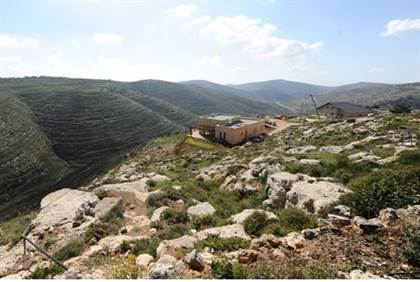
img557200Adei Ad is located in the Shiloh bloc north of JerusalemMendy Hechtman/Flash 90

Security source says ‘no question’ US Consulate staff pointed their weapons during Friday confrontation. Planned provocation or blunder?

****************

The full details of Friday’s clash between residents of the Jewish village of Adei Ad in Samaria and a delegation from the US Consulate in Jerusalem – which very nearly escalated into a fully-fledged shootout between the sides – are still emerging.

But those details which have emerged so far paint a worrying picture regarding the conduct of Consulate staff – who either willingly took part in a planned provocation, or else, in a staggering show of irresponsibility and unprofessionalism, recklessly blundered into a volatile and potentially deadly situation without the slightest idea of what they were doing.

Roughly two hours before the start of Shabbat, a group from the Consulate, escorted by armed (apparently American) guards and several residents of the Arab village of Turmus Ayya, descended en-masse and unannounced on an area within 50 meters of Adei Ad’s southwestern edge. Neither the IDF nor local residents were informed of the visit beforehand.

The Consulate delegation had apparently been “invited” by Palestinian Arabs from Turmus Ayya, many of whom hold US citizenship, ostensibly to see the site of what Arabs claim was an “attack” by Adei Ad residents on an olive orchard. That incident was originally reported Thursday night by the PA’s Bethlehem-based Maan News, which claimed that Jewish “settlers” had uprooted 5,000 olive trees – a rather incredible number to those familiar with quite what such a mammoth task would entail. Subsequent reports later revised the number down to 500, although no independent verification or evidence of the alleged damage has surfaced as yet.

Adei Ad residents, alarmed at the unannounced arrival of a large groupfrom a Palestinian village within meters of their community, rushed out to confront them. A brief verbal altercation ensued which quickly escalated, with youths from Adei Ad hurling rocks at the delegation, causing some damage to a Consulate vehicle.

At this point the accounts vary; witnesses from Adei Ad say Consulate staff drew their weapons – an M-16 and a handgun – following which residents called for backup from Adei Ad’s own security team. The Consulate, for its part, has denied any weapons were drawn at all. Either way, the American delegation beat a hasty retreat.

Notably, at no point during the confrontation was the IDF alerted by the Consulate team; only after leaving the scene did the Americans call the army, who quickly responded and launched an investigation, which is still ongoing.

img73901Damage to US Consulate vehicle Rabbis for Human Rights

Whatever the case, Jewish residents of Adei Ad and surrounding communities in the Shiloh bloc, located in the Binyamin region to the north of Jerusalem, are demanding answers. Angry residents say the incident was clearly a planned provocation, and have expressed their astonishment at the fact that an armed entourage from the US Consulate would arrive at a contested spot without coordinating their visit with the IDF in advance.

Indeed, regardless of the intent behind the visit, one Adei Ad resident pointed out that it was a clear recipe for disaster.

Apart from being the location of a protest in December 10th in which senior PA official Ziad Abu Ein died of a heart attack, the site of Friday’s confrontation is also the precise spot where a group of Palestinians attempted to infiltrate Adei Ad just two weeks ago.

“Two weeks ago at that exact place a horse was stolen,” said the resident, who asked to remain anonymous. “At 10 p.m. that same night dozens of Arabs from a nearby village came up to Adei Ad at the same spot, and residents came out to keep them away.”

Recounting Friday’s incident, he said residents had no idea Consulate staff were present at all. All they saw, he said, was “Arabs approaching, accompanied by what looked like a group of Europeans – we didn’t know who they were exactly. Often foreign anarchists join the Arabs in carrying out violence or provocation.”

Due to the tense relations between Jews and Arabs in the area, Arab farmers must contact the IDF before working land that abuts Adei Ad in order to avoid any confrontations. For their part, Adei Ad residents have long complained that they have been regularly targeted by Arab thieves and vandals.

“About two years ago a group of Arabs actually came right up to my house, right into the enter of Adei Ad, and stole a whole herd of sheep. In the past they’ve stolen horses, they stole a tractor, building equipment,” the resident recounted.

“The Arabs know that if they want to come that close to Adei Ad to do agricultural work they need to let the army know first to escort them. So any time Arabs approach without army supervision – particularly in that place where two weeks ago there was an incident – that’s a sign that they are coming to cause trouble… to attack or damage property,” he added.

He said locals had long given up on the prospect of receiving help from police, who he accused of totally avoiding their responsibilities and only agreeing to investigate Palestinian accusations against them.

“We receive no backing from the police,” he lamented. “Every time there is an incident of robbery by the Arabs the military refuses to deal with it because they don’t look at it as life-threatening; and the police… they tell us that it’s out of their jurisdiction.

“On the other hand, every time the Arabs steal something or cause trouble they then go and report us to the police – that’s how they work – so it’s always a one-sided investigation, because the police claim they have no jurisdiction over the Arab villages, only over us! No one has ever been charged, no property has ever been returned.”

He emphasized that despite the negative characterization of Adei Ad and surrounding Jewish communities in the area by some media outlets, residents are not interested in trouble and just want to get on with their daily lives in peace.

“We have much better things to do with our lives – we have our children and families, and we have jobs,” he said. “We don’t enjoy going out and having rock-throwing fights… no one seems to realize… but we feel we are under threat and that if we don’t do it the next step is a terrorist attack.”

Responding to American denials that Consulate staff pointed their guns at residents, a local security source said there was “no question” they hadindeed drawn their weapons, based on the individual testimony of numerous witnesses.

The security source, who also asked to remain anonymous, said one American “with ginger hair” was seen pointing his pistol at residents, who were unarmed, from inside of his car after rolling down the window. The other armed man then did the same with an M-16 rifle.

It was then that the situation threatened to get out of control.

“News spread that some people had approached the town with weapons, and they called for help,” prompting armed members of the local civilianfirst-response team to rush to the site, he recounted.

Luckily, “at that point it seems like the Americans thought it would be a good time to leave… and after that there was a brief confrontation between the Arabs and (Jewish) residents until the army arrived.”

He said that although an investigation was still ongoing, the conduct of the Consulate delegation was “suspicious.”

“Why didn’t they call anyone while the confrontation was going on?” he asked.

He also described the “strange” behavior of the Consulate guards when they were finally met by IDF forces and first-responders, describing them as looking sheepish and, unprompted, immediately insisting they hadn’t drawn their weapons.

Marc Prowisor, a resident of the nearby town of Shiloh, said the latest confrontation posed some “difficult questions.”

“Were members of the American Consulate knowingly taking part in a larger provocation – which is against the law?” asked Prowisor who, as Director of the One Israel Fund charity which helps secure local communities, is in regular contact with local security forces.

Analysis: Osama bin Laden’s documents pertaining to Abu Anas al Libi should be released

January 4, 2015

Analysis: Osama bin Laden’s documents pertaining to Abu Anas al Libi should be released, Long War Journal, Thomas Joscelyn, January 3, 2015

(Release of the documents should further diminish the U.S. Government’s claims that al Qaeda died with bin Laden. How about any documents in the possession of Abu Anas al Libi when he was captured in Turkey in 2013? Might they contradict governmental claims about what happened during the “unanticipated” September 11, 2012 terrorist attack on the U.S. installation in Benghazi, why it happened and the nature of the U.S response? — DM)

Anas-al-Libi

The Obama administration made a concerted push to portray Osama bin Laden as a doddering old man who was operationally irrelevant.

What we know about Abu Anas al Libi’s al Qaeda role challenges all of these assessments.

Releasing any bin Laden files further implicating al Libi in the East Africa attacks would only strengthen the US government’s case to the public.

***************

A senior al Qaeda operative known as Abu Anas al Libi has died in the US as he was awaiting trial. Al Libi was captured in Tripoli during a raid by US forces in late 2013. He had been wanted for his role in the August 1998 US Embassy bombings for more than a decade prior to his arrest.

The US government has in its possession numerous pieces of evidence concerning al Libi’s al Qaeda role, including files recovered in May 2011 from Osama bin Laden’s home in Pakistan.

The Long War Journal has consistently advocated for the release of bin Laden’s files. The Obama administration has released just 17 documents, and a handful of videos, from a total cache of more than 1 million files. Many more of these files, if not almost all of them, should be declassified and released. There are no sources or methods to protect, as everyone knows how this information was obtained. The only files that should remain classified are those that have a direct bearing on the US government’s current counterterrorism operations against al Qaeda.

Now that al Libi has passed away, the US government has another opportunity to be more transparent with respect to bin Laden’s files. After all, at least some of the documents probably would have been released to the public during al Libi’s trial.

Just weeks ago, in mid-December, Benjamin Weiser of The New York Times reported that US prosecutors were seeking to use files recovered during the raid on bin Laden’s compound in al Libi’s trial.

A close reading of the Times‘ account reveals that prosecutors intended to use at least five separate letters recovered in bin Laden’s safe house.

It does not appear that any of these letters were included in the set of 17 documents released by the Obama administration through the Combating Terrorism Center at West Point. None of Abu Anas al Libi’s letters to al Qaeda’s leaders were released.

The first letter described by the Times is from Atiyyah Abd al Rahman, a senior al Qaeda leader, to bin Laden dated June 19, 2010. Rahman explained that al Libi was one of “the last brothers” to be released from Iran. Al Libi “came only a week ago and I met him and sat with him,” Rahman wrote, according to the Times’ summary. Rahman appointed al Libi to al Qaeda’s security committee. “It is normal for any person after a long absence, especially in jail, that he needs some time to figure out how things work,” Rahman noted. Rahman recommended that bin Laden send al Libi a letter, because al Libi was seeking “reassurance.”

A second letter, dated Oct. 13, 2010, is a five-page missive from al Libi to Osama bin Laden. “Your forever lover, Your brother,” al Libi signs the letter. Al Libi explains, according to the Times, that the al Qaeda “brothers,” including bin Laden’s sons and other al Qaeda operatives, fled to Iran under orders from Taliban leader Mullah Omar.

A third letter from Rahman to bin Laden was written “[a]bout a month later,” according to the Times, meaning it was penned sometime in November 2010. Rahman recommended that al Libi be accepted back into al Qaeda’s leadership ranks. Rahman described al Libi as “determined,” “visionary,” and “difficult somewhat,” but also noted that bin Laden knew him. Interestingly, Rahman complained that al Libi had violated al Qaeda’s operational security regulations by “contacting his family in Libya, despite knowing that we don’t allow any communications.”

Al Libi “knows that he was wanted by the Americans,” Rahman wrote to bin Laden, according to the Times’ summary. “He contacted them via phone repeatedly!”

In a fourth letter, written in March 2011, al Libi requested permission to join some other operatives who were returning to Libya to fight against Muammar al Qaddafi’s regime. It is better to “move out sooner rather than later” al Libi wrote.

Rahman forwarded al Libi’s letter to bin Laden, the Times reported, and Rahman explained to bin Laden that he approved al Libi’s request. This is the fifth letter prosecutors sought to introduce. Rahman noted that al Libi was “a little upset with me for the delay in getting back to him.”

A “builder of al Qaeda’s network in Libya”

Al Libi did in fact return to his native Libya. As a member of al Qaeda’s security committee who returned to North Africa only after receiving permission from his superiors in al Qaeda (Rahman), it is safe to assume that he was doing the terrorist organization’s bidding when he set up shop in his homeland.

Indeed, as The Long War Journal previously reported, an unclassified report published in August 2012 highlighted al Qaeda’s strategy for building a fully operational network in Libya. The report (“Al Qaeda in Libya: A Profile”) was prepared by the federal research division of the Library of Congress (LOC) under an agreement with the Defense Department’s Combating Terrorism Technical Support Office (CTTSO).

Abu Anas al Libi played a key role in al Qaeda’s plan for the country, according to the report’s authors. He was described as the “builder of al Qaeda’s network in Libya.”

Al Qaeda’s senior leadership (AQSL) has “issued strategic guidance to followers in Libya and elsewhere to take advantage of the Libyan rebellion,” the report reads. AQSL ordered its followers to “gather weapons,” “establish training camps,” “build a network in secret,” “establish an Islamic state,” and “institute sharia” law in Libya.

Abu Anas al Libi was identified as the key liaison between AQSL and others inside the country who were working for al Qaeda. “Reporting indicates that intense communications from AQSL are conducted through Abu Anas al Libi, who is believed to be an intermediary between [Ayman al] Zawahiri and jihadists in Libya,” the report notes.

Al Libi is “most likely involved in al Qaeda strategic planning and coordination between AQSL and Libyan Islamist militias who adhere to al Qaeda’s ideology,” the report continues.

Al Libi and his fellow al Qaeda operatives “have been conducting consultations with AQSL in Afghanistan and Pakistan about announcing the presence of a branch of the organization that will be led by returnees from Iraq, Yemen, and Afghanistan, and by leading figures from the former LIFG.” The term “LIFG” refers to the Libyan Islamic Fighting Group, an al Qaeda-linked jihadist group formed in Libya in the 1990s.

One of al Libi’s key allies inside Libya was another senior al Qaeda operative, Abd al Baset Azzouz, who has been close to al Qaeda’s senior leaders for decades.

Azzouz was sent to Libya by Zawahiri and “has been operating at least one training center.” Azzouz “sent some of his estimated 300 men…to make contact with other militant Islamist groups farther west.”

Azzouz was reportedly captured in Turkey last month. [See LWJ report, Representative of Ayman al Zawahiri reportedly captured in Turkey.]

Release bin Laden’s files

The Obama administration made a concerted push to portray Osama bin Laden as a doddering old man who was operationally irrelevant. Citing bin Laden documents shown to him by the White House, the Washington Post’s David Ignatius described the jihadist leader as a “lion in winter.” CNN‘s Peter Bergen similarly reported that bin Laden was in retirement at the time of his death. The Combating Terrorism Center at West Point, working off of only those documents provided by the Obama administration, portrayed bin Laden as being sidelined.

What we know about Abu Anas al Libi’s al Qaeda role challenges all of these assessments. He was reintegrated into al Qaeda’s chain of command after his release from Iranian custody. His role was approved by Rahman, who served as one of bin Laden’s top subordinates before being killed in a US drone strike. Rahman made sure that al Libi joined al Qaeda’s security committee — an internal body that is not factored into any public assessments of al Qaeda’s structure or hierarchy. And al Qaeda approved al Libi’s return to Libya. Other evidence subsequently unearthed by the US government shows that al Libi was acting as one of al Qaeda’s top operatives in North Africa at the time of his capture.

This evidence should be released to the public, so we can judge for ourselves how al Qaeda operates.

In addition, any documents or files recovered from bin Laden’s compound that deal with the August 1998 US Embassy bombings should be released as well. After al Libi was captured in Libya, his family claimed he had played no role in the twin attacks, which were al Qaeda’s most successful operation prior to Sept. 11, 2001. However, there is abundant evidence, including testimony given before a US district court, indicating that al Libi was a key player in the bombings. Releasing any bin Laden files further implicating al Libi in the East Africa attacks would only strengthen the US government’s case to the public.

Obama’s 2015 gift for Israel and Mid East: Funding for a new Iraqi army – dominated by Iran’s Rev Guards

January 1, 2015

Obama’s 2015 gift for Israel and Mid East: Funding for a new Iraqi army – dominated by Iran’s Rev Guards, DEBKAfile, January 1, 2015

Iraqi_52nd_Infantry_Battalion_12.14New Iraqi 52nd Infantry Battalion set up by Iran

All those militias are under the direct command of the Guards. Therefore, the Obama administration has committed the United States to forging a strong military bond with Tehran and providing military and financial assistance for the creation of a strong regional Shiite armed force that will elevate Iran to the standing of leading military power in the Middle East.

******************

President Barack Obama’s New Year gift to Israel and the Middle East is a multibillion fund for establishing an Iraqi army as a division of the Iranian Revolutionary Guards (IRGC). Wednesday, the last day of 2014, two defense ministers, Iran’s Brig. Gen. Hossein Dehqani and Iraq’s Khallid al-Obeidi, signed a pact whereby Iran i.e. the Revolutionary Guards, will “continue to train new Iraqi military units” for replacing the army that crumbled under the onslaught launched by the Islamic State of Iraq and Levant since last June.

“We do not see any other option than cooperation and being on the same side as Iran to uproot the terrorists,” said the Iraqi general.

But he carefully avoided mentioning the 1,850 US soldiers posted to Baghdad, Kurdistan’s Irbil and the Al Asad air base in the western province of Anbar, or the 1,300 addition American combat troops, including paratroops of the elite 82nd Airborne Division’s 3rd Brigade Combat Team.

The 3,150 US troops currently serving in Iraq are therefore sharing the task of rebuilding Iraqi military units with Iran’s Revolutionary Guards!

Two other key points glossed over by the two defense ministers are revealed here by DEBKAfile’s exclusive military and intelligence sources: The sources of financing and recruits.

On the quiet, President Obama has promised Tehran and Baghdad to put up the funding for the new Iraqi army. It is to come out of the US budgetary allocation for the war on terror – a truly ironic gesture considering the missions of the Revolutionary Guards Corps’s pro-active arm, its Al Qods Brigades, which are primarily to orchestrate external terrorism.

The source of the new manpower was disclosed by Deputy Commander of the IRGC Brig. Gen. Hossein Salami, when he announced this week that Iran was assembling a mighty army from the various Shiite militias fighting in Syria and Iraq. “This force will be larger even than the Lebanese Hizballah,” he boasted.

All those militias are under the direct command of the Guards. Therefore, the Obama administration has committed the United States to forging a strong military bond with Tehran and providing military and financial assistance for the creation of a strong regional Shiite armed force that will elevate Iran to the standing of leading military power in the Middle East.

US-Iranian cooperation in the war on ISIS is already in full swing in Iraq between the US officers and troops posted there and the headquarters of Iranian Al Qods Brigades Commander, Gen. Qassem Soleimani. Iraq’s Shiite Prime Minister Haider al-Abadi provides liaison. So closely are the two forces aligned, that no Iraqi Shiite operation goes forward without first being cleared with the US command.

Turkey: America’s unacknowledged problem

December 31, 2014

Turkey: America’s unacknowledged problem, Israel Hayom, Prof. Efraim Inbar, December 31, 2014

(The foreign policy of the Obama administration is difficult to understand. What might be the reasoning behind its apparently continuing support for Islamic Turkey, a bitter foe of Israel? What are the administration’s interests in the Middle East?– DM)

It is not clear why Washington puts up with such Turkish behavior. The Obama ‎administration seems to be unable to call a spade a spade. It refuses to acknowledge ‎that Turkey is a Trojan horse in NATO, and that Ankara undermines American interests ‎in the Middle East and elsewhere.‎

***************

Turkey is a NATO ally, and U.S. President Barack Obama has called Turkish President Recep Tayyip Erdogan his best friend. But Erdogan-led Turkey does not ‎behave as an ally or a friend of the U.S. This is not a new development.‎

Erdogan and his Islamist party, the Justice and Development Party (AKP), have ruled Turkey since 2002. Erdogan’s ‎Turkey has gradually distanced itself from the West, adopting domestic and foreign ‎policies fueled by Ottoman and Islamist impulses. ‎

Turkey has been on the road to an authoritarian regime for several years. Infringements ‎on human rights have gradually increased. In truth, Turkey has never had a political ‎system with checks and balances able to constrain attempts to consolidate power ‎around one politician. In recent years, Erdogan has weakened further the few ‎constitutional constraints against “Putinization” of the Turkish political system. ‎

The longer Erdogan rules, the more power-hungry he seems. His authoritarian ‎personality becomes clearer every day. The press is hardly free. Erdogan arrests even ‎Islamist journalists who are critical of his policies. His party has infiltrated the judicial ‎system and the police. Foci of power, such as the bureaucracy, the banking system, ‎industrial associations and trade unions, have been mostly co-opted by the AKP. ‎Opposition political parties are largely discredited. The military, once active in politics ‎as the defender of the Kemalist secular tradition, has been successfully sidelined. ‎

From a realpolitik perspective, the domestic political developments, deplorable as they ‎may be in Turkey, could be ignored by the democratic West as long as Ankara ‎continues to be a useful ally. Unfortunately, Turkey no longer qualifies as a trusted ‎ally. ‎

The most recent examples of nefarious Turkish behavior are its support of Islamic State and ‎Hamas. Turkey is playing a double game on the issue of Islamic State. It pretends to ‎cooperate with the U.S. policy in the attempt to contain radical Islam, but actually ‎Turkey supports the radical group. It allows passage of volunteers through Turkish territory to join ‎Islamic State in Iraq. The group gets logistical support via Turkey, and sends its wounded militants for ‎treatment in Turkey. Turkish military forces stood idly by the besieged city of Kobani, ‎just across the Turkish border, while the Islamists killed Kurdish fighters. Finally, ‎Turkey denies the American air force access to Turkish bases, forcing the U.S. to use far‎away bases when attacking Islamic State targets. ‎

Turkey is also openly supporting another radical Islamist organization, Hamas. ‎Despite the fact that the West regards Hamas a terrorist organization, Ankara regularly ‎hosts Hamas representatives to meet the highest Turkish dignitaries. Hamas, an ‎offshoot of the Muslim Brotherhood, has a rabid anti-American position. Moreover, ‎Salah al-Aruri, a senior Hamas operative, operates out of Istanbul. Recently, the ‎Turkish branch of Hamas was involved in a series of attempts to carry out terrorist ‎attacks against Israel, and in orchestrating a coup against the current leadership of the ‎Palestinian Authority.‎

Such behavior should not surprise policy makers in Washington. In 2003, Ankara ‎denied the request from Washington to open its territory so that the U.S. military could ‎attack Saddam Hussein’s forces from two separate fronts.‎

AKP-ruled Ankara also defied American preferences on Syria, a country allied with ‎radical Iran and on the American list of states supporting terrorism. In January 2004, ‎Bashar Assad became the first Syrian president ever to visit Turkey. In April 2009, the ‎two states conducted their first ever joint military exercise. No other NATO member ‎had such close relations with the authoritarian regime in Damascus, which has been ‎closely allied with Iran for several decades.‎

Turkey further deviated from the Western consensus in 2008 by hosting Sudanese ‎President Omar Hassan al-Bashir twice. Bashir, who was charged with war crimes and ‎genocide in Darfur, presided over an Islamist regime. ‎

Turkey even welcomed the president of the Islamic Republic of Iran, Mahmoud ‎Ahmadinejad, for a visit in August 2008. No Western country has issued such an ‎invitation to the Iranian leader. Additionally, Erdogan congratulated Ahmadinejad ‎immediately after his re-election in June 2009. When it comes to Iran’s nuclear threat, ‎Ankara, unlike its NATO allies, has refused to adopt the U.S. stance on harsher ‎sanctions, fearing in part the economic consequences of such steps. In June 2010, ‎Turkey voted at the U.N. Security Council against a U.S.-sponsored resolution meant to ‎impose a new round of sanctions on Iran.‎

Turkey also has consistently defied advice from Washington to tone down its anti-‎Israel statements and mend relations with an important American ally. All American ‎efforts in this direction have failed.‎

There is also a clear divergence between the U.S. and Turkey on important global issues ‎such as Russia and China. For example, U.S. wanted to send ships into the Black Sea via ‎the Bosporus Strait during the Georgia war in August 2008. Turkey flatly denied ‎several such requests on the pretext that the military vessels were too large. Moreover, ‎Turkey proposed the creation of a regional security framework involving Turkey, ‎Russia, Georgia, Armenia and Azerbaijan that left out a NATO role. More blatantly, ‎Turkey has failed to participate in the Western economic sanctions imposed on Russia ‎during the recent Ukraine crisis.‎

Dissonance exists also with regards to China. While the U.S. fears the rise of China, ‎Turkey sees this country as a potential economic partner and not a problem. It held ‎military exercises with China. Ankara even considered purchasing anti-aircraft systems ‎from Beijing, an incredibly brazen position for a NATO member.

It is not clear why Washington puts up with such Turkish behavior. The Obama ‎administration seems to be unable to call a spade a spade. It refuses to acknowledge ‎that Turkey is a Trojan horse in NATO, and that Ankara undermines American interests ‎in the Middle East and elsewhere.‎

The U.S. President is Not Omnipotent

December 28, 2014

The U.S. President is Not Omnipotent, Algemeiner, December 28, 2014. This article was originally published by Israel Hayom.

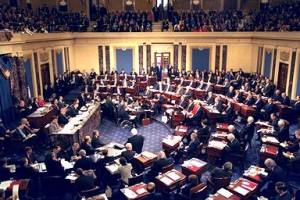
full-senate-300x200The United States Senate.

Will the 114th Congress follow in his footsteps, or will it abdicate its constitutional responsibilities?

Congress has often abdicated its constitutional power in the area of foreign policy, failing to fully leverage the power of the purse: funding, defunding and “fencing.”

***************

White House and State Department officials contend that, irrespective of Congress, President Barack Obama can apply effective diplomatic, commercial and national security pressure and coerce Israel to partition Jerusalem and retreat from Judea and Samaria to the 9-15 mile-wide pre-1967 sliver, surrounded by the violently turbulent and unpredictable Arab street.

U.S. Ambassador to Israel Dan Shapiro recently voiced this inaccurate underestimation of the power of Congress — which has traditionally opposed pressure on Israel, echoing the sentiments of most constituents — saying, “What is unmistakable about our foreign policy system is that the Constitution provides the president with the largest share of power.”

The assertion that U.S. foreign policy and national security are shaped by presidential omnipotence can be refuted by the U.S. Constitution as well as recent precedents. The Constitution was created by the Founding Fathers, who were determined to limit the power of government and preclude the possibility of executive dictatorship. They were apprehensive of potential presidential excesses and encroachment, and therefore assigned the formulation of foreign policy and national security to both Congress and the president. Obviously, the coalescing of policy between 535 legislators constitutes a severe disadvantage for the legislature.

According to the Congressional Quarterly, the U.S. Constitution rectified the mistakes of its predecessor, the Articles of Confederation, upgrading the role of Congress to the primary branch of the U.S. government. “Hence, the first article of the Constitution is dedicated to Congress. The powers, structure, and procedures of the national legislature are outlined in considerable detail in the Constitution, unlike those of the presidency and the judiciary.”

Unlike all other Western democracies — where the executive branch of government dominates the legislature, especially in the area of international relations and defense — the U.S. Constitution laid the foundation for the world’s most powerful legislature, and for an inherent power struggle over the making of foreign policy between the legislature and the executive, two independent, co-equal and co-determining branches of government. Moreover, while the president is the commander in chief, presidential clout depends largely on congressional authorization and appropriation in a system of separation of powers and checks and balances, especially in the areas of sanctions, foreign aid, military assistance, trade agreements, treaty ratification, appointment confirmation and all spending.

Congressional power has been dramatically bolstered since the Vietnam War, Watergate, the Iran-Contra affair and globalization, which have enhanced the involvement of most legislators in international issues, upgraded the oversight capabilities of Congress, dramatically elevated the quality and quantity of some 15,000(!) Capitol Hill staffers and have restrained the presidency.

However, Congress has often abdicated its constitutional power in the area of foreign policy, failing to fully leverage the power of the purse: funding, defunding and “fencing.” Legislators prefer to focus on domestic issues, which represent their constituents’ primary concerns and therefore determine their re-electability. Hence, they usually allow the president to take the lead in the initiation and implementation of foreign and national security policies, unless the president abuses their trust, outrageously usurping power, violating the law, assuming an overly imperial posture, pursuing strikingly failed policies, or dramatically departing from national consensus (e.g., the deeply rooted, bipartisan commitment to the Jewish state). Then, Congress reveals impressive muscle as befits a legislature, which is the most authentic reflection of the American people, unrestrained by design, deriving its power from the constituent and not from party leadership or the president, true to the notion that “the president proposes, Congress disposes.”

For example:

  • On August 1, 2014, Democratic senators forced Obama to separate the $225 million funding of Iron Dome batteries from the highly controversial $2.7 billion immigration and border security bill.
  • Since 1982 the Senate has repeatedly refused to ratify the Convention on the Law of the Sea, and since 1999 it has rejected ratification of the Comprehensive Test Ban Treaty.
  • The January 2013 defense authorization bill tightened restrictions on the transfer of terrorists from Guantanamo to the U.S. In May 2009, Majority Leader Harry Reid foiled Obama’s attempt to close down the detention camp.
  • On February 17, 2011, Obama reluctantly vetoed a U.N. Security Council condemnation of Israel’s settlement policy, due to bipartisan congressional pressure.
  • In September 2012, a $450 million cash transfer to the Muslim Brotherhood regime in Egypt was blocked by Congress.
  • The 2012 budget cut into Obama’s foreign aid spending request by more than $8 billion.
  • In 2009, bipartisan congressional opposition prevented the appointment of Charles Freeman to chair the National Intelligence Council.
  • In 1990-1992, Congress approved a series of amendments, expanding U.S.-Israel strategic cooperation to unprecedented levels despite presidential opposition.
  • In 1990, President George H. W. Bush failed in his attempt to cut Israel’s foreign aid by 5 percent due to congressional opposition.
  • In January 1975, the Jackson-Vanik Amendment was signed into law, in defiance of the president.
  • Congress ended U.S. military involvement in Vietnam (the 1973 Eagleton, Cooper and Church Amendments), Angola (the 1976 Clark Amendment) and Nicaragua (the 1982-1984 Boland Amendments).
  • In 1991, Senator Daniel Inouye fended off administration pressure to withdraw an amendment to upgrade the port of Haifa facilities for the Sixth Fleet: “According to the U.S. Constitution, the legislature supervises the executive, not vice versa.”

Will the 114th Congress follow in his footsteps, or will it abdicate its constitutional responsibilities?

Palestinians desire only true Islamic peace with Jews.

December 28, 2014

Palestinians desire only true Islamic peace with Jews, Dan Miller’s Blog, December 28, 2014

Palestinians are Islamic and Islam is the religion of peace. Don’t forget it, unless you are a hateful Islamophobe and look forward to being murdered.

A You Tube copy of a heart-warming Palestinian instructional video on how to achieve blessed Islamic peace with Jewish oppressors is embedded a few paragraphs below. The video has “gone viral” in the Palestinian social media.

The 1 minute and 13 second-video, as seen below, shows the “teacher” calmly walking up to a “victim,” stabbing him, and walking away.

One of the tactics appears to imitate the Islamic State method of beheading.

The guide to killing Jews teaches that after stabbing the victim, the knife should be twisted to maximize wounds and cause death.

To put the video in proper perspective, here’s an excerpt from Imam Obama’s October 3, 2014 Eid al-Adha greeting to Muslims around the world:

As our Muslim neighbors and friends gather for Eid celebrations, Muslim Americans are among the millions of pilgrims joining one of the world’s largest and most diverse gatherings.  Hajj brings together Muslims from around the world – Sunni and Shiite – to share in reverent prayer, side by side.  It serves as a reminder that no matter one’s tribe or sect, race or religion, gender or age, we are equals in humanity. [Emphasis added.]

On Eid, Muslims continue the tradition of donating to the poor and joining efforts with other faith communities in providing assistance to those suffering from hunger, sickness, oppression, and conflict.  Their service is a powerful example of the shared roots of the world’s Abrahamic faiths and how our communities can come together in shared peace, with dignity and a sense of justice. [Emphasis added.]

And now, the beautiful video showing Palestinian pathways to a shared humanitarian peace between Muslims and Jews with dignity and (social) justice for all:

In similar vein, a Palestinian envoy to Iran recently “said that ‘Israel is a cancer’ that ‘will be destroyed’ . . . ”

anti-Israel-allah

He is the envoy from the Palestinian Authority, Israel’s peace partner in discussions which Secretary Kerry has pushed ever since he first honored and delighted Israel by becoming the U.S. Secretary of State.

Kerry I'm an idiot

Here’s an Andrew Klavan video condemning Israel’s own brutal war on innocent cancer cells. They are probably not the types of cancer cells to which the esteemed Palestinian Authority envoy referred.

Finally, here’s an uplifting video from November of 2011 about the glories of the Arab Islamic Spring and the peace, enlightenment and happiness it is bringing to all whom it touches.

Over 7,000 Iranian Revolutionary Guards in Iraq to compensate for Maliki’s ouster not to fight ISIS

December 28, 2014

(Interesting if accurate. A few sometimes reliable sources are cited, but without links. — DM)

Original posted by Dan Miller

Over 7,000 Iranian Revolutionary Guards in Iraq to compensate for Maliki’s ouster not to fight ISIS, National Council of Resistance of Iran, December 26, 2014

suleimani-ameriQassem Suleimani and Hadi al-Ameri head of Badr Organization
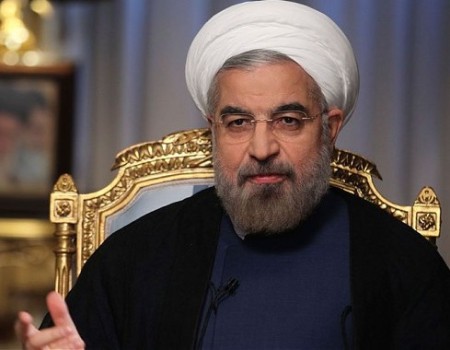
The objective of mullahs in dispatching revolutionary guards and strengthening militias is not to fight ISIS but to compensate for the decisive blow of Nouri al-Maliki’s ouster and to consolidate dominion of velayat-e faqih caliphate over Iraq

NCRI – The Iranian Resistance warns of the escalating presence of the criminal revolutionary guards of the terrorist Qods Force (QF) in Iraq that is a blatant breach of UN Security Council resolutions and underscores that their objective is not to fight ISIS, but to compensate for the heavy blow caused by Maliki’s ouster and to consolidate the velayat-e faqih caliphate in Iraq.

The slaughter and forced migration, along with aggression against the Iraqi people, in particular the Sunnis, and ridding them of their property by the revolutionary guards and their affiliated militias under the pretext of fighting ISIS has endangered peace and security throughout the region and fuels the machine of extremism and terrorism in the whole region.

1. According to Resistance’s information from inside the regime, the number of revolutionary guards of the QF now reaches 7000 in Iraq. A large number of them have been stationed in Baghdad, Diyala and Salah ad-Din provinces and the cities of Samarra, Karbala, Najaf, Khaneqain, Sa’adiyah and Jaloula. A great number of commanders and experts from the revolutionary guards accompany the terrorist militias in various areas of Iraq. Regime’ fighter jets have been flying in Iraq since early November and are currently carrying out military missions in Diyala and Salah ad-Din provinces.

2. The extent of this meddling is such that mullahs’ Defense Minister Dehqan stated on December 20: “In the realm of weapons and equipment, usually their governments (Iraq and Syria) purchase from us and in the realms of training and advising we are serving the armies and resistance forces of Syria, Lebanon and Iraq.” He added: The presence of Qasem Soleimani in Iraq “is to offer advice, guidance and training… the people who have gone there are to advise and offer training to help out with organizing and training and to offer advice on operational plans”.

3. The clerical regime and the QF that had brought Iraq under their hidden occupation in a step by step manner since 12 years ago, had taken over all aspects of that country through their proxy prime minister. Subsequent to the initiation of the popular uprising against Maliki in January 2013, they broadened their interference to suppress the uprising and to strengthen their hand in Iraq.

4. Since January 2014 that Maliki initiated the Anbar conflict and suffered a severe defeat in the hands of the people and tribes of that region, the Iranian regime felt imperiled and thus the presence of the QF in Iraq took on new dimensions. Mohammad Hejazi, Deputy for Logistics in regime’s General Command Headquarters of the Armed Forces, announced that the clerical regime is prepared to offer Iraq equipment and consultation (IRNA News Agency – January 5, 2014).

5. In February 2014, a number of QF commanders who had participated in the slaughter of the Syrian people went to Iraq to pass on their experiences in trainings to the Iraqi forces. Intimately and directly they transferred their experience in Iran and Syria to Ali Qaidan, the at the time Commander of the Army, and Fadhil Barwari, the Commander of the Golden (Dirty) Division. They primarily order to Maliki to establish a Basij-like force. They noted that they had initiated the civil defense in Syria which is capable of saving Assad’s regime; the classical army is designed to fight an external war and is useless in guerrilla warfare.

6. During this period, the QF beefed up the terrorist militia groups under its command such as Asa’ib Ahl al-Haq, Kata’ib Hezbollah and Badr Corps and dispatched them to Anbar Province, especially to Ramadi and Garmeh regions. Their first task was to pump morale into Maliki’s military. Since March 2014, 15-day training courses were arranged for these militias in Iran; the same thing that the regime had initiated two years ago for the mercenaries who were dispatched to Syria.

7. In March 2014, the QF sent some trainers from the Lebanese Hezbollah to Iraq to organize and train the militias and concurrently sent all types of weapons and equipment in an attempt to organize a powerful force capable of preserving the power in the hands of Maliki and Iranian regime’s elements.

8. Since late March 2014, the militias who had been equipped and organized in orderly units and were accompanied by QF commanders were deployed in battlefields and specific defensive lines were trusted to them. The Garmeh region until Zaidan and Baghdad Beltway from Taramiyah to Abu Ghoraib was given to Asa’ib militias; Fallujah and Baghdad Beltway from south of the airport to Yousefiyah was given to the Kata’ib terrorist group; and the Badr forces were deployed to the west of Fallujah and Ramadi. A division composed of the militias was organized to be deployed in Baghdad’s Beltway from Taramiyah to Madaen, west of Baghdad. Maliki and the QF jointly provided their equipment. Special equipment, bombs and missiles were transferred to Najaf and Baghdad through air transport with coordination by Hadi Ameri, Iraq’s at the time Minister of Transportation, to be transferred subsequently to these forces.

9. During this period, the commanders of the QF were placed in active liaison and direct coordination with Maliki’s army and police commanders and a joint Tactical Operating Center (TOC) was set up in Anbar. IRGC Brigadier General Iraj Masjedi, Qasem Soleimani’s “supreme advisor”, and a number of other commanders of the QF were deployed in Iraq. In addition, “Esmail Qa’ani Akbarnejad”, Deputy to Qasem Soleimani, regularly travelled to Iraq to supervise the situation.

10. Following the disintegration of Maliki’s army on June 10 and as Ninawa and Salah ad-Din slipped from his hands, the QF dispatched its command system to Iraq in a matter of hours. In the early days of this development, over 2000 seasoned revolutionary guards entered Iraq who were primarily tasked to Baghdad’s Beltway. Others were deployed in Diyala. Concurrently, people from IRGC Air Force were deployed in Diyala, Salah ad-Din and Kurdistan to collect information and direct drones. The number of revolutionary guards continues to rise and has now reached 7000.

11. At this stage, Soleimani used Abu Mehdi Mohandess, the known terrorist, as his Deputy of Operations in Iraq and commander of the militias and formed a special TOC for coordinating the militias in Baghdad. The military and security responsibility for Diyala was given to Hadi Ameri, Maliki’s Minister of Transportation. These two are both in the list of 32000 employees of IRGC in Iraq. This is the list that the Iranian Resistance exposed back in 2006.

12. To compensate for the sidelining of Maliki and regain former status, the clerical regime ramped up the presence of the QF in August and the presence of Qasem Soleimani increased, especially in battlefields such as Amerli, Jarf al-Sakhar, Sa’adiyah and Jaloula. In order to build up the morale of its defeated mercenaries, regime’s Farsi and Arabic speaking media staged a noisy propaganda campaign about the presence of Soleimani and the IRGC in Iraq.

13. During this period, organizing the “popular Basij” forces was left to the militias and the QF. In an interview with al-Iraqiya state TV on December 22, Maliki’s National Security Advisor Faleh Fayad stipulated that there are a number of “Iranian advisors” within the “popular Basij” forces.

14. The objective of IRGC and the militias is not to fight ISIS, but to exploit on the present situation and consolidate their grip on Iraq. That is why the massacres, aggressions, forced migration of populations, and ridding the Sunnis of their property that have been ongoing by these forces since 2003 took on unprecedented dimensions in the recent months. In an interview on December 1st with the official website of Kurdish Democratic Party (KDP), Sheik Jafar, KDP’s official in Khaneqain, said: “The actions of Shia militias is like ISIS or even worse. They are experts in killing, burning and looting. They have disrupted 90% of Sa’adiyah and looted and burned all its places… Their objective is to expand their rule and influence… They rarely use the Iraqi flag and mostly hoist a flag that carries the emblem of the Islamic Republic of Iran… They have initiated purging of all Sunnis and kill people anywhere they can… These forces blew up people’s homes under the pretext of neutralizing mines and explosives.”

15. In a shocking report on December 15, the Al-Jazeera TV unveiled the bombing of Sunni areas and forcible displacement of the Sunnis in Iraq including in Diyala and Salah ad-Din and especially in Samarra, various districts of Baghdad and its suburbs such as Mahmoudiyah, Arab Jabour, Jarf-al-Sakhar, Yousefiyah, Latifiyah, Abu Ghraib, Taji and Moshahedeh by the militias affiliated with the QF. The number of forcibly displaced people in Baghdad reaches one million. A resident of Jarf-al-Sakhar testified, “Militias burn homes, arrest the youth, and kill them in undisclosed locations… No Sunni family is left in Jarf-al-Sakhar. They arrest young and old men, forcibly displace the families, and kill them… We are witnessing the beginning of an Iranian caliphate just as ISIS has announced its caliphate.”

16. On 14 October 2014, in a detailed report titled “Absolute impunity, Militia rule in Iraq”, Amnesty International underscored the affiliation of the militias to the Iranian regime and wrote:
• The growing power of Shi’a militias has contributed to an overall deterioration in security and an atmosphere of lawlessness.
• Shi’a militias are ruthlessly targeting Sunni civilians on a sectarian basis under the guise of fighting terrorism, in an apparent bid to punish Sunnis for the rise of the IS and for its heinous crimes.
• Scores of unidentified bodies have been discovered across the country handcuffed and with gunshot wounds to the head, indicating a pattern of deliberate execution-style killings.
• Militia members, numbering tens of thousands, wear military uniforms, but they operate outside any legal framework and without any official oversight.
• By granting its blessing to militias who routinely commit such abhorrent abuses, the Iraqi government is sanctioning war crimes and fuelling a dangerous cycle of sectarian violence that is tearing the country apart.
• Successive Iraqi governments have displayed a callous disregard for fundamental human rights principles. The new government must now change course and put in place effective mechanisms to investigate abuses by Shi’a militias and Iraqi forces and hold accountable those responsible.

17. On 18 September 2014, the Foreign Policy website in an article titled “Iraq’s Shiite militias are becoming as great a danger as the Islamic State” wrote: “These groups, many of which have deep ideological and organizational links to Iran… are actively recruiting — drawing potential soldiers away from the Iraqi army and police and bringing fighters into highly ideological, anti-American, and rabidly sectarian organizations. Many of these trainees are not simply being used to push back Sunni jihadists, but in many cases form a rear guard used to control districts that are supposedly under Baghdad’s control…In early June, Shiite militias, along with Iraqi security forces, reportedly executed around 255 prisoners, including children…The growth of these pro-Iranian Shiite militias, and many more like them, helps demonstrate Iran’s goals for the domination of Shiite Iraq. These groups not only benefit from Iran’s patronage and organizational capabilities — they also all march to Tehran’s ideological tune. They are loyal to Iran’s Supreme Leader Ayatollah Khamenei and Iran’s ideology of absolute wilayat-e faqih.”

18. On September 16, New York Times wrote: “‘We break into an area and kill the ones who are threatening people,’ said one 18-year-old fighter with Asaib Ahl al-Haq… insisting that their militia commanders had been given authority by Iraqi security officials… This militia was once a leading killer of American troops … Alla Maki, a Sunni lawmaker said that under former Prime Minister Nuri Kamal al-Maliki, Asaib Ahl al-Haq was ‘encouraged to do dirty jobs like killing Sunnis, and they were allowed to operate freely. Now the international community are all being inspired by the removal of Maliki personally, but the policy is still going on’… So far, though, there is no sign of any official attempts to investigate even the most publicized allegations of extrajudicial killings of Sunnis by Asaib Ahl al-Haq.”

Thawing U.S. ties: Cuba today, Iran tomorrow?

December 26, 2014

Thawing U.S. ties: Cuba today, Iran tomorrow? Al Arabiya NewsMajid Rafizadeh, December 26, 2014

(Please see also Obama’s Worst Lie About his Dirty Castro Deal is in his First Sentence.

Obama Cuba negotiations

Also, Obama’s need for a legacy consistent with his ideology trumps all else, including Iran’s abysmal human rights record, its theocratic government, its support for terrorism, its hatred for Israel and desire to eliminate her, its duplicity in its P5+1 negotiations and its insistence on getting (or keeping) nukes. True, removal of statutorily based sanctions would require congressional action. However, Obama has little interest in avoiding constitutional irregularities. No congressional approval was granted for the “temporary suspension” of sanctions and laws inconsistent with Obama’s desires can be and are waived. Litigation over the de facto removal of sanctions by executive order would take many years.– DM)

After almost 53 years of Cold War between the U.S. and Cuba, the transformation of ties between these two adversaries has sparked a considerable amount of debate with respect to the normalization of ties with other longstanding rivals. The possibility of resolving other diplomatic imbroglios, specifically the revival of diplomatic ties between the U.S. and Iran is a case that comes to mind.

Some Iranians showed their excitement on Twitter with regards to the Cuban deal. Some showed hope that their government will be next and they could soon see an American embassy in Tehran. However, others thought that an Iran-U.S. deal is an idealistic and unreachable dream.

Indeed, any normalization of diplomatic relationships between the Islamic Republic and the U.S. will likely have significant positive impacts on both nations, leading to a critical strategic and geopolitical shift in the Middle Eastern political chessboard. Currently, both countries have some shared strategic and geopolitical objectives in Iraq and Syria particularly when it comes to fighting ISIS.

A possible Iranian deal will remove the economic sanctions on the Islamic Republic, assisting Tehran to achieve its highest economic potential in exports, imports and wealth. The tourist industry would be revived in Iran, with many European and Americans fond of visiting thousands of years old historical sites in Esfahan Shiraz, Hamadan, and other provinces. Normalization of diplomatic ties will lead to the flow of (primarily) European companies to do business with the Islamic Republic. In addition, as Iranian youth have shown to be in favor of American brands and products, American manufactures will find a share in Iran’s market as well. Further, U.S. airplane companies will begin cooperation with Iranian airlines.

As many people are pondering on the likelihood of a deal similar to the recent Cuba agreement with Iran, the question is whether the executive order to lift the embargo on the Islamic Republic and conducting back channel diplomacy to fully open ties with Tehran is possible?

Iran’s file is more complicated and multilayered

There are some partial similarities between the Obama administration’s method to initiate a deal with Raul Castro’s government and the way it has recently approached the Islamic Republic. The major commonalities are the back channel diplomacy and talks.

Similar to the Cuban deal, the Obama administration has conducted back channel talks with Iranian politicians with respect to Iran’s nuclear program. In addition, President Obama sent a clandestine letter to Iran’s Supreme Leader Ayatollah Ali Khamenei highlighting some of the shared strategic, national and geopolitical interests that both nations have in the Middle East.

Nevertheless, these commonalities in diplomatic approaches have led some scholars, politicians, and policy analysts to jump to the conclusion that the same deal should be applicable to the case of Iran because such an approach was possible with Cuba and the embargo on Cuba was lifted.

But, not too fast.

Iran’s file is much more complicated, multifaceted and multilayered than the Cuban case. While Cuba is a small island close to the state of Florida with a population of approximately 11 million, Iran, with a population of over 80 million, is located in the complex geopolitical chessboard of the Middle East, and entangled among mixture of alliances and enmities in the oil rich region.

Second of all, from Washington’s perspective, Cuba has hardly been a serious threat to American strategic, geopolitical, or economic interests. On the other hand, the Islamic Republic has been a major player in scuttling U.S. foreign policy objectives and opposing its allies (including Israel) in the Middle East.

Third, several crucial regional developments are viewed from the prism of a zero-sum game for both Iranian and American officials. Iranian leaders are less likely to accept any compromises on their top foreign policy priorities, such as: keeping President Bashar al-Assad in power, withdrawing its financial, advisory, intelligence, and military support to the Iraqi and Syrian government, and assisting formidable proxies such as Hezbollah.

Fourth, there was no international consensus on the U.S. embargo and economic sanctions against the Cuban government. As a result, President Obama can issue an executive order to lift the embargo. Many European countries were doing business with the Cuban government and the United Nations repeatedly condemned U.S. sanctions. On the other hand, the four rounds of economic sanctions on Tehran came with the approval of the U.N. Security Council. Unlike Cuba, many regional and global powers are dubious about Iran’s nuclear and regional hegemonic ambitions.

Fifth, several developments in Iran, such as revelations of clandestine nuclear sites, the possibility of testing exploding detonators for nuclear weapons in Parchin military site, and the military dimension of Tehran’s nuclear program, have led to regional and international strain.

Finally, and more fundamentally, unlike Castro, Khamenei has shown no interest in fully normalizing diplomatic ties with the United States. For example, the Obama administration received no positive response from Khamenei through its diplomacy. In addition, there is no official public debate among Iranian politicians, across various spectrums of Iran’s political system, of even allowing the opening of an American embassy in Tehran. The U.S. domestic opposition to normalize ties with Iran, particularly from the Republicans, is much higher in comparison to the Cuban case. Although the Obama administration has taken some back channel steps to negotiate with the Islamic Republic, Iran’s supreme leader has not responded with signs of willingness to normalize relationships and he has been clear in not trusting the “Great Satan. “

The signal that Iranian leaders received from the Cuban deal is not what the Western media depicts- that Iran is optimistic about normalizing ties with the U.S.. The message that Tehran received was that the Islamic Republic has to persist in its policies and that economic sanctions will ultimately fail. As foreign ministry spokeswoman Marzieh Akfham articulated: “The defense by the Cuban government and people of their revolutionary ideals over the past 50 years shows that policies of isolation and sanctions imposed by the major powers against the wishes of independent nations are ineffective.”


Is there a solution?

December 26, 2014

Is there a solution? Israel Hayom, Dror Eydar, December 26, 2014

(For European nations, America and others, abortive efforts to bring “peace” among Israel and warring Islamic factions provide welcome distractions from difficulties elsewhere which are even less tractable and more damaging to them. — DM)

[N]ot even a utopian-style peace treaty will end the fight against Israel that is being waged by Europe and the global left wing (and here as well, to some degree). The dozens of organizations that have been established to take away the Jews’ right to their own land (for some reason, these groups are known as “human-rights organizations”; after all, you know, we Jews have no human rights) will no longer show any interest in the cruel dictatorship that they helped set up next door. Instead, they will aim their heavy artillery against Israeli society, which they will accuse of racism for being an exclusive state for the Jewish ethnic group instead of a “state of all its citizens,” which is actually code for “a state of all its nationalities.”

*****************

1. The upcoming elections have plunged Israel into a wartime atmosphere, and a good deal of blame is being thrown about. Each side, instead of looking to its own misdeeds, is making accusations against the other. They are not saying, “We have sinned,” but rather, “You have sinned.”

Here, too, the accusations are meant to generate shallow headlines rather than addressing deep issues. This is a big mistake. Despite the piles of mud and refuse that are customarily dumped onto the average Israeli, the average Israeli is generally well aware of what is going on. They understand ideology and vision.

On the political plane, one gets the impression that the discourse, at least on the Left, is still stuck in the 1980s, before the great experiments that the Oslo Accords brought upon us — before Hamas, before Islamic State, before the Middle East fell to pieces. What can Tzipi Livni accomplish with the Palestinians that she hasn’t done over the past two years, when she was in charge of the talks with them? Did she bring any sort of agreement to the government that it turned down? If so, let her tell us.

But she knows that there is nobody to talk to on the other side. They never had the slightest desire to end the conflict with the Jews. I would be glad to hear any Arab leader name his final demands — the ones for which, if they were fulfilled, he would sign on the dotted line that the conflict was over and state that he had no further claims. Are there any volunteers?

We have not even mentioned Jerusalem or the refugees or recognition of Israel as a Jewish state. The demand that our neighbors recognize Israel as the national home of the Jewish people was not for us, but for them. That is the litmus test of the integrity of their intentions. Do they recognize the right of Jews to any part of the historical Land of Israel? We know that any Arab leader who grants such recognition can expect an uncomfortable death.

That is the reason for the effort to anchor the Jewish nature of the State of Israel in a Basic Law. It is because not even a utopian-style peace treaty will end the fight against Israel that is being waged by Europe and the global left wing (and here as well, to some degree). The dozens of organizations that have been established to take away the Jews’ right to their own land (for some reason, these groups are known as “human-rights organizations”; after all, you know, we Jews have no human rights) will no longer show any interest in the cruel dictatorship that they helped set up next door. Instead, they will aim their heavy artillery against Israeli society, which they will accuse of racism for being an exclusive state for the Jewish ethnic group instead of a “state of all its citizens,” which is actually code for “a state of all its nationalities.”

2. As we look on, Europe is falling like a ripe fruit at the feet of the radical Islam sweeping over it. The more terrorism conquers the streets of Europe, the greater the Europeans’ desire will be to pay the terrorists a ransom in exchange for being left in peace, unmolested. As history has taught us, the ransom will be the Jews. The ludicrous statements by the European parliaments about recognizing the Palestinian state show the blindness of a society in decline that lost its basic instincts long ago. The Europeans care nothing about the Palestinians, whom they have doomed to a life of misery and suffering under oppressive regimes that are among the worst in the world, where there is no such thing as basic human rights.

The Palestinians are the last thing that the Europeans care about, just as they care nothing about the atrocities being perpetrated in Syria, Iraq or Africa. The Europeans are recognizing the Palestinian state not because they have any desire to improve our neighbors’ situation, but because they have a problem with the Jews. They always did.

Ironically, the return to Zion made the Jewish problem worse because it gave the Jews an independent political living space — which the Europeans find completely unacceptable. That is also the reason why there are dozens of European organizations in this region, and why they funnel hundreds of millions of euros supposedly to help the Palestinians, but actually in efforts to undermine the legitimacy of the Jewish state. The “peace process” is just one more tool in that mechanism.

3. The talk of a “diplomatic agreement” is also a media ransom, lip-service paid by politicians who seek the sponsorship of the media party. Avigdor Lieberman is quite familiar with this work.

“We must reach a diplomatic agreement,” he said in a “closed-door conference,” and received flattering headlines right away. “What is going on today is that they are doing nothing; there is a status quo. The initiative must be a comprehensive regional agreement.”

Have we not heard those empty phrases a thousand times already? Have we not tried to reach a political agreement in all kinds of ways? Has Prime Minister Benjamin Netanyahu not gotten into trouble with his own camp over it? Did he not freeze construction in Judea and Samaria for ten months? And, before him, did Ehud Olmert not offer our neighbors what even Lieberman (I hope) would never dare offer?

And what about the two Yisrael Beytenu princes, Uzi Landau and Yair Shamir? Where are they? Why are they not responding to their party chairman’s heretical statements? After all, were they not the ones who gave Lieberman the stamp of approval to be a right-wing party? More evidence of Lieberman’s desertion to the Left is his use of the well-known leftist scare tactic terminology: “a political tsunami.” But what burst out this week was more of a police tsunami against the members of Yisrael Beytenu. Now that the leader has adopted the Orwellian language of peace and speaks the language of the media party, maybe they will cut him some slack.

4. In the end, the dispute between most of the Right and most of the Left boils down to one question: Do we believe the Palestinians or not? Palestinian Authority President Mahmoud Abbas has declared many times that he will never recognize Israel as a Jewish state, and he specifically named 6 million, with all its symbolism, as the number of Palestinians who expect their demand for the right of return to be fulfilled. Abbas is currently being kept alive by the Israeli army, which is protecting him as they would a delicate flower from attacks by the street, which supports Hamas. This does not stop the Palestinians from going all over the world, accusing us of every possible atrocity.

The purpose of their action is to gain the maximum amount of territory at the minimum price — actually, for no price at all — but not to establish a tiny statelet. The past hundred years have taught us that what unites Arab-Palestinians is not the desire to improve their own living conditions, but to destroy the Jews’ lives. What more has to happen for us to believe what they say? In the meantime, they are sticking close to us so that we will protect them against Islamic State.

5. So what is the solution? First, whoever said that there was a solution? Second, if we tried and did not succeed, maybe we ought to leave something for future generations to accomplish. You do not really believe the well-known chorus of lamentation that things are bad here and that the country is “stuck.”

We have succeeded quite well, thank God, considering the fact that only one of our hands is engaged in construction, development and cultural work, since the other is busy with self-defense. Where were we just 70 years ago, in 1944 — and where are we now? Let us put things in perspective.

Sanction Relief Empowering the Mullahs, Not Citizens

December 26, 2014

Sanction Relief Empowering the Mullahs, Not Citizens, Front Page Magazine, December 26, 2014

(Surprise! And to which P5+1 nations, and to which entities within them, might the benefits of sanctions relief authorizing increased trade between the them and Iran go? — DM)

iran_2677161b-450x350

Four major institutions are benefiting mostly from the economic sanctions relief: Iran’s military-industrial complex, the Office of the Supreme Leader, Ayatollah Ali Khamenei, a few top business figures who are connected with the government, and the Iranian Revolutionary Guard Corps (IRGC), through either legal and illegal imports and exports.

******************

There has always been an argument claiming that economic sanctions normally do not yield any result due to the notion that economic sanctions do not target the ruling elite and governmental official, but the ordinary people. This argument is partially accurate.

Nevertheless, we need to remember that some targeted economic sanctions against the Islamic Republic (particularly the sanctions in oil and gas sectors and financial and bank institutions) did endanger the hold on power of the ruling cleric in Iran, particularly the Supreme Leader, Ayatollah Ali Khamenei. That was the primary reason behind pushing the Iranian politicians to come to the negotiation table in nuclear talks.

On the other hand, the other side of the argument is that if economic sanctions are lifted, the major beneficiaries would be the ordinary people and the civilians. This argument would be accurate if the political and economic system of the given state is democratic, allows open opportunities for all, encourages the private sector, allows transparency, and holds those corrupt officials who commit illegal economic dealings accountable.

The Iranian political and economic system is devoid of the aforementioned standards. In fact, in states which the political system is mainly authoritarian or theocratic, and the economic system is monopolized by few people at top and is state controlled, any increase of wealth or flow of money will inevitably strengthening the ruling elite rather than the ordinary people.

To substantiate this argument, let us take a look on the ground in the Islamic Republic after the sanctions relief.

At the beginning, a majority of Iranian people were hoping that economic sanctions relief would alleviate their suffering, improve their standards of living, and push many families above the poverty line. Almost a year has passed since the Iranian government has been receiving sanctions relief.

After the interim nuclear deal and extension of the negotiations between the six world powers (known as the P5+1: China, France, Germany, Russia, the United Kingdom, and the United States) and the Islamic Republic, the Iranian government had received an estimated $7 billion.  Iran continues to receive approximately $700 million every month under the extension deal.

In addition, there has been some sanction suspension with respects to some of Iran’s major industries, including Iran’s auto sector, gold and precious metals, as well as Iran’s petrochemical exports. The Iranian currency, the rial, has appreciated due to the sanctions relief, Iran’s oil and non-oil exports have increased, its economy is showing signs of stabilization, Tehran’s stock exchange has soared and Iran’s exports and business dealings with several countries have ratcheted up.

The suspension of sanctions has definitely given both psychological and financial support to the Iranian government.  But the real question is how this money is being spent and which institutions benefit primarily from this sanctions relief. Are ordinary people benefiting from these sanctions relief and flow of money?

Nevertheless, some Iranian civilians have begun to believe that even economic sanctions relief or even the lifting of the whole economic sanctions regime from the Iranian government are not going to assist civilians, their financial day-to-day activities, or bring concrete changes on the ground.

Four major institutions are benefiting mostly from the economic sanctions relief: Iran’s military-industrial complex, the Office of the Supreme Leader, Ayatollah Ali Khamenei, a few top business figures who are connected with the government, and the Iranian Revolutionary Guard Corps (IRGC), through either legal and illegal imports and exports.

For example, the IRGC controls and owns a considerable amount of shares in the aforementioned industries which have witnessed sanctions relief. In the petrochemical industry, The IRGC military-industrial complex owns Zagros Petrochemicals; 40% of Pars Petrochemical Company, part of Arak Petrochemicals; 25% of Kermanshah Petrochemicals; as well as 19% of the shares of Maroun Petrochemicals.

This phenomenon of the monopolization of the economy applies in other sectors of Iran’s economy as well.  When it comes to Iran’s economic system, the Supreme Leader and IRGC do have a considerable amount of control and shares in almost all industries including financial institutions and banks, the transportation industry, automobile manufacturing, mining, commerce, and oil and gas sectors.

As a result, these types of sanctions relief will mostly benefit the ruling elite, primarily the Supreme Leader and Iran’s military-industrial complex, IRGC. Iranian people will hardly observe any benefits from this economic sanctions relief or lifting of economic sanctions.

It appears that the easing of sanctions are strengthening the ruling elite without any sign of redistribution of wealth. This is predominantly due to the fact Iran’s economic system is a state and military controlled system, it lacks transparency, as well as the reality that it is crippled with widespread corruption by the ruling elite and few on top.

If the intention of economic sanctions relief is to assist the Iranian people and alleviate their suffering, there ought to be more efficient approaches to develop some types of targeted sanctions relief (for example, being directed at Iran’s educational system, health care, etc.) which aim at empowering Iranian civilians and primarily the middle class.