Posted tagged ‘Egypt’

Israeli hysteria magnifies Hamas rocket threat

April 15, 2016

Israeli hysteria magnifies Hamas rocket threat, DEBKAfile, April 15, 2016

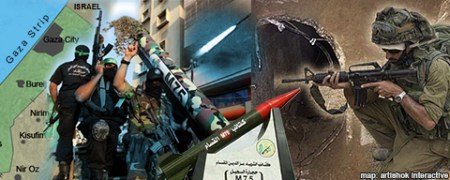
epa01962019 A Palestinian Hamas masked militant stands near a Hamas flag as he takes part in protest and a military parade in central Gaza Strip, 11 December 2009. Israeli settlers vandalized a mosque in a northern West Bank village early 11 December, spray-painting hate slogans in Hebrew and setting ablaze bookshelves and a carpet, Palestinian police and the Israeli military said. Palestinian police spokesman Munir Jagoub told the German Press Agency dpa that the fire in the grand mosque in the village of Yasouf, south-west of the city of Nablus, in the northern West Bank, caused heavy damage to the library, where copies of the Holy Quran are kept, as well as to prayer rugs and the wall. EPA/MOHAMMED SABER I

A Palestinian Hamas masked militant stands near a Hamas flag as he takes part in protest and a military parade in central Gaza Strip, 11 December 2009.

Hamas Political Bureau Chairman Musa Abu Marzuk led an SOS delegation to Tehran last month in a desperate effort to persuade Iran to end its boycott and renew the flow of funds and weapons to the Gaza Strip. But on April 4, the delegation returned home empty-handed.

This was a last-ditch effort since the Palestinian fundamentalist Hamas which rules the Gaza Strip is flat broke.

Since March 1, it has been forced to slash by two-thirds the wages paid to members of its military wing, the Ezz-a-din Qassem Brigades: each fighter now takes home $200 instead of $600 per month, and officers used to earning $1,000 must be satisfied with $350.

Since March 1, it has been forced to slash by two-thirds the wages paid to members of its military wing, the Ezz-a-din Qassem Brigades: each fighter now takes home $200 instead of $600 per month, and officers used to earning $1,000 must be satisfied with $350.

DEBKA’s military and intelligence sources add: The terrorist group has moreover halted recruitment for lack of funds to pay, accommodate or train new fighters.

The cash crunch has also hit the Hamas government. Most of Gaza’s municipal services are suspended because city officials have not been paid.

Iran’s boycott on military and financial assistance to the Gaza Strip was clamped down in mid-2015 over Hamas’ refusal to line up behind Iran’s unqualified endorsement of its allies, Syrian President Bashar Assad and Yemen’s Houthi rebels.

Since then, Hamas has spared no effort to end the shutdown. Its leaders even tried asking their friend and ally, Hizballah’s Hassan Nasrallah, to intercede on their behalf with his masters in Tehran. Nasrallah pulled some strings, suggesting that his group would be allowed to renew military and intelligence operations in Gaza to make it worthwhile for Iran to restore its support.

But that proposition like all previous applications was thrown out.

This time, the Hamas visitors were initially received by high Iranian officials, including Ali Shamkhani, secretary of the Iranian Supreme National Security Council, and Ali Larijiani, chairman of the Shura Council. Abu Marzuk asked them to put the case for ending the boycott before Iran’s supreme leader Ayatollah Ali Khamenei.

After the Palestinian officials cooled their heels for two weeks, Gen. Qassem Soleimani, commander of the Revolutionary Guards’ Al Qods Brigades, finally gave them a hearing.

But, according to DEBKA’s Iranian sources report, he told them bluntly that no more largesse would be forthcoming from the Islamic Republic until Hamas publicly declared its support for Syrian President Assad and ordered its fighting assets in Lebanon to join Hizballah’s military campaign in support of the Syrian ruler.

This confrontation has broad ramifications over and above Iran’s relations with the Palestinian terrorists.
Hamas_480_Kotert

1. Tehran demonstrated that its support for Assad is absolute and brooks no opposition. This should dash any hopes underlying the US-Russian understanding for a political resolution of the Syrian conflict that Assad would at some point agree to hand over power to a broad coalition.

Iran is ruthless in bending all its allies and dependents into toeing its line in defense of the Syrian ruler

2. Gen. Soleimani has resurfaced after a five-month disappearance from public view. Rumors abounded that he had been seriously wounded in a Syrian battle, or else fallen into disfavor with Khamenei and cast aside. His reappearance in Tehran with the Hamas delegation means he has been reinstated to the command of Iran’s forces in Syria and the role of operations coordinator with the Russian military.

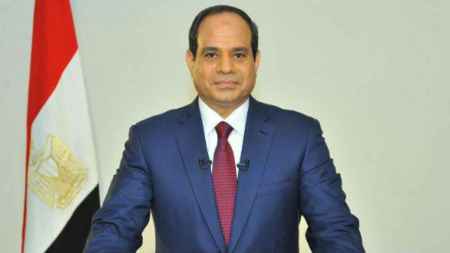
3. After Iran’s door was slammed in their faces, Hamas leaders reluctantly tried patching up their tattered ties with Egyptian President Abdel-Fatteh El-Sisi.

But a delegation to Cairo found Egyptian military and intelligence officials as tough-minded as the Iranians. Hamas terrorists were put on notice that, to mend relations, they would have to prove their good faith by cooperating with Cairo in the war against the Islamic State in Sinai. Specifically, the Palestinian terrorists must hand over to the Egyptian army all the intelligence data they had accumulated on the ISIS networks in Sinai with whom they were playing ball.

Though insolvent, Hamas decided it could not afford to comply with Egypt’s terms for assistance. As DEBKA’s sources explain, breaking up with the Islamic State affiliates in Sinai, would also snap Hamas’ last remaining conduit for the receipt of smuggled funds and weapons from Islamist sources in Libya.

Having burned their boats to Tehran and Cairo, the Palestinian terrorists have run themselves into a dead end.

Hysteria regarding the threat posed by Hamas resurfaced in Israel this week, even though the terrorist organization’s military strength is gradually disintegrating mainly amid a cash crunch that nobody in the Hamas  political or military leadership has been able to resolve.

It all started from a briefing given by the head of the IDF Southern Command, Maj. Gen. Eyal Zamir, to military correspondents following a defensive exercise in the Gaza border area.

Afterwards, the heads of the Israeli defense establishment commented on the threat posed by Hamas using clichés that have been familiar to the Israeli public for years. Perhaps the most common one is “Hamas is not interested in an escalation now… but.” Another one is “Israel and the IDF are not interested in an escalation now…but.”

One of the heads of the Israeli local councils in the Gaza border area added that he was not surprised by recent comments by senior IDF officers on the strengthening of the Hamas. “The statements that Hamas operatives are continuing terror operations can only surprise those who are detached from reality,” he said.

Amid the terrorist organization’s weakness, Israeli hysteria is helping Hamas conceal its true situation from the Palestinian public.
Will Egyptian schools strip religion from curriculum?

April 13, 2016

Will Egyptian schools strip religion from curriculum? Al-Monitor

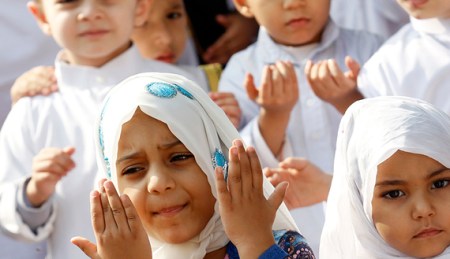
RTXUI2VStudents pray at Nile Garden School before the upcoming Eid Al-Adha festival in Cairo, Nov. 11, 2010. (photo by REUTERS/Mohamed Abd El Ghany)

A call made by Nadia Henry, deputy head of the Free Egyptians Party’s parliamentary bloc, to replace the religion course — which is mandatory for students in public schools — with an alternate course on “values” has raised considerable debate within the parliament, accompanied by an attack launched by the Salafist Nour Party and Al-Azhar.

Egyptian schools teach religion from elementary school through high school, and Christian students are separated from their fellow Muslims during religion courses. However, despite the importance of this course in Egyptian education, the students’ grades in religion are not included in their final grades because religion exams taken by Christians differ from those taken by Muslims, and this way everyone can be graded equally. Meanwhile, the Orthodox Church and Al-Azhar contribute to developing the curricula for the religion courses for both Christian and Muslim students.

In an interview with Al-Monitor, Henry emphasized that she did not call for eliminating the religion course, but rather wanted to replace it with a course on values that would combine verses from both the Quran and the Bible that underline values and ideals. “The values course should be taught by educators who have knowledge in the science of counseling and psychology, in order to plant the idea of citizenship in students’ hearts and teach them how to love one another,” she said.

Henry refused the idea of teaching the values course along with religion, stressing that the religion course and its results over the past years must be evaluated.

Henry pointed out that the religion course did not produce clear results in changing the concepts of ethics and values in society. She also criticized the way religion is taught in schools by separating young Muslim students from Christians, which increases sectarianism. “The values course would teach students the principles of citizenship, without discrimination and without separating between minority and majority. All institutions must work hand-in-hand; the religious institution establishes doctrine, and the educational institution applies it through educational and behavioral rules.”

She called on all those opposing her proposal to join her at the dialogue table to develop the proposal, stressing that she does not aim at eliminating religion from schools but to establish a more advanced way to teach it.

Henry responded to attacks on her proposal by saying that changes to long-standing methods are always accompanied by societal shock, but it is necessary to reconsider the method of teaching religion in schools. According to her, the results of the religion course are negative because students are separated based on their religion and have teachers who are not specialized in teaching religion. She also argued that it would not lead to a decline in religion, claiming, “The values course would hamper any inclinations toward atheism among students, because they would [be taught] to understand and tolerate one another.”

“I will continue to defend the proposal after the Free Egyptians Party’s educational committee finishes preparing it in order to submit it to the parliament,” she asserted.

The veteran member of parliament revealed that she is preparing to hold a workshop for educators, clerics, experts in humanities, as well as media and cultural figures in order to establish regulations and standards for a new educational course under the name of “values.” Henry noted that she will not be affected by the attacks against her. She welcomes all opinions, and she will continue to implement her proposal. Henry expressed her hope that some religious leaders would be welcoming, noting, “The new religious leadership within the Evangelical Church shows how committed it is to teaching religion to the new generation.”

Henry explained that the values course would “emphasize the concepts of moderate Islam for Muslim and Christian students alike. Christian students will learn Quranic verses about tolerance and love, while Muslim students will learn Bible verses about being loving and giving. Thus, citizenship is truly achieved without any [sectarian] slogans.”

Al-Azhar’s committee of senior scholars issued a statement March 10 describing calls to remove religion from state curricula as “harmful to Al-Azhar’s status and the Islamic identity of our country.”

Al-Azhar’s statement was welcomed by Salafist Nour Party’s members of parliament, with parliamentarian Ahmed Sharif applauding Al-Azhar’s stance and stressing that the proposal to remove the religion course was not appropriate.

Meanwhile, Abdel Moneim El-Shahat, a spokesman for the Salafist Call — the Nour Party’s political wing — warned about responding to those calling for eliminating religious education from schools. In press statements published March 15 he said, “All societal classes are in desperate need of an increase in religion in schools, universities and the media.”

For his part, Mohamed El Shahat al-Gundi, a member of the Islamic Research Academy, told Egyptian daily Al-Youm Al-Sabeh in early March that replacing religion for values in school curricula would open the gate to the breakdown of key provisions in the Muslim and Christian religions, and that it was an attempt to resemble the West, which is not the right thing to do.

Henry’s proposal was met with various reactions within parliament. For one, member of parliament Amina Naseer supported the proposal, saying, “Islam and Christianity emphasize the need for ethics and an upright behavior in dealing with others. The values material should include the values contained in Christian and Muslim texts agreed upon by everyone.”

However, independent member of parliament Mohammed Ismail announced that he would make an urgent statement to the Minister of Education to demand including the grades students get in religious course in their final grades, in response to calls to replace the religion course with values. Ismail expressed the need to do away with the current pass/fail grading system for religion, which in his view would eliminate religious illiteracy and prevent the infiltration of extremist ideas into society.


Erdogan raises price tag for normal ties with Israel: Cairo amity first

April 11, 2016

Erdogan raises price tag for normal ties with Israel: Cairo amity first, DEBKAfile, April 11, 2016

Sinai_TiranSnapir

Turkish president Tayyip Recep Erdogan has raised another large obstacle on the road to Turkish-Israeli reconciliation and normal ties. Saudi King Salman, who is visiting Cairo, confided to his host Egyptian president Abdel-Fatteh El-Sisi that Erdogan had made it clear that he would not finally repair Ankara’s ties with Israel until Sisi came forward to shake his hand, stopped being hostile and turned a new page in their relations.

This is revealed exclusively by DEBKAfile’s Middle East and Cairo sources.

The king sad that by burying the hatchet with Erdogan, Sisi would pave the way to an accord between Ankara and Jerusalem, on which progress has been made in bilateral negotiations. Members of the royal Saudi entourage in Cairo confirmed the threat from Ankara, that if the Egyptian president continues to disapprove of the Turkish ruler and give him a hard time, Ankara would retaliate by raising more impediments to a rapprochement with Israel.

In this regard, Prime Minister Binyamin Netanyahu told the Sunday cabinet meeting on April 10, “Peace with Egypt is stronger than ever before, standing firm against very tough challenges to both nations.” He went on to say, “The ties between Egypt and Israel provide an important buttress for the national security of both nations.”

Netanyahu did not itemize those “challenges,” but DEBKAfile’s sources were informed that he was beaming a message to the Saudi king and Turkish president, that Israel had every confidence in its strategic pact with President El-Sisi holding up against attempts by Erdogan to drive a wedge between Cairo and Jerusalem.

His comments were also meant to encourage the Egyptian leader to withstand undue pressure coming from King Salman and extortions by the Turkish president.

On one of the issues clouding relations between Cairo and Riyadh, the king denied wholehearted Saudi support for the El-Sisi’s archenemy, the Muslim Brotherhood, ousted from power three years ago in a military coup.

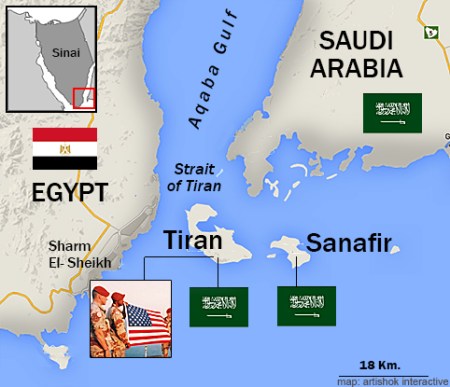
The Israeli question came up in relation to the Egyptian presidential decree ceding ownership to Saudi Arabia of the disputed Red Sea islands of Tiran and Sanafir. These islands are  of high strategic value because they control shipping traffic through the Gulf of Aqaba to and from the Israeli port of Eilat and the Jordanian port of Aqaba.

Saudi Foreign Minister Adel al-Jubeir told reporters Sunday night, April 10, that his government would not hold negotiations with Israel on those islands.  The Kingdom’s commitment included accepting the presence of international forces on the islands under the peace treaty of Egypt and Israel, he said.

He was referring to the Multinational Force Observers – mostly Americans – which have maintained a presence on Tiran to monitor Egypt’s commitment to the freedom of Israeli shipping through the Strait of Tiran under their 1979 peace accords.

By this commitment to the international force’s presence “under the peace treaty of Israel and Egypt,” Saudi Arabia publicly extended implicit endorsement for Israel’s first peace treaty with an Arab state 37 years ago.

Blasphemy Convictions Intensify in Sisi’s Egypt

April 7, 2016

Blasphemy Convictions Intensify in Sisi’s Egypt, Front Page MagazineRaymond Ibrahim, April 7, 2017

(The author demands that President Sisi “do something,” but does not specify what he, as the president, is in a position to do legally. He does not control Al-Azhar University, nor can he require the courts to interpret or enforce the law as he wishes. He became Egypt’s president because millions of Egyptians were tired of his dictatorial predecessor. Would the author like to see Sisi emulate Morsi?

Egypt is an Islamic nation; Sisi can’t change that. At best, he can try to precipitate a gradual Islamic reformation.– DM)

al-sisi-660x330

Despite Egyptian President Abdel Fattah al-Sisi’s many pluralistic words and gestures—which have won him much praise from the nation’s Christians and moderates—he appeases the Islamist agenda in one very clear way: by allowing the controversial defamation of religions law, colloquially known as the “blasphemy law,” to target Christians and moderates in ways arguably worse than under the Muslim Brotherhood and Morsi.

Late last February, three Christian teenagers were jailed for five years for breaking the defamation of religions law. A fourth defendant, 15, was handed a juvenile detention for an indefinite period.   Earlier they were detained for 45 days and subjected to “ill-treatment” said a human rights group.

Their crime is to have made a 20-second video on a mobile phone mocking the Islamic State—which has been interpreted as mocking Islam.   In the video, the boys appear laughing and joking, as they pretend to be ISIS members praying and slitting throats.  The Egyptian Commission for Rights and Freedoms, an independent rights group, confirmed that the four teenagers were performing scenes “imitating slaughter carried out by terrorist groups.”  Even so, according to their defense lawyer, Maher Naguib, the Christian youth “have been sentenced for contempt of Islam and inciting sectarian strife…. The judge didn’t show any mercy. He handed down the maximum punishment.”

Considering that even Al Azhar—the Islamic world’s most prestigious university located in Egypt—refuses to denounce the Islamic State as being un-Islamic, it is unsurprising that mockery of ISIS is being conflated with mockery of Islam.

The Christian youth made the brief video back in January 2015, when three of them were aged 17 and one 15.  It is believed that the court kept delaying their case till the three 17-year-olds became 18, so they could receive the full penalty.  Their teacher who also appeared in the video had earlier been sentenced to three years in jail.

Several other Christians have been prosecuted for insulting Islam and Muslims under Sisi’s tenure.  One young Christian man was sentenced to six years for “liking” an Arabic-language Facebook page administered by Muslim converts to Christianity.  A female Christian teacher was imprisoned for six months after Muslim parents accused her of insulting Islam and evangelizing.  Bishoy Armia Boulous, a Muslim convert to Christianity, remains behind bars on, according to his lawyer, trumped up charges of blasphemy.

While Christian minorities are the most prone to being targeted by the blasphemy law, secular Muslim thinkers and writers are also on the hit list.  Late last January, female Muslim writer Fatima Naoot was sentenced to three years in prison after she criticized the sadistic slaughter of animals that takes place during the Islamic festival, Eid al-Adha.  The month before that, in December, television host Islam al-Behairy was sentenced to one year in prison for questioning the validity of some of the sayings (hadiths) attributed to Muslim prophet Muhammad.

Although Egypt’s constitution outlaws the “defamation of religions,” the plural indicates that, along with Islam, Judaism and Christianity are protected.   In reality, however, the law is almost exclusively used to prosecute Christian minorities and secular Muslims.   Despite the fact that there are many more Muslims than Christians in Egypt, rarely are Islamists arrested and prosecuted for defaming Christianity.

In this, Egypt is becoming more like Pakistan.  Although that nation also prohibits the defamation of religions—which technically includes Christianity—only Christians and moderates are targeted and imprisoned; some, like Asia Bibi, a wife and mother, are on death row.  Conversely, Muslims who openly defame Christianity—and they are many—are regularly let off one way or the other.  A few weeks ago a Muslim broke into a church and proceeded to burn its Bibles.  Although several Christians caught and handed him over to police, the latter claimed he was mentally unstable and could not stand trial.  Earlier, a Muslim shopkeeper started selling shoes which depict the Christian cross on their soles.  Christians demonstrated but police did nothing.

On January 26, soon after the sentencing of the writer Fatima Naoot, another moderate Muslim and television host in Egypt, Ibrahim Eissa, scathingly criticized the Sisi government, including by saying that “there have been more blasphemy cases and convictions during the Sisi era than during the Morsi era.”  He continued:

There is no greater contradiction between what the [Egyptian] state says and claims about itself and the reality on the ground…  The Egyptian state is schizophrenic because it says what it does not do….  It’s amazing and baffling to see a state who’s president regularly preaches about the need for religious discourse and renewal—and yet, during Sisi’s 18-19 month tenure, the nation has witnessed more reports, cases and convictions, and the imprisonment of writers, in the name of defamation religions than during the one year tenure of the Muslim Brotherhood president….  The [Sisi] revolution dropped the Brotherhood but kept the ideology unchanged.

US mulling withdrawal of Sinai multinational force, reports say

April 6, 2016

US mulling withdrawal of Sinai multinational force, reports say, DEBKAfile, April 6, 2016

The Obama administration is considering the redeployment of the multinational peacekeeping force in the Sinai Peninsula, made up primarily of US troops, from bases in the north to more well-protected ones in the south, and replacing the troops with unmanned technology, reports said Wednesday. The move comes amid continuing terrorist attacks by ISIS in the area. Defense Department spokesman Christopher Sherwood said in a statement issued Tuesday that “The (Pentagon) supports the role being played by the Multinational Force and Observers in supporting the Treaty of Peace between Israel and Egypt,” adding that “We are in continuous contact with the MFO and adjust force protection capabilities as conditions warrant.” The MFO consists of soldiers from numerous nations including 700 US troops. Some of its observer stations were shut down in September 2015 after four of peacekeepers were injured in an ISIS roadside bomb attack.

The Bipartisan Enemy of the Good

April 5, 2016

The Bipartisan Enemy of the Good, Front Page MagazineCaroline Glick, April 5, 2016

secretary_kerry_with_president_al-sisi_july_2014

Originally published by the Jerusalem Post.

On March 25, The New York Times published an editorial effectively calling for US President Barack Obama to abandon the US alliance with Egypt.

The Obama White House’s house paper urged the president to “reassess whether an alliance that has long been considered a cornerstone of American national security policy is doing more harm than good.” The editorial concluded that Obama must “start planning for the possibility of a break in the alliance with Egypt.”

The Times’ call was based on an open letter to Obama authored by a bipartisan group of foreign policy experts that call themselves the “Working Group on Egypt.” Citing human rights violations on the part of the government of Egyptian President Abdel Fattah al-Sisi, the Working Group urged Obama to tie US financial and military assistance to Egypt to the protection of NGOs operating in Egypt.

The self-proclaimed bipartisan band of experts is co-chaired by Robert Kagan from the Brookings Institution and Michele Dunne from the Carnegie Endowment for International Peace. Among its prominent members are Elliott Abrams, Ellen Bork, Reuel Gerecht, Brian Katulis, Neil Hicks and Sarah Margon.

The Working Group has a history.

In January 2011, it called for Obama to force then Egyptian president Hosni Mubarak to resign from office. In so doing, it provided bipartisan cover for Obama’s decision to abandon the US’s most critical and dependable ally in the Arab world. Then, as now, the group’s esteemed experts argued that due to the regime’s infringement of human rights, the US could not in good conscience support it. Back in 2011, Israelis found a rare wall-to-wall unanimity of purpose in vocally and forcefully defending Mubarak from his American detractors. From the far Left to the far Right, from the IDF General Staff to the street, Israelis warned anyone who would listen that if Mubarak were forced out of power, the Muslim Brotherhood would take over and transform Egypt into a jihadist state.

Due in large part to the presence of senior Republican foreign policy hands on the Working Group, by and large Israel’s warnings were ignored in Washington. Facing the unusual Israeli consensus backing Mubarak was an American consensus insisting that “democracy” would ensure that a new liberal democratic Egypt would emerge out the ashes of the Mubarak regime.

The Americans chided us for repeating over and over again that the Muslim Brotherhood, the progenitor of al-Qaida, Hamas, Egyptian Islamic Jihad and every other major Sunni jihadist terrorist group around at the time, was a terrorist group.

We were attacked as “anti-democratic,” for insisting that the Facebook posters and twitterers on Twitter were in no position to replace Mubarak.

Who were we, the Americans scoffed, to point out that the “Facebook revolutionaries” were but a flimsy veneer which barely hid the Islamists from willfully blind Western officials and reporters who refused to admit that liberal values are not universal values – to put it mildly.

In the ensuing five years, every single warning that Israel expressed was borne out in spades.

Just as we said, right after Mubarak was forced from power, the Islamists unceremoniously dispatched with the Facebook crowd. The two million Islamists who converged on Tahrir Square to hear Sheikh Yussuf Qaradawi call for jihad and the Islamic conquest of Israel weren’t interested in democracy.

The women and Christians of Egypt soon realized, Mubarak’s overthrow, which paved the way for the Muslim Brotherhood electoral victories in 2012, did not expand their rights, it endangered their lives. As for the hapless Americans, immediately after Muslim Brotherhood leader Mohammed Morsi was inaugurated to serve as president of Egypt, the government began demanding that the US release from prison Omar Abdel Rahman, the so-called Blind Sheikh who masterminded the 1993 World Trade Center bombings. The US embassy in Cairo was the target of jihadist riots on September 11, 2012.

Then, since Morsi was elected democratically, none of this was any sweat off the back of Washington’s Egypt experts. They supported sending F-16s to his air force even after he hosted then Iranian president Mahmoud Ahmadinejad in Cairo, let Iranian warships traverse the Suez Canal and became a strategic ally of Hamas. They also supported his government, even though he enabled Libyan arms to flow through Egypt to Syria, transforming the war in Syria from a local dispute into the incubator for Islamic State – the precursor of which Morsi also gave a free hand to operate in the Sinai, in conjunction with Hamas.

The Americans didn’t reconsider their belief that Morsi was the guy for them, even after he allowed his Muslim Brothers to torch Coptic churches and massacre Christians. They didn’t revisit their support for the Muslim Brotherhood government even after Morsi arrogated to himself dictatorial powers that even Mubarak never dreamed of.

Perhaps if Morsi had been a responsible economic leader, and maintained the liberalization policies Mubarak enacted during his last five years in power, then defense minister Abdel Fatah Sisi wouldn’t have felt the need to remove him from power. After all, Morsi appointed Sisi to his position.

But in addition to ending even lip service to human rights, Morsi gutted the economy. By the time the military overthrew Morsi and the Muslim Brotherhood in the summer of 2013, Egypt had a mere $5 billion in reserves, and according to the World Health Organization, a quarter of Egyptians were starving.

So had the Muslim Brotherhood remained in power, Egypt would not have remained a democracy.

It would have become a jihadist state as dangerous as Iran, with the economic prospects of North Korea.

In other words, five years ago, there was no chance that a post-Mubarak Egypt would become a liberal democracy. There were only two options – a US-allied tyranny that fought jihad and maintained the peace with Israel, or a jihad state, aligned with Iran, that posed an existential threat to Israel, Jordan, the US and the international economy.

Those are still the choices today, but the stakes are even higher. Due to the Muslim Brotherhood’s year in power, the jihadist elements that gathered force in the Sinai over the past 20 years were able to organize as a more or less unified force, under the rule of Islamic State (ISIS), and in strategic alliance with Hamas. Like ISIS in Syria, ISIS in Egypt is an aggressive, dangerous group that stops at nothing to achieve its aims of expanding the ISIS empire.

The war it now fights against the Egyptian state is a total war.

To his credit, Sisi recognizes the nature of the threat and has taken steps to counter jihad that Mubarak never contemplated. The Egyptian leader recognizes that to defeat ISIS nothing less than a reformation of Islam is required. And so, in addition to fighting ISIS with everything he has, he is risking everything by taking on the jihadist belief system.

Sisi has mobilized the clerics at Al-Azhar seminary to develop an Islamic narrative that rejects jihad.

Sisi risks everything because everything is already at risk. If ISIS wins, Egypt is finished.

To win this war, he has publicly embraced Israel as an ally. He has openly sided with Israel against Hamas. Unlike Mubarak, Sisi has been fully willing to acknowledge that just because Hamas’s primary victims are Jews doesn’t mean that it isn’t a terrorist group that has to be destroyed.

Without putting too fine a point on in, for his fearless fight to the death with the forces of jihad – both in the mosque and on the battlefield – Sisi has already entered the pantheon, alongside Winston Churchill, of word historical figures. And yet, rather than embrace him and support him in his fight for Egypt and humanity, the same “experts” who called for Mubarak to be overthrown now urge Obama to abandon Sisi.

It is depressing that there is no magic bullet – like democracy – for the pathologies that afflict the Islamic world. But there is no magic bullet. And there are no easy choices for people who refuse to recognize that the natural state of man is neither liberal nor democratic.

But it is hard to accept the credibility of those who refuse to learn from their mistakes. It is harder still as well to listen to the “moral calls” of those who refuse to accept that because their past advice was heeded, thousands have died, and if their current calls are heeded, millions of lives will be imperiled.

Senator Leahy and 10 House Democrats call to Investigate Israel for Killing Terrorists

March 30, 2016

Senator Leahy and 10 House Democrats call to Investigate Israel for Killing Terrorists, Front Page Magazine, Daniel Greenfield, March 30, 2016

Leahy

Senator Leahy (D-Time Warner) heading this up is not a surprise. His pro-terrorist and anti-Israel views are well known. There’s a long and ugly history there. And Leahy is once again trying to defund the Israeli military.

The Leahy letter to Kerry though is blatantly Muslim Brotherhood inspired. It classes together Israel and Egypt, accusing Israel of “extrajudicial” killings of Islamic terrorists and broadcasting the Muslim Brotherhood’s claims of victimhood in Egypt.

The claims about “human rights violations” in Egypt lists Muslim Brotherhood figures who were killed by Egyptian police in a shootout with the Islamic terror group after it was removed from power by political protests, including Osama al-Husseini, Hisham Khifagy and Ibrahim al-Sisi, the Brotherhood’s “defense minister”.

The Leahy letter never mentions the Muslim Brotherhood though making it not only a pro-terrorist letter, but a dishonest one.

Leahy and other Democrats also complain about Israel killing some of these Islamic terrorists…

Fadi Alloun stabbed a 15-year-old in Jerusalem in early October, 2015, moderately wounding him. The attacker fled and was killed by police fire after they noticed the knife in his hand.

Saad Al-Atrash was killed by soldiers in late October, 2015, after he had attacked them with a knife near a pedestrian checkpoint down the street from the Cave of the Patriarchs in Hebron.

Hadeel Hashlamoun was shot after attempting to stab an Israeli soldier at an IDF check point in Hebron in September, 2015.

This is what Leahy is defending. Also signing on is Jim McDermott and James McGovern, who are in the same pro-terrorist category as Leahy. Also on board is radical leftist Chellie Pingree backed by the anti-Israel group, J Street, and retiring Rep. Sam Farr.  Also signing on are career progressive caucusers Betsy McCollum and Raúl Grijalva who would just happily sign on to a letter proposing Stalin for a posthumous Model of Freedom award.

Andre Carson, a Muslim convert who has a history of appearing at Islamist pro-terrorist events and anti-Israel activism, is not a surprising signature.

But there are also a number of Congressional Black Caucus members here, Hank “Guam will tip over” Johnson, Eddie Bernice Johnson and Eleanor Holmes Norton.

This is not just an anti-Israel letter. It’s a pro-terrorist letter. It covertly advocates on behalf of the Muslim Brotherhood and its contents were no doubt formed and shaped by Brotherhood activists in America.

The Sinai Insurgency is Spiking

March 29, 2016

The Sinai Insurgency is Spiking, Israel DefenseDr. Shaul Shay, March 29, 2016

(Please see also, Sisi asks Obama for military intervention to save Egypt from ISIS. — DM)

SianiPhoto: AP

On March 19, 2016, a terrorist attack on a checkpoint in the Safa neighborhood in southern Arish city resulted in the death of 15 police personnel. The victims were two police captains, a first lieutenant, and 12 conscripts. A police officer and two conscripts are still missing after the attack and the whereabouts of the three “missing” police officers are still unknown. Egyptian security forces killed five of the terrorists after violent clashes that lasted for two hours.

This attack is the last among a series of terrorist attacks that have targeted army and police centers in the Sinai Peninsula. The attack was the biggest in Sinai this year and the deadliest since July 2015. It could mark the return of Wilayat Sinai (Ansar Beit Al-Maqdis) to large-scale coordinated attacks after a period of limited operations against checkpoints and security personnel.

Wilayat Sinai has claimed numerous deadly attacks in the region recently, targeting mainly security forces. Earlier this week, an Egyptian soldier and police officer were killed during two separate attacks in the northern Sinai Peninsula. Gunmen affiliated with Wilayat Sinai shot and killed the officer outside his home in el-Arish. A soldier was also killed by a sniper in Sheikh Zuweid, which is not far from el-Arish.

The attack

The terror attack was carefully organized, suggesting it had long been planned. Wilayat Sinai surveillance personnel had probably observed the checkpoint for some time and that automatic weapons and an RPG were stashed nearby.

The checkpoint was close to a valley and olive farm, providing ground cover that the terrorists probably used to crawl undetected on the ground as they hid their weapons. When the suicide bomber struck, his cohorts were then able to fire on any survivors using their cache of weapons.

According to the prosecutor-general, the incident took place at 6.30pm on Saturday (March 19). Prosecutors say checkpoint personnel were subjected to mortar and RPG fire. Ambulances attempting to reach the scene of the attack also came under heavy gunfire.

Wilayat Sinai claimed responsibility

The Wilayat Sinai, which is affiliated with the Islamic State group, claimed responsibility for the attack. In a statement on Twitter, the group said the attack was “part of a series of operations in response to the humiliation and searching of Muslim women at checkpoints.”

The statement said a suicide bomber – Abul-Qaaqaa Al-Masri – drove an explosive-laden car into the security force and detonated it. The statement threatened more attacks in the future.

The response of the Egyptian security forces

President Abdel-Fattah Al-Sisi held a security meeting attended by the ministers of interior and defense, the army chief of staff and senior army and police commanders. Presidential spokesperson Alaa Youssef said Al-Sisi ordered the army and police to coordinate fully in the field.

Security forces were placed on high alert, and the decision was taken to continue targeting terrorist and criminal dens while simultaneously prioritizing the safety and security of civilians.

Egypt’s North Sinai prosecution began investigations into the attack. The prosecution has inspected the site of the attack and will later listen to the testimonies of eyewitnesses and officials in the checkpoint, judicial sources said.

A few days later, Egypt’s army executed an operation to get revenge for the army and police martyrs. The forces destroyed a number of militant hideouts in Rafah and Sheikh Zuweid cities in raids. An Egyptian Army spokesperson has said that 60 Islamic State group militants were killed after fighter jets targeted the group’s positions in North Sinai.

In a Facebook post detailing the outcome of the operation, Brig. Gen. Mohammed Samir said, “counterterrorism units backed by the air force” had “killed 60 terrorists, wounded another 40 and destroyed 27 four-wheel (drive) pick-up trucks south of Rafah and Sheikh Zayed.”

Egypt’s war against terror

A new report of the Tahrir Institute for Middle East Policy (TIMEP) think tank, shows Egypt suffered more than 100 attacks on average per month from January to August 2015, compared to around 30 attacks per month in 2014.

The attacks are also spreading around the country. Until June 2013 violence was mostly contained to North Sinai, but after the ouster of President Mohammed Morsi by Egypt’s military, reports of militant strikes are coming in from all over the country. In particular, Greater Cairo (the provinces of Giza and Cairo), Fayoum and Sharqia have seen a spike in incidents.

The insurgency in North Sinai has transformed into near-daily attacks, often with use of advanced weaponry. Civilians account for the majority of casualties in these strikes.

Another report of the Regional Center for Strategic Studies – the Cairo index of stability, confirmed that terrorist organizations in Egypt in 2015 have become more aggressive than ever before. The number of terrorist attacks reached 617 in 2015, compared with 349 in 2014. According to the same index, Sinai’s statistics are among the worst in Egypt, as the number of terrorist attacks there reached 90 in 2015.

Yet details of the index confirmed there was a crackdown on terrorist organizations following the attacks on Sheikh Zuweid (July 2015): The total number of terrorist attacks in Egypt from August to December 2015 dropped significantly to 64, compared with 170 in the same 2014 period. The escalation in the attacks in recent weeks indicates that Egypt’s efforts to eliminate terrorism in Sinai has not been successful.

According to Maha Abdel Azim (Egyptian streets, March 13, 2016), an estimated 2100 people were killed in North Sinai in 2015, including roughly 1800 described by the military as terrorists, 150 civilians, 40 police officers and conscripts, and 140 military personnel. Many civilians are direct victims of militant attacks or are killed by often unidentified shelling. Others were killed in the crossfires during clashes between the military and militant groups. The estimate is a roundup based on statements by the military spokesperson as well as reporting from Aswat Masriya and Ahram Online.

In January 2016, Islamic State wrote in its weekly magazine Naba’, which runs news from the group’s various branches, that the Sinai branch had killed 1,400 people – members of the military and police as well as collaborators and tribal fighters – in the previous 15 months. The Egyptian military has disputed this figure and said only 69 military personnel were killed in that period.

Summary

Egyptian forces are grappling with an Islamist insurgency based in North Sinai governorate, which spiked following the 2013 ouster of President Mohamed Morsi. The insurgency has killed hundreds of Egyptian security forces, while the armed forces have said their operations have killed Thousands of militants in the area.

One of Wilayat Sinai’s largest attacks came on July 1 ,2015, when car bombs targeted security checkpoints in Sheikh Zuweid. According to a statement from Egyptian army officials issued shortly after the attacks, 17 soldiers and more than 100 militants died.

The challenge of the ongoing terror attacks in Sinai demand a comprehensive response of military and civilian counter measures. Egyptian President Abdel Fattah al-Sisi announced last year to spend 10 billion Egyptian pounds ($1.28 million) on developing the Sinai Peninsula. Additionally, the current government has said that it recognizes the need to work with the local population and provide a development program for the region.

Egypt urgently needs to come up with proper long-term social, political, and economic strategies. Only a well-coordinated plan of dialogue with the local population, social and economic development and military and security crackdown on terrorism will return security and stability to the Sinai region.

Sisi asks Obama for military intervention to save Egypt from ISIS

March 28, 2016

Sisi asks Obama for military intervention to save Egypt from ISIS, DEBKAfile, March 28, 2016

Egyptian President Abdel Fatteh El-Sisi has sent a secret missive to President Barack Obama asking for urgent US military intervention in support of Egypt’s war on the Islamist State in Sinai, before the jihadis pose a real threat to Cairo. DEBKAfile’s exclusive intelligence and counterterrorism sources report that El-Sisi has come to the conclusion that Egyptian army lacks the ability to eradicate the terrorist peril without direct US military support.

In his note, he asks Washington to replicate in Sinai the format of US intervention in the war on ISIS in Iraq and Syria, namely, to send in special operations forces to establish bases and operate drones against jihadist targets. Unless stopped, he warns, the Islamic State is on the point of transforming the Sinai Peninsula into its primary forward base in the Middle East, bolstered by its branches of terror across North Africa, especially in Libya. US intervention is necessary to avert this.

So far, Sisi has received no answer from the White House and no sign of one in the pipeline.

Our military sources note that, given his record as former defense minister and a much-decorated general in the Egyptian army, an appeal to a foreign power for military assistance is out of character and would normally be found unacceptable in his own milieu. It must therefore be seen as a sign of extreme distress over Cairo’s failure to vanquish – or even contain ISIS, which now poses a strategic threat to Egypt proper.

In this situation, the generals in Cairo were dismayed to read a New York Timesleader on March 25, captioned “Time to Rethink US relationship with Egypt,” which faults the Egyptian regime’s human rights record and suggests that the relationship does Washington more harm than good.

The NYT concludes by saying, “Over the next few months, the president should start planning the possibility of a break in the alliance with Egypt. That scenario appears increasingly necessary.”

Since this article appeared out of the blue, it is feared in Cairo that it is President Obama’s way of spurring the Egyptian president’s SOS.

Some high-ranking military figures in Cairo have started talking about alternatives: If Washington refuses to come up with military assistance for fighting the Islamic State, perhaps the time has time to go elsewhere.
An Egyptian appeal to Moscow cannot be ruled out.


Obama Backed Muslim Brotherhool Egypt Coup Against National Security Team Advice

March 18, 2016

Obama Backed Muslim Brotherhool Egypt Coup Against National Security Team Advice, Front Page Magazine, Daniel Greenfield, March 18, 2016

mubarak_miss_me_yet

Obama usually defends his bad decisions on foreign policy by blaming someone else. He tried to blame General Austinfor his ISIS JayVee team line. He blames Netanyahu for his failed outreach to Islamic terrorists in Israel. Benghazi was caused by a video. The Libyan War was caused by bad advice, especially from Hillary Clinton. Also by the Europeans.

We don’t discuss Egypt much. But, perhaps to get ahead of the blame game, it turns out that Obama rejected the advice of his national security team to back a Brotherhood coup of Mubarak in Egypt. (Yes, I know, the official media narrative is that the overthrow of Morsi was a “coup” but the overthrow of Mubarak was a popular protest, even though both involved the army stepping in. Because the narrative is based on lies and word games.)

Former Secretary of Defense Robert Gates revealed that President Barack Obama disregarded the near unanimous advice of the national security team and decided to depose then-Egyptian President Hosni Mubarak because he wanted to be on the “the right side of history.”

“The entire national security team recommended unanimously handling Mubarak differently than we did,” Gates said in a Fox News interview. “And the president took the advice of three junior backbenchers in terms of how to treat Mubarak — one of them saying, ‘Mr. President, you have to be on the right side of history.’”

This isn’t much of a surprise since Obama has always picked his White House juniors and his pet radicals over his official national security team. He’ll blame military people and cabinet members, but not his toadies who got upgraded from speechwriting to unofficially running foreign policy.

How has the “right side of history” worked out. The Muslim Brotherhood has been crushed in most places where it launched its takeovers. (Not counting the United States.) It’s still in the game in Libya though. Maybe Obama can start a second war on its behalf.