Posted tagged ‘Defense of Israel’

Israel’s biggest fears are materializing

September 27, 2015

Israel’s biggest fears are materializing, Israel Hayom, Boaz Bismuth, September 27, 2015

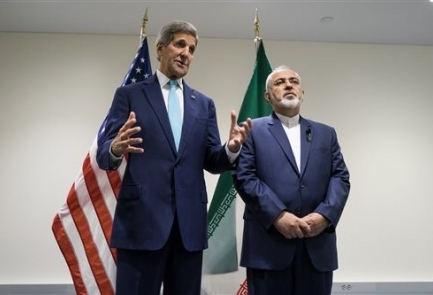
144334028328300476a_bThe Munich moment is upon us. U.S. Secretary of State John Kerry with Iranian Foreign Minister Mohammad Zarif at U.N. headquarters on Saturday | Photo credit: AP

Washington is reaching out to Russia, which is openly helping Syrian President Bashar Assad, who is working in conjunction with Iran, which in turn supports Hezbollah. Now Europe is prepared to talk to Assad, but what about us, for heaven’s sake?

Two years ago to the day, in September 2013, U.S. Secretary of State John Kerry compared Bashar Assad to Adolf Hitler, after the Syrian dictator once again used chemical weapons against his own people. “This is our Munich moment,” Kerry said at the time.

As far as the Americans were concerned, Assad had crossed a line. In those days (more like in those hours, actually), Washington briefly believed that a failure to respond to Assad’s actions would send a dangerous message to Iran regarding its nuclear ambitions.

“Will [Iran] remember that the Assad regime was stopped from those weapons’ current or future use, or will they remember that the world stood aside and created impunity?” Kerry asked at the time. History and retrospect have turned what may have been Kerry’s greatest speech into remarks entirely detached from reality.

The United States did not attack, Assad is still in power, and an ominous nuclear deal has been signed with Iran. It is no wonder that there is a new kind of atmosphere in the region, under American auspices. There are no more good guys and bad guys; everyone is a partner. And thanks to this new reality, Assad now has a renewed license to rule, after having received a license to kill.

Washington is reaching out to Russia, which is openly helping Assad in Syria, who is working in conjunction with Iran, which in turn supports Hezbollah. Europe (Angela Merkel), in the meantime, startled by its refugee crisis, is already prepared to talk with Assad; the same Assad who was compared to Hitler only two years ago. But what about us, for heaven’s sake?

Regretfully, Israel’s biggest fears are now materializing. Instead of being the architects and shaping a new reality in the Middle East, Washington is falling into line with the existing reality. Russia, Syria and Iran are enjoying the consequent vacuum. When the cat is away, the mice will play. Now, all of a sudden, even Hezbollah chief Hassan Nasrallah is letting himself go on television, beaming with joy. Aside from the 75 tanks Damascus is giving him, he now sees his two patrons (Damascus and Tehran) become partners with the West, without having to change one bit.

There is no diplomatic vacuum

The latest developments in Syria are not encouraging: Assad’s first target, with Russia’s help, is expected to be the Nusra Front rebel group, which not only threatens Assad but is also a bitter enemy of the Islamic State group. In other words, somewhat paradoxically, Islamic State could initially benefit from the Russian intervention in Syria.

And one final word about Iran’s rapprochement with the international community: We have been told repeatedly that this was only about the nuclear deal, but in reality we can see cooperation between the U.S. and Iran in Iraq and in the war against Islamic State. We can also see American-Iranian dialogue regarding Syria’s future, and on Saturday night we learned of a gigantic deal worth upwards of $21 billion between Iran and Russia. This time I am forced to agree with Secretary Kerry: This really does look like a Munich moment.

The Single State?

September 27, 2015

The Single State? The Jewish PressMichael Lumish, September 27, 2015

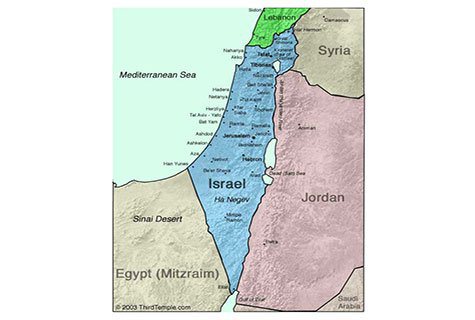
Map-of-Israel


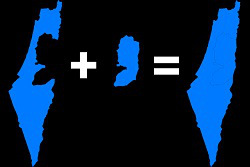
onestate

The significance of Obama’s deal with Iran from a Jewish perspective is that Obama has basically handed Zionism over to the ayatollahs.  In two years or ten years they will decide the fate of the Jewish people, simply because Barack Obama is handing them the car keys.

In the mean time, Israel should solidify its position by declaring its final borders as it plans, and perhaps implement its response to the Iran deal.

**********************
For years I thought that the only reasonable solution to the ongoing Arab war against the Jews was the two-state solution.  A single state solution, we were told, would either undermine Israel as a democratic state or it would undermine Israel as a Jewish state.  Israel could be Jewish, democratic, or with boundaries from the Jordan River to the Mediterranean Sea, but it could not be all three at once.

Those who insist upon this formulation – and I was one for years – are raising reasonable concerns, but there is one thing that proponents of the two-state solution seem never to take into account: the Arabs do not want it.  For almost one hundred years the Palestinian-Arabs have absolutely refused to share the land and tell us on a daily basis that they will never accept Jewish sovereignty on a bit of “historic Palestine.”

There must come a point when we understand that no means no.

There must come a time when we take them at their word.  This being the case, Israel must act unilaterally because there is simply no other choice.  This should not be considered a burden.  It should be considered liberating.  Most of my readers will know that Palestinian-Arab dictator Mahmoud Abbas is, yet again, threatening to quit.  Well, I hope he does quit and I sincerely hope that after he does so Israel rips up the Oslo accords and henceforth refuses to acknowledge the PA, the PLO, Fatah, and Hamas.  It is absolutely pointless in negotiating with, or cooperating with, any of these groups because they are dishonest, utterly corrupt, and filled with the spirit of malice toward the Jewish people.

The Jews in Israel should not have to live with such violent and toxic hatred in their midst, coming from the children of the people who forced into second and third-class non-citizenship for thirteen hundred years.  The Jews are no longer dhimmis in that part of the world – and are thus no longer required to ride mules, rather than horses – and the Arabs don’t like it.

Well, I say, too bad.

The Land of Israel is the land of the Jewish people and has been for almost four thousand years, and that includes today’s boundaries of Judea and Samaria.  We are willing to share, but no one is going to tell me that Judea is Arab rather than Jewish.

This being the case, I have argued in recent years that Israel should declare its final borders, remove the IDF to behind those borders, and – as we say – toss the keys over the shoulder.  I have usually been careful, however, not to advocate for the single-state solution.  I am not Israeli and believe that it should entirely be up to the Israelis to make that determination.

I still believe so.

However, I am becoming less and less convinced that a single state that includes Judea and Samaria, and the eastern section of Jerusalem, cannot be both Jewish and democratic.  What many on the hard-left would argue is that if Israel were to claim sovereignty over the ancient Jewish lands of Judea and Samaria then it is under an obligation to give the entire Arab population in those regions fulls rights to the franchise.  They believe, of course, that doing so would threaten the Jewish character of the state, which is precisely what they want to begin with.

But this is false.

What I would recommend, if Israel were to extend its authority onto the entirety of Judea and Samaria, is offering qualified local Arabs a pathway to Israeli citizenship.  Qualification would require that any particular family or individual under consideration would have no known violent history toward Jewish people and no known history of incitement of hatred toward Jews or Israel.

Those who are not qualified for citizenship, that is, individuals or families with a history of either violence or incitement to violence would be ejected from the country.  This is neither non-democratic, nor illiberal.  The Jews are among the most persecuted and oppressed people in the history of the world.  The Romans decimated our numbers two thousand years ago and the Europeans and Arabs have kept those numbers artificially low ever since.  This being the case it is only common sense, if not basic human decency, for the Jews of Israel to protect their children by removing the threats to them.

This is no more non-democratic than throwing a rapist in prison.

As for the rest of the local Arab population in the annexed Jewish regions I recommend a pathway to full citizenship.  Like pretty much everyone else in Israel they would be required, if they wish citizenship, to give two or three years of community service.  If after that period the individual has shown himself to be free of malice toward either Jews or Israel then that individual should be offered the franchise.

This broad plan – and, yes, obviously, the “devil would be in the details” – would keep Israel Jewish on traditional Jewish land while remaining a democratic country.

Democracy, it should be noted, is never a perfect system in implementation, nor is it a suicide pact.  There are always restrictions, which is why Puerto Ricans are denied the right to vote in US national elections.  They are under American sovereignty, but they do not have full rights to American citizenship, yet no one sane is claiming that the United States in a non-democratic country.

Israel is in a very tough spot, however.  It has a hostile American president who is about to turn an enemy country, Iran, into a nuclear regional power that will rearrange relationships and alliances throughout the region as the Sunni Arab states race to get their own nuclear weaponry.  Zionism is undermined because if Zionism means anything it means that no longer will non-Jews get to determine whether Jewish people live or die.

The significance of Obama’s deal with Iran from a Jewish perspective is that Obama has basically handed Zionism over to the ayatollahs.  In two years or ten years they will decide the fate of the Jewish people, simply because Barack Obama is handing them the car keys.

In the mean time, Israel should solidify its position by declaring its final borders as it plans, and perhaps implement its response to the Iran deal.

Egypt’s War on Terrorism Bears Fruit

September 24, 2015

Egypt’s War on Terrorism Bears Fruit, Gatestone InstituteKhaled Abu Toameh, September 23, 2015

  • Egyptian President Sisi’s war against the smuggling tunnels will undoubtedly weaken Hamas and other radical groups in the Gaza Strip. Sisi should be commended, rather than criticized, for his courageous actions against Islamist terrorists, both in the Gaza Strip and in Sinai.
  • Sisi’s actions will benefit not only Egyptians, but also many Palestinians who are opposed to Hamas and radical Islamist groups.
  • When the Egyptians destroy a Hamas tunnel, that is called “war on terrorism.” But when Israel destroys a tunnel, that is condemned as an “act of aggression.” This moral slithering is why it is important for the international community to stand behind Sisi’s relentless war on radical Islam.
  • Without such backing, Islamists will continue to pose a major threat not only to Israel, but to many Arabs and Muslims who oppose Hamas, Islamic State and Islamic Jihad.
  • The environment of the Gaza Strip is the last thing that Hamas cares about. Hamas did not think about damage to the environment or to agricultural fields when it used those fields, as well as populated areas, as launching pads for attacking Israel.

Egypt began this week flooding smuggling tunnels along their border with the Gaza Strip with water from the Mediterranean Sea — a move being condemned by Hamas and other Palestinian factions as a “disturbing nightmare.”

The Egyptian army’s move is another sign of President Abdel Fattah el-Sisi’s determination to destroy the tunnels that were used to smuggle weapons, people and merchandise from Sinai to the Gaza Strip and the other way around.

This act is also a sign of Sisi’s resolve to pursue his military campaign against Islamist terror groups that are waging war against the Egyptian authorities in Sinai. The Egyptians are convinced that Hamas and other Palestinian groups have been providing aid to the terror groups in Sinai.

Since the beginning of the year, dozens of Egyptian soldiers and police officers have been killed in a spate of terror attacks launched by Islamist groups in Sinai.

Earlier this week, Egypt’s Interior Ministry announced that terrorists shot dead an Egyptian general in Sinai. In another similar shooting a few days earlier, a terror group killed General Khaled Kamel Osman.

The decision to pump water into the smuggling tunnels is seen as a severe blow not only to the terror groups in Sinai, but also to Hamas, Islamic Jihad and other Palestinian factions inside the Gaza Strip.

1259Seawater covers parts of the ground where Egypt has been pumping water into smuggling tunnels along the border with Gaza. (Image source: Al Jazeera video screenshot)

Judging from the reaction of the Palestinian groups, it is clear that they are in a state of hysteria as they see their tunnels collapsing one after the other.

In a statement published in the Gaza Strip, Palestinian groups, including Hamas, denounced the flooding of the tunnels as a “disturbing nightmare” for the Palestinians. The factions appealed to the Egyptian authorities to “stop this despicable crime against the Palestinian people and their environment.”

“The Palestinian people are surprised by the Egyptian move, which will tighten the blockade on the Gaza Strip, destroy vast areas of agricultural land and harm those living near the border (with Egypt),” the statement said.

Initially, Hamas leaders did not take the reports about flooding the tunnels seriously. Some Hamas leaders, in fact, first thought that these were rumors designed to scare them and other Palestinian groups in the Gaza Strip.

But when Hamas leaders woke up on September 13 to discover that the Egyptians had begun pumping water into the smuggling tunnels, they could not believe what they were seeing.

Hamas spokesman Sami Abu Zuhri announced that his movement asked the Egyptians to stop flooding the tunnels with seawater. “We hope that the Egyptians will comply with our demand,” Abu Zuhri said. “This measure is completely unacceptable and poses a threat to many families living alongside the border.”

Sources in the Gaza Strip noted this week that the Egyptian move has thus far proven to be effective and successful. They said that since being flooded with water, several tunnels have collapsed.

It is worth noting that despite its outrage, Hamas has stopped short of issuing threats against Egypt in response to the flooding of the tunnels.

Hamas’s response would have been different had it been Israel that was flooding the tunnels with water. But Hamas knows very well that it would not be a good idea to mess with the Egyptian authorities and President Sisi.

During the past two years, the Egyptians have destroyed hundreds of smuggling tunnels along their border with the Gaza Strip. Nevertheless, Hamas did not dare launch one terror attack against Egypt.

Hamas is now pretending that it is concerned about the damage to the environment that is caused by the flooding of the smuggling tunnels. But the truth is that the environment of the Gaza Strip is the last thing that Hamas cares about.

Hamas did not think about damage to the environment or to agricultural fields when its men fired thousands of rockets at Israel in the past few years. In fact, Hamas used these fields, as well as populated areas, as launching pads for attacking Israel.

Hamas is interested only in one thing: preserving its rule in the Gaza Strip. The tunnels that are now being destroyed by the Egyptians were used by Hamas to smuggle all types of weapons into the Gaza Strip. Hamas warlords are also believed to have earned millions of dollars from the smuggling industry during the past few years.

Sisi’s war against the smuggling tunnels will undoubtedly weaken Hamas and other radical groups in the Gaza Strip. The Egyptian president should be commended, rather than criticized, for his courageous actions against Islamist terrorists, both in the Gaza Strip and in Sinai.

Sisi’s actions will benefit not only Egyptians, but also many Palestinians who are opposed to Hamas and radical Islamist groups. Israel also stands to benefit from Sisi’s war against Hamas. The destruction of the tunnels means fewer weapons used by Hamas to attack Israel.

However, Israel still has good reason to be worried about Hamas’s plans and intentions.

While Sisi is busy flooding the tunnels on the border with Egypt, Hamas continues to dig new ones on the border between the Gaza Strip and Israel.

It is no secret that Hamas has also managed to rebuild many of the terror tunnels that were used to infiltrate gunmen into Israel during last year’s military confrontation between the two sides. Hamas is planning to use these tunnels in the future, to dispatch its men to kill as many Israelis as possible.

The Israelis have thus far been monitoring the situation very closely and have refrained from attacking the tunnels. That is because Israel is keen on maintaining the unofficial truce with Hamas that was reached in the aftermath of last year’s war, known as Operation Protective Edge.

There is not much that Israel can do at this stage other than hope that Sisi will continue with his measures to undermine Hamas. Any attempt by Israel to flood a Hamas tunnel will most likely spark an international outcry and bring condemnations from the United Nations. In addition, such a move on the part of Israel is likely to trigger a violent response from Hamas — one that could lead to another war.

When the Egyptians destroy a Hamas tunnel, that is called “war on terrorism.” But when Israel destroys a tunnel, that is condemned as an “act of aggression.” This moral slithering is why it is important for the international community to stand behind Sisi’s relentless war on radical Islam. Without such backing, the Islamists will continue to pose a major threat not only to Israel, but to many Arabs and Muslims who oppose Hamas, Islamic State and Islamic Jihad.

Iran Openly Declares That It Intends To Violate UNSCR 2231 That Endorses The JCPOA

September 23, 2015

Iran Openly Declares That It Intends To Violate UNSCR 2231 That Endorses The JCPOA, Middle East Media Research Institute, September 22, 2015

(Please see also, Iran wants to renegotiate parts of the nuke “deal.” That may be good. Iran’s declaration that it intends to violate UNSCR 2231, dealing with missile development and related sanctions, should further prompt the U.S. Congress to repudiate the “deal.”– DM)

When the Americans moved the sanctions on the missile program to UNSCR 2231, Iran did not object, as, according to their statements above, they can violate Security Council resolutions, as they have done in the past, and this will not be regarded as a violation of the JCPOA.

**************************

In statements, three Iranian leaders – President Hassan Rohani, Foreign Minister Zarif, and Deputy Foreign Minister and senior negotiator Abbas Araghchi – emphasized that Iran has no intention of abiding by UNSRC 2231, which includes the JCPOA and another element; rather, that they will abide only by the original JCPOA.

The Iran nuclear deal consists of the following:

A.   A set of understandings between Iran and the P5+1 powers (as well as the remaining disagreements) all in a single package called the JCPOA. It is not a contract between Iran and the P5+1 countries as a group or any single one of them, and hence no document was signed.

B.   This set of mutual understandings (as well as disagreements) packaged in the JCPOA was transferred, following the conclusion of negotiations in Vienna on July 14, 2015, to the UN Security Council, for endorsement as a UN Security Council resolution. The resolution, UNSCR 2231, was passed on July 25, 2015 and it includes, in addition to the JCPOA, another element (Annex B) with further stipulations regarding Iran. For example, it addresses the sanctions on Iran’s missile development project.

To understand why UNSCR 2231 is structured in this way, we can look at statements by top Iranian negotiators about the process that led up to it:

In a July 20, 2015 interview on Iranian Channel 2, Iranian Deputy Foreign Minister and senior negotiator Abbas Araghchi said that there had been tough bargaining between the Iranian and American delegations over the issue of the arms embargo on Iran and the sanctions related to Iran’s missile development project. “The Americans sought their inclusion in the JCPOA, claiming that otherwise they could not face criticism from Arab countries in the region. When they said that they could not lift the sanctions altogether, we told them explicitly that in that case there is no agreement. We told them that the national security issues are non-negotiable and that we will not accept an agreement which continues the embargo on weapons and the sanctions on missile development. In the end, the Americans said, We will put the issue of the embargo and the missiles in the UN Security Council Resolution separate from the agreement.”

In the same interview, Araghchi was asked whether Iran could refrain from carrying out UNSCR 2231; he replied: “Yes we can; just as we refrained from complying with UN Security Council resolutions, we can do so with regards to 2231.”

Araghchi also referred to the Iranian Foreign Ministry statement issued following the passage of UNSCR 2231: “The Iranian Foreign Ministry statement explicitly noted that Iran does not attach legitimacy to any restriction and any threat. If UNSCR 2231 will be violated by Iran, it will be a violation of the Security Council resolution and not of the JCPOA, similar to what happened 10 years ago when we violated Security Council resolutions and nothing happened. The text of the JCPOA notes the fact that the content of the JCPOA and of the UN Security Council resolution are two separate things.”[1]

Foreign Minister Zarif, in an August 9, 2015 media interview, reiterated the Iranian position regarding the difference between the JCPOA and UNSCR 2231, with a focus on the consequences of possible violation of the two by Iran. He said: “There is a difference between the JCPOA and UNSCR 2231. Violating the JCPOA has consequences, while violating UNSCR 2231 has no consequences.”[2]

Indeed, the restrictions regarding missiles are mentioned only in UNSCR 2231, and not in the JCPOA.

On August 29, 2015, Iranian President Hassan Rohani said: “There is nothing about the topic of missiles, defense, and weapons in the JCPOA.  Whatever we have about it is in Resolution [UNSCR] 2231… Moreover, we have formally announced that we are not committed to all the sections that appear in the resolution [2231], and we specified in the JCPOA that violation of the resolution [2231] does not mean violation of the JCPOA…[3]

The meaning of all this is that in everything related to the issue of missile development, Iran will disregard UNSCR 2231. Already during the negotiations, it insisted on no imposition of sanctions on Iran regarding its missile development (and no sanctions at all). When the Americans moved the sanctions on the missile program to UNSCR 2231, Iran did not object, as, according to their statements above, they can violate Security Council resolutions, as they have done in the past, and this will not be regarded as a violation of the JCPOA.

Endnotes:

[1] ISNA.ir/fa/news/94042915462/%D9%85%D9%85%D9%86%D9%88%D8%B9%DB%8C%D8%AA-%D9%87%D8%A7%DB%8C-%D8%AA%D8%B3%D9%84%DB%8C%D8%AD%D8%A7%D8%AA%DB%8C-%D9%88-%D9%85%D9%88%D8%B4%DA%A9%DB%8C-%D8%A8%D9%87- .

[2] Foreign Minister Javad Zarif said this at an August 9, 2015 conference sponsored by the Iranian daily Ittil’atwith other senior negotiators in attendance. See text in Farsi here.

[3] President.ir/fa/89047, August 30, 2015.

Israel security forces may use live fire for Palestinian rocks, firebombs, and “popular terror”

September 20, 2015

Israel security forces may use live fire for Palestinian rocks, firebombs, and “popular terror”, DEBKAfile, September 20, 2015

Ruger_RifleThe Ruger rifle

Prime Minister Binyamin Netanyahu has approved tougher rules of engagement for security forces grappling with the latest surge of Palestinian terror, ready for the security cabinet’s endorsement Sunday, Sept. 20.

First cleared with the State Attorney Yehuda Weinstein was the use of the Ruger rifle by Jerusalem police.

This weapon fires light 0.22 (5.59mm) bullets packed with a small amount of explosive which can cause injury within a 100m radius. It was used against Palestinian terrorists during their Second Intifada in 2000-2007.

Under the amended rules, police officers and soldiers may use the Ruger for live fire in life-threatening circumstances, such as the throwing of rocks and fire bombs which have plagued East Jerusalem in recent months.

This rule goes into force in all parts of Israel, since one of the primary inciters of the unrest on Temple Mount is the Northern Wing of the Israeli Muslim Movement, which represents Israeli Arab Muslim extremists.

A delegation of Israeli Arabs, including members of parliament, has embarked on a tour of Arab-Muslim capitals to push their claim that Israel is violating the status quo at the shrine. They plan to meet Jordan’s King Abdullah, Turkish President Reccep Tayyip Erdogan and Egyptian President Abdel-Fatteh El-Sisi.

The Netanyahu government has circulated a counter-statement to world governments demonstrating that Israel is adhering strictly to the status quo on Temple Mount, which is sacred to three world faiths, and acting only in the interests of preserving the peace against violent distrubances [sic].

The new rules of engagement distinguish between legitimate demonstrations and “popular terrorism.” The disturbances and clashes of the past week between Palestinian stone- and firebomb throwers and security forces in Jerusalem come under the heading of “popular terrorism.”

The prime minister and security chiefs have also acted to bring special operations units of the police force to Jerusalem to help quell the unrest, as well as posting a police presence for maintaining order in the Palestinian districts of the capital. The police and Shin Bet internal security service have set up a joint task force for gathering intelligence and investigations.

Attached to the new measure which goes into effect later today is a draft law permitting courts to impose fines on the parents of minors found guilty of stoning attacks, as well as higher minimum jail sentences for stone and firebomb attackers.

Saturday, Sept. 19, DEBKAfile carried this report:

Following the clashes on Friday, Sept. 18 in the Jabal Mukabar neighborhood, a question has arisen on whether the Palestinians opened fire on undercover units and Border Police forces in the area.

Such shooting by Palestinians in the capital is not new, and it occasionally happens in the northern part of the city, emanating usually from the Shoafat refugee camp and the village of Issawiya. These are isolated incidents, occasional volleys at adjacent Jewish neighborhoods, such as Pisgat Zeev.

But the situation in Jabal Mukabar was completely different, with shoot-to-kill gunfire aimed at members of the Border Police.

On that day, the news reports of the Voice of Israel radio station at 17:00 and 18:00 opened with a story that was impossible to ignore: four border policemen were wounded from gunfire on their armored vehicle in Jabal Mukabar, with one of them wounded seriously. However, the item vanished from the 19:00 broadcast, with Molotov cocktail attacks and rock-throwing incidents reported instead.

There are several conflicting points to consider regarding this matter: the armored vehicle clearly had bullet holes, but no signs of firebomb attacks. Then too press photographers on the scene reported specifically that border policemen were wounded by gunfire; residents of Jerusalem’s Meir Nakar street, next to Jabal Mukabar, said in interviews to various news organizations that there were exchanges of fire between the border police and Palestinians; and police officers said late Friday night that undercover units had arrived and opened fire in order to save themselves, and that several border policemen were injured by a Molotov cocktail.

The suggestion was that the officers had been injured by friendly fire – not Palestinian gunshots.

Several hours after the clashes at Jabal Mukabar, there was another incident south of Jerusalem in which Palestinians who threw firebombs at an IDF post near the Tomb of Rachel were shot and seriously wounded.

That was not the only attack on an IDF position in the Jerusalem area during that 24-hour period. On Thursday, Sept. 17, a Home Front Command base on the Mount of Olives was attacked with firebombs and a section caught on fire.

In addition to these incidents, on several occasions last week, Palestinians who had barricaded themselves in the Al-Aqsa mosque threw stones and stone blocks at police and shot firecrackers directly at them, which might have caused serious injury and even permanent blindness, but luckily none of the policemen were injured.

In other words, the latest developments show a surge in clashes between Palestinians and the Israeli security forces.

Jerusalem’s Mayor Nir Barkat said on Friday, following incident at Jabal Mukabar, that he welcomed the increase of offensive police’s anti-terror operations which entered the city’s flashpoint neighborhoods.

His comment aimed at raising the morale of the police forces fighting the new wave of Palestinian terror for the past two weeks.  It also drew attention to the ongoing debate within the Israeli government over the choice of next police commissioner, who is the official in charge of the country’s strategy for fighting terrorism. While this appointment hangs fire, it is not clear who is in charge of this war, in the interim, Prime Minister Binyamin Netanyahu or Public Security Minister Gilead Erdan?

Gil Hirsch, Erdan’s choice for commisioner [sic], is out of the running.  We have learned that the prime minister is opting for an army general to shed his uniform and take charge of the police – against the wishes of the Public Security Minister.

Palestinian terror tacticians are no doubt exploiting the fact that the war on terror is bouncing between them, with no sign that the violence is about to be brought under control in the immediate future.

DEBKAfile’s military sources reported on September 15 that the latest rioting is the face of the third intifada, At least for now, the unrest is not in the form of suicide attacks of the last uprising but more like “localized armed clashes.”

Our military and counter-terrorism sources point out that armed Palestinian groups, including Israeli Arabs from the extremist Islamic movement, have made an ad-hoc agreement to carry out attacks. In light of such a development, gunfire at Israeli security forces is very likely to grow.

Palestinians launch new confrontation tactic of “localized” terror against Israel

September 15, 2015

Palestinians launch new confrontation tactic of “localized” terror against Israel, DEBKAfile, September 15, 2015

Pipes_explosive_Jerusalem_13.9.15Palestinian pipe bombs in Jerusalem

Three dates have emerged as the landmarks of a new outbreak of armed Palestinian violence against Israel: On Aug. 30, an army-police squad, on a routine operation for rounding up terrorist suspects, was waylaid in the Jenin refugee camp on the West Bank by fierce gangs armed with rocks, iron bars and firebombs. Then, on Sept. 13,an Israeli car was stoned in Jerusalem, killing the driver Alexander Levlovitch, 64. He was driving home on New Year’s Eve.

Palestinian rocks against Israeli cars are part of the regular landscape on roads in and outside Jerusalem, but this time it ended in murder.

The next day, the 14th, gangs of rampaging Palestinian youths fought Israeli police guards on Temple Mount for control of the Al Aqsa Mosque doors with rocks, blocks of concrete and iron bars, which had been hoarded inside the mosque.

DEBKAfile’s counterterrorism analysts diagnose these and allied events as the opening shots of a Palestinian uprising against Israel under a different guise. Security forces are beginning to talk about “armed localized terror.”

Its most prominent features are the collaboration for ad hoc operations betwen two or more Palestinian rival groups, and their localized nature. They tend to be planned in advance for a specific arnea [Sic].

The collaborators in the Jenin outbreak were Hamas and Islamic Jihad. For the New Year attacks, Fatah (whose leader is Mahmoud Abbas) and Hamas joined hands.

They shared five objectives:

1. To sabotage Jewish celebration of the New Year festival in Jerusalem.

2.  To ratchet up the level of Palestinian clashes with Israeli security forces by the use of firebombs and other explosive devices.

3.  To establish a dominant presence on Temple Mount, divided it among the various Palestinian factions.

4.  To bar Jewish access to the Temple Mount compound, revered as the site of the Jewish Temples.

5.  To protest Israel’s decision to outlaw the Muribitun and Muribitath gangs, established by radical Muslim groups to keep Jews out of the Temple Mount compound – if necessary by force.

Over the festival, two Jewish youths were chased and attacked at the site and alleys leading to it.

6.  To warn Jordan’s King Abdullah that the Palestinians are united against his claim to restore Hashemite Muslim custodianship over Temple Mount and Al Aqsa. They viewed the king’s plan to double the number of sentries posted at the site by the Muslim Waqf religious administration, which acts in Jordan’s name on Temple Mount, as part of the king’s takeover effort.

These Palestinian extremists are satisfied with having chalked up several gains from their new aggressive strategy against Israel:

a)  Fatah and Hamas worked well together in their first operation after years of fighting each other. Their collaboration defied and further undermined the waning influence of Palestinian Authority Chairman Mahmoud Abbas.

b)  One Israeli was killed.

Israel’s security services can claim a major success. A solid tip-off reaching the Shin Bet internal security service exposed the address of an apartment in the Old City of Jerusalem where pipe bombs were being assembled. A timely raid on Sept. 13, and the seizure of these improvised though deadly weapons averted a major disaster and mass casualties – possibly even at the Western Wall.

But in intelligence work, no single success can promise that every terror plot is foiled in the future too.

Israeli strategists, like their opposite numbers in Amman, are wracking their brains for effective penalties and deterrents to stem the rising spiral of Palestinian violence.

DEBKAfile’s counterterrorism sources discern in the new escalation certain characteristics common to the clashes seen in Arab countries in recent years between opposing populations and religious groups.

Therefore, the Palestinian terror in and around Jerusalem, spilling over from last weekend, is likely to spread to other parts of the country, also encompassing Judea and Samaria, or even igniting parts of the Israeli Arab communities in solidarity with their Palestinian kin. We may be on the brink of a full-blown intifada (uprising.),

Conscious of the peril, Prime Minister Binyamin Netanyahu called an emergency meeting for Tuesday night, Sept. 15, to be attended by Defense Minister Moshe Ya’alon, Public Security Minister Gilead Erdan, Justice Minister Ayelet Shaked, Transportation Minister, Israel Katz, the Attorney General and security services chiefs.

Our sources are skeptical about this meeting producing measures for stemming the rising tide of Palestinian terror. Netanyahu’s plan to apply conventional law and order measures, such new legislation for raising the minimal jail sentence for stone-throwers, comes too late. The stone-throwers have already turned to bombs.

Long jail sentences were taken out of the government’s hands as an effective deterrent for terror when, on June 29, a Palestinian suspect won his release from administrative detention by staging a long hunger strike. The Israeli government folded under the pressure, exposing the weakness of its legal and judicial systems as tools against terrorism.

Then, on Aug. 11, Netanyahu and Ya’alon told Israeli soldiers facing Palestinian aggression that henceforth they were only allowed to fire in the air, unless they faced imminent threat to their lives.

This order was issued to cut down on the number of dead terrorists and the negative statistics in world media. But in the arenas of confrontation, the Palestinians, no longer afraid of death or injury, were encouraged to escalate their assaults and reach the current new threshold of confrontation.

PM Netanyahu’s Greetings for Rosh Hashana

September 13, 2015

PM Netanyahu’s Greetings for Rosh Hashana, via You Tube, September 13, 2015


Putin’s offer to shield & develop Israel’s gas fields predated Russia’s military buildup in Syria

September 13, 2015

Putin’s offer to shield & develop Israel’s gas fields predated Russia’s military buildup in Syria, DEBKAfile, September 13, 2015

(Nice little gas field you have there. It would be a shame if something happened to it. — DM)


Leviathan480

More than a fortnight ago, Russian President Vladimir put a proposition to Israel for Moscow to undertake responsibility for guarding Israel’s Mediterranean gas fields, along with the offer of a Russian investment of $7-10 billion for developing Leviathan, the largest well, and building a pipeline to Turkey for exporting the gas to Europe, DEBKAfile reports. The offer was made to Prime Minister Binyamin Netanyahu in confidential phone conversations and through quiet envoys.

At the time, Putin did not share with Netanyahu his plans for an imminent buildup of marines, air force units, warships and missiles in Syria, although the plan had been worked out in detail with Tehran in late July. The Russian ruler put it this way: Leviathan abuts on the fringes of Lebanon’s economic water zone and is therefore vulnerable to potential sabotage by Iran, Syria or Hizballah, whether by commando or rocket attack.

A multibillion Russian investment in the field would make it a Russian project which neither Syria nor Hizballah would dare attack, even though it belongs to Israel.

But now the situation has assumed a different face. Russian forces are streaming to Latakia, and Moscow has declared the area from Tartous, Syria up to Cyprus closed to shipping and air traffic from Sept. 15 to Oct. 7 in view of a “military exercise including test firings of guided missiles” from Russian warships.

When he offered a shield for Israeli gas fields in late August, The Russian ruler knew that implementation would rest with Russian military forces on the spot, rather than Iranian and Syrian reluctance to harm Russian interests.

Then, on Aug. 30, Netanyahu discussed the new Russian proposition with Italian Prime Minister Matteo Renzi when they met in Florence, in the context of the former Italian Prime Minister Silvio Berlusconi’s involvement in Middle Eastern and European energy business and his close ties with Putin.

Berlusconi and Netanyahu are also good friends.

The Israeli prime minister never explicitly confirmed to Putin that he would consider the Russian transaction.

He hesitated because he sensed that a deal with Moscow for gas projects would be unacceptable to Washington and Noble Energy of Texas, which holds a 39.66 percent share in the consortium controlling Leviathan, as well as stakes in the smaller Tanin and Tamar gas wells.

Meanwhile, two Israeli ministers, Moshe Kahlon, finance, and Arye Deri, economy, consistently obstructed the final government go-ahead for gas production, tactics which also held Netanyahu back from his reply to Putin.

But when the fresh influx of Russian troops and hardware to Syria became known (first revealed by DEBKAfile on Sept.1), Netanyahu began to appreciate that, not only had Israel’s military and strategic situation with regard to Syria and the eastern Mediterranean been stood on its head, so too had foreign investment prospects for development projects in Israeli gas.

Israel’s strategic landscape had in fact changed radically in four respects:

1.  Its government can no longer accept as a working hypothesis (which never, incidentally, held up) the short term expectancy of the Assad regime. The injection of Russian military might, combined with the Iranian Revolutionary Guards forces, have given Assad a substantial lease of life.

The Israel Defense Forces must therefore revamp its posture on the Syrian front, and reassess its sponsorship of the select rebel groups which are holding the line in southern Syria against hostile Iranian or Hizballah cross-border attacks on northern Israel.

The changing attitude was suggested in views heard in the last couple of days from top Israeli security officials, who now say that leaving Assad in office might be the better option, after all.

2.  The new Russian ground, air and sea buildup taking shape in Syria provides a shield not just for the Assad regime but also Hizballah. This too calls for changes in Israel’s military posture.

3.  The Russian military presence in Syria seriously inhibits Israel’s flexibility for launching military action against Iranian or Hizballah targets when needed.

4. Three aspects of the new situation stand out prominently:

a)  The Russian air force and navy are the strongest foreign military force in the eastern Mediterranean. The US deplloys [sic] nothing comparable.

b)  Israel’s military strength is substantial but no one is looking for a military clash with the Russians, although this did occur four decades ago, when Israel was fighting for its life against Russian-backed Arab invasions.

c)  In view of the prevalence of the Russian military presence in the eastern Mediterranean, it is hard to see any foreign investor coming forward to sink billions of dollars in Israeli gas.

d)  Although Russia called Saturday, Sept. 12, for “military-to-military cooperation with the United States” to avert “unintended incidents” amid its naval “exercises” off the coast of Syria, the tone of the call was cynical. It is more than likely that Moscow may revert to the original Putin offer of a Russian defense shield for Israeli gas fields. But with such strong Russian cards in place in Syria, he may well stiffen his terms for this deal.

Op-Ed: MUST READ: Facing Iran on its Own

September 6, 2015

Op-Ed: MUST READ: Facing Iran on its Own, Israeli National News, Prof. Louis Rene Beres, September 6, 2015

(“Ready, fire, aim . . . think” is a poor strategy. “Think, ready, aim, fire and then think some more” is better. That should be obvious, but is it?– DM)

The urgent primacy of Israel’s defining a nuclear doctrine is clear. The cumulative harms ensuing from the significant diplomatic failure to stop the Iran deal will ultimately depend upon Israel’s own selected responses.

In core matters of war and peace, timing is everything. For Israel, now cheerlessly confirmed in its long-held view that U.S.-led diplomacy with Iran was misconceived, future strategic options should be determined with great care. In essence, this means that the beleaguered mini-state’s nuclear policies, going forward, should be extrapolated from carefully fashioned doctrine, and not assembled, ad hoc, or “on the fly,” in assorted and more-or-less discrete reactions to periodic crises.

More precisely, should Israel decide to decline any residual preemption options, and prepare instead for aptly reliable and protracted dissuasion of its nearly-nuclear Iranian adversary, several corresponding decisions would be necessary. These closely-intersecting judgments would concern a still-expanding role for multilayered ballistic missile defense,[1] and also, a well-reasoned and incremental discontinuance of deliberate nuclear ambiguity.[2]

In this connection, among other things, Jerusalem will need to convince Tehran that Israel’s nuclear forces are (1) substantially secure from all enemy first-strike attacks,[3] and (2) entirely capable of penetrating all enemy active defenses.[4]

To succeed with any policy of long-term deterrence, a nearly-nuclear Iran would first need to be convinced that Israel’s nuclear weapons were actually usable. In turn, this complex task of strategic persuasion would require some consciously nuanced efforts to remove “the bomb” from Israel’s “basement.” One specific reason for undertaking any such conspicuous removal would be to assure Iranian decision-makers that Israeli nuclear weapons were not only abundantly “real,” but also amenable to variable situational calibrations.

The strategic rationale of such assurance would be to convince Iran that Israel stands ready to confront widely-different degrees of plausible enemy threat.

In the “good old days” of the original U.S.-U.S.S.R. Cold War  (we may now be on the brink of “Cold War II”), such tangibly measured strategiccalculations had been granted their own specific name. Then, the proper term was “escalation dominance.” Early on, therefore, it had been understood, by both superpowers, that adequate security from nuclear attack must always include not only mutually-reinforcing or “synergistic” protections against “bolt-from-the-blue” missile attacks, but also the avoidance of unwitting or uncontrolled escalations. Such unpredictably rapid jumps in coercive intensity, it had already been noted, could too-quickly propel certain determined adversaries from “normally” conventional engagements to atomic war.

Occasionally, especially in many-sided strategiccalculations, truth can be counter-intuitive. On this point, regarding needed Israeli preparations for safety from a nearly-nuclear Iran,[5] there exists an obvious, but still generally overlooked, irony. It is that in all foreseeable circumstances of nuclear deterrence, the credibility of pertinent Israeli threats could sometimes vary inversely with perceived destructiveness. This suggests, at a minimum, that one distinctly compelling reason for moving deliberately from nuclear ambiguity to certain limited forms of nuclear disclosure would be to communicate the following vital message to Iran: Israel’s retaliatory nuclear weapons are not too destructive for actual operational use.

Soon, Israel’s decision-makers will need to proceed more self-consciously and explicitly on rendering another important judgment. This closely-related decision would concern making an essentially fundamental strategic choice between “assured destruction” and “nuclear war fighting” postures. To draw upon appropriate military parlance, assured destruction strategies are those postures generally referred to as “counter-value” or “mutual assured destruction” (MAD) strategies.

Nuclear war fighting strategies, on the other hand, are more typically synonymous with “counterforce .”

In principle, counter-value and counterforce strategies represent seemingly alternative theories of deterrence, differential nuclear postures in which a state chooses to primarily target its strategic nuclear weapons on either its presumed enemy’s “soft” civilian populations and supporting infrastructures, or on that same enemy’s “hard” military assets. Although presumptively in prima facie violation of humanitarian international law, or the law of armed conflict (because counter-value doctrine would apparently disregard, bydefinition, the binding legal obligations of “distinction”), it is still reasonable to recall another relevant argument: Favoring counter-value targeting doctrines could more persuasively reduce the probability of a nuclear war.

Significantly, this means that any Israeli commitment to assured destruction strategies could ultimately prove less corrosive, and more humane.

It is also plausible that a geographically vulnerable state lacking Clausewitzian “mass,[6] and contemplating “counter-value versus counterforce” targeting issues, would opt for some sort or other of “mixed” strategy. In any event, whichever nuclear deterrence strategy Israel might actually decide to choose, what would only matter is what Iran itself would perceive as real. Always, in matters of nuclear strategy, the only decisional reality is perceived reality.

In choosing between two core nuclear targeting alternatives, Israel could decide to opt for nuclear deterrence based primarily upon assured destruction strategies. Reciprocally, however, looking at the negative consequences column, Jerusalem could thereby invite an enlarged risk of “losing” any nuclear war that might sometime arise. For the most part, this is true because counter-value-targeted nuclear weapons are not designed to efficiently destroy military targets.

If, on the other hand, Israel were to opt for nuclear deterrence based primarily upon counterforce capabilities, Iran could then feel especially threatened, a potentially precarious condition that could subsequently heighten the prospect of an enemy first-strike, and thereby, of an eventual nuclear exchange.

In these particular matters, assorted “intervening variables” must also be considered. Israel’s strategic decisions on counter-value versus counterforce doctrines should depend, at least in part, on certain prior investigations of: (1) enemy state inclinations to strike first; and (2) enemy state inclinations to strike all-at-once, or in stages.

Should Israeli strategic planners assume that an already-nuclear Iran is apt to strike first, and to strike in an unlimited fashion (that is, to fire all or most of its nuclear weapons, right away), Israeli counterforce-targeted warheads, used in retaliation, could hit only empty silos/launchers. Anticipating such manifestly unfavorable circumstances, Israel’s only reasonable application of counterforce doctrine would then be to strike first itself.

Nonetheless, any idea of an Israeli nuclear preemption, even if technically “rational” and legal, would likely be dismissed out-of-hand in Jerusalem.

Concerning specific jurisprudential issues of law and nuclear weapons use, the U.N.’s International Court of Justice, in a landmark 1996 Advisory Opinion, ruled that nuclear weapons could sometimes be used permissibly, but only in those largely residual circumstances where the “very survival of a state would be at stake.”

If, as now seems most likely, Israel were to reject all conceivable preemption options, there would be no compelling reason for Jerusalem to opt for a counterforce strategy vis-à-vis Iran. Rather, from the discernibly critical standpoint of persuasive intra-war deterrence, a counter-value strategy would likely prove more appropriate.

With this in mind, The Project Daniel Group, in 2004, had urged Israel to “focus its (second-strike) resources on counter-value warheads….”[7] This earlier suggestion still makes perfect sense today.

Should Israeli planners assume that an already-nuclear Iran is apt to strike first, but, for whatever reason, to strike “only” in a limited fashion, holding some measure of nuclear firepower in reserve for anticipated follow-on strikes, Israeli counterforce-targeted warheads might display damage-limiting benefits. Moreover, such counterforce targeting preparations could serve an Israeli conventional preemption, either as a compelling counter-retaliatory threat, or, should Israel decide not to preempt, as a threatened Israeli retaliation.

For example, should a conventional Israeli defensive first-strike be intentionally limited, perhaps because it would have been coupled together with a calculated quid-pro-quo of no further destruction, in exchange for an enemy cessation of hostilities, recognizable counterforce targeting preparations could serve to reinforce an Israeli counter-retaliatory strike.

Here, Israel’s attempt at intra-war deterrence could fail, thus occasioning the need for additional follow-on damage limiting strikes.

Israeli preparations for nuclear war-fighting should never be interpreted as a distinct alternative to nuclear deterrence. Instead, such preparations should always be considered as essential and integral components of Israeli nuclear deterrence.[8] The overriding purpose of Israel’s nuclear forces, whether still ambiguous, or newly disclosed, must consistently be deterrence, not any actual military engagement. In principle, of course, nuclear war-fighting scenarios are not ipso facto out-of-the-question, but they should always be rejected by Israel where still possible.

Si vis pacem, para bellum atomicum. “If you want peace, prepare for atomic war.”

In the still-valid counsel of Project Daniel: “The primary point of Israel’s nuclear forces must always be deterrence ex ante, not revenge ex post.” Or, conceptualized in the historically antecedent language of Sun-Tzu, the ancient Chinese military thinker, Israel should be guided by the following sound maxim: “Subjugating the enemy’s army without fighting is always the true pinnacle of excellence.”[9]

Yet, even at this late date, there are existentially menacing circumstances that could sometime turn a rational Israeli prime minister toward preemption. These are prospectively catastrophic circumstances wherein sustained and stable nuclear deterrence with Iran is expected to be highly improbable, or even inconceivable.

If Israeli leadership should have corollary doubts about Iranian decisional rationality, it could still make strategic sense to launch certain appropriately defensive first strike attacks. This calculation would obtain, moreover, even if the expected retaliatory and public relations consequences for Israel would expectedly be overwhelming.

There are two final and closely-related observations.

First, even if it could be assumed, by Israel, that Iranian leaders will always seek to act rationally, this would ignore the accuracy of information used to make rational decisions. Rationality, in all strategic calculations, refers only to the intention of maximizing preferences. It says nothing about whether or not the information used is correct or incorrect.

This means that perfectly rational Iranian leaders could sometime make errors in calculation that would lead them to launch an aggressive war against Israel.[10]

Second, Iranian leaders could sometime be irrational, but this would not mean that they were also mad or “crazy.” Rather, in all pertinent matters, an irrational national decision is “merely” one which does not place the very highest value upon national survival. For a relevant example, Iranian decision-makers could sometime choose to act upon a preference-ordering that values destruction of the Jewish State and the corollary fulfillment of presumed religious expectations more highly than the Shiite republic’s physical existence.

In principle, at least, faced with just such an irrational adversary, Israel might still manage to forge a successful plan for deterrence. Here, however, Jerusalem would first need to base its discernibly calculable threats upon those particular and identifiable religious institutions or infrastructures held most sacred in Tehran.

When the ancient Greek leader, Pericles, delivered his famous Funeral Oration, with its ritualistic praise of Athenian civilization – a speech we know today by way of Thucydides’ Peloponnesian War – his perspective was openly strategic. Long before military calculations had ever needed to include nuclear weapons, and about a half-century after the Persian (Iranian) defeat of Greece at Thermopylae by Xerxes, Pericles had already understood the vital connections between enemy power and self-inflicted error. “What I fear more than the  strategies of our enemies,” Pericles had presciently warned, “is our own mistakes.”

There is a important lesson here for Israel: Looking beyond the just-completed nuclear agreement with Iran, do not forget that the cumulative harms ensuing from this significant diplomatic failure will ultimately depend upon Israel’s own selected responses.[11] To best ensure the most suitable responses, Jerusalem should first be certain to fashion a theoretically-refined[12] and appropriately flexible strategic doctrine.

__________________________

Sources:

[1] See, on this role: Louis René Beres and (Major-General/IDF/Res.) Isaac Ben-Israel, “Think Anticipatory Self-Defense,” The Jerusalem Post, October 22, 2007; Professor Beres and MG Ben-Israel, “The Limits of Deterrence,”Washington Times, November 21, 2007; Professor Beres and MG Ben-Israel, “Deterring Iran,” Washington Times, June 10, 2007; Professor Beres and MG Ben-Israel, “Deterring Iranian Nuclear Attack,” Washington Times, January 27, 2009; and Professor Beres and MG Ben-Israel, “Defending Israel from Iranian Nuclear Attack,” The Jewish Press, March 13, 2013. See, also: Louis René Beres and (General/USAF/Ret.) John T. Chain, “Could Israel Safely Deter a Nuclear Iran,” The Atlantic, August 9, 2012; Professor Beres and General Chain, “Living With Iran,” BESA Center for Strategic Studies, Israel, May 2014; and Louis René Beres and (Lt. General/USAF/Ret.) Thomas McInerney, “Obama’s Inconceivable, Undesirable, Nuclear-Free Dream,” US News & World Report, August 29, 2013.

[2] See, on such discontinuance: Louis René Beres, “Like Two Scorpions in a Bottle: Could Israel and a Nuclear Iran Coexist in the Middle East,” The Israel Journal of Foreign Affairs, Vol. 8., No. 1, 2014, pp. 23-32; Louis RenéBeres, “Facing Myriad Enemies: Core Elements of Israeli Nuclear Deterrence,” The Brown Journal of World Affairs, Vol. XX, Issue 1., Fall/Winter 2013, pp. 17-30; Louis René Beres, “Lessons for Israel from Ancient Chinese Military Thought: Facing Iranian Nuclearization with Sun-Tzu,” Harvard National Security Journal, Harvard Law School, 2013; Louis René Beres, “Striking Hezbollah-Bound Weapons in Syria: Israel’s Actions Under International Law,” Harvard National Security Journal, 2013; and Louis René Beres, “Looking Ahead: Revising Israel’s Nuclear Ambiguity in the Middle East,” Herzliya Conference, 2013, March 2013; IDC/Herzliya.

[3] Recently, improved security for Israeli nuclear forces has been associated with enhanced sea-basing options. See, on these options: Louis René Beres and (Admiral/USN/ret.) Leon “Bud” Edney, “Israel’s Nuclear Strategy: A Larger Role for Submarine-Basing,” The Jerusalem Post, August 17, 2014; and Professor Beres and Admiral Edney, “A Sea-Based Nuclear Deterrent for Israel,” Washington Times, September 5, 2014.

[4] See Professor Beres and Admiral Edney, “What Now For Israel: What are the Jewish State’s security options after the Iran Nuclear Agreement?”, US News & World Report, July 14, 2015.

[5] On July 23, 2014, Iran’s Supreme Leader, Ali Khamenei, called openly for the annihilation of Israel. See: Y. Mansharof, E. Kharrazi, Y. Lahat, and A. Savyon, “Quds Day in Iran: Calls for Annihilation of Israel and Arming the West Bank,” MEMRI, July 25, 2014, Inquiry and Analysis Series Report, No. 1107. In its July 2015 agreement with Iran, the U.S. included no contingent requirement that Iran first reject such expressly genocidal intentions. Jurisprudentially, it is significant that precisely such a requirement is deducible from the authoritative 1948Convention on the Prevention and Punishment of the Crime of Genocide. In other words, by not insisting upon such a requirement, the U.S. was acting in violation of its own antecedent treaty obligations.

[6] See Karl von Clausewitz, On War.

[7] See: Israel’s Strategic Future: Project Daniel, The Project Daniel Group, Louis René Beres, Chair, Ariel Center for Policy Research, ACPR Policy Paper No. 155, Israel, May 2004, 64 pp.

[8] Herman Kahn’s instructive comment many years back stipulates: “It is incorrect and unproductive to categorically accuse those who subscribe to war-fighting concepts either of wanting to fight a nuclear war, or of having less interest in deterrence.” See Kahn, Thinking About the Unthinkable in the 1980s, New York, Simon and Schuster, 1984, p. 43.

[9] In heeding this ancient counsel, Israeli decision-makers will always have to bear in mind the totality of the Iranian threat, that is, the direct perils of a nuclear missile attack, and also the indirect risks issuing from assorted Iranian surrogates. Most plainly, Iranian surrogate power resides in the Shiite militia, Hezbollah, which now operates out of Syria, as well as Lebanon; in the government and its derivative militias in Iraq; in Shiite Houthi rebels, now expanding their control across Yemen; and even in Sunni Hamas, which sometimes represents specifically Iranian preferences and expectations in Palestinian Gaza. Significantly, the cumulative impact of Iranian-posed direct and indirect threats to Israel is plausibly greater than the simple sum of its parts –  in other words, this injurious impact is authentically synergistic.

[10] For pertinent law, see: Resolution on the Definition of Aggression, Dec. 14, 1974, U.N.G.A. Res. 3314 (XXIX), 29 U.N. GAOR, Supp. (No. 31) 142, and U.N. Doc. A/9631, 1975, reprinted in 13 I.L.M. 710, 1974; and Charter of the United Nations, Art. 51., Done at San Francisco, June 26, 1945. Entered into force, for the United States, Oct. 24, 1945, 59 Stat., 1031, T.S. No. 993, Bevans, 1153, 1976, and Y.B.U.N. 1043.

[11] In this connection, Israel must conspicuously augment its comprehensive deterrence posture with expanding active defenses. At the same time, however, the country’s leaders must bear in mind that any such augmentation ought not to override its obligations to be proactive or audacious. “Defensive warfare,” wrote Clausewitz, “does not consist of waiting idly for things to happen. We must wait only if it brings us visible and decisive advantages.” In a further observation that could have been composed in a direct warning to modern Israel about a nuclearizing Iran, the Prussian military thinker went on insightfully: “That calm before the storm, when the aggressor is gathering new forces for a great blow, is most dangerous for the defender.”

[12] “Theories are nets,” said the German poet, Novalis, “and only those who cast, will catch.”
Four parties caused Syria’s genocidal calamity. Should Israel get involved?

September 6, 2015

Four parties caused Syria’s genocidal calamity. Should Israel get involved? DEBKAfile, September 6, 2015

migrants_along_railways_5.9.15Refugees flooding into Europe

Chapter by chapter, a long list of the guilty parties must bear responsibility for the Syrian catastrophe hacking the ruined country into bleeding parts.

1.  The first culprit is undoubtedly its insensate president Bashar Assad and his close family, who have had no qualms about spilling the blood of some 300,000 men, women, children and old people – some estimate as many as half a million – and making some 11 people homeless, to keep himself in power. No one has ever counted the number of people maimed and crippled by the war, but they are conservatively estimated at one million.

These figures add up to genocide or serial mass murder, which has been allowed to go into its fifth year.

2.  Iran warrants second billing for this mass crime.

Tehran has laid out the stupendous sum of some $40 billion to keep the mass marderer Assad in power with total disregard for his methods of survival. The motives behind the ayatollahs’ military and political boost are well recorded. Worth mentioning here is that Tehran not only pressed its Lebanese proxy, the Shiite Hizballah group, into service alongside Assad’s army, but sent its its own generals to orchestrate the war, led by the Al Qods Brigades chief Qassem Soleimeni.

We can reveal here that 22 Iranian generals have died fighting for the Assad cause.

3. The third place belongs to the United States and President Barack Obama. His refusal to put American boots on the ground may have been the correct decision for the US, but it had four direct consequences:

a)  The slaughter of the Syrian people continued unchecked. Even after President Obama declared that chemical warfare was a red line, he backed down at the last minute against intervening and ordered the US fleet to draw back from the Syrian coast.

To this day, Assad continues to use chemical weapons to poison his enemies.

b)  Obama and his Secretary of State John Kerry let Iran use its military backing for Assad as a high card in the negotiations for a nuclear accord. Instead of making it a condition for a deal against the lifting of sanctions, Washington allowed Tehran to come away from the table with US non-intervention in Syria as one of its concessions for buying Iran’s assent to the Vienna deal.

Tehran, in a word, won Washington’s tacit approval for propping up the atrocious Syrian ruler.

c)  The rest of the world, including the United Nations and the European Union, followed the Obama administration’s lead and stood aside as at least 11 million Syrians became homeless refugees.

The lifeless body of a three-year old Syrian child washed up from the sea has figured in the Western media as a symbol of the tragic fate of Syria’s refugees. However, his tragedy came after the hair-raising atrocities endured by millions of those refugees for nearly five years.

Many families were forced to sell their daughters as sex slaves to buy food, their young sons to pedophile predators. The slave markets were centered on the Persian Gulf. Young Alan Kurdi died aged three. Many thousands of Syrian refugee children still live in appalling circumstances. No humanitarian organization has started an outcry or a campaign to rescue them.

d)  US refusal to intervene in the most savage humanitarian tragedy the world has seen for many decades opened the door to the belligerent branch of al Qaeda, the Islamic State of Iraq and the Levant, to march into the vacuum. The videotaped records of beheadings, the massacre of the Iraqi Yazdi people, the enslavement of its women and the burning alive of “apostates,” followed in quick succession.

The strongest nation in the world fought back with an ineffective trickle of air strikes on ISIS targets, allowing the group to go forward to conquer terrain and gain in strength.

4.  Russia bears a heavy weight of guilt – and Israel would do well to watch its cynical conduct and draw the right conclusions. Like the ayatollahs, President Vladimir Putin led the second world power to total commitment for keeping Bashar Assad in power. Among other motivations, Putin pursued this policy to settle a score with Obama for the overthrow of Libya’s Muammar Qaddafi.

With one world power on the sidelines and a second jumping in with two feet, the Syrian imbroglio was bound to have devastating historical repercussions.

Throughout the Syrian conflict, Israel refrained from interfering, with only one exception: It supported Syrian rebel groups holding a strip of southern Syria, as a buffer against Iranian, Hizballah and Syrian army encroachment on its northern borders.

More than a thousand injured Syrians were treated and their lives saved in Israeli hospitals after receiving first aid at a field hospital on the Israeli-Syria border.

The esteemed Israeli historian Prof. Shlomo Avinery said Sunday, Sept 6, that Prime Minister Binyamin Netanyahu did the right thing in steadfastly keeping Israel out of the Syrian conflict. He very much doubted that Syrian refugees would seek asylum in a country they regard as the Zionist enemy.

Israel’s opposition leader Isaac Herzog nonetheless urged the government to take in a limited number of Syrian asylum seekers from among those flooding into Europe, and not to forget that “we are Jews.”

 One wonders why he never had a word to say about US dereliction when Assad committed his atrocities across Israel’s border.

Herzog’s favorite advice to Netanyahu is to go to Washington right now, beard President Obama in the Oval Office and hammer out an agreed policy on Iran.

Netanyahu referred to the Syrian refugee crisis at the weekly cabinet meeting Sunday: “While Israel is not indifferent to the human tragedy of refugees from Syria and Africa, it is a small country that cannot throw its doors open to them,” he said.

“We have conscientiously treated thousands of wounded from the fighting in Syria, and we have helped them rebuild their lives,” the prime minister recalled. “But Israel is a very small country, with neither demographic nor geographic depth, and therefore we must control our borders.”

Regarding a visit to Washington, the prime minister has a problem: Just as President Obama has not invited any Syrian refugees to come to America, he has not issued Netanyahu with an invitation to come to DC, whether to discuss the Iranian or the Syrian questions.