Posted tagged ‘Baghdad’

83 killed as 2 blasts rip through Ramadan crowds at Baghdad shopping areas (PHOTOS, VIDEO)

July 3, 2016

83 killed as 2 blasts rip through Ramadan crowds at Baghdad shopping areas (PHOTOS, VIDEO)

Published time: 2 Jul, 2016 22:41 Edited time: 3 Jul, 2016 08:18

Source: 83 killed as 2 blasts rip through Ramadan crowds at Baghdad shopping areas (PHOTOS, VIDEO) — RT News

Two blasts have ripped through busy market areas in Baghdad, Iraq’s capital, killing around 80 people and injuring 160. The Islamic State militant group has claimed responsibility for one of the attacks.

Iraqi officials quoted by AP put the death toll from the first attack, in Karrada district, at 78 and said that more than 160 people had been injured.

Interior Ministry spokesman Saad Maan confirmed that the first blast had come from a car bomb.

Eyewitnesses said on Twitter that many shops burned down as a result of the explosions, and there are fears that the number of casualties could grow.

Karrada, an upper middle class district in the Iraqi capital, is mostly inhabited by Shia, but also has quite a large Christian minority. The area becomes very busy after sunset during the holy month of Ramadan.

https://twitter.com/Khaqani_M/status/749364331200978944/photo/1?ref_src=twsrc%5Etfw

Shortly after the explosion hit Karrada, eyewitnesses said that a second blast targeted the Shaab neighborhood, which is located in the northern part of the city.

AP said that at least five people were killed in that bombing and another 16 were injured. Meanwhile, Sky News Arabia said a suspected homemade explosive device was used to hit a market.

https://twitter.com/josiahalessoy/status/749381581597532161/photo/1?ref_src=twsrc%5Etfw

Islamic State (IS, formerly ISIS/ISIL) has in an online statement claimed responsibility for the attack in Karrada, Baghdad.

The tactics resemble Islamic State’s signature, as the terrorists frequently choose Shia-populated civilian areas in the capital as targets.

Iraqi security officials are attempting to restore order amid the state of panic that has ensued following the attacks, Altaf Ahmad, a local journalist, told RT.

“Major roads leading to the venue of the explosion [in Karrada] have been cut off. We know that the car bomb that went off in the area that is known to be crowded at this time. After sunset, after the break of fast during the holy month of Ramadan many people start to go out… We are expecting that the number could rise to 100 casualties,” Ahmad said.

Meanwhile, Abayomi Azikiwe, editor at Pan-African News Wire, said the pattern of bombing in Baghdad reminded him of what happened in Istanbul.

“There is some affirmation that Islamic State claimed responsibility for the attack. This follows a pattern for the last week with the attack in Istanbul. The sectarian divisions inside the country have exacerbated and there’s been a reaction on both sides,” Azikiwe told RT.

He also noted that Islamic State had suffered tremendous losses over the past several months and could be committing such attacks in order to avenge their retreat.

“They moved to other geopolitical regions, in Libya, for example, in western part of the country. A lot of these attacks are done for propaganda reasons,” he added. “[These attacks] definitely appear to be coordinated.”

Earlier this week, at least 12 people were killed and 32 injured in another suicide attack west of Baghdad, where an attacker wearing a suicide vest targeted a Sunni mosque in Abu Ghraib.

READ MORE: At least 12 killed in suicide attack on Abu Ghraib mosque

Islamic State was recently pushed out of Fallujah by Iraqi forces, but the terrorist group still controls Mosul, Iraq’s second largest city, which is located in northern Iraq.


At least 88 killed, dozens more injured in triple ISIS car bombings across Baghdad

May 11, 2016

At least 88 killed, dozens more injured in triple ISIS car bombings across Baghdad

Published time: 11 May, 2016 09:25 Edited time: 11 May, 2016 15:45

Source: At least 88 killed, dozens more injured in triple ISIS car bombings across Baghdad — RT News

People gather at the scene of a car bomb attack in Baghdad’s mainly Shi’ite district of Sadr City, Iraq, May 11, 2016. © Wissm al-Okili / Reuters

The Iraqi capital, Baghdad, has been rocked by three successive bombings that claimed the lives of dozens of civilians, according to police sources and media. Islamic State has claimed responsibility for the attacks.

The car bombing attack in the city’s district of Sadr City killed at least 63 people and injured dozens of others, AP reported citing Iraqi officials.

An SUV rigged with explosives was parked near a beauty salon in a busy market in the Sadr City neighborhood, Iraqi police reported.

The blast killed over 20 people on the spot while others succumbed to their wounds shortly after. At least 60 people were injured by the blast, and many remain in critical condition.

Shortly after the first blast, two more attacks were recorded in the city. One of them occurred in the Kadhimiya district of northern Baghdad – an area of the city considered a center of Shiite Islam. The attack claimed the lives of 18 people, Iraqi police and hospital officials told AP on condition of anonymity, adding that at least 34 people have been injured.

Five police officers are among the casualties in Kadhimiya district, officials added.

One more bomb that went off in the Sunni district of Jamiya killed seven and wounded at least 22 people.

The officials told Reuters that the death toll figures are likely to rise.

IS targeted Sadr City in February in a twin bombing attack, which claimed the lives of 70 people.

READ MORE: Over 70 feared killed, 100+ wounded in Baghdad blasts 

The group is ultra-conservative Sunni Muslim and considers Muslims adhering to other sects of Islam apostates and their enemies.

Sectarian violence remains one of the biggest security challenges in Iraq, since the US invasion of Iraq deposed its Sunni minority in power and installed a Shiite majority government.

Military officers and former officials of Saddam Hussein’s government, whose careers were ruined by the change of regime in Baghdad, were instrumental in Islamic State’s rise from a little-known Iraqi ally of Al-Qaeda to the most-publicized terrorist threat in the modern world.

Iraq’s Al-Sadr reportedly summoned to Tehran

May 5, 2016

Iraq’s Al-Sadr reportedly summoned to Tehran, Middle East Monitor, May 5, 2016

muqtada-al-sadrMuqtada al-Sadr

Iraq’s Shia cleric Muqtada Al-Sadr was summoned to Tehran “for bashing and rebuke”, a Lebanon-based Shia cleric said.

Secretary General of the Arab Islamic Council in Lebanon Mohammad Ali Husseini said that the Iranian embassy in Baghdad informed Al-Sadr that he was summoned to Tehran because “his followers crossed red lines by criticizing and insulting clerical rule at a time when the Iranian regime is facing noticeable political and military decline among the countries of the region”.

Husseini told Okaz newspaper that Al-Sadr “will be subjected to much blame, censure and pressure” and he will be “redirected to serve Iran’s interest”.

Al-Sadr has mobilized followers to take to the streets to demand reforms and the replacement of ministers belonging to the parties dominating power in Baghdad.

Supporters of Al-Sadr stormed Baghdad’s Green Zone on Saturday before forcing their way into the parliament building where they broke windows and smashed furniture.

Iraq Parliament Collapses, Lawmakers Flee Baghdad

May 1, 2016

Iraq Parliament Collapses, Lawmakers Flee Baghdad, Voice of AmericaSharon Behn, May 1, 2016

Baghdad parliament flees

Baghdad teeters on the edge of political chaos Sunday.

The city is in a state of emergency, protesters are occupying parts of the once-secure International Zone (IZ), lawmakers have run away and the military is on high alert.

By Sunday morning, protesters led by Shi’ite cleric Muqtada al-Sadr continued to crowd the streets in front of the country’s now-empty parliament and gather in what is known as the zone’s “Celebration Square.”

Lawmakers fled Saturday after protestors stormed into the parliament.

About 60 lawmakers, mostly from the minority Kurdish and Sunni parties, flew out of the capital for Irbil and Suleymania, in the northern autonomous Kurdish region.

“It was dangerous for all of us,” one parliament official told VOA, speaking on condition of anonymity out of fear of retaliation. Some lawmakers were beaten, he said.

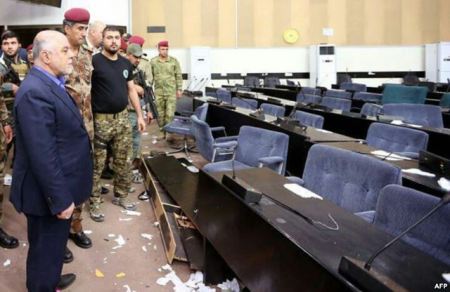
Baghdad 1A handout image released by the press office of Iraqi Prime Minister Haider al-Abadi on May 1, 2016, shows him (L) looking at the damage after protesters stormed the Iraqi parliament building in Baghdad’s fortified Green Zone area.

The official said thousands of protesters were still in the so-called International Zone Sunday, parked outside the major government buildings.

WATCH: Related video of protesters in the International Zone (Video at the link — DM)

Normally only those with special badges are allowed into the secured area, which is also home to many foreign embassies and the United Nations.

“It is dangerous,” the parliament official said. “At any time, the protesters could attack any embassy, any institution they want, or abuse anybody passing by.

“It seems al-Sadr wants to keep them inside the IZ so he can force the government to do what he wants,” the official said.

Political unrest

The parliament takeover was the culmination of weeks of political wrangling and increasing instability, and came just days after U.S. Vice President Joe Biden visited Baghdad.

White House Press Secretary Josh Earnest said the visit was a good indication of U.S. continued support for Iraqi Prime Minister Haider al-Abadi’s efforts to unify Iraq and confront the Islamic State (IS) group.

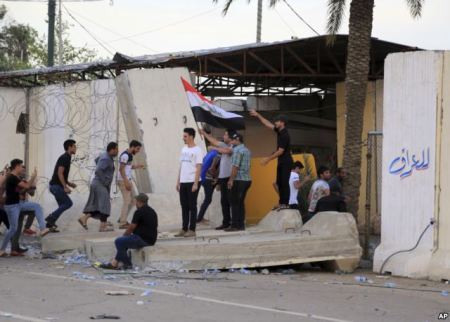
Baghdad 2Supporters of Shi’ite cleric Muqtada al-Sadr walk over the blast walls surrounding Baghdad’s highly fortified Green Zone, April 30, 2016. Dozens of protesters climbed over the blast walls and could be seen storming the parliament building.

But the visit was not enough to stave off the deepening political crisis.

Sadr has been demanding a new government of technocrats.

Abadi, who had also promised reform, had been unable to deliver any real change as political parties, unwilling to let go of their political power, blocked the majority of his list of candidates.

The prime minister on Sunday walked through the ransacked parliament building, and called on Interior Minister Mohammed Salem al-Ghabban to bring the attackers “to justice.”

Unrest growing

But even as political blocs have fought to maintain their positions and all the trappings of power, the anger in the Iraqi street has been growing for the past year over the lack of basic services, security, and the vast government corruption and political patronage.

Sadr, a firebrand cleric sometimes described as a Shi’ite nationalist, has managed to capitalize on that anger and frustration.

“Al-Sadr has the power of the people. One speech and he can deliver thousands of people to do what he wants. It is the power of the populace,” the parliament official said. “Al-Sadr is capable of running and leading the anger within each Iraqi person.”

Baghdad 3Supporters of Shiite cleric Muqtada al-Sadr raise the Iraqi flag outside parliament in Baghdad’s Green Zone, April 30, 2016.

One high-ranking Iraqi military official, also speaking to VOA on condition of anonymity, said that Sadr had many young Iraqis, including Sunnis and Christians, on his side.

The Institute for the Study of War describes Sadr’s power grab as a de facto political coup.

But the military official said Prime Minister Abadi was still in control of the Iraqi military and running the country.

Rival Shi’ite powers

Yet, the military official warned that powerful rival Shi’ite powers in Baghdad were not comfortable with Sadr’s attempted power grab. He said members of the notorious Badr Brigade militia, which is strongly allied with Iran, were beginning to converge on the capital’s center.

The possibility for intra-Shi’ite violence in Baghdad is high, and Baghdad residents said they are unsure of what will happen next.

There is also concern that IS could take advantage of the turmoil to ramp up its attacks. Iraqi security forces closed off all entrances to the city Saturday.

Resident Mahdi Makhmour, who lives outside the IZ, said the city streets were empty Sunday morning and many roads were still blocked, partly because of the start of a three-day Shi’ite religious celebration in the capital.

‘Next Time in Jerusalem’: Islamic State Supporters Celebrate Baghdad Deadly Suicide Bombings

March 2, 2016

EXCLUSIVE – ‘Next Time in Jerusalem’: Islamic State Supporters Celebrate Deadly Baghdad Suicide Bombings

by Aaron Klein and Ali Waked

1 Mar 2016

Source: ‘Next Time in Jerusalem’: Islamic State Supporters Celebrate Baghdad Deadly Suicide Bombings

AFP

TEL AVIV – Internal messages obtained by Breitbart Jerusalem show Islamic State supporters celebrated the deadly suicide attacks carried out by the organization’s operatives in a Shi’ite part of Baghdad on Sunday, rejoicing in the death and injury of “more than 100 infidels.”

The string of suicide attacks in the Iraqi capital’s Abu Ghraib and al-Sadr districts left at least 70 people dead and many more wounded.

IS released a somewhat laconic statement claiming responsibility, but its supporters were jubilant in messages exchanged in a private encrypted chat utilized by IS and its supporters, vowing that the next such operation would be in Jerusalem.

حفيد“Allah is great, my brothers, our jihadi fighters surprised the enemy infidels at the gates of Baghdad,” wrote Abu Jaafar Albagdadi, a high-profile IS operative. “We hurt them and the American officers who fled in panic from our fighters. Today in Baghdad, tomorrow in Jerusalem and Palestine with Allah’s help.”

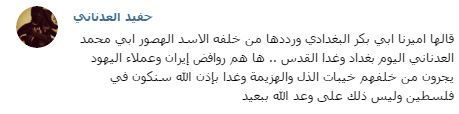
جعفر 11“Our Caliph Abu Bakr al-Baghdadi made it clear, and repeated the words of our [military] commander Abu Mohammed al-Adnani: Today in Baghdad, tomorrow in Jerusalem,” wrote Eladnani the Grandson, an Iraqi IS member. “Look at Iran and the Jews’ cronies bearing a humiliating defeat. Tomorrow, with Allah’s help, we’ll be in Palestine. Allah promised it and it will happen.”

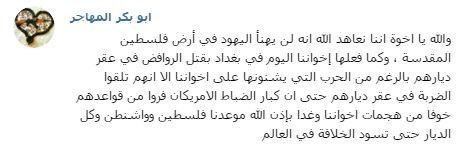
بكرIn the closed chat group, which utilizes the encrypted Telegram messaging service, top IS operative Abu Bakr Almuhager added: “My brothers, we’ve made a vow to Allah that the Jews will not take pleasure in occupying the holy land of Palestine. … Our brothers hit the infidels in the safety of their quarters in Baghdad, despite the ongoing war against us, and chased away the American officers. Our next meeting will be in Palestine, or Washington, or wherever, until the sacred caliphate rules the world.”

Iraqi air force: We hit convoy of ISIS leader Baghdadi

October 11, 2015

Iraqi air force: We hit convoy of ISIS leader Baghdadi

Source: Iraqi air force: We hit convoy of ISIS leader Baghdadi – Middle East – Jerusalem Post


ISIL, led by Baghdadi, last year proclaimed a caliphate straddling Iraqi and Syria [AP]

BAGHDAD  – The Iraqi air force struck a convoy of Islamic State leader Abu Bakr al-Baghdadi in western Anbar province close to the Syrian border on Sunday, a military statement said.

The fate of the terrorist leader, who has declared himself the leader of a caliphate in areas Islamic State controls in Iraq and Syria, is still unknown, the statement said.

“Iraqi air forces have bombed the convoy of the terrorist Abu Bakr al-Baghdadi while he was heading to Karabla to attend a meeting with Daesh commanders”, the statement read, using the Arabic acronym for Islamic State.

Sunday’s report is not the first time Baghdadi is said to have been wounded by his enemies. The Islamic State leader was reportedly wounded in a March attack launched by the US-led coalition in the al-Baaja district of Nineveh, close to the Syrian border.

In November, Iraqi Defense Minister Khaled al-Abadi claimed that Baghdadi was wounded by a US air strike near Mosul. According to the post, Baghdadi’s deputy was killed in the attack.

Last week, a recording of al-Qaida leader Ayman Zawihri documenting his disapproval of Baghdadi was released.

“You spill blood and attack the Muslim people in order to rule,” Zawihri said. “Baghdadi’s caliphate is a caliphate of explosions, damage and destruction.”

Yasser Okbi and JPost.com staff contributed to this report.

On achievements and ideas

May 29, 2015

On achievements and ideas, Israel Hayom, Maj. Gen. (ret.) Yaakov Amidror, May 29, 2015

Lately it looks as though the Islamic State group has managed to rack up highly significant geographic achievements. These coups will lead to the group controlling the enormous expanse of territory west of Baghdad to the Syrian border beyond Palmyra by establishing rule in the north and east of the crumbling Syrian state.

The occupation of Ramadi, one end of an arch that bridges between the Iraqi capital and Palmyra in the heart of northern Syria, serves as a base for future gambits of even greater importance. We shouldn’t wonder if the group needs a little time to “digest” the new areas it has conquered, to take care of any local population that might resist, if any such remains, and to settle its rule on the rest of the residents and prepare for retaliatory attacks by the Syrian and Iraqi armies and their auxiliary militia forces.

It appears that in Iraq and Syria — but more importantly, in the U.S. — it is understood that the counterattack stage could turn out to be critical. If the group overcomes these strikes, it is hard to imagine what might stop it in the future, barring full-scale involvement by the U.S. military that would include heavy ground forces.

After the counter-strikes, the moment the organization feels secure in its new area, and we cannot know how long that will take, it will face the standard dilemma presented by such situations: What next? By nature, a group like this cannot refrain from action for long. It needs constant movement; it is thirsty for new gains and fears the “stagnation” that could affect it after a period of calm. The group is still in its dynamic stage, continuing to rise. It has four options for action, and no one knows which one its leaders will choose. It is possible that they themselves have not made up their minds and are still not ready to decide, at least until the results of any possible counterattack become clear.

Islamic State’s next “natural” effort could be toward Baghdad, to strengthen its rule of everything west of the Iraqi capital. The goal would be to strike a fatal blow to the Shiite government’s operational ability in the Sunni regions the group has taken thus far, and maybe even to bring down the present Iraqi regime.

Such a move would doubtless put pressure on the ruling Shiites and their Iranian allies, because when an organization like this approaches areas with a dense Shiite population, as well as the cities most holy to Shiites, the latter envision a mass slaughter. So there is no question that a move like that, if successful, would force the Iranians to make some tough decisions, mainly about whether to opt for direct military intervention.

The group has another option in Iraq: to the north, beyond Kurdistan. If it managed to take control of the areas where the Kurds are currently extracting oil, it would enjoy maximal success, running nearly an entire country and putting heavy pressure on Turkey. That looks tempting, because the West hasn’t taken care to adequately arm the Kurds, the only ones so far who have fought the group successfully.

It is also possible that after its great success in Iraq, the group will prefer to entrench its rule over northern Syria — in other words, seize control of Aleppo and Homs. That would be an ambitious plan given the size of the geographic area, but it appears any resistance there would be weaker than it would be in a metropolis like Baghdad or from the fierce Kurds. If Islamic State took Aleppo and Homs, it would improve its chances of eventually taking action against the Kurds, particularly their Syrian wing.

In Syria, the main ones opposing the group would be President Bashar Assad’s exhausted army. In that area, other Sunni groups from what is known as the army of insurgents might join Islamic State, granting it legitimacy in the eyes of the locals. A move like that could lead to a dramatic change in Assad’s position and force Hezbollah to spread its forces even thinner. A loss of Hezbollah’s strategic homefront and the presence of its Sunni haters breathing down the neck of the Alawite minority, on the coast of Latakia, means a threat to a region that is vital to Hezbollah and to the Iranians’ position in Syria, and eventually in Lebanon. The Iranians and Hezbollah would do almost anything to protect these, because any threat to them is an existential one. If the Islamic State group acquires control of Alawite or Shiite areas, it will exterminate everyone there. This is a life or death struggle. That’s clear to everyone.

The ambitious option

And there is a fourth option, which for now seems less appealing and therefore less likely, although not impossible. It’s possible that to avoid clashing with Shiite strength around Baghdad or with Alawite and Hezbollah desperation en route to Damascus, the group will turn its attention to Amman.

All the residents of Jordan are Sunni, and some of them could begin to identify with a serious, successful Sunni group that purports to act on behalf of Sunnis, who are in distress because of the Shiite dynamic in the Middle East. The group could asses that it would be easier for it to operate against Jordan, and if it does so successfully it would have more convenient access to Saudi Arabia — the crown jewel of the Muslim world.

Saudi Arabia is the target that anyone who talks about an “Islamic caliphate” dreams of, because it is home to Mecca and Medina, the two holiest cities for any Muslim. In acting against Jordan, the group could combine a military maneuver with an attempt to influence the kingdom from inside by exploiting the social and economic problems in Jordan that have worsened because of the mass influx of refugees from Syria.

Today, the chances of the organization succeeding in Jordan appear very slim. The Jordanian army, unlike the armies of Iraq and Syria, is both serious and professional and among many Jordanians, the king is popular as well as legitimate. Jordan is no easy prey, and it would certainly have the help of everyone for whom the kingdom’s stability is important.

In any case, it is obvious that the American intervention thus far has not brought the U.S. any closer to the goal defined by President Barack Obama of “destroying the organization.” The opposite — it has grown stronger and expanded its area of control since the U.S. declared war on it. The last chance the U.S. has to continue its current policy, avoiding the deployment of massive American ground forces, is conditional upon its ability to give the Iraqi army the assistance it needs in the attack it is promising to execute, and possibly on helping the Syrian army indirectly.

The Americans will take a look at themselves after these battles, when it becomes clearer whether the group’s recent successes are the regular ups and downs seen in conflicts like these, or whether they have altered its standing, and Islamic State will now take advantage of the momentum to move on more ambitious targets.

What ISIS Has in Store for Baghdad…

May 26, 2015

What ISIS Has in Store for Baghdad…, ISIS Study Group, May 24, 2015

Since the majority of the government forces and Shia proxy forces are defending Baghdad, the rest of the country is vulnerable to being overrun by IS. Team Baghdadi views the seizing of terrain to expand the “Caliphate” as a bigger priority than seizing control of the Iraqi capital. The reason is obvious – seizing other major population centers and the critical infrastructure will help sustain the Islamic State. For IS, it makes more sense for them to continue having their sleeper cells conducting attacks inside the city while the front-line forces put pressure on the government by launching major operations in places like Karmah, Ramadi and al-Asad Airbase.

**********************

The media has been in overdrive about the Islamic State’s (IS) move to eliminate the remaining Iraqi Army (IA) and Popular Mobilization Committee (PMC) elements in Anbar Province – but does this mean that a march on Baghdad is imminent? The short answer is no. As we’ve said in our last couple of Iraq-themed articles (“ISIS Moves Against Targets in Haditha, Habbaniyah While Qods Force and Proxies Launch Counterattack,” “Suleimani’s Gambit: Bid to Deal Crushing Blow to ISIS in Bayji” and “JV Team Solidifies Hold on Anbar With Ramadi Purging”), IS doesn’t intend to “overrun” the capital, at least not in the near-term. Why? Three reasons:

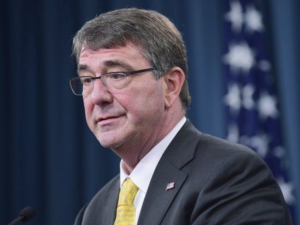
1. Most of the government forces are concentrated in Baghdad. With over 90,000 Iraqi Security Force (ISF) personnel defending the capital, IS would have to generate a far greater force than they fielded in the takeovers of Ramadi, Fallujah, Tikrit, and Mosul. US Secretary of Defense Ashton Carter recently came out slamming the cowardice that’s endemic throughout the IA. We agree with his assessment, but these forces will stand and fight in Baghdad.

Iraqi forces lack will to fight – Ashton Carter
http://www.bbc.com/news/world-middle-east-32867220

Ashton Carter1

SECDEF Ashton Carter: Yes, somebody in the Obama administration actually got something right on the foreign policy arena – Kinda contradicts the administration’s party line of the fight against IS being a “great success,” doesn’t it?

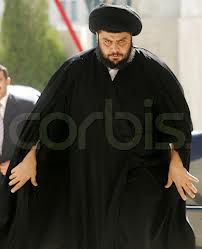
2. So if Carter was right about the IA’s lack of will to fight, then how will they make a stand in Baghdad? The reason is that 80% of the IA are Shia and the capital is a major Shia stronghold these days. The IA does much better in places where they have a great deal of local support, which isn’t Anbar, the Zaab Triangle or Tikrit. Baghdad and the areas South of the city are very difficult for IS to overrun due to the large concentration of Shia in the area. Another thing to keep in mind is that Baghdad is also a major stronghold for the PMCs and Shia militant leaders such as Muqtada al-Sadr aka “Muqi.” Even though the IA will still collapse when faced with a big fight, the Shia militias will hold their ground. Regarding the Shia militias, they’re no different than IS when it comes to martyrdom and brutality.

muqi-sith-lord

Muqi and his boys aren’t about to let IS roll into Baghdad in force without a fight
Source: Corbis

3. Since the majority of the government forces and Shia proxy forces are defending Baghdad, the rest of the country is vulnerable to being overrun by IS. Team Baghdadi views the seizing of terrain to expand the “Caliphate” as a bigger priority than seizing control of the Iraqi capital. The reason is obvious – seizing other major population centers and the critical infrastructure will help sustain the Islamic State. For IS, it makes more sense for them to continue having their sleeper cells conducting attacks inside the city while the front-line forces put pressure on the government by launching major operations in places like Karmah, Ramadi and al-Asad Airbase.

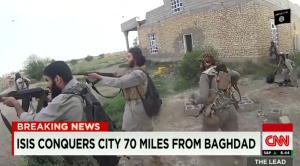
70 miles from Baghdad

Source: CNN

ISIS Moves Against Targets in Haditha, Habbaniyah While Qods Force and Proxies Launch Counterattack
http://isisstudygroup.com/?p=6668#comment-113539

Suleimani’s Gambit: Bid to Deal Crushing Blow to ISIS in Bayji
http://isisstudygroup.com/?p=6576

“JV Team” Solidifies Hold on Anbar With Ramadi Purging
http://isisstudygroup.com/?p=6542

Our “Fortress Baghdad” series laid out the IS strategy of relying on sleeper cells to conduct VBIED/SVEST attacks throughout the city. That strategy remains their preferred method of targeting the capital as it keeps the ISF/PMC off-balance and forces them to maintain their “circled wagon” posture. By doing this, the Government of Iraq (GOI) has kept manpower and resources from supporting efforts in Anbar and Northern Iraq that would’ve been crucial to the success of those operations. You’ve all seen the result of this with the fall of Anbar and failure to secure Tikrit, Bayji and the areas South of Kirkuk. IS won’t make a major push for Baghdad until after they’ve taken over the rest of the country – which is being greatly facilitated by the GOI keeping the majority of its forces in Baghdad. In the meantime, the sleeper cells will continue with their current OP-Tempo while groups of fighters get sent to the city to target specific neighborhoods in the city where the Sunni demographic is dominant. Those neighborhoods will be used to stage follow-on operations targeting locations such as Sadr City and the Green Zone – the US Embassy, specifically. We suspect that IS may choose to wait until a sandstorm hits before they move on the Embassy, fully knowing that military aircraft are grounded in bad weather. The far more immediate threat will likely come from IS conducting a high-profile attack on a government building. We assess that they will probably look to target the prisons in either Baghdad or Nasiriyah to capitalize on previous jail breaks conducted in Mosul and Ramadi. That said, the earliest they might target the prisons will be next month during Ramadan.

Links to Other Related Articles:

Islamic State Seizes Town of Khan al-Baghdadi, Threatens US Marines at Ayn al-Asad
http://isisstudygroup.com/?p=4755

ISIS Increases Pressure on Baghdad’s Green Zone – is the US Government Taking Notice?
http://isisstudygroup.com/?p=3501

Shia Militias To Reinforce al-Asad Airbase – IA On The Verge of Collapse

Links to Other Related Articles:

State of the Iraqi Air Force and Special Operations Forces

Update on the Baghdad and Kobane Fronts

The Islamic State Moves Into Abu Ghraib Within Striking Distance of Baghdad

Fortress Baghdad 4

Fortress Baghdad 3

Fortress Baghdad 2

Fortress Baghdad

US Begins Using Apache Attack Helicopters Against ISIS Northeast Of Fallujah

US Airstrikes Ivo Baghdad

Baghdad Update As Of 13 AUG 14

Fighting Around Baghdad Intensifies

ISIS advances on Baghdad, faces little resistance

May 24, 2015

ISIS advances on Baghdad, faces little resistance, DEBKAfile, May 24, 2015

The Islamic State continued its push toward Baghdad and on other fronts. Saturday, the group took the Iraq-Syrian town of Husaybah on the Tigris, rounding off its control of the border and the river and gaining an easy and rapid route for transferring reinforcements between the two countries.

The Islamists closed the distance to the big Iraqi base of Habbaniyah, taking Khalidiya on the way.DEBKAfile: Claims in Baghdad that Iraqi forces are preparing to recapture Ramadi have no substance in fact. The only place the ISIS is facing resistance is at the eastern exit of Khalidiya, where pro-Iranian Shiite militias are attempting to bar their progress towards Habbaniyah whic would bring them to within 12 km from Baghdad.


Strategic Failures, the US and the Fall of Ramadi

May 21, 2015

Strategic Failures, the US and the Fall of Ramadi, Clarion ProjectRyan Mauro, May 21, 2015

Islamic-State-Victory-Parade-HPIslamic State fighters celebrate their take over of Ramadi with a victory ‘parade.’ (Photo: Islamic State social media)

The U.S. must correct its strategy by sidelining Iranian-backed militias and terrorists, leveraging influence with the Iraqi government and significantly increasing assistance to the Anbar tribes, Kurds, Iraqi government and to the persecuted Christian minority that is forming its own self-defense force.

Recent history has shown that the Iraqi government will choose the U.S. over Iran if compelled.

********************

The Islamic State (ISIS) has captured Ramadi, the capital of Iraq’s Anbar Province, reportedly “terrifying” Iraqi officials who now foresee a “tsunami of international terror.” It is an important achievement for the terrorist group aimed at pre-empting a potential Sunni tribal uprising.

The Sunni tribes in Anbar Province were critical to the success of the 2007 “surge” that ousted the Islamic State’s predecessor, Al-Qaeda in Iraq. The deterioration in the relationship between these tribes and the central Iraqi government was likewise critical to the terrorists’ comeback in Iraq.

The Islamic State remembered these lessons and acted quickly as the Iraqi government began training tribal fighters and the U.S. defense budget allotted $179 million to Kurdish and Sunni tribal forces. The U.S. forgot these lessons and has long rejected Sunni and Kurdish pleas for direct aid to fight the Islamic State.

The Obama Administration is now planning to change course and directly arm and train the Iraqi Sunni tribes after the fall of Ramadi. The White House previously chose to work only through the central Iraqi government that has given the Kurds and Sunnis inadequate support.

A delegation of 11 Sunni tribal leaders, including Sheikh Ahmed Abu Risha, the President of the Anbar Awakening Council, flew to the U.S. on January 18 to plead for direct assistance. Former President George W. Bush called Abu Risha and listened to his complaints for 20 minutes and offered to help. Administration officials were less willing. One tribal official said, “I wouldn’t call it the ‘cold shoulder,’ but it certainly was a cool one.”

The Obama Administration told them that it would only work through the elected central government. Its viewpoint was that working with forces outside the government’s authority undermines the Iraqi leadership and threatens the country’s unity.

That standpoint ignores what was learned after the fall of Saddam Hussein. Nothing threatens Iraq’s unity and the government’s authority more than instability. Direct U.S. aid to the Sunni tribes helped save Iraq from disintegration into sectarian enclaves ruled by terrorists and militias.

The Islamic State struck Ramadi during a sandstorm that delayed American air support. Former U.S. Central Command advisor Ali Khedery says that a Kurdish member of parliament informed him that 6,000 Iraqi Security Forces fled when faced with a mere 150 Islamic State fighters. About 500 Iraqi security personnel and civilians died in two days. The Iraqi officials spoke straight forwardly and  admitted that the current strategy is failing.

The Pentagon says it has finished training about 7,000 Iraqi Security Forces and another 3-4,000 are in the process of training, but training won’t solve the problem of collapsing Iraqi forces. The U.S. trained the Iraqis from 2003 until the withdrawal in 2011. The strategy of waiting for the Iraqi security forces to become strong enough to stabilize the country is the same strategy that failed before the surge.

Iraqi personnel flee because they don’t want to die for a lost cause or to fight for a replacement worse than the Islamic State.

The Iraqi Security Forces face a fundamental disadvantage when battling the Islamic State: They want to live and their enemies want to die. This disadvantage is further compounded by a lack of confidence. If given the choice to die fighting in a losing battle or to flee and perhaps regroup later with better chances of victory, they will choose the latter.

An Anbar official placed the blame on the Iraqi government, telling CNN, “If 10% of the government’s promises had been implemented, Ramadi would still in our hands and the Islamic State wouldn’t dare to be anywhere near the city.”

Iraqi Sunnis are faced with a terrible choice. The Iranian-backed Shiite militias are often nicknamed “Shiite ISIS” because their crimes are comparable to ISIS but are less known by the West because they aren’t broadcasted. However, the Anbar Provincial Council is officially welcoming them now out of desperation and perhaps an awareness that their opposition will be ignored anyway.

The Shiite militias should be expected to mistreat the local Sunnis the second after the Islamic State is expelled or even during the fighting. Tribal support is far from unanimous. The son of the largest tribe’s leader is in the U.S. asking for support right now and bluntly warned that sending the Shiite militias into Anbar Province “will cause a civil war.”

The New York Times has noticed the change in American attitude towards the Shiite militias. Pentagon spokesperson Col. Steve Warren said, “As long as they’re controlled by the central Iraqi government, there’s a place for them.” Yet, only two months ago, Central Command Commander General Austin said, “I will not—and I hope we will never—coordinate or cooperate with Shiite militias.”

The U.S. must correct its strategy by sidelining Iranian-backed militias and terrorists, leveraging influence with the Iraqi government and significantly increasing assistance to the Anbar tribes, Kurds, Iraqi government and to the persecuted Christian minority that is forming its own self-defense force.

Recent history has shown that the Iraqi government will choose the U.S. over Iran if compelled.

In March, the U.S. withheld support to Iraqi forces fighting the Islamic State in Tikrit because of the involvement of Iranian-backed militias and the Revolutionary Guards Corps. The Iranian proxies stalled and could move no further, displaying the value of U.S. air support. The Iraqis chose America and the Iranians were removed from the battle. U.S. aid delivered the victory that the Iranians could not.

The Iraqis had been asking for U.S. for more help including possibly advisors on the ground since October 2013. By March 2014, the Iraqis were asking for airstrikes on the Islamic State. The Islamic State blitz into Iraq began in June.

The Iraqi ambassador complained that the U.S. had denied requests for help including Apache helicopter sales, thereby putting Iraq “in an uncomfortable position in seeking support from whoever is available on the ground.” He emphasized that the “U.S. is our strategic partner of choice.”

Iran opposed the return of U.S. soldiers on the ground in Iraq as advisors. The Iranian-backed cleric Moqtada al-Sadr threatened to attack the advisors and two other Iranian-backed militias alsoforcefully opposed U.S. involvement. The Iraqi government went ahead anyway.

Even now, Iraqi Prime Minister Haider al-Abadi is in Russia and talking to China and Iran about delivering arms that the U.S. refuses to provide.

The U.S. needs to give the Iraqi government a clear choice: Iran or us.

The Iraqi government should be put on notice. If it is willing to restrain the Shiite militias and work with us to disband them, then we will provide all necessary aid. We will help negotiate with the Sunni tribes so their local forces operate within a national framework.

If the Iraqi government chooses Iran, then we will cut our aid and redirect it towards our Sunni, Kurdish and Christian partners while maintaining contact with friendly Shiites. We will not act as the air force for Iranian proxies. If necessary, we will talk about a role for the forthcoming Arab force led by Egypt to replace yours.

It is positive news that the Obama Administration is reversing its stance and will directly help the Sunni tribes, but the anti- Islamic State strategy requires an anti-Iran strategy.