Posted tagged ‘Assad’

Four parties caused Syria’s genocidal calamity. Should Israel get involved?

September 6, 2015

Four parties caused Syria’s genocidal calamity. Should Israel get involved? DEBKAfile, September 6, 2015

migrants_along_railways_5.9.15Refugees flooding into Europe

Chapter by chapter, a long list of the guilty parties must bear responsibility for the Syrian catastrophe hacking the ruined country into bleeding parts.

1.  The first culprit is undoubtedly its insensate president Bashar Assad and his close family, who have had no qualms about spilling the blood of some 300,000 men, women, children and old people – some estimate as many as half a million – and making some 11 people homeless, to keep himself in power. No one has ever counted the number of people maimed and crippled by the war, but they are conservatively estimated at one million.

These figures add up to genocide or serial mass murder, which has been allowed to go into its fifth year.

2.  Iran warrants second billing for this mass crime.

Tehran has laid out the stupendous sum of some $40 billion to keep the mass marderer Assad in power with total disregard for his methods of survival. The motives behind the ayatollahs’ military and political boost are well recorded. Worth mentioning here is that Tehran not only pressed its Lebanese proxy, the Shiite Hizballah group, into service alongside Assad’s army, but sent its its own generals to orchestrate the war, led by the Al Qods Brigades chief Qassem Soleimeni.

We can reveal here that 22 Iranian generals have died fighting for the Assad cause.

3. The third place belongs to the United States and President Barack Obama. His refusal to put American boots on the ground may have been the correct decision for the US, but it had four direct consequences:

a)  The slaughter of the Syrian people continued unchecked. Even after President Obama declared that chemical warfare was a red line, he backed down at the last minute against intervening and ordered the US fleet to draw back from the Syrian coast.

To this day, Assad continues to use chemical weapons to poison his enemies.

b)  Obama and his Secretary of State John Kerry let Iran use its military backing for Assad as a high card in the negotiations for a nuclear accord. Instead of making it a condition for a deal against the lifting of sanctions, Washington allowed Tehran to come away from the table with US non-intervention in Syria as one of its concessions for buying Iran’s assent to the Vienna deal.

Tehran, in a word, won Washington’s tacit approval for propping up the atrocious Syrian ruler.

c)  The rest of the world, including the United Nations and the European Union, followed the Obama administration’s lead and stood aside as at least 11 million Syrians became homeless refugees.

The lifeless body of a three-year old Syrian child washed up from the sea has figured in the Western media as a symbol of the tragic fate of Syria’s refugees. However, his tragedy came after the hair-raising atrocities endured by millions of those refugees for nearly five years.

Many families were forced to sell their daughters as sex slaves to buy food, their young sons to pedophile predators. The slave markets were centered on the Persian Gulf. Young Alan Kurdi died aged three. Many thousands of Syrian refugee children still live in appalling circumstances. No humanitarian organization has started an outcry or a campaign to rescue them.

d)  US refusal to intervene in the most savage humanitarian tragedy the world has seen for many decades opened the door to the belligerent branch of al Qaeda, the Islamic State of Iraq and the Levant, to march into the vacuum. The videotaped records of beheadings, the massacre of the Iraqi Yazdi people, the enslavement of its women and the burning alive of “apostates,” followed in quick succession.

The strongest nation in the world fought back with an ineffective trickle of air strikes on ISIS targets, allowing the group to go forward to conquer terrain and gain in strength.

4.  Russia bears a heavy weight of guilt – and Israel would do well to watch its cynical conduct and draw the right conclusions. Like the ayatollahs, President Vladimir Putin led the second world power to total commitment for keeping Bashar Assad in power. Among other motivations, Putin pursued this policy to settle a score with Obama for the overthrow of Libya’s Muammar Qaddafi.

With one world power on the sidelines and a second jumping in with two feet, the Syrian imbroglio was bound to have devastating historical repercussions.

Throughout the Syrian conflict, Israel refrained from interfering, with only one exception: It supported Syrian rebel groups holding a strip of southern Syria, as a buffer against Iranian, Hizballah and Syrian army encroachment on its northern borders.

More than a thousand injured Syrians were treated and their lives saved in Israeli hospitals after receiving first aid at a field hospital on the Israeli-Syria border.

The esteemed Israeli historian Prof. Shlomo Avinery said Sunday, Sept 6, that Prime Minister Binyamin Netanyahu did the right thing in steadfastly keeping Israel out of the Syrian conflict. He very much doubted that Syrian refugees would seek asylum in a country they regard as the Zionist enemy.

Israel’s opposition leader Isaac Herzog nonetheless urged the government to take in a limited number of Syrian asylum seekers from among those flooding into Europe, and not to forget that “we are Jews.”

 One wonders why he never had a word to say about US dereliction when Assad committed his atrocities across Israel’s border.

Herzog’s favorite advice to Netanyahu is to go to Washington right now, beard President Obama in the Oval Office and hammer out an agreed policy on Iran.

Netanyahu referred to the Syrian refugee crisis at the weekly cabinet meeting Sunday: “While Israel is not indifferent to the human tragedy of refugees from Syria and Africa, it is a small country that cannot throw its doors open to them,” he said.

“We have conscientiously treated thousands of wounded from the fighting in Syria, and we have helped them rebuild their lives,” the prime minister recalled. “But Israel is a very small country, with neither demographic nor geographic depth, and therefore we must control our borders.”

Regarding a visit to Washington, the prime minister has a problem: Just as President Obama has not invited any Syrian refugees to come to America, he has not issued Netanyahu with an invitation to come to DC, whether to discuss the Iranian or the Syrian questions.
John Kerry “deeply concerned” about Russian buildup in Syria

September 6, 2015

John Kerry “deeply concerned” about Russian buildup in Syria, Front Page Magazine, Daniel Greenfield, September 6, 2015

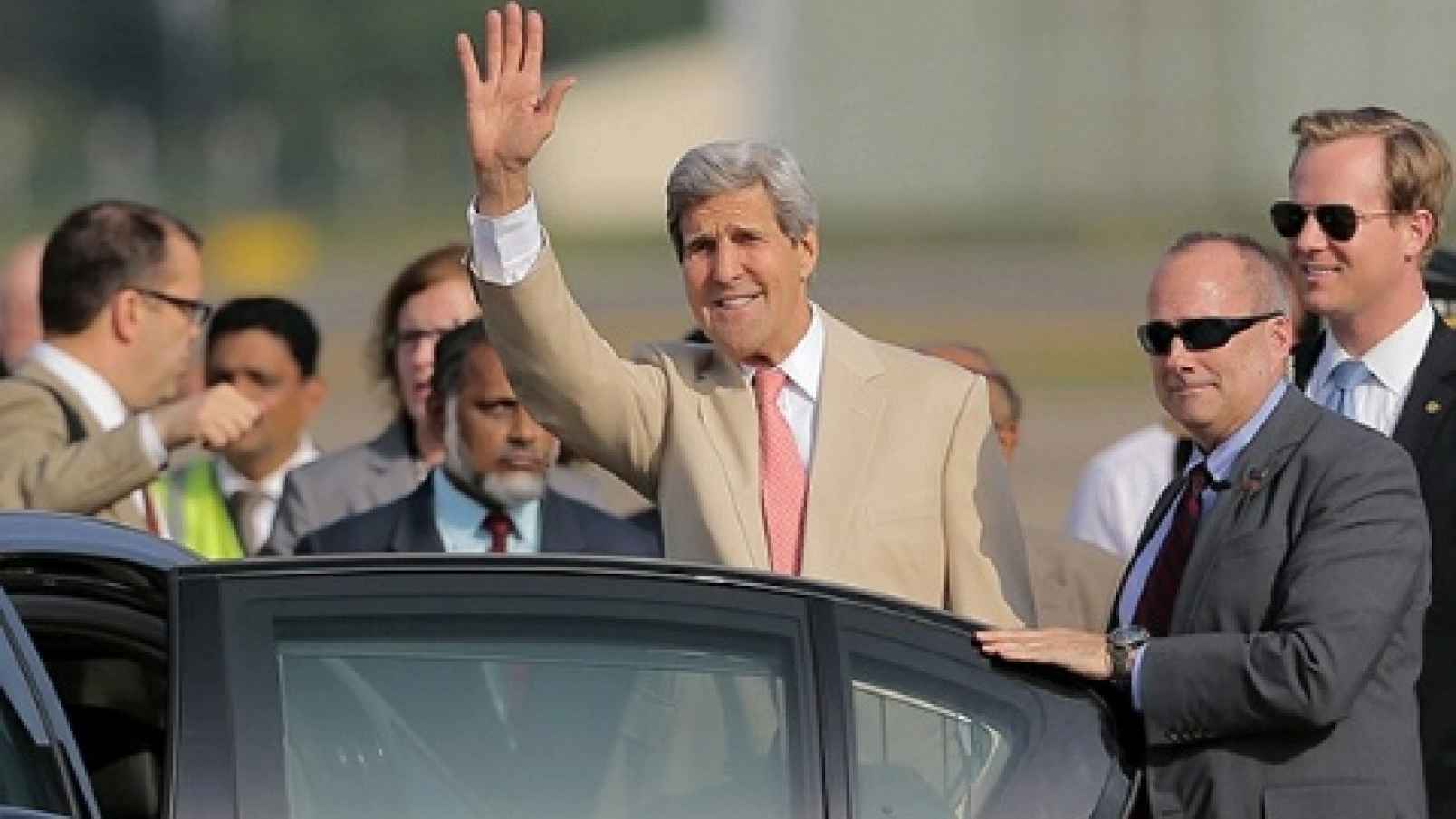
kerry_whitehousegov

Can I just say for the record that I remain deeply concerned that John Kerry is the Secretary of State instead of the headwaiter at a third rate French restaurant in Washington D.C.

*********************

Hold on to your hats. John Kerry is “deeply concerned” about something. Not just “concerned,” but deeply concerned. The gloves are really coming off now. Also possibly the pants.

Secretary of State John Kerry told his Russian counterpart on Saturday the United States was deeply concerned about reports that Moscow was moving toward a major military build-up in Syria widely seen as aimed at bolstering President Bashar al-Assad.

This is no vague concern. John Kerry wanted there to be no doubt as to his exact degree of concern.

The official, speaking on condition of anonymity, said Moscow’s exact intentions remained unclear but that Kerry called Russian Foreign Minister Sergei Lavrov to leave no doubt of the U.S. position.

Deep. Concern.

In response to Russian troop movements, Kerry called Lavrov and expressed “deep concern” and then had an anonymous flunky leak the conversation to Reuters to show how tough a line he was taking.

This is the SmartPower(TM) diplomacy that has brought twelve continents and several galaxies to their knees. This is the awesome diplomatic powerhouse that is known and respected around the world. Somewhere Lavrov is giggling like a little girl while replaying the tape of the conversation to a bunch of the FSB’s finest while Putin gets another shot of Botox between the eyes.

“The secretary made clear that if such reports were accurate, these actions could further escalate the conflict, lead to greater loss of innocent life, increase refugee flows and risk confrontation with the anti-ISIL coalition operating in Syria,” the State Department said, using an acronym for Islamic State.”

These days Lavrov probably doesn’t wait for Kerry to hang up to start laughing. And can you blame him?

But don’t worry. John Kerry doesn’t just throw around loaded words like “deep concern” on any old occasion. Okay, he does.

“The United States is deeply concerned by Nigeria’s enactment of the Same Sex Marriage Prohibition Act.”

“Well, let me just affirm very, very clearly we are deeply concerned about what is happening in Iraq.”

“We. . .remain deeply concerned about the large deployments of Russian forces in Crimea and along the eastern border with Russia.”

Can I just say for the record that I remain deeply concerned that John Kerry is the Secretary of State instead of the headwaiter at a third rate French restaurant in Washington D.C.

Egypt sends Assad secret arms aid, including missiles, with Russian funding

August 30, 2015

Egypt sends Assad secret arms aid, including missiles, with Russian funding, DEBKAfile, August 30, 2015

( Given that Egypt is heavily reliant on Saudi funding as well as the absence of any other news source beyond “Debka,” I find this article worthy of a generous helping of salt. – JW )

Egyptain_missile_in_Zabadani_25.8.15

Egyptian President Abdel-Fatteh El-Sisi has begun supplying Bashar Assad with arms, including missiles, after concluding a secret deal with Russian President Vladimir Putin and his consent to pick up the tab, DEBKAfile’s military and intelligence sources reveal. The first batch of short-range Egyptian-made surface missiles has reached the Syrian forces fiercely battling rebels for weeks for the recovery of the strategic town of Zabadani without breaking through (See picture showing missile with Egyptian factory markings.) 

It is not clear if the Egyptian missiles have also been passed to the Hizballah forces fighting with the Syrian army, considering that El-Sisi and Hizballah are at daggers drawn.

Our sources also reveal that the Egyptian arms consignments are freighted from Port Said to the Syrian port of Tartus by Ukrainian cargo vessels. These ships are today the most popular means of transport for clandestine and Black Market arms freights across the Mediterranean and Adriatic Seas.

Sums and quantities are yet to be determined, but Western intelligence sources report that Ukrainian vessels called in at Egyptian ports at least three times from July 22 to Aug. 22 and sailed off to Syria laden with weapons.

It is a deal that may affect the fate of the Assad regime from five, often conflicting, perspectives:

1. By providing Assad with an additional source of weapons, Cairo is reducing his dependence on Iran. This suits the Syrian ruler very well at this time, because he is fully aware of Tehran’s latest steps to draw Gulf rulers and Moscow into supporting a plan for ending the Syrian war, by installing a provisional government in Damascus and so easing his exit.

2. A certain parting-of-the ways has developed between Moscow and Tehran on how to terminate the Syrian conflict. By sending Assad arms, Cairo  casts its vote for Moscow’s perspective in preference to Tehran’s.

3. El-Sisi is now diametrically opposed on Syrian policy to the GCC led by Saudi Arabia and the United Arab Emirates who are patrons of the rebel movement dedicated to toppling Assad.

4. He is also on the opposite side to Israel and Turkey. Israel backs the rebels fighting in southern Syria to create a barrier against the encroachment of Hizballah and Iranian Al Qods Brigades up to its northern border and the Golan. Turkey and the US have reached terms on Syrian policy. Saturday, Aug. 30, Turkish jets carried out their first air strikes in Syria against the Islamic State, as part of its deal with the US.

5. The Russian-Egyptian understanding on the Syrian question is a signpost that clearly marks the way to deepening military and strategic relations between Moscow and Cairo.

Taking the lead on a resolution of the Syrian question, the Kremlin staged a discussion last Tuesday, Aug. 18, with three Arab visitors: Jordan’s King Abdullah, UAE Crown Prince Sheikh Mohamed bin Zayed Al Nahyan and the Egyptian president. It was led by Mikhail Bogdanov, Deputy Foreign Minister in charge of Middle East Affairs, and followed by individual tête-à-têtes between Putin and each visitor in turn.

The Russian and Egyptian leaders did their best, according to DEBKAfile’s Moscow sources, to draw the Jordanian and UA rulers over to their pro-Assad policy, or at least accept common ground for a measure of cooperation. In effect, Putin and El-Sisi were out to convince Jordan and the US to back away from the Syrian rebel cause and the Saudi line. Their future actions may indicate how far they succeeded.

Resolving the Syrian war is not the silver bullet for stopping ISIS

August 29, 2015

Resolving the Syrian war is not the silver bullet for stopping ISIS, DEBKAfile, August 29, 2015

(Please see also, Pentagon Not Targeting Islamic State Training Camps. — DM)

jISIS_mobile_defense_of_SVBIED_8.15ISIS “mobile defense SVBIED” in action in Iraq

President Obama may likewise offer King Salman all sorts of assistance for standing up to ISIS, but he will find no buyers in Riyadh for his failed policy of reliance on Saudi Arabia’s rival, Iran, for liquidating the Islamist threat looming against the oil kingdom from neighboring Iraq.  Neither is US aid much use for stemming the tide of pro-ISIS radicalism spreading among young Saudi men.

As matters stand today, therefore, the Islamic State faces no tangible threat – even if Iran does go ahead and achieve a nuclear bomb.

**************************

The war to stop the Islamic State in Iraq and the Levant (ISIS) has entered a dark tunnel. And with it the bottomless conflicts in Syria, Yemen, Libya and Iraq. The search for a ray of light moves next week from Moscow to Washington, when Saudi King Salman Bin Abdulaziz makes his first visit as monarch for talks with President Barack Obama.

The three worried Arab rulers received in the Kremlin Tuesday, Aug. 25, by President Vladimir Putin could only talk in circles: Egyptian President Abdel-Fatteh El-Sisi,is  embattled on three fronts, Sinai, his border with Libya and Cairo; Jordan’s King Abdullah II – is wedged between two wars; and UAE Crown Prince Sheikh Mohamed bin Zayed Al Nahyan, has sent his army to fight the Yemen insurgency alongside Saudi Arabia.

For them, resolving the Syrian conflict looked like the silver bullet, the key to ending all their troubles. But whichever Russian or Iranian plans and ideas they considered for a way forward, they were all forced to come back to the same impasse. Even Putin and Obama can’t get around or ignore two solid facts:

1. In the year since the US built an international coalition for fighting ISIS, the brutal Islamists have not been cut down; they have instead been empowered to seize more turf outside their Iraqi and Syrian conquests, such big oil fields in Libya, an ascending threat to Egypt and big plans for Lebanon.

2. A major letdown has followed on the high hopes reposed in Iran. The nuclear deal negotiated with the six world powers – and the elevated regional status conferred on Iran – hinged closely on US expectations that Tehran would put up effective military resources for tackling ISIS.

But the Revolutionary Guards, the popular Syrian and Iraqi forces the Guards established,and  the Afghan and Pakistani Shiite militias they imported – none have proved a match for ISIS and jihadi tactics.

In Syria, ISIS stands fast, unthreatened in the terrain, towns and oil fields they have captured, in the past year – excepting only on fringe fronts, where they have been forced back by local Kurdish rebel fighters.

Hizballah is a big part of the disappointment. It was supposed to serve as a bulwark against ISIS invading eastern Lebanon from Syria. Instead, these Lebanese Shiite fighters, allies of Assad’s army, are bogged down in a bitter battle for the strategic Syrian town of Zabadani, after failing to breach Syrian rebel defenses in forays from the south, the north or the center.

The door is therefore open for the Islamist State to march into Hizballah’s strongholds in the Lebanese Beqaa valley and head north to the port of Tripoli for a foothold on the Mediterranean.

Whether Bashar Assad stays or goes, which might have made a difference at an early stage of the Syrian insurgency, is irrelevant now that his army and allied forces are in dire straits.

In Iraq, the forces fighting ISIS are equally stumped. The jihadis are in control of a deadly string of  strategic towns, Ramadi, Faluja, the refinery city of Baiji, Mosul, and most of the western province of Anbar, including Haditha which commands a key stretch of the Euphrates River.

Here, too, the Islamist terrorist army’s lines remain intact, unbroken either by the undercover Jordanian Special Forces campaign 200 km inside Anbar, albeit backed by US and Israeli military and intelligence assistance; by the “popular mobilization committees” set up by the Iranian general Abu Mahdi al-Muhandis, deputy of the Al Qods chief Qassem Soleimani, or less still by US-trained Iraqi army units.

This week, the impasse spurred two combatants into chilling escalations:

— Iran began shipping its solid propellant missile, Zelzal-3B (meaning “earthquake”), across the border into Iraq, in the hope that this powerful projectile, with a range of 250km , would give the Revolutionary Guards their doomsday weapon for tipping the scales against ISIS.

— The Islamists, for their part, embraced a new tactic, known in the west as “SVBIED mobile defense.” Scores of armed vehicles are packed tight with hundreds of tons of explosives and loosed against military convoys on the move and static enemy positions and bases.

This tactic quickly proved itself by killing the 10th Iraqi Division’s chief, deputy and its command staff, as well as the deputy chief of Iraqi forces in Anbar.

In Moscow last week, Putin offered his three Middle East guests Russian nuclear reactors, arms, joint pacts for fighting terror and assorted ideas for the future of Bashar Assad. But he too had no practical proposals for bringing the Islamic State down.

President Obama may likewise offer King Salman all sorts of assistance for standing up to ISIS, but he will find no buyers in Riyadh for his failed policy of reliance on Saudi Arabia’s rival, Iran, for liquidating the Islamist threat looming against the oil kingdom from neighboring Iraq.  Neither is US aid much use for stemming the tide of pro-ISIS radicalism spreading among young Saudi men.

As matters stand today, therefore, the Islamic State faces no tangible threat – even if Iran does go ahead and achieve a nuclear bomb.

Six Russian MiG-31 interceptor aircraft land in Damascus to rescue Assad regime

August 19, 2015

Six Russian MiG-31 interceptor aircraft land in Damascus to rescue Assad regime, DEBKAfile, August 18, 2015

Mig-31-fighter_18.8.15Russian MiG-31 interceptors

Six Russian MiG-31 Foxhound interceptor aircraft from Moscow landed Tuesday, Aug. 18, at the Mezze Airbase situated in Damascus international airport, DEBKAfile’s military and intelligence sources disclose. They were followed shortly after by giant An-124 Condor transports, which delivered 1,000 Kornet-9M133 third-generation anti-tank guided missiles.

The Russian airlift of advanced weapons for Bashar Assad’s army will last for several days. It betokens Moscow’s intention to keep up its support for the Syrian ruler and counter – by military means if necessary – any secret Iranian diplomatic machinations for terminating the Syria war and with it the Assad regime – such as have been reported in the past week in Western and Arab capitals, especially in the Gulf.

Our sources report that the decision to send the Syrian ruler advanced aircraft and missiles could only have come from the top, i.e. President Vladimir Putin. It took direct aim at the latest moves made by the US, Turkey, Iran and Saudi Arabia for ending the Syrian war. Every formula they came up with entailed Assad’s exit, either in stages or at once.

Russian Foreign Minister Sergey Lavrov made it crystal clear to visiting Saudi Foreign Minister Adel Al-Jubair on Aug. 11 that Moscow would not stand still for any changes in Assad’s position in Damascus. The Migs and Antonovs which landed in Damascus Tuesday were meant not only as a buttress for the Syrian ruler’s regime but as a rescue operation.

The message for Washington and Ankara was that Moscow would oppose any US and Turkish plans to establish a no-fly zone over Syria, or intervene directly in the Syrian conflict.

The Russians sent exactly six MiG interceptors to match the six F-16 fighters the US deployed at the Turkish Incerlik air base on Aug. 9.

So if President Barack Obama decides to deploy more American planes at the Turkish base, he may expect Putin to reciprocate with the same number for Damascus.

The day after the deal

August 9, 2015

The day after the deal, Israel Hayom, Prof. Eyal Zisser, August 9, 2015

(Please see also, Russia and US woo Saudis to help save Assad – albeit putting Israel and Jordan in danger from S. Syria.– DM)

[Soleimani] wanted Russia and Iran to agree on the division of the Middle East in a way that would serve their clients in the region (among them, Assad) and check their joint enemies (the Islamic State). After figuring that out, they probably moved on to the next topic: how to marginalize America in the region. As a means to both ends, Russia will continue to serve as Assad’s protector (despite his many crimes), all the while providing Iran with international backing. But above all it will send arms to Iran, to the Syrian regime, and if needed, to Hezbollah.

***********************

Over the weekend it transpired that Maj. Gen. Ghasem Soleimani, the commander of Iran’s Quds Force, had visited Moscow two weeks ago and met with President Vladimir Putin. The Quds Force, in case you forgot, is in charge of the Iranian Revolutionary Guards’ clandestine operations (including terrorism). The Quds Force is responsible for providing aid to Hezbollah and Hamas as well as to Syrian President Bashar Assad and the Houthi rebels in Yemen. In light of his direct involvement in terrorism, the international community imposed sanctions on Soleimani, including travel restrictions.

Only last week, at a hearing on Capitol Hill, U.S. Secretary of State John Kerry vowed that the U.S. will make sure the sanctions on Soleimani would stay in effect and that the Obama administration would counter Iran’s efforts to destabilize the Middle East. But no one takes Kerry seriously anymore. While Kerry continues to engage Iran’s unimportant Foreign Minister Mohammad Javad Zarif, the real wheeling and dealing is actually in Moscow.

Soleimani did not go to Moscow because he had tickets to the Bolshoi. Rather, he arrived because he wanted to discuss “the day after the nuclear deal” with Putin. Namely, he wanted Russia and Iran to agree on the division of the Middle East in a way that would serve their clients in the region (among them, Assad) and check their joint enemies (the Islamic State). After figuring that out, they probably moved on to the next topic: how to marginalize America in the region. As a means to both ends, Russia will continue to serve as Assad’s protector (despite his many crimes), all the while providing Iran with international backing. But above all it will send arms to Iran, to the Syrian regime, and if needed, to Hezbollah.

The Russians, unlike the Iranians, don’t consider Israel to be an enemy state. But as a famous Russian official once said: “When you chop wood, chips fly.” Israel has become the latest chip — the collateral damage. Soleimani’s visit is just the tip of iceberg. It shed light on the not-so-secret deals that are being negotiated in the wake of the “Vienna nuclear agreement.” Europe, as usual, is focused on profit and its corporate executives are already traveling in droves to Tehran to ink deals. There are also political deals Iran wants to secure, which are as important for Tehran. Their price, however, will be measured in blood rather than in euros or dollars.

No one in the Middle East, it seems, is keen on parsing each and every provision in the nuclear deal. Nor is there an attempt to see whether, in the grand scheme of things, it is will have been a worthwhile endeavor some 10 or 15 years from now, when its key elements expire. In this region, what counts is the way this agreement is perceived here and now — and what really matters to people is the way it is portrayed in the media. Under that criteria, Iran is the victor and America is the vanquished, because it caved to Iran. The deal, according to how the media has portrayed it, is a crushing political blow to Israel and the moderate Arab states, led by Saudi Arabia.

This knockout victory will likely produce a new Iranian-American partnership. At the very least, the two nations will mend fences. This will alienate many of Washington’s clients, who will have to look elsewhere for a more reliable ally. Egypt and the Saudis have already realized this and turned to Russia for aid and arms, figuring it would be more trustworthy than the “staff of this broken reed” (Isaiah 36:6).

Saudi Arabia is reportedly sending feelers to see if there is a deal to be had with Russia and Iran. Under the terms of the proposed deal, Saudi Arabia would withhold aid to the Syrian rebels if Iran ends its rogue presence in the state. Such a deal would secure Assad a victory over the insurgents, or a least ensure his regime survives.

The ongoing developments have caused panic, but not over the rising clout of Iran and Russia. The White House, it seems, is fretting over the possibility that Congress may vote against the Iran deal and further tarnish Obama’s image.

Russia and US woo Saudis to help save Assad – albeit putting Israel and Jordan in danger from S. Syria

August 9, 2015

Russia and US woo Saudis to help save Assad – albeit putting Israel and Jordan in danger from S. Syria, DEBKAfile, August 9, 2015

Lavrov_Kerry_and_al-Jubeir-_Doha_3.8.15Lavrov, Kerry, Al-Jubeir at Doha

[N]either Israel nor Jordan has been co-opted to this big power initiative, as though they are not concerned. However, both have a big stake in Saudi Arabia’s next decisions. If Riyadh is won over by US-Russian blandishments and goes back on its decision to boycott Assad, the Saudi-Israeli-Jordanian effort to support Syrian rebel control of southern Syria will fall apart. This will open up both countries to new perils on their  northern borders.

************************

Building on the nuclear accord signed in Vienna last month, the Obama administration has been in close communion with Moscow and Tehran on regional moves to save the Assad regime, as the key to their next regional policies, including a united front against the Islamic State.. Saudi Arabia and its Gulf partners are being assiduously wooed to join the new alignment being set up for this purpose. The live wire in getting them all together is Omani Foreign Minister Khalid bin Mohamed Al-Attiyah, the secret broker who brought Iran and the United States to the negotiating table for a nuclear accord. This was first reported in the last DEBKA Weekly.

Wednesday, Aug. 7, Obama threw out his first hint on this development: “The window has opened a crack for us to get a political resolution in Syria, partly because both Russia and Iran, I think, recognize that the trend lines are not good for Assad,” he said. “Neither of those patrons are particularly sentimental; they don’t seem concerned about the humanitarian disaster that’s been wrought by Assad and this conflict over the last several years, but they are concerned about the potential collapse of the Syrian state. And that means, I think, the prospect of more serious discussions than we’ve had in the past.”

The US president then affirmed more strongly in a CNN interview Sunday, Aug. 9:  “Is there the possibility that having begun conversations around this narrow issue [the nuclear accord with Iran] that you start getting some broader discussions about Syria, for example, and the ability of all the parties involved to try to arrive at a political transition that keeps the country intact and does not further fuel the growth of ISIL and other terrorist organizations? I think that’s possible,” Obama said. “But I don’t think it happens immediately.”

The administration and its prospective partners are united by the will to destroy ISIS – in its Syrian stronghold, for starters – but are divided on much else, DEBKA file reports. And so the process is moving forward in careful steps.

Their initial focus is on Syria, the bloody battleground which in less than five years has left at least 300,000 dead and more than 10 million people homeless.

The plan the group started out with in the last ten days was a swap as simple as it was ruthless: Saudi Arabia and the United Arab Emirates would slow their assistance to Syrian rebel groups, against whom President Bashar Assad’s army and allies would hold their fire; Iran, for its part, was to start withdrawing its support from the Yemeni Houthis insurgents.

The informal truce in Syria would be the stage for the Assad regime and rebel groups to start discussing a new government with room for opposition parties. The Islamists of the Islamic State and Al Qaeda’s Nusra Front would not be invited.

In Yemen, Tehran would cut back on the arms and intelligence which have enabled the Houthi insurgents to stand up to the combined forces of Saudi Arabia, the UAE and Egypt. The pro-Western Yemeni President Abd Rabo Mansour Hadi would be restored to his palace in Sanaa and invite the insurgent leader, Abdu Malik Al-Houthi, to discuss his partnership in a new government.

This deal was tantamount to a joint US-Russian guarantee of Bashar Assad survival in power in return for a Tehran-Riyadh compact for Hadi’s reinstatement in Sanaa.

These arrangements were debated back and forth in exchanges, some semi-secret, among the leading actors for most of July. The visit to Riyadh of the Syrian intelligence chief Maj. Gen. Ali Mamlouk was set up by Moscow as a major push forward.

The plan was for the entire enterprise to be brought out in the open and sealed in Doha, Qatar, Tuesday, Aug. 3 at a conference attended by US Secretary of State John Kerry, Russian Foreign Minister Sergey Lavrov, Saudi Foreign Minister Adel Al-Jubeir and other top Gulf diplomats.

Iranian Foreign Minister Mohammed Javad Zarif was not there. But he put a strong oar into the proceedings by calling in at Muscat, Oman the day before the conference and subsequently on Friday Aug. 7. Assad also kept his hand in by sending his foreign minister Walid Moallem to Tehran and Muscat last week.

But then, at Doha, just as the package was ready to unveil, the Saudi foreign minister pulled away and blew it up with two provisions: a) Riyadh would not countenance Bashar Assad being allowed to stay in office, and: b) Saudi Arabia would not do business with any representative of the Assad regime.

This put a large spoke in the main wheel of the initiative and also scuttled some of the secondary plans depending on it.

But by then, a lot was happening in the Yemeni and Syrian war arenas:

1. Saudi and UAE armored forces had landed in Aden and were closing in on the Yemeni capital, Sanaa. The Houthi rebels, trained and armed by Iran, were forced to retreat without negotiations on their future role in government.

2. Syrian rebel leaders, sensing the approaching betrayal, sent a secret delegation to Tehran to discuss terms for opening negotiations with Assad. They too were left at sea about the deals in play among Washington, Moscow, Tehran and Riyadh over their future.

Saturday, Aug.8, the Russians, egged on by the Americans, set about winning Riyadh into the fold, Foreign Minister Al-Jubeir was invited to pay a visit to Moscow Tuesday, Aug. 11, for talks about the Syrian conflict and the war on the Islamic State.

Refusing to accept that the new initiative had been grounded in Doha, Moscow presented the visit as continuing the ongoing dialogue on the issues raised at that encounter.

DEBKAfile’s military and intelligence sources note that neither Israel nor Jordan has been co-opted to this big power initiative, as though they are not concerned. However, both have a big stake in Saudi Arabia’s next decisions. If Riyadh is won over by US-Russian blandishments and goes back on its decision to boycott Assad, the Saudi-Israeli-Jordanian effort to support Syrian rebel control of southern Syria will fall apart. This will open up both countries to new perils on their  northern borders.

Newly-Declassified U.S. Government Documents: The West Supported the Creation of ISIS Washington’s Blog

August 8, 2015

Newly-Declassified U.S. Government Documents: The West Supported the Creation of ISIS

Posted on May 24, 2015 by WashingtonsBlog

via Newly-Declassified U.S. Government Documents: The West Supported the Creation of ISIS Washington’s Blog.

Judicial Watch has – for many years – obtained sensitive U.S. government documents through freedom of information requests and lawsuits.

The government just produced documents to Judicial Watch in response to a freedom of information suit which show that the West has long supported ISIS.   The documents were written by the U.S. Defense Intelligence Agency on August 12, 2012 … years before ISIS burst onto the world stage.

Here are screenshots from the documents. We have highlighted the relevant parts in yellow:

ISIS1Why is this important? It shows that extreme Muslim terrorists – salafists, Muslims Brotherhood, and AQI (i.e. Al Qaeda in Iraq) – have always been the “major forces driving the insurgency in Syria.”

This verifies what the alternative media has been saying for years: there aren’t any moderate rebels in Syria (and see this, this and this).

The newly-declassified document continues:

ISIS 2Yes, you read that correctly:

there is the possibility of establishing a declared or undeclared Salafist Principality in eastern Syria (Hasaka and Der Zor), and this is exactly what the supporting powers to the opposition want, in order to isolate the Syrian regime ….

In other words, the powers supporting the Syrian opposition – the West, our Gulf allies, and Turkey wanted an Islamic caliphate in order to challenge Syrian president Assad.

Sure, top U.S. generals – and vice president Vice President Joe Biden – have said that America’s closest allies support ISIS.  And mainstream American media have called for direct support of ISIS.

But the declassified DIA documents show that the U.S. and the West supported ISIS at its inception … as a way to isolate the Syrian government.  And see this.

This is a big deal.  A former British Army and Metropolitan Police counter-terrorism intelligence officer and a former MI5 officer confirm that the newly-released documents are a smoking gun.

This is a train wreck long in the making.

Hizballah presses elite Radwan Force for conquering Galilee into saving stalled Zabadani battle

August 1, 2015

Hizballah presses elite Radwan Force for conquering Galilee into saving stalled Zabadani battle, DEBKAfile, August 1,2015

New_ninja_uniforms_of_Hezbollahs_elite_forcesNew “ninja” uniforms for Hizballah’s Radwan Force

Hizballah’s elite Radwan Force was originally designed to push in from Lebanon and conquer the Israeli Galilee. DEBKAfile’s exclusive military sources report that on Thursday, July 30 Hassan Nasralla saw he had no option but to press this high-value contingent into service, to extricate the combined Hizballah-Syrian armies from their month-long failure to recapture the key town of Zabadani – or even breach the defenses set up by the Al-Qaeda affiliated rebel Nusra Front.

This standoff with heavy casualties over the key town, which commands the main Damascus-Beirut highway, has become a symbolic make-or-break duel between the Iran-backed Shiite Hizballah and Al Qaeda’s Sunni Nusra Front. Nasrallah loses it at the cost of his organization’s credibility as a formidable fighting force.

Defeat would make western Damascus and eastern Lebanon more vulnerable to attack. And for Iran’s Lebanese proxy, it would leave an embarrassing question hanging in the air: If Hizballah under Iranian command combined with Syrian troops and backed by heavy artillery fire and air strikes can’t win a relatively small battle against no more than 1,200 rebel fighters across a nine-km square battleground, how much are its leaders’ boasts worth when they claim unbeatable prowess for winning major battles, including a war on Israel?

To save face in this landmark showdown, Hizballah decided to press into battle its most prestigious unit, named for Al-Hajj Radwan, the nom de guerre of Hizballah’s renowned military chief Imad Mughniye, whom Israel took out in February 2008.

Eight months ago, the Radwan Force lost its senior commanders. An Israeli air strike on Jan. 18 targeted a group of high Iranian and Hizballah officers on a visit to Quneitra on the Syrian Golan. They were surveying the terrain before relocating this elite unit to confront IDF positions on the Israeli Golan border. Iranian Gen. Ali Reza al-Tabatabai and the Hizballah district commander Jihad Mughniye (son of Imad) lost their lives in the Israeli raid and the plan was provisionally set aside.

If the Radwan Force manages to haul Hizballah out of its impasse in Zabadani, it may next be assigned to take up battle positions on the Golan.

But for now, its mission in the battle for Zabadani has three dimensions:

1.  To disarm the enemy by commando raids, a tactic to be borrowed from the rebels defending the town. On the night of July 24, the rebels preemptively struck Hizballah and Syrian army positions around the town and captured some of them. The decision to deploy Radwan appears to have come in response to that painful setback.

2.  To pull off a quick battlefield success at Zabadani, in view of intelligence reports that the Nusra Front and the Islamic State of Iraq and the Levant in northern Syria were preparing together to open a second front in Lebanon, in order to relieve the rebel force pinned down in Zabadani.

The two groups plan to cross into Lebanon and start attacking pro-Hizballah Shiite populations in the Beqaa Valley and the North. They propose to cut through the Bequaa Valley and head up to the important northern Lebanese city of Tripoli on the Mediterranean coast.

3.  Syrian President Bashar Asad is under extreme pressure for a battlefield success after admitting in a public speech last week to the loss of strategic territory to rebel forces and shrinking military manpower. He has earmarked a Zabadani victory – both as a turning-point for his flagging fortunes and for holding back the constant draining of his army by desertions and defections.

Our military sources reveal that, after Assad leaned hard on the Lebanese government and army to round up Syrian troops who went AWOL, Lebanese security forces went into action. They are picking up Syrian army deserters and putting them on buses driving in armored convoys into Syria. It doesn’t take much imagination to conjure up the fate of these unwilling returnees.

Column One: Obama strikes again

July 31, 2015

Column One: Obama strikes again, Jerusalem Post, Caroline Glick, July 30, 2015

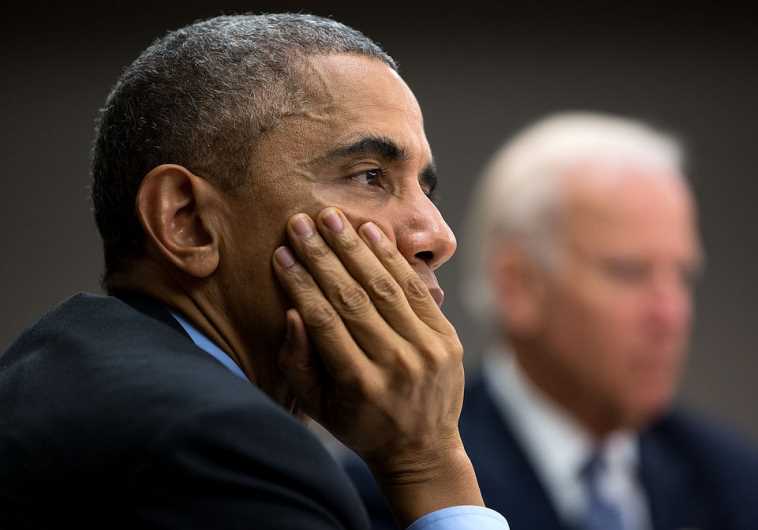
ShowImage (5)US President Barack Obama (L) and Vice President Joe Biden. (photo credit:OFFICIAL WHITE HOUSE PHOTO BY PETE SOUZA)

Most of the antiquities that ISIS plunders in Iraq and Syria make their way to the world market through Turkey. So, too, most of the oil that ISIS produces in Syria and Iraq is smuggled out through Turkey. According to the US Treasury, ISIS has made $1 million-$4m. a day from oil revenue.

Instead of maintaining its current practice of balancing its support for Turkey with its support for the Kurds, under the agreement, the West ditches its support for the Kurds and transfers its support to Turkey exclusively.

************************

While Israel and much of oficial Washington remain focused on the deal President Barack Obama just cut with the ayatollahs that gives them $150 billion and a guaranteed nuclear arsenal within a decade, Obama has already moved on – to Syria.

Obama’s first hope was to reach a deal with his Iranian friends that would leave the Assad regime in place. But the Iranians blew him off.

They know they don’t need a deal with Obama to secure their interests. Obama will continue to help them to maintain their power base in Syria though Hezbollah and the remains of the Assad regime without a deal.

Iran’s cold shoulder didn’t stop Obama. He moved on to his Sunni friend Turkish President Recep Erdogan.

Like the Iranians, since the war broke out, Erdogan has played a central role in transforming what started out as a local uprising into a regional conflict between Sunni and Shiite jihadists.

With Obama’s full support, by late 2012 Erdogan had built an opposition dominated by his totalitarian allies in the Muslim Brotherhood.

By mid-2013, Erdogan’s Muslim Brotherhood- led coalition was eclipsed by al-Qaida spinoffs. They also enjoyed Turkish support.

And when last summer ISIS supplanted al-Qaida as the dominant Sunni jihadist force in Syria, it did so with Erdogan’s full backing. For the past 18 months, Turkey has been ISIS’s logistical, political and economic base.

According to Brett McGurk, the State Department’s point man on ISIS, about 25,000 foreign fighters have joined ISIS in Syria and Iraq. All of them transited through Turkey.

Most of the antiquities that ISIS plunders in Iraq and Syria make their way to the world market through Turkey. So, too, most of the oil that ISIS produces in Syria and Iraq is smuggled out through Turkey. According to the US Treasury, ISIS has made $1 million-$4m. a day from oil revenue.

In May, US commandos in Syria assassinated Abu Sayyaf, ISIS’s chief money manager, and arrested his wife and seized numerous computers and flash drives from his home. According to a report in The Guardian published last week, the drives provided hard evidence of official Turkish economic collusion with ISIS.

Due to Turkish support, ISIS has become a self-financing terrorist group. With its revenue stream it is able to maintain a welfare state regime, attracting recruits from abroad and securing the loyalty of local Sunni militias and former Ba’athist forces.

Some Western officials believed that after finding hard evidence of Turkish regime support for ISIS, NATO would finally change its relationship with Turkey. To a degree they were correct.

Last week, Obama cut a deal with Erdogan that changes the West’s relationship with Erdogan.

Instead of maintaining its current practice of balancing its support for Turkey with its support for the Kurds, under the agreement, the West ditches its support for the Kurds and transfers its support to Turkey exclusively.

The Kurdish peshmerga militias operating today in Iraq and Syria are the only military outfits making sustained progress in the war against ISIS. Since last October, the Kurds in Syria have liberated ISIS-controlled and -threatened areas along the Turkish border.

The YPG, the peshmerga militia in Syria, won its first major victory in January, when after a protracted, bloody battle, with US air support, it freed the Kurdish border town of Kobani from ISIS’s assault.

In June, the YPG scored a strategic victory against ISIS by taking control of Tal Abyad. Tal Abyad controls the road connecting ISIS’s capital of Raqqa with Turkey. By capturing Tal Abyad, the Kurds cut Raqqa’s supply lines.

Last month, Time magazine reported that the Turks reacted with hysteria to Tal Abyad’s capture.

Not only did the operation endanger Raqqa, it gave the Kurds territorial contiguity in Syria.

The YPG’s victories enhanced the Kurds’ standing among Western nations. Indeed, some British and American officials were quoted openly discussing the possibility of removing the PKK, the YPG’s Iraqi counterpart, from their official lists of terrorist organizations.

The YPG’s victories similarly enhanced the Kurds’ standing inside Turkey itself. In the June elections to the Turkish parliament, the Kurdish HDP party won 12 percent of the vote nationally, and so blocked Erdogan’s AKP party from winning a parliamentary majority.

Without that majority Erdogan’s plan of reforming the constitution to transform Turkey into a presidential republic and secure his dictatorship for the long run has been jeopardized.

As far as Erdogan was concerned, by the middle of July the Kurdish threat to his power had reached unacceptable levels.

Then two weeks ago the deck was miraculously reshuffled.

On July 20, young Kurdish activists convened in Suduc, a Kurdish town on the Turkish side of the border, 6 kilometers from Kobani. A suicide bomber walked up to them, and detonated, massacring 32 people.

Turkish officials claim that the bomber was a Turkish Kurd, and a member of ISIS. But the Kurds didn’t buy that line. Last week, HDP lawmakers accused the regime of complicity with the bomber. And two days after the attack, militants from the PKK killed two Turkish policemen in a neighboring village, claiming that they collaborated with ISIS.

At that point, Erdogan sprang into action.

After refusing for months to work with NATO forces in their anti-ISIS operations, Erdogan announced he was entering the fray. He would begin targeting “terrorists” and allow the US air force to use two Turkish air bases for its anti-ISIS operations. In exchange, the US agreed to set up a “safe zone” in Syria along the Turkish border.

Turkish officials were quick to explain that in targeting “terrorists,” the Turks would not distinguish between Kurdish terrorists and ISIS terrorists just because the former are fighting ISIS. Both, they insisted, are legitimate targets.

Erdogan closed his deal in a telephone call with Obama. And he immediately went into action.

Turkish forces began bombing terrorist targets and rounding up terrorist suspects. Although a few of the Turkish bombing runs have been directly against ISIS, the vast majority have targeted Kurdish forces in Iraq and Syria.

Moreover, for every suspected ISIS terrorist arrested by Turkish security forces, at least eight Kurds have been taken into custody.

Then, too, Erdogan has called on AKP lawmakers to begin criminalizing their counterparts from the HDP. Kurdish lawmakers, he urged them, must be stripped of their parliamentary immunity to enable their arrests.

As Erdogan apparently sees things, by going to war against the Kurds, he will be able to reestablish the AKP’s parliamentary majority. Within a few weeks, if the AKP fails to form a governing coalition – and it will – then new elections will be held. The nationalists, who abandoned the AKP in June, will return to the party to reward Erdogan for fighting the Kurds.

As for that “safe area” in northern Syria, as the Kurds see it, Erdogan will use it to destroy Kurdish autonomy. He will flood the zone with Syrian Arab refugees who fled to Turkey, to dilute the Kurdish majority. And he will secure coalition support for the Sunni Arab militias – including those still affiliated with al-Qaida – which will be permitted by NATO to operate openly in the safe area.

Already the Kurds are reporting that the US has stopped providing air support for their forces fighting ISIS in the border town of Jarablus. Those forces were bombed this week by Turkish F-16s.

For their part, despite Erdogan’s pledge to fight ISIS, his forces seem remarkable uninterested in rolling back ISIS achievements. The Turks have no plan for removing ISIS from its strongholds in Raqqa or Haskiyah.

The Obama administration is presenting the deal with Turkey as yet another great achievement.

In an interview with Charlie Rose on Tuesday, McGurk explained that the deal was a long time in the making. It began with a phone conversation between Obama and Erdogan last October and it ended with their phone call last week.

In October, Obama convinced Erdogan not to oppose US air support for the Kurds in Kobani and to enable the US to resupply YPG fighters in Kobani through Turkey. In the second, Obama agreed not to oppose Erdogan’s offensive against the Kurds.

Two years ago, in August 2013, the world held its breath awaiting US action in Syria. That month, after prolonged equivocation amidst mountains of evidence, the Obama administration was forced to acknowledge that Iran’s Syrian puppet Bashar Assad had crossed Obama’s self-declared redline and used chemical weapons against regime opponents, including civilians.

US forces assembled for battle. Everything looked ready to go, until just hours before US jets were scheduled to begin bombing regime targets, Obama canceled the operation. In so doing, he lost all deterrent power against Iran. He also lost all strategic credibility among America’s regional allies.

To save face, Obama agreed to a Russian proposal to have international monitors remove Syria’s chemical weapons from the country.

Last summer, the administration proudly announced that the mission had been completed.

UN chemical weapons monitors had removed Syria’s chemical weapons arsenal from the country, they proclaimed. It didn’t matter to either Obama or Secretary of State John Kerry that by that point Assad had resumed chemical assaults with chlorine-based bombs. Chlorine bombs weren’t chemical weapons, the Americans idiotically proclaimed.

Then last week, the lie fell apart. The Wall Street Journal reported that according to US intelligence agencies, Assad not surrendered his chemical arsenal.

Rather, he hid much of his chemical weaponry from the UN inspectors. He had even managed to retain the capacity to make chemical weapons – like chlorine-based bombs – after agreeing to part with his chemical arsenal.

Assad was able to cheat, because just as the administration’s nuclear deal with the Iranians gives Iran control over which nuclear sites will be open to UN inspectors, and which will be off limits, so the chemical deal gave Assad control over what the inspectors would and would not be allowed to see. So, they saw only what he showed them.

Obama has gone full circle in concluding his deal with Erdogan. Since entering office, Obama has sought to cut deals with both the Sunni jihadists of the Muslim Brotherhood ilk and the Shi’ite jihadists of the Iranian ilk.

His chemical deal with Assad and his nuclear deal with the ayatollahs accomplished the latter goal, and did so at the expense of America’s Sunni Arab allies and Israel.

His deal last week with Erdogan accomplishes the former goal, to the benefit of ISIS, and on the backs of America’s Kurdish allies.

So that takes care of the Middle East. With 17 months left to go till Obama leave office, the time has apparently come for the British to begin to worry.