Posted tagged ‘Arab nations’

Kuwaiti Columnist: Israel Has Outdone Us In Everything – We Must Learn From It

February 18, 2016

Kuwaiti Columnist: Israel Has Outdone Us In Everything – We Must Learn From It,  MEMRI, February 18, 2016

On February 1, 2016, Ahmad Al-Sarraf, wrote in his column in the Kuwaiti daily Al-Qabas about Israel’s advantages over the Arabs in a wide variety of fields – democracy, military, science and technology, human rights and freedom of worship, and economics. He called on the Arabs to look at the reasons for Israel’s success and superiority, instead of viewing it as a political-religious foe about which they know nothing at all.

Following are excerpts from his article:[1]

26807Ahmad Al-Sarraf (image: Twitter.com/ahmedalsarraf1)

“In theory, Arabs have [only] one enemy in the region – except that recently we have made additional enemies, such as Iran. Some went even further, stepping up their hatred of Iran, while at the same time becoming more accepting of Israel [than in the past], to the point where it has become more friend than foe…

“Usually, every conflict is rooted in one side’s ignorance of the situation and nature of the other – though I tend to believe that Iran knows far more about the 22 Arab countries that those countries know about it. I attended Kuwaiti schools; in my day, their curricula were far more developed and were open to the other. Despite this, I do not remember reading a single line about [Iran] that was even remotely positive – neither about [its] geography or climate, nor about [its] strength, weakness, or history. So it was only natural for us to view it negatively, [even though we] had no [concrete] reason to do so.

“As for Israel, many [of us] view it as a political-religious foe, as opposed to a cultural danger, and this is a serious mistake. Even though our conflict with it has never ceased, we have remained ignorant regarding everything it represents, and for 70 years we have lacked, and continue to lack, all knowledge about it, and have learned nothing from it.

“Israel has outdone us in all fields – military, scientific, and cultural – but despite this we have refused to consider the reason for its obvious superiority to us, and have never stopped calling it ‘the monstrous entity’…

“Since its founding, Israel has been committed to democracy, while we refuse to even speak of it [i.e. democracy], let alone adopt it…

“Israel has given its minorities rights that most citizens in most Arab countries do not even dream of. Furthermore, the freedom of worship there exceeds that in any Arab or Islamic country.

“Israel has focused its attention on science, spending large sums on research, while we are still focused on whether drinking camel urine or using it medicinally is actually helpful.

“Israel has managed to unite people emigrating to it from 50 countries, and to forge a single people from them, while we have not managed [even] to create a [joint] army out of the [Arab] people, with its deep historical roots.

“Israel has known law and order since its first day, while we still try to comprehend the meaning of both these words. Two of [Israel’s] senior leaders went to prison for corruption, while we still argue over how to convict the master thieves in our midst.

“Israel has developed its technologies and developed its agriculture, industry, and military, becoming an advanced and respected country, while we currently occupy the bottom slot in every field.

“Israel has managed to get its companies traded on the international stock market, while we consider liquidating our assets after nearing bankruptcy.

“The list is long, and the sorrow that accompanies it persists.”


Endnotes:

[1] Al-Qabas (Kuwait), February 1, 2016.

Our World: In Pakistan, they trust

January 12, 2016

Our World: In Pakistan, they trust, Jerusalem Post, Caroline Glick, January 11, 2016

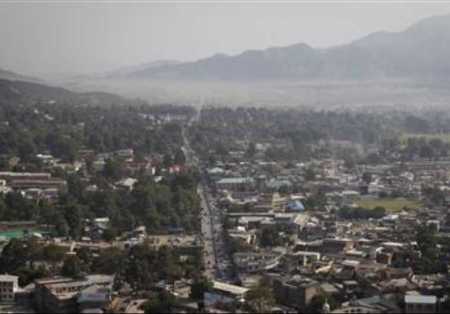
Pakistan viewA general view of houses from a hilltop in Abbottabad, Pakistan. (photo credit:REUTERS)

It is a testament to the precarious state of the world today that in a week that saw North Korea carry out a possible test of a hydrogen bomb, the most frightening statement uttered did not come from Pyongyang.

It came from Pakistan.

Speaking in the military garrison town of Rawalpindi, Pakistani Army chief Gen. Raheel Sharif said that any Iranian threat to Saudi Arabia’s territorial integrity will “wipe Iran off the map.”

Sharif made the statement following his meeting with Saudi Arabia’s defense minister and Deputy Crown Prince Mohammed bin Salman. According to media reports, Salman was the second senior Saudi official to visit Pakistan in the past week amid growing tensions between Iran and the kingdom.

Salman’s trip and Sharif’s nuclear threat make clear that following the US’s all-but-official abandonment of its role as protector of the world’s largest oil producer, the Saudis have cast their lots with nuclear-armed Pakistan.

When last October, the USS Harry Truman exited the Persian Gulf, the move marked the first time since 2007 that the US lacked an aircraft carrier in the region. Nine years ago, the US naval move was not viewed as a major statement of strategic withdrawal, given that back then the US had some one hundred thousand troops in Iraq.

While the USS Truman returned to the Gulf late last month, its return gave little solace to America’s frightened and spurned Arab allies. The Obama administration’s weak-kneed response to Iran’s live-fire exercises on December 26, during which an Iranian Revolutionary Guards vessel fired rockets a mere 1,370 meters from the aircraft carrier as it transited the Straits of Hormuz, signaled that the US is not even willing to make a show of force to deter Iranian aggression.

And so the Saudis have turned to Pakistan.

It would be foolish to view Sharif’s nuclear threat as mere bluster.

By every meaningful measure, Pakistan is little more than a failed state with nuclear weapons. Pakistan appears in every global index of failed or failing states.

To take just a few leading indicators, as spelled out by Basit Mahmood in a report last summer for The Political Domain, barely 1% of Pakistanis pay taxes of any kind. More than half the population lives in abject poverty. The government has no control over most Pakistani territory.

Between 2003 and 2015, more than 58,000 people were killed by terrorism countrywide.

Public health is a disaster. Polio, eradicated throughout much of the world, is now galloping through the country.

Last summer more than 1,300 people died in a heat wave in the supposedly advanced city of Karachi.

These data do not take into account the wholesale slaughter and persecution of minority groups – first and foremost Christians – and the systematic denial of basic human rights and widespread, violent persecution of women and girls.

As for its nuclear arsenal, a 2010 report by the Bulletin of Atomic Scientists estimated that Pakistan possesses between 70 and 90 nuclear warheads. Other credible reports estimate the size of the arsenal at 120.

Pakistan refuses to adopt a no-firststrike policy. In the US and worldwide, it is considered to be the greatest threat to global nuclear security.

Following a Pakistani jihadist assault on the Indian parliament in late 2001, India and Pakistan both deployed forces along their contested border. In the months that followed, due to Pakistani nuclear threats, the prospect of nuclear war was higher than it had ever been.

Cold War nuclear brinksmanship – which reached its high point during the 1962 Cuban missile crisis – paled in comparison.

In 2008, following the Pakistani jihadist assault on Mumbai, India threatened to retaliate against Pakistan.

India’s threats rose as evidence mounted that, as was the case in 2001, the jihadists were tied to Pakistan’s ISI spy service. Once again, rather than clean its own house, Pakistan responded by threatening to launch a nuclear attack against India.

And now, following the unraveling of US-strategic credibility, Pakistan’s aggressive nuclear umbrella is officially coming to the Persian Gulf.

Saudi Arabia’s decision to turn to Pakistan for protection indicates that the second wave of the destruction of the Arab state model is upon us. The notion of Arab states was invented nearly 100 years ago by the British and French at the tail end of World War I. The Sykes-Picot agreement, which partitioned the Arab world into states, rewarded national dominion to the most powerful tribal actors in the various land masses that became the states of the Arab world.

With the possible exception of Egypt, which predated Sykes-Picot, the Arab states formed at the end of World War I were not nation states. Their populations didn’t view themselves as distinct nations. Rather the populations of the Arab states were little more than a hodgepodge of tribes, clans and sectarian and ethnic groupings. In each case, the British and French made their determinations of leadership based on the relative power of the various groups. Those chosen to control these new states were viewed either as the strongest factions within the new borders or as the most loyal allies to the European powers.

The first wave of Arab state collapse began six years ago. It submerged the non-royal regimes, which fell one after the other, like houses of cards.

Syria, Libya, Iraq and Yemen ceased to exist.

Egypt, which in the space of two years experienced both an Islamist revolution and a military counter-revolution, still teeters on the brink of collapse.

Lebanon will likely break apart at the slightest provocation.

Today we are seeing the opening stages of the collapse of the Arab monarchies, and most importantly, of Saudi Arabia.

Most of the international attention to Saudi Arabia’s current threat environment has focused on Iran. The Iranian threat to the Saudis has grown in direct proportion to the Obama administration’s determination to realign the US away from its traditional Sunni allies and towards Iran. The conclusion of the US-led nuclear pact with Tehran has exacerbated Iran’s regional aggression as it no longer fears US retaliation for its threats to the Sunni monarchies.

But Iran is just the most visible of three existential threats now besetting the House of Saud.

The most profound threat to the world’s largest oil power is economic.

The drop in world oil prices has endangered the kingdom.

As David Goldman reported last week in the Asia Times, according to an International Monetary Fund analysis, the collapse in Saudi oil revenues “threatens to exhaust the kingdom’s $700 billion in financial reserves within five years.”

The house of Saud’s hold on power owes to its oil-subsidized economy. As Goldman noted, last month dwindling revenues forced the Saudis to cut subsidies for water, electricity and gasoline.

According to Goldman, Riyadh’s mass execution of 43 long-jailed prisoners at the start of the month was an attempt by the aging royal house to demonstrate its firm control of events. But the very fact the Saudi regime believed it was necessary to stage such a demonstration shows that it is in distress.

The third existential threat the regime now faces is Islamic State. Since 1979, the Saudis have sought to deflect domestic opposition by promoting Wahabist Islam at home and Wahabist jihad beyond its borders.

Now, with Islamic State in control over large swathes of neighboring Iraq, as well as Syria and Libya and threatening the Saudi-supported Sisi regime in Egypt, the Saudi royal family faces the rising threat of blowback. Some analysts argue that given the popular support for jihad in Saudi Arabia, were Islamic State to cross the Saudi border, its forces would be greeted with flowers, not bullets.

If the House of Saud falls, then the Gulf emirates will also be imperiled.

The Egyptian regime, which is bankrolled by the Saudis and its Gulf allies will also be endangered. The Hashemite monarchy in Jordan, which is protected by the US and by Israel, will face unprecedented threats.

The implications of expanding chaos – or worse – in Arabia are not limited to the Middle East. The global economy as well as the security of Europe and the US will be imperiled.

Obviously, the order of the day is for the US security guarantee to Saudi Arabia to be reinforced, mainly through straightforward US action against Iranian naval aggression and ballistic missile development.

Unfortunately, the Obama administration can be depended on to take just the opposite approach. And as a consequence, at least for the next year, the main thing propping up the Gulf monarchies, and with them, the global economy and what passes for global security, is a failed state with an itchy finger on the nuclear trigger.

Hollande, Obama lack the troops and will for total war on ISIS. Mid East rulers are even more reluctant

November 16, 2015

Hollande, Obama lack the troops and will for total war on ISIS. Mid East rulers are even more reluctant, DEBKAfile, November 16, 2015

French_anti-terror_police_15.11.15French anti-terror police

When French President Francois Hollande declared war on ISIS and called the attack in Paris an “act of war,” he gave the terrorist organization’s leader Abu Bakr Al-Baghdadi an unexpected boost. He upgraded the Muslim caliphate to a fully-fledged state against which France is now at war. US President Barack Obama was more cautious, declaring at the G-20 summit in Antalya that his country and France would fight together against terror, without specifying how.

Obama has problems of his own. The attempt to portray the Kurdish conquest of the city of Sinjar in northern Iraq as an important achievement in the war against ISIS dissipated quickly after Peshmerga troops were shown on TV moving into a city that was empty and lying in ruins, after it was abandoned by Islamic State forces. There was no battle there either.

Also, the US and Kurdish claims that they had severed the main road link between the ISIS capitals in Iraq and Syria, Mosul and Raqqa, proved hollow as ISIS had stopped using that route months ago after it became vulnerable to American air strikes.

If that wasn’t enough, Obama ran into an obstacle in Antalya.

The summit’s host, Turkish President Tayyip Erdogan, who is consumed by an overriding aversion to an independent Kurdish state rising on his country’s border, demanded a declaration that all Kurdish forces, including the Peshmerga, the PKK and the YPG, on which the US depends heavily for fighting the war against ISIS, be classified as terrorists and targeted by the West just like ISIS.

Therefore, before broaching any decisions about intensifying the war on the Islamist terrorists, Western and Muslim countries were already at odds on targets.

It therefore makes no sense for President Hollande to try and invoke Article 5 of the NATO charter under which an act of war against one member of the alliance is tantamount to a war on all. Furthermore, making this a NATO operation would rule out a priori any collaboration with Russia in the campaign against ISIS, despite their common objective.  Vladimir Putin was already vexed over the feeble Western response to the bombing of a Russian airliner killing 224 people, compared to the global outcry over the Paris outrage.

In their responses and commentaries on what to do after the Paris assault, Western politicians and security experts seemed to agree that putting their own boots on the ground for finally getting to grips with ISIS was not on the cards – there would just be “more of the same,’ as one American security expert put it.

Others advised assigning the ground battle to the Egyptian, Jordanian, Kurdish, Iraqi, Saudi and other Gulf Arab states.

Who were they kidding? None of those Arab governments or armies is capable or willing to declare full-scale war on the Islamic State. The Kurds alone have stepped into the breach and are confronting the Islamists face to face, but they have sought in vain for the weapons they need, which the US refuses to supply.

Egypt, for instance, even after an ISIS network was able to breach its security system in Sharm El-Sheikh to plant a bomb on the Russian airliner on Oct. 31, has held back from a major military assault on the strongholds of the Ansar Beit Al-Maqdis, otherwise known as ISIS-Sinai. Egypt’s President Fattah Al-Sisi has not uttered a word on the Islamist threat since then.

French security and intelligence services demonstrated that they were unprepared for war on ISIS, and are pretty much in the same boat as other Western powers.

Since the outrage in Paris, French and Belgian security forces have conducted raid after raid to pick up Islamists, claiming to be rounding up the masterminds and confederates of the nine bombers and shooters who attacked Paris and murdered 132 people  In fact, they are acting more to calm a jittery public than in the expectation of achieving meaningful results in the war on terror. Till now, neither France nor any Western government knows exactly how many people were involved in the attack on Paris, or the numbers and locations of the Islamic Caliphate’s worldwide terror networks.

Palestinian terrorism is not random

October 23, 2015

Palestinian terrorism is not random, Israel Hayom, Yoram Ettinger, October 23, 2015

Unlike national liberation movements, Palestinian terrorism has deliberately, institutionally, and systematically targeted Arab and Israeli noncombatants, sometimes hitting combatants.

Palestinian terrorism has haunted Arab societies in Jordan (especially during the 1968-1970 era of PLO terrorism), Lebanon (particularly during the 1971-1982 civil wars), Kuwait (during the 1990 invasion by Saddam Hussein), Iraq (until 2002, as an arm of Saddam Hussein’s ruthless domestic oppression), Syria (until 2012, bolstering Bashar Assad’s regime) and currently in Egypt (collaborating with the Muslim Brotherhood terror organization). Pro-U.S. Arab regimes consider Palestinian terrorism a clear and present danger, never fighting on behalf of Palestinians. Sometimes these regimes launch severe military blows (1970 Black September in Jordan) and expulsions (300,000 expelled from Kuwait), showering them with rhetoric, but not resources.

Since the establishment of the Palestinian Authority in 1993, Palestinian terrorism has afflicted the Arabs of Judea, Samaria and Gaza, denying the Palestinians civil liberties and instituting a corrupt, oppressive reign of horror. It prompted most Christians to flee from Ramallah (home of Palestinian Authority President Mahmoud Abbas’ headquarters), Bethlehem and Beit Jallah. In addition, Muslim emigration from the Palestinian Authority has increased since 2000. While Egypt prevents emigration from Gaza through Sinai, Gaza’s Arabs have emigrated, in increasing numbers, via the Mediterranean. Moreover, Palestinians flow across Jerusalem’s municipal lines, escaping Abbas’ tyranny to receive Israeli residency, social benefits and human rights.

Palestinian terrorists have targeted pro-U.S. Arab regimes and “the arrogant, infidel, Great Satan,” the U.S., joining the ayatollahs in Iran (since the toppling of the shah in 1979), Taliban, al-Qaida, Islamic State and other Islamic terror organizations. Osama bin Laden’s role model and spiritual mentor, Abdullah Azam, was from a village in Samaria.

Palestinian terrorism is a modern-day branch of Islamic terrorism, which has plagued the Middle East — and beyond — since the appearance of Islam in the seventh century. The current intensification of Islamic terrorism throughout the Middle East provides a tailwind to Palestinian terrorism.

Palestinian terrorism has inspired terror cells in Europe, Africa, Asia and the American continent, including sleeper cells in the U.S.

Anti-Jewish Palestinian terrorism has been a Middle East fixture since at least the 1920s, well before the 1948 establishment of Israel and the 1967 return of Jewish communities to Judea and Samaria. It’s well-documented collaboration with Nazi Germany sought to prevent the existence — not reduce the size — of the Jewish state. The political guideline of contemporary Palestinian terrorism, the Palestinian Covenant, was published in 1964, three years before the reunification of Jerusalem.

Palestinian terrorism is nurtured by 23 years of Palestinian hate education in kindergartens, schools, mosques and media — the most effective means of producing terrorists. It was established by Abbas (then Yasser Arafat’s chief deputy) in 1993, highlighting the fundamentals of Islam that serve to intensify Palestinian terrorism: the supremacy of Islam over all other religions; the permanent state of war between the abode of Islam and the abode of the “infidel”; the inadmissibility of “infidel” sovereignty over Waqf lands, which are divinely ordained to Islam; the sublime honor of sacrificing one’s life on behalf of Islam’s war against the “infidel”; and the provisional nature of agreements concluded with “infidels.”

Palestinian terrorism has been encouraged by Abbas’ systematic policy of naming streets, squares, monuments and sport tournaments in honor of terrorists, and extending generous financial assistance to their families.

Palestinian terrorism, an endemic feature in the Middle East, represents writing on the wall, warning us all of the destabilizing, anti-Western, terroristic nature of the proposed Palestinian state. An Israeli withdrawal from the mountain ridge of the Golan Heights would provide a platform for Islamic terrorists to traumatize northern Israel. But an Israeli withdrawal from the mountain ridges of Judea and Samaria would provide Muslim terrorists a platform to topple the Hashemite regime in Jordan and target Tel Aviv, Jerusalem, Ben-Gurion Airport and 80% of Israel’s population and infrastructure.

Palestinian terrorism is fueled by the inherently immoral “moral equivalence” between Israeli counterterrorism and Palestinian terrorism, which grossly misrepresents Middle East reality. It is fueled by foreign aid to the Palestinian Authority, which funds hate education. It is rewarded by calls to negotiate with the Palestinian Authority, while Abbas promotes hate education. It is emboldened by Western pressure for further Israeli concessions and Western denial of Israel’s moral high ground in the physical high ground of Judea and Samaria.

In order to defeat Palestinian terrorism, it is necessary to defy political correctness and shift gears, instead of chasing individual terroristic mosquitoes, the terroristic swamp needs to be drained. A large-scale, disproportionate, pre-emptive military operation needs to be launched throughout Judea and Samaria and Arab neighborhoods in Jerusalem. Any (U.S. and Israeli) direct or indirect contact with and assistance to the Palestinian Authority needs to be conditioned upon an end to hate education. Families and communities of terrorists need to be severely punished for failing to exercise communal responsibility.

To frustrate Palestinian terrorism, which aims to set Israel on a path of retreat, Israel should proclaim a constructive response, expanding Jewish construction in Jerusalem, Judea and Samaria. While it would trigger short-term international pressure, it would yield long-term strategic respect, as documented by the legacy of Prime Ministers David Ben-Gurion, Levi Eshkol, Golda Meir, Menachem Begin and Yitzhak Shamir, who defied much more severe international pressure with slimmer military and commercial resources at their disposal.

Op-Ed: Chaos and 2nd Cold War, Part II: Israel’s Nuclear Strategy

October 11, 2015

Op-Ed: Chaos and 2nd Cold War, Part II: Israel’s Nuclear Strategy, Israel National News, Prof. Louis René Beres, October 11, 2015

(Part I is available here. — DM)

Israel should now be calculating the exact extent or subtlety with which it should consider communicating key portions of its nuclear posture and positions. Naturally, Israel should never reveal any too-specific information about its nuclear strategy, its nuclear hardening, or even its nuclear yield-related capabilities. Still, sometimes, the duty of finely-honed intelligence services should not be to maximize strategic secrecy, but rather, to carefully “share” certain bits of pertinent information.

**********************************

How will Russia respond to any ramped up American uses of force in the Middle East, and, more plausibly, vice-versa?  One must assume that Jerusalem is already asking these key questions, and even wondering whether, in part, greater mutualities of interest could sometime exist with Moscow than with Washington.

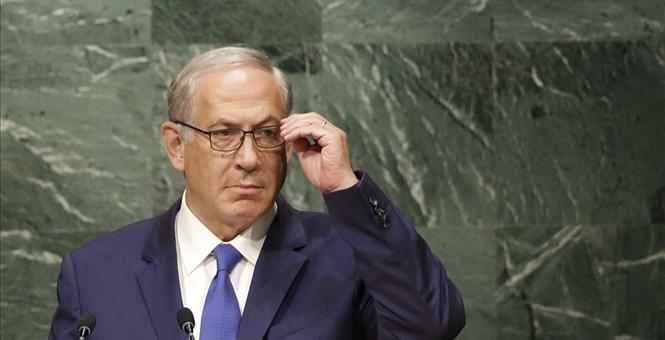
To wit, Prime Minister Benjamin Netanyahu met with Russia’s President Vladimir Putin in September 2015. Among other things, the Israeli leader must  be calculating: 1)Will the Obama Administration’s incoherent retreat from most of the Middle East point toward a more permanent United States detachment from the region; and 2) If it does, what other major powers are apt to fill the resultant vacuum? Just as importantly, and as an obvious corollary to (2), above, the prime minister should be inquiring: “How will the still-emerging Cold War II axis of conflict impact America’s pertinent foreign policy decisions?”

There are some additional ironies yet to be noted. Almost certainly, ISIS, unless it is first crushed by U.S. and/or Russian-assisted counter-measures, will plan to march westward across Jordan, ultimately winding up at the borders of West Bank (Judea/Samaria). There, ISIS Jihadists could likely make fast work of any still-posted Hamas and Fatah forces, in effect, taking over what might once have become “Palestine.” In this now fully imaginable scenario, the most serious impediment to Palestinian statehood is not Israel, but rather a murderous band of Sunni Arab terrorists.[16]

What about the larger picture of “Cold War II?” Israeli defense planners will need to factor into their suitably nuanced calculations the dramatically changing relationship between Washington and Moscow. During “Cold War I,” much of America’s support for the Jewish State had its most fundamental origins in a perceived need to compete successfully in the Middle East with the then Soviet Union. In the progressive development of “Cold War II,” Jerusalem will need to carefully re-calculate whether a similar “bipolar” dynamic is once again underway, and whether the Russian Federation might, this time around, identify certain strategic benefits to favoring Israel in regional geo-politics.

In all such strategic matters, once Israel had systematically sorted through the probable impact of emerging “superpower” involvements in the Middle East, Jerusalem would need to reassess its historic “bomb in the basement.” Conventional wisdom, of course, has routinely pointed in a fundamentally different policy direction. Still, this “wisdom” assumes that credible nuclear deterrence is simply an automatic result of  physically holding nuclear weapons. By the logic of this too-simplistic argument, removing Israel’s nuclear bomb from the “basement” would only elicit new waves of global condemnation, and would likely do so without returning any commensurate security benefits to Jerusalem.

Scholars know, for good reason, that the conventional wisdom is often unwise. Looking ahead, the strategic issues facing Israel are not at all uncomplicated or straightforward.  Moreover, in the immutably arcane world of Israeli nuclear deterrence, it can never really be adequate that enemy states merely acknowledge the Jewish State’s nuclear status. Rather, it is also important that these states should be able to believe that Israel holds usable nuclear weapons, and that Jerusalem/Tel-Aviv would be willing to employ these usable weapons in certain clear, and situationally recognizable, circumstances.

Current instabilities in the Middle East will underscore several good reasons to doubt that Israel could ever benefit from any stubborn continuance of deliberate nuclear ambiguity. It would seem, too, from certain apparent developments already taking place within Mr. Netanyahu’s “inner cabinet,” that portions of Israel’s delegated leadership must now more fully understand the bases of any such informed skepticism.

In essence, Israel is imperiled by compounding and inter-related existential threats that justify its fundamental nuclear posture, and that require a correspondingly purposeful strategic doctrine. This basic need exists well beyond any reasonable doubt. Without such weapons and doctrine, Israel could not expectedly survive over time, especially if certain neighboring regimes, amid expanding chaos,  should soon become more adversarial, more Jihadist, and/or less risk-averse.

Incontestably, a purposeful nuclear doctrine could prove increasingly vital to coping with various more-or-less predictable strategic scenarios for Israel, that is, those believable narratives requiring preemptive action, and/or an appropriate retaliation.

Typically, military doctrine carefully describes how national forces should fight in various combat operations. The literal definition of “doctrine” derives from Middle English, from the Latin doctrina, meaning teaching, learning, andinstruction. Though generally unrecognized, the full importance of doctrine lies not only in the several ways that it can animate and unify military forces, but also in the uniquely particular fashion that it can transmit certain desired “messages.”

In other words, doctrine can serve an increasingly imperiled  state as a critical form of communication, one directed to its friends, and also to its foes.

Israel can benefit from just such broadened understandings of doctrine. The principal security risks now facing Israel are really more specific than general or generic. This is because Israel’s extant adversaries in the region will likely be joined, at some point, by: (1) a new Arab state of “Palestine;” and/or by (2) a newly-nuclear Iran. It is also because of the evidently rekindled global spark of “bipolar” or “superpower” adversity, and the somewhat corollary insertion of additional American military forces to combat certain new configurations of Jihadi terror.

For Israel, merely having nuclear weapons, even when fully recognized in broad outline by enemy states, can never automatically ensure successful deterrence. In this connection, although starkly counter-intuitive, an appropriately selective and thoughtful end to deliberate ambiguity could improve the overall credibility of Israel’s nuclear deterrent.  With this point in mind, the potential of assorted enemy attack prospects in the future could be reduced by making available certain selected information concerning the safety of  Israel’s nuclear weapon response capabilities.

This crucial information, carefully limited, yet more helpfully explicit, would center on the distinctly major and inter-penetrating issues of Israeli nuclear capability and decisional willingness.

Skeptics, no doubt, will disagree. It is, after all, seemingly sensible to assert that nuclear ambiguity has “worked” thus farWhile Israel’s current nuclear policy has done little to deter multiple conventional terrorist attacks, it has succeeded in keeping the country’s enemies, singly or in collaboration, from mounting any authentically existential aggressions. This conclusion is not readily subject to any reasonable disagreement.

But, as the nineteenth-century Prussian strategic theorist, Karl von Clausewitz, observed, in his classic essay, On War, there may come a military tipping point when “mass counts.” Israel is already coming very close to this foreseeable point of no return. Israel is very small.  Its enemies have always had an  undeniable advantage in “mass.”

More than any other imperiled state on earth, Israel needs to steer clear of such a tipping point.

This, too, is not subject to any reasonable disagreement.

Excluding non-Arab Pakistan, which is itself increasingly coup-vulnerable, none of Israel’s extant Jihadi foes has “The Bomb.”  However, acting together, and in a determined collaboration, they could still carry out potentially lethal assaults upon the Jewish State. Until now, this capability had not been possible, largely because of insistent and  persistently overriding fragmentations within the Islamic world. Looking ahead, however, these same fragmentations could sometime become a source of special danger to Israel, rather than remain a continuing source of  national safety and reassurance.

An integral part of Israel’s multi-layered security system lies in the country’s ballistic missile defenses, primarily, the Arrow or “Hetz.” Yet, even the well-regarded and successfully-tested Arrow, now augmented by the newer and shorter-range iterations of “Iron Dome,” could never achieve a sufficiently high probability of intercept to meaningfully protect Israeli civilians.[17] No system of missile defense can ever be “leak proof,” and even a single incoming nuclear missile that somehow managed to penetrate Arrow or corollary defenses could conceivably kill tens or perhaps hundreds of thousands of Israelis.[18]

In principle, at least, this fearsome reality could be rendered less prospectively catastrophic if Israel’s traditional reliance on deliberate ambiguity were suitably altered.

Why alter? The current Israeli policy of an undeclared nuclear capacity is unlikely to work indefinitely. Leaving aside a Jihadi takeover of already-nuclear Pakistan, the most obviously unacceptable “leakage” threat would come from a nuclear Iran. To be effectively deterred, a newly-nuclear Iran would require convincing assurance that Israel’s atomic weapons were both (1) invulnerable, and (2) penetration-capable.

Any Iranian judgments about Israel’s capability and willingness to retaliate with nuclear weapons would then depend largely upon some prior Iranian knowledge of these weapons, including their expected degree of protection from surprise attack, as well as Israel’s expected capacity to “punch-through” all pertinent Iranian active and passive defenses.

Jurisprudentially, at least, following JCPOA in Vienna, a  nuclear weapons-capable Iran is a fait accompli. For whatever reasons, neither the “international community” in general, nor Israel in particular, had ever managed to create sufficient credibility concerning a once-timely preemptive action. Such a critical defensive action would have required very complex operational capabilities, and could have generated Iranian/Hezbollah counter actions that might have a  very significant impact on the entire Middle East. Nevertheless, from a purely legal standpoint, such preemptive postures could still have been justified, under the authoritative criteria of anticipatory self-defense, as permitted under customary international law.

It is likely that Israel has undertaken some very impressive and original steps in cyber-defense and cyber-war, but even the most remarkable efforts in this direction will not be enough to stop Iran altogether. Earlier, the “sanctions” sequentially leveled at Tehran – although certainly better than nothing – could have had no tangible impact on effectively halting Iranian nuclearization.

Strategic assessments can sometimes borrow from a Buddhist mantra. What is, is. Ultimately, a nuclear Iran could decide to share some of its nuclear components and materials with Hezbollah, or with another kindred terrorist group. Ultimately, amid growing regional chaos, such injurious assets could find their way to such specifically U.S- targeted groups as ISIS.

Where relevant, Israeli nuclear ambiguity could be loosened by releasing certain very general information regarding the availability and survivability of appropriately destructive  nuclear weapons.

Israel should now be calculating the exact extent or subtlety with which it should consider communicating key portions of its nuclear posture and positions. Naturally, Israel should never reveal any too-specific information about its nuclear strategy, its nuclear hardening, or even its nuclear yield-related capabilities. Still, sometimes, the duty of finely-honed intelligence services should not be to maximize strategic secrecy, but rather, to carefully “share” certain bits of pertinent information.

What about irrational enemies? An Israeli move from ambiguity to disclosure would not likely help in the case of an irrational nuclear enemy. It is even possible, in this regard, that particular elements of Iranian leadership might meaningfully subscribe to certain end-times visions of a Shiite apocalypse. By definition, any such enemy would not necessarily value its own continued national survival more highly than any other national preference, or combination of preferences. By definition, any such enemy would present a genuinely unprecedented strategic challenge.

Were its leaders to become authentically irrational, or to turn in expressly non-rational directions, Iran could then effectively become a nuclear suicide-bomber in macrocosm.  Such a profoundly destabilizing strategic prospect is improbable, but it is also not inconceivable. A similarly serious prospect exists in already-nuclear Pakistan.

To protect itself against military strikes from irrational enemies, especially those attacks that could carry existential costs, Israel will need to reconsider virtually every aspect and function of its nuclear arsenal and doctrine. This is a strategic reconsideration that must be based upon a number of bewilderingly complex intellectual calculations, and not merely on ad hoc, and more-or-less presumptively expedient political judgments.

Removing the bomb from Israel’s basement could enhance Israel’s strategic deterrence to the extent that it would heighten enemy perceptions of the severe and likely risks involved. This would also bring to mind the so-called Samson Option, which, if suitably acknowledged, could allow various enemy decision-makers to note and underscore a core assumption. This is that Israel is prepared to do whatever is needed to survive. Interestingly, such preparation could be entirely permissible under governing international law, including the 1996 Advisory Opinion of the International Court of Justice.[19]

Irrespective of  its preferred level of ambiguity, Israel’s nuclear strategy must always remain oriented toward deterrence, not to actual war-fighting.[20] The Samson Option refers to a policy that would be based in part upon a more-or-less implicit threat of massive nuclear retaliation for certain anticipated enemy aggressions.  Israel’s small size means, inter alia, that any nuclear attack would threaten Israel’s very existence, and could not be tolerated. Israel’s small size also suggests a compelling need for sea-basing (submarines) at least a recognizably critical portion of its core nuclear assets,

From a credibility standpoint, a Samson Option could make sense only in “last-resort,” or “near last-resort,” circumstances. If the Samson Option is to be part of a convincing deterrent, as it should, an incremental end to Israel’s deliberate ambiguity is essential. The really tough part of this transformational process will lie in determining the proper timing for such action vis-a-vis Israel’s security requirements, and in calculating authoritative expectations (reasonable or unreasonable) of the “international community.”

The Samson Option should never be confused with Israel’s overriding security objective: To seek stable deterrence at the lowest possible levels of military conflict. As a last resort, it basically states the following warning to all potential nuclear attackers:  “We (Israel) may have to `die,` but (this time) we won’t die alone.”

There is a related observation. In our often counter-intuitive strategic world, it can sometimes be rational to pretend irrationality. The nuclear deterrence benefits of any such pretended irrationality would depend, at least in part, upon an enemy state’s awareness of Israel’s intention to apply counter-value targeting when responding to a nuclear attack. But, once again, Israeli decision-makers would need to be aptly wary of ever releasing too-great a level of specific operational information.

In the end, there are specific and valuable critical security benefits that would likely accrue to Israel as the result of a purposefully selective and incremental end to its historic policy of deliberate nuclear ambiguity.   The right time to begin such an “end”  has not yet arrived. But, at the precise moment that Iran verifiably crosses the nuclear threshold, or arguably just before this portentous moment, Israel should  promptly remove The Bomb from its “basement.”

When this critical moment arrives, Israel should already have configured (1) its presumptively optimal allocation of nuclear assets; and (2) the extent to which this preferred configuration should now be disclosed. Such strategic preparation could then enhance the credibility of Israel’s indispensable nuclear deterrence posture.

When it is time for Israel to selectively ease its nuclear ambiguity, a second-strike nuclear force should be revealed in broad outline. This robust strategic force – hardened, multiplied, and dispersed – would need to be fashioned so as to recognizably inflict a decisive retaliatory blow against major enemy cities. Iran, it follows, so long as it is led by rational decision-makers, should be made to understand that the actual costs of  any planned aggressions against Israel would always exceed any expected gains.

In the final analysis, whether or not a shift from deliberate ambiguity to some selected level of nuclear disclosure would actually succeed in enhancing Israeli nuclear deterrence would depend upon several complex and intersecting factors. These include, inter alia, the specific types of nuclear weapons involved; reciprocal assessments and calculations of pertinent enemy leaders; effects on rational decision-making processes by these enemy leaders; and effects on both Israeli and adversarial command/control/communications operations. If  bringing Israel’s bomb out of the “basement” were to result in certain new enemy pre-delegations of nuclear launch authority, and/or in new and simultaneously less stable launch-on-warning procedures, the likelihood of unauthorized and/or accidental nuclear war could then be substantially increased.

Not all adversaries may be entirely rational. To comprehensively protect itself against potentially irrational nuclear adversaries, Israel has no logical alternative to developing an always problematic conventional preemption option, and to fashion this together with a suitable plan for subsequent “escalation dominance.” Operationally, especially at this very late date, there could be no reasonable assurances of success against many multiple hardened and dispersed targets. Regarding deterrence, however, it is noteworthy that “irrational” is not the same as “crazy,” or “mad,” and that even an expectedly irrational Iranian leadership could still maintain susceptible preference orderings that are both consistent and transitive.

Even an irrational Iranian leadership could be subject to threats of deterrence that credibly threaten certain deeply held religious as well as civic values. The relevant difficulty here for Israel is to ascertain the precise nature of these core enemy values. Should it be determined that an Iranian leadership were genuinely “crazy” or “mad,” that is, without any decipherable or predictable ordering of preferences, all deterrence bets could then have to give way to preemption, and possibly even to certain plainly unwanted forms of war fighting.

Such determinations, of course, are broadly strategic, not narrowly jurisprudential. From the discrete standpoint of international law, especially in view of Iran’s expressly genocidal threats against Israel, a preemption option could still represent a permissible expression of anticipatory self-defense. Again, however, this purely legal judgment would be entirely separate from any parallel or coincident assessments of operational success. There would be no point for Israel to champion any strategy of preemption on solely legal grounds if that same strategy were not also expected to succeed in specifically military terms.

Growing chaotic instability in the Middle East plainly heightens the potential for expansive and unpredictable conflicts.[21] While lacking any obviously direct connection to Middle East chaos, Israel’s nuclear strategy must now be purposefully adapted to this perilous potential. Moreover, in making this adaptation, Jerusalem could also have to pay special attention not only to the aforementioned revival of  major “bipolar” animosities, but also, more specifically and particularly, to Russia’s own now-expanding nuclear forces.

This cautionary warning arises not because augmented and modernized Russian nuclear forces would necessarily pose any enlarged military threat to Israel directly, but rather because these strategic forces could determine much of the way in which “Cold-War II” actually evolves and takes shape. Vladimir Putin has already warned Washington of assorted “nuclear countermeasures,” and recently test launched an intercontinental nuclear missile.[22] One such exercise involved a new submarine-launched Bulava missile, a weapon that could deliver a nuclear strike with up to 100 times the force of the 1945 Hiroshima blast.

Current adversarial Russian nuclear posturing vis-à-vis the United States remains oriented toward the Ukraine, not the Middle East.[23] Nevertheless, whatever happens to U.S.-Russian relations in any one part of the world could carry over to certain other parts, either incrementally, or as distinctly sudden interventions or escalations. For Jerusalem, this means, among other things, an unceasing obligation to fashion its own developing nuclear strategy and posture with an informed view to fully worldwide power problems and configurations.

Whether looking toward Gaza, West Bank (Judea/Samaria), Iran, Lebanon, Iraq, Jordan, Egypt, or Syria, Israel will need to systematically prioritize existential threats, and, thereafter, stay carefully focused on critically intersecting and overriding factors of global and regional security. In all such meticulously careful considerations, both chaos and Cold War II should be entitled to occupy a conspicuous pride of place.

Sources:

[16] A further irony here concerns Palestinian “demilitarization,” a pre-independence condition of statehood called for by Israeli Prime Minister Benjamin Netanyahu. Should Palestinian forces (PA plus Hamas) ever actually choose to abide by any such formal legal expectation, it could makes these forces less capable of withstanding any foreseeable ISIS attacks. Realistically, however, any such antecedent compliance would be highly improbable. See, for earlier legal assessments of Palestinian demilitarization, Louis René Beres and (Ambassador) Zalman Shoval, “Why a Demilitarized Palestinian State Would Not Remain Demilitarized: A View Under International Law,” Temple International and Comparative Law Journal, Winter 1998, pp. 347-363; and Louis René Beres and Zalman Shoval, “On Demilitarizing a Palestinian `Entity’ and the Golan Heights: An International Law Perspective,” Vanderbilt Journal of Transnational Law, Vol. 28, No. 5, November 1995, pp. 959-972.

[17] There is another notable and more generic (pre-nuclear age) risk of placing too-great a reliance on defense. This is the risk that a corollary of any such reliance will be a prospectively lethal tendency to avoid taking otherwise advantageous offensive actions. Recall, in this connection, Carol von Clausewitz On War:  “Defensive warfare…does not consist of waiting idly for things to happen. We must wait only if it brings us visible and decisive advantages. That calm before the storm, when the aggressor is gathering new forces for a great blow, is most dangerous for the defender.” See: Carl von Clausewitz, Principles of War, Hans W. Gatzke, tr., New York: Dover Publications, 2003, p. 54.

[18] For early authoritative accounts, by the author, of expected consequences of a nuclear attack, see: Louis René Beres, Apocalypse: Nuclear Catastrophe in World Politics (Chicago: University of Chicago Press, 1980); Louis René Beres, Mimicking Sisyphus: America’s Countervailing Nuclear Strategy (Lexington, Mass., Lexington Books, 1983); Louis René Beres, Reason and Realpolitik: U.S. Foreign Policy and World Order (Lexington, Mass., Lexington Books, 1984); and Louis René Beres, Security or Armageddon: Israel’s Nuclear Strategy (Lexington, Mass., Lexington Books, 1986).

[19] See: “Summary of the Legality of the Threat or Use of Nuclear Weapons,” Advisory Opinion, 1996, I.C.J., 226 (Opinion of 8 July 1996). The key conclusion of this Opinion is as follows: “…in view of the current state of international law, and of the elements of fact at its disposal, the Court cannot conclude definitively whether the threat or use of nuclear weapons would be lawful or unlawful in an extreme circumstance of self-defense, in which the very survival of a State would be at stake.”

[20] This advice was a central recommendation of the Project Daniel Group’s final report,  Israel’s Strategic Future (ACPR, Israel, May 2004: “The overriding priority of Israel’s nuclear deterrent force must always be that it preserves the country’s security without ever having to be fired against any target. The primary point of Israel’s nuclear forces must always be deterrence ex ante, not revenge ex post.” (p. 11). Conceptually, the core argument of optimizing military force by not resorting to any actual use pre-dates the nuclear age. To wit, Sun-Tzu, in his ancient classic, The Art of War, counseled: “Supreme excellence consists of breaking the enemy’s resistance without fighting.”

[21] Once again, Prussian military thinker, Carl von Clausewitz, had already highlighted the generic (pre-nuclear age) dangers of unpredictability, summarizing these core hazards as matters of “friction.”

[22] ICBM test launches are legal and permissible under the terms of New START, It does appear, however,  that Russia has already developed and tested a nuclear-capable cruise missile with a range of 500-5500 KM, which would be in express violation of the Intermediate Nuclear Forces Treaty (INF). At the same time, current research into the U.S. Conventional Prompt Global Strike Program seeks to circle around INF Treaty limitations, by employing a delivery vehicle trajectory that is technically neither ballistic nor cruise.

[23] Russia, of course, is operating much more openly and substantially in Syria, but here, in the Middle East theatre, at least, Moscow’s public tone toward Washington is somewhat less confrontational or adversarial.


Op-Ed: Chaos and 2nd Cold War, Part I: Israel’s Nuclear Strategy

October 11, 2015

Op-Ed: Chaos and 2nd Cold War, Part I: Israel’s Nuclear Strategy, Israel National News,Prof. Louis René Beres, October 9, 2015

To fashion a functional nuclear strategy would be difficult for any state in world politics, but it could be especially challenging for one that keeps its bomb more-or-less securely “in the basement.” Now, as the Middle East descends into an ever more palpable chaos,[1] Israel will have to make certain far-reaching decisions on this very complex task.

Among other nuanced and widely intersecting concerns, Jerusalem’s decisions will need to account for a steadily hardening polarity between Russia and the United States.

Here, almost by definition, there will be no readily available guidebook to help lead the way. For the most part, Israel will need to be directed by an unprecedented fusion of historical and intellectual considerations. In the end, any resultant nuclear strategy will have to represent the prospective triumph of mind over mind, not merely of mind over matter.[2]

Conceivably, at least for the Jewish State that is smaller than America’s Lake Michigan, an emergent “Cold War II” could prove to be as determinative in shaping its national nuclear posture as coinciding regional disintegration. Still, a new Cold War need not necessarily prove disastrous or disadvantageous for Israel. It is also possible, perhaps even plausible, that Jerusalem could sometime discern an even greater commonality of strategic interest with Moscow, than with Washington.

To be sure, any such stark shift of allegiance in Israeli geo-political loyalties ought not to be intentionally sought, or in any way cultivated for its own sake. Moreover, on its face, it would currently be hard to imagine in Jerusalem that a superpower mentor of both Syria and Iran could somehow also find strategic common ground with Israel. Yet, in these relentlessly tumultuous times, any normally counter-intuitive judgments could, at least on rare occasions, prove surprisingly correct.

Credo quia absurdum. “I believe because it is absurd.” In these tumultuous times, certain once preposterous counter-intuitive judgments should no longer be dismissed out of hand. Moreover, in seeking to best understand the Israel-relevant dynamics of any renewed Washington-Moscow bipolar axis of conflict, Jerusalem will need to consider the prospects for a conceivably “looser” form of enmity.

In other words, looking ahead, it would seem realistic that a now “restored” superpower axis might nonetheless reveal greater opportunities for cooperation between the dominant “players.” Understood in the traditional language of international relations theory, this points toward a relationship that could become substantially less “zero-sum.”[3]

By definition, regarding zero-sum relationships in world politics, any one state’s gain is necessarily another state’s loss. But in Cold War II, it is reasonable to expect that the still-emerging axis of conflict will be “softer.” Here, for both major players, choosing a cooperative strategy could sometimes turn out to be judged optimal.[4]

Recognizing this core difference in superpower incentives from the original Cold War, and to accomplish such recognition in a timely fashion,  could prove vitally important for Israel. In essence, it could become a key factor in figuring out what should or should not be done by Jerusalem about any expected further increments of regional nuclear proliferation, and about Iran.

Iranian nuclearization remains the single most potentially daunting peril for Jerusalem. In this regard, virtually nothing has changed because of the recent Iran Nuclear Agreement (Joint Comprehensive Plan of Action, Vienna, 14 July, 2015).[5] To the contrary, in a situation fraught with considerable irony, Iran’s overall strategic latitude will actually have been expanded and improved by the terms of this concessionary pact.[6] Most plainly, these Iranian enhancements are the permissible result of a now no-holds-barred opportunity for transfer of multiple high-technology weapons systems, from Moscow to Tehran.

For the foreseeable future, the nuclear threat from Iran will continue to dwarf all other recognizable security threats.[7] At the same time, this enlarging peril could be impacted by certain multi-sided and hard to measure developments on the terrorism front.  In more precisely military terminology, these intersecting terror threats could function “synergistically,” or as so-called “force multipliers.”

The “whole” of the strategic danger now facing Israel is substantially greater than the simple arithmetic sum of its parts.[8] This true combination could include a persistently shifting regional “correlation of forces,”[9] one that would continue to oscillate menacingly, and also to the  observable benefit of Israel’s mortal enemies, both state and sub-state.

In Jerusalem and Tel-Aviv, serious derivative questions should now be addressed. What does this changing set of adversarial developments mean for Israel in very specifically operational and policy terms? Above all, this configuration of enmity should warn that a steady refinement and improvement of Israel’s nuclear strategy must be brought front and center. For Israel, there can be no other reasonable conclusion, not only because of ominous developments in Iran, but also because of the growing prospect of additional nuclear weapon states in the region, including perhaps Egypt, and/or Saudi Arabia.

Despite U.S. President Barack Obama’s continuing support for a “world free of nuclear weapons,” all of the world’s existing nuclear weapon states are already expanding and modernizing their nuclear arsenals. As of the end of September 2015, the world’s total inventory of nuclear warheads was reliably estimated as 17,000.[10] What Israel must also bear in mind is that this American president’s notion that nuclear weapons are intrinsically destabilizing, or even evil, makes no defensible intellectual sense.

It is plausible, rather, that only the perceived presence of nuclear weapons in the arsenals of both original superpowers prevented World War III. Equally convincing, Israel, without its atomic arsenal – whether ambiguous, or declared – could never survive, especially in a region that may soon combine further nuclear spread with steadily undiminished chaos.

Israel will have to decide, in prompt and sometimes inter-related increments, upon the precise extent to which the nation needs to optimize its composite national security policies on preemption, targeting, deterrence, war fighting, and active defense. A corollary imperative here must be to deal more purposefully with the complicated and politically stubborn issues of “deliberate ambiguity.” Going forward, it will not serve Israel’s best interests to remain ambiguous about ambiguity.

To date, at least, it seems that this longstanding policy of “opacity” (as it is also sometimes called) has made perfectly good sense. After all, one can clearly assume that both friends and enemies of Israel already acknowledge that the Jewish State holds persuasive military nuclear capabilities that are (1) survivable; and (2) capable of penetrating any determined enemy’s active defenses. Concerning projections of nuclear weapon survivability, Israel has made plain, too, its steady and possibly expanding deployment of advanced sea-basing (submarines).

Thus far, “radio silence” on this particular “triad” component has likely not been injurious to Israel. This could change, however, and rather quickly. Here, again, there is no room for error. Already, in delivering his famousFuneral Speech, with its conspicuously high praise of Athenian military power, Pericles had warned: “What I fear more than the strategies of our enemies, is our own mistakes.”[11]

Thus far, there have been no expressed indications that Israel’s slowly growing force of Dolphin-class diesel submarines has anything at all to do with reducing the vulnerability of its second-strike nuclear forces, but any such policy extrapolations about Israeli nuclear retaliatory forces would also be problematic to dismiss.[12]

Also significant for Israel’s overall security considerations is the refractory issue  of “Palestine.” A Palestinian state, any Palestinian state, could pose a serious survival threat to Israel, in part, as a major base of operations for launching increasingly lethal terrorist attacks against Israeli citizens. A possibly more important “Palestine” security issue for Israel lies in an even larger generalized potential for creating a steadily deteriorating correlation of regional forces. More specifically, any such deterioration could include various destabilizing “synergies,” that is, tangible interactive effects resulting from instabilities already evident  in Iraq and Syria, and from a manifestly concomitant Iranian nuclearization.

Leaving aside the various possibilities of any direct nuclear transfer to terrorists, a Palestinian state would  itself remain  non-nuclear. But, when viewed together with Israel’s other regional foes, this new and 23rd Arab state could still have the stunningly consequential effect of becoming a “force multiplier,” thereby impairing Israel’s already-minimal strategic depth, and  further rendering the Jewish State vulnerable to a thoroughly diverse panoply of both conventional and unconventional attacks. Here, for a variety of easily determinable reasons, a “merely” non-nuclear adversary could still heighten the chances of involving Israel in assorted nuclear weapons engagements,[13] including, in the future, a genuine nuclear war.[14]

What, then, should Israel do next about its core nuclear posture, and about its associated “order of  battle?”  How, exactly, should its traditionally ambiguous nuclear stance be adapted to the increasingly convergent and inter-penetrating threats of Middle Eastern chaos, Iranian nuclearization, and “Palestine?” In answering these difficult questions, Jerusalem will have to probe very carefully into the alleged American commitment to “degrade” and “destroy” ISIS(IS).  However well-intentioned, this pledge, especially if actually carried out effectively, could simultaneously aid both Syria’s President Assad, and the surrogate Shiite militia, Hezbollah.[15]

___________________________

[1] Although composed in the seventeenth century, Thomas Hobbes’Leviathan still offers an illuminating and enduring vision of chaos in world politics. Says the English philosopher in Chapter XIII, “Of the Naturall Condition of Mankind, as concerning their Felicity, and Misery:”  during chaos, a condition which Hobbes identifies as a “time of Warre,”  it is a time “…where every man is Enemy to every man… and where the life of man is solitary, poore, nasty, brutish, and short.” At the time of writing, Hobbes believed that the condition of “nature” in world politics was less chaotic than that same condition existing among individual human beings -because of what he called the “dreadful equality” of individual men in nature being able to kill others – but this once-relevant differentiation has effectively disappeared with the global spread of nuclear weapons.

[2] The core importance of literally thoughtful military doctrine – of attention to the complex intellectual antecedents of any actual battle – had already been recognized by early Greek and Macedonian armies. See, on this still-vital recognition, F.E. Adcock, The Greek and Macedonian Art of War (Berkeley, CA: University of California Press, 1962), especially Chapter IV.

[3] For much earlier, but still useful, scholarly assessments of polarity in world politics, by this author, See: Louis René Beres, “Bipolarity, Multipolarity, and the Reliability of Alliance Commitments,” Western Political Quarterly, Vol. 25, No. 4, December 1972, pp. 702-710; Louis René Beres, “Bipolarity, Multipolarity, and the Tragedy of the Commons,” Western Political Quarterly, Vol. 26, No. 4, December 1973, pp. 649-658; and Louis René Beres, “Guerillas, Terrorists, and Polarity: New Structural Models of World Politics,”Western Political Quarterly, Vol. 27, No.4., December 1974, pp. 624-636.

[4] Of course, in the context of any non-zero-sum game, ensuring enforceable agreements between the players (here, the United States and Russia) could still prove more-or-less decisively problematic.

[5]  See Louis René Beres, “After the Vienna Agreement: Could Israel and a Nuclear Iran Coexist?”  IPS Publications, IDC Herzliya, Institute for Policy and Strategy, Israel, September 2015.

[6] Significantly, this agreement also violates two major treaties, the 1968Non-Proliferation Treaty (NPT), and the 1948 Genocide Convention. The first violation has to do with subverting the NPT expectation that all non-nuclear state signatories must remain non-nuclear for a period of “indefinite duration.” The second violation centers on codified U.S. indifference to Genocide Convention obligations concerning responsibility to enforce the prohibition against “incitement to genocide.” In both cases, moreover, per article 6 of theU.S. Constitution – the “Supremacy Clause” – these violations are ipso factoalso violations of U.S. domestic law.

[7] See Louis René Beres, “Like Two Scorpions in a Bottle: Could Israel and a Nuclear Iran Coexist in the Middle East?” The Israel Journal of Foreign Affairs, Vol. 8., No. 1., 2014, pp. 23-32. See, also: Louis René Beres and (General/USAF/ret.) John T. Chain, “Living With Iran: Israel’s Strategic Imperative,” BESA Perspectives Paper No. 249, May 28, 2014, BESA Center for Strategic Studies, Israel. General Chain was Commander-in-Chief, U.S. Strategic Air Command.

[8] See Louis René Beres, “Core Synergies in Israel’s Strategic Planning: When the Adversarial Whole is Greater than the Sum of its Parts,” Harvard National Security Journal, Harvard Law School, June 2, 2015.

[9] See Louis René Beres, “Understanding the Correlation of Forces in the Middle East: Israel’s Urgent Strategic Imperative,” The Israel Journal of Foreign Affairs, Vol. IV, No. 1 (2010). Russia’s Putin, of course, is accustomed to thinking in such strategic terms; in the Soviet days, “correlation of forces” was already a tested yardstick for measuring Moscow’s presumptive military obligations.

[10] Se: Hans M. Kristensen, “Nuclear Weapons Modernization: A Threat to the NPT?”  Arms Control Today, Arms Control Association, September 2015, 11 pp.

[11] From the Funeral Speech of 431 BCE, near the outbreak of the Peloponnesian War, when Sparta first invaded Attica. For greater detail, see:Thucydides, The Speeches of Pericles, H.G. Edinger, tr., New York: Frederick Ungar Publishing Co., 1979), 68 pp.

[12] On nuclear sea-basing by Israel (submarines) see: Louis René Beres and (Admiral/USN/ret.) Leon “Bud” Edney, “Israel’s Nuclear Strategy: A Larger Role for Submarine Basing,” The Jerusalem Post, August 17, 2014; and Professor Beres and Admiral Edney, “A Sea-Based Nuclear Deterrent for Israel,” Washington Times, September 5, 2014. Admiral Edney was NATO Supreme Allied Commander, Atlantic.

[13] Such engagements could include assorted enemy attacks on Israel’sDimona nuclear reactor. Already, in both 1991 and 2014, this small reactor came under combined missile and rocket attack from Iraq and Hamas aggressions, respectively. For fully authoritative assessments of these attacks, and related risks, see: Bennett Ramberg, “Should Israel Close Dimona? The Radiological Consequences of a Military Strike on Israel’s Plutonium-Production Reactor,” Arms Control Today, Arms Control Association, May 2008, pp. 6-13.

[14] Naturally, the risks of a nuclear war would be expected to increase together with any further regional spread of nuclear weapons. In this connection, returning to the prophetic insights of Thomas Hobbes, back in the seventeenth century (see Note #1, above), Leviathan makes clear that the chaotic condition of nature is substantially worse among individual human beings, than among states. This is because, opines Hobbes, also in Chapter XIII, within this particular variant of chaos, “…the weakest has strength enough to kill the strongest….” Now, however, with the spread of nuclear weapons, the “dreadful equality” of Hobbesian man could be replicated, more or less, in the much larger and more consequential arena of world politics.

[15] “Everything is very simple in war,” advises Clausewitz, “but the simplest thing is also very difficult.” See: Carl von Clausewitz, On War.

Persia, Putin and the Pansy

October 3, 2015

Persia, Putin and the Pansy, Times of Israel, Irwin G. Blank, October 3, 2015

(Guess the name of the Pansy. But please see, The Moscow-Washington-Tehran Axis of Evil. — DM)

Putin, a product of the Soviet Communist system is well acquainted with the dictum of the father of the Bolshevik revolution that gave birth to the regime that he so faithfully served. V. I. Lenin’s famous quote-” Probe with a bayonet. If you meet steel, stop. If you meet mush, then push.”

***************************

In ancient times there was no greater empire than that of Persia. This imperial power stretched from the mountains of Afghanistan all the way to the islands of Greece and the deserts of North Africa and the Middle East. Against the Greeks of Alexander the Great, it could field armies of millions of troops arrayed with the most modern weapons of war at the time. Until the rise of the Roman Empire, no power on Earth, made nations tremble as did the rulers of Persia.

Today the fanatic Ayatollahs in Teheran, with a megalomaniacal apocalyptic dream of Islamist imperialism and world conquest under their banner of jihad are hell bent on the recreation of their ancient empire and the destruction of all they see as infidels and unbelievers. Their conception of faith is a political and social fanaticism that goes even further than the hysterical rantings and horrendous nightmare that Nazi Germany once attempted to foist on mankind. Indeed, the very Nazi terminology for its origin, the word “Aryan” is associated with the nation whose name is a derivative of that racist term-Iran.

However, other than employing proxy allies in Lebanon, Syria and Yemen, the mad mullahs knew that their military, for all its goose stepping soldiers and bombast that they would require the tools necessary to fulfill their wicked aims. Firstly, it was able to build up a nuclear industry with the aim of developing the most lethal weapons of mass destruction. Through deception, deliberate obfuscation and diligent denial, it succeeded in the implantation of this atomic framework under the blindness of the international agency whose responsibility is to curtail the spread of nuclear weapons.

Furthermore, when its nefarious production methods and its open evidence of ballistic missile technology became apparent, Iran successfully parried the efforts to curtail its march toward nuclear weaponry by undertaking a Potemkin village of diplomacy whereby even the most seemingly astute diplomatically experienced national leaders, succumbed to the meanderings and sweetheart deal that Iranian negotiators engineered. The secrets of the Ayatollahs were swept under a Persian rug.

However, in the meantime, the Persian imperialist war mongers still were in great need of the assistance of a powerful ally in order to accomplish their more conventional aims in their desire to continue their conquest throughout the Middle East. What better place to seek this help than to another former empire builder than a nation which was chomping on the bit to return to an area of the globe from which it had been so unceremoniously evicted.

The former Soviet Union, now the Russian Federation, has had dreams of installing its imperial presence in the Mediterranean Sea since the days of the Czars. Until 1972 when the late Egyptian president, Anwar Sadat, evicted ( for the most part as a political move, not a military one) most of the Soviet personnel from his country, the USSR had been ensconced throughout Egypt and the Arab world. Indeed, it was the humiliating defeat of the Egyptian and Syrian forces by the Israel Defense Forces during the Yom Kippur War that demonstrated at that time, the weakness of the Soviet response to American supported Israel which was demonstrating the vapidness of the Soviet promise to come to the aid of its Arab allies. The US response to Soviet threats to directly intervene on behalf of its Egyptian and Syrian clients, by moving the US Navy’s Sixth Fleet towards the Syrian coast and the declaration of a higher war footing by all US forces, made the Soviets back down.

The political and military supported victory of American arms and diplomacy demonstrated the resolve of that world power to face down the threat of Soviet dominance in such a strategic region of Western interests. Not only did the diplomacy of Henry Kissinger and the Nixon White House make a shambles of the massive Soviet involvement in the Arab world, but it brought about the first true demarche of Soviet (Russian) imperial chicanery since the Berlin blockade of 1948 and the Cuban Missile Crisis of 1962.

But the Russian Federation today is led by a president whose demonstration of the old Russian imperial nightmare is alive and well. Vladimir Putin, a former high official of the dreaded KGB,( Soviet Secret Service) has no qualms about restoring the dreams of the Czars and the re-entrenchment of his nation’s appearance in the Middle East. As a significant power player on the world scene and a massive supplier of sophisticated arms to anyone who opposes Western influence anywhere on the planet, the situation in the Levant and the hysterical anti-American paranoia in Teheran led the Ayatollahs to the road towards Moscow.

Sending one of their highest ranking military official to Moscow was a masterstroke of diplomatic skullduggery in presenting Putin with a challenge and an opportunity he could not ignore, For here, he was presented with a silver platter with which to serve up a poisonous dish to his arch-rivals, America and NATO. After witnessing their weakness to confront his military in the Ukraine and the Crimea, as well as his bloody campaign in Chechnya, all Putin had to do was experience orgasmic delight in sending his sea and air forces into a disintegrating Syria and pour weapons by the shipload onto the docks of Bandar Abbas in Iran. In full sight of Western intelligence and American spy satellites, crate after crate of Soviet munitions were soon trundling off the piers of the Syrian port of Latakia.

Iran was facing a significant threat to its allies in that disintegrating country and witnessing the probable demise of its Syrian puppet, Bashar al-Assad. The forces of ISIS (an Iranian rival for control of the Islamic world)  were on the march and its debilitating of the Syrian military as well as its capture of large swaths of Alawite controlled territory would put an end to the mullah’s plans for conquest. The entire northern tier of the Middle East would collapse and the Persian dream of conquering all the Sunni dominated lands of the region would go up in smoke. Iran had invested heavily in its subterfuge of the regimes of Iraq, Yemen and its military adventures in those countries. It required a strong ally and it looked to its northern neighbor with which its shares a common enmity for the West, and Putin, licked his chops and dove onto the plate presented to him.

Not only have Russian military forces seized control of the vital Syrian port of Latakia on the Mediterranean, but it has constructed revetments for air forces and ground personnel unseen in this region since the 1970s. His air forces have conducted bombing raids, not on ISIS, which was a planned political prevarication, but on US backed components of the anti-Assad coalition. Of course, Putin has no conflict with conducting airstrikes on civilians. After all, the West has been all but silent on the massive slaughter of approximately 300,000 civilians by the butcher of Damascus. Even when presented with irrefutable evidence of the use of internationally banned chemical weapons on his own countrymen, the US and NATO have been reticent (cowardly) in confronting this evil practice. Why not? The current leader of Syria’s father dropped poison gas on his own people in Homs when they revolted against his tyrannical rule and the world stood silent.

When the president of the United States declared that the Assad administration’s use of chemical weapons would cross a “red line” and force his hand – well, the red line turned into a yellow streak. The insipid and relatively weak assistance that this erstwhile leader of the world’s greatest superpower has shown to be the denigration and degradation of a once trusted and worthy ally. America’s allies no longer trust her and her enemies no longer fear her. It is not the American people who have lost their courage, it is their incompetently dangerous president and his minions that are responsible.

Not only for the rise of Russian/Iranian imperialism, but for its effect as daily demonstrated by the thousands, if not future hundreds of thousands, of men, women and children, fleeing from the murderous genocide of the Assad aided and abetted by this new Axis of evil-Islamic radicalism and Russian imperialism.

Iran seeks to conquer the Middle East and destroy the Sunni dominated Arab states of the region. With Russian assistance it will expand its imperial power behind Russian bayonets and the threat of its own nuclear umbrella to come. It is biding its time while innocents are being slaughtered and the threats against Israel, Jordan and Lebanon are unrelenting through public declarations and political oratory.

Putin, a product of the Soviet Communist system is well acquainted with the dictum of the father of the Bolshevik revolution that gave birth to the regime that he so faithfully served. V. I. Lenin’s famous quote-” Probe with a bayonet. If you meet steel, stop. If you meet mush, then push.”

The American president, who through Constitutional authority commands the most expansive and well trained military in the history of the world, who purports to be the defender of international human rights, has proven himself to be, in the face of wanton aggression and slaughter, in the abrogation of his country’s duty to defend its most vital and established interests, in his tepid response to evil and his recalcitrance to even identify the greatest threat to Western civilization since the rise of Nazi Germany, has without a doubt, at least in this writer’s estimate, become akin to an ostrich-a bird that buries its head in the sand and presents its foes with an irresistible target.

The Dictionary of American Slang has a word for such a person-a weakling and a wimp-the word is “pansy.” The pansy of the United States will bring the most terrible war upon us all-including by beloved tiny Jewish country.

IRGC Ready for Rapid, Tough Response to Al Saud: Commander

October 3, 2015

IRGC Ready for Rapid, Tough Response to Al Saud: Commander, Tasnim News Agency, October 3, 2015

(Iranian rhetoric sounds increasingly like North Korea’s, but is all mere rhetoric? Does the IRGC commander actually contemplate military action against Saudi Arabia? — DM)

139209140106248561674533

Elsewhere in his comments, the IRGC commander pledged that his forces “will take revenge from the Al Saud for the terrible crime.”

***********************

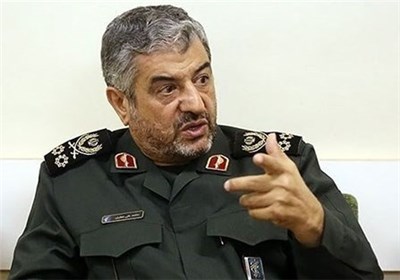
TEHRAN (Tasnim) – Commander of the Islamic Revolution Guards Corps (IRGC) Major General Mohammad Ali Jafari said his forces are ready to show rapid and harsh reaction to make Saudi Arabia accountable after the Kingdom’s mismanagement of Hajj claimed the lives of hundreds of Iranian pilgrims.

Speaking on the sidelines of a military meeting on Saturday, the senior commander underlined that the IRGC enjoys “all possible capacities for Iran’s rapid and tough reaction” to Al Saud and for obliging the monarchy to accept responsibility for the terrible disaster.

On September 24, a crush of pilgrims in Mina, near Mecca, killed around 4,700 people, including 464 Iranians.

Major General Jafari said the IRGC is fully prepared to act under orders from Supreme Leader of the Islamic Revolution Ayatollah Seyed Ali Khamenei.

Back on Wednesday, Ayatollah Khamenei warned Riyadh that any disrespect for the Iranian Hajj pilgrims or its failure to repatriate the bodies of those killed in the Mina crush will draw Iran’s “severe and tough reaction”.

Following the straightforward warning, Saudis began to cooperate with the Iranian officials and have repatriated bodies of some of the victims.

Elsewhere in his comments, the IRGC commander pledged that his forces “will take revenge from the Al Saud for the terrible crime.”

If necessary, the general underscored, the IRGC is firmly and powerfully ready to take any action, in any region and at any time, to protect the dignity of Muslims, particularly to defend the honor of the Iranian people in the face of “oppressive and ignorant rulers of Al Saud.”

Ayatollah Khamenei had announced that Iran has had respect for fraternity in the Islamic world up to now, showing self-restraint and Islamic politeness.

“However,” the Leader had noted, “they (Saudis) should know that the slightest disrespect for tens of thousands of Iranian pilgrims in Mecca and Medina and failing in their duties to transfer the holy bodies (of pilgrims to Iran) will result in Iran’s severe and tough reaction.”

Israel’s Risk Aversion Problem

October 2, 2015

Israel’s Risk Aversion Problem, Town Hall, Caroline Glick, October 2, 2015

Netanyahu and glasses

Because his strategy is based on ideological beliefs rather than power calculations rooted in reality, Obama’s position cannot be swayed by evidence, even when evidence shows that his administration’s policies endanger US national security.

The more Israel allows other actors to determine the nature of the emerging regional order, the less secure Israel will be. The more willing we are to take calculated risks today the greater our ability will be to influence the future architecture of regional power relations and so minimize threats to our survival in the decades to come.

***********************

On Wednesday the Obama administration was caught off guard by Russia’s rapid rise in Syria. As the Russians began bombing a US-supported militia along the Damascus-Homs highway, Secretary of State John Kerry was meeting with his Russian counterpart, Sergei Lavrov, at the UN. Just hours before their meeting Kerry was insisting that Russia’s presence in Syria would likely be a positive development.

Reacting to the administration’s humiliation, Republican Sen. John McCain said, “This administration has confused our friends, encouraged our enemies, mistaken an excess of caution for prudence and replaced the risks of action with the perils of inaction.”

McCain added that Russian President Vladimir Putin had stepped “into the wreckage of this administration’s Middle East policy.”

While directed at the administration, McCain’s general point is universally applicable. Today is no time for an overabundance of caution.

The system of centralized regimes that held sway in the Arab world since the breakup of the Ottoman Empire nearly a century ago has unraveled. The shape of the new order has yet to be determined.

The war in Syria and the chaos and instability engulfing the region are part and parcel of the birth pangs of a new regional governing architecture now taking form. Actions taken by regional and global actors today will likely will influence power relations for generations.

Putin understands the opportunity of the moment.

He views the decomposition of Syria as an opportunity to rebuild Russia’s power and influence in the Middle East – at America’s expense.

Russia isn’t the only strategic player seeking to exploit the war in Syria and the regional chaos. Turkey and Iran are also working assiduously to take advantage of the current absence of order to advance their long term interests.

Turkish President Recep Tayyip Erdogan is exploiting the rise of Islamic State in Syria and Iraq to fight the Kurds in both countries. Erdogan’s goal is twofold: to prevent the establishment of an independent Kurdistan and to disenfranchise the Kurds in Turkey.

As for Iran, Syria is Iran’s bulwark against Sunni power in the Arab world and the logistical base for Tehran’s Shi’ite foreign legion Hezbollah. Iranian dictator Ali Khamenei is willing to fight to the bitter end to hold as much of Syrian territory as possible.

Broadly speaking, Iran views the breakup of the Arab state system as both a threat and an opportunity.

The chaos threatens Iran, because it has radicalized the Sunni world. If Sunni forces unite, their numeric advantage against Shi’ite Iran will imperil it.

The power of Sunni numbers is the reason Bashar Assad now controls a mere sixth of Syrian territory. To prevent his fate from befalling them, the Iranians seek to destabilize neighboring regimes and where possible install proxy governments in their stead.

Iran’s cultivation of alliances and proxy relationships with Hamas, the Muslim Brotherhood and al-Qaida, and its phony war against Islamic State all point to an overarching goal of keeping Sunni forces separated and dependent on Tehran.

The Iranian regime also fears the prospect of being overthrown by its domestic opponents. To counter this threat the regime engages in large-scale and ever escalating repression of its perceived foes.

Iran’s nuclear program also plays a key role in the regime’s survival strategy. As Khamenei and his underlings see things, nuclear weapons protect the regime in three ways. They deter Iran’s external foes. They increase domestic support for the regime by enriching Iran which, no longer under international sanctions, sees its diplomatic and economic prestige massively enhanced due to its nuclear program.

Finally, there is Iran’s war with Israel and the US. A nuclear-armed Iran is a direct threat to both countries.

And this, too, is a boon for the mullacracy. From the regime’s perspective, fighting Israel and the US serves to neutralize the Sunni threat to the regime. The more Iran is seen as fighting Israel and the US the more legitimate it appears to Sunni jihadists.

This then brings us to the Americans. Like the Russians, the Turks and the Iranians, President Barack Obama and his associates are strategic players. Unlike those powers however, the administration is moved not by raw power calculations but by ideological dictates.

Obama and his advisers are convinced that the instability and radicalization of states and actors throughout the region is the consequence of the actions of past US administrations and those of America’s regional allies – first and foremost, Israel and Egypt. The basis for this conviction is the administration’s post-colonial ideological underpinnings.

Because his strategy is based on ideological beliefs rather than power calculations rooted in reality, Obama’s position cannot be swayed by evidence, even when evidence shows that his administration’s policies endanger US national security.

This brings us to Israel.

Israel has limited power to influence regional events.

It cannot change its neighbors’ values or cultures. Israel can however limit its neighbors’ ability to harm it and expand its ability to deter would be aggressors by among other things, using its power judiciously to influence now forming power balances between various regional and world actors.

Israel has followed this model in Syria with notable success.

At an early stage of the war our leaders recognized that aside from the Kurds, who have no shared border with us, there are no viable actors in Syria that are not dangerous to Israel. As a result, Israel has no interest in the victory of one group against others.

The only actor in Syria that Israel has felt it necessary to actively rein in is Hezbollah. So it has acted repeatedly to prevent Hezbollah from using its operational presence in Syria as a means for augmenting its offensive capabilities in Lebanon.

The problem with this strategy is that it has ignored the fact that from Hezbollah’s perspective, there is no operational difference between Lebanon and Syria.

The war in Syria spread to Lebanon years ago.

Now, with Iranian and Russian assistance, Hezbollah is beginning to develop the industrial capacity to bypass Israel and independently produce advanced weapons inside Lebanon. This rapid industrialization of Hezbollah’s military capabilities requires Israel to end its respect for the all-but-destroyed international border and take direct action against Hezbollah’s capabilities in Lebanon.

This brings us to Hezbollah’s boss, Iran. For the past several years, the same caution that has led Israel to grant de facto immunity to Hezbollah forces in Lebanon has led to Israel’s passivity and deference to the Obama administration in relation to Iran’s nuclear program.

With regard to Iran’s nuclear installations, the strategy of passivity has largely been forced onto an unwilling political leadership by Israel’s military leaders.

For the past several years, the IDF’s General Staff has refused to support the government’s position on Iran’s nuclear program.

Our military leaders have justified their insubordination by arguing that if Israel takes independent action against Iran’s nuclear program it will undermine its bilateral relations with the US, which they consider more important than preventing Iran from acquiring nuclear weapons.

Although under the best of circumstances, the IDF’s position would be unacceptable from the perspective of democratic norms of governance, since the ideologically driven Obama administration took power seven years ago, the military’s position has imperiled the country.

So long as Obama – or the ideology that informs his actions – remains in power in Washington, US security guarantees towards Israel will have no credibility.

The IDF’s assessment that ties to the US are more important than preventing Iran from becoming a nuclear power will remain incorrect, and dangerously so.

Today is Israel’s opportunity to shape the future of the Middle East by not only preventing Iran from becoming a nuclear power, but by preventing a regional nuclear arms race.

The closer Iran comes to emerging as a nuclear power, the more Sunni regimes, including Islamic State, will seek their own nuclear capabilities. It goes without saying that the more regional actors have nuclear weapons, the more dangerous the region becomes for Israel, and indeed for the world as a whole.

For many Israelis, the story of the week wasn’t Russia’s air strikes against US-allied forces in Syria. It was PLO chief and Palestinian Authority President Mahmoud Abbas’s speech at the UN General Assembly.

Leftists expressed horror in the face of Abbas’s threat to end the PLO’s adherence to the agreements it signed with Israel in the 1990s (and has stood in material breach of ever since). The government insisted, for its part that the reason the peace process has not brought peace is because Abbas and his PLO refuse to negotiate with Israel.

Unfortunately, both sides’ responses to Abbas’s speech indicate that Israel has lost all semblance of strategic purpose in regard to the Palestinians.

Fifteen years ago this week, on September 28, 2000, the Palestinians opened their terrorist war against Israel. Ever since it has been clear that no Palestinian faction is interested in living at peace with Israel.

Despite this, for the past 15 years, Israel has refused to reconsider its strategic allegiance to the false notion that it has the ability to influence the hearts and minds of the Palestinians and bend them in the direction of peace.

This delusional thinking is what caused the IDF’s General Staff to convene immediately after Operation Protective Edge ended and try to figure out how to rebuild Gaza.

Ever since the cease-fire came into force, Hamas has diverted all the assistance it has received from Israel and the international community not to rebuild Gaza, but to rebuild its military capacity to harm Israel. And yet, from the IDF’s perspective, ever since the war ended our most urgent task has been to save Hamas and the Palestinians alike from reckoning with the price of their aggression.

Likewise, Israel continues to insist that we have a strategic interest in peace with the PLO. Even if this is true in theory, chances are greater that unicorns will fall from the sky and prance through Jerusalem’s Old City than that the PLO will agree to make peace with Israel.

Our continued defense of the PLO as a legitimate actor harms our ability to secure other strategic interests that are achievable and can improve Israel’s regional position. These interests include securing transportation arteries in Judea and Samaria and strengthening Israel’s military and political control over the areas. These interests have only grown more acute in recent years with the rise of jihadist forces throughout the region and among the Palestinians themselves.

This brings us back to McCain and his strategic wisdom.

Israel must not allow the risks of action to lure us into strategic paralysis that imperils our future.

The more Israel allows other actors to determine the nature of the emerging regional order, the less secure Israel will be. The more willing we are to take calculated risks today the greater our ability will be to influence the future architecture of regional power relations and so minimize threats to our survival in the decades to come.

Finally, A Plan To Defeat the Islamic State

September 28, 2015

Finally, A Plan To Defeat the Islamic State, Town HallJim Hanson, September 28, 2015

(Obama would need the approvals of Putin, Xi, Rouhani, Assad, Erdogan and “our” other “peace partners” as well as his trained seals at the Department of Defense. Then, and only then, could General Bowie Bergdahl lead his march to victory. Or something. —  DM)

Black flag

What if there was an actual strategy to defeat ISIS and stop their reign of terror? The state of affairs and the very existence of IS as a governing entity is intolerable so we developed a strategy called Cut Down the Black Flag – A Plan to Defeat the Islamic State, the second book in the Secure Freedom Strategy series.

President Obama has failed to articulate or implement anything resembling a strategy during his time in office. This fact is even more painful when considering the rise of the Islamic State (IS) occurred on his watch and was largely due to his shortsighted and foolish decision to cut and run from Iraq. He lost the peace after our troops won the war.

Unlike the President, we’re not interested in token gestures doomed to failure as IS kills, rapes, and tortures on ground won for freedom just a few short years ago. We will not stand on the sidelines as an Inter-Continental Caliphate calls for “Death to all Infidels.” We have a plan to win and cut down their blood-soaked, Black Flag of Jihad.

It will not be easy but it is an essential part of the war for the free world. If we do not make a full faith effort to destroy IS, we will have done a disservice to all who gave their lives and limbs to free Iraq from tyranny. We will also be leaving millions to suffer the chaos and killing fields created when the inevitable vacuum of our withdrawal was filled by IS and Iran.

This book details a strategy focused on victory, aimed for stability in the region with the possibility of actual peace. It recognizes this action must be part of a greater “long war” against the whole of the Global Jihad Movement (GJM). They are the collection of groups who, while not officially associated, share a belief in Islamic Supremacy and are working actively to achieve it.

The Violent Jihadists like the Islamic State, Al Qaeda and others are easily identifiable as our enemies. The Civilization Jihadists of the Muslim Brotherhood and the groups it has spawned such as Council on American-Islamic Relations (CAIR) and the Islamic Society of North America (ISNA) are less overt but perhaps even more dangerous. Our overall strategy to defeat the Global Jihad Movement with a whole of government and culture approach is detailed in the Secure Freedom Strategy.

Our plan to defeat the Islamic State is a complete departure from the dismal failures of the current Commander in Chief leading from behind. The military might and will to win of the United States are vital to any chance of success. This does not mean we propose rolling tanks in a thunder run from Baghdad to Damascus. But we must take the handcuffs off the forces we already have deployed by allowing them to participate in combat missions with the forces they have trained to provide command and control and direct fire support. We must remove the cumbersome and overly risk-averse process for airstrikes that leave most of our aircraft returning to base with all munitions unused.

We must also work with the Sunni tribes who helped us defeat the precursor to IS; and, arm the Kurds who are our best friend and truest ally in the region. Both of these groups were left to the mercy of a central Iraqi government when U.S. forces withdrew and Iranian influence became dominant. We must look to a future where they govern by self-determination rather than remain forced into artificial borders established nearly 100 years ago; and, that have been largely erased over the recent war-torn years.

Our strategy is ambitious, but it does not require large deployments of U.S. troops or the expectation we will be the sole guarantor of security going forward. We aim to cut off the head of the jihadist snake by empowering the indigenous people who have suffered the most from its actions and then let them govern themselves. This strategy vigorously executed can do what the current half-hearted efforts never will: Defeat the Islamic State.


https://www.youtube.com/watch?t=194&v=TCO36yZ7UDc