Posted tagged ‘Al Qaeda’

Al Qaeda operates in southern Helmand province

October 24, 2015

Al Qaeda operates in southern Helmand province, Long War Journal, October 24, 2015

Foreign jihadists, including members of al Qaeda in the Indian Subcontinent (AQIS), are training at facilities in southern Helmand province in Afghanistan. The camps are used to prepare fighters to conduct attacks throughout Southeast Asia, according to reports reviewed by The Long War Journal. The discovery of the training centers in Baramcha, a town in southern Helmand province, indicates that al Qaeda and affiliated groups are training in multiple regions of Afghanistan.

Earlier this month, the US military raided two significant al Qaeda camps in the neighboring province of Kandahar. One of the facilities was approximately 30 square miles in size, according to a US military spokesman. [See LWJ report, US military strikes large al Qaeda training camps in southern Afghanistan.]

But reporting in the Indian and Pakistani press indicates that the camps in Kandahar are not the only ones where al Qaeda is training inside Afghanistan. These same reports indicate that al Qaeda-linked groups, such as the Indian Muhajideen and Laskhar-e-Jhangvi, are also training in the district of Dishu in Baramcha.

The training facilities in Baramcha are likely tied to al Qaeda’s relocation from northern Pakistan into Afghanistan.

AQIS, which was established in September 2014, is the newest regional branch of al Qaeda. It is led by Asim Umar, who was groomed by al Qaeda to assume a leadership position, and includes jihadists from several established groups in the region. The earliest plots conceived by AQIS focused on the Pakistani military and other security forces, as well as American and Indian interests.

Since the beginning of the year, Pakistani authorities have carried out multiple raids against the group. However, according to Pakistani officials, AQIS has relocated a significant portion of its operations into Helmand. The move by AQIS was made in anticipation of the Pakistani military’s Operation Zarb-e-Azb, an offensive that began in June 2014. The offensive has targeted al Qaeda and affiliated jihadist groups, including several from Central Asia. Some of these same organizations have helped fuel the Taliban’s advances in Afghanistan this year.

In April, Pakistani officials announced that they had broken up an AQIS cell in Karachi. However, a senior Pakistani counterterrorism official, Mohammed Arif Hanif, said that the jihadist group was using Helmand as a hub for its operations. “AQIS terrorists are provided assistance in Helmand from where they travel to Chaman, Quetta, Shikarpur and Karachi,” Hanif said, according to Dawn. A young Bengali suicide bomber who had targeted Pakistani Rangers had been traced back to Helmand, according to Pakistani officials. They added that AQIS had “relocated from Waziristan to Helmand province.”

In August, Dawn again reported that the Taliban was “sheltering” al Qaeda in Helmand. “The bond between us and our Taliban brothers is a solid ideological bond. They opted to lose their government and family members just to protect us,” Qari Abu Bakr, who works for As Sahab, al Qaeda’s propaganda arm, was quoted as saying. “There is no question of us moving apart now after going through this war together. Our common enemy does not know what is coming its way,” he added.

Al Qaeda has announced its relocation out of northern Pakistan. Earlier this month, an audio message featuring Hossam Abdul Raouf, a veteran al Qaeda leader who is close to Ayman al Zawahiri, was released online. Al Qaeda has “almost completely vacated Waziristan and Pakistan,” Raouf said in the recording. He explained that the “weight” of al Qaeda has been shifted to Syria and Yemen, because that is where al Qaeda’s efforts are most needed. But it is clear that al Qaeda has relocated senior leaders, including perhaps Raouf himself, to Afghanistan as well.

In July, the US killed Abu Khalil al Sudani, one of Osama bin Laden’s and Ayman al Zawahiri’s closest compatriots, in an airstrike in Paktika province. In October 2014, another veteran al Qaeda commander, Abu Bara al Kuwaiti, perished in a US airstrike in Nangarhar province.

The training facilities in Baramcha are, therefore, almost certainly part of al Qaeda’s broader effort over the past few years to entrench its operations inside Afghanistan once again.

Taliban control Dishu, training camps established

The conditions are ripe for al Qaeda and affiliated groups to train at camps in Baramcha. The Afghan government admitted that the wider Dishu district is under the control of the Taliban, The New York Times reported in June.

In 2014, Pajhwok Afghan News reported, citing Afghan police officials, that Taliban “training camps and hideouts of drug smugglers were operational in [the] Dishu and Khanishin districts” in Helmand.

“[T]he rebels had established training centers in the Baramcha area of Dishu district,” the Afghan news agency said in February of that year.

The Taliban and al Qaeda have used Baramcha to host training facilities because the town is located in the remote southern district and borders Pakistan’s Baluchistan province. The Afghan military and police find it difficult to project power in the area, and jihadists can quickly cross the border into Pakistan if threatened. The town is across the border from the Gerdi Jangal refugee camp, where one of the Taliban’s four regional military shuras is based.

The US military noted in October 2010 that Baramcha was a key node for the Taliban and “foreign fighters,” a term the US military often uses to mean al Qaeda.

“The area is a Taliban command and control area that consists of narcotics trafficking, weapons and ammunition storage, improvised explosive device factories, and foreign fighter training areas,” the now-defunct International Security Assistance Force noted in a press release announcing an operation to clear the Taliban and allied jihadists from the town.

US Marines and Afghan troops ultimately cleared Baramcha, but after US forces withdrew from the area in 2012, it quickly slipped back under the Taliban’s control, and the jihadists’ camps were back in operation.

Jihadists train in Baramcha

The Pakistani and Indian press have identified several jihadists who have passed through Baramcha for training over the past several years.

On Oct. 7, the Islamabad-based Daily Express reported that police captured Saeedullah, “an important member of Al Qaeda in the Indian Subcontinent.” According to police, Saeedullah (AKA Rizwan Mullah, Choti Dunya), who was arrested in Karachi, “confessed that he had received training from Amir Jawad in Baramcha city of Afghanistan.”

In April 2014, The Indian Express reported that two Pakistanis from Karachi, Abdul Waleed Rind and Fahim, were recruited by Riyaz Bhatkal, who was identified as the founder of the Indian Muhajideen. The two Pakistani jihadists, who were captured inside India in March 2014 before they could attack Indian soldiers, attended separate training camps in Baramcha.

“The training routine for Fahim and Waleed, even though they went separately to different camps, was quite similar – a 15-21 day capsule with three days dedicated to assembling and disassembling the AK-47, three days to do the same with 9 mm pistols, two days on grenades and ways to throw them,” The Indian Express reported. “The remaining days were used for physical training and endurance.”

And in August 2015, The Friday Times, a Lahore-based publication, reported that Abdul Kabeer Shakir, a leader in Ahle Sunnat Wal Jamaat (ASWJ), is “providing financial and other assistance” to “assassins” that are targeting Pakistani Shiites. ASWJ is the new name for the radical anti-Shiite Sipah-e-Sahaba Pakistan (SSP), which is closely allied with Lashkar-e-Jhangvi and other Pakistani terrorist groups.

“A source in law enforcement said the people involved in sectarian killings usually received training at a bordering village named Baramcha,” The Friday Times reported.

Senior Al-Qaeda leader killed in Syria airstrike

October 18, 2015

Senior Al-Qaeda leader killed in Syria airstrike

Published time: 17 Oct, 2015 16:17

Source: Senior Al-Qaeda leader killed in Syria airstrike — RT News

© Abdalrhman Ismail
A senior leader from Al-Nusra Front, Al-Qaeda’s branch in Syria, has been reportedly killed alongside two other members of the terrorist group in the province of Aleppo.

Sanafi Al-Nasr, who was allegedly killed in an airstrike near the town of Dana, was Al-Qaeda’s senior strategist and an important power broker, the Iranian Fars news agency reports, citing jihadist sources close to the killed militant leader.

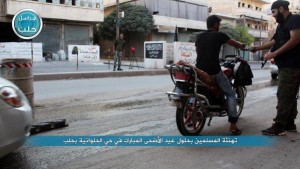
Al-Nusra released several photos showing a car hit by an air strike along with several bodies of the dead militants, although their identities were not verified. However, jihadists claimed on social media that Al-Nasr had been killed.

Other photos published by the terrorist organization show the alleged graves of Al-Nasr and two other militants who were killed in an airstrike.

The death of Sanafi Al-Nasr, whose real name was Abdul Mohsen Abdallah Ibrahim Al-Charekh, was also confirmed by the Britain-based Syrian Observatory for Human Rights, who claimed the jihadist leader was killed on Thursday.

Al-Nasr, who was born in Saudi Arabia, was a member of Al-Qaeda’s so-called “Victory Committee” that was responsible for developing and implementing the group’s strategy and policies.

The jihadists did not specify if he was killed in a Russian airstrike or in an attack carried out by the US-led coalition. Some militants claimed on social media, it was a ‘Crusader coalition’ that delivered the strike.

Russian warplanes have been hitting militants’ positions near Aleppo for several days. On Thursday, they targeted a total of 32 militant positions in several provinces including Aleppo, the Russian defense Ministry spokesman, Igor Konashenkov said.

On Saturday, Russian planes struck 49 jihadists’ targets in the provinces of Idlib, Hama, Latakia, Damascus, and Aleppo. “As a result of airstrikes, 11 command centers and control posts of the militants have been destroyed,” Konashenkov said.

An explosives workshop, three artillery positions, nine ammunition depots, two military equipment bases and 15 terrorist camps were also hit during the latest strikes, the ministry said.

The US-led coalition also conducted three airstrikes in Syria near Aleppo on Thursday targeting tactical units and an explosive device cluster, Reuters reports citing the coalition’s statement.

The Syrian army and Hezbollah fighters have started a major operation in the Aleppo province with Russia’s air support. They have already recaptured several villages and towns in the province.

U.S. Official Bemoans Russian Destruction Of “Our” Terrorists

October 16, 2015

U.S. Official Bemoans Russian Destruction Of “Our” Terrorists

October 15, 2015

Source: M of A – U.S. Official Bemoans Russian Destruction Of “Our” Terrorists

U.S. Official Bemoans Russian Destruction Of “Our” Terrorists

Some U.S. official is whining because his flock of bastards gets hurt:

“Putin is deliberately targeting our forces,” a U.S. official, who is disappointed in the U.S. response to Russia, told Fox News.”Our guys are fighting for their lives,” said the official, estimating up to 150 CIA-trained moderate rebels have been killed by the Russians.

“Our forces”, “our guys” – hmm. The official is referring to the CIA-mercenaries who are fighting under al-Qaeda’s command:

Advancing alongside the Islamist groups, and sometimes aiding them, have been several of the relatively secular groups, like the Free Syrian Army, which have gained new prominence and status because of their access to the TOWs.Even in smaller quantities, the missiles played a major role in the insurgent advances that eventually endangered Mr. Assad’s rule. While that would seem like a welcome development for United States policy makers, in practice it presented another quandary, given that the Nusra Front was among the groups benefiting from the enhanced firepower.

It is a tactical alliance that Free Syrian Army commanders describe as an uncomfortable marriage of necessity, because they cannot operate without the consent of the larger and stronger Nusra Front.

The “official” should go to jail for, at least, indirectly arming and supporting the terrorists of Jabhat al-Nusra aka al-Qaeda in Syria.

Under U.S. domestic law Obama justifies his attacks on the Islamic State in Syria (which is illegal under international law) with reference to the Authorization for Use of Military Force Against Terrorists as passed by the United States Congress on September 14, 2001. According to that AUMF:

That the President is authorized to use all necessary and appropriate force against those nations, organizations, or persons he determines planned, authorized, committed, or aided the terrorist

If that is the relevant legal code to fight the Islamic State then this even more so applies to Jabhat al-Nusra as it is loyal to the original al-Qaeda organization.

What Russia does, fighting on behalf of the legal government of Syria after having been asked to do so, is not only legal under international law but it is also easily justifiable by the same U.S. domestic law which the U.S. president applies to fight the Islamic State.

That whining official should recognize that a. what “his forces” do is illegal under U.S. law b. what Russia does with “his guys” is legal even under U.S. law and c. that there is always a moral hazard when using such proxy forces.

When the CIA send some idiots to invade Cuba where they were killed or capture it could do nothing and did nothing to protect them because that would have started a much bigger war. This is the same case here. These forces will be destroyed and there is nothing the U.S. can or will do about that. If you are sentimental about the fate of mercenaries and if you do not want this to happen do not use proxy forces but be man enough to go yourself.

Posted by b on October 15, 2015 at 01:51 PM | Permalink

Afghan Terror Threat Grows as Obama Reverses U.S. Troop Pullout

October 16, 2015

Afghan Terror Threat Grows as Obama Reverses U.S. Troop Pullout Taliban, Al Qaeda, Islamic State strengthening forces

BY:
October 16, 2015 4:59 am

Source: Afghan Terror Threat Grows as Obama Reverses U.S. Troop Pullout

But is it different in the middle east ?

Does this mean that Russia is now defending U.S. homeland ?


The Islamic terror threat in Afghanistan is expanding and poses new threats to the U.S. homeland as the Taliban, al Qaeda, and now the Islamic State build up forces inside the war-torn Southwest Asian state.

The persistent terrorist threat includes four separate Islamist groups inside the country and is one reason President Obama announced Thursday that he is reversing plans to pull all but 1,000 U.S. troops out of Afghanistan by the end of next year.

“Afghan forces are still not as strong as they need to be,” Obama said in announcing the decision to keep 9,800 troops in Afghanistan through 2016.

“And meanwhile, the Taliban has made gains, particularly in rural areas, and can still launch deadly attacks in cities, including Kabul,” he said, noting that the Islamic State is also emerging in the country.

“The bottom line is in key areas of the country, the security situation is still very fragile, and in some places there is risk of deterioration,” Obama said.

The reversal on the troop drawdown is a setback for the president’s strategy and an indication that his policies over the past six years have not worked. Obama outlined in December 2009 three main goals for Afghanistan: Denying a safe haven to al Qaeda, reversing Taliban momentum, and bolstering Afghan forces.

The growing terror threat was outlined in little-noticed written testimony to the Senate earlier this month by Army Gen. John Campbell, commander of U.S. forces in Afghanistan, who stated that Afghan forces remain weak as terrorists are gaining strength.

The four-star general identified the main threats as the Taliban, al Qaeda, the al Qaeda-aligned Haqqani Network, and the Islamic State, also called Daesh, along with other extremist groups he did not name.

“Collectively, these enemies will present formidable challenges to the Afghan government, [Afghan National Defense and Security Forces], [U.S. Forces-Afghanistan], and the coalition for the remainder of 2015 and beyond,” Campbell stated.

During the past 10 months al Qaeda has sought to rebuild support networks and planning capabilities aimed at “reconstituting its strike capabilities against the U.S. homeland and western interests,” Campbell said.

The newest threat to the country comes from the Islamic State, which is building on its success in the Middle East to gain new members in Central and South Asia and many of its members view al Qaeda as the moral foundation for jihad and IS (also known as ISIL or ISIS) as the action arm, Campbell said.

“Daesh has grown much faster than we anticipated, and its continued development in Afghanistan presents a legitimate threat to the entire region,” the four-star general said. “Its adherents have already committed acts of brutality that have shocked Afghan sensibilities. Moreover, Daesh senior leadership has publically declared its goals of reclaiming Khorasan Province, which extends from the Caucuses to Western India, as its spiritual home.”

Nick Rasmussen, director of the National Counterterrorism Center, said in Senate testimony on Oct. 8 that terrorists have increased their ability to communicate without detection as a result of the exposure of U.S. intelligence collection techniques.

“The difficulty in collecting precise intelligence on terrorist intentions and the status of particular terrorist plots is increasing over time,” Rasmussen said.

Rasmussen told the Senate Homeland Security Committee that some terrorist groups in Afghanistan are fighting each other and U.S. intelligence is watching closely to see whether IS “turns from that project to something aimed at us,” as al Qaeda did in the past.

For the Taliban, ousted in the 2003 U.S. military operation that led to the current Afghan conflict, the Islamist group is working to seize one provincial capital and multiple district centers while working to control and hold more Afghan territory, Campbell said.

“The Taliban have attempted to gain more control of the countryside in order to expand their freedom of movement and action. They have been at least partially successful in accomplishing these goals,” Campbell said.

The Institute for the Study of War also warned in a recent report that the Taliban are gaining strength. “Afghanistan may again become a safe haven for the Taliban and al Qaeda,” the think tank said in an Oct. 6 report. “Taliban factions have markedly increased the pace of operations throughout Afghanistan following the September 28 offensive against Kunduz city.”

Additionally, the loss of U.S. and allied close-air support aircraft has allowed the Taliban to mass their forces and they are gaining area in Pashtun-dominated areas of southern Afghanistan, according to Campbell.

The recent attack on the city of Kunduz also showed Taliban advances in the northern part of the country and further strained Afghan forces that are battling them.

“Overall, the Taliban remain a resilient, adaptable, and capable foe in spite of markedly increased casualties this year,” Campbell said.

The Taliban has also suffered fissures in its leadership following the death of Mullah Mohammed Omar, the group’s commander and spiritual head, in 2013. “It is still unclear whether his death will lead to greater cohesion or splintering within the movement,” Campbell stated.

The recent successes in Kunduz appear to have bolstered efforts by new Taliban leader Mullah Akhtar Mansour, who has the endorsement of al Qaeda leader Aymen al Zawahiri, to consolidate power and possibly limit rivals’ attempts to oust him.

The Mansour also appears to have moved the Taliban close to al Qaeda by naming a known ally of the terror group, Siraq Haqqani, as a deputy emir.

The linkage is raising new concerns that Taliban terrorists could begin conducting attacks outside Afghanistan.

Domestically, Taliban propagandists are influencing the population and the international community through social media.

Yet Campbell revealed that the Pakistan-based Haqqani Network—not the Taliban and al Qaeda—remain “the most virulent strain” of the Afghan insurgency.

Haqqani terrorism “presents one of the greatest risks to coalition forces, and it continues to be an al Qaeda facilitator,” Campbell said.

The network shares the goal of the Taliban of expelling coalition military forces and taking over the Afghan government and installing an Islamist regime.

Haqqani Network fighters “lead the insurgency in several eastern Afghan provinces, and they have demonstrated the intent and capability to launch and support high profile and complex attacks against the coalition,” the commander stated.

Several Haqqani planned attacks in Kabul and other locations that would have caused large numbers of casualties were they not disrupted.

Of the threat by the Haqqani Network, Campbell stated: “It will take a concerted AF/PAK effort to reduce the effectiveness and capabilities of HQN.”

A key priority, Campbell said, is countering the emergence of the Islamic State in Afghanistan.

“In the last year, we have observed the movement’s increased recruiting efforts and growing operational capacity,” Campbell said.

“We now classify Daesh as ‘operationally emergent,’”—a growing threat, he added.

The group is attracting disaffected Taliban and Pakistan Tehrik-e-Taliban members who are rebranding themselves as Islamic State members.

Despite the emergence of IS, Campbell said there has not been a wholesale convergence of IS with other insurgent groups, and there also has not been an influx of foreign fighters to IS ranks.

Still, while lacking military capabilities of the Taliban, IS is creating problems for Afghan security forces and the political leadership of the government.

“In the near term, we expect most Daesh operations to remain directed against the [Taliban], although attacks against nearby ANDSF or other soft targets of opportunity are possible,” Campbell said.

However, the IS presence appears to be spreading rapidly. Campbell noted that of Afghanistan’s 34 provinces, IS fighters in varying degrees are present in 25 provinces, with most located in the eastern part of the country, specifically Nangarhar Province.

“In the near term, we predict that they will continue to recruit and grow their numbers, using higher pay and small-scale, successful attacks as recruitment tools,” Campbell said.

The Islamic State’s “virulent, extremist ideology” is a greater threat than its combat power, he said.

Asked about the increasing terror threat, Lisa Monaco, White House homeland security and counterterrorism director, told reporters that al Qaeda and IS will be the main targets of continued U.S. involvement in counterterrorism operations in Afghanistan.

“The focus is on going after al Qaeda, the remnants of al Qaeda, and anybody who could pose a threat to the homeland,” she said.

“We’re going to be very focused in watching what happens with ISIL in Afghanistan,” Monaco said. “Right now, it’s militants who are largely disaffected with other groups, but that’s a factor in terms of if it could present a threat to the homeland. We’re obviously going to be attentive to that. But the core mission on the counterterrorism side is going after remnants of al Qaeda.”

US-backed rebels handed over equipment to al Qaeda in Syria

September 26, 2015

US-backed rebels handed over equipment to al Qaeda in Syria, Long War Journal, September 26, 2015

Al-Nusrah-in-Aleppo-300x169

[T]he Jaysh al Fateh alliance, which is led by Al Nusrah and its closest jihadist allies, has captured more territory from Assad’s regime this year than the Islamic State has.

Not only has al Qaeda thwarted America’s first efforts under the overt $500 million train and equip program, which is managed by the US military, it has also taken out rebels who received unofficial support from the US intelligence community.

*****************************

US-backed rebels in the so-called “New Syrian Forces” (NSF) have turned over at least some of their equipment and ammunition to a “suspected” intermediary for Al Nusrah Front, US Central Command (CENTCOM) conceded in a statement released late yesterday. The coalition-provided supplies were given by the rebels to Al Nusrah, an official branch of al Qaeda, in exchange for “safe passage within their operating area.

The “NSF unit contacted Coalition representatives and informed us that on Sept. 21-22 they gave six pick-up trucks and a portion of their ammunition to a suspected Al Nusrah Front intermediary, which equates to roughly 25 percent of their issued equipment,” CENTCOM spokesperson Col. Patrick Ryder said. “If accurate, the report of NSF members providing equipment to Al Nusrah Front is very concerning and a violation of Syria train and equip program guidelines.”

While Ryder left open the possibility that the report is not accurate, he did not offer any explanation for why the NSF unit would lie about giving the equipment to Al Nusrah. The admission further jeopardizes the unit’s ability to receive American arms in the future.

Rebels belonging to Division 30, a group supported by the US, suffered losses immediately upon entering the Syrian fray earlier this year.

More than 50 members of Division 30 were sent into Syria in July. But Al Nusrah quickly thwarted their plans, even though the US-backed rebels intended to fight the Islamic State, Al Nusrah’s bitter rival. A number of Division 30 fighters were captured or killed within days of embarking on their mission.

Al Nusrah released a statement at the time saying that Division 30 is part of an American scheme that is opposed to the interests of the Syrian people. Al Qaeda’s branch accused the group of trying to form “the nucleus” of a “national army” and blasted the attempt to bolster the “moderate opposition.”

Al Nusrah also attacked Division 30’s headquarters in Azaz, a city north of Aleppo. The US responded with airstrikes, killing a number of jihadists, but the damage to the limited US effort was done. US officials said earlier this month that only four or five rebels were left in the fight. Dozens of additional US-supported rebels have entered the war in recent weeks, according to US military officials.

Not only has al Qaeda thwarted America’s first efforts under the overt $500 million train and equip program, which is managed by the US military, it has also taken out rebels who received unofficial support from the US intelligence community.

Al Nusrah Front has consistently resisted the West’s meager attempts to build a reliable opposition force. Late last year, al Qaeda’s branch pushed the Syrian Revolutionaries Front (SRF), which had reportedly received some support from the West, out of its strongholds in the Idlib province. The SRF’s demise helped pave the way for Al Nusrah and its allies in the Jaysh al Fateh (“Army of Conquest”) coalition to capture much of Idlib beginning in late March.

After being vanquished, SRF head Jamaal Maarouf accused Al Nusrah’s emir, Abu Muhammad al Julani, of being a “Kharijite” (or extremist). This was an about-face in the relationship, as the SRF and Al Nusrah had previously fought side-by-side. Maarouf also publicly lamented the limited support he had received from the West.

Earlier this year, Al Nusrah also took the fight to Harakat Hazm (the Hazm Movement) outside of Aleppo. Despite receiving Western support, including US weaponry, Hazm had fought alongside the jihadists in the past and its leaders had praised Al Nusrah. Regardless, it was eventually forced to disband under Al Nusrah’s relentless pressure. Hazm’s remaining members were folded into other rebel groups.

It is suspected that American-made anti-tank TOW missiles fell into al Qaeda’s hands as a result of the battle against Hazm. The weapons were used during the jihadists’ successful assault on Idlib in March, as well as during other key confrontations with the Assad regime.

Recent events demonstrate that the US is consistently underestimating al Qaeda’s presence and capabilities in Syria, and does not have a true strategy for the multi-sided conflict. The rebels who have gone through the train and equip program are supposed to fight the Islamic State and not, according to public accounts, Al Nusrah. But it is Al Nusrah, which has been seeded with al Qaeda veterans in its upper ranks and is openly loyal to al Qaeda emir Ayman al Zawahiri, that has interfered with the US effort.

The US apparently did not anticipate Al Nusrah blocking Division 30’s first foray into northern Syria in July. The al Qaeda branch did so not to support Abu Bakr al Baghdadi’s men, but because it is opposed to any US presence in the country. The US has targeted individual al Qaeda commanders in Syria, especially those believed to pose an immediate threat to the West, but has not sought to degrade the Al Nusrah-led wing of the anti-Assad insurgency. However, the Jaysh al Fateh alliance, which is led by Al Nusrah and its closest jihadist allies, has captured more territory from Assad’s regime this year than the Islamic State has.

Russia gearing up to be first world power to insert ground forces into Syria

September 1, 2015

Russia gearing up to be first world power to insert ground forces into Syria, DEBKAfile, September 1, 2015

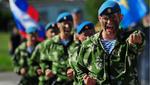
Russian_airborn_troops_syria_1.9.15Russian airborne troops for Syria

Despite strong denials from Moscow, Russian airborne troops are preparing to land in Syria to fight Islamic State forces. The surprise attack on Monday, Aug. 31, by ISIS forces on the Qadam district of southern Damascus, in which they took over parts of the district – and brought ISIS forces the closest that any Syrian anti-Assad group has ever been to the center of the Syrian capital – is expected to accelerate the Russian military intervention.

Moscow is certainly not ready to endanger the position of President Bashar Assad or his rule in Damascus, and views it as a red line that cannot be crossed. If Russia intervenes militarily in this way, Russia will be the first country from outside the Middle East to send ground forces into the Syrian civil war.

DEBKAfile’s military sources report that discussions by the Russo-Syrian Military Commission, which was established last month in Moscow to coordinate the intervention, accelerated during the last few days.

Our intelligence sources point out that the concerted activities of the commission are taking place amid the nearly complete paralysis of the US Central Command-Forward-Jordan (CCFJ), where operations against the rebels in southern Syria, including those holding positions across from Israel’s Golan, are coordinated. Officers from Jordan, Saudi Arabia, Qatar and Israel are attached to the CCFJ.

Most of the operations of the CCFJ have been halted due to a conflict that erupted between the Syrian rebels and the U.S. Central Command, CENTCOM. The US military is opposed to the rebels cooperating with Al-Qaeda-linked groups, such as the Al-Nusra front, while the rebels claim that this cannot be avoided fir they are to defeat the forces of Bashar Assad and Hizballah.

The paralysis of the CCFJ is spurring the Russians to try to show that their “central command” for Syria is operating without any difficulties.

In recent weeks, the Russians have taken four military steps related to Syria:

1. On Aug. 18, six of Russia’s advanced MIG-31 Foxhound interceptor aircraft landed at the Syrian Air Force’s Mezze Airbase, which is the military section of Damascus international airport. After the fighters landed, they were immediately followed by giant Russian Antonov AN-124 Condor cargo planes carrying 1,000 of Russia’s 9M133 Kornet anti-tank missiles.

The advanced jets are intended to serve as air support for the Russian units that arrive in Syria.

2. Before the Russian planes landed in Damascus, Moscow reached an agreement with Washington for the removal of NATO’s Patriot missile batteries from Turkey. The removal was carried out gradually during the month of August, thus preventing the possibility that NATO Patriot missiles could hit Russian fighters carrying out operations in Syrian airspace.

3. During the last week of August, a large number of Russian troops, mostly logistical teams whose job is to lay the groundwork for the arrival of the combat units, arrived in Syria. The troops were seen in Damascus and in Jablah district of Lattakia province, where the Russian forces are building a military base.

4. Our intelligence sources also report that Moscow has started to supply Damascus with satellite imagery of the ground situation on the different fronts.

DEBKAfile’s military and intelligence sources report that all of these preparatory steps by Moscow for the introduction of ground forces are being carried out in coordination with Washington and Tehran.

The more that the three capitals tighten their coordination in support of Assad, the sooner the Russian intervention is expected to take place.

Taliban takes another district in southern Afghanistan

August 26, 2015

Taliban takes another district in southern Afghanistan, The Long War Journal, August 26, 2015

The Taliban now control most of northern Helmand province, and will likely push its offensive towards Lashkar Gah in central Helmand, as Afghan security forces are stretched thin with an ongoing Taliban offensive in the Afghan north. This spring and summer, the Taliban have taken control of at least four of the seven districts in Kunduz province and have also seized districts in Sar-i-Pul and Badakhshan provinces.

*****************

The Taliban overran the Musa Qala district center when Afghan forces fled after several days of fighting. The fall of Musa Qala puts the Taliban in effective control of northern Helmand, and will allow it to threaten the provincial capital of Lashkar Gah.

A member of the Helmand provincial council confirmed that the Taliban seized the district center this morning. “Three Afghan security members were killed and ten others including the district governor were wounded,”ATN News reported.

Afghan defense officials have boasted that more than 60 Taliban fighters were killed, most in Coalition airstrikes, during the peak of fighting which began three days ago. “Pakistani, Arab and Chechen Taliban insurgents” are present in Musa Qala, TOLO News reported.

Afghan forces took heavy casualties during the fighting. A member of the Helmand provincial council said that45 Afghan soldiers were killed and 20 more surrendered during an assault on an outpost on Aug. 23. At least nine policemen were killed in an attack on a police station on Aug. 13.

The Taliban confirmed its forces took control of Musa Qala. In a statement released on Voice of Jihad, the Taliban’s official website, the group said “Mujahideen of Islamic Emirate have managed to overrun Musa Kala district center, HQ building, Police HQ, PRT building and all surrounding check posts in an overnight assault.” According to the Taliban, “a sizable number of arms, ammunition, APCs, vehicles and other equipment has also been seized in the operation.”

Afghan forces are “currently retreating towards Gereshk” in the neighboring district of Nahri Sarraj district, the Taliban claimed. “Mujahideen are now pursuing the convoy.”

The Taliban now control most of northern Helmand province, and will likely push its offensive towards Lashkar Gah in central Helmand, as Afghan security forces are stretched thin with an ongoing Taliban offensive in the Afghan north. This spring and summer, the Taliban have taken control of at least four of the seven districts in Kunduz province and have also seized districts in Sar-i-Pul and Badakhshan provinces.

The northern-most district of Baghran was never liberated from the Taliban during the US ‘surge’ from 2009 to 2012. Sangin district is at best contested; after two months of fighting in Sangin in the summer 2014, local Afghan officials opened peace talks with the Taliban. Kajaki district is largely under Taliban control, Afghan officials have said. In July, the Taliban released a video showing its fighters parading in Kajaki. Now Zad district fell to the Taliban at the end of July.

This year Taliban has made a push on multiple fronts to regain territory it lost during the US surge. More than 30,000 US troops were deployed to Afghanistan, primarily in the south, to retake Taliban-held areas in Helmand and Kandahar during the surge. While the Taliban suffered heavy losses and lost control of key districts, the group was not defeated militarily or politically. The Taliban regrouped in Pakistan and other provinces in Afghanistan, and began attacking Afghan security forces as US forces began their withdrawal.

The Taliban has pressed its spring offensive, called “Azm,” despite controversy over the death of its founder and emir, Mullah Omar. Afghan and Taliban officials have said that Omar died in Pakistan in 2013. The Taliban’s leadership council hid his death from the rank and file and appointed Mullah Akhtar Mohammad Mansour, who is closely tied to al Qaeda, as the new emir. After Mansour was officially named the Taliban’s new emir, one of his first acts was to publicly accept al Qaeda’s oath of allegiance. The controversy over Omar’s death does not appear to have impacted the Taliban on the battlefield.

Newly-Declassified U.S. Government Documents: The West Supported the Creation of ISIS Washington’s Blog

August 8, 2015

Newly-Declassified U.S. Government Documents: The West Supported the Creation of ISIS

Posted on May 24, 2015 by WashingtonsBlog

via Newly-Declassified U.S. Government Documents: The West Supported the Creation of ISIS Washington’s Blog.

https://youtu.be/SG3j8OYKgn4

Judicial Watch has – for many years – obtained sensitive U.S. government documents through freedom of information requests and lawsuits.

The government just produced documents to Judicial Watch in response to a freedom of information suit which show that the West has long supported ISIS.   The documents were written by the U.S. Defense Intelligence Agency on August 12, 2012 … years before ISIS burst onto the world stage.

Here are screenshots from the documents. We have highlighted the relevant parts in yellow:

ISIS1Why is this important? It shows that extreme Muslim terrorists – salafists, Muslims Brotherhood, and AQI (i.e. Al Qaeda in Iraq) – have always been the “major forces driving the insurgency in Syria.”

This verifies what the alternative media has been saying for years: there aren’t any moderate rebels in Syria (and see this, this and this).

The newly-declassified document continues:

ISIS 2Yes, you read that correctly:

there is the possibility of establishing a declared or undeclared Salafist Principality in eastern Syria (Hasaka and Der Zor), and this is exactly what the supporting powers to the opposition want, in order to isolate the Syrian regime ….

In other words, the powers supporting the Syrian opposition – the West, our Gulf allies, and Turkey wanted an Islamic caliphate in order to challenge Syrian president Assad.

Sure, top U.S. generals – and vice president Vice President Joe Biden – have said that America’s closest allies support ISIS.  And mainstream American media have called for direct support of ISIS.

But the declassified DIA documents show that the U.S. and the West supported ISIS at its inception … as a way to isolate the Syrian government.  And see this.

This is a big deal.  A former British Army and Metropolitan Police counter-terrorism intelligence officer and a former MI5 officer confirm that the newly-released documents are a smoking gun.

This is a train wreck long in the making.

Column One: Obama’s enemies list

August 6, 2015

Column One: Obama’s enemies list, Jerusalem Post, Caroline Glick, August 6, 2015

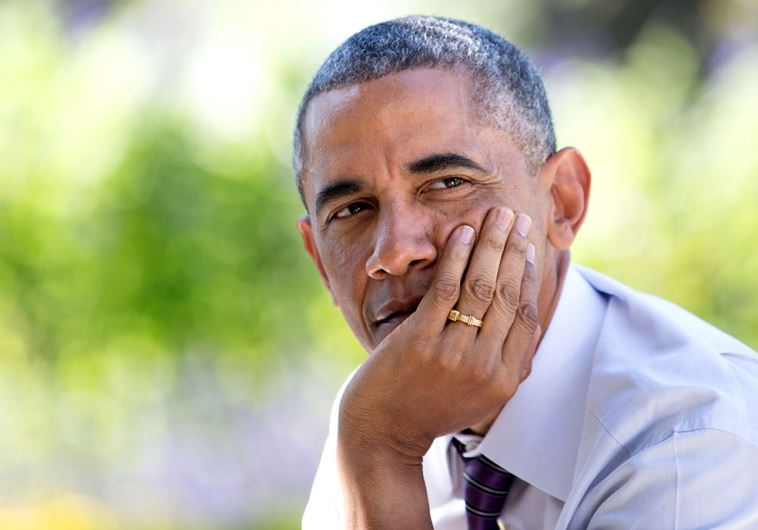
ShowImage (8)US President Barack Obama at the Rose Garden of the White House. (photo credit:OFFICIAL WHITE HOUSE PHOTO / PETE SOUZA)

[T]he real question lawmakers need to ask is whether the deal is good for America. Is Obama right or wrong that only partisan zealots and disloyal Zionists could oppose his great diplomatic achievement? To determine the answer to that question, you need to do is ask another one. Does his deal make America safer or less safe? The best way to answer that question is to consider all the ways Iran threatens America today, and ask whether the agreement has no impact on those threats, or whether it mitigates or aggravates them.

***********************

In President Barack Obama’s defense of his nuclear deal with Iran Wednesday, he said there are only two types of people who will oppose his deal – Republican partisans and Israel- firsters – that is, traitors.

At American University, Obama castigated Republican lawmakers as the moral equivalent of Iranian jihadists saying, “Those [Iranian] hard-liners chanting ‘Death to America’ who have been most opposed to the deal… are making common cause with the Republican Caucus.”

He then turned his attention to Israel.

Obama explained that whether or not you believe the deal endangers Israel boils down to whom you trust more – him or Prime Minister Benjamin Netanyahu. And, he explained, he can be trusted to protect Israel better than Netanyahu can because “[I] have been a stalwart friend of Israel throughout my career.”

The truth is that it shouldn’t much matter to US lawmakers whether Obama or Netanyahu has it right about Israel. Israel isn’t a party to the deal and isn’t bound by it. If Israel decides it needs to act on its own, it will.

The US, on the other side, will be bound by the deal if Congress fails to kill it next month.

So the real question lawmakers need to ask is whether the deal is good for America. Is Obama right or wrong that only partisan zealots and disloyal Zionists could oppose his great diplomatic achievement? To determine the answer to that question, you need to do is ask another one. Does his deal make America safer or less safe? The best way to answer that question is to consider all the ways Iran threatens America today, and ask whether the agreement has no impact on those threats, or whether it mitigates or aggravates them.

Today Iran is harming America directly in multiple ways.

The most graphic way Iran is harming America today is by holding four Americans hostage. Iran’s decision not to release them over the course of negotiations indicates that at a minimum, the deal hasn’t helped them.

It doesn’t take much consideration to recognize that the hostages in Iran are much worse off today than they were before Obama concluded the deal on July 14.

The US had much more leverage to force the Iranians to release the hostages before it signed the deal than it does now. Now, not only do the Iranians have no reason to release the hostages, they have every reason to take more hostages.

Then there is Iranian-sponsored terrorism against the US.

In 2011, the FBI foiled an Iranian plot to murder the Saudi ambassador in Washington and bomb the Saudi and Israeli embassies in the US capital.

One of the terrorists set to participate in the attack allegedly penetrated US territory through the Mexican border.

The terrorist threat to the US emanating from Iran’s terrorist infrastructure in Latin America will rise steeply as a consequence of the nuclear deal.

As The Wall Street Journal’s Mary Anastasia O’Grady wrote last month, the sanctions relief the deal provides to Iran will enable it to massively expand its already formidable operations in the US’s backyard. Over the past two decades, Iran and Hezbollah have built up major presences in Cuba, Venezuela, Nicaragua, Ecuador and Bolivia.

Iran’s presence in Latin America also constitutes a strategic threat to US national security. Today Iran can use its bases of operations in Latin America to launch an electromagnetic pulse attack on the US from a ballistic missile, a satellite or even a merchant ship.

The US military is taking active steps to survive such an attack, which would destroy the US’s power grid. Among other things, it is returning the North American Aerospace Defense Command (NORAD) to its former home in Cheyenne Mountain outside Colorado Springs.

But Obama has ignored the findings of the congressional EMP Commission and has failed to harden the US electronic grid to protect it from such attacks.

The economic and human devastation that would be caused by the destruction of the US electric grid is almost inconceivable. And now with the cash infusion that will come Iran’s way from Obama’s nuclear deal, it will be free to expand on its EMP capabilities in profound ways.

Through its naval aggression in the Strait of Hormuz Iran threatens the global economy. While the US was negotiating the nuclear deal with Iran, the Revolutionary Guards unlawfully interdicted – that is hijacked – the Marshall Islands-flagged Maersk Tigris and held its crew hostage for weeks.

Iran’s assault on the Tigris came just days after the US-flagged Maersk Kensington was surrounded and followed by Revolutionary Guards ships until it fled the strait.

A rational take-home message the Iranians can draw from the nuclear deal is that piracy pays.

Their naval aggression in the Strait of Hormuz was not met by American military force, but by American strategic collapse at Vienna.

This is doubly true when America’s listless response to Iran’s plan to use its Houthi proxy’s takeover of Yemen to control the Bab el-Mandab strait is taken into consideration. With the Bab el-Mandab, Iran will control all maritime traffic from the Persian Gulf and the Red Sea. Rather than confront this clear and present danger to the global economy, America abandoned all its redlines in the nuclear talks.

Then there is Iran’s partnership 20-year partnership with al-Qaida.

The 9/11 Commission found in its report that four of the 9/11 terrorists transited Iran before traveling to the US. As former Defense Intelligence Agency director Lt.-Gen. (ret.) Mike Flynn told Fox News in the spring, Iranian cooperation with al-Qaida remains deep and strategic.

When the US Navy SEALs killed Osama bin Laden in 2011, they seized hard drives containing more than a million documents related to al-Qaida operations. All but a few dozen remain classified.

According to Flynn and other US intelligence officials who spoke to The Weekly Standard, the documents expose Iran’s vast collaboration with al-Qaida.

The agreement Obama concluded with the mullahs gives a tailwind to Iran. Iran’s empowerment will undoubtedly be used to expand its use of al-Qaida terrorists as proxies in their joint war against the US.

Then there is Iran’s ballistic missile program.

The UN Security Council resolution passed two weeks ago cancels the UN-imposed embargoes on conventional arms and ballistic missile acquisitions by Iran. Since the nuclear deal facilities Iranian development of advanced nuclear technologies that will enable the mullahs to build nuclear weapons freely when the deal expires, the Security Council resolution means that by the time the deal expires, Iran will have the nuclear warheads and the intercontinental ballistic missiles required to carry out a nuclear attack on the US.

Obama said Wednesday that if Congress votes down his nuclear deal, “we will lose… America’s credibility as a leader of diplomacy. America’s credibility,” he explained, “is the anchor of the international system.”

Unfortunately, Obama got it backwards. It is the deal that destroys America’s credibility and so upends the international system which has rested on that credibility for the past 70 years.

The White House’s dangerous suppression of seized al-Qaida-Iran documents, like its listless response to Iran’s maritime aggression, its indifference to Iran’s massive presence in Latin America, its lackluster response to Iran’s terrorist activities in Latin America, and its belittlement of the importance of the regime’s stated goal to destroy America – not to mention its complete collapse on all its previous redlines over the course of the negotiations – are all signs of the disastrous toll the nuclear deal has already taken on America’s credibility, and indeed on US national security.

To defend a policy that empowers Iran, the administration has no choice but to serve as Iran’s agent. The deal destroys America’s credibility in fighting terrorism. By legitimizing and enriching the most prolific state sponsor of terrorism, the US has made a mockery of its claimed commitment to the fight.

The deal destroys the US’s credibility as an ally.

By serving as apologists for its worst enemy, the US has shown its allies that they cannot trust American security guarantees. How can Israel or Saudi Arabia trust America to defend them when it is endangering itself? The deal destroys 70 years of US nonproliferation efforts. By enabling Iran to become a nuclear power, the US has made a mockery of the very notion of nonproliferation and caused a nuclear arms race in the Middle East.

The damage caused by the deal is already being felt. For instance, Europe, Russia and China are already beating a path to the ayatollahs’ doorstep to sign commercial and military deals with the regime.

But if Congress defeats the deal, it can mitigate the damage. By killing the deal, Congress will demonstrate that the American people are not ready to go down in defeat. They can show that the US remains committed to its own defense and the rebuilding of its strategic credibility worldwide.

In his meeting with Jewish leaders Tuesday, Obama acknowledged that his claim – repeated yet again Wednesday – that the only alternative to the deal is war, is a lie.

Speaking to reporters after the meeting, Greg Rosenbaum, chairman of the National Democratic Jewish Council, which is allied with the White House, said that Obama rejected the notion that war will break out if Congress rejects the deal with veto-overriding majorities in both houses.

According to Rosenbaum, Obama claimed that if Congress rejects his nuclear deal, eventually the US will have to carry out air strikes against Iran’s nuclear facilities in order to prevent them from enriching uranium to weapons-grade levels.

“But,” he quoted Obama as saying, “the result of such a strike won’t be war with Iran.”

Rather, Obama said, Iran will respond to a US strike primarily by ratcheting up its terrorist attacks against Israel.

“I can assure,” Obama told the Jewish leaders, “that Israel will bear the brunt of the asymmetrical responses that Iran will have to a military strike on its nuclear facilities.”

What is notable here is that despite the fact that it will pay the heaviest price for a congressional defeat of the Iran deal, Israel is united in its opposition to the deal. This speaks volume about the gravity with which the Israeli public views the threats the agreement unleashed.

But again, Israel is not the only country that is imperiled by the nuclear deal. And Israelis are not the only ones who need to worry.

Obama wishes to convince the public that the deal’s opponents are either partisan extremists or traitors who care about Israel more than they care about America. But neither claim is true. The main reason Americans should oppose the deal is that it endangers America. And as a consequence, Americans who oppose the deal are neither partisans nor turncoats.

They are patriots.

Qatari Group Accused of Funding Hamas Hires D.C. Lobbyist

August 4, 2015

Qatari Group Accused of Funding Hamas Hires D.C. Lobbyist

Founding member Abd al-Rahman al-Nu’aym funneled millions to al Qaeda in Syria, Iraq

BY:
August 4, 2015 5:00 am

via Qatari Group Accused of Funding Hamas Hires D.C. Lobbyist | Washington Free Beacon.

A Qatar-based charity accused of funding Hamas has hired a lobbyist to represent it in the United States.

The Sheikh Eid Bin Mohammed al-Thani Charitable Foundation, located in Doha, Qatar, recently brought aboard Wendell Belew, a Washington D.C.-based lawyer, to lobby on its behalf. Belew, who will work on issues dealing with “NGO regulations and charity best practices,” previously served as chief counsel of the House Budget Committee.

The foundation was one of 36 organizations banned in Israel in July 2008 for its links to fundraising for Hamas.

“This is a significant step against the global network which assists Hamas in raising funds. The order outlaws a great number of bodies that are active abroad and which are responsible for raising very large sums,” the Israeli ministry of foreign affairs said at the time of the foundation bans.

Abd al-Rahman al-Nu’aymi, a founding member of the organization, was said by U.S. officials in 2013 to have funneled millions of dollars to al Qaeda in Syria and Iraq.

The Department of the Treasury imposed sanctions on Nu’aymi in December 2013 after he was named a specially designated global terrorist for being a “financier and facilitator who has provided money and material support and conveyed communications to al-Qa’ida and its affiliates in Syria, Iraq, Somalia and Yemen for more than a decade.”

Nu’aymi ordered the transfer of $600,000 through an al Qaeda representative in Syria with the intention of transferring at least $50,000 more at a later date, according to the Treasury. Additionally, he oversaw a transfer of $2 million per month to al Qaeda in Iraq for an unspecified period of time.

This is not the first time that Belew has worked on behalf of a group with ties to terrorist organizations.

Belew previously represented the Saudi Arabia-based Al-Haramain Islamic Foundation, an organization that was found to be a significant backer of al Qaeda.

In July 2004, Aqeel Abdulaziz Aqeel al-Aqeel, the foundation’s leader, was put on the United Nations Security Council Special Notice list of terrorists associated with al Qaeda.

In September 2004, the Treasury announced that the foundation’s American branch, which is based out of Oregon, had direct connections with Osama Bin Laden.

The Treasury investigation found “direct links” between the American branch and Osama bin Laden. It also alleged that the foundation had violated tax laws and engaged in other money laundering offenses. Individuals associated with the branch tried to conceal funds intended for Chechnya by omitting the information from their tax returns and instead claimed that the money was intended to purchase a prayer house in Springfield, Mo.

The Al-Haramain Islamic Foundation is now defunct. Wendell Belew could not be reached for comment.