Posted tagged ‘Afghanistan’

Taliban storm Kunduz city

September 28, 2015

Taliban storm Kunduz city, Long War Journal, September 28, 2015

[R]eports from the Afghan media, as well as Taliban fighters and residents from inside the city, indicate that parts if not all of the city are now under Taliban control.

*******************

The Taliban assaulted the northern provincial capital of Kunduz from three directions and seized control of areas in the city. Unconfirmed reports from residents and Taliban fighters inside Kunduz indicate that Afghan forces have been driven out of the city and the Taliban are in full control.

According to the BBC, hundreds of Taliban fighters launched their offensive today from three districts: Imam Sahib to the north, Khanabad from the southeast, and Chardara from the southwest. All three districts are thought to be under Taliban control.

The Taliban confirmed they launched a three-pronged assault on Kunduz city. “The operations have commenced on the city center from 3 directions with Mujahideen quickly taking enemy positions and the enemy is retreating from their positions,” according to an initial statement that was posted on Voice of Jihad.

The Taliban later stated that their fighters have “reached the main city intersection, are targeting the governors [sic] compound and clearing the small remaining pockets from enemy presence.”

Afghan security officials have denied that the Taliban are in control of the city and have stated that the fighting was largely confined to the outskirts of the provincial capital.

But reports from the Afghan media, as well as Taliban fighters and residents from inside the city, indicate that parts if not all of the city are now under Taliban control.

According to TOLONews, “Taliban insurgents have taken control of Kunduz city’s provincial council building and the local High Peace Council offices.”

Ehsanullah Ehsan, a stabilization manager at the international development agency DAI who is based in Kunduz, has said that the Taliban have seized the city and Afghan National Security Forces [ANSF] have retreated.

“Kunduz city is completely with taliban ANSF are out,” Ehsan tweeted. “[T]he city is completely with taliban now, taliban walking inside streets, i am trapped at home.”

Ehsan posted photographs purportedly showing Taliban fighters walking the streets of Kunduz and prisoners who have been freed from the city’s main jail.

Kunduz province has been hotly contested since the Taliban and its allies launched an offensive to seize control of the province at the end of April. The districts of Imam Sahib, Aliabad, and Qala-i-Zal were overrun in the initial assault, while Chardara and Dasht-i-Archi fellin mid-June. It is unclear when Khanabad fell under Taliban control. The status of the six districts is unclear, but the Taliban is still thought to be in control of Imam Sahib, Aliabad, Chardara, Khanabad, and Dasht-i-Archi.

The Taliban and allied jihadist groups based in Kunduz have been flexing their muscles in the province in recent weeks. In August, hundreds of fighters from the Taliban and the allied Islamic Jihad Union massed in the open, in daylight, to swear allegiance to Mullah Akhtar Mohammad Mansour, the new emir of the Taliban. Last week, the Islamic Jihad Union claimed it controlled large areas of the border with Tajikistan and a border crossing from Kunduz into the northern Afghan neighbor.

The loss of Kunduz city, if confirmed, would be a major blow to the Afghan government and military, which have struggled to maintain security after US and NATO forces have drawn down to a token presence. Kunduz city would be the first provincial capital to fall to the Taliban.

Additionally, the fall of Kunduz would invalidate the entire US “surge” strategy from 2009 to 2012. The US military focused its efforts on the southern Afghan provinces of Helmand and Kandahar, claiming that these provinces were the key to breaking the Taliban. Little attention was given to other areas of Afghanistan, including the northern provinces, where the Taliban have expended considerable effort in fighting the military and government. Today, the Taliban are gaining ground in northern, central, eastern and southern Afghanistan, with dozens of districts falling under Taliban control over the past year.

U.S. soldiers ordered to ignore Afghan allies’ abuse of boys

September 21, 2015

U.S. soldiers ordered to ignore Afghan allies’ abuse of boys, Jihad Watch, Robert Spencer, September 20, 2015

(“It’s their culture, so it’s cool. Don’t get involved.” The (non-Islamic) Islamic State is also a manifestation of Islamic culture. Should our we be required to ignore it as well? — DM)


What are we in Afghanistan for, if not to stand for our own values and the principles of human rights? Instead, U.S. officials are aiding and abetting the destruction of these boys’ lives — and in the case of Lance Corporal Buckley, sacrificing our own troops. This is beyond shameful.

“Those are the ones brought near in the Gardens of Pleasure, a company of the former peoples and a few of the later peoples, on thrones woven, reclining on them, facing each other. There will circulate among them young boys made eternal with vessels, pitchers and a cup from a flowing spring.” — Qur’an 56:11-18

“And they will be given to drink a cup whose mixture is of ginger, a fountain within Paradise named Salsabeel. There will circulate among them young boys made eternal. When you see them, you would think them scattered pearls. And when you look there, you will see pleasure and great dominion.” — Qur’an 76:17-20

Gregory-Buckley

“U.S. Soldiers Told to Ignore Afghan Allies’ Abuse of Boys,” by Joseph Goldstein, New York Times, September 20, 2015:

KABUL, Afghanistan — In his last phone call home, Lance Cpl. Gregory Buckley Jr. told his father what was troubling him: From his bunk in southern Afghanistan, he could hear Afghan police officers sexually abusing boys they had brought to the base.

“At night we can hear them screaming, but we’re not allowed to do anything about it,” the Marine’s father, Gregory Buckley Sr., recalled his son telling him before he was shot to death at the base in 2012. He urged his son to tell his superiors. “My son said that his officers told him to look the other way because it’s their culture.”

Rampant sexual abuse of children has long been a problem in Afghanistan, particularly among armed commanders who dominate much of the rural landscape and can bully the population. The practice is called bacha bazi, literally “boy play,” and American soldiers and Marines have been instructed not to intervene — in some cases, not even when their Afghan allies have abused boys on military bases, according to interviews and court records.

The policy has endured as American forces have recruited and organized Afghan militia to help hold territory against the Taliban. But soldiers and Marines have been increasingly troubled that instead of weeding out pedophiles, the American military was arming them in some cases and placing them as the commanders of villages — and doing little when they began abusing children.
Gregory Buckley Sr. believes the policy of looking away from sexual abuse was a factor in his son’s death.

“The reason we were here is because we heard the terrible things the Taliban were doing to people, how they were taking away human rights,” said Dan Quinn, a former Special Forces captain who beat up an American-backed militia commander for keeping a boy chained to his bed as a sex slave. “But we were putting people into power who would do things that were worse than the Taliban did — that was something village elders voiced to me.”

The policy of instructing soldiers to ignore pedophilia by their Afghan allies is coming under new scrutiny, particularly as it emerges that service members like Captain Quinn have faced discipline, even career ruin, for disobeying it.

After the beating, the Army relieved Captain Quinn of his command and pulled him from Afghanistan. He has since left the military.

Four years later, the Army is also trying to forcibly retire Sgt. First Class Charles Martland, a Special Forces member who joined Captain Quinn in beating up the commander….

The American policy of nonintervention was intended to maintain good relations with the Afghan police and militia units the United States has trained to fight the Taliban. It also reflected a reluctance to impose cultural values in a country where pederasty is rife, particularly among powerful men, for whom being surrounded by young teenagers can be a mark of social status.

Some soldiers believed that the policy made sense, even if they were personally distressed at the sexual predation they witnessed or heard about.

“The bigger picture was fighting the Taliban,” a former Marine lance corporal reflected. “It wasn’t to stop molestation.”

Still, the former lance corporal, who spoke on condition of anonymity to avoid offending fellow Marines, recalled feeling sickened the day he entered a room on a base and saw three or four men lying on the floor with children between them. “I’m not a hundred percent sure what was happening under the sheet, but I have a pretty good idea of what was going on,” he said.

But the American policy of treating pedophilia as a cultural issue has often alienated the villages whose children were being preyed upon. The pitfalls of the policy emerged clearly as American Special Forces soldiers began to form Afghan Local Police militias to hold villages that American forces had retaken from the Taliban in 2010 and 2011.

By the summer of 2011, Captain Quinn and Sergeant Martland, both Green Berets on their second tour in northern Kunduz Province, began to receive dire complaints about the Afghan Local Police units they were training and supporting.

First, one of the militia commanders raped a 14- or 15-year-old girl whom he had spotted working in the fields. Captain Quinn informed the provincial police chief, who soon levied punishment. “He got one day in jail, and then she was forced to marry him,” Mr. Quinn said.

When he asked a superior officer what more he could do, he was told that he had done well to bring it up with local officials but that there was nothing else to be done. “We’re being praised for doing the right thing, and a guy just got away with raping a 14-year-old girl,” Mr. Quinn said.

Village elders grew more upset at the predatory behavior of American-backed commanders. After each incident, Captain Quinn would gather the Afghan commanders and lecture them on human rights.

Soon another commander absconded with his men’s wages. Mr. Quinn said he later heard the commander had spent the money on dancing boys. Another commander murdered his 12-year-old daughter in a so-called “honor killing” for having kissed a boy.“There were no repercussions,” Mr. Quinn recalled.

In September 2011, an Afghan woman, visibly bruised, showed up at an American base with her son, who was limping. One of the Afghan police commanders in the area, Abdul Rahman, had abducted the boy and forced him to become a sex slave, chained to his bed, the woman explained. When she sought her son’s return, she herself was beaten. Her son had eventually been released, but she was afraid it would happen again she told the Americans on the base.

She explained that because “her son was such a good-looking kid, he was a status symbol” local commanders coveted, recalled Mr. Quinn, who did not speak to the woman directly but was told about her visit when he returned to the base from a mission later that day.

So Captain Quinn summoned Abdul Rahman and confronted him about what he had done. The police commander acknowledged that it was true, but brushed it off. When the American officer began to lecture about “how you are held to a higher standard if you are working with U.S. forces, and people expect more of you,” the commander began to laugh.

“I picked him up and threw him onto the ground,” Mr. Quinn said. Sergeant Martland joined in, he said. “I did this to make sure the message was understood that if he went back to the boy, that it was not going to be tolerated,” Mr. Quinn recalled….

Sergeant Martland, who received a Bronze Star for valor for his actions during a Taliban ambush, wrote in a letter to the Army this year that he and Mr. Quinn “felt that morally we could no longer stand by and allow our A.L.P. to commit atrocities,” referring to the Afghan Local Police.

The father of Lance Corporal Buckley believes the policy of looking away from sexual abuse was a factor in his son’s death, and he has filed a lawsuit to press the Marine Corps for more information about it.

Lance Corporal Buckley and two other Marines were killed in 2012 by one of a large entourage of boys living at their base with an Afghan police commander named Sarwar Jan.

Mr. Jan had long had a bad reputation; in 2010, two Marine officers managed to persuade the Afghan authorities to arrest him following a litany of abuses, including corruption, support for the Taliban and child abduction. But just two years later, the police commander was back with a different unit, working at Lance Corporal Buckley’s post, Forward Operating Base Delhi, in Helmand Province.

Lance Corporal Buckley had noticed that a large entourage of “tea boys” — domestic servants who are sometimes pressed into sexual slavery — had arrived with Mr. Jan and moved into the same barracks, one floor below the Marines. He told his father about it during his final call home.

Word of Mr. Jan’s new position also reached the Marine officers who had gotten him arrested in 2010. One of them, Maj. Jason Brezler, dashed out an email to Marine officers at F.O.B. Delhi, warning them about Mr. Jan and attaching a dossier about him.

The warning was never heeded. About two weeks later, one of the older boys with Mr. Jan — around 17 years old — grabbed a rifle and killed Lance Corporal Buckley and the other Marines.

Lance Corporal Buckley’s father still agonizes about whether the killing occurred because of the sexual abuse by an American ally. “As far as the young boys are concerned, the Marines are allowing it to happen and so they’re guilty by association,” Mr. Buckley said. “They don’t know our Marines are sick to their stomachs.”

The one American service member who was punished in the investigation that followed was Major Brezler, who had sent the email warning about Mr. Jan, his lawyers said. In one of Major Brezler’s hearings, Marine Corps lawyers warned that information about the police commander’s penchant for abusing boys might be classified. The Marine Corps has initiated proceedings to discharge Major Brezler.

Video: Greek island turns into war zone as Syrian and Afghan migrants clash

September 8, 2015

Video: Greek island turns into war zone as Syrian and Afghan migrants clash, BreitbartDonna Rachel Edmunds, September 8, 2015

The Greek island of Lesbos has been turned into a war zone by rioting migrants, leaving the island’s 85,000 residents in despair. Around 25,000 migrants are currently camped out on the island with hundreds more arriving daily, leading to frequent violent clashes and rioting despite their claim to be fleeing violence.

Located just 6 miles from the Turkish shore, the migrants come over in inflatable boats which they cut up on arrival to prevent being turned back, expecting to be able to quickly travel on by ferry to mainland Europe, German station RTL has reported.

Instead, they are being held on the Island while the police issue emigration documents, a delay which can take days. The wait is causing tension between groups as Afghans accuse Syrians of getting preferential treatment by the authorities, leading to vicious violent clashes.

As rocks, bottles and municipal bins fly, one tearful local woman told RTL “We are in danger, every day, every minute. We need someone to protect us. They come into our houses. I want to go to work, but I can’t. Our children want to go to school, but they can’t. They have stolen our lives!”

Another yells at the migrants flinging rocks as they pass his house: “Go away from here! This is private land! Respect Greece!”

WATCH:


The full video is here.


The main town of Lesbos, Mytilene, now resembles a war zone as the migrants rip apart the infrastructure and use the town as a urinal. Mayor Galinos helpless in the face of such an onslaught is out of ideas, and is calling on the European Union to do something.

“This is a ticking time bomb that will go off soon,” he said. “We have managed to avert some catastrophes, but we need help, more ferries. This island is so small, we can’t solve a worldwide humanitarian crisis by ourselves. The European Union needs to act.”

Monday night saw fresh clashes as 2,500 surged towards a government chartered ferry bound for Athens. Just a dozen police and coastguards, armed with batons, struggled to control the crowd by shouting “keep back”.

Junior interior minister Yiannis Mouzalas told local radio “the situation is on the verge of explosion.” It is a scene being replicated on islands all along Greece’s coastline.

Evangelos Meimarakis, leader of Greece’s right wing New Democracy party which could retake power this month, said the country should strengthen its borders to as to dispel “the message that ‘it’s good over here, come over’”.

Taliban takes another district in southern Afghanistan

August 26, 2015

Taliban takes another district in southern Afghanistan, The Long War Journal, August 26, 2015

The Taliban now control most of northern Helmand province, and will likely push its offensive towards Lashkar Gah in central Helmand, as Afghan security forces are stretched thin with an ongoing Taliban offensive in the Afghan north. This spring and summer, the Taliban have taken control of at least four of the seven districts in Kunduz province and have also seized districts in Sar-i-Pul and Badakhshan provinces.

*****************

The Taliban overran the Musa Qala district center when Afghan forces fled after several days of fighting. The fall of Musa Qala puts the Taliban in effective control of northern Helmand, and will allow it to threaten the provincial capital of Lashkar Gah.

A member of the Helmand provincial council confirmed that the Taliban seized the district center this morning. “Three Afghan security members were killed and ten others including the district governor were wounded,”ATN News reported.

Afghan defense officials have boasted that more than 60 Taliban fighters were killed, most in Coalition airstrikes, during the peak of fighting which began three days ago. “Pakistani, Arab and Chechen Taliban insurgents” are present in Musa Qala, TOLO News reported.

Afghan forces took heavy casualties during the fighting. A member of the Helmand provincial council said that45 Afghan soldiers were killed and 20 more surrendered during an assault on an outpost on Aug. 23. At least nine policemen were killed in an attack on a police station on Aug. 13.

The Taliban confirmed its forces took control of Musa Qala. In a statement released on Voice of Jihad, the Taliban’s official website, the group said “Mujahideen of Islamic Emirate have managed to overrun Musa Kala district center, HQ building, Police HQ, PRT building and all surrounding check posts in an overnight assault.” According to the Taliban, “a sizable number of arms, ammunition, APCs, vehicles and other equipment has also been seized in the operation.”

Afghan forces are “currently retreating towards Gereshk” in the neighboring district of Nahri Sarraj district, the Taliban claimed. “Mujahideen are now pursuing the convoy.”

The Taliban now control most of northern Helmand province, and will likely push its offensive towards Lashkar Gah in central Helmand, as Afghan security forces are stretched thin with an ongoing Taliban offensive in the Afghan north. This spring and summer, the Taliban have taken control of at least four of the seven districts in Kunduz province and have also seized districts in Sar-i-Pul and Badakhshan provinces.

The northern-most district of Baghran was never liberated from the Taliban during the US ‘surge’ from 2009 to 2012. Sangin district is at best contested; after two months of fighting in Sangin in the summer 2014, local Afghan officials opened peace talks with the Taliban. Kajaki district is largely under Taliban control, Afghan officials have said. In July, the Taliban released a video showing its fighters parading in Kajaki. Now Zad district fell to the Taliban at the end of July.

This year Taliban has made a push on multiple fronts to regain territory it lost during the US surge. More than 30,000 US troops were deployed to Afghanistan, primarily in the south, to retake Taliban-held areas in Helmand and Kandahar during the surge. While the Taliban suffered heavy losses and lost control of key districts, the group was not defeated militarily or politically. The Taliban regrouped in Pakistan and other provinces in Afghanistan, and began attacking Afghan security forces as US forces began their withdrawal.

The Taliban has pressed its spring offensive, called “Azm,” despite controversy over the death of its founder and emir, Mullah Omar. Afghan and Taliban officials have said that Omar died in Pakistan in 2013. The Taliban’s leadership council hid his death from the rank and file and appointed Mullah Akhtar Mohammad Mansour, who is closely tied to al Qaeda, as the new emir. After Mansour was officially named the Taliban’s new emir, one of his first acts was to publicly accept al Qaeda’s oath of allegiance. The controversy over Omar’s death does not appear to have impacted the Taliban on the battlefield.

Islamic State Captures First Territory in Afghanistan

July 1, 2015

Islamic State Captures First Territory in Afghanistan

by Oliver Lane30 Jun 2015

via Islamic State Captures First Territory in Afghanistan – Breitbart.

Islamic State fighters have taken substantial areas of Afghanistan for the first time, displacing the Taliban to become the new masters of parts of the east of the war-torn country.

Known commonly by the acronym ISIS, encompassing their initial territorial holdings in Syria and Iraq, the Islamic State has rapidly expanded its influence in the year since its establishment as the new Caliphate last Ramadan. Fighters pledging allegiance to the Caliphate now control territory accross North Africa and the Middle East, including Boko Haram in Nigeria and now in Afghanistan.

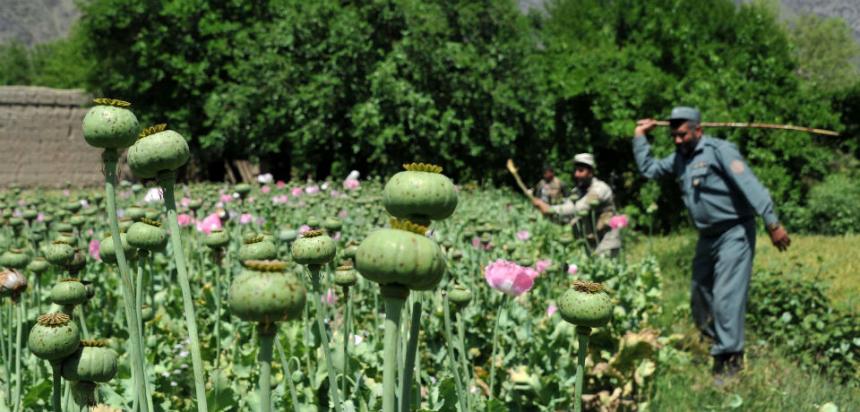
Witnesses who fled fighting in Nangarhar province told Reuters that hundreds of insurgents pledging allegiance to Islamic State pushed out the Taliban, scorching opium poppy fields that help to fund the Taliban’s campaign to overthrow the Afghan government.

They also distributed directives purportedly from Islamic State’s Middle East-based chief Abu Bakr al-Baghdadi, although it was not clear whether he issued them for the Afghan theater or if previous edicts may have been translated.

“They (ISIS loyalists) came in on many white pickup trucks mounted with big machine guns and fought the Taliban. The Taliban could not resist and fled,” said Haji Abdul Jan, a tribal elder from Achin district.

“Unlike the Taliban, they (ISIS) don’t force villagers to feed and house them. Instead, they have lots of cash in their pockets and spend it on food and luring young villagers to join them”, he said. ISIS forces have already banned the sale of cigarettes and have burned poppy fields, the staple of the traditional local economy.

Reports suggest many of the Islamic State forces in Afghanistan are former Taliban fighters who are following the money to the now more successful Caliphate. Black flags fly over villages and foreign Imams preach the extremist ISIS creed in Mosques, with translators on hand to render their words into local dialects. The scenes are redolent of foreign leaders active within Boko Haram, who deliver sermons and verdicts on punishments through translators.

One video captured by Nigerian security forces shows a man of presumed Sudanese origin handing down sharia law judgements before a large crowd of Nigerian villagers. After he finishes speaking, some men are flogged, others have their hands cut off, and one is buried to his neck and then stoned to death. The ISIS leader giving orders to the Boko Haram militants says: “God ordered all believers to enforce his punishments… God ordered us to cut off the hand of the thief and flog the adulterer and adulteress”.

Reuters Contributed to This Report

Iran Backs Taliban With Cash and Arms

June 12, 2015

Iran Backs Taliban With Cash and Arms, Wall Street Journal, Margherita Stancati, June 11, 2015

The White House-supported international nuclear talks with Iran that are scheduled to finish this month face world-wide criticism for potentially setting up a new regional dynamic in which Tehran, unfettered by punitive economic sanctions and flush with new resources, would be able to pursue an activist agenda through its proxies in and around the Middle East. Tehran’s growing ties to the Taliban is another sign of that, these critics say.

U.S. officials declined to comment specifically about closer Iran-Taliban ties, but have said that its diplomacy with Iran doesn’t alter its concerns about Iran’s destabilizing influence in the region. Director of National Intelligence James Clapper said in a recent letter to lawmakers that Iran was the “foremost state sponsor of terrorism.”

**************************

“Iran supplies us with whatever we need,” he said.

Afghan and Western officials say Tehran has quietly increased its supply of weapons, ammunition and funding to the Taliban, and is now recruiting and training their fighters, posing a new threat to Afghanistan’s fragile security.

Iran’s strategy in backing the Taliban is twofold, these officials say: countering U.S. influence in the region and providing a counterweight to Islamic State’s move into the Taliban’s territory in Afghanistan.

The Taliban’s aggressive military push and the new momentum toward peace negotiations between them and Kabul also raises the possibility that some of their members could eventually return to power.

“Iran is betting on the re-emergence of the Taliban,” said a Western diplomat. “They are uncertain about where Afghanistan is heading right now, so they are hedging their bets.”

Iranian officials didn’t respond to requests for comment, but Tehran has repeatedly denied providing financial or military aid to the Taliban in conversations with Afghan and Western officials. “Whenever we discussed it, they would deny it,” a former senior Afghan official said.

The developing Iran-Taliban alliance represents a new complication in Mr. Obama’s plans for both the Middle East and the future of Afghanistan, where the U.S. has been working to curb the Taliban’s role ahead of a planned withdrawal of all but 1,000 U.S. troops at the end of his presidency in 2016. At its peak in 2011 there were 100,000 U.S. troops.

The White House-supported international nuclear talks with Iran that are scheduled to finish this month face world-wide criticism for potentially setting up a new regional dynamic in which Tehran, unfettered by punitive economic sanctions and flush with new resources, would be able to pursue an activist agenda through its proxies in and around the Middle East. Tehran’s growing ties to the Taliban is another sign of that, these critics say.

Rep. Ed Royce (R., Calif.), chairman of the House Foreign Affairs Committee, said Iran’s support to the Taliban could increase if a nuclear deal is signed and Iran wins sanction relief.

“Across the region, Iran is stepping up its support for militants and rebel groups,” Mr. Royce said. “With billions in sanctions relief coming, that support goes into overdrive.”

Sen. John McCain (R., Ariz), chairman of the Armed Services Committee, said Iran’s increased support to the Taliban is a continuation of its aggressive behavior in Yemen, Syria, Iraq and Lebanon. “This is further evidence of the administration’s continued willful disregard for the facts on the ground in light of Iranian aggression in the region,” he said.

U.S. officials declined to comment specifically about closer Iran-Taliban ties, but have said that its diplomacy with Iran doesn’t alter its concerns about Iran’s destabilizing influence in the region. Director of National Intelligence James Clapper said in a recent letter to lawmakers that Iran was the “foremost state sponsor of terrorism.”

The Taliban have long used Pakistani territory as their main recruiting base and headquarters. But Afghan and Western officials say Iran, through its elite Revolutionary Guard Corps, has emerged as an important ally for the Taliban.

What’s more, they say, Tehran is turning to Afghan immigrants within its borders—a tactic it has also used to find new recruits to fight in support of President Bashar al-Assad’s regime in Syria.

Mr. Abdullah is one of those Iranian-backed Taliban fighters. After being detained for working as an illegal laborer in the Iranian port city of Bandar Abbas, Mr. Abdullah said he was approached by an Iranian intelligence officer.

“He asked me how much money I made, and that he would double my salary if I went to work for them in Afghanistan,” he said.

Mr. Abdullah said smugglers hired by Iran ferry supplies across the lawless borderlands where Iran, Afghanistan and Pakistan meet and deliver them to Taliban units in Afghan territory. He said his fighters receive weapons that include 82mm mortars, light machine guns, AK-47 rifles, rocket-propelled grenades and materials for making roadside bombs.

Military and intelligence officials see Iran’s support to the Taliban as an alliance of convenience. Historically, relations between Iran, a Shiite theocracy, and the hard-line Sunni Taliban have been fraught. Iran nearly went to war against the Taliban regime in 1998 after 10 of its diplomats were killed when their consulate in the northern Afghan city of Mazar-e Sharif was overrun.

Iran didn’t oppose the overthrow of the Taliban in 2001, and it has since maintained friendly relations with the Western-backed government in Kabul.

But Iran has long been uneasy with the U.S. military presence on its doorstep, and the Revolutionary Guard Corps have been delivering weapons to the Taliban since at least 2007, according to an October 2014 report by the U.S. Department of Defense.

Iran’s alliance with the Taliban took a new turn in June 2013 when Tehran formally invited a Taliban delegation to participate in a conference on Islam and to meet senior Iranian officials.

By the fall of that year, Afghan security officials said they had clear evidence that Iran was training Taliban fighters within its borders. Tehran now operates at least four Taliban training camps, according to Afghan officials and Mr. Abdullah, the Taliban commander. They are in the Iranian cities of Tehran, Mashhad and Zahedan and in the province of Kerman.

“At the beginning Iran was supporting Taliban financially,” said a senior Afghan official. “But now they are training and equipping them, too.”

The drawdown of U.S. and allied troops has made it easier for Taliban fighters and smugglers to cross the porous border undetected. “In the past, the U.S. had significant surveillance capabilities,” said Sayed Wahid Qattali, an influential politician from the western city Herat, where Iran has long had influence. “But now that the Americans have left, Iran is a lot freer.”

Iran formalized its alliance with the Taliban by allowing the group to open an office in Mashhad, maintaining a presence there since at least the beginning of 2014, a foreign official said. The office has gained so much clout that some foreign officials are now referring to it as the “Mashhad Shura,” a term used to describe the Taliban’s leadership councils.

One of the main points of contact between Tehran and the insurgency is head of the Taliban’s Qatar-based political office, Tayeb Agha, Afghan and foreign officials said. His most recent trip to Iran was in mid-May, the insurgent group said. The Taliban deny they receive support from Iran or any other foreign country, but say they want good relations with Afghanistan’s neighbors.

Iran’s backing of the Taliban has a strategic rationale. Tehran is already battling Islamic State, also known as Daesh, in Syria and Iraq, and it is wary of a new front line emerging close to its eastern border, Afghan officials say.

“Iran seeks to counter Daesh with the Taliban,” said an Afghan security official.

For the Taliban, Islamic State militants represent a threat of a different kind: they are competitors. Since an offshoot of Islamic State announced plans to expand in Afghanistan and Pakistan earlier this year, the new group has been actively recruiting fighters, many of whom are disaffected Taliban, say residents and Afghan officials.

This has pitted the two rival jihadist groups against each other, with clashes erupting between them in provinces including Helmand in the south, Nangarhar in the east and specifically involving Iran-backed Taliban in Farah, near Iran’s border, Afghan officials say.

Iranian funding gives more options to the militant group, support that is beginning to have an impact on the battlefield.

“If it wasn’t for Iran, I don’t think they would’ve been able to push an offensive like they are doing now,” said Antonio Giustozzi, a Taliban expert who has tracked Iran’s involvement in Afghanistan.

In recent months, security in Afghanistan’s west and north deteriorated sharply compared to last year, as Taliban fighters amassed in large numbers, testing the ability of Afghan troops to hold their ground.

It’s unclear, however, how far Iran will go to promote the Taliban.

“They wouldn’t want the Taliban to become too strong,” said a second foreign official. “They just want to make sure that they have some levers in their hands, because if the Taliban would win, God forbid, then they would lose all their leverage.”

Taliban claim insider attack at Kabul Airport that killed 3 US contractors

January 31, 2015

Taliban claim insider attack at Kabul Airport that killed 3 US contractors, Long War Journal, Bill Roggio, January 30, 2015

(Nothing to see here; they are just insurgents. Please see White House Struggles To Distinguish Between The Islamic State and Taliban Prisoner Swaps. — DM)

The Taliban claimed last evening’s attack at Kabul International Airport that killed three American contractors. The insider or green-on-blue attack, where a member of the Afghan security forces kills Coalition personnel, is the first of its kind recorded this year.

The attacker, who was dressed in an Afghan military uniform, killed the three contractors and wounded one, Major General Haq Nawaz Haqyar, the commander of Afghan police at the airport, told Pajhwok Afghan News. An Afghan was also killed in the shooting, Haqyar said. It is unclear if the Afghan who was killed was the shooter.

The US Department of Defense confirmed that three Americans and an Afghan were killed in the shooting.

Taliban spokesman Zabihullah Muhajid claimed the attack in two statements on his Twitter account, and said it was executed by Ihsanullah, an “infiltrator … from Laghman province working inside Kabul airport.”

“The attack killed 3 American terrorists and wounded 4 others before the infiltrator was martyred by return fire,” Muhajid claimed. The tweet included the hashtag “Khaibar,” a reference to the Taliban’s offensive that was announced in May 2014. The Taliban said it will continue to launch insider attacks, as well as encourage Afghan soldiers to execute such operations.

The Taliban have devoted significant effort into attempts to kill NATO troops and foreigners by infiltrating the ranks of Afghan security forces. Mullah Omar affirmed this in a statement released on Aug. 16, 2012, when he claimed that the group had “cleverly infiltrated in the ranks of the enemy according to the plan given to them last year [2011],” and he urged government officials and security personnel to defect to the Taliban as a matter of religious duty. Omar also noted that the Taliban had created the “Call and Guidance, Luring and Integration” department, “with branches … now operational all over the country,” to encourage defections. [See Threat Matrix report, Mullah Omar addresses green-on-blue attacks.]

Overall number of insider attacks still unknown

The last known insider attack took place on Sept. 16, 2014 in the western province of Farah. In that attack, an Afghan soldier gunned down a Coalition trainer inside a military base.

The previous attack occurred on Aug. 5 at a training center in Kabul. An Afghan soldier killed a US major general and wounded 16 more military personnel, including a US brigadier general, a German general, five British troops, and at least one Afghan officer. The Taliban did not claim credit for the attack, but praised the Afghan soldier who executed it.

There were four insider attacks recorded in Afghanistan in 2014, according to The Long War Journal’s statistics. The number of reported green-on-blue attacks on Coalition personnel in Afghanistan has dropped steeply since a peak of 44 in 2012. In 2013, there were 13 such attacks. [For in-depth information, see LWJ special report, Green-on-blue attacks in Afghanistan: the data.]

The decline in attacks may be due to several factors, including the continuing drawdown of Coalition personnel, reduced partnering with Afghan forces, and the adoption of heightened security measures in interactions between Coalition and Afghan forces.

However, many insider attacks remain unreported. If an attack by Afghan personnel does not result in a death or injury, and it is not reported in the press, the Coalition will not release a statement on the incident.

The International Security Assistance Force (ISAF), which was disbanded at the end of 2014, told The Long War Journal in March 2012 that “these statistics,” the number of attacks that did not result in a casualty, are “classified.”

“[A]ttacks by ANSF on Coalition Forces … either resulting in non-injury, injury or death … these stats as a whole (the total # attacks) are what is classified and not releasable,” Lieutenant Colonel Jimmie Cummings, ISAF’s former Press Desk Chief, told The Long War Journal. Cummings said that ISAF is “looking to declassify this number.” The number was never declassified.


US military continues to claim al Qaeda is ‘restricted’ to ‘isolated areas of northeastern Afghanistan’

November 19, 2014

US military continues to claim al Qaeda is ‘restricted’ to ‘isolated areas of northeastern Afghanistan,’ Long War Journal, Bill Roggio, November 19, 2014

A recently issued report on the status of Afghanistan by the US Department of Defense has described al Qaeda as being primarily confined to “isolated areas of northeastern Afghanistan.” But information on Afghan military and intelligence operations against the global jihadist group contradicts the US military’s assessment.

The Defense Department released its “Report on Progress Toward Security and Stability in Afghanistan” in October. The report, which “covers progress in Afghanistan from April 1 to September 30, 2014,” contains only nine mentions of al Qaeda. Five of those mentions simply reference the mission to conduct “counterterrorism operations against remnants of core al Qaeda and its affiliates.”

The US military’s report states that “[s]ustained ISAF [International Security Assistance Force] and ANSF [Afghan National Security Forces] counterterrorism operations prevented al Qaeda’s use of Afghanistan as a platform from which to launch transnational terrorist attacks during this reporting period.”

Then the report goes on to describe al Qaeda as “isolated” in the northeastern part of the country, a reference to the remote mountainous provinces of Kunar and Nuristan.

“Counterterrorism operations restricted al Qaeda’s presence to isolated areas of northeastern Afghanistan and limited access to other parts of the country,” the report continues. “These efforts forced al Qaeda in Afghanistan to focus on survival, rather than on operations against the West. Al Qaeda’s relationship with local Afghan Taliban organizations remains intact and is an area of concern.”

Al Qaeda’s operations contradict US military claims

For years, the US military has claimed that al Qaeda is constrained to operating in northeastern Afghanistan, but ISAF’s own data on raids against the terrorist group and its allies has indicated otherwise. According to ISAF press releases announcing operations between early 2007 and June 2013, al Qaeda and its allies were targeted 338 different times, in 25 of 34 of Afghanistan’s provinces. Those raids took place in 110 of Afghanistan’s nearly 400 districts. [See LWJ report, ISAF raids against al Qaeda and allies in Afghanistan 2007-2013.]

Continuing this pattern, while the latest DoD report, which covers the period between April 1 and Oct. 30 of this year, claims that al Qaeda is restricted to northeastern Afghanistan, reported Afghan military and intelligence operations during the same time period indicate that al Qaeda remains active beyond Kunar and Nuristan.

The most high-profile operation against al Qaeda was conducted in Nangarhar province in October. Afghanistan’s National Directorate of Security reported that al Qaeda leader Abu Bara al Kuwaiti was killed in a US airstrike in Lal Mandi in Nangarhar’s Nazyan district. The airstrike took place at the home of Abdul Samad Khanjari, who was described as al Qaeda’s military commander for the province.

Abu Bara likely served in al Qaeda’s General Command. He was close to al Qaeda emir Ayman al Zawahiri, and had served as an aide to Atiyah Abd al Rahman, al Qaeda’s former general manager who was killed in a US drone strike in Pakistan in August 2011. Abu Bara wrote Atiyah’s eulogy, which was published in Vanguards of Khorasan, al Qaeda’s official magazine. US intelligence officials have told The Long War Journal that Abu Bara was the most senior al Qaeda leader killed in Afghanistan in years. [See LWJ report, Senior al Qaeda leader reported killed in US airstrike in eastern Afghanistan.]

Another senior al Qaeda leader known to operate in Afghanistan is Qari Bilal. In August, Afghan officials said that he commands more than 300 fighters in the northern province of Kunduz, where several districts are controlled or contested by the Taliban. Bilal is also a member of the Islamic Movement of Uzbekistan, an al Qaeda-linked group that has integrated its operations with the Taliban in northern Afghanistan.

Bilal escaped from a Pakistani jail in 2010, entered Afghanistan, and was subsequently captured by ISAF special operations forces in 2011. He was later freed by Afghan officials and rejoined the fight. [See LWJ report, Senior IMU leader captured by ISAF in 2011 now leads fight in northern Afghanistan.]

This month, Afghan officials announced the capture of Eqbal al Tajiki, a citizen of Tajikistan who served with al Qaeda’s network in Kunduz. Sediq Sediqi, the spokesman for the Interior Ministry, said that Eqbal “is an active member of the al Qaeda network” who was “transferred by his colleagues to northern parts of Afghanistan to carry out terrorist activities,” according to Afghan Channel One TV. Sediqi said Eqbal had “received terrorist training in North Waziristan for three years.”

Eqbal may have been a member of the Qari Salim Group, “a high-profile Al Qaeda affiliate” that is commanded by Qari Khaluddin, Pajhwok Afghan News noted in October. Khaluddin “had recently trained in Pakistan’s city of Quetta.” The group is said to have been plotting to attack a military base in Kunduz.

Another al Qaeda group known to be operating in Afghanistan is Junood al Fida. In early October, Junood al Fida released video that purported to show the group taking control of the district of Registan in the southern province of Kandahar.

Junood al Fida, which is comprised of Baluch jihadists, has sworn loyalty to the Taliban but also describes Qaeda emir Ayman al Zawahiri as “Our Shaykh al Habeeb” [beloved leader] and its “Ameeruna” [our chief]. The group’s propaganda routinely attacks the US. [See LWJ reports, Baloch jihadist group in southern Afghanistan announces death of commander and Jihadist group loyal to Taliban, al Qaeda claims to have captured Afghan district.]


Afghanistan Going off the Rails as U.S. Withdrawal Speeds Up

October 31, 2014

Afghanistan Going off the Rails as U.S. Withdrawal Speeds Up, Foreign PolicyGopal Ratham, October 30, 2014

(Will today’s sideshow soon move to the circus big tent? — DM)

Insurgent attacks rise as poppy cultivation reaches a post-Taliban high in Afghanistan.

487292753-sigar-cropped_0

While the world’s eyes are trained on Iraq, Syria, and the fight against the Islamic State, a new report to Congress by the government’s reconstruction watchdog warns that Afghanistan, where U.S. troops have been fighting the Taliban and other insurgent groups in the longest war in American history, remains dangerously unstable even as the American military withdrawal accelerates.

Insurgent attacks have reached the highest levels since 2011, the Afghan army has sustained heavy combat losses and is experiencing high attrition rates, and opium poppy cultivation has more than doubled from its pre-1999 levels when the Taliban ruled the country, potentially undermining the Afghan state’s legitimacy even as the nation is experiencing budget shortfalls, the Office of the Special Inspector General for Afghanistan Reconstruction, or SIGAR, said in a quarterly report sent to Congress Thursday.

The dire warnings come as a new Afghan coalition government led by President Ashraf Ghani and his rival Abdullah Abdullah —  who assumed the role of a chief executive officer — has taken power after a contentious election and political standoff. The new government signed security agreements with the United States and NATO allowing international coalition forces to remain in the country after December. The Obama administration has said it will gradually withdraw the remaining 24,000 American troops, with the last leaving the country in 2016. The NATO forces are likely to follow the same pattern, leaving Afghan military forces to take full responsibility for security after 2016.

As part of that plan, U.S. Marines and British forces on Monday ended their combat mission and vacated two of their largest bases in Afghanistan — Camp Bastion and Camp Leatherneck — in the Helmand province, the site of some of the most violent battles of the 13-year-long war. Since the arrival of forces in 2001, about 350 Marines and 407 British troops have died in Helmand, theWashington Post reported. The departure of the last remaining coalition troops there was carried out in secrecy to prevent Taliban attacks — further evidence of the coalition’s tenuous security gains.

Poppy cultivation, a barometer of the underground economy that plays a role in financing the insurgency, is soaring, the report warned. About 209,000 hectares of land were under poppy cultivation in 2013, an increase of 36 percent from the previous year, the SIGAR report said, citing statistics from the U.N. Office of Drugs and Crime. The size of the crop has doubled since 1999, when the Taliban ruled the country and opium was grown on 91,000 hectares.

Afghanistan’s opium cultivation supports the equivalent of about 411,000 jobs, exceeding the overall size of the Afghan national security forces, and generates about $3 billion of revenue from drug exports, the report said.

The booming drug trade is potentially fueling the Taliban-led insurgency that still remains strong in the country’s south, southeast, and east. Citing U.N. statistics, the report said that the total number of attacks for the nine months ending Aug. 15 totaled 15,968, or 61 a day — the second-highest level since 2011 after the fall of the Taliban. Military officials and Western observers believe international terrorist groups and the Taliban took advantage of the months-long uncertainty over the outcome of Afghan presidential elections that finally ended Sept. 29 with the formation of the coalition government led by Ghani.

Afghan security forces, which have been leading the fight against the Taliban, face high rates of attrition and combat casualties, the report said.

Between September 2013 and August 2014, more than 36,000 Afghan army personnel were dropped from rolls, and between March 2012 and August 2014 more than 2,850 troops were killed in action with another 14,600 wounded, the report said.

The report, in a strong slap at the Pentagon, said the U.S.-led coalition had made it difficult to independent assessments of the capability of the Afghan forces by abruptly classifying details of the country’s military capabilities. That raises the disturbing possibility that the United States is trying to paper over significant and lingering problems with the Afghan forces already struggling to fill the security vacuum left by the departing American forces.

The inspector general’s office “is deeply troubled by the decision” of the international coalition “to classify the executive summary of the report that assesses the capability of the ANSF which were unclassified prior to this quarter,” the report said. “ISAF’s classification of the report summary deprives the American people of an essential tool to measure the success or failure of the single most costly feature of the Afghanistan reconstruction effort.”

The coalition military decided to classify the Afghan military capability “to address potential concerns about operational security,” an ISAF military official said in an email. “After careful review, it was determined that the entirety of the report was classified to include the executive summary which contained Afghan-provided readiness information.”

Providing such information openly could jeopardize Afghan security forces, the official said, adding that SIGAR will continue to get the information it needs to carry out its congressionally mandated duties.

Unlike previous years, in 2014 the Taliban has attacked Afghan forces on multiple fronts, said Omar Samad, a former Afghan ambassador to France, who is now president of Silk Road Consulting, a Washington-based geopolitical advisory firm.

Although such attacks have dealt a psychological blow to Afghan forces, it’s not clear if the Taliban has been able to retain control of territories, said Samad who just returned from Kabul.

“What will make a big difference in the next year or two is the effective use of air power,” Samad said. “We don’t know yet whether ANSF who are in training mode now will have the right equipment and training to carry out operations needed or whether they’ll have to be complemented by NATO forces after 2014.”

To make matters worse for the new Afghan government, the country’s finance ministry is facing serious budget shortfalls, the report said. For the first seven months of the Afghan financial year that began Dec. 21, 2013, the domestic revenues missed government targets by 22 percent and declined 3.8 percent compared with the same period last year, the report said.

“I don’t think it’s a surprise to Afghans and those who follow it closely that this year would be a challenging year,” Samad said. Mismanagement of the country’s economy in the last years of former President Hamid Karzai have made the challenges “bigger than expected,” he added.

Jen Psaki on withdrawal from Afghanistan

October 3, 2014

Jen Psaki on withdrawal from Afghanistan, You Tube, October 2, 2014

(Please see also Obama’s Ex-CIA Chief Slams White House for ‘Hesitation and Half Steps’ — DM)