The new antisemitism? Or extreme political correctness?

Posted November 17, 2017 by anneinpt
Categories: Anti-Zionism, Antisemitism and the left, Antisemitism in academia, Jewish left

Tags: , , , , ,

The new antisemitism? Or extreme political correctness? | Anne’s Opinions, 16th November 2017

Linda Sarsour is an extreme leftist, “progressive” American activist with a nasty history of supporting terror and antisemitism cloaked as anti-Zionism. The latest saga in which she has become involved is her invitation by New York’s New School to speak at a panel on …. you guessed it… antisemitism – along with that other admirer of Israel, Jewish Voice for Peace (which is hardly Jewish, nor promotes peace).

The New School, a Manhattan- based university, is sponsoring the event in cooperation with the Jewish Voice for Peace and Jacobin Magazine, both of which promote causes of the radical Left.

Sarsour is Muslim activist and unrelenting critic of Israel who supports a boycott against the Jewish state. Among numerous other controversial statements, she tweeted in 2012, “Nothing is creepier than Zionism.”

Rebecca Vilkomerson, executive director of JVP, is also scheduled to speak at the event, which will be moderated by Amy Goodman, host of the radio program Democracy Now.

The mind boggles. Jason Greenblatt, the head of the ADL, tweeted:

Israellycool explained the Tweet for non-Yanks:

It’s just a shame he used a US-specific reference and spelled ‘Oscar Mayer’ (the American meat and cold cut production company, owned by Kraft Heinz) as ‘Oscar Meyer’

Israellycool describes these anti-Israel “activists” thus:

Because the speakers include Linda Sarsour, who denies beingantisemitic, but boy does she hatethose who support a Jewish homeland.

And Rebecca Vilkomerson, executive director of Jewish Voice For Peace (JVP), who sure love their murderers of Jews.


Linda Sarsour is also not the great feminist that she promotes herself as being, as the Tower notes:

In a critique of Linda Sarsour, Julie Lenarz, a senior fellow at The Israel Project, observed this past June in The Tower, “Linda Sarsour is not a feminist. She supports a culture that is forcing millions of women into religious slavery. She is a false apostle selling her regressive views to a blinded liberal audience.”

As for Rebecca Vilkomerson, you can read some of her anti-Israel activity and comments here, and below is a clip of her speaking at J Street, promoting BDS:

The New School did not seem to see the enormity of the problem, and assured the Jerusalem Post wide-eyed and disingenuously of their good intentions:

The New School responded in writing to The Jerusalem Post, saying the institution “is founded on principles of tolerance, social justice, and free intellectual exchange. These values remain central to our mission today, and we believe that engaging in debate on a range of issues and ideas is critical to our role as an academic institution”.

A representative who spoke on behalf of the school added: “We understand that there are different views on this issue.

For that reason, the Creative Publishing and Critical Journalism Program has invited representatives of the magazine Tablet to organize an event to present some of these different views on this important topic; the program has also invited to participate Jonathan Greenblatt, national director and CEO of the Anti-Defamation League”.

The ADL declined the invitation.

Liel Leibowitz in The Tablet magazine launched a blistering attack on the New School for twisted thinking that led to their invitations:

Founded in 1919 by progressive New York intellectuals, The New School rose to prominence two decades later, when it took in a small band of Jewish intellectuals fleeing the Nazis. Eminences like Hannah Arednt, Leo Strauss, and Erich Fromm all benefited from the institution’s commitment to taking in the victims of the world’s most ancient and persistent hatred and giving them a place to pursue their ideas in peace.

How things change: Later this month, the university will co-sponsor a panel on anti-Semitism that will feature, among others, Linda Sarsour, who opined that “nothing is creepier than Zionism,” praised Nation of Islam leader Louis Farrakhan, and believes one cannot support the right of Jews to a homeland of their own and still be a feminist. Alongside Sarsour will be Rebecca Vilkomerson, who heads the odious Jewish Voice for Peace. The group, as an ADL report aptly put it, “uses its Jewish identity to shield the anti-Israel movement from allegations of anti-Semitism and to provide the movement with a veneer of legitimacy.” Among JVP’s recent achievements are the enthusiastic support of Rasmea Odeh, a Palestinian terrorist convicted of a bombing attack on a Jerusalem supermarket that left two young students dead and who was recently deported from the United States after lying about the incident on her immigration forms. The group is also a frequent supporter, despite its allegations to the contrary, of Alison Weir, an activist robustly promoting modern-day blood libels against Jews.

It goes without saying, sadly, that the event—which is co-sponsored by prominent progressive institutions like the radical magazine Jacobin—features not a single actual scholar of anti-Semitism, nor one voice that doesn’t belong comfortably in the deep left.

The New School, scrambling to respond to the widely broadcast negative reactions it received, offered to organize a second panel “to discuss these issues”:

We understand that there are differing views on the issue of anti-Semitism. For that reason, the Creative Publishing and Critical Journalism Program has invited representatives of the magazine Tablet to organize an event to present some of these differing views on this important topic; the program has also invited to participate Jonathan Greenblatt, National Director and CEO of the Anti-Defamation League.

to which Liel Leibowitz at The Tablet angrily responded:

The aforementioned invitation arrived several moments later, to myself and other editors at Tablet, strongly suggesting that it had more to do with stanching the bleeding of a public relations problem that seriously resolving a brutal moral error. Even more insulting and infuriating is the fact that the invitation suggests that the New School sees this as a matter of balancing out two equally legitimate sides, each with its own point of view.

There ought never to be a debate between those who fan the flames of hatred and those who suffer its consequences. The New School of all institutions ought to know this, and it’s a shame that this once revered institution now peddles in the bluntest form of moral relativism rather than speak out against bigotry of all stripes.

My question remains: can the organizers at the New School really be so ignorant and obtuse as to think there is no problem with the panel of speakers at the antisemitism debate? Do they honestly think having another panel to discuss these “controversial issues” will balance out the problem?

Either they are so open-minded their brains fell out. Or they are outright antisemites. I still have not made up my mind.
Lies and more lies

Posted November 16, 2017 by Peter Hofman
Categories: Uncategorized

Fall of Raqqa: The secret deal – BBC News

BREAKING: Judge Roy Moore’s Lawyer Hold VERY IMPORTANT Press Conference

Posted November 16, 2017 by danmillerinpanama
Categories: Forgery?, Judge Roy Moore, Sex predator

Tags: , ,

BREAKING: Judge Roy Moore’s Lawyer Hold VERY IMPORTANT Press Conference, Golden State Times via YouTube, November 15, 2017

Congress, Trump Admin Push Cutting Off U.S. Aid to Palestinians, Iranian-Tied Terrorists

Posted November 15, 2017 by danmillerinpanama
Categories: Palestinian funding, Taylor Force Act, Trump administration, Trump and Palestinians, U.S. Congress

Tags: , , , ,

Congress, Trump Admin Push Cutting Off U.S. Aid to Palestinians, Iranian-Tied Terrorists, Washington Free Beacon, November 15, 2017

(How, if at all, does the legislation mesh with Hamas – Palestinian Authority reconciliation? — DM

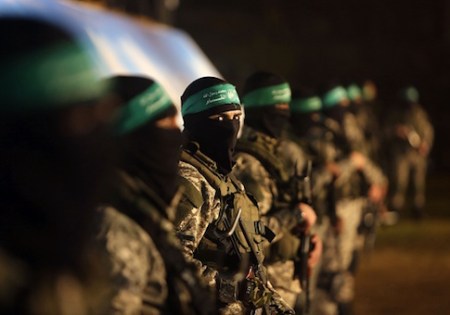
Palestinian members of the Ezzedine al-Qassam Brigades, the armed wing of the Hamas movement / Getty Images

In addition to the Taylor Force Act, House lawmakers on the Foreign Affairs Committee approved a new bill that would require the U.S. government to expose the identities of foreign states, individuals, and other actors who have provided material support to Hamas and other Palestinian terror groups.

The proposed legislation—which would pave the way for the United States to suspend aid and seize the assets of any foreign entity found to be financially helping these terror groups—is said to be part of an effort to combat Iran’s efforts to forge closer ties with Hamas, Hezbollah, and other anti-Israel terrorist actors.

****************************

Congressional leaders advanced several key pieces of legislation on Wednesday that would cut off U.S. taxpayer aid to the Palestinians and crackdown on Iran’s financial support for the terror group Hamas, legislative efforts that are being helped along by the Trump administration, according to multiple U.S. officials who spoke to the Washington Free Beacon.

 The House Foreign Affairs Committee, in a bipartisan vote, approved three pieces of legislation that will cut off U.S. aid to the Palestinian government and help prevent American businesses from doing business with Hamas and other Iranian-tied terror groups.

One of the bills, the Taylor Force Act, which would slash U.S. aid to the Palestinians until they stop using the money to pay salaries to imprisoned terrorists and their families, received support from the White House, which is said to have played a central role in ensuring the proposed legislation garnered bipartisan support.

The new bills are said to be part of a larger effort by congressional leaders to shutdown longstanding U.S. aid programs that have supported terrorist fighters and organizations across the Middle East. The advancement of the Taylor Force Act and these other bills is meant to send a message that the United States will no longer keep its coffers open to those who enable terrorism against Israel and U.S. allies in the region.

The Taylor Force Act, which has been working its way through Congress for some time, has become the centerpiece of the joint effort by Congress and the Trump administration to rein in Palestinian intransigence, U.S. officials told the Free Beacon.

“The Trump administration strongly supports the Taylor Force Act, and the White House has communicated that support to Congress and in public statements,” Victoria Coates, a senior White House National Security Council member who played a central role in pushing the legislation, told the Free Beacon.

Coates said that recent reports alleging the Trump administration sought to water down the bill in order to avoid upsetting the Palestinian government and negatively impacting diplomatic efforts to restart the Israeli-Palestinian peace process are false.

“Reports to the contrary, including that anyone at the White House tried to water this legislation down, are false,” Coates maintained. “Palestinian Authority payments to terrorists and their families that incentivize violence are unacceptable, and must stop.”

Cutting off U.S. aid that helps support Palestinian terrorists is just one part of an effort by the Trump administration to help reform the Palestinian government and legitimize its leaders.

“We also believe that economic development in the West Bank and Gaza Strip can play an important role in preparing the region for a lasting peace agreement,” Coates aid.  “To this end, we have invested and encouraged other partners to invest in critical infrastructure that will underpin economic growth, including through partnerships with local governments, the private sector, and a wide range of other partners.”

The Trump administration reprogrammed $13 million last month to help support a waste-water treatment facility in the Palestinian-controlled city of Jericho, according to Coates, who said this money will help Palestinian farmers support their crops.

“At the president’s direction we want to continue this important work,” Coates said. “But all of our partners must be engaged in building a foundation for peace, not for continued incitement and violence.”

In addition to the Taylor Force Act, House lawmakers on the Foreign Affairs Committee approved a new bill that would require the U.S. government to expose the identities of foreign states, individuals, and other actors who have provided material support to Hamas and other Palestinian terror groups.

The proposed legislation—which would pave the way for the United States to suspend aid and seize the assets of any foreign entity found to be financially helping these terror groups—is said to be part of an effort to combat Iran’s efforts to forge closer ties with Hamas, Hezbollah, and other anti-Israel terrorist actors.

A third bill that made its way out of the committee seeks to crackdown on Hamas’ use of human shields in battle. The legislation would, “hold Hamas and its sponsor, Iran, accountable for this monstrous practice,” according to Rep. Ed Royce (R, Calif.), the committee’s chairman.

Rep. Brian Mast (R., Fla.), a U.S. combat veteran and architect of the bill to expose Hamas’ financial backers, told the Free Beacon that Congress is pursuing every avenue to strangle Iran’s financial lifelines.

“A lot of the impetus is Iran,” Mast told the Free Beacon.

“The term often used is Iranian proxies. But that’s the wrong term to use. It really needs to be classified as Iranian colonization of the Middle East,” Mast said, explaining that Iran’s presence can be seen among every bad actor in the region. “This is colonization. They have a very long-term view. Hezbollah has been at this for 30 plus years. They have a long term goal and its colonization.”

Mast also expressed support for the Taylor Force Act, which he said does not go far enough in cutting off U.S. aid to the Palestinians.

If Mast had his way, “there wouldn’t be resources going towards Palestinians labeled aid or anything else.”

“To think we’re going to take a dollar out of somebody’s pocket here and send it over there to somebody’s family because they went out there and bombed a boss of shot somebody, or ran somebody over with a car, that goes way beyond the realm of common sense,” Mast said.

Rep. Doug Lamborn (R., Colo.), another backer of cutting U.S. aid that helps Palestinian terrorists, expressed optimism about the prospect of the full Congress passing the legislation.

“I am very pleased that the House Foreign Affairs Committee was able to pass the Taylor Force Act with bipartisan support,” Lamborn said. “This is an important first step in stopping U.S. tax dollars from funding Palestinian terrorism.”

“The next step is to bring it to the House floor and ultimately send it to the president’s desk,” Lamborn said. “Passing the Taylor Force Act is the moral and right thing to do in a world that is riddled with terrorism, it sends an important message to the world: America will not tolerate foreign entities that receive U.S. aid to finance terrorism.”

Susan Rice Still in Denial Over Failed Tenure

Posted November 15, 2017 by danmillerinpanama
Categories: Susan Rice, Trump and China, Trump and diplomacy, Trump and North Korea, Trump and South China sea

Tags: , , , ,

Susan Rice Still in Denial Over Failed Tenure, FrontPage MagazineJoseph Klein, November 15, 2017

Evidently, Ms. Rice does not realize that it is unwise to engage in public shaming of the visiting president’s host on what the host considers to be a sensitive matter of inviolate national sovereignty that can be more candidly discussed in private. This is especially true when the visiting president is trying to secure the host’s cooperation on issues of more direct mutual concern such as North Korea.

Rice complains that President Trump failed to mention publicly any concern about the disputed South China Sea issue. Contradicting herself, she then criticizes President Trump further on in the same column for his “hubristic offer late in his trip to mediate China’s disputes with its neighbors in the South China Sea.” Offering to mediate a dispute would appear to show some concern that it be resolved peacefully.

**************************

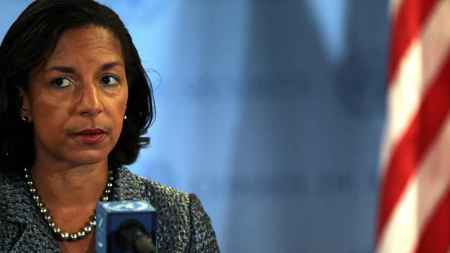
Susan Rice, former national security adviser and ambassador to the United Nations during the Obama administration, is at it again. Following up on her op-ed column in the New York Times last August in which she advised that we learn to “tolerate nuclear weapons in North Korea,” Ms. Rice has written another op-ed column for the New York Times on November 14th entitled “Making China Great Again.”  Her thesis is that “Chinese leaders played Trump like a fiddle, catering to his insatiable ego and substituting pomp and circumstance for substance.” She argues that President Trump “welcomed a rote recitation of China’s longstanding rejection of a nuclear North Korea and failed to extract new concessions or promises.”

Ms. Rice speaks as if she were in the room during the private conversations between President Trump and China’s President Xi Jinping or had the kind of access to intercepted confidential communications she was used to having during her tenure as national security adviser. Alternatively, Ms. Rice may simply be projecting onto President Trump the failures of her own boss Barack Obama in his dealings with China. In any case, as she displayed in her previous column, Ms. Rice simply does not know what she is talking about.

For example, Ms. Rice complains that President Trump failed to mention publicly any concern about the disputed South China Sea issue. Contradicting herself, she then criticizes President Trump further on in the same column for his “hubristic offer late in his trip to mediate China’s disputes with its neighbors in the South China Sea.” Offering to mediate a dispute would appear to show some concern that it be resolved peacefully.

In any event, had Ms. Rice bothered to take a look at the White House’s detailed public read-out of the meetings between President Trump and Chinese President Xi Jinping, she would have found that the South China Sea issue was indeed discussed at some length: “President Trump underscored the critical importance of the peaceful resolution of disputes, unimpeded lawful commerce, and respect for international law in the East and South China Sea, including freedom of navigation and overflight and other lawful uses of the sea, and raised concerns about militarization of outposts in the South China Sea.”

Evidently, Ms. Rice does not realize that it is unwise to engage in public shaming of the visiting president’s host on what the host considers to be a sensitive matter of inviolate national sovereignty that can be more candidly discussed in private. This is especially true when the visiting president is trying to secure the host’s cooperation on issues of more direct mutual concern such as North Korea.

Ms. Rice argues that there was not enough diplomatic preparation for the summit meeting between the two heads of state to yield anything worthwhile in substance. Again, she did not do her homework. Here for her edification is a relevant excerpt from the White House read-out that describes how China and the United States have structured their interactions since President Xi’s meeting last April with President Trump in Florida: “During their April meeting, the two presidents set up the United States-China Comprehensive Dialogue with four pillars: the Diplomatic and Security Dialogue; the Comprehensive Economic Dialogue; the Law Enforcement and Cybersecurity Dialogue; and the Social and Cultural Dialogue. Each of these dialogues have met since April, to prepare for President Trump’s state visit and produce meaningful results.”

Ms. Rice complains that “Mr. Trump showered President Xi Jinping of China with embarrassing accolades” and that “scenes of an American president kowtowing in China to a Chinese president sent chills down the spines of Asia experts and United States allies who have relied on America to balance and sometimes counter an increasingly assertive China.” That unsubstantiated assertion does not square with the warm reception and praise that President Trump received from the leaders of such allies as Japan, South Korea, the Philippines and Australia during his trip. It is also curious that Ms. Rice would criticize pomp and ceremony surrounding a state visit involving a U.S. president and President Xi. After all, Barack Obama lavished President Xi with a star-studded formal White House state dinner and a 21-gun salute during the Chinese president’s visit to Washington in 2015. Also, when Ms. Rice laments that President Trump “hailed Mr. Xi’s consolidation of authoritarian power,” did she somehow forget Obama’s similar praise of President Xi in 2014?  “He has consolidated power faster and more comprehensively than probably anybody since Deng Xiaoping,” Obama said back then, referring to China’s leader from 1978 to 1992. “And everybody’s been impressed by his … clout inside of China after only a year and a half or two years.”

Then there is the North Korean crisis, upon which Susan Rice opines that President Trump failed to make any progress with President Xi. Ms. Rice had contributed to the worsening of the North Korea problem in the first place by helping to formulate and sell the flawed approach known as “strategic patience” that guided Obama’s feckless foreign policy in North Korea. In doing so, the Obama administration allowed China to continue doing business as usual with North Korea. That stopped under President Trump. Even before President Trump arrived in Beijing, he had managed to wrest more concessions from China regarding its dealings with North Korea than Obama had managed to do in eight years. President Trump’s “strategic impatience” has already paid off with new UN sanctions that even Ms. Rice had to concede in her August op-ed column were “especially potent, closing loopholes and cutting off important funding for the North.”

Since August, with the help of the able diplomacy of the current U.S. ambassador to the UN, Nikki Haley, the UN Security Council has unanimously imposed even tighter restrictions on exports to and imports from North Korea, as well as on North Korean workers continuing to live and work in other countries and earn foreign currency for use by the cash-starved North Korean regime. President Trump reportedly asked for even more stringent measures during his private talks in Beijing with President Xi that would increase China’s economic pressure on North Korea. Also, they discussed the full and strict implementation of all UN Security Council resolutions on North Korea passed to date, with which China has shown evidence of compliance.

By contrast, the Obama administration indulged itself with the fantasy that UN resolutions and multilateral or bilateral agreements on paper are an end unto themselves. Susan Rice boasts in her November 14th column, for instance, of what she called the “historic United States-China deal on climate change, which led to the Paris Agreement.” In reality, this 2015 deal was an example of how Chinese leaders played Obama like a fiddle.

China, the world’s leading emitter of greenhouse gases, promised only that its total carbon dioxide emissions would peak by 2030. Obama committed the United States to significant emissions cuts of 26 to 28 percent below 2005 levels by 2025, during the same period that China’s emissions would still be rising. Obama also committed to transfer many billions of dollars more of American taxpayers’ money to developing countries who have made meaningless, non-binding pledges that would do nothing to change the trajectory they were on anyway. The Paris Agreement that Susan Rice is so proud of drastically tied down only the developed countries’ fossil fuel use in the immediate future while picking their taxpayers’ pockets at the same time. President Trump wisely pulled the plug on the U.S.’s involvement in a massive give-away to bribe the so-called developing nations to play along with a feel-good “universal” agreement.

Susan Rice is using the platform provided her by the New York Times to criticize President Trump for one main reason. She sees President Trump’s attempt to confront the issues head-on that his predecessor repeatedly glossed over as an attack on the Obama administration’s ‘legacy.’ What she is defending, however, is a failed foreign policy and misnamed “National Security Strategy” her office issued in 2015. In her November 14th op-ed column, she provides a checklist of all the problems she says President Trump should have addressed with China’s president, many of which he did. However, there is no self-assessment of all the missed opportunities during the Obama administration to move the ball forward on any of these problems, particularly North Korea.

President Trump is willing to make hard choices if he is convinced that in the end they will advance America’s vital national interests and the welfare of the American people, which he values above all else. This is very refreshing after experiencing eight years of Obama’s and Rice’s ‘leading from behind,’ ‘strategic patience,’ apologies for past U.S actions, and muddled thinking.

Haley Calls Venezuela a Global Threat: It Is ‘An Increasingly Violent Narco-State’

Posted November 15, 2017 by danmillerinpanama
Categories: Nikki Haley, United Nations and Venezuela, Venezuelan dictatorship, Venezuelan economy

Tags: , , ,

Haley Calls Venezuela a Global Threat: It Is ‘An Increasingly Violent Narco-State’, Washington Free Beacon, November 15, 2017

(The UN has neither the time nor the energy to consider Venezuela. Doing so would allow less time to focus on the Israel, well known by most UN member states to be the main if not only cause of all evil. Please see also, The UN – here we go again. — DM)

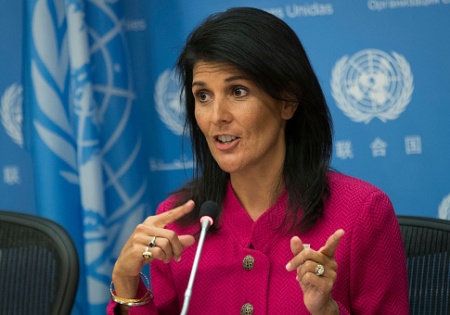
Nikki Haley / Getty Images

United Nations Ambassador Nikki Haley said Monday that Venezuela is “an increasingly violent narco-state” and a threat to the world during an informal Security Council meeting boycotted by four countries.

The Security Council meeting, boycotted by Russia, China, Egypt and Bolivia, included strong condemnation from Haley about Venezuela using pressure to keep council members from attending the meeting, according to the Associated Press:

Venezuela’s U.N. ambassador, Rafael Ramirez, denounced the session, telling reporters: “This is a hostile act from the United States and an interference that violates the sovereignty principles of a country that is a member of the United Nations.”

The situation in Venezuela is not on the Security Council’s official agenda — a point stressed by Ramirez and Bolivia’s U.N. ambassador — but Haley said she will continue “to use the convening power of the United Nations to draw attention to this crisis.”

The informal meeting sharply divided the 15 members on the U.N.’s most powerful body. In addition to the four countries that boycotted, diplomats noted that Ethiopia and Uruguay indicated the meeting shouldn’t have been held and Senegal didn’t speak.

Italy and the United States organized the meeting by circulating a note to other council members about hearing first-hand accounts of the deteriorating political and economic situation in oil-rich Venezuela. The note also said the meeting would discuss the international community’s role in finding political solutions.

“The situation unfolding in Venezuela is more than a human tragedy,” Haley said. “The crisis in Venezuela today poses a direct threat to international peace and security. Venezuela is an increasingly violent narco-state that threatens the region, the hemisphere and the world.”

Haley also addressed the Venezuelan people and said that President Nicolas Maduro’s socialist government has caused them to suffer high inflation rates after previously having the highest GDP-per-capita in the region.

“[Venezuela] cares only for preserving its own power, rather than promoting the freedom and welfare of its people,” Haley said.

“Today, families struggle to live on just about eight dollars a month,” Haley added. “The result is that Venezuela’s neighbors are paying the bill for the violence and poverty the corrupt Maduro regime has inflicted on its people.”

France: Muslims In, Jews Out

Posted November 15, 2017 by danmillerinpanama
Categories: Antisemitism in France, Islam and Jews, Islam in France, Islamic invasion, Islamisation of France

Tags: , , , ,

France: Muslims In, Jews Out, Gatestone InstituteGiulio Meotti, November 15, 2017

Anti-Semitism has returned as one of Europe’s worst diseases. France hosts Europe’s largest Jewish community, and Jews have been fleeing the suburbs to either emigrate or move to gentrified districts of the cities, where they feel more protected. What happens to the Jews will have a seismic impact on the entire continent.

French Jews are now not only threatened in their synagogues and schools, but in their homes. A Jewish family was recently held hostage, beaten and robbed in their home in the suburb of Seine Saint-Denis. Before that, a retired Jewish doctor and schoolteacher, Sarah Halimi, was beaten and thrown to her death from her balcony, in the Belleville district of Paris. The man who murdered her, while yelling “Allahu Akbar” (“Allah is Greater”), was a Muslim neighbor. Two Jewish brothers were recently attacked on a Paris street by men wielding a hacksaw and shouting “You dirty Jews! You are going to die“.

The French government has launched an operation to protect 800 synagogues, schools and community centers. But as Le Monde explains, there is little it can do to protect Jews on the streets and in their homes. Islamic anti-Semitism is devouring the French Republic.

Anti-Semitism has revolutionized France — both its geography and demography. Jew-hate has become the gateway to the “France soumise” — the submission of France.

**********************************

Suburbs have become transformed into one of the most visible signs of the Islamization of France. Anti-Semitism is devouring the French Republic.

While Jewish symbols disappear from France, Islamic symbols proliferate, from burkinis on the beaches to veils in the workplace. Jews who have not fled France are trying to become “invisible”.

France’s suburbs are rapidly becoming apartheid societies. Hatred of Jews has become the gateway to “la France soumise” — the submission of France.

Suburbs (“banlieues”) — distant from the affluent boulevards and bistros of Paris — form the “other France“. They are the “peripheral France“, (“La France Périphérique”) as the geographer Christophe Guilluy calls them in an important book. They are where “living together” between communities has really been tested.

In the last 20 years, these French suburbs have not only become “concentrations of poverty and social isolation“, but have gone from being some of France’s most densely-populated Jewish areas to “lost territories of the Republic“, according to the great historian Georges Bensoussan, in his book, Les territoires perdus de la République.

These suburbs have become transformed into one of the most visible signs of the Islamization of France.

Anti-Semitism has returned as one of Europe’s worst diseases. France hosts Europe’s largest Jewish community, and Jews have been fleeing the suburbs to either emigrate or move to gentrified districts of the cities, where they feel more protected. What happens to the Jews will have a seismic impact on the entire continent.

In the Parisian suburb of Bagneux, someone recently vandalized the memorial plaque for Ilan Halimi, a young Jew who was kidnapped, tortured and murdered by a “barbarian gang” in 2006, just for being a Jew. At the time, it was France’s first case of murderous anti-Semitism in many years. After it, Islamists murdered Jews at a school in Toulouse and a kosher supermarket in Paris.

As Le Monde reported in a chilling new inquiry, anti-Semitism now knocks daily at the doors of the French Jews. It has been creating a serious migratory trend: French Jews have become “internal refugees“.

French Jews are now not only threatened in their synagogues and schools, but in their homes. A Jewish family was recently held hostage, beaten and robbed in their home in the suburb of Seine Saint-Denis. Before that, a retired Jewish doctor and schoolteacher, Sarah Halimi, was beaten and thrown to her death from her balcony, in the Belleville district of Paris. The man who murdered her, while yelling “Allahu Akbar” (“Allah is Greater”), was a Muslim neighbor. Two Jewish brothers were recently attacked on a Paris street by men wielding a hacksaw and shouting “You dirty Jews! You are going to die“.

Recently, “Paul” received a letter containing death threats, in his mailbox at Noisy-le-Grand. The note said, “Allahu Akbar” and contained a 9mm bullet. The next day brought second letter. That one said, “you will all die”. This time it contained the bullet of a Kalashnikov rifle. Many Jewish families, warns Le Monde, are under pressure. In Garges-lès-Gonesse (Val-d’Oise), young Jewish men who had built a temporary autumnal hut (a sukkah) in the yard of their synagogue were attacked in the neighborhood by people shouting, “Dirty Jews”.

Historic Jewish quarters have been emptied. Jérôme Fourquet and Sylvain Manternach, in their book, “L’an prochain à Jérusalem?” (“Next Year in Jerusalem?”) tell of Jewish children leaving public schools in favor of private ones. Organizations have been helping 400 Jewish families relocate their children into private schools, to be more secure.

Between 2005-2015, there were 4,092 anti-Semitic attacks in France. According to a September study by the Foundation for Political Innovation, 60% of Jews in France said they were “worried about being physically attacked in the street as Jews.”

After the Paris terror attacks in 2015, a Jewish Agency-affiliated think tank prepared a plan to help 120,000 French Jews emigrate to Israel. There were 5,000 departures in 2016 and 7,900 in 2015. In addition to a total of 20,000 Jews emigrating from France to Israel in the past three years, there has also been an internal “high mobility” shift, from the eastern to the western part of Paris — to the sixteenth and seventeenth arrondissements. In the last 10 years, “60,000 of the 350,000 Jews of the Île-de-France have moved”, according to Sammy Ghozlan, President of the National Office of Vigilance against Anti-Semitism.

The French government has launched an operation to protect 800 synagogues, schools and community centers. But as Le Monde explains, there is little it can do to protect Jews on the streets and in their homes. Islamic anti-Semitism is devouring the French Republic.

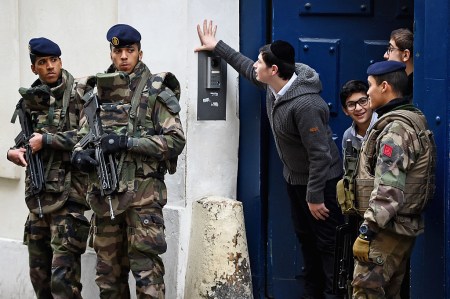
Pictured: French soldiers guard a Jewish school in Paris. (Photo by Jeff J Mitchell/Getty Images)

According to a study conducted by Ifop, “exposure to anti-Semitic violence is highly correlated with wearing a kippa”. The Jewish skullcap has disappeared from public view in many areas of France. In Marseille, it was explicit — a local Jewish leader called on Jews, for their safety, to avoid wearing the Jewish symbols in public. While Jewish symbols disappear, Islamic symbols proliferate, from burkinis on the beaches to the veils at the workplace. Jews who did not flee France are trying to become “invisible“.

Until the year 2000, the Parisian suburb of Bondy “was nice and quiet, with 250 to 300 Jewish families, and synagogues full on the Sabbath. Now, only about a hundred Jewish families remain”, said a local resident, Alain Benhamou, who left after he saw the words “dirty Jews” painted on the walls.

Jewish families have also been leaving Toulouse due to anti-Semitism. Former Prime Minister Manuel Valls talked about “a territorial, ethnic and social apartheid”. France’s suburbs are rapidly becoming apartheid societies.

A few days ago, French authorities sentenced Abdelkader Merah, the brother of the terrorist who murdered four Jews in Toulouse, to 20 years in prison for being part of a criminal terrorist conspiracy. The trial was called by a French scholar of Islam, Gilles Kepel, a “biopsy” of the “other France”: the Islamized, de-Judaized, peripheral France. “It is striking that after decades spent in France, [Merah’s] mother still speaks very poor French and that it was necessary to call a translator to the court”, Kepel said.

In Seine-Saint-Denis, 40% of the inhabitants are now Muslim. The result? Historical Jewish communities in towns such as La Courneuve, Aubervilliers, Stains, Pierrefitte-sur-Seine, Trappes, Aulnay-sous-Bois, Le Blanc-Mesnil and Saint Denis are now vanishing. Because of the lack of security, in places such as Courneuve, where there were 600 to 700 Jewish families, there are now fewer than 100. For many of these Jews, it is a second escape.

70% of the half-million Jews in France are Sephardic — those who were expelled from Spain in 1492 and who fled to the Middle East, North Africa and Turkey, rather than to Europe. They came to France between 1956 and 1962, when Algeria, Morocco and Tunisia gained independence — as did, for example, two French Nobel Prize laureates for physics, Claude Cohen-Tannoudji (1996), born in Algiers, and Serge Haroche (2014), born in Casablanca, Morocco.

In a suburb south of Paris, Kremlin-Bicêtre, with a population of 25,000 people, 25% now are Muslim. Until 1990, 10% of the population was Jewish; now it is 5%.

Anti-Semitism has revolutionized France — both its geography and demography. Jew-hate has become the gateway to the “France soumise” — the submission of France.

Giulio Meotti, Cultural Editor for Il Foglio, is an Italian journalist and author.

Hizballah’s Firm Grip Over Lebanon Fuels Region’s Sectarian Strife

Posted November 15, 2017 by danmillerinpanama
Categories: Hezbollah and Iran, Hezbollah missiles, Houthi, Houthi attacks on Saudi Arabia, Houthi missiles, Houthi use of Iranian missiles, Yemen

Tags: , , , , , ,

Hizballah’s Firm Grip Over Lebanon Fuels Region’s Sectarian Strife, Investigative Project on Terrorism, Yaakov Lappin,November 14, 2017

Chief Iranian proxy Hizballah has a firm grip over Lebanon, and its bloody intervention in Syria was instrumental in preserving the brutal Assad regime. Yet Hizballah’s meddling in other regions of the Middle East usually does not receive as much attention.

That changed drastically earlier this month, when Saudi Arabia publicly accused the Shi’ite terrorist organization of firing a ballistic missile at its capital, Riyadh, from Yemen.

Saudi Arabia is alarmed at the rapid expansion of Iran and its proxies. It is leading a coalition of Sunni states in a war against the Iranian-supported Shi’ite Houthi radical organization, Ansar Allah, which has taken over parts of Yemen.

“It was an Iranian missile, launched by Hizballah from territory occupied by the Houthis in Yemen,” charged Saudi Foreign Minister Adel al-Jubeir. A Saudi air defense battery shot the missile down before it struck Riyadh’s airport, but the incident has seen Saudi- Iranian tensions, which were already high, spike.

A United States Air Force source has reportedly confirmed the Saudi information about the Iranian origins of the missile.

Iran denied the Saudi accusation, and played down its links with the Houthis. But this denial flies in the face of mounting evidence of an important Hizballah and Iranian role in assisting Ansar Allah in Yemen.

Some of this evidence comes from Hizballah itself, or more precisely, its unofficial mouthpiece in Lebanon, the Al-Akhbar newspaper. Editor Ibrahim Al-Amin published a boastful article in July 2017 detailing Hizballah’s spread across the region.

“In Yemen, Hizbullah has become a direct partner in strengthening the military capabilities of the Houthi Ansar Allah, who consider Hizballah to be their truthful ally,” Al-Amin wrote.

The same article proudly said that in Iraq, Hizballah’s “experts are present in the biggest operations rooms … [Hassan] Nasrallah serves as the commander of the Popular Mobilization Units [the Iranian-backed Shi’ite militias] in Iraq.”

Hizballah’s activities around the Middle East have become a controversial topic in Lebanon, where a portion of the population opposes its monopoly on political and military power, its militant ideology, and Iran’s proxy control of the country.

Last year, Future TV, a station owned by the recently retired Lebanese Prime Minister Saad Hariri (who quit in protest of Iran’s takeover of Lebanon), broadcast what it said was a video of a Hizballah operative providing military-terrorist training to Houthi fighters.

“So I have (for example) the assassination, God willing, of the head of the Saudi Border Guard,” the Hizballah operative says in the video. “We take a group, a special unit, it goes in, assassinates, kills and plants a large bomb. This is what we call a special operation. I have a special operation in Riyadh”.

At this stage in the video, the Hizballah member briefing the Houthis is interrupted with a question: “[Is this] a suicide operation?”

He replies: “Possibly a martyrdom operation. We do not call it suicide. We call it a special operation.”

An examination of the flag used by Ansar Allah finds that its red and green colors are influenced by the Iranian flag, and more importantly, the motto etched on the flag: “Death to America, Death to Israel, A Curse Upon The Jews, Victory to Islam” is inspired by official Iranian mottos.

The Houthis have been influenced by Hizballah in more than one way, said Ely Karmon, a senior research scholar at the International Institute for Counter-Terrorism in Israel.

“The group’s use of militant anashid (jihadist anthems) in its videos further portrays it as more in line with Hizballah’s models of ‘resistance,'” he told the IPT. “Images depicting Houthi fighters with the sun as a background further draw a parallel to other Shi’ite jihadist groups, giving the Houthis spiritual legitimacy within the context of a Shi’ite jihadist organization.”

Abdul-Malik al-Houthi, the current Houthi leader, delivers speeches in a style inspired by Hizballah’s Nasrallah, Karmon said.

Houthi leaders also appointed a prominent Iranian-educated religious figure with close links to the Islamic Republic as the top Islamic authority in Yemen’s capital, Sana’a.

A May 2015 Financial Times report, “Lebanon’s Hizballah and Yemen’s Houthis open up on links,” cited Hizballah members saying they have “played a more active role on the ground in Yemen. A Houthi official in Beirut said relations with the Lebanese movement span over a decade, while a Hizballah commander said Houthis and Hizballah trained together for the past 10 years in Iran, then in Lebanon and in Yemen.”

The report added that Hizballah helped create the Houthi Al-Masira television channel, which is based in Beirut’s southern suburbs, a district under Hizballah control.

Earlier this year, Karmon assessed that “[a] physical Iranian presence based on a strategic cooperation with the Houthis, both ground and naval,” in Yemeni ports on the Red Sea, as well as control over other strategic waterways “represent a direct threat to Israel’s security and interests.”The Houthi takeover of Yemen’s capital and other regions increased Shi’ite Iran’s influence there, the Meir Amit Intelligence and Terrorism Information Center reported.

Based on publicly available information, it seems safe to conclude that the Iranian Revolutionary Guard Corps uses Hizballah to strengthen the Houthis militarily in Yemen, and to help Iran increase its influence over this poor, war-torn state, which is also experiencing a humanitarian disaster on a grand scale due to the ongoing conflict.

Hizballah’s role as a regional proliferator of terrorism, radicalism, and high-level operational capabilities is a constant threat to the Middle East and beyond.

Yaakov Lappin is a military and strategic affairs correspondent. He also conducts research and analysis for defense think tanks, and is the Israel correspondent for IHS Jane’s Defense Weekly. His book, The Virtual Caliphate, explores the online jihadist presence.

Shocker! Roy Moore gets 40 times more coverage than Bob Menendez

Posted November 15, 2017 by danmillerinpanama
Categories: Judge Roy Moore, Media and Democrat corruption trial, Media and Trump supporters, Sen. Menendez corruption trial

Tags: , , ,

Shocker! Roy Moore gets 40 times more coverage than Bob Menendez, Washington TimesJennifer Harper, November 15, 2017

(Please see also, The Media That Cried Wolf. — DM)

A new study comparing broadcast coverage of Roy Moore and Sen. Bob Menendez finds Mr. Moore garnering 40-times more coverage than the Democratic lawmaker, who faces corruption charges. (Associated Press)

The news media has provided intensive coverage of the ongoing woes of Republican Senate candidate Roy Moore, and the coverage often showcases melodrama, speculation and sensationalism. Reporters and anchors, in fact, frequently repeat the same “damning accusations” and key phrases against Mr. Moore says Rich Noyes, research director of the Media Research Center, a conservative press watchdog now monitoring the news about Mr. Moore produced by the “Big Three” broadcast networks.

“From the evening of November 9 through the morning of November 13, the ABC, CBS and NBC morning and evening newscasts have generated 79 minutes, 42 seconds of coverage of the Moore case,” says Mr. Noyes, who compared what kind of attention the networks have been giving the corruption trial of Sen. Bob Menendez, New Jersey Democrat.

The coverage is downright “paltry,” according to the analyst, who says that since the lawmaker’s trial began Sept. 5, ABC and CBS managed to produce two minutes of coverage combined and NBC has offered none. Find the analysis here.

“The media’s reaction to Moore makes their double standard on scandals all the more glaring. Since early September, a sitting United States Senator has been on trial for corruption involving the abuse of his office — and the media have essentially buried the story,” says Mr. Noyes. “Add it all up, and the Moore scandal has already consumed nearly 40 times more airtime on the networks than a Democrat’s corruption trial — even though the Menendez case is based on an actual federal prosecution, as opposed to a story in The Washington Post.”

He refers to an expose published by the newspaper on Thursday claiming Mr. Moore has “initiated a sexual encounter” with a 14-year-old girl and other young women in 1979. More women have independently stepped forward with similar claims since the story was published. The special election in Alabama is scheduled for Dec. 12.

“A Democrat’s corruption scandal is kept under wraps, while a Republican’s alleged transgressions are given saturation coverage,” Mr. Noyes concludes.

Trump’s Unsung Success in the Middle East

Posted November 15, 2017 by danmillerinpanama
Categories: Trump and Islamists, Trump and Israel, Trump and Middle East

Tags: , ,

Trump’s Unsung Success in the Middle East, PJ MediaDavid P. Goldman, November 14, 2017

Israel Trump

But overall, Trump’s Middle East policy has been a success, in striking contrast to his predecessors. The supposed Middle East mavens among the preening NeverTrumpers (Max Boot, Reuel Marc Gerecht, Bill Kristol et. al) made a mess of things, and Trump has gone a long way to cleaning it up. That’s not bad for one year in office.

*****************************

President Trump’s Middle East policy is simple: Back our friends and scare the hell out of our enemies, and negotiate where possible with our competitors like Russia and China. By and large it’s working, unlike the catastrophically failed polices of the previous two administrations. Trump did what he said he would do and succeeded. You wouldn’t know that from the #fakenews media.

Start with Israel: The Muslim strategy to destroy Israel hasn’t envisioned war–not at least since 1973–because Israel in all cases would win. Instead, the objective is to ring Israel with missiles and force Israel to retaliate against missile attacks in such a way that the “international community” would respond by imposing a “settlement” on Israel that would leave Israel vulnerable to further missiles attacks, and so forth. This is stated explicitly by Palestinian strategists cited by Haviv Rettig Gur in The Times of Israel.

George W. Bush and Obama gave aid and comfort to the encircle-and-strangle strategy by tying Israel’s hands. Then Secretary of State Condoleezza Rice wouldn’t let Olmert attack Hezbollah with full force in 2006. Rice thinks the Palestinian movement is a branch of the U.S. civil rights movement (if you don’t believe that characterization, read her book “Democracy,” which I will review for Claremont Review of Books).

Obama sandbagged Israel during the 2014 Gaza rocket attacks, suspending delivery of Hellfire missiles to the Jewish State. Israel is the only country in the world that embeds human rights lawyers in every infantry company to make sure that its soldiers keep collateral damage to a minimum.

Hezbollah, Iran’s Lebanese militia, has 150,000 rockets aimed at Israel, and many of them can hit any target in the country. In the case of a major rocket attack from Hezbollah against Israel, military logic dictates the preemptive neutralization of rocket launchers embedded in civilian populations–what an Israeli strategist close to the PM described to me as “Dresden.” There would be tens of thousands of civilian casualties. Trump will not tie Israel’s hands in the case of attack, and will not interfere with Israel’s ability to defend herself. That makes Israel’s deterrent against Iran credible.

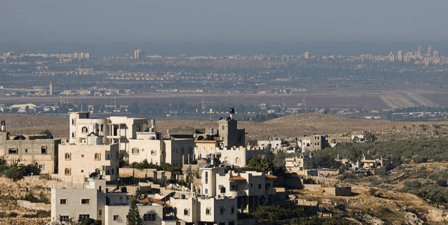
Hillary Clinton insisted that the “technology of war,” in particular the rockets ringing Israel, would force Israel to accept a phony peace agreement whose main effect would be to bring the rocket launchers closer to Israel. The photograph below shows the runways and main terminal building of Israel’s international airport from an Arab village in Judea: Hand this over to the Palestinians and primitive short-range missiles can shut down the Israel economy. There’s an easy way to stop the rockets, which is to kill the people who shoot them. That might mean killing the human shields whom the cowardly terrorists put in front of the rockets, but under international law, a country acting in self-defense has every right to kill civilians.

For that reason alone, anyone who claims to be a friend of Israel must support Trump against the alternative. One can criticize Trump all day with justification, but the existential issue of Israel’s survival requires Jews to support him. Jewish never-Trumpers are infected with what our rabbis of antiquity called “baseless hatred.”

The second big issue is Saudi Arabia, which competed with Iran for decades as the biggest funder of terrorists and religious extremists. After Trump’s March 2017 trip to Saudi Arabia, where he read the riot act to assembled Arab leaders, Saudi Arabia’s Crown Prince has centralized control of the government and seized hundreds of billions of dollars of royal family assets. The $800 billion of royal family wealth targeted is larger than the national reserves of the kingdom. As I wrote in Asia Times last week, Saudi Arabia has gotten its first real government, as opposed to the family regime that allowed every crazy cousin to write checks to terrorists. Of course, the kingdom well might get its second, third and fourth real government in short order if Crown Prince Mohammed bin Salman fails. But the de facto coup is a huge blow to Sunni jihadism and a victory for American policy.

Prince Mohammed and his father King Salman had visited Moscow in late September, and the Russian and Chinese press express guarded optimism about the regime change (see the cited Asia Times article). Russia and China have a great deal to fear from Sunni jihadists (virtually all their Muslim citizens are Sunni) and a Saudi ruler willing to close the tap is good for them. As I wrote, its win-win-win-win for the U.S., Russia, China and Israel.

That ought to scare the Persians plenty. The Saudis get very bad press for chopping up the Houthi-led tribes in Yemen, Iran’s allies. They are making a horrible example of the Houthi for the edification of Iran. That is disgusting, to be sure, but that’s the way things are done in that part of the world. The Assad government in Syria did much worse, deliberately bombing civilians to drive out the Sunni majority in order to replace it with Shi’ite colonists.

The Saudis don’t have much of an army, and their air force depends on Pakistani mercenaries, but they do have nearly 300 fourth-generation aircraft (F-15’s, Eurofighters, and Tornadoes) as well as a huge stock of Chinese-made medium range missiles. They can hire Pakistanis or Egyptians to fly them if necessary. Iran has tough soldiers but no air force to speak of. If it comes to war (which it shouldn’t) between Iran and Saudi Arabia, Iran will suffer badly. A dozen power plants provide more than half the country’s electricity, for example, and could not be defended in case of war.

There isn’t much to do about Iran now that its economic ties point eastwards to China, except to terrify the Tehran mullahs. That’s old-fashioned balance of terror–not my favorite way of doing things, but a policy that worked reasonably well during the Cold War. It’s easy to talk about tearing up the Iran nuclear agreement–but now there are two rail lines linking Iran to China, and the West’s influence in the region has vastly diminished. Unfortunately, grand gestures may not bring grand results, and the U.S. has to play tought and sometimes dirty.

Ultimately any regional issue depends on the strategic position of the United States with respect to China and Russia. We continue to lose ground, and Trump hasn’t yet offered an initiative to reverse it (I would begin by a crash program for missile defense, including space-based systems).

There are any number of things to criticize in the administration’s handling of the Middle East. I would have preferred a tougher approach to Iran’s presence in Syria in our negotiations with Russia over a cease-fire, and a more supportive stance towards the Iraqi Kurds’ aspirations for independence (although as Daniel Pipes observes, the fact that the independence referendum backfired was the Kurds’ own fault). And I would like the president to keep his campaign promise to move our embassy in Israel to Jerusalem.

But overall, Trump’s Middle East policy has been a success, in striking contrast to his predecessors. The supposed Middle East mavens among the preening NeverTrumpers (Max Boot, Reuel Marc Gerecht, Bill Kristol et. al) made a mess of things, and Trump has gone a long way to cleaning it up. That’s not bad for one year in office.