Trump, Kim sign ‘comprehensive’ joint document as historic summit nears end

Posted June 12, 2018 by Joseph Wouk
Categories: Uncategorized

Source: Trump, Kim sign ‘comprehensive’ joint document as historic summit nears end | The Times of Israel

Singapore parley ‘better than anybody could have expected,’ ‘really fantastic,’ says US President. Kim calls unspecified document ‘historic’
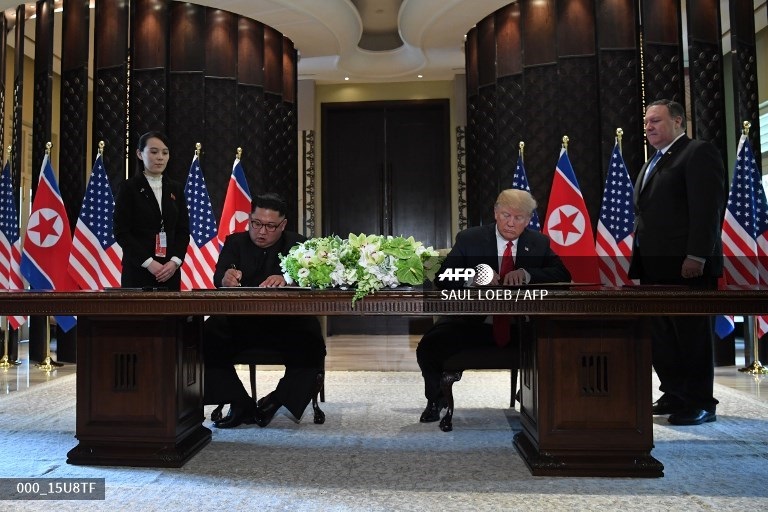
US President Donald Trump (2nd R) and North Korea's leader Kim Jong Un (2nd L) sign documents as US Secretary of State Mike Pompeo (R) and the North Korean leader's sister Kim Yo Jong (L) look on at a signing ceremony during their historic US-North Korea summit, at the Capella Hotel on Sentosa island in Singapore on June 12, 2018. (SAUL LOEB / AFP)

US President Donald Trump (2nd R) and North Korea’s leader Kim Jong Un (2nd L) sign documents as US Secretary of State Mike Pompeo (R) and the North Korean leader’s sister Kim Yo Jong (L) look on at a signing ceremony during their historic US-North Korea summit, at the Capella Hotel on Sentosa island in Singapore on June 12, 2018. (SAUL LOEB / AFP)

Donald Trump and Kim Jong Un signed a ‘comprehensive’ joint document at the end of their historic summit in Singapore on Tuesday.

“We are signing a very important document, a pretty comprehensive document, and we have had a really great term together, a great relationship,” said the US President before the two inked the unspecified document.

Trump announced he would be giving a press conference in the coming hours.

“We are both very honored to sign the document,” he said.

Kim called the document “historic.”

Minutes before, the two leaders had emerged from talks with the US president hailing what he said was “a lot of progress” and a “really fantastic” meeting.

The meeting went “better than anybody could have expected,” Trump said as he strolled out of the Capella Hotel side by side with the North Korean leader, adding that the two of them were going on to sign an unspecified document.

The two men met one-on-one for around 48 minutes Tuesday accompanied only by their interpreters.

They then went into a second meeting where they were joined by key aides.

Trump was flanked in the larger meeting by chief of staff John Kelly, Secretary of State Mike Pompeo and national security adviser John Bolton. They sat across the table from Kim and his team.

The extraordinary summit — unthinkable only months ago — comes after the two nuclear-armed foes appeared on the verge of conflict late last year as they slung personal insults and Kim conducted nuclear and missile tests.
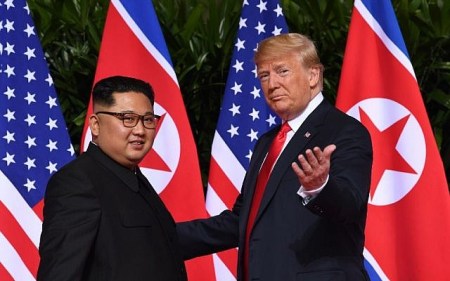
US President Donald Trump (R) gestures as he meets with North Korea’s leader Kim Jong Un (L) at the start of their historic US-North Korea summit, at the Capella Hotel on Sentosa island in Singapore on June 12, 2018. ( AFP PHOTO / SAUL LOEB)

North Korea’s state media lauded Singapore Tuesday as they highlighted Kim Jong Un’s visit to some of its top tourist attractions.

A few hours ahead of his historic summit with Donald Trump — the first encounter between a leader of the isolated, nuclear-armed North and a sitting US president — Kim took a break from preparations for a waterfront stroll.

He was accompanied by the city-state’s foreign and education ministers — with whom he posed for selfies — and surrounded by officials as police held back pursuing reporters.

But images of the young leader are carefully controlled and managed in the isolated North, and travelling media from Pyongyang enjoyed close access to their leader.

No fewer than 14 images of his visit to the Marina Bay Sands (MBS) hotel, casino and convention centre and other sights were printed on the front page of the state-run Rodong Sinmun newspaper.
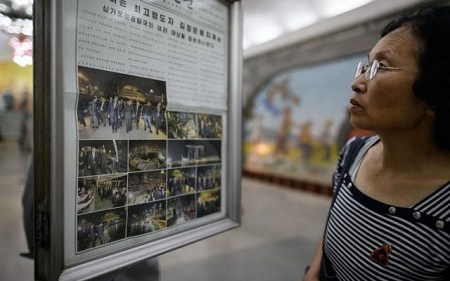
A woman reads the latest copy of the Rodong Sinmun newspaper showing images of North Korean leader Kim Jong Un in Singapore ahead of his meeting with US president Donald Trump, at a news stand on a subway platform of the Pyongyang metro on June 12, 2018. (ED JONES/AFP)

It showed him smiling on the MBS’ rooftop Sky Park observation platform, adding he “learned about the social and economic development” of Singapore.

Other pictures showed onlookers taking pictures of Kim, who has made only two previous trips beyond the Korean peninsula as leader, both of them to China.

Praising Singapore’s “clean and beautiful” environment, Kim vowed to “learn a lot from the good knowledge and experience of Singapore in various fields in the future,” the newspaper added.

The fulsome praise for another country is unusual for the media in the impoverished North, which generally do not show detailed images of affluent foreign countries.

The bright lights of the Singaporean city scape are a notable contrast to Pyongyang, much of which remains dimly lit at night despite Kim overseeing a number of prestige development projects during his rule.

During their stroll, President Donald Trump gave Kim a rare peek inside the US presidential limousine.

They walked up to the limousine, nicknamed The Beast, and Trump could be seen talking and gesturing before a Secret Service agent opened the door and the leaders looked in.

It wasn’t immediately clear how Kim felt about the presidential tour, but he seemed to be smiling.

Netanhyahu offers water tech to Iranians

Posted June 12, 2018 by davidking1530
Categories: Uncategorized

Interesting tactic.

Wonder what those BDS haters would say about this? *crickets*

WATCH: BYPASSING REGIME, NETANYAHU OFFERS WATER TECH TO IRANIANS

“The Iranian regime shouts: “Death to Israel!’ and in response, Israel shouts, ‘life to the Iranian people!'”

https://www.jpost.com/Israel-News/WATCH-Netanyahu-bypasses-the-Ayatollahs-offers-water-tech-to-Iranians-559618

Israeli Prime Minister Benjamin Netanyahu  went over the heads of the Iranian regime with a message delivered via social media directly to the Iranian public on Sunday.

“Today I am going to make an unprecedented offer to Iran,” Netanyahu said after pouring water from a pitcher into a glass and taking a drink in a two-minute YouTube video.

“It relates to water,” continued Netanyahu.

“The Iranian people are the victims of a cruel and tyrannical regime that denies them vital water. Israel stands with the people of Iran and that is why I want to save countless Iranian lives.”

Netanyahu explained that Iran’s meteorological organization has said that nearly 96% of Iran suffers from some level of drought, and after highlighting Israel’s achievements in water management, Netanyahu offered to help: “Sadly, Iran bans Israelis from visiting – so we’ll have to get creative. We will launch a Farsi website with detailed plans on how Iranians can recycle their waste-water… We will show how Iranian farmers can save their crops and feed their families… The people of Iran are good and decent. They shouldn’t have to face such a cruel regime alone. We are with you, we will help so that millions of Iranians don’t have to suffer.”

“The hatred of Iran’s regime will not stop the respect and friendship between our two peoples,” concluded Netanyahu.

Knesset committee passes bill deducting ‘terror money’ from PA taxes

Posted June 12, 2018 by Louisiana Steve
Categories: Funding terrorism

Tags:

Knesset Foreign Affairs and Defense Committee passes bill to withhold the amount the PA pays to terrorists – $340M in 2017 – from tax revenue Israel collects on its behalf • Author MK Avi Dichter: We won’t be a conduit for terrorist funds.


The family of Shalom Sharki, who was killed in a hit-and-run terrorist attack in April 2015, at the killer’s trial | Photo: Noam Revkin-Fenton

By Ariel Kahana and Gideon Allon Monday, June 11, 2018 via Israel Hayom

Source Link: Knesset committee passes bill deducting ‘terror money’ from PA taxes

Bonus Link: PALESTINIANS INCREASE PAYMENTS TO TERRORISTS TO $403 MILLION

{Hit them where it really hurts, in the pocketbook. – LS}

The Knesset Foreign Affairs and Defense Committee passed the second and third readings of a bill that makes it possible for Israel to withhold from the taxes it collects on behalf of the Palestinian Authority an amount equivalent to what the PA pays terrorists and their families in monthly stipends.

The committee decision overrides the government, which the bill to pass in a version that would allow the government to reinstate the tax funds at its discretion.

On Sunday, hundreds of bereaved relatives of victims of terrorism made a public appeal to Prime Minister Benjamin Netanyahu and his cabinet ministers, asking that they pass the original version of the bill.

A total of 320 victims of terrorism and relatives of victims signed the letter, which stated that “it is inconceivable that the Israeli government transfer even one shekel to terrorists who murdered our loved ones, thereby rewarding despicable murderers while simultaneously encouraging terrorist attacks.”

The families sent the missive a day before the Knesset Foreign Affairs and Defense Committee adopted the final version that will deduct what it terms “terrorist salaries” from the tax revenue Israel collects for the PA.

In recent months, the MKs behind the bill, including former head of the Shin Bet Avi Dichter (Likud), have been locked in a battle with the cabinet over the proposed legislation.

Many in the defense establishment worry that withholding tax revenue could lead to the economic collapse of the Palestinian Authority. The Knesset members who authored the bill, as well as the bereaved Israeli families, rejected this concern, arguing that Israel cannot continue to ignore a situation that perpetuates terrorist murders of Jews.

An investigation conducted ahead of the committee meeting on Sunday indicated that in 2017, the PA paid families of terrorists 1.2 billion shekels ($340 million), a sum that comprises 7% of the PA’s annual budget.

Dichter said, “We cannot shut our eyes to this. We won’t be a conduit for the transfer of terrorist funds.”

Of course storming the border with Israel is an act of war. Just ask Egypt, Jordan, Lebanon – and Hamas

Posted June 11, 2018 by Louisiana Steve
Categories: Israel borders

Tags:


Syrians approaching the Israeli border in 2011

By Elder of Ziyon Monday, June 11, 2018

Source Link: Of course storming the border with Israel is an act of war. Just ask Egypt, Jordan, Lebanon – and Hamas

{Like we used to say, it’s the same difference. – LS}

The current “Great Return March” is not the first attempt by Palestinians to “return” to Israel by pretending to peacefully march through the Israeli borders.

In 2011, there were two sets of similar demonstrations or attempts, in May and June for Nakba Day and Naksa Day.  Arabs of Palestinian descent attempted to walk into Israel from Lebanon, Syria, Jordan, Egypt, as well as Gaza and the West Bank.

In most cases, the demonstrators were not stopped by Israel, but by the police and armies of the host countries and territories – often violently.

On May 15, the Lebanese army fired at the demonstrators, killing 10 of them. 

The Egyptian army stopped any buses with demonstrators before they could approach the border, and in Jordan dozens were injured as the Jordanian security forces stopped the demonstrators from approaching the border with Israel.

If these were peaceful protests, then why would the host countries be willing to use violence to stop its own citizens from approaching Israeli territory?

The reason is that everyone knows that crossing a border without permission is an act of war, not an act of protest. The countries wanted to avoid the possibility of starting a war with Israel (with the exception of Syria, which facilitated the demonstrations in order to distract the world from the beginnings of the Syrian uprising.)

During the June 5 demonstrations, even Hamas stopped the protesters from approaching the Gaza border by putting up checkpoints and arresting those who tried to bypass them.

At the time, the US issued a statement saying the obvious truth: “We call for all sides to exercise restraint. Provocative actions like this should be avoided. Israel, like any sovereign nation, has a right to defend itself.”

What was so obvious in 2011, that attempts to breach a border are acts of war that can be expected to be met with deadly force, has suddenly become controversial in 2018.

It is also notable that Israel used the exact same methods to stop the protesters in 2018 as in 2011: warning them, using tear gas, and shooting at their legs when the other methods didn’t work. There were no condemnations from the international community then, and as we’ve seen even Lebanon and Jordan and Egypt – and Hamas – attempted to stop the protests, with violence if necessary.

The international reaction to the current wave of violent riots is the height of hypocrisy.


i24NEWS – With Iran on its doorstep, Israel kicks off surprise military drill in north

Posted June 10, 2018 by Joseph Wouk
Categories: Uncategorized

Source: i24NEWS – With Iran on its doorstep, Israel kicks off surprise military drill in nort

Un soldat israélien court pour diriger un véhicule blindé près de la frontière syrienne dans la partie du Golan occupée par Israël le 10 mai 2018 
JALAA MAREY (AFP)

The Israel Defense Forces (IDF) kicked off a surprise military exercise in the northern Golan Heights region on Sunday, as Iranian and Iranian-backed forces were reportedly continuing to build along the Israel-Syria border.

“A short while ago, a large-scale surprise military exercise began in the Golan Heights area,” the army said in a statement, adding that it had activated a call-up of reservists as part of the drill.

The status of Iranian forces near the Israeli border has been the subject of numerous conflicting reports in recent weeks, with Israel urging Russia to convince its ally in Tehran to withdraw its forces from the area.

The Wall Street Journal reported Friday, however, that Iranian and Hezbollah forces have again swept into the Daraa and Quneitra provinces near the Israeli-held Golan Heights, but this time wearing Syrian army uniforms and bearing Syrian government flags.

Several rebel commanders in the region who spoke to the US paper said many of the convoys contained rockets and missiles, likely to spark concern in Israel, which came under attack last month from some 32 rockets it said were fired by Iran.

JACK GUEZ (AFP)
An Israeli Air Force F-35 Lightning II fighter jet is seen at an air show at the Hatzerim air base in the Negev desert on December 27, 2017.
JACK GUEZ (AFP)

The military insisted that the drill was not connected to current developments along the northern front, but rather was “planned in advance as part of the 2018 training schedule.”

IDF units participating in the drill were not told of the exercise in advance, however, in order to test their reaction and conduct for an actual surprise breakout of violence.

The army said that residents of the Golan Heights could expect some explosions to sound as well as an increase in troop movements in the area.

Israel has repeatedly warned it will not accept an entrenched Iranian presence in Syria and is suspected to have carried out numerous raids on Syrian government positions over the years, and last month announced unprecedented strikes on what it said were Tehran-operated bases in Syria.

According to Israeli and independent assessments, there are thousands of foreign pro-government fighters in Syria at Iran’s behest, chiefly drawn from Afghanistan, Pakistan and Iraq, which all have large Shia communities.

Iranian officials have not denied their forces were pulling out of the region bordering Israel, but have insisted they are in Syria for the long haul.

Lebanon’s powerful Hezbollah has also fought alongside the military of President Bashar Al-Assad ever since an uprising against his family’s decades-long rule slid into a civil war that has raged for some seven years.

What Trump’s Withdrawal From the Iran Nuclear Deal Means for Israel 

Posted June 10, 2018 by Joseph Wouk
Categories: Uncategorized

Source: What Trump’s Withdrawal From the Iran Nuclear Deal Means for Israel – The Atlantic

President Trump meets with Israel Prime Minister Benjamin Netanyahu in the Oval Office on March 5, 2018.KEVIN LAMARQUE / REUTERS
President Trump’s withdrawal from the Iran nuclear deal has left Israel to reassess its policy toward Iran—and how to advance its key national-security objectives: preventing Iran from acquiring nuclear weapons, thwarting Iran’s aspirations for hegemony, changing the fundamentally hostile and radical orientation of the regime, and preventing future military conflict. The deal made some progress on the first two fronts—delaying Iran’s nuclear-weapons program by more than a decade, and preventing war from breaking out in the near term—but failed on the other two metrics, fortifying the regime and giving it a free hand to build and use its conventional forces.
Tehran made better use of the time bought by the agreement, expanding its conventional capabilities to the point that its advanced missiles and militias have become nearly as dangerous as its, momentarily halted, nuclear threat. In fact, they are complementary components in a unified Iranian strategy to establish two mutually reinforcing strategic forces: the build-up of formidable conventional forces to guarantee impunity in the development of nuclear weapons, and the acquisition of a nuclear umbrella to support the expansion of conventional offensive capabilities throughout the region. And the post-deal influx of funds did not moderate Iran’s regional policies as some of the agreement’s architects had hoped, but instead allowed it to better fund them.

In Syria, for example, Iran sought to prepare for the deal’s sunset by building up a conventional threat that could hold Tel Aviv hostage, just as North Korea has done with Seoul. That would take the military option for forestalling its nuclear program off the table for the U.S. and its allies. Tehran did so by deploying precise ballistic missiles, advanced anti-aircraft systems capable of threatening Israeli air traffic, stealth drones, and anti-ship missiles; training and deploying Shia infantry divisions recruited from Afghanistan, Pakistan, and Iraq; and building terror infrastructure for use against Israel in the Golan. And Iran acted with a sense of impunity because, it reasoned, no U.S. president would risk a nuclear arms-control agreement in order to push back on conventional activities.

President Trump’s withdrawal from the deal—the Joint Comprehensive Plan of Action (JCPOA)—leaves Israel to try to advance these same strategic objectives on a very different geopolitical landscape. It now faces four potential scenarios, based on how Iran may plausibly respond to the U.S. withdrawal.

It’s possible that the JCPOA will survive, with the Iranians remaining in the agreement and trying to minimize the effects of sanctions in an effort to retain ties with Europe, China, and Russia. Assuming that the United States would take no significant action beyond withdrawal, such as resurrecting crippling financial sanctions on Iran, this scenario would not differ dramatically from the period during which America was a party to the deal.

If Washington finds itself on the sidelines of an agreement between the P4+1 and Iran, though, it will have to find a different means of achieving its goals. Israel, the U.S., and Saudi Arabia could reach a “parallel agreement” on a plan of action focusing primarily on the issues that led Washington to withdraw from the deal, including both Iran’s harmful non-nuclear activities and the danger posed by the expiration of restrictions on Iran’s nuclear program.

Alternatively, perhaps Iran will concede. Rigorously enforced U.S. sanctions during a period of economic instability in Iran, along with the credible threat of a military strike, may bring Tehran back to the negotiating table to make a “better deal.” Israel should insist that any such agreement include permanent restrictions on Iran’s nuclear activity, allow for more intrusive nuclear inspections, and cover Iran’s malign non-nuclear activity in the region as well as its ballistic missile program. In his recent declaration regarding U.S. strategy vis-à-vis Iran, newly appointed Secretary of State Mike Pompeo declared those objectives among the many that the U.S. intends to achieve. If Washington succeeds in striking an agreement according to the demands it has outlined, it would be a major success by all of Israel’s national-security parameters. Of course, it is also worth noting that despite the appeal of a more comprehensive deal, some White House officials appear to be holding out hope that U.S. pressure goes even further and pushes the Iranian regime to collapse.

The American withdrawal from the JCPOA, however, can also lead to far more dangerous scenarios. Iran, for example, could leave the agreement to return to pre-2013 enrichment activity; Supreme Leader Khamenei has already orderedthe Atomic Energy Organization of Iran to prepare for increased enrichment and “other” unspecified arrangements earlier this week. In this case, within a few years Iran will have reached nuclear capabilities that would have taken over a decade to achieve under the JCPOA. The Europeans and Americans may agree on the need to respond and impose harsh sanctions on Iran, but because Iran remains under the constraints of the Nuclear Nonproliferation Treaty (NPT), any further steps, including military or covert action to stop Iran’s advances, would have to be very carefully considered. Actions to restrain Iran would obtain only limited international legitimacy, because the U.S. instigated the collapse of a deal that would have achieved that restraint, albeit temporarily.

In those circumstances, to avoid an unintended war while still preventing Iran from acquiring a nuclear weapon, the United States and Israel would need to demarcate a clear red line that Iran’s nuclear program would not be allowed to cross. In contrast to Prime Minister Benjamin Netanyahu’s position in 2012, the red line should not focus only on enrichment levels, but also the enrichment of large quantities of uranium to a low level or spinning a large number of centrifuges, two alternative routes that could bring Iran within a short breakout period to the bomb.

And then, there’s the worst-case scenario. Iran may adopt an extreme response to the change in U.S. policy, leaving the JCPOA and NPT and then breaking out to a bomb. That would raise the chances of military confrontation.

Military action to prevent the Ayatollahs from acquiring a nuclear weapon would have much broader diplomatic support than in the previous scenario in the U.S. as well as Europe. However, Israel would be well-advised to note that Trump’s explicit promise to reduce U.S. involvement in the Middle East makes him less likely to order U.S. forces to strike. In this case, Israel would probably find itself acting alone, albeit with a “green light” and support from Washington. Israel would have to consider exercising the Begin Doctrine, which calls for preventing any regime that seeks to wipe it off the map from acquiring nuclear weapons. One of us—Amos Yadlin—participated in two strikes on nuclear reactors, as a pilot in the 1981 attack on the Osirak site in Iraq, and as chief of military intelligence during the 2007 strike on the Al Kibar site in Syria. Israel might now be forced to contemplate a third.

The key for Israel, in such a scenario, would be finding ways to avoid further escalation. Fear that a strike could spiral into a wider war is what prompted the Obama administration to warn Israel not to strike. But a surgical strike could actually provide a middle ground between inaction and escalation to full-scale war. And if Israel can obtain full-fledged and public support from Washington and endorsements in private from the Sunni Arab leadership, it may be able to deter Iran from retaliating and escalating the conflict.

These four scenarios are unlikely to emerge immediately and all together, but rather they will take shape in two successive stages. For the remainder of 2018, all parties will seek to determine the actual effects of U.S. reimposition of sanctions, and so the first two scenarios will be on the table. In the year that follows, if the deal collapses and Iran proves unwilling to sign a new agreement, Tehran will likely adopt more defiant and dangerous policies, bringing the latter two scenarios into play.

With or without an agreement, the U.S. and Israel will need to prepare to take on Iran on both fronts without losing sight of Israel’s primary objectives: keeping nuclear weapons out of the regime’s hands, halting Tehran’s aggressive actions in the region, preventing war, and changing the hostile orientation of the regime toward the West, the Arabs, and Israel. Achieving that last goal could have the added benefit of presenting Israelis and Iranians with the historic opportunity to renew the long-standing ties that existed between the Jewish and Persian peoples until 1979.

AMOS YADLIN is the director of Israel’s Institute for National Security Studies. He is a retired major general in the Israeli Defense Force and the former chief of Israeli defense intelligence.

Poll shows deep divisions between Israeli and U.S. Jews 

Posted June 10, 2018 by Joseph Wouk
Categories: Uncategorized

Source: Poll shows deep divisions between Israeli and U.S. Jews – Israel Hayom

( Blinded by leftist ideology spread by Democrats and the MSM – JW )

Israel can never be allowed to feel safe, Iranian ‎president says 

Posted June 10, 2018 by Joseph Wouk
Categories: Uncategorized

Source: Israel can never be allowed to feel safe, Iranian ‎president says ‎ – Israel Hayom

PM says he secured ‘broad agreement’ Iran must quit Syria

Posted June 10, 2018 by Joseph Wouk
Categories: Uncategorized

Source: PM says he secured ‘broad agreement’ Iran must quit Syria – Israel Hayom

Iran’s fighting force in Gaza is the one calling and firing the shots 

Posted June 10, 2018 by Joseph Wouk
Categories: Uncategorized

Source: Iran’s fighting force in Gaza is the one calling and firing the shots – Iran – Haaretz.com

Hamas may rule the Strip, but it’s Islamic Jihad that will determine whether rockets are directed at Israel

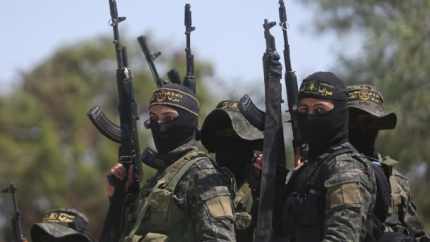
Palestinian gunmen attend the the funeral of Islamic Jihad militants who were killed in an explosion, in Rafah in the southern Gaza Strip on April 15.
Palestinian gunmen attend the the funeral of Islamic Jihad militants who were killed in an explosion, in Rafah in the southern Gaza Strip on April 15.Ibraheem Abu Mustafa/Reuters

Hamas did in fact take control of the recent demonstration on the Gaza border with Israel but it is not the only party responsible for the subsequent escalation in Gaza – or for putting a stop to it. Hamas may finance, direct and decide the level of intensity of the border protests, but to a large extent it is Islamic Jihad that will determine whether the confrontation with Israel remains along the border — or escalates into the firing of mortar shells and rockets over the border.

In recent years, members of Islamic Jihad have managed to create clear rules of the game vis-à-vis the Israeli army. Unlike Hamas, which is also responsible for the civilian population in Gaza and has political ambitions, Islamic Jihad is committed to nothing other than armed confrontation with Israel. It therefore dictates how the Israel Defense Forces conducts itself: Any incident in which Islamic Jihad inflicts casualties or property damage – for the most part involving the firing of rockets or a significant attack along the border fence, is immediately countered with an Israeli military response.

And yet, Islamic Jihad is not exactly the master of its own house. By providing economic and military assistance over the years, Iran has turned the organization into its own military wing in Gaza and the West Bank. “The more we continue to see harm to Iran in Syria and to the extent that its situation is difficult, the more Tehran’s motivation to deploy Islamic Jihad in Gaza against us will increase,” a senior officer in the IDF’s Southern Command said recently. “The Jihad’s command headquarters is outside Gaza, but the Iranians have an interest in escalating the situation here. Tomorrow Iran, from its standpoint, can take a decision to deploy the Jihad against Israel.”

Even if IDF officials don’t admit it, the significance of hitting Islamic Jihad targets is well understood in the army, as demonstrated by two recent incidents in which the organization was dealt a blow. The first occurred on October 30 when Islamic Jihad members were killed in an Israeli attack on terror tunnels near Kissufim. Army officials knew that this would prompt a response, despite Hamas’ attempts to head one off. A month later Islamic Jihad fired mortar shells at Israeli communities and army forces near the Gaza border.

The second incident occurred last month, when massive weapons fire was directed at communities near the Gaza border and a mortar shell hit a kindergarten at Kibbutz Ein Hashlosha. That was in response to the IDF’s killing of three Islamic Jihad members two days earlier. The army then had a day of combat that ended after Hamas demanded a cease-fire.

Hamas isn’t interested in escalation, but it can’t prevent an Islamic Jihad response every time. Hamas is also aware of the following that Islamic Jihad has on social media after it clashes with the IDF and the power that it has on the Gaza street when it fires mortar shells at Israeli border communities. Hamas has chosen to cooperate with Islamic Jihad, albeit in a limited way.

Palestinian Islamic Jihad was founded in Gaza in the late 1970s and early 1980s based on the radical ideology of Egypt’s Islamic Jihad, an offshoot of the Muslim Brotherhood that preached the establishment of an Islamic caliphate through armed struggle. The focus of Palestinian Islamic Jihad has been armed struggle with Israel.

Palestinian Islamic Jihad currently has several thousand fighters whose military training is directed by Iran. Initially the group received assistance from Hamas in obtaining weapons but in recent years, it has already amassed a substantial arsenal including Qassams and Grad rockets with ranges capable of targeting the center of Israel. It also has its own weapons production facilities.

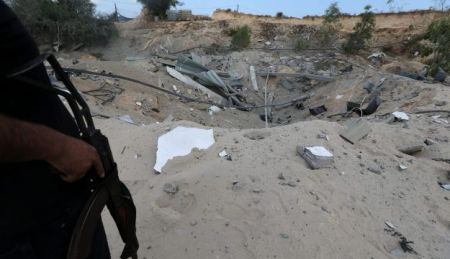
A Palestinian militant stands guard near the destroyed Islamic Jihad military base after it was targeted by an Israeli warplane, the southern Gaza Strip May 30, 2018. REUTERS/Ibraheem Abu Mustafa
A Palestinian militant stands guard near the destroyed Islamic Jihad military base after it was targeted by an Israeli warplane, the southern Gaza Strip May 30, 2018\ IBRAHEEM ABU MUSTAFA/ REUTERS

The relationship between Islamic Jihad and Hamas has been exceedingly complicated recently. Usually Islamic Jihad toes the Hamas line on policy and sometimes cooperates with Hamas during periods of military escalation. The two claimed joint responsibility for the recent rocket fire across the Israel border.

And yet, the difference in the goals of the two groups has meant that Islamic Jihad members often pose a challenge to Hamas, mainly by carrying out attacks in violation of restraints Hamas tries to impose. Despite Hamas’ desire to assert its authority in Gaza, it sometimes yields to Islamic Jihad’s actions out of a desire to draw closer to Iran, in light of the difficult situation in the Gaza Strip.

As the senior source in the IDF’s Southern Command put it: “There is currently coordination between the organizations, and Hamas has control but at every step, the Islamic Jihad can also be independent and act as it sees fit to realize the Iranians’ interests.”