Three anti-aircraft batteries are more sophisticated than the S-300 air defense systems transferred to the Syrian regime in September • Russian Defense Ministry: The Iranians lack the technical expertise to operate a system such as the S-300PM.
Israel Hayom Staff
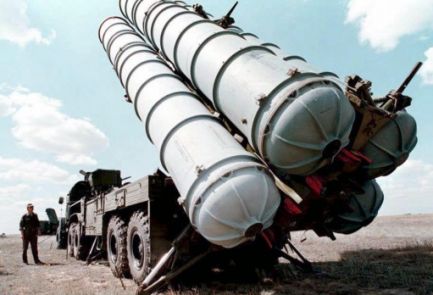
The S-300 air defense system
|Photo: AFP
Moscow has transferred three advanced S-300PM anti-aircraft batteries to the Syrian regime, Russian news outlet Izvestia reported on Friday.
The S-300PM is more sophisticated than the S-300 system transferred to Syria earlier this month and was delivered together with mobile radar stations, the report said.
The Russian Defense Ministry downplayed concerns that the Iranians would use the advanced systems, claiming they lack the technical expertise to operate a system such as the S-300PM.
According to the ministry, only the Russian military has experts with the know-how to operate the sophisticated system and they intend to strictly compartmentalize the transfer of technical knowledge to the Syrians.
“The Iranians have no ability to use the system. The anti-aircraft systems we transferred to [the Syrians] in the past are compatible for export and the needs of Iran and are completely different. The systems we are transferring to the Syrians were built for the Russian military and it alone has the know-how and capability to operate them at the moment,” the ministry told Izvestia in a statement.
Despite Israel’s warning that further escalation in Gaza would lead it to launch a military campaign in the strip, Hamas calls on the Palestinians to attend Friday’s security fence protests in droves; IDF starts ramping up its armored forces along the volatile border.
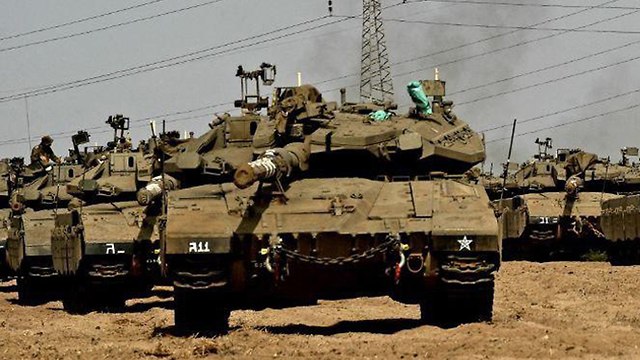
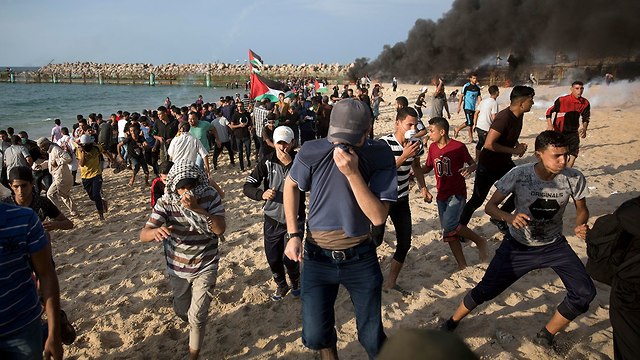
The Hamas-led organizing committee of the weekly “March of Return” riots has called on the Palestinians to attend Friday’s security fence protests in droves, despite the fact The IDF has started ramping up its armored forces along the Gaza border on Thursday in a daylight show of force.
However, Palestinian sources in Gaza said Hamas would instruct Gaza’s residents to tone down the display of violence in light of Israel’s warnings that further escalation in Gaza would lead it to launch a military campaign in the strip, following the rocket fire launched Wednesday early morning from Gaza at Israel.
IDF ramps up forces along the Gaza border fence (Photo: Roee Idan)
A Hamas senior official said the organization launched an investigation to find the responsible for the attack during which a rocket landed on a Be’er Sheva home and in the sea off the shores of a city in central Israel early Wednesday morning, prompting an IAF retaliatory attack in the strip, AFP reported.
After the early morning rockets, Hamas and Islamic Jihad released a joint statement in which they said they “oppose rocket fire that hurts the efforts to lift the siege.”
Israeli decision-makers believe that curbing the clashes along the border fence would restore calm there.
Skirmishes resembling to last Friday’s riots during which the Palestinians placed an explosive device on the fence, with 20 of them breaching it, and prompting the IDF to open fire, would obligate Israel to launch a limited military campaign in Gaza, a credible source told Ynet.Meanwhile, a team of Egyptian mediators shuttled Thursday between Israel and Gaza in a stepped-up effort to forge a ceasefire agreement between the two foes as well as to promote an intra Palestinian reconciliation with the Palestinian Authority.
On Wednesday, a delegation of senior Egyptian officials headed by the Egyptian intelligence head deputy met with Hamas leader Ismail Haniyeh in the strip.
Cairo is attempting to prepare the ground for the international community to establish infrastructures in the coastal enclave in order to ameliorate its humanitarian situation.
It is probable the Egyptian delegation met with Israel’s top security officials before entering the strip.
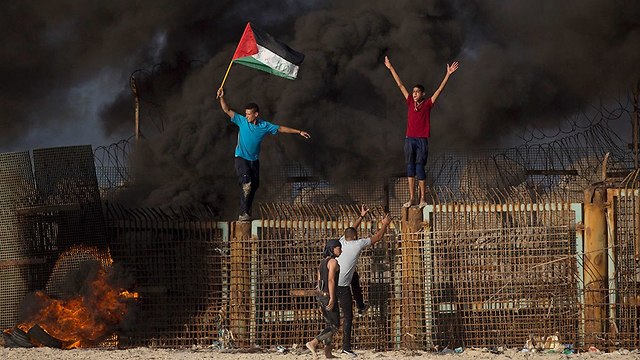
Gaza border riots (Photo: AP)
However, Israel neither confirmed nor denied such meeting took place.Hamas official Khalil al-Haya said that “The Egyptian delegation has guaranteed us that Egyptian intelligence chief Abbas Kamel’s visit was not canceled, rather postponed due to logistic reasons emanating from President Abdel Fattah al-Sisi’s travels abroad.”
On Thursday, the Security Cabinet decided to change its handling of the bloody riots on the Gaza border fence and the kite terrorism, stating that the rules of the game have changed.
The Cabinet instructed the IDF to gradually exacerbate its retaliatory actions to violence along the security fence and to demonstrate a zero-tolerance approach.
In addition, flight routes at Ben-Gurion Airport were changed due to the security situation. The Israel Airport Authority stressed, however, that the change “doesn’t affect flights schedule.”
Israelis living in communities by the border fence say they have not seen such a significant concentration of IDF forces in the area in years.
Despite video released by Hamas-led committee organizing the riots along the Gaza border, which calls the Palestinians to attend Friday’s protests, talks held with Egypt and Israel’s warning further escalation would lead it to launch military campaign in strip is likely to curb clashes.
The sources added that talks held with Egyptian intelligence heads and Israel’s warning that further escalation in the strip would force it to launch a military campaign in Gaza, would prompt the terror organization to curb the violent skirmishes.
Meanwhile, the Hamas-led committee organizing the riots released a video marking the 30th week since the “March of Return” campaign was launched with the slogan: “Together Gaza rises up and the West Bank unites.”
The video calls the Palestinians to attend Friday’s riots in droves.
Israeli decision-makers believe that restraining the clashes along the border fence would restore calm there.
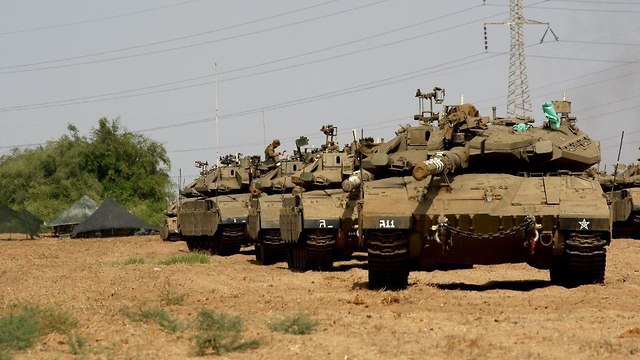
IDF ramps up forces along border (Photo: Roee Idan)
Skirmishes resembling to last Friday’s riots, during which the Palestinians placed an explosive device on the fence, with 20 of them breaching it, and prompting the IDF to open fire, would obligate Israel to launch a limited military campaign in Gaza, a credible source told Ynet.
On Thursday, it was reported that the IDF had started ramping up its armored forces along the Gaza border in a daylight show of force following a Security Cabinet decision to escalate retaliation for any violent incidents originating in the strip.
Among the forces that amassed at the border were dozens of tanks, artillery, infantry APCs and engineering vehicles.
The Security Cabinet convened Wednesday in Prime Minister’s Benjamin Netanyahu’s Office to discuss possible security development following the rocket fire launched from Gaza, hitting a house in the city of Be’er Sheva and the sea off the coast of a city in central Israel.
House in Be’er Sheva hit (Photo: Ido Erez)
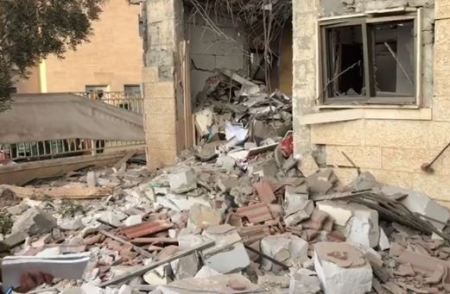
According to a preliminary investigation by the Home Front Command, the rocket weighed about 20 kilograms, and penetrated through three concrete layers.
Due to the size of the rocket and the force of the impact, heavy damage was caused to the house that was hit and it is at risk of collapse. A house next door was hit by shrapnel from the rockets, and its balcony collapsed.
In retaliation, the IDF attacked Wednesday morning over 20 targets, including a terror tunnel in the Gaza Strip.
Russian president insists Iranian withdrawal should be discussed between Iran, Syria, and the US, but it is not for Moscow to decide; he also notes Syria should be offered security guarantees.
“Syria and Iran are both independent countries. They need to build their relationship on their own,” Putin said at an international policy forum in Sochi.
The Russian president said that while Russia helped negotiate the pullback of Iranian forces from the Golan Heights border with Israel over the summer, a full Iranian pullback is another matter.
Supreme Court rules American student Lara Alqasem can stay and study in Israel, despite past BDS ties; ruling overturns lower court decision backing government; Lawyers: Free speech victory; Deri: a disgrace.
A US student who was initially barred entry into Israel under a law against foreign pro-Palestinian activists who call for boycotts of Israel will be allowed to stay in the country, the Supreme Court ruled on Thursday.
Lara Alqasem, 22, flew to Israel on Oct. 2 on a student visa to pursue her graduate studies at Hebrew University but was refused entry by security officials who cited her role as president of a small local chapter of Students for Justice in Palestine at the University of Florida.
Alqassem in court (Photo: Motti Kimchi)
The Supreme Court in its ruling, seen by Reuters, overturned a lower court decision that initially backed the decision by Israeli authorities.
“The call for participation in a boycott against the state is likely to be considered as encouragement to participate in illegal activity …. There is no dispute that between 2014 and 2017, Alqasem was a member of a student organization and for two years served as its president,” Justice Erez Yekuel explained then in his ruling.
Supreme Court Judge Neil Hendel wrote that the state is correct in its intentions but not in its implementation, explaining that combating BDS is admirable and defending a democracy is part and parcel of democracy. However, Hendel asserted, preventing Alqasem’s entry does not serve the purpose of the anti BDS law passed by the Knesset.
However one justice wrote that if Alqasem “returns to her old ways” and promoted a boycott while she was in Israel her stay could be cancelled and she could be expelled.
“The Supreme Court’s decision is a victory for free speech, academic freedom, and the rule of law,” Alqasem’s lawyers said in a statement.
The Hebrew University, which supported Alqasem in her struggle to enter the country released a short statement: “The Hebrew University of Jerusalem looks forward to welcoming our newest student, Lara Alqasem, as she begins her M.A. in Human Rights & Transitional Justice at our law school next week.”
Hebrew University protest supporting Alqassem (Photo: “Standing Together” student movement)
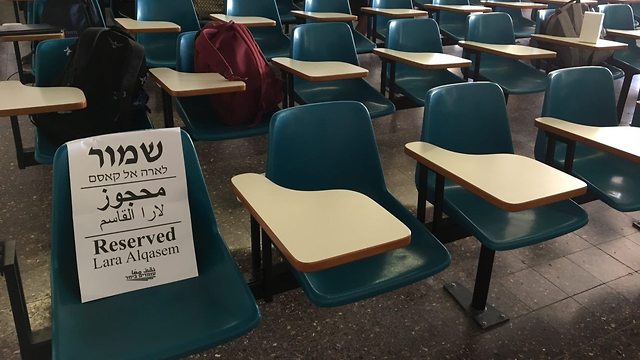
On Monday, students at the University protested the detention of Alqasem by placing signs on seats throughout the university’s Mt Scopus campus reading “Reserved (for) Lara Alqasem.” Their efforts were met with a response by activists from the right-wing “Im Tirtzu” movement who erased Alqasem’s name from several posters and replaced it with the names of recent terror victims Ari Fuld, Kim Yehezkel Lebengrond and Ziv Hagbi.
Many students also criticized the university’s stance on the matter. “The Hebrew University’s attitude towards the State of Israel, and even towards BDS, is simply pathetic,” said one student.
Alqasem’s case has touched off debate in Israel over whether democratic values have been compromised by a 2017 law that bars the entry of foreigners who publicly support boycotts over Israel’s policies towards the Palestinians.
Minister of Interior Aryeh Deri responded to the ruling calling it a disgrace. “Where is our national pride? Would she have dared act against the United States while seeking to study there? I intend to examine how to prevent this incident from setting a precedent,” he said.
Minister of Internal security Gilad Erdan declared that the court handed a “huge victory to BDS and emptied the law, barring boycott activists from entering the country, of any meaning.” He stated that he intends to close the “loophole” in the law so that those who seek to harm the State of Israel and its citizens cannot enter the country.
Tourism Minister Yariv Levin called the court’s decision “shameful” and said that the justices “were continuing to act against Israeli democracy and the clear lawmaking of the Knesset.”
It was not immediately clear whether the Israeli authorities would appeal the ruling.
Air strikes against terror targets in Gaza, intensifying IDF’s response to breaching attempts and launching of incendiary balloons while showing containment are presented as operational plans at Cabinet meeting; DM Lieberman’s suggestion to take more aggressive approach is rejected.
After concluding a five-hour meeting, the Security Cabinet decided Thursday to change its handling of the rampant violence on the Gaza border fence and the kite terrorism, implying that the rules of the game have changed.Nevertheless, the political echelon still views reaching a ceasefire agreement with the mediation of Egypt and UN envoy to the Middle East Nickolay Mladenov as an option.
Gaza border violence (Photo: AP)
The Cabinet—which convened following a rocket attack launched from Gaza on a Be’er Sheva home and in the sea off the shores of a city in central Israel—instructed the IDF to gradually exacerbate its retaliatory actions to violence along the security fence and to demonstrate a zero-tolerance approach.
The new policy will come into effect on Friday, during which Hamas-led mass riots are expected on the border.
During the overnight meeting, the military brass presented two operational plans to tackle the violent border clashes and to handle the incendiary balloons launched from the strip into Israel, with the first being air strikes against terror targets in the strip, while the second is containment of the violence while gradually Intensifying the army’s response to breaching attempts and launching of incendiary balloons.
House in Be’er Sheva hit
Nevertheless, Defense Minister Avigdor Lieberman suggested implementing a more aggressive approach against Hamas, as could have been expected in light of his remarks over the past few days.
Lieberman’s plan was rejected.
Prime Minister Benjamin Netanyahu instructed the Cabinet ministers no to speak with the media about the decisions taken at the meeting.
(Photo: AP)
Construction Mnister Yoav Galant addressed the recent escalation Gaza, saying, “I’m not going to talk about decision taken by the Cabinet. However, I can explicitly say that the rules of the game are about to change.
“We won’t accept violence on the Gaza border fence and the continuation of the kite terrorism,” Galant concluded.
“U.S. outlaw regime’s hostility toward Iranians is heightened by an addiction to sanctions” that is “out of control,” Iranian Foreign Minister Mohammad Javad Zarif says • Foreign Ministry spokesman rails against “cruel and unfair” new sanctions.
News Agencies and Israel Hayom Staff
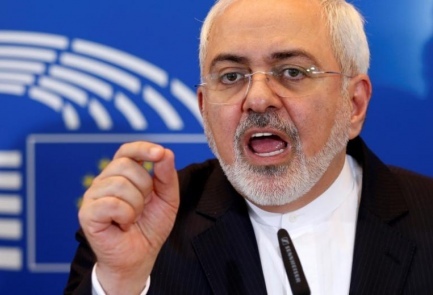
Iranian Foreign Minister Mohammad Javad Zarif
|Photo: Reuters
Iran said Wednesday that the latest round of U.S. sanctions is an “insult” to the international order that stems from “blind hostility.”
The U.S. has steadily restored sanctions on Iran following President Donald Trump’s withdrawal from the 2015 nuclear accord in May. Next month the U.S. plans to impose sanctions on Iran’s oil and gas industry.
Iran is already in the grip of an economic crisis and has seen sporadic protests in recent months.
Foreign Minister Mohammad Javad Zarif said Wednesday that the United States’ latest economic sanctions against Iran display a disregard for the human rights of all Iranians.
“Latest U.S. sanctions violate two ICJ [International Court of Justice] orders: to not impede humanitarian trade and to not aggravate the dispute. Utter disregard for rule of law and human rights of an entire people. U.S. outlaw regime’s hostility toward Iranians is heightened by an addiction to sanctions,” Zarif tweeted.
“U.S. addiction to sanctions is out of control,” Zarif also wrote on Twitter.
He said in the tweet that one of the banks was vital for food and medicine imports and seemed to suggest it was not close to the Basij force, without it directly.
“Iranian private bank key to food/medicine import is designated because of alleged EIGHT degrees of separation with another arbitrary target. In comparison, all humans on the planet are connected by SIX degrees of separation. You do the math,” Zarif said on Twitter.
Earlier, Foreign Ministry spokesman Bahram Qassemi railed against the “spitefulness” of the U.S. government in imposing the sanctions, calling the new sanctions “cruel and unfair.”
Rocket attacks on Israel during Egyptian mediators’ visit to Gaza was a “personal affront, and worse, put their lives in danger,” Palestinian official says • Egyptian intelligence chief cancels planned visit to Gaza, officially citing scheduling conflict.
Daniel Siryoti
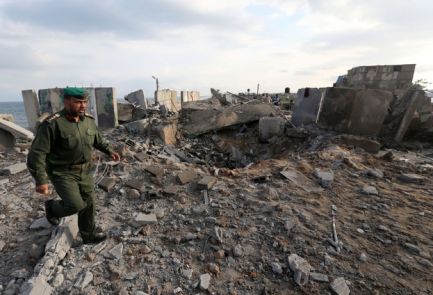
A Palestinian security official loyal to Hamas at the scene of an Israeli airstrike in south Gaza, Wednesday
|Photo: Reuters
Egyptian intelligence chief Abbas Kamel has called off a planned visit to the Gaza Strip, Ramallah and Israel, officially citing a scheduling conflict, but commentators surmised that the cancellation may be a response to rocket attacks launched from Gaza into Israel on Wednesday.
Kamel’s visit was meant to advance Egyptian efforts to mediate a cease-fire agreement between Israel and Hamas, whose clashes along the Israel-Gaza border have intensified in recent weeks, culminating with Wednesday’s Grad rocket strike on a Beersheba home.
An Egyptian intelligence and diplomatic delegation that had arrived in Gaza to prepare the groundwork for Kamel’s intended visit, initially planned for Thursday, left the Strip on Wednesday before setting a new date for Kamel’s shuttle diplomacy mission.
A member of the Egyptian delegation told Israel Hayom that the official reason for postponing Kamel’s mission was the fact that he was accompanying Egyptian President Abdel-Fattah el-Sissi on his trip to Russia, which was taking longer than planned.
But a senior Palestinian official told Israel Hayom that the Egyptians were surprised by the rocket fire and didn’t mince words in admonishing the leaders of Hamas and other armed Palestinian factions in Gaza, with whom they met Wednesday morning, shortly after the rockets were launched at Israel.
No Palestinian group has claimed responsibility for the rocket fire and several hours after it occurred, Hamas, Palestinian Islamic Jihad and the Popular Resistance Committees issued a joint statement saying: “We appreciate the Egyptian efforts to secure the demands of our people, and oppose any attempts to sabotage these efforts – including the rocket fire at Israel.”
According to another Palestinian official, the statement was issued at Egypt’s demand. “They viewed the rocket launch at Israel during their visit in Gaza as a personal affront, and worse, as putting their lives in danger,” the official said.
After the rocket fire, Israel carried out airstrikes across Gaza, and members of the Egyptian delegation in Gaza City at the time heard and also felt the shockwaves caused by the Israeli bombs.
Palestinian media outlets reported that Palestinian Authority President Mahmoud Abbas was expected to depart for Jordan this weekend, where he will meet Jordanian King Abdullah and other senior Jordanian officials.
A senior Jordanian official told Israel Hayom this week that Abbas would likely hear a message similar to the one he heard from the Egyptians, namely that he should lift the economic sanctions he is imposing on the population in Gaza.
“Abbas needs to understand he cannot use the population in Gaza as a bargaining chip against Hamas, Israel or Egypt. He has to allow all the proceedings to be exhausted, to facilitate an arrangement and improve the lives in Gaza, which is collapsing under a dire humanitarian crisis,” he said.
Who would benefit from a wide-scale military conflict in the Gaza Strip? And who would lose? What does weighing interests in the balance mean for Israel?
The smaller terrorist organizations in Gaza – Islamic Jihad, which operates as a satellite of Iran, and radical Sunni groups inspired by the Islamic State group – are the primary ones who want to ratchet up the violence into a full-scale war. For them, a major war in Gaza could be an opportunity to build themselves up on the ruins of Hamas. It also looks like Iran has an interest in escalating the situation in Gaza and pulling Israel into a war that will take away from its ability to focus on its main defense activity right now: keeping Iran from digging down in Syria.
The third player that is consistently working to worsen the situation in Gaza and torpedo Egypt’s efforts to broker a cease-fire is Palestinian Authority President Mahmoud Abbas, for whom – as he once said in Jenin – “the worse things are, the better.” Some in Israel see value in assisting the PA’s attempts to regain control of Gaza, but even if that were the right thing to do in principle (and that’s doubtful), it is not feasible without a full-blown war that would end with the IDF occupying Gaza for many years to come. What a war would not do would be to create a moderate, effective Palestinian leadership there.
All these considerations are counter-balanced, paradoxically, by Hamas’ interest in continuing to dictate the terms of any cease-fire with Israel while refraining from a war, which the Hamas leadership knows would be self-destructive. Its moves to escalate the conflict – arson balloons, breaches of the border fence – have been intentionally selected as ways of taking things to the brink without toppling over into the abyss.
Egypt also seems to have an interest in avoiding a war, despite the deep-seated mutual hatred between Hamas, who are the flesh and blood descendants of the Muslim Brotherhood, and the government of Egyptian President Abdel-Fattah el-Sissi. Slowly, Cairo has come to realize that it is better to contain and deter an organization like Hamas while gradually delegitimizing it than to take it on directly.
And Israel? A harsh, well-defined blow is vital for it to maintain its mechanism of deterrence. A missile hitting Beersheba is not a trivial occurrence.
However, as far as possible, given the broader considerations of the regional balance of power as well as Israel’s fundamental interest in avoiding a ground war, it would be best to make the most of Egypt’s mediation.
Col. (ret.) Dr. Eran Lerman, former deputy director of the National Security Council, is the vice president of the Jerusalem Institute for Strategic Studies.
Hamas and Islamic Jihad have denied any involvement in Wednesday’s Grad rocket attack on Israel, leading security experts to argue that Iran is behind the attack • Israel would be making a very big mistake if it falls into the Iranian trap, expert warns.
Assaf Golan
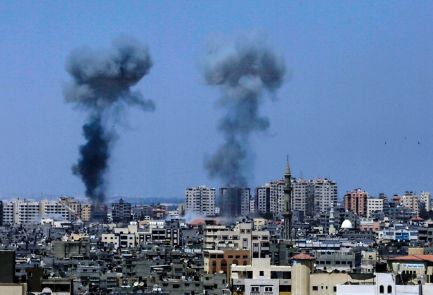
Smoke billowing over Gaza following an Israeli airstrike on terror targets
|Illustration: AFP
Hamas, the rulers of the Gaza Strip, and Palestinian terrorist group Islamic Jihad both were quick to deny launching rockets from Gaza Wednesday, after a Grad rocket fired on Israel scored a direct hit on a Beersheba home and another landed in the sea, off the coast of a major central Israeli city
Six people, including a woman and her three children, managed to survive the Beersheba rocket attack with only minor injuries. In response, Israeli fighter jets struck 20 Hamas positions in Gaza, and the flare-up sparked concerns that a rapid escalation may be inevitable.
”There is only one element that wants to see a war in the Gaza Strip right now, and that is Iran,” former National Security Adviser Maj. Gen. (ret.) Yaakov Amidror noted. “So we have to ask ourselves which of their proxies in Gaza have long-range rockets, then counter them.”
It would be a “very big mistake,” he warned, if Israel were to “fall into the Iranian trap and launch a military operation in Gaza. That would play directly into the Iranians’ hands.”
Yoni Ben-Menachem, a research fellow at the Jerusalem Center for Public Affairs, disagrees. Ben-Menachem argues that Wednesday’s rocket fire was Hamas’ handiwork, as Gaza’s rulers sought to set facts on the ground vis-à-vis Israel and Egypt.
”No other group in Gaza would dare fire two long-range rockets at Israel like this. The attack didn’t target the Gaza-vicinity communities – this was aimed at Beersheba and central Israel,” he said.
Channel 10
The damage caused to a Beersheba home by rocket fire, Wednesday
Had both projectiles resulted in Israeli fatalities, it would surely lead to war, he explained, adding that “no rogue group in Gaza would do something like that without getting the green light from Hamas. This is why, as the sovereign entity in Gaza, Hamas is responsible.”
”Hamas continues to claim that a rogue group was behind the attack only so it can deflect the claims brought against it, but it’s a lie. Unfortunately, the Israeli defense establishment seems to be willing to believe this lie,” Ben-Menachem said.
”Be very careful in romanticizing the relations between Hamas and Egypt, because Hamas is very displeased with the way Egyptian intelligence is handling the truce talks,” he said.
”Hamas is actually sending mixed signals: its message to Egypt is that it is dissatisfied with the way the negotiations are being handled, while at the same time, it signals to Israel that any forceful strike in Gaza would risk massive retaliation targeting the Israeli homefront,” he explained.
”Hamas maintains an iron grip on Gaza. It controls everything, down to the last firebomb balloon, so even if they say, ’We didn’t do it’ – they did,” he said. “I can only assume that Israeli intelligence misjudged the situation and was unprepared for long-range rocket fire on Israel. That’s a failure on their part. We can’t trust Hamas, so we have to be prepared for any scenario.”
Bar-Ilan University Middle Eastern Studies Department’s Dr. Yehuda Balanga, an expert on Syria and Egypt, believes there are other parties in Gaza who wish to capitalize on Israel and Egypt’s obvious interest in a Gaza truce.
”Hamas may be the sovereign in Gaza, but there are more radical forces on the ground, and while Hamas tries to rein them in, these organizations have their own agenda and they see every attack on Israel as a great victory,” he said.
These groups, he explained, “understand that given the tensions in [Israel’s] northern sector and the fact that this is an election year, Israel won’t strike back.”
”For these groups, any rocket fired from Gaza is an achievement because it does not endanger them. They know Israel will not pursue the end of Hamas’ regime, nor will it pursue their elimination so as far as these groups are concerned, they are the winners here.”
These groups, Balanga explained, “Have their own agenda and part of it is to embarrass Hamas. The fact that the head of Egyptian intelligence was headed to the Strip to try and advance the truce efforts made it the perfect time for them to act.”
”Everyone knows that despite the attempts to postpone the inevitable, Israel will eventually launch another military campaign in Gaza. This means that these radicals have nothing to lose. Whatever the scenario – they will survive and will most likely be hailed as heroes by the Gazans. That’s why they fire rockets,” he concluded.








 anneinpt
 artaxes
 danmillerinpanama
 davidking1530
 Peter Hofman
 Joseph Wouk
 Peter
Peter Louisiana Steve
 WarSclerotic
Recent Comments