The unusual route of the Iranian cargo jets

Posted October 21, 2018 by Joseph Wouk
Categories: Uncategorized

Source: The unusual route of the Iranian cargo jets

Western intelligence sources believe that a Fars Air Qeshm Boeing 747, very active on the Tehran-Damascus route, made an unusual flight to Beirut to deliver advanced weapons systems to Hezbollah, including GPS for precision missiles.
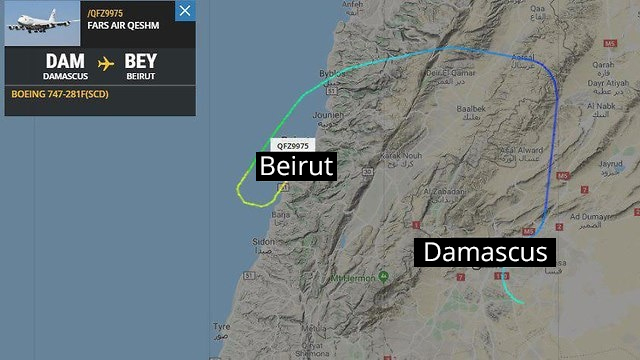
Flight QFZ9975 set off alarm bells for Western intelligence agencies. The Boeing 747 aircraft of the Iranian cargo airline Fars Air Qeshm has been operating for months in the service of arms shipments from Tehran to Syria, but this time it made an unusual stop in Beirut. Fox news reported on Friday that the aircraft delivered GPS components to Hezbollah that would make their unguided rockets into precision-guided missiles.
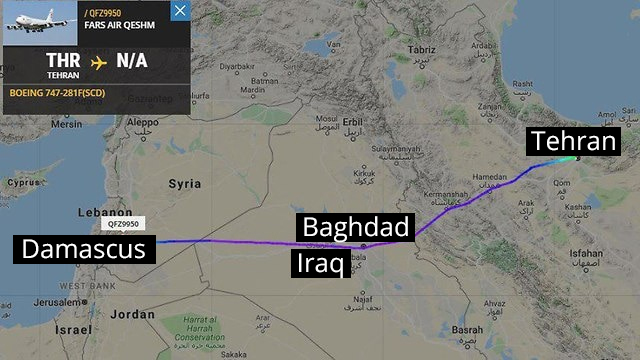
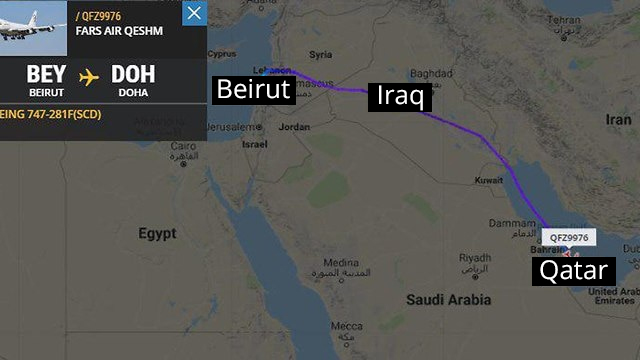
The 27-year-old plane, under the registration EP-FAB, took off Tuesday morning from Tehran to Damascus as flight QFZ9950 and landed in Syria just before 11am. About two hours later, in a rather unusual change, the plane took off as flight QFZ9975 directly to Beirut airport, where it landed shortly after 2pm.The following day, the plane took off at night from Lebanon to Doha, the capital of Qatar, as flight QFZ9976, where it landed after midnight. On Thursday it made its final journey last week when it flew back as flight QFZ9977 to Tehran.

The plane has worked extensively in the past to transport equipment and weapons from the Revolutionary Guards under civilian guise, mainly to Assad’s army. It entered the Iranian fleet in September 2017 after an extensive service life with companies from Japan, Georgia, Afghanistan, Armenia and Russia.Last month, suspicions surfaced that Iran used the Boeing 747 to deliver advanced weapons to Syria. The reports came in the aftermath of the assault on the Damascus airport, attributed to Israel. This plane was documented at the time when it landed at Damascus International Airport.

Last month, it was also reported that two aircraft belonging to the Iranian airline “carried out unconventional flight routes.” The first flight was by a Boeing 747, which took off on July 9 from a military base in Tehran, made a brief interlude at the Damascus International Airport, and then continued to Beirut International Airport.The second flight took off on August 2 from Tehran and landed in Beirut about two hours before the scheduled landing, in what appeared to be “an unusual route through northern Syria.”

“The Iranians are trying to find new ways to smuggle weapons to their allies in the Middle East,” said an unnamed Middle Eastern intelligence source, adding that “they are exploring the West’s ability to locate and define smuggling.”

According to Fox News, the Iranian airline stopped operations in 2013 due to administrative failures, but became active once more last March. The company’s board of directors includes three representatives from the Iranian Revolutionary Guards.

Last month. Prime Minister Benjamin Netanyahu revealed in his speech at the UN General Assembly that “in Lebanon, Iran is directing Hezbollah to build secret sites to convert inaccurate projectiles into precision-guided missiles. Missiles that can target deep inside Israel within an accuracy of ten meters.”

 (Photo: IDF Spokesman's Office)

(Photo: IDF Spokesman’s Office)
Netanyahu addressed the Shiite terror organization and said: “Hezbollah is deliberately using the innocent people of Beirut as human shields. They’ve placed three of these missile conversion sites along Beirut’s international airport.”

 (Photo: IDF Spokesman's Office)

(Photo: IDF Spokesman’s Office)

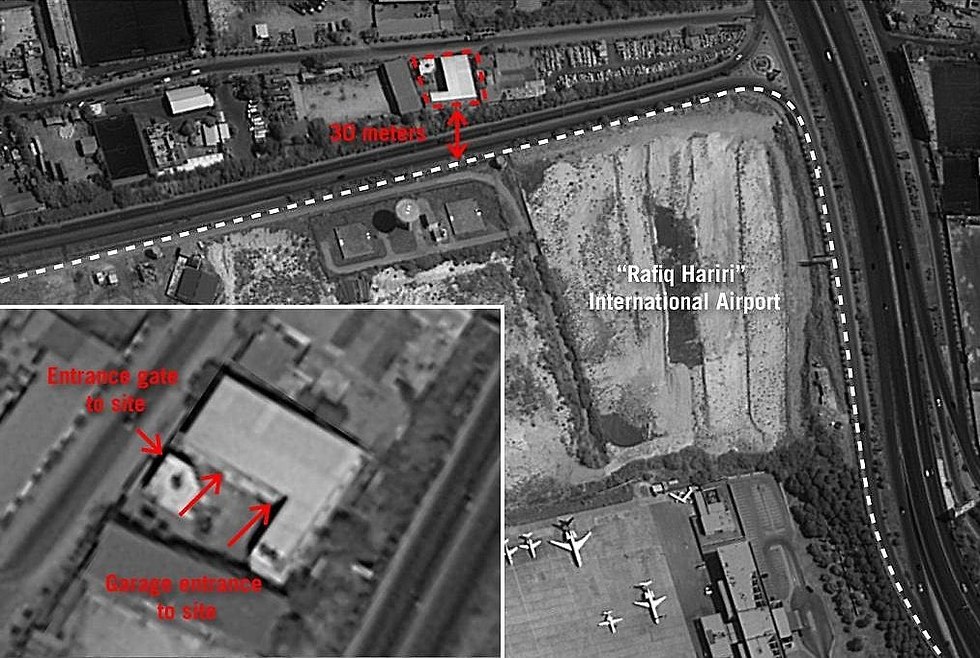
Netanyahu presented world leaders with a picture of the airport and said: “Here’s Beirut’s international airport. Here’s the first missile site. It’s in the Uzai neighborhood, on the water’s edge, a few blocks away from the runway. Here’s the second site. It’s underneath a soccer stadium, two blocks away. And here’s the third site. It’s adjacent to the airport itself, right next to it. So I have a message for Hezbollah today: Israel knows, Israel also knows what you’re doing. Israel knows where you’re doing it. And Israel will not let you get away with it.”

The IDF published a record of the Hezbollah sites in the Lebanese capital.


Netanyahu calls on Mnuchin to stop Iranian aggression

Posted October 21, 2018 by Joseph Wouk
Categories: Uncategorized

Source: Netanyahu calls on Mnuchin to stop Iranian aggression – International news – Jerusalem Post

“Instead of blocking their path to a nuclear bomb, it actually paved their way to a nuclear arsenal,” Netanyahu said of JCPOA.

BY YVETTE J. DEANE
 OCTOBER 21, 2018 11:14
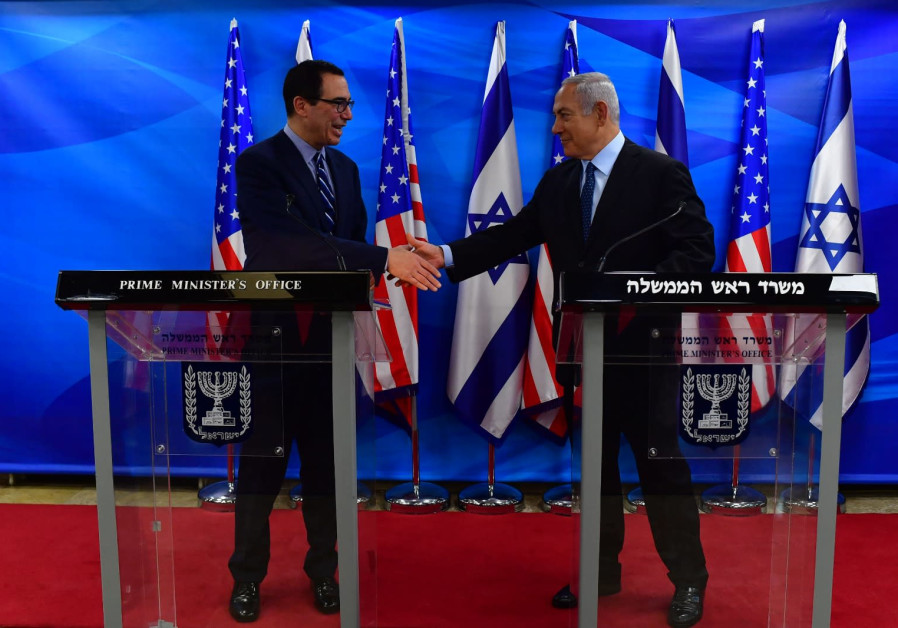
Prime Minister Benjamin Netanyahu meets Treasury Secretary Steven Mnuchin, October 21, 2018

Prime Minister Benjamin Netanyahu discussed ways to continue to challenge Iranian power in the region with US Treasury Secretary Steven Mnuchin on Sunday.

Netnyahu said the two discussed, “How to stop Iran’s two-pronged aggression: its pursuit of a nuclear arsenal and its pursuit of a conventional arsenal and its plans to takeover the Middle East.”

He also congratulated President Trump’s “courageous step out of the JCPOA,” and hope for increased “pressure on the world’s main terrorist regime, the aggressive regime in Tehran.”

“Instead of blocking their path to a nuclear bomb, it actually paved their way to a nuclear arsenal,” Netanyahu said of JCPOA. “In addition, it gave them hundreds of billions of dollars in cash, credit and investment, enabling them to finance their growing aggression in the region.”

Netanyahu also touted the US and Israeli relationship, saying “The alliance between the United States and Israel under President Trump has never been stronger.”

The two also discussed the local economy in Israel  and American economy, the cooperation between the two.

In response to the a journalist’s question about Khan al-Ahmar, Netanyahu said, “Khan al-Ahmar will be evacuated, this is a decision of the court, this is our policy, and it will also be implemented … I have no intention of postponing this.”


Saudi admission of Khashoggi death leaves turmoil in Riyadh, fallout on Saudi-US relations – DEBKAfile

Posted October 21, 2018 by Joseph Wouk
Categories: Uncategorized

Source: Saudi admission of Khashoggi death leaves turmoil in Riyadh, fallout on Saudi-US relations – DEBKAfile

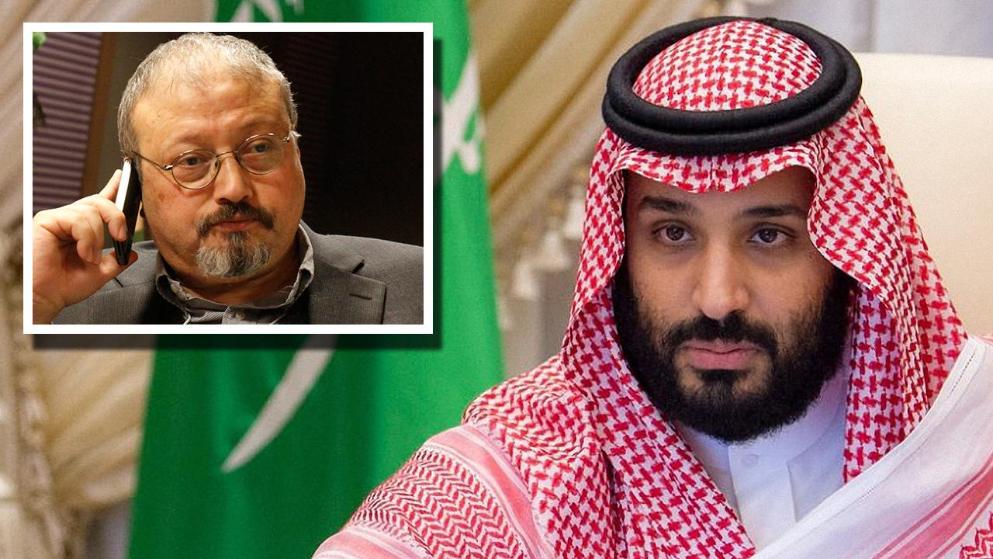
The Saudis cannot hope to lay to rest the upsets in the royal house and commotion in Washington by their disclosure on Saturday, Oct. 20 that the journalist Jamal Khashoggi died after a fistfight with intelligence agents sent to abduct him. 
Neither will the vibes subside after royal decrees  were issued to sack the crown prince’s associate, Deputy intelligence chief Ahmed Al-Asiri, court adviser Saud Al-Qahtani and three other intelligence officers, or 18 arrests in the ongoing investigation.

President Donald Trump saw this when he said: “Saudi Arabia has been a great ally, but what happened is unacceptable. It’s a big first step, only a first step.” He also announced he would work with Congress on the response.

There are too many fingers in the pie and open questions for the scandal to die down any time soon. For one, what happened to the body of the dead journalist? The Saudis now report that it was handed to an unnamed “local collaborator.” This mysterious person either got away, was smuggled out of Turkey by Saudi agents or is no longer alive. This may explain the sweep Turkish police have been conducting in the woods near the consulate and other parts of Istanbul.

King Salman’s appointment of a ministerial committee, headed by Saudi Crown Prince Mohammed bin Salman to restructure the country’s General Intelligence agency and issue the results of its work within a month, was intended as a vote of confidence in Prince Mohammed (MbS) who has taken most of the international flak over the Khashoggi mystery. The monarch was clearly trying to put the running of the kingdom back to normal.

Abductions and assassinations by clandestine agencies of traitors, enemies, double agents or regime opponents  are not uncommon in the shady underworld of many nations. But even when they are botched and lead to unplanned deaths of the objects or even their assailants, such cases are rarely admitted by officialdom or reach the public domain. Yet the Khashoggi case hit world headlines, fed day after day by vividly morbid details, from the moment he failed to come out of the Saudi consulate in Istanbul on Oct. 2, because three parties had an immediate interest in fanning the flames of outrage.

  1. The crown prince’s rivals at home, who saw their chance to topple him. The official announcement on Saturday will not end the infighting in Riyadh, but rather intensify the struggle waged against him for some months by high-ranking princes, army commanders, intelligence agents and rich Saudis.
  2. Turkish President Tayyip Erdogan seized the affair with both hands as a vehicle for climbing up to the top of the international and Muslim power ladder in the guise of a seeker after justice and truth.
  3. Donald Trump’s political foes at home, who saw an opening for getting at him through the friendship between his son-in-law Jared Kushner and the Saudi crown prince. In this respect, the president’s decision to send Secretary of State Mike Pompeo to Riyadh and Ankara to get to the bottom of the affair and take the heat off the White House did more harm than good. Trump would have been better served by standing aloof from the scandal. Now he hopes to get rid of the hot potato by his decision to work with Congress on Washington’s response to the embarrassing Saudi crisis.


PM Netanyahu Meets with U.S. Treasury Secretary Steven Mnuchin 

Posted October 21, 2018 by Joseph Wouk
Categories: Uncategorized


More than 10,000 Palestinian rioters hurl 33 improvised bombs at Israeli troops 

Posted October 20, 2018 by Joseph Wouk
Categories: Uncategorized

Source: More than 10,000 Palestinian rioters hurl 33 improvised bombs at Israeli troops – DEBKAfile

Yet Israeli spokesmen insisted that the Palestinian riot on the Gaza border this Friday, Oct. 19, was the “quietest in seven months.” The IDF spokesman commented that “most of the rioters kept their distance from the border fence and Hamas was there to curb the violence.” He went on to say, “There were nonetheless cases of explosives, grenades, attempted border crossings and various acts of terror. Our forces took preventive measures. This is not a situation we are prepared to accept. We expect the terror to cease.”

This statement came after Israeli officials tried hard to downplay the outbreak, during which at least three gangs pushed their way across the border, one of them torching a military vehicle, before they were driven back with tear gas and live fire by ramped-up Israeli forces defending the border. Palestinians claimed 117 injured and one killed in clashes with Israeli troops.

The message running through official Israeli comments was that Hamas needs time to bring the outbreaks gradually under control and it won’t happen at once. This refrain came after repeated threats by Prime Minister Binyamin Netanyahu and Defense Minister Avigdor Lieberman of a “powerful” Israeli reaction if the seven-month campaign of terror by arson and riots on the border continues.

Yet, after two boosted Grad rockets were aimed at two Israeli cities on Wednesday, the Israeli security cabinet decided to hold the IDF back from striking back forcefully and to give Hamas a chance to match this restraint when Friday came around. What happened was that more than 10,000 rampaging Palestinians showed up on the border fence. The 33 explosive devices they hurled at the troops was indeed half the number of last week, but could hardly count as restraint. Although the Israeli border force was reinforced in numbers and equipped with tanks, their tactics did not change from their routine defensive stance. Chief of staff Lt. Gen. Gady Eisenkot and OC Southern Command Maj. Gen. Herzi Halevi are at the scene.

During the day, an IDF drone struck a Palestinian incendiary balloon team in southern Gaza. All the same, three fires were ignited on the Israeli side of the border. Iron Dome batteries have been deployed at several points in central Israel following the Palestinian Grad attack on two Israeli cities on Wednesday.


Mowing the lawn in Gaza 

Posted October 20, 2018 by Joseph Wouk
Categories: Uncategorized

Source: Column One: Mowing the lawn in Gaza – Opinion – Jerusalem Post

The main strategic takeaway from Gaza and from Judea and Samaria is that there is no solution, military or otherwise to the Palestinians’ never-ending war against the Jewish state.

BY CAROLINE B. GLICK
 OCTOBER 18, 2018 21:27
Column One: Mowing the lawn in Gaza

Wednesday night, the security cabinet convened to discuss the Hamas regime in Gaza’s escalating war against Israel. The current round of war began seven months ago when Hamas terror bosses ordered Gaza residents to the border with Israel. The declared purpose of the mass gatherings was to destroy Israel in what Hamas referred to as “the march of return.” Hamas leaders Yahya Sinwar and Ismail Haniyeh promised they would hold a press conference on the embers of destroyed Israeli border communities in short order.

The “march,” of course, never happened. What came instead has been seven months of unremitting terror. Tens of thousands of acres of farmland and nature preserves have been scorched and destroyed by arson kites and balloons sent over the border from Gaza. Kibbutzim and townships have been subjected to intermittent rocket and missile attacks interspersed with incendiary kites and balloons that have fallen in school yards, on private homes and in the middle of playgrounds filled with children.

And then, in the early morning hours on Wednesday, Hamas shot a missile into Beersheba and another toward Tel Aviv. The missile in Beersheba destroyed a family home. A family of four avoided death through the heroic efforts of the mother, who dragged her sleeping children into their bomb shelter moments before the missile destroyed their house.

The missile shot toward central Israel landed in the Mediterranean Sea.

For seven months, the government has been subjected to continuous criticism for avoiding any major response to Hamas’s unrelenting aggression. And for seven months, Prime Minister Benjamin Netanyahu and Defense Minister Avigdor Liberman have promised to hit Hamas hard while acceding to the IDF General Staff’s position that Israel should do as little as possible militarily and try to bribe Hamas into standing down by increasing humanitarian aid to Gaza.

Why has the government responded so weakly to Hamas’s assaults and what can we expect to happen, going forward in the wake of the security cabinet’s meeting Wednesday night? What does the situation in Gaza tell us about the future of the Palestinian Authority in Judea and Samaria, and about Israel’s options moving forward in relation to both groups of Palestinians?

To understand the government’s dilemma, we need to first understand what we’re dealing with in Gaza and what Israel’s options are, realistically, for shaping the situation on the ground in a manner that will improve the safety and security of Israel.

For the past 13 years, since Israel abandoned Gaza and destroyed its communities in the area, Gaza has been a quasi-independent state. Since January 2006, when Hamas won the elections to the Palestinian legislature, the terror group has been the most powerful and most popular force in Gaza – and arguably in Judea and Samaria as well.

Moreover, if Hamas were toppled tomorrow, it wouldn’t be replaced by a peaceful regime. It has no moderate opponents. As The Jerusalem Post’s Khaled Abu Toameh has reported, the second most powerful force in Gaza is the Islamic Jihad terror group. Hamas is controlled by Qatar, Turkey and Iran. Since it was established in 1988 by Iran’s Revolutionary Guard Corps, Islamic Jihad has been a wholly owned proxy of Tehran. Pick your poison.

THERE IS a long-term way to topple Hamas or at least to gut its power. Were Egypt to open its border with Gaza, hundreds of thousands of Gazans would emigrate out of the region. Hundreds of thousands more would work in the underpopulated northern Sinai. Such a situation would leave Hamas with no economic leverage over the population and consequently with much reduced military capabilities to pursue its eternal war against the Jewish state.

Unfortunately, as things stand, Egypt remains adamant in its opposition to any suggestion that it permit the Gaza Strip to merge economically – let alone politically – with the Sinai. Perhaps the US can convince Egyptian President Abdel Fattah al-Sisi to change his mind and integrate Gaza’s economy into Egypt’s economy. But Israel is in no position to do so.
Which brings us back to the security cabinet.

Frustrated by the harsh criticism he has received as a consequence of his feeble response to Hamas’s new round of aggression over the past seven months, and fearful of the electoral consequences of his appearance as weak and flaccid, this week Liberman said the time has come to hit Hamas hard. He reportedly offered a plan to achieve his goal Wednesday night. His colleagues reportedly rejected Liberman’s plan in favor of other options offered by the IDF.

The cabinet ministers’ reported rejection of Liberman’s plan makes sense. Because the fact is that Israel’s options in relation to Gaza are very limited.

If Israel tried to retake control over Gaza, as exasperated politicians sometimes recommend, it would never stop paying the price for the move. Even if Israel had the ground forces to undertake such an operation without leaving northern Israel vulnerable to aggression from Iran and its proxies in Lebanon and Syria, the cost of conquering Gaza in blood and treasure would be prohibitive, and in the absence of any moderate force on the ground that could eventually take over, Israel would be stuck ruling over a hateful population until it finally abandoned Gaza again and another terror group took over.

Israel’s Left, along with its protean chorus of partners in the West, insist that the only way to “solve” the situation in Gaza is to replace the Hamas regime with a regime led by the PLO-controlled Palestinian Authority in Judea and Samaria. That would be the regime that Hamas ousted in a bloody and swift rout in June 2007.

There are two problems with this claim, and they point to Israel’s larger quandary with regard to the PA regime in Judea and Samaria.

The first problem is that the PA would never be able to take over because it has no power base in Gaza. If Israel or Egypt tried to install them, at best the PA officials would be nothing more than front men for Hamas.

The second problem with bringing the PA into Gaza is that there is no evidence it would be any less extreme than Hamas.

During the two years the PA controlled independent Gaza, following Israel’s abandonment of the area in August 2005, it militarized the Gaza Strip in an unprecedented way. Rocket, mortar and missile attacks against Israel became a daily event. Most of the missiles were shot by Fatah cells loyal to the PA.

In Judea and Samaria, the PA runs an autonomous regime in the Palestinian population centers. Like Hamas, the PA regime has done nothing to develop its economy. It has squandered hundreds of millions of dollars in international assistance to line the pockets of its corrupt leaders and pay off their cronies.

AS IT DID in Gaza between 1996 and 2002, the PA militarized the areas of Judea and Samaria that it controlled. Israel only demilitarized the Palestinian areas in response to the PA-directed terror war that was launched in September 2000.

The only reason Israel is not facing the same situation in Judea and Samaria as it faces in Gaza is because its military forces have controlled the areas since 2004.

Which brings us back to Wednesday night’s security cabinet meeting.

In their meeting Wednesday night, as in all their meetings regarding Gaza, the ministers had very limited options. All they can really decide is what level of military force to order the IDF to use against Hamas and what level of humanitarian aid to order the IDF to permit to enter into Gaza.

According to media reports, the cabinet decided Wednesday night to “change the rules of the game” in relation to Hamas, and particularly in relation to its riots along the border every Friday afternoon. What this means remains to be seen.

Perhaps the IDF will assert control over the security perimeter it controlled on the Gaza side of the border until the end of 2012. Israel abandoned its security perimeter, which was 300 meters wide, and permitted Gazans to farm along the border fence, (and so set the conditions for Hamas’s current border aggression) in the framework of cease-fire talks at the end of Operation Pillar of Defense – the mini-war it fought against Hamas in 2012. Such a move would certainly constitute a significant improvement over the current situation.

Perhaps Israel will carry out major air assaults that could destroy a significant number of Hamas’s missile and mortar stocks. Perhaps Israel could retaliate for Wednesday’s missile strike by destroying the homes of Hamas leaders.

Whatever it does, and whatever military moves Israel makes, the fact is that Israel cannot end the menace it faces from Hamas. It can and should weaken Hamas’s war-fighting capability and perhaps intimidate Hamas leaders into cooling their jets for a few months or a year or two. But the next round will come whenever Hamas decides to open one and Israel will be forced to respond again.

As for Judea and Samaria, Israel has no reason to be concerned about who is in charge and to what degree they are in charge in the Palestinian population centers so long as Israel retains overall security control of the area. We don’t have a dog in the fight. None of the possible successors to Mahmoud Abbas or to his kleptocratic PA are any better than he is. And none of them are significantly worse.

The main strategic takeaway from Gaza and from Judea and Samaria is that there is no solution, military or otherwise to the Palestinians’ never-ending war against the Jewish state.

All Israel can do is secure its control over what it already controls by, among other things, applying its law to Area C, and use military force to limit the Palestinians’ ability to attack its civilians and its territory.

The coming days and weeks may and should see a significant escalation in IDF offensive strikes against Hamas targets in Gaza. But no matter how successful they may or may not be, they shouldn’t be seen as anything more than a military version of mowing the lawn. And just as grass grows back, so Hamas will rebuild its strength. Israel’s challenge is not to uproot the grass, but to maintain the capability to keep it as short as possible.

Who knows? Maybe one day the Palestinians will get tired of fighting and there will be peace.
 

Report: Iran sent advanced technology to improve Hezbollah rockets

Posted October 20, 2018 by Joseph Wouk
Categories: Uncategorized

Source: Report: Iran sent advanced technology to improve Hezbollah rockets – Middle East – Jerusalem Post

Despite the denials, Hezbollah has already admitted it has precision missiles.

BY SETH J. FRANTZMAN
 OCTOBER 20, 2018 02:57
Iran-Hezbollah terror

A Fars Air Qeshm flight Boeing 747 touched down in Beirut at 2:04 pm on October 16. The large white aircraft had left Tehran at 9:33am that morning but had concealed its flight details from international tracking authorities. It stayed in Beirut for almost a day before leaving for Doha on October 17. That plane is now at the center of a report at FoxNews alleging that it carried “GPS devices to make precision-guided weapons in Iranian factories inside Lebanon.”

The report Friday night says that western intelligence sources believe the cargo plane was carrying items for Hezbollah. These components “were bound for these Hezbollah secret sires near the Beirut airport to target Israel in the future.” FoxNews quoted former head of military intelligence Amos Yadlin as saying Israel was determined to confront this kinds of technology transfer. “Israel is determined not to let it happen,” he said. “This is a source of concern because if the Iranians, on the one hand, are determined to build this precision project with ballistic missiles and the Israelis are determined not to let it happen, this is a recipe for collision.”

Fars Air Qeshm’s Boeing 747 has been implicated before in suspicious activity. In September FoxNews also reported that the same plane had departed from an air force base in Tehran on July 9 and also stopped in Damascus before continuing on to Beirut. It also landed in the afternoon. It used the flight number QFZ9960 as opposed to its October number QFZ9950. It also carried out another flight on August 2, leaving Tehran and landing in Beirut. The airline was also fingered in April as one of several being monitored by US intelligence for its role as an air bridge between Tehran and Damascus.

There has been pushback in the past against these reports. Sputnik news, which is close to Moscow’s narrative, argued in September that pushing the “smuggling” story caters to “Washing and Tel Aviv with a pretext to strike Iranian advisors and Hezbollah fighters in Syria.” Israel has carried out over 200 strikes in Syria over the last two years according to a report in September. Prime Minister Benjamin Netanyahu told the UN General Assembly on September 27 that Hezbollah had a number of clandestine sites in Beirut. The IDF released images of a Hezbollah precision missile factory to coincide with the speech. In early October Lebanese residents of Beirut received a WhattsApp message warning them they were licing in close proximity to these sites. “Hezbollah is brazenly lying to the international community,” Netanyahu said, when Lebanon denied the existence of the precision missile factories. He said that Lebanon had not looked underground to reveal Hezbollah’s “underground precision missile production facility.”

Despite the denials, Hezbollah has already admitted it has precision missiles. On September 20 Hezbollah said that “it has been done,” referring to outfitting its missiles with guidance systems. “The resistance now owns precision missile,” Hezbollah leader Hassan Nasrallah said during a speech.

The exposure of the alleged smuggling route and allegations that GPS systems are being put on the ballistic missiles poses a direct threat to Israel. In the past Hezbollah’s missiles have been relatively inaccurate. However the Islamic Revolutionary Guard Corps (IRGC) has increased the accuracy of its own missiles in Iran. In recent months it has showcased this accuracy firing Fateh 110 missiles at Kurdish opposition groups in Iraq in September and fired its Zolfiqar and Qiam ballistic missiles at ISIS in Syria. The attack in Iraq was able to hit a room in a large building, showing the missiles were very precise.

The allegation that Iran has begun to transfer this technology to Lebanon’s Hezbollah is a major escalation and forms part of Hezbollah’s desire to expand its arsenal in the wake of the Syrian civil war winding down. Hezbollah has been devoting resources to fighting in Syria. The last years have seen reports in Syria that Israel has struck weapons convoys destined for Hezbollah. In October Russia deployed the S-300 missile system to Syria. Now Jerusalem has been ramping up accusations about Hezbollah’s weapons systems and how Hezbollah is increasing the precision of its rockets and hiding them beneath Beirut. All of this points to increased tensions between Israel and Lebanon.


Russia says Islamic State has captured 700 hostages in Syria 

Posted October 19, 2018 by Joseph Wouk
Categories: Uncategorized

Source: Russia says Islamic State has captured 700 hostages in Syria – Israel Hayom


Iran pullout contingent on Syria security, Russian president says 

Posted October 19, 2018 by Joseph Wouk
Categories: Uncategorized

Source: Iran pullout contingent on Syria security, Russian president says – Israel Hayom


Israel decides to ramp up forces along Gaza border amid truce bid

Posted October 19, 2018 by Joseph Wouk
Categories: Uncategorized

Source: Israel decides to ramp up forces along Gaza border amid truce bid – Israel Hayom