Reports from Saudi Arabia, Israel, and Capitol Hill: Middle East Policy Forecast for 2019 

Posted February 1, 2019 by Joseph Wouk
Categories: Uncategorized


Published on Jan 31, 2019

The start of 2019 underscores a series of critical questions for U.S. Middle East policy. For example, will Saudi Arabia press ahead with its reform program, or will global criticism stemming from the Yemen war and the Khashoggi crisis dry up the foreign investment necessary to underwrite it? Will Israel’s elections affect the frozen relationship with the Palestinian Authority, the simmering confrontation with Hamas, or the broader strategy of confronting Iran in Syria? And will split control of Congress alter the Trump administration’s plans in the broader Middle East? Barbara Leaf, a senior fellow at the Institute, formerly served as U.S. ambassador to the United Arab Emirates and deputy assistant secretary of state for the Arabian Peninsula. She has just returned from a ten-day trip throughout Saudi Arabia. Dennis Ross, the Institute’s William Davidson Distinguished Fellow, served in senior Middle East roles during the Reagan, Bush, Clinton, and Obama administrations. He has just returned from a month-long visit to Israel that included side trips to Saudi Arabia and the United Arab Emirates. Dana Stroul, a senior fellow in the Institute’s Geduld Program on Arab Politics, previously served five years as a senior professional staff member on the Senate Foreign Relations Committee.

Why are Arab armies rubbish?

Posted February 1, 2019 by davidking1530
Categories: Uncategorized

This is a review of the book Armies of Sand: The Past, Present, and Future of Arab Military Effectiveness by Kenneth Pollack.

Why do Arab militaries perform so badly in war? The answer given is below.  

(I would also specifically mention Islam as a component of the culture as well.)

The main source of Arab military ineffectiveness is culture. “It seems unlikely that it is mere coincidence that the most damaging problems that Arab armed forces have suffered in battle just happen to conform perfectly to patterns of behavior emphasized by the dominant Arab culture,” Pollack writes. “It gets even harder to buy given that Arab organizations in other walks of life experience precisely the same patterns of behavior as their armies, despite the fact that those other organizations were not trained by the Soviets, nor were they subject to coup-proofing or other forms of politicization, nor did they behave like similar organizations in other developing countries.”

Pollack identifies key aspects of Arab culture relevant to the book: conformity, centralization of authority, deference to authority and passivity, group loyalty, manipulation of information, atomization of knowledge, personal courage, and ambivalence toward manual labor and technical work. One can see how these values and behaviors will negatively affect military performance, especially the most glaring problem for Arab armed forces: poor tactical leadership from junior officers. Consistently, these officers fail to show any initiative or creativity—they rarely if ever adapt quickly to changing circumstances in battle. This makes perfect sense, though, if one considers these soldiers were trained to conform and defer to authority. This stands in stark contrast to the Israeli military, whose soldiers were raised in the “Start-Up Nation,” which encourages innovation from all ranks.

The Mirage of Arab Military Might

Why do Arab militaries perform so badly in war? Israel’s victory in the Six-Day War, Chad’s defeat over Libya in 1987, the Islamic State’s humiliation of the Iraqi security forces—why do they lose when, by all objective measures, they should win? And when they win, why are their victories so small?

These questions are not just academic. Indeed, their answers are central to American foreign policy in the Middle East, for today and for the future.

Go back to May 2014, when then-President Barack Obama told a graduating class of West Point cadets that training foreign soldiers was central to his strategy on counterterrorism. “We have to develop a strategy that matches this diffuse threat—one that expands our reach without sending forces that stretch our military too thin or stir up local resentments,” Obama said. “We need partners to fight terrorists alongside us.” His idea was to deploy small numbers of military trainers and advisers to the Middle East and elsewhere to assist local forces, keeping the American footprint to a minimum.

More than four years later, President Donald Trump has continued this approach, which, along with his decision to withdraw American troops from Syria, indicate that the United States will need to rely on Middle Eastern forces to do their own fighting. Given that the United States will still have vital interests in the Middle East to protect, Washington will need to care even more about the effectiveness of Arab armed forces.

Enter Kenneth Pollack, a scholar at the American Enterprise Institute. Pollack’s new book, Armies of Sand: The Past, Present, and Future of Arab Military Effectiveness, seeks to explain the reasons for Arab military weakness since World War II and why the same problems are consistent across the Arab world. Sweeping in its scope yet accessible to the layman, Armies of Sand is a remarkable scholarly achievement that should be required reading for anyone involved in forming American foreign policy in the Middle East.

Arab armed forces have performed poorly in numerous areas of warfare. These problems—too many to list here—range from poor tactical leadership by junior officers to poor strategic leadership by generals, from mismanagement of information to struggles handling weapons. Other problems include unit cohesion, terrible equipment maintenance, and sub-par training.

Pollack identifies four theories that experts have proposed to explain the weaknesses of Arab armed forces: reliance on Soviet-style doctrine and military methods; poor civil-military relations and the “excessive politicization of Arab militaries resulting from the constant coups—and coup-proofing—endemic to the Arab states”; economic factors, particularly the “chronic underdevelopment of the Arab states throughout the post-World War II era”; and “patterns of behavior derived from Arab culture.”

“Although numerous observers have written books, articles, and papers arguing for one explanation or another, no one has ever looked at all of them collectively to try to deduce which are wrong and which right; whether these recurrent patterns of Arab military ineffectiveness could be traced back to just one overarching source, or a combination of some or all,” Pollack writes. “No one has ever tried to sift through them and figure out which ones hold water, and which are just hogwash. That is the purpose of this book.”

Pollack’s first takeaway is that relying on Soviet military doctrine is not the cause of the Arabs’ military problems. To the contrary, the Soviets were more helpful than hurtful. Regardless, there was no correlation between an Arab military’s reliance on Soviet methods and its performance on the battlefield.

Second, politicization was a problem, but not the most important one. It definitely hurt the effectiveness of Arab armed forces in many ways, but “deficiencies in tactical leadership, tactical information management, air operations, weapons handling, and maintenance persisted regardless of how politicized or professional they were.”

Third, economic underdevelopment was similarly an “element of modern Arab military ineffectiveness, and arguably an important one—just not the most important one.” None of the non-Arab militaries that Pollack examined experienced the same difficulties that were the greatest problems of the Arab armed forces.

The main source of Arab military ineffectiveness is culture. “It seems unlikely that it is mere coincidence that the most damaging problems that Arab armed forces have suffered in battle just happen to conform perfectly to patterns of behavior emphasized by the dominant Arab culture,” Pollack writes. “It gets even harder to buy given that Arab organizations in other walks of life experience precisely the same patterns of behavior as their armies, despite the fact that those other organizations were not trained by the Soviets, nor were they subject to coup-proofing or other forms of politicization, nor did they behave like similar organizations in other developing countries.”

Pollack identifies key aspects of Arab culture relevant to the book: conformity, centralization of authority, deference to authority and passivity, group loyalty, manipulation of information, atomization of knowledge, personal courage, and ambivalence toward manual labor and technical work. One can see how these values and behaviors will negatively affect military performance, especially the most glaring problem for Arab armed forces: poor tactical leadership from junior officers. Consistently, these officers fail to show any initiative or creativity—they rarely if ever adapt quickly to changing circumstances in battle. This makes perfect sense, though, if one considers these soldiers were trained to conform and defer to authority. This stands in stark contrast to the Israeli military, whose soldiers were raised in the “Start-Up Nation,” which encourages innovation from all ranks.

The education system in Arab societies drilled in these values to the point that they became central to soldiers’ behavior. “Typical Arab educational practices relentlessly inculcated the values, preferences, and preferred behavior—the culture—of the wider society,” Pollack writes.

Pollack also explains that Arab military programs are modeled on the educational methods of the larger society, reinforcing certain patterns of behavior and conditioning soldiers to act and think in “ways that reflect the values and priorities of the dominant culture.”

Pollack’s findings present hurdles for the United States, which has spent decades trying to build more effective Arab militaries. The logic behind this approach is simple: Partners in the region can act as force multipliers for Washington, lessening the burden on the American military. When these efforts backslide, however, the United States often has to deploy more of its own soldiers or, at the very least, invest more resources to help the locals fight. If Arab culture is the main source of the Arabs’ military woes, then sending their leaders to American military schools will not be sufficient, nor will more training. The United States can take certain steps, some of which Pollack discusses, to make moderate, but still significant, progress, but anything more would require broader changes in Arab society—a much taller task.

Another related problem for Washington is that its Arab allies cannot be expected to counter the greatest threats in the region: Iran, Iran’s proxies, and Sunni jihadist groups like ISIS. The Iraqi Army’s breakdown in 2014 proves this point for the latter. The United States is effectively seeking an unofficial alliance of Arab states (and Israel) to counter Iran’s aggression in the Middle East. It may give Arab states billions of dollars in military aid and sophisticated weapons, but these countries have far fewer soldiers on whom to rely in a conflict with the Islamic Republic, and those whom they have are less battle-tested. Only Egypt and Turkey have comparable numbers, but the former is weak and the latter has close economic relations with Tehran. Beyond conventional strength, Iran is also much better than the Arabs at training foreign fighters and creating proxy forces.

Pollack makes a crucial point: The Middle East is going through unprecedented changes—social, economic, technological, and political. This transformation will affect Arab culture and may even “benefit Arab armies in combat.” Additionally, warfare in the 21st century is changing. It is possible that the Arabs will adapt better as the world moves from the Industrial Age to the Information Age. The future is uncertain, but Arab militaries could become more effective.

The United States should care about the effectiveness of Arab armed forces, but the reality is that a sustainable security system in the Middle East requires active American military power on the ground. The United States should work to strengthen allies, but that is not sufficient. History proves that when America is not actively engaged in the Middle East, it will inevitably be forced to return to the region and in a more forceful way. The United States must decide whether it will lead in the Middle East or be an uninvolved bystander. If Washington chooses the latter, it better prepare itself for the inevitable disaster to come.

Trump says US intelligence chiefs ‘naive’ on Iran

Posted January 31, 2019 by Joseph Wouk
Categories: Uncategorized

Source: Trump says US intelligence chiefs ‘naive’ on Iran | The Times of Israel

‘They are wrong!’ American president tweets after top intel officials say Tehran isn’t actively seeking nuclear weapons

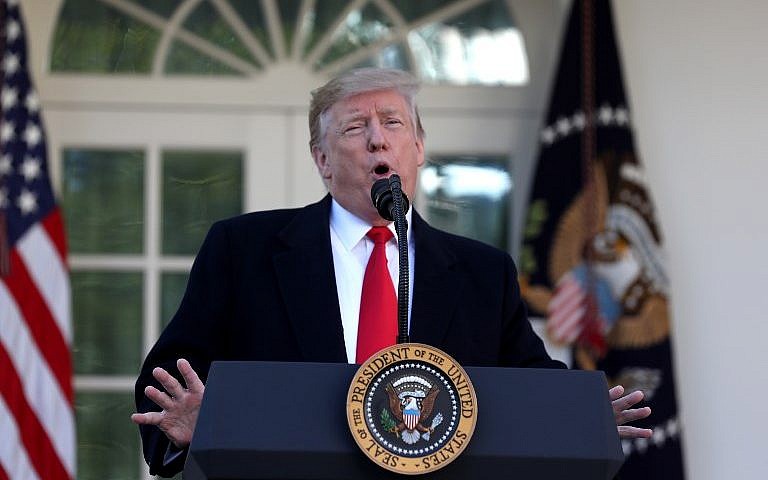
In this photo from January 25, 2019, US President Donald Trump speaks from the Rose Garden of the White House in Washington, DC. (Alex Edelman/AFP)

In this photo from January 25, 2019, US President Donald Trump speaks from the Rose Garden of the White House in Washington, DC. (Alex Edelman/AFP)

WASHINGTON — US President Donald Trump on Wednesday attacked the US intelligence services as “naive” and “wrong” on the threat he says is posed by Iran.

“Perhaps Intelligence should go back to school!” Trump said in a blistering series of tweets.

“The Intelligence people seem to be extremely passive and naive when it comes to the dangers of Iran. They are wrong!” Trump tweeted.

Iranian Foreign Minister Mohammad Javad Zarif fired back at Trump, writing on Twitter he “should have listened to the EU, the UN, and former US officials all along.”

Javad Zarif

@JZarif

When @realDonaldTrump‘s own intelligence agencies contradict what he, the warmongers in his admin, and the Israelis say about Iran. He should have listened to the EU, the UN, and former US officials all along.

Although especially vehement, it was not the first time Trump has publicly criticized his own intelligence services.

The broadside, which included separate tweets where Trump praised the success of his policies in Syria and North Korea, followed testimony Tuesday by top intelligence chiefs that were widely seen as contradicting the president’s rosy assessments.

In a hearing on global threats at the Senate Intelligence Committee, the top officials took issue with Trump’s assertion that the Islamic State group has been defeated, and that North Korea can be convinced to forego its nuclear weapons.

They also challenged the president’s claim that Tehran is actively seeking nuclear weapons, the justification Trump gave for withdrawing last year from a multilateral treaty on Iran.

Left to right: FBI Director Christopher Wray, CIA Director Gina Haspel and Director of National Intelligence Dan Coats testify at a Senate Intelligence Committee hearing on January 29, 2019, in Washington, DC. (Win McNamee/Getty Images/AFP)

They underscored again that they believe Russia meddled deeply on Trump’s behalf in the 2016 presidential election — which he has repeatedly denied — and can be expected to do the same in 2020.

The hearing took place weeks after Trump cited a victory over Islamic State to justify his sudden announcement of an immediate pullout from Syria, a move that alarmed the US defense establishment and allies in the Middle East.

And it came just weeks before Trump plans a second summit with North Korean leader Kim Jong Un to negotiate a hoped-for denuclearization of the deeply isolated state.

Times of Israel staff contributed to this report.

Europe set to announce plan letting Iran bypass US sanctions 

Posted January 31, 2019 by Joseph Wouk
Categories: Uncategorized

Source: Europe set to announce plan letting Iran bypass US sanctions | The Times of Israel

UK, France, Germany expected to launch payment mechanism Thursday; US warns it will pursue any company breaching sanctions

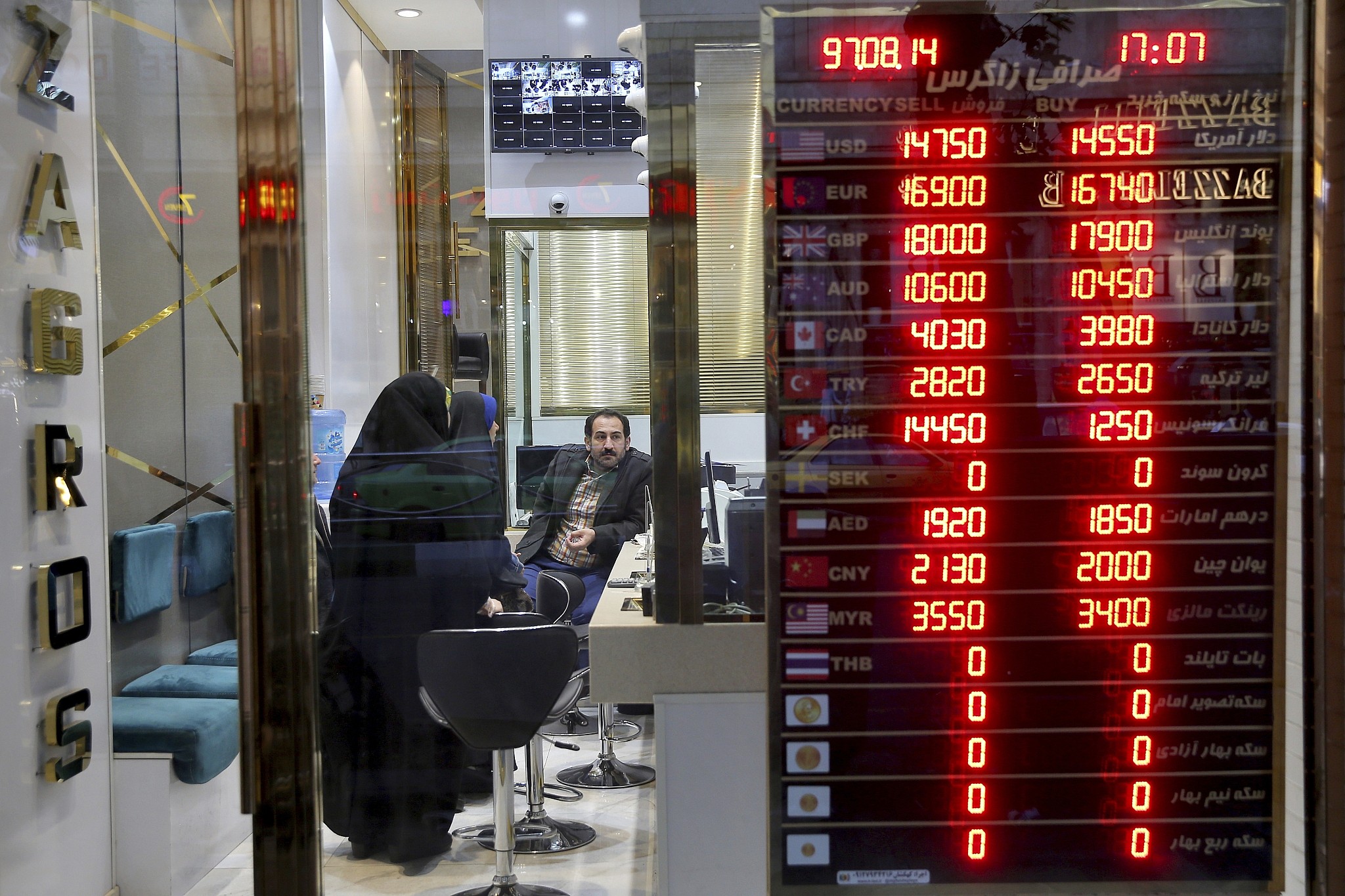
Customers speak with a money changer at his shop in downtown Tehran, Iran, November 5, 2018. (AP Photo/Ebrahim Noroozi)

Customers speak with a money changer at his shop in downtown Tehran, Iran, November 5, 2018. (AP Photo/Ebrahim Noroozi)

Britain, France and Germany will launch a special payment mechanism Thursday that the EU hopes will help save the Iran nuclear deal by bypassing US sanctions, European sources told AFP.

The entity, to be registered in France with German governance and finance from all three countries, will allow Iran to trade with EU companies despite Washington reimposing sanctions after US President Donald Trump pulled out of the 2015 accord.

The three countries — the European signatories to the landmark deal that curbed Tehran’s nuclear ambitions in return for sanctions relief — are expected to issue a joint communique launching the project, which has been in preparation for months.

While the new institution, called INSTEX — short for Instrument in Support of Trade Exchanges — is a project of the three governments, it will receive the formal endorsement of all 28 EU members.

The announcement may come on the sidelines of a meeting of EU foreign ministers in Bucharest.

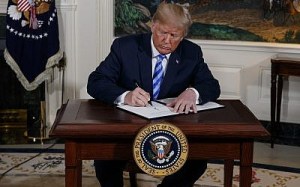
US President Donald Trump signs a Presidential Memorandum withdrawing from the Iran nuclear deal from the Diplomatic Reception Room of the White House, on May 8, 2018. (AP Photo/Evan Vucci)

Washington has warned the EU against trying to sidestep its sanctions on Tehran, while the Europeans — along with the deal’s other signatories Russia and China — say Iran has not broken its side of the deal and should be allowed to trade.

The EU has growing concerns about Tehran’s ballistic missile program, as well as its human rights record, its interference in Middle East conflicts and recent attempted attacks against opposition groups in Europe.

Washington has warned it will vigorously pursue any company breaching its sanctions against the Islamic republic, and a number of major international corporations have already pulled out.

The new European scheme was originally intended to allow Iran to sell oil to the EU on a barter basis but, with Europe now buying very little Iranian oil, it is now aimed at small and medium-sized companies.

“We’ll have to wait and see who uses it,” a European source said.

Iran’s economic crisis has led to sporadic protests against the government in the past year.

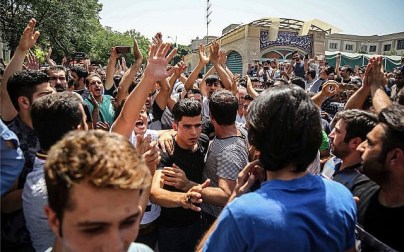
A group of protesters chant slogans at the main gate of old grand bazaar in Tehran, Iran, Monday, June 25, 2018. (Iranian Labor News Agency via AP)

The protests have seen unusual scenes of demonstrators chanting against continued Iranian spending of billions of dollars on regional proxy wars and support for terrorist groups, which many say has meant less investment in the struggling economy at home.

In recent years, Iran has provided financial aid to Palestinian terror groups Hamas and Islamic Jihad, Lebanon’s Hezbollah, Yemen’s Houthi rebels, and Shiite militias in Iraq. Since the start of the Syrian civil war in 2011, Tehran has poured a reported $6 billion into propping up president Bashar Assad’s government.

Rouhani has blamed the spontaneous demonstrations on “foreign media propaganda,” and has accused the US of waging “an economic war” against Tehran.

Iran regularly holds exercises to display its military preparedness and has vowed to respond strongly to any attack by Israel or the United States, both of which view it as a regional menace.


Report: Hezbollah terror group in midst of deep economic crisis 

Posted January 31, 2019 by Joseph Wouk
Categories: Uncategorized

Source: Report: Hezbollah terror group in midst of deep economic crisis – Israel Hayom


The stone around Iran’s neck

Posted January 31, 2019 by Joseph Wouk
Categories: Uncategorized

Source: The stone around Iran’s neck – Israel Hayom

As the Islamist regime in Iran marks 40 years to its establishment, local leaders there will admit there is not much reason to celebrate. They talk openly of their fears of an uprising and threaten that attempts to riot will be met with an iron fist.

In the streets of Tehran and other major cities throughout the country, protesters call to “leave Syria alone, deal with us!” and demand Iran end its financial support for Hamas, Islamic Jihad and other Palestinian organizations.

The country’s coffers are quickly growing empty, its oil exports increasingly on the decline. While the U.S. may not meet its stated goal of bringing Iranian oil sales to zero, Iran is not being paid for the oil it does manage to sell in U.S. dollars. China, India and Turkey are willing to pay for Iran’s oil in either local currency or goods, but these goods cannot provide for all of Iran’s needs. While Europe was very much interested in continuing to engage in trade with Iran, almost all of the continent’s large companies have already cut ties to the country.

Iran’s leaders are now openly talking about the dire straits the country is in. In cabinet meetings, President Hassan Rouhani has spoken about the increasing problem of poverty in the country and the growing impact it is having on the public, including the middle class. Noting he was born into a poor family, Rouhani has noted he is well aware of the pains of poverty. Even radical religious figures have spoken out about the issue, although they attribute it to the inefficacy of Rouhani and his advisers.

The Rouhani government has been busy in recent weeks working on a budget proposal for the coming year, and in light of Iran’s financial woes, budget cuts across all fields and sectors would seem the natural way to go. But Iran’s institutions of influence are trying to squeeze everything they can out of the government, going so far as to demand increases to their budgets. Religious figures are leading the struggle on this end at a time when media outlets are reporting that education, health and welfare in the country are already suffering as a result of a lack of funding.

It is still hard to predict if and when the regime will fall, but it is safe to say the ayatollahs are on shaky ground. In the past two years, protests in Iran have seen demonstrators shout, “Death to the dictator!” While the regime has so far succeeded in keeping the protests under control, the next time their anger boils over, it could lead to the collapse of the regime. It is not only the United States but also Arab states that are working toward this end. According to foreign reports, Israel is involved as well.

Menashe Amir is an expert on Iranian affairs and former head of the Israel Broadcasting Authority’s Persian language division.


A revolution on hold 

Posted January 31, 2019 by Joseph Wouk
Categories: Uncategorized

Source: A revolution on hold – Israel Hayom

‘Iran was at the cutting edge of technology’

Posted January 31, 2019 by Joseph Wouk
Categories: Uncategorized

Source: ‘Iran was at the cutting edge of technology’ – Israel Hayom


Rafael Designing Future Battlefield Warriors – Drone Swarms

Posted January 31, 2019 by davidking1530
Categories: Uncategorized

There is a nice video available at link below.

Watch: Rafael Designing Future Battlefield Warriors – Drone Swarms

In a secret laboratory in northern Israel, the Jewish State is preparing for next-generation warfare: thousands of small drones capable of synchronized action, like flocks of birds, observing, following and finally attacking the enemy – without risking the life of friendly forces, Channel 12 reported Thursday night.

Rafael Advanced Defense Systems is working on the design and production of drone swarms that can mimic the behavior of flocks of birds such as starlings.

Eric, head of the skimmers division in Rafael, introduced the integrated operation of these weapons:

“We try to imitate nature, whether it’s to fly as a group or to identify targets,” he explained. “You can see how these flyers assemble together,” he added. “It’s enough for me to tell one drone to fly south and the rest would follow.”

In the lab, the drones are adapted to the modern battlefield, which includes urban areas with multiple targets, most of which are hidden inside buildings.

According to the report, Rafael’s small drones are already capable of going out to take over a village or a city, fly low over the streets and hit terrorists, all the time directed by remote control and the enemy has no way to disrupt their operation.

“Not even the sky is the limit,” said Shmuel Olansky, head of innovation at Rafael. “You’re looking at years’ worth of developed capabilities that have been created here – as if they were groomed for today’s challenges.”

Iran vows to annihilate Israel, amid escalation – TV7 Israel News 30.01.19 

Posted January 31, 2019 by Joseph Wouk
Categories: Uncategorized