Army simulates attack on gas rigs in most complex naval drill in decades

Posted February 1, 2019 by Joseph Wouk
Categories: Uncategorized

Source: Army simulates attack on gas rigs in most complex naval drill in decades | The Times of Israel

Gunships fire missiles at cargo freighter acting as enemy vessel in massive exercise meant to prepare for attacks by Hamas, Hezbollah

The Israel Navy this week simulated an attack on the country’s natural gas platforms, including a live-fire test of sea-to-sea missiles to destroy an “enemy ship,” the military said Thursday.

Four Sa’ar-4.5 model corvettes participated in the week-long naval exercise, dubbed “Raging Sea,” which ended on Thursday.

The military said it was the most complex naval drill in decades.

The exercise included missiles fired from four ships simultaneously at an old cargo freighter acting as an enemy vessel.

“We simulated an enemy ship coming to harm our strategic facilities and, with coordination at sea and in the air, we destroyed it,” said Col. Guy Goldfarb, commander of the navy’s gunships.

Terror groups Hezbollah in Lebanon and Hamas in the Gaza Strip have both threatened to attack Israel’s natural gas platforms.

Israel has in recent years transformed into a major gas exporter after major reserves of the resource were discovered in its waters in the Mediterranean.
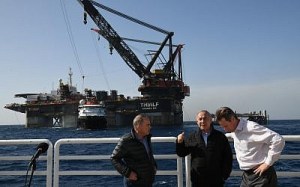
Prime Minister Benjamin Netanyahu, center, and Energy Minister Yuval Steinitz, left, visit the Leviathan natural gas platform off the Israeli coast on January 31, 2019. (Amos Ben-Gershom/GPO)

Earlier on Thursday, Prime Minister Benjamin Netanyahu visited an under construction rig site in the Leviathan gas field, some 125 kilometers (80 miles) west of the Israeli port city of Haifa.

“Completion of the Leviathan gas platform and the pumping of gas from this field later in the year is a critical component of the strategic, energy, economic and diplomatic strength of the State of Israel,” Netanyahu said.

The navy said the cargo ship sunk in the exercise — the Eyal, which was due to be scrapped — was meant to simulate an enemy ship transporting fighters to a natural gas platform in order to blow it up.

The Harpoon anti-ship cruise missiles used in the exercise were fired from four Sa’ar corvettes at the same time, from a distance of approximately 100 kilometers (62 miles).

A Harpoon cruise missile strikes a decrepit cargo ship as part of an exercise in January 2019. (Screen capture: Israel Defense Forces)

The military said an exercise of this size and complexity, which involved many ships as well as the live fire test, has not been conducted by the Israel Navy in approximately 20 years.

“This kind of exercise requires two and a half months of preparations. It was a highly irregular exercise in its scope and size — all of the gunship fleet was in the water,” Goldfarb said.

Due to Israel’s tense relationship with its land neighbors, the Jewish state relies extensively on the Mediterranean for its trade. Recently discovered natural gas reserves off the coast of Israel are also of significant importance to the Jewish state, turning it for the first time into an energy exporter.

An Israel Navy Sa’ar 5 corvette defends a natural gas extraction platform off Israel’s coast, in an undated photograph. (Israel Defense Forces)

A successful attack on the natural gas platforms would have a tremendous effect on Israel’s economy, and the images of the structures on fire would serve as a “victory photo” for the terror group or enemy nation behind it.

During the 2014 Gaza war, the Hamas terror group launched rockets at Israel’s natural gas platforms — located some 40 kilometers (25 miles) — but failed to hit them.

Israel, for now, does not believe the Gaza-based terror group is able to hit the platforms, though it does have access to two varieties of shore-to-sea missiles: the Chinese C-802 and C-704.

However, the Iran-backed Lebanese Hezbollah terror group, which has also threatened to attack the natural gas reserves, is believed to be capable of striking the platforms using Russian-made Yakhont shore-to-sea guided missiles and other weapons.

A Yakhont missile at a Russian air show in 1997 (CC BY-SA/JNO/Wikimedia Commons)

Both terror groups are also believed to be developing other naval capabilities, including autonomous submersibles, suicide drones and scuba-diving commando units, Israeli naval officials have said.

Some of those weapons have already been deployed against Israel in combat, by Hezbollah in the 2006 Second Lebanon War and by Hamas in the 2014 Gaza war.

Hezbollah succeeded in severely damaging the navy’s INS Hanit with a shore-to-sea missile in the 2006 conflict, and Hamas made use of a naval commando unit in a daring — though ultimately ineffectual — coastal attack at Zikim Beach in 2014.

To counter those threats, as the country’s gas fields and shipping lanes grow more and more important, the military has been investing heavily in the navy, upgrading systems and better integrating it into the rest of the Israel Defense Forces.

In the coming years, additional assistance will come in the form of four state-of-the-art Sa’ar-6 corvettes currently being built by a firm in Kiel, Germany.

The Sa’ar-6 corvettes will be outfitted with both a modified version of the Iron Dome system, known as the Naval Iron Dome, as well as the Barak 8 missile interceptor.

Until the ships enter service, however, the navy has installed Iron Dome batteries on the less advanced Sa’ar-5 corvette.

 

In reversal, Trump says he and intel chiefs actually on ‘same page’ 

Posted February 1, 2019 by Joseph Wouk
Categories: Uncategorized

Source: In reversal, Trump says he and intel chiefs actually on ‘same page’ | The Times of Israel

President says top officials have told him their testimony on global threats at a Senate hearing was ‘mischaracterized’ by the media

US President Donald Trump speaks before a meeting between US and Chinese officials in the Oval Office of the White House January 31, 2019 in Washington, DC (Brendan Smialowski / AFP)

US President Donald Trump speaks before a meeting between US and Chinese officials in the Oval Office of the White House January 31, 2019 in Washington, DC (Brendan Smialowski / AFP)

WASHINGTON (AP) — A day after he lashed out at US intelligence agency chiefs over their assessments of global threats, President Donald Trump abruptly reversed course Thursday and said that he and the intelligence community “are all on the same page.”

Trump met with his director of national intelligence and other top security officials in the Oval Office and said afterward that they told him their testimony at a Senate hearing had been “mischaracterized” by the news media.

House Speaker Nancy Pelosi and other Democrats had slammed the president for his comments disparaging Director of National Intelligence Dan Coats, CIA Director Gina Haspel and other top security officials.

The officials told Congress on Tuesday that North Korea is unlikely to dismantle its nuclear arsenal and that the Iran nuclear deal is working, contrary to what Trump has claimed.

The intelligence agency chiefs “said that they were totally misquoted and … it was taken out of context,” Trump told reporters at the White House. “They said it was fake news.”

Donald J. Trump

@realDonaldTrump

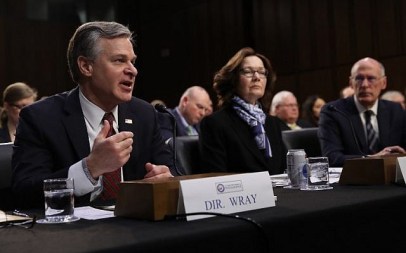
Coats and other officials presented an update to the Senate intelligence committee on Tuesday on their annual assessment of global threats. In a public report and testimony broadcast on C-SPAN, they warned of an increasingly diverse range of security dangers around the globe, from North Korean nuclear weapons to Chinese cyberespionage to Russian campaigns to undermine Western democracies.

Trump tweeted Thursday that he and the intelligence leaders “are very much in agreement on Iran, ISIS, North Korea, etc.” and that he values their service.

“Happily, we had a very good meeting, and we are all on the same page!” he wrote.

Pelosi told reporters that the intelligence officials were “courageous” in speaking “truth to power” by publicly contradicting Trump.

“One dismaying factor of it all is that the president just doesn’t seem to have the attention span or the desire to hear what the intelligence community has been telling him,” Pelosi said Thursday, calling Trump’s comments attacking the intelligence leaders “cause for concern.”

Trump said earlier that intelligence officials were wrong about North Korea, Iran and the Islamic State, which they said remains a terrorist and insurgent threat.

“Perhaps Intelligence should go back to school!” Trump tweeted Wednesday.

Left to right: FBI Director Christopher Wray, CIA Director Gina Haspel and Director of National Intelligence Dan Coats testify at a Senate Intelligence Committee hearing on January 29, 2019, in Washington, DC. (Win McNamee/Getty Images/AFP)

Pelosi said Trump’s comments were “stunning.”

“It’s important for the Republicans in Congress to recognize they have to weigh in with the president to say, ‘You can’t act without knowledge,’” Pelosi said.

Senate Democratic leader Chuck Schumer said it was “past time” for US intelligence officials to stage an intervention with Trump.

In a letter to Coats, Schumer called Trump’s criticism of intelligence agencies “extraordinarily inappropriate” and said it could undermine public confidence in the government’s ability to protect Americans.

Schumer urged Coats and other officials to “educate” Trump about the facts and raw intelligence underlying threat assessments so the administration can speak “with a unified and accurate voice about national security threats.”

Asked about his tweets earlier Thursday, Trump did not back away from questioning the assessment by Coats and Haspel.

“I disagree with certain things that they said. I think I’m right, but time will prove that, time will prove me right probably,” Trump told reporters at the White House. “I think Iran is a threat. I think I did a great thing when I terminated the ridiculous Iran nuclear deal. It was a horrible one-sided deal.”

Speaking about intelligence agencies generally, Trump added: “I have great respect for a lot people but I don’t always agree with everybody.”

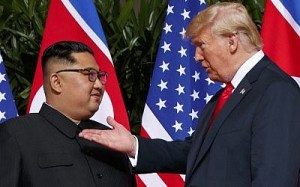
At a hearing Tuesday, Coats said intelligence information does not support the idea that North Korean leader Kim Jong Un will eliminate his nuclear weapons.

US President Donald Trump, right, meets with North Korean leader Kim Jong Un on Sentosa Island in Singapore, June 12, 2018. (Evan Vucci/AP)

Trump later insisted on Twitter that the US relationship with North Korea “is the best it has ever been.” He pointed to the North’s halt in nuclear and missile tests, the return of some US service members’ remains and the release of detained Americans as signs of progress.

US intelligence agencies also said Iran continues to work with other parties to the nuclear deal it reached with the US and other world powers. In doing so, they said, Iran has at least temporarily lessened the nuclear threat. In May 2018, Trump withdrew the US from that accord, which he said would not deter Iran.

“The Intelligence people seem to be extremely passive and naive when it comes to the dangers of Iran,” Trump tweeted. “They are wrong!”


Top Iranian general: We can destroy Israel ‘in three days’

Posted February 1, 2019 by Joseph Wouk
Categories: Uncategorized

Source: Top Iranian general: We can destroy Israel ‘in three days’ | The Times of Israel

Amid rising tensions between IDF and Iranian forces in Syria, IRGC deputy leader says Jewish state ‘will not find enough graves to bury their dead’

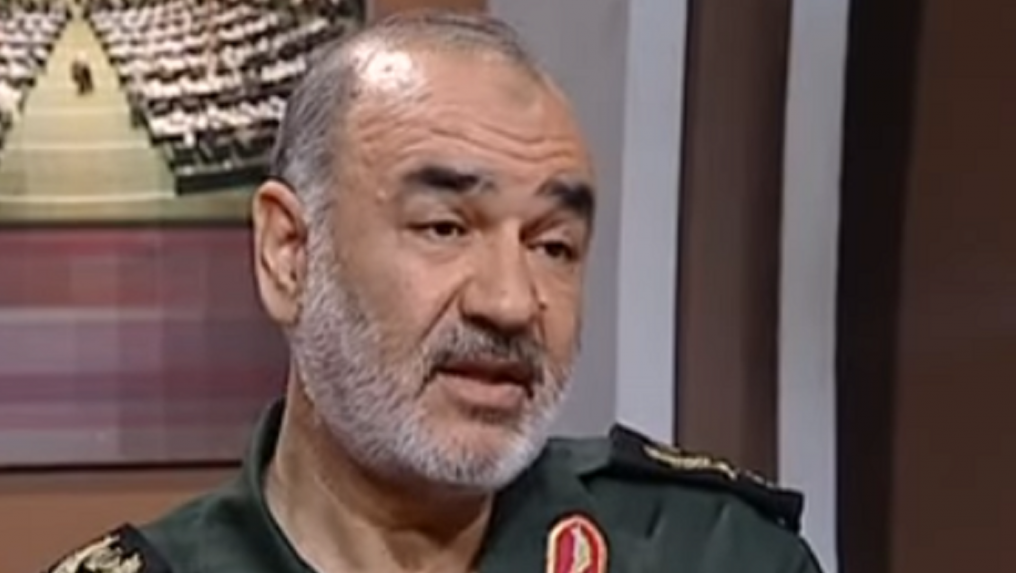
Brig. Gen. Hossein Salami, the second-in-command of the Islamic Revolutionary Guard Corps. (YouTube screen capture)

A top Iranian general said Thursday his country has developed a “strategic capacity” to destroy Israel.

“We warn them [Zionists] that if a new war breaks out, it will result in their termination,” Brig. Gen. Hossein Salami, the second-in-command of the Islamic Revolutionary Guard Corps, said at a conference in the Iranian city of Mashhad, according to the regime-linked Tasnim news agency.

Tasnim went on to paraphrase Salami as saying that “Iran has warned the Zionist regime not to play with fire, because they will be destroyed before the US helps them.”

He vowed that a new war “will result in Israel’s defeat within three days, in a way that they will not find enough graves to bury their dead.”

The comments followed a series of reciprocal taunts by Israeli and Iranian leaders in recent weeks amid rising tensions on the Israeli-Syrian border between IDF and Iranian forces.

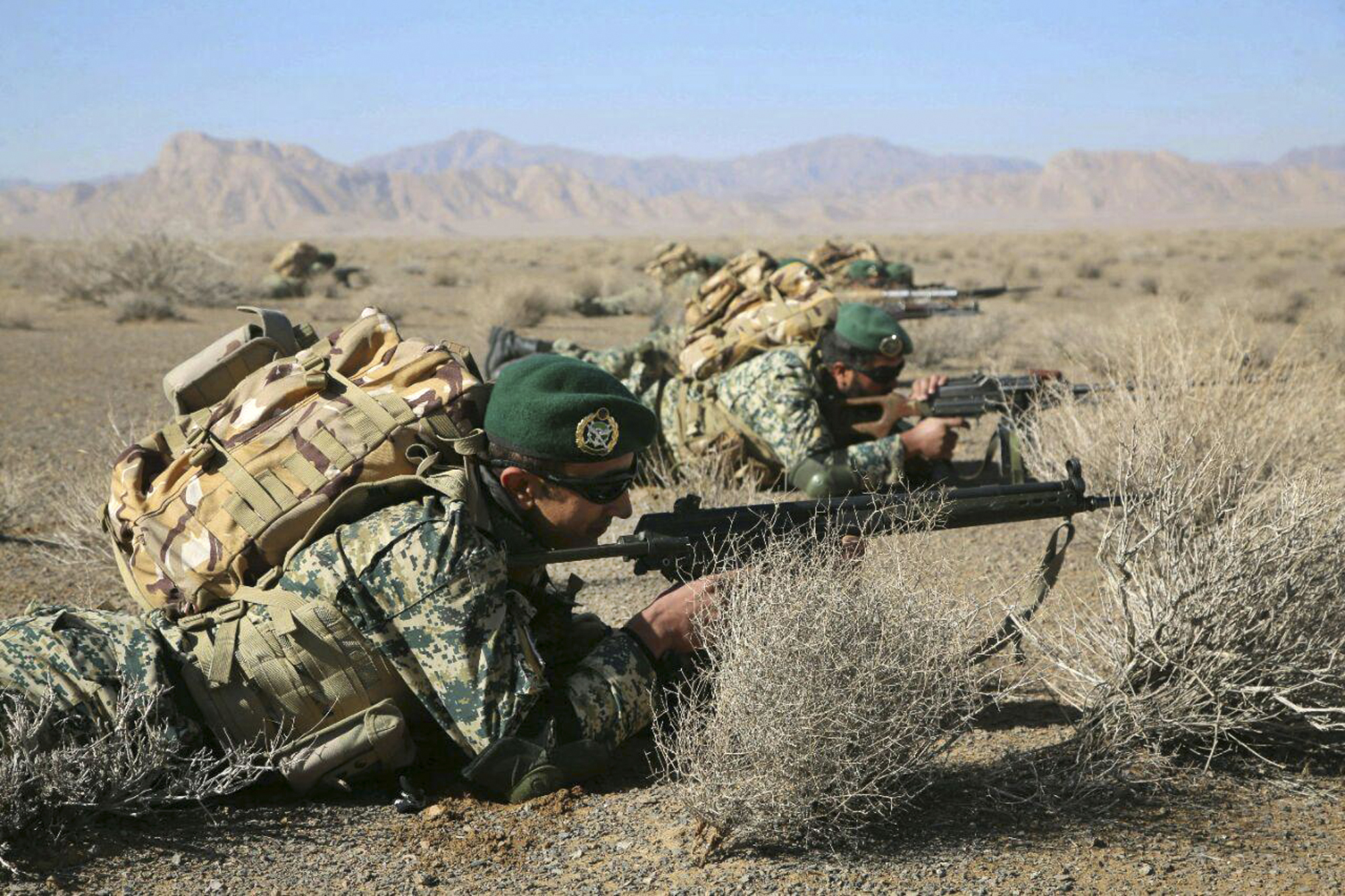
In this photo provided Friday, January 25, 2019, by the Iranian Army, soldiers take position in an infantry drill in the central Isfahan province, Iran. (Iranian Army via AP)

On Tuesday, Ali Shamkhani, the secretary of Iran’s National Security Council, warned that terror groups Hamas and Hezbollah were prepared to unleash an “inferno” on the Jewish state.

Speaking at a space tech conference, Shamkhani spoke of “hundreds of kilometers of tunnels dug underneath [Israelis’] feet, and when the resistance forces in Gaza and Lebanon have missiles with pinpoint accuracy and are ready to respond to any foolish Israeli behavior with an inferno.”

Also on Tuesday, Iran’s Defense Minister Amir Hatami railed at Prime Minister Benjamin Netanyahu’s campaign against Iran’s missile program. The program was among the reasons cited by US President Donald Trump for leaving the 2015 nuclear deal last year and reimposing crippling sanctions.

“The enemies say Iran’s missile power should be eliminated, but we have repeatedly said our missile capabilities are not negotiable,” Hatami said, according to Reuters.

On Monday, the IRGC’s Salami told a reporter in Tehran that Iran’s strategy was to eventually wipe Israel off the “global political map.”

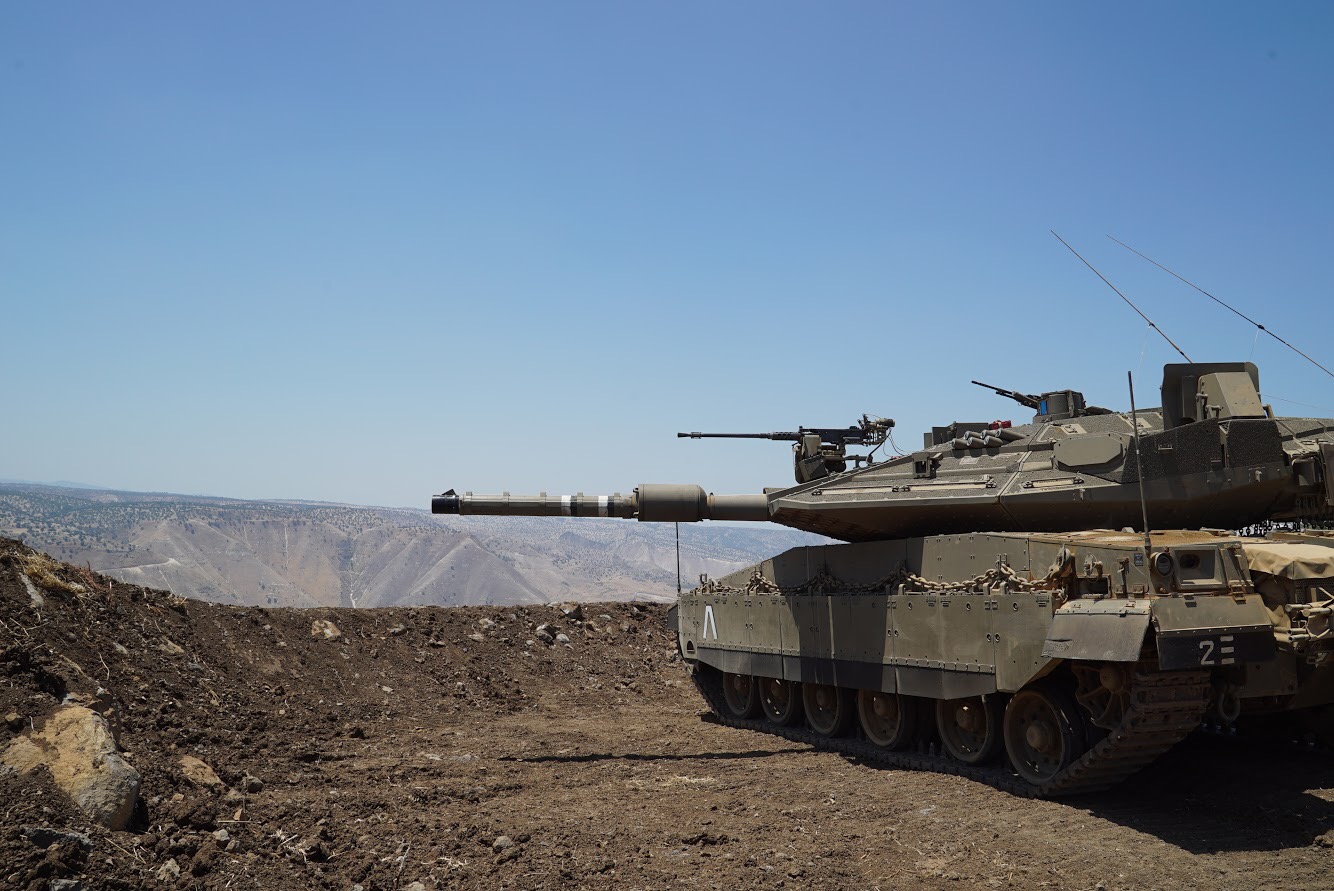
An IDF tank deployed to the Golan Heights, near the Syria border, on July 1, 2018. (Israel Defense Forces)

Iran and Israel have increasingly clashed in Syria, where Jerusalem is attempting to keep Tehran’s forces from entrenching themselves militarily.

Israel sees Iranian entrenchment in Syria as a major threat and in recent years has carried out hundreds of airstrikes in Syria against targets linked to Iran, which alongside its proxies and Russia, is fighting on behalf of the regime of Syrian President Bashar Assad.

Crowds chant ‘death to Israel’ as Iran marks 40 years since Islamic Revolution

Posted February 1, 2019 by Joseph Wouk
Categories: Uncategorized

Source: Crowds chant ‘death to Israel’ as Iran marks 40 years since Islamic Revolution | The Times of Israel

Thousands gather at tomb of Islamic Republic’s founder Khomeini on the anniversary of his return from exile; senior cleric rails against US

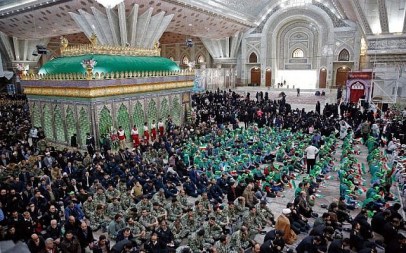
Iranians visit the tomb of Ayatollah Ruhollah Khomeini, the founder of the Islamic Republic, on the 40th anniversary of his return from exile from in Paris, at his mausoleum in southern Tehran, on February 1, 2019. (Stringer/AFP)

Iranians visit the tomb of Ayatollah Ruhollah Khomeini, the founder of the Islamic Republic, on the 40th anniversary of his return from exile from in Paris, at his mausoleum in southern Tehran, on February 1, 2019. (Stringer/AFP)
TEHRAN, Iran — Iran on Friday started celebrating the 40th anniversary of the country’s 1979 Islamic Revolution that toppled the US-backed shah, overturned 2,500 years of monarchical rule and brought hard-line Shiite clerics to power.


    The climactic events that year in Iran — where footage of revolutionaries in the streets gave way to black-and-white images of blindfolded American hostages in the US Embassy hostage crisis months later — not only changed Iran’s history but also helped shape today’s Middle East.

    The anniversary starts every year on February 1 — the day Ayatollah Ruhollah Khomeini returned home from France, after 14 years in exile, to become the supreme leader of the Islamic Republic of Iran.

    Across Iran, sirens rang out from trains and boats and church bells chimed at 9:33 a.m. Friday — the exact time Khomeini’s chartered Air France Boeing 747 touched down 40 years ago at Tehran’s Mehrabad International Airport.

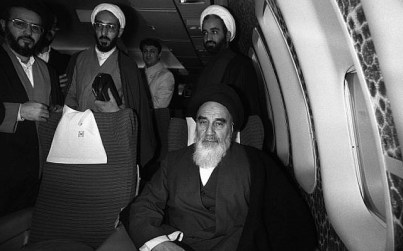
    In this photo from February 1, 1979, at Tehran airport shows Ayatollah Ruhollah Khomeini (C) posing aboard the Air France Boeing 747 jumbo that flew him back from exile in France to Tehran. (Gabriel Duval/AFP)

    The 10-day anniversary festivities, known as the “Ten Days of Dawn,” end on February 11, the date Shah Mohammad Reza Pahlavi’s government collapsed after brief clashes between some units of the army and revolutionary gunmen and following nationwide protests.

    In memory of those events, car drivers turned on their headlights and honked in celebration as helicopters dropped clusters of flowers along the 21-mile route from the airport to the Behesht-e-Zahra cemetery in southern Tehran where Khomeini made his first speech back home and where his tomb stands today.

    As part of the celebrations, many Tehran buildings, mostly of government institutions and offices, dawned on Friday draped in the colors of Iran’s green-white-and-red flag while multi-colored lights decorated the main streets.

    ISNA news agency posted a video of ships blasting their horns in celebration in the Gulf port of Bandar Abbas, southern Iran.

    Two arms and military equipment fairs have opened in the capital, showcasing the weaponry developed and manufactured in Iran over the past four decades, especially its prized ballistic missiles.

    As an army band played revolutionary anthems, the huge hall of the mausoleum was filled with people from all walks of life, amid schoolchildren dressed in the red, white and green of the Iranian flag.

    Chairman of Iran’s Assembly of Experts, Ayatollah Ahmad Jannati, gives a speech in Tehran at the mausoleum of Ayatollah Ruhollah Khomeini, the founder of the Islamic Republic, on the 40th anniversary of his return from exile from in Paris, on February 1, 2019. (Stringer/AFP)

    Ayatollah Ahmad Jannati, head of the influential experts assembly which appoints the supreme leader of the Islamic Republic, delivered a keynote speech rebuking factions seeking better ties with Washington.

    “Curses on the wrong school of thought that thinks we can’t run the country unless America helps us,” he said, shaking a raised left hand.

    “America’s power is on the decline, we should not be afraid of America,” Jannati said as the crowd shouted slogans such as “Death to America” and “Death to Israel.”

    Iranian officials — including Supreme Leader Ayatollah Ali Khamenei and President Hassan Rouhani — on Wednesday paid homage to Khomeini’s tomb “to renew allegiance” to the late leader.

    Iranian state TV broadcast archive footage of Khomeini’s return and the daily mass demonstrations across Iran in support to his revolution.

    Khomeini was accompanied on the flight home by dozens of journalists, a few of his associates and only one family member, his younger son Ahmad.

    The plane was only half full, to keep room for extra fuel in case of an immediate return to Paris if the plane couldn’t land in Tehran. Supporters of the shah’s regime had closed the airport the week before and Khomeini’s allies in Tehran feared possible threats against his life.


    Iran scaling up uranium production and mining, atomic chief says 

    Posted February 1, 2019 by Joseph Wouk
    Categories: Uncategorized

    Source: Iran scaling up uranium production and mining, atomic chief says | The Times of Israel

    Ali Akbar Salehi, head of Islamic Republic’s Atomic Energy Organization, says country is set to produce 300 tons of yellowcake per year

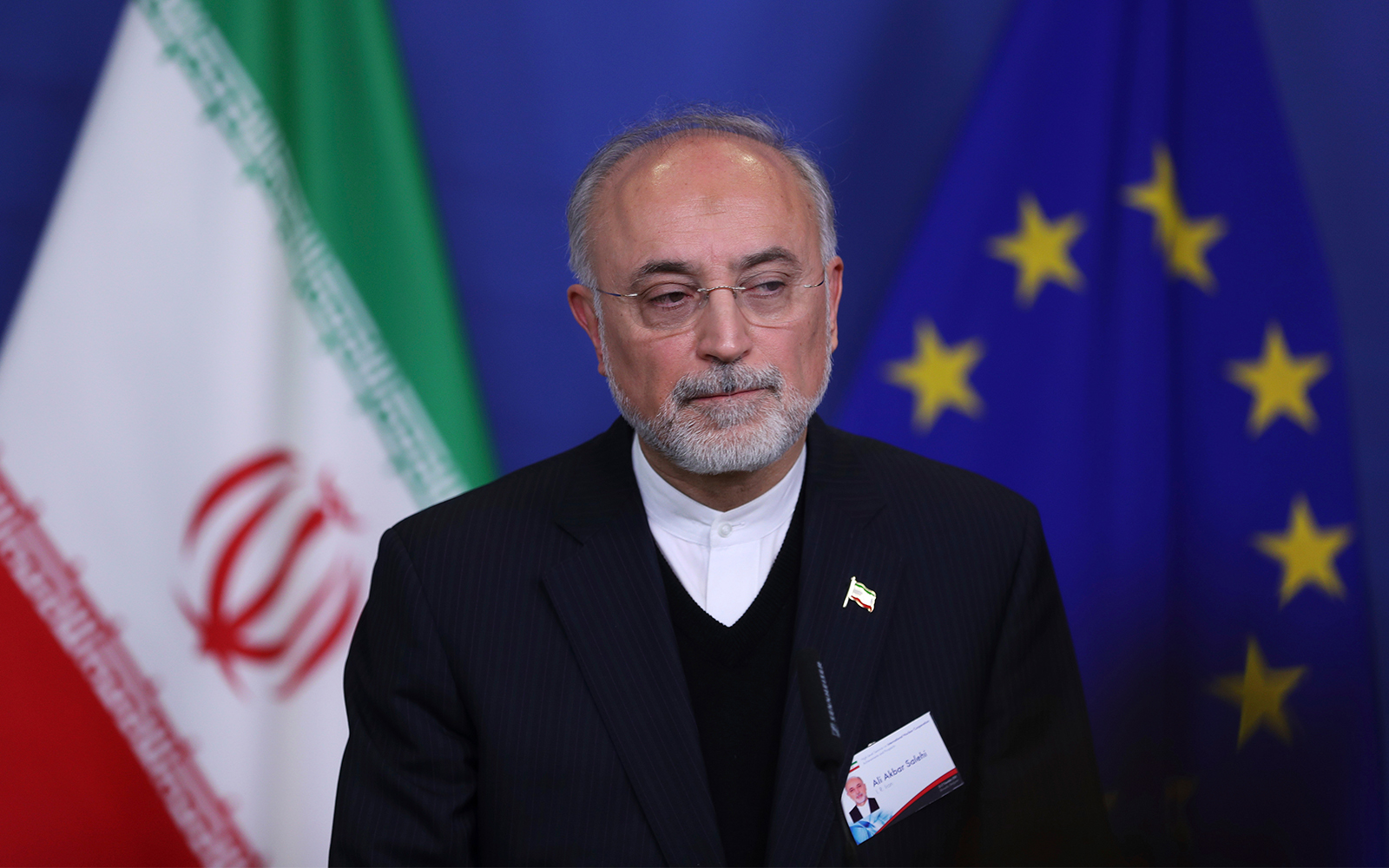
    Iran’s Vice President and Head of the Atomic Energy Organization Ali Akbar Salehi listens to a question during a joint news conference with European Union Climate Action and Energy Commissioner Miguel Arias Canete at the European Commission headquarters in Brussels, Monday, Nov. 26, 2018. (AP Photo/Francisco Seco)

    Iran announced Wednesday that it was producing large amounts of yellowcake, a precursor to enriched uranium, and had shipped two batches of the material to a uranium conversion facility.

    Ali Akbar Salehi, head of the Atomic Energy Organization of Iran, said the Islamic Republic was ready to increase its production of yellowcake to 300 tons per year over the next five to six years, and had shipped 30 tons from the Shahid Rezaeinzhad Industrial Complex in the central province of Yazd to a conversion facility in Isfahan province, according to Iranian media reports.

    Salehi delivered the message to Iran’s Channel 2 news from the production complex.

    “Today, we are witnessing the completion of an important link: uranium production,” Salehi said, according to a translation by the Washington-based non-profit Middle East Media Research Institute. “This is our first plant of a large scale, and we are using the latest technologies.”

    Salehi said that the new facility was at full capacity, that Iran was extracting uranium from a mine in Yazd province and other still-unidentified mines, and had discovered large amounts of the material in the country through aerial surveys.

    He said they were planning on building additional plants similar to the Shahid Rezaeinzhad Industrial Complex in the same province.

    Yellowcake is a uranium concentrate in powder form and an early step in uranium processing. It is produced by mining uranium ore from rocks and separating the uranium from the rocks by bathing them in acid. The yellowcake can then be converted, enriched to raise its purity, and then used for weapons or energy production.

    Last month, Salehi said that Iran had deceived nuclear inspectors by quietly purchasing replacement parts for its Arak nuclear reactor while it was conducting negotiations for an international agreement under which it knew it would be required to destroy the original components.

    US Secretary of State John Kerry (left) speaks with Iranian Foreign Minister Mohammad Javad Zarif after the UN atomic watchdog verifies that Iran has met all conditions of the July 2015 nuclear deal, in Vienna, Austria, on January 16, 2016. (AFP/Kevin Lamarque/Pool)

    Salehi recalled that during talks for the so-called Joint Comprehensive Plan of Action, the 2015 deal that lifted sanctions on Iran in return for it dismantling the weapons-capable parts of its nuclear program, Iranian Supreme Leader Ali Khamenei warned his country’s negotiators that he expected Western parties to renege on the agreement.

    “When our team was in the midst of the negotiations, we knew that [the Westerners] would ultimately renege on their promises,” Salehi said. “The leader [Khamenei] warned us that they were violators of agreements. We had to act wisely. Not only did we avoid destroying the bridges that we had built, but we also built new bridges that would enable us to go back faster if needed.”

    Salehi insisted that such subterfuge did not indicate that Iran was or is seeking nuclear weapons, as the Trump administration and Israel insist. Iran’s plan was to modernize the Arak reactor, which was based on an old Russian design, and use the new facility to produce reduced quantities of plutonium that would be used for nuclear fuel, but not weapons, he said.

    US President Donald Trump pulled out of the nuclear deal in May last year but the other signatories, Britain, France, Germany, Russia, China and Iran have all agreed to try to keep the pact alive on their own. Trump insists the original agreement did not go far enough in curbing Iran’s nuclear weapons ambitions and wants to renegotiate the JCPOA with stricter terms. In the meantime Washington has imposed heavy sanctions on Iran that could weaken the ability of the remaining parties to maintain the deal.

    Last week Salehi said Iran has begun “preliminary activities for designing” a modern process for 20-percent uranium enrichment. Restarting enrichment at that level would mean Iran had withdrawn from the 2015 nuclear deal.

    Tehran has in the past warned that if the remaining parties are not able to keep up the trade and financial benefits the deal provided, it will also pull out and restart controversial parts of its nuclear program.

    The Associated Press contributed to this report.


    US Senate: Islamists in Syria, Afghanistan still a threat 

    Posted February 1, 2019 by Joseph Wouk
    Categories: Uncategorized

    Source: US Senate: Islamists in Syria, Afghanistan still a threat – Israel Hayom


    Lebanese government formed, Hezbollah makes significant gains 

    Posted February 1, 2019 by Joseph Wouk
    Categories: Uncategorized

    Source: Lebanese government formed, Hezbollah makes significant gains – Israel Hayom


    Facebook blocks 783 Iran-linked pages, accounts and groups from its service 

    Posted February 1, 2019 by Joseph Wouk
    Categories: Uncategorized

    Source: Facebook blocks 783 Iran-linked pages, accounts and groups from its service – Israel Hayom

    ( I’m surprised.  I thought they were only blocking conservative accounts…  – JW ))  

    The social network says the fake accounts on Facebook and Instagram typically misrepresented themselves as locals with the intent of disrupting politics and elections • In Israel, the bogus Iranian accounts focused on highlighting the Palestinian issue.


    Nasrallah, Gaza leaders plot disruptions of Israel’s election, including rocket fire – DEBKAfile

    Posted February 1, 2019 by Joseph Wouk
    Categories: Uncategorized

    Source: Nasrallah, Gaza leaders plot disruptions of Israel’s election, including rocket fire – DEBKAfile

    Rocket fire on Tel Aviv in mid-March was one of the tactics for disrupting Israel’s election campaign approved by Hizballah’s Hassan Nasrallah and Palestinian terrorist chiefs from the Gaza Strip when they met in Beirut on Wednesday, Jan. 30. This is disclosed by DEBKAfile.

    Ayman al-Shashniya and other heads of the Palestinian Resistance Committees (PRC) traveled to the Lebanese capital from the Gaza Strip for the meeting. It was prompted by a coordinated signal from Tehran and Beirut. On Saturday, Jan. 26, Nasrallah said in a speech that Prime Minister Binyamin Netanyahu would not be allowed to commit “big and foolish” actions under the pressure of his campaign for re-election.

    Three days later, Ali Shamkhani, head of Iran’s National Security Council, disclosed that precise rockets had passed into the hands of “the resistance” in Lebanon and Gaza, ready to respond to “foolish actions.” Shamkhani is one of the most competent and controlled officials of the Islamic regime. Placing him in charge of the “Gaza Dossier” indicates that Tehran and Hizballah are seriously plotting to intervene in the campaign for Israel’s April 9 election, specifically by igniting the Gaza front.

    Nasrallah praised the Palestinian terrorists at their meeting for their role in the regular, weekly Gaza border offensives on Israeli forces. He complimented them on the exploding Palestinian flag trick, which on Sept. 23, caused four Israelis soldiers to be injured when they tried to take it down.

    The communique they issued after talking for three hours spoke of a discussion of “the latest developments, especially those related to the Great Marches of Return and the Palestinian resistance readiness to confront the Zionist enemy.”

    DEBKAfile’s military and counter-terror sources report that the PRC is a small terrorist group whose operations, finances and organization are controlled by Hamas. Hamas itself opted to stay in the background of the plot so as to keep the monthly cash payments from Qatar on tap through Israel and the UN. Therefore, the PRC was sent to Beirut to work on details of the Palestinian operation for sabotaging Israel’s election campaign in coordination with Hizballah and Tehran. According to our sources, they decided on a stage-by-stage strategy, scaling up the attacks from the Gaza Strip in the coming weeks up to a climax towards mid-March, three weeks before polling day. The meeting lined up Israeli targets for rocket attacks, including Tel Aviv.


    Nasrallah, Gaza leaders plot disruptions of Israel’s election, including rocket fire – DEBKAfile

    Posted February 1, 2019 by Joseph Wouk
    Categories: Uncategorized

    Source: Nasrallah, Gaza leaders plot disruptions of Israel’s election, including rocket fire – DEBKAfile

    Rocket fire on Tel Aviv in mid-March was one of the tactics for disrupting Israel’s election campaign approved by Hizballah’s Hassan Nasrallah and Palestinian terrorist chiefs from the Gaza Strip when they met in Beirut on Wednesday, Jan. 30. This is disclosed by DEBKAfile.

    Ayman al-Shashniya and other heads of the Palestinian Resistance Committees (PRC) traveled to the Lebanese capital from the Gaza Strip for the meeting. It was prompted by a coordinated signal from Tehran and Beirut. On Saturday, Jan. 26, Nasrallah said in a speech that Prime Minister Binyamin Netanyahu would not be allowed to commit “big and foolish” actions under the pressure of his campaign for re-election.

    Three days later, Ali Shamkhani, head of Iran’s National Security Council, disclosed that precise rockets had passed into the hands of “the resistance” in Lebanon and Gaza, ready to respond to “foolish actions.” Shamkhani is one of the most competent and controlled officials of the Islamic regime. Placing him in charge of the “Gaza Dossier” indicates that Tehran and Hizballah are seriously plotting to intervene in the campaign for Israel’s April 9 election, specifically by igniting the Gaza front.

    Nasrallah praised the Palestinian terrorists at their meeting for their role in the regular, weekly Gaza border offensives on Israeli forces. He complimented them on the exploding Palestinian flag trick, which on Sept. 23, caused four Israelis soldiers to be injured when they tried to take it down.

    The communique they issued after talking for three hours spoke of a discussion of “the latest developments, especially those related to the Great Marches of Return and the Palestinian resistance readiness to confront the Zionist enemy.”

    DEBKAfile’s military and counter-terror sources report that the PRC is a small terrorist group whose operations, finances and organization are controlled by Hamas. Hamas itself opted to stay in the background of the plot so as to keep the monthly cash payments from Qatar on tap through Israel and the UN. Therefore, the PRC was sent to Beirut to work on details of the Palestinian operation for sabotaging Israel’s election campaign in coordination with Hizballah and Tehran. According to our sources, they decided on a stage-by-stage strategy, scaling up the attacks from the Gaza Strip in the coming weeks up to a climax towards mid-March, three weeks before polling day. The meeting lined up Israeli targets for rocket attacks, including Tel Aviv.