Dershowitz: Indicting PM would open Pandora’s box 

Posted February 27, 2019 by Joseph Wouk
Categories: Uncategorized

Source: Dershowitz: Indicting PM would open Pandora’s box – Israel Hayom

A decision to indict PM Netanyahu on corruption charges in Case 2,000 would “endanger democracy and freedom of the press,” Alan Dershowitz writes in an open letter to Attorney General Avichai Mendelblit, urging him to “consider the dangerous implications.”

Yehuda Shlezinger and Israel Hayom Staff // published on 27/02/2019
   
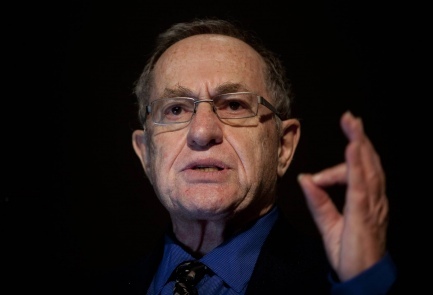
Professor Alan Dershowitz 


A decision to indict Prime Minister Benjamin Netanyahu on corruption charges in Case 2,000 would “endanger democracy and freedom of the press,” Professor Alan Dershowitz wrote in an open letter to Attorney General Avichai Mendelblit on Tuesday.

Dershowitz, one of the most prominent Jewish lawyers in the United States and in the world, posted the letter on his Twitter page.

“Such charges would open up a Pandora’s box out of which would flow a parade of horribles: Every government official – legislators, judges, prosecutors, police offices, administrators – who sought positive coverage in the media, and then did anything that helped the media, would have to be investigated,” Dershowitz wrote.

In Case 2,000, Netanyahu allegedly supported a law that would curtail Israel Hayom to gain fairer coverage from its competitor Yedioth Ahronoth in a deal struck with its publisher Arnon “Noni” Mozes. Netanyahu ultimately voted against the law, leaving prosecutors to deal with possible motives but no real evidence.

“In the Yedioth Ahronoth matter, more than 40 Knesset and cabinet members voted in favor of the newspaper, while [Netanyahu] effectively killed the bill and went to elections. Many of the Knesset members then received positive coverage in Yedioth Ahronoth. Yet they were not investigated. Only the prime minister, who killed the bill, is being prosecuted. This disparity illustrates the enormous discretion prosecutors have in selectively prosecuting alleged violators of this open-ended prosecutorial tool.

“There is no limiting principle to this open-ended intrusion of the criminal law into the delicate, and legally protected, relationship between government officials and the media.”

The letter continued: “Any such charge would give law enforcement far too much power to dictate to the media and to officials they cover how they relate to each other. In a democracy, criticism of the relationship between media and government should be left to voters, not prosecutors.

“I urge you, Mr. Attorney General, to consider the dangerous implications for democracy and freedom of the press if you go forward with these charges against the prime minister.”


America as sheriff, rather than cop 

Posted February 27, 2019 by Joseph Wouk
Categories: Uncategorized

Source: America as sheriff, rather than cop – Israel Hayom

Clifford D. May

Precipitously and with no plan in place, U.S. President Donald Trump late last year announced his intention to withdraw all U.S. troops from Syria.

Until then, roughly 2,000 special operators, backed by combat aircraft, had exemplified the concept of “economy of force.” Achieving a lot with a little, enabling local allies to fight much more effectively than they could have on their own, they decimated the Islamic State group and helped contain the Islamic Republic of Iran.

It seemed to me and others – Trump’s top military and national security advisers among them – that he had made a significant and unforced error, one that could only encourage America’s adversaries in the Middle East and beyond, e.g., Pyongyang, Moscow, Beijing and suburban Kandahar.

Then, last Friday, the president changed his mind, deciding to leave about 400 troops in Syria. Can a force of that size do the job that needs to be done? No. But some European allies who have been sharply critical of Trump’s decision to bug out are now considering committing more of their own troops to make up the difference. In other words, Trump may succeed in getting Europeans to do serious burden-sharing in this by-no-means-ended conflict.

If so, credit is due to Sen. Lindsey Graham who pushed hard for such a plan, both with the president in private, and publicly at the annual international security conference in Munich earlier this month.

Graham was quick to praise the commander-in-chief for deciding to “follow sound military advice,” thereby ensuring “that we will not repeat the mistakes of Iraq, in Syria. For a small fraction of the forces we have had in Syria, we can accomplish our national security objectives. Well done, Mr. President.”

This episode raises a broader strategic issue. Significant factions on both the Left and Right are adamant that America not be the world’s policeman. A question that should arise: If the U.S. won’t do that job, who will?

Not Denmark, Japan or Costa Rica. The U.N. isn’t up to the task and never will be. But if no one stands up to international thugs and gangsters we know what happens: They take over – country after country, region after region.

Isolationists on the Right say: “So what? Beyond our borders, it’s not our business.” They will appear to be correct until it becomes obvious they were disastrously wrong, as they were in the 1930s when they contended that the U.S. should do nothing to stop the Nazis and Japanese imperialists. (The most hardcore isolationists on the Right still believe that.)

Isolationists on the Left agree but for a different reason: They see America as oppressive and they are oddly unconcerned about what Chinese communists do to Uighurs and Tibetans, what Bolivarian socialists have done to Venezuela, and what theocrats in Tehran are doing to Syrians, Lebanese, Yemenis, and Iraqis. (The most hardcore isolationists on the Left still blame the U.S. for the Cold War.)

That said, I’m not going to make a case for America as global policeman. But is it not possible to steer a path between interventionism and isolationism? What if the U.S. were to see itself not as a policeman but as a sheriff instead?

Unlike the cop on the beat, the lawman in the Wild West isn’t expected to make arrests for every transgression. He doesn’t worry about the painted ladies and the gamblers in the saloon. But he will appoint deputies and raise a posse to stop the worst outlaws from riding roughshod throughout the territory.

This concept is not new. Back in 1997, a time when most people still believed Russia was democratizing and China moderating, a time when jihad was a word seldom heard, Dr. Richard Haass, a diplomat and scholar, now president of the Council on Foreign Relations, wrote a book titled “The Reluctant Sheriff: The United States After the Cold War.”

In it, he noted that the policeman has “a greater degree of authority, a greater capacity to act alone and a greater need to act consistently than is being advocated here. By contrast, a sheriff must understand his lack of clear authority in many instances, his need to work with others, and, above all, the need to be discriminating in when and how he engages.”

Haass likened posses to coalitions that “will vary from situation to situation, as will the purpose and even authority; what will be constant is the requirement for American leadership and participation from states and actors willing and able to contribute in some form.”

In an email exchange with me last week, Haass wrote: “The bottom line is that the U.S. as sheriff is essential because the world doesn’t order itself and there is no other candidate with the capacity, habits, etc.” He added: “What Trump seems to miss is that the benefits of our fulfilling that role far outweigh the costs, and the costs are high if we do not assume that role.”

Yes, but with prodding from Graham and other wise men, the president’s views appear to be evolving. No less consequential, Europeans may be recognizing that they sometimes have to load their six-shooters, saddle up and join the posse. The alternative is to be left alone watching the sheriff ride off into the sunset.

Clifford D. May is president of the Foundation for Defense of Democracies and a columnist for The ‎Washington Times.‎

Zarif defeated at home 

Posted February 27, 2019 by Joseph Wouk
Categories: Uncategorized

Source: Zarif defeated at home – Israel Hayom

Yossi Mansharof

The resignation of Iranian Foreign Minister Mohammad Javad Zarif didn’t come as a complete surprise. It reflects heated discourse within the regime over the Financial Action Task Force law.

While Iranian President Hassan Rouhani’s camp, of which Zarif is a senior member, worked with all its might to advance the law, the opposition camp – particularly the Iranian Revolutionary Guard Corps and its foreign arm, the Quds Force – has worked feverishly to shelve it. Ultimately the regime’s Assembly of Experts of the Leadership, whose job it is to ratify Iranian parliamentary legislation, quashed the law and ruled in favor of the IRGC.

The law was supposed to have forced Iran’s banking system – known for its money laundering services on behalf of the IRGC – to abide international obligations and would have put an end to the current situation whereby Iranians banks serve as an important conduit for the financing of terror. By pursuing financial ties with Iran, in the wake of the Trump administration’s withdrawal from the 2015 nuclear accord, European companies put themselves in jeopardy of heavy punitive measures by the United States. A commitment of this sort, suffice it to say, is unacceptable to the IRGC and those in Ayatollah Ali Khamenei’s close circle.

The latter are afraid that ratifying the law would bar Iran from continuing to fund its transnational network of militias, primarily Shiite, and the regime of Syrian President Bashar Assad. This financial support, estimated at billions of dollars, is a central component of Iranian foreign policy and its strategic efforts to export the Islamic revolution across the region.

In recent months, Zarif, for whom the nuclear deal was the crown jewel of his political career, has tried signaling his camp’s desire to implement a more pragmatic approach. Consequently, disagreement on this issue led him to butt heads with the Khamenei camp.

In his first comments following his resignation, Zarif explained that being kept out of the loop regarding Assad’s surprise visit to Tehran hindered his ability to continue serving as foreign minister. It appears this was simply a catalyst expediting his desire to step down that the real reason for his resignation was the denial of the FATF proposal to outlaw money laundering. The built-in tension between the foreign minister and the IRGC, specifically the Quds Force, was a thorn in Zarif’s side from his first day in office in 2013. It is known, for example, that the appointment of foreign envoys is dependent on the IRGC’s approval. Additionally, in light of the IRGC’s dominance in Syria and in Iran’s Supreme National Security Council, Zarif played a relatively minor role in determining the country’s policy.

As of the writing of these lines, certain political circles in Iran were trying to keep Zarif in office. His resignation, if approved by Rouhani, will mark a watershed moment – along with other developments in the Iranian political sphere – indicating the IRGC’s utter supremacy in Iranian politics.

In line with its growing status in the Iranian regime, it’s safe to infer that the IRGC will also hold considerable sway on another important matter in the near future: determining Khamenei’s successor.

Israel has no choice but to turn the spotlight, with an emphasis on the political and public discourse in key Western countries, on the IRGC and its positions on this and others matter, including the IRGC’s proclivity for terrorist activity on European soil.

Off Topic:  Major clashes bring India and Pakistan to brink of third war over Kashmir – DEBKAfile

Posted February 27, 2019 by Joseph Wouk
Categories: Uncategorized

Source: Major clashes bring India and Pakistan to brink of third war over Kashmir – DEBKAfile

According to conflicting reports on Tuesday, Feb. 26, Pakistan says it shot down two Indian jets over Kashmir, while India claims to have shot down a Pakistani fighter jet. Pakistan said it had “taken strikes at [a] non-military target, avoiding human loss and collateral damage” Indian authorities said the Pakistani jets had been pushed back.

Two weeks ago, tensions between the two nuclear-armed powers flared after a Pakistani Jaish-e-Muhammed terrorist carried out a suicide attack on a bus carrying Indian Border Guard police officers and killed 44, the deadliest terrorist attack since Kashmir was partitioned between India and Pakistan in 1947.

On Feb. 26, the Indian air force retaliated for the attack with strikes against targets in Pakistan, which responded with cross-border artillery shelling of Indian sites in Kashmir. Pakistan then claimed to have shot down two Indian Air force jets over the Pakistani side of Kashmir and taken two pilots captive, one injured. India confirmed the loss of an MIG21 fighter and said that a pilot was missing. During this air fight, Pakistan closed its air space to commercial flights, while India followed suit, although limiting the closure to areas close to embattled Kashmir.

In the wars between the two powers over Kashmir, India has lost more than 70,000 dead. Indian Kashmir has a population of 7 million, both Hindu and Muslim. The Pakistan side has 6 million inhabitants, almost all Muslim.

DEBKAfile notes that, while Kashmir is a long-rankling issue between New Delhi and Islamabad, both tend to scale up military tensions over the disputed territory when security concerns arise on the Indian subcontinent in other fields. This time, it was sparked by the Afghan peace talks in progress between the US and Taliban leaders.

Pakistan, which has strained relations with the Trump administration, suspects that the Americans aim to oust its positions of influence in Kabul and open the door for the Indians to step in. Last week Saudi Crown Prince Muhammad bin Salman visited both capitals and tried his hand at mediation. But tensions were so high, that the prince could not cross the border and was forced to return to Riyadh before flying back to India. Since then, Pakistan and India began trading serious air and ground warfare.


Israel seeks Russia’s approval to operate against Iran in Syria – TV7 Israel News 25.02.19 

Posted February 26, 2019 by Joseph Wouk
Categories: Uncategorized


Kushner: US peace plan very detailed, will focus on borders

Posted February 26, 2019 by Joseph Wouk
Categories: Uncategorized

Source: Kushner: US peace plan very detailed, will focus on borders – Israel Hayom

Senior White House adviser, to Sky News Arabia: “We focused on what prevents Palestinians from using full potential and Israelis from integrating in region” • Plan would tackle few issues, offer “realistic and fair solutions” to improve people’s lives.

Ariel Kahana // published on 26/02/2019
   
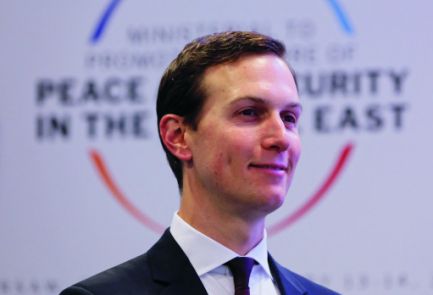
Senior Adviser to the President Jared Kushner 


White House senior adviser Jared Kushner unveiled the general themes of U.S. President Donald Trump’s peace plan on Monday, saying it would put a big emphasis on improving the conditions of both Israelis and Palestinians.

“We were not able to convince people from both sides on a compromise,” Kushner told Sky News Arabia in an interview. “Therefore, we did not focus a lot on the issues, despite our deep knowledge of them. We focused instead on what prevents the Palestinian people from using their full potential, and what prevents the Israeli people from integrating properly in the entire region.” But despite this, he said that “the American peace plan is very detailed and will focus on drawing the border and resolving the core issues.”

The Trump administration has been in the works for the past two years, but the administration’s peace team, led by Kushner, has repeatedly dismissed various reports on its supposed content, saying they are false and misleading. The plan is due to be released after the April 9 Israel election.

Kushner added his team “tried to find realistic and fair solutions … to allow people to have better lives” and that the plan will focus on four ways to achieve that goal.


Zarif bows out amid desperate regime bid to save Iran’s economy from meltdown – DEBKAfile

Posted February 26, 2019 by Joseph Wouk
Categories: Uncategorized

Source: Zarif bows out amid desperate regime bid to save Iran’s economy from meltdown – DEBKAfile

Mohammad Javad Zarif, the driving force behind Iran’s 2015 nuclear deal with Barack Obama, quits amid the regime’s struggle to survive the Trump era, DEBKAfile reports.  In six years, this polished, articulate diplomat, esteemed in Washington and Brussels, typically “apologized for his “shortcomings… during his time as foreign minister…” when he announced his resignation on Instagram on Monday, Feb. 25.

His exit marks the onset of large-scale dismissals of high regime officials amid the desperate deliberations that DEBKAfile’s Iranian and intelligence sources report are ongoing in Tehran for the past fortnight, on how to save the tottering economy from meltdown, under the crippling weight of the sanctions that US President Donald Trump imposed on Iran’s oil exports after he tore up the nuclear deal last May.

President Hassan Rouhani’s head may also be on the block now that his ally Zarif is gone. Our sources find evidence that Iran’s leaders have accepted that they have no choice but to engage the Trump administration and bring Tehran back to the negotiating table. They are looking for a diplomat on the lines of North Korea’s Kim Jong-un who they see as the right man to deal with Donald Trump.

That the regime in Tehran is in the throes of a major policy overhaul for its next steps was also signaled by the surprise visit of Syrian President Bashar Assad on the same Monday. Our sources report that he was invited to meet supreme leader Ayatollah Ali Khamenei for the first time for a briefing on the Islamic regime’s next steps as they pertain to Syria. He was accompanied by Iran’s supreme Middle East commander, the Al Qods chief Brig. Gen. Qassem Soleimani, which should set off alarm bells in Israel. It indicates strongly that the ayatollahs intend to come to the table with the US from a position of strength – not weakness.


 Israel’s Yasam Eilat Security Forces Unit 

Posted February 24, 2019 by Joseph Wouk
Categories: Uncategorized


Understanding the U.S. flip-flop on Syria – ANALYSIS 

Posted February 24, 2019 by Joseph Wouk
Categories: Uncategorized

Source: Understanding the U.S. flip-flop on Syria – ANALYSIS – Middle East – Jerusalem Post

Trump also reaffirmed in early February that the US would continue to use air power against ISIS and use Iraq as a base against ISIS and to watch Iran.

BY SETH J. FRANTZMAN
 FEBRUARY 24, 2019 17:32
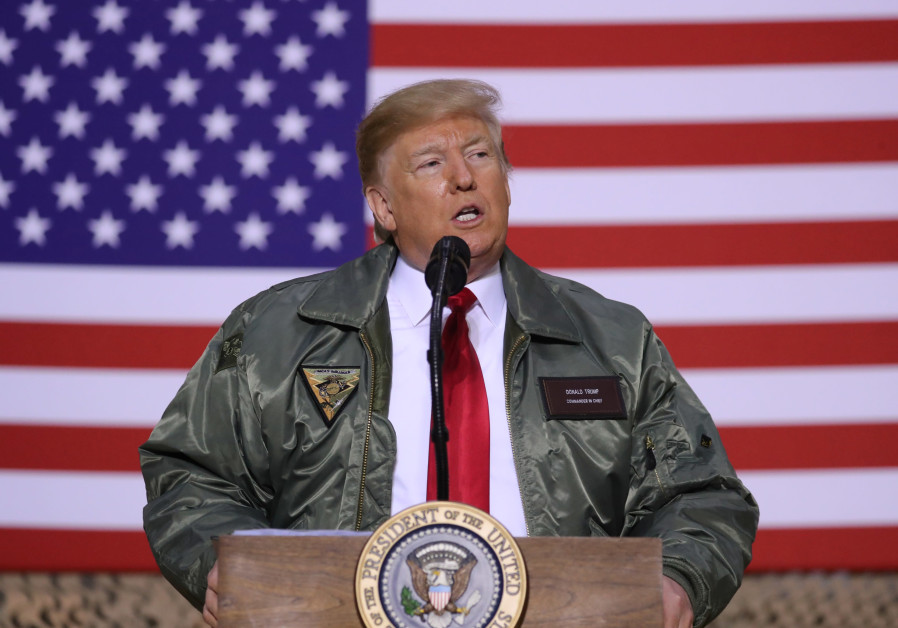
U.S. President Donald Trump delivers remarks to U.S. troops in an unannounced visit to Al Asad Air B

US President Donald Trump announced that the US had defeated ISIS on December 19 and that the US would end its presence in Syria. Two months later, the White House said that a small peacekeeping force of around 200 troops would remain in Syria. The flip-flops keep people guessing about what the US long-term plan is. It has also kept Trump’s own administration officials trying to keep up with and explain the changing policy, to make it seem consistent.

It began on December 12 when Turkish President Recep Tayyip Erdogan gave a speech indicating that “there is no longer any such threat as Daesh [ISIS] in Syria. We know this pretext is a stalling tactic.” Two days later, Erdogan spoke to Trump, who decided to withdraw US forces after Turkey asked why the US was still in Syria. This played to Trump’s desires to leave Syria, a promise he had made months before. Despite objections from his Secretary of Defense James Mattis and others, Trump pushed through the decision. By December 19, he had ordered a full and rapid withdrawal. It was supposed to take 60 to 100 days, officials indicated.

Trump told US troops in Iraq during a speech on December 26 that the US presence in Syria was not open-ended. Once ISIS strongholds were clear, he wanted the troops home. He said the US would remain in Iraq to watch for any ISIS resurgence and also to “watch over Iran.” The Pentagon indicated that it had begun returning troops “as we transition to the next phase of the campaign.” This was the way in which the US officials sought to spin the announcement, as part of a planned withdrawal and a new phase of the campaign which would involve stabilization. Trump also made sure to emphasize that there would be a “strong, deliberate and orderly withdrawal of US forces from Syria.”

US Senator Lindsey Graham, who had slammed Trump’s decision, spoke to the president on December 30. He said the Kurds should be protected and Iran should not win as the US withdraws. It appeared the US withdrawal would slow down. He mentioned a “buffer zone” on the border between Syria and Turkey. He flew to Turkey on January 18 to have further discussions.

On January 6, National Security Advisor John Bolton said that the US would not leave Syria until ISIS was fully defeated and the Kurds, who are key allies in the war on ISIS, were protected. Turkey had been threatening a military operation against the Kurdish People’s Protection Units in Syria, a group that was part of the Syrian Democratic Forces, the main US partner in Syria. The Bolton comments appeared to push back the US timeline on withdrawal to several more months. This was considered a change from the White House.

On January 11, reports of the first US military equipment began. Turkey, concerned about the rapidity of the US withdrawal, put out a statement on January 15 saying that in discussions with Trump the priority in Syria was to combat ISIS. They also talked increasing trade to $75 billion.

On February 8, the Wall Street Journal reported that the US would leave Syria by April. The new changes in the withdrawal date came as the US-led coalition of 79 member countries and groups came to Washington for a February 6 meeting. US Secretary of State Mike Pompeo told the assembled countries that while Trump had announced that the US was withdrawing, that was “not the end of America’s fight.” In fact, it was a “drawdown of troops” and was a “tactical change, it is not a change in the mission.” Pompeo made it clear that the US would be making requests to coalition partners to enable the effort to continue.

The US began asking allies, particularly in NATO and Europe, to contribute to its “buffer zone” concept along the border with Turkey. Trump also reaffirmed in early February that the US would continue to use air power against ISIS and use Iraq as a base against ISIS and to watch Iran.

After the coalition meeting, US acting Defense Secretary Pat Shanahan went to Iraq for meetings, and then headed for a meeting of NATO defense ministers in Brussels on February 13, while Pompeo flew to the Warsaw Summit to discuss Iran. The next day, February 15, Graham told the Munich Security Conference that the US was searching for more support from allies in Syria. Trump tweeted that European countries should take back 800 foreign ISIS fighters held in Syria.

Days after the Munich Security Conference, as it looked like the US was on shaky ground getting Europeans to send more troops to Syria, with several countries indicating they wouldn’t send troops if the US left, Trump spoke to Erdogan again. They discussed the US withdrawal. Trump was also discussing keeping several hundred troops in Syria, in the Tanf base in southern Syria and in eastern Syria. When he announced his intentions on February 22, he said it was not a reversal of policy. Graham called it part of an “international stabilizing force.” It would ensure a “safe zone” in Syria along the border with Turkey and prevent a new conflict. The Pentagon also said these troops would have special capabilities, such as intelligence gathering ability, as force multipliers for the rest of the allies who would keep troops.

The developing changes in US policy in Syria are now connected to several different policies. The US wants ISIS to be fully defeated and that means investing in “stabilization.” This includes training local security. The US wants to protect the SDF from a Turkish military operation and also work with Turkey. Turkey’s defense minister went to Washington on February 22 to discuss details on cooperation. The SDF had also sent a delegation to Washington in late January and early February to encourage the US to slow down its withdrawal.

The US also wants to try to repatriate some of the 800 foreign ISIS fighters so that they are not a burden on the SDF. In addition, the US wants to make sure Iran does not benefit from the US withdrawal. It has looked with hesitation on indications that the SDF would be forced to sign a deal with the Syrian regime or Russia if the US leaves. That would mean Iran would benefit. To prevent that, the US has agreed to stay and to anchor a “stabilization” force.

However, Turkey still wants control over the buffer zone or “safe zone,” and this final aspect of what comes next has not been hammered out. NATO allies would prefer to work with Turkey, but the SDF do not want Turkey controlling part of northern Syria, as they already control Afrin. Russia has hinted that it could play a role and has praised the US withdrawal. Turkey has also signed a statement with Russia and Iran on February 13 praising the US withdrawal, only to also seek to work with the US.

The US is now trying to both withdraw and stay in Syria, and please both its partners and allies, while both Russia and Iran look on, waiting for any sign that US policy cannot do both. Turkey has hedged its bets, waiting to see if it can pressure the US regarding the safe zone, or if it might need to work with Russia.


In first, Iran says cruise missile launched from submarine during drill

Posted February 24, 2019 by Joseph Wouk
Categories: Uncategorized

Source: In first, Iran says cruise missile launched from submarine during drill | The Times of Israel

Tehran conducts test with new Fateh submarine during 3-day exercise in Persian Gulf, in addition to destroyers, surveillance planes and helicopters; range of projectile is unknown

Iran has launched a cruise missile from a submarine for the first time during an ongoing annual military drill in the Strait of Hormuz, Iranian media reported Sunday.

The semi-official Fars news agency reported the launch and released an image showing a green submarine on the surface of the water launching an orange missile. It said other submarines have the same capability. It did not detail the missile’s range.

Iran debuted a domestically constructed submarine as well as a new destroyer Friday as part of the large-scale three-day naval drill in the Persian Gulf, state media reported.

Tehran had announced the launch of the Fateh submarine (Farsi for “Conqueror”) earlier this month. It said Fateh was the country’s first submarine in the semi-heavy category, and the first capable of firing cruise missiles.

The Sahand destroyer has a helicopter landing pad, is 96 meters (105 yards) long and can cruise at 25 knots. It is equipped with surface-to-surface and surface-to-air missiles as well as anti-aircraft batteries and sophisticated radar and radar evading capabilities, according to a report on state TV.

Iran’s new Sahand destroyer (YouTube screenshot)

Navy chief Rear Admiral Hossein Khanzadi said “The exercise will cover confronting a range of threats, testing weapons, and evaluating the readiness of equipment and personnel,” in remarks on state television translated by Reuters.

“Submarine missile launches will be carried out… in addition to helicopter and drone launches from the deck of the Sahand destroyer,” he said.

The exercise aims to evaluate the navy’s equipment, practice launching weapons and “enable the troops to gain readiness for a real battle,” he added.

Iran frequently touts its military arsenal, much of which is manufactured locally because of international sanctions. The Strait of Hormuz, at the mouth of the Persian Gulf, is a crucial bottleneck for global energy supplies, with about a third of all oil traded by sea passing through it.

Submarines, warships, helicopters and surveillance planes participated in the three-day drill, dubbed “Velayat-97,” which concludes later Sunday. On Saturday, Iran launched surface-to-surface missiles.

The show of military might comes at a time of heightened tensions with Iran’s main regional rival Saudi Arabia and with Washington, which last year withdrew from the 2015 nuclear deal with Iran and reimposed sanctions on the Islamic Republic.

American forces routinely pass through the Strait of Hormuz, which has seen tense encounters between them and Iranian forces in the past.