Why ISIS Fears Israel

Posted August 9, 2016 by Joseph Wouk
Categories: Uncategorized

Source: Why ISIS Fears Israel | The National Interest

Image: “Soldiers from the Bedouins Reconnaissance Battalion trained in southern Israel.” IDF photo, CC BY-NC 2.0.


A strategy of patient, vigilant deterrence works—and America should take note.

August 8, 2016September-October 2016

IN THE wake of the Orlando and Istanbul attacks, President Obama reiterated his determination to “destroy” ISIS by executing a strategy that combines air strikes, American special-operations units and support for local ground forces. Both of the candidates campaigning to succeed him insist that the United States must do more: Donald Trump advocates that Washington “bomb the hell out of” the group, while Hillary Clinton promises to “smash the would-be caliphate.” All three, however, are in violent agreement on one point: the overriding objective must be to destroy ISIS.

The insistence on the “destruction” of ISIS has become such a reflexive linchpin of America’s counterterrorism project that few pause to consider its strategic merit. But the nation with arguably the most experience and success combatting terrorism has considered it—and found it wanting.

Israelis live much closer to ISIS than do Americans. ISIS has pledged to conquer the Jewish state and incorporate it into its core caliphate. Yet surprisingly, the Israel Defense Forces (IDF) has rejected the option of taking the fight directly to ISIS. Instead, faced with an operational threat that could mean the death of hundreds of Israelis at any moment, it has embraced a strategy that has not even been on the U.S. policy menu. Adopting a page from the playbook the United States used to defeat revolutionary Soviet-led communism in the Cold War, Israel is preventing ISIS attacks through a strategy of patient, vigilant deterrence. Obviously, the United States cannot simply adopt the Israeli approach whole cloth. It operates in a different security environment than the Jewish state, which faces a multiplicity of terrorist threats on its borders. But there are important lessons that America can learn to enhance its national security.

Israel’s approach to ISIS is straightforward. Israel seeks to persuade ISIS not to attack it by credibly threatening to retaliate. If you attack us, the thinking goes, we will respond in ways that will impose pain that exceeds any gain you can hope to achieve. As Cold War strategists learned, making this work in practice is demanding. To be effective, deterrence requires three Cs: clarity, capability and credibility. Specifically, this means clarity about the red line that cannot be crossed, communicated in language the adversary understands; capability to impose costs that greatly exceed the benefits; and credibility about the willingness to do so. Failures occur when the deterrer falls short on any one of the three Cs. So, if I draw a red line, you cross it, and I respond with words rather than the decisive punishment threatened, I fail the third C. Whatever excuse I give for not executing my threat, and however earnest my claim that next time will be different, the blunt fact is that adversaries will find my threats less credible.

If that were not enough, as the great nuclear strategist Thomas Schelling taught us, successful deterrence requires more than just a threat. The flip side of the deterrence coin is an equivalent promise: if you refrain from the prohibited action, I will withhold the threatened punishment. If, for whatever reason, I decide to administer the specified punishment even though you have complied with my demands, I spend that coin—and can no longer use that threat to deter you. As the saying goes, if you’re damned if you do and damned if you don’t—you might as well do.

The suggestion that terrorists as vicious as ISIS could be deterred is routinely dismissed by most members of the U.S. policy community as silly or dangerously naïve. Some assert that terrorists just want to kill. Others argue that they are irrational and that, when facing adversaries who are prepared to die for their cause, threatening to kill them will have no effect. American strategists have also been traumatized by Al Qaeda’s attack on the World Trade Center and Pentagon. Imagine a responsible government knew that it was facing hostile terrorists who had the capability to conduct an attack that could kill hundreds. If it chose to counter that threat by attempting to deter, rather than preemptively attack, the adversary, how would that government justify itself to its citizens in the aftermath of another Paris-scale assault?


ISRAELI STRATEGISTS ask all of these questions—and struggle with uncomfortable solutions. They have concluded that, however imperfect, deterrence is the best option. Indeed, the IDF believes that it is successfully deterring adversaries along all azimuths: states (Iran, Lebanon and Syria), substates (Hezbollah and Hamas) and even terrorist organizations (ISIS, Palestinian Islamic Jihad and Al Qaeda–linked groups). Israeli strategists reject the consensus view in Washington that ISIS is an ominous threat to “the entire civilized world.” In contrast to President Obama’s argument that ISIS should be the “top priority” for the IDF, it is just one more terrorist group—one that does not even make the top half of Israel’s threat matrix. As former chief of military intelligence Amos Yadlin provocatively put it, “At the end of the day, we are talking about several thousand unrestrained terrorists riding pickup trucks and firing with Kalashnikovs and machine guns.”

The American counterterrorism debate has largely ignored Israeli calculus. Washington is generally averse to learning from others, and Israel’s security establishment, until recently, was reticent about revealing its thinking. That changed last August when, for the first time in the IDF’s history, Chief of General Staff Lt. Gen. Gadi Eizenkot published an unclassified version of the IDF defense doctrine. But because the document appeared only in Hebrew, it has remained largely unknown in the American strategic community. To make it accessible, Harvard Kennedy School’s Belfer Center for Science and International Affairs recently posted an English translation of the document.

The “IDF Strategy” document discusses in detail how to deter terrorist groups, specifically Hezbollah and Hamas. In the U.S. policy lexicon, Hezbollah and Hamas are labeled “terrorists.” The IDF calls them “substate organizations.” Substate actors have headquarters, hold territory and govern populations. Thus they present targets of value, making them vulnerable, like states, to a combination of “general deterrence” and “specific deterrence.” General deterrence is achieved by maintaining overwhelming military superiority and earning a reputation like that of the Godfather. The Godfather “takes everything personal.” As his consigliere observed, “If a bolt of lightning hit a friend of his the old man would take it personal. . . . Accidents don’t happen to people who take accidents as a personal insult.” In Eizenkot’s words, Israel must be seen as “an unpredictable enemy that can react in a very severe way.”

Specific deterrence is tailored to each enemy and focuses on particular actions. It requires “an ongoing analysis of the enemy’s characteristics, considerations, capabilities, identity, and decision making processes.” Israel seeks to influence the “calculations” of its enemies directly by persuading them of “the futility of continuing to fight” and reminding them of the “outcome of previous confrontations.”

The IDF constantly worries about whether its deterrent is sufficiently strong. It works daily to ensure that it meets each and every condition required for success. Red lines are clearly, publicly and repeatedly announced by top Israeli officials not only in Hebrew, but also in Arabic. Israel’s capability to enforce these red lines is demonstrated by “building a force that is partially visible to the enemy.” Credibility is enhanced by taking “limited offensive actions to signal that the ‘rules of the game’ have been broken.” And it is careful to withhold punishment otherwise. (Indeed, Israeli policymakers have occasionally chosen not only to avoid punishment but to reward good behavior, for example, in supporting the reconstruction of Gaza even though Hamas uses some of the material Israel supplies to build tunnels and rockets.)

Israel sees Hezbollah as the “most severe threat.” A proxy of Iran, it has assembled an arsenal of more than one hundred thousand missiles and rockets aimed at Israel—many of them precision-guided with the ability to hit strategic targets, including the equivalent of the Pentagon in Tel Aviv. Hamas, whose charter pledges to “raise the banner of Allah over every inch of Palestine” occupied by “warmongering Jews,” stands second among substates whose attacks must be deterred. It has fought three wars against Israel in the past decade. During the Second Intifada, Hamas perfected the suicide bomb and used it to kill hundreds of Israeli civilians. Today, the group has thousands of rockets and is burrowing tunnels into Israeli territory for future attacks. (Israel has discovered a number of tunnels in recent months, each buried one hundred feet underground.)

How does the IDF meet threats posed by these groups? Not by direct attacks to degrade them; not by all-out war to destroy them. Instead, it attempts to deter them. As Yadlin explained,

“Vis-a-vis Hamas and Hezbollah, we haven’t destroyed their capabilities, but we were able to establish deterrence. And this is basically because we hit them hard, and because the terrorists became . . . half-state entities. . . . The terrorists have discovered that when they are responsible for their economy, for education, for the life of their people, suddenly they are not that daring to use terror all day.”

Of course, deterrence is not the only strand in Israel’s strategy to counter its enemies. Full-spectrum prevention of terrorist attacks includes detection (deep penetration to identify threats), defense (such as the Iron Dome missile-defense system and secure walls or fences on all borders) and decisive defeat (when, despite best efforts, attackers succeed). While many states, including the United States, invest heavily in similar efforts, Israel is unique in its placing deterrence at the core of its counterterrorism strategy.

The IDF accepts the fact that this strategy sometimes fails. When it does, Israeli citizens die. But Israel’s national-security community still considers deterrence better than any feasible alternative for meeting threats posed by its substate adversaries. And after each conflict, the IDF has redoubled efforts to establish a new level of deterrence.

Israeli security professionals readily admit that they cannot successfully deter all terrorists. In particular, lone wolves who conduct terrorist attacks with little preparation remain a persistent, unsolved problem. Only days before the Orlando attack, Israel experienced its own lone-wolf attack in which two Palestinian cousins using homemade guns killed four civilians at an upscale shopping mall in Tel Aviv. Israel’s security establishment has tried to deter future lone-wolf terrorists by demolishing the attackers’ homes and taking other punitive actions against their families and communities. Nonetheless, Eizenkot noted recently, “I have to stress the fact that there is virtually no way to stop every terrorist planning a stabbing attack.”


TO MEET the threat of ISIS today, the IDF is following essentially the same script. Officials have been reticent about discussing details of the strategy in public, but its outlines are clear in the IDF doctrine, and senior Israeli military officials confirmed this reading of the strategy in recent off-the-record meetings.

In stark contrast with the United States, Israel sees ISIS as just one more armed group fighting in Syria alongside Al Qaeda and other terrorist affiliates. For each of these adversaries, as well as for state actors including Iran and Assad, Israel has conveyed three “red lines”: no attacks on Israel; no transfer of advanced conventional weapons (namely precision-guided missiles and rockets) to terrorist groups that threaten Israel; and no transfer of chemical weapons to terrorist groups. The “dozens” of Israeli airstrikes in Syria that Prime Minister Netanyahu recently acknowledged are calculated components of a strategy that reminds all adversaries of the cost of even minor violations of its rules. It was no accident that Israel reportedly killed a prominent Iranian general last year on the Syrian Golan Heights as he surveilled the Israeli border, planning strikes on Israel. Nor was it coincidental that Israel reportedly killed Hezbollah operations officer Samir Kuntar in December—after Israel discovered him plotting attacks on Israelis.

On its immediate border, Israel faces two ISIS affiliates: Wilayat Sinai (Sinai Province) on the Egyptian peninsula, and the Yarmouk Martyrs Brigade on the Syrian side of the Golan Heights. While both are small, their proximity and firepower concern Israeli military leaders. Despite their capability to attack at a moment’s notice, both have exercised restraint. Since declaring allegiance to ISIS in November 2014, Wilayat Sinai has focused primarily on fighting the Egyptian security forces, not Israel. Its most noteworthy success was the downing of a Russian airliner in the Sinai in October 2015, which did not kill or injure any Israelis. On the Golan, the Yarmouk Brigade controls a ten-square-kilometer area where some forty thousand civilians live. Despite the fact that the group stands, as one Israeli newspaper put it, “several hundred meters away from reaching Israeli school buses,” it has not conducted a single attack against Israel.

Israeli strategists emphasize relevant similarities between ISIS, Hamas and Hezbollah: each controls territory, attempts to govern a population and, therefore, has something to lose. Even though ISIS propaganda recently declared in flawless Hebrew that “soon there will not be one Jew left in Jerusalem,” the groups have largely refrained from attacking Israel. The reason, according to Eizenkot’s predecessor, Benny Gantz, is that “they would lose,” and in doing so risk their population and assets. ISIS leaders appear to have heard this message. As a German journalist who was embedded with ISIS in 2014 explained, “The only country ISIS fears is Israel. They told me they know the Israeli army is too strong for them.”

Could the United States deter ISIS? At least one of President Obama’s speechwriters thought so. At the National Counterterrorism Center in December, the president directed his remarks to ISIS leaders: “We’re sending a message: If you target Americans, you will have no safe haven.” If I were teaching Strategy 101 next semester, this statement would lead my weekly quiz. The assignment would simply reproduce the quote and say: “Assess.” Any student unable to explain why the president’s threat fails to satisfy the elementary requirements for successful deterrence would not receive a passing grade.

Obama made this threat just days after ISIS’s attack in Paris, which killed 130 people. His objective was to dissuade ISIS leaders from ordering a similar attack on the United States. If you attack us, the president warned, America will respond by attacking you. Students of deterrence would remind Obama that he is already conducting a campaign of air strikes and special-operations raids that he says aims to kill ISIS’s leaders and destroy the organization—before they attack the homeland. Moreover, he has argued at length why, he believes, the current campaign includes everything the United States can productively do to destroy ISIS. Thus, his attempt to deter ISIS by threatening more rings hollow.

A few months from now, a newly elected president will be thinking about how he—or she—will deal with ISIS. One can be sure that the president-elect will ask her/his national-security team to conduct a fundamental reassessment of the war against ISIS, Al Qaeda and the dozen related strains of Islamic jihadi terrorism. A serious review would begin with recognition of a brute fact: a decade and a half beyond the 9/11 attacks and President Bush’s declaration of a “War on Terrorism,” the United States undoubtedly faces more terrorists determined to do harm than when this effort began.

In anticipation of that review, the analytic community should be studying Israel’s playbook now. The United States is not Israel. Deterrence is not the only strand in Israel’s defense strategy. Not every strategy that works for Israel is appropriate for America. At this point in the fight against ISIS, it is hard to imagine a path back to a posture of containment and deterrence. But as America confronts the next ISIS, or indeed, the next dozen strains or mutations of this cancer, the United States is unlikely to have the resources and will to send even American drones and special-operations forces to every ungoverned space or valley ruled by a hostile terrorist group. Standing as they do on the front line confronting deadly threats 24/7, Israel offers what Eizenkot has called a “laboratory” of security. It is not too late to begin a debate about how lessons learned by Israel’s security community can enrich America’s conceptual arsenal for countering terrorism in what promises to be a very long war.

Graham T. Allison is director of the Harvard Kennedy School’s Belfer Center for Science and International Affairs and a former assistant secretary of defense for policy and plans. He is the author of the forthcoming book, Destined for War: America, China, and Thucydides’s Trap.

Image: “Soldiers from the Bedouins Reconnaissance Battalion trained in southern Israel.” IDF photo, CC BY-NC 2.0.

Report calls Iran top Mideast threat to U.S. interests ‘by far’

Posted August 9, 2016 by Joseph Wouk
Categories: Uncategorized

Source: Report calls Iran top Mideast threat to U.S. interests ‘by far’ – World Tribune: Window on the Real World

by WorldTribune Staff, August 8, 2016

Iran “by far” poses the largest potential threat to U.S. bases, interests, and allies in the Middle East, according to the 2016 Index of U.S. Military Strength.

A Heritage Foundation report said Iran is the greatest threat to U.S. interests in the region “by virtue of its ballistic missile capabilities, nuclear ambitions, long-standing support for terrorism, and extensive support for Islamist revolutionary groups.”Iran test-fired several ballistic missiles from silos across the country on March 8, the official website of the Islamic Revolutionary Guard Corps (IRGC) said, defying U.S. sanctions on its missile program. /Reuters

Despite U.S. President Barack Obama’s many overtures and concessionss, Iran remains firmly anti-Western and “seeks to tilt the regional balance of power in its favor by driving out the Western presence, undermining and overthrowing opposing governments, and establishing its hegemony over the oil-rich Persian Gulf region,” the index said.

“It also seeks to radicalize Shi’ite communities and advance their interests against Sunni rivals. Iran has a long record of sponsoring terrorist attacks against American allies and other interests in the region. With regard to conventional threats, Iran’s ground forces dwarf the relatively small armies of the other Gulf States, and its formidable ballistic missile forces pose significant threats to its neighbors.”

The report continued: “Iran has adopted a political warfare strategy that emphasizes irregular warfare, asymmetric tactics, and the extensive use of proxy forces. The Islamic Revolutionary Guard Corps (IRGC) has trained, armed, supported, and collaborated with a wide variety of radical Shia and Sunni militant groups, as well as Arab, Palestinian, Kurdish, and Afghan groups that do not share its radical Islamist ideology. The IRGC’s elite Quds (Jerusalem) Force has cultivated, trained, armed, and supported numerous proxies, particularly the Lebanon-based Hizbullah; Iraqi Shia militant groups; Palestinian groups such as Hamas and Palestine Islamic Jihad; and groups that have fought against the governments of Afghanistan, Bahrain, Egypt, Israel, Iraq, Jordan, Kuwait, Saudi Arabia, Turkey, and Yemen.

“Iran is the world’s foremost sponsor of terrorism and has made extensive efforts to export its radical Shia brand of Islamist revolution. It has found success in establishing a network of powerful Shia revolutionary groups in Lebanon and Iraq; has cultivated links with Afghan Shia and Taliban militants; and has stirred Shia unrest in Bahrain, Iraq, Libya, Saudi Arabia, and Yemen. In 2013, Iranian arms shipments were intercepted by naval forces off the coasts of Bahrain and Yemen, and Israel intercepted a shipment of arms, including long-range rockets, bound for Palestinian militants in Gaza.”

The index also pointed to Teheran’s mounting missile threat: “Iran possesses the largest number of deployed missiles in the Middle East. The backbone of the Iranian ballistic missile force is formed by the Shahab series of road-mobile surface-to-surface missiles, which are based on Soviet-designed Scud missiles. The Shahab missiles are potentially capable of carrying nuclear, chemical, or biological warheads in addition to conventional high-explosive warheads. Their relative inaccuracy (compared to NATO ballistic missiles) limits their effectiveness unless they are employed against large and soft targets such as cities.

“Iran’s heavy investment in such weapons has fueled speculation that the Iranians intend eventually to replace the conventional warheads in their longer-range missiles with nuclear warheads. The Nuclear Threat Initiative has concluded that “[r]egardless of the veracity of these assertions, Tehran indisputably possesses a formidable weapons delivery capability, and its ongoing missile program poses serious challenges to regional stability.”

The index noted that Iran’s Shahab-3 and Ghadr-1, which is a modified version of the Shahab-3 with a smaller warhead but greater range (about 1,600 kilometers or 1,000 miles), “are considered more reliable and advanced than the North Korean No-dong missile from which they are derived.”

Iran can strike targets throughout the region and into Eastern Europe, then-Director of the Defense Intelligence Agency, Lt. Gen. Michael T. Flynn, warned in 2014.

“In addition to its growing missile and rocket inventories, Iran is seeking to enhance lethality and effectiveness of existing systems with improvements in accuracy and warhead designs. Iran is developing the Khalij Fars, an anti-ship ballistic missile which could threaten maritime activity throughout the Persian Gulf and Strait of Hormuz,” Flynn said.

The index said that Iran’s ballistic missiles “pose a major threat to U.S. bases and allies from Turkey, Israel, and Egypt in the west, to Saudi Arabia and the other Gulf States to the south, to Afghanistan and Pakistan to the east. However, it is Israel, which has fought a shadow war with Iran and its terrorist proxies, that is most at risk from an Iranian attack. The development of nuclear warheads for Iran’s ballistic missiles would seriously degrade Israel’s ability to deter attacks, an ability that the existing (but not officially acknowledged) Israeli monopoly on nuclear weapons in the Middle East currently provides.”

The index continued that, for the Teheran regime, “hostility to Israel, to which Iran sometimes refers as the ‘little Satan,’ is second only to hostility to the United States, which the leader of Iran’s 1979 revolution, Ayatollah Khomeini, dubbed the ‘great Satan.’ But Iran poses a greater immediate threat to Israel than to the United States, since Israel is a smaller country with fewer military capabilities and located much closer to Iran. It already is within range of Iran’s Shahab-3 missiles. Moreover, all of Israel can be hit with the thousands of shorter-range rockets that Iran has provided to Hezbollah in Lebanon and to Hamas and Palestine Islamic Jihad in Gaza.”

Meanwhile, Teheran has invested “tens of billions of dollars since the 1980s in a nuclear weapons program that is masked within its civilian nuclear power program,” the index noted. “It has built clandestine underground facilities to enrich uranium, which were subsequently discovered near Natanz and Fordow, and plans to build a heavy-water reactor near Arak, which essentially will be a plutonium bomb factory that will give it a second route to nuclear weapons.”

As of June 2015, “Iran had accumulated enough low-enriched uranium to build eight nuclear bombs if enriched to weapons-grade levels, and it could enrich enough uranium to arm one bomb in less than two months. Clearly, the development of an Iranian nuclear bomb would greatly amplify the threat posed by Iran. Even if Iran did not use a nuclear weapon or pass it on to one of its terrorist surrogates to use, the regime in Tehran could become emboldened to expand its support for terrorism, subversion, and intimidation, assuming that its nuclear arsenal would protect it from retaliation as has been the case with North Korea.”

On July 14, 2015, Obama announced that the United States and Iran, with China, France, Germany, Russia, the United Kingdom, and the European Union High Representative for Foreign Affairs and Security Policy, had reached a “comprehensive, long-term deal with Iran… .”

That same day, the Speaker of the U.S. House of Representatives said: “His ‘deal’ will hand Iran billions in sanctions relief while giving it time and space to reach a break-out threshold to produce a nuclear bomb – all without cheating. Instead of making the world less dangerous, this ‘deal’ will only embolden Iran – the world’s largest sponsor of terror – by helping stabilize and legitimize its regime as it spreads even more violence and instability in the region.  Instead of stopping the spread of nuclear weapons in the Middle East, this deal is likely to fuel a nuclear arms race around the world.”

On July 19, 2015, the Chairman of the National Security Council of the State of Israel briefed the Prime Minister and Cabinet on the Iran deal, noting: (1) “the preservation of Iran’s nuclear capabilities that have been made possible as a result of the agreement including the enrichment of uranium and the maintaining of underground nuclear installations such as that at Fordo,” (2) “the go-ahead that was given to Iran to continue the research and development of advanced centrifuges will significantly reduce the break-out time that Iran will need to arm itself with nuclear weapons,” (3) “if Iran honors the agreement it will have a 10-15 year break-out time for dozens of nuclear bombs, as the restrictions on its nuclear program are lifted,” (4) “were Iran to violate the agreement it would be able to break out toward individual bombs before then,” and (5) “with the hundreds of billions of dollars that will flow into its coffers Iran will step up the terrorism that it spreads in the region and around the world.”

Exclusive: Hillary Rubber-Stamped Visas for Record Number of Saudi Visitors

Posted August 9, 2016 by danmillerinpanama
Categories: Clinton Foundation, Department of State, Hillary Clinton, Islamic terrorism, National secuity, Saudi Arabia, Visa law waivers

Tags: , , , , ,

Exclusive: Hillary Rubber-Stamped Visas for Record Number of Saudi Visitors, Counter Jihad, Paul Sperry, August 8, 2016

Despite evidence Saudi Arabian terrorists exploit the U.S. visa program, former Secretary of State Hillary Clinton doubled the number of visas for Saudi visitors to the U.S., while helping cut a deal with the Kingdom to waive security procedures for Saudi nationals upon their arrival in the U.S, CounterJihad has learned.

The annual number of nonimmigrant visas issued to Saudi nationals soared 93% during Clinton’s tenure as secretary from 2009 to 2013, federal data show, hitting a record 108,578 in fiscal 2013 and reversing a post-9/11 pause in Saudi visa approvals.

Before leaving office, Clinton helped negotiate a little-noticed January 2013 administration deal with Riyadh to allow Saudi visa-holders to enter the U.S. as “trusted travelers” and bypass the normal border security process. The next year, the State Department issued an all-time-high 142,180 Saudi visas, consular data show.

All told, the Obama administration has opened the floodgates to more than 709,000 Saudi nationals, most of whom applied for student or business visas, records show. It’s as if 9/11 never happened and 15 Saudi terrorists never infiltrated the country on rubber-stamped visas. The surge represents a major shift from changes in immigration policy made in the wake of 9/11, when the number of visas issued to Saudi Arabians plummeted 69.7%. In fiscal 2002, Saudi visas slowed to a relative trickle of just 14,126.

Saudi immigration was tightened after it was revealed that the State Department’s Visa Express program benefited some of the Saudi hijackers on 9/11. Less known is that two other al-Qaida-tied Saudi nationals visiting America on student visas also took advantage of the lax policy. It turns out these other young Saudi men made a “dry run” to test airline security ahead of the 9/11 hijackings.

According to the recently declassified 29 pages of the congressional joint inquiry report on 9/11, Mohammed al-Qudhaeein and Hamdan al-Shalawi, both Saudi students living in the Phoenix area, tried several times to gain access to the cockpit of an America West flight while traveling to Washington to attend a party at the Saudi Embassy in 1999. Their airline tickets were paid for by the Saudi government, the documents reveal.

The FBI suspected al-Qudhaeein was a Saudi intelligence agent bankrolled by the Saudi Embassy, and agents subsequently received information that al-Shalawi trained in al-Qaida camps in Afghanistan and operated in the same circle with the Saudi hijacker who flew the plane into the Pentagon.

Coming into office in 2009, Clinton issued a cable warning diplomats that Saudi Arabia was still sponsoring al-Qaida terrorist operations.

“More needs to be done since Saudi Arabia remains a critical financial support base for al-Qaida,” states a Wikileaked secret December 2009 memo signed by the then-secretary of state. Her memo urged U.S. diplomats to redouble their efforts to stop Saudi money reaching terrorists in Pakistan and Afghanistan.

“Donors in Saudi Arabia constitute the most significant source of funding to Sunni terrorist groups worldwide,” Clinton said.

saudi visasNonimmigrant Visa Issuances, Saudi Arabia, FY1997-2014

In spite of her own warnings about continued Saudi-sponsored terrorism, however, she and President Obama quietly struck a deal to fast-track more Saudi students for U.S. entry during a series of high-level meetings in January 2013 with the Saudi interior minister, who had complained about delays in the security screening process and lobbied for more student visas.

Clinton, whose family foundation has received tens of millions of dollars from Saudi Arabian donors, can be seen here meeting at her State Department office with Saudi Interior Minister Prince Mohammed bin Nayef bin Abdulaziz on the same day — Jan. 16, 2013 — that Prince Mohammed signed an agreement to join America’s trusted traveler program known as Global Entry.

As a member of the trusted traveler program, the U.S. now trusts Saudi Arabians as much as it does Canadians, who as longtime program members are considered low-risk travelers and pre-approved for entry, and more so than Germans or French, who aren’t included in the program. Thanks to the Obama administration, Saudi visitors now enjoy expedited security clearance. They bypass the normal Customs screening and proceed toGlobal Entry kiosks, where they receive a transaction receipt that directs them to baggage claim and exit.

In other words, Saudi visitors now go to the front of the line and skip normal Homeland Security inspections. And federal authorities now share background checking and other pre-screening duties with the Saudis.

The trusted traveler program kicks the door open to thousands of young Saudi men who will be able to stay legally in the U.S. for five years on student and vocational visas. And they won’t be monitored while they’re here. The feds stopped tracking their stays here several years ago after the Saudi embassy, along with the terrorist front group Council on American-Islamic Relations, protested to the White House and State Department.

That means terrorists among the new Saudi entrants can enter the U.S. and continue to test flight security or plot attacks while pretending to go to college. Authorities now have no idea if a Saudi national entering on a student visa actually reported to campus.

“Why would we trust them?” 9/11 survivor Sharon Premoli demanded in an interview with the Investigative Project on Terrorism. Indeed, several Saudi visa-holders have been busted plotting terrorism or testing airline security in recent years. For example:

  • In 2013, a young Saudi immigrant living in Oregon on an expired visa was arrested for conducting a suspected dry run during a Continental Airlines flight bound for Houston. He screamed “Allah Akbar” while trying to light something in the plane’s cabin.
  • In 2011, a Saudi student was arrested on charges of plotting to bomb the Texas home of former President George W. Bush.

The Saudis can also use their vocational visas to enroll in U.S. flight schools as the hijackers did.

A recent study by the Washington-based Center for Immigration Studies found that three of the five top M-1 approved schools in the U.S. are flight schools. It also found that thousands of Saudis have arrived here on M-1 visas since Clinton loosened visa restrictions for travelers from the Kingdom.

Authorities are having a hard enough time dealing with all the homegrown terrorists cropping up. The FBI has more than 1,000 terrorism cases open on ISIS suspects in all 50 states. Agents don’t need new waves of young Muslim men from Saudi Arabia to worry about tracking, as well.

By dumping potentially thousands more Saudi extremists into the homeland security system, the administration is worsening the odds that law enforcement can catch terrorists before they strike.

A brutal Trump AD

Posted August 9, 2016 by danmillerinpanama
Categories: 2016 elections, Donald Trump, Hillary Clinton

Tags:

A brutal Trump AD, Power Line,  John Hinderaker, August 8, 2016

This ad by the Donald Trump campaign is a good reminder of why I plan to vote for him, despite his flaws. It is brutal but 100% accurate and fair:

Black Lives Matter’s Support for Killers of Black Cops

Posted August 8, 2016 by danmillerinpanama
Categories: Black Lives Matter

Tags:

Black Lives Matter’s Support for Killers of Black Cops, Front Page Magazine, Daniel Greenfield, August 8, 2016

blm

In the spring of 2000, Fulton County Sheriff’s Deputy Ricky Kinchen and fellow Deputy Aldranon English went to serve a warrant in downtown Atlanta. Both Kinchen and English were African-American.

Kinchen had graduated Morris Brown College, a historically black college that had been founded in 1881 and named after one of the founders of the African Methodist Episcopal Church. He had spent almost a decade serving the public in his current job and was married to Sherese Kinchen and had two children.

At his killer’s trial, Sherese testified that, “When Ricky was killed, I lost a part of myself. Ricky was not only my husband, he was my friend for 18 years. He was my confidant and my rock, and now he’s gone.”

Ricky Kinchen and Aldranon English were approaching a store owned by Jamil Abdullah Al-Amin, formerly known as H Rap Brown. Brown had converted to Islam after a term in prison and a shootout with police officers in the seventies. He had shot to fame as the very violent chairman of the Student Nonviolent Coordinating Committee. Typical lines included, “It’s time for Cambridge to explode, baby. Black folks built America, and if America don’t come around, we’re going to burn America down.”

When Kinchen and English were approaching him, Brown was known as Imam Al-Amin, a Muslim religious leader who headed the Community Mosque and was a key figure in the National Ummah.

He was no less of a terrorist for it.

Al-Amin opened fire with a rifle on the two African-American law enforcement officers. Deputy Aldranon English was wounded and he stumbled to a nearby field to save his life. Deputy Kinchen was shot and fell. Al-Amin ran out of bullets, took a handgun from his black Mercedes, pointed it at the fallen African-American officer as he lay dying and shot him between the legs three times.

Deputy English survived the attack. Later he would break down in tears on the stand as he described the murder of his partner. Defense lawyers for Al-Amin worked to rig the jury, removing anyone who disliked the violent racist Black Panthers hate group that Al-Amin, in his former life as H Rap Brown, had been associated with. They ended up with a jury of six black men, three black women, two white women and one Hispanic woman.

The jury, including the six black men and three black women, found Al-Amin guilty as hell of the murder of an African-American police officer. Al-Amin and his two wives, the younger of whom was a teenager when they were married, who lived in houses three miles apart from each other, frowned as the verdict was read. Al-Amin was sentenced to life in prison. There would be no parole.

Outside the church where Deputy Ricky Kinchen was buried, the line of police cruisers stretched for miles as officers paid tribute to a fallen brother. His casket, covered in the flag, was carried out to honor and glory. If there had been any justice, Deputy Kinchen would be remembered as a hero.

Instead Al-Amin has become a martyr among black nationalists, including among the latest incarnation of the racist movement, Black Lives Matter.

The recently released Black Lives Matter policy agenda calls for freeing a number of cop killers, including the murderer of Deputy Ricky Kinchen.

Al-Amin is one of Black Lives Matter’s heroes. It doesn’t matter at all that he took a black life.

Black lives don’t matter to Black Lives Matter. Black Nationalist terrorism does. The racist hate group describes the murderers of black and white police officers as “political prisoners”. It demands the removal of Assata Shakur, a particular icon of Black Lives Matter, from “international terrorist lists” and an end to the bounty for the capture of the fugitive who helped murder New Jersey State Trooper Werner Foerster.

Black Lives Matter also agitates on behalf of Kamau Sadiki, formerly known as Freddie Hilton, Assatu Shakur’s ex-boyfriend.

Hilton had been busted for the sexual abuse of his girlfriend’s 12-year-old daughter. The Black Nationalist icon had allegedly molested the little girl for seven years. Eager to get out of trouble, he began talking to the police and it didn’t take them long to connect him to the murder of Officer James Green who had been killed by Hilton on orders from a superior in the Black Liberation Army.

If the life of Officer James Green doesn’t matter to Black Lives Matter, perhaps the life of that little girl should.

But it clearly doesn’t.

Finally Black Lives Matter’s policy agenda speaks out for the murderers of Sergeant John V. Young. Young was killed with a shotgun blast inside a police station by Black Nationalist terrorists who were also involved in the attempted murders of seven police officers. One of their vilest crimes was the bombing of St. Brendan’s Church where the funeral of Patrolman Harold Hamilton had been taking place.

Hamilton’s three little children were nearby when the bomb, filled with nails and screws, went off.

If all had gone off according to plan, the bomb would have exploded as the casket with the fallen officer was being carried past it. But the timing was off and no one was hurt. But not for lack of trying.

“To the violent and the criminal our efforts to halt this kind of lawlessness will be condemned as acts of oppression,” Governor Ronald Reagan declared. “Let them call it what they will. I’m unable to hear the whimper of the criminal above the cry of the victim and the weeping of his widow and children.”

Black Lives Matter still calls it oppression. It demands that we hear the whimper of the cop killer.

It is no coincidence that the cop killers that Black Lives Matter is agitating for were associated with the Black Liberation Army. Or that the hate group traffics in rhetoric about police genocide that is ominously similar to those of the racist killers and terrorists that it defends.

Black Lives Matter does not care about the lives of black people or of anyone else. It is a terrorist organization that seeks power through terror. It plays the victim as cover for its abuses.

The life of Ricky Kinchen has no value or worth to Black Lives Matter. It cares nothing about the pain that the father of two felt when Al-Amin stood over him, pointed a gun and pulled the trigger for no other reason than to torture him and to cause a dying officer more unspeakable pain.

We must never forget that this is what Black Lives Matter supports. We must never forget that these are their heroes and their role models. We must never forget that the murder of police officers associated with Black Lives Matter campaigns is not an accident, but a design.

That is why Black Lives Matter complains about the execution of Black Nationalist terrorist Micah X. Johnson after his murder of 5 Dallas police officers in its policy agenda. Whether it’s decades ago or today, Black Lives Matter supports the murderers of police officers.

State Department Doesn’t Say Whether Hostages Left Iran Before Money Arrived

Posted August 8, 2016 by danmillerinpanama
Categories: Department of State, Iran - hostages, Iran - ransom payments

Tags: , ,

State Department Doesn’t Say Whether Hostages Left Iran Before Money Arrived, Washington Free Beacon via YouTube, August 8, 2016

(Please see also, State Dept Rep FINALLY being honest and laughs hysterically about US gov transparency and democracy. — DM)

British MPs face booze ban as Parliament moves to building governed by Sharia

Posted August 8, 2016 by danmillerinpanama
Categories: Booze ban, Britain, British Parliament, Sharia law

Tags: , , ,

British MPs face booze ban as Parliament moves to building governed by Sharia, Jihad Watch, 

British MPs are facing a six-year drinking ban after a committee decided that they will move to an office block that is operating under Islamic law while the Palace of Westminster is being refurbished. The committee’s recommendations were leaked.

Back in 2014, it was announced that Britain was launching the first Islamic bond scheme in the non-Muslim world. Three government buildings in Whitehall were transferred to Islamic bonds, switching the ownership from British taxpayers to Middle Eastern businessmen and banks, and thus rendering the premises fully compliant with Sharia law, which includes the banning of alcohol.

It almost seems too farfetched to imagine Islamic law governing British MP’s, which would make them officially dhimmis in obedience to the Sharia. But it is happening.

booze-ban

“MPs face six-year Sharia booze ban: Parliament to move to Islamic-owned Health department block in 2020 while Palace of Westminster is refurbished”, by Rory Tingle, UK Mail, August 7, 2016:

MPs face a six-year drinking ban after a committee decided they will move to an office block operating under Islamic laws while the Palace of Westminster is refurbished.

Their new home, Richmond House in Whitehall, was transferred to finance an Islamic bond scheme in 2014.

The building, currently the offices of the Department of Health, will house MPs when a multi-billion-pound refurbishment of Parliament begins in 2020.

Palace of Westminster decided against MPs remaining in the building while work takes place.

Their recommendations, which will be voted on by MPs when they return after the summer recess, was contained in a report leaked to The Times.

A plan to nationalise the nearby Red Lion pub so it could be kept private for MPs was shelved after owners Fuller’s Inns spoke out against the idea.

Peers will go to the QEII Centre at the other end of Parliament Square.

Renovating the Palace of Westminster while it is vacant is expected to cost between £3.5billion and £3.9billion and take six years.

The committee rejected two other plans, which would have been more expensive.

One was to move MPs and peers out of the Palace of Westminster at different times as the building was repaired, costing £4.4billion and lasting 11 years, while the other would have seen them stay put as repairs were carried on around them.

This third choice would have taken 32 years at a cost of £5.7billion.

MPs will vote on whether to accept the committee’s recommendations after they return from the summer recess.

The Palace of Westminster has dozens of bars and restaurants, where MPs, peers, staff and other passholders can enjoy pints for as little as £2.90.

This is 70p cheaper than the average price of a pint in London thanks to taxpayer subsidies worth £4million a year.

The landmark, opened in 1859, has a leaky roof, crumbling stonework and faulty cabling.

The Queen Elizabeth Tower, which supports Big Ben, is also tilting by 18 inches.

Richmond House is one of three Whitehall buildings that were transferred to the £200million Islamic bond scheme, which switched their ownership from British taxpayers to wealthy Middle Eastern businessmen and banks.

George Osborne announced the move in June 2014 as part of an effort to make the UK a global hub for Islamic finance.

But critics say the scheme would waste money and could undermine Britain’s financial and legal systems by imposing Sharia law onto government premises.

The bonds – known as Sukuk – are only available for purchase by Islamic investors.

The money raised will be repayable from 2019.

But instead of interest, bond-buyers will earn rental income from the three Government offices as interest payments are banned in Sharia law…

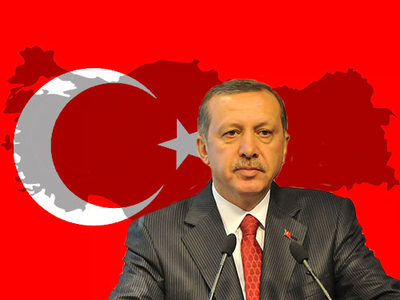
Erdogan-Gulen Power Struggle Divides European Turks

Posted August 8, 2016 by danmillerinpanama
Categories: Erdogan, Europe, Fethullah Gülen, Turkey, Turkey post-coup

Tags: , , , ,

Erdogan-Gulen Power Struggle Divides European Turks, Investigative Project on Terrorism, August 8, 2016

(Please see also, Plotting Jihad in the Poconos—Who the Hell is Fethullah Gulen? — DM)

1167

Millions of European Turks – both immigrants and subsequent generations – ally themselves with the Gulenist movement, or Hizmet. While some call it a cult and claim it represents a zealous Islamic religious movement, others view it as a more moderate strain of Islam and praise Gulen for his interfaith initiatives, and for the hospitals, schools and universities he has founded internationally, including over 100 charter schools in the United States. But since the split between the two men, tensions have also emerged between pro-Gulen and pro-Erdogan groups that are far more virulent than the disputes between those who favor Hizmet and those who condemn it.

********************

On the night of July 15, members of the Turkish military stormed the state-run TRT news agency in Ankara and forced an anchorwoman to read a statement calling President Recep Tayyip Erdogan a “traitor.” Within moments, tanks began to drive menacingly through the streets of Ankara and Istanbul as military planes roared over Turkish skies. The Parliament was bombed. The fifth military coup in the history of modern Turkey had begun, taking even the most anti-government Turks by surprise.

But Erdogan regained complete control within hours, thanks to his fervent supporters who took to the streets in his defense. Throughout the night, pro- and anti-Erdogan military and civilians clashed across the country, leaving nearly 300 dead and 2,100 injured by morning.

The attempted coup and its aftermath, however, soon exploded into more than just a national crisis; it has had incendiary repercussions globally, particularly in the Turkish communities of Europe.

Erdogan declared a state of emergency July 16, and began cracking down on suspected members of the coup plot and their allies. By July 20, more than 45,000 people had been arrested, including 2,700 judges and 15,000 teachers. As Erdogan called for reinstating the death penalty, credible reports emerged of prisoners being tortured and raped.

In the meantime, tens of thousands of others have been fired from their jobs as the state takes over or shuts down nearly all the country’s media outlets – including three news agencies, 16 television channels, 45 newspapers and 15 magazines, Reutersreports. And on Monday, more than three weeks after the failed coup, Turkey recalled five senior diplomats from its embassy in The Hague.

All who have been sacked are accused of complicity in the coup, based on their (ostensible) ties to Fethullah Gulen, a powerful cleric now living in self-imposed exile in Pennsylvania. Once one of Erdogan’s closest allies, Gulen has become his most despised enemy in recent years, thanks in large part to Gulen’s criticism of Erdogan during the 2013 Gezi Park demonstrations. Now Turkey’s president accuses Gulen of being behind the coup attempt, demands his extradition from the United States. Meantime, he continues his crackdown on the cleric’s followers.

But those followers are not just in Turkey, and neither are Tayyip Erdogan’s. Millions of European Turks – both immigrants and subsequent generations – ally themselves with the Gulenist movement, or Hizmet. While some call it a cult and claim it represents a zealous Islamic religious movement, others view it as a more moderate strain of Islam and praise Gulen for his interfaith initiatives, and for the hospitals, schools and universities he has founded internationally, including over 100 charter schools in the United States. But since the split between the two men, tensions have also emerged between pro-Gulen and pro-Erdogan groups that are far more virulent than the disputes between those who favor Hizmet and those who condemn it.

As a result, the clashes between the conflicting sides have spilled beyond the Turkish borders into Europe, and have now exploded since the coup. Often, they have been violent, with pro-Erdogan protesters hurling stones into the windows of Gulen organizations in Gelsenkirchen, Germany and Rotterdam, Holland, or calling to set fire to a building housing a Gulenist organization in Beringen, Belgium (“Burn them alive!” the protesters shouted.). Arsonists also attacked several Gulen buildings in the Netherlands.

In other instances, the attacks are quieter but more sinister: members of 70 different Gulen-affiliated groups in the Netherlands report receiving hate messages and death threats. People believed to support the movement – or who fail to support Erdogan – report being banned from mosques and refused entry to restaurants. Dutch children have told each other “I can’t talk to you anymore.” A number of Gulen followers have gone into hiding, fearing for their safety.

And in Germany, home to Europe’s largest Turkish community, estimated at nearly 3 million, some 30-40,000 Erdogan supporters marched through Cologne on July 31. And while the demonstrations went off without incident, they represent a chasm within the country – not just between Germans and Turks, but – as in the Netherlands – among the Turks themselves. Noted Deutsch-Welle‘s Gero Schliess in an editorial, “After the coup attempt in Turkey, divisions have emerged in this country that no one had seen for a long time – or hadn’t wanted to see. The failed coup and President Erdogan’s massive onslaught against civil rights have deeply divided the Turkish community in Germany. The split runs right through families and neighborhoods, regardless of social strata or profession.”

But at least as disturbing is the idea of 30-40,000 people marching in support of the man who has led the profoundly anti-democratic crackdown in Turkey. While it may be understandable to oppose a military coup, it is something else entirely to continue marching in support in light of the abuses that have followed. Moreover, according to Politico, the situation has also “reignited a decade-long debate in Germany about the Turkish state steering public opinion within the German-Turkish community through a web of lobbying groups, religious institutions, media outlets and public figures.”

Religious groups seem to be chief among those, such as the Turkish-Islamic Union for Religious Affairs, sponsored by the Turkish state. That Turkey is therefore subsidizing mosques in Germany demonstrates the strength not only of the country’s influence on the political visions of German Turks, but on their religious ideas as well. And in an increasingly Islamist Turkey, those ideas no longer reflect the secular, humanist values of Ataturk; rather, they are based on an increasingly strict vision of Sunni Islam in which the state and the mosque are one.

Other Turkish religious groups, including Milli Gorüs, an Islamist group headquartered in Cologne, are also believed to hold sway over European Turks, particularly in the Netherlands.

Behind them all, particularly in Belgium, is the Diyanet, the official Turkish Directorate of Religious Affairs .

Ataturk created the Diyanet soon after the founding of the Turkish republic, to help ensure that imams preached moderate interpretations of Islam. They were critical to maintaining the separation between mosque and state. With the rise of Erdogan and his AK Party, however, it has served to do just the opposite: it now promotes Islamist views in Turkey and among the Turkish community abroad. As Istanbul-based journalist David Lepeska noted last year, the Diyanet‘s budget has quadrupled since 2006 to over $2 billion, with a 2015 budget allocation that was “40 percent more than the Ministry of the Interior’s and equal to those of the Foreign, Energy, and Culture and Tourism ministries combined.” In addition to presiding over Turkey’s own mosques, the directorate governs hundreds of mosques across Europe, has increased the number of religious classes in public schools, and, reports Lepeska, “runs a 24-hour television station, Diyanet television, available via satellite, cable, and YouTube, and manages a Facebook page (with nearly 230,000 fans), two Twitter accounts (more than 50,000 followers), and an Islamic lifestyle hotline.”

The result is a toxic mixture of religion and politics that could not be further from the secular ideals of the founder of modern Turkey. Add Erdogan’s and the AKP’s human rights abuses and dictatorial leanings to this and the cauldron boils hotter and more dangerous than ever. Whatever problems existed previously, the post-coup situation bears far too many parallels to the impulses and ideologies of radical Islamism: whoever does not support Erdogan becomes the enemy. And Erdogan, as the leader of Turkey, is the leader of the Diyanet.

The outcome is a kind of tribalism that already infects the rest of the Middle East: to be outside the Erdogan support core is to be outside the realm of the Diyanet – an apostate of sorts, threatened with death.

That this could become the future of Ataturk’s secular democratic republic is tragic. But there is also a very real possibility of the impulse spreading into Europe. Other events this year, such as the attacks on Dutch journalist Ebru Umar and German comedian Jan Bohmermann, both of whom criticized the Turkish president, demonstrate that many European Turks lean towards such a radicalized and tribalist vision. It is a vision Europe’s leaders would do well to extinguish while they still can.

The “Anti-Normalization” Campaign and Israel’s Right to Exist

Posted August 8, 2016 by danmillerinpanama
Categories: Islam and conquest, Islam and Israel, Israel and "normalization", Saudi Arabia

Tags: , , ,

The “Anti-Normalization” Campaign and Israel’s Right to Exist, Gatestone Institute, Khaled Abu Toameh, August 8, 2016

(Please see also, Israeli-Saudi Ties Warming; Hizballah and Iran Livid. — DM)

♦ For many Arabs and Muslims, the conflict with Israel is not about a withdrawal to the pre-1967 lines. These opponents have no intention of recognizing Israel’s right to exist, even if it allows for the creation of an independent and sovereign Palestinian state in the West Bank, Gaza Strip and East Jerusalem.

♦ A leading cleric, Dr. Ali Daghi, Secretary-General of the International Muslim Scholars, wrote: “There is a consensus among Muslims, in the past and present, that if an Islamic land is occupied, then its inhabitants must declare jihad until it is liberated from the occupiers.”

♦ “Anyone who calls for peace with the Zionists should brought to trial for high treason. Normalization is treason.” — Ramzi Al-Harbi, Saudi writer.

♦ Let us be clear: these are not fringe voices. This is mainstream Arab and Islamic society. What bothers them is not the “normalization” with the “Zionist entity,” but the fact that Israel exists. For the masses, jihad against Israel is the solution, not another peace initiative endorsed by unelected Arab dictatorships.

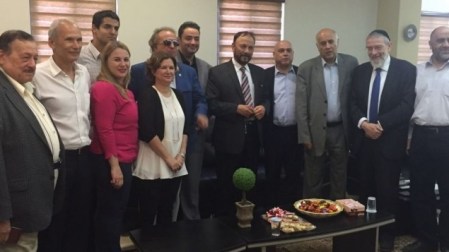
Arabs and Muslims are up in arms over a controversial visit to Israel by a retired Saudi general, Dr. Anwar Eshki, who is being accused of promoting “normalization with the Jews and the Zionist entity.” If “normalization” with Israel is being denounced as a major crime and sin, one can only imagine what “peace” with Israelis would be considered in the Arab and Islamic countries.

General Eshki and a delegation of Saudi academics and businessmen met with Israeli Foreign Ministry Director-General Dore Gold, the Coordinator of Government Activities in the Territories (COGAT), Maj.-Gen. Yoav Moderchai and several Knesset members from the opposition. The Saudi delegation also travelled to Ramallah, where its members met with Palestinian Authority (PA) President Mahmoud Abbas and other Palestinian officials.

1764Retired Saudi general Anwar Eshki (center, in striped tie) and members of his delegation, meeting with Knesset members and others during a visit to Israel, on July 22, 2016. (Image source: Twitter)

The anger engendered by the unprecedented visit by the Saudi delegation to Israel shows that many Arabs and Muslims continue to believe that Israel has no right to exist despite the optimism voiced over the so-called Arab Peace Initiative of 2002.

Several Arab and Muslim leaders insist that, according to this initiative, an Israeli withdrawal to the pre-1967 lines and the establishment of an independent Palestinian state with East Jerusalem as its capital would lead to the creation of “normal relations” between their countries and Israel.

However, the outrage the Saudi delegation’s visit to Israel has triggered throughout the Arab and Islamic countries points to one conclusion: that for many Arabs and Muslims, the conflict with Israel is not about a withdrawal to the pre-1967 lines. Nor is the conflict about Palestinian rights and “normal relations” between Israel and the Arab and Islamic countries.

Those opposed to the visit are expressing their feelings under the banner of “Anti-Normalization” with Israel. The existence of Israel on “Muslim-owned” land, however, is the real problem. These opponents have no intention of recognizing Israel’s right to exist, even if it withdraws to the pre-1967 lines and allows for the creation of an independent and sovereign Palestinian state in the West Bank, Gaza Strip and East Jerusalem. This, of course, stands in sharp contrast with the spirit of the Arab Peace Initiative, which many in the Western world mistakenly believe would put an end to the Israeli-Arab conflict.

The first to express outrage over the visit were thousands of Saudis, including top Islamic clerics, who took to social media to express their poison and hatred for Israel and Jews. Many reminded their listeners of fatwas (Islamic religious decrees) banning any form of “normalization” with Israel and Jews, who are referred to as “infidels and polytheists.” The fatwas also forbid Muslims from giving up any part of “Muslim-owned” land to non-Muslims.

In Islam, if land has ever been under Muslim control, like southern Spain, el-Andalus, it must belong to Muslims to be as an endowment, or waqf, held in trust for Allah, in perpetuity. As the entire Middle East was under the control of the Muslim Ottoman Empire from 1259-1924, many Arabs and Muslims believe that the entire area belongs only to Islam, regardless of who may have lived there before.

Jews, who have lived continuously in Biblical Canaan and Judea for three thousand years, might well wonder how they can be accused of “occupying” their own land.

One of the leading clerics, Dr. Ali Daghi, Secretary-General of the International Muslim Scholars, wrote: “There is a consensus among Muslims, in the past and present, that if an Islamic land is occupied, then its inhabitants must declare jihad until it is liberated from the occupiers.”

Clearly the two-state solution is not the goal of this cleric and his friends. Nor are they interested in “Palestinian rights.” Rather Dr. Daghi is concerned about the “right” of Muslims to all the land, including those parts on which Israel exists today.

Another senior Saudi religious leader, Adel Al-Kalbani, the former imam of the Grand Mosque of Mecca, joined the “anti-normalization” campaign by declaring: “When we were young, they used to call them the Zionist enemy. For sixty years, this enemy has not changed. But we have changed!” The “change” he is talking about relates to those few Arabs and Muslims who are willing to recognize Israel’s right to exist.

Saudi sheikh Esam Al-Zamel said, “The hatred for Israel and the Zionist enemy is inscribed in the hearts of our generation. We must inscribe these values and principles in the hearts of our children.”

Another Saudi citizen, Sultan Al-Jumeri, said, “Normalization and extending a hand to the Zionist entity must remain a disgrace and sin that will chase the perpetrators to their last day. This is a betrayal of the history, the land and the martyrs.”

Fahd Al-Shumri, also of Saudi Arabia, remarked, “Normalization means recognition of “Israel.” This will lead to another phase: relinquishing the Al-Aqsa Mosque and recognizing the Jews’ right to the land of Palestine.”

For his part, Hassan Al-Mutairi, a Saudi preacher, wondered, “Is there any Muslim who supports normalization with the Zionists? The stone and tree will remain witness to our enmity to the Jews.”

He is referring to a hadith (the words and actions of Mohammed), which is also a part of theHamas Charter, that states:

“Judgment Day will not come before the Muslims fight the Jews, and the Jews will hide behind the rocks and the trees, but the rocks and the trees will say: Oh Muslim, oh servant of Allah, there is a Jew behind me, come and kill him — except for the gharqad tree, which is one of the trees of the Jews.”

Some Saudi and Arab writers described the visit by the Saudi delegation as a “stab in the back” against the Boycott, Divestment and Sanctions Movement (BDS) against Israel. They urged the Saudi government to take immediate punitive measures against the former general and his delegation members, in order to deter others from committing such a “big crime” against Arabs and Muslims.

“Israel will remain our number one enemy in spite of the Zionists,” remarked Saudi writer Amal Zahid. Ramzi Al-Harbi, another writer from Saudi Arabia, commented, “Anyone who calls for peace with the Zionists should be brought to trial for high treason. Normalization is treason.”

Many Palestinians also joined the bandwagon by adding their incendiary and hateful remarks against the Saudis who visited Israel.

“We salute every Saudi who rejects normalization with the occupation,” said Palestinian political analyst Ibrahim Al-Madhoun.

Not surprisingly, Hamas, Islamic Jihad and other Palestinian groups also issued statements strongly condemning the visit of the Saudi delegation to Israel and calling for a ban on such trips. These groups even went as far as condemning a number of Palestinian Authority officials, such as Jibril Rajoub, for participating in the meetings between the Saudi delegation and Israeli officials.

The Palestinian “Resistance Committees,” a coalition of various Palestinian armed groups in the Gaza Strip, denounced the visit as a “crime against Palestine and its people.” The groups described the visit as “shameful” and warned against attempts by some Arabs and Muslims to “accept the existence of the Zionist terrorist entity on the land of Palestine.”

The widespread campaign against the visit of the Saudi delegation to Israel is the direct result of decades of anti-Israel indoctrination in the Arab and Islamic countries, including the Palestinians. At the core of this campaign is the denial of Israel’s right to exist and a denial of any Jewish link to “Muslim-owned” land.

Let us be clear: these are not fringe voices. This is mainstream Arab and Islamic society. The Palestinians, too, have long been part of this campaign, promoting their own “anti-normalization” drive to prevent anyone from meeting with Israelis.

By allowing (and sometimes endorsing) such campaigns, the Palestinian Authority is shooting itself in the head. Each time a PA official, including President Mahmoud Abbas, meets with Israelis, a large group of Palestinian “anti-normalization” activists react by denouncing the encounters and calling for a total boycott of Israel.

The anti-Israel BDS movement provides an inspiration to these haters. As far as the enemies of Israel are concerned, the campaign should not be only about boycotts, divestment and sanctions. As the fury over the visit to Israel clearly shows, what bothers them is not the “normalization” with the “Zionist entity,” but the fact that Israel exists.

The world can continue talking about the Arab Peace Initiative for as long as it wants. The facts on the ground show that the Arab and Muslim masses continue to see Israel as an alien body that was forcibly planted on “Muslim-owned” land. For the masses, jihad against Israel is the solution, not another peace initiative endorsed by unelected Arab dictatorships.

Aleppo battle seesaws: pro-Assad siege in place

Posted August 8, 2016 by danmillerinpanama
Categories: Aleppo Syria, Assad, Hezbollah, Syrian rebels

Tags: , , ,

Aleppo battle seesaws: pro-Assad siege in place, DEBKAfile, August 8, 2016

(Please see also, Jihadists and other rebels claim to have broken through siege of Aleppo. — DM)

Aleppo_A_6.8._2016

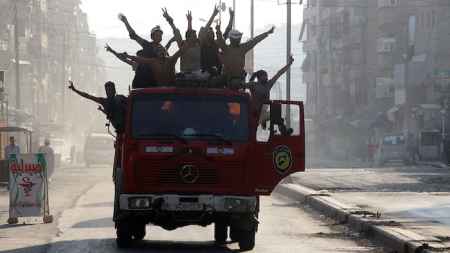
The battle for Aleppo was locked in a draw Monday, Aug. 8 – contrary to the claims of Syrian rebel forces to have broken through the weeks-long government siege on the city and seized key positions from Assad’s army and its allies, Hizballah and pro-Iranian Shiite militias.

DEBKAfile’s military sources report that the rebels had not yet secured control of the roads linking western and eastern Aleppo. Neither was there any sign of the heavy Russian air strikes claimed by the rebels Sunday afternoon to have been launched in an effort to halt their advance.

According to our sources, intensive air strikes are indeed being conducted in the Aleppo theater – but only by the Syrian air force. There is no Russian presence in the skies over city. Their air force is active in the last few days in only one arena, Idlib in northern Syria. Its absence accounts for the Syrian rebel militias’ partial gains in the battle for Aleppo, and the Pro-Assad forces’ difficulties in holding them back.

Had the Russians provided solid air support for the Syrian army and its allies, our military analysts assert that the rebels would have been pushed back.

It is being withheld, according to our intelligence sources, because Moscow wishes to keep the door ajar for dialogue to continue with the Obama administration. The Russians are interested in particular in setting up with the Americans a joint military and intelligence coordination mechanism in Syria for fighting Islamist forces.

the division of tasks is conceived in Moscow, the Americans would provide intelligence for the Russian air force to undertake the bombardment of targets to be marked by US intelligence.

An agreement in principle on this deal would necessitate direct communication lines to operate between their two active war rooms for Syria: the US-Jordanian and Russian-Jordanian joint command centers operating in Amman.

Kremlin fears that Russian aerial intervention in the Aleppo fighting would put paid to the talks with Washington on this broad collaboration.

So long as those talks are underway,, neither the Russians nor the Americans are likely to step in to determine the military situation in the battle for Aleppo – which was once Syria’s commercial center. The fighting will  continue to seesaw inconclusively between the warning sides.