At Least 3 Dead, Up to 100 Hurt in Major Hoboken Train Crash | NBC New York

Posted September 29, 2016 by Joseph Wouk
Categories: Uncategorized

Source: At Least 3 Dead, Up to 100 Hurt in Major Hoboken Train Crash | NBC New York

( Terror alert ! – JW )

Preliminary reports suggest the crash was an accident or caused by operator error, according to four law enforcement officials, though they stress it is early in the investigation

By Jonathan Dienst, Brian Thompson, Marc Santia and Rana Novini

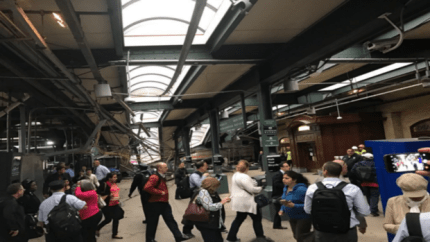
At least three people died and up to 100 were hurt, some of them critically, when an NJ Transit train crashed into the station in Hoboken at the height of Thursday’s morning rush, leaving twisted piles of metal and bricks and causing part of the highly trafficked terminal to collapse, officials said.

Preliminary reports suggest the crash involving train No. 1614 on the Pascack Valley Line was accidental or caused by operator error, according to four law enforcement officials, though they stress it is early in the investigation.

Dramatic Images: NJ Transit Train Crashes in Hoboken

Dramatic Images: NJ Transit Train Crashes in Hoboken

Pictures on social media showed serious damage to the train and extensive structural damage to the station. At least one of the NJ Transit cars appeared to be partially inside the building, with some of the supporting beams that hold up the canopy where the trains come in caved in around it.

It appeared the train went through a bumper stop at the end of the track. It came to a stop in a covered area between the station’s indoor waiting area and the platform. From above, chopper footage showed the glass arches atop the building crunched like an accordion over the platform.

Photo credit: Google Earth, NBC

Nancy Bido, a passenger in the first car of the train, told NBC 4 New York the train “just felt like it never stopped. It didn’t slow down. It didn’t brake.”

Others said the train seemed to be moving faster than usual as it entered the station, but they didn’t think much of it — until the impact.

“You felt like this huge, huge bang,” said passenger Steve Mesiano. “The lights went off, and then you started to see like –- I was in the window seat, so I could see like outside, what was happening, and the roof just collapsed on the first car.”

Tearful passengers described people screaming, bloodied and trapped in the first car. Several people who were on the train tweeted they felt “lucky to be alive.”

Passenger Bhagyesh Shah said he boarded the train at Secaucus. He said he normally stands near the window, but stood in the back of the train Thursday.

“The next thing I know, we are plowing through the platform,” Shah said. “It was for a couple seconds, but it felt like an eternity.”

He said the train was crowded, particularly the first two cars, because they make for an easy exit into the Hoboken station and onto the PATH train. Passengers in the second car broke the emergency windows to get out.

“I saw a woman pinned under concrete,” Shah said. “A lot of people were bleeding; one guy was crying.”

Nearby Jersey City Medical Center said it had sent several trauma and emergency units to the scene, which was swarming with and first responders within minutes of the crash. Another hospital said it had received four patients and was expecting additional victims.

Hoboken, which is New Jersey Transit’s fifth-busiest stations with 15,000 boardings per weekday, is the final stop for several train lines and a transfer point for many commuters on their way to New York City.

All PATH service at the Hoboken station is suspended. NJ Transit said service in and out of the station was also shut down; NJ Transit bus and private carrier buses were cross-honoring tickets. Ferry service was suspended.

The Federal Railroad Administration says it has investigators en route to the scene. The National Transportation Safety Board is also responding.

Source: At Least 3 Dead, Up to 100 Hurt in Major Hoboken Train Crash | NBC New York http://www.nbcnewyork.com/news/local/Major-Train-Accident-in-Hoboken-Injuries-Reported-395249051.html#ixzz4LejIpjoO
Follow us: @nbcnewyork on Twitter | NBCNewYork on Facebook

Comey: Combetta Insisted That He Acted Alone In Destroying Evidence After He Was Given Immunity

Posted September 29, 2016 by danmillerinpanama
Categories: Clinton cover ups, Clinton e-mails, Clinton unsecured server, Comey, Department of Justice, FBI

Tags: , , , , ,

Comey: Combetta Insisted That He Acted Alone In Destroying Evidence After He Was Given Immunity, Jonathan Turley’s Blog, Jonathan Turley, September 29, 2016

I recently wrote a column on FBI investigation into the Clinton email scandal and revised my view as to the handling of the investigation in light of the five immunity deals handed out by the Justice Department.  I had previously noted that FBI Director James Comey was within accepted lines of prosecutorial discretion in declining criminal charges, even though I believed that such charges could have been brought. However, the news of the immunity deals (and particularly the deal given top ranking Clinton aide Cheryl Mills) was baffling and those deals seriously undermined the ability to bring criminal charges in my view.  Now, Comey has testified before both the Senate and the House. His answers only magnified concerns over the impact and even the intent of granting immunity to those most at risk of criminal charges.

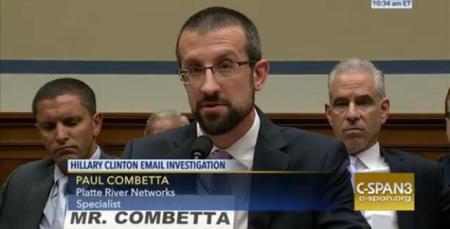
First the timeline is now becoming clear and it makes the immunity deal even more bizarre given what the FBI knew Colorado-based tech specialist Paul Combetta and Clinton aides Cheryl Mills and IT specialist Bryan Pagliano.

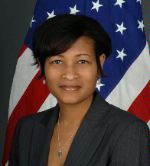
cheryl_d-_mills

In July 2014 , then-chief of staff Cheryl Mills was told that Clinton’s emails were being sought.

On July 23, 2014 Combetta got a call from Mills on the server and emails.

On July 24, 2014, Combetta received an email from Clinton IT specialist Pagliano.

On July 24, Combetta then went online to Reddit to solicit help on stripping out “a VIP’s (VERY VIP) email address from a bunch of archived emails.” He revealed that “they don’t want the VIP’s email address exposed to anyone.”

What is incredible is that the Justice Department would give immunity to the parties on both ends of those communications — guaranteeing that a criminal prosecution is no longer a real threat.

bleachbit-paul-combetta

Comey deepened those concerns with his testimony.  After these conversations with Mills and Clinton aides, Combetta destroyed the evidence.  Comey admits that Mills did disclose the preservation order.  Combetta however mysteriously then destroys the evidence.  Comey was asked what he got from the immunity deal with Combetta.  He said “We learned no one directed him to do that.”  However, that was simply what Combetta said after he was assured that there would not be a charge.  The problem is that it hardly makes sense.  Why would Combetta take it upon himself to destroy evidence that he knew was being sought by Congress and was already a matter of intense national attention.  Comey could not explain why he simply accepted Combetta’s word or why that denial was worth an immunity deal.

None of that makes any logical sense if you are trying to build a criminal case.  It certainly strains credulity to believe that a techie in Colorado decided to unilaterally defy the United States Congress and destroy evidence in one of the nation’s greatest scandals.  The fact that this occurred immediately after calls from Clinton figures like Mills would raise considerable doubt in most investigators.  Yet, the Justice Department jumped at the chance to immunize the key players in the key communications.  That is a legitimate matter of congressional concern . . . and investigation.


Khamenei on WWII: Iran Must Not Go the Way of Germany and Japan Khamenei on WWII: Iran Must Not Go the Way of Germany and Japan

Posted September 29, 2016 by danmillerinpanama
Categories: Iran - Middle East, Iran - Syria war, Iran - world power, Iran military, Iran scam, Iranian economy, Obama and Iran, Obama and Iran scam

Tags: , , , , , , ,

Khamenei on WWII: Iran Must Not Go the Way of Germany and Japan  Khamenei on WWII: Iran Must Not Go the Way of Germany and Japan, Israel National News, Col (res.) Dr. Eran Lerman, September 29, 2016

Speaking on September 18, 2016 before commanders of Iran’s Revolutionary Guards Corps (IRGC), the Supreme Leader of Iran launched into a bitter polemic against Rafsanjani’s call to invest more in the economy and less in military build-up. (Ref. MEMRI translation and analytical observations.) The IRGC, Khameini declared, is the key to the success of the revolutionary project. Deterrence can only be achieved if fear of Iran’s raw power is instilled in the hearts of her enemies. Neither the JCPOA (the nuclear deal between Iran and the P5+1 powers) in itself, nor a shift in strategy to more civilian pursuits, can protect Iran. The revolution must be translated into military might.

At this point in the speech, Khameini offered a fascinating point of reference. Look, he suggested, at Germany and Japan at the end of World War II: forced into submission, humiliated, and required to disarm. He made no effort to hide his sympathy. As far as Khameini is concerned, the bad guys won and the good guys lost in 1945, and the time has come to overthrow the entire post-war dispensation.

This position is, after all, in line with Iran’s denial of the Holocaust (recall the caricature competition designed to denigrate and diminish it) and exterminatory stand towards Israel. It is not the personal quirk of Ahmadinejad, who was, in fact, just told by the Leader that he will not be allowed to run for president again this time. It is the position of Khamenei himself and of Khomeini before him: “Khatt al-Imam,” the line of the Imam, the ultimate imperative of the revolutionary regime.

According to this line, Iran has a religious (or, rather, ideological) imperative to reject all Western mores. For this to be possible, the Revolution, even more than the State as such, must position itself as a strong military power in regional and global affairs. The alternative is unthinkable. The “values” the West and the US seek to impose include utterly base and noxious notions like homosexuality (with which Iran’s present leaders are apparently obsessed). Military weakness would lead to moral weakness, a “cultural invasion,” and the loss of all that Khameini and Khomeini have sought to establish.

Khameini told his audience that there are misguided souls in Iran who seek to negotiate with the US even as the Americans themselves seek a dialog with Iran on regional affairs (e.g., on Syria, Lebanon, Iraq and Yemen). He rejects this quest not only as poisonous for Iran, but as evidence that America is now a spent force.

With that American weakness in mind, the Iranian leadership is now openly calling for the total destruction of Wahhabism (read: the Saudi state). It makes this call while complaining, as did Foreign Minister Zarif in an op-ed at The New York Times, that “big money is being used to whitewash terrorism.” This claim is, of course, extremely rich to anyone with even a smattering of knowledge about Iran’s behavior in recent years.

Iranian arrogance is thus on the rise in the post-deal era, and with it Iran’s hope of steadily undoing Israel and undermining regional and global stability until the true Imam or Mehdi appears on earth. Meanwhile, as Saudi Foreign Minister Adel Jubayr wrote in response to Zarif, it is Iran that remains at the top of the terror lists. It is Iran’s ally in Syria, with the help of Iran’s proxies in Lebanon, who is now engaging in unprecedented acts of carnage in Aleppo.

The Leader’s extolling of military might is thus frightening to all in the region, even as Tehran tries to present itself as the voice of reason in the struggle against the Islamic State (Iran was quick to denounce the assassination in Amman this week of a Christian journalist who “insulted” the IS radicals).

There could be an opportunity here. Neither candidate for the US presidency seems to have bought into the strange notion, implicit (and at times explicit) in the positions taken by Obama and his inner circle, that Iran can serve as a useful counterweight to other forces in the region. Nor have they bought (yet) into the delusion that Iran’s revolutionary impulse can be assumed to be benign. The US is thus still able to think of Iran as an enemy, which it is.

If so, the domestic tension and turmoil over the unfulfilled promise of economic relief, and over Khamenei’s demand for more and more sacrifices by the people (a “resistance economy,” as he calls it) can provide fertile ground for destabilization of the Iranian regime. Such an opportunity was lost in 2009. It need not be lost again.

Meet the New Authoritarian Masters of the Internet

Posted September 29, 2016 by Peter Hofman
Categories: Uncategorized

Tags: , , , , , , , , , ,

Meet the New Authoritarian Masters of the Internet

by John Hayward

29 Sep 2016

Source: Meet the New Authoritarian Masters of the Internet – Breitbart

Getty Images

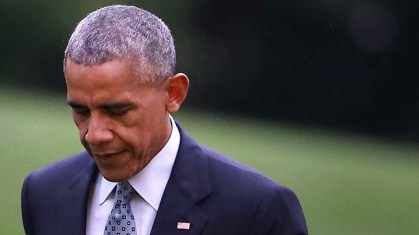
President Barack Obama’s drive to hand off control of Internet domains to a foreign multi-national operation will give some very unpleasant regimes equal say over the future of online speech and commerce.

In fact, they are likely to have much more influence than America, because they will collectively push hard for a more tightly controlled Internet, and they are known for aggressively using political and economic pressure to get what they want.

Here’s a look at some of the regimes that will begin shaping the future of the Internet in just a few days, if President Obama gets his way.

China

China wrote the book on authoritarian control of online speech. The legendary “Great Firewall of China” prevents citizens of the communist state from accessing global content the Politburo disapproves of. Chinese technology companies are required by law to provide the regime with backdoor access to just about everything.

The Chinese government outright banned online news reporting in July, granting the government even tighter control over the spread of information. Websites are only permitted to post news from official government sources. Chinese online news wasn’t exactly a bastion of freedom before that, of course, but at least the government censors had to track down news stories they disliked and demand the site administrators take them down.

Unsurprisingly, the Chinese Communists aren’t big fans of independent news analysis or blogging, either. Bloggers who criticize the government are liable to be charged with “inciting subversion,” even when the writer in question is a Nobel Peace Prize winner.

Chinese citizens know better than to get cheeky on social media accounts, as well. Before online news websites were totally banned, they were forbidden from reporting news gathered from social media, without government approval. Spreading anything the government decides is “fake news” is a crime.

In a report labeling China one of the worst countries for Internet freedom in the world, Freedom House noted they’ve already been playing games with Internet registration and security verification:

The China Internet Network Information Center was found to be issuing false digital security certificates for a number of websites, including Google, exposing the sites’ users to “man in the middle” attacks.

The government strengthened its real-name registration laws for blogs, instant-messaging services, discussion forums, and comment sections of websites.

A key feature of China’s online censorship is that frightened citizens are not entirely certain what the rules are. Huge ministries work tirelessly to pump out content regulations and punish infractions. Not all of the rules are actually written down. As Foreign Policy explained:

Before posting, a Chinese web user is likely to consider basic questions about how likely a post is to travel, whether it runs counter to government priorities, and whether it calls for action or is likely to engender it. Those answers help determine whether a post can be published without incident — as it is somewhere around 84 percent or 87 percent of the time — or is instead likely to lead to a spectrum of negative consequences varying from censorship, to the deletion of a user’s account, to his or her detention, even arrest and conviction.

This was accompanied by a flowchart demonstrating “what gets you censored on the Chinese Internet.” It is not a simple flowchart.

Beijing is not even slightly self-conscious about its authoritarian control of the Internet. On the contrary, their censorship policies are trumpeted as “Internet sovereignty,” and they aggressively believe the entire world should follow their model, as the Washington Post reported in a May 2016 article entitled “China’s Scary Lesson to the World: Censoring the Internet Works.”

China already has a quarter of the planet’s Internet users locked up behind the Great Firewall. How can anyone doubt they won’t use the opportunity Obama is giving them, to pursue their openly stated desire to lock down the rest of the world?

Russia

Russia and China are already working together for a more heavily-censored Internet. Foreign Policy reported one of Russia’s main goals at an April forum was to “harness Chinese expertise in Internet management to gain further control over Russia’s internet, including foreign sites accessible there.”

Russia’s “top cop,” Alexander Bastrykin, explicitly stated Russia needs to stop “playing false democracy” and abandon “pseudo-liberal values” by following China’s lead on Internet censorship, instead of emulating the U.S. example. Like China’s censors, Russian authoritarians think “Internet freedom” is just coded language for the West imposing “cultural hegemony” on the rest of the world.

Just think what Russia and China will be able to do about troublesome foreign websites, once Obama surrenders American control of Internet domains!

Russian President Vladimir Putin has “chipped away at Internet freedom in Russia since he returned to the Kremlin in 2012,” as International Business Times put it in a 2014 article.

One of Putin’s new laws requires bloggers with over 3,000 readers to register with the government, providing their names and home addresses. As with China, Russia punishes online writers for “spreading false information,” and once the charge is leveled, it’s basically guilty-until-proven-innocent. For example, one of the “crimes” that can get a blogger prosecuted in Russia is alleging the corruption of a public official, without ironclad proof.

Human-rights group Agora estimates that Russian Internet censorship grew by 900% in 2015 alone, including both court orders and edicts from government agencies that don’t require court approval. Censorship was expected to intensify even further throughout 2016. Penalties include prison time, even for the crime of liking or sharing banned content on social media.

Putin, incidentally, has described the entire Internet as a CIA plot designed to subvert regimes like his. There will be quite a few people involved in the new multi-national Internet control agency who think purging the Web of American influence is a top priority.

The Russian government has prevailed upon Internet Service Providers to block opposition websites during times of political unrest, in addition to thousands of bans ostensibly issued for security, crime-fighting, and anti-pornography purposes.

Many governments follow the lead of Russia and China in asserting the right to shut down “extremist” or “subversive” websites. In the United States, we worry about law enforcement abusing its authority while battling outright terrorism online, arguing that privacy and freedom of speech must always be measured against security, no matter how dire the threat. In Russia, a rough majority of the population has no problem with the notion of censoring the Internet in the name of political stability, and will countenance absolutely draconian controls against perceived national security threats. This is a distressingly common view in other nations as well: stability justifies censorship and monitoring, not just physical security.

Turkey

Turkey’s crackdown on the Internet was alarming even before the aborted July coup attempt against authoritarian President Recep Tayyip Erdogan.

Turkey has banned social media sites, including temporary bans against even giants like Facebook and YouTube, for political reasons. Turkish dissidents are accustomed to such bans coming down on the eve of elections. The Turkish telecom authority can impose such bans without a court order, or a warning to offending websites.

Turkey is often seen as the world leader in blocking Twitter accounts, in addition to occasionally shutting the social media service down completely, and has over a 100,000 websites blacklisted. Criticizing the government online can result in anything from lost employment to criminal charges. And if you think social-media harassment from loyal supporters of the government in power can get pretty bad in the U.S., Turks sometimes discover that hassles from pro-regime trolls online are followed by visits from the police.

Turkish law infamously makes it a crime to insult the president, a law Erdogan has already attempted to impose beyond Turkey’s borders. One offender found himself hauled into court for creating a viral meme – the sort of thing manufactured by the thousands every hour in America – that noted Erdogan bore a certain resemblance to Gollum from Lord of the Rings. The judge in his case ordered expert testimony on whether Gollum was evil to conclusively determine whether the meme was an illegal insult to the president.

The Turkish example introduces another idea common to far too many of the countries Obama wants to give equal say over the future of the Internet: intimidation is a valid purpose for law enforcement. Many of Turkey’s censorship laws are understood to be mechanisms for intimidating dissidents, raising the cost of free speech enough to make people watch their words very carefully. “Think twice before you Tweet” might be good advice for some users, but regimes like Erdogan’s seek to impose that philosophy on everyone. This runs strongly contrary to the American understanding of the Internet as a powerful instrument that lowers the cost of speech to near-zero, the biggest quantum leap for free expression in human history. Zero-cost speech is seen as a big problem by many of the governments that will now place strong hands upon the global Internet rudder.

Turkey is very worried about “back doors” that allow citizens to circumvent official censorship, a concern they will likely bring to Internet control, along with like-minded authoritarian regimes. These governments will make the case that a free and open Internet is a direct threat to their “sovereign right” to control what their citizens read. As long as any part of the Internet remains completely free, no sector can be completely controlled.

Saudi Arabia

The Saudis aren’t too far behind China in the Internet rankings by Freedom House. Dissident online activity can bring jail sentences, plus the occasional public flogging.

This is particularly lamentable because Saudi Arabia is keenly interested in modernization, and sees the Internet as a valuable economic resource, along with a thriving social media presence. Freedom House notes the Internet “remains the least repressive space for expression in the country,” but “it is by no means free.”

“While the state focuses on combatting violent extremism and disrupting terrorist networks, it has clamped down on nonviolent liberal activists and human rights defenders with the same zeal, branding them a threat to the national order and prosecuting them in special terrorism tribunals,” Freedom House notes.

USA Today noted that as of 2014, Saudi Arabia had about 400,000 websites blocked, “including any that discuss political, social or religious topics incompatible with the Islamic beliefs of the monarchy.”

At one point the blacklist included the Huffington Post, which was banned for having the temerity to run an article suggesting the Saudi system might “implode” because of oil dependency and political repression. The best response to criticism that your government is too repressive is a blacklist!

The Saudis have a penchant for blocking messaging apps and voice-over-IP services, like Skype and Facetime. App blocking got so bad that Saudi users have been known to ask, “What’s the point of having the Internet?”

While some Saudis grumble about censorship, many others are active, enthusiastic participants in enforcement, filing hundreds of requests each day to have websites blocked. Religious figures supply many of these requests, and the government defends much of its censorship as the defense of Islamic values.

As with other censorious regimes, the Saudi monarchy worries about citizens using web services beyond its control to evade censorship, a concern that will surely be expressed loudly once America surrenders its command of Internet domains.

For the record, the Saudis’ rivals in Iran are heavy Internet censors too, with Stratfor listing them as one of the countries seeking Chinese assistance for “solutions on how best to monitor the Iranian population.”

North Korea

You can’t make a list of authoritarian nightmares without including the psychotic regime in Pyongyang, the most secretive government in the world.

North Korea is so repressive the BBC justly puts the word “Internet” in scare quotes, to describe the online environment. It doesn’t really interconnect with anything, except government propaganda and surveillance. Computers in the lone Internet cafe in Pyongyang actually boot up to a customized Linux operating system called “Red Star,” instead of Windows or Mac OS. The calendar software in Red Star measures the date from the birth of Communist founder Kim Il-sung, rather than the birth of Christ.

The “Internet” itself is a closed system called Kwangmyong, and citizens can only access it through a single state-run provider, with the exception of a few dozen privileged families that can punch into the real Internet.

Kwangmyong is often compared to the closed “intranet” system in a corporate office, with perhaps 5,000 websites available at most. Unsurprisingly, the content is mostly State-monitored messaging and State-supplied media. Contributors to these online services have reportedly been sent to re-education camps for typos. The North Koreans are so worried about outside contamination of their closed network that they banned wi-fi hotspots at foreign embassies, having noticed information-starved North Korean citizens clustering within range of those beautiful, uncensored wireless networks.

This doesn’t stop South Koreans from attempting cultural penetration of their squalid neighbor’s dismal little online network. Lately they’ve been doing it by loading banned information onto cheap memory sticks, tying them to balloons, and floating them across the border.

Sure, North Korea is the ultimate totalitarian nightmare, and since they have less than two thousand IP addresses registered in the entire country, the outlaw regime won’t be a big influence on Obama’s multi-national Internet authority, right?

Not so fast. As North Korea expert Scott Thomas Bruce told the BBC, authoritarian governments who are “looking at what is happening in the Middle East” see North Korea as a model to be emulated.

“They’re saying rather than let in Facebook, and rather than let in Twitter, what if the government created a Facebook that we could monitor and control?” Bruce explained.

Also, North Korea has expressed some interest in using the Internet as a tool for economic development, which means there would be more penetration of the actual global network into their society. They’ll be very interested in censoring and controlling that access, and they’ll need a lot more registered domains and IP addresses… the very resource Obama wants America to surrender control over.

Bottom line: contrary to left-wing cant, there is such a thing as American exceptionalism – areas in which the United States is demonstrably superior to every other nation, a leader to which the entire world should look for examples. Sadly, our society is losing its fervor for free expression, and growing more comfortable with suppressing “unacceptable” speech, but we’re still far better than anyone else in this regard.

The rest of the world, taken in total, is very interested in suppressing various forms of expression, for reasons ranging from security to political stability and religion. Those governments will never be comfortable, so long as parts of the Internet remain outside of their control. They have censorship demands they consider very reasonable, and absolutely vital. The website you are reading right now violates every single one of them, on a regular basis.

There may come a day we can safely remand control of Internet domains to an international body, but that day is most certainly not October 1, 2016.

EU Commission’s Willful Blindness on Islamist Terror

Posted September 29, 2016 by danmillerinpanama
Categories: Europe and Islam

Tags:

EU Commission’s Willful Blindness on Islamist Terror, Clarion Project, Leslie Shaw, September 29, 2016

see-no-evil-hp-flickr-ally-aubryIllustrative photo: © Flickr/Ally Aubry

This outright refusal to call a spade a spade mirrors the policy of the Obama administration. The terminology is identical, with no reference to Islam, as if the problem were a generic one common to all belief systems rather than one in particular.

****************************

On September 26, 2016 the European Commission organized a conference in Brussels titled Addressing Radical Ideologies and Violent Extremism: The Role of Research.

The absence of the word “Islamic” from the title, prospectus and agenda of the conference is an indication of the extent to which the European Commission is in denial as to the nature of the threat, in spite of the fact that all of the terrorist attacks throughout Europe in the past number of years have been perpetrated by Islamic radicals.

This outright refusal to call a spade a spade mirrors the policy of the Obama administration. The terminology is identical, with no reference to Islam, as if the problem were a generic one common to all belief systems rather than one in particular.

The conference, attended by around 120 people, mostly academics and representatives of NGOs, was organized to coincide with the publication of the policy review Addressing Terrorism: European Research in social sciences and the humanities in support to policies for inclusion and security written by Gilles Kepel and Bernard Rouquier, two of France’s leading experts on the global jihad.

Their policy review is a summary of currently available scientific knowledge, including 10 projects funded by the European Union on emerging forms of violent radicalization and terrorism. It proposes concrete areas of research needed to further increase this knowledge.

The conference opened with an informative and no-holds-barred joint presentation by Kepel and Rougier, who, surprisingly, identified the threat for what it is: global jihad driven by Islamic radicalism.

Recognizing that the main problem was one of national security, they nevertheless subscribed to the idea that research conducted by social scientists could at least partially contribute to dealing with the problem by addressing the causes of radicalization and proposing ways to minimize or contain it.

However, they left the audience in no doubt that from their perspective the problem is not one of radicalization but jihad.

One could sense a degree of unease and embarrassment among the European Commission representatives on the panel, as well as in the audience, at the straight talk of Kepel and Rougier, as if their presentation had caused the mask of denial and political correctness to slip.

Robert-Jan Smits, Director General for Research and Innovation of the European Commission, even asked them to confirm he had understood correctly when they said that Europe was at war with radical Islam.

The conference continued with a series of presentations on EU-funded projects including topics such as identities, personal belonging, youth, cities and ideologies that erode social cohesion.

Not one of these presentations pointed the finger at radical Islam as the principal source of the deadly threat that Europe is facing and will continue to face for decades to come, if not longer.

Close observation of the body language of Kepel and Rougier revealed beyond a doubt that they were not impressed with the content of the presentations nor with the recommendations for the bridging of knowledge gaps and future research needs.

This is not surprising given their close proximity to global jihad in the course of their work. Kepel is even on the Islamic State hit-list.

None of the questions put by members of the audience challenged the softly-softly approach of the speakers, and some audience members seemed to be of the opinion that jihadists are victims of European society rather than its mortal enemies.

An obvious question would have pointed to the blatant policy contradiction involved in admitting over a million migrants to Europe in 2015 and continuing to let them in during 2016, in the full knowledge that among those migrants were Islamist terrorists and that the homegrown Islamist terrorists in France, Belgium and elsewhere are the children and grandchildren of previous waves of Muslim immigration.

All in all, aside from the outstanding contributions of Kepel, Rougier and Hugo Micheron, another French expert on jihad, one left the conference with the impression that the European Commission is willfully blind to the jihadist threat.

It is as if people living in a building with a leaking roof decided to research the causes of rainfall by studying meteorology, in the vain hope of finding a way to stop the rain, instead of fixing the roof.

Congress steamrolls Obama’s veto | TheHill

Posted September 29, 2016 by Joseph Wouk
Categories: Uncategorized

Congress delivered a stinging rebuke to President Obama Wednesday.

Source: Congress steamrolls Obama’s veto | TheHill

Getty Images

Congress delivered a stinging rebuke to President Obama Wednesday as both chambers voted overwhelmingly to override his veto of a 9/11 victims’ rights bill.

It was the first time lawmakers had overturned an Obama veto, with Democrats deserting him en masse to enact the Justice Against Sponsors of Terrorism Act. The measure allows victims to sue foreign sponsors of terrorism for attacks that take place on U.S. soil.

The bill is aimed squarely at Saudi Arabia’s ruling family, which is suspected of links to the hijackers who flew planes into the World Trade Center and the Pentagon on Sept. 11, 2001. Fifteen of the 19 hijackers on 9/11 were Saudi citizens.

Saudi Arabia denies any connection to the attacks and lobbied fiercely against the bill.

The trouncing angered White House officials, who lashed out at what they saw as a wrongheaded move by lawmakers failing to consider the impact on U.S. foreign policy and personnel abroad.“I would venture to say that this is the single most embarrassing thing that the United States Senate has done, possibly, since 1983,” Obama spokesman Josh Earnest told reporters aboard Air Force One.

Earnest was responding to a reporter who informed him that the last time the Senate voted in such lopsided fashion to override a veto was in 1983. The Senate that year reversed Ronald Reagan’s veto of a bill giving several acres of land to a group of retirees who inadvertently bought government property because of a surveying error.

Obama called the override a “mistake” and said Congress is setting a “dangerous precedent.”

“It’s an example of why sometimes you have to do what’s hard. And, frankly, I wish Congress here had done what’s hard,” Obama said at a CNN town hall.

In the Senate, Democratic Leader Harry Reid (Nev.), who is retiring at the end of the year, was the only member to vote to sustain Obama’s veto. The vote was 97–1. Sen. Tim Kaine (D-Va.), Hillary Clinton’s running mate, who stated his support for the override, missed the vote.

Not a single Democrat came to the Senate floor before the vote to argue for Obama’s position.

The House voted to override 348–77, clearing the two-thirds threshold required by the Constitution. Eighteen Republicans and 59 Democrats voted to sustain Obama’s action; Rep. James Clyburn (S.C.) was the only member of the Democratic leadership to vote with the president.

Among the Republicans who sided with the president were five committee chairmen: Oversight Committee Chairman Jason Chaffetz (Utah), Rules Committee Chairman Pete Sessions (Texas), Education and the Workforce Committee Chairman John Kline (Minn.), Armed Services Committee Chairman Mac Thornberry (Texas) and Intelligence Committee Chairman Devin Nunes (Calif.).

Rep. Kathy Castor (D-Fla.) voted “present.”

White House officials were shaking their heads over Senate Foreign Relations Committee Chairman Bob Corker’s (R-Tenn.) observation, made to several reporters Tuesday, that few senators fully understood the legislation when they agreed to pass it in May without a roll-call vote.

“As you look at it and talk to people now, people on the Judiciary Committee didn’t even realize at the time what was happening when it went to the floor,” Corker said.

Recriminations flew both ways, as lawmakers accused the White House of making a lackadaisical effort to stop the bill.

Senate Republican Whip John Cornyn (Texas), the lead GOP sponsor of the legislation, said the administration didn’t seem all that concerned about the outcome as the vote neared.

“What’s so remarkable to me is the detachment of this White House from anything to do with the legislative process,” he said.

“They were basically missing in action during this whole process.”

Corker said Wednesday he was unable to get a meeting with White House officials to discuss the legislation after reaching out to them “multiple times.”

“There’s been zero involvement from the White House, zero, and when you have a veto like this it takes involvement,” he said. “There’s nothing.”

Administration officials said they knew from the start that Obama’s veto was unlikely to survive an override vote — the politics surrounding the bill had become so charged that they overwhelmed the more abstract arguments for the importance of respecting foreign sovereign immunity.

Any talk that Obama had a chance of winning a showdown on the Senate and House floors didn’t come from the White House, one official said.

The vote was a big win for New York Sen. Charles Schumer, the bill’s lead Democratic sponsor in the Senate. He pushed the legislation for years at the behest of his home state’s constituents, who suffered the brunt of the terrorist attacks 15 years ago.

Schumer said he didn’t relish taking on his own president but said there was a pressing need to deliver a measure of justice to the victims of Sept. 11.

“This is a decision I do not take lightly, but as one of the authors of this legislation I am a firm believer in its purpose,” he said in a floor speech delivered shortly before the vote.

“Do we really want it established inflexibly in precedent that foreign actors directly responsible for financing terrorist attacks on U.S. soil are beyond the reach of justice?”

The legislation amends the Foreign Sovereign Immunities Act so foreign sponsors of terrorism cannot invoke sovereign immunity to stay out of U.S. courts if sued.

Even though senators decided with near unanimity to overturn Obama’s veto, some acknowledged doubts about the bill in the aftermath.

A group of senators huddled on the floor Tuesday to discuss the possibility of moving legislation in the next several months to narrow the scope of the law, potentially limiting the legal options of U.S. plaintiffs but also giving more protection to Americans who might end up in foreign courts.

Jordain Carney, Cristina Marcos and Katie Bo Williams contributed.

NY Times opinion | Hillary Clinton’s Everywoman Moment

Posted September 28, 2016 by danmillerinpanama
Categories: Donald Trump misogynist, Hillary Clinton - "Feminist", Media and Donald Trump, Media and Hillary Clinton, NY Times

Tags: , , ,

Hillary Clinton’s Everywoman Moment, NY Times Editorial Board, September 27, 2016

(Trump has even said that has said women don’t deserve equal pay unless they do as good a job as men. Dear me! Please see also, Hillary’s ‘Body-Shamed’ Beauty Queen Accused of Being Accomplice to Attempted Murder and Threatening Judge. — DM)

The direct confrontation between Donald Trump and Hillary Clinton over Mr. Trump’s treatment of women didn’t come until the final moments ofMonday night’s debate. But in many ways, the entire event played out as a big-screen version of what women encounter every day.

There were plenty of aha moments for any woman who is the sole female member of her company’s management team, a female sportscaster, bartender, cop, construction worker, law partner or, yes, a beauty queen. And maybe for the sole female presidential candidate, too.

Mrs. Clinton leads Mr. Trump by double digits among women and minorities. But non-college-educated white women are one of the biggest groups of undecided voters, and her campaign has been wooing them for months, toggling between portraying her as a tough potential commander in chief and a champion of women and girls.

hilltrumpedCredit Damon Winter/The New York Times

On Monday night, those women got to see Mrs. Clinton stand up to that common hazard of working while female: the sexist blowhard, the harasser.

When Mr. Trump began by addressing Mrs. Clinton as “Secretary Clinton,” saying, “yes, is that O.K.?,” Mrs. Clinton laughed off the condescension. But she wasn’t playing along — she was awaiting her moment. After nearly 90 minutes, it came.

Lester Holt, the NBC News anchor who moderated the debate, asked what Mr. Trump meant when he had said in a rally that Mrs. Clinton doesn’t have a “presidential look.”

“She doesn’t have the look,” he said. “She doesn’t have the stamina.”

Mrs. Clinton’s response: “Well, as soon as he travels to 112 countries and negotiates a peace deal, a cease-fire, a release of dissidents, an opening of new opportunities in nations around the world or even spends 11 hours testifying in front of a congressional committee, he can talk to me about stamina.”

When Mrs. Clinton finally got to unload what felt like the pent-up frustration of Everywoman, it was powerful. “This is a man who has called women pigs, slobs and dogs, and someone who has said pregnancy is an inconvenience to employers, who has said women don’t deserve equal pay unless they do as good a job as men,” she said. “And one of the worst things he said was about a woman in a beauty contest. He loves beauty contests, supporting them and hanging around them. And he called this woman ‘Miss Piggy.’ Then he called her ‘Miss Housekeeping,’ because she was Latina. Donald, she has a name. Her name is Alicia Machado.”

Mr. Trump blustered, but didn’t deny any of it. Instead, he dug himself in deeper by saying that Rosie O’Donnell, the comedian who was the target of some of those epithets, “deserves it.”

Mr. Trump’s misogyny is unlikely to turn off his core supporters. And his bullying of Mrs. Clinton — as well as his critique of her reversal on the Trans-Pacific Partnership and his remarks on the effect of globalization on jobs — may play well with white men reeling from technological change, job losses and addiction. Amid this upheaval, some have come to believe that when minorities, immigrants and women make gains, it pushes them further behind.

The debate’s clash over gender was telling for both candidates, and it may have helped establish Mrs. Clinton as a standard-bearer for more than Democrats.

Congress rejects Obama veto of 9/11 bill, in first override of presidency

Posted September 28, 2016 by danmillerinpanama
Categories: Obama and Congress, Obama and Saudi Arabia, U.S. Congress, Veto override

Tags: , , ,

Congress rejects Obama veto of 9/11 bill, in first override of presidency, Fox News, September 28, 2016

(House 348 to 77 for override. — DM)

Congress on Wednesday overwhelmingly rejected President Obama’s veto of a bipartisan bill letting families of Sept. 11 victims sue the Saudi Arabian government, in the first successful veto override of Obama’s presidency.

Marking a significant defeat for the White House, the House ensured the bill will become law after voting 348-77 to override Wednesday afternoon. This followed a 97-1 vote hours earlier in the Senate.

Despite last-ditch warnings from the Obama administration that the legislation could hurt national security and was “badly misguided,” lawmakers dismissed the concerns.

“This bill is about respecting the voices and rights of American victims,” Sen. John Cornyn, R-Texas, said.

Sen. Charles Schumer, D-N.Y., speaking on the Senate floor moments before Wednesday’s vote in that chamber, pushed back hard on Saudi government objections to the legislation.

“It’s very simple. If the Saudis were culpable, they should be held accountable. If they had nothing to do with 9/11, they have nothing to fear,” Schumer said.

Lawmakers in both chambers needed to muster a two-thirds majority to override, and did so easily. The lone “no” vote in the Senate was Senate Minority Leader Harry Reid, D-Nev.

With elections just over a month away, many lawmakers were reluctant to oppose a measure backed by 9/11 families who say they are still seeking justice 15 years after the attacks that killed nearly 3,000 people. A group of senators pledged to find ways to improve the measure during a post-election, lame-duck session of Congress.

Despite an expectation that Congress would override, the White House made a last-ditch attempt to fight it. In a letter to Senate Majority Leader Mitch McConnell and Reid, Obama warned the bill could cause chaos in U.S. foreign affairs, as other countries would use the measure to justify the creation of ways to target “U.S. policies and activities that they oppose.”

“As a result, our nation and its armed forces, State Department, intelligence officials and others may find themselves subject to lawsuits in foreign courts.” Obama wrote in a letter delivered Tuesday.

But Cornyn, one of the bill’s leading proponents, dismissed Obama’s concerns as “unpersuasive.” Cornyn, the Senate’s No. 2 Republican, and other supporters said the bill is narrowly tailored and applies only to acts of terrorism that occur on U.S. soil.

The Justice Against Sponsors of Terrorism Act, or JASTA, moved to the floor of the Senate in May and passed by voice vote. The bill cleared the House earlier this month, also by voice vote.

Defense Secretary Ash Carter, in a letter Monday to a senior member of Congress, said he’s sympathetic to the intent of the measure. But the legislation could lead to the public disclosure of American secrets and even undercut counterterrorism efforts by sowing mistrust among U.S. partners and allies, according to Carter.

With the override, the bill will now become law. During his nearly two full terms in office, Obama had never had a veto overridden by Congress.

The legislation gives victims’ families the right to sue in U.S. court for any role that elements of the Saudi government may have played in the 2001 attacks. Fifteen of the 19 Sept. 11 hijackers were Saudi nationals.

Courts would be permitted to waive a claim of foreign sovereign immunity when an act of terrorism occurs inside U.S. borders, according to the terms of the bill. Saudi Arabia has objected vehemently to the legislation.

Obama vetoed the measure last week, telling lawmakers the bill would make the U.S. vulnerable to retaliatory litigation in foreign courts that could put U.S. troops in legal jeopardy.

But the bill’s proponents have disputed Obama’s rationale as “unconvincing and unsupportable,” saying the measure is narrowly tailored and applies only to acts of terrorism that occur on U.S. soil.

Kristen Breitweiser, a 9/11 widow and co-chair of September 11th Advocates, criticized Carter’s assessment, saying that the defense secretary had testified before Congress last week that he wasn’t an expert on the bill.

Cartoons of the Day

Posted September 28, 2016 by danmillerinpanama
Categories: Hillary Clinton, Humor, Obama and Islamic terrorism, Race riots

Tags: , ,

H/t Hope n’ Change Cartoons

"Then I'd tell America to plead the Fifth Amendment."

“Then I’d tell America to plead the Fifth Amendment.”


H/t Vermont Loon Watch

ragging


greetings


H/t Town Hall Cartoons

debate


H/t Freedom is Just Another Word

lalala


redcoats


H/t Joop

lookalikes

National Security Professionals and Cyber Experts Call for Pentagon Intervention on Surrender of the Internet

Posted September 28, 2016 by danmillerinpanama
Categories: Cyber security, Department of Defense, ICANN, Internet, National secuity, Obama and internet

Tags: , , , , ,

National Security Professionals and Cyber Experts Call for Pentagon Intervention on Surrender of the Internet, Center for Security Policy, September 26, 2016

csp

Washington, D.C.: Dozens of experienced national security professionals and experts on cyber threats and warfare joined forces today to urge the Secretary of Defense and Chairman of the Joint Chiefs of Staff to oppose the transfer of the last vestige of U.S. control of the Internet to a non-profit organization in less than a week.

As things stand now, on 1 October, President Obama intends to transfer all responsibilities for naming and numbering domain addresses on the Internet to a non-profit organization known as the Internet Corporation for Assigned Names and Numbers (ICANN). Should that happen, the United States will no longer have any control over the addresses that serve to make all websites accessible and allow users to connect to the Internet. Currently, the U.S. Department of Commerce’s National Telecommunications and Information Administration (NTIA) reviews all new addresses and authorizes them to be posted to the authoritative root server (the “A Server”) by Verisign.

In the attached letter to Defense Secretary Ashton Carter and Joint Chiefs of Staff Chairman Gen. Joseph Dunford, current and former leaders in industry, national security, homeland and cyber security express strong concerns about the likely implications of such a step and seek a one-year delay to allow full consideration of these issues:

The Internet Assigned Numbers Authority function is critical to our nation’s ability to effectively defend our national assets and civilian population and ensure integrity in our cyberwarfare capabilities….DoD is reliant upon private sector critical infrastructure for its operations, and the integrity and security of the IP addresses associated with these assets are equally important to the protection of the American people.

Of…immediate concern to us…is the prospect that the United States might be transferring to future adversaries a capability that could facilitate, particularly in time of conflict, cyberwarfare against us. In the absence of NTIA’s stewardship, we would be unable to be certain about the legitimacy of all IP addresses or whether they have been, in some form or fashion, manipulated, or compromised. Given the reliance of the U.S. military and critical infrastructure on the Internet, we must not allow it to be put needlessly at risk.

The signatories, headed by storied leaders of the defense industrial sector and cyberspace, CACI International’s Executive Chairman, J.P. “Jack” London, and the former Chairman of Network Solutions, Michael A. Daniels, represent several centuries’ worth of experience in safeguarding America and its computer systems. They conclude with the bottom line: “There is, to our knowledge, no compelling reason for exposing the national security to such a risk by transferring our remaining control of the Internet in this way at this time.”

To learn more about what is at stake and the necessity of the executive branch and/or the Congress preventing this needless and avoidable disaster, contact Jody Westby, CEO of Global Cyber Risk LLC, at 202-255-2700 or westby@globalcyberrisk.com.

Here is the letter:

September 26, 2016

Hon. Ashton B. Carter
Secretary of Defense The Pentagon
Washington, D.C. 20301

General Joseph F. Dunford, Jr.
Chairman, Joint Chiefs of Staff The Pentagon
Washington, D.C. 20301

Dear Secretary Carter and Chairman Dunford:

As individuals with extensive, first-hand experience with protecting our national security, we write to urge you to intervene in opposition to an imminent action that would, in our judgment, cause profound and irreversible damage to the United States’ vital interests.

On October 1st, the contract between the Commerce Department’s National Telecommunications and Information Administration (NTIA) and the Internet Corporation for Assigned Names and Numbers (ICANN) will expire. Upon expiration, the President will allow the Government’s remaining control over the Internet to transfer to ICANN. This includes the Internet Assigned Numbers Authority (IANA) function and NTIA’s review of all Internet Protocol addresses and authorization for them to be placed on the authoritative root server (the A Server). In simple terms, nothing now is accessible on the Internet until it has undergone an IP address assignment and NTIA review and NTIA has authorized Verisign to post the address to the A server.

The IANA function is critical to our nation’s ability to effectively defend our national assets and civilian population and ensure integrity in our cyberwarfare capabilities. As Congress has considered this transfer of authority, it has stated that ICANN should ensure that .mil and .gov remain exclusive to DoD and that all IP addresses assigned to DoD are used exclusively by the Government. That ignores the fact that DoD is reliant upon private sector critical infrastructure for its operations, and the integrity and security of the IP addresses associated with these assets are equally important to the protection of the American people.

In the absence of U.S. Government involvement in IANA, it seems possible that, over time, foreign powers – including potentially or actually hostile ones – will be able to influence the IANA process. Even coercing the delay in approving IP addresses could impact military capabilities. From a broader view, given the well-documented ambition of these actors to restrict freedom of expression and/or entrepreneurial activity on the Internet, such a transfer of authority to ICANN could have far-reaching and undesirable consequences for untold numbers of people worldwide.

Of more immediate concern to us, however, is the prospect that the United States might be transferring to future adversaries a capability that could facilitate, particularly in time of conflict, cyberwarfare against us. In the absence of NTIA’s stewardship, we would be unable to be certain about the legitimacy of all IP addresses or whether they have been, in some form or fashion, manipulated, or compromised. Given the reliance of the U.S. military and critical infrastructure on the Internet, we must not allow it to be put needlessly at risk.

Indeed, there is, to our knowledge, no compelling reason for exposing the national security to such a risk by transferring our remaining control of the Internet in this way at this time.

In light of the looming deadline, we feel compelled to urge you to impress upon President Obama that the contract between NTIA and ICANN cannot be safely terminated at this point. At a minimum, given the irreversible character of this decision and its potential for grave and enduring harm to our national security and other vital interests, the decision should be delayed.

Sincerely,

J.P. “Jack” London
Executive Chairman CACI International, Inc.

Michael A. Daniels
Former Chairman, Network Solutions

Jody R. Westby
CEO, Global Cyber Risk LLC and
Former Chief Administrative Officer & Counsel, In-Q-Tel

Adm. James A. “Ace” Lyons, USN (Ret.) Former Commander-in-Chief
U.S. Pacific Fleet

Frank J. Gaffney, Jr.
Former Assistant Secretary of Defense (Acting)

Lt. Gen. William “Jerry” Boykin, USA (Ret.)
Former Deputy Under Secretary of Defense for Intelligence

Hon. Pete Hoekstra
Former Chairman, House Intelligence Committee

Oliver “Buck” Revell
Associate Deputy Director (Ret.) Federal Bureau of Investigation

Lt. Gen. Thomas McInerney, USAF (Ret.)
Former Deputy Chief of Staff, United States Air Force

Hon. Michelle Van Cleave
Former Counter-Intelligence Executive

Rep. Brian Babin (TX-36)
Chairman, House of Representatives’ Committee on Science Space and Technology Subcommittee

Hon. Jon Kyl
Former Senate Minority Whip

Dr. Lani Kass
Former Director, Air Force Chief of Staff’s Cyber Task Force

Hon. Charles E. Allen
Former Under Secretary of the Department of Homeland Security for Intelligence and Analysis

Lt. Gen. C. E. McKnight, Jr., USA (Ret.)
Former Director, Command and Control Systems for Nuclear Forces, Joint Chiefs of Staff

Hon. John G. Grimes
Former Assistant Secretary, Networks & Information Integration and
DoD, Chief Information Officer

Lt. Gen. Robert J. Elder, USAF (Ret.)
Former Commander, U.S. Air Force Network Operations

Rep. Dave Brat (VA-7)

Vice Adm. Robert R. Monroe, USN (Ret.)
Former Director, Defense Nuclear Agency

Maj. Gen. Henry Canterbury, USAF (Ret.)
Former Operations and Readiness, Air Staff Pentagon

Daniel J. Gallington
Former General Counsel Senate Select Committee on Intelligence

Maj. Gen. Harold “Punch” Moulton, USAF (Ret.)
Former Director of Operations, U.S. European Command

Maj. Gen. Kenneth R. Israel, USAF (Ret.)
Former Director of Defense Airborne Reconnaissance Office

Andrew McCarthy
Former Chief Assistant U.S. Attorney Southern District of New York

Hon. Paula A. DeSutter
Former Assistant Secretary of State and Professional Staff Member, U.S. Senate Select Committee on Intelligence

Rear Adm. Philip S. Anselmo, USN (Ret.)
Former Director of Command Control Communications Computers and Intelligence (C4I)

Rear Adm. Pierce J. Johnson, USN (Ret.)
Former Chief of Staff, U.S. Regional Headquarters, Lisbon (Portugal)

Lt. Gen. C. Norman Wood, USAF (Ret.)
Former Director, Intelligence Community Staff

Dan Goure
Former Director of the Office of Strategic Competitiveness in the Office of the Secretary of Defense

Thomas H. Handel
Former Executive Director, Naval Information Warfare Activity (now Navy Cyber Warfare Development Group)

Vice Adm. Edward W. Clexton, Jr., USN (Ret.)
Former Deputy Commander, U.S. Atlantic Fleet, Commander, Carrier Strike Group, and Deputy Commander in Chief, US Naval and Marine Forces, Europe

Vice Adm. Jerry L. Unruh, USN (Ret.)
Former Commander, U.S. Third Fleet

Rear Adm. Albert A. Gallotta, Jr., USN (Ret.)
Vice Commander, Naval Electronics Systems Command

Rear Adm. H. Winsor Whiton, USN (Ret.)
Former Commander of the Naval Security Group and former Deputy Director of the National Security Agency for Plans, Policy, and Programs

Lt. Gen. Bennett L. Lewis, USA (Ret.)
Former Deputy Assistant Secretary of Defense, Mobilization and Director, Defense Mobilization Systems Planning Activity

Lt. Gen. Tex Brown, USAF (Ret.)
Former Assistant Vice Chief of Staff, U.S. Air Force

Rear. Adm. Charles R. Kubic, CEC, USN (Ret.)
Former Commander, First Naval Construction Division

Rear Adm. Phillip R. Olson, USN (Ret.)
Former President of the U.S. Navy Board of Inspection and Safety

Victoria Coates
National Security Advisor to Sen. Ted Cruz

Morgan Wright
Senior Fellow, Center for Digital Government

Mike Steinmetz
President & CEO, Digital Executive LTD

Brig. Gen. Peyton Cole, USAF (Ret.)
Former Executive Secretary, U.S. Department of Defense

Capt. David E. Meadows, USN (Ret.)
Former Deputy Commander Naval Security Group

Capt. Scott W. Witt, USN (Ret.)
Former Chief, Weapons and Space, National Security Agency

Capt. Michael Sare, USN (Ret.)
Former Navy Cryptologist / Cyber Warfare Officer

Katherine C. Gorka
President, Council on Global Security

Col. R. J. Peppe, USAF (Ret.)
Former Chief, Selection Board Secretariat

Michael J. Jacobs
Former Information Assurance Director, NSA

Gwyn Whittaker
Former CEO, Mosaic, Inc.

Lynn Schnurr
Former Army Chief Information Officer and Defense Intelligence Senior Executive Service

Frederick Fleitz
Senior VP, Center for Security Policy and former CIA Analyst

Daniel J. Bongino
Former Secret Service Agency, Presidential Protection Division

Col. F. E. Peck, USAF (Ret.)

Lt. Col. Jim Webster, USAF (Ret.)

Lt. Col. Floyd H. Damschen, USAF (Ret.)

Col. Raymond C. Maestrelli, DDS USAF (Ret.)

Col. Ed Leonard, USAF (Ret.)

Maj. Gen. Gary L. Harrell, USA (Ret.)

Christian Whiton
Former State Department Senior Advisor

Maj. Gen. John Miller, USAF (Ret.)

Maj. Gen. Timothy A. Peppe, USAF (Ret.)

Col. Richard W. Dillon, USA (Ret.)

Lt. Col. Ronald King, USA (Ret.)

David P. Goldman
Columnist, Asia Times and PJ Media Capt.

James H. Hardaway, USN (Ret.)

Lt. Gen. Gordon E. Fornell, USAF (Ret.)

Rear Adm. Thomas F. Brown III, USN (Ret.)

Col. Daniel Pierre, USAF (Ret.)

S.C. Robinson, Ret.
Section Manager, Y-12 National Security Complex

Richard T. Witton, Jr. (Ret.)

Col. Michael R. Cook (Ret.)

Roger Kimball Editor and author

Larry Cox
President, Western Slopes Security Services

Angie Lienert
President & CEO, IntelliGenesis LLC

Col. Willard Snell, USAF (Ret.)

David Winks
Managing Director, AcquSight, Inc.

Maj. Gen. Michael Snodgrass, USAF (Ret.)