Archive for the ‘U.S. politics’ category

The Senate Must Sue Obama to Block the Iran Treaty

August 31, 2015

The Senate Must Sue Obama to Block the Iran Treaty, American ThinkerRobert B. Sklaroff and Lee S. Bender, August 31, 2015

(I assume that suit would be filed in a Federal District Court, most likely the one sitting in Washington, D.C., followed by appeals to the D.C. Circuit and thence to the Supreme Court. The process would likely take years, with the outcome currently difficult to assess. An assessment would have to take into account that the Supreme Court has become increasingly “pragmatic” in recent years and tends to favor the Executive Branch.

Such a suit is not a bad idea, but the Congress should also note Obama’s failure to disclose key information necessary to evaluate the “deal” and disapprove it. Obama will veto its disapproval and the Congress is unlikely to override his veto. That will leave the “deal” a mere executive agreement and, therefore, subject to being overturned by the next president. That would likely happen well before rendition of a final adjudication on the suggested suit.

Interestingly, Iranian President Rouhani has asked the Iranian Parliament not to approve the “deal” because it would then become legally binding on Iran. — DM)

When Congress returns from recess after Labor Day, one of the most pressing issues on the agenda is the Joint Comprehensive Plan of Action (JCPOA), known commonly as “the Iran deal.” Much has been discovered since the Corker-Cardin-Menendez bill was enacted, including the White House’s and State Department’s deceit which influenced the Senate to abandon its constitutionally-provided role regarding treaties.

Now it might take a lawsuit spearheaded by Senate Majority Leader Mitch McConnell (R-KY) to reverse not only the damage to the Constitution but also potential damage to America and our allies as a result of the provisions of the Iran nuclear-deal.

Senate Majority Leader Mitch McConnell has overwhelming justification to sue President Obama over the JCPOA which constitutes a treaty and thereby must be ratified by a 2/3-vote of those present prior to implementation.

Such a suit could ultimately prompt the Supreme Court to disclaim Obama’s portrayal of this document as an Executive Agreement. It could also sustain the overwhelming will of the American people–according to polling data—to trash this “legacy” effort, for reasons that have been exhaustively detailed.

Blocking implementation of the Iran nuclear-deal would thereby necessitate the legislative branch triggering a confrontation between the judicial and the executive branches.

Two essays {authored by RBS} published in The Hill explored the legalities of this initiative, focused on its “treaty” [July 29] and “rule-of-law” [August 25] components.

In the interim [USA Today, August 5], Professor Alan Dershowitz recognized that a Supreme Court opinion challenged the president’s power to enter into long-term deals with foreign powers without the consent of Congress. He is cannot avoid congressional oversight by simply declaring an important deal with foreign powers to be an executive agreement rather than a treaty [Gibbons v. Ogden]:  “[G]eneral and permanent commercial regulations with foreign powers must be made by treaty, but…the particular and temporary regulations of commerce may be made by an agreement of a state with another, or with a foreign power, by the consent of Congress.”

Two other authors, legal-authority Andrew C. McCarthy [National Review Online, July 17] and accomplished-author Caroline B. Glick [Jerusalem Post, July 21] also claimed the deal is a treaty, but none of these columnists proposed a remedy that would force a clash with this out-of-control Obama Administration. Jerry Gordon has detailed, comprehensively, “How Best to Overturn the Iran Nuclear Pact” [New English Review, August].

The drip-drip-drip of news about details of the deal as well as “secret” side arrangements that has emerged this summer congeals into two major rationales for such litigation, addressing both specifics and lack of transparency. Specifically, multiple side-deals between Iran and the IAEA satirize the concept of “anytime, anywhere surveillance” but, perhaps more important, Obama and his cabinet-members “inexplicably” failed to reveal this information to Congress as secrets.  Moreover, the Administration also misled Congress and the American public about the nature of the deal and the resulting preservation of Iran’s nuclear infrastructure and right to continue advanced research that will provide it with a bomb when the pact expires in a mere decade to 15 years.

The “legislative intent” of the Corker-Cardin Bill (Iran Nuclear Agreement Review Act of 2015) was focused exclusively on Iran’s nuclear program, contrasting with the final pact the Administration concluded that was expanded to allow lifting of conventional-weapon sanctions. Iran sought—and was granted—this specific concession at the very end of the negotiations.  This was outside what the Administration had originally advised Congress about the parameters of this deal, focused on nuclear-weapons capability and not conventional weapons (or ICBMs). Thus, the final version of the Iran nuclear-deal encompassed issues, such as weaponization, that the Administration did not disclose to Congress before it debated and passed the Corker-Cardin Bill.

(Other facets of the negotiation were also misrepresented by the Obama Administration prior to when Kerry inked the deal. For example, although release of American prisoners was not ultimately achieved, Deputy Secretary of State Antony Blinken testified before the Senate Foreign Relations Committee on  January 21, 2015 that the Administration’s negotiators “continue to insist” that Americans held in detention be released.)

This pattern of deception started before the Corker-Cardin Bill was passed in May. It was even maintained by Iran when the Tasnim News agency reported [June 15] “Secretary of Iran’s Supreme National Security Council (SNSC) Ali Shamkhani reiterated that negotiations between Tehran and six major world powers solely focus on nuclear topics, dismissing any talk of military subjects in the talks.” And, reflecting the persistence of the deception,  it was manifest one week prior to when the deal was signed [July 14] during a Senate Armed Services Committee hearing via testimony from Defense Secretary Carter and Chairman of the Joint Chiefs of Staff Dempsey that the arms embargo, pursuant to Security Council Resolution 1929, was not to be lifted [July 7].

Thus, overall, absent the ability to review all relevant data, the Senate (1)—cannot render an informed judgment, consistent with its “advise/consent” role, and (2)—cannot be viewed to be facing a 60-day deadline, for the Corker-Cardin Bill mandates that this “clock” start “ticking” only after the database has been completed.

Refusal to provide copies of side-agreements to Congress continues unabated, as per testimony on August 5 by chief-negotiator Wendy Sherman and IAEA Director General Yukiya Amano. We now know why normally-sedate Senator Corker exploded (“We cannot get him to even confirm that we will have physical access inside of Parchin”) because such inspections have been serially outsourced by Obama to the IAEA and then, we learned more recently, by the IAEA to Iran.

The “toughest inspections-regime in history” forces America (and the world) to allow Iran to provide proof that Iran is not making nukes in Iran.

Perhaps more ominous is the dismissive posture adopted by Secretary of State Kerry [July 28] when confronted by Rep. Brad Sherman (D-CA) during a House Foreign Affairs Committee hearing. The innocent hypothetical was unambiguous:  Would he “follow the law” governing existing congressional sanctions if Congress voted to override a veto? The elitist reply challenged rule-of-law:  “I can’t begin to answer that at this point without consulting with the President and determining what the circumstances are.”

Could BHO go rogue?

The ability of the Supreme Court to exercise “judicial review” is rooted in the Supremacy Clause, was affirmed in 1803 [Marbury v. Madison], and has never been tested again to this day.

But, because the Supreme Court does not command any enforcement-military, the remedy for potential lawlessness is unclear. Indeed, this concern would extend to any nullification effort by the President related to the prospect that the Supreme Court would declare the Iran-Nuclear Deal to be a “treaty” rather than the “executive agreement” the President has potentially improperly considered it to be, to skirt congressional oversight and approval.

These concerns were predicted [May 7] and corroborated [July 23] in essays that presage the current crisis [by RBS, both published in The American Thinker]. They were confirmed in an e-mail exchange by noted constitutional scholar, Dr. John C. Eastman [the Henry Salvatori Professor of Law & Community Service at the Dale E. Fowler School of Law at Chapman University and Founding Director of The Claremont Institute’s Center for Constitutional Jurisprudence]:First, because only a ‘treaty’ is the Supreme law of the land, a mere executive agreement could not overturn statutorily-imposed sanctions.” Eastman continued in an e-mail, “And neither, in my view, could a change in the constitutionally-mandated default rule for adopting a treaty.  Second, if that is true, then members of the Senate who, collectively, had the votes to prevent ratification of a treaty would have standing to challenge the process that negated their vote.  That’s the Coleman v. Miller case on all fours.” This 1939 landmark decision ensured that Congress was empowered to specify a deadline by which an external entity was to affirm proposed legislation, such as a Constitutional amendment.

The Ottoman-Islamic defeat at the “Gates of Vienna” in 1683 is on the verge of being reversed by Obama/Kerry and their P5+1 partners, again in Vienna; the irony is that the West is validating Iranian-Islamic supremacism. It seems only the U.S. Senate can rescue (Judeo-Christian) Western Civilization from the Administration’s collaboration and perfidy.

The Senate must definitively impose a limit to the President’s executive lawlessness before a constitutional crisis erupts. Resolution by the courts may be the most effective way to check and to balance the scales that Obama has usurped.
 

Obama’s Politicized Intelligence

August 29, 2015

Obama’s Politicized Intelligence, Washington Free Beacon, August 28, 2015

(Please see also, Pentagon Not Targeting Islamic State Training Camps. Is there anything that Obama has not distorted for political purposes? — DM)

“Analysts,” reports the Daily Beast, “have been pushed to portray the group as weaker than the analysts believe it actually is.” This sort of dishonesty helps no one—except a president whose primary concern is leaving office with his reputation for ending wars intact, and the military brass who wish to remain in his good graces.

**********************

The anniversary of the U.S. war against the Islamic State passed with little notice. It was August 7 of last year that President Obama authorized the first airstrikes against ISIS in Iraq, a campaign he expanded a month later to include targets in Syria. So far this month, the president has delivered remarks on the Voting Rights Act, his deal with Iran, the budget, clean energy, and Hurricane Katrina. ISIS? Not a peep.

Obama’s quiet because the war is not going well. Despite the loss of Tikrit earlier this year, the Islamic State’s western boundary is stable, and its eastern boundary now encroaches on Damascus. The president’s air campaign is one of the most limited and desultory America has fought in decades—ranking last in daily averages of strike sorties and bombs dropped. In late July, when the Turks permitted America the use of their air bases to launch attacks on ISIS, a “senior administration official” told the New York Times that the decision was “a game changer.” In the ensuing days the number of airstrikes in Syria actually fell.

The growing number of U.S. advisers—there are now more than 3,300 American military personnel in Iraq—has been unable to repair the damage wrought on the Iraqi Army by sectarian and political purges after our 2011 withdrawal. Even as the administration brags about killing more than 10,000 ISIS terrorists, a number that strains credulity, the Caliphate has become more deeply entrenched in its territory, and inspires attacks abroad.

Meanwhile the congressional authorization that the president sought is dead. One of our most gifted generals predicts the conflict will last “10 to 20 years.” And now comes news that the Pentagon is investigating whether intelligence assessments of ISIS have been manipulated for political reasons. “Analysts,” reports the Daily Beast, “have been pushed to portray the group as weaker than the analysts believe it actually is.” This sort of dishonesty helps no one—except a president whose primary concern is leaving office with his reputation for ending wars intact, and the military brass who wish to remain in his good graces.

What’s especially galling about this allegation is that Obama and the Democratic Party have spent years spuriously accusing President Bush of lying the United States into war in 2003. Spend a moment thinking of what the news cycle would be if George W. were still our president and the Pentagon inspector general opened an investigation into whether the bureaucracy was sprucing up intelligence to make it politically palatable: The chorus of “Bush lied, people died” would be deafening, Congress would demand investigations, the national security leak machine would start humming, John Conyers would reconvene his mock impeachment hearing, and the entire controversy would be set against the backdrop of antiwar marches and publicized denunciations of militaristic policy. What have we instead? ABC’s Good Morning America mentioned the Pentagon investigation. No other broadcast network did.

It’s an unanticipated consequence of Barack Obama’s presidency: his immobilization of the antiwar legions, the way his election immediately neutered the zealots who, if a Republican were in office, would be marching against drone strikes and mass surveillance and war in Afghanistan and air war in Libya, Syria, Iraq and proxy war in Yemen. What does it say about the left that the most spirited attacks on Obama national security policy have come from the right: On drones, surveillance, and congressional authorization for war, you are far more likely to hear criticism from Ted Cruz or Rand Paul than from the politicians who rode into office denouncing Bush’s misadventure in Iraq. The protestors who flooded New York in 2004 and fell to the ground at the D.C. “Die-In” in 2007—they either support the president or are too busy with Occupy Wall Street and Black Lives Matter to care.

Obama has thus been allowed to wage a war for more than a year not only without the authorization he called for but also without the accountability that pressure from his left would bring. He’s flying solo, and below him are an endless, inconclusive war, a terrorist state built on sharia law and sex slavery, rampant chemical weapons use, civilian casualties, and a refugee crisis that is causing social, economic, and political instability in Europe. The only thing missing from this picture is outrage—elite fury over the geopolitical and humanitarian results of the president’s evasive policy, of doing only the bare minimum necessary to convince people that you aren’t ignoring the problem.

There’s no outrage because the media, our bipartisan political establishment, and indeed the American people themselves are unwilling to face the scope of the challenge the Islamic State presents. To uproot it we would have to send U.S. ground forces to Iraq in large numbers, not just special forces operating in tandem with unrestricted air support. We would have to retake and hold ground lost in the years since we departed Iraq, and we would have to commit to remaining in Iraq and Syria for a long time. To deal a blow to radical Islam that would deter recruitment, stop the bandwagon effect, and secure America from attack by militants and their fellow-travelers would require a military and economic commitment the United States, and least of all our president, is simply not prepared to make.

Easier to perform the illusion of activity, of success and advance, so that all the boxes are checked, all our consciences placated. Easier to pretend that the problem of ISIS can be “contained” and that our new ally Iran can handle the situation in its emerging capacity as regional hegemon. Easier to go about our business, to spin or outright ignore the war our country has been waging in Iraq and Syria for more than a year. So much easier not to worry about what’s happening over there—until, that is, the enemy attacks us here.

Israel will Never be a Second Czechoslovakia

August 29, 2015

Israel will Never be a Second Czechoslovakia, American ThinkerShoula Romano Horing, August 29, 2015

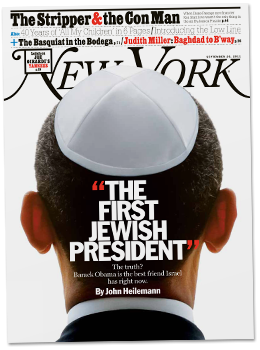
(Obama loves Israel to death. Or tries.

Obama first Jewish president

— DM)

Israel is not like the Czechoslovakia of 1938 and never will be. Israel is an independent military and nuclear power that intends to use its right of self-defense against Iran and its terrorist proxies whether “Emperor” Obama  likes it or not, or tries to stop it.

Obama and his army of Democratic followers in the Congress, progressive groups, and the media repeatedly state their main argument in favor of the agreement, which is that Israel is the only country in the world opposing the Iran nuclear deal. First,  It seems that President  Obama  and his supporters have not paid attention to a recent CNN poll taken on  August 20  that  found that 60 percent of Americans  disapprove of how Obama is handling the Iran deal, and  56 percent  believe that Congress should reject it.

Secondly, like any other self-respecting sovereign country, Israel is against any deal that threatens her own survival by an evil Jihadist Islamic state clearly intent on its annihilation, which is being imposed on her by world powers as a fait accompli.

It seems that Obama and his supporters are delusional, expecting that Israel will allow itself to become a second Czechoslovakia. They are outraged and shocked that Israel has not only refused to quietly accept this very bad deal but dares to fight the deal publicly, loudly, and proudly.

Like Czechoslovakia in 1938, Israel is a small democracy surrounded by hostile nations, and like Czechoslovakia, it was excluded from negotiations that led to a diplomatic deal that shapes its fate and threatens its survival. In 1938, the enlightened democracies in Europe decided to sacrifice Czechoslovakia for a comfortable, temporary solution. The Munich agreement was signed, when Britain and France believed that handing Czechoslovakia to Hitler was the only way to save the world from another war. It is regarded as the shameful culmination of the Allies refusal to confront Nazi aggression and gave Hitler what he wanted in exchange for his verbal promise of “peace in our time” as Neville Chamberlain called it.

In his biography of Franklin Delano Roosevelt, Champion of Freedom, Conrad Black recalls the scene when the poor Czechoslovakian delegates were brought into the room to be informed of their nation’s fate as set out in the Munich Agreement. “No Czech answer was requested. They were handed a fait accompli. The Czechs wept, and Hubert Masarik (Czech diplomat attending the Munich conference) said, prophetically and justly: ‘They don’t know what they are doing to us or to themselves.… These poor, good men were the final players in a macabre and shameful Gothic tragedy.”

The Jewish state has for 67 years been mourning its beloved soldiers who have courageously died defending it from the evil regimes that surround her. However, it will never weep over a deal imposed on it by a morally bankrupt world. Those days of passivity were over when the enormity of the Holocaust was revealed. The Jewish state has been fighting for itself on its own since its independence.

Obama’s threats of a military attack on Iran when violations of the deal occur are not taken seriously by anyone and are a source of laughter for the Iranian regime. Israel does not need  the U.S. or any another party to save her but it does need for Obama and the world powers to move away from Israel’s path and let it do everything in its means to minimize the nuclear threat, and the more menacing conventional  threat resulting from the hundreds of  billions of dollars Iran and its terrorist proxies will get  from the deal.

For the last two years, Obama has been trying to tie Israeli hands and prevent it from practicing its right to self-defense against Iran. Dan Raviv from CBS News reported in March 2014, that the Obama’s administration has asked Israel to stop killing key scientists in the Iranian nuclear program while Obama has been negotiating. In an August interview with the German magazine Der Spiegel, Israeli Defense Minister Moshe Yaalon implicitly warned that the assassinations could be renewed by saying;” I am not responsible for the lives of Iranian scientists.’

But much worse, in Article 10 of the deal, Obama and world powers have agreed that they will assist Iran in thwarting attempts to undermine its nuclear program. The agreement stipulates that they, with the Iranians, will foster “cooperation through training  and workshops to strengthen Iran’s ability to protect against and respond to, nuclear security threats, including sabotage, as well as to enable effective  and sustainable nuclear security  and physical protection systems.”

Recent years have seen various mishaps befall the Iranian nuclear program, from powerful computer viruses to the death of the nuclear scientists, which world media outlets have often attributed to the Israeli intelligence agency, Mossad. According to an audio recording with former Defense Minister Ehud Barak leaked to an Israeli television channel on August 22, Israeli leaders planned to attack military targets in Iran in 2010, 2011, and 2012 but were held back due to the opinions of other government and military leaders.

It is quite disturbing that the U.S. as well as the U.K., Russia, China, France, and Germany will actively try to prevent covert actions against the Iranian nuclear program, as well as any potential military operation against Iran, making such options far more complicated and dangerous for a country like Israel. Congress should ask Obama whether he will order U.S. jets to shoot down Israeli jets intent on destroying an Iranian nuclear weapon facility.

The Congressional Democrats must not repeat the mistakes of the past and sacrifice the future for the present; The Democrats must not ignore Iranian aggression in the hopes of gaining an illusory peace. A vote for the deal is a vote for the beginning of the next war between Israel and Iran and its proxies. The Jewish people can never again remain passive in the face of genocidal enemies.


Against the Iran deal

August 27, 2015

Against the Iran deal, Power LineScott Johnson, August 27, 2015

The Obama administration has used the August recess to promote the Iran deal. We reviewed President Obama’s speech earlier this month at American University. It was a most unsavory speech by a president who is losing the argument in the court of public opinion.

Obama himself has sunk to new depths to promote the deal. For the details, please see Lee Smith’s eloquent Tablet column on Obama’s invocation of Jewish scapegoats. In support of his ludicrous deal with the Islamic Republic of Iran, Obama has disgraced his allies and supporters; he has brought us to an incredibly low moment of our history.

As I noted in “For the Iran deal,” the administration has also released an open letter from 36 retired admirals and generals supporting the deal with Iran. Karen De Young reported on it here for the Washington Post; the Post also posted the letter here. The letter provides a condensed version of talking points in favor of the deal. It may be impressive that the administration found 36 retired officers to sign the thing, but the thing is pathetic on its face.

Well, we’ll see your 36 retired generals and admirals and raise them 154. A group of 190 retired generals and admirals sent a letter to Congress on Wednesday urging lawmakers to reject the Iran nuclear agreement, which they say threatens national security, as indeed it does. Carol Morello reports on the letter for the Post here. The Post has also posted the letter here.

Morello notes that the group formed on its own:

Leon A. “Bud” Edney, a retired admiral who served as vice chief of naval operations, initiated the letter after he read the letter by other retired officers in support of the agreement.

“I looked at the letter they published, and thought it was very weak,” Edney said. “I just don’t agree with it.” He then got the alternative viewpoint rolling through e-mails sent to some of his Navy and Marine friends. They in turn passed it on.

Morello goes to General Mcinerney for an explanation:

Retired Air Force Lt. Gen. Thomas McInerney, who was vice commander of U.S. Air Forces in Europe, said he considers the agreement the most dangerous nuclear accord in U.S. history.

“What I don’t like about this is, the number one leading radical Islamic group in the world is the Iranians,” he said. “They are purveyors of radical Islam throughout the region and throughout the world. And we are going to enable them to get nuclear weapons. Why would we do that?”

McInerney said he thinks that most retired general officers do not support the agreement, but he said some did not sign the letter because they feared negative career repercussions.

“I don’t think the retired general officers necessarily speak with one voice,” he said. “We’ve all gone our own way when we retired.”

Unlike the letter of the 36, this letter is not the the handiwork of a public relations puppet master: “The opinions expressed in the letter were popular enough that people rushed to sign on, even in the hours before it was sent to Congress. The number of signatories almost doubled between Tuesday afternoon and Wednesday morning, copies of the letter showed.”

It’s an impressive group with a powerful argument that responds directly to the talking points of the 36. Morello is not content to report on the letter; she adds a few gratuitous insults to three of the signatories. This is pathetic:

One is retired Lt. Gen. William G. “Jerry” Boykin, who was deputy undersecretary of defense for intelligence under President George W. Bush and is now executive vice president of the Family Research Council. He had a history of making controversial speeches, including one in which he characterized U.S. military operations against Islamist extremist organizations as a Christian fight against Satan.

It also was signed by retired Vice Adm. John Poindexter and retired Maj. Gen. Richard Secord, who were involved in the Iran-contra affair in the Reagan administration, in which arms were sold to Iran to fund the contras in Nicaragua.

Morello fails to note that General Boykin was one of the original members of the US Army’s Delta Force. He commanded these elite warriors in combat operations. He later commanded all the Army’s Green Berets as well as the Special Warfare Center and School. In all, Lt. Gen. Boykin spent 36 years in the army, serving his last four years as the Deputy Undersecretary of Defense for Intelligence. He is an ordained minister with a passion for spreading the Christian gospel and encouraging Christians to become warriors in God’s Kingdom. Thus the left’s hatred of him. Thus Morello’s special attention to him.

What is Iran-Contra doing here? Morello reminds us of the days when John Kerry and his Democratic friends supported the Communists in Central America and elsewhere while President Reagan brought the Soviet Union to its knees. We remember. Those were the good old days.

Obama’s end-run around the Nuclear Non-Proliferation Treaty

August 25, 2015

Obama’s end-run around the Nuclear Non-Proliferation Treaty, Power LinePaul Mirengoff, August 25, 2015

In an article for Forbes, Harold Furchtgott-Roth argues that President Obama’s executive agreement with Iran violates and/or modifies the Nuclear Non-Proliferation Treaty of 1969. Thus, it cannot lawfully take effect without true congressional approval (as opposed to the process established by the Corker-Cardin legislation). Furchtgott-Roth’s article appeared about a month ago, but has only recently come to my attention.

It is axiomatic, I should think, that an executive agreement cannot supersede a treaty. As Furchtgott-Roth explains, treaties are the law of the land and have the status of federal statutes. As such, they cannot be overridden by executive action.

The Iran deal is not a treaty, nor is it a statute. It will not even muster the level of congressional support sufficient to enact a statute.

To be sure, Congress through the Corker-Cardin legislation agreed to process by which the Iran deal could take effect with less than majority support. It did so before it had seen the terms of the deal. Thus, says Furchtgott-Roth, it had no reason to believe that the terms would violate the Nuclear Non-Proliferation Treaty. Indeed, the public statements of John Kerry indicated that there would be no clash.

In any event, the Corker-Cardin bill established a process to review an executive order, not a treaty amendment. I doubt that Congress can bind itself in advance (or at all) to a process to create or amend a treaty that differs from the one established by the Constitution.

The question thus becomes whether the Iran deal modifies the Nuclear Non-Proliferation Treaty. Furchtgott-Roth presents a good case that it does:

1. Under Article I of the NPT, “Each nuclear-weapon State Party to the Treaty [US] undertakes … not in any way to assist, encourage, or induce any non-nuclear weapon State [Iran] to … otherwise acquire nuclear weapons or other nuclear explosive devices, or control [ICBMs] over such weapons or explosive devices.”

Yet the entire Iran Deal is a road map for Iran to obtain devices that provide “control over such weapons or explosive devices.” The Iran Deal lifts embargoes on missiles that could be used for nuclear weapons. The deal ends prohibitions on nuclear weapons after a fixed number of years. The deal gives access to Iran to hundreds of billions of dollars immediately, all or part of which can finance the acquisition of nuclear weapons or related components.

Thus the Iran Deal modifies or violates U.S. responsibilities under Article I of the NPT.

2. Under Article II of the NPT:

“Each non-nuclear-weapon State Party to the Treaty undertakes not to receive the transfer from any transferor whatsoever of nuclear weapons or other nuclear explosive devices or of control over such weapons or explosive devices directly, or indirectly; not to manufacture or otherwise acquire nuclear weapons or other nuclear explosive devices; and not to seek or receive any assistance in the manufacture of nuclear weapons or other nuclear explosive devices.”

Yet there is nothing in the Iran Deal that limits its ability ultimately to obtain nuclear weapons and various related control devices such as ICBMs. The Iran Deal merely places a timeline on that acquisition. The Iran Deal modifies Article II of the NPT.

3. Under Article III of the NPT:

“Each non-nuclear-weapon State Party to the Treaty undertakes to accept safeguards, as set forth in an agreement to be negotiated and concluded with the International Atomic Energy Agency in accordance with the Statute of the International Atomic Energy Agency and the Agency’s safeguards system, for the exclusive purpose of verification of the fulfillment of its obligations assumed under this Treaty with a view to preventing diversion of nuclear energy from peaceful uses to nuclear weapons or other nuclear explosive devices.”

The Statute of the IAEA. . .states. . .:

[T]he Agency [IAEA] shall have the … responsibilities…To send into the territory of the recipient State or States inspectors, designated by the Agency after consultation with the State or States concerned, who shall have access at all times to all places and data and to any person who by reason of his occupation deals with materials, equipment, or facilities which are required by this Statute to be safeguarded…

Press accounts suggest that the Iran Deal does not provide for IAEA inspection “at all times to all places and data and to any person…” Partly, there is a 24-day notice and review requirement before any inspection. That is inconsistent with the NPT. Neither the Iran Deal nor press accounts indicate that IAEA inspection will be “at all times to all places.”

The Iran Deal modifies Article III of the NPT.

4. Article VIII of the NPT provides in detail a method to modify and amend the NPT. That is not the process used for the Iran Deal. Thus the Iran Deal modifies or violates U.S. responsibilities under Article VIII of the NPT. . . .

Assuming that this analysis is sound, i.e., that Obama’s deal modifies a treaty, the questions become: what can Congress do about it and what is Congress prepared to do?

I doubt that Congress is prepared to abandon the Corker-Cardin procedure. To my knowledge, there has been no sign of willingness to do so in the month since Furchtgott-Roth’s article appeared.

I also believe that if Congress did ditch Corker-Cardin and treated the deal as a treaty amendment (two-thirds vote needed in the Senate; no vote in the House), Obama would thumb his nose at Congress and proceed to implement his deal.

Traitor senators took money from Iran lobby, back Iran nukes

August 25, 2015

Traitor senators took money from Iran lobby, back Iran nukes, Front Page Magazine, Daniel Greenfield, August 25, 2015

em

Senator Markey has announced his support for the Iran deal that will let the terrorist regime inspect its own Parchin nuclear weapons research site, conduct uranium enrichment, build advanced centrifuges, buy ballistic missiles, fund terrorism and have a near zero breakout time to a nuclear bomb.

There was no surprise there.

Markey had topped the list of candidates supported by the Iran Lobby. And the Iranian American Political Action Committee (IAPAC) had maxed out its contributions to his campaign.

After more fake suspense, Al Franken, another IAPAC backed politician who also benefited from Iran Lobby money, came out for the nuke sellout.

Senator Jeanne Shaheen, the Iran Lobby’s third Dem senator, didn’t bother playing coy like her colleagues. She came out for the deal a while back even though she only got half the IAPAC cash that Franken and Markey received.

As did Senator Gillibrand, who had benefited from IAPAC money back when she first ran for senator and whose position on the deal should have come as no surprise.

The Iran Lobby had even tried, and failed, to turn Arizona Republican Jeff Flake. Iran Lobby cash had made the White House count on him as the Republican who would flip, but Flake came out against the deal. The Iran Lobby invested a good deal of time and money into Schumer, but that effort also failed.

Still these donations were only the tip of the Iran Lobby iceberg.

Gillibrand had also picked up money from the Iran Lobby’s Hassan Nemazee. Namazee was Hillary’s national campaign finance director who had raised a fortune for both her and Kerry before pleading guilty to a fraud scheme encompassing hundreds of millions of dollars. Nemazee had been an IAPAC trustee and had helped set up the organization.

Bill Clinton had nominated Hassan Nemazee as the US ambassador to Argentina when he had only been a citizen for two years.  A spoilsport Senate didn’t allow Clinton to make a member of the Iran Lobby into a US ambassador, but Nemazee remained a steady presence on the Dem fundraising circuit.

Nemazee had donated to Gillibrand and had also kicked in money to help the Franken Recount Fund scour all the cemeteries for freshly dead votes, as well as to Barbara Boxer, who also came out for the Iran nuke deal. Boxer had also received money more directly from IAPAC.

In the House, the Democratic recipients of IAPAC money came out for the deal. Mike Honda, one of the biggest beneficiaries of the Iran Lobby backed the nuke sellout. As did Andre Carson, Gerry Connolly, Donna Edwards and Jackie Speier. The Iran Lobby was certainly getting its money’s worth.

But the Iran Lobby’s biggest wins weren’t Markey or Shaheen. The real victory had come long before when two of their biggest politicians, Joe Biden and John Kerry, had moved into prime positions in the administration. Not only IAPAC, but key Iran Lobby figures had been major donors to both men.

That list includes Housang Amirahmadi, the founder of the American Iranian Council, who had spoken of a campaign to “conquer Obama’s heart and mind” and had described himself as “the Iranian lobby in the United States.” It includes the Iranian Muslim Association of North America (IMAN) board members who had fundraised for Biden. And it includes the aforementioned Hassan Nemazee.

A member of Iran’s opposition had accused Biden’s campaigns of being “financed by Islamic charities of the Iranian regime based in California and by the Silicon Iran network.” Biden’s affinity for the terrorist regime in Tehran was so extreme that after 9/11 he had suggested, “Seems to me this would be a good time to send, no strings attached, a check for $200 million to Iran”.

Appeasement inflation has since raised that $200 million to at least $50 billion. But there are still no strings worth mentioning attached to the big check.

Questions about donations from the Iran Lobby had haunted Kerry’s campaign. Back then Kerry had been accused of supporting an agreement favorable to Iran. The parameters of that controversial proposal however were less generous than the one that Obama and Kerry are trying to sell now.

The hypothetical debates over the influence of the Iran Lobby have come to a very real conclusion.

Both of Obama’s secretaries of state were involved in Iran Lobby cash controversies, as was his vice president and his former secretary of defense. Obama was also the beneficiary of sizable donations from the Iran Lobby. Akbar Ghahary, the former co-founder of IAPAC, had donated and raised some $50,000 for Obama.

It’s an unprecedented track record that has received very little notice. While the so-called “Israel Lobby” is constantly scrutinized, the fact that key foreign policy positions under Obama are controlled by political figures with troubling ties to an enemy of this country has gone mostly unreported by the mainstream media.

This culture of silence allowed the Iran Lobby to get away with taking out a full-page ad in the New York Times before the Netanyahu speech asking, “Will Congress side with our President or a Foreign Leader?”

Iran’s stooges had taken a break from lobbying for ballistic missiles to play American patriots.

Obama and his allies, Iranian and domestic, have accused opponents of his dirty Iran deal of making “common cause” with that same terror regime and of treason. The ugly truth is that he and his political accomplices were the traitors all along.

Democrats in favor of a deal that will let a terrorist regime go nuclear have taken money from lobbies for that regime. They have broken their oath by taking bribes from a regime whose leaders chant, “Death to America”. Their pretense of examining the deal is nothing more than a hollow charade.

This deal has come down from Iran Lobby influenced politicians like Kerry and is being waved through by members of Congress who have taken money from the Iran Lobby. That is treason plain and simple.

Despite what we are told about its “moderate” leaders, Iran considers itself to be in a state of war with us. Iran and its agents have repeatedly carried out attacks against American soldiers, abducted and tortured to death American officials and have even engaged in attacks on American naval vessels.

Aiding an enemy state in developing nuclear weapons is the worst form of treason imaginable. Helping put weapons of mass destruction in the hands of terrorists is the gravest of crimes.

The Democrats who have approved this deal are turning their party into a party of atom bomb spies.

Those politicians who have taken money from the Iran Lobby and are signing off on a deal that will let Iran go nuclear have engaged in the worst form of treason and committed the gravest of crimes. They must know that they will be held accountable. That when Iran detonates its first bomb, their names will be on it.

Inspector Clouseau was unavailable

August 20, 2015

Inspector Clouseau was unavailable, Power LineScott Johnson, August 20, 2015

President Obama purports to have a sophisticated theory of international relations supporting his catastrophic deal with Iran.

Dealing with the world’s foremost sponsor of state terrorism and an avowed enemy of the United States, Obama is lavishly funding the regime and leaving Iran’s nuclear program on the path of development to nuclear-tipped intercontinental ballistic missiles.

He proclaims the deal a famous victory, but with the AP’s report on the, ah, unusual arrangement for the self-inspection of the Parchin research facility, it has descended into self-evident farce. Even Stevie Wonder could see that.

Why self-inspection? With the death of Peter Sellers, Inspector Clouseau was unavailable.

For the United States, the self-inspection is one more humiliation among a long train of humiliating concessions. It represents a sort of reductio ad absurdum, a piece of black humor in the style of Joseph Heller. The secret side deal could be a sequel to Catch-22. From President Obama’s perspective, the humiliation of the United States must be an added advantage of the deal.

The revelation of the terms of the Parchin side deal prompts me to think back to the comments of senior Iranian presidential adviser and former intelligence minister Ali Younesi this past fall. The comments were offered for domestic political consumption to the official Iranian news agency.

There was something to offend everyone in Younesi’s comments. Most striking to me, however, was Younesi’s perception of Obama. Younesi had Obama’s number. Younesi’s contempt for Obama shone through his comments and it surely reflects the consensus of the regime. Obama has worked hard to earn it.

The fact that Younesi made these comments on the record for public consumption was striking and newsworthy. The Washington Free Beacon’s Adam Kredo had the story:

The Iranian president’s senior advisor has called President Barack Obama “the weakest of U.S. presidents” and described the U.S. leader’s tenure in office as “humiliating,” according to a translation of the highly candid comments provided to the Free Beacon.

The comments by Ali Younesi, senior advisor to Iranian President Hassan Rouhani, come as Iran continues to buck U.S. attempts to woo it into the international coalition currently battling the Islamic State (IS, ISIL, or ISIS).

And with the deadline quickly approaching on talks between the U.S. and Iran over its contested nuclear program, Younesi’s denigrating views of Obama could be a sign that the regime in Tehran has no intent of conceding to America’s demands.

“Obama is the weakest of U.S. presidents, he had humiliating defeats in the region. Under him the Islamic awakening happened,” Younesi said in a Farsi language interview with Iran’s semi-official Fars News Agency.

“Americans witnessed their greatest defeats in Obama’s era: Terrorism expanded, [the] U.S. had huge defeats under Obama [and] that is why they want to compromise with Iran,” Younesi said.

Younesi followed up with comments that were somewhat offensive to conservatives like us, but the substance wasn’t unflattering. We believe Israel is our friend and Iran has been our mortal enemy since, you know, around about 1979. In assessing Iran our enemy, we have taken them at their word and judged them by their actions. They have a voluminous amount of American blood on their hands.

Younesi is to some extent on the same page with President Obama. He said of American conservatives: “Conservatives are war mongers, they cannot tolerate powers like Iran. If conservatives were in power they would go to war with us because they follow Israel and they want to portray Iran as the main threat and not ISIS.”

Well, Iran is the main threat. ISIS doesn’t have a nuclear program or the trappings of a state and I would like to think we would support military action against Iran if necessary, though a president whose strength they respected would make it unnecessary.

Younesi also had the Democrats’ number. He deemed them “no threat.” He got that right, though you don’t have to be a former intelligence minister to figure that out.

Younesi’s comments foretold our rendezvous with destiny, Obama style: “We [the Islamic Republic] have to use this opportunity [of Democrats being in power in the U.S.], because if this opportunity is lost, in future we may not have such an opportunity again.”

International inspections of Iran’s nuke sites are a sick joke

August 20, 2015

International inspections of Iran’s nuke sites are a sick joke, Dan Miller’s Blog, August 19, 2015

(The views expressed in this post — which for the most part consists of links to and quotations from recent articles posted at Warsclerotic — are mine and do not necessarily reflect those of Warsclerotic or its other editors. — DM)


Over the past few days, Iranian officials have confirmed that international inspections of its nuke sites will be severely limited if permitted at all. This post provides excerpts from recent articles quoting them. 

Iran’s nuke sites

The restrictions noted in this post are in addition to previously disclosed prohibitions on access by International Atomic Energy Agency (IAEA) inspectors to military sites, which Iran itself will inspect instead. Even The Daily Beast has mentioned this problem in reliance on an Associated Press article which states,

All IAEA member countries must give the agency some insight into their nuclear programs. Some are required to do no more than give a yearly accounting of the nuclear material they possess. But nations— like Iran — suspected of possible proliferation are under greater scrutiny that can include stringent inspections. [Emphasis added.]

The agreement in question diverges from normal procedures by allowing Tehran to employ its own experts and equipment in the search for evidence of activities it has consistently denied — trying to develop nuclear weapons. [Emphasis added.]

Olli Heinonen, who was in charge of the Iran probe as deputy IAEA director general from 2005 to 2010, said he could think of no similar concession with any other country.

Recent disclosures

According to an article by Adam Kredo at Washington Free BeaconNo international inspectors will be admitted to Iran unless approved by Iranian intelligence officials.

A senior Iranian official declared on Monday that international nuclear inspectors would only be permitted into the country once they receive approval from the Islamic Republic’s Intelligence Ministry, putting another roadblock between the International Atomic Energy Agency (IAEA) and Iran’s contested nuclear sites.

Sayyed Abbas Araqchi, Iran’s deputy foreign minister and one of the top negotiators in talks that led to the recently inked nuclear deal, told the country’s state-controlled press that Iran’s intelligence apparatus must approve of any inspector who is issued a visa to enter Iran. [Emphasis added.]

Acording to an article at DEBKAfileNo international inspectors will be given access to military sites unless they first submit acceptable evidence of prohibited nuke activities there.

International nuclear inspectors will only be permitted into the country after offering proofs of suspicious activity at the sites to be inspected, Iran’s Defense Minister Brig. Gen Hossein Dehqan said Tuesday. DEBKAfile: This condition is not contained either in the nuclear deal Iran signed with the six world powers last month or in its contract with the IAEA. How will the international watchdog obtain proofs if it is denied visits for inspections? [Emphasis added.]

According to another article by Adam Kredo at Washington Free Beaconthe head of the International Atomic Energy Agency (IAEA) was threatened with “harm” should he tell U.S. officials about the Iran – IAEA secret deal(s)

Iranian leaders prevented a top International Atomic Energy Agency (IAEA) official from disclosing to U.S. officials the nature of secret side deals with the Islamic Republic by threatening harm to him, according to regional reports. [Emphasis added.]

Yukiya Amano, IAEA director general, purportedly remained silent about the nature of certain side deals during briefings with top U.S. officials because he feared such disclosures would lead to retaliation by Iran, according to the spokesman for Iran’s Atomic Energy Organization (AEOI).

Amano was in Washington recently to brief members of Congress and others about the recently inked nuclear accord. However, he did not discuss the nature of side deals with Iran that the United States is not permitted to know about.

Iran apparently threatened Amano in a letter meant to ensure he did not reveal specific information about the nature of nuclear inspections going forward, according to Iranian AEOI spokesman Behrouz Kamalvandi.

“In a letter to Yukiya Amano, we underlined that if the secrets of the agreement (roadmap between Iran and the IAEA) are revealed, we will lose our trust in the Agency; and despite the US Congress’s pressures, he didn’t give any information to them,” Kamalvandi was quoted as saying Monday during a meeting with Iranian lawmakers, according to Tehran’s state-controlled Fars News Agency.

“Had he done so, he himself would have been harmed,” the official added. [Emphasis added.]

If these analyses are correct, and they appear to be, there will be no meaningful “anytime anywhere” international inspections of Iranian military sites. Although Obama has repeatedly said that the current nuke “deal” is not based on trust, that appears to its only basis, an absurd one.

Iran’s missiles

Acording to another DEBKAfile article, Iran’s missile research and development are continuing despite (or perhaps because of) the August 2015 “deal.”

Shortly before US Secretary of State John Kerry was due in Qatar Monday, Aug. 3, Iran’s highest authorities led by supreme leader Ayatollah Ali Khamenei Sunday launched a public campaign to support Tehran’s noncompliance with the Vienna nuclear accord and UN Security Council Resolution 2231 of July 20, on its ballistic missile program. The campaign was designed by a team from Khamenei’s office, high-ranking ayatollahs and the top echelons of the Revolutionary Guards, including its chief, Gen. Ali Jafari. [Emphasis added.]

. . . .

The Security Council Resolution, which unanimously endorsed the Joint Comprehensive Plan of Action (Vienna nuclear accord) signed by Iran’s Foreign Minister Mohammed Javad Zarif, called on Iran not to undertake any activity related to ballistic missiles designed to be capable of delivering nuclear weapons, including launches using such ballistic technology until the date eight years after the JCPOA Adoption Day.” [Emphasis added.]

Tehran retorted that none of its ballistic missiles were designed to deliver nuclear weapons, and so this provision was void. Shortly after its passage, the foreign ministry in Tehran issued an assurance that “…the country’s ballistic missile program and capability is untouched and unrestricted by Resolution 2231.”

On July 30, Ali Akbar Velayati, Khamenei’s senior adviser on international affairs and member of the Expediency Council, told reporters, “The recent UNSC Resolution on Iran’s defensive capabilities, specially (sic) its missiles, is unacceptable to Iran.”

According to an August 16th article at the Iranian media site Tasnim, there is no impediment to continuation of Iran’s missile program.

TEHRAN (Tasnim) – Chief of Staff of the Iranian Armed Forces Major General Hassan Firouzabadi underlined that there are not any obstacles to the country’s missile program. [Emphasis added.]

“The Islamic Republic of Iran’s missile activities, as planned inside the country, will not face any obstacles,” the senior officer stressed on Sunday.

The general also reiterated that Iran’s missile tests are going to be carried out in a timely manner according to the plans endorsed by Supreme Leader of the Islamic Revolution Ayatollah Seyed Ali Khamenei.

Iran – North Korea nuke nexis

Nuke cooperation between Iran and North Korea was not considered during the P5+1 “negotiations.” The text of the current “deal” is silent on the subject. Kerry’s State Department has limited media contact with Douglas Frantz, his Assistant Secretary in charge of the Bureau of Public Affairs, to avoid releasing information on the Iran – North Korea nuke nexus. Mr. Frantz, formerly a highly respected journalist, had written extensively on North Korea’s nuclear program.

An honest accounting would quite likely reveal something that many press reports have alleged, but U.S. administration officials have never publicly confirmed: A history of nuclear weapons collaboration between Iran and nuclear-proliferating North Korea.

. . . .

Drawing on “previously secret reports, international officials, independent experts, Iranian exiles and intelligence sources in Europe and the Middle East,” Frantz wrote that “North Korean military scientists recently were monitored entering Iranian nuclear facilities. They are assisting in the design of a nuclear warhead, according to people inside Iran and foreign intelligence officials.”

. . . .

Perhaps Frantz should recycle that article to Secretary of State John Kerry, who while testifying to a congressional panel last month was asked about its allegations by Rep. Christopher Smith, and ducked the question.

. . . .

[I]t appears that as a State Department advocate of a free and well-informed press, Frantz himself is not free to answer questions from the press about his own reporting on North Korea’s help to Iran in designing a nuclear warhead. The State Department has refused my repeated requests to interview Frantz on this subject. Last year, an official at State’s Bureau of Public Affairs responded to my request with an email saying, “Unfortunately Assistant Secretary Frantz is not available to discuss issues related to Iran’s nuclear program.” [Emphasis added.]

. . . .

Of course, the real problem for the Obama administration is that an officially confirmed story of Iran-North Korea collaboration on nuclear warheads could spell further trouble for winning congressional approval of this nuclear deal.

Conclusions

Assuming (a highly dubious assumption) that Kerry and Obama’s other P5+1 “negotiators” wanted to limit Iran’s Uranium enrichment to peaceful purposes, to terminate its nuke weaponization and to restrict its missile development and use they failed. It might have been entertaining to have watched Obama instruct Kerry on how to negotiate for magic carpets in a Persian market. The Persians saw Obama’s P5+1 “negotiators” as suckers and took all of their cash. They then took whatever honor they may once have had.

With international inspections permitted, if at all, only at Iran’s whim, and international sanctions “snap back” a fantasy, Iran has been given a bright green light to do whatever it pleases. What pleases Iran should not please even Obama, who envisions a new era of Middle East stability as a major fruit of His victory in getting the July 2015 “deal.”

Iran plans to “stabilize” Israel first. Israel is the only free and democratic nation in the Middle East; America was once her most reliable ally. No longer, but perhaps one fine day she will be again.

A conference of religious scholars features speaker after speaker calling Israel’s annihilation inevitable and promising that a “new phase” in that effort is about to begin. [Emphasis added]

While some in the United States and among its Western allies may hope that a nuclear weapons deal with Iran might steer the Islamic Republic in a new, more responsible direction, hardliners draw new lines and issue new threats.

On Monday, Iranian Supreme Leader Ali Khamenei took to social media to attack the United States and Israel. “We spare no opportunity to support anyone #FightingTheZionists,” wrote the ayatollah, whose regime supplies Hizballah and Hamas with rockets and other weapons of terror.

Here’s a recent video from Iranian television showing how Iran plans to eliminate Israel.

The July 2015 “deal” remains a mystery shrouded in secrecy and deception. Obama has tried to mislead the the American public and the Congress. He has threatened members who have voiced opposition and characterized them as disloyal. Congress should kill the “deal.” Those members whose ultimate loyalty is to America rather than to Obama will vote to do so and then to override his veto.

Iran’s and Obama’s co-dependent mushroom clouds

August 15, 2015

Iran’s and Obama’s co-dependent mushroom clouds, Dan Miller’s Blog, August 15, 2015

(The views expressed in this article are mine and do not necessarily reflect those of Warsclerotic or its other editors. — DM)

Courtesy of Obama, Iran’s mushroom clouds will be produced by detonating atomic bombs. Obama’s mushroom clouds, with help from His friends, have already been and continue to be detonated. They thrive in the absence of light and contain copious quantities of bovine fecal matter.

This limerick, if applied to Obama, makes sense:

Last night I saw upon the stair
A little man who wasn’t there.
He wasn’t there again today.
Oh how I wish he’d go away!

I. Obama gave Iran its mushroom cloud

Several conservative media recently focused on Obama’s claim, made in His August 5, 2015 address praising His “deal,” that Iran had agreed to negotiate only after President Rouhani replaced Mahmoud Ahmadinejad on August 3, 2013:

it was diplomacy, hard, painstaking diplomacy, not saber rattling, not tough talk, that ratcheted up the pressure on Iran. With the world now unified beside us, Iran’s economy contracted severely, and remains about 20 percent smaller today than it would have otherwise been. No doubt this hardship played a role in Iran’s 2013 elections, when the Iranian people elected a new government, that promised to improve the economy through engagement to the world. [Emphasis added.]

A window had cracked open. Iran came back to the nuclear talks.

Obama did not mention that Rouhani could neither have run for office nor been elected without the backing of Iran’s Supreme Leader Khamenei. As far as I have been able to determine, neither Obama nor Kerry has said anything denying, acknowledging or explaining Senator Kerry’s “negotiations” with Iran which, as I noted here on August 13th, had begun in 2011, long before Ahmadinejad left office in 2013.

During those early “negotiations,” Kerry had already conceded Iran’s right to enrich Uranium, that the nuclear dossier would be closed and that the Possible Military Dimensions (“PMDs”) of Iran’s nuclear program would be ignored resolved.

Although Obama has claimed otherwise, the timing of P5+1 negotiations vis a vis  Rouhani’s arrival in office makes little sense. Rouhani sought and got — courtesy of Kerry’s earlier concessions — at least as many concessions from the Obama-led P5+1 farce as Ahmadinejad could have got. Perhaps he got more, due to erroneous perceptions that Rouhani was a moderate and that Iran had changed course for the better. Such perceived changes also led to hopes that Iran would become a helpful U.S. Middle East ally.

Here’s an excerpt from a Front Page Magazine about Obama’s claim:

In 2013, Hassan Rouhani was, for lack of a better word, “elected” president of Iran replacing the noxious Mahmoud Ahmadinejad. Rouhani, a grandfatherly-like figure with an affable smile, appeared to be, at least outwardly, more moderate than his predecessor, but in reality expressed the same rancid, xenophobic views. He was quoted as saying that “the beautiful cry of ‘Death to America’ unites our nation,” and referred to Israel as a “wound,” “a festering tumor” and the “great Zionist Satan,” among numerous other reprehensible pejoratives.

Israel’s Prime Minister Benjamin Netanyahu, in an address to the United Nations, dryly noted that while Ahmadinejad was a wolf in wolf’s clothing, Rouhani was a wolf in sheep’s clothing, but both were wolves nonetheless. What’s more, real power in Iran vests not with the nation’s president, but with its Supreme Leader, Ali Hosseini Khamenei, a pernicious man who seems incapable of addressing crowds without inserting at least one “death to America” reference somewhere in the speech. Indeed, just four days after signing the Joint Comprehensive Plan of Action (JCPOA) he addressed a large crowd and repeated the tired banalities of “death to America” and “death to Israel.” Khamenei is also solely responsible for vetting and approving presidential candidates which means that he found Rouhani to be an acceptable contender and that speaks volumes about what kind of character Rouhani is. [Emphasis added.]

. . . .

Despite the given realities about the Islamic Republic and its malevolent nature, Obama attempted to sell the American public on the nonsensical notion that the election of Rouhani ushered in a new period of Iranian enlightenment and moderation and afforded the U.S. an opportunity for meaningful engagement with the mullahs on their nuclear program. On that premise, he led the American public to believe that it was only after the election of the “moderate” Rouhani that the U.S. chose to engage Iran. [Emphasis added.]

What really rankles, as noted in my August 13th article, is that in 2011 Kerry, representing Obama, led the way for Iran to get what it wanted.

Kerry had representatives of The Sultanate of Oman deliver a letter he had written to Iranian officials recognizing Iran’s Uranium enrichment rights and suggesting secret negotiations. Omani officials discussed the letter with Iranian officials and, when the Iranians appeared skeptical, the Omani official suggested,

Go tell them that these are our demands. Deliver [the note] during your next visit to Oman.’ On a piece of paper I wrote down four clearly-stated points, one of which was [the demand for] official recognition of the right to enrich uranium. I thought that, if the Americans were sincere in their proposal, they had to accept these four demands of ours. Mr. Souri delivered this short letter to the mediator, stressing that this was the list of Iran’s demands, [and that], if the Americans wanted to resolve the issue, they were welcome to do so [on our terms], otherwise addressing the White House proposals to Iran would be pointless and unjustified. [Emphasis added.]

“All the demands presented in this letter were related to the nuclear challenge. [They were] issues we had always come up against, like the closing of the nuclear dossier, official recognition of [the right to] enrichment, and resolving the issue of Iran’s past activities under the PMD [possible military dimensions] heading. After receiving the letter, the Americans said, ‘We are definitely and sincerely willing, and we can resolve the issues that Iran mentioned.’” [Emphasis added.]

The Possible Military Dimensions of Iran’s nuke program are no longer of interest to the Obama administration, if they ever were. On June 16, 2015, the New York Times reported that Kerry said

a full accounting of Iran’s possible past atomic weapons research is not necessarily critical to reaching a nuclear deal with Tehran. His comments came amid concerns the Obama administration is backing down on demands that Iran resolve concerns about previous work as part of an agreement that would curb its nuclear program in exchange for sanctions relief. [Emphasis added.]

. . . .

We know what they did,” Kerry said. “We have no doubt. We have absolute knowledge with respect to certain military activities they were engaged in. What we’re concerned about is going forward. It’s critical to us to know that going forward, those activities have been stopped and that we can account for that in a legitimate way.” [Emphasis added.]

Without knowing what Iran had been doing where, there is no viable way to know what it continues to do. Reliable information of that nature will not be available. Under the apparent terms of its secret deals with Iran, Iranians, not members of the IAEA, will inspect and take samples at military sites used by Iran for nuke weaponization. “Details” of the inspections will not be disclosed.

Kerry also claims to know “exactly” what the secret IAEA – Iran deals say, even though he has neither read nor seen them. In the video provided below, Kerry acknowledges just that beginning at about 10:00.

What aspect(s) of Iran’s nuke weaponization does Kerry have “absolute knowledge” about and how did he get it? The IAEA appears to have accumulated far less information than Kerry claimed to have on June 16th concerning Iran’s nuke militarization. Continuing to quote from the New York Times article linked above,

Much of Iran’s alleged work on warheads, delivery systems and detonators predates 2003, when Iran’s nuclear activity first came to light. But Western intelligence agencies say they don’t know the extent of Iran’s activities or if Iran persisted in covert efforts. An International Atomic Energy Agency investigation has been foiled for more than a decade by Iranian refusals to allow monitors to visit suspicious sites or interview individuals allegedly involved in secret weapons development. [Emphasis added.]

The November 14, 2013 Joint Plan of Action recognized Iran’s right to enrich Uranium for “peaceful purposes” — the reason asserted by Iran for enrichment. Iran’s need to enrich Uranium was mainly premised on its need to generate electricity. However earlier this month, Iran’s Deputy Foreign Minister and senior nuclear negotiator called Iran’s nukes for electricity program “a big loss” economically but necessary to defend the country’s honor.

In a leaked off-the-record meeting with journalists Saturday, Abbas Araqchi stressed that “if we want to calculate the expenses of the production materials, we cannot even think about it.” But, he said, “we paid this price so we protect our honor, independence and progress, and do not surrender to others’ bullying.”

Yet, he explained, “If we value our nuclear program based only on the economic calculations, it is a big loss.” [Emphasis added.]

. . . .

Due to the pressure from above, . . .  the original report was removed by the national broadcasting service, which stated that the publication of Araqchi’s statements was a “misunderstanding.”

Please see also, The Iranian Nuke Deal Depends on This One Myth.

The November 13, 2013 Joint Plan of Action left open only where, how and how much Uranium Iran could enrich. It substantially ignored the nuclear dossier (i.e., nuke weaponization), Iran’s principal but denied reason for enrichment. It should, therefore, have come as no surprise that the 2015 “deal,” in conjunction with the secret deals between Iran and the International Atomic Energy Agency (IAEA), did the same, eliminating any chance that the IAEA might learn what Iran had been doing and whether it continues to do it.

II. Related matters

According to March 31, 2015 article at National Public Radio,

Even before he became president, Barack Obama was imagining the possibilities of a diplomatic breakthrough with Iran. His willingness to reverse decades of official U.S. hostility was one of the things that set Obama apart on the campaign trail.

. . . .

Limited though it may be, the administration’s negotiation with Iran has shaken traditional allies such as Israel and Saudi Arabia. Meanwhile, through its action and inaction elsewhere in the Middle East, the U.S. has left both friends and enemies uncertain about what it will do next.

. . . .

The White House insists a nuclear deal with Iran would defuse the biggest threat to the region.

The Wilson Center’s Miller agreed a negotiated deal that stops or even stalls Iran’s nuclear program is preferable to the likely alternative of military action. But he dismisses as wishful thinking any expectation that Iran’s diplomatic rehabilitation will produce a new, more stable Middle East.

On August 15th, Iran’s Tasnim News Agency published an article stating that

Iran’s Secretary-General of World Assembly of Islamic Awakening Ali Akbar Velayati praised the recent conclusion of nuclear talks between Iran and six world powers, saying that with the deal, Tehran has more strength to support its friends in the Middle East region. [Emphasis added.]

. . . .

Velayati, who is also the head of the Strategic Research Center of Iran’s Expediency Council, stressed the need for the consolidation of the anti-Israeli Resistance Front in the region. [Emphasis added.]

This is the Iranian mushroom cloud provided by Obama and Kerry:

Mushroom cloud

III. Obama’s own mushroom cloud

Here is a photo of Obama’s mushroom cloud with one of His supporters standing contentedly in front of it:

cow manure

Obama’s mushroom cloud, made of bovine fecal matter which Obama et al have asked us to swallow, has grown like Topsy. It’s full of many more lies than merely that He waited until Rouhani became Iran’s president to being nuke negotiations. His other lies, and those of His friends, are even less digestible. Here are just a few from Washington Free Beacon Supercuts to serve as aperitifs.


IV. Conclusions

games

The mushroom cloud detonated by Obama and Friends (“OAFs”) likely means that the “deal” with Iran will soon go into full effect. It will enable Iran to present us with its own nuclear mushroom cloud. It will also be of substantial assistance in furthering Iran’s hegemonic efforts to destabilize the Middle East.

Some mushrooms are good to eat. Obama’s cloud is full of toxic mushrooms. Perhaps they have made Obama, Iran and His other friends drunk with power; they are deadly for the rest of us.

Contentions | The Iran Deal’s Evaporating Logic

August 11, 2015

Contentions | The Iran Deal’s Evaporating Logic, Commentary Magazine, August 11, 2015

Proponents of the Iran nuclear deal are finding the justifications for compelling Congress to ratify the accord, save for preserving Barack Obama’s fragile self-image, are coming apart. As such, the accord’s supporters have increasingly turned to defending the deal with appeals to the president’s stature and authority, as well as by calling into question the motives and character of its opponents. That alone should tell you all you need to know. Though some of the Iran nuclear deal’s remaining backers do still occasionally claim that it will succeed in what was once its singular purpose: limiting Iran’s ability to produce prohibited armaments. One of most convincing precedents supporting this contention has, however, been largely disaffirmed. 

When asked to cite a model to demonstrate how the nuclear deal will not only prevent Iranian from developing a fissionable device but also produce a variety of happy byproducts like the moderation of the Islamic Republic’s destabilizing behavior, the deal’s supporters most frequently point to the 1987 Intermediate-Range Nuclear Forces (INF) treaty with the Soviet Union.

“From the Western perspective, the nuclear deal represents the most important security agreement since the signing of the Intermediate-Range and Shorter-Range Missiles (INF) Treaty between Washington and Moscow during the twilight years of the Cold War,” Al Jazeera columnist Richard Javad Heydarian averred.

Peter Beinart took this contention an ill-advised step further. “By 1987, Reagan had signed the Intermediate-Range Nuclear Forces (INF) treaty, the most sweeping arms-control deal of the Cold War. His rhetoric toward the Soviet Union also radically changed,” Beinart wrote in The Atlantic. “Reagan, in other words, dramatically de-escalated the Cold War long before he knew Gorbachev would let Eastern Europe go free and at a time when prominent conservatives were literally calling him Neville Chamberlain for signing the INF deal.”

That’s true. Graham Allison, also writing in The Atlantic, quoted a few conservatives from the period that feared Reagan was providing the Soviets with a reprieve from the crushing obligations of the arms race. “Reagan insisted that he was capable of brokering agreements to reduce the risks of accidents or unauthorized actions that risked nuclear war with one hand, while redoubling his efforts to undermine the Soviet regime with the other,” he insisted. “And he did just that. The Soviet Union collapsed in 1991.”

This is a remarkable simplification of history. Beinart claims that Regan’s shifting rhetoric (he renounced his “evil empire” comment while standing in the middle of Red Square under the watchful eye of a young Vladimir Putin) provided Mikhail Gorbachev space to make the case to the Politburo that he was not capitulating to Reagan in this accord. But this is a variation of the liberal case that ideational and not material considerations led to the collapse of the Soviet Union. Moreover, the INF effectively marked the end of the arms race, in part because it had already been lost by the Soviets. By contrast, there has been no ideational shift in the theocratic regime in Tehran nor is there any indication in Iran’s behavior that it is desirous of rapprochement with the West. If anything, Iran has behaved in a more bellicose fashion as nuclear negotiations with the P5+1 intensified.

The USSR is long gone, but the INF remains in place. Opponents of the Iran nuclear deal are advised to pay close attention to what that arrangement has become. It is no longer an arms control agreement but a political relic that serves little purpose but to shield from public scrutiny the extent to which Russia has become an irresponsible and revanchist international actor.

Writing in Politico Magazine in April, Foreign Policy Initiative scholars Eric Edelman and Tzvi Kahn outline the scope of the Russian’s efforts to game the INF. In response to Russia’s brazenness, American officials have routinely downplayed Moscow’s cheating. Despite repeatedly warning the United States that it was prepared to violate the INF over the course of the last decade, the Bush administration refused to acknowledge that reality. When Moscow did violate the terms of the INF in this decade, the Obama administration also pretended not to notice. And when this administration finally did address Russia’s violations of the terms of the INF, that acknowledgement was not followed on with any consequences.

That failure of resolve continues even today. According to the Washington Free Beacon’s Bill Gertz, a Pentagon assessment last month revealing the extent of Russia’s violations of the INF paints a damning picture of the Kremlin’s behavior. Unfortunately for anyone who would like to fully understand how Russia has undermined the INF, the White House is allegedly blocking that report’s release.

“Rep. Mike Rogers, chairman of the House Armed Services strategic forces subcommittee, disclosed the existence of the Pentagon assessment last month and said the report is needed for Congress’ efforts to address the problem in legislation,” Gertz reported. “Rogers said the assessment was conducted by chairman of the Joint Chiefs of Staff Gen. Martin Dempsey, and noted that it outlines potential responses to the treaty breach.”

To acknowledge the treaty’s failure would provide additional political legitimacy to an effort by House Republicans that seeks to provide funding for short-range cruise missile defenses in Poland and Romania. That’s a direct repudiation of this White House, which continues to stand by its 2009 rejection of a Bush-era deal that would have provided the Czech Republic and Poland with long-range interceptor and radar technology. In short, politics is dictating American national defense planning and strategy.

“Similarly, for decades, Tehran has violated its nuclear commitments — and the United States has failed to hold it accountable,” Edelman and Kahn observed.

There is no evidence to suggest that regime as demonstrably duplicitous as Iran’s will not cheat on this arrangement. In fact, the terms of this deal would make it difficult to definitively identify cheating, much less to marshal support for an international response to it. Even if such behavior could be identified, though, it’s not entirely clear that this administration (or its successor, presuming the next administration is a Democratic one) will be predisposed to punish Iranian cheating at all. To acknowledge the fact that the nuclear deal with Iran has failed would be to invite searing criticism from the deal’s domestic opponents.

The INF is a treaty in a persistent vegetative state; it’s corporal form remains, but its spirit has long since passed on to another plane. A conventional arms race in Eastern Europe has taken its place. If the West were to acknowledge that arms race, it would be obliged to participate in it. So it simply refuses to acknowledge it. If the Iran deal fails, its proponents in Washington are unlikely to ever say as much. Not until it is too late.


