Archive for the ‘Ted Cruz’ category

Full Donald Trump Indiana Primary Victory Speech

May 4, 2016

Full-Donald Trump Indiana Primary Victory Speech, Washington Free Beacon via YouTube, May 3, 2016

(Gracious, particularly to Ted Cruz who has “suspended” his campaign. As Trump said, now it’s time unite the party and to go after Hillary Clinton. — DM)

Humor | To Know Ted Cruz Is To Wish You Didn’t

May 4, 2016

To Know Ted Cruz Is To Wish You Didn’t, Late Night Show with Stephen Colbert via YouTube, May 3, 2016


The problem with Ted Cruz

April 29, 2016

The problem with Ted Cruz, The Hill, Charles Hurt, April 29, 2016
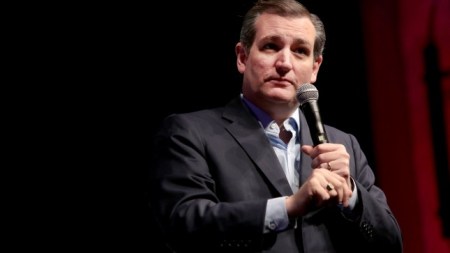
Ted Cruz1

In the past eight years, no one has captivated the realistic hopes of conservative constitutionalists the way that Cruz has in this election. On every single issue of importance to conservatives, Cruz is right. He is a walking, living, breathing Supreme Court dissent, masterfully articulated and extensively annotated on paper.

Then, he opens his mouth. And people scream. They run for the exits as if their hair is on fire. They want to take a shower.

********************

Real estate mogul Donald Trump has run an outsider’s juggernaut campaign, the likes of which nobody has seen in modern politics.

Democrats publicly say they are thrilled to face him in the general election. But, privately, they fret that the master marketer and media maestro is so unpredictable and so original and so fearless that they just might regret getting the match-up they had hoped for.

Trump has done all this in the face of unprecedented opposition from establishment Republican Party officials and many principled conservatives who make up the core base of the GOP. At this point in the primary cycle, any other candidate with numbers like Trump’s would have been granted “presumptive nominee” status by party bosses as well as any final remaining active candidates.

It is not new that party establishment types are terrified of doing anything outside of their regular playbook — like recognizing the game-changing power of an apolitical populist who is winning millions of supporters by turning everything upside down. While the media attention has focused entirely on the exuberant and entertaining traveling carnival nature of the Trump campaign, this overlooks another, deeper problem conservatives have today: Sen. Ted Cruz (Texas).

In the past eight years, no one has captivated the realistic hopes of conservative constitutionalists the way that Cruz has in this election. On every single issue of importance to conservatives, Cruz is right. He is a walking, living, breathing Supreme Court dissent, masterfully articulated and extensively annotated on paper.

Then, he opens his mouth. And people scream. They run for the exits as if their hair is on fire. They want to take a shower.

Even hardcore conservatives still stewing over the shabby defenestration of Robert Bork find Cruz cloying and unctuous. Leading conservatives who publicly support Cruz’s presidential campaign groan in private when he starts talking.

Cruz may entertain himself by impersonating characters from “The Simpsons,” but it is hard to get out of your mind that Cruz just might, in fact, be Mr. Burns, with those evil snake eyes and the sharp, downward curved beak. Heartless, robotic, ever-calculating, willing to do anything to maximize profits at his nuclear power plant.

“Who is that firebrand, Smithers?” you can almost hear Cruz inquire of a top campaign staffer as he suspiciously eyes Trump and taps his fingertips together.

Or, maybe he is the unholy spawn of Count Dracula and “The Penguin” from Batman.

So, what, exactly, is the problem with Cruz? Why is he so terrible?

For starters, his face and natural demeanor appear bionically opposed to a sunny disposition. The forced smiles only make him look more demonic. And because his facial contortions are so clearly faked, he always looks like he must be lying. “Lyin’ Ted,” you might say.

Then there are the promises he makes and the things he says.

Again and again in recent years, Cruz promised supporters that he would mount a great filibuster in the Senate and defund ObamaCare. Of course, there was no hope of success since even if he had miraculously managed to get such legislation to the president, the president for whom Obamacare is named most definitely would have vetoed it. And Cruz knew that even as he repeated his bold promises to frustrated supporters. Even Dr. Seuss got maligned in the spectacle.

In the end, Cruz utterly and predictably failed and turned the anti-Obamacare effort into something of a mockery. That year a kid in my neighborhood showed up for Halloween dressed as Cruz, carrying a copy of Dr. Seuss’s “Green Eggs and Ham.”

With every such stunt, Cruz’s grand promises always failed. His only success was raising his own profile, raking in piles of donations and advancing his own professional political career. This is the reason Cruz is so despised on both sides of the aisle in the U.S. Senate — not because he is some kind of heroic stalwart standing up the leadership.

He is every bit the Harvard master debater, the professional politician he claims not to be and denounces at every opportunity. And if that is not odious enough, he now wears the hat of an election lawyer as he taunts Trump about his own prowess at using arcane and arbitrary electoral rules to wheedle convention delegates out of election losses.

Now in desperate collusion with hopeless Ohio Gov. John Kasich to block Trump from clinching the nomination, Cruz’s campaign issued talking points to supporters, urging them to say: “We never tell voters who to vote for.”

Really? Isn’t that the whole purpose of a campaign?

A shameless professional politician capable of such blatant and ludicrous distortions will soon become indistinguishable from Democratic front-runner Hillary Clinton.

Lyin’ Ted. Crooked Hillary. Is there any difference?

It is true that Clinton’s cackles are like claws on a chalkboard for even many Democrats. But that visceral, revolting antipathy is nothing compared to people’s reaction to Cruz.

Even when he says things you agree with, Cruz sounds and looks like the oiliest money-grubbing television evangelist. He invokes Almighty God and Jesus Christ at every campaign event. He talks about praying for this and praying for that and then undulates about “God’s will.”

He turns his face to heaven and splays his arms back as if willing to be crucified for his political convictions. He tightens his fists and brings them to his chin as if in prayer.

After imploring and haranguing and intoning, Cruz drops into a prayerful whisper, the way preachers do when they are winding up their sermons. Except Lyin’ Ted never seems to get to the end of his sermons. He just goes on and on and on. For eternity, one might say.

One of his most famous surrogates, Glenn Beck, actually invoked divine intervention in the untimely death of Supreme Court Justice Antonin Scalia. As an altar-call to vote for Cruz.

All this desperate sermonizing, as if God is sitting on his golden throne in the clouds looking down at His errant creation with all man’s problems and for some reason is rooting for Cruz to win the Republican nomination for president of the United States of America.

“I will get that Donald Trump. Finally!” God grumbles, clinching his giant Michelangelo fist.

“Two Corinthians,” He scoffs under his divine breath. “‘The Art of the Deal’ is not even a close second!”

Horowitz: The Biggest Election Deception

April 28, 2016

Horowitz: The Biggest Election Deception, Truth Revolt, David Horowitzz, April 28, 2016

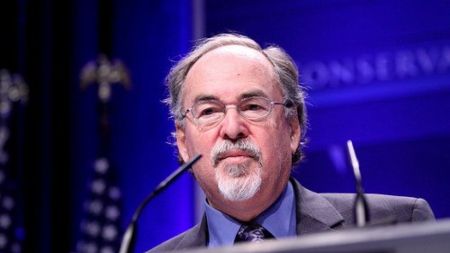
David Horowiz

One thing we do know, however, because Republican primary voters have already spoken: The political landscape is changing before our eyes, and the Republican Party will never be the same. This is true whether the GOP falls apart at the convention in August and cedes the election to Hillary Clinton, or whether its standard-bearer is an anti-establishment Republican like Trump or Cruz.

******************************

We hear a lot of talk about the November election especially from John Kasich who has lost 45 of 46 primary contests but stays in the race because he’s the only Republican who beats Hillary head on in the polls. “Remember this,” Kasich told Fox, “I’m beating Hillary Clinton in every single poll… I’m the only one with the positive ratings so we ought to be focusing on what happens in the fall not just who wins the nomination.”

But as Kasich knows – and everyone else should – polls are merely snapshots of the way people think when they are taken. Polls taken before the actual campaigns, whose purpose is to influence people’s opinions, are meaningless. They are also meaningless because events like the Iranian hostage crisis in the Reagan-Carter election of 1980 can change everything.

There have already been campaigns in the primaries. On the Republican side this is a good part of the reason why the negatives for Trump and Cruz are so high. Republicans have spent more than 100 million dollars to convince voters to never vote for Trump, and Trump has fought back by flooding the TV airwaves with character attacks on “Lyin’ Ted” that have driven his negatives almost as high. Perhaps in the next election cycle Republicans will have learned to design their primary advertising and debates so that they don’t destroy their potential candidates before the Democrats even get a crack at them. But don’t bet on it.

Fortunately for Republicans, Hillary has raised her own negatives high enough by her own efforts that the two may cancel each other out. No one knows what the effects of such negatives on both sides will be, because no one knows what the electorate’s opinion in November will be.

In any case a simple glance at the facts is enough to show why all polls about the November elections taken in April are virtually meaningless, especially when the spread is 10 or 11 points as most of those polls are now.

In April 1980 Carter led Reagan 40% to 34%. In November, Reagan beat Carter by 50.7% to 41%

In May 1988 Dukakis led Bush 54% to 38%. In November Bush beat Dukakis by 53.4% to 45.6%

In April 1992, Bush led Clinton 44% to 25%. Clinton won in November 43% to 37.4%.

That’s three important elections. But one need look no further than this year’s Republican primaries to see how campaigns can change the numbers. At first it was said that Trump would be toast in September, then that he couldn’t break a 20% ceiling in winning Republican support. Then the ceiling became 30%, then 40%, then 50%. In the latest primaries, Trump won 60% of the Republican vote. Obviously he has overcome a lot of negatives and a lot of hostile political ads to reach those figures. Could he do the same in a general campaign? At this point nobody knows.

One thing we do know, however, because Republican primary voters have already spoken: The political landscape is changing before our eyes, and the Republican Party will never be the same. This is true whether the GOP falls apart at the convention in August and cedes the election to Hillary Clinton, or whether its standard-bearer is an anti-establishment Republican like Trump or Cruz.

Rick Perry: There are no Muslim Neighborhoods in America

April 23, 2016

Rick Perry: There are no Muslim Neighborhoods in America, Front Page Magazine, Daniel Greenfield, April 23, 2016

Baghdad Barry

After Ted Cruz’s call to patrol Muslim neighborhoods, the media began circulating this bizarre and unreal claim. Now in an interview about how much he loves Muslims, ex-Texas governor Rick Perry echoes it.

In the interview, Perry sought to draw a distinction between how Muslims are welcomed in America as opposed to Europe, where many Muslims are not as integrated.

Smart policy dictates engaging Muslims in the fight against Islamist terrorism, he said, not surveilling them:

“The idea that there are definable Muslim communities in this country is false. We don’t have Muslim neighborhoods. They don’t exist—because they are our neighbors.”

Whatever anyone’s feelings are on Islam, there clearly are definable Muslim neighborhoods in the United States. I’ve only been to Texas once so I won’t speak of it with any confidence, but these places certainly exist in New York and New Jersey. Not to mention Chicago and plenty of other cities. They exist beyond that as well. The name Little Mogadishu is in circulation for a reason.

“I think we have to be careful of falling into a trap,” Perry told The Daily Signal, explaining:

“There have always been people that used differences—in skin color, religion, and culture—to divide us. America has always been able to overcome that. So it’s up to people like me to share the reality that I have had with the Muslim community.”

I can remember a time when Robert Spencer, Pamela Geller and myself were attacked by Rick Perry supporters for discussing his views on Islam. But that’s the danger of cults of personality. They tend to overwhelm issues and facts.

Trump After New York: the Presumptive Nominee

April 21, 2016

Trump After New York: the Presumptive Nominee, Gingrich Productions, Newt Gingrich, April 20, 2016

It is time for the GOP establishment to work with this new reality rather than wage war against it.

***********************

The scale of Donald Trump’s victory in New York turned him from frontrunner into presumptive Republican nominee.

The vehemently anti-Trump faction of the party will reject this conclusion.

The news media will dither and analysts will knit pick.

The pseudo-sophisticated will point to the cleverness of stealing delegates legally pledged to Trump.

It is all baloney.

Trump’s emphasis on the will of the voters will “trump” these arguments and analyses. When one candidate has won the lion’s share of the popular vote–and almost certainly Trump will have won more than his two rivals combined–the Republican base is not going to support overturning that outcome with insider cleverness at local, state or national conventions.

And even those efforts are likely to be moot since Trump seems poised to win the nomination outright.

Let’s start with New York.

As I write, the latest numbers are 89 delegates for Trump, 3 for John Kasich, and zero for Ted Cruz.

Let me repeat: the champion of the stop Trump movement just won ZERO delegates.

Ahh, the sophisticates say, but this is Trump’s home state. Of course he won all the delegates. If that is the standard, let’s look at the results in Cruz’s home state.

In the Texas primary on March 1, Cruz got 104 delegates, Trump got 48, Rubio got 3 and Kasich got none. In Cruz’s home state, Trump got nearly one third of the delegates in a four-person race.

One other really big state, Florida, has also had the chance to vote. And what happened there? On March 15, Trump won 99 delegates. Cruz, Rubio and Kasich combined won zero.

So in the three biggest states to have voted so far, the delegate count is Trump 236, Cruz 104, and Kasich 3. (California will vote on June 7 and the latest CBS poll shows Trump at 49 percent, Cruz 31 percent, Kasich 16 percent.)

Trump is far ahead in delegates in the three biggest states to have voted.

Of course, Trump’s core argument is not about delegates. It’s about the popular vote.

In Florida, New York, and Texas, Republicans have voted. Roughly 2.4 million voted for Trump, compared to 1.8 million for Cruz and 500,000 for Kasich. In these three biggest states, Trump has attracted more votes than Cruz and Kasich combined.

All evidence is that California will further widen that margin based on recent polling.

Trump is probably going to win all of New Jersey’s delegates (which is winner-take-all, with poll numbers resembling the results in New York). He’s probably going to win Pennsylvania, Connecticut, and Maryland as well (though by a narrower margin) and possibly Rhode Island.

It is likely that Kasich will come in second and Cruz will come in third in all of those states. That could strengthen Kasich enough for him to rival Cruz in California (further widening the “Never Trump” candidate’s gap behind Trump).

Cruz’s best shot to turn the race around may be Indiana. That state could be a legitimate battleground for all three candidates. (Kasich is the governor of Ohio right next door, so he also has a shot at Indiana.)

Cruz may win a few small western states. He may also cleverly keep poaching Trump’s delegates at state conventions in an effort to overturn the popular vote with insider maneuvering.

There are two problems with those strategies.

First, Trump is correct in asserting that a manipulated nomination defying the popular vote would be anathema to the Republican base. It would make Cleveland and the fall campaign chaotic and unmanageable.

Second, Trump is probably going to win the nomination on the first ballot.

Take a clear-eyed look at the numbers. After New York, Trump has 845 delegates. Cruz has 559, and Kasich has 147.

So Trump is 139 delegates ahead of the other two combined.

He is almost 300 delegates ahead of Cruz, his closest rival.

Every analysis of the next few weeks indicates Trump’s margin will widen and he will move steadily closer to 1237. Already, he is only 392 short before any undecided delegates, Rubio delegates, and the like are counted.

These are the numbers of a presumptive nominee, not a front runner. If this were any candidate but Donald Trump, the media would be saying his rivals’ efforts were hopeless and the establishment would be pressuring them to exit the race.

It is time for the GOP establishment to work with this new reality rather than wage war against it.

Corey Lewandowski on The Laura Ingraham Show (4/15/2016)

April 16, 2016

Corey Lewandowski on The Laura Ingraham Show (4/15/2016) via You Tube

Let Me Ask America a Question

April 15, 2016

Let Me Ask America a Question, Wall Street Journal, Donald Trump, April 14, 2016

Let me ask a question

On Saturday, April 9, Colorado had an “election” without voters. Delegates were chosen on behalf of a presidential nominee, yet the people of Colorado were not able to cast their ballots to say which nominee they preferred.

A planned vote had been canceled. And one million Republicans in Colorado were sidelined.

In recent days, something all too predictable has happened: Politicians furiously defended the system. “These are the rules,” we were told over and over again. If the “rules” can be used to block Coloradans from voting on whether they want better trade deals, or stronger borders, or an end to special-interest vote-buying in Congress—well, that’s just the system and we should embrace it.

Let me ask America a question: How has the “system” been working out for you and your family?

I, for one, am not interested in defending a system that for decades has served the interest of political parties at the expense of the people. Members of the club—the consultants, the pollsters, the politicians, the pundits and the special interests—grow rich and powerful while the American people grow poorer and more isolated.

No one forced anyone to cancel the vote in Colorado. Political insiders made a choice to cancel it. And it was the wrong choice.

Responsible leaders should be shocked by the idea that party officials can simply cancel elections in America if they don’t like what the voters may decide.

The only antidote to decades of ruinous rule by a small handful of elites is a bold infusion of popular will. On every major issue affecting this country, the people are right and the governing elite are wrong. The elites are wrong on taxes, on the size of government, on trade, on immigration, on foreign policy.

Why should we trust the people who have made every wrong decision to substitute their will for America’s will in this presidential election?

Here, I part ways with Sen. Ted Cruz.

Mr. Cruz has toured the country bragging about his voterless victory in Colorado. For a man who styles himself as a warrior against the establishment (you wouldn’t know it from his list of donors and endorsers), you’d think he would be demanding a vote for Coloradans. Instead, Mr. Cruz is celebrating their disenfranchisement.

Likewise, Mr. Cruz loudly boasts every time party insiders disenfranchise voters in a congressional district by appointing delegates who will vote the opposite of the expressed will of the people who live in that district.

That’s because Mr. Cruz has no democratic path to the nomination. He has been mathematically eliminated by the voters.

While I am self-funding, Mr. Cruz rakes in millions from special interests. Yet despite his financial advantage, Mr. Cruz has won only three primaries outside his home state and trails me by two million votes—a gap that will soon explode even wider. Mr. Cruz loses when people actually get to cast ballots. Voter disenfranchisement is not merely part of the Cruz strategy—it is the Cruz strategy.

The great irony of this campaign is that the “Washington cartel” that Mr. Cruz rails against is the very group he is relying upon in his voter-nullification scheme.

My campaign strategy is to win with the voters. Ted Cruz’s campaign strategy is to win despite them.

What we are seeing now is not a proper use of the rules, but a flagrant abuse of the rules. Delegates are supposed to reflect the decisions of voters, but the system is being rigged by party operatives with “double-agent” delegates who reject the decision of voters.

The American people can have no faith in such a system. It must be reformed.

Just as I have said that I will reform our unfair trade, immigration and economic policies that have also been rigged against Americans, so too will I work closely with the chairman of the Republican National Committee and top GOP officials to reform our election policies. Together, we will restore the faith—and the franchise—of the American people.

We must leave no doubt that voters, not donors, choose the nominee.

How have we gotten to the point where politicians defend a rigged delegate-selection process with more passion than they have ever defended America’s borders?

Perhaps it is because politicians care more about securing their private club than about securing their country.

My campaign will, of course, battle for every last delegate. We will work within the system that exists now, while fighting to have it reformed in the future. But we will do it the right way. My campaign will seek maximum transparency, maximum representation and maximum voter participation.

We will run a campaign based on empowering voters, not sidelining them.

Let us take inspiration from patriotic Colorado citizens who have banded together in protest. Let us make Colorado a rallying cry on behalf of all the forgotten people whose desperate pleas have for decades fallen on the deaf ears and closed eyes of our rulers in Washington, D.C.

The political insiders have had their way for a long time. Let 2016 be remembered as the year the American people finally got theirs.

Ann Coulter on The Seth Leibsohn Show (4/11/2016)

April 13, 2016

Ann Coulter on The Seth Leibsohn Show (4/11/2016) via You Tube, April 12, 2016

Who Is the Real Ted Cruz?

April 11, 2016

Who Is the Real Ted Cruz? Commentary Magazine, April 11, 2016

(Commentary Magazine has with substantial consistently opposed Trump and favored Cruz. This article, which deals with Cruz’s positions on immigration, does neither. — DM)

Ted CruzImage by © Porter Gifford/Corbis

The New York Times noted the indisputable similarities between this statement and that made by Jeb Bush, who said that families coming to the United States illegally are performing “an act of love.”

Ted Cruz is whoever he needs to be whenever he needs to be it. In a fashion, that’s no liability when it comes to running campaigns and winning elections. It does, however, give pause to voters concerned with authenticity and judgment. Who is the real Ted Cruz? That’s a subject of debate.

**************************

From the moment he embarked on a political career, Ted Cruz had his finger on the pulse of the core Republican electorate. For this key voting bloc, he calibrated his appeal to satisfy the largest number of conservatives without sacrificing his brand as a principled truth-teller. It is a clever strategy, but one that only works when executed skillfully. For years, Cruz was that skillful operator. He probably never anticipated that he would be outmaneuvered at his own game.

Cruz’s approach to navigating the bramble thicket of center-right sentiment by presenting himself as the most conservative candidate that can still appeal to a majority of the GOP primary electorate has not been without cost. To preserve his image as the most conservative figure in the room, Cruz sacrificed authenticity. For Republicans who concern themselves little with such qualities as predictability in their standard-bearers, this was no sacrifice at all. Cruz did not foresee that an even more skilled executor of the populist bombast tone that the Texan had spent years cultivating would outflank him. Donald Trump keenly demonstrated that conservative purism was never the quality for which the “angry” electorate was pining. A deft negotiator of the political game, Cruz is again changing tactics. In adopting yet another persona to overcome the adversity of the moment, though, Cruz is once again giving up on genuineness.

There is perhaps no better barometer to gauge the sentiment of the activist right than the issue of immigration. Ramesh Ponnuru presciently forecast a political storm on the horizon when, in February of 2015, he observed that the Republican Party’s class of political professionals had reached a consensus on the matter of immigration. That consensus diverged sharply from that of a small but committed faction within the Republican coalition. For many months,public opinion surveys and state-level exit polls have demonstrated that only a small minority of GOP voters believe immigration is the most important issue facing the nation. Occasionally, Republican majorities even tell pollsters they favor a pathway to legalization or even citizenship for the nation’s illegal immigrant population. There is, however, an intensity gap on the issue that favors the anti-immigration reform GOP voter – their passion is a marked contrast from the lukewarm pro-reform voter – and Cruz picked up on this sentiment early.

There may be no better example of the pose Cruz struck for the benefit of his admirers on the right than a November 2014 speech on the Senate floor in which the Texas senator postured as the successor to Marcus Tullius Cicero himself. In adapting a passage from Cicero’s famed orations against the Catilinarian Conspirators, Cruz indicted the president’s anti-republicanism on matters ranging from border security to the IRS. The Texas senator’s dramatics sent eyes rolling right out of their sockets among his myriad critics, but they were not the intended audience. Similarly, Cruz cemented animosity among his Senate colleagues when he helped organize opposition to a House measure intended to address the crisis of unaccompanied minors surging across the border in the summer of 2014. His stated concerns were that the emergency measure would not include pre-2012 election language designed to stop the implementation of that year’s executive orders on immigration (which would have failed in the Democrat-led Senate).

From the perspective of establishmentarian Republicans, the conservative wing had imposed paralysis on the GOP. Ted Cruz fatally undermined the Republican position — that what was occurring on the border was a crisis precipitated by the president’s leadership – by robbing the GOP of agency and leaving it to the president to resolve what the GOP had for weeks been calling a national emergency. For anti-immigration reform activists on the right, however, this was a noble display of opposition to any border measure that was judged insufficiently compromising. Indeed, Cruz made his opposition to immigration reform along the lines of the 2013’s “Gang of Eight” reform bill central to his campaign. So, this must be the real Ted Cruz: an immigration maximalist and the tribune of the conservative wing of the GOP.

Not so fast. The anti-immigration reform absolutist is no Ted Cruz that any of the senator’s colleagues on George W. Bush’s 2000 presidential campaign would recognize. In a five-page 1999 memo for Bush on the issue of immigration, Cruz said he opposed “amnesty” but noted that the Republican nominee should strike a calibrated tone on the matter. He advised Bush to advocate for higher caps on the number of skilled workers coming to the country. As for illegal immigration, Cruz advised Bush to state his opposition to the phenomenon and to advocate stricter border security measures. “At the same time,” Cruz wrote, “we need to remember that many of those coming here are coming to feed their families, to have a chance at a better life.” The New York Times noted the indisputable similarities between this statement and that made by Jeb Bush, who said that families coming to the United States illegally are performing “an act of love.” Even amid deliberations and maneuvering in the Senate over the reviled “Gang of Eight” bill, Cruz supported an amendment that would, in his own words, get illegal immigrants “out of the shadows” and allow them to apply for legal status.

That is not the real Ted Cruz, says Ted Cruz. No, this Ted Cruz was merely playing a republican game designed to scuttle the reform bill. Don’t believe him, Cruz’s colleagues who worked with him on immigration matters during the 2000 campaign insist. “I’m disappointed in Ted because he’s a very bright, articulate lawyer with a substantial base of knowledge about immigration,” said Houston attorney Charles Foster, who worked with Cruz on Bush’s immigration team. “But instead of using that knowledge, he’s acting like a typical politician and just talking about the border being out of control.” Indeed, Ted Cruz has begun to adopt the language of the “typical politician.”

To continue to compete with Donald Trump for the mantle of most uncompromising figure in the race is a losing prospect. Cruz will always be outbid in that contest. Instead, the Texas senator is talking like something he and his supporters dismissed as a contrivance: an electable, bridge-building centrist.

In an April 9 speech to the Republican Jewish Coalition (according to the invaluable dispatches ofAtlantic editor David Frum and CNN reporter Teddy Schleifer), Cruz softened his approach in an effort to expand his appeal to the GOP’s “electability” voter. Cruz hyped his appeal to Hispanic voters, noting his own ability to win 40 percent of this demographic in the recent Texas primary. He touted the necessity of expanding the Republican map into purple states like Pennsylvania, where the party has not on the presidential level since 1988. He repeatedly touched on the issue of tone, and noted to this socially liberal group of voters that campaigns based on divisive cultural issues are rarely produce general election winners. “Nobody wants to elect a hectoring scold,” he said.

Cruz noted that he is better positioned today than any of his competitors to unite the GOP behind him and that unity will maintain critical party cohesion in November. Frum observed that Cruz touted the United States and Israel as the only two nations on earth founded to serve as “havens for the oppressed.” “Immigration must serve the needs of the American people,” Cruz added. “Business wants wages low. I want to see wages rise because businesses are competing for labor.” This is a tough-on-immigration tone that nonetheless appeals to pro-reform voters – voters the party’s maximalists probably convinced themselves they had defeated.

Is this the real Ted Cruz? Who knows? Ted Cruz is whoever he needs to be whenever he needs to be it. In a fashion, that’s no liability when it comes to running campaigns and winning elections. It does, however, give pause to voters concerned with authenticity and judgment. Who is the real Ted Cruz? That’s a subject of debate.