Archive for the ‘Taliban’ category

Obama backtracks on Afghanistan withdrawal, cites ‘precarious’ security situation

July 8, 2016

Obama backtracks on Afghanistan withdrawal, cites ‘precarious’ security situation, Long War Journal, , July 7, 2016

President Barack Obama called the security environment in Afghanistan “precarious” and said today he will keep more troops on the ground in Afghanistan than previously planned. Obama repeatedly promised to end the US mission in Afghanistan before the end of his administration in 2017, but a worsening security situation stemming from previous ill-timed reductions in force and a resilient Taliban proved that to be impossible.

“Instead of going down to 5,500 troops by the end of this year, the United States will maintain approximately 8,400 troops in Afghanistan into next year, through the end of my administration,” Obama said in a briefing at the White House.

Despite admitting the deteriorating conditions, Obama announced he will reduce the number of troops in the country by 1,400 by the end of 2016. Obama did not explain how withdrawing an additional 1,400 US forces this year will aid in the fight against the Taliban and its allies. The Taliban has regained ground in the strategic province of Helmand and other areas in spite of direct US military support to Afghan forces.

Obama admitted that the Taliban has continued to wage an effective insurgency and has taken control of territory.

“The Taliban remains a threat,” Obama said. “They’ve gained ground in some places.”

There are currently 9,800 troops in country conducting an “advise and assist” mission to Afghan forces as well as counterterrorism operations. Those two missions will not change, he stated.

The admission that security in Afghanistan is worsening is a dramatic shift by the Obama administration. Previously the administration maintained that Afghan forces were capable of sustaining combat operations with minimal or no US assistance.

However, this view flew in the face of the realities on the ground. The Taliban waited out the US “surge” that targeted their bastions in the south, and began attacking vulnerable Afghan forces when US troops began their withdrawal. By 2014, the Taliban gained control of a handful of far-flung districts while maintaining a guerrilla campaign throughout the country.

By the summer of 2015, the Afghan government admitted that four districts were under Taliban control. A study by The Long War Journal indicated that by the beginning of October 2015, the Taliban controlled 29 districts and contested another 36.

The Afghan government, which has notoriously underestimated the threat posed by the Taliban and areas under the jihadist group’s control, admitted in late June 2015 that nine district were now controlled by the Taliban and another 40 are heavily contested.The Long War Journal estimated that the Taliban controls 39 districts and contest another 43.

Perhaps the most worrisome indicator of deteriorating security in Afghanistan is the discovery of al Qaeda training camps in the country. Al Qaeda operated two large scale training camps, including a large facility, in the Shorabak district in Kandahar for more than a year before they were discovered by US forces. One of the camps occupied an area of 30 square miles and was well provisioned with weapons, ammunition, communications gear, and other equipment. In October 2015, a large US military strike force took four days to clear the two al Qaeda camps in Shorabak. More than 150 al Qaeda fighters are thought to have been killed during the operation.

The US military only discovered the location of the two camps in Shorabak after raiding another in Paktika province in July 2015. Abu Khalil al Sudani, one of al Qaeda’s most senior figures, is thought to have been killed during that raid. Al Qaeda obviously assessed the situation in Paktika as being safe enough to place one of their top leaders there.

The Shorabak raids shocked the US military and intelligence and forced them to revised its long-held estimate of 50 to 100 al Qaeda operatives in Afghanistan upwards to 300 in country. For more than six years, The Long War Journal has warned that official estimate of al Qaeda’s presence in Afghanistan is erroneous, and the jihadist group remains a significant threat to this day. [See LWJ report, US military admits al Qaeda is stronger in Afghanistan than previously estimated.]

Taliban Surpasses Islamic State as World’s Most Prolific Terrorist Group

June 7, 2016

Taliban Surpasses Islamic State as World’s Most Prolific Terrorist Group, BreitbartEdwin Mora, June 6, 2016

taliban-fighters-afghanistan-associated-press-640x480AP Photos/Allauddin Khan

Taliban jihadists replaced their Islamic State (ISIS/ISIL) counterparts as the world’s chief perpetrators of terrorist attacks last year, with 1,093 individual attacks, according to the U.S. Department of State’s Country Reports on Terrorism 2015.

However, ISIS’s 931 terrorist attacks in 2015 wTaliban jihadists replaced their Islamic State (ISIS/ISIL) counterparts as the world’s chief perpetrators of terrorist attacks last year, with 1,093 individual attacks, according to the U.S. Department of State’s Country Reports on Terrorism 2015.ere reportedly much deadlier than those carried out by the Taliban, resulting in 6,050 deaths compared to the 4,512 fatalities linked to the Taliban, notes the State Department’s annual reports, a congressionally mandated analytical and statistical review of global terrorism.

ISIS replaced the Nigeria-based Boko Haram as the terrorist group responsible for the most fatalities in 2015. Boko Haram was responsible for 491 terrorist attacks last year resulting in 5,450 deaths. Boko Haram is treated as a separate terrorist group as its logistics are independent of ISIS, despite the group pledging allegiance to Islamic State caliph Abu Bakr al-Baghdadi last year.

In 2015, ISIS was also responsible for causing more injuries (6,010) and taking more hostages (4,759) than any other terrorist group.

On Sunday, three Taliban jihadists attacked an Afghan court, killing seven people including “a number of prosecutors and judges,” the terrorist group announced, according to CNN.

“The attack triggered a shootout with Afghan security forces that lasted 1 1/2 hours,” adds the news network. “At least 23 people were wounded.”

The Taliban has stepped up an increasingly violent insurgency since President Obama and NATO ended their combat mission in Afghanistan in December 2014. Afghan civilians and security forces have since suffered a record number of casualties at the hands of the terrorist group.

Five terrorist groups were identified by the State Department as being responsible for the most terrorist attacks in 2015: the Taliban (1,093); ISIS (931); Boko Haram (491); the Communist Party of India-Maoist (343); and the Kurdistan Workers’ Party, PKK, (238).

“A total of 270 groups and organizations were identified as perpetrators of terrorist attacks, including 78 organizations that had not previously been identified as perpetrators in the Global Terrorism Database,” reports the State Department. “The number of newly identified perpetrator organizations declined in 2015 from more than 100 in 2014.”

“The biggest surprise was the removal of the Somali group al-Shabaab from the top-five list of perpetrators, that outfit having been responsible for the third-most attacks in 2014,” notes The Atlantic magazine. “The new addition to the 2015 list was the Kurdistan Workers’ Party (PKK), which has re-committed to the use of political violence in a significant way, increasing the number of attacks from 47 to 38 and noncombatants killed from 12 to 287.”

Iraq was the location of the highest numbers of total attacks, deaths, and people injured and kidnapped.

Overall, “the number of attacks in which victims were kidnapped or taken hostage declined in 2015; however, the number of kidnapping victims and hostages increased,” notes the Department of State (DOS) assessment. “This was primarily due to an increase in the number of attacks involving exceptionally large numbers of victims.”

The total number of terrorist attacks across the globe last year dropped by 13 percent, from 13,482 in 2014 to 11,774, and total fatalities by 14 percent, from 32,763 to 28,328.

“This was largely due to fewer attacks and deaths in Iraq, Pakistan, and Nigeria. This represents the first decline in total terrorist attacks and deaths worldwide since 2012,” notes DOS evaluation, adding, “In several countries, including Afghanistan, Bangladesh, Egypt, the Philippines, Syria, and Turkey, terrorist attacks and total deaths increased in 2015.”

There was also a slight decrease in the number of countries where terrorist attacks took place, from 95 in 2014 to 92 last year.

“Although terrorist attacks took place in 92 countries in 2015, they were heavily concentrated geographically,” declares DOS. “More than 55% of all attacks took place in five countries (Iraq, Afghanistan, Pakistan, India, and Nigeria), and 74% of all deaths due to terrorist attacks took place in five countries (Iraq, Afghanistan, Nigeria, Syria, and Pakistan).”

“Of the 28,328 people killed in terrorist attacks in 2015, 6,924 (24%) were perpetrators of terrorist attacks,” it adds. “Perpetrators were killed intentionally in suicide attacks, accidentally while attempting to carry out attacks, or by security forces or victims responding to attacks. This is an 11% increase in the number of perpetrator deaths, compared to 2014.”

Analysis: Iran has supported the Taliban’s insurgency since late 2001

May 29, 2016

Analysis: Iran has supported the Taliban’s insurgency since late 2001, Long War Journal, , May 29, 2016

Joint Task Force – Guantanamo (JTF-GTMO), which oversees the detention facility, deemed Khairkhwa a “high” risk to the U.S. and its allies, in part, because of his dealings with the Iranians. Despite JTF-GTMO’s assessment, and the DC court’s rejection of his habeas petition, Khairkhwa was transferred to Qatar in 2014. He was one of the five Taliban commanders exchanged for Sgt. Bowe Bergdahl.

**********************

On May 21, an American drone strike ended Mullah Akhtar Mohammad Mansour’s reign as the Taliban’s leader. As The Wall Street Journal first reported, US intelligence officials tracked Mansour to Iran, where he was visiting his family, and then targeted his car as he crossed back over the border into Pakistan. Iran’s foreign ministry spokesman, Hossein Jaber Ansari, quickly denied this version of events, claiming that his country “welcomes any measure in line with bringing peace and stability to Afghanistan.”

However, Zabihullah Mujahid (the Taliban’s chief spokesman) has conceded that Mansour was indeed inside Iran. Dawn quotes Mujahid as saying the Taliban chief crossed the border because of “ongoing battle obligations,” adding that Mansour made multiple “unofficial trips” to Iran.

While many of the details concerning Mansour’s travels remain murky, his presence inside Iranian territory shortly before his death isn’t surprising. Iran has a long history of backing the Taliban’s insurgency against US and allied forces in Afghanistan. Indeed, the relationship between the two former foes is one of the most misunderstood and oft-overlooked aspects of the 9/11 wars.

Iran and the Taliban nearly went to war in 1998 after senior Taliban commanders slaughtered Iranian diplomats and other Shiites in Mazar-i-Sharif. But by late 2001, as the Americans prepared to topple the Taliban’s government, the situation changed dramatically. Outwardly, the Iranians acted as if they just wanted to help rebuild Afghanistan. Western diplomats have praised Iran for its role in the Dec. 2001 meetings in Bonn, Germany, where a post-Taliban government was established. But there is much more to this story. Just before the American-led invasion of Afghanistan two months earlier, the Iranians cut a secret deal with Mullah Omar’s representatives.

One of Omar’s most trusted lieutenants, Khairullah Khairkhwa, helped broker an agreement with the Iranians in Oct. 2001. We know this because Khairkhwa was captured in Pakistan in early 2002, transferred to Guantanamo and then told American officials all about it.

A district court in Washington, DC denied Khairkhwa’s petition for a writ of habeas corpus in 2011. The court found that Khairkhwa “repeatedly admitted” that after the 9/11 attacks “he served as a member of a Taliban envoy that met clandestinely with senior Iranian officials to discuss Iran’s offer to provide the Taliban with weapons and other military support in anticipation of imminent hostilities with U.S. coalition forces.” [SeeLWJ report, DC district court denies former Taliban governor’s habeas petition.]

According to the court, the Iranians told Khairkhwa and his Taliban delegation that they could provide shoulder-fired missiles (SAM-7’s) and “track all movements by the United States.” In addition, the Iranians “offered to open their border to Arabs entering Afghanistan.” Iran did just that, allowing some al Qaeda members and others to escape the American onslaught.

Joint Task Force – Guantanamo (JTF-GTMO), which oversees the detention facility, deemed Khairkhwa a “high” risk to the U.S. and its allies, in part, because of his dealings with the Iranians. Despite JTF-GTMO’s assessment, and the DC court’s rejection of his habeas petition, Khairkhwa was transferred to Qatar in 2014. He was one of the five Taliban commanders exchanged for Sgt. Bowe Bergdahl.

During the twelve years Khairkhwa was detained in Cuba, Iran continued to collude with the Taliban. The Defense, State and Treasury Departments have all documented the relationship.

In its “Annual Report on [the] Military Power of Iran,” which was delivered to Congress in 2012, the Department of Defense explained that Iran’s support for the Taliban was part of its “grand strategy” to challenge “US influence.” Although there was “historic enmity” between the two sides, the Pentagon said, support for the Taliban “complements Iran’s strategy of backing many groups to maximize its influence while also undermining US and North Atlantic Treaty Organization (NATO) objectives by fomenting violence.”

“Since 2006,” the State Department noted in its Country Reports on Terrorism for 2012, “Iran has arranged arms shipments to select Taliban members, including small arms and associated ammunition, rocket propelled grenades, mortar rounds, 107mm rockets, and plastic explosives.” In 2012, the Iranians “shipped a large number of weapons to Kandahar, Afghanistan, aiming to increase its influence in this key province.”

Foggy Bottom added that the Islamic Revolutionary Guard Corps’ Quds Force (IRGC-QF) “trained Taliban elements on small unit tactics, small arms, explosives, and indirect fire weapons, such as mortars, artillery, and rockets.”

A series of Treasury Department terror designations illuminate the relationship between the IRGC-QF and the Taliban.

In August 2010, Treasury designated two IRGC-QF commanders as terrorists for providing “financial and material support to the Taliban.” A special unit in the IRGC-QF known as the Ansar Corps is responsible for orchestrating attacks in Afghanistan. Nearly two years later, in Mar. 2012, Treasury identified IRGC-QF General Gholamreza Baghbani as a narcotics trafficker. At the time, Baghbani was based in Zahedan, Iran, which is near the border with Afghanistan and Pakistan. From this strategically situated crossroads, Baghbani allegedly oversaw an operation that “moved weapons to the Taliban,” while smuggling “heroin precursor chemicals through the Iranian border” and facilitating “shipments of opium into Iran.” This guns-for-drugs scheme directly fueled the Taliban’s insurgency, according to Treasury.

Treasury wasn’t finished. In February 2014, three other IRGC-QF officials and one of their associates were designated for plotting terrorist acts in Afghanistan and also using “intelligence operations as tools of influence against” the Afghan government. Iran’s duplicitous scheme meant that the IRGC-QF was “currying favor” with some Afghan politicians while targeting other officials for assassination.

In the weeks immediately following 9/11, the Iranian regime and the Taliban met in the shadows. In the 14-plus years since, their relationship has become overt. The Wall Street Journal reported in 2012 that the Taliban has set up an office in Zahedan, which is also a well-known al Qaeda hub. Taliban officials have repeatedly and openly attended meetings in Tehran. And other sources confirm that Iran has often provided the Taliban with arms and training.

Contrary to what Ansari claims, the Iranians don’t want “peace and stability” in Afghanistan – at least not at the expense of achieving their other objectives. They want to force the US out and expand their influence. Given Iran’s enduring partnership with the Taliban, forged in the aftermath of the 9/11 attacks, Mansour’s trips to Iran may have been “unofficial,” but they are definitely unsurprising.

Iran supplying weapons, cash and training to Taliban

May 27, 2016

Iran supplying weapons, cash and training to Taliban, Jihad Watch

Sunnis and Shi’ites hate each other, but not as much as they hate the Infidel. Hence Iran’s support for the Taliban, as well as Hamas and Islamic Jihad: Sunnis who are waging jihad against Infidels are allies of Iran, as far as the mullahs are concerned. Such support also strengthens Iran’s ongoing maneuvering to be the leader of the Islamic world.

Taliban89
“Death of Mullah Mansoor highlights Taliban’s links with Iran,” by Jon Boone and Saeed Kamali Dehghan, Guardian, May 23, 2016:The killing of the Taliban chief on the main highway leading from the Iranian border shines new light on the movement’s complicated relationship with Tehran.Although it is Pakistan that has traditionally been condemned for secretly supporting Afghan insurgents, analysts say Iran also provides weapons, cash and sanctuary to the Taliban. Despite the deep ideological antipathy between a hardline Sunni group and cleric-run Shia state the two sides have proved themselves quite willing to cooperate where necessary against mutual enemies and in the pursuit of shared interests.

Mullah Mansoor first entered Iran almost two months ago, according to immigration stamps in a Pakistani passport found in a bag near the wreckage of the taxi he was travelling in when he was killed by a US drone strike.

The passport, in the name of Wali Muhammad, also showed he had only just returned to Pakistan from the border crossing of Taftan, some 280 miles (450km) away from the site where he was killed, an area called Ahmed Wal, where he had stopped for lunch.

On Monday, the Iranian foreign ministry denied that “such a person had entered Pakistan from the Iranian border”.

“Iran welcomes any efforts made in bringing stability and peace to Afghanistan,” said spokesman Hossein Jaberi-Ansari.

It is not known where Mansoor went inside Iran, whether his trip was secretly facilitated by the Iranian Revolutionary Guard or whether he stayed among the large populations of Afghans living in eastern Iran, especially in the cities of Mashhad and Zahedan.

The Taliban also have ties to Sunni extremist groups operating in the Iranian province of Sistan and Balochistan.

A Pakistani official from Dalbandin, a district bordering Iran, said he did not think Iran would back foreign insurgents with links to such groups.

“All Afghan militants hold Pakistani nationality, it is not written on their forehead whether he is a militant or not,” said the official, who did not wish to be identified.

Nonetheless police and intelligence officials in western Afghanistan often complain the local insurgency is being managed and supplied with weapons and training from Iran….

Secret Cables Link Pakistan Intel Org to Deadly Attack on CIA

April 17, 2016

Secret Cables Link Pakistan Intel Org to Deadly Attack on CIA, Clarion Project, April 17, 2016

Jennifer-Ehle-Jennifer-Lynne-Matthew-Zero-Dark-Thirty-HPJennifer Ehle plays Jennifer Lynne Matthew in the film Zero Dark Thirty about the killing of Osama Bin Laden, head of Al Qaeda. Matthews, a mother of three was described as “one of the CIA’s top experts on al-Qaeda.” She was head of Camp Chapman and killed in the attack on the base.

Pakistan’s intelligence agency paid a Taliban-affiliated terror group in Afghanistan to perpetrate one of the deadliest attacks on the CIA in the agency’s history, according to inferences made in recently-declassified U.S. government cables and documents.

On December 30, 2009, a Jordanian suicide bomber blew himself up in Camp Chapman in Khost, Afghanistan, located near the border with Pakistan, killing seven CIA employees. The bomber, a Jordanian doctor and double agent, tricked the Americans, telling them he would lead them to Ayman al-Zawahri, now head of al-Qaeda and, at the time, second in command.

A document dated January 11, 2010 , issued less than two weeks after the bombing, reports how the head of the Haqqani network, a Taliban-allied organization designed as terrorist by the U.S., met twice with senior officials of Pakistan’s intelligence agency (the Inter-Services Intelligence or ISI) the month of the bombing.

During the first meeting, funding for “operations in Khowst [Khost] province” were discussed. “Funds were later provided to tribal elders in Khowst province for their support of the Haqqani network,” according to the cable.

At the second meeting, ISI officials gave “direction to the Haqqanis to expedite attack preparations and lethality in Afghanistan.”

Although heavily redacted, a cable issued the following month specified the head of the Haqqani network as well as another individual were given $200,000 “to enable the attack on Chapman.” The cable specifically mentions a number of individuals involved in the operation, including an Afghan border commander who was given money “to enable a suicide mission by an unnamed Jordanian national.”

The Jordanian mentioned is assumed to be the suicide bomber, Humam al-Balawi, whom the CIA had cultivated as an al-Qaeda informant. Codenamed “Wolf,” al-Balawi turned out to be a double agent, perpetrating the deadliest attack against the CIA in the 15-year history of the war in Afghanistan.

Although each document states, “This is an information report not finally evaluated intelligence,” Admiral  Mike Mullen (former chairman of the Joint Chiefs of Staff) terms the Haqqani network a “veritable arm” of Pakistan’s intelligence agency. The U.S. has long-documented the connection between the ISI and the Haqqani terrorist organization.

The documents were the first public disclosure connecting the attack on Camp Chapman to the Pakistani ISI. They were released in connection with a Freedom of Information Act request. The U.S. had previously blamed al-Qaeda for the attack.

Easter Greetings From the Taliban

March 28, 2016

Easter Greetings From the Taliban, Power LineJohn Hinderaker, March 27, 2016

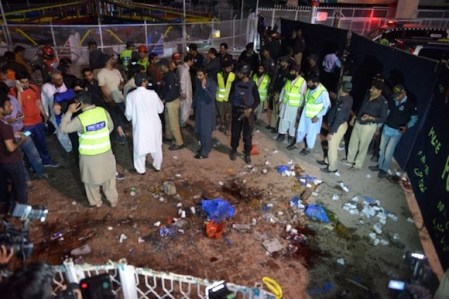
In Lahore, Pakistan, a Muslim associated with the Taliban bombed a park where Christians were celebrating Easter, murdering at least 69, mostly women and children, while injuring more than 300 more. A spokesman for the terrorist group explained, “Members of the Christian community who were celebrating Easter today were our prime target.”

Lahore83

President Obama, meanwhile, warns us against “stigmatizing” Muslims. (To be fair, his precise reference was to Muslim-Americans, although the context was the Brussels bombings.) Actually, you and I have no ability to stigmatize Muslims. The problem is that a great many Muslims are stigmatizing themselves, by committing terrorist acts, by applauding terrorist acts and supporting terrorists, and by failing to take action against terrorists and terrorist groups. President Obama demands that we maintain the absurd fiction that Islamic terrorism has nothing to do with Islam, on the theory that pretending will make it so. Unfortunately, it won’t.

Top U.S. General: ‘I Do Not Have Authority’ to Offensively Attack Taliban

February 2, 2016

Top U.S. General: ‘I Do Not Have Authority’ to Offensively Attack Taliban, BreitbartEdwin Mora, February 2, 2016

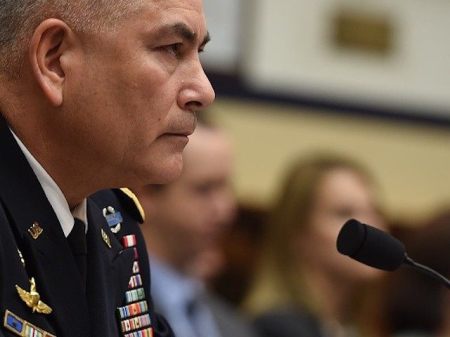
Top Gen in AfghanistanJIM WATSON/AFP/Getty Images

WASHINGTON, D.C. — The U.S. military, since President Obama declared that American troops had ceased their combat mission at the end of 2014, has only been able to attack the Taliban from a defensive position, the top commander of American and NATO forces in Afghanistan told lawmakers.

“I have the authority to protect our coalition members against any insurgency — Haqqani [Network], Taliban, al Qaeda — if they’re posing as a threat to our coalition forces,”testified the commander, Gen. John Campbell, before the House Armed Services Committee.

The general’s comments came in response to Rep. Jim Bridenstine (R-OK)asking if he had the authority to attack the Taliban, which has stepped up attacks since the end of 2014 and has been linked to the deteriorating security conditions in the Afghanistan.

“If the Taliban are attacking coalition forces, then I have everything I need to do that,” responded Gen. Campbell, who is expected to retire soon. “To attack the Taliban just because they’re Taliban, I do not have that authority.”

“It is astonishing that we have an authority to go after the Taliban and the president is preventing us from doing that,” proclaimed Bridenstine.

The Oklahoma Republican argued that the Authorization for Use of Military Force (AUMF) 2001, passed by Congress and signed into law by the U.S. president at the time, grants the top commander the authority to use the necessary force against the Taliban.

Rep. Bridenstine questioned, “Yet, the president, it seems, is saying you can’t attack the Taliban even though they were responsible for September 11?”

“What I think is we adjusted our mission in 2015,” explained Campbell. “We went away from combat operations and we worked with the Afghans to build their capabilities to go after the Taliban.”

President Obama declared an end to the U.S. combat mission in December 2014, marking the beginning of the train, assist, and advise (TAA) role for the American troops on January 1, 2015.

While testifying, Gen. Campbell noted that with only 9,800 U.S. service members in Afghanistan, carrying out the TAA mission is difficult.

“Again if the Taliban are attacking or pose a threat to coalition forces, I have everything I need to provide that force protection,” reiterated Campbell. “To go after the Taliban because they’re Taliban, I don’t do that sir.”

At least 21 American service members have been killed and another 79 wounded since President Obama adjusted the mission so that U.S. troops are unable to attack the Taliban from an offensive position. The majority of the total 2,227 American military deaths and 20,109 injuries since the war began in October 2001 have taken place under President Obama’s watch.

Rep. Bridenstine quoted the Authorization for Use of Military Force (AUMF) 2001.

“That the President is authorized to use all necessary and appropriate force against those nations, organizations, or persons he determines planned, authorized, committed, or aided the terrorist attacks that occurred on September 11, 2001, or harbored such organizations or persons, in order to prevent any future acts of international terrorism against the United States by such nations, organizations or persons,” states the AUMF.

The Taliban has been accused of providing safe haven to al Qaeda members involved in orchestrating the September 11, 2001 attacks on the U.S. homeland, including the late jihadist leader Osama bin Laden.

President Obama is currently expected to reduce the U.S. military presence in Afghanistan to 5,500 troops by the time he left office in 2017.

“We’ll have a very limited ability to do TAA with 5,500,” said Gen. Campbell, who signaled that the U.S. military will stay in Afghanistan for years beyond 2017.

Obama has nominated Army Lt. Gen. John Nicholson, Jr., to replace the outgoing commander.

President Obama has been hesitant to call the Taliban a terrorist group.

A year of Taliban gains shows that ‘we haven’t delivered,’ top Afghan official says

December 28, 2015

A year of Taliban gains shows that ‘we haven’t delivered,’ top Afghan official says, Washington PostSudarsan Raghavan, December 27, 2015

As the fighting intensifies, the stakes are growing higher for the United States in its longest war. “I will not allow Helmand to fall,” Campbell told the Afghan officials in the recent meeting with the Afghan National Security Council. “But I can’t make you fight. You’ve got to want it more than we do.”
******************************

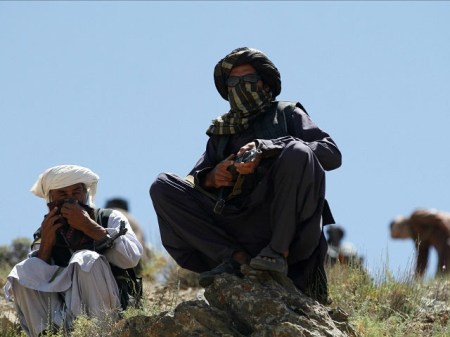
As the Afghan convoy entered the battered village, Taliban fighters opened fire. U.S.-trained Afghan policemen poured out of their Humvees and began wildly shooting their AK-47 rifles in every direction.

“The enemy is firing one bullet, and you are responding with dozens!” their commander, Col. Khalil Jawad, screamed into his radio in frustration. “Aim, then fire!”

A minute later, the militants melted away. On this day in early December in the southern province of Helmand, they had delivered their message: The Taliban is back, its fighters showing a battle discipline and initiative far superior to the Afghan security forces trained and equipped by the United States.

In private, top Afghan and American officials have begun to voice increasingly grim assessments of the resurgent Taliban threat, most notably in a previously undisclosed transcript of a late-October meeting of the Afghan National Security Council.

“We have not met the people’s expectations. We haven’t delivered,” Abdullah Abdullah, the country’s chief executive, told the high-level gathering. “Our forces lack discipline. They lack rotation opportunities. We haven’t taken care of our own policemen and soldiers. They continue to absorb enormous casualties.”

[Please refer to map here.]

With control of — or a significant presence in — roughly 30 percent of districts across the nation, according to Western and Afghan officials, the Taliban now holds more territory than in any year since 2001, when the puritanical Islamists were ousted from power after the 9/11 attacks. For now, the top American and Afghan priority is preventing Helmand, largely secured by U.S. Marines and British forces in 2012, from again falling to the insurgency.

As of last month, about 7,000 members of the Afghan security forces had been killed this year, with 12,000 injured, a 26 percent increase over the total number of dead and wounded in all of 2014, said a Western official with access to the most recent NATO statistics. Attrition rates are soaring. Deserters and injured Afghan soldiers say they are fighting a more sophisticated and well-armed insurgency than they have seen in years.

As of last month, about 7,000 members of the Afghan security forces had been killed this year, with 12,000 injured, a 26 percent increase over the total number of dead and wounded in all of 2014, said a Western official with access to the most recent NATO statistics. Attrition rates are soaring. Deserters and injured Afghan soldiers say they are fighting a more sophisticated and well-armed insurgency than they have seen in years.

As Afghan security forces struggle, U.S. Special Operations troops are increasingly being deployed into harm’s way to assist their Afghan counterparts. Since Nov. 4, four members of the U.S.-led coalition have been wounded in Helmand, said U.S. Army Col. Michael Lawhorn, a military spokesman. Officially, U.S. military personnel have a mandate only “to train, advise and assist” Afghan forces.

In the confidential October meeting, Gen. John F. Campbell, the commander of U.S. and allied forces in Afghanistan, told his Afghan counterparts that he was as guilty as they were of “just putting our finger in the dike in Helmand.”

But he was highly critical of Afghan security officials for “not managing” their forces in a way that ensured they got enough training, and for allowing “breakdowns in discipline” in the ranks. “The Taliban are not 10 feet tall,” he said. “You have much more equipment than they do. You’re better trained. It’s all about leadership and accountability.”

Campbell vowed “to fix Helmand.”

“I will use more of my SOF and enablers to buy you more space and time,” he said, referring to Special Operations forces. A senior U.S. defense official, speaking on the condition of anonymity because of military rules, said Campbell’s comments represented “an attempt to encourage the Afghans to take action in Helmand province.”

Progress unraveling

Helmand was a key focus in a major American offensive launched in 2010, after President Obama dispatched a “surge” of 30,000 troops to Afghanistan. Marja was the first place Marines launched operations, and by the end of the surge, in late 2012, the Taliban had been subdued in much of its southern heartland.

Now, the fresh concerns over Helmand arrive at the end of a year in which the Taliban and other insurgent groups, including the Islamic State, have steadily advanced, particularly in the north. They have taken advantage of the end of the U.S. and NATO combat mission, which has left a military and political vacuum, forcing Obama to extend the U.S. role by keeping at least 5,500 U.S. troops here after he leaves office.

A Pakistani military operation has also flushed hundreds of well-trained foreign fighters into Afghanistan, bolstering the Taliban and the Islamic State.

Meanwhile, the government is grappling with its own problems. The economy is crippled; high unemployment and corruption remain entrenched, breeding public resentment. Political infighting, policy disputes and leadership woes have deepened inside the administration of President Ashraf Ghani, who shares power with Abdullah, the chief executive. The cabinet remains incomplete, with no defense minister as the security issues become more serious.

The gains by the Taliban have come amid internal divisions and a leadership crisis triggered by the surprise announcement in the summer that its leader, Mohammad Omar, had been dead for more than two years. The contest for power and territory among Taliban factions, rather than weakening the movement, has spawned more uncertainty and violence.

The group’s infighting has blocked efforts by Ghani to bring the Taliban to peace talks. The insurgents’ new leader, Akhtar Mohammad Mansour, appears determined to prove his mettle and strengthen the Taliban’s bargaining position by escalating attacks, Western diplomats and analysts said. In September, the Taliban briefly seized Kunduz, the first city to fall since the demise of its regime, prompting the U.S. military to dispatch Special Operations troops and stage airstrikes to help the Afghan security forces retake control.

Now, the insurgents are on the doorsteps of several provincial capitals, applying more pressure on urban areas than in any year of the conflict. The clashes in Helmand have reflected the Taliban strategy that led to the takeover of Kunduz — seizing surrounding districts before moving in on the provincial capital. Already, the Taliban are in the enclave of Ba­baji, within the borders of Helmand’s capital, Lashkar Gah.

Helmand, which lies along the Pakistani border, is the source of much of the country’s opium, providing lucrative funding for the insurgents, who also collect “taxes” from the marble mining business. The province is home to the Kajaki Dam, which provides electricity to Helmand and to neighboring Kandahar, the cradle of the Taliban. In some districts, electricity bills are paid to the Taliban.

In the Afghan National Security Council meeting, Rahmatullah Nabil, the nation’s intelligence chief, described the province as “the biggest recruiting tool for the Taliban” and its “primary source of revenue.” Nabil resigned Dec. 10 to protest Ghani’s peace overtures to Pakistan, which is viewed with suspicion by most Afghans for its backing of the Taliban.

Losing control of Helmand

The 21-mile-long road from Lashkar Gah to Marja is peppered with craters from bombs planted by the Taliban. Stores are shuttered; villages are silent. The residents have fled.

A mile from a civil-order police base, built by U.S. Marines for $17 million, a charred, mangled Humvee lies in the middle of the highway. A rocket-propelled grenade tore into it, and the Taliban later set it afire. On a recent day, the base was as far as anyone could go, at least by road: Less than a mile ahead, the Taliban had buried more mines.

“They have destroyed bridges. They have burned our houses,” Ghul Mawla Malang, a tribal elder who leads Marja’s Afghan Local Police (ALP), a U.S.-funded pro-government militia, told top police commanders in a meeting at the base.

A few minutes later, the Taliban fired a few rounds toward the base. The senior officials cut short their visit and left in their Humvees.

If there was one province in Afghanistan that the Taliban should have found impenetrable, it was Helmand. The Afghan army has its entire215th Corps based here, numbering more than 18,000 soldiers. There are also thousands of Afghan police officers. Yet a few hundred Taliban fighters managed to overrun parts of Marja and other districts. Soldiers and police officers fled with little resistance or surrendered to the insurgents.

In Babaji, nine police officers including Abdul Qadim Hemat were unprepared last month when the Taliban fighters attacked their outpost. They were running out of ammunition. And reinforcements they had requested never turned up. “I watched seven comrades killed in front of me,” recalled Hemat, who soon fled along with the remaining officer. Both then deserted.

“We were surrounded, but we didn’t get any help,” Hemat said. “I will not shoot one bullet for the government again.”

In parts of Marja, villagers pine for U.S. troops — and the British forces who were once based here — to return.

“When they were here, Marja was as peaceful as this city,” said Ahmed Jan, who was bringing his 13-year-old nephew to a hospital in Lashkar Gah. A bullet had struck the boy in their village during fighting. “Now, the Taliban are like the government in my village. They drive police vehicles and Humvees, and they have raised their white flag over houses.”

A well-equipped enemy

In an interview, Gen. Mohammed Moeen Faqir, the commander of the 215th Corps, said that “only half of a percent” of his force may have deserted and that new recruits were filling the void. He noted that the police and ALP forces in Helmand were also under his command and that “whenever they needed reinforcements, I sent them.”

But the confidential transcript of the minutes from the National Security Council meeting presents a grimmer picture.

The Afghan army’s chief of staff, Gen. Qadam Shah Shaheem, said that limited reinforcements and new recruits couldn’t make up for force attrition in Helmand, according to the transcript, which was provided to The Washington Post by an official concerned by the insecurity in Helmand.

Some 40 percent of Afghan army vehicles in Helmand are broken, Shaheem said. He described a leadership crisis within the security forces, where “clashing personalities exist between the security pillars,” according to the transcript.

The morale of the security forces was low, said Nabil, the intelligence chief, and some soldiers had complained that they had not been home in two years. Junior commanders, he added, were “openly defying their superiors.” Gen. Mohammad Salem Ehsas, the top ALP commander, said that troops were tired and that there was poor coordination among the various security organs.

Campbell said that only about half the troop positions in the 215th Corps were manned. Western and Afghan officials said that was largely because of desertions, high casualty rates and a lack of new recruits.

“The blame game must stop now,” Campbell said. “If I hear one more policeman complain about the army or vice versa, I will pull my advisers immediately. It’s over. You’re Afghans first. Work together.”

Soldiers and police officers on the front lines say they face an enemy that is well trained and equipped with heavy artillery and machine guns, rockets and mortars — and a seemingly endless supply of ammunition. Taliban snipers now have night-vision scopes on their rifles. And as they have overrun bases, the militants have seized an arsenal of U.S. weaponry provided to the Afghans.

Nabil said the insurgents have night-vision goggles and have captured more than 45 Humvees in Helmand. They also have Russian-made ZSU antiaircraft guns with night capability, an abundant supply of mortars and a communications network that is difficult to infiltrate.

Stakes grow higher

U.S. Special Operations troops arrived in early November at an empty school in Chanjar, a front line about 15 miles west of the provincial capital. The walls of the compound bore the impact of shells the size of baseballs. A group of soldiers and police officers was stationed there. Taliban militants were in houses less than 20 yards away.

“The Americans told us that they wanted to push the Taliban back,” recalled Sgt. Abdul Mohamad. “They were here to give coordinates for an airstrike.”

But the Taliban fired a mortar, the men said, wounding one of the Americans. The Americans quickly left the area, in Nad Ali district, with their injured comrade.

Lawhorn, the U.S. military spokesman, confirmed that a U.S. coalition member was injured in the district Nov. 4.

Brig. Gen. Wilson Shoffner, the U.S. military’s top spokesman, said in an interview that U.S. troops were adhering to their limited mandate of “train, advise and assist” and that their Afghan counterparts were taking the lead.

But Afghans, including senior military officials, no longer even pretend that they can fight the Taliban effectively on their own.

“When the foreigners were here, we had plenty of facilities and equipment,” said 1st Lt. Naseer Ahmad Sahel, 30, a civil-order police company commander who was wounded last month in a firefight in Marja. “There were 100 cameras overlooking Marja alone.”

Faqir, the commander of the 215th Corps, said, “We don’t have the air support that we should have.”

As the fighting intensifies, the stakes are growing higher for the United States in its longest war. “I will not allow Helmand to fall,” Campbell told the Afghan officials in the recent meeting with the Afghan National Security Council. “But I can’t make you fight. You’ve got to want it more than we do.”

US continues to push for negotiations with Taliban despite direct ties to al Qaeda

December 17, 2015

US continues to push for negotiations with Taliban despite direct ties to al Qaeda, Long War Journal, December 17, 2015

siraj-haqqani-wanted-poster1-e1438370266398-1024x432Images of Siraj Haqqani, one of the Taliban’s two deputy emirs, from a US government wanted poster.

The US government and military continue to seek a negotiated settlement with the Afghan Taliban despite the group’s continuing support for al Qaeda and the increased leadership role the Haqqani Network plays in the Afghan insurgency.

The Department of Defense asserts in its biannual Enhancing Security and Stability in Afghanistan report, released earlier this week, that “reconciliation and a political settlement with the Taliban” is a key part of its strategy to end the conflict in Afghanistan.

“The U.S. and Afghan governments agree that the best way to ensure lasting peace and security in Afghanistan is reconciliation and a political settlement with the Taliban,” the report says in its very first section, titled US Strategy in Afghanistan.

The report then states that to achieve a political settlement, the Taliban must take the very steps the group has refused for 15 years: denounce al Qaeda and submit to Afghanistan’s constitution.

“Success of an Afghan-led peace process will require the Taliban and other armed opposition groups to end violence, break ties with international terrorist groups, and accept Afghanistan’s constitution, including its protections for the rights of women and under-represented groups.”

The Pentagon report continues to advocate for reconciliation with the Taliban despite the fact that al Qaeda’s emir, Ayman al Zawahiri, swore and oath of allegiance to the new leader of the Taliban, Mullah Akhtar Mohammad Mansour, after he was publicly named successor to Mullah Omar over the summer. Mansour accepted Zawahiri’s oath just days after it was given.

Shockingly, the Pentagon report made no mention of Zawahiri’s oath and Mansour’s acceptance in its 90-page report. The report did note that the emir of the Islamic Movement of Uzbekistan swore allegiance to the Islamic State’s leader, Abu Bakr al Baghdadi.

The Pentagon also continues to press for negotiations despite the fact that Sirajuddin Haqqani, the operational commander of the Haqqani Network – a powerful Taliban subgroup that is closely tied to al Qaeda and backed by Pakistan’s military and intelligence establishment – was appointed as one of Mansour’s two deputies. Siraj is effectively the Taliban’s military commander. The US military does recognize that Siraj’s “elevation” in the Taliban leadership is problematic.

“The elevation of Haqqani Network leader Siraj Haqqani as Taliban leader Mullah Mansour’s deputy signals that the Haqqani Network will remain a critical and lethal component of the overall Taliban-led insurgency,” the report states.

“Of the groups involved in the Taliban-led insurgency, the Haqqani Network remains the greatest threat to U.S., coalition, and Afghan forces and continues to be the most critical enabler of al Qaeda,” the report continues. “Haqqani Network leader Siraj Haqqani’s elevation as Taliban leader Mullah Mansour’s deputy has further strengthened the Haqqani Network’s role in the Taliban-led insurgency. The Haqqani Network and affiliated groups share the goals of expelling U.S. and coalition forces, overthrowing the Afghan government, and re-establishing an Islamic Emirate of Afghanistan.”

Siraj’s tight working relationship with al Qaeda has been confirmed by multiple sources. Files recovered in Osama bin Laden’s Abbottabad compound revealed the depth of the collusion. [See LWJ report, The Taliban’s new leadership is allied with al Qaeda.]

Since accepting Zawahiri’s oath of loyalty and appointing Siraj as a top deputy, the Taliban have not backed off from either party. In early September the Taliban released a video that highlighted Siraj’s importance to the group as well as Mansour’s accepting Zawahiri’s pledge. In early September, the Taliban also devoted significant space to al Qaeda leaders and pro-al Qaeda clerics eulogizing its former emir in that month’s edition of Al Sumud, the group’s official magazine.

Satire | US Not Sure Who It’s Fighting In Middle East, Bombs Israel ‘Just To Be Sure’

November 19, 2015

US Not Sure Who It’s Fighting In Middle East, Bombs Israel ‘Just To Be Sure’ Duffel Blog, November 19, 2015

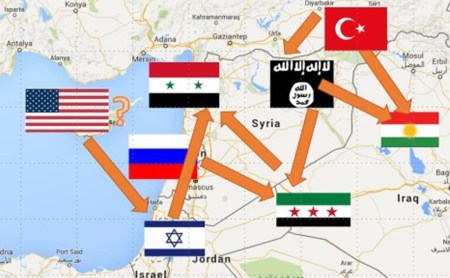
US bombs IsraelUS officials are confident they understand the situation on the ground in Syria. (Duffel Blog photo.)

WASHINGTON, D.C. — Pentagon spokesperson Col. Steve Warren announced US aircraft participating in Operation Inherent Resolve, the code name for the campaign against the Islamic State of Iraq and al-Sham (ISIS), struck targets in Tel Aviv today.

When asked why US warplanes would attack a long-standing ally, Warren explained, “Look, guys, this all makes perfect sense,” pointing to a nebulous PowerPoint slide.

“This was all supposed to be a campaign to topple Bashar al-Asad in Syria, starting with the Arab Spring in 2011. Which, in turn, allowed us to get back at Iran and Russia, both of whom support Syria,” said Warren. “So the CIA considered arming the rebels in Syria, which kind of backfired, and now we have ISIS, a group we thought we had already defeated back when they were al-Qaeda in Iraq.”

Secretary of Defense Ashton Carter further explained, “Sure, we were a little worried when ISIS started running around the Middle East, chopping everyone’s heads off. But fortunately, Iran came to our rescue. Well, in Iraq, that is. We’re still fighting Iran in Yemen.”

Chairman of the Joint Chiefs General Joe Dunford stressed the contributions of America’s coalition partners.

Dunford explained how the US tried to empower allies among the Gulf States to take on ISIS, “which in turn sort of helps us get back at Iran.”

“Unfortunately, most of those states also covertly support ISIS, even though they’re nominally our long-standing allies. Whoops,” said Dunford.

“That’s not to say we don’t have some powerful allies in the region, though,” Dunford explained. “The Kurds have proven to be our greatest allies there, and the Turks are one of our longest-standing NATO allies. Unfortunately, they spend more time fighting each other than ISIS. That old saying, ‘nothing brings people together like a common enemy’ is completely useless here.”

Dunford concluded, “So, you see, ISIS is supported by Arabs, who are opposed by Iranians, who are both opposed and allied with the US, who is sort of allied with Turkey and the Kurds, who are opposed to each other. Since the enemy of my friend is now my enemy, it made sense for the US to bomb Israel, Iran’s bitter adversary.”

Events grew even more complicated in the wake of the deadly terrorist attacks in Paris last Friday. The attacks were reportedly the work of ISIS, who also claimed credit for the bombing of a Russian airliner earlier this month.

“France and Russia have formed an alliance, though in doing so, they automatically caused Germany, Austria-Hungary, and the Ottoman Empire to declare war in return,” said Pentagon Press Secretary Peter Cook. “And, let’s face it, this whole thing really is the fault of the Ottomans when you think about it.”

The briefing then shifted to issues surrounding Afghanistan and Pakistan.

“There, the situation is much more simple,” Cook continued.  “The US is fighting the Taliban by providing billions of dollars in military aid to Pakistan, which is supporting the Taliban. Basically, it’s like that scene in The Empire Strikes Back where Luke Skywalker thinks he’s fighting Darth Vader, only to find his own face in Darth Vader’s helmet. That’s pretty much what we’ve gotten ourselves into.”