Archive for the ‘Palestinians’ category

Assad looses ISIS against Palestinians trapped in Yarmouk camp – a sinister new partnership

April 8, 2015

Assad looses ISIS against Palestinians trapped in Yarmouk camp – a sinister new partnership, DEBKAfile, April 8, 2015

Yarmouk_Palestinian_camp__Damascus_5.4.15The Yarmouk Palestinian camp in Damascus in April 2015

Obama’s rapprochement with Iran and its Middle East allies has produced an incredibly sinister new twist in the Syrian war as it enters its fifth year. The atrocity-ridden conflict finds 16,000 Palestinians trapped in horrible conditions in the Yarmouk refugee camp of Damascus and beset by two enemies: the Islamic State and the President Bashar Assad’s army.

The world has been shown three players in the vicious Yarmouk contest: The Islamic State of Iraq and the Levant, whose jihadis are slashing through the refugee camp and massacring its Palestinian inmaes, the second player, and the Syrian army, the third, which appears to be fighting to keep the Islamists from reaching central Damascus. The camp lies 8.5 km from Assad’s presidential palace.

The Islamists are usually presented as fighting to settle a score with the camp’s inmates, because the Hamas majority is aligned with Iran and Hizballah, ISIS’s deadliest foes.

But even this evil scenario is not crazy enough to cover the new patchwork of alliances revealed here by DEBKAfile’s military and intelligence sources.

Syrian troops were actually directed by Assad to open the roads to Damascus and give the Islamists a free path to their Palestinian victims. This saved ISIS the need to detach substantial strength from other fronts for its Yarmouk operation.

ISIS is winning its cheapest victory yet as a result of a secret understanding reached by the Syrian president with the Islamists’ leader Abu Bakr al-Baghdadi, which evolved from their covert partnership in the oil and gas fields of eastern Syria.

When Al Baghdadi captured 90 percent of those fields last year, Assad was short of military strength to dislodge the invaders without diluting the forces fighting on more important strategic fronts, such as Damascus, the capital, Deraa in the South and Aleppo in the north. So the Syrian ruler cold-bloodedly negotiated an understanding with the ISIS caliph on four points:

1. The Syrian army and air force would abstain from attacking ISIS positions and also refrain from any effort to recapture the fields.

2. ISIS would pump out the oil and gas and transfer these products to Damascus, which would then use its distribution facilities to sell the fuel on the black market after retaining a portion for domestic consumption.

3.  Damascus and the Islamists would share out the revenue between them. Last year, ISIS was earning $2-4 million a day, an income which went far toward bankrolling the terrorist group’s war operations.

4.  Syrian power stations would keep Islamist bases supplied with electricity.

The Syrian ruler then decided, our sources report, to build on this alliance as an opportunity for another move: The outsourcing of some of his war challenges. The plan was for Assad to control from afar the action conducted by the jihadis without having to put Syrian boots on the ground.

The Yarmouk operation was the first tryout of Assad’s battlefield ties with the Islamists.

The Syrian ruler had three goals in mind when he targeted the Palestinians:

(a) To show his closest allies Iran and Hizballah that he was not totally reliant on them for war support, but retained a free hand to fight on without them.

(b) To punish the Palestinian Hamas, which rules the Yarmouk camp, for withholding its support from his regime during the entire civil war.

Hamas needed to understand that the group’s reconciliation with Tehran and Hizballah did not count as absolution in Damascus. Assad had a separate accounting of his own with the Palestinian extremists.

(c)  Assad gained a new lease of life from Washington’s turnabout toward recognizing the legitimacy of his presidency (signaled by US Secretary of State John Kerry’s acceptance of Bashar Assad as part of any peace moves for Syria). He also exploited US acceptance of Iran’s expansionist designs in the region as a point in his favor.

The Syrian ruler decided he felt confident enough to make the Palestinians his high card in his games with Israel, Jordan and the Palestinian Authority in Ramallah. Assad wanted them all to understand that he was riding high enough to control the fate of the Palestinians: It was up to him to decide whether to save them or throw them to the wolves – which he did by letting ISIS loose against them.


Iran, North Korea, nukes and Obama

March 30, 2015

Iran, North Korea, nukes and Obama, Dan Miller’s Blog, March 30, 2015

(The views expressed in this article are mine and do not necessarily reflect those of Warsclerotic or its other editors. — DM)

North Korea has ample nukes and wants money. Iran wants (and may already have) nukes, has money and will have more as sanctions are ended. The two rogue nations have long had a symbiotic relationship and it has not diminished. Yet “our” P5+1 negotiators, under the leadership of Obama’s minions, ignore that inconvenient problem as well as Iran’s missile development, “possible” nuclear weaponization and increasing regional hegemony.

I wrote about the Iran – North Korea connection back in 2013 in articles titled China, Iran and North Korea — a radioactive stew,  Iran, North Korea and Nuke Negotiations and elsewhere. As I noted in the radioactive stew article,

The main thing that puzzles me is why we continue to focus on Iran’s uranium enrichment. Is Iran (again) playing us for suckers? North Korea is fully capable of enriching uranium for Iran (or for anyone else) and would doubtless be happy to enrich as much as may be desired in exchange for the hard currency freely available to Iran if it were only to cease its own enrichment. North Korea needs the money and is not likely very particular about its sources. Just as our sanctions have not impacted Iran’s enrichment capabilities significantly, neither have they impacted those of North Korea. Perhaps we may awaken before it’s too late and notice Iran playing its Korean hole card in our high-stakes poker game.

We have not awakened and the problem has worsened since 2013.

Soure: American in North Korea

Soure: American in North Korea

In 2014, I summarized several earlier articles in one titled The Iran scam continues. There, I pointed out that the English language version of the interim P5+1 deal and the White House summary generally ignore “undisclosed” — but known — Iranian sites for missile and warhead development and the work done there– despite warnings from the International Atomic Energy Agency. I also noted the Iran – North Korea nexus. Again, the situation has become worse since then. As the magic date of March  31, 2015 arrives, Iran is still demanding – and likely will get — more and more concessions.

“The Iranians are again outplaying the Americans,” said one source in Europe familiar with the negotiations. “They know they’ll have to give up certain things eventually. So they’re digging in their heels on issues that mean everything and preparing to give ground on relatively minor issues—but not yet, and not until they see how much more the Americans are willing to give.” [Emphasis added.]

. . . .

“Iran has successfully dragged the administration toward their positions to attain massive concessions, and, sensing that kind of weakness, they are seeking to press their advantage to gain further ground on critical points,” according to the source, who added that on the sanctions relief front, Iran is seeking a rollback “without dismantling anything.” [Emphasis added.]

a1  Obama and Kahameni -building a toaster

What might Iran be willing to give up in order to get additional important concessions? How about stuff that North Korea will be pleased to do in exchange for a share of the extra funds Iran will have as sanctions are eliminated?

Occasionally but not often, news media raise the Iran – North Korea connection. For example, a March 29th article at the Washington Post by Ali Alfoneh and Reuel Marc Gerecht is titled What else is Iran hiding? Another article at the Daily Beast by Gordon G. Chang is titled Does Iran Have Secret Nukes in North Korea?

As noted in the Washington Post article,

The unfinished North Korean-designed reactor that was destroyed by Israeli planes on Sept. 6, 2007, at Deir al-Zour in Syria was in all likelihood an Iranian project, perhaps one meant to serve as a backup site for Iran’s own nuclear plants. We draw this conclusion because of the timing and the close connection between the two regimes: Deir al-Zour was started around the time Iran’s nuclear facilities were disclosed by an Iranian opposition group in 2002, and the relationship between Shiite-ruled Syria and Shiite Iran has been exceptionally tight since Bashar al-Assad came to power in 2000. We also know — because Ali Akbar Hashemi Rafsanjani, the former Iranian president and majordomo of the political clergy, proudly tells us in his multivolume autobiography — that sensitive Iranian-North Korean military cooperation began in 1989. Rafsanjani’s commentary leaves little doubt that the Iranian-North Korean nexus revolved around two items: ballistic missiles and nuclear-weapons technology. [Emphasis added.]

. . . .

The Iranian-North Korean contacts intensify in 1992, the year that Rafsanjani, with Rouhani at his side, launches a policy of commercial engagement with the Europeans. On Jan. 30, Rafsanjani receives intelligence minister Ali Fallahian and Mostafa Pourmohammadi, the ministry’s director of foreign espionage, to discuss “procurement channels for sensitive commodities.” On Feb. 8, Rafsanjani writes, “The North Koreans want oil, but have nothing to give in return but the special commodity. We, too, are inclined to solve their problem.” Rafsanjani orders defense minister Akbar Torkan to organize a task force to analyze the risks and benefits of receiving the “special commodity.” This task force recommends that the president accept the “risk of procuring the commodities in question.” Rafsanjani adds that “I discussed [this] with the Leader [Ayatollah Ali Khamenei] in more general terms and it was decided to take action based on the [task force’s] review.” [Emphasis added.]

It’s most unlikely that the “special commodity” and the technical know-how surrounding it have anything to do with ballistic missiles; Rafsanjani expresses anxiety that the “special commodity” could be intercepted by the United States, but doesn’t share this worry about missile procurement. In a March 9, 1992, journal entry, the cleric gloats about the U.S. Navy having tracked a North Korean ship bound for Syria but not two ships destined for Iran. Two days later, when the “special commodity” is unloaded, he writes: “The Americans were really embarrassed.” [Emphasis added.]

. . . .

Odds are good that North Korea helped to jump-start Iran’s nuclear-weapons program. If so, how long did this nefarious partnership continue?

Rouhani was Rafsanjani’s alter ego. He’s undoubtedly the right man to answer all of the PMD questions that the IAEA keeps asking and the Obama administration keeps avoiding. [Emphasis added.]

As noted at the Daily Beast article,

In October 2012, Iran began stationing personnel at a military base in North Korea, in a mountainous area close to the Chinese border. The Iranians, from the Ministry of Defense and associated firms, reportedly are working on both missiles and nuclear weapons. Ahmed Vahidi, Tehran’s minister of defense at the time, denied sending people to the North, but the unconfirmed dispatches make sense in light of the two states announcing a technical cooperation pact the preceding month.

. . . .

[N]o inspections of Iranian sites will solve a fundamental issue: As can be seen from the North Korean base housing Tehran’s weapons specialists, Iran is only one part of a nuclear weapons effort spanning the Asian continent. North Korea, now the world’s proliferation superstar, is a participant. China, once the mastermind, may still be a co-conspirator. Inspections inside the borders of Iran, therefore, will not give the international community the assurance it needs.

The cross-border nuclear trade is substantial enough to be called a “program.” Larry Niksch of the Center for Strategic and International Studies in Washington, D.C., estimates that the North’s proceeds from this trade with Iran are “between $1.5 billion and $2.0 billion annually.” A portion of this amount is related to missiles and miscellaneous items, the rest derived from building Tehran’s nuclear capabilities. [Emphasis added.]

Iran has bought a lot with its money. Mohsen Fakhrizadeh, thought to be Tehran’s chief nuclear scientist, was almost certainly in North Korea at Punggye-ri in February 2013 to witness Pyongyang’s third atomic test. Reports put Iranian technicians on hand at the site for the first two detonations as well.

The North Koreans have also sold Iran material for bomb cores, perhaps even weapons-grade uranium. The Telegraph reported that in 2002 a barrel of North Korean uranium cracked open and contaminated the tarmac of the new Tehran airport.

. . . .

Even if Iran today were to agree to adhere to the Additional Protocol, it could still continue developing its bomb in North Korea, conducting research there or buying North Korean technology and plans. And as North Korean centrifuges spin in both known and hidden locations, the Kim regime will have a bigger stock of uranium to sell to the Iranians for their warheads. With the removal of sanctions, as the P5+1 is contemplating, Iran will have the cash to accelerate the building of its nuclear arsenal.

So while the international community inspects Iranian facilities pursuant to a framework deal, the Iranians could be busy assembling the components for a bomb elsewhere. In other words, they will be one day away from a bomb—the flight time from Pyongyang to Tehran—not one year as American and other policymakers hope. [Emphasis added.]

Why does the Obama administration persistently avoid raising the Iran – North Korea nexus? Perhaps doing so would scuttle the “negotiations” and thereby Obama’s dreams about His legacy. Perhaps Obama is keen for Iran to have, and be in a position to use, nukes to enhance its hegemony over the Middle East and to displace Israel as well as regional Arab allies in the Gulf states. Since Israel is unwilling to commit suicide in present circumstances by agreeing to a two state solution with Palestinians — intent upon and capable of causing her destruction — that may well be His only way to bring to fruition His desire for Middle east “peace” through submission and “social justice.”

to follow the Constitution.  It's to old and too slow.

to transform the Middle East with social justice

Conclusions

The Iran – North Korea nexus, regardless of its importance, was not considered (or was considered but deemed too intractable to approach) when the framework for the P5+1 negotiations was decided and it will not be considered now. That’s bad and dangerous. If a deal with Iran evolves from the current mess, Obama will gloat about His legacy and the Mad Mullahs will gloat about having put one over on the weak and declining free world. That’s frustrating but otherwise of little consequence.

Because of the Iran – North Korea nexus, Iran would need little time to repair any damage Israel and/or her Arab allies might do to Iran’s existing or future nuclear infrastructure. What can and should be done? I wish I knew. Perhaps Iran’s borders could be sealed adequately to keep North Korean stuff out, but that would require an expensive long term commitment. Perhaps others will think of something better. I hope so.

Daylight: The Story of Obama and Israel

March 26, 2015

Daylight: The Story of Obama and IsraelEmergCmteForIsrael via YouTube, March 3, 2012

(A flashback to Obama’s 2009 candidacy — Israel is good and great and I support her completely — through March of 2012. Obama’s animosity toward Israel has increased dramatically since then. Now, Israel has more support from many Arab nations than does Obama.  Hat tip to Joop klepzeiker.– DM)


The Myth of Netanyahu’s Racism

March 23, 2015

The Myth of Netanyahu’s Racism, Front Page Magazine, Daniel Greenfield, March 23, 2015

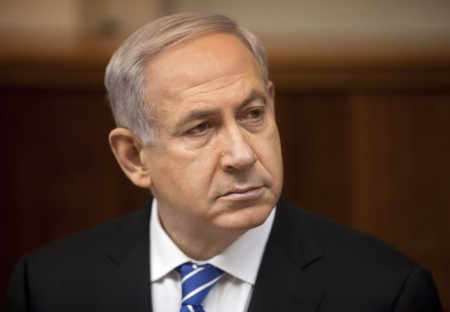
Benjamin Netanyahu

Israel’s cultural conflict is a complex one. It doesn’t just pit Jews against Arabs or Muslims against Jews, it pits Arab Druze against European Jewish leftists and Aramean Christians against Arab Muslims. The left prefers cheap shots to actually understanding the complexities of a country that can’t be summed up with a keffiyah and a protest sign. After their election defeat, Obama and the media have decided to reduce Israel to Netanyahu and Netanyahu to the devil. It’s the easy way out, but it fails to take account of men like Ayoub Kara or Father Naddaf, of the Likud landslide in Arab-al-Naim and of Lieberman’s wins in Arab towns and villages. The Jews and Arabs are more complex than the left would like them to be.

***********************

Netanyahu’s conservative Likud Party got its best numbers not in Jerusalem, where it only won a quarter of the vote, or Sderot, the city under siege where it still got less than half, or Maaleh Adumim, a city of some 40,000 known as a “settlement” because it is located in ’67 Israel where it also took less than half.

Its best numbers appear to have come from Arab-al-Naim, a Bedouin settlement, where it scored three-quarters of the vote.

The residents were uninterested in any of the accusations of racism being aimed at Netanyahu by the media. Instead they were interested in housing. As one resident put it, “I used to sleep in a cave with my goats. Now I ask my daughter what wallpaper she wants in her room.”

Netanyahu’s election comment about Arabs being bused in to vote has been seized on as a useful excuse to explain how the media’s poll numbers that showed Netanyahu losing align with the actual results by claiming that a rash of racist Israelis rushed to vote. But that fails to explain why the exit polls were still badly wrong. A more realistic explanation is that the media’s polling was biased against Netanyahu. But it’s easier for the media to accuse Netanyahu of racism than admit to its own biases.

When Netanyahu warned about Arabs being bused in, he obviously was not talking about his own Arab voters, but the Joint Arab List whose MKs include Ahmed Tibi, who claimed that Hamas is not a terrorist organization, Tibi’s brother-in-law, Osama Sa’adi, who represented Hamas terrorists, Haneen Zoabi, who met with Hamas officials and defended the kidnapping and murder of three Israeli teens and Jamal Zahalka, who attended a Hamas rallyand claimed that Israel would be destroyed.

Also on the list is Masud Ghanim, a Muslim Brotherhood member who called for replacing Israel with an Islamic Caliphate and stated that he supports Hezbollah.

The Joint Arab List is composed of several parties. Hadash has its roots in the Israeli Communist Party. Despite the name, it rejects Israel and its only remaining Jewish MK is Boris ‘Dov’ Khenin, the son of David Khenin the party’s co-founder and General Secretary of the Communist Youth Union. Balad was founded by Azmi Bishara who fled Israel after being investigated as an enemy spy. Balad had already been suspended for calling for war against Israel. The United Arab List emerged out of the local Muslim Brotherhood franchise and is stacked with Muslim Brotherhood members.

The Muslim Brotherhood believes that the Islamic apocalypse requires exterminating the Jews.

The Joint Arab List unites Communists with Islamists into one big political terrorist organization. The reasons why Netanyahu and Israelis would be concerned about its members picking up seats are obvious. Imagine Communists sitting in the Senate during the Cold War and Al Qaeda members sitting there now. As Arab al-Naim shows, the issue was not ethnicity; it was Islamic terrorism.

The media’s cries of racism fail to explain places like Arab-al-Naim where the Arab vote helped Netanyahu. Or the Arab-Druze town of Abu Sinan where Lieberman’s Yisrael Beiteinu (Israel Our Home) party, despite its media image as right-wing, captured almost 14 percent of the vote. But then again the “xenophobic” and “racist” party has Hamad Amar, a Druze IDF veteran, in the sixth place on its list.

In Netanyahu’s Likud Party, Druze lawmaker Ayoub Kara returned to the Knesset, Israel’s parliament. If Obama thinks that Netanyahu is far right, he hasn’t met Ayoub Kara who urged protesters, “Say ‘No!’ to Barack Hussein Obama and ‘Yes!’ to the nation of Israel.”

“Everyone understands that withdrawing from land will yield us nothing but a ‘red carpet’ at the ‘peace treaty’ signing ceremony,” he said during the campaign.

Netanyahu didn’t win Kara’s village of Isifya. The center-right Kulanu party running on a program of social development and economic reform did. The Likud barely placed, but Yisrael Beiteinu scored 10 percent of the vote.

While there is an Arab bloc, the Arab vote is also a lot more complicated than it seems.

There are Arab Christians who define themselves as Aramaic rather than Arab and minority groups such as the Druze and the Bedouin who have a different relationship with Israel than the stone-throwing Keffiyah-wearer prized by European protest tourists.

From the earliest days of the reborn state, entire clans and ethnic groups aligned for or against Israel. Thus the Al-Husayini clan, which gave the world Hitler’s Mufti and Arafat, led the campaign against Israel while the Abu Ghosh family maintained friendly relations with the Jews. Druze and Bedouin serve in the Israeli army and there is a growing movement of Arab Christians who have decided to serve as well.

Netanyahu has met with Father Gabriel Naddaf who has led the movement, and Naddaf identifies as Aramaic, rather than Arab, while encouraging other Christians to reclaim an Aramaic heritage. In Jish, the Maronite Christian center of the Aramean revival, the United Arab List won decisively, but Lieberman’s Yisrael Beiteinu scored 11 percent. 5 people even cast votes for Yachad. Shas, the party of Middle Eastern Jews, came in sixth.

The media has accused Netanyahu of offering a bigoted appeal by warning about Arab voters being bused in. It doesn’t care to dwell on the subject of which group would be most moved by such an appeal. That would reveal certain inconvenient facts about the relationships of the Israeli left.

The Israeli left remains a project of European Ashkenazi Jews. The Middle Eastern Mizrahi Jews were refugees from Muslim persecution and want a strong leadership that protects the country. The left gets a fraction of its vote from Middle Eastern Jews. Netanyahu gets half his votes from them.

The Israelis most likely to respond to anti-Muslim rhetoric are refugees from Muslim countries. The lefty activists most likely to condemn them as racist colonizers emigrated from Russia and Germany.

Meretz, Israel’s farthest left party, has an Arab MK. It has no Mizrahi MKs. Yisrael Beiteinu has a Druze and a Mizrahi MK. Israel’s right is more fundamentally diverse than its left and its stronger stand on Islamic terrorism helps it pick up support from Jewish and non-Jewish minorities.

Lieberman does better than Netanyahu among some Arab voters because he projects strength. When he talks about cutting off the heads of traitors, he’s speaking with a vocabulary that is entirely familiar in the region. Nobody in the Middle East picks the weak horse and those Arabs who support Israel prefer the bellicose Lieberman to the more moderate Netanyahu.

“Even in a hundred years’ time, the Middle East will not speak Yiddish and the answer to terror is a deterrent penalty,” Ayoub Kara said.

Those Arabs that support Israel want to see a strong country and they don’t wring their hands when conservative Israeli politicians say politically incorrect things. The Joint Arab List wants to see it gone and those who vote for them are no more likely to spare the Jewish State no matter how softly it speaks.

Israel’s cultural conflict is a complex one. It doesn’t just pit Jews against Arabs or Muslims against Jews, it pits Arab Druze against European Jewish leftists and Aramean Christians against Arab Muslims. The left prefers cheap shots to actually understanding the complexities of a country that can’t be summed up with a keffiyah and a protest sign. After their election defeat, Obama and the media have decided to reduce Israel to Netanyahu and Netanyahu to the devil. It’s the easy way out, but it fails to take account of men like Ayoub Kara or Father Naddaf, of the Likud landslide in Arab-al-Naim and of Lieberman’s wins in Arab towns and villages. The Jews and Arabs are more complex than the left would like them to be.

For Obama, Bibi’s words matter while Iran’s don’t

March 22, 2015

For Obama, Bibi’s words matter while Iran’s don’t, Times of IsraelShmuley Boteach, March 22, 2015

(Please see also, Iranians Chant “Death to America” While Negotiations Continue. — DM)

President Obama says that Bibi’s words matter when it comes to a Palestinian state. “We take him at his word when he said that it wouldn’t happen during his prime ministership,” he told The Huffington Post. The President used Netanyahu’s statement as cause for a “reassessment” of American ties with Israel.

White House spokesman Josh Earnest echoed the sentiment in last Thursday’s White House briefing that the Prime Minister’s words could bring punishment. “Words matter,” he said. There could be “consequences” for Netanyahu’s statements. “Everybody who’s in a position to speak on behalf of their government understands that that’s the case, and particularly when we’re talking about a matter as serious as this one.”

So let’s get this straight. When foreign leaders speak, it matters. What they say is consequential. Bibi’s going to have to pay for his remarks.

But I have one question. Why doesn’t any of this apply to Iran? Why, on Saturday Ayatollah Ali Khameini uttered the words “Death to America” even as John Kerry was expressing optimism the very same day that the United States would come to a nuclear accord with Iran!

Suddenly, Iran’s words don’t matter?

Taking this further, the most hair-raising aspect about the growing American rapprochement with Iran is that it has all happened while Iran has continued to repeatedly threaten the annihilation of the Jewish people. Ayatollah Khameini has called Jews dogs and tweeted as recently as this past November that “there is no cure for Israel other than annihilation.”

Now, if words matter, how can the United States continue to speak to his government while they are openly threatening a second holocaust? Why did President Obama and John Kerry not establish a repudiation of these genocidal words and threats as a precondition for any talks?

The hypocrisy is startling. And it leads to a more important point.

By now it’s clear to all that President Obama positively loathes Prime Minister Netanyahu more any other world leader. His hostility to the Prime Minister has become so pronounced that the President can no longer disguise or control it.

Am I the only one that finds it just a touch unseemly for the leader of the free world to hate the leader of the only free country in the Middle East?

The President has a good relationship with Erdogan, the tyrant of Turkey, who has destroyed his nation’s democracy and allows fighters to pass through his nation to join ISIS. President Obama traveled to Saudi Arabia to pay his personal condolences upon the passing of arch-misogynist King Abdullah of Saudi Arabia, a man who wouldn’t even allow women to drive a car. And he utters not an unkind word about Ayatollah Khameini, the world’s foremost terrorist.

But he hates Netanyahu. Go figure.

For years we Americans have heard that our President is cerebral and unflappable. That he famously remains cool under the most challenging circumstances. It turns out that this is true for every world leader except one, Benjamin Netanyahu, who makes the President’s blood boil.

Don’t we deserve to know why?

If the two leaders merely had bad personal chemistry, I could understand. They’re not the best of friends. Fine. But for Obama the hatred of Netanyahu has become positively visceral, personal, and irrepressible.

My own belief is this. President Obama is desperate for some foreign policy victories. There’s a year-and-a-half left to his Presidency and the world is on fire. From Iran to Boko Haram to ISIS to Putin to Hezbollah to Al Qaida and Hamas, bad guys are running amok under this president. American Foreign policy is a shambles.

The only ally President Obama can truly expert pressure on for a deal that would give him the lasting foreign policy legacy he needs and craves is Israel. And in the past Israeli Prime Ministers have proven so utterly malleable. American Presidents have squeezed them like lemons.

But Bibi refuses to be squeezed. He won’t play ball. He won’t withdraw from Judea and Samaria and allow “Hamastan” on his eastern border the way it is in Gaza. He won’t shut up about America’s capitulation to the Iranian mullahs that would leave them with a military-grade nuclear program. He won’t go quietly into the nuclear night while America appeases one of the most violent and vile regimes on earth.

This darned Bibi guy just won’t bend.

And our President finds the intransigence so utterly frustrating.

He prayed and hoped that someone else might win the Israeli election. And some of the President’s top political operatives went and worked for Herzog. But, huff and puff as he might, the President could not blow Bibi’s house down.

So now he’s stuck with him. A stick-necked Prime Minister, getting in the way of the President’s peace deals with Iran and the Palestinians.

And with no way of getting rid of the Israeli nuisance, all the President can do is continue to give interviews that express his dislike and frustration, not realizing that we’re reaching a point where the President is beginning to look positively un-Presidential and where is enmity is becoming unbecoming.

It’s called democracy, Mr. President. Bibi won. And it’s time for the world’s foremost democracy, the United States of America, to live with it and work with the man who has the mandate of the Israeli people, just as you have the mandate of the American people.


A Statement on the Crisis in the U.S.—Israel Relationship

March 19, 2015

A Statement on the Crisis in the U.S.—Israel Relationship, Commentary Magazine, The Editors, March 19, 2015

(A lengthy but excellent summary, putting the relationship between the U.S. and Israel in perspective. — DM)

After six weeks of madness, Benjamin Netanyahu stood before Congress and delivered a speech about the nuclear threat posed by Iran. It was a terrific speech. It was not a remarkable speech, because nothing the Israeli prime minister said came as news to anyone who has been paying attention to the issue for the past decade.

What made his speech and its occasion of particular note were the atmospherics. It has been years since an address by a politician in the United States had been so hotly anticipated, and it wasn’t even to be delivered by an American. The anticipation was due entirely to Barack Obama’s incendiary response to the speaking invitation extended to Netanyahu in January by the Republican House leader, John Boehner.

The president’s displeasure and rage continued to grow, to the point that a few days before the speech, no less a personage than National Security Adviser Susan Rice said it would be “destructive of the fabric of the relationship” between the United States and Israel. On the day of the speech, the Democratic Middle East operative Martin Indyk declared on CNN that it was “the saddest and most tragic day” for the relationship in all his 35 years as a water-carrier.

In this case, we fear, the wish is father to the threat. Susan Rice and Martin Indyk see the relationship between Israel and the United States on a downward spiral because they and their boss want it so. Obama does not like the special status Israel seems to enjoy in the United States—not only because its particularistic and nationalist claim offends him ideologically, but because Israel’s popularity with the American people limits his freedom of action.

The relationship between the United States and Israel is in jeopardy because, from the moment his administration began, Barack Obama has consciously, deliberately, and with malice aforethought sought to jeopardize it. He did so in part because he is committed to the idea that Israel must retreat to its 1967 borders, dismantle its settlements, and will a Palestinian state into existence. He views Israel’s inability or unwillingness to do these things as a moral stain.

But the depth of Obama’s anger toward Israel and Netanyahu suggests that there is far more to it than that. Israel stands in the way of what the president hopes might be his crowning foreign-policy achievement: a new order in the Middle East represented by a new entente with Iran. Netanyahu’s testimony on behalf of his country and his people is this: A nuclear Iran will possess the means to visit a second Holocaust on the Jews in a single day. His testimony on behalf of everyone else is this: A nuclear Iran will set off an arms race in the Middle East that will threaten world order, the world’s financial stability, and the lives of untold millions. Simply put, Obama finds the witness Israel is bearing to the threat posed by Iran unbearable.

Elliott Abrams has called the speech kerfuffle a “manufactured crisis.” He is right, and the assembly line has been rolling without letup for six years.

Barack Obama came into office determined to put daylight between the United States and Israel. A few months after his inauguration, he met with Jewish leaders to discuss growing concerns about the bilateral relationship. One leader, Malcolm Hoenlein, told the president: “If you want Israel to take risks, then its leaders must know that the United States is right next to them.” Obama responded thus: “Look at the past eight years. During those eight years, there was no space between us and Israel, and what did we get from that? When there is no daylight, Israel just sits on the sidelines, and that erodes our credibility with the Arab states.”

Obama sought to make “daylight” almost immediately by picking fights with the new government of Benjamin Netanyahu, who came into office only weeks after Obama’s inauguration. The administration made no secret of its hopes that Netanyahu’s government would fall and be replaced by the supposedly more pliant opposition leader Tzipi Livni.

While the White House and the State Department have consistently portrayed Netanyahu as a man bent on obstructing Obama’s policies, the record shows otherwise. From the start, Netanyahu has sought to accommodate the Obama administration’s wishes as much as possible without jeopardizing Israel’s security.

In May 2009, Obama met with Netanyahu and told him bluntly that “settlements [on the West Bank] have to be stopped in order for us to move forward.” Israel complied; Netanyahu announced a 10-month settlement freeze, which was supposed to trigger a new round of U.S.-led peace talks. But for nine months Palestinian Authority President Mahmoud Abbas refused all invitations to negotiate. In the 10th month, Abbas sat through exactly two talks before abandoning negotiations once again. Yet Obama offered this assessment in a January 2010 interview with Time: “Although the Israelis, I think, after a lot of time showed a willingness to make some modifications in their policies, they still found it very hard to move with any bold gestures.”

Like all its predecessors, the Obama administration is a stern critic of Israel’s West Bank settlements and sees them as an obstacle to peace. But the administration’s particular obsession was not Jews sitting on remote hilltops or in areas many if not most Israelis saw as expendable—but rather the Jewish presence throughout unified Jerusalem. Though no American government had ever recognized Israeli sovereignty over the capital, the Obama administration was the first to consider normal growth in Jerusalem’s 40-year-old Jewish neighborhoods (in parts of the city that had been illegally occupied by Jordan, from 1949 to 1967) as a deliberate and outrageous provocation.

This came to a head in the spring of 2010 when a routine announcement of a housing project in one of those Jerusalem neighborhoods (which had specifically been exempted from the freeze) coincided with a visit to Israel by Vice President Joe Biden. Netanyahu found himself on the receiving end of a 43-minute telephone tirade from then-Secretary of State Hillary Clinton. She accused Netanyahu of sending a “deeply negative signal” that had “harmed the bilateral relationship.” Such condemnations were repeatedly echoed in the press from multiple administration figures.

The administration clearly hoped its expressions of rage could be leveraged to force Israel to agree to end such construction—and encourage the Palestinians to realize that the United States would back them in negotiations. But rather than isolate Netanyahu, the U.S. attack on Jewish Jerusalem strengthened him, because defending the unity of the city remains one of the few issues on which there is consensus in Israeli politics.

Even as relations continued to deteriorate—Israel’s then-ambassador to the United States, Michael Oren, told a group of Israeli diplomats in 2010 that U.S.–Israel relations were at their lowest point since 1975—Netanyahu moderated construction in settlements. By the first half of 2014, Israel was building at its slowest rate since the 2010 freeze. (Indeed, according to Israeli historian and archivist Yaacov Lozowick, no new settlements have been built since 2003.)

In May 2011, President Obama gave a major address responding to the Arab Spring protests, in which he chose to devote the last third to a plan for a new round of Israeli–Palestinian talks—a non sequitur if ever there has been one. The plan was to set the 1967 lines as the starting point for future negotiations. The speech was timed to be delivered the day before Netanyahu was to arrive in the United States for talks. Obama was attempting to force a fait accompli.

Netanyahu earned applause at home and in the U.S. for pushing back against Obama’s idea, which he rightly saw as an attempt to undermine Israel’s negotiating position. Days later, Netanyahu spoke to a joint session of Congress where both Republicans and Democrats cheered him as if he were the second coming of Winston Churchill, a spectacle that was rightly seen as a rebuke to Obama’s slap at the Israelis. (That episode is crucial to understanding the White House’s bitterness about Netanyahu’s recent speech to Congress.) And like the previous arguments with Israel, this one would yield no benefits to the United States, since not even this tilting of the diplomatic playing field toward the Palestinians would be enough to nudge them to make peace.

The general antipathy toward the Israeli prime minister led Washington Postcolumnist Jackson Diehl to ask, in November 2011, “Why do Sarkozy and Obama hate Netanyahu?” Diehl was writing on the revelation that Obama and then-French President Nicolas Sarkozy had made comments, picked up on a live microphone, about their dislike of the Israeli leader. Diehl pointed out that Obama’s problem with Netanyahu was obviously personal: “Netanyahu has been an occasionally difficult but ultimately cooperative partner. He can be accused of moving too slowly and offering too little, but not of failing to heed American initiatives.”

After this incident, the administration put its campaign against Israel on hold for the duration of the 2012 presidential election campaign. It ceased sparring with Netanyahu and even moved toward Israel on the subject of Iran.

Obama had always stated his opposition to an Iranian bomb, but he had also consistently demonstrated his desire for a rapprochement with Tehran. He was both slow and reluctant to embrace sanctions against the regime. Throughout this period, the administration seemed more anxious about preventing an Israeli strike against Iran’s nuclear facilities than it was about the nuclear threat itself. But in 2012, the president told the American Israel Public Affairs Committee that he would never be willing to merely “contain” a nuclear Iran. And during his foreign-policy debate with Mitt Romney, he pledged that any possible deal with Iran would require it to give up its nuclear program.

Once reelected, Obama reverted. He unleashed John Kerry, his new secretary of state, to pursue yet another futile quest for peace with the Palestinians. Despite

successful American pressure on Israel to agree to a framework that accepted most of the Palestinians’ demands throughout 2013, Abbas wouldn’t take yes for an answer. He eventually blew up the talks. The Obama administration responded by placing the blame for Kerry’s failure on Israel, arguing speciously that the problem was construction in Jerusalem and in the settlement blocs that would be retained by Israel in any peace deal.

This administration’s willingness to blame the Jewish state under virtually any circumstances was on display again, in the summer of 2014, after rocket barrages on Israeli cities prompted Israel to launch a counterattack on Hamas bases in Gaza. Though the chairman of the Joint Chiefs of Staff would later cite Israeli efforts to avoid civilian casualties in the fighting as a model for American troops, the White House and the State Department criticized Israel for the deaths of Palestinians—who were being used as human shields by Hamas. But far worse, and far more suggestive of Obama’s true feelings, was the White House’s decision to try and use arms supplies as a pressure point against Israel.

Throughout the Obama presidency, the president’s defenders (and Netanyahu, in his 2015 address to Congress) have spoken of the strengthening of the so-called strategic relationship with Israel as proof of Obama’s sincere support for the alliance. It is true that Obama continued funding for the Iron Dome missile-defense system initiated under the Bush administration and did not obstruct the fostering of close ties between the two countries’ defense and intelligence establishments. But the Gaza war revealed the president’s discomfort with that closeness. When he realized that the Pentagon, without his express permission, was resupplying Israel with ammunition needed for fighting Hamas, he called a halt to it—supposedly to send a signal he did not think Israel was being surgical enough with its surgical strikes. He denied Israel bullets in the middle of a shooting war.

Meanwhile, the administration’s secret negotiating track with Iran was making progress. And this brings us to the nub of the issue.

The true beating heart of the crisis between Israel and Obama is Iran. The Islamic Republic does not merely harbor genocidal fantasies about annihilating Israel; it boasts of them. The country was founded in 1979 on the theocratic vision of Ruhollah Khomeini, who made the destruction of Israel a defining national objective. More than three decades later, Iran’s leaders remain obsessed with the idea. It is, to their thinking, an unshakable Islamic obligation. As recently as last November, Supreme Leader Ali Khamenei publicly outlined a nine-point plan for eradicating the Jewish state.

More important than Tehran’s declarations are its actions. In 2002, an Iranian dissident revealed two secret Iranian nuclear sites, confirming—for those with eyes to see—the mullahs’ pursuit of a nuclear weapon. In 2010, the International Atomic Energy Agency (IAEA) declared that Iran had worked on, or is working on, the construction of a nuclear warhead and has experimented with detonation methods. IAEA inspectors have also found evidence that the Iranians have clandestinely enriched uranium to levels that exceed those needed for civilian energy and approach those required for a nuclear bomb.

Iran’s religious hatred of the Jewish state combined with its apparent pursuit of a nuclear weapon make it Israel’s chief security concern. The overused term “existential threat” is the only one that applies. As ISIS’s recent establishment of an Islamic caliphate shows, the nightmares of committed Muslim radicals can come true.

Obama came to office declaring he would not permit Iran to build a nuclear weapon and that “all options are on the table” for stopping it. Repeating this assurance, he succeeded in getting Israel to refrain from striking Iran on its own. Obama’s record, however, has discredited the suggestion that he would take military action if necessary. He has demonstrated an unyielding faith in diplomacy and seems to regard the use of force as almost necessarily reckless. What’s more, he hoped—and hopes—to use diplomacy to make the Shia theocracy “a responsible member of the international community,” in Susan Rice’s words. This fanciful goal seems to have become Obama’s priority. As his foreign-policy spokesman, Ben Rhodes, said: “This is probably the biggest thing President Obama will do in his second term on foreign policy. This is health care for us, just to put it in context.”

During his first term, Obama reached out to Tehran repeatedly. He went through several third parties to offer Iran access to civilian-grade nuclear energy. The mullahs rejected every overture. Despite Iran’s obstinacy, Obama began his second term covertly imploring the Iranians to sit down for direct talks with the United States. In 2013, Iran elected President Hassan Rouhani, a regime hardliner who had enjoyed a public-relations makeover as a “moderate.” The administration soon announced direct talks between Washington and Tehran, talks that had been planned behind Israel’s back. Netanyahu has been left to look on while the Obama administration chases a dangerous nuclear deal with Iran.1

As Washington crafted its deal, Obama administration officials took the opportunity to taunt Netanyahu for having complied with the president’s request not to strike Iran. “The thing about Bibi is, he’s a chickenshit,” an administration official told the Atlantic’s Jeffrey Goldberg. “The good thing about Netanyahu is that he’s scared to launch wars. It’s too late for him to do anything. Two, three years ago, this was a possibility. But ultimately he couldn’t bring himself to pull the trigger. It was a combination of our pressure and his own unwillingness to do anything dramatic. Now it’s too late.”

Israel’s prospects for a strike on Iran’s nuclear program have grown dim indeed. First, it’s a technically formidable undertaking. During these past few years, Iran’s nuclear sites have become more diffuse and entrenched. It may well be that the United States alone has the sufficient resources and weaponry to disable Iran’s air defenses and do meaningful damage to its various fortified facilities.

If Israel launches a strike that falls short of disabling the Iranian nuclear program, Israelis would face the same Iranian threat along with grave new problems. In addition to launching direct retaliatory strikes on Israel, Iran might respond by blocking the straits of Hormuz and driving up oil prices. Without the help of the United States, Israel would bear the global outrage (and perhaps punishment) for the resulting destabilization. And although Arab leaders would privately celebrate any blow dealt their Iranian enemy, they too would publicly admonish the Jewish state. This would inevitably further inflame the anti-Semitic and anti-Israel violence that now consumes the Muslim world.

And if the United States has explicitly recognized Iran’s right to enrich uranium, Israel would ostensibly be attacking a “legitimate” nuclear-power state against America’s wishes. With the American–Israeli alliance already at such a precarious point, this final act of Israeli disobedience could tear open an almost unthinkable breach in the bilateral relationship.

The fraying of the relationship has only served Obama’s larger purpose vis-à-vis Iran. As his effort to get Democratic members of the House and Senate to boycott Netanyahu’s speech demonstrates, Obama has spent six years implicitly setting up a loyalty test: Democrats will be showing their disloyalty to him if they show support for Israel as it does whatever it can to prevent Iran from getting the bomb.

The breach with the Obama administration illustrates a basic problem within the pro-Israel coalition inside the United States. During the 2012 campaign, Jewish Democrats were able to say that he had strengthened security cooperation between the two countries. Their argument was shaken during the Gaza war in 2014, when Obama cancelled the ammunition resupply.

Even so, the administration succeeded in the first months of 2015 in distracting many Jewish supporters of Israel from the looming bad deal with Iran by focusing their attention on the supposed breach of protocol represented by Netanyahu’s acceptance of Boehner’s invitation. Since most liberal Jews view Boehner and the GOP Congressional majorities with almost as much disdain as they do Israel’s enemies, and since many are not especially supportive of Netanyahu, they were disinclined to back him against the president.

Netanyahu was accused by the administration of injecting partisanship into the U.S.–Israel relationship, but the true culprit here was Obama. He was playing off the fact that his party’s members are far less supportive of Israel than Republicans are.

According to Gallup, support for Israel among Democrats is currently at almost exactly the same level it was in 1988. Now, as was true a quarter century ago, 47 percent of Democrats sympathize with Israel. That was before Israel signed the Oslo Accords, was subjected to an ongoing terror campaign, withdrew from the Gaza Strip and parts of the West Bank unilaterally, publicly declared support for the establishment of a Palestinian state, and made three separate final-status offers that would have given the Palestinians a state with its capital in Jerusalem. And before Iran began developing the bomb.

Republicans noticed. In 1988, their sympathy for Israel vis-à-vis the Palestinians was at about the same level as the Democrats’; today it’s at 83 percent. Independents noticed as well. In 1988, 42 percent of independents sympathized with Israel; today that number has jumped 17 points to 59.

Israel’s good-faith negotiations and sacrifices for peace in the face of unrelenting terror and incitement won over Republicans and independents. Democrats remain unmoved. That consistency, and the partisan gap it is creating in support for Israel, is far from reassuring.

During the war with Hamas last summer, the Israel Defense Forces uncovered some 30-plus tunnels running from Gaza into population centers in Israel to be used for mass terror attacks against Israeli civilians. The war itself was touched off by steady rocket fire from Gaza into southern Israel. Israel’s goal was to stop the rocket fire and neutralize the tunnels, not to overthrow Hamas or retake the Gaza Strip. When those objectives were reached, Israel withdrew.

Yet a CNN poll found that only 45 percent of Democrats considered Israel’s counteroffensive justified, compared with 56 percent of independents and 73 percent of Republicans. According to Gallup, only 31 percent of Democrats considered Israel’s
actions justified. Astoundingly, a Pew poll recorded that Democrats were evenly divided on whether Israel or Hamas was to blame for the war.

Pro-Israel Democrats don’t simply have an ‘Obama problem.’ The president did not create Israel’s status as a wedge issue for his party. He has only exploited it.

Certainly, the supportive voting record of Democratic members of Congress acts as an important check on the rougher treatment Israel would receive from an unfiltered expression of the party’s activist base. But it also masks the anti-Zionist populism so prevalent on college campuses and among leftist political pressure groups, and the anti-Israel sentiments expressed by many black and Latino activists as well.

That filter can’t catch everything, even in this age of scripted politics. During the 2012 Democratic National Convention, it was revealed that references to God and to Jerusalem as the undivided capital of Israel had been removed from the Democratic Party’s platform. Party officials moved to add the language back in, which required a voice vote from the Democratic Party delegates in the hall. The motion to restore the references was soundly defeated.

Los Angeles Mayor Antonio Villaraigosa, who was emceeing the proceedings, was visibly shocked. He asked for a re-vote. The motion lost again, with the crowd growing more agitated. Villaraigosa looked off stage for direction. He turned back to the audience, held one more vote, and, amid a hail of boos, declared the motion passed—despite its obvious and raucous defeat for the third time in a row.

The incident was important not only because it showed that the party’s delegates were opposed to traditional pro-Israel language in the party’s platform, but also because that language had been removed in the first place either at the behest or approval of the Obama campaign. Obama’s two presidential campaigns have been notable for their ability to tap into the zeitgeist of the party’s core supporters.

“Obviously, this is much bigger than two men,” CNN’s Dana Bash said on March 1, two days before Netanyahu’s address to Congress. Indeed it is. And it puts American Jews in a bind. American Jews still care deeply about Israel—and still vote overwhelmingly Democratic. Recent polls show a subtle rightward shift, but it is far too early to tell if that shift will stay in place in 2016 and beyond. (Jimmy Carter hemorrhaged Jewish votes in 1980; in 1984, Walter Mondale won most of them back.) Nonetheless, the Democrats are expected to nominate Hillary Clinton, who served as Obama’s secretary of state and has had her own share of dustups with Netanyahu. And veterans of the Obama administration will no doubt staff future Democratic White Houses. Is this, then, the shape of things to come? If the answer is to be no, Jewish Democrats are going to have to do more than find presidential nominees who paper over this internal divide with platitudes.

They will have to address the growing conflict between American Zionism and American liberalism. They will need not happy talk but confrontation of hard truths. That will require recognizing that the momentum is with the Occupy Wall Street protesters’ adopting the Palestinian cause as their own, with the American professoriate shaping higher-education curricula along with the minds and worldviews of their students, and with the progressive activists who fill the arena at presidential nominating conventions and seek to remake the Democratic Party platform in their image.

It means American Jewish organizations are going to have to recognize that it will become more and more difficult to square the circle. AIPAC tried just that in 2014, when it acquiesced to Democratic pressure and did not send out its 10,000-strong team of citizen activists to lobby members of Congress to support new sanctions.

AIPAC was caught between a rock and a hard place, but its leaders surely know they made a terrible error in 2014—and have changed their tune this year. Seen from one perspective, the failure to push sanctions decreased the administration’s leverage at the negotiating table; from the other, it gave Obama the freedom to acquiesce to Iran’s own demands.

On Capitol Hill, opposition to a nuclear Iran has always been as bipartisan as support for Israel. Obama is making every effort to turn it into a partisan issue so that he can peel off enough Democrats to sustain a veto of legislation that would block a bad deal. Netanyahu’s triumph before Congress made his job harder. Israel’s prime minister did what he set out to do—to lay before Congress and the American people the nature of the threat and the danger of such a deal.

Americans who care about Israel, and American Jews who care not only about the Jewish state but also the condition of the Jewish soul in the United States, must now follow his example. We cannot relent in our efforts to fight against those who seek to drive a wedge between Israel and America—on campuses, in the media, within elite institutions, and within both the Democratic and Republican parties. The impending end of Obama’s political career should make it easier for Israel’s government to make its case against appeasement in both 2015 and 2016 as well as shore up wavering American Jewish support. The manufactured crisis Barack Obama began in 2009 is not yet a full-bore crisis either within the Democratic Party or within the American body politic. But it will become one—if this existential threat, this spiritual existential threat to American Jewry, is not dismantled.


Footnotes

1 The salient facts are these: First, the Obama administration agreed to Tehran’s demand that the United States ease sanctions on Iran in advance of any confirmed nuclear agreement. Second, the administration recognized Iran’s right to enrich uranium to 5 percent despite the fact that all Iranian enrichment is prohibited by the United Nations Security Council. Third, Iran has ignored negotiation deadlines to win reported concessions that would render the deal pointless. These include the right to 5,000–6,000 working centrifuges, enough to fuel a nuclear bomb within a year. The administration has also reportedly included a “sunset clause,” which could free the Iranians from the strictures of a deal within 10 years.

Israelis prepare to vote; Palestinians prepare to fight

March 17, 2015

Israelis prepare to vote; Palestinians prepare to fight, The Gatestone InstituteKhaled Abu Toameh, March 16, 2015

For some Palestinians, the election is not about removing Netanyahu from power. Rather, it is about removing Israel from the face of the earth and replacing it with an Islamist empire.

Kerry’s statement about the revival of the peace process shows that he remains oblivious to the reality in the Middle East, particularly with regards to the Palestinians.

Kerry is ignoring the fact that the Palestinians are today divided into two camps; one that wants to destroy Israel through terrorism and jihad and another that is working hard to delegitimize and isolate Israel with the hope of forcing it to its knees.

As Kerry was talking about the revival of the peace process, Hamas announced that it has completed preparations for the next confrontation with Israel.

Abbas will come to the talks with the same demands he and his predecessor have made over the past two decades, namely a full Israeli withdrawal to the pre-1967 lines. And when Israel does not accept all his demands, he will again walk out and demand international intervention to impose a solution on Israel.

Talk about the resumption of the peace process is nothing but a silly joke.

As Israeli voters head to the ballot boxes to elect their new representatives, Palestinians say they are preparing for another war with Israel.

The preparations came even as US Secretary of State John Kerry and some Israeli candidates, especially Zionist Camp leaders Isaac Herzog and Tzipi Livni, continue to talk about the need to revive the Israeli-Palestinian peace process after the election.

For some Palestinians, the election is not about removing Likud leader Binyamin Netanyahu from power. Rather, it is about removing Israel from the face of the earth and replacing it with an Islamist empire.

The next Israeli government will face a two-pronged attack on the Palestinian front — one from the Gaza Strip, where Hamas and Islamic Jihad say they have just completed preparations for the next conflict with Israel, and another from the West Bank, where the Palestinian Authority (PA) says it is determined to pursue its “diplomatic war” against Israel in the international arena.

On the eve of the election, Kerry expressed hope that Israelis will elect a government that “meets the hope for peace.”

Kerry’s statement about the revival of the peace process shows that he remains oblivious to the reality in the Middle East, particularly with regards to the Palestinians.

Kerry is ignoring the fact that the Palestinians are today divided into two camps; one that wants to destroy Israel through terrorism and jihad, and another that is working hard to delegitimize and isolate Israel in the international community with the hope of forcing it to its knees.

Hamas and Islamic Jihad continue to scoff at Kerry’s talk about the resumption of the peace process. The two groups, which control the 1.7 million Palestinians of the Gaza Strip, actually have other plans for the post-election era. Their main plans center around preparing for the next war with Israel.

983Israel’s Prime Minister Binyamin Netanyahu (left) and Hamas leader Ismail Haniyeh (right, in blue shirt).

As Kerry was talking about the revival of the peace process, Hamas’ armed wing, Izaddin al-Qassam, announced that it has completed preparations for the next confrontation with Israel.

These preparations, according to the group, include the reconstruction of Hamas military bases and training centers that were destroyed during the last war, known as Operation Protective Edge. The group says that it has not only rebuilt the destroyed sites, but has also set up new military posts, especially along the border with Israel.

Of course, when Hamas talks about “military bases,” it is also referring to the underground tunnels that it is hoping to use in the next conflict to infiltrate Israel.

Some of the bases are located only a few hundred meters away from the border with Israel, such as the Yarmouk and Palestine posts. Hamas says that the decision to build the military bases so close to the Israeli border is aimed at sending a message of defiance to Israel.

Islamic Jihad also does not seem to be impressed with the recent talk about the resumption of the peace process between Palestinians and Israelis.

Earlier this month, Islamic Jihad too unveiled its preparations for war, by inviting journalists on a tour of its tunnels inside the Gaza Strip.

“We’re on our highest level of alert to counter any attack. We’re used to the occupation breaking its ceasefires,” senior Islamic Jihad commander Abu al-Bara told Agence France Press. “It’s a war that never ends. We’re ready to go to another level against the Zionist occupation and carry out actions we’ve never done before.”

Meanwhile, the Palestinian Authority is also preparing for a confrontation with Israel, albeit one of a different nature.

The PA says it is determined to pursue its effort to seek worldwide support for imposing a solution on Israel. It is hoping to do so with the help of the United Nations, the European Union, the Obama Administration and some Arab countries.

In order to achieve its goal, the Palestinian Authority is currently waging a massive campaign in the international arena whose goal is to delegitimize, isolate and weaken Israel to a point where it would be forced to succumb and make far-reaching concessions, such as a full withdrawal to the pre-1967 lines.

PA President Mahmoud Abbas will find it almost impossible to return to the negotiating table with Israel now that he has told his people that the Palestinians’ next step is to file “war crime” charges against Israel with the International Criminal Court (ICC). Abbas’s aides have even set a date for the filing of the first anti-Israel case with the ICC: April 1.

Even if Abbas does return to the negotiating table — under heavy pressure from the Americans and Europeans — he would be doing so not in order to achieve an agreement with Israel, but to try to show the world that Israel does not want peace.

Abbas will come to the talks with the same demands he and his predecessor have made over the past two decades, namely a full Israeli withdrawal to the pre-1967 lines. When Israel does not accept all his demands, he will again walk out and demand international intervention to impose a solution on Israel. And while he would be waging his diplomatic campaign, Hamas and Islamic Jihad would resume their terror attacks against Israel from the Gaza Strip.

Under the current circumstances, where some Palestinians continue to seek the destruction of Israel and others are unable to make any concessions for peace, any talk about the resumption of the peace process is nothing but a silly joke.

Scandal Rocks the U.N.

February 6, 2015

Scandal Rocks the U.N., National Review Online, Anne Bayefsky, February 6, 2015

UN Flag

Setting aside all the legal verbiage, the politics are painfully clear. Criminalizing Israel’s efforts to exercise its right of self-defense against a foe openly committed to genocide strikes at the heart of the sovereignty, well-being, and legitimacy of the Jewish state. Demonizing a democratic society that is ready, willing, and able to ensure the accountability of its armed forces is not about protecting Palestinians. It is about endangering Israelis.

Human-rights law is being perverted for anti-human-rights ends, and it is about time human-rights lawyers — and all those who care about defeating the enemies of rights and freedoms — stood up and objected.

*********************

A report on human-rights violations has been compromised not once but twice.

Four days ago, on February 2, the head of a U.N. commission of inquiry created to investigate war crimes in Gaza was forced to resign after it was revealed that he had taken money from the PLO for providing legal advice. William Schabas’s U.N. job was to expose war criminals and recommend how to hold them “accountable.” William Schabas’s PLO job was to show them how to use the International Criminal Court (ICC) to hold Israeli war criminals accountable. He didn’t think there was a problem.

His conflict of interest did not surface, however, until after the inquiry he was heading had “largely completed” its evidence-gathering, and the writing of the requisite report had begun, according to Schabas himself. But instead of taking the only legitimate route and setting aside the whole tainted exercise, the president of the U.N. Human Rights Council, Joachim Rücker of Germany, claimed he was “preserving the integrity” of the inquiry simply by accepting Schabas’s resignation.

The council — the U.N.’s top human-rights body — had voted to create the Schabas inquiry in the middle of the Gaza War last July. Palestinians garnered support from council members and human-rights authorities like China, Russia, Saudi Arabia, and the United Arab Emirates. The United States and the members of the European Union either voted against or abstained. A majority of the states that have seats on the council are not “fully free” (on the Freedom House scale).

The idea of the inquiry was to open a second front in the war, conducted by international lawyers, to tie the hands of Israeli decision-makers — political and military — behind their backs.

Hence, the Schabas inquiry’s mandate was to examine human-rights violations “in the occupied Palestinian territory,” not “in Israel.” The date cited for the beginning of the inquiry was June 13, 2014, because Palestinian terrorists had kidnapped (and later murdered) three Israeli teenagers the day before — and Israeli aggression was a given of the investigation. The mandate never mentioned “Hamas” or its terror tunnels, almost half of which opened into Israel.

With the terms of the “inquiry” set to ensure the desired outcome, Schabas and two others became the council’s tools. They were selected by President Rücker “in consultation” with the Palestinians in the belief that they could be counted upon to deliver a guilty verdict.

Little wonder, then, that Schabas was miffed about the council’s newfound concern over his past activities. He had earlier had plenty to say in public about the subject matter covered by his new position. In 2012, on camera, he lectured about “crimes against humanity, war crimes, and the crime of aggression, all of which I think it can be shown have been perpetrated at various times during the history of the State of Israel. . . . The International Criminal Court is in a position to exercise jurisdiction over crimes committed on the territory of Palestine . . . So much of my effort these times is addressed to try to get . . . the Court . . . to take up this burning, important issue. . . . With a bit of luck and by twisting things and maneuvering, we can get them before the courts.”

This was just the kind of lawyer who the U.N. Human Rights Council would think satisfied its rule requiring the “independence, impartiality, personal integrity, and objectivity” of all its “mandate-holders.”

The council could even be sure Schabas would go after Israel’s prime minister personally. Said Schabas on camera before he was hired: “My favorite would be Netanyahu in the dock at the International Criminal Court.”

His manifest bias, thought Schabas, should have saved him from his not-so-manifest conflict of interest. So he decided not to go quietly, even if it meant taking the council down with him. In his letter of resignation he divulged: “[W]hen I was asked if I would accept nomination to the Commission of Inquiry, I was not requested to provide any details of my past statements and other activities concerning Palestine and Israel.” He assumed that because his “views on Israel and Palestine . . . were well known,” the council was getting exactly what it wanted. And so was he.

What finally clued Schabas in to the fact that the jig was up? Shortly before he resigned, the council tried to save face all around by pretending “this matter” was so very complicated that it required an opinion from the U.N.’s legal office.

With Schabas gone, the legal opinion on the meaning of impartiality has been shelved — though it is a lesson the council evidently still needs. President Rücker moved the deck chairs around, appointing one of the two remaining members of the inquiry, the American Mary McGowan Davis, as chair, and fancies it is now business as usual.

The February 3 letter from Rücker to Schabas accepting his resignation thanks him for his “work over the past six months,” says that the “appearance” of a problem has now been solved, and says that Rücker is “looking forward” to the report, due out in March. Six months preparing the report, a month to go before publication, and the U.N. imagines all appearances of impropriety and contamination have vanished into thin air.

Rücker told McGowan Davis: “I am convinced that you will . . . uphold the highest standards of integrity, particularly the principles of independence, impartiality and objectivity.”

Seriously? Unlike Schabas, McGowan Davis previously worked for the same U.N. employer on the same subject! In 2010 and 2011 she was a member of a Human Rights Council committee responsible for promoting the implementation of the council’s infamous Goldstone Report on the 2008–09 Gaza War. She chaired this follow-up committee in the last months of its work. The Goldstone Report’s central lie was its claim that Israel set out to kill Palestinian civilians deliberately. After Goldstone himself retracted the slander, McGowan Davis told the Jerusalem Post his statement “does not have any impact” and she would continue “to take his report as a given.”

At that time, McGowan Davis had the specific task of assessing whether Israel had adequately responded to the Goldstone Report’s defamatory accusations — and lo and behold, in her own report she found Israel’s response wanting. Apparently her assessment of Israeli “proceedings” in one Gaza war between Israel and rocket-launching Palestinian terrorists leaves her “impartial” and “objective” about Israel’s “accountability measures” in the subsequent Gaza war between Israel and rocket-launching Palestinian terrorists. Her 2011 finding that Israel did not conform to the “international standards” required to avoid the dominion of the International Criminal Court mirrors precisely the end game of her current job.

Furthermore, throughout her work for the U.N. Human Rights Council, McGowan Davis has been a member of the board of directors of the American Association of the International Commission of Jurists, which according to its website is “an affiliated organization of the ICJ in Geneva.” The ICJ participated in the July council session that adopted the resolution creating the 2014 Gaza inquiry. Prior to the vote and only two weeks into the war, this group of lawyers made a statement to the council, judging Israel guilty of war crimes and making a specific suggestion: “[T]he ICJ calls on this Council to establish a commission of inquiry to investigate all breaches of international humanitarian law and gross violations of human rights committed during the Israeli military operations in Gaza.”

Not only did the council adopt the ICJ’s recommendation, it appointed a member of the board of directors of the ICJ’s American affiliate to do the job — Mary McGowan Davis.

Three days ago, she accepted Schabas’s chair with alacrity and promised “a report that meets the highest standards of independence and impartiality.”

In what universe?

There is a reason why the council — along with its Palestinian partners, who are working furiously behind the scenes to salvage the fiasco — is so desperate to plow ahead. We now know that Schabas provided the Palestinians with legal advice about how to move forward with the prosecution of Israelis before the ICC, a step that they subsequently took. There is no doubt that the Schabas/McGowan Davis report will immediately be sent to the ICC prosecutor to assist in deciding whether a “preliminary examination” already underway should become a full-fledged “investigation.” The report’s lack of credibility has put the credibility of the ICC in question.

Setting aside all the legal verbiage, the politics are painfully clear. Criminalizing Israel’s efforts to exercise its right of self-defense against a foe openly committed to genocide strikes at the heart of the sovereignty, well-being, and legitimacy of the Jewish state. Demonizing a democratic society that is ready, willing, and able to ensure the accountability of its armed forces is not about protecting Palestinians. It is about endangering Israelis.

Human-rights law is being perverted for anti-human-rights ends, and it is about time human-rights lawyers — and all those who care about defeating the enemies of rights and freedoms — stood up and objected.

Throw Islamists out or give them the “peace” of Islam they seek

January 10, 2015

Throw Islamists out or give them the “peace” of Islam they seek, Dan Miller’s Blog, January 10, 2015

(The opinions expressed in this article are mine, and do not necessarily reflect those of Warsclerotic or any of its other editors. — DM)

They should welcome Islamic peace, including eternal bliss with their beautiful virgins.

Many more await you

Many more of us await you. Hurry up!

The attacks by adherents to the Religion of “Peace” in France were not the first, nor will they be the last, by “extremists” who live for nothing better than to demonstrate Islamic tolerance by slaughtering blasphemers who mock their “holy prophet” or otherwise insult Islam. We are told, ad nauseam, that they and their cohorts — like the Islamic State — are not Islamic: the Fort Hood massacre was mere “workplace violence” that had nothing to do with Islam, the Islamic Republic of Iran can be trusted with nukes and Saudi Arabia is our friend.

No matter that Major Hasan, a Muslim, yelled “Allah Akbar” while he slaughtered thirteen people and injured thirty more, and now wants to be a citizen of the Islamic State. No matter that there were many more Islamic jihad attacks during 2014.

nypd-hatchet-jms-2023_7dd2624c5c872567bf59b371d60e9444-794x600

No matter that Iran has long sought (and may already have) nukes and the death of Israel. Is Iran non-Islamic? No matter that our “ally,” Saudi Arabia, just applied to Raif Badaw the first fifty of the one thousand lashes imposed as part of his punishment for blasphemy for calling for religious freedom and thereby insulting Islam. Is Saudi Arabia non-Islamic?

A lengthy article from the Catholic World Report dated January 8, 2015 is titled “What is Islam?” Revisited, by Father James V. Schall, S.J. He

taught political philosophy at Georgetown University for many years until recently retiring. He is the author of numerous books and countless essays on philosophy, theology, education, morality, and other topics. His most recent book is Reasonable Pleasures: The Strange Coherences of Catholicism (Ignatius Press).

After highlighting only a few of many Islamic murders* and persecutions of Christians, Father Schall contends, quite persuasively, that

In the Quran, there is no mention of the Trinity or Incarnation, except explicitly to deny them. It is blasphemy to believe in them, as well as to question anything connected with the Quran. Allah intends the whole world to observe the Sharia, the Muslim legal code, observing its letter. As soon as it can, this law is imposed in every Muslim land or smaller community, even in democratic states. No distinction between Islam and the state exists. Everyone is born a Muslim. If he is not a Muslim, it is because his parents or teachers corrupted him. It is impossible to convert from Islam to another religion, without grave, often lethal, consequences. [Emphasis added.]

It is not against the Quran to use violence to spread or enforce Islamic law. Those Islam conquers, even from its beginnings till now, it either kills, forces conversion, or imposes second class citizenship. The Islamic State, now so much to the forefront, seems to have the correct understanding of what the Quran intends and advocates. The voluntarist presuppositions of Islamic thought allow what is prohibited to become good. Allah is not bound by the distinction of good and evil. Whatever Allah wills, even if it was the opposite yesterday, is good. [Emphasis added.]

. . . . To most Muslims, the West is itself morally decadent. Many think that the decline of population in the West and the high birth rate of Muslims almost guarantee eventual control of many European countries by Islam. And no talk exists of “converting” Islam by Christians. With Fatima, Reagan and  John Paul II could talk of ending the evil empire of the Soviet Union, but the question, “What is Islam?”, is seldom addressed. There is certainly nothing said about really changing Islam, only containing it. [Emphasis added.]

[I]t is possible that Islam will follow its pattern in the early modern world. Much of its recent success has depended on its good fortune with oil and other resources. But no Islamic state or group has been the origin of any properly modern inventions or developments. There seems to be theological reasons for this, as there is no reason to investigate a world that is based solely on the arbitrary will of Allah. Islam lacks any real notion of a natural law or a basis in reason that would allow it to criticize itself and recognize the extremism of many of its own practices, and especially the killings. [Emphasis added.]

. . . .

[N]o real basis for the much-appealed-to “dialogue” with Islam seems to exist. Almost all the initiative for dialogue has come from the Christian side. Islam has no central authority. It has no fixed theology except what is in the Quran and attempts to defend its consistency.

Dialogue is looked upon as a sign of weakness unless it can be used to further Muslim goals. In the case of the killings that Coren lists, if they are looked upon as legitimate means, there is no need either to talk about them or to cease their presumed effectiveness in spreading Islam. One cannot really appeal to the Quran to cease these killings, as there is ample reason within it to justify them as worthy means. Had it not been possible to justify these means in the Quran, the whole history of Islam would be different. Indeed, it probably never would have expanded at all. [Emphasis added.]

Somebody should tell the Pope, who wants more interfaith dialogue.

Speaking at the start of a three-day trip to Turkey, Pope Francis said “terrorist violence” showed no sign of abating in Turkey’s southern neighbours, where Islamist insurgents had declared a caliphate and persecuted Shiite Muslims, Christians and others who do not share their ultra-radical brand of Sunni Islam.

“It is licit, while always respecting international law, to stop an unjust aggressor,” the leader of the world’s 1.2 billion Roman Catholics said in reference to the Islamic State militants after a meeting with Turkish president Tayyip Erdogan.

What is required is a concerted commitment on the part of all … [to] enable resources to be directed, not to weaponry, but to the other noble battles worthy of man: the fight against hunger and sickness.”[Emphasis added.]

Sure. That should take care of the problem. In an Islamic pig’s eye.

Perhaps Obama and His devotees should read the article, even though it would not likely change their minds even a whit.

Why do many refer to Islamic terrorists as “extremists” or “radicals?” Aren’t they actually Islamists, dedicated to defending their religion against “slander?”

Are Christians and Jews, who actually practice their religions, “extremists” or “radicals?” Aren’t they practicing Christians and Jews? Or are Christians, in the eyes of Obama and His supporters, just bitter little people who cling to their religion or their guns and hate those who are not like them? (That’s a good characterization of Islamists.)

You go into these small towns in Pennsylvania and, like a lot of small towns in the Midwest, the jobs have been gone now for 25 years and nothing’s replaced them. And they fell through the Clinton administration, and the Bush administration, and each successive administration has said that somehow these communities are gonna regenerate and they have not.

And it’s not surprising then they get bitter, they cling to guns or religion or antipathy toward people who aren’t like them or anti-immigrant sentiment or anti-trade sentiment as a way to explain their frustrations. [Emphasis added.]

How about the Jews of Israel, who would much rather live in peace with their neighbors than kill or be killed by them? Are they also “bitter clingers?” They cling to life, so they must be, in Obama’s view.

An article at Breitbart titled ‘Don’t denigrate Islam’ says Obama after calling Americans ‘butter clingers’ notes,

President Obama finally remarked upon the attacks on our consulate in Libya — but was silent on the attack on our embassy in Egypt — and stressed the importance of not disrespecting religion in his speech, something he’s newly concerned about:

While the United States rejects efforts to denigrate the religious beliefs of others, we must all unequivocally oppose the kind of senseless violence that took the lives of these public servants.

It’s interesting that only when Islamists riot is Obama concerned for religious respect. I assume that Islam is excluded from what is called his ‘war on religion’ as he’s never before shown any concern for the denigration of other faiths. He’s demonstrated none of what he asks these past several years. Who could forget his demeaning characterization of middle America as ‘bitter clingers?’ [Emphasis added.”

obama-with-muslims-450x300

Remember Obama’s October 3, 2014 Eid greeting to Muslims around the world?

As our Muslim neighbors and friends gather for Eid celebrations, Muslim Americans are among the millions of pilgrims joining one of the world’s largest and most diverse gatherings.  Hajj brings together Muslims from around the world – Sunni and Shiite – to share in reverent prayer, side by side.  It serves as a reminder that no matter one’s tribe or sect, race or religion, gender or age, we are equals in humanity.

On Eid, Muslims continue the tradition of donating to the poor and joining efforts with other faith communities in providing assistance to those suffering from hunger, sickness, oppression, and conflict.  Their service is a powerful example of the shared roots of the world’s Abrahamic faiths and how our communities can come together in shared peace, with dignity and a sense of justice. [Emphasis added.]

Is there such a thing as “moderate” Islam of the type to which Obama may have referred? After searching high and low and finding none, Daniel Greenfield finally found an example:

There is no moderate Islam in the mosques or in Mecca. You won’t find it in the Koran or the Hadiths. If you want to find moderate Islam, browse the newspaper editorials after a terrorist attack or take a course on Islamic religion taught by a Unitarian Sociologist wearing fake native jewelry.

You can’t find a moderate Islam in Saudi Arabia or Iran, but you can find it in countless network news specials, articles and books about the two homelands of their respective brands of Islam.

You won’t find the fabled land of moderate Muslims in the east. You won’t even find it in the west. Like all myths it exists in the imagination of those who tell the stories. You won’t find a moderate Islam in the Koran, but you will find it in countless Western books about Islam.

Moderate Islam isn’t what most Muslims believe. It’s what most liberals believe that Muslims believe. [Emphasis in original]

The new multicultural theology of the West is moderate Islam. Moderate Islam is the perfect religion for a secular age since it isn’t a religion at all. [Emphasis added.]

Take Islam, turn it inside out and you have moderate Islam. Take a Muslim who hasn’t been inside a mosque in a year, who can name the entire starting lineup of the San Diego Chargers, but can’t name Mohammed’s companions and you have a moderate Muslim. Or more accurately, a secular Muslim. [Emphasis added.]

Perhaps such secular Muslims are not “bitter clingers.”

Islam and the multicultural “blessings” of “shared peace, with dignity and a sense of justice” (from Obama’s Eid greeting) it brings are rampant in Europe. They could have been avoided but were not, on the apparent theories (a) that there is no evil in the world, (b) that all religions are equally evil, (c) that all religions are equally good and/or (d) that no other evil is even comparable in its insidiousness to Islamophobia.

Some in Europe are learning, but their principal leaders seem to be too dense, too devoted to their ideologies or both, to absorb the lessons of even recent history. French President Hollande decried “racism and anti-Semitism” and proclaimed that the Islamic attacks in France had “nothing to do with Islam.” Apparently, in his twisted view, “true” Islam rejects racism and “antisemitism.” This Islamic preacher must not be Islamic.

In similar vein, a Palestinian envoy to Iran recently “said that ‘Israel is a cancer’ that ‘will be destroyed.”

Islamists throughout the world are as antisemitic as they are anti-Christian and appear to be proud of it.

Here are five more short videos:


Appeasement (is that another name for multiculturalism?) is not a viable solution; it merely postpones evil until it become stronger and multitudes are slaughtered, unnecessarily. Unfortunately many of us, as well as many of our “leaders,” have yet to learn the lessons of history; hence appeasement continues to be the preferred, but most deadly, response to evil.

Meanwhile, Obama and all too many leading RINOs insist that massive immigration must continue in the United States and that amnesty for illegal immigrants already in the there is good. I have found no credible statistics suggesting the numbers of Islamists or other murderers among actual and potential illegal immigrants, but their numbers cannot rationally be assumed to be insignificant. Nor can it be assumed that the apparent hopes of our “leaders” that all will turn out just fine will be realized; it may all depend on their definitions of “just fine.” It can reasonably be assumed that the Obama Nation is galloping, and will continue to gallop, down a path similar to that trod by Europe and that the consequences will be comparable in lives and freedoms lost, to say nothing of the financial burdens incurred by Federal, State and local governments and, of course, their citizens.

Here are eighteen points adopted by the American Freedom Defense Initiative in April of 2013.

– AFDI denounces the crippling rules of engagement under which our soldiers are forced to labor. They should be given the freedom to defend themselves and protect their comrades.

— AFDI calls for profiling of Muslims at airports and in hiring in professions in which national security and public safety could be compromised.

— AFDI calls for immediate investigation into foreign mosque funding in the West and for new legislation making foreign funding of mosques in non-Muslim nations illegal.

— AFDI calls for surveillance of mosques and regular inspections of mosques in the U.S. and other non-Muslim nations to look for pro-violence materials. Any mosque advocating jihad or any aspects of Sharia that conflict with Constitutional freedoms and protections should be closed.

— AFDI calls for curriculum and Islam-related materials in textbooks and museums to describe the Islamic doctrine and history accurately, including its violent doctrines and 1,400-year war against unbelievers.

— AFDI calls for a halt of foreign aid to Islamic nations with Sharia-based constitutions and/or governments.

– AFDI denounces the use of Sharia law in any Western court or nation.

– AFDI advocates deportation hearings against non-citizens who promote jihad in our nations.

– AFDI calls for an immediate halt of immigration by Muslims into nations that do not currently have a Muslim majority population.

— AFDI calls for laws providing that anyone seeking citizenship in the United States should be asked if he or she supports Sharia law, and investigated for ties to pro-Sharia groups. If so, citizenship should not be granted.

– AFDI calls for the cancellation of citizenship or permanent residency status for anyone who leaves the country of his residence to travel for the purpose of engaging in jihad activity, and for the refusal of reentry into his country of residence after that jihad activity.

— AFDI calls careful investigation of Muslims resident in non-Muslim country who have obtained naturalized citizenship or permanent residency status, to ensure that that status was not obtained under false pretenses.

— AFDI calls for the designation of the following as grounds for immediate deportation: fomenting, plotting, financing, attempting or carrying out jihad attacks; encouraging or threatening or attempting to carry out the punishments Islamic law mandates for apostasy, adultery, blasphemy, fornication or theft; threatening or attempting or carrying out honor murders, forced marriage, underage marriage, female genital mutilation, or polygamy.

— AFDI calls for the U.S. and other free nations to have jihad, as it is traditionally understood in Islamic jurisprudence to involve warfare against and subjugation of non-Muslims, declared a crime against humanity at the U.N., or to withdraw from the U.N. and have its headquarters moved to a Muslim nation.

– AFDI calls for legislating making illegal the foreign funding of Islamic Studies departments and faculty positions in our universities.

– AFDI demands the repeal of U.N. resolution 16/18 and any other resolutions that might limit the freedom of speech.

– AFDI calls for all Muslim chaplains in prisons and the military to be thoroughly vetted, and dismissed if they have ties to any Islamic supremacist group, or if they advocate jihad.

– AFDI calls for the development of energy policies that will free us from dependence upon oil from Muslim countries.

Through SION, AFDI establishes a common American / European coalition of free people determined to stand for freedom and oppose the advance of Islamic law, Sharia. Islamic law is not simply a religious system, but a political system that encompasses every aspect of life; is authoritarian, discriminatory, and repressive; and contradicts Western laws and principles in numerous particulars. SION respects Muslims as fellow human beings and rejects Islamization as a comprehensive political, religious, cultural and social system of behavior and ideology.

AFDI and SION stand for:

— The freedom of speech – as opposed to Islamic prohibitions of “blasphemy” and “slander,” which are used effectively to quash honest discussion of jihad and Islamic supremacism;

— The freedom of conscience – as opposed to the Islamic death penalty for apostasy;

— The equality of rights of all people before the law – as opposed to Sharia’s institutionalized discrimination against women and non-Muslims.

Here’s a link to an essay by Allen West proposing much the same. It’s well worth reading.

That's racist

The Obama Nation won’t take any of the suggested steps, of course, and no European nation seems likely to; they are too preoccupied with fighting Islamophobia and pursuing the “blessings” of multiculturalism. However, it’s worth pushing hard for. After all, it’s more humane than giving Islamists the “peace” they claim to want, wholesale, and sending them to their virgins.

In the meantime, let’s load up on neat gifts and get ready for a merry Christmas.

_________________

*An exhaustive list of Christians slaughtered during November of 2014 is available in an article titled Christians Burned Alive, published on January 10, 2015 by the Gatestone Institute.

Terrorist Nation

January 9, 2015

Terrorist Nation, Truth Revolt via You Tube, Bill Whittle, January 9, 2014

(A brief history of “Palestine” and its friends.– DM)