Archive for the ‘Obama’ category

Exclusive: Obama Cuts Funds for the Syrian Rebels He Claims to Support

January 27, 2015

Exclusive: Obama Cuts Funds for the Syrian Rebels He Claims to Support, Daily Beast, January 27, 2015
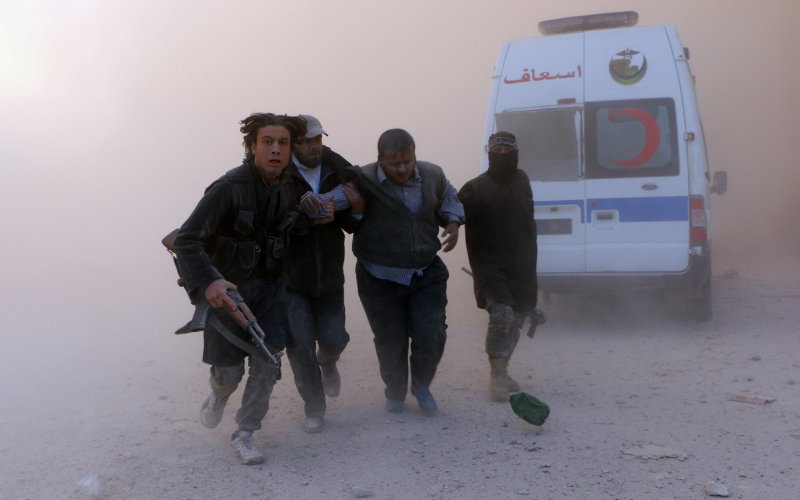
1422366030311.cachedFadi al-Halabi/AFP/Getty

LOST CAUSE?

Even the favored secular militias groomed to fight ISIS have seen their funding cut in half.

GAZIANTEP, Turkey — In the past several months many of the Syrian rebel groups previously favored by the CIA have had their money and supplies cut off or substantially reduced, even as President Obama touted the strategic importance of American support for the rebels in his State of the Union address.

The once-favored fighters are operating under a pall of confusion. In some cases, they were not even informed that money would stop flowing. In others, aid was reduced due to poor battlefield performance, compounding already miserable morale on the ground.

From afar, the U.S.-approved and partially American-armed Syrian “opposition” seems to be a single large, if rather amorphous, organization. But in fact it’s a collection of “brigades” of varying sizes and potentially shifting loyalties which have grown up around local leaders, or, if you will, local warlords. And while Washington talks about the Syrian “opposition” in general terms, the critical question for the fighters in the field and those supporting them is, “opposition to whom?” To Syrian President Assad? To the so-called Islamic State, widely known as ISIS or ISIL? To the al Qaeda affiliate, Jabhat al Nusra?

That lack of clarity is crippling the whole effort, not least because of profound suspicions among rebel groups that Washington is ready to cut some sort of deal with Assad in the short or medium term if, indeed, it has not done so already. For Washington, the concern is that the forces it supports are ineffectual, or corrupt, or will defect to ISIS or Nusra—or all of the above.

Republican lawmakers in D.C. are at their boiling point over the Obama administration’s anti-ISIS strategy, whether it is a failure to establish a no-fly zone in Syria, or unreliability with the issue of aid, or the Pentagon’s promised train and equip plan for the Syrian rebels.

“This strategy makes Pickett’s Charge appear well thought out,” said Sen. Lindsey Graham of South Carolina, referring to the poorly-planned and futile Confederate assault at Gettysburg. “We’re about to train people for certain death.”

In late October, al Qaeda’s Jabhat al Nusra routed American-backed militias in the northwest Syrian province of Idlib.

As a direct result, four of the 16 U.S.-approved brigades operating in the northern part of the country had their funding cut off and have been dropped from the list of “ratified” militias, say a State Department official and opposition sources. Since December, the remaining 12 brigades in the region have seen shortfalls or cuts in promised American assistance.

Syrian rebel sources who spoke on condition of anonymity say the 7thDivision, which is affiliated with the Syria Revolutionaries Front and aligned to the Free Syrian Army, has not received salaries from the CIA in months, although the State Department has maintained food shipments to the unit.

The secular Harakat al-Hazm, the most favored of the U.S.-backed brigades and one of the very few to be supplied with TOW anti-tank missiles, has seen a severe cutback in the monthly subsidy for its nearly 4,000 fighters. It is now receiving roughly 50 percent of the salaries it was receiving before. Weapon shipments arrived recently but commanders are nervous about whether future ones will come through. And the Farouq Brigade, a militia formed originally by moderate Islamist fighters based in the city of Homs, is getting no money for salaries at the moment.

CIA officials tell rebel commanders that unspecified “other funders” have ordered the cuts, or that Langley just doesn’t have the resources any longer. “What are the fighters meant to do?” complains one rebel commander. “They have families to feed.” Another says, “The idea that they don’t have the money is insulting. I don’t believe this—it is a political decision.”

Syrian rebel groups and their Washington, D.C. allies argue that CIA funding cuts —explained and unexplained—create relative advantages for extremist groups like al Nusra and ISIS, even as the president heralds the rebels as America’s on-the-ground-partners in the campaign to defeat the self-proclaimed Islamic State.

“It’s not just that the administration is failing to deliver on committed resources, it’s that they aren’t even communicating with formerly affiliated battalions regarding the cutoff,” says Evan Barrett, a political advisor to the Coalition for a Democratic Syria, a Syrian-American opposition umbrella group. “This puts our former allies in an incredibly vulnerable position, and ensures that groups like al Nusra will be able to take advantage of their sudden vulnerability in the field.”

The Obama administration says publicly that its support of moderate rebel brigades is not waning: the State Department continues to dispense non-lethal aid, the Pentagon supplies weapons, and the CIA pays salaries to brigades affiliated with the umbrella organization known as the Free Syrian Army. A CIA spokesman declined to comment for this story.

Privately, U.S. officials concede there have been funding changes. But American intelligence sources insist this is not a reflection of any shift in CIA strategy. They talk about “individual case-by-case shut offs” that are the consequences of brigades collapsing or failing to perform. And these sources dispute suggestions there’s an overall decrease in CIA subsidies, saying they are not giving up on the Syrian rebels—even though the Syrian rebels in the north of the country in the vicinity of the Turkish border increasingly believe this to be true. (Those in the south, near the Jordanian border and Damascus, may fare better.)

A State Department official told The Daily Beast that “the CIA has more money now than before and the State Department pie has not shrunk,” but confirms there has been some cutting off and cutting down. The official cited the “poor performance” of rebel brigades in Idlib last October as a primary reason.

When they were up against al Nusra, this official said, “they didn’t fight hard enough.” Several moderate brigades failed to come to the assistance of the Syria Revolutionaries Front, in particular, because they disapproved of its leader, who has been widely accused of corruption. The ease with which al Nusra was able to pull off its offensive angered U.S. officials—as did American-supplied equipment falling into jihadist hands.

That anger was compounded when the members of some U.S.-backed rebel groups actually defected to al Nusra during the offensive. One senior U.S. official admitted that some brigades have been “getting too close for our liking to al Nusra or other extremists.”

On Christmas Day armed groups formed an alliance for the defense of besieged rebel-held areas in Aleppo, where Assad had launched a major offensive to encircle them. Al-Jabha al-Shamiyya (Shamiyya Front), as the operational alliance is called, includes not only hardline Salafist factions from the groups known as the Islamic Front but more moderate brigades like the Muslim-Brotherhood-linked Mujahideen Army and Harakat Nour al-Din al-Zenki, which also has received TOW anti-tank missiles from Washington in the past.

Although al Nusra was not invited to join formally, it coordinates with the Shamiyya Front via the so-called Aleppo Operations Room, a joint headquarters for armed factions. It’s an arrangement that Washington does not like at all.

Aleppo-based rebels say they have no choice but to work with al Nusra and the Islamic-Front-aligned factions that are among the strongest armed groups in the war-torn city. Without them Assad’s forces would overwhelm the rebels.

“What do the Americans expect us to do?” asks a commander in the operations room. “Al Nusra is popular here. It is a perilous time for us—Assad is pushing hard.”

Syrian rebel sources who spoke on condition of anonymity say the 7th Division, which is affiliated with the Syria Revolutionaries Front and aligned to the Free Syrian Army, has not received salaries from the CIA in months, although the State Department has maintained food shipments to the unit.

The secular Harakat al-Hazm, the most favored of the U.S.-backed brigades and one of the very few to be supplied with TOW anti-tank missiles, has seen a severe cutback in the monthly subsidy for its nearly 4,000 fighters. It is now receiving roughly 50 percent of the salaries it was receiving before. Weapon shipments arrived recently but commanders are nervous about whether future ones will come through. And the Farouq Brigade, a militia formed originally by moderate Islamist fighters based in the city of Homs, is getting no money for salaries at the moment.

CIA officials tell rebel commanders that unspecified “other funders” have ordered the cuts, or that Langley just doesn’t have the resources any longer. “What are the fighters meant to do?” complains one rebel commander. “They have families to feed.” Another says, “The idea that they don’t have the money is insulting. I don’t believe this—it is a political decision.

For the Syrian rebels, uncertainties over funding changes by the CIA add doubt to already high skepticism over American policy toward the war in Syria. That skyrocketed when the Obama administration failed to enforce in 2013 its “red line” against Assad’s alleged use of chemical weapons, and the skepticism has merely grown since.

On the ground, the combatants say they suffer from the Obama administration’s inconsistency and argue that all too often they are being left out to dry, like some Syrian version of the Bay of Pigs, but much, much bloodier.

In the coffee shops of the Turkish border town Gaziantep last week, Syrians gathered on the safer side of the frontier listened incredulously as State Department spokesperson Jen Psaki insisted, “We maintain our belief that al Assad has lost all legitimacy and must go.” It was the first such inflexible anti-Assad statement for weeks from a senior U.S. official.

But that wasn’t what they’d heard from President Obama in his State of the Union address a few days before. Gone was the rhetoric of 2013 when he said he had “no doubt that the Assad regime will soon discover that the forces of change cannot be reversed, and that human dignity cannot be denied.” Instead, last Tuesday Obama spoke about the administration’s so-called train-and-equip plan to build a force that will target ISIS, and he made vague noises about helping Syria’s moderate opposition.

Those moderates are precisely the men and women on the ground who feel that bit by bit they are being abandoned.

Already, nearly four months after Secretary of State John Kerry announced the plan to train and equip Free Syrian Army units, Kurdish Peshmerga, and Iraqi Shia militiamen as anti-ISIS forces, the project appears to be facing major hurdles.

U.S. Senators emerged grim-faced last week from a classified briefing on the train-and-equip mission, with some of them predicting disaster from a Pentagon program that will train too few fighters and too slowly to make a difference.

At its best, Republican senators argue, it’s not going to work. At its worst, it will lead to the mass slaughter of the trained rebels.

“This strategy makes Pickett’s Charge appear well thought out,” said Sen. Lindsey Graham of South Carolina, referring to the brave but futile Confederate assault at Gettysburg. “We’re about to train people for certain death.”

The number of recruits required for a “strategic change in momentum is years away,” said Graham. “The concept of training an army that will be subject to slaughter by two enemies, not one, is militarily unsound,” and “if the first recruits you train get wiped out, it’s going to make it hard to recruit.”

Sen. Jeanne Shaheen, a Democrat who emerged from the same classified briefing, was tight-lipped: “I think we have a lot to do, and a lot of questions to answer.”

In Syria, few rebel fighters want to join a force focused only on ISIS. They argue that Assad is responsible for considerably more deaths among them and their extended families than ISIS, which is able to draw defectors from their ranks because it pays much higher salaries to its fighters and because it is able to exploit distrust of American intentions towards the Syrian revolution.

U.S. officials now acknowledge difficulties recruiting from insurgent ranks, conceding it is a serious challenge finding enough recruits willing to put off fighting the Assad regime.

So American officials recruiting for the train and equip mission are now hoping to fish in the pool of rebel fighters from eastern Syria who disbanded, quit the war and fled to Turkey when ISIS established control of the cities of Raqqa and Deir ez-Zor. The U.S. officials say the anti-ISIS force in Syria will have to be smaller than envisaged initially, but they are hoping early victories on the ground will convince more people to enlist.

Obama and cognitive dissonance

January 26, 2015

Obama and cognitive dissonance, Dan Miller’s Blog, January 26, 2015

(The views expressed in this article are mine and do not necessarily reflect those of Warsclerotic or its other editors. — DM)

It has been argued that Obama’s cognitive dissonance is demonstrated by His dealings with Iran and His other disruptive efforts in the Middle East.  Perhaps the contrary is more accurate.

Basis of His foreign policies?

Basis of His foreign policies?

An article at Front Page Magazine by Bruce Thorton is titled The Dangers of Obama’s cognitive dissonance (also at Warsclerotic). It argues that Obama mistakenly believes that Iran and “we” want many of the same things and that He acts on that belief.

The heart of this mistake is the belief that whatever their professed beliefs, all peoples everywhere are just like us and want the same things we want. Since our highest goods are peace and prosperity, we think other nations’ privilege the same things. If peoples behave differently, it’s because they are warped by poverty or bad governments or religious superstitions, and just need to be shown that they can achieve those boons in rational, peaceful ways, especially by adopting liberal democracy and free-market economies. Once they achieve freedom and start to enjoy the higher living standards economic development brings, they will see the error of their traditional ways and abandon aggression and violence, and resolve conflicts with the diplomacy and negotiation we prefer. [Emphasis added.]

The Islamic Republic of Iran most likely does want peace and prosperity, but on its own terms.

Iran hangings by crane

Iran wants Islamic “peace” — the peace of universal submission to (a Shiite?) Allah — and at least sufficient prosperity to force its will on others who do not want “peace” of that sort. If Iran gets (or gets to keep) nuclear weapons, along with increasingly longer range missiles, it will be in an increasingly improved position to do that.

Obama may well have very similar goals for Iran. His demands that the P5+1 process continue despite Iran’s persistent refusals to make significant concessions, even as it continues to enhance its nuclear war machine, and His disposition to give Iran whatever concessions it wants, suggest that His and Iran’s objectives are similar. There is support for an alternative, that Obama is simply delusional. However, unless His closest, most trusted and therefore most important advisors are at least equally delusional, that alternative makes little sense. Although she appears to be a despicable person, Valerie Jarrett seems quite competent at what she does on His behalf. Others fall on their swords, fall into line and salute or leave.

Obama’s “extraordinary disconnect” in foreign policy was recently highlighted on CBS’ Face the Nation.

John Bolton said much the same.

Is it more likely that Obama merely fails to understand what’s happening, or that He understands and likes it? His State of Union address was full of foreign policy nonsense, much of it about Iran. However, it seems to have worked quite well with the large segment of the American public which neither understands nor cares about foreign affairs (except amusing affairs of a salacious nature) and believes that He strives mightily to give them the “free stiff” they believe they want, without understanding the economic hardships it has brought and will bring to them. If members of the public who already worship Him (and that includes most of the “legitimate news” media) continue to do so, it may well make little if any difference to Him or to His closest advisors whether those who disagree with Him still like, or continue to like, Him.

Leftist beliefs

After all, as we learned at the Democrat National Convention that nominated Obama for a second term, “we all belong to the Government,” it’s “one big happy family” and Obama is the head of “our family.”

In the final analysis, it may make little difference whether Obama is incompetent and delusional or is competent, understands His plans for Iran and the rest of the world far better than the rest of us and has perverse conceptions of evil and good.

Both theories are worth considering because both can help us to understand what He does, why He does it and what He intends to accomplish. However, delusional actions and intentions are difficult for those who are not delusional to understand and therefore to challenge. Actions and intentions that are, instead, based on a rational thought process — but one that views evil as good and good as evil — are easier to understand and therefore to challenge.

As I have watched Obama and His accomplishments over the years, I have come to lean toward the notion that He is competent, evil, understands what He is trying to achieve and likes it.

The Dangers of Obama’s Cognitive Dissonance

January 26, 2015

The Dangers of Obama’s Cognitive Dissonance, Front Page Magazine, January 26, 2015

ol-450x253

The worst crisis we face is the relentless progress Iran is making toward creating nuclear weapons, a development that would set off an arms race in the Middle East and destabilize an already chaotic region. The Islamic Republic has already extended its malign influence into Syria, Lebanon, and Yemen, creating a Shi’a crescent that threatens our allies in the region, especially Israel, Jordon, Egypt, and Saudi Arabia. If a failed gangster-state like North Korea can demand so much international attention just because it possesses nuclear weapons, think what Iran––with 3 times the population and the world’s 3rd largest oil reserves––could do. Oil won’t stay cheap forever.

Obama, in short, can say that “all options are on the table” all he wants, but the mullahs know he will not take military action against them, nor help Israel to. They know that Obama has withdrawn from the region, and at best will make only token gestures of engagement, like the current bombing campaign against ISIL. They know his ultimatums and “red line” threats are empty. They know he wants a deal more than they do, so he can burnish his legacy. Thus the Iranians are spinning out the negotiations, cadging extensions, pocketing concessions without reciprocating, and giving Obama just enough hope to think he can achieve what he thinks will be a Nixon-goes-to-China foreign policy coup, but will in fact will go down in history as a humiliating and dangerous blunder like Chamberlain’s Munich debacle.

*********************

There are many moments from the past 6 years that demonstrate the criminal incompetence of this president and his administration. But for me, Obama’s interview with GloZell––whose claim to YouTube fame comes from eating Cheerios in a bathtub filled with milk––represents best the essential emptiness, triviality, and sheer dumbness of this president. Imagine Franklin D. Roosevelt in 1938 being interviewed by a carnival geek, and you can gauge just how low the most consequential political office in the world has sunk.

This interview, remember, took place the same time as problems requiring urgent presidential attention were escalating. Libya imploding, Iran inching toward a nuclear bomb, ISIS expanding in Syria and holding ground in northern Iraq, Iranian military assets active in Iraq, Yemen falling to an Iranian proxy terrorist group, another Iranian client, Bashar al Assad, strengthening his hold over Syria––and that’s just the Middle East. And don’t forget, the GloZell farce followed hard on Obama’s State of the Union address, a congeries of wishful thinking, narcissistic braggadocio, and outright-lies, a preposterous catalogue in which generous sprinklings of first-person-pronoun fairy dust transmuted every failure into an achievement.

It is the contradiction between fact and fiction, evident in every line of the president’s speech, that typifies progressives in general. This cognitive dissonance may simply be nothing more than the grubby machinations of those who will say and do anything for political power and the wealth and influence it brings. In other words, they know they are hypocrites. But it also could be something more dangerous than a venal character and moral corruption. One gets the feeling that many progressives actually believe what they say, that they are reciting the mantras of their ideological cult, no matter how contrary to reality or their own actions. What’s more important is that whatever the source, this failure to acknowledge reality, to think critically, and to respect intellectual coherence is dangerous to all of us, especially in the many foreign policy crises that have mushroomed on Obama’s watch.

And the worst crisis we face is the relentless progress Iran is making toward creating nuclear weapons, a development that would set off an arms race in the Middle East and destabilize an already chaotic region. The Islamic Republic has already extended its malign influence into Syria, Lebanon, and Yemen, creating a Shi’a crescent that threatens our allies in the region, especially Israel, Jordon, Egypt, and Saudi Arabia. If a failed gangster-state like North Korea can demand so much international attention just because it possesses nuclear weapons, think what Iran––with 3 times the population and the world’s 3rd largest oil reserves––could do. Oil won’t stay cheap forever.

But in the face of this threat, Obama has appeased the mullahs under the guise of diplomatic “engagement” and negotiations, the time-proven way to avoid action while pretending to do something. Indeed, so besotted is he by his faith in diplomacy that he has threatened to veto a Congressional bill that would strengthen his negotiating position by toughening economic sanctions, the best non-lethal shot we have for changing the Iranians’ behavior, given the current decline in their oil revenues. But what we see here is a problem that transcends any one president or Secretary of State, for it reflects the intellectual error and failure of imagination peculiar to modernity.

The heart of this mistake is the belief that whatever their professed beliefs, all peoples everywhere are just like us and want the same things we want. Since our highest goods are peace and prosperity, we think other nations’ privilege the same things. If peoples behave differently, it’s because they are warped by poverty or bad governments or religious superstitions, and just need to be shown that they can achieve those boons in rational, peaceful ways, especially by adopting liberal democracy and free-market economies. Once they achieve freedom and start to enjoy the higher living standards economic development brings, they will see the error of their traditional ways and abandon aggression and violence, and resolve conflicts with the diplomacy and negotiation we prefer.

The problem with this scenario is not that other peoples don’t want freedom and prosperity, or are incapable of achieving them. Rather, it is that they often have other goals more important than the ones we prize. Like religion, for example, or national honor, or revenge. We may think such motives are irrational avatars from an uncivilized past, but they are still drivers of action in individuals and nations alike. They may be, to quote Orwell on the Nazis, “ghosts” out of the premodern world, but they’re still “ghosts which need a strong magic to lay them.”

Of course, if weaker than an enemy or rival, such a people may conceal these motives, and pretend to play by the rules of the more powerful, until they are strong enough to use force to achieve their aims. In such situations, diplomatic engagement becomes a tactic for achieving through words what cannot be gained through deeds. As Robert Conquest said of our Cold War negotiations with the Soviets, “The Soviets did what their interests required when the alternative seemed less acceptable, and negotiation was merely a technical adjunct.”

History shows the truth of this insight, from the Munich Conference in 1938, to the many arms reduction treaties with the Soviet Union, which we know the Soviets and now the Russians have serially violated. More pertinent for Iran is the sorry history of the diplomatic attempts to prevent North Korea from developing nuclear weapons. For decades we indulged in cycles of concessions, agreements, conferences, and violations that all ended up with the North announcing it had gone nuclear. The failure to learn from that recent history is evident in Obama’s current reprise of that sordid dance in his engagement with Iran.

This is not to say that diplomacy can’t ever work. But to be effective, negotiation has to start with a clear understanding of the other side’s motives. One must avoid the “trap,” as Conquest called it, “of thinking that others think, within reason, like ourselves. But this trap is precisely the error that must be avoided in foreign affairs.” The rulers of Iran may lust after wealth and secular power, the default materialist motives recognized by the West. But that greed can coexist with their messianic, apocalyptic strain of Shi’a Islam, and the acceptability of violence in service to their faith that characterizes traditional Islam.

Thus when Muslim warriors tell us, as they have for 14 centuries, that they love death as we love life; when they proclaim, as Mohammed, Iran’s Ayatollah Khomeini, Osama bin Laden, and the Fort Hood jihadist did, “I was instructed to fight all men until they say there is no god but Allah,” we’d better listen and take them seriously, rather than brush aside such profound religious beliefs as mere camouflage for materialist motives. Yet so blind is Obama to this truth, that he and his officials stubbornly refuse even to utter a phrase like “Islamic extremist,” since he has decided that all the Muslim violence roiling the world every day has “nothing to do with Islam.”

Second, diplomacy can work only when backed by a credible threat of force. The other side must believe that mind-concentrating violence will punish them for negotiating in bad faith and violating agreements. In the case of Iran, the mullahs must believe that we will put to the test their love of death and longing for paradise. But our long history with the Islamic Republic has proved the opposite. Iran has never been punished for taking our embassy staff hostage in 1979, for instigating the murder of 241 of our soldiers in Beirut in 1983, or for training and funding the terrorists who have killed our troops in Iraq and Afghanistan, or for being the world’s leading promoter of terrorist violence.

Obama, in short, can say that “all options are on the table” all he wants, but the mullahs know he will not take military action against them, nor help Israel to. They know that Obama has withdrawn from the region, and at best will make only token gestures of engagement, like the current bombing campaign against ISIL. They know his ultimatums and “red line” threats are empty. They know he wants a deal more than they do, so he can burnish his legacy. Thus the Iranians are spinning out the negotiations, cadging extensions, pocketing concessions without reciprocating, and giving Obama just enough hope to think he can achieve what he thinks will be a Nixon-goes-to-China foreign policy coup, but will in fact will go down in history as a humiliating and dangerous blunder like Chamberlain’s Munich debacle.

So much is obvious. Yet in his State of the Union speech Obama astonished even his loyal media retainers when he asserted that his negotiations have “halted the progress of its [Iran’s] nuclear program and reduced its stockpile of nuclear material.” In reality, Iran continues to enrich uranium and is building new nuclear reactors, not to mention constructing missile sites and nuclear facilities in Syria. International inspectors are still barred from numerous sites in Iran, and so the West has no real idea of how many facilities exist there. This means that even if an agreement is signed, it will be worthless if it leaves Iran with the knowledge and technology needed to make nuclear bombs at a time of its choosing. And it means that someday we all will pay the price for our president’s cognitive dissonance.

Exclusive: Freed Al Qaeda Agent Was Part of Proposed Swap for Jailed Americans

January 26, 2015

Exclusive: Freed Al Qaeda Agent Was Part of Proposed Swap for Jailed Americans, Daily Beast, January 25, 2015

(Please see also Analysis: Former al Qaeda operative freed, sent home to Qatar, a January 20th article from Long War Journal which also raises questions about the release of Al-Marri and notes the grand reception given him as a hero upon arrival in Qatar. Among other points, it states:

According to The Guardian (UK), al Marri’s nephew revealed that upon arrival in Doha, his uncle “was greeted by representatives from the Qatari interior and foreign ministries” and is now in “high spirits.” He thanked Qatari officials for exerting “tremendous efforts” for his uncle’s release.

— DM)

1422235859979.cachedThe Daily Beast

An American couple’s freedom may have come at a steep price: the release of a convicted terrorist from Supermax prison.

Before he was released from a U.S. maximum-security prison last week, a confessed al Qaeda sleeper agent was offered up in a potential prisoner swap that would have freed two Americans held abroad.

The Daily Beast has learned that the proposal was floated in July 2014 to the then-U.S. ambassador in Qatar by an individual acting on behalf of that country’s attorney general. According to two individuals with direct knowledge of the case, the proposition was made shortly after the Obama administration traded five Taliban fighters for Army Sgt. Bowe Bergdahl. Those fighters were also sent to Qatar, where they’re to remain under government watch until later this year. U.S. officials have said they’re at risk of plotting further attacks against the United States.

The proposed swap involving the al Qaeda agent, Ali Saleh Al-Marri, raises troubling questions about whether the Bergdahl trade opened a kind of Pandora’s box, signaling to foreign governments that they can pressure the United States to make concessions on terrorism by trading American prisoners abroad for dangerous extremists held in the United States.

“I believe we must examine the administration’s decision in the case of Al-Marri and determine if his release is connected to negotiations of any kind,” Rep. Duncan Hunter, a frequent critic of the Obama administration’s hostage negotiations, wrote Thursday in a letter to Rep. Mac Thornberry (R-TX), the House Armed Services Committee chairman, obtained by The Daily Beast.

Governments’ hostage negotiations policies are once again taking center stage after ISIS released a photograph Saturday showing the apparent beheading of Haruna Yukawa, one of two Japanese men the group is holding. Unexpectedly, ISIS has now dropped an earlier demand of $200 million ransom and says it will free the remaining hostage, journalist Kenji Goto, in exchange for the release of Sajida Mubarak al-Rishawi, a failed suicide bomber who’s imprisoned in Jordan for her role in an attack on three hotels in Amman in 2005, which killed 60 people.

ISIS has made other demands for freeing prisoners, including a Pakistani woman held in the United Sates, Aafia Siddiqui, known in counterterrorism circles as “Lady Al Qaeda,” who was convicted in 2010 of attempting to kill Americans in Afghanistan. Siddiqui has been used as a bargaining chip in other negotiations, as well. In 2012, Pakistani officials offered to try and win the release of Bergdahl if the United States would free Siddiqui. The Obama administration quickly rejected the idea because releasing her would be seen as offering concessions to terrorist groups and put a potentially dangerous woman back on the streets, according to current and former administration officials.In his letter, Hunter accused the administration of failing to pursue other avenues for freeing Americans abroad and relying on prisoner releases or exchanges, “which are often counter to U.S. security interests, for leverage in negotiations.” The congressman also alluded to other potential swaps, saying it’s his understanding that “other foreign nationals” who are still in U.S. custody “have also been named as potential figures of interest in other cases, with Qatar at the forefront.”

1422235139852.cachedTara Todras-Whitehill/The New York Times, via Redux

Qatar has emerged as a go-between in various hostage negotiations. It agreed to take custody of the five Taliban fighters for a period of one year after Bergdahl’s release. And sources close to efforts to free other Americans held abroad said that Qatar facilitated a ransom payment to help free journalist Peter Theo Curtis, who was held for two years by al Qaeda’s branch in Syria.

Hunter helped spur the administration to review its hostage negotiation policy, which is widely seen by experts and family members of Americans held abroad as dysfunctional.

The proposal to trade Al-Marri came from an individual described by one source as a “government contractor” and close friend of Qatar’s attorney general, Ali Bin Mohsen Bin Fetais Al Marri, who is said to be a relative of the confessed terrorist. The emissary met with the then-U.S. ambassador to Qatar, Susan Ziadeh, and raised the idea of trading Al-Marri for Matthew and Grace Huang, an American couple who’d been living in Qatar and were convicted in the still-unexplained death of their adopted daughter, in what was widely criticized by human-rights groups and legal experts as an unfair show trial.

“Qatari government officials told the Huang team that they floated the idea of a prisoner swap to the U.S. ambassador,” Richard Grenell, a former U.S. diplomat who worked on the Huang case, told The Daily Beast. That account was corroborated by a second source.

A State Department spokesman said that “no such proposal was ever on the table,” and noted that Al-Marri was eventually released from prison and sent home to Qatar as scheduled “and not as the result of any U.S.-Qatari agreement.” Asked for further clarification on whether the swap was raised as described and what the U.S. reaction was, the spokesman declined to comment further. The Qatari embassy in Washington didn’t respond to inquiries from The Daily Beast.

A second administration official pushed back on the idea that Al-Marri’s release was a quid pro quo for freeing the Huangs, who were eventually allowed to leave Qatar in December after their conviction was overturned.

“Al-Marri’s release happened as a matter of course, as a result of his court-imposed sentence being completed,” the administration official said. Al-Marri was given a “good conduct release” from the “supermax” facility in Florence, Colorado, on Jan. 16, after serving 87 percent of his 100-month sentence, said a spokesperson for the Bureau of Prisons. He’d accumulated credit for good behavior while in prison and time already served in jail while awaiting trial, which is why he didn’t serve the remainder of his time.

Administration officials characterized Al-Marri’s release as routine. But Al-Marri was no ordinary prisoner. At one time, he was the only so-called enemy combatant being held on U.S. soil, a status that treated him more like solider in a war than an ordinary criminal. Al-Marri’s release—timely or otherwise—has led to criticism that the Obama administration is repatriating a dangerous man who could help plan more attacks. An individual with knowledge of Al-Marri’s release said President Obama played no role in the process.

Al-Marri was first detained by U.S. authorities in December 2001 at his home in Peoria, Illinois, having arrived in the U.S. on a student visa. Authorities suspected that Al-Marri, who has dual citizenship in Qatar and Saudi Arabia, had ties to al Qaeda. But his future dramatically changed when was declared an enemy combatant in June 2003 and then transferred into military custody.

It turns out that Al-Marri may have been more valuable as a source of intelligence about other terrorist plots than for anything he knew about the 9/11 attacks. Much of the information that U.S. officials have on his plans came from the brutal interrogation of Khalid Sheikh Mohammed, the 9/11 mastermind, which included waterboarding. “Over three quarters of the intelligence reports that the FBI cited in a paper assessing the activities of [Al-Marri] and explaining the reach of al Qaeda’s network in the U.S. were sourced to” Mohammed, the CIA stated in its written response to a blistering report by the Senate Intelligence Committee on the so-called torture program. “Prior to [Mohammed’s] information, CIA and the FBI were aware of Al-Marri’s links to al Qaeda but lacked the detail to more fully understand al Qaeda’s plans for him.”

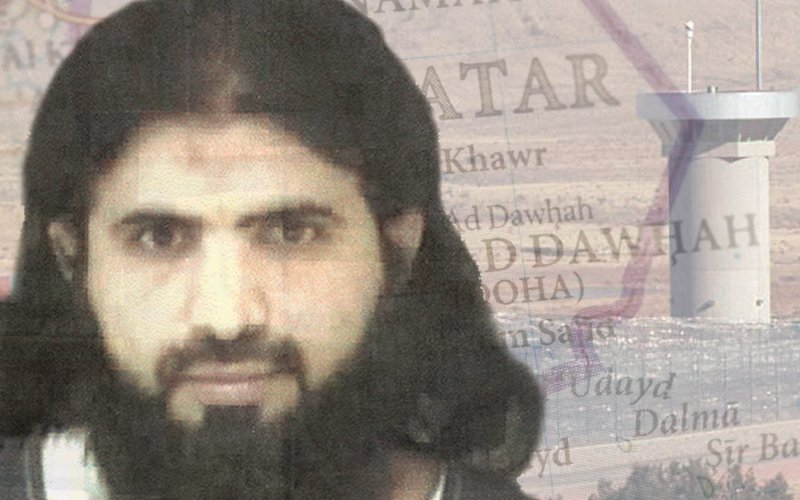
1422235139631.cachedAli Saleh Kahlah al-Marri, former graduate student at Bradley University, Peoria, Illinois, is photographed in this booking photo at Peoria County Sheriff’s Office in Illinois on May 20, 2003. (Peoria County Sheriff’s Office/Reuters)

That may explain why U.S. officials were reluctant to give Al-Marri a criminal trial, where he could have questioned the credibility of the evidence Mohammed provided while being tortured and exposed the details of the CIA’s interrogation program.

Al-Marri was held in a naval brig for more than five years, and his lawyers have claimed he was subjected to harsh and intimidating treatment. Al-Marri’s case took yet another odd turn when, early in the Obama administration, he was transferred back into federal court and pleaded guilty to conspiracy to aid al Qaeda.

Back in Qatar, where Al-Marri has been reunited with his family, he’s being given a hero’s welcome. Members of the public have been invited to a celebration in Al-Marri’s honor held just down the street from a football stadium that will host the 2022 World Cup, said David Weinberg, a senior fellow at the Foundation for Defense of Democracies.

“Several prominent Qatari personalities welcomed Al-Marri home with open arms. That trend has continued, with a longtime board member of Al Jazeeradeclaring on her personal Twitter page that ‘We congratulate the family of Ali bin Kahlah Al-Marri on his return,’” Weinberg told The Daily Beast.

Al-Marri may have other powerful friends in Qatar, in addition to the attorney general. Weinberg noted that in U.S. court documents, Al-Marri is said to have spent nearly a decade working as a “key person” in the audit department of Qatar Islamic Bank, and then as a senior auditor for the government of Qatar. Sending a known moneyman to a country widely seen as a major financial hub for terrorist groups, instead of to Saudi Arabia, where he also has citizenship, “was a big missed opportunity for U.S. policy,” Weinberg said.

CBS Panel Blasts Obama’s ‘Extraordinary Disconnect,’ ‘Question if WH Knows What’s Going On’

January 25, 2015

CBS Panel Blasts Obama’s ‘Extraordinary Disconnect,’ ‘Question if WH Knows What’s Going On’, You Tube, January 25, 2015

(Other questions might be: Does he care? About what? and Why? — DM)

President Obama’s ‘successful’ counterterrorism strategy in Yemen in limbo

January 25, 2015

President Obama’s ‘successful’ counterterrorism strategy in Yemen in limbo, Long War Journal, Thomas Joscelyn & Bill Roggio, January 24, 2015

If this is what a successful counterterrorism strategy looks like, we’d hate to see failure.

**********************

When announcing the US strategy to “degrade and ultimately destroy” the Islamic State in both Iraq and Syria, President Barack Obama said he would model it after America’s counterterrorism strategy in Somalia and Yemen, “one that we have successfully pursued…for years.”

Immediately after Obama’s speech, we at The Long War Journal questioned the wisdom of describing Somalia and Yemen as “successfully pursued” counterterrorism operations. Al Qaeda’s official branches, Shabaab in Somalia and al Qaeda in the Arabian Peninsula (AQAP) in Yemen, remain entrenched in their respective countries, despite some setbacks here and there. AQAP’s core leadership cadre is intact. And both al Qaeda branches continue to control territory while working to conduct attacks outside of their countries. [For details, see LWJ report, US strategy against Islamic State to mirror counterterrorism efforts in Yemen, Somalia.]

In the four plus months since Obama described Yemen as a successful engagement, things have gone from bad to worse. The Iranian-backed Shiite Houthis have broken out from the northern provinces and overran the capital. Just this week, President Hadi, who was perhaps America’s greatest ally on the Arabian Peninsula as he actively endorsed and facilitated US counterterrorism operations, including controversial drone strikes against AQAP, was forced to step down. The prime minister has also resigned and the government has dissolved.

During this timeframe, the US drone program against AQAP has stalled. The last US drone strike in Yemen that has been confirmed by The Long War Journal took place on Nov. 12, 2014. This is especially remarkable given that AQAP has claimed credit for the assault on Charlie Hebdo’s offices in Paris, and the terrorists themselves said that AQAP sent them.

Unsurprisingly, US officials are now telling Reuters that counterterrorism operations in Yemen are “paralyzed” with the collapse of the Hadi government (the long gap in strikes in the face of the Charlie Hebdo attack is a clear indication that US CT operations are in limbo). Yemen’s military is also said to be in disarray.

If US officials expect the Houthis to be willing participants against AQAP, they are mistaken. The Houthis, while enemies of AQAP, are no friends of the US. While their movement was not created by Iran, they have adopted the Iranians’ motto: “Death to America.” Additionally, any action against AQAP only serves to strengthen the Houthis, and by extension, Iran.

Meanwhile, without a central government and effective military, Sunnis may be tempted to back AQAP against the Shiite Houthis, thereby increasing AQAP’s recruiting pool. There is already evidence that this is happening.

If this is what a successful counterterrorism strategy looks like, we’d hate to see failure.


The New Antisemitism: Chesler

January 25, 2015

The New Antisemitism: Chesler, You Tube, January 23, 2015

(Phyllis Chester is — gasp — a Zionist! She even fails to understand that Islam is the religion of peace and claims that it is a danger to Western civilization which —  as all right left-thinking people know — is the cause of all evil in the world. I’m with her.– DM)

What Bobby Jindal Gets about Islam — and Most People Still Don’t

January 24, 2015

What Bobby Jindal Gets about Islam — and Most People Still Don’t, National Review on lineAndrew C. McCarthy, January 24, 2015

(This is the best post I have read thus far on “no go zones” and their significance to civilized societies. — DM)

With Western Europe still reeling from the jihadist mass-murders in Paris at Charlie Hebdo magazine and the Hyper Kacher Jewish market, Governor Jindal outlined a bold, Reaganesque vision of American foreign policy guided by three imperatives — freedom, security, and truth. It is on the last one, truth, that our capacity to ensure freedom and security hinges. “You cannot remedy a problem,” Jindal explained, “if you will not name it and define it.”

The world’s most influential Islamic supremacists have told us in no uncertain terms that they see Muslim immigration in the West as part of a conquest strategy.

******************

pic_giant_012415_SM_Muslims-France

Footballs are deflating, the president is detached from reality, the Saudi king is deceased, and the sharia state next door, Yemen, is descending into bloody chaos. With mere anarchy loosed upon the world, it would be easy to miss the fact that, in England this week, Bobby Jindal gave as important and compelling a speech as has been delivered in years about America — our leadership role on the world stage, our preservation as a beacon of liberty.

In the birthplace of the Magna Carta, it has nonetheless become legally risky to speak with candor (even when quoting Churchill). Yet Louisiana’s Republican governor became that rarest of modern Anglo or American statesmen. Bobby Jindal told the truth about Islam, specifically about its large radical subset that attacks the West by violent jihad from without and sharia-supremacist subversion from within.

With Western Europe still reeling from the jihadist mass-murders in Paris at Charlie Hebdo magazine and the Hyper Kacher Jewish market, Governor Jindal outlined a bold, Reaganesque vision of American foreign policy guided by three imperatives — freedom, security, and truth. It is on the last one, truth, that our capacity to ensure freedom and security hinges. “You cannot remedy a problem,” Jindal explained, “if you will not name it and define it.”

And so he did: Our immediate security problem today “is ISIS and all forms of radical Islam.” That is, the challenge is not limited to violent jihadists who commit barbaric atrocities. Jindal elaborated: “In the West, non-assimilationist Muslims establish enclaves and carry out as much of sharia law as they can without regard for the laws of the democratic countries which provided them a new home.”

The campaign to implement and spread sharia is antithetical to Western liberty. Freedom, Jindal said, means “the ability to conduct commerce both inside and outside your borders; it means the right to speak freely, to publish any cartoons you want. It means the right to worship freely. It means the right to self-determination.” By contrast, “radical Islamists do not believe in freedom or common decency, nor are they willing to accommodate them in any way and anywhere.” Moreover, the version of sharia law to which they adhere

is not just different than our law, it’s not just a cultural difference, it is oppression and it is wrong. It subjugates women and treats them as property, and it is antithetical to valuing all of human life equally. It is the very definition of oppression. We must stop pretending otherwise.

It cannot credibly be denied that this is so, as I have documented — using not only notorious examples of how sharia is applied in countries like Saudi Arabia (where it is the law of the land), but also Reliance of the Traveller, a classic sharia manual certified as accurate by prominent Islamic scholars, including at both al-AzharUniversity (the seat of Sunni jurisprudence since the tenth century) and at the International Institute of Islamic Thought (an influential Muslim Brotherhood think tank).

Still, Governor Jindal has been pilloried since his courageous speech by tendentious critics across the spectrum, from the usual Islamist grievance chorus to Fox News commentators and British prime minister David Cameron.

Why? Because he dared notice what ought to be an inarguable fact: The non-assimilationist Muslim campaign has resulted in the rise throughout Western Europe of what Jindal described as “unofficial” “so-called” “no-go zones.”

Jindal was clearly right about this. His timing, however, was wrong: He had the misfortune to dilate on “no-go zones” at the same time that Steven Emerson, the usually astute terrorism analyst, made a no-go gaffe. Steve erroneously claimed that the entire British city of Birmingham is “totally Muslim” and has become a “no-go zone” where “non-Muslims simply don’t go in.”

Emerson has since apologized profusely. The damage, however, was done. Fox News is evidently so embarrassed at having been the forum for his faux pas (and at having been threatened with legal action by the city of Paris, which was the main target of Steve’s commentary), that the network is over-correcting. This helps stoke the Islamist meme that no-go zones are a hysterical figment of the “Islamophobic” imagination.

That is absurd, but follows naturally from two things: a common misunderstanding about sharia, and a misrepresentation that describing the incontestable fact that sharia is being applied de facto in Europe is the same as falsely claiming that sharia is now the de jure writ of Europe.

Dreamy Islamophiles like Mr. Cameron and many of his like-minded progressives in bipartisan Beltway circles have a sputtering snit anytime a commentator associates Islam with anything other than “peace.” Consequently, the doctrine of Islam (which actually means submission) remains taboo and poorly understood in the West. One major misconception is that Islamists (i.e., Islamic supremacists or Muslims who want sharia implemented) demand that all non-Muslims convert to Islam. A no-go zone is thus incorrectly assumed by many to be a place that Muslims forbid non-Muslims to enter.

In reality, sharia explicitly invites the presence of non-Muslims provided that they submit to the authority of Islamic rule. Indeed historically, as I related in The Grand Jihad, my book about the Muslim Brotherhood and its Islamist ideology, because sharia calls on these submissive non-Muslims (dhimmis) to pay a poll tax (jizya), their continued presence was of economic importance in lands conquered by Islamic rulers.

It is therefore easy for Islamists and their apologists to knock down their strawman depiction of no-go zones as places where non-Muslims are not allowed. That is not what no-go zones are — neither as they exist in fact nor as they are contemplated by sharia. The point of imposing sharia — the reason it is the necessary precondition for building an Islamic society — is to make Islam the dominant social system, not the exclusive faith. The idea is that once sharia’s systematic discrimination against non-Muslims is in place, non-Muslims will see the good sense of becoming Muslims. Over time, every one will convert “without coercion.” The game is to set up an extortionate incentive for conversion while maintaining the smiley-face assurance that no one is being forced to convert at the point of a sword.

So radical Muslims will be welcoming to any ordinary non-Muslims who are willing to defer to their mores. What they are hostile to are officials of the host state: police, firefighters, building inspectors, emergency medical personnel, and anything associated with the armed forces. That is because the presence of those forces symbolizes the authority — the non-submission — of the state.

Notice, however, that no sensible person is saying that state authorities are prohibited from entering no-go zones as a matter of law. The point is that they are severely discouraged from entering as a matter of fact — and the degree of discouragement varies directly with the density of the Muslim population and its radical component. Ditto for non-Muslim lay people: It is not that they are not permitted to enter these enclaves; it is that they avoid entering because doing so is dangerous if they are flaunting Western modes of dress and conduct.

There is a reason that Governor Jindal qualified his invocation of the term no-go zones, modifying it with “so-called” and noting that the term is used “unofficially.” His speech was about reality, particularly where it stressed the need for truthfulness in forming policy. If our premise is reality, it is not no-go zones that are imaginary; it is the suggestion that no-go zones do not exist simply because non-Muslim entry is not literally prohibited by law. As the Gatestone Institute’s Soeren Kern painstakingly demonstrates, “Muslim no-go zones are a well-known fact of life in many parts of Europe.” It has been amply acknowledged not only in press reports and academic analyses but by governments that must deal with them.

Have a look, for example, at the French government’s official listing of 750 Zones Urbaines Sensibiles­ — “sensitive urban zones.” France’s “ZUS” designation is significant. As the estimable scholar Daniel Pipes recounted in a column at NRO this week, when he coined the term “no-go zone” in 2006 it was intended as “a non-euphemistic equivalent” of ZUS. If that is how the term “no-go zone” is understood — as an enclave deferential to Islamic sensibilities rather than exclusionary of non-Muslims — the contention that no-go zones do not exist is plainly frivolous. This is so even if, as Pipes maintains, the term “no-go zone” itself was an overstatement. The term “semi-autonomous sectors,” he says, would more accurately convey the historical anomaly the West has created: “a majority population [that] accepts the customs and even the criminality or a poorer and weaker community,” and in a manner that involves far more than control over physical territory.

Nevertheless, the problem with all this semantic nattering is its intimation that we can only infer the existence of no-go zones, and of the Islamist subversion they signal, by drawing inferences from what we see happening on the ground.

Nonsense. The world’s most influential Islamic supremacists have told us in no uncertain terms that they see Muslim immigration in the West as part of a conquest strategy.

As I recounted in The Grand Jihad, the strategy is often referred to as “voluntary apartheid.” One of its leading advocates is Sheikh Yusuf al-Qaradawi, the Muslim Brotherhood icon who is probably the world’s most revered sharia jurist. SheikhQaradawi, who vows that Islam will conquer America and Europe, and who has been crystal clear on the incompatibility of sharia and Western democracy, elaborates:

Were we to convince Western leaders and decision-makers of our right to live according to our faith — ideologically, legislatively, and ethically — without imposing our views or inflicting harm upon them, we would have traversed an immense barrier in our quest for an Islamic state.

Translation: To establish Islamic domination in the West, we do not need to resort to terrorism or to force non-Muslims to convert; we need merely a recognized right to resist assimilation, to regard sharia as superseding Western law and custom when the two conflict, as they do in fundamental ways.

This is precisely why the Organization of Islamic Cooperation — the bloc of 56 Muslim countries (plus the Palestinian Authority) — warned in a 2010 report on “Islamophobia” that “Muslims should not be marginalized or attempted to be assimilated, but should be accommodated.” (Here, at p. 30.) It is why Recep Tayyip Erdogan, the Islamist president of Turkey who has systematically dismantled that country’s secular, pro-Western system, pronounces that pressuring Muslims to assimilate “is a crime against humanity.”

At Oxford, Bobby Jindal bluntly asserted that the ideology of our enemy, radical Islam,

holds the view that it is wrong to expect assimilation, that assimilation is colonialist, assimilation is backward, and assimilation is in fact evidence of cultural bigotry and insensitivity. They think it is wrong to expect that people who chose to immigrate to your country should be expected to endorse and abide by your laws. They think it is unenlightened, discriminatory, and even racist to expect immigrants to endorse and assimilate into the culture in their new country. This is complete rubbish.

That is the truth. The United States will not get national-security policy right, nor reestablish our credentials as leader of the free world, until we accept that truth. Accept it and resolve, as Governor Jindal has resolved, to tell it boldly.

US-Saudi summit in Riyadh to deal with pivotal issues of oil prices, Iran and Yemen

January 24, 2015

US-Saudi summit in Riyadh to deal with pivotal issues of oil prices, Iran and Yemen, DEBKAfile, January 24, 2015

He will want to clear the air most urgently on three controversial items of burning interest to both leaders: Riyadh’s flat opposition to the multilateral nuclear deal with Iran and skepticism in the face of Obama’s conviction that a comprehensive accord will curtail the Islamic Republic’s drive for a nuclear weapon.

(Only if King Salman is truly demented would he agree with Obama on Iran and oil prices. Increases in Saudi oil production have hurt Iran while Obama’s Iran scam and relief from sanctions continue to help it. — DM)

Obama_King_Salman_bin_Abdulaziz__27.1.15Past meeting between President Barack Obama and King Salman, then Crown Prince

President Barack Obama, having decided to cut short the third day of his India visit, will arrive in Riyadh Tuesday, Jan. 27 with the First Lady, to offer US condolences on the death of King Abdullah and hold critical talks with his successor, King Salman Bin Abdulaziz.

He will want to clear the air most urgently on three controversial items of burning interest to both leaders: Riyadh’s flat opposition to the multilateral nuclear deal with Iran and skepticism in the face of Obama’s conviction that a comprehensive accord will curtail the Islamic Republic’s drive for a nuclear weapon.

Next, the US leader will try and persuade the new Saudi ruler to slow down oil production in order to put the brakes on plunging prices, an example which other OPEC members are sure to follow.

Finally, Obama and Salman must decide how to handle the fall of Yemen into the hands of Shiite Houthi rebels, who have seized the capital Sanaa with Iranian support and brought down the US-Saudi-sponsored president Abed Rabbo Mansour Hadi.

Two secondary issues will be the struggle against the Islamic State of Iraq and the Levant in the oil kingdom’s back yard, in which the US and Saudi Arabia are coalition partners; and the situation in the Syrian conflict.

Since this is an outsize agenda for one meeting, DEBKAfile’s sources in Washington and the Gulf expect Obama to focus in his initial encounter with Salman on the broad lines of the nuclear Iran dispute and oil prices. Detailed discussions on these and other issues will be set aside for US and Saudi officials of lower rank to hammer out in the coming weeks, as the new king begins to take hold of the reins of government.

A number of Middle East leaders will be following the outcome of this Riyadh summit with bated breath. Many are worried that Obama may persuade the new monarch to play ball with his Middle East policies, so effecting a radical reversal of the late Abdullah’s stance of flat opposition to Obama’s tactics in the region, aside from isolated cases.

A decision by Salman to accept America’s lead on the Iranian nuclear question and oil prices would be a serious blow for the anti-US Arab front, spearheaded hitherto by Saudi Arabia, Egypt and some of the Gulf emirates. It would also be a setback for Israeli Prime Minister Binyamin Netanyahu’s fight against Obama’s nuclear diplomacy for Iran. This policy was underpinned by the Saudi-Egyptian political and military partnership that aimed at stalling the deal crafted by Washington, which purported to lay to rest the nuclear controversy with Iran.

John Bolton on WMAL 1-22-15

January 23, 2015

John Bolton on WMAL 1-22-15, via You Tube, January 22, 2015

(Audio only. Amb. Bolton speaks of PM Netanyahu’s address to Congress, no-go zones and Obama’s fantasies about Islamic terrorism, the Islamic State and Iran. — DM)