Archive for the ‘Obama’ category

General Michael Flynn and Ambassador Robert Joseph on Iran’s Missile Program and a Nuclear Deal

June 11, 2015

General Michael Flynn and Ambassador Robert Joseph on Iran’s Missile Program and a Nuclear Deal, Secure Freedom.Org. via You Tube, June 11, 2015

Former DIA Director Lt. General Michael Flynn and Ambassador Robert Joseph discuss their concerns about the exclusion of Iran’s ballistic missile program from the nuclear agreement currently being negotiated with Tehran and their belief that this deal will not stop or slow Iran’s pursuit of nuclear weapons.


Death by Lashing: Saudi Arabia

June 11, 2015

Death by Lashing: Saudi Arabia, The Gatestone InstituteSalim Mansur, June 11, 2015

  • Nothing could uplift the universal image of Saudi Arabia and King Salman more than if today he issued a pardon. World leaders, including U.S. President Barack Obama, who has so far been silent on the issue, should immediately speak out — as should the media and human rights groups.
  • There was no insult of Islam, of the prophet, or of the Quran, in what Badawi wrote; and, truth be told, God, Islam and the prophet are all beyond insults, and beyond the reach of profanity that occasionally spills forth from the bigoted or tortured minds of individuals.
  • The treatment of Raif Badawi stands out, not merely for its cruelty, but how it has come to symbolize the grotesquely repulsive nature of the Saudi kingdom and what it represents behind the mask of religious austerity.

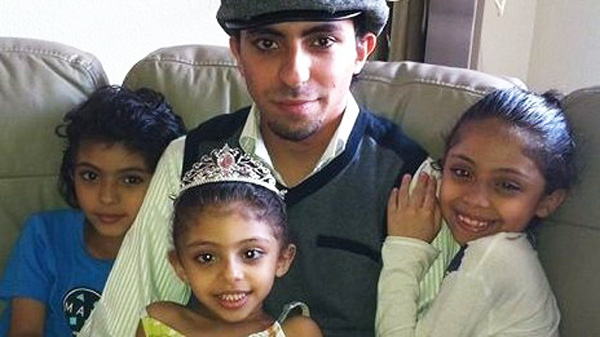
Tomorrow, Friday, the virtual death sentence by 1000 lashes, delivered “very harshly” according to the flogging order, fifty at a time, might continue for Raif Badawi, a 31-year-old Saudi blogger and father of three, for allegedly “insulting Islam.”

The flogging sentence, plus ten years in prison, was upheld last week by Saudi Arabia’s supreme court, and can now only be overturned by a pardon from King Salman.

Although Badawi, who is ill and frail, would most certainly perish, in Saudi justice there is little concern for sentences to be proportionate to the crimes for which the accused are found guilty, or for adequate legal representation. Badawi’s lawyer, Walid Abu al-Khair, was also jailed, effectively for the crime of representing him.

Badawi was accused of insulting Islam in his blog posts. In a country where thinking is forbidden, Badawi had expressed forbidden thoughts by questioning the nature of his society and going public with them.

Badawi, for instance, had written, “Muslims in Saudi Arabia not only disrespect the beliefs of others, but also charge them with infidelity — to the extent that they consider anyone who is not Muslim an infidel. They also, within their own narrow definitions, consider non-Hanbali [the Saudi school of Islam] Muslims as apostates. How can we be such people and build… normal relations with six billion humans, four and a half billion of whom do not believe in Islam?”

1106Raif Badawi and his children, before his 2012 arrest.

There was naivety in putting such thoughts in writing, as Badawi did, and drawing the attention of Saudi thought police. In another post, Badawi suggested, “Secularism respects everyone and does not offend anyone… Secularism is the practical solution to lift countries (including ours) out of the third world and into the first world.”

It appears Badawi wrote in the first blush of what seemed to have been a breath of fresh air, characterized as the “Arab Spring,” that wafted across the politically bleak landscape of the Arab world in early 2011. There had come news of a Tunisian vendor who had put lit himself on fire protesting police brutality, and had died as a result; his death sparked a movement against Arab despots.

The anguish of the Tunisian vendor, Mohammed Bouazizi, was genuine. His tragic death brought people into the streets, and the Tunisian strongman, Zine el-Abidine Ben Ali, eventually fled into exile in January 2011. The Tunisian protest stirred Egyptians to rise against their strongman, President Hosni Mubarak, and succeed in toppling him in February 2011.

The “Arab Spring,” for those brief few weeks in early 2011, held forth the promise of change for better across the Arab world. And young men like Raif Badawi could be forgiven for imagining that they, too, in Saudi Arabia, could no longer be denied freedom, democracy, and secularism — the accepted norms in the West.

But the hard realities of the Arab world turned the promise of the “Arab Spring” into the nightmare of religious terror and counter-terror. Saudi Arabia is the incubator and citadel of Islamic fascism, otherwise known as Wahhabism. And here in the land of the two holy cities of Islam — Mecca and Medina — religion and politics are inseparable, and anyone who trespasses either does so at the risk of losing his head — literally — in the public beheadings that are the hallmark of the Saudi kingdom.

Raif Badawi was arrested, and has been held in prison in Jeddah since June 2012. The arrest of Badawi and Souad al-Shammari came after they together set up the web site called Saudi Liberal Network. It was promptly closed by the authorities when Badawi posted criticism of the Saudi religious police.

The initial sentence for Badawi by the Criminal Court in Jeddah for mischief and subverting public order was for 600 lashes and seven years in prison. He appealed, and the court returned the verdict by raising the sentence to 1000 lashes and 10 years in prison. The Saudi supreme court has upheld this sentence.

In the interim Badawi was given 50 lashes in a Jeddah public square in January of this year, while further lashings were suspended on medical grounds. Badawi’s wife, Ensaf Haidar, fears the lashings will resume — according to court order the 1000 lashes are to be completed in 20 sessions in front of a mosque — and could be fatal for her husband.

* * *

There is very little the outside world can do to change the nature of the Saudi regime, or for that matter the regime in Iran, which is indistinguishable from the Saudi regime in terms of tyranny and the cruelty to which, in both countries, dissidents are subjected.

After Raif Badawi was arrested, Ensaf Haidar and her children found refuge in Quebec, Canada. Across Quebec there has been heartfelt popular support expressed for Raif Badawi, and condemnation of his punishment. Quebec has officially protested Badawi’s sentence, while demanding his release from Saudi Arabia so that he might join his family where they have settled.

In response to a Quebec National Assembly resolution, passed unanimously in February, condemning Badawi’s lashings in Jeddah in January 2015, the Saudi ambassador to Canada wrote a letter to the Quebec politicians. The same letter was also sent to the Canadian government in Ottawa.

The letter, signed by the Saudi ambassador, Naif Bin Bandir Alsudairy, was obtained by the Canadian Broadcasting Corporation (CBC). It states, “The Kingdom does not accept at all any attack on it in the name of human rights especially when its constitution is based on Islamic law, which guarantees the rights of humans and preserves his blood, money, honour and dignity.”

The stand taken by the Quebec government apparently rattled the Saudi kingdom sufficiently to have its ambassador write a letter addressed to members of a provincial legislature.

* * *

It is one of the anomalies of our age that when, by a fluke of nature, large deposits of fossil fuels are discovered in a country, as in Saudi Arabia, it is accorded attention and respect by other countries in excess of anything it has done, or achieved, or by the record of its conduct in human affairs.

Apart from the oil reserves of the kingdom, the House of Saud is indistinguishable from the House of Kim ruling North Korea, and it is as deserving of the same contempt.

Oil has not only made the difference for Saudi Arabia, it has also made the West complicit in the evil that Saudi Arabia does at home and perpetrates abroad: spreading its pre-modern and perverted culture as Islam or, more appropriately, Wahhabism; and funding terror as jihadism.

The treatment of Raif Badawi stands out, not merely for its cruelty, but how it has come to symbolize the grotesquely repulsive nature of the Saudi kingdom and what it represents behind the mask of religious austerity.

Saudi Arabia is possessed with the opposite of the “Midas touch”: wherever its money buys influence, there, the natural goodness in society is stained and corroded by its touch.

The tragedy surrounding Raif Badawi is both the savage treatment meted out to a young man by the Saudi regime for simply expressing his thoughts, and of how innocence, when it goes against the culture of Saudi intolerance, is mocked, abused, and strangled.

Raif Badawi is also the face of why “official” Islam — the one portrayed by Saudi Arabia and the other OIC member states, and to which the West routinely defers – is so terribly retarded. Freedom of thought is anathema to “official” Islam and its defenders, as it once was in the former Soviet Union; it is the defining characteristic of a closed, totalitarian society.

Raif Badawi is a young man, and the thoughts he expressed were the unsullied thoughts of the young that are at once universal in expectations and desires, as they are innocent and unburdened by the hardness of life’s experiences.

There was no insult of Islam, of the prophet, or of the Quran, in what Badawi wrote; and truth be told, God, Islam, and the prophet are all beyond insults, and beyond the reach of profanity that occasionally spills forth from the bigoted or tortured minds of individuals.

“Official” Islam is an insult to Muslims and non-Muslims alike — for “official” Islam is politics devoid of any redeeming quality found in faith, which nourishes the spiritual yearning of people and uplifts them in a broken world. Through betrayal and hypocrisy, “official” Islam insults God, Islam, and the prophet, every minute of each day, and has become a torment to Muslims.

It is “official” Islam, and Wahhabism in its most perverted expression among Sunni Muslims, that has turned God — Allah in Arabic — repeatedly invoked in the Quran as the “Most Beneficent, the Most Merciful,” into a vengeful and capricious deity.

The Quran states that on the Day of Reckoning the prophet will speak forth, “O my Lord! Lo! mine own folk make this Qur’an of no account” (25:30). In another verse, the Quran instructs the prophet to tell the wandering Arabs of the desert that they have merely submitted, but they have no belief “for the faith hath not yet entered into your hearts” (49:14). And then there is the verse stating categorically, “There is no compulsion in religion” (2:256).[1]

When religion is reduced to politics then it is the logic of politics, hence power and coercion, that takes precedence. In Albert Camus’s striking formulation, “Politics is not religion, or if it is, then it is nothing but the Inquisition.”[2] In Saudi Arabia, religion is a daily dose of inquisition, and the executioner with his sword is both the reality and the symbol of the vengeful deity that bears little resemblance to the merciful and compassionate God of the Quran.

Raif Badawi’s innocence betrayed him. Age and experience would have taught him the hard reality of his culture, veiled by the mask of “official” Islam. This hard reality of Arab culture has been best understood by Arab poets through the years of Arab and Muslim history. Here is one example of a poet’s disgust with the hard reality of his country’s culture and politics. These are lines from a poem of Nizar Qabbani (1923-98), a much-loved Syrian-Arab poet:

When a helmet becomes God in heaven
and can do what it wishes
with a citizen – crush, mash
kill and resurrect
whatever it wills,
then the state is a whorehouse,
history is a rag,
and thought is lower than boots.

When a breath of air
comes by decree
of the sultan,
when every grain of wheat we eat,
every drop of water we drink
comes only by decree
of the sultan,
when an entire nation turns into
a herd of cattle fed in the sultan’s
shed, embryos will suffocate
in the womb, women will miscarry
and the sun will drop
a black noose over our square.[3]

The Sultan’s power is vainglorious, whimsical, easily insulted, and secured by perpetrating fear, and the realm he rules by decree is by necessity a slaughterhouse.

If Raif Badawi survives the thousand lashes in the slaughterhouse that is the Kingdom of Saudi Arabia, it will be a testimony of how an individual’s courage, born of innocence, might well defy the Sultan’s decree.

Nothing could uplift the universal image of Saudi Arabia or King Salman more than if today he issued a pardon.

World leaders, including U.S. President Barack Obama, who has so far been silent on the issue, should immediately speak out — as should the media and human rights groups.

________________________

[1] Verses quoted from the Quran are from The Meaning of the Glorious Koran, translated by Mohammed Marmaduke Pickthall (New York: Alfred A. Knopf and Everyman’s Library, 1930, 1992).

[2] A. Camus, The Rebel (New York: Vintage Books, Random House, 1956), p. 302.

[3] Nizar Qabbani, “From The Actors” in Salma Khadra Jayyusi (editor), Modern Arabic Poetry: An Anthology (New York: Columbia University Press, 1987), pp. 378-379.

WFB’s Bill Gertz discusses story on Obama support for Muslim Brotherhood on Steve Malzberg Show

June 11, 2015

WFB’s Bill Gertz discusses story on Obama support for Muslim Brotherhood on Steve Malzberg Show, Washington Free Beacon via You Tube, June 11, 2015


Nuclear Negotiations At An Impasse

June 11, 2015

Nuclear Negotiations At An Impasse, MEMRI, A. Savyon and Y. Carmon, June 11, 2015

Leader Khamenei Rejects Agreement Reached On Token Inspection Of Military Sites And Questioning Of Scientists; U.S. Willing To Close IAEA Dossier On Iranian PMD, To Settle For Inspecting Declared Nuclear Sites Only, And To Rely On Intelligence; EU Objects.

Introduction

This past week, members of Iran’s nuclear negotiating team revealed details about the Iran-U.S. nuclear negotiations. The negotiations were dealt a blow when Iranian Supreme Leader Ali Khamenei rejected an agreement reached by the two sides concerning a token inspection of military facilities and questioning of several nuclear scientists and “military personnel”; these were to be the response to the IAEA’s open dossier on possible military dimensions (PMD) of Iran’s nuclear program to which Iran has so far refused to respond.

Iranian reports on these developments show that in order to arrive at a comprehensive agreement, the U.S. is willing to forgo actual inspection of Iranian military facilities and to settle for inspection of declared nuclear facilities only, as set forth under the Additional Protocol, while the ongoing monitoring of Iran’s nuclear program will be left to intelligence elements.[1]

Thus, at this stage, there is a deadlock: Iran is refusing both to respond to the IAEA dossier on its PMD, and to allow actual inspection of facilities that are not declared nuclear facilities.

Furthermore, the EU has announced its objections to a comprehensive agreement with Iran in the absence of satisfactory answers from it regarding the IAEA dossier on its PMD. It said that the IAEA investigation of the PMD “will be essential” to a nuclear deal.[2] IAEA Director-General Yukio Amano has also linked the investigation of Iranian PMD to the attainment of such an agreement.

The Issue: Inspection Of Iranian Military Sites, Questioning Of Iranian Scientists

On May 25, 2015, in an Iranian television interview, Iranian Deputy Foreign Minister and head negotiator Abbas Araghchi disclosed that this issue had been agreed upon, but that when the Iranian team returned to Tehran for Khamenei’s approval, Khamenei had rejected this agreed solution out of hand (see MEMRI TV Clip No. 4928, Top Iranian Nuclear Negotiator Abbas Aragchi: We Reached Solution with P5+1 on Site Inspection, But Khamenei Rejected It, May 25, 2015 and Appendix I).[3]

It was evident also from Aragchi’s statements that after Khamenei rejected the agreed solution, Iran even reneged from what had been agreed as part of the Additional Protocol, and is now insisting that limitations and restrictions that are part of the Protocol be implemented in a way that will make future inspections difficult. As part of Iran’s backpedaling, Araghchi repeatedly emphasized that “so far, nothing has been concluded” regarding the issue of the inspections.[4]

U.S. Willingness To Disregard IAEA PMD Dossier

Statements by negotiating team member Hamid Baidinejad show that in return for willingness on Iran’s part to sign a comprehensive agreement, the U.S. was willing to forgo actual investigation of the IAEA’s open PMD dossier on Iran and instead to conduct a token inspection of military sites and questioning of Iranian nuclear scientists and military personnel. The U.S. asked Iran to carry out a number of specific steps, thereby paving the way to a comprehensive solution for this issue. These steps included inspections at several points in Iran, including two military facilities, and questioning several senior military officials and scientists (see Appendix II).

Iranian Negotiators’ Two Versions Of Events

An analysis of these statements by the Iranian negotiators shows that there are two different versions of what took place in the negotiations. According to Araghchi, the Iranian team agreed to the U.S.’s demand for a token inspection, but when the team returned to Tehran, Khamenei completely rejected this token inspection. Aragchi’s disclosure that the Iranian negotiators had arrived at an agreement with the Americans that was subsequently rejected by Khamenei caused an uproar in the Iranian political system, triggering harsh criticism against both the negotiators and the leaders of the pragmatic camp, and even leading to a public confrontation between Khamenei and pragmatic camp leader Hashemi Rafsanjani.[5]

The second version of events emerged after the uproar sparked by Aragchi’s revelations. Another negotiator, Baidinejad, in an attempt to correct Araghchi’s claim, stated that the Iranian negotiators had rejected the U.S. demands, even the demand for token inspection, but that the Americans had pressed them to present the demand to Khamenei anyway; when they did so, at the Americans’ urging, Khamenei rejected it outright.

Conclusion

Iran’s reneging on its consent to the U.S. demand for token inspections of its military facilities and questioning of some of its scientists and military personnel in exchange for the closing of the IAEA’s PMD dossier on it places President Obama in a difficult situation, and brings the negotiations to an impasse. This is because along with Khamenei’s rejection, the EU and the IAEA director-general both oppose closing Iran’s dossier in order to arrive at a comprehensive agreement.

It was apparently under these circumstances that CIA director John Brennan was secretly dispatched in early June to Israel, in order to persuade Israel, and, via Israel, the EU, that intelligence monitoring of any Iranian PMD was a satisfactory solution and that actual investigation of the PMD, which Khamenei rejected, could be waived. To this end, Brennan also underlined,on May 31, 2015 on CBS’s Face the Nation, the close U.S.-Israel security cooperation.[6]

In light of this situation, Iranian Foreign Minister Javad Zarif said on May 31, 2015 that with regard to inspection, “other solutions must be discussed.”[7]

Appendix I: Aragchi’s Version Of Events

In an interview that aired May 25, 2015 on Iran’s Channel 2 TV,Araqchi said [8]: “[Our] red lines may change under certain circumstances. This is another issue. We may change some of our red lines for a certain period of time. This is not a problem. The [leader] will give us new instructions, and the team will act accordingly. We have acted within this framework, and we will do so in the future. We will not let ourselves go beyond this framework…

“The Additional Protocol, which is the internationally accepted [control] regime, was not a red line for us. As I said before, our [negotiating] team does not determine those red lines. From the very beginning – and given that the Additional Protocol is [internationally] accepted – we were given permission to accept it during the negotiations. So far, it has not been accepted – we do not have an agreement yet – but it is one of the issues that the negotiating team has been given instructions to accept. As I said, the red lines may or may not be changed in due course, and the Additional Protocol may or may not be accepted at some point, but so far, this has not happened, and our instructions have not changed…

“If the military officials, the relevant officials, the Iranian parliament or the council appointed by Khamenei reach the conclusion that the access provided for in the Additional Protocol comes under the same category as the inspections that Khamenei banned, we will obey and will categorically not allow ‘managed access…’

“The ‘Possible Military Dimension’ [PMD] has always been a strong pretext for the [West]. We have to take this pretext away from them. We have created conditions that will enable us, within the framework of reaching the final nuclear agreement, to resolve the issue of PMD. This is possible now. In the negotiations, we discussed and reached several possible solutions, but these were not accepted in Tehran. These include [allowing the IAEA] to interview several [nuclear scientists], and allowing access to several facilities. They gave us a list and said: ‘If you let us have access to these people and these facilities, we will end the issue of PMD.’ This, however, was not accepted by Tehran, and Khamenei decisively and courageously rejected it..”

Appendix II: Baidinejad’s Version Of Events

In June 1, 2015 statements on his Instagram account that were quoted by the Iranian news agency Fars, negotiating team member Hamid Baidinejad said:[9] “One of the first principles agreed upon, already at the start of the Iran-P5+1 negotiations, was that in a future nuclear agreement, Iran would implement the Additional Protocol on a temporary and voluntary basis until the Majlis decides whether to ratify it and takes into account the other side’s implementation of its obligations…

“It is natural that after a comprehensive nuclear agreement is signed, Iran would be expected to revert to its previous decision – that is, temporarily and voluntarily implementing the Additional Protocol… Without the implementation of the Additional Protocol, even if it is on a temporary basis, the IAEA will not be able to confirm that Iran’s nuclear program is civilian, and that would mean that the process for resolving the nuclear issue will have failed…

“In no way does the Additional Protocol include a clause regarding an obligation on the part of the member states to agree to inspection of their military facilities or investigation of their nuclear scientists. The only thing that the Additional Protocol does make possible is controlled access to non-nuclear facilities, for taking [soil] samples for proving that there is no nuclear activity at facilities that are not declared [to be nuclear sites]…

“Should there be evidence of nuclear material at undeclared sites, whether they are military or civilian, the IAEA will be able to demand controlled access to them [but] only by means of a specific procedure already set out, so that an [Additional Protocol] member state will agree to the sampling in order to prove that it is not conducting nuclear activity in undeclared facilities…

“The Additional Protocol is not a special agreement between the international community and Iran; it is an important international document. Over 120 states are currently members of this protocol, and some have signed it and implemented it temporarily. Therefore, the attempt to interpret it in a way that will include an obligation on the part of [member]states to undergo inspection at [their] military facilities or to allow investigation of [their] nuclear scientists is completely mistaken…

“The discussion on the issue of [Iran’s] PMD, [that is,] Western countries’ claim that Iran has a military nuclear program for producing nuclear weapons, is historically rooted in the years prior to 2003. In recent years, U.S. and Western intelligence services have said that before 2003, Iran’s military wing – commanded by specific commanders in the country – engaged in an extensive clandestine project for producing nuclear weapons. To prove their mistaken claim, [the West] presented intelligence based on their intelligence agencies; however, Iran considers all this intelligence [data] to be faked… There is no doubt that these false accusations against Iran can only be resolved with a political agreement. Discussion of this issue, no matter how lengthy, will not remove these accusations…

“[That is why] the Iranian negotiating team proposed during the talks that Iran and the P5+1 resolve this issue, because they [i.e. the P5+1] would like, along with reaching an agreement, that the issue of the accusations [that Iran] attempted to obtain nuclear weapons will be resolved. They proposed that Iran take several specific steps and thus pave the way to a comprehensive solution to the issue… Iran announced that it considers this dossier faked… But an agreement on it depends on what steps Iran will be asked to take [in order to close the dossier]. They announced that they will discuss the issue on level of the P5+1 [alone] because of its special sensitivity, and will submit their final opinion to Iran at the appropriate time.

“In the round [of talks] that preceded the [April 2015] press release in Lausanne, the P5+1 countries presented Iran with a program that includes inspection at a few points, including two military facilities, and questioning of several senior military officials and nuclear experts whose names were noted in the IAEA reports both directly and indirectly. They claimed that [if they] were allowed access to these sites, and the IAEA was permitted to question these people, that would be the end of the matter of the [PMD] accusations against Iran. As soon as this insulting proposal was raised, Iran rejected it unequivocally… At the same time, the P5+1 asked the Iranian representatives to present the P5+1’s opinion to officials in Iran, despite their express opposition, [for the officials’ approval].

“Leader [Khamenei’s] harsh response rejecting the demand by these countries to inspect military facilities and question nuclear scientists was a completely correct and accurate response. The nuclear negotiations team is proud of having expressed the exact same position [as Khamenei] three months ago, thanks to its complete grasp of the position of the regime and of the leader… Unfortunately, there were some in Iran who were not updated on the details of this issue… and instead of praising the Iranian negotiating team, took the opportunity, while being unaware of the process by which the issue was brought up for discussion – which was reported in full to top regime officials – to launch extremely harsh attacks on the Iranian negotiating team, to plan protests, and to demand a halt to the negotiations…

“These objections and accusations will not last long, but airing these concerns to public opinion can cast doubt on the regime’s main institutions. Everyone is expected to understand Iran’s critical circumstances, and, in this Year of Empathy Between the Government and the People they must join hands in defending Iran’s basic principles and rights and must unite with senior officials in order to efficiently promote the sensitive stage of the nuclear negotiations under the guidance of top senior officials in the regime of the Islamic Republic – and especially by Leader [Khamenei] who is very closely overseeing the negotiations. This way, if an agreement is reached, it will guarantee the preservation of the great Iranian nation’s basic principles.”

Endnotes:

[1] Under the Additional Protocol, the clarification of PMDs at facilities that are not declared nuclear facilities is subject to the consent of the member state under investigation; thus, such sites in fact cannot be inspected.

[2] AP, June 8 2015.

[3] In the interview, Aragchi said that the NPT’s Additional Protocol was not a red line for the Iranian team, and that the team had in fact beeninstructed to accept it. He explained that Iran could always harden its position on these issues. See MEMRI TV Clip No. 4928, “Top Iranian Nuclear Negotiator Abbas Araqchi: We Reached Solution with P5+1 on Site Inspection, But Khamenei Rejected It,” May 25, 2015. It should be mentioned that under former Iranian president Mahmoud Ahmadinejad, IAEA questioning of Iranian scientists was permitted, and two visits to theParchin military facility were allowed. The Iranian team’s acceptance of this demand by the international community was presumably based on this precedent.

[4] Irib (Iran), June 4, 2014.

[5] Senior figures in Iran’s ideological camp hastened to obscure Araghchi’s statements, and to correct them. Majlis speaker for national security affairs Alaa Al-Boroujerdi stated that Aragchi’s words were untrue, and added: “Aragchi only discussed the major issues, and did not say that Iran had consented to inspection of military facilities… Khamenei announced that we will not allow any talks with Iranian scientists, after he noticed that we were under threat by terrorists. The arrest of several who murdered our nuclear scientists revealed that these [perpetrators] were linked to the Mossad. We have red lines, and we will implement them. ISNA, Iran, May 25, 2015. The Javandaily, which is affiliated with Iran’s Islamic Revolutionary Guards Corps (IRGC), also denied Aragchi’s statements regarding the red lines: “In a television interview, top Iranian negotiation [Aragchi] referred to a particular point, and this issue should be addressed. He said: ‘…Perhaps under certain conditions our red lines will change, and the work [of the negotiations] will proceed according to instructions.’ This declaration regarding the possibility of changes to the red lines under certain circumstances is mistaken, for several reasons… As is evident from their names, the red lines are borders that define the basic framework of the negotiations, and without them the negotiations will reach undesirable and unexpected results.” Javanalso warned the Iranian negotiating team about deviating from the red lines: “The Iranian nation supports its negotiating team as long as it operates to realize its rights in the framework of the national interests and preserves national honor. Any withdrawal from this basis, and acceptance of being forced into humiliation by the enemy side, will be met with a popular response from the nation, and will undoubtedly go down in history as a dark and negative point.” Javan, Iran, May 26, 2015. A new website affiliated with the extremist ideological camp called on May 26, 2015 on Khamenei to fire Foreign Minister Zarif and his negotiating team for their “American tendencies.” Amanpress.ir, May 26, 2015.

[6] Haaretz (Israel), June 9, 2015.

[7] Mehr (Iran), May 31, 2015.

[8] See MEMRI TV Clip No. 4928, Top Iranian Nuclear Negotiator Abbas Aragchi: We Reached Solution with P5+1 on Site Inspection, But Khamenei Rejected It, May 25, 2015.

[9] Fars (Iran), June 1, 2015.
Undoing Sanctions

June 11, 2015

Undoing sanctions, Power LineScott Johnson, June 10, 2015

(Please see also, US finds peeling back the Iran sanctions onion no easy task, here. — DM)

The AP has just broken the story by Bradley Klapper and Matt Lee regarding the prospective unraveling of the sanctions regime in its entirety. Their story is “US finds peeling back the Iran sanctions onion no easy task.” It’s an important story and Omri Ceren has written to comment on it as follows:

There’s a lot going on in this piece, it’s 1,100 words, and it gets highly technical very early. But it’s also functionally an exposé of how the Obama administration is going to shred the entire sanctions regime despite having promised lawmakers the exact opposite, and so the story will rightly be driving the discussion for the next couple of days at least.

Background — Throughout the P5+1 negotiations, but especially since Lausanne, the Obama administration has declared to lawmakers and reporters that the final deal will only lift nuclear-related sanctions on Iran. The talking point was a huge part of their immediate post-Lausanne media strategy. The April 2 factsheet they circulated stated “U.S. sanctions on Iran for terrorism, human rights abuses, and ballistic missiles will remain in place under the deal.” Since then the assurance has become even more central to their media strategy. It’s the overarching argument they use to respond to Congressional and Arab worries that the nuclear deal will empower Iran to become a regional hegemon capable of threatening American national interests and global security. The precise wording differs from presser to presser and interview to interview, but it’s usually something like ‘our problems with Iran go way beyond the nuclear issue, and in the aftermath of a deal we will continue to pressure them on human rights, terrorism, their conventional military activities, and so on.’

AP scoop #1 – admin is going to roll back non-nuclear sanctions — The lede is blunt: “the Obama administration may have to backtrack on its promise that it will suspend only nuclear-related economic sanctions.” The story reveals that sanctions that were imposed on Iran to block illicit finance and ballistic missile development will also be rolled back. 23 out of 24 currently sanctioned Iranian banks will be delisted, including the staggeringly crucial Central Bank of Iran. There’s no way to credibly spin delisting the CBI as nuclear-related relief. The CBI is government owned and – as the AP article notes – was designated as a primary money laundering concern because the Iranians use it for financing terrorism, ballistic missile research, and campaigns aimed at bolstering the Assad regime in Syria. Secondary sanctions that prevent other countries from flooding Iran with cash will also be removed.

The result, per the article, will make “it easier for Iran’s Revolutionary Guard Corps and its police, intelligence services and paramilitary groups to do business.” It’s a 180 degree reversal of years of administration assurances that the Iranians would only get nuclear-related relief, and that sanctions relating to Iran’s non-nuclear military and terror-related activities would remain. In a broader context, it means the final deal will give Iran hundreds of billions of dollars to do what they want, while dropping restrictions might have prevented them from using the money to fund their ballistic missile program, global terror activities, or regional proxy wars.

AP scoop #2 — the administration pushback — Here’s where things get very strange very quickly. Everybody agrees the administration committed to rolling back only nuclear-related sanctions. Everybody now agrees the administration will also be lifting sanctions on things like ballistic missile development. But Obama officials told the AP that they’re not backtracking because… if you think about it, almost all sanctions are sort of nuclear related in a way. The key graf from the AP story reads: “Officials say the administration can meet its obligations because of how it interprets nuclear sanctions. For example, they say measures designed to stop Iran from acquiring ballistic missiles are nuclear-related because they were imposed to push Iran into the negotiations. Also, they say sanctions that may appear non-nuclear are often undergirded by previous actions conceived as efforts to stop Iran’s nuclear program.”

This is gaslighting. It’s just not true. It’s just not how things happened. Of course Congress has imposed sanctions on Iran over its nuclear work, but lawmakers also imposed sanctions over the funding of conventional IRGC activities, human rights abuses, global terrorism, ballistic missile development, and a range of other activities. The Comprehensive Iran Sanctions, Accountability, and Divestment Act of 2010 was about nuclear issues, but also separately about terrorism, ballistic missile development, and non-nuclear WMDs (the very first provision is the sunset provision and involves Presidential certification; the first requirement has zero to do with nuclear work and is entirely about international terrorism; the second requirement separates out nuclear, biological, and chemical weapons from ballistic missile technology and requires certification on all of them). In 2011 Treasury identified the entire country of Iran as a jurisdiction of primary money laundering concern, which is an illicit finance issue. That finding was then cited at the top of the 2011 Kirk-Menendez amendment to the 2012 defense authorization bill, which was about terrorism….

To believe that ballistic missile sanctions are nuclear sanctions you’d have to believe that Congress never tried to impose sanctions because of all of the other things that Iran can put on top of their ballistic missiles. That’s just not how the laws read. The claim isn’t even defensible in the context of the current round of Iran negotiations. If anything it’s less defensible. The interim JPOA and the final JCPOA have never treated ballistic missiles as a nuclear issue and they’ve always distinguished between ballistic missile sanctions and nuclear-related sanctions. There’s no debate about this:

– The JPOA by design froze all Iranian nuclear-related activity, but there were zero restrictions on ballistic missiles.
– The JPOA prohibited the United States from imposing new nuclear-related sanctions, but in April 2014 the Treasury Department issued new designations related to Iranian ballistic missile procurement activities.
– Again, the April 2 Lausanne factsheet describing the JCPOA stated flat out “U.S. sanctions on Iran for terrorism, human rights abuses, and ballistic missiles will remain in place under the deal.”

Iran satellite launches tied to ballistic missile program, UN experts say

June 10, 2015

Iran satellite launches tied to ballistic missile program, UN experts say, Fox News, June 10, 2015

Both of those actions, the majority concluded in 2012, were violations of U.N. sanctions resolutions that explicitly forbade any Iranian activity “related to ballistic missiles capable of delivering nuclear weapons, including launches using ballistic missile technology.”

The experts’ more diffident reference to Iran’s renewed program of  launches over the next year gives Iran much greater benefit of the doubt this time.

***************

EXCLUSIVE: Iran has launched a space satellite using  technology that could “contribute to” the development of a ballistic missile capable of delivering nuclear weapons, according to a United Nations-appointed panel of experts monitoring the issue.

Tehran intends to launch more such satellites,  the panel said.

The most recent  launch came last February 15, the experts noted, adding that the Iranian government has already announced plans to conduct three additional satellite launches before March 2016.

The vehicle used in the February launch—from a military base in northern Iran– was based on a “space launch vehicle” that is  variant of Iran’s Shahab-3 ballistic missile, which has a range of about 1,000 miles. The Shahab-3 is one of two Iranian missiles that the experts say  “are believed to be potentially capable of delivery of nuclear weapons.”

The experts noted that the future satellites will be boosted aloft “from more powerful launchers and on the back of bigger carriers.”

Iran’s missile development—peaceful or not– is one of the murkier and more contentious  issues surrounding the ongoing negotiations between the Islamic Republic and the world’s major powers—precisely because ballistic missiles have been shunted to the side of a  potential deal centered on nuclear enrichment activities that the Obama Administration is pushing hard to conclude by June 30.

U.N. Security Council resolutions that have sanctioned Iran for its nuclear weapons development have also banned Iranian work on ballistic missile programs that could deliver the weapons. But missiles were not mentioned in the interim deal between Iran and the P5+1 powers struck last November, which has so far unfrozen billions in Iranian assets and which is supposed to be turned into a final agreement by June 30.

Last year, Supreme Leader Ayatollah Ali Khamenei called  any Western expectations that Iran would restrain its missile development program “stupid and idiotic,” and called for the country to mass produce such weapons.

Even so, a 7-member U.N. expert panel which is monitoring Iran’s behavior on the proliferation issue while negotiations continue noted in its June 1, 2015 report that Iran’s officials and news media “have not been reporting any new ballistic missile developments” such as the “unveiling or testing of new types of ballistic missiles,” or tests of medium-range missiles it is already known to possess.

Satellite  launches, however,  are another matter. The experts noted that the February 15 satellite payload weighed 110 lbs. and was designed for “collecting imagery.” It was only a limited success:  the satellite fell back into the earth’s atmosphere after just 23 days, even though it was apparently intended to stay aloft for 18 months.

CLICK HERE FOR THE EXPERT REPORT

Nonetheless, the experts added, it was Iran’s first satellite launch since two failures in 2012. They also observed cryptically that “the details of this case present similarities with the launch of another satellite by a Safir space launch vehicle in 2011” and  analyzed in one of their  previous reports.

And according to that earlier document, a majority of the expert panel concluded that “the satellite launch was related to ballistic missiles capable of delivering nuclear weapons,” and the Safir satellite launch vehicle itself “made use of ballistic missile technology.”

Both of those actions, the majority concluded in 2012, were violations of U.N. sanctions resolutions that explicitly forbade any Iranian activity “related to ballistic missiles capable of delivering nuclear weapons, including launches using ballistic missile technology.”

CLICK HERE FOR THE 2012 REPORT

The experts’ more diffident reference to Iran’s renewed program of  launches over the next year gives Iran much greater benefit of the doubt this time.

France, Iran and the “Peace Process”

June 10, 2015

France, Iran and the “Peace Process,” The Gatestone InstituteShoshana Bryen, June 10, 2015

  • The French draft corresponds with President Obama’s own — strongly held — belief that Israel has to ascribe to the President’s view, despite just having elected a Prime Minster who disagrees.
  • The air is poisoned. The CEO of the French cell phone company Orange declared his desire to boycott Israel, while Orange rakes in money from its operation in the Republic of Congo, a major human rights violator.
  • Smash the two stories together and you get an American President supporting France in its efforts to be a major player in the Middle East in exchange for French support for the P5+1 deal with Iran.

Sometimes, if you smash two stories together, you end up with something interesting; sometimes you get something worrisome. This is one of the latter.

The first story is about France, a member of the P5+1 negotiating a deal with Iran on nuclear capabilities. The French government has expressed increasing concern that the emerging deal is flawed — perhaps fatally. Foreign Minister Laurent Fabius reportedly told the French Parliament, “France will not accept [a deal] if it is not clear that inspections can be done at all Iranian installations, including military sites.” He added, “Yes to an agreement, but not to an agreement that will enable Iran to have the atomic bomb. That is the position of France, which is independent and peaceful.”

The French Ambassador to the United States, Gerard Araud, told an American audience “the most worrying aspect of the agreement” is that Iran will become a “one-year breakout state.” He expressed concern that if Iran becomes a nuclear state, other countries in the region will also seek to become nuclear powers.

The French position creates a problem for President Obama because the deal has to be agreed on by the P5+1, not the “P4+1-with-one-vote-in-opposition.”

1101 (1)Is President Obama supporting France in its efforts to be a major player in the Middle East, in exchange for French support for the P5+1 deal with Iran? Above, Secretary of State John Kerry (left) is pictured meeting French Foreign Minister Laurent Fabius, on February 27, 2013. (Image source: U.S. State Dept.)

The second story is also about France. With historic ties to the Middle East, but extremely limited military capabilities there (or anywhere), France is trying to be a diplomatic power broker. Christian Makarian, deputy editor of L’Express, wrote recently that after Assad used chemical weapons against his people, France wanted to intervene in Syria but was dissuaded by President Obama. “Hollande and… Fabius frequently made reference to last year’s backtracking on military intervention in Syria, which they consider one of their greater policy failings.” This, he postulates, accounts for French willingness to support military action in Iraq.

Influence can come from arms sales, and here the French excel. From 2005-2010, France was the third largest supplier of arms to the Middle East/North Africa (MENA) region, after the U.S. and Russia. MENA now accounts for nearly half the orders from the French military. Saudi Arabia, Morocco, UAE, Qatar, Oman, Tunisia and Algeria are clients, and this year, 5.2 billion euros in orders from Egypt. It amounts to a 17.3 percent increase in total arms sales abroad for 2014 over 2013.

Influence also comes from diplomacy — and this is where the stories begin to collide.

France, Britain and Germany had drafted a UN Security Council Resolution late last year to set parameters for establishing a Palestinian State and “ending the conflict.” It was not submitted because of the impending Israeli election. France is prepared to try now with a draft that would “solve” the problem by using the 1949 Armistice Line as a reference point for a Palestinian state with a shared capital in Jerusalem, a “fair” solution for refugees, and possible land swaps. It would also require that the Palestinians recognize Israel as a “Jewish State.”

Fabius, speaking in New York, said, “these parameters have to be defined and recognized by the Security Council and that obviously the two parties have to discuss, but the discussion will be accompanied by an international effort.”

A French official called it a “backdoor” for negotiations, explaining in a press report that “all actors including the Americans now realize that all other ways have been explored, without success.”

The U.S. has historically opposed “internationalizing” the conflict. Giving the UN authority to establish requirements for the parties violates the Oslo Accords, something Israel opposes and the Palestinians support.

In early May, President Obama indicated that he intended to veto the French proposal, saying “a big overarching deal” is probably not “possible in the next year, given the makeup of the Netanyahu government, given the challenges I think that exist for President Abbas.” In the same interview, he suggested “confidence-building measures” that would have an impact on the economic and social lives of Palestinians and Israelis.

However, the President appears to have moved toward the French position. He recently told Israeli television:

If in fact, there’s no prospect of an actual peace process, if nobody believes there’s a peace process, then it becomes more difficult to argue with those who are concerned about settlement construction, those who are concerned about the current situation, it’s more difficult for me to say to them, ‘Be patient. Wait, because we have a process here.'”

His own expressed skepticism about the achievability of an Israeli-Palestinian agreement appears to have given way to the French notion that “all other ways have been explored,” and that it is time to let the UN determine parameters for a “big overarching deal.” And, as it happens, the French draft corresponds with the President Obama’s own — strongly held — belief that Israel has to ascribe to the President’s view, despite having just elected a Prime Minister who disagrees:

The most important thing, I think, that we can do right now in strengthening Israel’s position is to describe very clearly why I have believed that a two-state solution is the best security plan for Israel over the long term… but also, at the end of the day, to say to any Israeli prime minister that it will require some risks in order to achieve peace.

The “risks” sound ominously like Secretary of State Kerry’s 2013 “warning” that Israel might face a “third intifada” if it didn’t toe the then-American, now-French line. “I mean does Israel want a third Intifada?” he asked. “I’ve got news for you. Today’s status quo will not be tomorrow’s.”

In Washington this week, Ambassador Araud used extraordinarily tough language against Israel in a series of Twitter exchanges with American supporters of Israel, culminating in the “blocking” of one of them. Silly kids’ stuff, but the air is poisoned. The CEO of the French cell phone company Orange declared his desire to boycott Israel, while Orange rakes in money from its operation in the Democratic Republic of Congo, a major human rights violator.

Smash the two stories together, you get an American president supporting France in its efforts to be a major player in the Middle East in exchange for French support of the P5+1 deal with Iran.

In both cases, guess who pays the price: Israel.

Cartoon of the day

June 10, 2015

H/t Joopklepzeiker

Obama terrorism

UN: US, other nations strangely silent on Iranian sanctions violations

June 10, 2015

UN: US, other nations strangely silent on Iranian sanctions violations, Hot Air, Ed Morrissey, June 10, 2015

(Please see also, US finds peeling back the Iran sanctions onion no easy task.– DM)

It’s not that they’re likely to cheat. Even the Obama administration admits that much, but their answer has been that the deal will have strict requirements for verification. That’s the problem. If the Obama administration won’t call out cheating that actually takes place now, why would anyone trust that they’ll call out violations that take place after a deal is cut — when those violations will make Obama and other world leaders look like saps?

**********************

How tough will the Obama administration be on Iran when it comes to holding them to the terms of a deal on nuclear development? If the track record on reporting sanctions violations gives any indication, we’re all in big trouble. Sanctions violations have become so brazen that even the United Nations wonders why other countries are not reporting Iran. They even have pictures showing the head of the Quds force flouting a travel ban to meet up with Tehran’s proxies, Bloomberg reports:

“The current situation with reporting could reflect a general reduction of procurement activities by the Iranian side or a political decision by some member states to refrain from reporting to avoid a possible negative impact on ongoing negotiations” between Iran and six world powers, said a panel of experts for the UN committee on Iran sanctions in its latest report, dated June 1 and made public Tuesday.

While the panel found that Iran “implemented its commitments” under an interim framework easing economic sanctions in return for curbs on its nuclear activities, the report raised questions about whether countries, including the U.S. and its European allies, have looked the other way on some sanctions violations.

No country reported that General Qassem Suleimani, commander of the elite Quds force of the Islamic Revolutionary Guard Corps, violated a UN-mandated travel ban despite “a number of media reports with photographs and videos” showing him in Iraq, Syria and Lebanon, “reportedly organizing and training militia and regular forces in those countries.” The report included examples of such photos.

The Quds force operates the proxies by which Iran invests in terrorism in the region. Thats why the UN placed a travel ban on Suleimani as part of the overall sanctions on Iran, a sanction that applied directly to their support for international terrorism. Nor is that the only blatant violation cited by the UN; Iran has also established a “nuclear procurement network” linked to UN-blacklisted firms, a violation that the UK did report.

In short, the UN report establishes that Iran intends on continuing its nuclear-weapons program and expanding its proxy terror operations. Why are other nations remaining silent about this? It seems as though Barack Obama isn’t alone in desiring his Neville Chamberlain moment.  Small wonder that Israel has declined to quietly play the role of Czechoslovakia in this replay of Munich:

The report provides fresh ammunition for critics, including Israeli Prime Minister Benjamin Netanyahu and members of both parties in the U.S. Congress who say that President Barack Obama and America’s allies are too eager for a deal with Iran. The Islamic Republic, they say, is likely to cheat on any nuclear accord reached in negotiations that face a self-imposed June 30 deadline.

It’s not that they’re likely to cheat. Even the Obama administration admits that much, but their answer has been that the deal will have strict requirements for verification. That’s the problem. If the Obama administration won’t call out cheating that actually takes place now, why would anyone trust that they’ll call out violations that take place after a deal is cut — when those violations will make Obama and other world leaders look like saps?

Even if the Iranians don’t build a nuclear weapon, the lifting of sanctions will keep Suleimani et al busy enough spending the windfall of cash Iran will receive on expanded terror operations. Joint Chiefs chair Gen. Martin Dempsey told Israelis on his recent visit to expect that outcome, but they’ll just have to prepare for it:

U.S. General Martin Dempsey, on a visit to Israel, said he shared a core Israeli fear that sanctions relief for Iran following a nuclear agreement would allow Tehran to give more money to its military and its guerrilla proxies.

“My assessment is that I share their concern. If the deal is reached and results in sanctions relief … it’s my expectation that it’s not all going to flow into their economy,” he said.

“I think that they will invest in their surrogates. I think they will invest in additional military capability,” Dempsey, the chairman of the Joint Chiefs of Staff, told a small group of reporters in Jerusalem.

But Dempsey said the long-term prospects were “far better” with an Iran that was not a nuclear weapons power.

Sure, but that assumes that sanctions relief precludes nuclearization. That would only happen if the West provides dire consequences for violations of the deal. Given the track record, it looks much more likely that Iran will get both the cash and the nuclear weapons, prospects that are far worse than what we had a year ago, both in the near- and long-term.

US finds peeling back the Iran sanctions onion no easy task

June 10, 2015

US finds peeling back the Iran sanctions onion no easy task, Israel Hayom, June 10, 2915

(For Obama, principles are as flexible as words.

Humpty words

— DM)

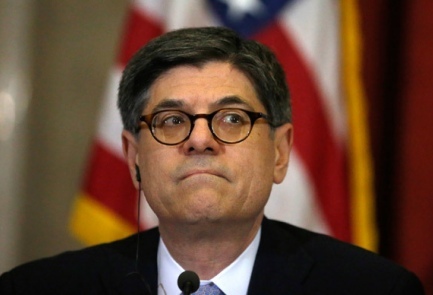
143393177342310791a_bU.S. Treasury Secretary Jacob Lew | Photo credit: Reuters

Under the sanctions developed over decades, hundreds of companies and individuals have been penalized not only for their roles in the country’s nuclear program but also for ballistic missile research, terrorism, human rights violations and money laundering.

Officials say the administration can meet its obligations because of how it interprets nuclear sanctions.

For example, they say measures designed to stop Iran from acquiring ballistic missiles are nuclear-related because they were imposed to push Iran into the negotiations. Also, they say sanctions that may appear non-nuclear are often undergirded by previous actions conceived as efforts to stop Iran’s nuclear program.

***********************

The Obama administration may have to backtrack on its promise that it will suspend only nuclear-related economic sanctions on Iran as part of an emerging nuclear agreement, officials and others involved in the process told The Associated Press Tuesday.

The problem derives from what was once a strong point of the broad U.S. sanctions effort that many credit with bringing Iran to the negotiating table in the first place.

Administration officials vehemently reject that any backtracking is taking place, but they are lumping sanctions together, differently from the way members of Congress and critics of the negotiations separate them.

Under the sanctions developed over decades, hundreds of companies and individuals have been penalized not only for their roles in the country’s nuclear program but also for ballistic missile research, terrorism, human rights violations and money laundering.

Now the administration is wending its way through that briar patch of interwoven economic sanctions.

The penalties are significant. Sanctioned foreign governments, companies or individuals are generally barred from doing business with U.S. citizens and businesses, or with foreign entities operating in the American financial system. The restrictions are usually accompanied by asset and property freezes as well as visa bans.

Negotiators hope to conclude a final nuclear deal by June 30. According to a framework reached in April, the U.S. will be required to lift sanctions that are related to Iran’s nuclear program but could leave others in place. President Barack Obama can suspend almost all U.S. measures against Iran, though only Congress can revoke them permanently.

“Iran knows that our array of sanctions focused on its efforts to support terrorism and destabilize the region will continue after any nuclear agreement,” Treasury Secretary Jack Lew told a gathering of American Jews in a weekend speech. U.S. officials will “aggressively target the finances of Iranian-backed terrorist groups and the Iranian entities that support them,” he said, including the Lebanese militant group Hezbollah and Iran’s Quds Force.

The Treasury Department’s sanctions point man, Adam Szubin, has been tasked with sorting out the mess, according to U.S. officials, though no clear plan has yet been finalized.

Officials say the administration can meet its obligations because of how it interprets nuclear sanctions.

For example, they say measures designed to stop Iran from acquiring ballistic missiles are nuclear-related because they were imposed to push Iran into the negotiations. Also, they say sanctions that may appear non-nuclear are often undergirded by previous actions conceived as efforts to stop Iran’s nuclear program.

The officials who provided information for this story spoke only on condition of anonymity because they were not authorized to speak publicly on the private discussions.

After years of negotiations, U.S. officials believe a deal is within reach that for a decade would keep Iran at least a year from being able to build a nuclear weapon.

In return, the U.S. would grant billions of dollars in relief from sanctions that have crippled Iran’s economy. But the whole package risks unraveling if the U.S. cannot provide the relief without scrapping sanctions unrelated to Iran’s nuclear program.

Administration officials say they are examining a range of options that include suspending both nuclear and some non-nuclear sanctions, a step that would face substantial opposition in Congress and elsewhere. Under one scenario, the U.S. could end non-nuclear restrictions on some entities, then slap them back on for another reason. But Iran could then plausibly accuse the U.S. of cheating on its commitments.

U.S. President Barack Obama has spoken about Iran potentially recouping up to $150 billion in assets trapped overseas. The process for how that would take place is still being worked through, said officials.

The Iranian Central Bank may prove the most glaring example of the administration’s dilemma, and officials acknowledge there is no way to give Iran the sanctions relief justified by its compliance without significantly easing restrictions on the institution.

The bank underpins Iran’s entire economy, and for years the U.S. avoided hitting it with sanctions, fearing such action would spread financial instability and raise oil prices. By late 2011, with Iran’s nuclear program advancing rapidly, Obama and Congress did order penalties, declaring the bank a “primary money laundering concern” and linking its activity to ballistic missile research, terror financing and support for Syrian President Bashar Assad.

The effects were far-reaching: Petroleum exports fell by 60%, Iran suffered runaway inflation, cash reserves dried up and industrial output in several sectors plummeted. And Iran agreed to talk about its nuclear program with the United States and five other world powers.

Now that the nuclear agreement is so close, Iran wants these sanctions lifted. The administration officials say all sanctions on the bank are nuclear-related.

Lew told the Jewish conference in New York that a nuclear accord would include the suspension of all “secondary” oil, trade and banking restrictions — those that apply to U.S. and non-U.S. banks, as well as foreign governments.

Many of these measures overlap with American sanctions tied to Iran’s nuclear program, and that has officials considering new sanctions to keep certain Iranian institutions under pressure.

Eliminating the secondary sanctions across the board could have wide-ranging implications, making it easier for Iran’s Revolutionary Guard Corps and its police, intelligence services and paramilitary groups to do business.

That possibility has Iran’s rivals in the region, including Israel and the Sunni monarchies of the Middle East, gravely worried.

“I share their concern,” Gen. Martin Dempsey, the Joint Chiefs of Staff chairman, said Tuesday in Jerusalem.

“If the deal is reached and results in sanctions relief, which results in more economic power and more purchasing power for the Iranian regime, it’s my expectation that it’s not all going to flow into the economy to improve the lot of the average Iranian citizen,” he said.

“I think they will invest in their surrogates. I think they will invest in additional military capability.”

Iran’s Revolutionary Guard is under U.S. sanctions because of its proliferation of weapons of mass destruction. But because the U.S. views the corps as so pernicious, the administration is considering new measures to help block it from meddling in the internal conflicts of Iraq, Lebanon, Syria and Yemen.

Of the 24 Iranian banks currently under U.S. sanctions, only one — Bank Saderat, cited for terrorism links — is subject to clear non-nuclear sanctions. The rest are designated because of nuclear and ballistic missile-related financing, while several are believed to be controlled by the Revolutionary Guard.

Will they be cleared for business with the world? U.S. officials still cannot say one way or another. Congress, too, has not received a list of banks and institutions that would be released from sanctions under the deal.

If the United States cannot deliver on its promises, it could take the blame for a collapse of the years-long negotiations toward a nuclear deal, putting the world — in the words of Obama and other U.S. officials — on a path toward military confrontation. At the same time, an Iran unburdened by sanctions could redouble efforts toward nuclear weapons capacity, while international unity and the global sanctions architecture on Tehran fray.