Archive for the ‘Middle East’ category

Jihadists reinforce other rebels during key battle in Aleppo province

February 7, 2016

Jihadists reinforce other rebels during key battle in Aleppo province, Long War Journal, February 6, 2016

Screen-Shot-2016-02-06-at-11.57.16-AM-768x433

An Al Nusrah Front convoy streams into Aleppo province in late January.

Al Nusrah Front, al Qaeda’s official branch in Syria, sent a massive convoy of fighters to the Aleppo province in late January. The jihadists’ redeployment was promoted in a short video posted on Twitter. More than 100 vehicles filled with fighters streamed into the province.

It was a harbinger of the heavy fighting to come.

Bashar al Assad’s regime, backed by Russian airstrikes, Iranian-sponsored Shiite militias and Hezbollah, launched a major offensive in Aleppo earlier this month. The fight for the province is likely the most important battle in Syria since early last year, when the Jaysh al Fateh coalition, led by Al Nusrah and Ahrar al Sham (an al Qaeda-linked jihadist group) swept through the neighboring Idlib province.

If Assad and his allies are successful it will not only allow them to lay siege to the city of Aleppo, parts of which have been controlled by the insurgents since 2012, but also to cut off Idlib. Assad wants to secure the northern part of the province, which borders Turkey and houses vital supply routes for the insurgency.

The Syrian government claims to have made gains in pursuit of this objective in recent days.

The Syrian Army, “in cooperation with” paramilitary groups, “restored security and stability to Rityan and Mair towns in the northern countryside of Aleppo province,” Assad’s propaganda arm, SANA, claimed on Feb. 5.

The purported gains came two days after SANA reported that the Syrian Army and its allies “broke the siege imposed on Nubbul and al-Zahra towns by terrorist organizations.” SANA claimed that “[s]cores of terrorists were killed, most of them from [Al Nusrah Front] during the operations.” Nubbul and al-Zahra are both Shiite-majority towns in the northern part of Aleppo.

There is an ebb and flow to the fighting in Aleppo, as elsewhere, making it difficult to tell if the government’s gains are lasting, or just temporary. For example, although SANA says Rityan has been retaken from the insurgents, Al Nusrah continues to post images from the fighting there.

And although SANA says all of the opposition to the government in Aleppo comes from “terrorist organizations,” the reality is more complex. Jihadist groups such as Al Nusrah are partnering with other rebel organizations, including Free Syrian Army (FSA) and Islamist factions, in an attempt to thwart the Syrian government’s advances.

The opposition in Aleppo

One of the strongest rebel groups in Aleppo is the Nur al-Din al-Zanki Movement. Members of Zanki and Al Nusrah clashed at a checkpoint in late September and early October of last year. Zanki’s “political bureau” then denounced Al Nusrah in tweets that were published in both English and Arabic. However, the infighting did not lead to a permanent rift between the two. Instead, Zanki complied with Al Nusrah’s demands and quickly apologized.

In a statement written in Arabic and released on social media, Zanki said its criticism of Al Nusrah did “not represent the [Zanki] movement’s official position…and we owe [an] exoneration of our brothers from what was attributed to them – accusations, insinuations, and slander [libel] – to God Almighty, and we only think properly of them.”

The “relationship between us and our [Nusrah] brothers is proceeding on even better terms than what it was in the past, and this incident which occurred between us and our [Nusrah] brothers will not deter us from vigorously continuing to strengthen the bond of Islamic brotherhood between us and them, and which obligates us – religiously – to cooperate and combine efforts and fight off the aggressor enemy,” Zanki’s apology continued.

The statement ended with a call for both Zanki and Al Nusrah “to [ensure] that the only judgment in any dispute between us should be based on religious law.”

Zanki is not al Qaeda. But as the skirmish with Al Nusrah demonstrated, Zanki does not want to offend al Qaeda’s men, cooperates with them on the battlefield and believes in a version of “religious law” (sharia) that is at least similar to Al Nusrah’s.

Despite its adherence to an Islamist ideology and alliance with Al Nusrah, Zanki has received American-made TOW missiles, which it has used against both the Assad regime and the Islamic State.

Another Islamist organization in Aleppo is Faylaq al Sham (Sham Legion), which fought as part of the Jaysh al Fateh coalition in Idlib. In early January, however, Faylaq al Sham announced that it was leaving Jaysh al Fateh to concentrate on the fighting in Aleppo. The group subsequently merged with others to form the “North Brigade” in Aleppo.

In late December, Sheikh Umar Huzaifa, a senior Faylaq al Sham official, was one of 38 ideologues who signed a statement proclaiming that jihad is an “individual obligation” for all Muslims “in situations like this.” The statement’s signatories, who belong to the “Association of Scholars in Sham,” portrayed the war in Syria as one pitting a “Crusader-Zionist-Safawi [Shiites and Iranians]” alliance against Sunni Muslims.

The association’s scholars claimed it “is no longer hidden from our Beloved Ummah [community of worldwide Muslims] what has reached the land of Sham with the rushing forward of the entire nations of Kufr [disbelief] against it,” because it “has become manifest in the Crusader-Zionist-Safawi coalition rushing to eliminate the revolution of the people of Sham and their blessed jihad.” The “battle of Sham has become a decisive battle against the nations of Kufr,” the statement continued, as the rebels’ enemies “gather to establish the Rafidhi [rejectionist] Shia to fulfill their drawn up plans for their (Shia) crescent (on the map) and to eliminate” Sunni belief in Syria and elsewhere.

Other signatories on the statement issued by the “Association of Scholars in Sham” included Sheikh Abdallah Muhammad al Muhaysini (an al Qaeda-affiliated cleric and “judge” in Jaysh al Fateh), members of Al Nusrah Front and Ahrar al Sham, Sheikh Sirajuddin Zurayqat (emir of the al Qaeda-linked and Lebanon-based Abdullah Azzam Brigades), as well as a number of other officials.

The battle for Aleppo is a complex, multi-sided affair. The organizations discussed above are just some of those fighting on the ground. The Islamic State, the Kurds, and the Western-backed Syrian Democratic Forces all have a presence.

Another group is Liwa Suqour al Jabal, which has reportedly received assistance from the CIA. Liwa Suqour al Jabal fights in Aleppo and has been targeted in Russian airstrikes.

“The Russian (air) cover continues night and day, there were more than 250 air strikes on this area in one day,” Hassan Haj Ali, the leader of Liwa Suqour al Jabal, told Reuters in an interview. “The regime is now trying to expand the area it has taken control of,” Ali explained. “Now the northern countryside (of Aleppo) is totally encircled, and the humanitarian situation is very difficult.”

The fight for Aleppo may very well shape the course of the war. And as the battle has raged on, jihadists have called for even more reinforcements. Sheikh Muhaysini, a popular jihadist cleric, has repeatedly urged Muslims to join the rebel’s ranks and for the existing insurgent organizations to unite under a common banner.

It remains to be seen if the jihadists, Islamists and other rebels can thwart the Assad regime’s advances.

Iran and Russia in first major falling-out over Syrian war and Assad

February 5, 2016

Iran and Russia in first major falling-out over Syrian war and Assad, DEBKAfile, February 5, 2016

P.V

While diplomats from 70 countries talked in London about how to raise $9 bn for projects to rehabilitate Syria’s refugees and rebuild their war-ravaged country, its future was further clouded this week by an argument that flared between the main arbiters, Russia and Iran.

Ali Akbar Velayati, Iranian supreme leader Ayatollah Ali Khamenei’s foreign affairs advisor, spent three days in Moscow Feb. 1-4 haranguing Russian leaders, including President Vladimir Putin, whom he saw twice, on the differences that had cropped up in their long political and military cooperation for propping up the Assad regime.

The Iranian official went home without resolving those differences, DEBKAfile’s sources report exclusively. Left pending were not just the next stage of the war but also the fate of President Bashar Assad.

Velayati told Iranian reporters on his plane: “We are against stopping the war,” and “The war must be continued until all (Syrian) terror cells are eradicated.”

He did not elaborate, but DEBKAfile’s Iranian and Moscow sources point out that he was underlining Tehran’s concerns about Moscow’s reported plans for the Assad regime, in which Iran is heavily invested, and the slowdown of Russia’s air campaign against every last rebel group.

Most of all, Iran’s leaders were troubled to find that Russia, by dint of its proactive military intervention, had maneuvered itself into position for calling the shots for Syria.

They are particularly distrustful, according to our sources, over Moscow’s complicated deals with Washington on the Syrian question and the dialogue Russia is holding with the Persian Gulf states, led by Saudi Arabia. The Iranians fear that Putin is calibrating his offensive against rebel groups according to the pace of these interchanges and may therefore scale back strikes on pro-American or “moderate” rebels, or even refrain from subduing them.

Tehran also looks askance at the improved relations Moscow is fostering with its rivals in the region, Riyadh and Abu Dhabi. Last week, Russian Foreign Minister Sergei Lavrov visited the two Arab capitals to allay their concerns for the Syrian rebel groups they support. He promised the Saudis not to harm them, so long as they did not get in the way of the joint Russian-Syrian steps in their country.

Given the Russian moves, the Syrian war looks increasingly to Tehran as unlikely to end in President Assad’s favor.

Lavrov seemed to confirm this Iranian concern on Feb. 2 when, during his visit to Oman he said, “Russian air strikes will not cease until we truly defeat the terrorist organizations ISIL and Jabhat al-Nusra, And I don’t see why these air strikes should stop.”

The Iranians immediately jumped on his omission of all other rebel groups but the two Islamists as the enemy, confirming their suspicions that Moscow was now acting in Syria on its own account. This was the cause of raised tempers in Velayati’s second meeting with the Russian president in Moscow.

The Iranian official demanded the expansion of Russian military operations to cover more inclusive rebel targets. Putin shot back that if Iran wants to ramp up war operations, it should send its own troops into the fray – and not just generals.

He touched on a sore point:  Iran’s Revolutionary Guards Corps don’t have troops available for fighting in Syria. And so, Velayati’s mission to Moscow ended on an acrimonious note.

The Really Insane Thing About Ban Ki-Moon’s Speech

January 28, 2016

The Really Insane Thing About Ban Ki-Moon’s Speech, AlgemeinerElder of Ziyon, January 27, 2016

(H/t The Jewish Press

Ban-Ki-Moon-two-state-solution

— DM)

Ban-Ki-Moon-270x300United Nations Secretary-General Ban Ki-moon, pictured, this week addressed the Security Council “on the situation in the Middle East.” Photo: World Economic Forum.

Yes, it is outrageous that Ban Ki Moon essentially called terror attacks a natural result of “occupation,” and Netanyahu was right in slamming him for it.

But that wasn’t the strangest part of the speech.

The title of Ban Ki-Moon’s talk was “Secretary-General’s remarks to the Security Council on the Situation in the Middle East.”

There were 52 paragraphs in the speech according to the official UN record.

Of those 52, three were about Lebanon. Two referred to Syria – one about refugees and one about the Golan.

The entire rest of the speech was about Israel and the Palestinians.

The Secretary General of the UN gives an overview of the Middle East without mentioning Syrian atrocities, without mentioning Iraqi instability, without even mentioning ISIS.

Nothing about Iran. Nothing about Saudi Arabia, which is killing more civilians in Yemen than Israel did in Gaza. Nothing about Egypt or Libya. Not a word about Kurds.

On the contrary – Ban Ki Moon implied that if only Israel would just give some more concessions, then the rest of the region would be inspired to make peace. “As the wider Middle East continues to be gripped by a relentless wave of extremist terror, Israelis and Palestinians have an opportunity to restore hope to a region torn apart by intolerance and cruelty.”

The word “obsession” hardly does justice to the single-minded Israel fetish at the UN.

But, yes, we must also be angry at the Secretary General’s justification for terror.

Our World: In Pakistan, they trust

January 12, 2016

Our World: In Pakistan, they trust, Jerusalem Post, Caroline Glick, January 11, 2016

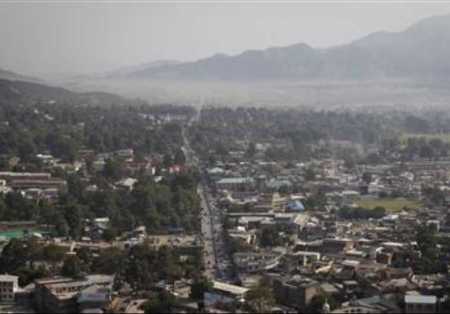
Pakistan viewA general view of houses from a hilltop in Abbottabad, Pakistan. (photo credit:REUTERS)

It is a testament to the precarious state of the world today that in a week that saw North Korea carry out a possible test of a hydrogen bomb, the most frightening statement uttered did not come from Pyongyang.

It came from Pakistan.

Speaking in the military garrison town of Rawalpindi, Pakistani Army chief Gen. Raheel Sharif said that any Iranian threat to Saudi Arabia’s territorial integrity will “wipe Iran off the map.”

Sharif made the statement following his meeting with Saudi Arabia’s defense minister and Deputy Crown Prince Mohammed bin Salman. According to media reports, Salman was the second senior Saudi official to visit Pakistan in the past week amid growing tensions between Iran and the kingdom.

Salman’s trip and Sharif’s nuclear threat make clear that following the US’s all-but-official abandonment of its role as protector of the world’s largest oil producer, the Saudis have cast their lots with nuclear-armed Pakistan.

When last October, the USS Harry Truman exited the Persian Gulf, the move marked the first time since 2007 that the US lacked an aircraft carrier in the region. Nine years ago, the US naval move was not viewed as a major statement of strategic withdrawal, given that back then the US had some one hundred thousand troops in Iraq.

While the USS Truman returned to the Gulf late last month, its return gave little solace to America’s frightened and spurned Arab allies. The Obama administration’s weak-kneed response to Iran’s live-fire exercises on December 26, during which an Iranian Revolutionary Guards vessel fired rockets a mere 1,370 meters from the aircraft carrier as it transited the Straits of Hormuz, signaled that the US is not even willing to make a show of force to deter Iranian aggression.

And so the Saudis have turned to Pakistan.

It would be foolish to view Sharif’s nuclear threat as mere bluster.

By every meaningful measure, Pakistan is little more than a failed state with nuclear weapons. Pakistan appears in every global index of failed or failing states.

To take just a few leading indicators, as spelled out by Basit Mahmood in a report last summer for The Political Domain, barely 1% of Pakistanis pay taxes of any kind. More than half the population lives in abject poverty. The government has no control over most Pakistani territory.

Between 2003 and 2015, more than 58,000 people were killed by terrorism countrywide.

Public health is a disaster. Polio, eradicated throughout much of the world, is now galloping through the country.

Last summer more than 1,300 people died in a heat wave in the supposedly advanced city of Karachi.

These data do not take into account the wholesale slaughter and persecution of minority groups – first and foremost Christians – and the systematic denial of basic human rights and widespread, violent persecution of women and girls.

As for its nuclear arsenal, a 2010 report by the Bulletin of Atomic Scientists estimated that Pakistan possesses between 70 and 90 nuclear warheads. Other credible reports estimate the size of the arsenal at 120.

Pakistan refuses to adopt a no-firststrike policy. In the US and worldwide, it is considered to be the greatest threat to global nuclear security.

Following a Pakistani jihadist assault on the Indian parliament in late 2001, India and Pakistan both deployed forces along their contested border. In the months that followed, due to Pakistani nuclear threats, the prospect of nuclear war was higher than it had ever been.

Cold War nuclear brinksmanship – which reached its high point during the 1962 Cuban missile crisis – paled in comparison.

In 2008, following the Pakistani jihadist assault on Mumbai, India threatened to retaliate against Pakistan.

India’s threats rose as evidence mounted that, as was the case in 2001, the jihadists were tied to Pakistan’s ISI spy service. Once again, rather than clean its own house, Pakistan responded by threatening to launch a nuclear attack against India.

And now, following the unraveling of US-strategic credibility, Pakistan’s aggressive nuclear umbrella is officially coming to the Persian Gulf.

Saudi Arabia’s decision to turn to Pakistan for protection indicates that the second wave of the destruction of the Arab state model is upon us. The notion of Arab states was invented nearly 100 years ago by the British and French at the tail end of World War I. The Sykes-Picot agreement, which partitioned the Arab world into states, rewarded national dominion to the most powerful tribal actors in the various land masses that became the states of the Arab world.

With the possible exception of Egypt, which predated Sykes-Picot, the Arab states formed at the end of World War I were not nation states. Their populations didn’t view themselves as distinct nations. Rather the populations of the Arab states were little more than a hodgepodge of tribes, clans and sectarian and ethnic groupings. In each case, the British and French made their determinations of leadership based on the relative power of the various groups. Those chosen to control these new states were viewed either as the strongest factions within the new borders or as the most loyal allies to the European powers.

The first wave of Arab state collapse began six years ago. It submerged the non-royal regimes, which fell one after the other, like houses of cards.

Syria, Libya, Iraq and Yemen ceased to exist.

Egypt, which in the space of two years experienced both an Islamist revolution and a military counter-revolution, still teeters on the brink of collapse.

Lebanon will likely break apart at the slightest provocation.

Today we are seeing the opening stages of the collapse of the Arab monarchies, and most importantly, of Saudi Arabia.

Most of the international attention to Saudi Arabia’s current threat environment has focused on Iran. The Iranian threat to the Saudis has grown in direct proportion to the Obama administration’s determination to realign the US away from its traditional Sunni allies and towards Iran. The conclusion of the US-led nuclear pact with Tehran has exacerbated Iran’s regional aggression as it no longer fears US retaliation for its threats to the Sunni monarchies.

But Iran is just the most visible of three existential threats now besetting the House of Saud.

The most profound threat to the world’s largest oil power is economic.

The drop in world oil prices has endangered the kingdom.

As David Goldman reported last week in the Asia Times, according to an International Monetary Fund analysis, the collapse in Saudi oil revenues “threatens to exhaust the kingdom’s $700 billion in financial reserves within five years.”

The house of Saud’s hold on power owes to its oil-subsidized economy. As Goldman noted, last month dwindling revenues forced the Saudis to cut subsidies for water, electricity and gasoline.

According to Goldman, Riyadh’s mass execution of 43 long-jailed prisoners at the start of the month was an attempt by the aging royal house to demonstrate its firm control of events. But the very fact the Saudi regime believed it was necessary to stage such a demonstration shows that it is in distress.

The third existential threat the regime now faces is Islamic State. Since 1979, the Saudis have sought to deflect domestic opposition by promoting Wahabist Islam at home and Wahabist jihad beyond its borders.

Now, with Islamic State in control over large swathes of neighboring Iraq, as well as Syria and Libya and threatening the Saudi-supported Sisi regime in Egypt, the Saudi royal family faces the rising threat of blowback. Some analysts argue that given the popular support for jihad in Saudi Arabia, were Islamic State to cross the Saudi border, its forces would be greeted with flowers, not bullets.

If the House of Saud falls, then the Gulf emirates will also be imperiled.

The Egyptian regime, which is bankrolled by the Saudis and its Gulf allies will also be endangered. The Hashemite monarchy in Jordan, which is protected by the US and by Israel, will face unprecedented threats.

The implications of expanding chaos – or worse – in Arabia are not limited to the Middle East. The global economy as well as the security of Europe and the US will be imperiled.

Obviously, the order of the day is for the US security guarantee to Saudi Arabia to be reinforced, mainly through straightforward US action against Iranian naval aggression and ballistic missile development.

Unfortunately, the Obama administration can be depended on to take just the opposite approach. And as a consequence, at least for the next year, the main thing propping up the Gulf monarchies, and with them, the global economy and what passes for global security, is a failed state with an itchy finger on the nuclear trigger.

Israel and the Four Powers

January 9, 2016

Israel and the Four Powers, Algemeiner, Ben Cohen via JNS Org., January 8, 2016

download-4

JNS.org The rulers of the Arab Gulf states are, it seems, increasingly attentive to what Israel has to say about the balance of power in the region. As a rising Shi’a Iran faces off against a Sunni coalition led by Saudi Arabia, the core shared interest between Israel’s democracy and these conservative theocracies — countering Iran’s bid to become the dominant power and influence in the Islamic world — has rarely been as apparent.

Hence the interview given by a senior IDF officer to a Saudi weekly, Elaph, which laid out how Israel analyzes the present wretched state of the Middle East. In the Israeli view, there are, the officer said, four powers that have coalesced in the region. The first power centers on Iran and its allies and proxies, such as the Bashar al-Assad dictatorship in Syria, Shi’a rebels in Yemen and Iraq, and most pertinently for Israel, Hezbollah in Lebanon. The second power contains what the officer called “moderate” states with whom Israel has “a common language” — Egypt, Jordan and the Gulf countries. The third power, one that is obviously waning, is represented in the form of the Muslim Brotherhood, now vanquished in its Egyptian heartland but still reigning in Hamas-controlled Gaza. Finally, the fourth power is another non-state actor, the combined forces of jihadi barbarism like Al-Qaeda and Islamic State.

Israel’s goal in this situation is a modest one. As the IDF officer put it, “There is a danger that the strife will reach us as well if the instability in the region continues for a long time. Therefore, we need to take advantage of the opportunity and work together with the moderate states to renew quiet in the region.”

The key phrase here, it seems to me, is “renew quiet.” Foremost for the Israelis, that means counteracting Iran and especially its Lebanese proxy Hezbollah, and then minimizing the potential for jihadi terrorists to operate on or near Israeli-controlled territory. A broader strategic vision can also be detected here: Ultimately, both Israel and the conservative Arab states share the common interests of neutralizing Iran and eliminating the jihadi groups.

The partnership between Israel and these states is already in operation, at the levels of intelligence sharing and — not for the first time — cautious exploration of trade relations. That there is a strong military dimension as well to all this is entirely conceivable. And for the time being, it seems that neither side wants to expand or contract on their public ties with each other; Israel has long had embassies in Cairo and Amman, but that doesn’t mean there’ll be an Israeli ambassador in Riyadh anytime soon, much less a film festival or trade expo.

There’s another factor that has accelerated the formation of this undeclared, look-the-other-way alliance: the shift in American Middle East policy under President Barack Obama. Some readers will remember that back in 1991, the first Bush administration pointedly left Israel out of the coalition to expel Saddam Hussein from Kuwait, so as not to antagonize the Gulf states. Now, frustration with Obama has compelled these very same states to recognize that they have an existential interest in cooperating with Israel.

You might say that the president deserves credit for bringing about a situation, in the wake of the nuclear deal with Iran, which has compelled the Gulf states to grasp the reality and permanence of Israel as never before. Still, the visions and prophecies of a Middle Eastern equivalent of the European Union, much indulged during the Oslo Accords years in the late 1990s, are not now in evidence, and that’s welcome. For their own reasons, neither Israel nor the Arab states feel obliged to articulate a sense of what their region should look like in the event that the Iranian threat is overcome.

Indeed, there’s a case that doing so would be counterproductive — it would impose political pressures upon a discreet yet strategically vital relationship that above all requires, in the parlance of the IDF officer, the “moderate” states to remain as moderate states. With the reorientation of American policy towards a rapprochement with Tehran, along with Russia’s active involvement in the Tehran-Damascus axis, Israel is the nearest reliable, not to say formidable, power that these countries can turn to.

In the present Middle Eastern context, then, the realism and discretion which has always underwritten Israeli foreign policy continues to prevail. That realism presumably extends to recognizing that regimes like Saudi Arabia and Bahrain might eventually succumb to their internal instabilities, already exacerbated by the further collapse of the price of oil.

When you consider the alternatives, the region’s architecture could be much worse for Israel than it is currently. Long an anomaly as the only open society in the region, the target of Arab military and economic warfare throughout the latter half of the last century, Israel in this century is now a partner in a regional bloc. To be sure, this is a bloc based upon interests, not common values, and is therefore necessarily limited in scope. But in the present storm, and amidst the appalling human suffering generated by the clash of these rival interests in Syria, it’s the closest thing we have to progress.

A Strategy to Defeat Islamic Theo-fascism

January 7, 2016

A Strategy to Defeat Islamic Theo-fascism, American ThinkerG. Murphy Donovan, January 7, 2016

Surely, whatever passed for American foreign or military policy in the past three decades is not working. Just as clearly, in case anyone keeps score these days, the dark side of Islam is ascendant at home and abroad. What follows here is a catalogue of policy initiatives that might halt the spread of Islamic fascism and encourage religious reform in the Ummah.

Some observers believe that the Muslim problem is a matter of life and death. Be assured that the need for Islamic reform is much more important than either. The choices for Islam are the same as they are for Palestine Arabs; behave or be humbled. Europe may still have a Quisling North and a Vichy South; but Russia, China, and even America, at heart, are still grounded by national survival instincts – and Samuel Colt.

Call a spade a spade

The threat is Islam, both kinetic and passive aggressive factions. If “moderate” Islam is real, then that community needs to step up and assume responsibility for barbaric terror lunatics and immigrants/refugees alike. Neither America nor Europe has solutions to the Islamic dystopia; civic incompetence, strategic illiteracy, migrants, poverty, religious schisms, or galloping irredentism. The UN and NATO have no remedies either. Islamism is an Ummah, Arab League, OIC problem to solve. Absent moral or civic conscience, unreformed Islam deserves no better consideration than any other criminal cult.

Western Intelligence agencies must stop cooking the books too. The West is at war and the enemy is clearly the adherents of a pernicious ideology. A global war against imperial Islam might be declared, just as angry Islam has declared war on civilization.  A modus vivendi might be negotiated only after the Ummah erects a universal barrier between church and state globally. Islam, as we know it, is incompatible with democracy, civility, peace, stability, and adult beverages.

Oxymoronic “Islamic” states need to be relegated to the dustbin of history. If the Muslim world cannot or will not mend itself, Islamism, like the secular fascism of the 20th Century, must be defeated, humbled in detail. Sooner is better.

Answer the Ayatollahs

Recent allied concessions to Tehran may prove to be a bridge too far. If the Persian priests do not abide by their nuclear commitments, two red lines might be drawn around Israel. Firstly, the ayatollahs should be put on notice, publicly, that any attack against Israel would be considered an attack against America — and met with massive Yankee retaliation. Secondly, any future cooperation with NATO or America should be predicated on an immediate cessation of clerical hate speech and so-called fatwas, those arbitrary death sentences.

Clerical threats to “wipe Israel off the face of the earth” and “death to America” injunctions are designed to stimulate jihad and terror globally. The only difference between a Shia ayatollah and a Sunni imam in this regard these days seems to be the torque in their head threads.

Ostracize the Puppeteers

Strategic peril does not emanate from Sunni tacticians like Osama bin Laden, Mullah Omar, or Abu Bakr al-Baghadadi. Nor does the real threat begin with or end with al Qaeda, the Taliban, Hezb’allah, Hamas, or the Islamic State. Lethal threat comes, instead, on four winds: toxic culture, religious politics, fanatic fighters, and furtive finance, all of which originate with Muslim state sponsors. The most prominent of these are Saudi Arabia, the Emirates, Turkey, Iran, and Pakistan.

Put aside for a moment the Saudi team that brought down the Twin Towers in New York. Consider instead, the House of Saud as the most egregious exporter of Salifism (aka Wahabbism) doctrine, clerics, imams, and mosques from which ultra-irredentist ideologies are spread. The Saudis are at once the custodians of Islam’s sacredshrines and at the same time the world’s most decadent, corrupt, and duplicitous hypocrites. Imam Baghdadi is correct about two things: the venality of elites in Washington and Riyadh. The House of Saud, an absolutist tribal monarchy, does not have the moral standing to administer “holy” sites of any description — Mecca, Medina, or Disneyland.

The cozy relationship between Europe, the European Union, and Arabia can be summarized with a few words; oil, money, arms sales, and base rights. This near-sighted blend of Mideast obscenities has reached its sell-by date. The “white man’s burden” should have expired when Edward Said vacated New York for paradise.

Jettison Turkey and Pakistan

What Saudi Arabia is to toxic ideology in North Africa, Turkey and Pakistan are to perfidy in the Levant and South Asia. Turkey and Pakistan are Islam’s most obvious and persistent grifters. Turkey supports the Islamic State and other Sunni terror groups with a black market oil racket. Pakistan supports the Taliban, al Qaeda, and ISIS with sanctuary and tolerance of the world’s largest opium garden. Oil and drug monies from Arabia, Turkey, and South Asia are financing the global jihad. Turkey also facilitates the migration of Muslims west to Europe while sending Islamist fighters and weapons south to Syria and Iraq.

With the advent of Erdogan and his Islamist AKP, Turkey has morphed into NATO’s Achilles Heel, potentially a fatal flaw.  Turkey needs to be drummed out of NATO until secular comity returns to Ankara. Pakistan needs to be restrained, too, with sanctions until it ceases to provide refuge for terrorists. Pakistani troops harassing India could be more prudently redeployed to exterminate jihadists.

Sanctions against Russia and Israel are a study in moral and political fatuity whilst Arabs and Muslims are appeased midst a cultural sewer of geo-political crime and human rights abuses. If NATO’s eastern flank needs to be anchored in trust and dependability, Russia, Kurdistan, or both, would make better allies than Turkey. Ignoring Turkish perfidy to protect ephemeral base rights confuses tactical necessity with strategic sufficiency.

Recognize Kurdistan

Aside from Israel, Kurdistan might be the most enlightened culture in the Mideast. The Kurds are also the largest ethnic group in the world not recognized as a state. While largely Muslim, the Kurds, unlike most of the Ummah, appreciate the virtues of religious diversity and women’s rights. Indeed, Kurdish women fight alongside their men against Turkish chauvinism and Sunni misogyny with equal aplomb. For too long, the Kurds have been patronized by Brussels and Washington.

While Kurdish fighters engage ISIS and attempt to control the Turkish oil black market, Ankara uses American manufactured NATO F-16s to bomb Kurds in Turkey and Syria. Turkish ground forces now occupy parts of Iraq too. In eastern Turkey, Ergdogan’s NATO legions use ISIS as an excuse for bookend genocide, a cleansing of Kurds that might rival the Armenian Christian genocide (1915-1917).

195876_5_Kurdish angel of death

All the while, American strategic amateurs argue for a “no-fly” zone in contested areas south of Turkey. Creating a no-fly zone is the kind of operational vacuity we have come to expect from American politicians and generals. Such a stratagem would foil Kurdish efforts to flank ISIS and allow the Erdogan jihad, arms, and oil rackets to flourish. A no-fly zone is a dangerous ploy designed to provoke Russia, not protect Muslim “moderates.”

Putin, Lavrov, and the Russians have it right this time; Turkish and Erdogan family subterfuges are lethal liabilities, not assets.

Washington and European allies have been redrawing the map in Eastern Europe, North Africa, South Asia, and the Mideast since the end of WWII. The time has come to put Kurdistan on the map too. Kurdistan is a unique and exemplary case of reformed or enlightened Islam; indeed, a nation that could serve as a model for the Muslim world.  If base rights are a consideration, Kurdistan would be an infinitely more dependable ally than Turkey or any corrupt tribal autocracy in Arabia. America has a little in common with desert dictators — and fewer genuine friends there either. Indeed, at the moment America is allied with the worst of Islam.

Create New Alliances

NATO, like the European Union, has become a parody of itself. Absent a threat like the Soviet Union or the Warsaw Pact, Brussels has taken to justifying itself by meddling in East Europe and resuscitating a Cold War with the Kremlin. Indeed, having divided Yugoslavia, NATO now expands to the new Russian border with reckless abandon; in fact, fanning anti-Russian flames now with neo-Nazi cohorts in former Yugoslavia, Georgia, and Ukraine.

NATO support for the Muslims of one-time Yugoslavia is of a piece with support for Islamic troublemakers in Chechnya and China too. Throughout, we are led to believe that jihad Uighurs and caliphate Chechens are freedom fighters. Beslan, Boston, Paris, and now San Bernardino put the lie to any notion that Islamists are “victims” (or heroes). Indeed, the Boston Marathon bombing might have been prevented had Washington a better relationship with Moscow.

Truth is, America has more in common with Russia and China these days than we do with any number of traditional European Quislings. Indeed, it seems that Europe and America can’t take yes for an answer.

The Cold War ideological or philosophical argument has been won. Moscow and Beijing have succumbed to market capitalism. Islamism, in stark contrast, is now a menace to Russian, Chinese, and American secular polities alike. The logic of a cooperative or unified approach to a common enemy seems self-evident. America, China, and Russia, at least on issues like toxic Islam, is a match made in Mecca.

The late great contest with Marxist Russia and China was indeed a revolution without guns. Now the parties to that epic Cold War struggle may have to join forces to suppress a theo-fascist movement that, like its Nazi predecessor, will not be defeated without guns. The West is at war again, albeit in slow motion. Withal, questions of war are not rhetorical. Saying that you are not at war does not make it so. Once declared, by one party or the other, the only relevant question about war is who wins and who loses. Losers do not make the future.

If America and Europe were as committed to Judeo/Christian secular values as Islamists are committed to a sick religious culture, then the war against pernicious Islam would have been won decades ago. Or as Jack Kennedy once put it: “Domestic policy can only defeat us; foreign policy can kill us.

Trump Footnote

Donald Trump made several policy suggestions on the Islamism issue, one on immigration, the other on Mideast oil. On the former, he suggests a hiatus on Muslim immigration until America develops a plan or reliable programs to vet migrants. On Arab oil, he suggests, given the lives and treasure spent liberating Kuwait and Iraqi oil fields, America should have held those resources in trust and use oil revenues to finance the war against jihad, however long that takes. The problem with both Trump ideas is that they come perilously close to common sense, an American instinct in short supply these days.


Column One: Rubio, Cruz and US global leadership

December 18, 2015

Column One: Rubio, Cruz and US global leadership, Jerusalem Post, Caroline Glick, December 17, 2015

For the first time in a decade, Americans are beginning to think seriously about foreign policy; But are they too late?

At some point between 2006 and 2008, the American people decided to turn their backs on the world. Between the seeming futility of the war in Iraq and the financial collapse of 2008, Americans decided they’d had enough.

In Barack Obama, they found a leader who could channel their frustration. Obama’s foreign policy, based on denying the existence of radical Islam and projecting the responsibility for Islamic aggression on the US and its allies, suited their mood just fine. If America is responsible, then America can walk away. Once it is gone, so the thinking has gone, the Muslims will forget their anger and leave America alone.

Sadly, Obama’s foreign policy assumptions are utter nonsense. America’s abandonment of global leadership has not made things better. Over the past seven years, the legions of radical Islam have expanded and grown more powerful than ever before. And now in the aftermath of the jihadist massacres in Paris and San Bernadino, the threats have grown so abundant that even Obama cannot pretend them away.

As a consequence, for the first time in a decade, Americans are beginning to think seriously about foreign policy. But are they too late? Can the next president repair the damage Obama has caused? The Democrats give no cause for optimism. Led by former secretary of state Hillary Clinton, the Democratic presidential hopefuls stubbornly insist that there is nothing wrong with Obama’s foreign policy. If they are elected to succeed him, they pledge to follow in his footsteps.

On the Republican side, things are more encouraging, but also more complicated.

Republican presidential hopefuls are united in their rejection of Obama’s policy of ignoring the Islamic supremacist nature of the enemy. All reject the failed assumptions of Obama’s foreign policy.

All have pledged to abandon them on their first day in office. Yet for all their unity in rejecting Obama’s positions, Republicans are deeply divided over what alternative foreign policy they would adopt.

This divide has been seething under the surface throughout the Obama presidency. It burst into the open at the Republican presidential debate Wednesday night.

The importance of the dispute cannot be overstated.

Given the Democrats’ allegiance to Obama’s disastrous policies, the only hope for a restoration of American leadership is that a Republican wins the next election. But if Republicans nominate a candidate who fails to reconcile with the realities of the world as it is, then the chance for a reassertion of American leadership will diminish significantly.

To understand just how high the stakes are, you need to look no further than two events that occurred just before the Wednesday’s Republican presidential debate.

On Tuesday, the International Atomic Energy Agency voted to close its investigation of Iran’s nuclear program. As far as the UN’s nuclear watchdog is concerned, Iran is good to go.

The move is a scandal. Its consequences will be disastrous.

The IAEA acknowledges that Iran continued to advance its illicit military nuclear program at least until 2009. Tehran refuses to divulge its nuclear activities to IAEA investigators as it is required to do under binding UN Security Council resolutions.

Iran refuses to allow IAEA inspectors access to its illicit nuclear sites. As a consequence, the IAEA lacks a clear understanding of what Iran’s nuclear status is today and therefore has no capacity to prevent it from maintaining or expanding its nuclear capabilities. This means that the inspection regime Iran supposedly accepted under Obama’s nuclear deal is worthless.

The IAEA also accepts that since Iran concluded its nuclear accord with the world powers, it has conducted two tests of ballistic missiles capable of carrying nuclear weapons, despite the fact that it is barred from doing so under binding Security Council resolutions.

But really, who cares? Certainly the Obama administration doesn’t. The sighs of relief emanating from the White House and the State Department after the IAEA decision were audible from Jerusalem to Tehran.

The IAEA’s decision has two direct consequences.

First, as Iranian President Hassan Rouhani said Wednesday, it paves the way for the cancellation of the UN’s economic sanctions against Iran within the month.

Second, with the IAEA’s decision, the last obstacle impeding Iran’s completion of its nuclear weapons program has been removed. Inspections are a thing of the past. Iran is in the clear.

As Iran struts across the nuclear finish line, the Sunni jihadists are closing their ranks.

Hours after the IAEA vote, Turkey and Qatar announced that Turkey is setting up a permanent military base in the Persian Gulf emirate for the first time since the fall of the Ottoman Empire a century ago. Their announcement indicates that the informal partnership between Turkey and Qatar on the one side, and Hamas, the Muslim Brotherhood and Islamic State on the other hand, which first came to the fore last year during Operation Protective Edge, is now becoming a more formal alliance.

Just as the Obama administration has no problem with Iran going nuclear, so it has no problem with this new jihadist alliance.

During Operation Protective Edge, the administration supported this jihadist alliance against the Israeli-Egyptian partnership. Throughout Hamas’s war against Israel, Obama demanded that Israel and Egypt accept Hamas’s cease-fire terms, as they were presented by Turkey and Qatar.

Since Operation Protective Edge, the Americans have continued to insist that Israel and Egypt bow to Hamas’s demands and open Gaza’s international borders. The Americans have kept up their pressure on Israel and Egypt despite Hamas’s open alliance with ISIS in the Sinai Peninsula.

So, too, the Americans have kept Egyptian President Abdel Fattah al-Sisi at arm’s length, and continue to insist that the Muslim Brotherhood is a legitimate political force despite Sisi’s war against ISIS. Washington continues to embrace Qatar as a “moderate” force despite the emirate’s open support for the Muslim Brotherhood, Hamas and ISIS.

As for Turkey, it appears there is nothing Ankara can do that will dispel the US notion that it is a credible partner in the war on terror. Since 2011, Turkey has served as Hamas’s chief state sponsor, and as ISIS’s chief sponsor. It is waging war against the Kurds – the US’s strongest ally in its campaign against ISIS.

In other words, with the US’s blessing, the forces of both Shi’ite and Sunni jihad are on the march.

And the next president will have no grace period for repairing the damage.

Although the Republican debate Wednesday night was focused mainly on the war in Syria, its significance is far greater than one specific battlefield.

And while there were nine candidates on the stage, there were only two participants in this critical discussion.

Sens. Marco Rubio and Ted Cruz faced off after weeks of rising contention between their campaigns.

In so doing, they brought the dispute that has been seething through their party since the Bush presidency into the open.

Rubio argued that in Syria, the US needs to both defeat ISIS and overthrow President Bashar Assad.

Cruz countered that the US should ignore Assad and concentrate on utterly destroying ISIS. America’s national interest, he said, is not advanced by overthrowing Assad, because in all likelihood, Assad will be replaced by ISIS.

Cruz added that America’s experience in overthrowing Middle Eastern leaders has shown that it is a mistake to overthrow dictators. Things only got worse after America overthrew Saddam Hussein and supported the overthrow of Muammar Gaddafi and Hosni Mubarak.

For his part, Rubio explained that since Assad is Iran’s puppet, leaving him in power empowers Iran. The longer he remains in power, the more control Iran will wield over Syria and Lebanon.

The two candidates’ dispute is far greater than the question of who rules Syria. Their disagreement on Syria isn’t a tactical argument. It goes to the core question of what is the proper role of American foreign policy.

Rubio’s commitment to overthrowing Assad is one component of a wider strategic commitment to fostering democratic governance in Syria. By embracing the cause of democratization through regime change, Rubio has become the standard bearer of George W. Bush’s foreign policy.

Bush’s foreign policy had two seemingly contradictory anchors – a belief that liberal values are universal, and cultural meekness.

Bush’s belief that open elections would serve as a panacea for the pathologies of the Islamic world was not supported by empirical data. Survey after survey showed that if left to their own devices, the people of Muslim world would choose to be led by Islamic supremacists. But Bush rejected the data and embraced the fantasy that free elections lead a society to embrace liberal norms of peace and human rights.

As to cultural meekness, since the end of the Cold War and with the rise of political correctness, the notion that America could call for other people to adopt American values fell into disrepute. For American foreign policy practitioners, the idea that American values and norms are superior to Islamic supremacist values smacked of cultural chauvinism.

Consequently, rather than urge the Islamic world to abandon Islamic supremacism in favor of liberal democracy, in their public diplomacy efforts, Americans sufficed with vapid pronouncements of love and respect for Islam.

Islamic supremacists, for their part stepped into the ideological void without hesitation. In Iraq, the Iranian regime spent hundreds of millions of dollars training Iranian-controlled militias, building Iranian-controlled political parties and publishing pro-Iranian newspapers as the US did nothing to support pro-American Iraqis.

Although many Republicans opposed Bush’s policies, few dared make their disagreement with the head of their party public. As a result, for many, Wednesday’s debate was the first time the foundations of Bush’s foreign policy were coherently and forcefully rejected before a national audience.

If Rubio is the heir to Bush, Cruz is the spokesman for Bush’s until now silent opposition. In their longheld view, democratization is not a proper aim of American foreign policy. Defeating America’s enemies is the proper aim of American foreign policy.

Rubio’s people claim that carpet bombing ISIS is not a strategy. They are right. There are parts missing from in Cruz’s position on Syria.

But then again, although still not comprehensive, Cruz’s foreign policy trajectory has much to recommend it. First and foremost, it is based on the world as it is, rather than a vision of how the world should be. It makes a clear distinction between America’s allies and America’s enemies and calls for the US to side with the former and fight the latter.

It is far from clear which side will win this fight for the heart of the Republican Party. And it is impossible to know who the next US president will be.

But whatever happens, the fact that after their seven-year vacation, the Americans are returning the real world is a cause for cautious celebration.

No, the Islamic State Will Not Be Defeated — and if It Is, We Still Lose

November 25, 2015

No, the Islamic State Will Not Be Defeated — and if It Is, We Still Lose, BreitbartBen Shapiro, November 24, 2015

GettyImages-497044984-640x480

Barack Obama has now created an unwinnable war.

While all of the 2016 candidates declare their strategies for victory against ISIS, President Obama’s leading from behind has now entered the Middle East and the West into a free-for-all that cannot end any way but poorly.

The best way to understand the situation in Syria is to look at the situation and motivation of the various players. All of them have varying agendas; all of them have different preferred outcomes. Few of them are on anything approaching the same page. And Barack Obama’s failure of leadership means that there is no global power around which to center.

ISIS. ISIS has gained tremendous strength since Barack Obama’s entry to power and pullout from Iraq. They currently control northern Syria, bordering Turkey, as well as large portions of northern Iraq. Their goal: to consolidate their territorial stranglehold, and to demonstrate to their followers that they, and not other competing terrorist groups like Al Qaeda, represent the new Islamic wave. They have little interest in toppling Syrian dictator Bashar Assad for the moment. They do serve as a regional counterweight to the increasingly powerful Iranians – increasingly powerful because of President Obama’s big nuclear deal, as well as his complete abdication of responsibility in Iraq.

Iran. Iran wants to maximize its regional power. The rise of ISIS has allowed it to masquerade as a benevolent force in Iraq and Syria, even as it supports Assad’s now-routine use of chemical weapons against his adversaries, including the remnants of the Free Syrian Army (FSA). Iran has already expanded its horizons beyond Iraq and Syria and Lebanon; now it wants to make moves into heretofore non-friendly regions like Afghanistan. Their goal in Syria: keep Bashar Assad in power. Their goal in Iraq: pushing ISIS out of any resource-rich territories, but not finishing ISIS off, because that would then get rid of the global villain against which they fight.

Assad. The growth of ISIS has allowed Assad to play the wronged victim. While the FSA could provide a possible replacement for him, ISIS can’t credibly do so on the international stage. Assad knows that, and thus has little interest in completely ousting them. His main interest is in continuing to devastate the remaining FSA while pretending to fight ISIS.

Egypt/Saudi Arabia/Jordan. As you can see, ISIS, Iran, and Assad all have one shared interest: the continued existence of ISIS. The same is not true with regard to Egypt, Saudi Arabia, and Jordan, all of whom fear the rise of radical Sunni terrorist groups in their home countries. They are stuck between a rock and a hard place, however, because openly destroying ISIS on behalf of Alaouite Assad, they embolden the Shia, their enemies. Egypt, Saudi Arabia, and Jordan would all join an anti-ISIS coalition in the same way they did against Saddam Hussein in 1991, but just like Hussein in 1991, they won’t do it if there are no Sunni alternatives available. Tunisia, Saudi Arabia, and Jordan are the top three sources of foreign fighters for ISIS.

Turkey. The Turks have several goals: to stop the Syrian exodus across their borders, to prevent the rise of the Iranians, and to stop the rise of the Kurds. None of these goals involves the destruction of ISIS. Turkey is Sunni; so is ISIS. ISIS provides a regional counterweight against Iran, so long as it remains viable. It also keeps the Kurds occupied in northern Iraq, preventing any threat of Kurdish consolidation across the Iraq-Turkey border. They will accept Syrian refugees so long as those other two goals remain primary – and they’ll certainly do it if they can ship a hefty portion of those refugees into Europe and off their hands.

Russia. Russia wants to consolidate its power in the Middle East. It has done so by wooing all the players to fight against one another. Russia’s involvement in the Middle East now looks a good deal like American involvement circa the Iran-Iraq War: they’re playing both sides. Russia is building nuclear reactors in Egypt, Jordan, Turkey and Iran. They’re Bashar Assad’s air force against both the FSA and ISIS. Russia’s Vladimir Putin doesn’t have a problem with destroying ISIS so long as doing so achieves his other goal: putting everyone else in his debt. He has a secondary goal he thought he could chiefly pursue in Eastern Europe, and attempted with Ukraine: he wants to split apart the North Atlantic Treaty Organization, which he rightly sees as a counterbalance to check Russian aggression. Thanks to today’s Turkish attack on a Russian plane, and thanks to the West’s hands-off policy with regard to the conflict, Putin could theoretically use his war against ISIS as cover to bombard Turkish military targets, daring the West to get involved against him. Were he to do so, he’d set the precedent that NATO is no longer functional. Two birds, one war.

Israel. Israel’s position is the same it has always been: Israel is surrounded by radical Islamic enemies on every side. Whether Iranian-backed Hezbollah or Sunni Hamas and ISIS, Israel is the focus of hate for all of these groups. Ironically, the rise of Iran has unified Israel with its neighbors in Jordan, Egypt, and Saudi Arabia. All three of those countries, however, can’t stand firmly against ISIS.

All of which means that the only country capable of filling the vacuum would be the United States. Just as in 1991, a major Sunni power is on the move against American interests – but unlike in 1991, no viable option existed for leaving the current regime in power. And the US’ insistence upon the help of ground allies is far too vague. Who should those allies be, occupying ISIS-free ISISland?

The Kurds have no interest in a Syrian incursion. Turkish troops movements into ISIS-land will prompt Iranian intervention. Iranian intervention into ISIS-land would prompt higher levels of support for Sunni resistance. ISIS-land without ISIS is like Iraq without Saddam Hussein: in the absence of solidifying force, chaos breaks out. From that chaos, the most organized force takes power. Russia hopes that should it destroy ISIS, Assad will simply retain power; that may be the simplest solution, although it certainly will not end the war within the country. There are no good answers.

Barack Obama’s dithering for years led to this. Had he lent his support in any strong way to one side, a solution might be possible. Now, it’s not.

‘The US fails to understand the complexity of the Middle East’

November 24, 2015

‘The US fails to understand the complexity of the Middle East’ Israel National News, Benny Tucker, November 24, 2015

US Secretary of State John Kerry’s visit to Israel and the Palestinian Authority (PA) this week will only heighten tensions – not calm terrorism, former Israeli ambassador to the US Dr. Yoram Ettinger opined Tuesday. 

“This visit unfortunately will not not mitigate terrorism, but on the contrary, pour oil on the fire of terrorism,” he stated, in a special Arutz Sheva interview. “Why reward and meet Mahmoud Abbas, the chief instigator?”

Washington continues to remain disconnected from reality, he said.

“The former senator met with Assad, both the father and the son, and ate dinner with their wives,” he noted. “(Kerry) refers to the Golan Heights as ‘trivial’ and pressured Israel to give up the Golan. He used to hold [PLO archterrorist Yasser] Arafat in high regard and referred to him as a ‘statesman of peace’; as Secretary of State he still maintains that the Arab Spring is leading Arab countries to democracy.”

Ettinger added that Kerry’s career is characterized by ‘erroneous assessments”; “so surely, again, he will call on Israel to make gestures [toward the Palestinians] and give over the immoral equivalence comparing terrorist to victim.”

“Experience shows that all the attempts and plans the US have made [regarding Israel] have failed one by one, due to lack of understanding of the complexity of the Middle East,” he concluded. “Both the peace treaty with Egypt and Jordan were the result of Israeli initiatives and direct negotiations – not indirect negotiations and not through middlemen.”

Our World: Obama’s new counter-terrorism guru

November 24, 2015

Our World: Obama’s new counter-terrorism guru, The Jerusalem Post, Caroline B. Glick, November 23, 2015

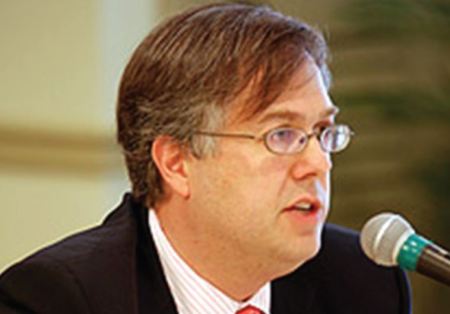
ShowImage (17)MICHAEL GERSON. (photo credit:Wikimedia Commons)

Since the Islamic State attacks in Paris on November 13, we have seen the development of a new, and strange justification for the Obama administration’s insistent refusal to jettison its manifestly failed strategy of contending with IS specifically and with Islamic terrorism generally.

In broad terms, Obama’s strategy for dealing with radical Islamic terrorism and jihadist movements is to ignore their motivating ideologies, take minimal action to combat them, criticize other governments for failing to destroy IS and its jihadist brethren on their own, and attack Republicans for criticizing Obama’s strategy for defeating radical Islamic terrorism.

The new justification for Obama’s refusal to revise his strategy was first uttered by former secretary of state Hillary Clinton at the Democratic presidential debate on November 14. Five days later, the Democratic National Committee produced an ad attacking Republican presidential candidates based on this new rhetorical theme.

Obama himself resonated the new message during his press conference in Malaysia on Sunday.

According to the new talking points, Republicans have no right to criticize Obama, or Clinton, for their failure to contend with the nature of the enemy because in ignoring the enemy’s doctrine, ideology and strategic goals, they are merely following in president George W. Bush’s footsteps.

During the Democratic presidential debate, Clinton argued that refusing to identify the radical Islamic nature of the enemy that attacked the US on September 11 and in the months and years that followed “was one of the real contributions – despite all the other problems – that George W. Bush made after 9/11, when he basically said – after going to a mosque in Washington – we are not at war with Islam or Muslims.”

In its new ad, the DNC attacks five Republican presidential candidates that have stated in recent days that radical Islam is the force that is warring against the US and its allies.

To prove that the candidates are “unpresidential,” for naming the enemy, the DNC ad includes a clip of Bush’s speeches in praise of Islam as “a religion of peace,” which he delivered in the days immediately following the September 11 attacks.

The Democrats’ invocation of Bush as their counterterrorism authority and as a means to justify their refusal to use the term “radical Islam” is more than a bit ironic, of course, since they have spent the past 14 years pillorying Bush’s counterterrorism policies.

But it is also extremely helpful. By aligning with Bush to justify their refusal to discuss the radical Islamic foundations of the terrorist scourge facing the free world and devouring large swaths of the Middle East, the Democrats have given us the opportunity to consider what that refusal has meant for the US’s ability to lead the free world in its war against the forces of radical Islam.

At the time of the September 11 attacks, and for the first five years of Bush’s war on terrorism that followed them, Michael Gerson served as Bush’s chief speechwriter.

Gerson authored Bush’s statements about Islam being a religion of peace.

In November 2014, Gerson participated in a debate vabout the nature of Islam and the war on terror. Gerson explained that Bush’s decision to ignore the nature of the enemy emanated from a strategic calculation.

Bush believed that radical Islam was but a marginal force in the Muslim world. By embracing Islam as a whole, and insisting that the terrorists from al-Qaida and other groups did not reflect the authentic nature of Islam, Bush hoped to draw the non-radical Muslims to America’s side against the jihadists.

In Gerson’s words, “Every religious tradition has forces of tribalism and violence in its history, background and theology; and, every religious tradition has sources of respect for the other. And you emphasize, as a political leader, one at the expense of the other in the cause of democracy.”

Gerson continued, “That is a great American tradition that we have done with every religious tradition that comes to the United States – include them as part of a natural enterprise and praise them for their strongly held religious views, and emphasize those portions that are most compatible with those ideals.”

The flaws in this reasoning began surfacing immediately.

When Bush made his remarks about Islam after the September 11 attacks, he was flanked by Muslim leaders who were in short order exposed as terrorism apologists and financiers.

On the battlefield, by failing to acknowledge, let alone discredit the enemy’s world view, Bush made it all but impossible for Muslims who oppose radical Islam to stand up against it. After all, if the Americans didn’t think it was a problem, why would they? Since the Americans refused to admit the existence of radical Islam, the US refused to favor non-radical forces over radical ones. And so, in the 2005 Iraqi elections, while Iran spent a fortune financing the campaigns of its supporters, the US did nothing to support the Iraqi forces that shared the US’s goal of transforming Iraq into a multi-denominational, pluralistic democracy.

The results were preordained. The elected government took its cues from Iran, and as soon as US forces withdrew from Iraq, all of America’s hard won gains were squandered. The Iraqi government became an Iranian puppet. And in areas where Iran didn’t care to assert its control, al-Qaida-aligned forces that now comprise Islamic State rose once again.

Obama’s refusal to discuss radical Islam stems from a different source than Bush’s refusal to do so. Unlike Bush’s position, Obama’s insistence that IS, al-Qaida, Hamas, Boko Haram and their brethren have nothing to do with Islam does not owe to a strategic calculation on how to win a war. Rather, it stems from an ideological conviction that the US and the rest of the Western world have no right to cast aspersions on jihadists.

As Obama sees things, the problems in the Middle East, and the Middle Eastern terrorism plaguing the rest of the world, are the result of past Western imperialism and chauvinism. All anti-Western movements – including jihadist movements – are legitimate responses to what Obama perceives as the crime of Western power.

Obama’s peevish response to the massacre in Paris and his assaults on Republicans who argue that the religious convictions of Syrians requesting asylum in the US are relevant for determining whether or not to let them in have brought his refusal to identify the enemy to the forefront of the US debate on how to defeat IS.

This debate is clearly uncomfortable for liberal US media outlets. So they have sought to change the subject.

As the Democratic Party adopted Bush as its new counterterrorism guru, the liberal media sought to end discussion of radical Islam by castigating as bigots Republicans who speak of it. The media attempt over the weekend to claim falsely that Republican frontrunner Donald Trump called for requiring American Muslims to be registered in a national Muslim database marked such an attempt to change the subject.

The common denominator between Bush’s strategic decision to lie about the nature of the enemy, Obama’s apologetics for IS and the media’s attempt to claim that Republicans are anti-Islamic racists is that in all cases, an attempt is being made to assert that there is no pluralism in Islam – it’s either entirely good or entirely evil.

This absolutist position is counterproductive for two reasons. First, it gets you nowhere good in the war against radical Islam. The fact is that Islam per se is none of the US president’s business. His business is to defeat those who attack the US and to stand with America’s allies against their common foes.

Radical Islam may be a small component of Islam or a large one. But it certainly is a component of Islam. Its adherents believe they are good Muslims and they base their actions on their Islamic beliefs.

American politicians, warfighters and policymakers need to identify that form of Islam, study it and base their strategies for fighting the radical Islamic forces on its teachings.

Bush was wrong to lie about the Islamic roots of radical Islam. And his mistake had devastating strategic consequences for the world as a whole. It is fortuitous that the Clinton and the Democratic Party have embraced Bush’s failed strategy of ignoring the enemy for justifying their even more extreme position. Now that they have, they have given a green light to Republicans as well as Democrats who are appalled by Obama’s apologetics for radical Islam to learn from Bush’s mistakes and craft an honest and effective strategic approach to the challenge of radical Islam.