Sen. Ted Cruz at Defeat Jihad Summit, You Tube, February 12, 2015
Sen. Ted Cruz at Defeat Jihad Summit, You Tube, February 12, 2015
“Extremist” Islam is not extreme, Dan Miller’s Blog, Dan Miller, February 13, 2015
(The views expressed in this article are mine and do not necessarily reflect those of Warsclerotic or its other editors. — DM)
“Extremist” Muslims believe that the Koran and the Hadith must be taken literally and that Sharia law, rather than “man made” law, must control everyone. Secular Muslims seem to disagree or not to be very interested. “Extremist” Roman Catholics believe that birth control, abortion and pre-marital sex are sinful and oppose governmental support for them. Secular Roman Catholics seem to disagree or not to be very interested.
“Extremist” Muslims are “literalist,” because they believe that the Koran is the word of Allah as faithfully transcribed by Mohamed, his messenger, and that there is no room for interpretation. The many conflicting verses in the Koran present a problem.
Rather than explain away inconsistencies in passages regulating the Muslim community, many jurists acknowledge the differences but accept that latter verses trump earlier verses. Most scholars divide the Qur’an into verses revealed by Muhammad in Mecca when his community of followers was weak and more inclined to compromise, and those revealed in Medina, where Muhammad’s strength grew. [Emphasis added, footnotes omitted.]
Classical scholars argued that anyone who studied the Qur’an without having mastered the doctrine of abrogation would be “deficient.” Those who do not accept abrogation fall outside the mainstream and, perhaps, even the religion itself. [Emphasis added.]
Islamist literalism coupled with abrogation now has temporal, and often fatal, consequences for non-Muslims as well as for “apostate” Muslims because, as Mohammad grew stronger, his words became stronger and more violent toward apostates and other non-believers.
According to an article titled “What is Islam?” Revisited by Father James V. Schall, S.J., posted at Catholic World Report on January 8th,
Islam considers itself the only true religion. It has a “narrative” of itself that all branches of Islam hold, although they differ somewhat on how it is to be achieved. [Emphasis added.]
. . . .
In the Quran, there is no mention of the Trinity or Incarnation, except explicitly to deny them. It is blasphemy to believe in them, as well as to question anything connected with the Quran. Allah intends the whole world to observe the Sharia, the Muslim legal code, observing its letter. As soon as it can, this law is imposed in every Muslim land or smaller community, even in democratic states. No distinction between Islam and the state exists. Everyone is born a Muslim. If he is not a Muslim, it is because his parents or teachers corrupted him. It is impossible to convert from Islam to another religion, without grave, often lethal, consequences. [Emphasis added.]
It is not against the Quran to use violence to spread or enforce Islamic law. Those Islam conquers, even from its beginnings till now, it either kills, forces conversion, or imposes second class citizenship. The Islamic State, now so much to the forefront, seems to have the correct understanding of what the Quran intends and advocates. [Emphasis added.]
. . . .
Dialogue is looked upon as a sign of weakness unless it can be used to further Muslim goals. In the case of the killings that Coren lists, if they are looked upon as legitimate means, there is no need either to talk about them or to cease their presumed effectiveness in spreading Islam. One cannot really appeal to the Quran to cease these killings, as there is ample reason within it to justify them as worthy means. Had it not been possible to justify these means in the Quran, the whole history of Islam would be different. Indeed, it probably never would have expanded at all. [Emphasis added.]
Similarly, “extremist” Christians can be characterized as “literalist” because they believe, for example, that Jesus was literally conceived immaculately and literally ascended bodily into Heaven. These views now have no deadly temporal consequences for Christians or anyone else.
As for the crusades and the inquisition, which Obama used to try to divert our attention from Islam,

Islam is the only religion the textual core of which actively and unequivocally defames other religions.

Soon after Muslim gunmen killed 12 people at Charlie Hebdo offices, which published satirical caricatures of Muslim prophet Muhammad, the Organization of Islamic Cooperation (OIC)—the “collective voice of the Muslim world” and second largest inter-governmental organization after the United Nations—is again renewing calls for the United Nations to criminalize “blasphemy” against Islam, or what it more ecumenically calls, the “defamation of religions.”
To ban “defamation” of Islam — in reality to ban accurate factual analyses of its core tenets — is to engage in jihad via lawfare with the help of non-Islamic nations, including Obama’s America, while violent Islamic jihad against all religions except “true” versions of Islam continues apace.
Yet the OIC seems to miss one grand irony: if international laws would ban cartoons, books, and films on the basis that they defame Islam, they would also, by logical extension, have to ban the entire religion of Islam itself—the only religion whose core texts actively and unequivocally defame other religions, including by name. [Emphasis added.]
For example,
Consider Christianity alone: Koran 5:73 declares that “Infidels are they who say God is one of three,” a reference to the Christian Trinity; Koran 5:72 says “Infidels are they who say God is the Christ, [Jesus] son of Mary”; and Koran 9:30 complains that “the Christians say the Christ is the son of God … may God’s curse be upon them!”
. . . .
[T]he Christian Cross, venerated among millions, is depicted—is defamed—in Islam: according to canonical hadiths, when he returns, Jesus (“Prophet Isa”) will destroy all crosses; and Muhammad, who never allowed the cross in his presence, once ordered someone wearing a cross to “throw away this piece of idol from yourself.” Unsurprisingly, the cross is banned and often destroyed whenever visible in many Muslim countries.
Reforming Islam
Egyptian President al-Sisi — who appears to be a fairly secular Muslim — told Muslim clerics in Cairo on New Years Day (on or about the date when Mohamed’s birthday is celebrated) that Islam needs to be reformed, substantially. He “accused Islamic thinking of being the scourge of humanity—in words that no Western leader would dare utter.” Following his address,
Sisi went to the St. Mark Coptic Cathedral during Christmas Eve Mass to offer Egypt’s Christian minority his congratulations and well wishing. Here again he made history as the first Egyptian president to enter a church during Christmas mass—a thing vehemently criticized by the nation’s Islamists, including the Salafi party (Islamic law bans well wishing to non-Muslims on their religious celebrations, which is why earlier presidents—Nasser, Sadat, Mubarak, and of course Morsi—never attended Christmas mass). [Emphasis added.]
(Under the Coptic calendar, Christmas falls on January 7th.)
Obama, who continues to oppose al-Sisi and recently met with supporters of the Muslim Brotherhood, ignored al-Sisi’s words and deeds. So did a spokesperson for His State Department which, in January
met with a delegation aligned with the Egyptian Muslim Brotherhood . . . . It is understood that the group, which included a leading Brotherhood-aligned judge and a Muslim Brotherhood parliamentarian, discussed their ongoing efforts against the current Egyptian government of President Abdel Fattah el-Sisi. [Emphasis added.]
El-Sisi came to power after he deposed the Muslim Brotherhood’s Islamist government in a popularly backed coup. After only one year of Muslim Brotherhood rule, 15 million people came out onto the streets demanding an end to their rule.
The Muslim Brotherhood’s stated goal is the recreation of an Islamic caliphate, although they follow a policy of the gradual implementation of sharia law. [Emphasis added.]
The Muslim Brotherhood, and “extremist” Islam in general, are Obama’s friends and advisers. They are also now the largest and most destructive enemies of western civilization; Obama assists them at every opportunity.
Meanwhile, a Muslim Brotherhood affiliate, Hamas, is busily training thousands of youth to attack Israel, the only free and democratic nation, as well as the only outpost of western civilization, in the Middle East.
On February 10th, a Jordanian columnist wrote, consistently with President al-Sisi’s remarks, that
“The escapism that mainstream Islam has nothing to do with those atrocities does not hold water anymore because Wahabism and Islam have become indistinguishable. To understand the crisis of Muslims today, one has to remember that Wahabism exists in several textbooks containing the alleged sayings of the Prophet Mohammad, or books of ‘Hadith,’ revered by so many. What we must confront is the undeniable fact that it is from many stories found in these books that the unprecedented cruelty of groups such as the so-called Islamic State and Jabhat Al-Nusra emanates. [Emphasis added.]
. . . .
“There is obviously a propensity towards eliminating ‘the other’ imbedded deep within Wahabist ideology. It is not only foolish to deny this fact, it is also dangerous, for we would be covering the cancerous tumour with a bandage. What we cannot deny is that many of the Wahabist textbooks are the same operating manuals that Islamist butchers use to justify their savagery. For example, very few people know that while [the Jordanian pilot] Muath was being set on fire in that macabre video, the voiceover was a recitation of an Ibn Taymiyah fatwa deeming the incineration of unbelievers a legitimate act of jihad. Ibn Taymiyah is not some obscure scholar on the fringe of Sunni Islam. In the Sunni world, he is universally venerated with the title ‘Sheikh of Islam,’ elevating him to an almost infallible clerical status. [Emphasis added.]
“If we really want to defend Islam as a religion of mercy, if we really want to be believed when we proclaim the innocence of this religion, we need to do more than just repeat this meaningless mantra about us having nothing to do with [ISIS]. We have to muster the courage to identify the specific texts that actually defame Islam, denounce them and permanently cleanse Islamic tradition of them.” [Emphasis added.]
Until “extremist” Islam reforms itself, as al-Sisi (and a few other Muslims) contend that it must, Islam in all of its manifestations will remain an existential threat to what’s left of western civilization. If Islam manages to reform itself Obama — who considers Islam to be just peachy now — will, once again, be shown to have been on the wrong side of history.
Nuclear Iran
Unfortunately, Obama’s place on the wrong side of history may become apparent long before Islam is reformed, when Iran gets (or is permitted to keep) and uses “the bomb.” Iran, and perhaps Obama, have availed themselves of the Islamic doctrine of taqiyya, which
allows Muslims to have a declared agenda, and a secret agenda (Jihad, slaughter, and mayhem) during time of weakness, this is called Taqiyya.” To put it in simpler words, it is the “art” of deception, or more correctly, of deceiving non-Muslim infidels. [Emphasis added.]
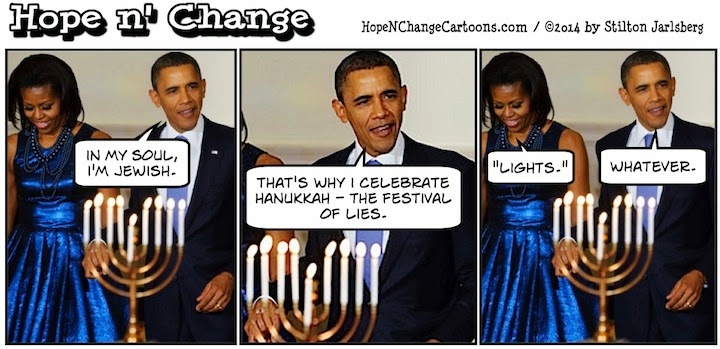
As noted in a Gatestone Institute article titled Iran speeding to nuclear weapons breakout, Prime Minister Netanyahu is a lone voice crying in the wilderness.
[H]e is one of the two world leaders in the West telling the truth, warning of what is to come (Geert Wilders of the Netherlands is the other). This burden of responsibility for his people (how many of us wish our leaders had even a bit of that?) has earned him only the venom of the Obama Administration, who see him as trying to spoil their strategy of leading by procrastination. [Emphasis added.]
It is also becoming increasingly clear that the Obama Administration’s policy consists of running after Iran, in order to concede everything it wants, just to be able wave a piece of paper not worth the ink on it, claiming there is “a deal.” Iran, for its part, would probably prefer not to sign anything, and most likely will not. Meanwhile, both sides continue strenuously to claim the opposite. [Emphasis added.]
Iran seems likely to get and use, or to keep and use, nuclear weapons by virtue of the essentially bilateral Iran – US nuclear negotiations. Please see also The Iran scam continues, which I wrote in January of last year. The situation has worsened since then, with substantial concessions to, and few if any of significance by, Iran.
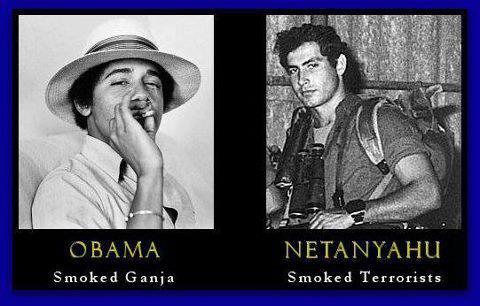
The U.S. concessions have, in part, been in exchange for Iran’s “help” in defeating the Islamic State and hence becoming the major power in the Middle East.
Iran would be the hegemon of the Middle East. Some states would accept Tehran’s authority, striking deals and kowtowing in order to survive. Europeans would accommodate Iran, based on its control of the flow of Gulf oil. Israel and Saudi Arabia, nations that Iran’s rulers have threatened to wipe from the map, would be left to fend for themselves. [Emphasis added.]
. . . .
Doran cites evidence that in the first year of Obama’s first term, there were more White House meetings on Iran than any other national security concern. Detente with Iran was seen as “an urgent priority,” but the president “consistently wrapped his approach to that priority in exceptional layers of secrecy” because he was convinced that neither Congress nor the American public would support him. [Emphasis added.]
A year ago, Doran further reports, Benjamin Rhodes, a member of the president’s inner circle, told a group of Democratic activists (unaware that he was being recorded) that a deal with Iran would prove to be “probably the biggest thing President Obama will do in his second term on foreign policy.” He made clear that there would be no treaty requiring the Senate’s advice and consent. [Emphasis added.]
The president believes that “the less we know about his Iran plans, the better,” Doran concludes. “Yet those plans, as Rhodes stressed, are not a minor or incidental component of his foreign policy. To the contrary, they are central to his administration’s strategic thinking about the role of the United States in the world, and especially in the Middle East.” [Emphasis added.]
Obama’s plans may well blow up in His face and, of greater importance, ours. Iran, particularly with the help of Russia and North Korea, will be able to do it. Here is a
short animated film being aired across Iran, [which] shows the nuclear destruction of Israel and opens with the word ‘Holocaust’ appearing on the screen, underneath which a Star of David is shown, Israel’s Channel 2 reported on Tuesday.
Don’t worry; be happy

Here’s the Revolting Truth from Andrew Klavan, which debunks everything bad ever said about Obama. Sort of.
Oh. And He’s not a narcissistic jerk either.

ALL of My policies are the best ever
4-Star Admiral Slams Obama: Muslim Brotherhood Infiltrated All Of Our National Security Agencies, You Tube, January 28, 2015
During a press conference on how to combat radical Islamic extremism, Admiral James A. “Ace” Lyons (U.S. Navy, Ret.), former Commander-in-Chief, U.S. Pacific Fleet, stated that under the leadership of Barack Obama the Muslim Brotherhood have infiltrated all of the National Security Agencies of the United States. Furthermore, Lyons said that Obama is deliberately unilaterally disarming the military and spoke to the need for the new GOP controlled congress and Military leaders to stand up to the administration and uphold their oaths.
What’s worse than no strategy? Israel Hayom, Clifford D. May, February 11, 2015
It seems like only yesterday that U.S. President Barack Obama was being criticized for having no strategy to counter the jihadi threat. In fact, it was about 10 days ago. Peggy Noonan’s Feb. 1 Wall Street Journal column was headlined: “America’s strategy deficit.”
Since then, a different perception has been taking root: Obama does indeed have a strategy — a “secret strategy,” one that is alarmingly misguided.
According to this theory, he believes that fighting terrorism requires accommodating the regime long recognized by the U.S. government as the world’s leading sponsor of terrorism: the Islamic Republic of Iran.
He may also see the Islamic republic not as a rival to the Islamic State group but as a more moderate alternative — despite the fact that Iran’s Supreme Leader Ali Khamenei has repeatedly declared hostility toward America the foundation of the Islamic revolution.
The president appears to believe that Sunni jihadis can be countered by Shia jihadis. Last week, Islamic State demonstrated its barbarism by immolating a Jordanian pilot. That should not cause us to forget that Iran’s rulers supplied militias in Iraq with improvised explosive devices used to immolate American soldiers, are supporting Syrian dictator Bashar Assad who has used chemical weapons to scorch the lungs of his opponents, and are continuing to illicitly develop nuclear weapons capable of immolating millions.
Dr. Michael Doran, a senior fellow at the Hudson Institute, has not just speculated about Obama’s “secret strategy.” He has painstakingly combed through the record and produced a 9,000-word report persuasively establishing that Obama, since early in his presidency, has been in pursuit of a “comprehensive agreement” that would allow Iran to become what the president has called “a very successful regional power.”
Understand what that means: Iran would be the hegemon of the Middle East. Some states would accept Tehran’s authority, striking deals and kowtowing in order to survive. Europeans would accommodate Iran, based on its control of the flow of Gulf oil. Israel and Saudi Arabia, nations that Iran’s rulers have threatened to wipe from the map, would be left to fend for themselves.
And some Sunnis would almost certainly turn to al-Qaida and Islamic State to help defend them from Shia domination. Indeed, Islamic State rose in response to the extension of Iranian power in Baghdad after America’s withdrawal from Iraq, coupled with Obama’s decision not to support non-Islamist Syrians who had rebelled against the Assad dictatorship.
Doran cites evidence that in the first year of Obama’s first term, there were more White House meetings on Iran than any other national security concern. Detente with Iran was seen as “an urgent priority,” but the president “consistently wrapped his approach to that priority in exceptional layers of secrecy” because he was convinced that neither Congress nor the American public would support him.
A year ago, Doran further reports, Benjamin Rhodes, a member of the president’s inner circle, told a group of Democratic activists (unaware that he was being recorded) that a deal with Iran would prove to be “probably the biggest thing President Obama will do in his second term on foreign policy.” He made clear that there would be no treaty requiring the Senate’s advice and consent.
The president believes that “the less we know about his Iran plans, the better,” Doran concludes. “Yet those plans, as Rhodes stressed, are not a minor or incidental component of his foreign policy. To the contrary, they are central to his administration’s strategic thinking about the role of the United States in the world, and especially in the Middle East.”
Those plans also explain why the president has refused to use tough sanctions, or even the threat of tough sanctions, to force Supreme Leader Ali Khamenei to choose between his nuclear weapons program and economic collapse. Doran writes, “For Obama, to force a confrontation with Khamenei would destroy any chance of reaching an accommodation on the nuclear front and put paid to his grand vision of a new Middle East order.”
Doran’s piece was published in the online journal Mosaic on Feb. 2. Four days later, Obama released his 2015 National Security Strategy. It contained nothing about the ”secret strategy.” In fact, it contained nothing that could be called a strategy.
That appraisal is widely shared. For example, David Rothkopf — who served in the Clinton administration, “voted for Barack Obama twice” and now edits Foreign Policy magazine — called the National Security Strategy “a brief filed by the president in defense of his record to date” and “a mishmash leavened by good intentions but unintentionally spiced up by oversights, misrepresentations, and a bad track record.”
Last Friday, National Security Adviser Susan Rice reassured an audience at the Brookings Institution that “the dangers we face … are not of the existential nature we confronted during World War II or the Cold War.” But if Iran becomes nuclear-armed, other despotic regimes will follow, greatly increasing the likelihood that terrorists will get their hands on nukes and, sooner or later, use them.
Remember that American leaders of both parties similarly minimized the threat posed by al-Qaida prior to Sept. 11, 2001. Is the lesson of that day, as Rice implies, that we should worry only about existential threats — confident that we can absorb lesser doses of death and destruction? Or should we have learned instead to do all we can to prevent our enemies from inflicting such punishment now and in the future?
This is a debate worth having. But it will be inhibited so long as the president insists on hiding his views, leaving it to a few exceptional scholars to read between the lines.
Qatar, Egypt on a collision course, Israel Hayom, Dr. Reuven Berko, February 9, 2015
This anti-Egypt agenda, which seems to be shared by Turkey, is fueled by the desire to realize the dream of installing a Sunni Islamic empire, all while undermining moderate Arab regimes and giving a nod to Iran, as a way of covering all bases — just in case.
******************
Qatar and Egypt are at odds, and the attempts by the late King Abdullah of Saudi Arabia to facilitate a reconciliation between them have failed.
Qatar’s relentless efforts to overthrow Egyptian President Abdel-Fattah el-Sissi’s regime and reinstate the Muslim Brotherhood to power are evident from the programs airing on the Doha-controlled Al-Jazeera television network, and from the publication of doctored wiretaps featuring the Egyptian president and his advisers, who allegedly “stole” Egypt away from the Muslim Brotherhood and the “holy” Mohammed Morsi.
This anti-Egypt agenda, which seems to be shared by Turkey, is fueled by the desire to realize the dream of installing a Sunni Islamic empire, all while undermining moderate Arab regimes and giving a nod to Iran, as a way of covering all bases — just in case.
Egypt’s decision to outlaw the Muslim Brotherhood has resulted in increased incitement by Qatar as well as in an escalation in terrorist attacks in Egypt and Sinai. Egyptian intelligence has linked the latest series of attacks to Ansar Beit al-Maqdis, an offshoot of the Islamic State group, as well as to Hamas’ Izzedine al-Qassam Brigades. Hamas and the Izzedine al-Qassam Brigades are very much Qatar’s “babies,” and their involvement in these terrorist attacks has prompted Egypt to outlaw both.
In response, Al-Jazeera has begun portraying Izzedine al-Qassam Brigades’ operatives, who have denounced Sissi as a traitor to Islam and Arabs everywhere, as heroes fighting for the liberation of “Palestine.” The Qatari television station has also been obsessively covering the riots and unrest instigated by the Muslim Brotherhood to undermine the regime, intimidate foreign investors, and reverse the image of stability Sissi’s government is trying to convey to the world.
The airing of secret wiretaps, on which Sissi is heard mocking the wealthy Persian Gulf states, at this time seeks to pit Cairo against the Gulf states, ahead of the World Economic Forum on the Middle East, which is scheduled to convene in Sharm el-Sheikh, in Egypt, in late February, and where Egypt will lobby for aid.
Sissi’s assertion about the current situation in the Middle East is correct: Sunni Arab states are being offered as sacrifice to Iran, which is pursuing its nuclear endeavors uninterrupted. These states understand that Egypt’s stability is a prerequisite for their own national security, and therefore aiding Cairo is a favor that could only work to their advantage.
At the end of the day, in a reality where Iran poses an existential threat to other Arab countries, pointing to the emir of Qatar as a leader drowning in gold while millions of Egyptians go hungry — as heard on the wiretaps — may prove to be a double-edged sword, which may end up striking Qatar itself.
What Is the Islamic State Trying to Accomplish? National Review on line, Andrew C. McCarthy, February 7, 2015
(As soon as Obama defeats climate change, he may begin to focus on other less important problems. — DM)
 (Image: ISIS video)
The Islamic State and al-Qaeda are our problem.
*********************
The Islamic State’s barbaric murder of Lieutenant Mouath al-Kasaebeh, the Jordanian air-force pilot the jihadists captured late last year, has naturally given rise to questions about the group’s objectives. Charles Krauthammer argues (here and here) that the Islamic State is trying to draw Jordan into a land war in Syria. It is no doubt correct that the terrorist group would like to destabilize Jordan — indeed, it is destabilizing Jordan. Its immediate aim, however, is more modest and attainable. The Islamic State wants to break up President Obama’s much trumpeted Islamic-American coalition.
As the administration proudly announced back in September, Jordan joined the U.S. coalition, along with the United Arab Emirates, Saudi Arabia, Bahrain, and Qatar. The only potential value of the coalition is symbolic: It has enabled the president to claim that Muslim countries were lining up with us against the Islamic State. Militarily, the coalition is of little use. These countries cannot defeat the Islamic State.
Moreover, even the symbolism is insignificant. Symbolism, after all, cuts both ways. As I pointed out when the administration breathlessly announced the coalition, our five Islamic partners have only been willing to conduct (extremely limited) aerial operations against the Islamic State. They would not attack al-Qaeda targets — i.e., the strongholds of al-Nusra (the local al-Qaeda franchise) and “Khorasan” (an al-Qaeda advisory council that operates within al-Nusra in Syria).
Obviously, if the relevance of the five Islamic countries’ willingness to fight the Islamic State is the implication that the Islamic State is not really Islamic, then their unwillingness to fight al-Qaeda equally implies their assessment that al-Qaeda is representative of Islam. The latter implication no doubt explains why the Saudis, Qatar, and the UAE have given so much funding over the years to al-Qaeda . . . the terror network from which the Islamic State originates and with which the Islamic State shares its sharia-supremacist ideology.
I’ll give the Saudis this: They don’t burn their prisoners alive in a cage. As previously recounted here, though, they routinely behead their prisoners. In fact, here’s another report from the British press just three weeks ago:
Authorities in Saudi Arabia have publicly beheaded a woman in Islam’s holy city of Mecca. . . . Laila Bint Abdul Muttalib Basim, a Burmese woman who resided in Saudi Arabia, was executed by sword on Monday after being dragged through the street and held down by four police officers.
She was convicted of the sexual abuse and murder of her seven-year-old step-daughter.
A video showed how it took three blows to complete the execution, while the woman screamed “I did not kill. I did not kill.” It has now been removed by YouTube as part of its policy on “shocking and disgusting content”.
There are two ways to behead people according to Mohammed al-Saeedi, a human rights activist: “One way is to inject the prisoner with painkillers to numb the pain and the other is without the painkiller. . . . This woman was beheaded without painkillers — they wanted to make the pain more powerful for her.”
The Saudi Ministry of the Interior said in a statement that it believed the sentence was warranted due to the severity of the crime.
The beheading is part of an alarming trend, which has seen the kingdom execute seven people in the first two weeks of this year. In 2014 the number of executions rose to 87, from 78 in 2013.
Would that the president of the United States were more worried about the security of the United States than about how people in such repulsive countries perceive the United States.
In any event, the Islamic State is simply trying to blow up the coalition, which would be a useful propaganda victory. And the strategy is working. It appears at this point that only Jordan is participating in the airstrikes. While all eyes were on Jordan this week for a reaction to Lieutenant al-Kasaebeh’s immolation, the administration has quietly conceded that the UAEsuspended its participation in bombing missions when the pilot was captured in December.
The explanation for this is obvious: The Islamic countries in the coalition know they can’t stop the Islamic State unless the United States joins the fight in earnest, and they know this president is not serious. The White House says the coalition has carried out a total of about 1,000 airstrikes in the last five months. In Desert Storm, we did 1,100 a day.
Seven strikes a day is not going to accomplish anything, especially with no troops on the ground, and thus no search-and-rescue capability in the event planes go down, as Lieutenant al-Kasaebeh’s did. With no prospect of winning, and with a high potential of losing pilots and agitating the rambunctious Islamists in their own populations, why would these countries continue to participate?
The Islamic State knows there is intense opposition to King Abdullah’s decision to join in the coalition. While the Islamic State’s sadistic method of killing the pilot has the king and his supporters talking tough about retaliation, millions of Jordanians are Islamist in orientation and thousands have crossed into Syria and Iraq to fight for the Islamic State and al-Qaeda. There will continue to be pressure on Jordan to withdraw. Without a real American commitment to the fight, this pressure will get harder for Abdullah to resist.
Jordan has no intention of getting into a land war the king knows he cannot win without U.S. forces leading the way. But the Islamic State does not need to lure Jordan into a land war in order to destabilize the country — it is already doing plenty of that by intensifying the Syrian refugee crisis, sending Jordanians back home from Syria as trained jihadists, and trying to assassinate Abdullah.
I will close by repeating the larger point I’ve argued several times before. We know from experience that when jihadists have safe havens, they attack the United States. They now have more safe havens than they’ve ever had before — not just because of what the Islamic State has accomplished in what used to be Syria and Iraq (the map of the Middle East needs updating) but because of what al-Qaeda has done there and in North Africa, what the Taliban and al-Qaeda are doing in Afghanistan, and so on.
If we understand, as we by now should, what these safe havens portend, then we must grasp that the Islamic State, al-Qaeda, and the global jihad constitute a threat to American national security. That they also (and more immediately) threaten Arab Islamic countries is true, but it is not close to being our top concern. Ensuring our security is a concern that could not be responsibly delegated to other countries even if they had formidable armed forces — which the “coalition” countries do not.
The Islamic State and al-Qaeda are our problem.
Islam and Appeasement, American Thinker, G. Murphy Donovan, February 4, 2015
The US State Department is one of the few institutions in America, other than the Nation of Islam, blessed with the gift of prophecy. Logic, reason, and morality have been subverted to serve the cause of appeasement. Pandering to savages has always been the one policy choice that guarantees that things will get worse.
**********************
Europe and America are impaled on the horns of a strategic dilemma. On the one hand, the world is besieged by jihadi religious terror, barbarity, and serial wars with jihadists. Concurrently, most of the civilized world defends the very religious cultures, Sunni and Shia Islam especially, where the problems originate. To be clear at the outset; with Islam today, there seems to be less and less daylight between secular and religious imperatives.
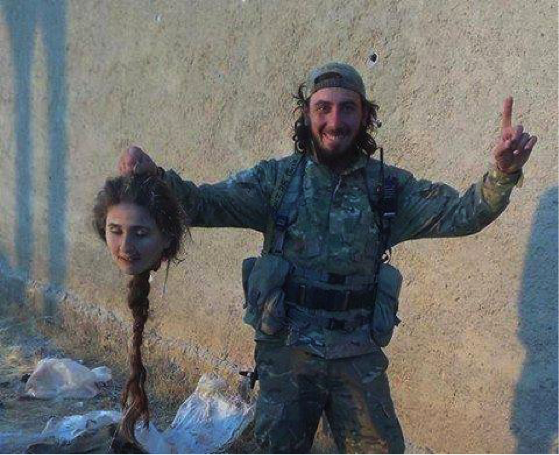 ISIS Islamist with the head of “Rehana,” Peshmerga fighter.
Theology, for the most part, is the a priori premise for Muslim politics and evangelism, Islamism if you will. Culture proceeds from or is conditioned by religious writ or tradition in the Ummah. The adjective “Islamic” before the noun “republic” is not just an historical artifact.
Indeed, since the 1979 Shia religious coup in Persia, the political trend lines throughout dar al Islam are clearly theocratic. You might call the recent Shia coup in Yemen a copycat killing. Secular Islam is in the crosshairs. The trend suffered a setback in Egypt recently, but only at the expense of a military coup.
Theocracy or the generals are the two political default settings in the Muslim world today. Priests and brass hats are never far from the nexus of power. If behavior is a measure of merit in the Ummah, the generals are to be preferred over the ayatollahs, Islamic scholars, mullahs, or imams. Cairo might take a nervous bow here.
A priori or unwarranted assumptions are not limited, however, to the Islamic side of the geo-strategic conundrum. European and American intellectuals, politicians, generals, and academics, are handicapped with the same infirmity.
Terror provides a snapshot of the logic that flows from flawed premises, foregone conclusions that attempt to absolve Islam.
After most atrocities, East or West, the specter of the late Edward Said reappears. Said is the Palestinian apologist, tenured at Columbia University, who coined the theory of “Orientalism,” a grab bag of complaints that cover a host of shibboleths that permit blanket absolution for the Muslim majority today.
Infidels in the West usually begin with ritual handwringing about the horrors of bombs, bullets, and beheadings, followed immediately by a logical hairball where moral poles are reversed — a universe where the Islamist villain morphs into the Muslim victim. Shooters and bombers are rhetorically excommunicated by Western Quislings. Such is the “logic” that allows a black politician from Chicago to declare emphatically that “ISIS is not Islam,” a little like parsing jackals from coyotes.
In contrast, few prominent Muslims condemn or ostracize jihadists. Jihad is as Muslim as Mohammed. Indeed, nearly 50 countries in dar al Islam now send Islamist fighters to ISIS, hirsute recruits that are happy to execute, in the name of Allah, any European, American, or East Asian that falls into their hands. Most recently, two Japanese civilians lost their heads. The executioner of choice at the moment apparently carries a British passport.
Before the blood dries after such barbarism, politicians and media pundits go on defense lest atrocity stain the veil of immunities created for all Muslims. Indeed, when the President of the United States or the Prime Minister of Britain says that ISIS, or any terror group, is not Islamic, they confer blanket amnesty on a sixth of the world’s population, the now celebrated “pacific,” passive-aggressive, Muslim majority.
The anointing of Islam as victim is underwritten by a litany of lesser and equally unsupportable excuses including but not limited to: colonialism, exploitation, poverty, illiteracy, imperialism, racism (sic), and moral equivalence. Of these, moral equivalence is the most absurd.
Few Muslim scholars, ayatollahs, or imams make any claim of moral equivalence. Mohamed, Islam, the Koran, and Hadith are thought to be a unity, the final, singular, and unalterable truth. The Islamist sees all other religions, Jewish, Christian, Buddhist, and Hindu especially, as infidels or apostasies, vessels of ignorance. Ecumenism and multiculturalism is only possible, and only a tactic at that, in polities where Muslims are a minority. Tolerance is nearly absent where Muslim majorities prevail.
Within major religions, moral consistency is now an oxymoron. Discrimination in the West is a still a vice while bigotry in Islam has been ordained a cultural virtue.
Jews and Christians have been removed from most Arab states and are in peril in the Muslim world at large. Jews in Europe are also under siege now by a coalition of traditional anti-Semites on the Left, augmented by irredentist Muslim immigrants on the Right. In contrast, 1.5 million Muslim Arabs still thrive in the tiny state of Israel.
Equality is a claim made by western apologists on behalf of Islam. Few Sunni or Shia clerics or scholars confer equality, civic or religious, on the unbeliever — infidel or apostate. Among Muslims, small minorities like the Kurds, the Zezidi, Ahmadiyya, and the Sufi might legitimately think of themselves as moderates, but they represent only five percent of Islam.
Premature absolution of Islam is now the knee jerk response to all atrocity. Never mind that most terror groups are Muslim and proudly array themselves with all the predictable kit: incantations, black surah flags, the Koran, the Hadith, beards, and burkas — all in the name of Mohammed. Somehow we are supposed to believe that none of this has anything to do with true Islam. The Ummah plays the victim with the passive approvals of believers and the active collaboration of infidels. “Great religion” indeed!
A standard mantra claims that the majority of Islamist victims are Muslims, another absurd tautology. The summary execution of milquetoast Muslims by righteous Muslims is a kind of cultural masochism. Jihadists who kill, or are themselves killed, are celebrated from Gaza to Kabul as heroes or martyrs.
There is no organized, universal opposition to the bomb, bullet, or the knife in the Arab League or the 56 nations of the Organization of the Islamic Conference (OIC). Indeed, the surah, the sword and the gun are the staples of modern Muslim iconography. Flags and banners alone put the lie to the “moderate” meme.
 Islam in London
When the goal is submission, the modalities for victory are clear, indeed, endorsed by scripture. No Muslim cleric argues that any surah, Koranic admonition, needs amendment or reform. Individual or isolated voices might be raised against violence, but there is no reform movement.
The reform vacuum has its own logic. The reformer would be an apostate and a target in any case. The penalty for apostasy is death! Ayaan Hirsi Ali and Salman Rushdie are examples. What is there to alter if you believe that you have the immutable word of God as guidance? And why change anything if you are winning?
The imperial Islamic 5th column in the West now punctuates evangelism with periodic massacres like Charlie Hebdo in Paris just to remind infidels which side has the upper hand. Global terror may not be orchestrated by any one Muslim group or Islamic state. Alas, centrifugal terror is a tactical conundrum for the West and a strategic asset for the Islamist. Nothing succeeds like viral success.
Strategy in Brussels and Washington has deteriorated to what amounts to “whack-a-mole,” a carnival game where the hammer falls only where the rodent raises its head. ISIS is the rodent du jour. The tunnels of Gaza are the literal incarnation of such Muslim tactics, the strategic significance of which is designed to bleed Israel, in particular, and the West, in general, into submission.
Appeasement in the West and serial terror in the East makes for a calculus where new terror groups or Islamic states are likely to proliferate. ISIS, Boko Haram, and Hisb ut Tahrir provide some of the more recent evidence.
ISIS is the new and now more candid face of Islamo-fascism, savage and uncompromising, with a flair for public relations. Brute force is the attribute that merits the fascist label. Preliminary evidence suggests that ISIS tactics, on a global scale, are better proselytizers and recruiters than any al Qaeda atrocities. Al Baghdadi is not just another Sunni Osama bin Laden. Baghdadi is worse — and more effective at the same time.
When American soldiers like Chris Kyle used words like “savages” to describe Islamists, he was only giving voice to the least offensive description of those who kill in God’s, Mohamed’s, or Islam’s name.
Boko Haram is another metastasizing menace. With the assistance of the US State Department, these Islamic slave traders flew under the terror radar for decades. The ninnies at Foggy Bottom can’t bring themselves to put the words “black Muslim slave trading terrorists” in the same sentence. Political correctness in Washington is a kind of Yankeefatwa nowadays, a death warrant, especially for African schoolgirls.
Political correctness is now the official Achilles heel of social democracies.
Hizb ut Tahrir is another caliphate proselytizer flying under the media radar with an assist from the US State Department and the Intelligence Community. HT activities seldom see the light of day although this mutation of Sunni Islamism now operates openly, like al Ikhwan (aka, the Muslim Brotherhood), without a US terrorist designation and associated scrutiny. If the activists of HT, al Ikhwan, and affiliates were audited, the totals would number in the hundreds of millions.
Moderation among Muslims is not a function of kinetics so much as it is a function of cultural affiliations and sympathies. The Pew Research Center and World Health Organization surveys provide ample testimony to toxic Islamic attitudes and social abuses like capital apostasy, polygamy, and consanguinity.
At the moment we live in an era where the Muslim Brotherhood, and affiliates (see CAIR), are welcomed at the Oval Office, but the Prime Minister of Israel is snubbed and reviled. The reasons for such folly are clear: fear for the economy, fear for energy sources, fear of global Muslim numbers, and ultimately the fear that terrorism might get worse.
The US State Department is one of the few institutions in America, other than the Nation of Islam, blessed with the gift of prophecy. Logic, reason, and morality have been subverted to serve the cause of appeasement. Pandering to savages has always been the one policy choice that guarantees that things will get worse.
Egypt’s fight, America’s apathy, Israel Hayom, Dr. Reuven Berko, February 3, 2015
[M]any Arab states long ago branded the movement and its “offspring” as illegal. In the Arab states, unlike in the West, Arabic is fully understood. This fact raises the suspicion that the U.S., which is losing interest in our region, has come to terms with radical Islam’s ascension to power in the Middle East, and is sacrificing its allies in the region.
*********************
The Muslim Brotherhood in Egypt refuses to accept the verdict of the electorate and is trying, through brutal terrorism, to delegitimize President Abdel-Fattah el-Sissi. Ever since the el-Sissi government’s democratic election, Egypt has been plagued by a wave of terror perpetrated by the Brotherhood against the country’s army and security forces in Egypt proper and the Sinai Peninsula, which has damaged the economy and infrastructure.
In his most recent speech at Al-Azhar University, on Jan. 1, el-Sissi tried conveying to the “sane” senior religious leaders a brave message about the need to fight terror, calling for introspection and for them to implement a “religious revolution” against terror. His call has gone unanswered.
Indeed, Egypt is fighting these days against Ansar Beit al-Maqdis, the terrorist group that has renamed itself the “Sinai Province” and has sworn allegiance to Islamic State. Over the past several months, Sinai Province terrorists have inflicted considerable damage and casualties on the Egyptian army, in a series of car bombings and shooting attacks. Last Thursday night, the group carried out four separate attacks on security forces in northern Sinai, killing at least 30 soldiers and police officers.
Egyptian sources pointed a finger at Hamas and its armed wing, the Izzedine al-Qassam Brigades, accusing the Gaza-based terrorist group of aiding Sinai Province in its violent campaign. Evidence of this aid can be found in intercepted messages between the groups. Consequently, Egypt over the weekend banned Hamas’ military wing, listing it as a terrorist organization. In light of the dozens of slain soldiers, el-Sissi called on his security forces in Sinai to avenge the blood of their fallen comrades, and said: “We are fighting a well-funded global terrorist organization. … I am not tying your hands to prevent you from taking retribution from the terrorists.” During the heartfelt speech, el-Sissi announced the establishment of a new headquarters, commanded by a general, charged with waging war on terror and retaking Sinai.
As per its custom, Al-Jazeera distorted his message. One of the network’s “analysts” argued that el-Sissi’s words constituted a call for vengeance and civil war, and that he has turned the Egyptian army into a jury and hangman.
In contrast, in an interview with the network, the editor-in-chief of the weekly Egyptian newspaper Al-Mashhad protested the consistent incitement by Al-Jazeera against Egypt. Al-Jazeera, meanwhile, continues to incite, provide Hamas with material aid, and exalt the Izzedine al-Qassam Brigades as a role model via its documentaries and programs. Within this framework, Izzedine al-Qassam Brigades member Abdel Karim Al-Hanini, in his own series broadcast on Al-Jazeera, boasts of murdering Israeli civilians and soldiers, while instructing his audience, Palestinians and Muslim Brotherhood followers in Egypt alike, on how to build bombs.
Despite the events in Egypt, the Muslim Brotherhood has yet to be outlawed in Europe and the United States. Many leaders still believe it is a legitimate political movement, despite knowing that it engages in terrorism across the globe and the “new Middle East,” and regardless of the fact that many Arab states long ago branded the movement and its “offspring” as illegal. In the Arab states, unlike in the West, Arabic is fully understood. This fact raises the suspicion that the U.S., which is losing interest in our region, has come to terms with radical Islam’s ascension to power in the Middle East, and is sacrificing its allies in the region. Its abstention from reining in Qatar, which incites and funds terrorism, testifies to the indifference of the United States to the damage this causes to Israel and to Egypt’s fight against fundamentalism, and will lead to the fall of other moderate Arab states.
It appears the Americans, who have soldiers based in the manipulative Qatar, along with the Europeans and partnered by Islamist Turkey and NATO, are implementing a policy of “after me, the deluge,” and have accepted the partition of the fading Middle East between the subversive Sunnis and the encroaching Iranians, who are establishing outposts and bridgeheads in Iraq, Syria and Lebanon, as well as in Bahrain and Yemen. Both camps, the Sunni and Shiite, are now moving toward an arms race and inevitable apocalyptic clash, simultaneous to the completion of Iran’s nuclear program, in lieu of sanctions or a deal ensuring it is scaled back.
In the meantime, the European Union is working with Arab League foreign ministers and, bizarrely, Turkey and Qatar, two countries that support these terrorist movements, to create a front against Islamist terror. The criminals have been appointed the guards, indeed.
How Iran Is Making It Impossible for the US to Beat ISIS, Daily Beast, Michael Weiss, Michael Pregent, February 1, 2015
 Ahmed Saad/Reuters
Washington needs to quit pretending it can work with Iran to defeat the Islamic State. Tehran’s real objective is to defeat Washington.
It was August 2007, and General David Petraeus, the top commander of U.S. forces in Iraq, was angry. In his weekly report to then-Defense Secretary Robert Gates, Petraeus wrote: “I am considering telling the President that I believe Iran is, in fact, waging war on the U.S. in Iraq, with all of the U.S. public and governmental responses that could come from that revelation. … I do believe that Iran has gone beyond merely striving for influence in Iraq and could be creating proxies to actively fight us, thinking that they can keep us distracted while they try to build WMD and set up [the Mahdi Army] to act like Lebanese Hezbollah in Iraq.”
There was no question there and then on the ground in Iraq that Iran was a very dangerous enemy. There should not be any question about that now, either. And the failure of the Obama administration to come to grips with that reality is making the task of defeating the so-called Islamic State more difficult—indeed, more likely to be impossible—every day.
There are lessons to be learned from the experience of the last decade, and of the last fortnight, but what is far from clear is whether Washington, or the American public, is likely to accept them because they imply much greater American re-engagement in the theater of battle. As a result, what we’ve seen is behavior like the proverbial ostrich burying its head in the desert sand, pretending this disaster just isn’t happening. But at a minimum we should be clear about the basic facts. In Iraq and Syria, as we square off against ISIS, the enemy of our enemy is not our friend, he is our enemy, too.
In 2007, there were 180,000 American troops in Iraq. Under Petraeus’s oversight, U.S. Joint Special Operations Command (JSOC), the elite forces responsible for hunting terrorists around the world, was divided into two task forces. Task Force 16 went after al Qaeda in Iraq, the group that eventually would spawn ISIS, while Task Force 17 was dedicated to “countering Iranian influence,” chiefly by killing or capturing members of Iraq’s Shia militias—though in some cases, it even arrested operatives of Iran’s Revolutionary Guards Corps-Quds Force (IRGC-QF) who were arming and supervising those militias’ guerrilla warfare against coalition troops.
At one point, in the summer of 2007, Petraeus concluded that the Mahdi Army, headed by the Shiite demagogue Muqtada al-Sadr, posed a greater “hindrance to long-term security in Iraq” than al Qaeda did. As recounted in The Endgame, Michael Gordon and Bernard E. Trainor’s magisterial history of the Second Iraq War, two-thirds of all American casualties in Iraq in July 2007 were incurred by Shiite militias. Weapons known as explosively formed penetrators, or EFPs, were especially effective against the U.S. forces. They were Iranian designed and constructed roadside bombs that, when detonated, became molten copper projectiles able to cut through the armor on tanks and other vehicles, maiming or killing the soldiers inside.
So it came as a surprise to many veterans of the war when Secretary of State John Kerry, asked in December what he made of the news that Iran was conducting airstrikes against ISIS in Iraq, suggested “the net effect is positive.” Similarly, Chairman of the U.S. Joint Chiefs of Staff Gen. Martin Dempsey—formerly the commander of the 1st Armored Division in Baghdad—told reporters last month, “As long as the Iraqi government remains committed to inclusivity of all the various groups inside the country, then I think Iranian influence will be positive.”
Whatever the Iraqi government says it is committed to, “inclusiveness” is not what’s happening on the ground.
Iran’s influence in Iraq since ISIS sacked Mosul last June has resulted in a wave of sectarian bloodletting and dispossession against the country’s Sunni minority population, usually at the hands of Iranian-backed Shia militia groups, but sometimes with the active collusion of the Iraq’s internal security forces. Indeed, just as news was breaking last week that ISIS’s five-month siege on the Syrian-Turkish border town Kobane finally had been broken, Reutersreported that in Iraq’s Diyala province at least 72 “unarmed Iraqis” —all Sunnis—were “taken from their homes by men in uniform; heads down and linked together, then led in small groups to a field, made to kneel, and selected to be shot one by one.”
Stories such as these out of Iraq have been frequent albeit under-publicized and reluctantly acknowledged (if at all) by Washington both before and after Operation Inherent Resolve got underway against ISIS.
For instance, 255 Sunni prisoners were executed by Shia militias and their confederates in the government’s internal security forces between June 9 and mid-July, according to Human Rights Watch. Eight of the victims were boys below the age of 18. “Sunnis are a minority in Baghdad, but they’re the majority in our morgue,” a doctor working at Iraq’s Health Ministry, told HRW at the end of July. Three forensic pathologists found that most of the victims in Baghdad were shot clean through the head, their bodies often left casually where they were killed. “The numbers have only increased since Mosul,” one doctor said.
On August 22, 2014, the Musab Bin Omair mosque in Diyala—the same province where last week’s alleged executions occurred—was raided by officers of the security forces and militants of Asaib Ahl al-Haq (the League of the Righteous), which slaughtered 34 people, according to HRW. Marie Harf, the U.S. State Department spokeswoman, said at the time: “This senseless attack underscores the urgent need for Iraqi leaders from across the political spectrum to take the necessary steps that will help unify the country against all violent extremist groups.”
Since then, however, U.S. warplanes have provided indirect air support to Asaib Ahl al-Haq and Kataib Hezbollah, a U.S.-designated terrorist entity, both of which were at the vanguard of the troops that ended ISIS’s months-long siege of Amerli, a Shia Turkomen town of about 15,000, in November 2014. These militias have also been seen and photographed or videoed operating U.S. Abrams tanks and armored vehicles intended for Iraq’s regular army, which means that there are now two terrorist organization, Sunni ISIS and Kataib Hezbollah, armed with heavy-duty American weapons of war.
The Hezbollah-ization of Iraq’s military and security forces has been overseen by the IRGC-QF, another U.S.-designated terrorist entity, which is headed by Maj. Gen. Qassem Suleimani, a man personally sanctioned by the Treasury Department for his role in propping up Bashar al Assad’s mass murderous regime in Syria.
Suleimani is the same Iranian operative Petraeus once called “evil” because of his well-documented role orchestrating attacks on U.S. servicemen. The most notorious episode happened in Karbala in 2007—in a raid that was carried out by Asaib Ahl al-Haq and resulted in the death of five G.I.s One of the founders of this militia and a main perpetrator of the attack, Qais al Khazali, was captured by coalition forces and subsequently released in a prisoner swap for a British hostage in 2009. Today, al Khazali moves freely around Iraq, dressed in battle fatigues, commanding Asaib militants.
Another one of Suleimani’s major proxies, the Badr Corps, is headed by Hadi al-Amiri, who happens to be Iraq’s current minister of transport, in which capacity he’s been accused by the U.S. government of helping to fly Iranian weapons and personnel into Syria. Not only was one of al-Amiri’s Badr henchmen, the group’s intelligence chief Abu Mustafa al-Sheibani, the man chiefly responsible for importing explosively formed projectiles into Iraq from Iran’s Mehran province during the occupation, but another of his subordinates, Mohammed Ghabban, is currently Iraq’s Interior Minister. This gives the Badr Corps purview over all of Iraq’s internal security forces, including its federal police—that is to say, the men in uniform who have allegedly acquiesced or connived in the Shia militias’ anti-Sunni pogroms.
Indeed, Iraq’s Interior Ministry gained notorious reputation in the last decade for being a clearinghouse for sectarian bloodletting. During the civil war in the mid-2000s, its agents, nominally aligned with U.S. troops, moonlighted as anti-Sunni death squads that functioned with the impunity of officialdom. The ministry also ran a series of torture-prisons in Baghdad, such as Site 4, where, according to a 2006 U.S. State Department cable, 1,400 detainees were held in “in squalid, cramped conditions,” with 41 of them bearing signs of physical abuse. Ministry interrogators, the cable noted, “had used threats and acts of anal rape to induce confessions and had forced juveniles to fellate them during interrogations.”
Needless to add, Badr has hardly mended its ways with the passage of time and the exit of U.S. troops from Iraq. Today, the militia has been accused of “kidnapping and summarily executing people…[and] expelling Sunnis from their homes, then looting and burning them, in some cases razing entire villages,” in thewords of Human Rights Watch’s Iraq research Erin Evers, who added for good measure that the current White House strategy in Iraq is “basically paving the way for these guys to take over the country even more than they already have.”
As if taunting the Obama administration’s, Suleimani has takento popping up, Zelig-like, in photographs all over Iraq, usually from a front-line position from which ISIS has just been expelled. It is hard to overestimate the propaganda value such images now carry.
Consider this week’s blockbuster disclosure that the CIA and Israel’s Mossad collaborated in the 2008 assassination of one of Suleimani’s other high-value proxies, Hezbollah security chief Imad Mughniyeh. In close collaboration with Iran, Mughniyeh coordinated suicide attacks ranging from the 1983 U.S. Marine barracks bombings in Beirut to the blowing up of the AMIA Jewish center in Buenos Aires in 1994. Mughniyeh also was linked to the kidnapping of several Europeans and Americans in Lebanon in the 1980s, including CIA Station Chief William Buckley, believed to have died in 1985 after months of torture by Iranian and Iranian-trained interrogators.
So it is not surprising that Langley wanted Mughniyeh dead. What is suprising is that according to the Washington Post the CIA and Mossad had “a chance to kill” the Iranian master-spy Suleimani as he strolled through Damascus with Mughniyeh in 2008, but passed it up because of potential collateral damage. No doubt U.S. satellite surveillance is currently tracking Suleimani’s plain-sight movements in Iraq and Syria, too.
Last month, an Israeli attack in the Syrian sector of the Golan Heights killed Mughniyeh’s son, Jihad, who was said to have been an “intimate” protégé of Suleimani.
While segments of the U.S. intelligence establishment and punditocracy believe Iran to be a credible or necessary force for counterterrorism, the fighters associated with Suleimani’s paramilitaries profess a different agenda entirely.
In October, ISIS was driven from Jurf al-Sakher, a town about 30 miles southwest of Baghdad. The operation was said to have been planned personally by Suleimani. It featured Quds Force agents and Lebanese Hezbollah militants embedded with some 7,000 troops form the Iraqi Security Forces.
Ahmed al Zamili, the head of the 650-strong Al Qara’a Regiment, one of the militias party to that fight, told the Wall Street Journal that he actually welcomed the invasion of Iraq by ISIS because this dire event would only hasten the return of the Hidden Imam, a religious prophecy which in Shia Islam precedes the founding of a worldwide Islamic state. Al Zamili made it clear that his notion of counterinsurgency was holy war. Meanwhile, 70,000 Sunnis were driven from Jurf al-Sakher, which means “rocky bank” and has now been renamed Jurf al-Nasr (“victory bank”). The provincial council told them they would not be allowed to return for eight or ten months.
“Iran has used Iraq as a petri dish to grown new Shia jihadist groups and spread their ideology,” says Phillip Smyth, an expert on Shia militias. By Smyth’s count, there are more than 50 “highly ideological, anti-American, and rabidly sectarian” Shia militias operating in Iraq today, and recruiting more to their ranks, all with the acquiescence of the central government.
Some of Iraq’s Shia politicians have acknowledged the dismal reality that has attended Baghdad’s outsourcing of its security to “Khomeinists” — and the potential it carries for the kind of all-out sectarian bloodletting that nearly tore the country apart in the mid-2000s.
One unnamed Shia politician told the Guardian newspaper last August that groups of Shia extremists “equal in their radicalization to the Sunni Qaeda” are being created. “By arming the community and creating all these regiments of militias, I am scared that my sect and community will burn,” he said.
More recently, Iraq’s Vice President for Reconciliation, Ayad Allawi, a secular Shia who once served as the interim prime minister, told the same broadsheet that pro-government forces have been ethnically cleansing Sunnis from Baghdad. This is a starker admission of the atrocities being committed by America’s silent partner than currently is on offer by the State Department or Pentagon, and many Sunnis now suspect Washington of full collaboration with Tehran, whatever the protestations to the contrary.
When Michael Pregent, one of the authors of this essay, briefed a team of U.S. military advisors headed to Iraq recently, he warned them that they are now operating in an environment in which Iranian and Shia-militia targeting choices take priority over the recommendations of U.S. advisors and intelligence officers.
The consequence of this tacit collaboration with the Quds Force and its assets is obvious: the United States will be portrayed by ISIS propagandists as a helpmeet in the indiscriminate murder and dispossession of Sunnis.
Kerry and Dempsey would do well to pay closer attention to Iran’s air war, too. According to one Kurdish Iraqi pilot interviewed by the Guardian, Suleimani’s command center in Iraq, the Rasheed Air Base south of Baghdad, is where “the Iranians make barrel bombs” and then use Antonov planes and Huey helicoptetrs to drop them in Sunni areas — thus replicating one of the nastiest tactics of Assad’s air force in Syria.
The Anbar Awakening critical to stabilizing Iraq in the middle of the last decade was made possible by the presence of U.S. ground forces who represented to the influential Sunni tribes an impartial bulwark against the draconian rule of al Qaeda in Iraq.
Many in the Obama administration express the hope that another such awakening can be fomented, given the current political and military dynamics in Iraq. But how? ISIS has cleverly exploited the sensitivities and fears of Iraq’s Sunni tribes, offering those it hasn’t rounded up and murdered the chance to “repent” and reconcile with the so-called “Calihpate.”
ISIS: Inside the Army of Terror, a new book by the co-author of this piece, documents the tragic situation of those Sunni tribesmen who have risen up against ISIS only to be slaughtered mercilessly, sometimes with the help of their fellow tribesmen, whom ISIS had already won over. The rest of the constituents of this bellwether Sunni demographic are thus given a choice between cutting a pragmatic deal with ISIS or embracing Shia death squads as their saviors and liberators. Most have, predictably, opted for the former.
“The American approach is to leave Iraq to the Iraqis,” Sami al-Askari, a former Iraqi MP and senior advisor to former Prime Minister Nouri al-Maliki, told Reuters last November. “The Iranians don’t say leave Iraq to the Iraqis. They say leave Iraq to us.”
For the White House, that ought to define the problem, not the solution.




 anneinpt
 artaxes
 danmillerinpanama
 davidking1530
 Peter Hofman
 Joseph Wouk
 Peter
Peter Louisiana Steve
 WarSclerotic
Recent Comments