Archive for the ‘Kerry’ category

A scenario Netanyahu hasn’t spelled out: One Iranian nuke could obliterate Israel’s heartland

March 3, 2015

A scenario Netanyahu hasn’t spelled out: One Iranian nuke could obliterate Israel’s heartland, DEBKAfile, March 3, 2015
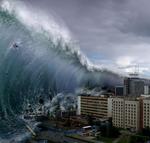
zunamiOne dread Iranian nuclear threat postulated

When Prime Minster Binyamin Netanyahu speaks out against Iran becoming a pre-nuclear state he is warning that Iran could at any time cross the line agreed in diplomacy with the US and build a bomb whenever it chooses. He has never spelled out the mechanics of this threat to Israel’s survival.

The last DEBKA Weekly revealed in detail one potential scenario that, given Israel’s small size, would call for no more than one nuke to destroy its heartland and inflict at least an estimated million casualties. This nuclear bomb or device would be dropped from an IranAir civilian airliner on a regular run from Larnaca over the Mediterranean about 100 km from the Israeli coast.

After the plane disappeared, the delayed action mechanism would detonate the bomb and set off a tsunami. Giant waves would swamp the densely populated Tel Aviv conurbation and its satellites. This 1,500 square kilometer area is home to some 3.7 million people, nearly half of the country’s entire population, its military and banking centers, hi-tech industry and the stock exchange.

The cost in lives would be cataclysmic – at least a million dead.

Iran’s Islamic Revolutionary rulers make no secret of their plans for Israel. On Feb. 26, the second day of Iran’s 2015 war games, a senior Revolutionary Guards officer declared that Iran had the ability to wipe the cities of Haifa and Tel Aviv off the face of the earth.

In projecting this scenario, Israel’s defense chiefs have no doubt set up defenses and a second-strike capacity in a mountainous area outside the range of a tsunami and far from Israel’s shores.

Israel is also on guard on both of its northern borders against the hostile Iranian military presence encroaching from Syria and Lebanon.

The big speech – about which Netanyahu joked: Never has so much been written about a speech before it was given – will be delivered to a joint session of the US Congress Tuesday, March 3, at 6 p.m. IST.

It is hard to see what he hopes to achieve, aside from dramatizing his fight against the emerging US-Iranian deal which, he warns, will enable Iran to consummate its drive for nuclear weapons early in the future.

He takes the august podium under a barrage of criticism from President Barack Obama, his aides and his political opponents at home. About one-fifth of Democratic members will be absent. The White House has warned him against “betraying trust” by revealing details conveyed in confidence. But he won cheers from a large AIPAC audience earlier when he said, “Israel now has a voice and I will use it!”

In a Reuters interview Monday night, Obama said the US and Israel agreed Iran must not acquire nuclear weapons, but differed on how to achieve this goal. Any deal he would agree to, Obama said, would require Iran to freeze its nuclear program at least a decade. The US goal is to make sure “there’s at least a year between us seeing them try to get a nuclear weapon and them actually being able to obtain one,” he said.

A key doubt was whether Iran would agree to rigorous inspection demands and the low levels of uranium enrichment capability they would have to maintain.

Monday, March 2, the International Atomic Energy Agency, IAEA, complained once again that Iran was still not answering key questions about its nuclear projects or opening up suspect sites to inspection.

But US national security adviser Susan Rice, who addressed AIPAC after Netanyahu, insisted that the prime minister’ demand to strip Iran of the ability to enrich uranium would be “neither realistic nor achievable,” adding that President Obama had left all options on the table for preventing a nuclear-armed Iran.

After the speech to Congress, the prime minister will meet Senators Mitch McConnell and Harry Reid with a group of bipartisan lawmakers.

Although no member of the administration will be present for the speech – not just Vice President Joe Biden – the office of House Speaker John Boehner, who invited the Israeli leader to give the address, says the demand for tickets is unprecedented – from both Republicans and Democrats alike. The House and Senate have set up alternative viewing locations.

Netanyahu tries to head off Iran’s machinations after Obama empowers Tehran as favored Mid East ally

March 2, 2015

Netanyahu tries to head off Iran’s machinations after Obama empowers Tehran as favored Mid East ally, DEBKAfile, March 1, 2015

Iran's Shite crescent

Netanyahu’s political rivals, while slamming him day by day, turn their gaze away from the encroaching Iranian forces taking up forward positions in Iraq, Syria and Lebanon, where they are busy fashioning a  Shiite Crescent that encircles Sunni Arab states as well as Israel.

It must be obvious that to bolster its rising status as the leading regional power, Iran must be reach the nuclear threshold – at the very least – if not nuclear armaments proper, or else how will Tehran be able to expand its territorial holdings and defend its lebensraum.

****************

Almost the last words Israeli Prime Minister Binyamin Netanyahu heard Sunday, March 1, as he took off for Washington to address Congress on Iran, was in effect “Don’t do it!” They came from a group of 180 senior ex-IDF military officers. After the personal abuse is weeded out of their message, what remains is that Netanyahu’s speech to a joint session of the US Congress Tuesday, March 3, was not worth making because it would damage relations with the US.

Maj. Gen. Amiram Levin, former Northern Command chief and ex-Deputy Director of the Mossad, put it this way: “Bibi, you are making an error in navigation; the target is Tehran not Washington.” He went on to say: “[Instead] of working hand in hand with the president,,, you go there and poke a finger in his eye.”

DEBKAfile’s analysts maintain that the navigation error is the general’s. Before shooting his slings and arrows at the Israeli prime minister’s office, he should long ago have taken note of President Barack Obama’s Middle East record in relation to Israel’s during his six years in the White House.

It took time to catch on to Obama’s two-faced policy towards Israel because it was handled with subtlety.

On the one hand, he made sure Israel was well supplied with all its material security needs. This enabled him to boast that no US president or administration before him had done as much to safeguard Israel’s security.

But behind this façade, Obama made sure that Israel’s security stayed firmly in the technical-material-financial realm and never crossed the line into a strategic relationship.

That was because he needed to keep his hands free for the objective of transferring the role of foremost US ally in the Middle East from Israel to Iran, a process that took into account the ayatollahs’ nuclear aspirations.

This process unfolding over recent years has left Israel face to face with a nakedly hostile Iran empowered by the United States.

Tehran is not letting its oft-repeated threat to wipe Israel off the map hang fire until its nuclear aspirations are assured of consummation under the negotiations continuing later this week in the Swiss town of Montreux between US Secretary John Kerry and Iranian Foreign Minsiter Mohammed Javad Zarif. In the meantime, without President Obama lifting a finger in defense of “Israel’s security,” Iran’s Revolutionary Guards Corps officers are drawing Israel into a military stranglehold on the ground.

Netanyahu’s political rivals, while slamming him day by day, turn their gaze away from the encroaching Iranian forces taking up forward positions in Iraq, Syria and Lebanon, where they are busy fashioning a  Shiite Crescent that encircles Sunni Arab states as well as Israel.

It must be obvious that to bolster its rising status as the leading regional power, Iran must be reach the nuclear threshold – at the very least – if not nuclear armaments proper, or else how will Tehran be able to expand its territorial holdings and defend its lebensraum.

This is not something that Barack Obama or his National Security Adviser Susan Rice are prepared to admit. They are not about to confirm intelligence reports, which expose the military collaboration between the Obama administration and Iran’s supreme leader Aytatollah Ali Khamenei as being piped through the office of Iraq’s Shiite Prime Minister Haider al-Abadi.

Washington denies that there is any such collaboration – or any suggestion that the White House had reviewed recommendations and assessments of an option for the Iranian Revolutionary Guards’ Al Qods Brigades to take over the ground war on the Islamic State in Iraq and Syria as American contractors.

Al Qods chief Gen. Qassem Soleimani is frequently spotted these days flitting between Baghdad, Damascus and Beirut, while his intelligence and liaison officers file reports to the Obama administration, through the Iraqi prime minister’s office, on their forthcoming military steps and wait for Washington’s approval.

America understandably lacks the will to have its ground forces embroiled in another Middle East war. Washington is therefore not about to turn away a regional power offering to undertake this task – even though it may be unleasing a bloody conflagration between Shiite and Sunni Muslims that would be hard to extinguish

Egypt, Saudi Arabia, the rest of the Gulf are as dismayed as Israel by Obama’s regional strategy, which, stripped of its diplomatic veneer, boils down to a straight trade: The US will allow Iran to reach the status of a pre-nuclear power and regional hegemon, while Tehran, in return, will send its officers and ground troops to fight in Iraq, Syria and even Afghanistan.

The 180 ex-IDF officers and Israel’s opposition leaders, Yitzhak Herzog and Tzipi Livni, were right when they argued that Israel’s bond with the US presidency is too valuable to jeopardize. But it is the Obama White House which is trifling with that bond – not Netanyahu, whose mission in Washington is no more than a tardy attempt to check Iran’s malignant machinations which go forward without restraint.

Obama Must Explain Why the Iran Deal Isn’t North Korea Redux

March 1, 2015

Obama Must Explain Why the Iran Deal Isn’t North Korea Redux, Commentary Magazine, March 1, 2015

(There are additional parallels. North Korea and Iran have comparable views of human rights, both make loud and frequent noises about obliterating their perceived enemies and both have allies willing if not anxious to sneak around sanctions. There are also differences. Iran is far more powerful than North Korea was or is and Iran’s intention to dominate the Middle East transcends North Korea’s desire to “unify” with South Korea on North Korea’s terms. Iranian governance is based on Islam, an unfortunately powerful world religion seeking world domination. North Korean governance is based on the “religion of Kim,” supreme internally but otherwise of little significance elsewhere. Iran also presents a greater danger to the U.S. than North Korea did. However, Obama won’t explain why the Iran deal isn’t “North Korea redux” because he quite likely neither knows nor cares and because it is. — DM)

The State Department has never conducted a lessons learned exercise about what went wrong with the North Korea deal. Perhaps it’s time. Diplomatic responsibility and national security demand it.

**********************

As the Obama administration rushes into a nuclear deal with Iran, it pays to remember the last time the United States struck a deal with a rogue regime in order to constrain that state’s nuclear program and the aftermath of that supposed success.

Bill Clinton had been president barely a month when North Korea announced that it would no longer allow International Atomic Energy Agency (IAEA) inspections, followed shortly thereafter by an announcement that it would withdraw from the NPT altogether within a matter of months. If Kim Il-sung expected Washington to flinch, he was right. The State Department aimed to keep North Korea within the NPT at almost any price. Chief U.S. negotiator Robert Gallucci and his aides explained in their book Going Critical, “If North Korea could walk away from the treaty’s obligations with impunity at the very moment its nuclear program appeared poised for weapons production, it would have dealt a devastating blow from which the treaty might never recover.” Unwilling to take any path that could lead to military action, Clinton’s team sought to talk Pyongyang away from nuclear defiance, no matter that talking and the inevitable concessions that followed legitimized Pyongyang’s brinkmanship.

As with President Obama relieving Iran of the burden of six United Nations Security Council resolutions which demanded a complete cessation of enrichment, Clinton’s willingness to negotiate North Korea’s nuclear compliance was itself a concession. After all, the 1953 Armistice required Pyongyang to reveal all military facilities and, in case of dispute, enable the Military Armistice Commission to determine the purpose of suspect facilities. By making weaker frameworks the new baseline, Clinton let North Korea off the hook before talks even began.

Just as Israeli (and Saudi and Emirati and Egyptian and Kuwaiti and Bahraini) leaders express frustration with the Obama administration regarding its naiveté and unwillingness to consult, so too did South Korea at the time chafe at Clinton’s arrogance. South Korean President Kim Young Sam complained to journalists that North Korea was leading America on and manipulating negotiators “to buy time.” And in a pattern that repeats today with regard to Iran, the IAEA held firmer to the demand that North Korea submit to real inspections than did Washington. The issue came to a head in September 1993 after the State Department pressured the IAEA to compromise on limited inspections.

In the face of Pyongyang’s defiance, Clinton was also wary that coercion could be a slippery slope to war. Just as President Obama and Secretary of Defense Chuck Hagel instructed U.S. forces in the Persian Gulf not to stand firm but rather to retreat if probed or pushed by Iran, Clinton sought to mollify Pyongyang, for example cancelling the joint U.S.–South Korea military exercise in 1994. Adding insult to injury, the Clinton administration criticized the South Korean government for being unwilling to compromise. Indeed, everything the Obama administration has done with regard to Israel over the past year—with the exception, perhaps, of the classless chickensh-t comment—was ripped right from the Clinton playbook two decades before when the White House sought to silence Seoul.

There followed months of baseless optimism in Washington, followed by disappointment quickly supplanted by denial. At one point, when it looked like Kim Il-sung’s intransigence might actually lead to war, former President Jimmy Carter visited Pyongyang and, whether cleared to or not, made concessions which diffused the situation. It was the diplomatic equivalent of Obama’s voided redlines. Nightlinehost Ted Koppel observed on May 18, 1994, “this administration is becoming notorious … for making threats and then backing down.”

On July 8, 1994, a heart attack felled Kim Il-sung. Kim Jong-il, his eldest son, took over. Negotiations progressed quickly. Gallucci and his team promised an escalating series of incentives—reactors, fuel oil, and other economic assistance. They kicked inspections of North Korea’s suspect plutonium sites years down the line.

What had begun as North Korean intransigence had netted Pyongyang billions of dollars in aid; it would go down in history as the largest reward for cheating and reneging on agreements until Obama granted Iran $11 billion in sanctions relief just for coming to the table. Columnist William Safire traced the steps of concessions on North Korea. “Mr. Clinton’s opening position was that untrustworthy North Korea must not be allowed to become a nuclear power,” he observed, but Clinton “soon trimmed that to say it must not possess nuclear bombs, and stoutly threatened sanctions if North Korea did not permit inspections of nuclear facilities at Yongbyon, where the CIA and KGB agree nuclear devices have been developed. But as a result of Clinton’s Very Good Deal Indeed, IAEA inspectors are denied entry to those plants for five years.” And Sen. John McCain, for his part, lamented that Clinton “has extended carrot after carrot, concession after concession, and pursued a policy of appeasement based … on the ill-founded belief that North Koreans really just wanted to be part of the community of nations.” Again, the parallels between Clinton’s and Obama’s assumptions about the desire of enemies to reform were consistent.

Clinton wasn’t going to broker any criticism of what he believed was a legacy-defining diplomatic triumph, all the more so when the criticism came from abroad. On October 7, 1994, South Korean President Kim Young Sam blasted Clinton’s deal with the North, saying, “If the United States wants to settle with a half-baked compromise and the media wants to describe it as a good agreement, they can. But I think it would bring more danger and peril.” There was nothing wrong with trying to resolve the problem through dialogue, he acknowledged, but the South Koreans knew very well how the North operated. “We have spoken with North Korea more than 400 times. It didn’t get us anywhere. They are not sincere,” Kim said. His outburst drew Clinton’s ire. He became the Netanyahu of his day. Meanwhile, the U.S. and North Korea signed the Agreed Framework. Gallucci and his team were “exhilarated.” They later bragged they “had overcome numerous obstacles in the negotiations with the North; survived the intense, sometimes strained collaboration with Seoul and the International Atomic Energy Agency; and marshaled and sustained an often unwieldy international coalition in opposition to the nuclear challenge, all under close and often critical scrutiny at home.”

Today, by some estimates, North Korea is well on its way to having 100 nuclear weapons and is steadily developing the ballistic capability to deliver them. Iran’s nuclear negotiators have cited North Korea’s negotiating strategy as a model to emulate rather than an example to condemn. Meanwhile, Obama has relied on many of the same negotiators to advance his deal with Iran.

The State Department has never conducted a lessons learned exercise about what went wrong with the North Korea deal. Perhaps it’s time. Diplomatic responsibility and national security demand it.

Humor: Obama to preempt all programming to address Climate change: March 3

February 28, 2015

Obama to preempt all programming to address Climate change: March 3, Dan Miller’s Blog, The Most Reverend Mohamed Allah-scimitar, February 28, 2015

(The views expressed in this article are mine and those of my (imaginary) guest author, the Most Reverend Mohamed Allah-Scimitar. They do not necessarily reflect the views of Warsclerotic or any of its other editors.– DM)

This is a guest post by my (imaginary) guest author, the Most Reverend Mohamed Allah-scimitar, President Obama’s chief adviser on Islamic relations with Christians and Jews.

The Most Revereddd Mohamed Allah-scimitar

The Most Revereddd Mohamed Allah-scimitar

**********************
The worst crisis ever to face The Obama Nation — man-caused global warming climate change — continues to immobilize the country. It does so  contemptuously despite the decades-long warming trend recognized by all reputable scientists. Therefore, President Obama will use the emergency broadcast system to preempt all other programming, including the internet, to address the nation on March 3.

Hell Niagara Falls freezes over

Hell Niagara Falls freezes over

climate-heresy

Violent right-wing Christian and Jewish extremist Islamophobes have contended that, by virtue of its timing, President Obama’s address is intended to preempt media coverage of Israeli Prime Minister Netanyahu’s remarks to the Congress on the alleged “existential threat” of a nuclear deal with Iran.

However, White House press secretary Josh Earnest vigorously denied their racist and therefore specious claims. He pointed out that Obama is extraordinarily busy fulfilling His duties as the President of all of His people. He has, therefore, made — and continues to make — historic efforts to help potential non-Islamic Islamic State recruits find jobs and hence to feel good about themselves. Do we want more of this non-Islamic violence? No? Then you should not watch Netanyahu’s address, even if you could.

Islamic-State-21-Coptic-Christians-Kidnapped-IP

President Obama also owes it to His people to continue His Herculean efforts to prevent the Republican Congress from destroying His country by passing legislation which He has to waste time vetoing, thereby attempting to impede His noble efforts to give His people — American citizens and American citizens in waiting — everything they need and want by executive decree action.

Unfortunately, the only time He has available coincides, unexpectedly, with PM Netanyahu’s frivolous speech — which nobody in his right mind would watch anyway because Netanyahu is an untrustworthy nattering nabob of negativism and a war criminal to boot.

Netanyahu war criminal

Moreover, as explained by Robert Kagan in a February 27th Washington Post article, there is no need for anyone to hear Netanyahu’s meddlesome nonsense:

Do we really need the Israeli prime minister to appear before Congress to explain the dangers and pitfalls of certain prospective deals on Iran’s nuclear weapons programs? Would we not know otherwise? Have the U.S. critics of those prospective deals lost their voice? Are they shy about expressing their concerns? Are they inarticulate or incompetent? Do they lack the wherewithal to get their message out?

Not exactly. Every day a new report or analysis warns of the consequences of various concessions that the Obama administration may or may not be making. Some think tanks in Washington devote themselves almost entirely to the subject of Iran’s nuclear program. Congress has held numerous hearings on the subject. Every week, perhaps every day, high-ranking members of the House and Senate, from both parties, lay out the dangers they see. The Post, the New York Times, the Wall Street Journal and others publish countless stories on the talks in which experts weigh in to express their doubts. If all the articles, statements and analyses produced in the United States on this subject could be traded for centrifuges, the Iranian nuclear program would be eliminated in a week.

. . . .

Given all this, can it really be the case that the American people will not know what to think about any prospective Iran deal until one man, and only one man, gets up to speak in one venue, and only one venue, and does so in the first week of March, and only in that week? That is what those who insist it is vital that Israeli Prime Minister Benjamin Netanyahu speak before a joint meeting of Congress next week would have us believe. [Emphasis added.]

President Obama is greatly, and perfectly understandably, distressed that Netanyahu will offer nothing new in support of His legacy achievement of world peace in His time and that his address will therefore force Him to create insuperable problems for Israel. Indeed, He has already asked Iran, under the auspices of the United Nations, to mediate a binding peace agreement among Israel, the Palestinian Authority and Hamas. President Obama did not want to do it, because He loves Israel just as He would His only begotten son if He had one. However, in the circumstances Netanyahu has created, He has has no alternative. Only a vile Islamophobic Jew-hater like Netanyahu would destroy his own country by opposing President Obama’s grand plan for world peace.

As the world’s second greatest authority — second only to Obama — on Islam and its profoundly helpful relations with Jews and Christians everywhere, I call upon everyone in Israel and elsewhere to ignore whatever nonsense the soon-to-be-former Prime Minister of that insignificant beautiful little country may try to spew.

*************

Editor’s comment:

All citizens of the World with half a brain — and even less — should pay heed to The Most Reverend Mohamed Allah-scimitar’s profound words and trust only Dear Leader Obama. He, and only He, can and will do all that needs to be done to keep them warm, safe and content. Should they place unwarranted trust elsewhere, their Dear Leader may well be unable to achieve world peace whirled peas in His time.

obama_chamberlain_charlie_hebdo_1-11-15-1

Who are you going to trust on Iran?

February 26, 2015

Who are you going to trust on Iran? Washington Post, Jennifer Rubin, February 26, 2015

It is no wonder that the administration refuses to concede a deal must be approved by Congress. With each passing day, the administration’s credibility slips deeper into the abyss and the likelihood of bipartisan rejection of the Obama-Clinton-Kerry Iran diplomatic debacle increases.

*********************

Secretary of State John Kerry ran into a bipartisan buzzsaw at the House Foreign Affairs Committee hearing on Wednesday:

California Republican Rep. Ed Royce, chairman of the House Foreign Affairs Committee, told Kerry at a hearing that members of the panel have serious concerns about the direction of the more than 1-year-old talks, which are at a critical juncture. Negotiators are rushing to try to meet a March 31 deadline for a framework agreement between Iran and the US and five other world powers.

“I’m hearing less about dismantlement and more about the performance of Iran’s nuclear program,” Royce told Kerry. “That’s particularly disturbing when you consider that international inspectors report that Iran has still not revealed its past bomb work.”

New York Rep. Elliot Engel, the ranking Democrat on the committee, expressed skepticism too. Engel noted news stories claiming that negotiators are willing to ease limits on Iran’s enrichment production during the later years of an accord in order to bridge the differences between the two sides over how long an agreement should last.

“We’re hearing troubling reports on the scale and duration of the program that Iran may be allowed as part of a deal,” Engel said.

Kerry, who voted for the Iraq war, at one point said Netanyahu couldn’t be trusted because he supported the war. Aside from the unmitigated chutzpah, it is not true. Israel, as has been widely reported, had significant qualms about the war and came under Scud missile fire. Netanyahu, of course, was not prime minister at the time; Ariel Sharon was. Elliott Abrams, who was deputy national security adviser under President George W. Bush and oversaw the Israel relationship, tells me, “Senator Kerry was famously for the invasion of Iraq before he was against it. Prime Minister Netanyahu, then a cabinet member, was — like Prime Minister Sharon — worried that the United States was going after the wrong target, Iraq, when they worried more about Iran. The assertion that Israel pressed for the invasion of Iraq is wrong, and is usually heard from the loonier anti-Semitic circles. Secretary Kerry owes a lot of apologies today.” Indeed, anti-Israel fanatics on the far right and left blame Israel for pushing the war, so maybe that is where Kerry got this from. But his accusation disproves his point: Netanyahu is actually far more credible on Iran since it is his country that is immediately threatened and it is he who accurately predicted Iran’s march to acquire a bomb.

The Post’s Fred Hiatt recently listed a number of false assurances and misguided predictions by the Obama administration. He concluded, “This litany of unfulfilled assurances is less a case of Nixonian deception than a product of wishful thinking and stubborn adherence to policies after they have failed. But inevitably it will affect how people hear Obama’s promises on Iran, as will his overall foreign policy record. . . . Islamist extremists are stronger than ever; democracy is in retreat around the globe; relations with Russia and North Korea have worsened; allies are questioning U.S. steadfastness.” Indeed there is a world leader who deserves deep skepticism on his judgment about Iran; it’s President Obama.

Frankly, the administration’s snit over the Netanyahu speech has rightly been seen as abject panic. The world leader most credible on Iran from the country that 70 percent of Americans support is coming to debunk the plan to let Iran keep its nuclear infrastructure — in direct contravention of the administration’s public statements and private assurances to our allies in the region. The administration’s lame effort to discredit the prime minister and start a partisan rumpus — led by two of the least credible foreign policy officials in recent memory (Susan Rice of “it was a video” fame on the Benghazi attack and John Kerry, whose previously threatened that the United States could not protect Israel unless it made a peace deal) — is nearly as pathetic as its negotiation posture with Iran. It is no wonder that the administration refuses to concede a deal must be approved by Congress. With each passing day, the administration’s credibility slips deeper into the abyss and the likelihood of bipartisan rejection of the Obama-Clinton-Kerry Iran diplomatic debacle increases.

Kerry: U.S. Aware of Illicit Iranian Nuke Facility

February 26, 2015

Kerry: U.S. Aware of Illicit Iranian Nuke Facility, Washington Free Beacon, February 25, 2015

(It’s comforting that Kerry is “aware” of anything the secret facility. But what’s being done to investigate it without, of course, offending Iran? — DM)

John-Kerry-photo-for-negotiations--540x374

Secretary of State John Kerry admitted before Congress on Wednesday that the United States is aware of a secret Iranian facility that an Iranian opposition group identified this week as part of an undisclosed parallel nuclear program.

The group, the National Council of the Resistance of Iran (NCRI), has a history of disclosing the existence of Iranian nuclear facilities that the United States has been later forced to confirm were indeed part of a clandestine nuclear program.

Kerry, under questioning before the House Foreign Affairs Committee, acknowledged that the United States has evidence of the facility, but declined to elaborate to lawmakers about its nature.

“Did the [Iranian] regime tell us about existence of this new nuclear facility,” Rep. Dana Rohrabacher (R., Calif.) asked Kerry at the hearing.

“What you’re saying is it’s a nuclear facility,” Kerry responded. “That is yet to be determined, but we know about the facility, yes.”

“So had they disclosed that facility to us?” Rohrabacher asked.

“It has not been revealed yet as a nuclear facility,” Kerry insisted. “It is a facility that we are aware of, which is on a list of facilities we have. I’m not going to go into greater detail, but these things are going to have to be resolved [in negotiations] as we go forward.”

Questions about the site come in the wake of a report released Tuesday by an Iranian dissident group claiming to provide evidence of “an active and secret parallel nuclear program” in the suburbs of Tehran.

The facility is said to be an “underground top-secret site currently used by the Iranian regime for research and development with advanced centrifuges for uranium enrichment,” according to a copy of the findings by NCRI, also known as the MEK.

Years-long concerns about several secret Iranian nuclear facilities have plagued advocates of an emerging Iran deal and provided ammunition to critics who maintain that the agreement would leave Iran with sufficient infrastructure to continue producing a nuclear weapon.

The existence of such sites has been known for some time to U.S. intelligence agencies and runs counter to the Obama administration’s narrative that Iran can be trusted to comply with a nuclear deal.

“There has never been a time in the past 15 years or so when Iran didn’t have a hidden facility in construction,” a senior Obama administration officialadmitted to the New York Times in 2013.

Concerns among lawmakers and others have been amplified in recent days following the revelation by the Associated Press that the United States is considering permitting Iran to keep its nuclear infrastructure in tact.

The deal is shaping up to be a two-phased agreement, meaning Tehran would be subject to restrictions on its work for around a decade before they are lifted, the AP reported.

Obama, Iran and the Late William Buckley

February 16, 2015

Obama, Iran and the Late William Buckley, Huffington Post, February 15, 2015

(This is from left-“leaning” Huffington Post. William Buckley, the CIA agent mentioned in the article, was not National Review’s William F. Buckley, Jr. The comments following the article are interesting.– DM)

President Obama seems determined to move forward on a nuclear agreement with the regime that tortured and murdered William Buckley. He should reflect on how this dedicated CIA agent must have felt, abandoned by his government and alone with his Iranian torturers, enduring a hellish nightmare in the basement of the Iranian foreign ministry. Is the nation William Buckley died for now about to be abandoned, for the sake of a presidential legacy?

***************

There are growing indications that the Obama administration will sign a nuclear agreement with Iran that will allow Tehran to become a nuclear-threshold state. It seems the only issue being contested at present is the extent of the cosmetic and temporary concessions the Iranians will grant so that Iran does not fully emerge as a nuclear weapons state until after the expiration of the Obama presidency. The disarming body language and genuine warmth that characterizes the public interaction between U.S. Secretary of State John Kerry and Iran’s Minster of Foreign Affairs Mohammad Javad Zarif seems to point in that direction, belying the fact that these two nations have not had diplomatic relations for 35 years because the government of one of those states ordered its armed thugs to attack and seize the embassy of the other nation, in the most flagrant violation of international law, holding its diplomats hostage for 444 days.

Of course, Barack Obama has promised on more than one occasion that he would never permit Iran to become a nuclear armed state. Then again, this is the same President Obama who warned Syria’s president not to use poison gas on his own people, or there would be consequences for crossing that red line. And let us not forget the President’s assurances that the war in Iraq was over and it was safe to withdraw all U.S. forces, or that the emerging Islamic State was nothing more than a “jayvee team” or that Yemen was a great success story for America’s anti-terrorism strategy — the same Yemen where Washington was recently forced to close its embassy after a coup in that country staged by anti-American rebels loyal to Iran.

The consequences involved in permitting Iran to become a nuclear weapons state are, obviously, far more consequential. Barack Obama is not the first president confronting a rogue regime about to acquire nuclear weapons capability. In the early 1990s, evidence mounted that North Korea was embarking on a nuclear weapons program. As with President Obama, then President Clinton pledged to the American people that the North Korean regime would never be permitted to obtain nuclear weapons. Then former President Jimmy Carter came to the rescue. He flew to North Korea, met with the reigning dictator and laid the groundwork for what became the 1994 Agreed Framework treaty, which supposedly froze North Korea’s attempt to develop atomic weapons through plutonium production in exchange for U.S. economic aid. However, the treaty collapsed after Clinton left office when U.S. intelligence learned that North Korea had cheated on the agreement by secretly developing a uranium enrichment program as an alternative path towards developing nuclear bombs. In 2006, North Korea conducted its first test detonation of a nuclear bomb.

It appears that the Obama administration is following in the path originally set by President Clinton. In addition to tolerating a vast nuclear enrichment facility, much of it underground, that can only have been established for the eventual mass production of nuclear bombs to mate with Tehran’s increasingly powerful and longer-range ballistic missiles, the current administration has been passive in the face of Iran’s growing hegemony in the Middle East, as witnessed by Tehran’s virtual occupation of Lebanon through its proxy militia, its massive intervention in the Syrian civil war on the side of Basher Assad, and increasing military involvement and control in Iraq and the recent pro-Iranian coup in Yemen. This passivity is inexplicable, considering the potential and dire strategic and economic consequences for the United States.

What about the character of the regime that President Obama and his national security team seem about to trust with the most destructive weapons on earth? Amid the long list of Iranian terrorist attacks against the U.S. and its interests aboard unleashed by Tehran since 1979, there is one which, more than any other, defines the essence of the regime of the Ayatollahs and its contempt for the United States.

In 1984, the CIA station chief in Beirut, William Buckley, was kidnapped by the Iranian controlled Hezbollah militia. The fate of William Buckley was disclosed byWashington Post columnist Jack Anderson in an article published the following year. According to Anderson, who based his account on confidential sources within the U.S. intelligence community, Buckley was smuggled into Iran, and subjected to numerous bouts of brutal interrogation under barbaric torture in the basement of the Iranian foreign ministry, the same building being presided over today by John Kerry’s Iranian counterpart, Zarif. The barbarous torture eventually induced a heart attack, leading to the death of Buckley. As Jack Anderson stated in his article, Iran was responsible for the horrific murder under torture of an American patriot.

President Obama seems determined to move forward on a nuclear agreement with the regime that tortured and murdered William Buckley. He should reflect on how this dedicated CIA agent must have felt, abandoned by his government and alone with his Iranian torturers, enduring a hellish nightmare in the basement of the Iranian foreign ministry. Is the nation William Buckley died for now about to be abandoned, for the sake of a presidential legacy?

What’s worse than no strategy?

February 11, 2015

What’s worse than no strategy? Israel Hayom, Clifford D. May, February 11, 2015

It seems like only yesterday that U.S. President Barack Obama was being criticized for having no strategy to ‎counter the jihadi threat. In fact, it was about 10 days ago. Peggy Noonan’s Feb. 1 Wall Street ‎Journal column was headlined: “America’s strategy deficit.”‎

Since then, a different perception has been taking root: Obama does indeed have a strategy — ‎a “secret strategy,” one that is alarmingly misguided. ‎

According to this theory, he believes that fighting terrorism requires accommodating the regime ‎long recognized by the U.S. government as the world’s leading sponsor of terrorism: the Islamic Republic of Iran. ‎

He may also see the Islamic republic not as a rival to the Islamic State group but as a more moderate ‎alternative — despite the fact that Iran’s Supreme Leader Ali Khamenei has repeatedly declared ‎hostility toward America the foundation of the Islamic revolution. ‎

The president appears to believe that Sunni jihadis can be countered by Shia jihadis. Last week, Islamic State demonstrated its barbarism by immolating a Jordanian pilot. That should not ‎cause us to forget that Iran’s rulers supplied militias in Iraq with improvised explosive devices used to immolate ‎American soldiers, are supporting Syrian dictator Bashar Assad who has used chemical ‎weapons to scorch the lungs of his opponents, and are continuing to illicitly develop nuclear ‎weapons capable of immolating millions.‎

Dr. Michael Doran, a senior fellow at the Hudson Institute, has not just speculated about ‎Obama’s “secret strategy.” He has painstakingly combed through the record and produced a ‎‎9,000-word report persuasively establishing that Obama, since early in his presidency, has ‎been in pursuit of a “comprehensive agreement” that would allow Iran to become what the ‎president has called “a very successful regional power.” ‎

Understand what that means: Iran would be the hegemon of the Middle East. Some states would ‎accept Tehran’s authority, striking deals and kowtowing in order to survive. Europeans would ‎accommodate Iran, based on its control of the flow of Gulf oil. Israel and Saudi Arabia, nations ‎that Iran’s rulers have threatened to wipe from the map, would be left to fend for themselves.‎

And some Sunnis would almost certainly turn to al-Qaida and Islamic State to help defend ‎them from Shia domination. Indeed, Islamic State rose in response to the extension of ‎Iranian power in Baghdad after America’s withdrawal from Iraq, coupled with ‎Obama’s decision not to support non-Islamist Syrians who had rebelled against the Assad ‎dictatorship.‎

Doran cites evidence that in the first year of Obama’s first term, there were more ‎White House meetings on Iran than any other national security concern. Detente with Iran was ‎seen as “an urgent priority,” but the president “consistently wrapped his approach to that priority ‎in exceptional layers of secrecy” because he was convinced that neither Congress nor the ‎American public would support him.‎

A year ago, Doran further reports, Benjamin Rhodes, a member of the president’s inner ‎circle, told a group of Democratic activists (unaware that he was being recorded) that a deal with ‎Iran would prove to be “probably the biggest thing President Obama will do in his second term ‎on foreign policy.” He made clear that there would be no treaty requiring the Senate’s advice and ‎consent.‎

The president believes that “the less we know about his Iran plans, the better,” Doran ‎concludes. “Yet those plans, as Rhodes stressed, are not a minor or incidental component of his ‎foreign policy. To the contrary, they are central to his administration’s strategic thinking about ‎the role of the United States in the world, and especially in the Middle East.” ‎

Those plans also explain why the president has refused to use tough sanctions, or even the threat ‎of tough sanctions, to force Supreme Leader Ali Khamenei to choose between his nuclear ‎weapons program and economic collapse. Doran writes, “For Obama, to force a confrontation ‎with Khamenei would destroy any chance of reaching an accommodation on the nuclear front ‎and put paid to his grand vision of a new Middle East order.”‎

Doran’s piece was published in the online journal Mosaic on Feb. 2. Four days later, ‎Obama released his 2015 National Security Strategy. It contained nothing about the ‎‎”secret strategy.” In fact, it contained nothing that could be called a strategy. ‎

That appraisal is widely shared. For example, David Rothkopf — who served in the Clinton ‎administration, “voted for Barack Obama twice” and now edits Foreign Policy magazine — called‎ the National Security Strategy “a brief filed by the president in defense of his record to date” and “a mishmash ‎leavened by good intentions but unintentionally spiced up by oversights, misrepresentations, and ‎a bad track record.” ‎

Last Friday, National Security Adviser Susan Rice reassured an audience at the Brookings ‎Institution that “the dangers we face … are not of the existential nature we confronted during ‎World War II or the Cold War.” But if Iran becomes nuclear-armed, other despotic regimes will ‎follow, greatly increasing the likelihood that terrorists will get their hands on nukes and, sooner ‎or later, use them.‎

Remember that American leaders of both parties similarly minimized the threat posed by al-Qaida prior to Sept. 11, 2001. Is the lesson of that day, as Rice implies, that we should ‎worry only about existential threats — confident that we can absorb lesser doses of death and ‎destruction? Or should we have learned instead to do all we can to prevent our enemies from ‎inflicting such punishment now and in the future?‎

This is a debate worth having. But it will be inhibited so long as the president insists on hiding ‎his views, leaving it to a few exceptional scholars to read between the lines. ‎

Iran’s Moves in the Middle East and Why You Should Care.

February 10, 2015

Iran’s Moves in the Middle East and Why You Should Care, The Watchman via You Tube, February 10, 2015


Kerry: No Extension of Extension of Iran Nuclear Talks, Maybe

February 9, 2015

Kerry: No Extension of Extension of Iran Nuclear Talks, Maybe, Front Page Magazine, Daniel Greenfield, February 9, 2015

john-kerry-283x350

Absolutely not. Unless maybe the talks that are going nowhere, except to an Iranian nuclear bomb, seem really promising.

MUNICH — Secretary of State John F. Kerry said in an interview broadcast Sunday that it would be “impossible” to extend nuclear negotiations with Iran if an agreement on fundamental principles is not reached in the coming weeks.

Munich, how appropriate. Also that extension might still be possible if that agreement is reached.

Using more categorical language than he has employed previously, Kerry definitively precluded a third extension to talks with Iran about reducing its ability to make a nuclear bomb or easing sanctions.

That’s right. No third extension of talks… unless an agreement on principles is reached. Then we can extend it until Iran goes nuclear.

Except Iran isn’t in favor of that either.

Khamenei seems to oppose a procedure already agreed to by the two sides, which is to conclude an understanding of general principles by March 24 and to finalize details of a deal by the end of June. “If an agreement is reached,” he said, “it must be concluded in one go and must encompass both general principles and details.”

So much for that. The negotiations can’t agree on the principles.

In November, when no deal could be struck by a self-imposed deadline, a temporary agreement, which had been in place for a year and had been extended once before, was pushed to late June. Kerry said at the time that the major points of agreement would have to be reached by late March.

So Kerry is desperately and clumsily trying to pressure the Iranians to agree to Obama’s sellout. Unfortunately for him, the Iranians know that he can rolled like an empty barrel, so they’re pushing even harder.

It’s a game of chicken in which Iran isn’t worried while Obama needs some kind of signature on a piece of paper to shut up senators from both parties.

“But if we’re not able to make the fundamental decisions that have to be made over the course of the next weeks, literally, I think it would be impossible to extend,” Kerry said. “I don’t think we would want to extend at that point. Either you make the decisions to prove your program is a peaceful one, or if you’re unable to do that, it may tell a story that none of us want to hear.”

Smart power. Notice how many ways Kerry backtracks a simple statement. When he says, “a story that none of us want to hear”, he’s talking about his administration’s denial. Iran has no problem talking about destroying Israel.

Kerry just refuses to hear it.