Archive for the ‘Kerry’ category

Kerry: I never even discussed ‘anytime, anywhere’ inspections of Iran

July 19, 2015

Kerry: I never even discussed ‘anytime, anywhere’ inspections of Iran, Washington Free Beacon via You Tube, July 19, 2015

(Our “unique ability” to get the U.N. Security Council to force inspections and reinstate sanctions? Any such effort would almost certainly be vetoed by one or more Security Council members. — DM)


Into the fray: Iran- Reaping the storm that Barack sowed…

July 18, 2015

Into the fray: Iran- Reaping the storm that Barack sowed…, Jerusalem PostMARTIN SHERMAN,July 16, 2015

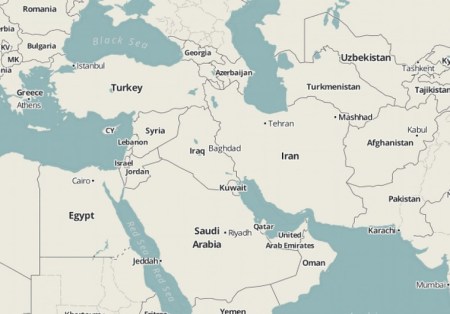
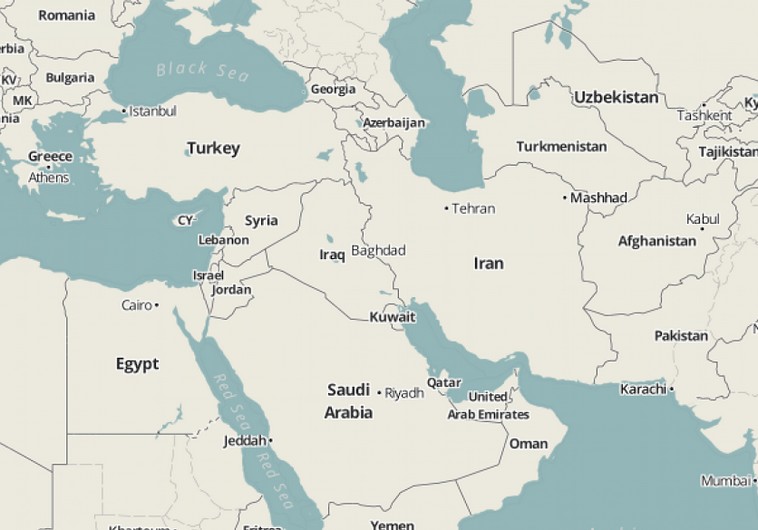
ShowImage (3)Map of Middle East. (photo credit:Courtesy)

It is through this Islamo-philic prism that the Obama administration’s attitude to, and execution of, its foreign policy must be evaluated – including its otherwise incomprehensible capitulation this week on Iran’s nuclear program.

********************

Obama is the first US president who genuinely conceives of Islam as not inherently opposed to American values or interests.

You’re absolutely right that John McCain has not talked about my Muslim faith – Barack Hussein Obama to ABC’s George Stephanopoulos, September 7, 2008

I also know that Islam has always been a part of America’s story Barack Hussein Obama, Cairo, June 4, 2009

Islam has always been part of AmericaBarack Hussein Obama, the White House, August 11, 2010

Islam has been woven into the fabric of our country since its founding Barack Hussein Obama, the White House, February 18, 2015

Barack Hussein Obama is the first US president who is explicitly and overtly unmoored, both cognitively and emotionally, from the moorings of America’s founding Judeo-Christian cultural heritage, and who genuinely conceives of Islam as not inherently opposed to American values or American interests.

A question of cultural affinity?

It is through this Islamo-philic prism that the Obama administration’s attitude to, and execution of, its foreign policy must be evaluated – including its otherwise incomprehensible capitulation this week on Iran’s nuclear program.

Almost two years ago, I wrote a column titled, “Will the West withstand the Obama presidency?” (11/28/2013). In it I warned: “For anyone who understands that the US Constitution is not a Shari’a-compliant document…

it should be alarmingly apparent that the Obama incumbency is a dramatic and disturbing point of inflection in the history of America and its Western allies… whose political practices and societal norms are rooted in Judeo-Christian foundations in a cultural rather than in any religious sense.”

There is little alternative explanation to account for the metamorphosis that has taken place in how the US has approached resolving the impasse with Tehran, as starkly laid out by two former secretaries of state, Henry Kissinger and George Shultz.

In a Wall Street Journal opinion piece, “The Iran Deal and Its Consequences” (April 7), they note that the negotiation has been turned “on its head.” As they point out: “For 20 years, three presidents of both major parties proclaimed that an Iranian nuclear weapon was contrary to American and global interests – and that they were prepared to use force to prevent it. Yet negotiations that began 12 years ago as an international effort to prevent an Iranian capability to develop a nuclear arsenal are ending with an agreement that concedes this very capability.”

Risible inspection mechanism

Even before the specifics of the risible inspection mechanism, which one Israeli minister aptly described as “worse than worthless,” Kissinger and Shultz laid out the difficulties that would render any extended inspection endeavor ineffective: “In a large country with multiple facilities and ample experience in nuclear concealment, violations will be inherently difficult to detect.”

With considerable prescience, they warn: “Devising theoretical models of inspection is one thing. Enforcing compliance, week after week, despite competing international crises and domestic distractions, is another. Any report of a violation is likely to prompt debate over its significance – or even calls for new talks with Tehran to explore the issue.

Envisaging the problems likely to arise in enforcing any agreement, they caution: “Compounding the difficulty is the unlikelihood that breakout will be a clear-cut event.

More likely it will occur… via the gradual accumulation of ambiguous evasions. When inevitable disagreements arise over the scope and intrusiveness of inspections, on what criteria are we prepared to insist and up to what point? If evidence is imperfect, who bears the burden of proof? What process will be followed to resolve the matter swiftly?”

Reminiscent of taqiya?

But even without the daunting generic difficulties described by Kissinger and Shultz, the inspection mechanism provided for in the nascent deal make a mockery of Obama’s contention (July 14): “… this deal is not built on trust; it is built on verification,” and, “Because of this deal, inspectors will also be able to access any suspicious location… [They] will have access where necessary, when necessary.”

One can hardly imagine a more grossly misleading representation of the deal – so much so that it is difficult not to find it strongly reminiscent of the Muslim tactic of taqiya (the religiously sanctioned deception of non-Muslims).

Indeed, immediately following the announcement of the agreement, Ben Rhodes, Obama’s deputy national security adviser, made a stunning admission to CNN’s Erin Burnett. Starkly contradicting the president’s contention of “access where necessary, when necessary,” Rhodes conceded, “We never sought in this negotiation the capacity for so-called anytime, anywhere,” which is diametrically opposed to the impression he conveyed in April this year when queried on this issue.

You couldn’t make this stuff up

For as it turns out, it provides the Iranians with ample warning of impending inspections on any suspected violation, and ample ability to forestall the definition of any given suspicious event as a possible violation.

Thus in the case of a suspected infringement in any undisclosed (to the international community) site, the Iranians will have at least 24 days’ notice. Moreover, inspectors will not be able to conduct surprise visits but will be required to “provide Iran the basis for such concerns and request clarification.” No kidding!!! But wait, there’s more.

If Iran’s explanations do not adequately assuage international concerns, inspectors “may request access to such locations” to make sure no illicit activity has occurred. But first they need to “provide Iran the reasons for access in writing and will make available relevant information.” You can’t make this stuff up.

But here’s the kicker: Should the Iranians and the inspectors prove unable to “reach satisfactory arrangements,” Tehran will resolve any concerns “through necessary means agreed between Iran and the IAEA.” If there is still no agreement two weeks after the initial inquiry is filed, the crisis will be resolved by vote in the so-called Joint Commission – consisting of the six world powers, a representative of EU and – wait for it – Iran.

Like warning drug dealers of a bust

Astonishingly, nearly all the decisions of the Joint Commission, tasked with overseeing/ administering the implementation of the deal, are to be made by consensus – which in effect gives Iran veto power over them. In the case of inspection access, it is sufficient for two of its eight members (say China and Russia) to abstain for Iran to block any decision it dislikes.

It is thus difficult to dispute Benjamin Netanyahu’s characterization of the deal during his address in the Knesset when he likened it to giving drug dealers notice of an impending raid: “It’s like giving a criminal organization that deals drugs a 24-day warning before inspecting its drug lab.”

But worse – the deal requires the international inspectors to expose the sources of intelligence that lead to the detection of the possible infringement – thereby virtually ensuring the termination of their effectiveness.

As Netanyahu remarked: “The agreement also requires the world powers to… show Iran the very intelligence for which they want to conduct the inspections in the first place.”

It is possible that all this could be nothing more than mind-boggling incompetence and blatant lack of foresight? Or are these glaring loopholes the reflection of intent.

Devil not in details

After all, the more you think about the unenforceable, unverifiable agreement just concocted in Vienna, the more implausible it seems. As Alan Dershowitz points out in a Jerusalem Post opinion piece this week, “The devil is not so much in the details as in the broad outlines of this deal.”

Rather than the detailed minutiae of the deal, it is its deeply flawed overall structure that makes it so difficult to comprehend – unless the motives for its conclusion are reexamined.

For unless one is imbued with the child-like naiveté to believe that the tyrannical clergy who head the totalitarian theocracy in Tehran, on seeing their defiant intransigence vindicated and having vast additional resources placed at their disposal, will suddenly change their worldview, the picture of emerging realities is decidedly bleak and bewildering.

The spectacle unfolding before us is almost incomprehensible by any rational criterion.

Virtually the entire developed world, led by the only superpower on the planet, has for all intents and purposes conceded a legitimized path to weaponized nuclear status for a fanatical fundamentalist regime, ideologically bent on the destruction of America and its allies, and a major proliferator of terrorism, committed to attaining regional hegemony at the expense of relatively pro-Western governments.

Despite dwarfing Iran in terms of military might, economic wealth, physical size and population, Tehran’s interlocutors have provided it with vast resources to enormously enhance its nefarious pursuits across the region and beyond.

The New Middle East: Conflicts on steroids

The ominous consequences are not difficult to foresee.

As Ariel Ben Solomon, the Post’s Middle East correspondent, wrote in a recent report, “Iran deal to see Middle East conflicts go on steroids,” “A stronger Iran will translate into a more robust Hezbollah in Lebanon, Houthi movement in Yemen, and Shi’ite forces in Iraq and Syria, and increasing sectarian strife fueled by Shi’ite minorities or Iranian agents throughout the Arab world.” (July 16) There is precious little reason for believing any other outcome is plausible.

In a July 15 interview, New Jersey Democrat Sen. Bob Menendez lamented another aspect of the deal, relating to easing restrictions on conventional weapons to Iran: “When you lift the arms embargo to a country that is the major sponsor of… terrorism in the world and is already destabilizing the region in Yemen, Lebanon, Syria [and] Iraq, to give them – after they are going to get $100 billion-150b. in economic relief – the opportunity to buy conventional weapons and improve their missile technology doesn’t seem to me to be in the national interest of the United States.”

The intriguing question is, of course, does this seem to President Obama to be in the national interest of the United States? And if so, why so? If so, how so?

‘No alternative’: A mindless mendacious mantra

The almost Pavlovian response of the apologists for the Iran deal is that its critics have not offered a feasible alternative. This is a claim – for want of a better word – so feeble that it barely merits a response.

As Sen. Menendez points out: “We never tested the proposition that dismantling elements of Iran’s illicit nuclear infrastructure was possible. It is pretty hard for me to believe that the world powers, sitting on one side of the table, the five permanent members of the Security Council plus Germany and the European Union looking at the Iranians… suffering under staggering sanctions… and falling oil prices couldn’t get a deal that eliminated some of that infrastructure.”

Rebutting John Kerry’s claim that such a goal was achievable only in “a world of fantasy,” Menendez retorted, “I don’t know that that is a ‘world of fantasy.’ Isn’t it possible with all the world on one side of the table, and Iran reeling with economic challenges, that you couldn’t have done better as relates to eliminating that nuclear infrastructure.”

Of course if the underlying assumption is that alternatives are only feasible if Iran deigns to accept them, then the apologists may be right. However, if the rationale were not to accommodate the ayatollahs, but to coerce them, the alternative is clear: Enhanced sanctions backed by the credible threat of military action aimed at destroying Iran’s nuclear facilities and their attendant infrastructure.

Arab arms race or Arab client states

But despite the overwhelming preponderance of power in their favor, the US and its Western allies seem to have forsworn the use of force, or even the credible specter thereof. As Kissinger and Shultz remark: “The threat of war now constrains the West more than Iran.”

This will clearly have a devastating impact on both friend and foe in the region.

It will destroy the confidence of US allies who will therefore be compelled to either acquire their own appropriate arsenals, as they can no longer rely on America for their security, or to become compliant client states of a hegemonic Iran.

For Iran it sends an equivocal message that it can violate the terms of the deal with impunity – for if what it encountered at Vienna is all the West can throw at it, what does it have to fear? There can be little doubt that what happened in Vienna this week has shredded America’s standing in the Middle East.

Some might even suspect that that was the purpose of the exercise.
The Deal Wasn’t About Iran’s Nukes

July 16, 2015

The Deal Wasn’t About Iran’s Nukes, Commentary Magazine, July 15, 2015

If you think the United States just struck a poor nuclear deal with Iran, you’re right; but if that’s your key takeaway, you’re missing the point. Iran’s nuclear program was last on the list of the Obama administration’s priorities in talking to Tehran. The administration readily caved on Iran’s nukes because it viewed the matter only as a timely pretense for achieving other cherished aims. These were: (1) preventing an Israeli attack on Iran; (2) transforming the United States into a more forgiving, less imposing power; (3) establishing diplomacy as a great American good in itself; (4) making Iran into a great regional power; and (5), ensuring the legacies of the president and secretary of state as men of vision and peace.

The administration has always viewed Israel as an intractable troublemaker and the main catalyst for the region’s woes. An Israeli strike on Iran, especially if supported by the United States, would have been yet another display of destabilizing Israeli aggression that put Middle East peace further out of reach. Barack Obama, therefore, repeatedly warned Israel against attacking Iran. Benjamin Netanyahu complied, and for his compliance White House officials taunted him in 2014 as a “chickenshit” whose window of opportunity had closed. That window is now barred. The Iran deal states that the U.S. will train Iranians to counter any sabotage attempts on its nuclear facilities and systems. This is aimed at frustrating Israeli action.

Obama came to office promising to limit American action as well. In his standard progressive view, the United States has been too eager to throw its weight around and impose its norms on other countries without giving sufficient thought to the resentment it might sow. He ended the war in Iraq and sought to remake the United States as a humble power. “Too often the United States starts by dictating,” he told a Saudi news outlet soon after being elected. He, by contrast, would do a lot of “listening.” The Iran negotiations became Obama’s magnum opus on the theme of listening. Americans listened to Iranians dictate terms, shoot down offers, insult the United States, and threaten allies. America has been humbled indeed.

But such humility is necessary if diplomacy is to be made into a nation-defining ethos. And if we could successfully negotiate with theocratic Iran, then surely Americans would see that diplomacy could conquer all. So, for the sake of proving this abstract principle, Obama foreclosed any non-diplomatic approach to Iran before a deal was reached. As he told Tom Friedman in April, “there is no formula, there is no option, to prevent Iran from getting a nuclear weapon that will be more effective than the diplomatic initiative and framework that we put forward — and that’s demonstrable.” So declared, so demonstrated.

Like the preeminence of diplomacy, the notion of Iran’s potential as a levelheaded regional power was a treasured abstract principle Obama hoped to substantiate through the nuclear talks. Once again, first came the declaration. Last December Obama speculated on the outcome of a completed nuclear deal: “There’s incredible talent and resources and sophistication inside of Iran, and it would be a very successful regional power that was also abiding by international norms and international rules, and that would be good for everybody.”

If Iran’s fanatical anti-Semitism called this sanguine view into question, that too could be explained. “Well the fact that you are anti-Semitic, or racist, doesn’t preclude you from being interested in survival,” he told the Atlantic’s Jeffrey Goldberg. “It doesn’t preclude you from being rational about the need to keep your economy afloat; it doesn’t preclude you from making strategic decisions about how you stay in power; and so the fact that the supreme leader is anti-Semitic doesn’t mean that this overrides all of his other considerations.” That the United States and Iran have now come to an agreement—whatever the details—is supposed to demonstrate the soundness of that principle.

As far as legacy, what politician doesn’t want one? For Obama, a nominal nuclear deal may make him feel as if he’s earned the Nobel Prize once furnished him as election swag. John Kerry’s own efforts to earn a Nobel by brokering Middle East peace became another footnote in the story of Palestinian obstinacy. He too had something to prove.

From the administration’s standpoint, the deal was a grand slam. If it left Iran as an official nuclear power on the perpetual verge of a breakout, well, that was always the bargaining chip to get everything else. And with the United States having shown extraordinary cooperation and forgiveness, the thinking goes, even a nuclear Iran will become a less bellicose and more collegial member of the community of nations. What good the deal has already done, the administration believes, will continue to pay dividends. As is his wont, Obama is now declaring as much. But by the time his vision is upended by facts, he’ll be out of office, and we won’t have the luxury of fighting reality with abstractions.

Kerry: Iranian Access to Billions Won’t Affect World Terror

July 16, 2015

Kerry: Iranian Access to Billions Won’t Affect World Terror, Clarion Project, July 16, 2015

Iran-Kerry-Zarif-IPU.S. Secretary of State John Kerry (L) speaks to Iranian Foreign Minister Mohammad Javad Zarif (R) while (Photo: © Reuters) before the announcement of the nuclear deal in Vienna. Hossein Fereydoun (C), the brother of Iranian President Hassan Rouhani listens.

In its most recent report, the State Department wrote, “Iran has provided hundreds of millions of dollars in support of Lebanese Hezbollah in Lebanon and has trained thousands of its fighters at camps in Iran.”

In 2010 alone, State reported “Iran provides roughly $100-$200 million per year in funding to support Hezbollah.”

*********************

U.S. Secretary of State John Kerry dismissed concerns that Iran will use its newly found billions of dollars in sanctions relief to ramp up its support for international terrorism.

Speaking to the BBC after the nuclear agreement between Iran and six world powers was reached, Kerry said that the more than $100 billion that Iran is set to receive “is going to make all the difference in the world is just – it’s not true.”

Acknowledging Iran is an international player in wreaking terror across the globe, Kerry said, “What Iran has done for years with Hezbollah does not depend on money.” He similarly stated Iran’s support of the Houthi rebels against the government in Yemen has not “depended on money.”

“Sure, something may go additionally somewhere,” Kerry added. “But if President [Hasan] Rouhani and his administration do not [use the money to] take care of the people of Iran, they will have an enormous problem.”

Earlier this year, White House Press Secretary Josh Earnest admitted the U.S. would have no control over Iran’s use of monies freed by sanctions relief. However, he said it was “common sense” Iran would use the money to pump up its economy that was devastated by the international sanctions and not put the money into terrorism.

Still, Earnest said, “I’m not going to make any predictions about what they are going to do, and I’m certainly not going to be in a position to prescribe what they should do,” he said. “This is a sovereign country that will make their own decisions.”

Kerry contended it was the opinion of the U.S. intelligence community that Iranian money “that finds its way somewhere, is not the difference in what is happening in the Middle East.”

However, many contend that Kerry’s prognosis is not rooted in fact. Up until the 9/11 attack on the U.S. by Al Qaeda, the State Department reported Hezbollah was “responsible for more American deaths than any other terrorist group.”

In its most recent report, the State Department wrote, “Iran has provided hundreds of millions of dollars in support of Lebanese Hezbollah in Lebanon and has trained thousands of its fighters at camps in Iran.”

In 2010 alone, State reported “Iran provides roughly $100-$200 million per year in funding to support Hezbollah.”

Efforts by Republicans in Congress to make the current deal contingent on Iran removing its support for terrorism failed earlier this year when U.S. President Barack Obama said he would veto any such legislation.

Meanwhile, Prince Bandar bin Sultan, the former head of the Saudi Arabian intelligence services and the kingdom’s ambassador to the U.S. in Washington, said the current deal will result in Iran acquiring a nuclear weapon and “wreak havoc in the region.”

He also contended America’s traditional allies in the Arab world are now distrustful of the U.S. and looking elsewhere to make alliances. Writing in The Daily Star, a Lebanese newspaper, bin Sultan commented, “People in my region now are relying on God’s will and consolidating their local capabilities and analysis with everybody else except our oldest and most powerful ally.”

Currently, Hezbollah is backing troops loyal to beleaguered Syrian President Bashar Al-Assad who have been trying to recapture the city of Zabadani, located in a hilly region in southwestern Syria.

We Should Go to War With Iran, Not Give Them a Peace Deal | PJTV

July 15, 2015

We Should Go to War With Iran, Not Give Them a Peace Deal | PJTV, July 14, 2015


Obama’s Iran Deal Has the Makings of a Catastrophe

July 15, 2015

Obama’s Iran Deal Has the Makings of a Catastrophe, National Review Online via Middle East forum, Daniel Pipes, July 14,2015.  Originally published under the title, “Could the Iran Deal Be the Worst International Accord of All Time?”

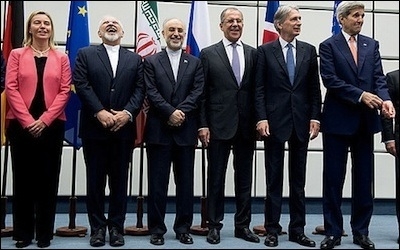
1497Iran’s negotiators (second and third from left) have good reason to be happier than their Western counterparts.

The conduct of the Iran nuclear negotiations has been wretched, with the Obama administration inconsistent, capitulating, exaggerating, and even deceitful. It forcefully demanded certain terms, then soon after conceded these same terms.

*********************

Barack Obama has repeatedly signaled during the past six and a half years that that his No. 1 priority in foreign affairs is not China, not Russia, not Mexico, but Iran. He wants to bring Iran in from the cold, to transform the Islamic Republic into just another normal member of the so-called international community, ending decades of its aggression and hostility.

In itself, this is a worthy goal; it’s always good policy to reduce the number of enemies. (It brings to mind Nixon going to China.) The problem lies, of course, in the execution.

The conduct of the Iran nuclear negotiations has been wretched, with the Obama administration inconsistent, capitulating, exaggerating, and even deceitful. It forcefully demanded certain terms, then soon after conceded these same terms.

Secretary of State John Kerry implausibly announced that we have “absolutely knowledge” of what the Iranians have done until now in their nuclear program and therefore have no need for inspections to form a baseline. How can any adult, much less a high official, make such a statement?

The administration misled Americans about its own concessions: After the November 2013 Joint Plan of Action, it came out with a factsheet which Tehran said was inaccurate. Guess who was right? The Iranians. In brief, the U.S. government has shown itself deeply untrustworthy.

The agreement signed today ends the economic sanctions regime, permits the Iranians to hide much of their nuclear activities, lacks enforcement in case of Iranian deceit, and expires in slightly more than a decade. Two problems particularly stand out: The Iranian path to nuclear weapons has been eased and legitimated; Tehran will receive a “signing bonus” of some US$150 billion that greatly increases its abilities to aggress in the Middle East and beyond.

The United States alone, not to speak of the P5+1 countries as a whole, have vastly greater economic and military power than the Islamic Republic of Iran, making this one-sided concession ultimately a bafflement.

Of the administration’s accumulated foreign-policy mistakes in the last six years, none have been catastrophic for the United States: Not the Chinese building islands, the Russians taking Crimea, or the collapse into civil wars of Libya, Yemen, Syria, and Iraq. But the Iran deal has the makings of a catastrophe.

Attention now shifts to the U.S. Congress to review today’s accord, arguably the worst treaty not just in American history or modern history, but ever. Congress must reject this deal. Republican senators and representatives have shown themselves firm on this topic; will the Democrats rise to the occasion and provide the votes for a veto override? They need to feel the pressure.

Everything you need to know about Obama’s Iran deal

July 15, 2015

Everything you need to know about Obama’s Iran deal, BreitbartBen Shapiro, July 14, 2015

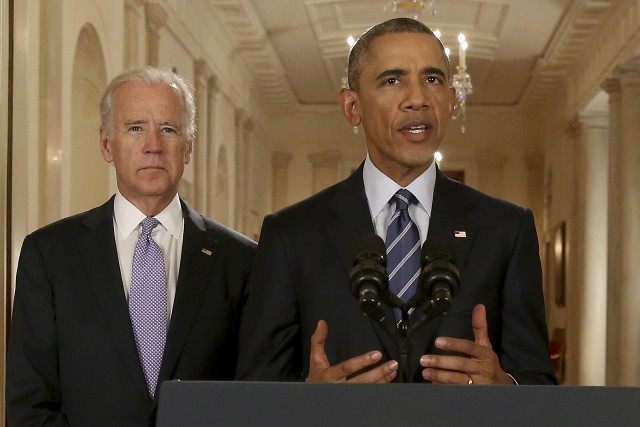
ap_barack-obama_ap-photo13-640x427AP Photo/Andrew Harnik, Pool

The deal the Obama administration cut today with the Iranian terrorist regime signals once and for all that the Obama administration considers both the United States and Israel to be the key threats to peace in the world.

Why else would the American president have lifted sanctions and granted the Iranian mullahs decades of American cover in the face of overwhelming evidence they support anti-Western, anti-Semitic, and anti-Sunni terror across the region and the globe?

President Obama’s statements today about the strength of this deal carry no weight, given that he has coordinated with the Iranian regime – which is responsible for the deaths of hundreds of Americans over the past few years – in Iraq, has allowed them to prop up Bashar Assad in Syria, has allowed them to continue their subjugation of Lebanon, watched in silence as they flexed their muscle in Yemen, and attempted to cut off weapons shipments to Israel in the midst of its war with Iranian proxy terror group Hamas.

Obama wants Iran to be a regional power, because Obama fears Israel more than he fears Iran. The same day that Obama announced his deal, “moderate” Iranian President Hassan Rouhani tweeted, “To our neighbours: Do not be deceived by the propaganda of the warmongering Zionist regime. #Iran & its power will translate into your power.”

Obama’s counting on it.

Obama had one motivation in this deal: he believes that any Western attempt to stop Iran’s nuclear development with force is more dangerous and less moral than Iran’s elevated terror support and even its eventual nuclear development.

America and the West, in Obama’s global worldview, are so dangerous that he wouldn’t even make minor requests of Iran, such as releasing American prisoners, if that meant the minute possibility of actual Western action on the horizon. Obama doesn’t care if Iran is lying. To him, that risk is acceptable when compared with the certainty of Western action, no matter how constrained, against Iran.

Obama consistently posed the choice about his nuclear deal as one between diplomacy and war, as though a military strike against Iran would have precipitated World War III. But this deal is far more calibrated to provoke World War III than any targeted strike by Israel, the United States, or anyone else.

The deal pats itself on the back with wording about ensuring that “Iran’s nuclear programme will be exclusively peaceful,” and how the deal will be a “fundamental shift” in the international community’s relationship with Iran. Then it gets to details. And the devil isn’t just in the details; the devils in Iran wrote them.

The deal “will produce the comprehensive lifting of all UN Security Council sanctions as well as multilateral and national sanctions related to Iran’s nuclear programme, including steps on access in areas of trade, technology, finance and energy.” Those sanctions end on the first day of the deal: “The UN Security Council resolution will also provide for the termination on Implementation Day of provisions imposed under previous resolutions.” The EU “will terminate all provisions of the EU Regulation.”

Money will now move between “EU persons and entities, including financial institutions, and Iranian persons and entities, including financial institutions.” Banking activities will resume abroad. Full trade will essentially resume. After five years, the arms embargo against Iran will end. After eight years, the missile embargo against Iran will end.

The deal explicitly acknowledges that Iran is gaining benefits no other state would gain under the Non-Proliferation Treaty. In terms of its nuclear development, instead of dismantling Iran’s nuclear program, that program is now protected:

Iran will continue to conduct enrichment R&D in a manner that does not accumulate enriched uranium. Iran’s enrichment R&D with uranium for 10 years will only include IR-4, IR-5, IR-6 and IR-8 centrifuges as laid out in Annex I, and Iran will not engage in other isotope separation technologies for enrichment of uranium as specified in Annex I. Iran will continue testing IR-6 and IR-8 centrifuges, and will commence testing of up to 30 IR-6 and IR-8 centrifuges after eight and a half years, as detailed in Annex I.

We have no way of knowing what Iran has done additionally, however, since the deal has no provisions forcing them to turn over information about what they’ve already done. There is no baseline.

So who will implement this deal? A “Joint Commission” comprised of the UK, France, Germany, Russia, China, the United States and Iran is charged with monitoring all developments under the agreement – meaning that all the signatories, all of whom have an interest in preserving a deal they signed, will be the “objective” monitoring agents.

The International Atomic Energy Agency will monitor and verify Iran’s nuclear program. But not everywhere. Only at key nuclear facilities will the IAEA have access – military sites were not included in the deal in any real way – and even then, the process for access is extraordinarily regulated:

74. Requests for access pursuant to provisions of this JCPOA will be made in good faith, with due observance of the sovereign rights of Iran, and kept to the minimum necessary to effectively implement the verification responsibilities under this JCPOA. In line with normal international safeguards practice, such requests will not be aimed at interfering with Iranian military or other national security activities, but will be exclusively for resolving concerns regarding fulfillment of the JCPOA commitments and Iran’s other non-proliferation and safeguards obligations. The following procedures are for the purpose of JCPOA implementation between the E3/EU+3 and Iran and are without prejudice to the safeguards agreement and the Additional Protocol thereto. In implementing this procedure as well as other transparency measures, the IAEA will be requested to take every precaution to protect commercial, technological and industrial secrets as well as other confidential information coming to its knowledge.

75. In furtherance of implementation of the JCPOA, if the IAEA has concerns regarding undeclared nuclear materials or activities, or activities inconsistent with the JCPOA, at locations that have not been declared under the comprehensive safeguards agreement or Additional Protocol, the IAEA will provide Iran the basis for such concerns and request clarification.

76. If Iran’s explanations do not resolve the IAEA’s concerns, the Agency may request access to such locations for the sole reason to verify the absence of undeclared nuclear materials and activities or activities inconsistent with the JCPOA at such locations. The IAEA will provide Iran the reasons for access in writing and will make available relevant
information.

77. Iran may propose to the IAEA alternative means of resolving the IAEA’s concerns that enable the IAEA to verify the absence of undeclared nuclear materials and activities or activities inconsistent with the JCPOA at the location in question, which should be given due and prompt consideration.

78. If the absence of undeclared nuclear materials and activities or activities inconsistent with the JCPOA cannot be verified after the implementation of the alternative arrangements agreed by Iran and the IAEA, or if the two sides are unable to reach satisfactory arrangements to verify the absence of undeclared nuclear materials and activities or activities inconsistent with the JCPOA at the specified locations within 14 days of the IAEA’s original request for access, Iran, in consultation with the members of the Joint Commission, would resolve the IAEA’s concerns through necessary means
agreed between Iran and the IAEA. In the absence of an agreement, the members of the Joint Commission, by consensus or by a vote of 5 or more of its 8 members, would advise on the necessary means to resolve the IAEA’s concerns. The process of consultation with, and any action by, the members of the Joint Commission would not exceed 7 days, and Iran would implement the necessary means within 3 additional days.

Obama and Secretary of State John Kerry wrote into the deal provisions designed to hamstring Congress and local authorities:

If a law at the state or local level in the United States is preventing the implementation of the sanctions lifting as specified in this JCPOA, the United States will take appropriate steps, taking into account all available authorities, with a view to achieving such implementation. The United States will actively encourage officials at the state or local level to take into account the changes in the U.S. policy reflected in the lifting of sanctions under this JCPOA and to refrain from actions inconsistent with this change in policy.

And if Iran cheats, the United States and EU will have to take the matter to dispute resolution rather than re-implementing sanctions, as Obama has lied:

The U.S. Administration, acting consistent with the respective roles of the President and the Congress, will refrain from re-introducing or re-imposing the sanctions specified in Annex II that it has ceased applying under this JCPOA, without prejudice to the dispute resolution process provided for under this JCPOA. The U.S. Administration, acting consistent with the respective roles of the President and the Congress, will refrain from imposing new nuclear-related sanctions. Iran has stated that it will treat such a re-introduction or re-imposition of the sanctions…

Obama is already moving on this front. While calling for an open conversation on the Iran deal, President Obama has already said he will veto any attempts to curb the deal by Congress. So feel free to chat, gang, so long as you don’t attempt to do anything.

In brief, the agreement trades enormous amounts of cash for Iran’s pinkie swear that they will not develop nuclear weapons now, and the blind hope that Iran’s regime will magically moderate over the next five to ten years – a hope made even more distant by the fact that this deal reinforces the power and strength of the current Iranian regime. The West has no interest in holding Iran to an agreement since, to do so, they would have to repudiate the deal they cut in the first place. Anything short of actual nuclear aggression will draw no response from the West. No wonder Prime Minister of Israel Benjamin Netanyahu called the deal a “historic mistake for the world,” explaining:

Far-reaching concessions have been made in all areas that were supposed to prevent Iran from obtaining nuclear weapons capability. In addition, Iran will receive hundreds of billions of dollars with which it can fuel its terror machine and its expansion and aggression throughout the Middle East and across the globe… One cannot prevent an agreement when the negotiators are willing to make more and more concessions to those who, even during the talks, keep chanting: ‘Death to America.’ We knew very well that the desire to sign an agreement was stronger than anything, and therefore we did not commit to preventing an agreement.

So here’s what happens next in the region.

Israel Waits. The chances of an Israeli strike on Iran are now somewhere between slim and none. Obama’s deal prevents Israel from taking action without risking sanctions from the European Union and the United States for endangering this sham deal.

Nothing would make Obama happier than to levy sanctions against the Jewish State – and should Israel act in its own interests, undercutting Obama’s Epitaph Achievement, Obama will react harshly. Israel will be busy enough handling all the Iranian proxies on its borders who will now see cash and resources flow to them, all sponsored by the West.

Hezbollah and Hamas Are Strengthened. Terrorist groups across the Middle East rejoice today, knowing that the money Iran just gained through lifting of sanctions will end up restocking their rocket supply. Hezbollah has already destroyed Lebanon as Iran’s arm; Hamas has already taken over Gaza. Both routinely threaten war on Israel, firing ordinance into Israeli territory.

Now they will not only be emboldened – after all, what happens if Israel retaliates against them, Iran threatens to get involved, and the world, seeking to preserve its newfound magical relationship with Iran, puts pressure on Israel? – they will be empowered. Obama just made the next war between Israel and its terrorist neighbors a certainty.

Saudi Arabia and Egypt Go Nuclear. President Obama came into office touting “America’s commitment to seek the peace and security of a world without nuclear weapons.” Given that Iran is months from a bomb, and that there are no real verification techniques and no real consequences for violation, Iran’s enemies will quickly seek to go nuclear in order to establish a deterrent, not just to Iran’s nuclear capabilities, but to their expanded conventional capabilities.

Iran has the largest active military in the Middle East, along with its massive paramilitary terror groups. They’ve built that in the midst of heavy sanctions. With Iran getting active on the borders of Egypt and Saudi Arabia, those regimes would be foolhardy not to attempt to develop a nuclear capacity – especially given that Obama has shown there are no detriments to doing so. What’s he going to do, threaten Egypt’s General Al-Sisi? He’s been doing that for years already.

Bashar Assad Stays In Power. Remember the time Obama said Syrian dictator Bashar Assad needed to go? That’s not happening anytime soon, given that Assad is Iran’s tool in Syria. When Obama drew a red line against Syria based on Assad’s use of chemical weapons, he apparently meant that Assad should stay forever, and that his sponsor state should be rewarded with billions of dollars in relieved sanctions. No wonder Assad called the deal a “major turning point” in world history, adding, “We are confident that the Islamic Republic of Iran will support, with greater drive, just causes of nations and work for peace and stability in the region and the world.”

Iraq Splits Permanently Between Iran and ISIS. Supposedly, the United States opposed Shia exclusionary policy against Sunnis in Iraq, and blamed such policy for the breakdown of security there. The Iranian Revolutionary Guard has now taken over the southern half of the country; the new Iraqi Prime Minister is an Iranian proxy. Meanwhile, Sunnis, seeking some sort of security against the Iranians and having no secular American-backed regime to rely upon, have been turning in increasing numbers to the barbarians of ISIS. President Obama has made ISIS a permanent feature of the world landscape, and has turned Iraq into an Iranian proxy state, just like Syria and Lebanon.

Iran Will Foray Into Iran [?? — DM], Afghanistan. Iran’s expansionist ambitions have been increased exponentially by this deal. The deal does nothing to demand Iran stop its military activities abroad, of course, which means that their sponsorship of the Houthis in Yemen and terrorist groups in Afghanistan will continue apace. Al Jazeera has even speculated at sectarian unrest in Pakistan.

Obama’s defenders today ask his detractors, “If the deal works, isn’t it a good deal?”

Sure. If the Munich Agreement had worked, it would have been a masterpiece of diplomacy.

But promising a unicorn in a diplomatic negotiation isn’t quite the same thing as delivering one. And delivering billions of dollars, international legitimacy, and a protective shield around a terrorist regime in exchange for that unicorn makes you either a fool or an active perpetuator of that terrorist regime.

TIME TO CALL OBAMA AND KERRY WHAT THEY ARE: TRAITORS

July 15, 2015

TIME TO CALL OBAMA AND KERRY WHAT THEY ARE: TRAITORS, Front Page Magazine, Daniel Greenfield, July 14, 2015

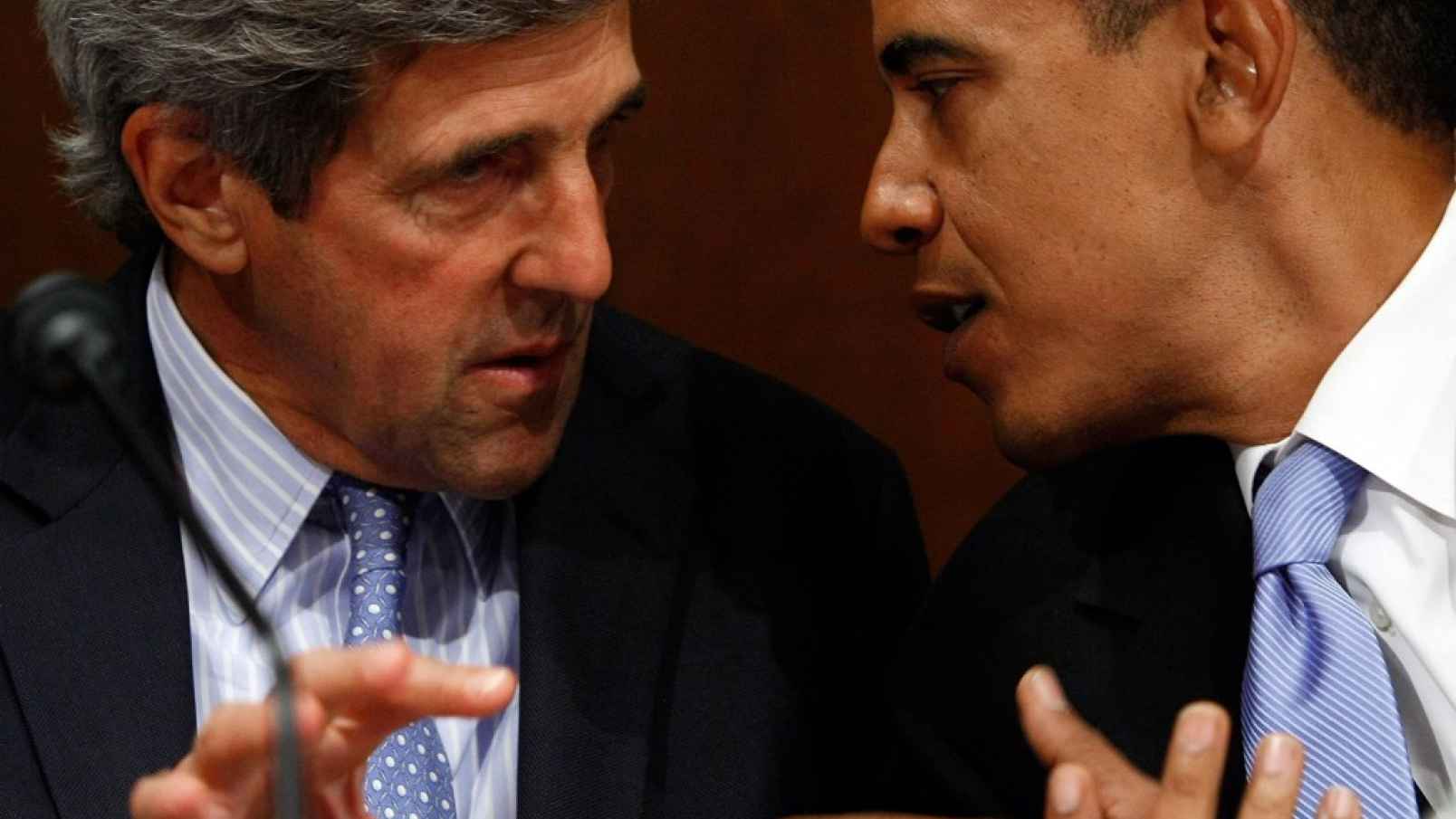
kerry_2

Obama isn’t Chamberlain. He doesn’t mean well. Kerry isn’t making honest mistakes. They negotiated ineptly with Iran because they are throwing the game. They meant for America to lose all along.

******************

The last time a feeble leader of a fading nation came bearing “Peace in our time,” a pugnacious controversial right-winger retorted, “You were given the choice between war and dishonor. You chose dishonor, and you will have war.” That right-winger went on to lead the United Kingdom against Hitler.

The latest worthless agreement with a murderous dictatorship is being brandished by John Kerry, a man who instinctively seeks out dishonor the way a pig roots for truffles.

John Kerry betrayed his uniform and his nation so many times that it became his career. He illegally met with the representatives of the North Vietnamese enemy in Paris and then next year headed to Washington, D.C. where he blasted the American soldiers being murdered by his new friends as rapists and murderers “reminiscent of Genghis Khan.”

Even before being elected, Kerry was already spewing Communist propaganda in the Senate.

Once in the Senate, Kerry flew to support the Sandinista Marxist killers in Nicaragua. Just as Iran’s leader calling for “Death to America” didn’t slow down Kerry, neither did the Sandinista cries of “Here or There, Yankees Will Die Everywhere.”

Kerry revolted even liberals with his gushing over Syria’s Assad. Now he’s playing the useful idiot for Assad’s bosses in Tehran.

For almost fifty years, John Kerry has been selling out American interests to the enemy. Iran is his biggest success. The dirty Iran nuke deal is the culmination of his life’s many treasons.

It turns America from an opponent of Iran’s expansionism, terrorism and nuclear weapons program into a key supporter. The international coalition built to stop Iran’s nukes will instead protect its program.

And none of this would have happened without Obama.

Obama began his rise by pandering to radical leftists on removing Saddam. He urged them to take on Egypt instead, and that’s what he did once in office, orchestrating the takeover of the Muslim Brotherhood in Egypt and across the region. The Muslim Brotherhood was overthrown by popular uprisings in Egypt and Tunisia, but Obama had preserved the Iranian regime when it was faced with the Green Revolution. Now Iran is his last best Islamist hope for stopping America in the Middle East.

Obama and Kerry had both voted against designating Iran’s IRGC terrorist ringleaders who were organizing the murder of American soldiers as a terrorist organization while in the Senate. Today they have turned our planes into the Air Force of the IRGC’s Shiite Islamist militias in Iraq.

Throughout the process they chanted, “No deal is better than a bad deal.” But their deal isn’t just bad. It’s treason.

Obama isn’t Chamberlain. He doesn’t mean well. Kerry isn’t making honest mistakes. They negotiated ineptly with Iran because they are throwing the game. They meant for America to lose all along.

When Obama negotiates with Republicans, he extracts maximum concessions for the barest minimum. Kerry did the same thing with Israel during the failed attempt at restarting peace negotiations with the PLO. That’s how they treat those they consider their enemies. This is how they treat their friends.

A bad deal wasn’t just better than no deal, it was better than a good deal.

Obama did not go into this to stop Iran from going nuclear. He did it to turn Iran into the axis of the Middle East. After his failures in the rest of the region, this is his final act of spite. With the fall of the Muslim Brotherhood and the decline of Islamists in Turkey, supporting Iran is his way of blocking the power of his successors in the White House to pursue a more pro-American foreign policy.

Obama made this deal to cripple American power in the Middle East.

Iran get to keep its nuclear facilities, its reactors, including the hidden underground fortified Fordow facility which Obama had repeatedly stated was, “inconsistent with a peaceful program.”

The deal gives Iran a “peaceful” nuclear program with an equally peaceful ballistic missile program. It puts into place a complicated inspection regime that can be blocked by Iran and its backers. It turns Iran into the new North Korea and the new Saddam Hussein, lavishing money on it while running future administrations through a cat and mouse game of proving violations by the terrorist regime.

And Obama made sure the Iran deal was written to make the proof as hard to obtain as possible.

Joint comprehensive plan of action — text

July 14, 2015

Joint comprehensive plan of action [PDF], July 14, 2015

(It’s about 150 pages in length, with frequent references to Annex I, dealing with IAEA inspections, which begins at page 21. The part of the annex dealing with IAEA inspections concerning “M. PAST AND PRESENT ISSUES OF CONCERN” starts at page 38; access begins at page 42. It’s complicated and dramatically delays and limits the nature and scope of the inspections, giving Iran ample time to hide its activities. Among other provisions, it includes:

In line with normal international safeguards practice, such requests will not be aimed at interfering with Iranian military or other national security activities, but will be exclusively for resolving concerns regarding fulfilment of the JCPOA commitments and Iran’s other non-proliferation and safeguards obligations.

. . . .

If the absence of undeclared nuclear materials and activities or activities inconsistent with the JCPOA cannot be verified after the implementation of the alternative arrangements agreed by Iran and the IAEA, or if the two sides are unable to reach satisfactory arrangements to verify the absence of undeclared nuclear materials and activities or activities inconsistent with the JCPOA at the specified locations within 14 days of the IAEA’s original request for access, Iran, in consultation with the members of the Joint Commission, would resolve the IAEA’s concerns through necessary means agreed between Iran and the IAEA. In the absence of an agreement, the members of the Joint Commission, by consensus or by a vote of 5 or more of its 8 members, would advise on the necessary means to resolve the IAEA’s concerns. The process of consultation with, and any action by, the members of the Joint Commission would not exceed 7 days, and Iran would implement the necessary means within 3 additional days.

— DM

Goodnight Vienna (12)

July 13, 2015

Goodnight Vienna (12)Scott Johnson, July 13, 2015

The new Iranian demand to lift the United Nations arms embargo is getting a lot of talk, and probably a bit more than it deserves. It’s not that the concession wouldn’t be devastating – it would light up the region in so many different ways that they’re difficult to catalogue – but it just doesn’t seem possible that the Americans can give ground on this.

*********************

As we remain on the final countdown to the full catastrophe taking place in Vienna, Omri Ceren helps us keep track of the details. In his second email update this morning, Omri draws attention to Andrew Bowen’s Daily Beast column Give the mullahs ballistic missiles?” (quoted below). Omri writes:

The last few hours have been a flurry of bilateral and trilateral meetings – Kerry/Zarif, Kerry/Zarif/Mogherini, Hammond/Lavrov, Lavrov/Zarif, etc – and a full P5+1/Iran meeting will probably take place this evening. That plenary is presumably supposed to serve as something of a final meeting: the negotiators will send the deal text back to the capitals, they’ll get pro forma approval, and in the morning there will be a formal announcement.

In the meantime, the new Iranian demand to lift the United Nations arms embargo is getting a lot of talk, and probably a bit more than it deserves. It’s not that the concession wouldn’t be devastating – it would light up the region in so many different ways that they’re difficult to catalogue – but it just doesn’t seem possible that the Americans can give ground on this. What’s the sales pitch to Congress going to be? “Not only are we giving Iran $150 billion to bolster its military, but we’re also lifting arms restrictions to make it easier for them to buy next-generation cruise missiles they’ll use against the U.S. military and our allies.”

But just for the sake of argument, because some pro-Iran voices have taken to publicly suggesting otherwise, yes of course lifting the arms embargo would detonate American national security:

Rather, the real threat from increased Iranian military might lies elsewhere. The Islamic Revolutionary Guard Corps (IRGC)… does not hesitate to remind the world through its harassment of commercial shipping, military exercises, and frequent rhetoric that it can control or shut the Strait of Hormuz, through which 30 percent of the world’s petroleum supplies passes. Keeping the Strait open depends on the U.S. Navy being able to keep up with effective counter measures against improved Iranian cruise missiles… and so Tehran has invested in weapons such as cruise missiles, mines, submarines, and even swarming armed speedboats to specifically target U.S. naval vulnerabilities… Lifting the conventional arms embargo would allow Russia or China to sell Iran the latest generation cruise missiles and drones, which only increase Tehran’s ability to frustrate or harass America’s protectorate of this vital waterway… Moreover, Iranian ballistic missiles outfitted with Russian or Chinese quality precision-guidance munitions could be devastating for U.S. and GCC naval and air bases if there are further relaxations on Iran’s acquisition of missile technology.

The article is by Andrew Bowen, the Director of Middle East Studies at the Center for the National Interest. He goes on to list several other ways Iran would exploit lifting the arms embargo, including by providing advanced missiles to terror proxies to use against U.S. allies such as Israel and Jordan.

The demand is so delusional that some people are speculating the Iranians just brought it up to gain leverage. Whether that’s true or not, the stunt will make it more difficult for the Obama administration to justify the deal to Congress. If Kerry agrees to drop the arms embargo, it’s difficult to see Congress accepting the agreement. If Kerry gets the Iranians to give up on the the demand, Congress will want to know what he had to trade away to do it.