Archive for the ‘Jerusalem – status’ category

President Trump: The Courage to Act

December 11, 2017

President Trump: The Courage to Act, Gatestone InstituteDouglas Murray, December 11, 2017

The reaction around the world in recent days has been a reminder of the one central truth of the whole conflict. Those who cannot accept that Jerusalem is the capital of the State of Israel tend to be exactly the same as those who cannot accept the State of Israel.

Trump comes out of the whole situation well — taking on a promise that his three predecessors made, but on which only he had the courage to act. Those who have most forcibly criticised him, on the other hand, have shown something weak, as well as ugly, about themselves.

President Trump’s announcement on the status of Jerusalem last week was both historic and commendable. Historic because it is the first time that an American president has not just acknowledged that the Israeli capital is Jerusalem but decided to act on that acknowledgement. Commendable for breaking a deceitful trend and accepting what will remain the reality on the ground in every imaginable future scenario. As many people have pointed out in recent days, there is not one prospective peace deal between the Israelis and the Palestinians in which Tel Aviv becomes the capital of the Jewish state.

Yet, the Palestinian leadership, much of the mainstream media, academia and the global diplomatic community take another view. They believe that the American president should have continued with the fairy tale and should never have said “That the United States recognises Jerusalem as the capital of the State of Israel and that the United States Embassy to Israel will be relocated to Jerusalem as soon as practicable.” They claim that this is not a simple recognition of reality and not simply the American President granting the State of Israel the same right every other nation on the planet has — which is to have their capital where they like. Such forces claim that this is a “provocative” move. Amply demonstrating the illogic of this position, the first thing the Turkish Sultan Recep Tayyip Erdogan did after the American president made his announcement was to threaten a suspension of Turkish relations with Israel.

The reaction around the world in recent days has been a reminder of the one central truth of the whole conflict. Those who cannot accept that Jerusalem is the capital of the State of Israel tend to be exactly the same as those who cannot accept the State of Israel. Consider the expert whom the BBC’s flagship current affairs programme Newsnight chose to bring on to receive soft-ball questions on this issue. Dr. Ghada Karmi, from the Institute of Arab and Islamic Studies at the University of Exeter, a notorious opponent of Israel, was inevitably given the sort of respectful interview style that Newsnight presenters generally reserve for when they are interviewing Madonna or some other mega-star they cannot believe their luck at having gotten to speak with.

Here is what Ghada Karm had to say — with no meaningful challenge from the programme’s presenter, Emily Maitlis.

Ghada Karmi: We know that Donald Trump is not a free agent. He is surrounded by pro-Israel advisors, pro-Israel officials.

Emily Maitlis (BBC): To be fair the American stance towards Israel has not differed particularly from one President to another.

Karmi: No, because it’s always been dictated by Israeli interests.

Maitlis (BBC): So what are you saying – that he cannot broker peace or America cannot broker peace in the region.

Karmi: No – of course not. He can’t. He’s compromised. He is surrounded by pro-Israel propagandists, people who want Israel’s interests above any other and he cannot operate as a free agent even if he had the wit to do it…. Why it is so dangerous is because you know one of the first things that might happen — and watch for this — is that Israel will be emboldened to take over the Islamic holy places. It’s had its eye on the Aqsa mosque for a long time.

To the surprise of absolutely nobody, when Maitlis then turned to interview the Israeli ambassador to the UK, she adopted a different tone.

Ambassador Mark Regev was not given these sorts of soft-ball questions. If he had claimed that the Palestinians were planning to bulldoze the Western Wall, it seems unlikely he would have been allowed to say it uncontested. He was in fact treated throughout as though he were simply some well-known variety of idiot or liar, who had no concept of the “offence” (a favourite threat term) that this move by the American President would cause Palestinians.

Ghada Karmi was not challenged on the claim that the Israelis were about to take over any and all Islamic holy places (to do what?), but Ambassador Regev’s suggestion that the State of Israel already has its Parliament, Supreme Court and every wing of government in Jerusalem, and that Jerusalem might just be Israel’s capital, was treated as though it were the most inflammatory nonsense the BBC had ever heard.

Most disappointing was the response of the British Prime Minister, Theresa May. Goaded on by the deeply anti-Israel (not to mention anti-Semitism-harbouring) Labour party leader Jeremy Corbyn, May, for the second time in a fortnight, chose to berate the President of Britain’s closest ally. Captured by the logic of the UK’s Foreign Office, May announced:

“We disagree with the US decision to move its embassy to Jerusalem and recognise Jerusalem as the Israeli capital before a final status agreement.

“We believe it is unhelpful in terms of prospects for peace in the region. The British Embassy to Israel is based in Tel Aviv and we have no plans to move it.

“Our position on the status of Jerusalem is clear and long-standing: it should be determined in a negotiated settlement between the Israelis and the Palestinians, and Jerusalem should ultimately be the shared capital of the Israeli and Palestinian states.

“In line with relevant Security Council Resolutions, we regard East Jerusalem as part of the Occupied Palestinian Territories.”
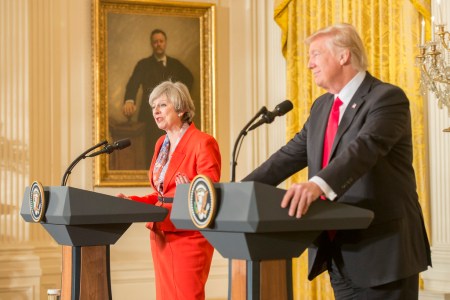
Following President Trump’s historic and commendable announcement on the status of Jerusalem last week, Britain’s Prime Minister Theresa May chose to berate Trump. Pictured: PM May, on January 27, 2017 addresses the media in Washington, DC alongside President Trump. (Image source: 10 Downing St./Flickr)

There is something which the entire world ought to recognise about the British government’s attitude towards “occupied territory”, which is that the august entity in Whitehall still believes that land in northern Israel should be returned to Syria’s Bashar al-Assad. Even now, the greatest minds of the Foreign Office in London advocate that Assad has not had enough territory to immiserate and destroy in recent years. Who knows, perhaps President Assad could have killed more than a half a million people in his country’s civil war if he could only have got an extra sliver of land?

Perhaps May feels the pressure of the Foreign Office status quo. Or perhaps she feels the pressure of Jeremy Corbyn’s band of anti-Semites at her back. Or — who knows — perhaps she worries about the millions of British Muslims from South Asia who can occasionally be whipped up into believing that the prime responsibility of Muslims worldwide is to rage about Middle Eastern politics — only of course if Jews are involved (otherwise they remain placid). Certainly that appeared to be on the national broadcaster’s mind, with the BBC choosing to go straight to the Muslim-dominated city of Bradford to ask South Asian Muslims there what they thought about Jerusalem.

There have been reactions around the world to US President’s historic announcement. Trump comes out of the whole situation well — taking on a promise that his three predecessors made, but on which only he had the courage to act. Those who have most forcibly criticised him, on the other hand, have shown something weak, as well as ugly, about themselves: When the facts on the ground were staring them in the face, they chose instead to bow to domestic fantasies of their own creation.

Douglas Murray, British author, commentator and public affairs analyst, is based in London, England. His latest book, an international best-seller, is “The Strange Death of Europe: Immigration, Identity, Islam.”
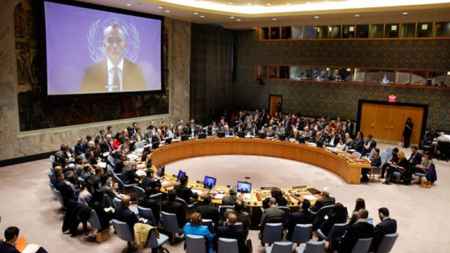
 

UN Security Council Bashes Trump’s Jerusalem Decision

December 11, 2017

UN Security Council Bashes Trump’s Jerusalem Decision, FrontPage MagazineJoseph Klein, December 11, 2017

(Please see also, Defiant Haley chides fuming Security Council members: ‘Change is hard. — DM)

Whichever provisions of Resolution 2334 are legally binding on Israel and all other UN member states, President Trump’s December 6th decision does not have any bearing on the sensitive issue of Israeli settlements or on Israel’s claims to sovereignty over “East Jerusalem.” Thus, invoking this infamous anti-Israeli resolution in the context of President Trump’s decision is a red herring.

“Over many years,” Ambassador Haley said in her remarks to the Security Council, the United Nations has been one of the world’s “foremost centers of hostility towards Israel.”  The Security Council became a kangaroo court on Friday, turning a perverted version of “international law” against the Trump administration for its just defense of the Jewish state of Israel and Israel’s right to choose its own capital as every other member state has the right to do.

********************************

On December 6th, President Trump announced his decision to officially recognize Jerusalem as the capital of Israel and to instruct the State Department to begin the process of relocating the U.S. Embassy from Tel Aviv to Jerusalem. Two days later, at a special meeting of the United Nations Security Council, the other 14 members of the Council, including U.S. allies such as France, the United Kingdom and Italy, ganged up on the United States to condemn President Trump’s decision. Allies and adversaries of the U.S., one after the other, claimed that President Trump’s decision had defied international consensus on how to achieve a viable two-state solution, violated international law and risked destabilizing the region as well as imperiling the peace process. Bolivia’s ambassador was the most strident, demanding that the Security Council take action against President Trump’s decision if it wanted to avoid becoming “an occupied territory.

To add insult to injury, the UN ambassadors from five member states of the European Union – the United Kingdom, France, Italy, Sweden and Germany – further criticized President Trump’s decision in a joint statement they read following the adjournment of the Security Council meeting. They claimed the decision “is not in line with Security Council resolutions and is unhelpful in terms of prospects for peace in the region.”

U.S. Ambassador to the UN, Nikki Haley, stood her ground in her remarks to the Security Council. She chastised those “countries that lack any credibility when it comes to treating both Israelis and Palestinians fairly.” All President Trump had done, she explained, was to formally acknowledge the reality that for nearly 70 years “the city of Jerusalem has been the capital of the State of Israel, despite many attempts by others to deny that reality. Jerusalem is the home of Israel’s parliament, president, prime minister, Supreme Court, and many of its ministries. It is simple common sense that foreign embassies be located there.”

President Trump’s change in American policy to reflect this reality does not mean that the United States has taken a position on the specific boundaries or borders within Jerusalem as a whole. “The specific dimensions of sovereignty over Jerusalem are still to be decided by the Israelis and the Palestinians in negotiations,” Ambassador Haley said.

Notably, President Trump’s announcement specifically called for maintaining the status quo at the holy sites in the Old City of Jerusalem. There is not even the slightest hint that the U.S. would be moving its embassy to the Old City or to any part of “East Jerusalem.” However, the critics of President Trump’s decision refuse to allow for the possibility of a U.S. embassy located anywhere at all in the entire city of Jerusalem – even in what is now referred to as “West Jerusalem,” which is an undisputed section of Jerusalem.

“Israel, like all nations, has the right to determine its capital city,” Ambassador Haley said. “In virtually every country in the world, U.S. embassies are located in the host country’s capital city. Israel should be no different.”

The principal objections to President Trump’s decision are that it sets back the chances for a peaceful resolution of the Israeli-Palestinian conflict based on the two-state solution, it is apt to destabilize and trigger violence in the region and beyond, and it violates international law.

The first two objections can be given short shrift. For seventy years, there has been no peace because the Palestinians have consistently pursued an absolutist policy rejecting the idea of a Jewish state living side by side with an Arab state. The Palestinians and their Arab state neighbors rejected the partition recommended in UN General Assembly Resolution 181 in 1947. The Palestinians did not declare an independent state of their own when they had the chance. They embarked instead on a campaign of violence. Hamas, Palestinian President Abbas’s coalition partner, still calls for Israel’s destruction. Abbas, who has incited sectarian violence and rewards terrorists, spurned a peace offer from Israel in 2008 that would have resulted in Israel’s withdrawal from virtually all of the West Bank and the relinquishment of Israeli control of Jerusalem’s Old City in favor of placing it under international control. Abbas has refused to this day to agree to direct unconditional negotiations with Israel, a position which long preceded President Trump’s decision.

As for the violence that critics of President Trump’s decision seek to lay at his feet, violence has indeed erupted, not only in the Middle East but elsewhere including Europe. However, President Trump’s decision is being used as a pretext for such behavior that Palestinians and Islamists throughout the world have displayed time and again. We have seen excuses for violence ranging from cartoons and an obscure anti-Muslim video to the installation of metal detectors at the Temple Mount (despite the presence of metal detectors at mosques in other countries). Foreign policy and national security decisions cannot be held hostage to mob rule. Giving in to threats of a violent reaction will only encourage the increased use of such threats to thwart other controversial decisions.

Turning to the objection to President Trump’s decision based on “international law,” the critics have claimed that his declaration recognizing Jerusalem as Israel’s capital and decision to move the U.S. embassy from Tel Aviv to Jerusalem violate a whole host of UN General Assembly and Security Council resolutions. Sovereignty over Jerusalem, they have argued, is a “final status” issue to be negotiated between the parties themselves. They have argued this position while also holding on to the characterization of “East Jerusalem” as part of the “Occupied Palestinian Territories” in the various UN resolutions they cite. In short, the Israel bashers have no problem exploiting UN resolutions to pre-determine the final status of “East Jerusalem,” which contains the holy sites of Judaism, Christianity and Islam, as belonging to the Palestinians.

Moreover, the UN resolutions that the critics of President Trump’s decision rely upon to support their objections on “legal” grounds do little to help their case. As a matter of international law, there is nothing in the United Nations Charter that grants the General Assembly any power that would render its resolutions, declarations, or recommendations legally binding or enforceable. In any case, the Palestinians and their Arab state neighbors, including Jordan, which illegally seized and annexed the Old City of Jerusalem in 1948, completely rejected the original UN two-state partition resolution, Resolution 181. Their attempt to invoke that resolution or subsequent General Assembly resolutions now to rationalize their position on international law grounds is specious at best.

President Trump’s critics also point for support of their position to UN Security Council resolutions stating that East Jerusalem is part of the “Occupied Palestinian Territories,” declaring Israel’s settlements in East Jerusalem to be illegal, concluding that Israel’s assertion of sovereignty over a unified Jerusalem is null and void, and calling upon member states to withdraw their embassies from the Holy City of Jerusalem.  These resolutions were not explicitly adopted in the exercise of the Security Council’s Chapter VII enforcement powers, which is significant in determining whether they are legally binding unless they are expressly framed as “decisions” of the Council or, at the very least, use such words as “demand” in the applicable provisions. Words and phrases such as “calls upon,” “urges,” “reaffirms,” “underlines,” and “stresses” are deemed insufficient by legal experts in the field to reflect an intention on the part of the Security Council to create a legally binding obligation on any of the member states of the UN.

Many of the ambassadors speaking at Friday’s Security Council meeting invoked Security Council Resolution 478 as a principal basis for declaring President Trump’s decision to be in violation of international law. However, Resolution 478 used the word “decides” only in the context of refusing to recognize Israel’s “Basic Law” declaring Israeli sovereignty over the “Holy City of Jerusalem” and “such other actions by Israel that, as a result of this law, seek to alter the character and status of Jerusalem.” Resolution 478 then “calls upon” (not demands) the member states “to accept this decision,” which means it is up to each member state to agree or not. Moreover, Resolution 478 only “calls upon” the member states “that have established diplomatic missions at Jerusalem to withdraw such missions from the Holy City.” Again, this does not constitute a legally binding obligation. Moreover, it would not appear to apply explicitly to the western sector of Jerusalem, outside of the Old City where the holy sites of Judaism, Christianity and Islam are located.

President Trump’s decision in no way is inconsistent with Resolution 478. To the contrary, as discussed above, President Trump specifically called for maintaining the status quo at the holy sites in Jerusalem and left it to Israel and the Palestinians to negotiate the final status of the boundary lines within Jerusalem as a whole. President Trump’s announcement of the intent to relocate the U.S. embassy to Jerusalem, particularly if relocated outside of the boundaries of the Old City as it most certainly will be, would not be enjoined by Resolution 478’s express provisions, which are not legally binding in any event. Moreover, it is way too premature to consider the legality of such a move since it is likely to take three years or more to occur.

The critics also have referred to Security Council Resolution 2334, passed at the end of last year after the Obama administration decided to abstain rather than exercise its veto power. Resolution 2334 principally addresses Israeli settlements in the occupied territories, which, as in previous resolutions, are said to include “East Jerusalem.” It states that “the establishment by Israel of settlements in the Palestinian territory occupied since 1967, including East Jerusalem, has no legal validity and constitutes a flagrant violation under international law.” Although most of the resolution’s operative paragraphs use non-binding words and phrases such as “calls upon,” the resolution does once refer to the Security Council’s “demand that Israel immediately and completely cease all settlement activities in the occupied Palestinian territory, including East Jerusalem, and that it fully respect all of its legal obligations in this regard.” (Emphasis added)

Whichever provisions of Resolution 2334 are legally binding on Israel and all other UN member states, President Trump’s December 6th decision does not have any bearing on the sensitive issue of Israeli settlements or on Israel’s claims to sovereignty over “East Jerusalem.” Thus, invoking this infamous anti-Israeli resolution in the context of President Trump’s decision is a red herring.

“Over many years,” Ambassador Haley said in her remarks to the Security Council, the United Nations has been one of the world’s “foremost centers of hostility towards Israel.”  The Security Council became a kangaroo court on Friday, turning a perverted version of “international law” against the Trump administration for its just defense of the Jewish state of Israel and Israel’s right to choose its own capital as every other member state has the right to do.

US must include “sovereignty” in Jerusalem Embassy Relocation Act.

December 11, 2017

US must include “sovereignty” in Jerusalem Embassy Relocation Act., Israel National News, David Bedein, December 10, 2017

(Please see also, U.S. Still Won’t List Jerusalem as Israel’s Capital on Official Docs, Passports, Maps. — DM)

The time is opportune to amend the US Embassy Relocation Act, so as to clarify the permanent legal status of Israel in Jerusalem to be in tune with what President Trump said when declaring Jerusalem the official capital of Israel.

The real challenge will be whether the U.S. will do so.

Such a policy change remains much more significant than the move of the U.S. embassy.

**********************************

President Trump did Israel a favor when he delayed the US embassy move to Jerusalem.  

Current wording of the US Embassy Relocation Act would move the embassy to Jerusalem, yet deprive Israel of sovereignty in Jerusalem. 

The U.S. Embassy Relocation Act does not officially recognize Jerusalem as part of Israel. The wording of Jerusalem Embassy and Recognition Act in 1995, as passed into law, reads as follows:

(1) Jerusalem should remain an undivided city in which the rights of every ethnic and religious group are protected.

(2) Jerusalem should be recognized as the capital of Israel.

As a journalist, I cover ed events in the US capitol when Congress passed the “US Embassy Jerusalem and Recognition Act” in October 1995

There was speculation at the time that the US would abandon its policy from 1948 that all of Jerusalem must be a “corpus separatum”– an international zone apart from Israel.

Yet the final wording of the US Embassy Jerusalem and Recognition Act removed references to Jerusalem as part of Israel and gave no assurance that Jerusalem would remain the exclusive capital of Israel.

Instead, the US Embassy Relocation Act reinforced two archaic rules of US policy which date from 1948: Not to recognize Jerusalem as part of Israel, and to define Jerusalem as an “international zone”.

The assassination of the UN envoy to Jerusalem in September 1948 suspended negotiations over the status of Jerusalem. However, nothing canceled these US policies.

The implications of the Jerusalem Embassy and Recognition Act are not lost on American citizens whose children were born in Jerusalem and whose children’s U.S. passports said “Jerusalem”, with no country listed, as their place of birth. For that reason, American citizens in Jerusalem initiated a class action lawsuit which reached the U.S. Supreme Court last year, with a demand to stamp Jerusalem, Israel on their passports.

The family of Ben Blutstein, an American student murdered by a terror bomb in July 2002 while having lunch in the Frank Sinatra cafeteria at the Hebrew University, still cannot get the US State Department to allow his US death certificate to read “Jerusalem, Israel.”

Spokespeople of the US State Department made it clear that under current law, even if the US embassy moves to Jerusalem, US birth and death certificates will still be stamped ” Jerusalem”, with no country.

If the US embassy moves to Jerusalem under current law, that would establish a “de jure” precedent that the embassy could move – yet with no Israel sovereignty in Jerusalem.

If the US still does not recognize Jerusalem as part of Israel, the next time Israel objects to an Arab education curriculum in Jerusalem, and the next time Israel objects to a given policy at the  Temple Mount , the US can repeat the mantra  that “Jerusalem does not belong to you.”

Why, then, the vocal Arab resentment and the overwhelming Jewish enthusiasm over the Jerusalem Embassy and Recognition Act?
​​
It is doubtful whether either side has read the wording of the legislation.

The time is opportune to amend the US Embassy Relocation Act, so as to clarify the permanent legal status of Israel in Jerusalem to be in tune with what President Trump said when declaring Jerusalem the official capital of Israel..

The real challenge will be whether the U.S. will do so.

Such a policy change remains much more significant than the move of the U.S. embassy.

Newsflash: Jerusalem Not on Fire!

December 10, 2017

Newsflash: Jerusalem Not on Fire!, Gatestone InstituteBassam Tawil, December 10, 2017

(Please see also, Palestinian protests won’t swell into mass resistance so long as Arab rulers and Iran see no gain. — DM)

“More journalists than protesters…” — Björn Stritzel, German journalist.

Protests against Israel and the US are not uncommon on the streets of Ramallah, Hebron and Bethlehem. But for the “war correspondents,” there is nothing more exciting than standing behind burning tires and stone throwers and reporting from the heart of the “clashes.” Such scenes make the journalists look as if they are in the middle of a battlefield and are risking their lives to bring the story home to their viewers. They might even receive an award for their “courageous” reporting from danger zones!

Jerusalem is tense, and has long been so, because the Palestinians have not yet managed to come to terms with Israel’s right to exist. That is the real story. The Palestinians rage and rage for only one reason: because Israel exists. Put that in a story and publish it.

The Palestinians declared a three-day-long “rage” spree over US President Donald Trump’s announcement recognizing Jerusalem as Israel’s capital. Thus far, however, it seems that the real anger is showing up in the international media, not on the Palestinian street.

Question: How many foreign journalists does it take to cover the Palestinian reaction to Trump’s announcement? Answer: As many as the Israel-Palestinian-conflict-obsessed-West can manage to send.

The massive presence of the international media in Jerusalem and the West Bank has taken even the Palestinians by surprise. Since Trump’s announcement on December 6, dozens of additional journalists and camera crews have converged on Israel to cover “the big story.”

The American Colony Hotel in Jerusalem, once a favorite haunt of international reporters, is once again packed with journalists from around the world.

Some of these reporters, including those working for American networks, have been flown in from their working posts in London, Paris, Cairo and New York to cover what many of them are already calling the “New Palestinian Intifada.” But is it really a new intifada, or is it simply wishful thinking on the part of the swarm of Palestinian and foreign reporters?

In the past few days, we have seen wild exaggeration in the media as to what is really happening in and around the Old City of Jerusalem. What is evident, however, is that the number of journalists and photographers covering the protests in the city has thus far exceeded the number of Palestinian protesters.

Let us start with Friday, December 8, the final day of the announced Palestinian “rage.” The Palestinian Authority, Hamas and other Palestinian groups told us to expect mass rallies and protests after Friday prayers at the Al-Aqsa mosque compound. So did the reporters.

By early morning, at least six television production trucks were stationed in the small parking lot outside the Damascus Gate, the main entrance to the Old City of Jerusalem. The trucks belonged to various television stations were presumably brought there to film live broadcasts of the anticipated mass protests. Another 70-80 journalists and photographers were waiting, some impatiently, for the Muslim worshippers to finish their prayers and start their protests against President Trump’s announcement.

What we got in the end was a small and peaceful protest of some 40 Palestinians, who chanted slogans against Israel, the US and Arab leaders — including Palestinian Authority (PA) President Mahmoud Abbas, who was dubbed a “traitor” and “Israeli spy.”

Björn Stritzel, an honest and brave German journalist, tweeted from the scene: “More journalists than protesters after Friday prayers.”

The media frenzy was echoed by several other reporters. “Three days of ‘rage’ have passed since Trump’s Jerusalem declaration and Armageddon hasn’t arrived,” remarked journalist Oren Kessler. “One is loath to make predictions of continued calm in the region, but thus far the doomsday prophecies have not materialized.”

French journalist Piotr Smolar, who also waited for the “big” protest, wrote: “Dozens and dozens of journalists at Damascus gate, where nothing has happened until now.”

Joe Dyke, a reporter with Agence France Press (AFP), tweeted this photo showing more journalists than protesters at Damascus Gate. He wrote: “Small Palestinian protest at Damascus Gate in Jerusalem broken up by the Israeli police. They seemed to object to a picture of Trump as a toilet.”

Dyke later reported that he had “just walked through Jerusalem’s Old City and the situation is very calm. More police on streets but no issues as yet. Tourists milling about.”

The following day, Saturday December 9, we witnessed a repetition of the same scenario in Jerusalem. The city was relatively quiet, but the presence of journalists and photographers loomed large. At noon, a small group of Palestinians (25-30) staged a protest on the main business thoroughfare of east Jerusalem, Salah Eddin Street, while chanting slogans against Israel and the US.

Here is how the journalist Seth Frantzman of The Jerusalem Post, who was at the scene, described the situation: “There are more people with cameras here than anyone clashing (with police) at the moment.”

Frantzman later had this to say about the “clash”: “There are as many media and onlookers taking photos here as there are youth and police waiting for the clashes.”

There are nearly 300,000 Arabs living in Jerusalem, and the truth is that the vast majority did not take part in any of the small protests, which were staged deliberately as a show for the dozens of journalists who converged on the city. In fact, there were more protesters on the streets of Berlin, Cairo, Valencia (Spain) and Istanbul than in Jerusalem itself. With the exception of the two incidents at Damascus Gate and Salah Eddin Street, the remaining 28 Arab neighborhoods of Jerusalem were mostly quiet, with nothing dramatic happening.

The bored journalists were forced to don their helmets and bullet-proof vests and head to the West Bank, in the hope of capturing scenes of the “New Intifada.” What they found in the West Bank, however, was not unusual: minor “clashes” between stone throwers and Israeli soldiers occur almost every day.

Protests against Israel and the US are not uncommon on the streets of Ramallah, Hebron and Bethlehem. But for the “war correspondents,” there is nothing more exciting than standing behind burning tires and stone throwers and reporting from the heart of the “clashes.” Such scenes make the journalists look as if they are in the middle of a battlefield and are risking their lives to bring the story home to their viewers. They might even receive an award for their “courageous” reporting from danger zones!

That is what happens when you are afraid to go to Yemen, Libya, Syria or Iraq to cover the real bloodshed.

Let us be frank. The large number of journalists dispatched to Israel expected — even hoped — that Trump’s announcement would trigger a new Palestinian intifada.

This way, the media could blame Trump for “igniting violence,” instigating instability and “derailing” the peace process. It is all about media-based Trump-hatred. Of course, it is also about media-based Israel-hatred, searching for any excuse to blame the Jews for the “suffering” of the Palestinians. The journalists, however, will not let those pesky facts get in their way; they continue to report as if Jerusalem is engulfed in flames. The reality on the ground, though, is far from that.

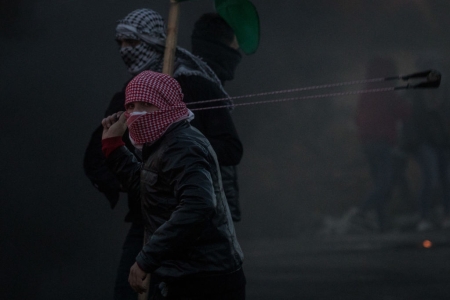
A Palestinian man uses a slingshot to hurl stones at Israeli border police near Ramallah, on December 9, 2017. (Photo by Chris McGrath/Getty Images)

  • “More journalists than protesters…” — Björn Stritzel, German journalist.
  • Protests against Israel and the US are not uncommon on the streets of Ramallah, Hebron and Bethlehem. But for the “war correspondents,” there is nothing more exciting than standing behind burning tires and stone throwers and reporting from the heart of the “clashes.” Such scenes make the journalists look as if they are in the middle of a battlefield and are risking their lives to bring the story home to their viewers. They might even receive an award for their “courageous” reporting from danger zones!
  • Jerusalem is tense, and has long been so, because the Palestinians have not yet managed to come to terms with Israel’s right to exist. That is the real story. The Palestinians rage and rage for only one reason: because Israel exists. Put that in a story and publish it.

The Palestinians declared a three-day-long “rage” spree over US President Donald Trump’s announcement recognizing Jerusalem as Israel’s capital. Thus far, however, it seems that the real anger is showing up in the international media, not on the Palestinian street.

Question: How many foreign journalists does it take to cover the Palestinian reaction to Trump’s announcement? Answer: As many as the Israel-Palestinian-conflict-obsessed-West can manage to send.

The massive presence of the international media in Jerusalem and the West Bank has taken even the Palestinians by surprise. Since Trump’s announcement on December 6, dozens of additional journalists and camera crews have converged on Israel to cover “the big story.”

The American Colony Hotel in Jerusalem, once a favorite haunt of international reporters, is once again packed with journalists from around the world.

Some of these reporters, including those working for American networks, have been flown in from their working posts in London, Paris, Cairo and New York to cover what many of them are already calling the “New Palestinian Intifada.” But is it really a new intifada, or is it simply wishful thinking on the part of the swarm of Palestinian and foreign reporters?

In the past few days, we have seen wild exaggeration in the media as to what is really happening in and around the Old City of Jerusalem. What is evident, however, is that the number of journalists and photographers covering the protests in the city has thus far exceeded the number of Palestinian protesters.

Let us start with Friday, December 8, the final day of the announced Palestinian “rage.” The Palestinian Authority, Hamas and other Palestinian groups told us to expect mass rallies and protests after Friday prayers at the Al-Aqsa mosque compound. So did the reporters.

By early morning, at least six television production trucks were stationed in the small parking lot outside the Damascus Gate, the main entrance to the Old City of Jerusalem. The trucks belonged to various television stations were presumably brought there to film live broadcasts of the anticipated mass protests. Another 70-80 journalists and photographers were waiting, some impatiently, for the Muslim worshippers to finish their prayers and start their protests against President Trump’s announcement.

What we got in the end was a small and peaceful protest of some 40 Palestinians, who chanted slogans against Israel, the US and Arab leaders — including Palestinian Authority (PA) President Mahmoud Abbas, who was dubbed a “traitor” and “Israeli spy.”

Björn Stritzel, an honest and brave German journalist, tweeted from the scene: “More journalists than protesters after Friday prayers.”

The media frenzy was echoed by several other reporters. “Three days of ‘rage’ have passed since Trump’s Jerusalem declaration and Armageddon hasn’t arrived,” remarked journalist Oren Kessler. “One is loath to make predictions of continued calm in the region, but thus far the doomsday prophecies have not materialized.”

French journalist Piotr Smolar, who also waited for the “big” protest, wrote: “Dozens and dozens of journalists at Damascus gate, where nothing has happened until now.”

Joe Dyke, a reporter with Agence France Press (AFP), tweeted this photo showing more journalists than protesters at Damascus Gate. He wrote: “Small Palestinian protest at Damascus Gate in Jerusalem broken up by the Israeli police. They seemed to object to a picture of Trump as a toilet.”

Dyke later reported that he had “just walked through Jerusalem’s Old City and the situation is very calm. More police on streets but no issues as yet. Tourists milling about.”

The following day, Saturday December 9, we witnessed a repetition of the same scenario in Jerusalem. The city was relatively quiet, but the presence of journalists and photographers loomed large. At noon, a small group of Palestinians (25-30) staged a protest on the main business thoroughfare of east Jerusalem, Salah Eddin Street, while chanting slogans against Israel and the US.

Here is how the journalist Seth Frantzman of The Jerusalem Post, who was at the scene, described the situation: “There are more people with cameras here than anyone clashing (with police) at the moment.”

Frantzman later had this to say about the “clash”: “There are as many media and onlookers taking photos here as there are youth and police waiting for the clashes.”

There are nearly 300,000 Arabs living in Jerusalem, and the truth is that the vast majority did not take part in any of the small protests, which were staged deliberately as a show for the dozens of journalists who converged on the city. In fact, there were more protesters on the streets of Berlin, Cairo, Valencia (Spain) and Istanbul than in Jerusalem itself. With the exception of the two incidents at Damascus Gate and Salah Eddin Street, the remaining 28 Arab neighborhoods of Jerusalem were mostly quiet, with nothing dramatic happening.

The bored journalists were forced to don their helmets and bullet-proof vests and head to the West Bank, in the hope of capturing scenes of the “New Intifada.” What they found in the West Bank, however, was not unusual: minor “clashes” between stone throwers and Israeli soldiers occur almost every day.

Protests against Israel and the US are not uncommon on the streets of Ramallah, Hebron and Bethlehem. But for the “war correspondents,” there is nothing more exciting than standing behind burning tires and stone throwers and reporting from the heart of the “clashes.” Such scenes make the journalists look as if they are in the middle of a battlefield and are risking their lives to bring the story home to their viewers. They might even receive an award for their “courageous” reporting from danger zones!

That is what happens when you are afraid to go to Yemen, Libya, Syria or Iraq to cover the real bloodshed.

Let us be frank. The large number of journalists dispatched to Israel expected — even hoped — that Trump’s announcement would trigger a new Palestinian intifada.

This way, the media could blame Trump for “igniting violence,” instigating instability and “derailing” the peace process. It is all about media-based Trump-hatred. Of course, it is also about media-based Israel-hatred, searching for any excuse to blame the Jews for the “suffering” of the Palestinians. The journalists, however, will not let those pesky facts get in their way; they continue to report as if Jerusalem is engulfed in flames. The reality on the ground, though, is far from that.

Palestinian protests won’t swell into mass resistance so long as Arab rulers and Iran see no gain

December 9, 2017

Palestinian protests won’t swell into mass resistance so long as Arab rulers and Iran see no gain, DEBKAfile, December 9, 2017

All the same, it would be premature to completely rule out a major escalation being sparked by some unforeseen event. For instance, a cell of Tanzim, the armed wing of Abbas’ Fatah party, may decide to join Hamas, the Iranian-backed Jihad Islami and the extremist Popular Front – all of them with a long record of terrorism – for a spectacular terrorist attack on an Israeli or American target.  For the time being, there is no sign of this building up. The ordinary Palestinian man in the street has a job to go to on Sunday and appears to have settled on a moderate demonstration of protest for Trump’s Jerusalem strategy.

***************************************

The Palestinian Hamas finds itself shouting alone for a massive armed uprising, raising only muted echoes in the Arab world and the Palestinian street in protest at the US president’s Jerusalem decision. Most adult Palestinians, when asked, admit they see no point in sending their sons in harm’s way. Yet Israel’s mainstream media astonishingly report with great bombast every Hamas threat as though a world power is threatening World War III.

The Hamas rulers of the Gaza Strip have it in their power to unleash a barrage of rockets against their Israeli neighbors that would be damaging and lethal enough to trigger a major confrontation with Israel’s Defense Forces. They have done this before, but not so far now. In the exchange of blows Friday night, Dec. 8, Hamas clearly pulled its punches, showing that its rhetoric was just that. Smaller factions were allowed to fire off a few short-range rockets of low accuracy in the direction of Beersheba, Ashkelon, Ashdod and Israeli locations next door to the Gaza Strip. Most exploded on open ground or fell short while still in Gazan air space; one exploded harmlessly on a Sderot street and one was intercepted by an Iron Dome battery. Two Hamas activists were killed in Israeli retaliatory air strikes against three Hamas military facilities in the Gaza Strip.

Hamas leaders understand that their leeway for extreme action is narrower than ever before. They are a lone voice, are woefully short of funds, have no real backers in the Arab world and their popularity in the wider Palestinian community is waning.

By the time the anti-US, anti-Israel Palestinian protests reached their third day, Saturday, the following picture was taking shape:

The Palestinian Authority chairman Mahmoud Abbas (Abu Mazen) decided against taking up Hamas’ call to arms when together they could have ignited a major conflagration. After all, President Donald Trump’s recognition of Jerusalem as Israel’s capital left in ruins the diplomatic campaign he led for years as his signature for unilateral recognition of Palestinian statehood.

In the phone conversation he held with Hamas leader Ismail Haniyeh on Wednesday, shortly after Trump announced his decision on Jerusalem, Abu Mazen briefly considered joining the Hamas call for an extreme response. He pulled back when he realized that Haniyeh’s plan was to use the Jerusalem crisis as his pretext for hanging onto rule in the Gaza Strip. This would have wrecked the “reconciliation” deal in which Egypt invested long months as broker, in the hope of unifying the two Palestinian factions and bringing the Gaza Strip under Palestinian Authority rule. When Abu Mazen saw Haniyeh’s game, he backed away. The anti-Trump rallies in West Bank towns Thursday and Friday were consequently modest, compared with so many convulsions in the past.

Iran too pulled back from putting in its oar for inflaming Palestinian ire, because it has bigger fish to fry – even through Hizballah’s leader Hassan Nasrallah pushed hard for Tehran to instruct Hamas and the Islamic Jihad in the Gaza Strip to escalate the anti-Trump protest. Tehran’s attention is fixed on the turning-point in the Yemen civil war at Saudi Arabia’s back door, generated by the Revolutionary Guards success, in conjunction with Hizballah, to assassinate former president Ali Abdullah Saleh, after he switched sides from the Houthi insurgents to the Saudi-led coalition fighting them. The Houthis were then directed to wipe out the opposition by executing hundreds of officers and commanders loyal to Saleh.

The Palestinians are also small beer in the calculations of most members of the Arab League. Arab foreign ministers convened in Cairo Saturday, Dec. 9, for an “emergency session on Jerusalem.”  But it was summoned by the Palestinian Authority and one other Arab leader, Jordan’s King Abdullah, who has fallen out with most of his colleagues, badly enough for Riyadh and Abu Dhabi, for instance, to cut of financial assistance to Amman.

Abu Mazen found Saudi Arabia and other senior Arab League members otherwise engaged. Crown Prince Muhammed Bin Salman was busy replacing Adel Al-Jubeir as foreign minister with his brother, Prince Khaled bin Salman, and Egyptian President Abdel-Fatteh El-Sisi showed no interest in the session. Abbas quickly saw which way the wind was blowing in the Palestinians Arab hinterland.

In New York too, the emergency UN Secretary Council session on Jerusalem, after hearing the PA’s complaint against President Trump, ended with a joint expression of “disappointment” by the ambassadors of France, Germany, Italy, Sweden and the UK. “We disagree with the US decision to recognize Jerusalem as the capital of Israel,” they said. “The status of Jerusalem must be determined through negotiations between Israelis and Palestinians leading to a final status agreement.” After that, the “disappointed” powers returned home.

All the same, it would be premature to completely rule out a major escalation being sparked by some unforeseen event. For instance, a cell of Tanzim, the armed wing of Abbas’ Fatah party, may decide to join Hamas, the Iranian-backed Jihad Islami and the extremist Popular Front – all of them with a long record of terrorism – for a spectacular terrorist attack on an Israeli or American target.  For the time being, there is no sign of this building up. The ordinary Palestinian man in the street has a job to go to on Sunday and appears to have settled on a moderate demonstration of protest for Trump’s Jerusalem strategy.

Defiant Haley chides fuming Security Council members: ‘Change is hard’

December 9, 2017

Defiant Haley chides fuming Security Council members: ‘Change is hard’, Times of Israel, December 8, 2017

US Ambassador to the United Nations Nikki Haley delivers a speech during a United Nations Security Council meeting on December 8, 2017 in New York City (Stephanie Keith/Getty Images/AFP)

In a Wednesday address from the White House, Trump defied worldwide warnings and insisted that after repeated failures to achieve peace a new approach was long overdue, describing his decision to recognize Jerusalem as the seat of Israel’s government as merely based on reality.

The move was hailed by Israel’s Prime Minister Benjamin Netanyahu and by leaders across much of the Israeli political spectrum. Trump stressed that he was not specifying the boundaries of Israeli sovereignty in the city, and called for no change in the status quo at the city’s holy sites.

************************************

At an emergency meeting of the UN Security Council on Friday, the US Ambassador to the United Nations Nikki Haley said President Donald Trump knew his decision to recognize Jerusalem as Israel’s capital would raise “questions and concerns,” but that he took it to advance peace between Israel and the Palestinians.

“I understand the concerns that members have in calling this session,” Haley said. “Change is hard.”

Washington’s move left it isolated as one after another fellow UN Security Council members — Russia, France, the UK, China, Egypt, Jordan and a host of others — condemned the announcement.

The debate unfolded at a largely symbolic emergency meeting of the council — no vote on a resolution was planned, as the US has veto power — two days after Trump reversed two decades of US policy on the holy city.

The meeting was convened by eight of the 14 non-US members of the council. It seemed a vivid show of the discord triggered by Trump’s announcement, which included plans to move the US embassy in Israel from Tel Aviv to Jerusalem.

Asked what he expected to come from the UN meeting, one diplomat said: “Nothing.” Another said the session would show US “isolation” on the issue.

US Ambassador to the United Nations Nikki Haley speaks with Israeli Ambassador to the United Nations Danny Danon before a United Nations Security Council on December 8, 2017 in New York City. (Stephanie Keith/Getty Images/AFP)

Haley said Washington was more committed to peace “than we’ve ever been before — and we believe we might be closer to that goal than ever before.”

Haley said anyone who used Washington’s actions as a pretext for violence was “only showing” they were not partners for peace.

She noted that past Israeli-Palestinian agreements have been signed on the White House lawn, and that if there is a new agreement, there is “a good likelihood” it will be signed there as well, “because the United States has credibility of both sides.”

At the meeting, the UN coordinator for the Middle East peace process warned Security Council members of a risk of “violent escalation.”

Nickolay Mladenov warned that if the Israeli-Palestinian conflict isn’t resolved, “it risks being engulfed in the vortex of religious radicalism throughout the Middle East.”

A Palestinian protestor uses a sling shot to throw stones towards Israeli security forces during clashes after the Friday prayers in the city center of the West Bank town of Hebron on December 8, 2017. (AFP/Hazem Bader)

Mladenov spoke of “a serious risk” of “a chain of unilateral actions” that would push the goal of peace further away. He pointed to the latest clashesbetween Palestinian protesters and Israeli forces and some calls for a new intifada, or uprising.

Mladenov also reiterated Secretary-General Antonio Guterres’s words that the Israeli-Palestinian conflict must be resolved through direct negotiations and that “there is no Plan B to the two-state solution.”

Palestinian envoy Riyad Mansour spoke of the “global consensus” against Washington’s recognition and said Trump’s decision to recognize Jerusalem as Israel’s capital and ultimately move the US embassy there should be reconsidered and rescinded.

Palestinian envoy to the UN Riyad Mansour at the UN Security Council, December 8, 2017 (United Nations)

“There can be no just and lasting solution to the Palestine question without a just solution” to Jerusalem, he said, calling the city “the heart of Palestine.”

Israel’s ambassador to the UN Danny Danon told the council the Trump declaration was “a positive step.”

He called on council members to “send a clear message there is never an excuse for violence. Violence must never be used as a threat.”

Israel’s Ambassador to the UN Danny Danon holds up an ancient coin from Jerusalem during his address to the UN Security Council debate on Jerusalem, December 8, 2017 (UN Photo/Eskinder DebebeIsrael)

Danon said the recognition of Jerusalem “should serve as a reality check for the Palestinians and for the nations of the world” that “recognizing Jerusalem as Israel’s capital is a critical and necessary step for peace.”

Danon held up an ancient coin from Jerusalem during his speech, and said that King David made Jerusalem his capital 3,000 years ago.

The British ambassador to the UN, Matthew Rycroft, said flat out that Britain disagreed with Trump’s move.

“These decisions are unhelpful for the prospects for peace in the region,” Rycroft said.

He urged Trump to now come up with detailed proposals for an Israel-Palestinian peace accord, a goal which has eluded the US and the international community for decades.

In a Wednesday address from the White House, Trump defied worldwide warnings and insisted that after repeated failures to achieve peace a new approach was long overdue, describing his decision to recognize Jerusalem as the seat of Israel’s government as merely based on reality.

The move was hailed by Israel’s Prime Minister Benjamin Netanyahu and by leaders across much of the Israeli political spectrum. Trump stressed that he was not specifying the boundaries of Israeli sovereignty in the city, and called for no change in the status quo at the city’s holy sites.

U.S. Still Won’t List Jerusalem as Israel’s Capital on Official Docs, Passports, Maps

December 9, 2017

U.S. Still Won’t List Jerusalem as Israel’s Capital on Official Docs, Passports, Maps, Washington Free Beacon , December 8, 2017

(Does this mean that everything is on-hold until the Palestinian Authority and Israel agree on who owns what in Jerusalem? How can the Amerian Embassy be built in Jerusalem until the matter is resolved? — DM)

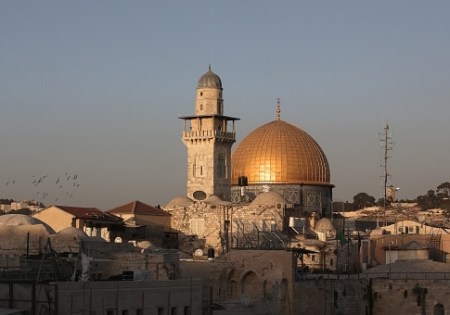
The Old City in Jerusalem / Getty Images

“The specific boundaries of Israeli sovereignty in Jerusalem are subject to final status negotiations,” the official said. “The United States is not taking a position on boundaries or borders.”

***************************

The United States still will not formally recognize Jerusalem as being located in Israel on official documents, maps, and passports, despite President Donald Trump’s announcement earlier this week that America is formally recognizing the holy city as Israel’s capital, according to State Department officials who spoke to the Washington Free Beacon about the matter.

Despite Trump’s declaration, which was formally codified on Wednesday into U.S. policy, the State Department is taking a more nuanced position on the matter, drawing some ire in Congress among pro-Israel lawmakers who accuse the State Department of undermining Trump’s efforts.

State Department officials this week had difficulty stating as fact that Jerusalem is located within Israel, instead trying to parse the issue as still subject to diplomatic negotiations.

State Department officials who spoke to the Free Beacon about the situation said that while it supports Trump’s declaration that Jerusalem is the capital of Israel, it is not yet at the point where it will list Jerusalem as part of Israel on passports, maps, and official documents. This means that official documents, such as passports, will not, at this point, list “Jerusalem, Israel” as a place that exists.

The State Department’s careful parsing of the issue has already drawn outrage on Capitol Hill, where some lawmakers are describing this as part of an effort to undermine the Trump White House’s clear-cut declaration on the matter.

“The president is the commander-in-chief and America’s sole organ when it comes to conducting foreign policy,” Rep. Ron DeSantis (R., Fla.), a member of the House Foreign Affairs Committee, told the Free Beacon.  “Article II of the Constitution does not vest this authority in bureaucrats in the State Department.”

“The State Department must permit Americans born in Jerusalem to list ‘Jerusalem, Israel’ on their passports and must follow the logical implications of this historic recognition in other policy areas,” DeSantis said. ” President Trump’s decision to recognize Jerusalem as Israel’s capital was the right thing to do and enjoys broad support from the American people; an entrenched bureaucracy has no right to stymie this decision.”

A State Department official who spoke to the Free Beacon about the matter made clear that the United States now “recognizes Jerusalem as the capital of Israel and its seat of government.”

However, “the specific boundaries of Israeli sovereignty in Jerusalem are subject to final status negotiations,” the official said, explaining that the holy city’s exact location and placement in Israel proper is still up for debate.

“While we are affirming the current and historic reality of Jerusalem’s role as Israel’s capital and seat of government, any ultimate determination of sovereignty over Jerusalem will flow from the results of negotiations between the parties,” the State Department official explained.

With regards to U.S. passports for Americans born in Jerusalem, there will be no formal change in American policy on the matter.

The issue of listing “Jerusalem, Israel” as a person’s birthplace has been a hot button issue over the years, with a case even being adjudicated by the U.S. Supreme Court.

Americans born in Jerusalem still will not be able to list Israel as the birth nation on their passports.

“There is no change in policy at this time,” according to the State Department official. “We will provide any new guidance as and when appropriate.”

With regards to official maps and documentation, the State Department is still engaged in a process to figure out how exactly to classify Jerusalem.

“The president is taking a specific step in affirming that the United States believes that Jerusalem has and will continue to serve as Israel’s capital—and the U.S. is not backing off efforts towards encouraging the parties to resolve their differences over final status issues in a comprehensive peace agreement,” according to the State Department official.

However, the president’s declaration is limited in nature and is being reviewed by the State Department as it moves forward.

“The specific boundaries of Israeli sovereignty in Jerusalem are subject to final status negotiations,” the official said. “The United States is not taking a position on boundaries or borders.”

When asked if official documents will bear the words, “Jerusalem, Israel,” the State Department could not provide a concrete answer.

“This is quite a complex issue that we continue to study and work through,” the official said.

One senior official at a large, national pro-Israel organization cautioned against viewing the State Department’s stance as an effort to subvert Trump’s declaration on Jerusalem.

“It’s too early to panic,” the official, speaking on background, told the Free Beacon. “The administration was focused on getting the broad policy correct and meeting the president’s demand that we finally acknowledge the simple reality Jerusalem is Israel’s capital.”

“Now they’re going to take a month to figure out the consequences,” explained the official, who has been briefed on the situation. “Implementing pro-Israel fact-based policy is a new thing for some of our diplomats, and many others have forgotten how that works in recent years, so people are willing to give them some time. If at the end of the process nothing has changed, there will be broad criticism – to say nothing of pro-Israel voters around the county who will be bitterly let down.”

President Trump’s Jerusalem Move Deals a Blow to Terror

December 8, 2017

President Trump’s Jerusalem Move Deals a Blow to Terror, FrontPage Magazine, Daniel Greenfield, December 8, 2017

It’s not about a “piece of land here or there”, as the PA’s top Sharia judge clarifies, it’s a religious war. And Israel is not just a religious war between Muslims and Jews, but a shifting frontier in the larger war between Islam and the rest of the world. It’s another territory to be conquered on the way to Europe. And Europe is another territory to be conquered on the way to America. 

There can be no peace in a religious war. Nor is there anything to negotiate.

“It isn’t possible to compromise on or negotiate over Jerusalem,” Habash had said. “In politics there can be compromises here and there… In politics there can be negotiation. However, in matters of religion, faith, values, ethics, and history, there can be no compromises.”

*********************************

Hamas has announced that President Trump’s recognition of Jerusalem as the capital of Israel has opened the “gates of hell.” Its Muslim Brotherhood parent has declared America an “enemy state.”

The Arab League boss warned that the Jerusalem move “will fuel extremism and result in violence.” The Jordanian Foreign Minister claimed that it would “trigger anger” and “fuel tension.”

“Moderate” Muslim leaders excel at threatening violence on behalf of the “extremists”.

The Organization of Islamic Cooperation (OIC) warned that recognizing Jerusalem will trigger an Islamic summit and be considered a “blatant attack on the Arab and Islamic nations.”

The last time the OIC was this mad, someone drew Mohammed. And wasn’t stoned to death for it.

According to the Saudi ambassador, it will “heighten tensions”. The Deputy Prime Minister of Islamist Turkey called it a “major catastrophe”. And the leader of the largest Muslim country in Europe, France’s Emmanuel Macron “expressed concern” that America will “unilaterally recognize Jerusalem.”

PLO leaders and minions meanwhile made it quite clear that now the dead peace process is truly dead.

The Palestinian Authority’s boss warned that recognizing Jerusalem will “destroy the peace process”. The PLO’s envoy in D.C. threatened that it would be the “final lethal blow” and “the kiss of death to the two-state solution”. A top PA advisor claimed it “will end any chance of a peace process.”

A day later, the peace process is still as alive and as dead as it ever was.

Since the chance of a peace process is about the same as being hit by lightning while scoring a Royal Flush, that “chance” doesn’t amount to anything. The peace process has been deader than Dracula for ages. And even a PLO terrorist should know that you can’t threaten to kill a dead hostage.

The only kiss of death here came from Arafat.

Peace wasn’t killed though. It was never alive. Because a permanent peace is Islamically impossible.

“The world will pay the price,” warned Mahmoud Habash, the Palestinian Authority’s Supreme Sharia judge.

Habash isn’t just the bigwig of Islamic law, he’s also the Islamic adviser to the leader of the Palestinian Authority. And Abbas, the terror organization’s leader, was there when Habash made his remarks.

Previously Habash had declared that the Kotel, the Western Wall of the fallen Temple, the holiest site in Judaism, “can never be for non-Muslims. It cannot be under the sovereignty of non-Muslims.”

While the official warnings from the Palestinian Authority, the Arab League and assorted other Islamic organizations have claimed that recognizing Jerusalem threatens the non-existent peace process, Habash had in the past had made it quite clear that the issue wasn’t land, it was Jihad.

“The struggle over this land is not merely a struggle over a piece of land here or there. Not at all. The struggle has the symbolism of holiness, or blessing. It is a struggle between those whom Allah has chosen for Ribat and those who are trying to mutilate the land of Ribat,” Habash had declared.

Ribat means that Israel is a frontier outpost between the territories of Islam and the free world. The Muslim terrorists who call themselves “Palestinians” have, according to the Abbas adviser, been chosen for “Ribat” to stand guard on the Islamic frontier and expand the territories of Islam.

The sense of Ribat is that the Jihadists may not yet be able to win a definitive victory, but must maintain their vigilance for the ultimate goal, which a Hadith defines as performing Ribat “against my enemy and your enemy until he abandons his religion for your religion.”

That is what’s at stake here.

It’s not about a “piece of land here or there”, as the PA’s top Sharia judge clarifies, it’s a religious war. And Israel is not just a religious war between Muslims and Jews, but a shifting frontier in the larger war between Islam and the rest of the world. It’s another territory to be conquered on the way to Europe. And Europe is another territory to be conquered on the way to America.

There can be no peace in a religious war. Nor is there anything to negotiate.

“It isn’t possible to compromise on or negotiate over Jerusalem,” Habash had said. “In politics there can be compromises here and there… In politics there can be negotiation. However, in matters of religion, faith, values, ethics, and history, there can be no compromises.”

There’s an extremely thin line in Islamic theocracy between politics and religion. But what Habash is really saying is that there might be room to negotiate how many times a week the garbage truck comes to pick up the trash, but not who gives him the orders. Islamic supremacism is non-negotiable.

The Supreme Sharia judge warned Trump that moving the embassy is “a declaration of war on all Muslims.” Why all Muslims? Because the “Palestinians” are a myth. Islamic conquests are collective.

And it’s not as if any of the Muslim leaders disagree.

Why is Jerusalem their business? It’s not empathy for the “Palestinians”. Kuwait ethnically cleansed huge numbers of them. They aren’t treated all that much better in other Arab Muslim countries.

It’s not about them. The Muslim settlers in Israel are just there as “Ribat”. They’re the frontier guard of the Islamic conquest. Much like the Sharia patrols in the No-Go Zones of Europe or the Jihadists in Kashmir, the Rohingya in Burma and all the other Islamic Volksdeutsche variants of occupying colonists.

Sunni may fight Shiite. Muslim countries, tribes and clans may war with each other. But the land they’re fighting over belongs to all of them collectively.

It can never belong to non-Muslims. That is the essence of Islam where conquest is religion.

That’s true of Jerusalem. And of the entire world.

That is what is truly at stake in the war over Jerusalem. When countries refuse to move their embassies to Jerusalem, they are submitting to Sharia law and Islamic supremacism. The issue at stake is the same one as drawing Mohammed. It’s not about a “piece of land”. It’s about the supremacy of Islam.

Refusing to move the embassy doesn’t prevent violence. Islamic terrorism continues to claim lives in Jerusalem. And Islamic violence has been a constant before Israel liberated Jerusalem or before there was even a free Israel. The Arab League, the Jordanians, the Saudis and the rest of the gang aren’t promising an end to the violence. Instead they warn that if we don’t obey, it will grow worse.

That’s not diplomacy. It’s a hostage crisis.

President Trump made the right decision by refusing to let our foreign policy be held hostage. We don’t win by giving in to terrorists.

We win by resisting them.  Or else we’ll have to live our lives as hostages of Islamic terror.

Jerusalem is a metaphor. Every free country has its own Jerusalem. In America, it’s the First Amendment. Our Jerusalem is not just a piece of land, it’s a value. And the Islamic Jihad seeks to intimidate us into giving it up until, as the Hadith states, we abandon our religion for Islam.

Moving the embassy to Jerusalem will do much more for America than it will for Israel.

The Israelis already know where their capital is. We need to remember where we left our freedom. Islamic terrorists win when they terrorize us into being too afraid to do the right thing.

President Trump sent a message to the terrorists that America will not be terrorized.

Previous administrations allowed the terrorists to decide where we put our embassy. But Trump has made it clear that we won’t let Islamic terrorists decide where we put our embassies, what cartoons we will draw or how we live our lives. That is what real freedom means.

Israel to build 14,000 new housing units in Jerusalem

December 8, 2017

Israel to build 14,000 new housing units in Jerusalem, Israel National News, Ido Ben Porat, December 8, 2017

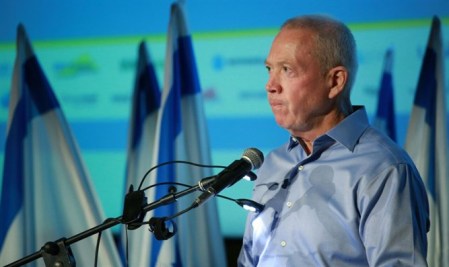
Yoav GalantMiriam Tzahi

Construction and Housing Minister Yoav Galant (Kulanu) is promoting a plan to build 14,000 housing units in Jerusalem, Hahadashot (formerly Channel 2 News) reported on Thursday.

The move follows President Donald Trump’s announcement on Wednesday that the United States recognizes Jerusalem as the capital of Israel.

According to the report, the government would promote the construction of 5,000 housing units in Atarot, in addition to a new neighborhood in the area which is being promoted by the Jerusalem municipality.

Another 1,000 housing units are expected in Pisgat Ze’ev and are waiting for approval, 3,000 units will be built in Katamon and 5,000 units will be built in Reches Lavan.

“Following President Trump’s historic declaration, I intend to promote and strengthen the construction in Jerusalem,” said Minister Galant.

Other ministers in the Cabinet expressed support for Galant and told Hahadashot, “There are no more excuses. There are no more reasons why we should not build in the city, when the president of the United States views it as the undisputed capital of the State of Israel.”

Obtaining Peace by Pressuring the PLO, Not Israel

December 7, 2017

Obtaining Peace by Pressuring the PLO, Not Israel, The Point (FrontPage Magazine, Daniel Greenfield, December 7, 217

Let’s peel back the blatant double standard behind the media’s Jerusalem outrage. And the claims that this will somehow destroy any possibility for peace.

Whenever the problem of peace is discussed, the prescription is always pressuring Israel, not the PLO.

Jerusalem was one of the pressure points. 

Trump’s move applied pressure to the PLO’s Palestinian Authority in exactly the way that the left had wanted pressure to be applied to Israel. He did to the PLO, what Obama had been doing to Israel by covertly backing the PA’s statehood moves.

The double standard is that pressuring Israel in this way is deemed a very good thing because the Jews are somehow the obstacles to peace. While pressuring the PLO is a terrible thing because that will destroy the cause of peace.

Why is pressuring Israel a good thing and pressuring Islamic terrorists a bad thing?

That’s the bias that needs addressing.

It’s the PLO that has rejected every peace proposal. Despite the attacks on Prime Minister Netanyahu, it was Arafat and Abbas who made the decision to walk away from peace negotiations.

If anyone needs to be pressured to come to the table, it’s the PLO. And that is what President Trump did.