Archive for the ‘Israel’ category

Thawing U.S. ties: Cuba today, Iran tomorrow?

December 26, 2014

Thawing U.S. ties: Cuba today, Iran tomorrow? Al Arabiya NewsMajid Rafizadeh, December 26, 2014

(Please see also Obama’s Worst Lie About his Dirty Castro Deal is in his First Sentence.

Obama Cuba negotiations

Also, Obama’s need for a legacy consistent with his ideology trumps all else, including Iran’s abysmal human rights record, its theocratic government, its support for terrorism, its hatred for Israel and desire to eliminate her, its duplicity in its P5+1 negotiations and its insistence on getting (or keeping) nukes. True, removal of statutorily based sanctions would require congressional action. However, Obama has little interest in avoiding constitutional irregularities. No congressional approval was granted for the “temporary suspension” of sanctions and laws inconsistent with Obama’s desires can be and are waived. Litigation over the de facto removal of sanctions by executive order would take many years.– DM)

After almost 53 years of Cold War between the U.S. and Cuba, the transformation of ties between these two adversaries has sparked a considerable amount of debate with respect to the normalization of ties with other longstanding rivals. The possibility of resolving other diplomatic imbroglios, specifically the revival of diplomatic ties between the U.S. and Iran is a case that comes to mind.

Some Iranians showed their excitement on Twitter with regards to the Cuban deal. Some showed hope that their government will be next and they could soon see an American embassy in Tehran. However, others thought that an Iran-U.S. deal is an idealistic and unreachable dream.

Indeed, any normalization of diplomatic relationships between the Islamic Republic and the U.S. will likely have significant positive impacts on both nations, leading to a critical strategic and geopolitical shift in the Middle Eastern political chessboard. Currently, both countries have some shared strategic and geopolitical objectives in Iraq and Syria particularly when it comes to fighting ISIS.

A possible Iranian deal will remove the economic sanctions on the Islamic Republic, assisting Tehran to achieve its highest economic potential in exports, imports and wealth. The tourist industry would be revived in Iran, with many European and Americans fond of visiting thousands of years old historical sites in Esfahan Shiraz, Hamadan, and other provinces. Normalization of diplomatic ties will lead to the flow of (primarily) European companies to do business with the Islamic Republic. In addition, as Iranian youth have shown to be in favor of American brands and products, American manufactures will find a share in Iran’s market as well. Further, U.S. airplane companies will begin cooperation with Iranian airlines.

As many people are pondering on the likelihood of a deal similar to the recent Cuba agreement with Iran, the question is whether the executive order to lift the embargo on the Islamic Republic and conducting back channel diplomacy to fully open ties with Tehran is possible?

Iran’s file is more complicated and multilayered

There are some partial similarities between the Obama administration’s method to initiate a deal with Raul Castro’s government and the way it has recently approached the Islamic Republic. The major commonalities are the back channel diplomacy and talks.

Similar to the Cuban deal, the Obama administration has conducted back channel talks with Iranian politicians with respect to Iran’s nuclear program. In addition, President Obama sent a clandestine letter to Iran’s Supreme Leader Ayatollah Ali Khamenei highlighting some of the shared strategic, national and geopolitical interests that both nations have in the Middle East.

Nevertheless, these commonalities in diplomatic approaches have led some scholars, politicians, and policy analysts to jump to the conclusion that the same deal should be applicable to the case of Iran because such an approach was possible with Cuba and the embargo on Cuba was lifted.

But, not too fast.

Iran’s file is much more complicated, multifaceted and multilayered than the Cuban case. While Cuba is a small island close to the state of Florida with a population of approximately 11 million, Iran, with a population of over 80 million, is located in the complex geopolitical chessboard of the Middle East, and entangled among mixture of alliances and enmities in the oil rich region.

Second of all, from Washington’s perspective, Cuba has hardly been a serious threat to American strategic, geopolitical, or economic interests. On the other hand, the Islamic Republic has been a major player in scuttling U.S. foreign policy objectives and opposing its allies (including Israel) in the Middle East.

Third, several crucial regional developments are viewed from the prism of a zero-sum game for both Iranian and American officials. Iranian leaders are less likely to accept any compromises on their top foreign policy priorities, such as: keeping President Bashar al-Assad in power, withdrawing its financial, advisory, intelligence, and military support to the Iraqi and Syrian government, and assisting formidable proxies such as Hezbollah.

Fourth, there was no international consensus on the U.S. embargo and economic sanctions against the Cuban government. As a result, President Obama can issue an executive order to lift the embargo. Many European countries were doing business with the Cuban government and the United Nations repeatedly condemned U.S. sanctions. On the other hand, the four rounds of economic sanctions on Tehran came with the approval of the U.N. Security Council. Unlike Cuba, many regional and global powers are dubious about Iran’s nuclear and regional hegemonic ambitions.

Fifth, several developments in Iran, such as revelations of clandestine nuclear sites, the possibility of testing exploding detonators for nuclear weapons in Parchin military site, and the military dimension of Tehran’s nuclear program, have led to regional and international strain.

Finally, and more fundamentally, unlike Castro, Khamenei has shown no interest in fully normalizing diplomatic ties with the United States. For example, the Obama administration received no positive response from Khamenei through its diplomacy. In addition, there is no official public debate among Iranian politicians, across various spectrums of Iran’s political system, of even allowing the opening of an American embassy in Tehran. The U.S. domestic opposition to normalize ties with Iran, particularly from the Republicans, is much higher in comparison to the Cuban case. Although the Obama administration has taken some back channel steps to negotiate with the Islamic Republic, Iran’s supreme leader has not responded with signs of willingness to normalize relationships and he has been clear in not trusting the “Great Satan. “

The signal that Iranian leaders received from the Cuban deal is not what the Western media depicts- that Iran is optimistic about normalizing ties with the U.S.. The message that Tehran received was that the Islamic Republic has to persist in its policies and that economic sanctions will ultimately fail. As foreign ministry spokeswoman Marzieh Akfham articulated: “The defense by the Cuban government and people of their revolutionary ideals over the past 50 years shows that policies of isolation and sanctions imposed by the major powers against the wishes of independent nations are ineffective.”
 

Is there a solution?

December 26, 2014

Is there a solution? Israel Hayom, Dror Eydar, December 26, 2014

(For European nations, America and others, abortive efforts to bring “peace” among Israel and warring Islamic factions provide welcome distractions from difficulties elsewhere which are even less tractable and more damaging to them. — DM)

[N]ot even a utopian-style peace treaty will end the fight against Israel that is being waged by Europe and the global left wing (and here as well, to some degree). The dozens of organizations that have been established to take away the Jews’ right to their own land (for some reason, these groups are known as “human-rights organizations”; after all, you know, we Jews have no human rights) will no longer show any interest in the cruel dictatorship that they helped set up next door. Instead, they will aim their heavy artillery against Israeli society, which they will accuse of racism for being an exclusive state for the Jewish ethnic group instead of a “state of all its citizens,” which is actually code for “a state of all its nationalities.”

*****************

1. The upcoming elections have plunged Israel into a wartime atmosphere, and a good deal of blame is being thrown about. Each side, instead of looking to its own misdeeds, is making accusations against the other. They are not saying, “We have sinned,” but rather, “You have sinned.”

Here, too, the accusations are meant to generate shallow headlines rather than addressing deep issues. This is a big mistake. Despite the piles of mud and refuse that are customarily dumped onto the average Israeli, the average Israeli is generally well aware of what is going on. They understand ideology and vision.

On the political plane, one gets the impression that the discourse, at least on the Left, is still stuck in the 1980s, before the great experiments that the Oslo Accords brought upon us — before Hamas, before Islamic State, before the Middle East fell to pieces. What can Tzipi Livni accomplish with the Palestinians that she hasn’t done over the past two years, when she was in charge of the talks with them? Did she bring any sort of agreement to the government that it turned down? If so, let her tell us.

But she knows that there is nobody to talk to on the other side. They never had the slightest desire to end the conflict with the Jews. I would be glad to hear any Arab leader name his final demands — the ones for which, if they were fulfilled, he would sign on the dotted line that the conflict was over and state that he had no further claims. Are there any volunteers?

We have not even mentioned Jerusalem or the refugees or recognition of Israel as a Jewish state. The demand that our neighbors recognize Israel as the national home of the Jewish people was not for us, but for them. That is the litmus test of the integrity of their intentions. Do they recognize the right of Jews to any part of the historical Land of Israel? We know that any Arab leader who grants such recognition can expect an uncomfortable death.

That is the reason for the effort to anchor the Jewish nature of the State of Israel in a Basic Law. It is because not even a utopian-style peace treaty will end the fight against Israel that is being waged by Europe and the global left wing (and here as well, to some degree). The dozens of organizations that have been established to take away the Jews’ right to their own land (for some reason, these groups are known as “human-rights organizations”; after all, you know, we Jews have no human rights) will no longer show any interest in the cruel dictatorship that they helped set up next door. Instead, they will aim their heavy artillery against Israeli society, which they will accuse of racism for being an exclusive state for the Jewish ethnic group instead of a “state of all its citizens,” which is actually code for “a state of all its nationalities.”

2. As we look on, Europe is falling like a ripe fruit at the feet of the radical Islam sweeping over it. The more terrorism conquers the streets of Europe, the greater the Europeans’ desire will be to pay the terrorists a ransom in exchange for being left in peace, unmolested. As history has taught us, the ransom will be the Jews. The ludicrous statements by the European parliaments about recognizing the Palestinian state show the blindness of a society in decline that lost its basic instincts long ago. The Europeans care nothing about the Palestinians, whom they have doomed to a life of misery and suffering under oppressive regimes that are among the worst in the world, where there is no such thing as basic human rights.

The Palestinians are the last thing that the Europeans care about, just as they care nothing about the atrocities being perpetrated in Syria, Iraq or Africa. The Europeans are recognizing the Palestinian state not because they have any desire to improve our neighbors’ situation, but because they have a problem with the Jews. They always did.

Ironically, the return to Zion made the Jewish problem worse because it gave the Jews an independent political living space — which the Europeans find completely unacceptable. That is also the reason why there are dozens of European organizations in this region, and why they funnel hundreds of millions of euros supposedly to help the Palestinians, but actually in efforts to undermine the legitimacy of the Jewish state. The “peace process” is just one more tool in that mechanism.

3. The talk of a “diplomatic agreement” is also a media ransom, lip-service paid by politicians who seek the sponsorship of the media party. Avigdor Lieberman is quite familiar with this work.

“We must reach a diplomatic agreement,” he said in a “closed-door conference,” and received flattering headlines right away. “What is going on today is that they are doing nothing; there is a status quo. The initiative must be a comprehensive regional agreement.”

Have we not heard those empty phrases a thousand times already? Have we not tried to reach a political agreement in all kinds of ways? Has Prime Minister Benjamin Netanyahu not gotten into trouble with his own camp over it? Did he not freeze construction in Judea and Samaria for ten months? And, before him, did Ehud Olmert not offer our neighbors what even Lieberman (I hope) would never dare offer?

And what about the two Yisrael Beytenu princes, Uzi Landau and Yair Shamir? Where are they? Why are they not responding to their party chairman’s heretical statements? After all, were they not the ones who gave Lieberman the stamp of approval to be a right-wing party? More evidence of Lieberman’s desertion to the Left is his use of the well-known leftist scare tactic terminology: “a political tsunami.” But what burst out this week was more of a police tsunami against the members of Yisrael Beytenu. Now that the leader has adopted the Orwellian language of peace and speaks the language of the media party, maybe they will cut him some slack.

4. In the end, the dispute between most of the Right and most of the Left boils down to one question: Do we believe the Palestinians or not? Palestinian Authority President Mahmoud Abbas has declared many times that he will never recognize Israel as a Jewish state, and he specifically named 6 million, with all its symbolism, as the number of Palestinians who expect their demand for the right of return to be fulfilled. Abbas is currently being kept alive by the Israeli army, which is protecting him as they would a delicate flower from attacks by the street, which supports Hamas. This does not stop the Palestinians from going all over the world, accusing us of every possible atrocity.

The purpose of their action is to gain the maximum amount of territory at the minimum price — actually, for no price at all — but not to establish a tiny statelet. The past hundred years have taught us that what unites Arab-Palestinians is not the desire to improve their own living conditions, but to destroy the Jews’ lives. What more has to happen for us to believe what they say? In the meantime, they are sticking close to us so that we will protect them against Islamic State.

5. So what is the solution? First, whoever said that there was a solution? Second, if we tried and did not succeed, maybe we ought to leave something for future generations to accomplish. You do not really believe the well-known chorus of lamentation that things are bad here and that the country is “stuck.”

We have succeeded quite well, thank God, considering the fact that only one of our hands is engaged in construction, development and cultural work, since the other is busy with self-defense. Where were we just 70 years ago, in 1944 — and where are we now? Let us put things in perspective.

Kurdistan: More Like Israel, Less Like Iraq

December 25, 2014

Kurdistan: More Like Israel, Less Like Iraq, Gatestone Institute, Lawrence A. Franklin, December 25, 2014

It is a society that rejects religious zealotry. Most Kurds are Sunni Muslim and one can hear the five-times-a-day Muslim call to prayer, but it is muted and ignored by most.

Like Israel, Kurdistan is more democratic than any of its neighbors. Like Israel, Kurdistan is surrounded by enemies that wish it did not exist. Like Israel, Kurdistan looks West. And like Israel, Kurdistan has maintained an internal equilibrium though all the world betrays it.

Iraqi Kurdistan is full of surprises. Probably, the most unexpected discovery is how normal life is in its capital city, Erbil. Despite a late summer scare by Islamic State [IS] military gains north of Mosul and the threat of suicide bomber attacks, the social discipline of Kurdistan’s citizens is admirable. There is a relaxed state of tension. It is “business as usual.”

There is also a sense of optimism, pervasive and infectious. Entrepreneurial spirit is alive and well. While there was an exodus of foreign businessmen after the initial territorial gains by the IS, foreign investors are filtering back. The Kurdistan Regional Government [KRG] has already drawn up plans for large-scale projects to improve the infrastructure. Heavy-duty construction vehicles are everywhere. The most visible project is the beltway being built around the city.

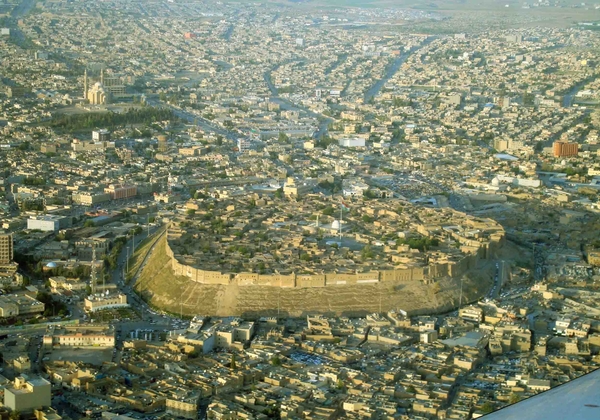
853An aerial view of Erbil, in Iraqi Kurdistan, featuring the ancient Erbil Citadel in the center. (Image source: Wikimedia Commons/Jan Kurdistani)

Political pluralism has come to the Kurdish north as well. While the Kurdistan Democratic Party [KDP] and the Patriotic Union of Kurdistan [PUK] respectively remain the one-two political powerhouses, they now have plenty of company. No one party dominates the parliament. There is plenty of horse-trading on issues, fleeting coalitions, and new political personalities are being heard. Nevertheless, the most influential and respected leaders still come from the Barzani extended family, which run the KDP. The late Mustafa Barzani (1903-1979) is revered as the warrior-godfather of modern Kurdistan.

Kurds, for the most part, are a welcoming lot. The methodical and rapid settlement of tens of thousands of refugees from IS-controlled Iraq required bold leadership by the Barzani-led government and especially from the Catholic hierarchy of Kurdistan. This success also reflects the compassion of a self-confident people. The population of the Dohok region, for example has doubled due to the influx of refugees. There is no observable tension between the newcomers and the population of the host country. Despite the inveterate resentment of the excesses of past Arab regimes, Kurdistan is a multi-ethnic and multi-religious society. It has become even more so with the emigration from other parts of Iraq of Turkmen, Yezidis, and Christian Assyrians and Arabs. It is also a society that rejects religious zealotry. Most Kurds are Sunni Muslim and one can hear the five-times-a-day Muslim call to prayer, but it is muted and ignored by most.

Men, mostly, walk on the streets of Erbil, Dohok, and Zako, especially at night. Kurdistan is not, however, a society that represses women. There are many in parliament, and they are outspoken on the issue of violence to females in Kurdish society. At one conference in mid-November, at least half of the speakers were women prominent in Kurdistan. Women military volunteers are widely admired. The Kurdish media celebrates the Kurdish Peshmerga‘s female fighters. One woman — a veteran of the fierce battle to save the Syrian Kurdish town of Kobane (near Turkey’s border) from an IS takeover — who recently visited Erbil, was received as a national hero. Female Yezidis who have escaped after torture by IS operatives are deeply admired too.

Zako, once the center of Kurdistan’s Jewish population, still invites back descendants of those who long ago left for Zion. Zako’s isolated villages are the wild west of Kurdistan. Its stark beauty against a ring of mountain chains may become a tourist magnet both for its ancient historical attractions and recreational possibilities.

For all of the above reasons, Kurdistan reminds one of Israel. Like Israel, Kurdistan is not dominated by the Arab, nor by Islam. Like Israel, Kurdistan is more democratic than any of its neighbors. Like Israel, Kurdistan is surrounded by enemies that wish it did not exist. Like Israel, Kurdistan looks West. And like Israel, Kurdistan has maintained an internal equilibrium though all the world betrays it.

Bedouin Trackers on the Border: The War Next Door (Part 5)

December 23, 2014

Bedouin Trackers on the Border: The War Next Door (Part 5),  Vice News via You Tube, December 23, 2014


Israel, the Obsession

December 22, 2014

Israel, the Obsession, American ThinkerRichard Baehr, December 22, 2014

[T]here is no clear path back to sanity, nor is there a clear path to the end of the obsession with Israel.

*****************

It has been a pretty typical week on the hate Israel front.  A European Union Court has decided that Hamas is not a terrorist organization, and their previous designation as such had not been justified by real evidence that Europeans had developed, as opposed, say, to information supplied by the United States or Israel.  An international court in Geneva is hearing evidence of Israeli human rights violations.  The United Nations Security Council has been considering a resolution developed by the Palestinian Authority, as well as one by the French that would effectively lay out the terms for Israel’s capitulation over the next few years.  Israel’s peace camp has been working with U.S. Secretary of State John Kerry, encouraging a delay in consideration of the Security Council resolutions, since any action before the upcoming Israeli parliamentary elections could benefit the right-wing parties in Israel.  In other words, there is not even an attempt to hide anymore that the United States is putting its foot down for one particular side in the Israeli election.  Various European countries are endorsing Palestinian statehood on the terms demanded by the Palestinian Authority.  Academic groups, unions, and churches in Europe and the United States are endorsing the boycott, divestment, and sanctions (BDS) movement.  Certain European communities are now “Israeli-frei” – free of Israeli goods (or at least those they can identify and care to avoid).  The U.N. Human Rights Council and the General Assembly, as well as specific agencies whose only task is to bash Israel, are set to get back to work, creating more resolutions and condemnations of the Jewish state.

As Joshua Muravchik makes clear in his outstanding new book, Making David Into Goliath, this obsession with Israel by most nations of the world and the United Nations – or as they are collectively known, “the international community” – as well as by “the global left,” could not have been imagined a half-century back, prior to the Six-Day War.  At that time, Israel was championed by Socialist political parties, and viewed sympathetically as a beleaguered democracy fighting for its existence against a collection of larger anti-Western Arab tyrannies.  There was residual sympathy for Jewish survivors of the Holocaust, many of whom had moved to Israel.  There was no movement for Palestinian nationhood, though certainly violent actions by Arabs aimed at Israel and Jews in the region had been going on for decades.

Muravchik’s book attempts to explain what has happened during this period and why.  A lot changed after the 1967 war, when, instead of little Israel facing off with 21 Arab nations, the conflict was recast with Israel as the big dog, oppressing the Palestinians and occupying their land.  Since the left tends to root for the underdog, Israel no longer fit the bill.  The description of the conflict in the post-1967 telling is of course neither factual nor historical, since there had never been a unique nation of Palestinian Arabs, denied their nationhood – say, the way the Tibetans or the Kurds have been for sixty years, or forever.  The Palestinians became refugees because their leaders refused to accept half a loaf – a state on half of the mandate territory in 1947 – and instead chose to go to war to deny the Zionists their state.  The Arabs of Palestine, even with the support of armies from their Arab neighbor states, lost the war.

When you start a war and lose, there are consequences.

Since 1967, the Palestinians and their allies have been trying to reverse not just the war of 1967, but the 1948 war as well.  Refugees from the 1948 war (and there are not many of them left) are still in refugee camps, unlike any other refugees from any other conflicts then or in the years since, and the descendants of the original refugee population, now from three generations, demands a “right of return” to homes in Israel where they never lived and in fact to a country where they have never been.

The 1948 war produced a population exchange – a larger number of Jews were driven out of Egypt, Tunisia, Morocco, Algeria, Yemen, Iraq, Libya, and other countries than Arabs who left their homes in what became Israel.  Most of the Jewish refugees moved to Israel, where in relatively short order they were out of any temporary refugee camps and absorbed as regular citizens of the state.  That the Arabs have sacrificed generations of their own people to maintain their inflexible hatred of Israel is all one needs to know about why there has been no resolution of the conflict despite serious efforts over the years to accomplish this.

Muravchik, who was once a leftist himself, spends a fair amount of time in the book documenting the impact of Edward Said , who with his disciples has mentored the current U.S. president, Barack Obama.  Said, despite his faked personal history, has had enormous impact introducing moral relativism to studies of the regions, declaring that the West cannot understand “the Orient” and has no right to judge the regimes, the religions, the people.  What the West calls a terrorist group is instead viewed as a resistance fighting for freedom.  The combination of mosque and state is what those in the region know and prefer, not Western parliamentary systems.  Israel is not a beacon with much to offer those in the region, but an imperialist creation and a predator.  Muravchik outlines how in Israel itself, a part of the population is at war with Zionism and is in fact in league with Israel’s external enemies, assisting viperish non-governmental organizations (often funded by European nations) and bigoted journalists.  An increasing number of left-wing Jews in the United States behave as if Israel is an embarrassment, claiming that Israel’s behavior is “not in its name” and calling for an end to the “racist, apartheid“ state.

At one time, the United Nations consisted primarily of democracies who had fought the Axis powers.  With the decolonization of Africa and Asia after the war, dozens of new nations, since dubbed “the Third World,” became the dominant block at the U.N., particularly in the General Assembly and other international organizations.  These new nations included many Arab and Islamic countries, and their power in numbers shifted these organizations into full-blown assault forces directed at Israel.  Three quarters of all U.N. General Assembly resolutions that are directed at a single country are rebukes of Israel.  It is fairly obvious that the international community considers Israel the worst country in the world (or at least the closest thing to a piñata for the purposes of diplomatic assault) and has ignored the human rights disasters at play in Sudan, Somalia, Nigeria, Iran, North Korea, Pakistan, Bangladesh, Libya, Saudi Arabia, and dozens of other easy targets, since there is no real interest in fairness, and Israel is always held to a different standard.

The Palestinians and their allies have also scored with the terror weapon and the oil weapon.  One nation after another demonstrated that cowardice was the preferred policy for dealing with Palestinian terror groups, rather than risking confrontation with them, and many nations thought they could buy peace and security by becoming harsh critics of Israel and allies of the Palestinians.  In countries with large populations of Arab or Muslim immigrants, taking on Israel politically, and ignoring violence directed against Israel or threats against Jews, was seen as a safety valve to prevent terrorism and violence directed against such countries’ own citizens.  After the 1973 Yom Kippur War, OPEC, dominated by Arab oil producers, began a more systematic effort to use the threat of cutting off oil deliveries to force changes in policy by oil-importing nations, particularly in Europe.

Muravchik is an honest historian of the conflict, and he documents how Israel contributed to changing the narrative of the conflict.  Some of Israel’s leaders were poor spokespersons for the country.  The invasion of Lebanon in 1982, followed by the attacks carried out by Christian Phalangists in Sabra and Shatila to avenge the assassination of their leader by Palestinians, with Israeli forces seemingly looking the other way, were particularly damaging.  Many Israelis, not all on the hard left, have opposed the settlement enterprise in Judea and Samaria.  Muravchik makes clear, however, much as Caroline Glick has done in her book The Israel Solution, that to a large extent it is irrelevant what Israel has offered in any peace process to achieve a deal.  In essence, the country has entered a bidding war against itself.

Muravchik has laid out why Israel is now in the dock, facing more critics on more fronts all the time.  But what is most depressing is that there is no clear path back to sanity, nor is there a clear path to the end of the obsession with Israel.  In fact, the momentum is all with those ganging up on the Jewish state.  In the United States, Barack Obama is a president more comfortable with the thinking of the international community than any prior president since Israeli statehood in 1948, and he seems anxious to end America’s isolation on this issue (since it alone has stood in Israel’s corner for several decades) and move American policy so we are more in line with Sweden or Spain with regard to the conflict.

Muravchik calls for vigilance (Obama will be around only another two years and one month), but with America’s rapidly shifting demography, and the takeover of so many parts of the culture by the left – most of the media, the arts, the universities, Hollywood, many churches and synagogues – the struggle for those who stand with Israel will be uphill.


EU Gives Hamas Green Light to Attack Israel

December 22, 2014

EU Gives Hamas Green Light to Attack Israel, Gatestone InstituteKhaled Abu Toameh, December 22, 2014

Although the EU court has said that its controversial decision was “technical” and was not a reassessment of Hamas’s classification as a terrorist group, leaders of the Islamist movement believe that the move will eventually earn them legitimacy in the international arena.

The EU court’s decision represents a “severe blow to the Palestinian Authority and Egypt,” according to Palestinian political analyst Raed Abu Dayer.

Any victory for Hamas, albeit a small and symbolic one, is a victory for the Islamic State, Al-Qaeda, Islamic Jihad, the Muslim Brotherhood and other fundamentalist groups, and causes tremendous damage to those Muslims who are opposed to radical Islam.

Hours before the EU court’s decision was made public, Hamas leader Mahmoud Zahar announced that his movement would never recognize Israel, and that Hamas seeks to overthrow the Palestinian Authority and seize control of the West Bank.

The EU court’s decision also coincided with a rapprochement between Hamas and Iran. Now, the Iranians and other countries, such as Turkey and Qatar, are likely to interpret the EU court’s decision as a green light to resume financial and military aid, including rockets and missiles, to Hamas — not only to Gaza but to the West Bank as well — to support those Palestinians whose aim it is to eliminate Israel.

Less than 48 hours after a top European Union court ruled that Hamas should be removed from the bloc’s list of terrorist groups, supporters of the Palestinian Islamist movement responded by firing a rocket at Israel. The attack, which did not cause any casualties or damage, did not come as a surprise.

Buoyed by the EU court’s ruling, Hamas leaders and spokesmen see it as a “political and legal achievement” and a “big victory” for the “armed struggle” against Israel.

Musa Abu Marzouk, a top Hamas leader, issued a statement thanking the EU court for its decision. He hailed the decision to remove his movement from the terrorist list as a “victory for all those who support the Palestinian right to resistance.”

When Hamas leaders talk about “resistance,” they are referring to terrorist attacks, such as the launching of rockets and suicide bombings against Israel. In other words, Hamas has interpreted the court’s decision as a green light to carry out fresh attacks as part of its ambition to destroy Israel.

The rocket that was fired from the Gaza Strip at Israel only days after the court decision is not likely to be the last.

Although the EU court has said that its controversial decision was “technical” and was not a reassessment of Hamas’s classification as a terrorist group, leaders of the Islamist movement believe that the move will eventually earn them legitimacy in the international arena.

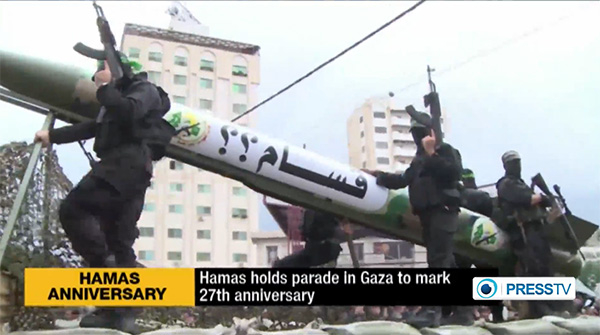
Ironically, the EU court’s decision coincided with Hamas celebrations marking the 27thanniversary of its founding. Once again, Hamas used the celebrations to remind everyone that its real goal is to destroy Israel. And, of course, Hamas used the event to display its arsenal of weapons that include various types of rockets and missiles, as well as drones.

845 (1)Thousands of armed Hamas troops showed off their military hardware at a Dec. 14, 2014 parade in Gaza, marking the organization’s 27th anniversary. (Image source: PressTV video screenshot)

Hours before the EU court decision was made public, Hamas leader Mahmoud Zahar announced that his movement would never recognize Israel. Zahar also made it clear that Hamas seeks to overthrow the Palestinian Authority [PA] regime and seize control over the West Bank.

The EU court’s decision also coincided with increased efforts to achieve rapprochement between Hamas and Iran. Recently, a senior Hamas leadership delegation visited Tehran as part of efforts to mend fences between the two sides. The main purpose of the visit was to persuade the Iranians to resume military and financial aid to Hamas. The visit, according to senior Hamas officials, appears to have been “successful.”

“There are many signs that our relations are back on the right track,” explained Hamas’s Musa Abu Marzouk. “Hamas and Iran have repaired their relations, which were strong before the Syrian crisis.” Relations between Hamas and Iran deteriorated due to the Islamist movement’s refusal to support the regime of Syrian President Bashar Assad.

Now the Iranians are likely to interpret the EU court decision to remove Hamas from the list of terrorist groups as a green light to resume financial and military aid to the movement.

Iran’s leaders recently announced that they intend to dispatch weapons not only to the Gaza Strip, but to the West Bank as well, as part of Tehran’s effort to support those Palestinians who are fighting to eliminate Israel.

Moreover, the EU court’s move will also embolden other countries that provide Hamas with political and financial aid, first and foremost Qatar and Turkey. Oil-rich Gulf countries such as Kuwait, Bahrain, Oman and Saudi Arabia will now face pressure from many Arabs and Muslims to join Qatar, Turkey and Iran in extending their support to Hamas.

The biggest losers, meanwhile, are Palestinian Authority President Mahmoud Abbas and Egypt’s President Abdel Fattah el-Sisi. Over the past few months, the two men have been doing their utmost to undermine Hamas and end its rule over the Gaza Strip.

Abbas has been fighting Hamas by blocking financial and humanitarian aid and arresting its supporters in the West Bank, while Sisi continues to tighten the blockade on the Gaza Strip and destroy dozens of smuggling tunnels along the border with Egypt.

The EU court’s decision represents a “severe blow to the Palestinian Authority and Egypt,” noted Palestinian political analyst Raed Abu Dayer. “As far is Abbas is concerned, the decision grants Hamas political legitimacy and challenges his claim to be the sole legitimate leader [of the Palestinians]. With regards to Egypt, the European court decision calls into question rulings by Egyptian courts that Hamas is a terrorist organization.”

Even if the EU court decision is reversed in the future, there’s no doubt that it has already caused tremendous damage, especially to those Muslims who are opposed to radical Islam.

Any victory for Hamas, albeit a small and symbolic one, is a victory for the Islamic State, Al-Qaeda, Islamic Jihad, the Muslim Brotherhood and other fundamentalist groups around the world.

The decision has left many Arabs and Muslims with the impression that Hamas, after all, is not a terrorist organization, especially if non-Muslims in Europe say so through one of their top courts. Even worse, the decision poses a real and immediate threat to Israel, as evident from the latest rocket attack.

If the Europeans have reached the conclusion that Hamas is not a terrorist organization, then why don’t their governments openly invite tens of thousands of Hamas members and supporters to move to London, Paris and Rome? And they should not forget to ask the Hamas members to bring along with them their arsenal of weapons.

Why is Israel blamed for evil while Islamic nations are not?

December 21, 2014

Why is Israel blamed for evil while Islamic nations are not? Dan Miller’s Blog, December 21, 2014

Blaming Israel for evil, rather than her many Islamic neighbors and enemies is, despite the views of Obama and His colleagues, contrary to American values. Doing so is based on Jew hatred, envy of success, and the multicultural absurdity that no culture or religion is better or worse than any other.

As I argued most recently here and here, Israel is fighting for her survival against regimes that want her to cease to exist because she is Jewish, not Islamic, and her government is free and democratic, not dictatorial. She is, therefore, an outsider in the Middle East.

This video identifies many of the reasons why Israel is viewed harshly by other Western civilizations while Islamic nations, which are neither free nor democratic, are viewed favorably.

I suspect that Dr. Ben Carson, who recently visited Israel and was much impressed, would agree with the points made in the video.

Although the U.S. remains Israel’s closest and most important ally, Obama and Israeli Prime Minister Benjamin Netanyahu have little personal chemistry and have frequently clashed. The U.S. has been outspoken in its criticism of Israeli settlement construction in the West Bank and east Jerusalem — captured areas claimed by the Palestinians as parts of a future state. At the same time, U.S. Secretary of State John Kerry has made numerous trips to the region and elsewhere to try to broker a peace deal.

Carson said the criticism of the settlements has been exaggerated, and he asserted that Palestinian hostility toward Israel is what is preventing peace in the region. Of Netanyahu, Carson said, “I think he’s a great leader in a difficult time.” [Emphasis added.]

Imperialism, Obama style

December 20, 2014

Imperialism, Obama style, Dan Miller’s Blog, December 20, 2014

Obama condemns “wicked” U.S. imperialism for supporting American values such as freedom and democracy abroad. Simultaneously, he tries to precipitate “regime change” in Israel so that she will support His values and those of Palestinians rather than American and Israeli values of freedom and democracy.

The Palestinians have placed before the United Nations Security Council a “peace proposal” intended to force Israel to agree to creation of a Palestinian state and “an Israeli withdrawal to the pre-1967 lines” by the end of 2017. Secretary Kerry has argued that the matter should not be considered until after the Israeli Knesset elections in March. According to an article in Foreign Policy,

Speaking at an annual luncheon with the 28 European Union ambassadors, Kerry cautioned that any action by the U.N. Security Council would strengthen the hands of Israeli hardliners who oppose the peace process. . . . [Emphasis added.]

“Kerry has been very, very clear that for the United States it was not an option to discuss whatever text before the end of the Israeli election,” according to a European diplomat.

The diplomat, who spoke on condition of anonymity because the luncheon was confidential, said that Kerry explained that Israel’s liberal political leaders, Shimon Peres and Tipzi Livni, had expressed concern that a Security Council move to pressure Israel on the eve of election would only strengthen the hands of Israeli hardliners, including Prime Minister Benjamin Netanyahu, and Naftali Bennett, an implacable foe of a Palestinian state and leader of the right-wing Jewish Home party. Netanyahu is also fiercely opposed to the Palestinians effort to secure Security Council backing for its statehood drive. [Emphasis added.]

Kerry said Livni had “told him that such a text imposed by the international community would reinforce Benjamin Netanyahu and the hardliners in Israel,” as well as the hardliners in Palestine, according to the European diplomat.

The message, said another European diplomat, was that U.N. action would “give more impetus to more right-wing parties, that there was a risk this could further embolden the more right-wing forces along the Israeli political spectrum.” [Emphasis added.]

Kerry’s remarks highlight the Obama administration’s delicate balancing act when it comes to its tense relationship with the Israeli government. On the one hand, senior  administration officials make little attempt to hide the personal dislike between Netanyahu and President Barack Obama or their sharp disagreements on issues ranging from the peace process to Iran. On the other hand, Kerry and other top policymakers have tried to avoid saying or doing anything that could be seen as meddling in the Israeli election in an effort to oust Netanyahu and replace him with a more centrist prime minister. [Emphasis added.]

On an open microphone in March of 2012, Obama

told Dmitry Medvedev that he would have more flexibility after November’s election to deal with contentious issues such as missile defence. . . .

Obama’s candid remark was considered a gaffe because He made it assuming that the microphone had been turned off and that no one other than Medvedev would hear Him. Kerry, however, candidly but intentionally told twenty-eight European Union ambassadors that it is U.S. policy to encourage the Israeli left, to diminish the Israeli right and to make it more difficult for Prime Minister Netanyahu to remain in office. Aside from his incredible naivete, why did Kerry do that?

For Obama and European leaders, Israel is reducible to the peace process. And the Israeli left depends on the support of foreign governments for its network of foreign funded non-profit organizations. The Israeli left can’t let go of its exploding version of ObamaCare [Palestine] because the left is becoming a foreign organization with limited domestic support. Its electorate isn’t in Israel; it’s in Brussels. [Emphasis and bracketed insert added.]

. . . .

Escalating a crisis in relations has been the traditional way for US administrations to force Israeli governments out of office. Bill Clinton did it to Netanyahu and as Israeli elections appear on the horizon Obama would love to do it all over again.

There’s only one problem.

The United States is popular in Israel, but Obama isn’t. Obama’s spats with Netanyahu ended up making the Israeli leader more popular. The plan was for Obama to gaslight Israelis by maintaining a positive image in Israel while lashing out at the Jewish State so that the blame would fall on Netanyahu. [Emphasis added.]

Kerry’s remarks — covered by Israeli media — seem, contrary to his intentions, likely to enhance the chances of Israeli “hardliners” on the “right,” to hurt the chances of those on the left and hence to increase PM Netanyahu’s chances of remaining in office. Even leaving that aside, how will Kerry’s remarks favoring regime change be viewed by other increasingly reluctant U.S. allies in the Middle East?

Israeli “hardliners” have already yielded to the Palestinians as much as, if not more than, they can without greatly endangering the security of Israel because there is no Palestinian entity with which peace can be made other than through Israel’s suicide.

The remarks of the Islamic preacher at the mosque in Jerusalem reflect a general Palestinian view.

Interestingly, the speaker doesn’t mention the longing for Palestinian statehood or independence. Instead, he talks of the establishment of the “Islamic Caliphate.” “Oh Allah’” he states, “Hasten the establishment of the State of the Islamic Caliphate,” and further rants, “Oh Allah hasten the pledge of allegiance to the Muslim Caliph.” He spews forth the latter statement three times to chants of “Amen!” from the large, approving crowd congregating around him.

These comments, which would register horror and revulsion in the West (at least in some quarters) are almost banal among Palestinians. In fact, a similar video featuring a different speaker some days earlier at the same venue, conveyed identical sentiment, expressing admiration for the Islamic State and calling for murder of Jews and annihilation of America. [Emphasis added.]

Here’s the other video referenced in the article:

Guttural anti-Semitism is ingrained and interwoven in the fabric of Palestinian society. Despite their minuscule numbers, 78% of Palestinians believe that Jews are responsible for most of the world’s wars while a whopping 88% believe that Jews control the global media and still more believe that Jews wield too much power in the business world. [Emphasis added.]

Much of the blame for this can be placed squarely on the doorstep of Mahmoud Abbas’s Palestinian Authority, which subjects the Palestinian population to a steady diet of hate-filled, Judeophobic rhetoric through state-controlled media and educational institutions. It is so well entrenched that the process of deprogramming, if it were ever attempted, would take generations to reverse. [Emphasis added.]

As noted in the Wall Street Journal article linked in the quote immediately above,

To understand why peace in Palestine is years if not decades away, consider the Palestinian celebrations after Tuesday’s murder in a Jerusalem synagogue of five Israelis, including three with joint U.S. citizenship. Two Palestinian cousins armed with meat cleavers and a gun attacked worshipers during morning prayers, and the response was jubilation in the streets.

The Popular Front for the Liberation of Palestine claimed responsibility, while Hamas praised the murders as a “response to continued Israeli crimes.” The main obstacle to peace isn’t Jewish settlements in the multireligious city of Jerusalem. The barrier is the culture of hatred against Jews that is nurtured by Palestinian leaders. [Emphasis added.]

Palestinian Prime Minister Mahmoud Abbas condemned the killings, but not without calling for Israel to halt what he called “invasions” of the holy Al Aqsa Mosque in Jerusalem. Mr. Abbas has previously said the Temple Mount was being “contaminated” by Jews, despite assurances by Prime Minister Benjamin Netanyahu that the Dome of the Rock and Al Aqsa Mosque are for Muslim worship only. The Memri news service reports that the Oct. 29 issue of the Palestinian daily Al-Hayat Al-Jadida was full of false accusations that Israel is damaging Jerusalem’s holy sites. [Emphasis added.]

Moreover,

An overwhelming majority of Palestinian Arabs support the recent spate of terrorist attacks against Israelis, an opinion poll released Tuesday finds, according to The Associated Press (AP).[Emphasis added.]

The poll also found that more than half of Palestinian Arabs support a new “intifada” (uprising) against Israel, and that Hamas would win presidential elections if they were held today. [Emphasis added.]

Palestinian Arab pollster Khalil Shikaki said the results reflected anger over Israeli statements about Jerusalem, as well as a loss of hope following the collapse of U.S.-brokered peace talks and Israel’s recent war with Hamas in Gaza.

Shikaki heads the Palestinian Center for Policy and Survey Research, which interviewed 1,270 people in the Palestinian Authority-assigned areas of Judea and Samaria and Gaza last week. The poll had an error margin of 3 percentage points.

“There is an environment in which violence is becoming a dominant issue,” Shikaki told AP. “This seems to be one of the most important driving forces.”

Hamas is, if possible, even worse than Abbas’ Palestinian Authority.

Both Hamas and Abbas’ Palestinian Authority seek the death of Israeli Jews and the destruction of Israel, the only democratic and free nation in the Middle East. Kerry’s ill-conceived efforts to assist them at the expense of Israel, most recently by actively seeking to promote Israel’s left wing, to diminish its right wing and hence to empower Palestinians intent upon the death of Israel, may well fail. Succeed or fail, those efforts are consistent with Obama’s preference for Islamic dictators over democracy coupled with freedom.

Barack Mitsvah

Off Topic: Awed by Israel, 2016 Republican hopeful Ben Carson pledges support

December 20, 2014

Awed by Israel, 2016 Republican hopeful Ben Carson pledges support, Times of IsraelJOSEF FEDERMAN, December 20, 2014

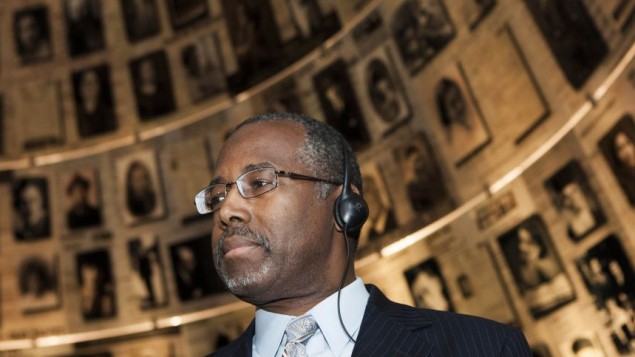
Mideast-Israel-Carson_Horo-e1419086784255-635x357Ben Carson visits Yad Vashem Holocaust memorial in Jerusalem on December 18, 2014. Carson, 63, a retired African-American neurosurgeon best known for his groundbreaking work in separating conjoined twins, has not yet declared his candidacy for the Republican Presidential nomination, saying that he is “strongly considering” a bid. (photo credit: AP Photo/Dan Balilty)

Carson said the criticism of the settlements has been exaggerated, and he asserted that Palestinian hostility toward Israel is what is preventing peace in the region. Of Netanyahu, Carson said, “I think he’s a great leader in a difficult time.”

**************

JERUSALEM (AP) — In his first visit to Israel, prospective Republican presidential candidate Ben Carson said he is in awe of the Jewish state, inspired by its ancient holy sites, impressed by the resilience of people living in a perpetual conflict zone — and deeply disappointed in President Barack Obama.

“I do not believe that Obama has been one to cultivate the relationship,” said Dr. Carson, a retired neurosurgeon who has emerged as a favorite of some conservatives in the early field of possible GOP candidates.

“I would make it very clear that Israel and the United States have a long, cordial relationship, and I don’t think we should ever leave the Israelis in a position of wondering whether we support them,” Carson said in an hour long interview with The Associated Press in Jerusalem. “And that certainly is a question now.”

Carson, 63, perhaps best known for his groundbreaking work in separating conjoined twins, is largely unknown to most Americans. But he’s earned hero status among conservative activists thanks to his outspoken criticism of Obama’s health care law.

His rags-to-riches story — he had a hardscrabble childhood in inner-city Detroit — and his deep Christian faith also appeal to potential voters. While Carson has said he is “strongly considering” a bid, supporters have already opened offices in the early voting states of Iowa and New Hampshire.

He is one of more than a dozen Republicans eyeing the presidency, and those with little international experience, such as Carson, are working to strengthen their resumes before formally announcing their 2016 plans.

Carson at Israeli hospitalBen Carson visits in Hadassah Hospital in Jerusalem, December 18, 2014. (photo credit: AP Photo/Dan Balilty)

Speaking to the AP, Carson expressed views that are common among Israel’s nationalist right wing. He showed sympathy for Israel’s much-maligned settlement movement and questioned the desire among Palestinians for peace. He even suggested that instead of Israel relinquishing captured land to make way for a Palestinian state, neighboring countries such as Egypt should provide the space for a future Palestine.

“That’s one possibility,” he said.

Carson is visiting Israel as a guest of “The Face of Israel,” a private group that sponsors trips for “influential decision makers” to promote a positive image of the country and counter “threats to Israel’s international legitimacy.” The trip has included visits to Israel’s northern front with Syria and the southern border with Gaza, and meetings with military officials and everyday people.

Although the U.S. remains Israel’s closest and most important ally, Obama and Israeli Prime Minister Benjamin Netanyahu have little personal chemistry and have frequently clashed. The U.S. has been outspoken in its criticism of Israeli settlement construction in the West Bank and east Jerusalem — captured areas claimed by the Palestinians as parts of a future state. At the same time, U.S. Secretary of State John Kerry has made numerous trips to the region and elsewhere to try to broker a peace deal.

Carson said the criticism of the settlements has been exaggerated, and he asserted that Palestinian hostility toward Israel is what is preventing peace in the region. Of Netanyahu, Carson said, “I think he’s a great leader in a difficult time.”

While he expressed sympathy for the plight of Palestinians, Carson said Israeli security concerns were more important in the short term, noting that after Israel’s withdrawal of troops and settlers from the Gaza Strip in 2005, the territory was overrun by Hamas militants. An Israeli withdrawal from the West Bank, he said, would be even riskier, given its proximity to major Israeli cities.

“Until such time as their neighbors are no longer desirous of their elimination,” he said, Israel’s continued control of the West Bank “makes perfectly good sense.”

There is little disagreement among the GOP’s top prospects on American policy toward Israel, given religious conservatives’ overwhelming support for the Jewish state and the influence of conservative donors like billionaire casino mogul Sheldon Adelson, an outspoken Israel supporter who donated more to Republicans in the last presidential contest than anyone else.

Carson said he expects to make a decision on seeking the presidency by May. If he wins the job, he promised a different approach toward Israel.

“I would make sure that Israel knew that we had their back,” he said. “Because if their neighbors know that we’re backing them up, they’re not going to be anywhere near as aggressive.”


Slow rocket fire from Gaza after Hamas goes back to accepting Tehran’s domination

December 19, 2014

Slow rocket fire from Gaza after Hamas goes back to accepting Tehran’s domination, DEBKAfile, December 19, 2014

Hamas-on-Temple-Mount_19.12.14Hamas flexes its muscles on Temple Mt., Jerusalem

The red alert for the incoming rocket from Gaza which exploded in the Eshkol District Friday morning, Dec. 19, may well be the harbinger of more to come. In parts of Beersheba too the dull thumps of explosions were heard on Thursday.

According to DEBKAfile’s military and intelligence sources, Hamas has once again fallen under Tehran’s sway after patching up their quarrel.

Iran lost no time in directing the Palestinian terrorist group to revoke the ceasefire it accepted in June for halting Israel’s summer operation in the Gaza Strip and revive low-key rocket fire. An apparently “anonymous” organization will take responsibility – in reality it will be Hamas’ military wing.

Israel’s security authorities are aware of this ominous turn of events, but prefer to keep it quiet for the time being.

Hamas is reverting to its old terrorist ways, DEBKA reports, after not only spurning, but omitting to send a reply, to a Saudi package which Riyadh believed would be too generous to resist. The Saudis offered to put up the funds for Hamas’ entire annual budget, including military spending, as well as covering the full cost of rebuilding the Gaza Strip after the ravages of the summer war.

There were two conditions:

1. The Palestinian extremists must throw their unreserved support behind Egyptian President Abdel-Fattah El-Sisi and henceforth synchronize its operations with Cairo – i.e. desert its traditional allegiance to the Muslim Brotherhood.

2.  They must totally sever their military, political and financial ties with Iran. In token of this action, Hamas’ political chief Khaled Meshaal must call off his impending trip to Tehran, scheduled to mark the public announcement of the organization’s reconciliation with Iran and its leading ally, Syrian President Beshar Assad.

Instead of any sort of direct response to Riyadh’s offer, Hamas opted to use its 27th anniversary celebrations on Sunday Dec. 14, for a display of loyalty to Iran by 2,000 marching Izz e-din al-Qassam fighters. Every detail of the event was cleared in advanced by Tehran and broadcast live over all of Iran’s TV channels – an unprecedented honor.

As we first reported last week, a high-powered Hamas delegation visited Tehran on Dec. 9 to draft with Iranian officials the text of the Hamas reconciliation accord with Assad and map out future operations.

The most prominent members were Meshaal’s right hand, Muhammed Nasser; two members of the Hamas overseas military branch, Maher Abdullah and Jemal Ismail; and Lebanese agent, Osama Hamdan.

One item on this accord provided for the gradual resumption of rocket attacks on Israel from the Gaza Strip.

Hours after the first rocket was launched Friday, Hamas staged its first ever parade on Temple Mount, Jerusalem, marching around the golden Dome of the Rock, and shouting calls to revive the Palestinian rocket offensive against Israeli locations. They were clad uniformly in green with jihadi headbands and hoisted Hamas banners aloft.

Hamas’ riotous demonstration of defiance contrasted sharply with the calm observed in Friday worship at Al Aqsa in the last three weeks.