Archive for the ‘Israel’ category

Yazidis ask Israel for help

January 29, 2015

Yazidis ask Israel for help, Al-MonitorJacky Hugi, January 28, 2015

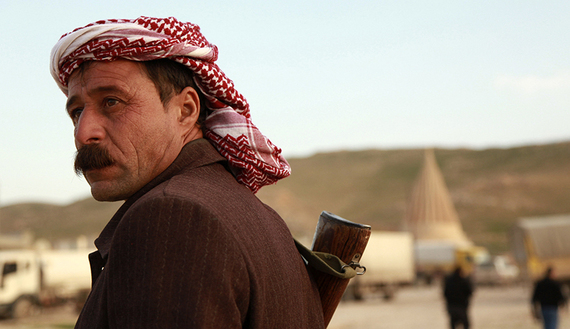
A man from the minority Yazidi sect stands guard at Mount Sinjar, in the town of SinjarA man from the minority Yazidi sect stands guard at Mount Sinjar, in the town of Sinjar, Dec. 20, 2014. (photo by REUTERS/Ari Jalal)

[I]t is an unusual overture of friendship for the government of Prime Minister Benjamin   Netanyahu, and it will be interesting to see if and how Israel takes up the gauntlet. Given the sensitivity of the matter, it is quite uncertain whether anyone will hear about it.

******************

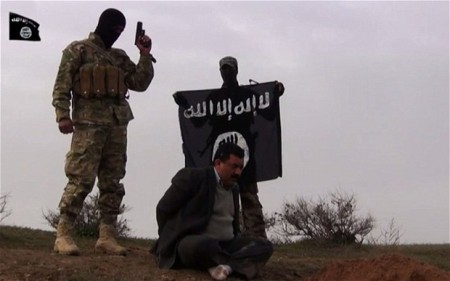
“They have already killed many of us. What do we have to fear?” Lt. Col. Lukman Ibrahim responded when I asked him if he was afraid to openly communicate with an Israeli in a recent long-distance phone conversation from Tel Aviv to Sinjar, in northwestern Iraq, near the Syrian border. Ibrahim, a Yazidi militia officer, is hoping to obtain military aid from the State of Israel.

“The Arab countries do not recognize us, nor do they recognize you,” he said. “They are telling us that we are infidels. Why should we be afraid to talk to you, when even neighboring Arab countries have become our enemies? We regard you as a friendly state, with an opportunity for relations on the basis of neutrality and respect. We do not want more than that.”

Ibrahim, a journalist by profession, serves as an assistant to Marwan Elias Badl, one of the senior field commanders of the Sinjar Protection Forces, the Yazidi militia established ad hoc in August 2014 to halt the Islamic State (IS) onslaught against Yazidi population centers west of Mosul. The militia numbers some 12,000 fighters, most of them untrained, ordinary men who rushed to take up arms to thwart IS’ designs. A few of them are rank-and-file fighters, while some are officers with the Kurdish peshmerga. According to internal estimates, the IS militants killed thousands in their pogrom against the Yazidis. About 5,000 Yazidis are still being held by IS.

The Yazidis have no formal relations with Israel, nor an organized leadership. Yet they need aid, in particular military assistance, and they have chosen to make a public plea for help. “We appeal to the Israeli government and its leader to step in and help this nation, which loves the Jewish people,” said Ibrahim. “We would be most grateful for the establishment of military ties — for instance, the training of fighters and the formation of joint teams. We are well aware of the circumstances the Israelis are in, and of the suffering they have endured at the hands of the Arabs ever since the establishment of their state. We, too, are suffering on account of them.”

When asked what kind of weapons they needed, Ibrahim cited protective measures. “We are not acting against anyone,” he clarified. “And we do not covet other people’s land. We just want to protect ourselves. For example, [we need] armored [Humvees], machine guns and light weapons.”

Contact with Israel is a dirty business in this neighborhood, military contact all the more so. Be that as it may, in a reality where all levees have been breached and the worst appears to have already befallen the Yazidis, what could they possibly lose by seeking a rapport with Jerusalem?

The conversation with Ibrahim was not the only call with Sinjar. Majdal Rasho, a native of Sinjar, had settled in Germany and built his life there. He married and had a family, making a living as a manufacturing supervisor at a chocolate plant. In his spare time, he served as a photographer for TV stations broadcasting in the Kurdish language. He returned to Sinjar as a fighter, but also in his capacity as a video photographer for German TV networks.

“What I have seen here, I just can’t describe,” he said by phone from a battle zone. “Our people had no choice but to flee. We are not Arabs, nor are we Muslims. We see ourselves as sharing a fate with the Israelis, who went through similar pogroms. Those besieged on the mountain approached me and asked, ‘Maybe our Israeli brethren could lend a hand?’”

Yazidism is a religion with no more than a million followers. Its adherents are centered around Mosul and the Sinjar mountain range, in northern Iraq. Their largest diaspora in the West is in Germany, estimated to number some 100,000.

A common destiny with the Jews is a recurring theme in the Yazidis’ discourse. “What happened to us is the biggest genocide since the Holocaust of the Jews in Europe,” said Dr. Mirza Dinnay, a pediatrician based in Germany. “In the Holocaust, the goal was to annihilate an entire people, the Jews. IS has a similar plan — to exterminate an entire people, the Yazidis. No such extermination process had taken place in the past 500 years, with the exception of the Holocaust and what came to pass in Sinjar.”

Dinnay left Germany for Sinjar at the outbreak of the pogrom, leading a delegation of human rights activists. During one of the aid flights arranged by the Iraqi air force, a helicopter carrying food supplies and medication to the besieged Yazidis crashed. Some of the passengers aboard, among them Dinnay, were injured.

The communication between the Yazidis and the Israeli media has been coordinated by Idan Barir, 34, a researcher at the Tel Aviv University Yavetz School of Historical Studies. In the months since IS’ offensive against Yazidi population centers, Barir has become Israel’s top expert on the Yazidis, thanks to his extensive connections with members of the Yazidi community.

“I can think of a range of activities that Israel is experienced in that would not undermine the world order,” Barir told Al-Monitor. “For example, providing military assistance to the Yazidi forces in Sinjar who are crying out for cooperation and aid; setting up a field hospital for medical and psychological treatment of the casualties among the displaced in northern Iraq — not only Yazidis, by the way; sending humanitarian aid to displaced Yazidis in the refugee camps in Iraqi Kurdistan; absorption of a symbolic number of displaced Yazidis in Israel, with preference given to humanitarian, whether medical or mental, cases; incorporation of young Yazidis into military service in Israel; and support of civil initiatives aimed at strengthening and deepening ties between Israelis and Yazidis. It all depends on the decision made by the Israeli government, on its determination and goodwill.”

So far, Israel has not officially responded to such calls, which have yet to be fully formulated and have only recently began over the last few days. In fact, no formal request has come from the Yazidis for asylum as refugees. Barir is currently trying to find a way to reach decision-makers in Israel to pass on the messages from his faraway friends. Without a doubt, it is an unusual overture of friendship for the government of Prime Minister Benjamin Netanyahu, and it will be interesting to see if and how Israel takes up the gauntlet. Given the sensitivity of the matter, it is quite uncertain whether anyone will hear about it.

“It is a moral obligation to ring every bell and to do everything possible to stop the Yazidi tragedy,” said Attorney Zvi Hauser, the former Cabinet secretary in the most recent Netanyahu government (2009-13). “It is inconceivable that in the 21st century, someone’s attempt to eliminate an entire people, because of its faith and religion, is met with indifference.”

Hauser is the first senior figure in Israel who agreed to comment on the Yazidis’ call for help. As a private person, he refrained from reference to the Yazidis’ request for military aid, taking care to say nothing that might be interpreted as a promise. He believes, however, that Israel should favorably consider the Yazidis’ calls.

“The Yazidi narrative is evocative of ours. We, too, went through 2,000 years of existence without sovereignty, in the course of which we faced extermination schemes,” Hauser said. “Israel is a sovereign state, formed by an ethnic minority. It is the national manifestation of an ancient civilization. It would thus be appropriate to examine ways to establish relations and forge an alliance with them, if only to ensure a pluralistic Middle East. This issue has a universal aspect, as well. The development of human civilization is contingent on the diversity and multiplicity of [ethnic] groups and nations. Hence, the extinction of one of these would hurt not only the Yazidis, but also the entire fabric of human life.”
 

Obama targets Netanyahu, Iran targets Israel

January 29, 2015

Obama targets Netanyahu, Iran targets Israel, Israel Hayom, Richard Baehr, January 29, 2015

Obama will tell himself and anyone who wants to ‎hear that he has brought Iran back into the community of nations. ‎Obama, after all, is a rare man. How many others can make 118 ‎self-referential mentions in a half hour talk, as Obama did in India ‎this week?

Is it any wonder ‎why someone who stands for something, say a country’s security, ‎as Netanyahu does, gets under the skin of a man who is primarily ‎concerned with little more than his own greatness, and whose ‎presidency, in a word, has been a “selfie”?‎

**********************

There is a bit of difference between Iran and U.S. President Barack Obama when it comes to ‎Israel. Iran has never been reticent that its goal is to eliminate the State of Israel, ‎and Israelis too while they are it. Iran’s proxy terror army of Hezbollah ‎contributed their part on Wednesday, killing two Israeli soldiers and wounding seven with anti-tank ‎fire from southern Lebanon directed at an Israeli convoy. Obama seems more ‎interested, at least in the next two months, in eliminating one Israeli — namely, Prime ‎Minister Benjamin Netanyahu. ‎

It has been a remarkable two weeks in U.S.-Israel relations. The president ‎delivered his State of the Union address, in which he argued for staying the course ‎with negotiations with Iran over its nuclear program, overselling what has already ‎been achieved, as well as what might be achieved. He also threatened to veto new ‎sanctions legislation that might be passed by Congress, where some have called for ‎tougher sanctions to be applied to Iran if a satisfactory deal were not struck ‎between the P5+1 and the Iranians by June 30. Obama argued that passing such a ‎measure now would be a sign of bad faith and drive the Iranians from the ‎negotiating table. It was, of course, an odd prediction, since one area in which the ‎Iranians have shown remarkable consistency has been in negotiating with ‎European powers, or the now expanded negotiating group for over 10 years, ‎always without a satisfactory outcome. The Iranians seem to like being seen as ‎negotiating while their nuclear program advances.‎

Fact checkers awarded Obama a bunch of “pinocchios” for his latest effort, suggesting he was all ‎but lying on the matter. No, the Iranians have not dismantled any centrifuges (they ‎have more running than before), they have not removed any fissile material from ‎the country for safekeeping, they have not allowed inspections on demand, they ‎have not disabled their Arak heavy-water reactor, they have not agreed to end any ‎missile program they are working on for delivery of a nuclear bomb. ‎

‎”Our diplomacy is at work with respect to Iran,” Obama said, ‎‎”where, for the first time in a decade, we’ve halted the progress of ‎its nuclear program and reduced its stockpile of nuclear material.”

James Robbins, a senior fellow in national security affairs at the ‎American Foreign Policy Council, begged to disagree:‎

‎”But has Iran’s stockpile shrunk? Under a deal concluded last ‎November, Iran halted work on the most dangerous material, 20 ‎percent refined uranium. However, Iran is still making lower-grade ‎uranium. According to a report from the International Atomic ‎Energy Agency last November, Iran’s stockpiles of low-enriched ‎uranium gas and 5 percent enriched uranium were both growing. ‎Also, the agency cautioned that their figures only covered ‎‎’declared sites,’ the nuclear facilities Iran has publicly ‎acknowledged and allowed to be inspected.”‎

In the days after his address to Congress, the president repeated ‎his threats about vetoing new sanctions legislation, when meeting ‎with Democratic senators, several of whom, along with a few ‎Republican colleagues, had been lobbied on the matter by Britain’s ‎visiting Prime Minister David Cameron. The president upped the ‎ante, accusing Democratic Senator Robert Menendez of New ‎Jersey, a leader in the attempt to pass new sanctions, of not ‎thinking long-term, but just trying to make his donors (could ‎Obama have meant Jewish donors?) happy.

The idea of a foreign leader directly lobbying members of ‎Congress on an issue like the Iranian sanctions bill took on a new ‎life when House Speaker John Boehner invited Netanyahu to ‎address a joint session of Congress on the Iranian issue on ‎February 11. The White House predictably blew its lid, accusing ‎Boehner of breaking established protocol for such an invitation. (It ‎should have been coordinated with the White House.) The usual ‎Obama water carriers like Jeffrey Goldberg were quick to lambaste ‎Netanyahu for stage managing the invitation so as to embarrass ‎Obama, and in the process threaten U.S.-Israel relations. As Joel ‎Pollak describes Goldberg’s argument:‎

‎”In his most recent Atlantic column, he claims, for example, ‎that Obama worked ‘in tandem’ with Netanyahu to promote ‎sanctions on Iran: ‘Netanyahu traveled the world arguing for ‎stringent sanctions, and Obama did much the same.’‎

“That is simply factually untrue. Obama resisted Iran sanctions ‎for months, defying even a unanimous vote in the Democrat-‎controlled Senate. Not only was Israel frustrated, and ‎Congress, but Europe as well, which accused Obama of re-‎inventing the wheel, resetting diplomacy that had started ‎under (gasp) George W. Bush.‎

“In fact, Obama pushed the world towards a more lenient ‎position on Iran, allowing nuclear enrichment in defiance of ‎U.N. Security Council resolutions.”

And then there is this doozy:‎

‎”It is Netanyahu’s job, Goldberg says, as ‘the junior partner in ‎the Israel-U.S. relationship,’ to make concessions.”‎

When it comes to negotiating with Iran, Netanyahu does not ‎sit at the table with the Iranians, but Obama’s representatives ‎do. And it is U.S. negotiators who have been making ‎concessions month after month since the talks began, in what ‎appears to be a desperate attempt to salvage some deal they ‎can broadcast as having achieved a minimal set of objectives. ‎That objective has now been reduced to providing some ‎minimum breakout time for Iran to achieve nuclear weapons ‎capability if they ditch the deal. What will the West do in that ‎time if Iran moves towards the bomb? It is pretty clear, any ‎military response from Obama is out of the question.‎

The administration has further demonstrated its unhappiness ‎about Netanyahu’s impudence in scheming with ‎Boehner, by announcing that neither the president nor his secretary of state will meet with Netanyahu when he visits ‎Washington, a date now moved back three weeks to overlap ‎his visit to the annual American Israel Public Affairs Committee policy conference. The excuse, ‎couched in a diplomatic smokescreen, is that it would be ‎improper for the president to meet with a candidate for office ‎abroad so close to the time of that country’s election. That ‎would be equivalent to electioneering and interference in the ‎other country’s race. Presumably when President Bill Clinton ‎met with Israeli Prime Minister Shimon Peres just weeks ‎before his election contest with Netanyahu in 1996, at a time ‎when Israeli prime ministers were elected in a head-to-head ‎battle, electioneering was the furthest thing from Clinton’s ‎mind. ‎

The Obama team may not meet with Netanyahu when he ‎visits, but an experienced Obama campaign team from 2012 ‎is now in Israel working to defeat Netanyahu. That, in and ‎of itself, is nothing new for Israeli elections. Experienced ‎American campaign teams have aided Israeli candidates from ‎the Left and Right in recent decades. What is new is that the ‎current anti-Netanyahu campaign includes a State ‎Department funded group:‎

‎”U.S.-based activist group OneVoice International has partnered ‎with V15, an ‘independent grass-roots movement’ in Israel that is ‎actively opposing Netanyahu’s party in the upcoming elections, ‎Haaretz reported on Monday. Former national field director for Obama’s 2012 re-election campaign Jeremy Bird is also ‎reportedly involved in the effort.‎

“OneVoice development and grants officer Christina Taler said the ‎group would be working with V15 on voter registration and get-out-‎the-vote efforts but would not engage in overtly partisan activities. ‎She said OneVoice and V15 are still formalizing the partnership.”‎

Obama’s team has gone further to poison the waters for ‎Netanyahu, planting a story in Haaretz that the Mossad was ‎opposed to new sanctions legislation, a charge they publicly ‎rebutted.‎

The Goldberg article was designed to deliver a message that Israel ‎has two important objectives now — to keep Iran from going nuclear ‎‎(for which their best hope of course is to count on Obama to do the ‎job for them in negotiations), and second, to keep American close ‎and happy with Israel’s behavior. Netanyahu, according to Goldberg, is ‎killing the good vibes that presumably must have existed during the ‎Obama years by his recent behavior.‎

There is an alternative interpretation for what is going on. Obama is ‎really not terribly bothered by a nuclear Iran. A bad deal that looks ‎like it delays Iran’s entry to the nuclear club is therefore not a bad ‎option. It also allows Obama to check off one more box on his ‎achievements list before his formal request to have his likeness ‎carved into Mount Rushmore. Pakistan has a bomb. Israel has the ‎bomb. Why not Iran, the leading Shiite nation? Iran, after all, is now ‎our strategic partner, fighting with us to battle ISIS in Iraq. ‎

The latest evidence that Obama is now on the Iranian team is the ‎New York Times editorial calling for accepting that having Assad ‎hang on in Syria is the least bad result, so backing a non-ISIS ‎Syrian rebel team is a bad idea. The New York Times editorial ‎page is little more than a conveyance tool for White House ‎messaging at this point, and so this is now clearly Obama’s ‎posture. How can we fight alongside Iran in Iraq, but support a side ‎that is fighting Iran’s ally Assad in Syria?

Meanwhile, Hezbollah is stepping up its activities in the Golan. The ‎Iranian goal appears to be to establish a base in Syria where Israel ‎can be targeted by the Lebanese group, without getting an Israeli ‎response in Lebanon itself. What is clear is that Hezbollah and Iran ‎have Israel in their sights. If Iran gets the bomb, the retaliation ‎options for Israel when Hezbollah pressure is applied, will be much ‎more limited. There is no certainty that Iran subscribes to the ‎mutually assured destruction deterrence club.‎

But not to worry. Obama will tell himself and anyone who wants to ‎hear that he has brought Iran back into the community of nations. ‎Obama, after all, is a rare man. How many others can make 118 ‎self-referential mentions in a half hour talk, as Obama did in India ‎this week?

Is it any wonder ‎why someone who stands for something, say a country’s security, ‎as Netanyahu does, gets under the skin of a man who is primarily ‎concerned with little more than his own greatness, and whose ‎presidency, in a word, has been a “selfie”?‎

The Imaginary Islamic Radical

January 28, 2015

The Imaginary Islamic Radical, Front Page Magazine, Daniel Greenfield, January 28,2015

(Ask Secretary Kerry.

Please see also Muslim Brotherhood-Aligned Leaders Hosted at State Department. — DM)

iraqstill-450x281

Our problem is not the Islamic radical, but the inherent radicalism of Islam. Islam is a radical religion. It radicalizes those who follow it. Every atrocity we associate with Islamic radicals is already in Islam. The Koran is not the solution to Islamic radicalism, it is the cause.

******************

The debate over Islamic terrorism has shifted so far from reality that it has now become an argument between the administration, which insists that there is nothing Islamic about ISIS, and critics who contend that a minority of Islamic extremists are the ones causing all the problems.

But what makes an Islamic radical, extremist? Where is the line between ordinary Muslim practice and its extremist dark side?

It can’t be beheading people in public.

Saudi Arabia just did that and was praised for its progressiveness by the UN Secretary General, had flags flown at half-staff in the honor of its deceased tyrant in the UK and that same tyrant was honored by Obama, in preference to such minor events as the Paris Unity March and the Auschwitz commemoration.

It can’t be terrorism either. Not when the US funds the PLO and three successive administrations invested massive amounts of political capital into turning the terrorist group into a state. While the US and the EU fund the Palestinian Authority’s homicidal kleptocracy; its media urges stabbing Jews.

Clearly that’s not Islamic extremism either. At least it’s not too extreme for Obama.

If blowing up civilians in Allah’s name isn’t extreme, what do our radicals have to do to get really radical?

Sex slavery? The Saudis only abolished it in 1962; officially. Unofficially it continues. Every few years a Saudi bigwig gets busted for it abroad. The third in line for the Saudi throne was the son of a “slave girl”.

Ethnic cleansing? Genocide? The “moderate” Islamists we backed in Syria, Libya and Egypt have been busy doing it with the weapons and support that we gave them. So that can’t be extreme either.

If terrorism, ethnic cleansing, sex slavery and beheading are just the behavior of moderate Muslims, what does a Jihadist have to do to be officially extreme? What is it that makes ISIS extreme?

Our government’s definition of moderate often hinges on a willingness to negotiate regardless of the results. The moderate Taliban were the ones willing to talk us. They just weren’t willing to make a deal. Iran’s new government is moderate because it engages in aimless negotiations while pushing its nuclear program forward and issuing violent threats, instead of just pushing and threatening without the negotiations. Nothing has come of the negotiations, but the very willingness to negotiate is moderate.

The Saudis would talk to us all day long while they continued sponsoring terrorists and setting up terror mosques in the West. That made them moderates. Qatar keeps talking to us while arming terrorists and propping up the Muslim Brotherhood. So they too are moderate. The Muslim Brotherhood talked to us even while its thugs burned churches, tortured protesters and worked with terrorist groups in the Sinai.

A radical terrorist will kill you. A moderate terrorist will talk to you and then kill someone else. And you’ll ignore it because the conversation is a sign that they’re willing to pretend to be reasonable.

From a Muslim perspective, ISIS is radical because it declared a Caliphate and is casual about declaring other Muslims infidels. That’s a serious issue for Muslims and when we distinguish between radicals and moderates based not on their treatment of people, but their treatment of Muslims, we define radicalism from the perspective of Islamic supremacism, rather than our own American values.

The position that the Muslim Brotherhood is moderate and Al Qaeda is extreme because the Brotherhood kills Christians and Jews while Al Qaeda kills Muslims is Islamic Supremacism. The idea of the moderate Muslim places the lives of Muslims over those of every other human being on earth.

Our Countering Violent Extremism program emphasizes the centrality of Islamic legal authority as the best means of fighting Islamic terrorists. Our ideological warfare slams terrorists for not accepting the proper Islamic chain of command. Our solution to Islamic terrorism is a call for Sharia submission.

That’s not an American position. It’s an Islamic position and it puts us in the strange position of arguing Islamic legalism with Islamic terrorists. Our politicians, generals and cops insist that the Islamic terrorists we’re dealing with know nothing about Islam because that is what their Saudi liaisons told them to say.

It’s as if we were fighting Marxist terrorist groups by reproving them for not accepting the authority of the USSR or the Fourth International. It’s not only stupid of us to nitpick another ideology’s fine points, especially when our leaders don’t know what they’re talking about, but our path to victory involves uniting our enemies behind one central theocracy. That’s even worse than arming and training them, which we’re also doing (but only for the moderate genocidal terrorists, not the extremists).

Secretary of State Kerry insists that ISIS are nihilists and anarchists. Nihilism is the exact opposite of the highly structured Islamic system of the Caliphate. It might be a more accurate description of Kerry. But the Saudis and the Muslim Brotherhood successfully sold the Western security establishment on the idea that the only way to defeat Islamic terrorism was by denying any Islamic links to its actions.

This was like an arsonist convincing the fire department that the best way to fight fires was to pretend that they happened randomly on their own through spontaneous combustion.

Victory through denial demands that we pretend that Islamic terrorism has nothing to do with Islam. It’s a wholly irrational position, but the alternative of a tiny minority of extremists is nearly as irrational.

If ISIS is extreme and Islam is moderate, what did ISIS do that Mohammed did not?

The answers usually have a whole lot to do with the internal structures of Islam and very little to do with such pragmatic things as not raping women or not killing non-Muslims.

Early on we decided to take sides between Islamic tyrants and Islamic terrorists, deeming the former moderate and the latter extremists. But the tyrants were backing their own terrorists. And when it came to human rights and their view of us, there wasn’t all that much of a difference between the two.

It made sense for us to put down Islamic terrorists because they often represented a more direct threat, but allowing the Islamic tyrants to convince us that they and the terrorists followed two different brands of Islam and that the only solution to Islamic terrorism lay in their theocracy was foolish of us.

We can’t win the War on Terror through their theocracy. That way lies a real Caliphate.

Our problem is not the Islamic radical, but the inherent radicalism of Islam. Islam is a radical religion. It radicalizes those who follow it. Every atrocity we associate with Islamic radicals is already in Islam. The Koran is not the solution to Islamic radicalism, it is the cause.

Our enemy is not radicalism, but a hostile civilization bearing grudges and ambitions.

We aren’t fighting nihilists or radicals. We are at war with the inheritors of an old empire seeking to reestablish its supremacy not only in the hinterlands of the east, but in the megalopolises of the west.

Iran-Syria-North Korea Nuclear Nexus

January 28, 2015

Iran-Syria-North Korea Nuclear Nexus, Front Page Magazine, January 28, 2015

Hassan

As Iranian and American chief diplomats continue to meet to find ways to speed up nuclear negotiations and strike a final nuclear deal that would lead to the removal of all international sanctions on the ruling clerics, the Obama administration persists in ignoring the recent revelations about the Islamic Republic and its covert operations in the region.

A new Western intelligence assessment points to efforts by the Syrian government to renew its operations in an underground and clandestine nuclear facility near Qusair, close to the border of Lebanon, in order to produce nuclear weapons. Citing the Western intelligence assessment, the German weekly Der Spiegel pointed out that the reconstruction of the nuclear facility is being conducted with the assistance of the Islamic Republic, North Korea, and Hezbollah.

The intelligence report indicates that dialogue between Ibrahim Othman, head of the Syrian Atomic Energy Commission of Iranian, and North Korean and Hezbollah affiliates were “intercepted.” In addition, according Abu Muhammad al-Bitar, the Free Syrian Army has also noticed the “unprecedented” presence of Iranian and Hezbollah security members in the town of Qusair on the suburbs of Homs.

If Iran is engaged in such operations assisting Syrian President Bashar al Assad, it is breaching the protocols of the Non-Proliferation Treaty (NPT), as well as posing a great threat to security in the region.

If, even before obtaining nuclear weapons, the ruling clerics of Iran are assisting their allies to become nuclear states, how can we trust the Islamic Republic in nuclear negotiations and how can one rely on their claim that they are not seeking to build a nuclear bomb?

Iran-Syria and North Korean-Syria military and nuclear cooperation has been going on for a long time. When it comes to the issues of ballistic missiles, Syria has previously cooperated with both Iran and North Korea.

Syria possess approximately 50 tons of uranium which could be adequate enough to create 5 nuclear bombs. For developing nuclear weapons either highly enriched uranium or an adequate amount of plutonium is required.

Some might make the argument that Syria developed the uranium by itself without the assistance of other countries or other non-state actors. Nevertheless, technically, pragmatically and realistically speaking, Syria does not possess the capability of developing an estimated 50 tons of natural uranium. This suggests that the role of other states and non-state actors have definitely played a significant role. Some of the only allies that the Syrian government has still kept are Iran, North Korea and Hezbollah.

It is crucial to point out that, without a doubt, becoming a nuclear state for the Syrian and Iranian government would be a formidable tool in to suppress opposition, maintain power, and deter foreign intervention in case of crimes against humanity.

There are two major nuclear site in Syria. The first one is the Al Kibar reactor in the northeast of the city of Deir Ezzour and the second one is Marj Sultan in the outskirt of Damascus where the fuel is reportedly stored.

News with respects to the Syrian government renewing its nuclear program were previously reported in 2013. There had been reports that some activities were being carried out at an alleged Syrian nuclear facility close to an eastern suburbs of Damascus, Marj Sultan.

The International Atomic Energy Agency (IAEA) reported previously that Damascus was building a nuclear reactor in Deir Ezzour. Reportedly tons of enriched uranium in Damascus are being protected by Iran’s Revolutionary Guard Corps and Hezbollah.

According to Der Spiegel, “Syria’s dictator has not given up his dream of an atomic weapon and has apparently built a new nuclear facility at a secret location…..It is an extremely unsettling piece of news.”

In addition to the aforementioned concerns about the undeclared Syrian nuclear site and nuclear proliferation, one of the crucial issues is that the nuclear material might fall in the hands of multiple other players and Islamist groups. In other words, if these nuclear sites are seized by some radical groups or Al Qaeda-linked affiliates, they might be capable of utilizing the highly enriched uranium and produce nuclear weapons.

Iran’s other indisputable and multi-layered activities and engagements in Syria — including the military, financial, intelligence, and advisory assistance to the Syrian government which have further radicalized and militarized the ongoing Syrian war — persist. In addition, the recent intelligence report and satellite images of secretly renewing nuclear activities with the assistance of the Iranian and North Korean governments poses a grave threat to stability and security in the region. Unfortunately, despite the seriousness of this issue, the Obama administration continues to ignore these issues and persists on trusting the Islamic Republic in the nuclear negotiations.

Pat Condell: A special kind of hate – Muslim anti-Semitism in Europe

January 27, 2015

A special kind of hate, Pat Condell via You Tube, January 27, 2015

( IMPORTANT !   PLEASE watch this video… –  JW )

The New Antisemitism: Chesler

January 25, 2015

The New Antisemitism: Chesler, You Tube, January 23, 2015

(Phyllis Chester is — gasp — a Zionist! She even fails to understand that Islam is the religion of peace and claims that it is a danger to Western civilization which —  as all right left-thinking people know — is the cause of all evil in the world. I’m with her.– DM)

Islamic State Deepens Grip in Future Palestine

January 23, 2015

Islamic State Deepens Grip in Future Palestine, The Gatestone InstituteKhaled Abu Toameh, January 23, 2015

According to Israeli security forces, dozens of Hamas and Islamic Jihad members in the West Bank have defected to the Islamic State in recent months. Their main goal, according to sources, is to topple the Palestinian Authority and launch terror attacks on Israel.

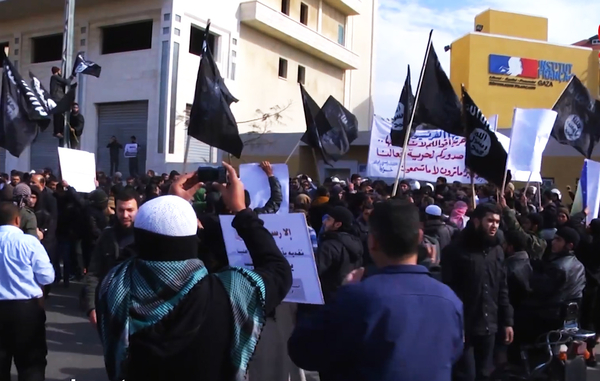
Some 200 supporters of the Islamic State, who held up Islamic State flags, took to the streets of Gaza City to protest the latest cartoons published by the French satirical magazine, Charlie Hebdo. They also chanted slogans that called for slaughtering French nationals, and burned French flags. Attempts by Hamas to impose a news blackout on the protest failed, as photos and videos found their way to social media.

The glorification of terrorists and jihadists by the Palestinian Authority, and the ongoing anti-Israel incitement by both Hamas and the Palestinian Authority, is driving many Palestinians into the open arms of the Islamic State.

Hamas and other Palestinian groups are continuing to deny the obvious, namely that the Islamic State terror group has managed to set up bases of power in the West Bank and Gaza Strip.

The Palestinians do not feel comfortable talking about the fact that Islamic State is working hard to recruit Palestinians to its ranks.

The presence of Islamic State in the West Bank and Gaza Strip is an embarrassing development for both Hamas and the Palestinian Authority.

For Hamas, the fact that Islamic State has long been operating in the Gaza Strip is something that it does not want the world to know about.

Hamas cannot afford a situation where another Islamist terror group poses a challenge to its exclusive control over the Gaza Strip. Since it seized control over the Gaza Strip in 2007, Hamas has successfully suppressed the emergence of rival forces, first and foremost the secular Fatah faction headed by Mahmoud Abbas.

But if until recently it was Fatah that posed a challenge and threat to Hamas’s rule, now it is the Islamic State and its supporters in the Gaza Strip are openly defying the Islamist movement’s regime.

When the first reports about Islamic State’s presence in the Gaza Strip emerged last year, Hamas and other Palestinians were quick to dismiss them as “false.”

Salah Bardaweel, a senior Hamas official, said in February 2014 that the Islamic State “does not exist” in the Gaza Strip.

This week, however, it became evident that Hamas was lying when it denied the presence of Islamic State in the Gaza Strip.

Some 200 supporters of the Islamic State, who held up Islamic State flags, took to the streets of Gaza City to protest the latest cartoons published by the French satirical magazine, Charlie Hebdo.

The protesters tried to storm the offices of the French Cultural Center in Gaza City. They also chanted slogans that called for slaughtering French nationals, and burned the French flag.

899Palestinians waving Islamic State flags attempt to storm the French Cultural Center in Gaza City. Some in the crowd carried posters glorifying the terrorists who carried out this month’s attacks in Paris. (Image source: ehna tv YouTube screenshot)

The protest apparently caught Hamas by surprise. Hamas security forces that were rushed to the scene dispersed the protesters and arrested seven Islamic State supporters.

Attempts by Hamas to impose a news blackout on the Islamic State protest failed, as photos and videos of the demonstration found their way to social media. Needless to say, Hamas-affiliated media outlets ignored the protest. They were hoping that the world would also not see the Islamic State demonstrators on the streets of Gaza City.

Hamas’s biggest fear is that scenes of Islamic State supporters marching in the heart of Gaza City will scare international donors and dissuade them from providing badly needed funds for the reconstruction of the Gaza Strip. Hamas is also afraid that Western officials working with the United Nations and relief agencies will stop visiting the Gaza Strip after watching the footage of Islamic State supporters.

In recent weeks, it has also become evident that Islamic State has some kind of a presence in the West Bank — a fact that poses a serious threat to Abbas’s Palestinian Authority [PA].

Just last week, Israel announced arrests of members of an Islamic State terror cell in the West Bank city of Hebron. The three Palestinian members of the cell confessed during interrogation that had planned to launch a series of terror attacks against Israel. The three suspects were identified as Waddah Shehadeh, 22, Fayyad al-Zaru, 21 and Qusai Maswaddeh, 23.

Until recently, Hamas was considered the number one threat to the Palestinian Authority in the West Bank. Now, however, it has become evident that Islamic State is also trying to set up bases of power in the West Bank. According to Israeli security sources, dozens of Hamas and Islamic Jihad members in the West Bank have defected to Islamic State in recent months. Their main goal, the sources, said, is to topple the PA and launch terror attacks on Israel.

Abbas is lucky that the Israeli security forces are still operating in the West Bank, including inside cities and towns controlled by the Palestinian Authority. Were it not for the IDF and various branches of the Israeli security establishment, Hamas, Islamic Jihad and Islamic State would have toppled the Palestinian Authority and beheaded Abbas and his officials a long time ago.

Still, Abbas does not feel comfortable acknowledging the fact that a growing number of Palestinians in the West Bank are joining Islamic State. Abbas fears is that if he admits that Islamic State is already operating in the West Bank, this could dissuade many Western countries from supporting his effort to persuade the world to support the creation of an independent Palestinian state. Like Hamas, Abbas also fears that Westerners would stop visiting Ramallah and other West Bank Palestinian cities once they learn about Islamic State’s presence in these areas.

Although Hamas and the Palestinian Authority are continuing to bury their heads in the sand and deny what is there, they cannot avoid responsibility for the emergence of Islamic State in the Gaza Strip and West Bank. The glorification of terrorists and jihadists by the PA and the ongoing anti-Israel incitement by both the PA and Hamas, are driving many Palestinians into the open arms of the Islamic State.

This is something that the UN Security Council members will have to consider the next time they are asked to vote in favor of the establishment of a Palestinian state. Otherwise, they will be voting for the creation of an Islamic, and not a Palestinian, state.

The death of an Iranian general on the Golan gave US Senators’ Iran sanctions bills military muscle

January 22, 2015

The death of an Iranian general on the Golan gave US Senators’ Iran sanctions bills military muscle, DEBKAfile, January 22, 2015

This was a dual threat: Israel would not stand by if Iranian and Hizballah forces moved into the Syrian Golan right up against its frontier. But in the wider context, Binyamin Netanyahu was signaling Obama in Washington and Khamenei in Tehran, that he no longer had any qualms about striking Iranian military targets if the two rulers failed to forge a workable, credible accord for keeping nuclear weapons out of Iranian hands.

The Israeli action added military muscle to the US Senate legislation on Iran –  in the face of Obama’s reluctance to embrace tactics he believes would be disincentives for Khamenei to play ball on the ongoing multilateral nuclear diplomatic track in Geneva.

*****************

netanyahu_us_congress_11.2.15Binyamin Netanyahu in former address to US Congress

It is hard to believe that the White House was caught by surprise over House leader John Boehner’s unusual invitation for Israeli Prime Minister Binyamin Netanyahu to address Congress on Feb. 11. After all, prior arrangements must have kept the Israeli embassy in Washington busy for weeks in a city, whose life blood is kept flowing by the mining and trading of information and secrets about friends and rivals alike.

All the same, it suited the four parties involved in this extraordinary event – Republican and Democratic lawmakers, the White House and Netanyahu – to pretend they were taken aback on Wednesday, Jan. 21 by the Speaker’s announcement of the prime minister’s coming address on “the grave threats radical Islam and Iran pose to our security and way of life.”

He accused President Barack Obama of “papering over” these threats over in his State of the Union speech a few hours earlier.

The White House said the invitation breached “typical protocol” but the administration would reserve judgment until they heard from Netanyahu about his plans.

The assumed air of astonishment greeting the invitation added an element of drama to the event. It also had the effect of further polarizing the camps for and against the Obama administration’s insistence on banking solely on diplomacy for containing Iran’s nuclear program.

Inevitable showdown

Obama and Netanyahu, who could never stand each other, have been at loggerheads for most of the six years of the former’s presidency over what is widely seen as the dead-end US Middle East policies he pursued in most major arenas such as Iraq, Yemen and Libya, the futile US air strikes against marching Islamist State soldiers, the unending Syrian conflict and the Palestinian issue.

The showdown building up for years between them may now be at hand. It will catch Obama and Secretary of State John Kerry fully engaged in a desperate pursuit of a comprehensive nuclear deal between Iran and the Six-World-Powers group. This deal could then be presented as an unquestioned success of Obama’s Middle East policies – indeed the only one.

Together with Iran’s President Hassan Rouhani and Foreign Minister Mohamed Zarif, US officials have roughed out a draft accord. But most American nuclear experts and Israel’s top political and military leaders view this paper as a bad agreement, because it would leave Tehran with the freedom and resources to jump back from low-grade enrichment to full-dress production of a nuclear bomb and missiles when international and economic circumstances were more convenient.

But Obama and Kerry are counting on the ayatollahs holding their horses until the end of 2016, when the US administration changes hands. The Iranian nuclear deal’s inevitable breakdown would then land squarely on the shoulders of the next president and secretary of state taking over in Washington, while Obama would have formally honored his commitment to prevent Iran from acquiring a nuclear bomb.

Khamenei between two compulsions

But this plan faces an outsize impediment: Rouhani and Zarif are holding back from putting pen to paper because of the strong objections posed by supreme leader Ayatollah Ali Khamenei and the Revolutionary Guards military chiefs.

Earlier this month, the issue reached boiling point in Tehran, DEBKAfile’s Iranian sources report: The Guards threatened to unseat Khamenei by a military coup if he let Rouhani and Zarif sign the draft into a comprehensive, binding nuclear accord.

Khamenei, never lost for a devious maneuver, began weaving between the two compulsions – American demands for more concessions to finalize the deal and demands by hardliners at home not to give way. The move he made was to throw a bone in the form of an offer to cut down on the number of centrifuges used in uranium enrichment.

Obama and Kerry hailed this as a breakthrough toward a deal, although the experts dismissed it as meaningless.

Obama propositions Netanyahu

On this basis, Obama phoned Netanyahu Monday night, Jan. 13, to ask him for Israel’s support for the evolving comprehensive nuclear accord with Iran.

In return, he offered closer US cooperation in various areas of interest to Israel, such as the Palestinian issue, if the prime minister would withhold or cool his support for US Senate sanctions legislation:

The Republican Mark Kirk and Democrat Robert Menendez seek to enact new sanctions on Iran if nuclear negotiations fail to meet their June 30 deadline for an accord.

Bob Corker, chairman of the Senate Foreign Relations Committee — supported by Republican Senators Lindsay Graham and John McCain — is pushing for legislation which does not contain sanctions but would require a Senate vote on any pact that is agreed upon in Geneva.

Netanyahu rejected Obama’s proposition.

The US President was therefore adamant in his State of the Union references to the Iranian nuclear issue: “New sanctions on Iran would all but guarantee that diplomacy fails, heightening the prospects of war.” He said.: “Between now and this spring, we have a chance to negotiate a comprehensive agreement that prevents a nuclear-armed Iran, secures America and our allies – including Israel – while avoiding yet another Middle East conflict.”

Obama did not elaborate on the parties who would take part in this hypothetical conflict, or explain why he limited himself to only two extreme scenarios – either a deal with Iran or tighter sanctions that would precipitate war.

Israel takes direct aim at Iran

It was no accident that two days before this speech, Obama had his answer from Israel. Sunday, Jan. 19, Israeli Air Force drones struck an Iranian-Hizballah military convoy near the Syrian Golan town of Quneitra. Six Iranian officers were killed, led by Gen. Mohamad Ali Allah Dadi, as well as the same number of high-ranking Hizballah operatives.

This was a dual threat: Israel would not stand by if Iranian and Hizballah forces moved into the Syrian Golan right up against its frontier. But in the wider context, Binyamin Netanyahu was signaling Obama in Washington and Khamenei in Tehran, that he no longer had any qualms about striking Iranian military targets if the two rulers failed to forge a workable, credible accord for keeping nuclear weapons out of Iranian hands.

The Israeli action added military muscle to the US Senate legislation on Iran –  in the face of Obama’s reluctance to embrace tactics he believes would be disincentives for Khamenei to play ball on the ongoing multilateral nuclear diplomatic track in Geneva.

It also explains why John Boehner invited Netanyahu to address Congress on Feb. 11.

However, until then, Iran, Hizballah, Syria and even Israel may not stand idle. And the Obama administration may also decide to round up its assets in a bid to spoil the prime minister’s run for re-election on March 17.

Mossad denies opposing harsher sanctions on Iran

January 22, 2015

Mossad denies opposing harsher sanctions on Iran, Ynet News, Itamar Eichner, January 22, 2015

Head of Israeli spy agency releases statement denying it was working with the Obama administration against Netanyahu on Iran issue.

In an unusual step, the Israeli spy agency Mossad released an official statement on Thursday afternoon in which it denied that it opposes imposing additional sanctions on Iran, as reported in a Bloomberg report earlier in the day.

The Mossad statement said, “Mossad chief Tamir Pardo met with a delegation of American senators on January 19, 2015. The meeting was held at the request of the senators and with the approval of the prime minister. Contrary to the report, the head of the Mossad did not say that he opposed additional sanctions on Iran. The Mossad chief emphasized in the meeting the remarkable efficacy of the sanctions imposed on Iran over the last few years in bringing Iran to the negotiating table.

“The Mossad chief stated that when negotiating with Iran, the ‘carrots and sticks’ approach needs to be taken and at present, there aren’t enough ‘sticks.’ The Mossad chief noted that without strong pressure, it would not be possible to bring to meaningful compromises from the Iranian side.

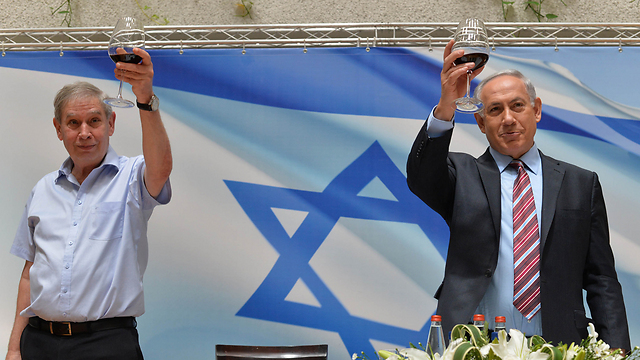
56024560100388640360noPardo and Netanyahu: On the same page (Photo: GPO)

“As for the use of the term ‘grenade’, the Mossad chief did not use that with regards to imposing sanctions, which, as mentioned, he considers to be the ‘sticks’ that would aid in achieving a good agreement. He used this term to describe the possibility of creating a temporary crisis in the talks, at the end of which the negotiations will be renewed under better terms. The Mossad chief specifically stated that the agreement currently being formulated with Iran is bad and might lead to a regional arms race.”

The Bloomberg report was published after US House Speaker John Boehner invited Prime Minister Benjamin Netanyahu to speak in front of Congress about the Iranian nuclear threat. Netanyahu has been urging the American administration to harden its sanctions policy. The Obama administration, Bloomberg reported, has been using the internal divide between the Mossad and Netanyahu to torpedo the bi-partisan proposal, penned by Senators Mark Kirk and Robert Menendez.

Meanwhile, Republican Senator Bob Corker, chairman of the Senate Foreign Relations Committee, has teamed up with Lindsay Graham and John McCain to propose a bill requiring the White House bring any deal with Iran to a vote in Congress.

The Obama administration opposes both measures and has warned the Senate to stay away from the delicate negotiations between Iran and world powers.

According to the report, Mossad officials have briefed the White House, as well as Republican legislators, on their opposition to the Kirk-Menendez bill, which would implement new sanctions on Iran if the negotiations fail to yield results by June 30 or the Islamic Republic fails to live up to its commitments.

Netanyahu, on the other hand, has expressed his support for the legislation, in particular, and sanctions on Iran, in general.

Evidence to Israeli interference in the Iran-US talks comes from comments made by Secretary of State John Kerry, who said an unnamed Israeli intelligence official had said the new sanctions bill would be “like throwing a grenade into the process.” When Menendez heard about the Mossad briefing, he demanded clarifications from Israel’s Ambassador to the US Ron Dermer.

Op-Ed: Is the Middle East on the Verge of Exploding?

January 22, 2015

Op-Ed: Is the Middle East on the Verge of Exploding? Israel National News, Dr. Mordechai Kedar, January 21, 2015

The potential for destruction posed by all these disputes is enormous, and the explosion may shake Europe and even cross the Atlantic when Islamic extremists blow their minds at the deep crisis affecting the entire Middle East.

*************

Five separate sets of potential fireworks have been igniting simultaneously in the Middle East for the last few weeks, each of them adding fuel to the fires caused by the others. If and when these developments reach the kindling point, the entire region may go up in uncontrollable flames.

These are the sources of the fires:

a. the rivalry between Al Qaeda and ISIS

b. the intensifying struggle between the Sunni Jabhat al Nusra and the Shiite Hezbollah.

c. the successes of the Houthis in Yemen

d. Islamic fury at what is happening in Egypt

e. the struggle between Islamic extremists and European regimes

Here are the details::

a. In the militant Sunni arena there is a fierce struggle going on between organizations that identify with Al Qaeda’s ideology, headed by Jabhat al Nusra – and ISIS, which is in control over large swathes of Syria and Iraq and has established the most stringent form of Sharia law in those areas. The rivalry has caused Al Qaeda to increase its attacks on the Yemeni government, abort an American attempt to rescue two hostages from Yemen last December, accept responsibility for the Charlie Hebdo murders in Paris and announce that the brothers who perpetrate the murders received their training in an Al Qaeda camp in Yemen.

b. The war between the Shiite Assad regime and Hezbollah on the one hand and Sunni Jabhat al Nusra on the other is getting more fierce. Jabhat al Nusra managed to cause Hezbollah painful losses  recently, near the Hermon Mountain range and in a daring infiltration into the Bekaa Valley in Lebanon, by way of the city of Arsal. Hezbollah is feeling pressured, leading the Iranian revolutionary guards to send some top officers to help the organization plan its next operation and improve its results.

c. In Yemen, the Shiite Houthi militias have succeeded in taking over the capital city of Sana’a and appear as the winning side in the long, drawn out war the Houthis have been waging against that nation. Iran is backing the Houthis, the US is helping the regime, both against al Qaeda and the Houthis. Without doubt, Yemen is a battlefield where Iran is forcing its enemies to follow its agenda, including nearby Saudi Arabia, which sees the Houthis as a direct threat to its security. Several years ago, the Saudis built a separation fence all along their border with Yemen, in an attempt to keep out Al Qaeda and Houthi militants.

d. There is a fierce struggle in Egypt between the Muslim Brotherhood – the mother of all Sunni Jihad organizations – and the regime of Al Sisi. As far as this struggle goes, Sisi is reinstating the government of Gamal abdel Nasser, Sadat and Mubarak, all of whom waged relentless and bloody war against the “Brothers”.  As of now, Sisi has succeeded in pushing the “Brothers” from positions of rule into jail cells and from the streets to the cemetery. His successes are infuriating his detractors.    The fight is to the finish, and it is also being waged in the Sinai Desert between the government and the militias of Anṣār Bayt al-Maqdis, who recently switched its loyalties from al Qaeda to ISIS.

Europe is a relatively new battleground, but the last few weeks showed mounting escalation, both in jihadist activities against governments (see France) and in governmental activity against jihad cells (Belgium, Germany). Jihad activities in Europe are encouraged by ISIS as well as Al Qaeda, both sides of the rivalry mentioned above. People who return from Jihad in Syria, Iraq and Libya – but not just they – are participating in the heated struggle for Europe’s image.

These struggles are synergetic, they influence one another because an Islamic militant sees what is happening in one area and decides to take revenge for Allah in another. This sinking into chaos can lead to large number of large scale conflicts, with many more participants and deaths, especially if these organizations succeed in drawing Israel and the US into the fray. We have already heard of ground troups from the West fighting ISIS.

Israel must understand the dangers now permeating the atmosphere of the MIddle East with oil vapors that any spark can set on fire and that no one will be able to put out before the entire region is ablaze. The potential for destruction posed by all these disputes is enormous, and the explosion may shake Europe and even cross the Atlantic when Islamic extremists blow their minds at the deep crisis affecting the entire Middle East.

The massive Islamic immigration to Europe turned that continent into a branch of the Middle East’s disputes, so that Europe will not be immune to the many deep seated and broad Middle Eastern problems. And America is on the same planet, so that the Middle East disasters will find their way to its shores as well.