Archive for the ‘Islamic State’ category

Islamist State plots terror attacks inside Tehran. Hizballah high-up killed in Damascus bus blast

February 2, 2015

Islamist State plots terror attacks inside Tehran. Hizballah high-up killed in Damascus bus blast, DEBKAfile, February 2, 2015

Shiite_Bus_in_Damascus_1.2.15Shiite pilgrim bus explosion in Damascus

The Islamic State of Iraq and the Levant has launched a new terror offensive against Iranians, their followers and other Shiites.  It was kicked off Sunday, Feb. 2 with an attack on a Damascus bus carrying Lebanese Shiite pilgrims to shrines in Syria. Nine people were killed and at least 20 injured. ISIS has set its sights next on the Muslim Shiite heartland, Iran and its cities – especially the capital Tehran.

The Damascus bus attack is ascribed by some sources to a Saudi suicide bomber by the name of Abu al-Ezz al-Ansari. The claim that the Syrian rebel Jabhat al-Nusra was the perpetrator was false, say DEBKAfile’s intelligence and counter-terrorism sources. This group does not go in for Saudi recruits and certainly not suicide bombers of that ilk.

ISIS fingered Nusra to conceal its own responsibility for the attack and its real target. Our sources reveal that the Islamic State attacked the Shiite pilgrims in order to get at a high-ranking officer of Hizballah’s armed wing, who was on the bus.

Hizballah headquarters in Beirut has imposed deep hush on his death and identity. But because they could not pretend the bus explosion did not happen, they pinned it Monday on “takfir [infidel] groups” which they say collaborate with Israel.

This attack revealed most significantly that Hizballah has begun covering the tracks in Syria of its top Hizballah men by inserting them among Shiite pilgrims traveling by bus from Lebanon to Damascus. They are camouflaging the movements of their top men in Syria by an elaborate security net, ever since an Israeli air strike on Jan. 18, killed around nine Hizballah and Iranian officers, including the Iranian general, Ali Allah Dadi.

Still, ISIS agents were able to find the bus and blow it up, indicating deep hostile penetration of the Iranian and HIzballah forces assigned to Syria to fight for Bashar Assad.

Conscious of the Islamic State’s next plans, the Iranian Al Qods Brigades commander, Gen. Qassem Soleimani, paid an unscheduled visit to Beirut last Thursday, Jan. 29, for urgent talks with Hizballah leader Hassan Nasrallah and briefings for the organization’s military council members. Their most pressing concern was the detailed ISIS program, which is ready to go, for a broad new campaign of terror against Iranian and pro-Iranian targets in Lebanon, Syria, Iraq and the Iranian homeland.

ISIS in full swing under ex-Iraqi general: 70 deaths in a month, on the march in 10 countries

February 1, 2015

ISIS in full swing under ex-Iraqi general: 70 deaths in a month, on the march in 10 countries, DEBKAfile, February 1, 2015

Kenji-Goto_31.1.15Kenji Goto in ISIS hands

ISIS strategists, not content with these “successes,” are still in full thrust and believed to be planning to expand their operations and hit Israel – whether from the south or the north.

*********************

Saturday night, January 31, the Islamic State of Iraq and Levant capped a month of atrocities by beheading its second Japanese hostage, Kenjo Goto, a 47-year old journalist. Jordan vows to do everything its power to save the Jordanian pilot Lt. Moaz al-Kasasbeh, but it may be too late.

In March alone, the Islamists are known to have killed at least 70 people in 10 targeted European and Middle East countries. This is a modest estimate since exact figures are not available everywhere – like in Saudi Arabia and Egypt. ISIS terrorists trailed their horror that month through France, Spain, Belgium, Iraq, Saudi Arabia, Syria, Jordan, Egypt and Libya.

US President Barack Obama, who heads a 20-state coalition fighting ISIS in Iraq, strongly condemned the Goto murder. Secretary of State John Kerry, trying to sound positive, commended the recovery of the Syrian town of Kobani by Kurdish forces as “a big deal.”

ISIS was indeed forced to concede defeat in battle under US air strikes. But Kerry forgot to mention that the battle is far from over:  the Islamists pulled back from Kobani’s districts, but are still pressing hard on the walls of the town and heavy fighting for its control continues.

If Kobani is the only military gain achieved by US-backed forces in months of coalition effort, who will be able to stop the brutal ISIS offensive going forward in Europe, North Africa and the Middle East?

The British government keeps on warning that an Islamist attack is coming soon. Foreign Secretary Philip Hammond said Sunday that this was a “generational struggle that must be fought in other parts of the world in addition to the Middle East.”

It was obvious from these lame comments that the West is totally at a loss for ways to pre-empt the thrusting danger.

Some Western intelligence agencies have sought cold comfort by pointing to the Islamists’ willingness to negotiate the release of the Jordanian pilot held hostage since his capture in Syria in December as a symptom of weakness, signaling its readiness to part with its murderous image. Others judged the latest video clips unprofessional and a sign that ISIS leadership was in disarray.

Neither of these judgments is supported by the facts.

DEBKAfile’s counter-terrorism and intelligence sources report that the high command of the Islamic State functions at present with machinelike efficiency in pursuit of its goals. The name of Abu Baqr al-Baghdadi has been circulated widely as ruler of the Islamic “caliphate” he founded in parts of Syria and Iraq. But behind the scenes, he is assisted by a tight inner group of 12-15 former high officers from the Baath army which served the Saddam Hussein up until the 2003 US invasion of Iraq. Members of this group ranged in rank from lieutenant-colonel to general.

Ex-Maj. Gen. Abu Ali al-Anbari, its outstanding figure, acts as Al Baghdadi senior lieutenant.

He also appears to be the brain that has charted ISIS’s current military strategy which, our sources learn, focuses on three major thrusts: the activation of sleeper cells in Europe for coordinated terrorist operations: multiple, synchronized attacks in the Middle East along a line running from Tripoli, Libya, through Egyptian Suez Canal cities and encompassing the Sinai Peninsula; and the full-dress Iraqi-Syrian warfront, with the accent currently on the major offensive launched Thursday, March 29, to capture the big Iraq oil town of Kirkuk.

DEBKAfile was first to report the arrival in Sinai during the first week of December of a group of ISIS officers from Iraq to take command of their latest convert, Ansar Beit Al-Miqdas.

Another former Iraqi army officer was entrusted with coordinating ISIS operations between the East Libyan Islamist contingent and the Sinai movement. Their mission is to topple the rule of President Abdel-Fatteh El-Sisi.

The imported Iraqi command made its presence felt in Libya Tuesday, Jan. 27 with the seizure of the luxury Corinthia Hotel in Tripoli and execution of the foreigners taken there, including an American and a British man. Two days later, ISIS terrorists fanned out across Sinai for their most devastating attack ever on Egyptian military and security forces. They launched simultaneous attacks in five towns, Rafah on the border of the Gaza Strip, El Arish and Sheikh Suweid in the north and  the Suez Canal cities of Port Said and Suez to the west – killing some 50 Egyptian personnel and injuring more than double that figure.

ISIS strategists, not content with these “successes,” are still in full thrust and believed to be planning to expand their operations and hit Israel – whether from the south or the north.

How Iran Is Making It Impossible for the US to Beat ISIS

February 1, 2015

How Iran Is Making It Impossible for the US to Beat ISIS, Daily Beast, Michael Weiss, Michael Pregent, February 1, 2015
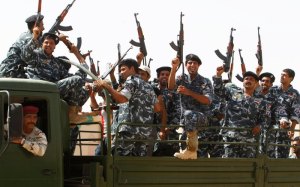
1422791113178.cachedAhmed Saad/Reuters

Washington needs to quit pretending it can work with Iran to defeat the Islamic State. Tehran’s real objective is to defeat Washington.

It was August 2007, and General David Petraeus, the top commander of U.S. forces in Iraq, was angry.  In his weekly report to then-Defense Secretary Robert Gates, Petraeus wrote:  “I am considering telling the President that I believe Iran is, in fact, waging war on the U.S. in Iraq, with all of the U.S. public and governmental responses that could come from that revelation. … I do believe that Iran has gone beyond merely striving for influence in Iraq and could be creating proxies to actively fight us, thinking that they can keep us distracted while they try to build WMD and set up [the Mahdi Army] to act like Lebanese Hezbollah in Iraq.”

There was no question there and then on the ground in Iraq that Iran was a very dangerous enemy. There should not be any question about that now, either. And the failure of the Obama administration to come to grips with that reality is making the task of defeating the so-called Islamic State more difficult—indeed, more likely to be impossible—every day.

There are lessons to be learned from the experience of the last decade, and of the last fortnight, but what is far from clear is whether Washington, or the American public, is likely to accept them because they imply much greater American re-engagement in the theater of battle. As a result, what we’ve seen is behavior like the proverbial ostrich burying its head in the desert sand, pretending this disaster just isn’t happening. But at a minimum we should be clear about the basic facts. In Iraq and Syria, as we square off against ISIS, the enemy of our enemy is not our friend, he is our enemy, too.

In 2007, there were 180,000 American troops in Iraq. Under Petraeus’s oversight, U.S. Joint Special Operations Command (JSOC), the elite forces responsible for hunting terrorists around the world, was divided into two task forces. Task Force 16 went after al Qaeda in Iraq, the group that eventually would spawn ISIS, while Task Force 17 was dedicated to “countering Iranian influence,” chiefly by killing or capturing members of Iraq’s Shia militias—though in some cases, it even arrested operatives of Iran’s Revolutionary Guards Corps-Quds Force (IRGC-QF) who were arming and supervising those militias’ guerrilla warfare against coalition troops.

At one point, in the summer of 2007, Petraeus concluded that the Mahdi Army, headed by the Shiite demagogue Muqtada al-Sadr, posed a greater “hindrance to long-term security in Iraq” than al Qaeda did. As recounted in The Endgame, Michael Gordon and Bernard E. Trainor’s magisterial history of the Second Iraq War, two-thirds of all American casualties in Iraq in July 2007 were incurred by Shiite militias.  Weapons known as explosively formed penetrators, or EFPs, were especially effective against the U.S. forces. They were Iranian designed and constructed roadside bombs that, when detonated, became molten copper projectiles able to cut through the armor on tanks and other vehicles, maiming or killing the soldiers inside.

So it came as a surprise to many veterans of the war when Secretary of State John Kerry, asked in December what he made of the news that Iran was conducting airstrikes against ISIS in Iraq, suggested “the net effect is positive.” Similarly, Chairman of the U.S. Joint Chiefs of Staff Gen. Martin Dempsey—formerly the commander of the 1st Armored Division in Baghdad—told reporters last month, “As long as the Iraqi government remains committed to inclusivity of all the various groups inside the country, then I think Iranian influence will be positive.”

Whatever the Iraqi government says it is committed to, “inclusiveness” is not what’s happening on the ground.

Iran’s influence in Iraq since ISIS sacked Mosul last June has resulted in a wave of sectarian bloodletting and dispossession against the country’s Sunni minority population, usually at the hands of Iranian-backed Shia militia groups, but sometimes with the active collusion of the Iraq’s internal security forces. Indeed, just as news was breaking last week that ISIS’s five-month siege on the Syrian-Turkish border town Kobane finally had been broken, Reutersreported that in Iraq’s Diyala province at least 72 “unarmed Iraqis” —all Sunnis—were “taken from their homes by men in uniform; heads down and linked together, then led in small groups to a field, made to kneel, and selected to be shot one by one.”

Stories such as these out of Iraq have been frequent albeit under-publicized and reluctantly acknowledged (if at all) by Washington both before and after Operation Inherent Resolve got underway against ISIS.

For instance, 255 Sunni prisoners were executed by Shia militias and their confederates in the government’s internal security forces between June 9 and mid-July, according to Human Rights Watch. Eight of the victims were boys below the age of 18.  “Sunnis are a minority in Baghdad, but they’re the majority in our morgue,” a doctor working at Iraq’s Health Ministry, told HRW at the end of July. Three forensic pathologists found that most of the victims in Baghdad were shot clean through the head, their bodies often left casually where they were killed. “The numbers have only increased since Mosul,” one doctor said.

On August 22, 2014, the Musab Bin Omair mosque in Diyala—the same province where last week’s alleged executions occurred—was raided by officers of the security forces and militants of Asaib Ahl al-Haq (the League of the Righteous), which slaughtered 34 people, according to HRW.  Marie Harf, the U.S. State Department spokeswoman, said at the time: “This senseless attack underscores the urgent need for Iraqi leaders from across the political spectrum to take the necessary steps that will help unify the country against all violent extremist groups.”

Since then, however,  U.S. warplanes have provided indirect air support to Asaib Ahl al-Haq and Kataib Hezbollah, a U.S.-designated terrorist entity, both of which were at the vanguard of the troops that ended ISIS’s months-long siege of Amerli, a Shia Turkomen town of about 15,000, in November 2014.  These militias have also been seen and photographed or videoed operating U.S. Abrams tanks and armored vehicles intended for Iraq’s regular army, which means that there are now two terrorist organization, Sunni ISIS and Kataib Hezbollah, armed with heavy-duty American weapons of war.

The Hezbollah-ization of Iraq’s military and security forces has been overseen by the IRGC-QF, another U.S.-designated terrorist entity, which is headed by Maj. Gen. Qassem Suleimani, a man personally sanctioned by the Treasury Department for his role in propping up Bashar al Assad’s mass murderous regime in Syria.

Suleimani is the same Iranian operative Petraeus  once called “evil” because of his well-documented role orchestrating attacks on U.S. servicemen. The most notorious episode happened in Karbala in 2007—in a raid that was carried out by Asaib Ahl al-Haq and resulted in the death of five G.I.s  One of the founders of this militia and a main perpetrator of the attack, Qais al Khazali, was captured by coalition forces and subsequently released in a prisoner swap for a British hostage in 2009. Today, al Khazali moves freely around Iraq, dressed in battle fatigues, commanding Asaib militants.

Another one of Suleimani’s major proxies, the Badr Corps, is headed by Hadi al-Amiri, who happens to be Iraq’s current minister of transport, in which capacity he’s been accused by the U.S. government of helping to fly Iranian weapons and personnel into Syria. Not only was one of al-Amiri’s Badr henchmen, the group’s intelligence chief Abu Mustafa al-Sheibani, the man chiefly responsible for importing explosively formed projectiles into Iraq from Iran’s Mehran province during the occupation, but another of his subordinates, Mohammed Ghabban, is currently Iraq’s Interior Minister. This gives the Badr Corps purview over all of Iraq’s internal security forces, including its federal police—that is to say, the men in uniform who have allegedly acquiesced or connived in the Shia militias’ anti-Sunni pogroms.

Indeed, Iraq’s Interior Ministry gained notorious reputation in the last decade for being a clearinghouse for sectarian bloodletting. During the civil war in the mid-2000s, its agents, nominally aligned with U.S. troops, moonlighted as anti-Sunni death squads that functioned with the impunity of officialdom. The ministry also ran a series of torture-prisons in Baghdad, such as Site 4, where, according to a 2006 U.S. State Department cable, 1,400 detainees were held in “in squalid, cramped conditions,” with 41 of them bearing signs of physical abuse. Ministry interrogators, the cable noted, “had used threats and acts of anal rape to induce confessions and had forced juveniles to fellate them during interrogations.”

Needless to add, Badr has hardly mended its ways with the passage of time and the exit of U.S. troops from Iraq. Today, the militia has been accused of “kidnapping and summarily executing people…[and] expelling Sunnis from their homes, then looting and burning them, in some cases razing entire villages,” in thewords of Human Rights Watch’s Iraq research Erin Evers, who added for good measure that the current White House strategy in Iraq is “basically paving the way for these guys to take over the country even more than they already have.”

As if taunting the Obama administration’s, Suleimani has takento popping up, Zelig-like, in photographs all over Iraq, usually from a front-line position from which ISIS has just been expelled.  It is hard to overestimate the propaganda value such images now carry.

Consider this week’s blockbuster disclosure that the CIA and Israel’s Mossad collaborated in the 2008 assassination of one of Suleimani’s other high-value proxies, Hezbollah security chief Imad Mughniyeh. In close collaboration with Iran, Mughniyeh coordinated suicide attacks ranging from the 1983 U.S. Marine barracks bombings in Beirut to the blowing up of the AMIA Jewish center in Buenos Aires in 1994.  Mughniyeh also was linked to the kidnapping of several Europeans and Americans in Lebanon in the 1980s, including CIA Station Chief William Buckley, believed to have died in 1985 after months of torture by Iranian and Iranian-trained interrogators.

So it is not surprising that Langley wanted Mughniyeh dead. What is suprising is that according to the Washington Post the CIA and Mossad had “a chance to kill” the Iranian master-spy Suleimani as he strolled through Damascus with Mughniyeh in 2008, but passed it up because of potential collateral damage. No doubt U.S. satellite surveillance is currently tracking Suleimani’s plain-sight movements in Iraq and Syria, too.

Last month, an Israeli attack in the Syrian sector of the Golan Heights killed Mughniyeh’s son, Jihad, who was said to have been an “intimate” protégé of Suleimani.

While segments of the U.S. intelligence establishment and punditocracy believe Iran to be a credible or necessary force for counterterrorism, the fighters associated with Suleimani’s paramilitaries profess a different agenda entirely.

In October, ISIS was driven from Jurf al-Sakher, a town about 30 miles southwest of Baghdad. The operation was said to have been planned personally by Suleimani. It featured Quds Force agents and Lebanese Hezbollah militants embedded with some 7,000 troops form the Iraqi Security Forces.

Ahmed al Zamili, the head of the 650-strong Al Qara’a Regiment, one of the militias party to that fight, told the Wall Street Journal that he actually welcomed the invasion of Iraq by ISIS because this dire event would only hasten the return of the Hidden Imam, a religious prophecy which in Shia Islam precedes the founding of a worldwide Islamic state.  Al Zamili made it clear that his notion of counterinsurgency was holy war. Meanwhile, 70,000 Sunnis were driven from Jurf al-Sakher, which means “rocky bank” and has now been renamed Jurf al-Nasr (“victory bank”). The provincial council told them they would not be allowed to return for eight or ten months.

“Iran has used Iraq as a petri dish to grown new Shia jihadist groups and spread their ideology,” says Phillip Smyth, an expert on Shia militias. By Smyth’s count, there are more than 50 “highly ideological, anti-American, and rabidly sectarian” Shia militias operating in Iraq today, and recruiting more to their ranks, all with the acquiescence of the central government.

Some of Iraq’s Shia politicians have acknowledged the dismal reality that has attended Baghdad’s outsourcing of its security to “Khomeinists” — and the potential it carries for the kind of all-out sectarian bloodletting that nearly tore the country apart in the mid-2000s.

One unnamed  Shia politician told the Guardian newspaper last August that groups of Shia extremists “equal in their radicalization to the Sunni Qaeda” are being created. “By arming the community and creating all these regiments of militias, I am scared that my sect and community will burn,” he said.

More recently, Iraq’s Vice President for Reconciliation, Ayad Allawi, a secular Shia who once served as the interim prime minister, told the same broadsheet that pro-government forces have been ethnically cleansing Sunnis from Baghdad. This is a starker admission of the atrocities being committed by America’s silent partner than currently is on offer by the State Department or Pentagon, and many Sunnis now suspect Washington of full collaboration with Tehran, whatever the protestations to the contrary.

When Michael Pregent, one of the authors of this essay, briefed a team of U.S. military advisors headed to Iraq recently, he warned them that they are now operating in an environment in which Iranian and Shia-militia targeting choices take priority over the recommendations of U.S. advisors and intelligence officers.

The consequence of this tacit collaboration with the Quds Force and its assets is obvious: the United States will be portrayed by ISIS propagandists as a helpmeet in the indiscriminate murder and dispossession of Sunnis.

Kerry and Dempsey would do well to pay closer attention to Iran’s air war, too. According to one Kurdish Iraqi pilot interviewed by the Guardian, Suleimani’s command center in Iraq, the Rasheed Air Base south of Baghdad, is where “the Iranians make barrel bombs” and then use Antonov planes and Huey helicoptetrs to drop them in Sunni areas — thus replicating one of the nastiest tactics of Assad’s air force in Syria.

The Anbar Awakening critical to stabilizing Iraq in the middle of the last decade was made possible by the presence of U.S. ground forces who represented to the influential Sunni tribes an impartial bulwark against the draconian rule of al Qaeda in Iraq.

Many in the Obama administration express the hope that another such awakening can be fomented, given the current political and military dynamics in Iraq. But how? ISIS has cleverly exploited the sensitivities and fears of Iraq’s Sunni tribes, offering those it hasn’t rounded up and murdered the chance to “repent” and reconcile with the so-called “Calihpate.”

ISIS: Inside the Army of Terror, a new book by the co-author of this piece, documents the tragic situation of those Sunni tribesmen who have risen up against ISIS only to be slaughtered mercilessly, sometimes with the help of their fellow tribesmen, whom ISIS had already won over. The rest of the constituents of this bellwether Sunni demographic are thus given a choice between cutting a pragmatic deal with ISIS or embracing Shia death squads as their saviors and liberators. Most have, predictably, opted for the former.

“The American approach is to leave Iraq to the Iraqis,” Sami al-Askari, a former Iraqi MP and senior advisor to former Prime Minister Nouri al-Maliki, told Reuters last November. “The Iranians don’t say leave Iraq to the Iraqis. They say leave Iraq to us.”

For the White House, that ought to define the problem, not the solution.
White House Struggles To Distinguish Between The Islamic State and Taliban Prisoner Swaps

January 30, 2015

White House Struggles To Distinguish Between The Islamic State and Taliban Prisoner Swaps, Jonathan Turley’s Blog, Jonathan Turley, January 30, 2015

(President Humpty Dumpty:

‘When I use a word,’ Humpty Dumpty said, in rather a scornful tone, ‘it means just what I choose it to mean — neither more nor less.’

‘The question is,’ said Alice, ‘whether you can make words mean so many different things.’

‘The question is,’ said Humpty Dumpty, ‘which is to be master — that’s all.’

Hence, Islam is the religion of peace and terrorists aren’t terrorists. Will all of the king’s horses and all of the king’s men be able to put him back together again?– DM)

bergdahl
150124201815-nr-dnt-harlow-sajida-al-rishawi-explainer-00001707-large-169

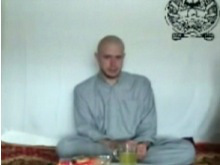
The White House again seems to be struggling with barriers of both language and logic as many raise comparisons between the controversial Bergdahl swap and the effort this week of Jordan to swap a terrorist for one of its downed pilots with Islamic State. During a week where one of the five Taliban leaders released by the Administration has been found trying to communicate with the Taliban, the Jordanian swap has reignited the criticism of the swap for Army Sgt. Bowe Bergdahl, which violated federal law and released Taliban leaders with long and bloody records. The White House seems to be trying to argue that the Taliban are not terrorists in direct contradiction to its prior position that they are indeed terrorists. It shows the fluidity of these terms and how the government uses or withdraws designations as terrorists to suit its purposes. The familiarities between Islamic State (IS) and the Taliban appear to be something in the eye of beholder or, to quote a certain former president, “It depends on what the meaning of the word ‘is’ is.”

As a refresher, the Taliban has long been viewed as terrorists, even when they were in power. They have destroyed religious sites, art, and in one of the most infamous acts in modern history, blew up the giant ancient Buddhas at Bamiyan.The United Nations and human rights groups have documented a long list of civilian massacres and bombings carried out by the Taliban. One report described “15 massacres” between 1996 and 2001. The UN estimates that the Taliban were responsible for 76% of civilian casualties in Afghanistan in 2009, 75% in 2010 and 80% in 2011. The Human Rights Watch estimates that “at least 669 Afghan civilians were killed in at least 350 armed attacks, most of which appear to have been intentionally launched at non-combatants.” This includes the widespread use of suicide belts. The Taliban has always had a close alliance with al Qaeda.

That record was put into sharp relief with the swap for Bergdahl with ties to terrorism including one who was the head of the Taliban army, one who had direct ties to al-Qaeda training operations, and another who was implicated by the United Nations for killing thousands of Shiite Muslims. While we have always said that we do not negotiate with terrorists, we not only negotiated for Bergdahl but gave them what they wanted.

20051114181303

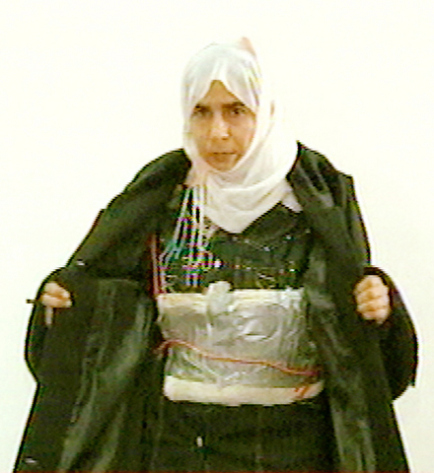
The Jordanian swap raised the same obvious concerns. Many have objected, for good reason, to the idea of releasing Sajida al-Rishawi, who participated with her husband in a terrorist attack on a wedding party at the luxury Radisson hotel in the Jordanian capital of Amman on Nov. 9, 2005. al-Rishawi hoped to be welcomed to paradise by walking into a wedding of 300 people enjoying a family gathering with children and murdering them in cold blood. Her husband’s bomb went off but not her bomb. It goes without saying that she is a hero to the murderous Islamic State for her effort to kill men, women, and children at a wedding.

The swap appears in part the result of pressure from Japan to secure the release of one of its citizens. In my view, such a propose swap was disgraceful. al-Rishawi is as bad as it gets as a terrorist. To yield to terrorists who engage in weekly demonstrations of beheading unarmed captives is morally wrong and practically suicidal. Just as the West is funding this terrorist organization through millions of ransom payments, the exchange of a terrorist only fuels their effort to capture and torture more Western captives.

This brings us back to the White House. When asked about the proposed swap with Islamic State, the White House was aghast. White House spokesman Eric Schultz stated “Our policy is that we don’t pay ransom, that we don’t give concessions to terrorist organizations. This is a longstanding policy that predates this administration and it’s also one that we communicated to our friends and allies across the world.”

The media understandably sought guidance on why the swap with Bergdahl was the right thing to do (despite the flagrant violation of federal law) while the swap for the pilot was not. The White House acknowledged that the Taliban are still on a terrorist list but then tried to rehabilitate the organization into something else. The White House is now referring to the Taliban as an “armed insurgency.” It notes that the Taliban are not listed by the State Department as a terrorist organization. However, they are listed as one of the “specially designated global terrorist” groups by the Department of the Treasury. Indeed, they have been on that list since 2002. Worse yet, the statement from the White House came in the same week that the Taliban claimed responsibility for killing three U.S. contractors.

John Earnest tried to thread the needle by explaining “They do carry out tactics that are akin to terrorism, they do pursue terror attacks in an effort to try to advance their agenda.” He seems to struggle to explain what is terrorist attacks and what are attacks “akin to terrorism.” Most people view suicide belts and civilian massacres to be a bit more than “akin to terrorism.”

Earnest also note that, while the Taliban has links to al Qaeda, they “have principally been focused on Afghanistan.” However, “Al Qaeda is a terrorist organization that has aspirations that extend beyond just the border between Afghanistan and Pakistan.” That is diametrically opposed to the position of the Administration in claiming sweeping powers to strike targets around the world against any forces linked to al Qaeda and many who have few such links. Indeed, while referencing to the authorization to attack al Qaeda, the Administration attacked Islamic State, which was actively fighting with al Qaeda.

The spin of the White Hosue also ignores the role of the Taliban-aligned Haqqani network in holding Bergdahl, a well-known terrorist group.

There are obviously arguments to make for the Bergdahl swap (though I find little compelling in the arguments that justify the violation of federal law by the White House). However, the argument must acknowledge that we negotiated with a group of hostage taking terrorists and we need to address the implications of that fact. Alternatively, if the White House now believes that the Taliban is no longer a terrorist organization, it needs to take it off its listing of such groups (a listing that subjects people to criminal charges for material support or assistance with the group). It cannot have it both ways and call it a terrorist group unless such a label is inconvenient.

Are Liberals Actually Admitting Islamic Terrorists Exist?!?

January 30, 2015

Are Liberals Actually Admitting Islamic Terrorists Exist?!? PJ Media Trifecta via You Tube, January 29, 2015

(The phrase “literal Islam” is an excellent substitute for “radical Islam.” Literal readings of the Koran and other Islamic “holy” texts support and demand what so called “radical Islamic extremists” do. Perhaps Obama and others who claim that Islam is “the religion of peace” should be labeled “extremist” and/or “radical”  because they — rather than the Islamic State, et al — pervert the basic teachings of Islam. They apparently want us to believe, all evidence to the contrary notwithstanding, that Islam is just another peaceful religion much like others and is therefore not a problem for secular societies. — DM)

Yazidis ask Israel for help

January 29, 2015

Yazidis ask Israel for help, Al-MonitorJacky Hugi, January 28, 2015

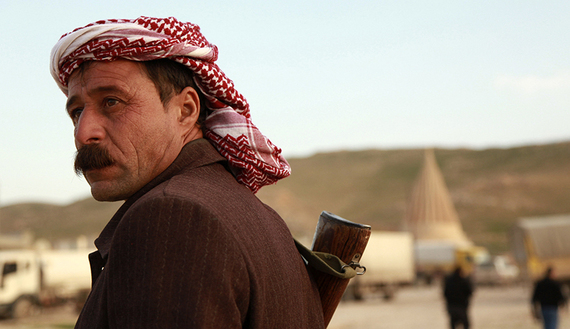
A man from the minority Yazidi sect stands guard at Mount Sinjar, in the town of SinjarA man from the minority Yazidi sect stands guard at Mount Sinjar, in the town of Sinjar, Dec. 20, 2014. (photo by REUTERS/Ari Jalal)

[I]t is an unusual overture of friendship for the government of Prime Minister Benjamin   Netanyahu, and it will be interesting to see if and how Israel takes up the gauntlet. Given the sensitivity of the matter, it is quite uncertain whether anyone will hear about it.

******************

“They have already killed many of us. What do we have to fear?” Lt. Col. Lukman Ibrahim responded when I asked him if he was afraid to openly communicate with an Israeli in a recent long-distance phone conversation from Tel Aviv to Sinjar, in northwestern Iraq, near the Syrian border. Ibrahim, a Yazidi militia officer, is hoping to obtain military aid from the State of Israel.

“The Arab countries do not recognize us, nor do they recognize you,” he said. “They are telling us that we are infidels. Why should we be afraid to talk to you, when even neighboring Arab countries have become our enemies? We regard you as a friendly state, with an opportunity for relations on the basis of neutrality and respect. We do not want more than that.”

Ibrahim, a journalist by profession, serves as an assistant to Marwan Elias Badl, one of the senior field commanders of the Sinjar Protection Forces, the Yazidi militia established ad hoc in August 2014 to halt the Islamic State (IS) onslaught against Yazidi population centers west of Mosul. The militia numbers some 12,000 fighters, most of them untrained, ordinary men who rushed to take up arms to thwart IS’ designs. A few of them are rank-and-file fighters, while some are officers with the Kurdish peshmerga. According to internal estimates, the IS militants killed thousands in their pogrom against the Yazidis. About 5,000 Yazidis are still being held by IS.

The Yazidis have no formal relations with Israel, nor an organized leadership. Yet they need aid, in particular military assistance, and they have chosen to make a public plea for help. “We appeal to the Israeli government and its leader to step in and help this nation, which loves the Jewish people,” said Ibrahim. “We would be most grateful for the establishment of military ties — for instance, the training of fighters and the formation of joint teams. We are well aware of the circumstances the Israelis are in, and of the suffering they have endured at the hands of the Arabs ever since the establishment of their state. We, too, are suffering on account of them.”

When asked what kind of weapons they needed, Ibrahim cited protective measures. “We are not acting against anyone,” he clarified. “And we do not covet other people’s land. We just want to protect ourselves. For example, [we need] armored [Humvees], machine guns and light weapons.”

Contact with Israel is a dirty business in this neighborhood, military contact all the more so. Be that as it may, in a reality where all levees have been breached and the worst appears to have already befallen the Yazidis, what could they possibly lose by seeking a rapport with Jerusalem?

The conversation with Ibrahim was not the only call with Sinjar. Majdal Rasho, a native of Sinjar, had settled in Germany and built his life there. He married and had a family, making a living as a manufacturing supervisor at a chocolate plant. In his spare time, he served as a photographer for TV stations broadcasting in the Kurdish language. He returned to Sinjar as a fighter, but also in his capacity as a video photographer for German TV networks.

“What I have seen here, I just can’t describe,” he said by phone from a battle zone. “Our people had no choice but to flee. We are not Arabs, nor are we Muslims. We see ourselves as sharing a fate with the Israelis, who went through similar pogroms. Those besieged on the mountain approached me and asked, ‘Maybe our Israeli brethren could lend a hand?’”

Yazidism is a religion with no more than a million followers. Its adherents are centered around Mosul and the Sinjar mountain range, in northern Iraq. Their largest diaspora in the West is in Germany, estimated to number some 100,000.

A common destiny with the Jews is a recurring theme in the Yazidis’ discourse. “What happened to us is the biggest genocide since the Holocaust of the Jews in Europe,” said Dr. Mirza Dinnay, a pediatrician based in Germany. “In the Holocaust, the goal was to annihilate an entire people, the Jews. IS has a similar plan — to exterminate an entire people, the Yazidis. No such extermination process had taken place in the past 500 years, with the exception of the Holocaust and what came to pass in Sinjar.”

Dinnay left Germany for Sinjar at the outbreak of the pogrom, leading a delegation of human rights activists. During one of the aid flights arranged by the Iraqi air force, a helicopter carrying food supplies and medication to the besieged Yazidis crashed. Some of the passengers aboard, among them Dinnay, were injured.

The communication between the Yazidis and the Israeli media has been coordinated by Idan Barir, 34, a researcher at the Tel Aviv University Yavetz School of Historical Studies. In the months since IS’ offensive against Yazidi population centers, Barir has become Israel’s top expert on the Yazidis, thanks to his extensive connections with members of the Yazidi community.

“I can think of a range of activities that Israel is experienced in that would not undermine the world order,” Barir told Al-Monitor. “For example, providing military assistance to the Yazidi forces in Sinjar who are crying out for cooperation and aid; setting up a field hospital for medical and psychological treatment of the casualties among the displaced in northern Iraq — not only Yazidis, by the way; sending humanitarian aid to displaced Yazidis in the refugee camps in Iraqi Kurdistan; absorption of a symbolic number of displaced Yazidis in Israel, with preference given to humanitarian, whether medical or mental, cases; incorporation of young Yazidis into military service in Israel; and support of civil initiatives aimed at strengthening and deepening ties between Israelis and Yazidis. It all depends on the decision made by the Israeli government, on its determination and goodwill.”

So far, Israel has not officially responded to such calls, which have yet to be fully formulated and have only recently began over the last few days. In fact, no formal request has come from the Yazidis for asylum as refugees. Barir is currently trying to find a way to reach decision-makers in Israel to pass on the messages from his faraway friends. Without a doubt, it is an unusual overture of friendship for the government of Prime Minister Benjamin Netanyahu, and it will be interesting to see if and how Israel takes up the gauntlet. Given the sensitivity of the matter, it is quite uncertain whether anyone will hear about it.

“It is a moral obligation to ring every bell and to do everything possible to stop the Yazidi tragedy,” said Attorney Zvi Hauser, the former Cabinet secretary in the most recent Netanyahu government (2009-13). “It is inconceivable that in the 21st century, someone’s attempt to eliminate an entire people, because of its faith and religion, is met with indifference.”

Hauser is the first senior figure in Israel who agreed to comment on the Yazidis’ call for help. As a private person, he refrained from reference to the Yazidis’ request for military aid, taking care to say nothing that might be interpreted as a promise. He believes, however, that Israel should favorably consider the Yazidis’ calls.

“The Yazidi narrative is evocative of ours. We, too, went through 2,000 years of existence without sovereignty, in the course of which we faced extermination schemes,” Hauser said. “Israel is a sovereign state, formed by an ethnic minority. It is the national manifestation of an ancient civilization. It would thus be appropriate to examine ways to establish relations and forge an alliance with them, if only to ensure a pluralistic Middle East. This issue has a universal aspect, as well. The development of human civilization is contingent on the diversity and multiplicity of [ethnic] groups and nations. Hence, the extinction of one of these would hurt not only the Yazidis, but also the entire fabric of human life.”


How to lose friends and empower radicals: the peace prize president’s more dangerous world

January 29, 2015

How to lose friends and empower radicals: the peace prize president’s more dangerous world, Breitbart,  Dr. Sebastian Gorka, January 29, 2015

(Please see the video at the link. — DM)

obama-binoculars-AP-640x480AP Photo/Susan Walsh

Since 2008, the world has become a significantly more dangerous place. In every region, new threats have emerged or old ones have reasserted them. The scorecard is clear: the bad guys are winning and America’s interests are being undermined daily.

As a nation, America has yet to recover from the experience of September 11th, 2001. Public opinion on our national response to the attacks against the World Trade Center, the Pentagon, and Flight 93 is today divided. On one side we have the “Bush lied, People Died!” crowd who portray President George W. Bush’s response in terms of a conspiracy, despite the fact that we now know Saddam Hussein indeed possessed thousands of WMD warheads (and had used them in the past).

On the other, we have conservatives who are themselves split between the unsophisticated isolationists/non-interventionists who believe that an American withdrawal from the world will make us safe, and the quietly resurgent neoconservatives who see in the rise of ISIS/The Islamic State a justification for more foreign engagements.

For a moment, let us put Operations Enduring Freedom (Afghanistan), and Operations Iraqi Freedom (OIF), to one side. Instead, let us take an unemotional snap-shot of the global geostrategic situation to see whether the administration whose head was awarded a Nobel Peace Prize during his first year in office has indeed make the world a safer and more peaceful place.

Europe: During most of the last century, American security was tied directly to the continent of Europe. Whether is was the generational genocide of World War One, the racial genocide of WWII, or the class-based totalitarianism of the Cold War, Europe was the source of strategic, and at times existential, threats to America.

During the first Obama Administration, Secretary of State Hilary Clinton declared a “Pivot to Asia” which would deemphasize Europe’s importance and see Washington focus more on our Pacific partners than on old Atlantic Allies.

Since that announcement, an emboldened Vladimir Putin has seen fit to break an almost 70-year-old international taboo by using force to redraw national borders with his annexation of Crimea. This includes, incredibly, the shooting down of a civilian jet-liner by forces armed by Moscow.

At the same time, we have seen the European Union become evermore centralizing and undemocratic as untenable economic and fiscal policies are propped up by a Brussels bureaucracy in the name of “broader and deeper union.” This has naturally led to two types of responses: the unprecedented success of a paleo-conservative backlash,f best typified by the insurgent victories of UKIP in Great Britain, as well the reverse: Utopian socialist populists such as the victorious Syriza party of Greece.

Then there are Europe’s ties to the Global Jihadist Movement. The recent slaughter in Paris, the beheading of a British serviceman on the streets of the UK, and Spanish and Belgian terror-related arrests all attest to the failure of the current international campaign against Islamist terrorism.

The flawed immigration policies of many EU nations have also facilitated the establishment of literally hundreds of ethnic and religious enclaves across the continent where integration is seen as a bad thing and where radical talent spotters for groups such as Al Qaeda and ISIS/IS identify, indoctrinate and recruit murderers such as the Charlie Hebdo killers, as well as thousands of fighters for The Islamic State.

This has led to a grass-roots response from Europeans afraid of the future survival of their countries embodied in the ever-broadening PEGIDA movement that Breitbart London has covered in great detail. The failure of multiculturalist immigration policies has not only encouraged the enclave phenomenon, but is also clearly linked to the disturbing rise of anti-Semitism on the continent which has led to unprecedented numbers of European jews deciding to leave the nations of their birth for good.

If we include Turkey in our European snapshot, the situation is even worse, as we have seen the one viable example of a secular Muslim state slip even deeper into the corruption-ridden maelstrom of Islamic fundamentalism under the Erdogan government which is either incapable or unwilling to prevent Turkey becoming a pre-deployment site for jihadist fighters traveling into Syria and Iraq. All this from a formal NATO ally of the US.

Asia: The much-vaunted Pivot to Asia has clearly not worked. China has, over the last several years, openly challenged the post-Cold War peace in the region with a commitment to its own military build-up coupled with a concerted campaign of intimidation against its smaller and weaker neighbors.

While challenging and intimidating our regional partners, China has continued to grow economically at such a rate that the nation which was once universally ridiculed as the maker of plastic toys for McDonalds Happy Meals has now surpassed the US economy in terms of gross output.  At the same time, China is waging a covert war against America in the cyber domain, stealing not only state secrets for use in developing its new weapons systems, but also billions of dollars worth of intellectual property and commercial secrets from American businesses. See the remarkable report from Mandiant on scale of the threat.

North Korea has also used the internet to assault American interests as the Sony hacking attack attests, while Washington has proven totally ineffective in undermining the world’s last truly fully-fledged Stalinist regime, or its regionally destabilizing nuclear weapons capabilities.

Africa: A giant continent, with threats as bad as they were in 2008, or in several cases much worse. The Global Jihadist Movement continues to consolidate its control in Nigeria through the horrific attacks of Boko Haram, the group made famous for the kidnapping of the girls from Chibok, an attack which is just one part of a vast campaign targeting Christians and anyone who does not want to live under a theocratically run system based upon sharia and 7th century interpretation of the Koran.

In addition to the insurgent-like threat of Boko Haram, we have also witnessed horrific hit and run terrorist tactics used by other African jihadists, as in the Westgate Mall attack in Nairobi by Al Shabaab. At the same time, China proceeds to build its vast network of economic interests in the continent in ways that far outstrip American geostrategic investment in Africa.

Australasia: Of course, the Pivot to Asia should have pleased our Antipodean allies. But the concrete consequences of the declarations and speeches by Secretary Clinton and the White House have amounted to little more than the deployment of a handful of US Marines from Camp Pendleton to Australia. Instead of the security situation improving, Australia faced its own Jihadist attack just before Christmas last year as a self-styled imam took hostages and brought the violent jihad so familiar to New York, London, Madrid, and Paris, to the streets of Sydney.

The Americas: Canada likewise became a direct victim of the Global Jihadist Movement after a spate of attacks against its armed forces and even its parliament which was only stopped when a brave sergeant-at-arms applied deadly force in the face of a rampaging jihadi.

Those who like illicit quality cigars may be celebrating the White House’s “normalization” of relations with Communist Cuba, but if statements by the Castro regime are to be credited as expressing Havana’s true intentions, then the deal was good for the dictatorship and bad for America. And despite the US government’s historic decision, conditions inside Cuba have remained the same, or in many case deteriorated, with last year seeing record-breaking numbers of political arrests on the island nation. And Cuba’s anti-democratic influence is a problem for the region, not just its wretched population, with Raul Castro’s secret police providing aid and expertise in the oppression of dissidentsto the government of Venezuela.

The Middle East and North Africa: Leaving the worst for last we have, of course, the Middle East, and North Africa. The highs hopes for the Arab Spring turned very rapidly into a “Christian Winter” and a victory for the fundamentalist and anti-Democratic forces of the Muslim Brotherhood. One after another, one-man authoritarian regimes fell to Islamist MB governments, or collapsed into deadly civil wars which are still being fought in places like Syria and Libya. Throughout the region, proto-democrats and vulnerable minorities, especially ancient Christian communities, have been targeted for death or persecution, or have been forced to flee.

The one ray of hope, the people’s revolt in Egypt against the Brotherhood government of Mohammad Morsi, which led to his being ousted by a secular military, was rejected by the US administration as a coup, despite the fact that General, now President, Sisi, has been fighting his own war against Jihadi fundamentalists since he was the Chief of the Egyptian Armed Forces.

And now Yemen, which was lauded just a few months ago by President Obama as the poster-child of his successful counterterrorism strategy, has collapsed under insurgent attacks and the resignation of the government in Sanaa.

Then there is Iran, which, much like Cuba, has squeezed concession after concession out of the administration without either stopping its acquisition of nuclear weapons capability, or curtailing its support of Shiite terrorist fighters in either Iraq or Syria.

I said I would leave Afghanistan and Iraq of our the equation, but nevertheless, it is important to recognize that this is a new jihadist threat that is even more dangerous than Al Qaeda. ISIS, the Islamic State, is today a full-fledged insurgency, one that in four dimensions is much more of a threat that [Sic] Al Qaeda ever was.

The Islamic State is more than a terrorist group, it now functions as a quasi-state and controls territory equivalent to the size of the UK. It is the richest non-state threat group in human history. It has an incredibly sophisticated understanding of information warfare and how to use social media as a propaganda platform, and lastly – and relatedly – it has recruited ten of thousands of young Muslim men from around the world, including Europe and the US, to fight for the new Caliphate of Abu Bakr al Baghdadi. Bin Laden dreamt of being this powerful. The Islamic State has turned his dream into a horrific reality.

There is not one area of the world of import to America in which we have either not lost friends, or failed to help our allies to defend themselves against the common enemies that threaten us all. Whatever your politics, or whomever you favor for the next Commander-in-Chief of the United States, one thing is certain: without resolute American leadership the world can become, and now is, a much more dangerous place.

The Imaginary Islamic Radical

January 28, 2015

The Imaginary Islamic Radical, Front Page Magazine, Daniel Greenfield, January 28,2015

(Ask Secretary Kerry.

Please see also Muslim Brotherhood-Aligned Leaders Hosted at State Department. — DM)

iraqstill-450x281

Our problem is not the Islamic radical, but the inherent radicalism of Islam. Islam is a radical religion. It radicalizes those who follow it. Every atrocity we associate with Islamic radicals is already in Islam. The Koran is not the solution to Islamic radicalism, it is the cause.

******************

The debate over Islamic terrorism has shifted so far from reality that it has now become an argument between the administration, which insists that there is nothing Islamic about ISIS, and critics who contend that a minority of Islamic extremists are the ones causing all the problems.

But what makes an Islamic radical, extremist? Where is the line between ordinary Muslim practice and its extremist dark side?

It can’t be beheading people in public.

Saudi Arabia just did that and was praised for its progressiveness by the UN Secretary General, had flags flown at half-staff in the honor of its deceased tyrant in the UK and that same tyrant was honored by Obama, in preference to such minor events as the Paris Unity March and the Auschwitz commemoration.

It can’t be terrorism either. Not when the US funds the PLO and three successive administrations invested massive amounts of political capital into turning the terrorist group into a state. While the US and the EU fund the Palestinian Authority’s homicidal kleptocracy; its media urges stabbing Jews.

Clearly that’s not Islamic extremism either. At least it’s not too extreme for Obama.

If blowing up civilians in Allah’s name isn’t extreme, what do our radicals have to do to get really radical?

Sex slavery? The Saudis only abolished it in 1962; officially. Unofficially it continues. Every few years a Saudi bigwig gets busted for it abroad. The third in line for the Saudi throne was the son of a “slave girl”.

Ethnic cleansing? Genocide? The “moderate” Islamists we backed in Syria, Libya and Egypt have been busy doing it with the weapons and support that we gave them. So that can’t be extreme either.

If terrorism, ethnic cleansing, sex slavery and beheading are just the behavior of moderate Muslims, what does a Jihadist have to do to be officially extreme? What is it that makes ISIS extreme?

Our government’s definition of moderate often hinges on a willingness to negotiate regardless of the results. The moderate Taliban were the ones willing to talk us. They just weren’t willing to make a deal. Iran’s new government is moderate because it engages in aimless negotiations while pushing its nuclear program forward and issuing violent threats, instead of just pushing and threatening without the negotiations. Nothing has come of the negotiations, but the very willingness to negotiate is moderate.

The Saudis would talk to us all day long while they continued sponsoring terrorists and setting up terror mosques in the West. That made them moderates. Qatar keeps talking to us while arming terrorists and propping up the Muslim Brotherhood. So they too are moderate. The Muslim Brotherhood talked to us even while its thugs burned churches, tortured protesters and worked with terrorist groups in the Sinai.

A radical terrorist will kill you. A moderate terrorist will talk to you and then kill someone else. And you’ll ignore it because the conversation is a sign that they’re willing to pretend to be reasonable.

From a Muslim perspective, ISIS is radical because it declared a Caliphate and is casual about declaring other Muslims infidels. That’s a serious issue for Muslims and when we distinguish between radicals and moderates based not on their treatment of people, but their treatment of Muslims, we define radicalism from the perspective of Islamic supremacism, rather than our own American values.

The position that the Muslim Brotherhood is moderate and Al Qaeda is extreme because the Brotherhood kills Christians and Jews while Al Qaeda kills Muslims is Islamic Supremacism. The idea of the moderate Muslim places the lives of Muslims over those of every other human being on earth.

Our Countering Violent Extremism program emphasizes the centrality of Islamic legal authority as the best means of fighting Islamic terrorists. Our ideological warfare slams terrorists for not accepting the proper Islamic chain of command. Our solution to Islamic terrorism is a call for Sharia submission.

That’s not an American position. It’s an Islamic position and it puts us in the strange position of arguing Islamic legalism with Islamic terrorists. Our politicians, generals and cops insist that the Islamic terrorists we’re dealing with know nothing about Islam because that is what their Saudi liaisons told them to say.

It’s as if we were fighting Marxist terrorist groups by reproving them for not accepting the authority of the USSR or the Fourth International. It’s not only stupid of us to nitpick another ideology’s fine points, especially when our leaders don’t know what they’re talking about, but our path to victory involves uniting our enemies behind one central theocracy. That’s even worse than arming and training them, which we’re also doing (but only for the moderate genocidal terrorists, not the extremists).

Secretary of State Kerry insists that ISIS are nihilists and anarchists. Nihilism is the exact opposite of the highly structured Islamic system of the Caliphate. It might be a more accurate description of Kerry. But the Saudis and the Muslim Brotherhood successfully sold the Western security establishment on the idea that the only way to defeat Islamic terrorism was by denying any Islamic links to its actions.

This was like an arsonist convincing the fire department that the best way to fight fires was to pretend that they happened randomly on their own through spontaneous combustion.

Victory through denial demands that we pretend that Islamic terrorism has nothing to do with Islam. It’s a wholly irrational position, but the alternative of a tiny minority of extremists is nearly as irrational.

If ISIS is extreme and Islam is moderate, what did ISIS do that Mohammed did not?

The answers usually have a whole lot to do with the internal structures of Islam and very little to do with such pragmatic things as not raping women or not killing non-Muslims.

Early on we decided to take sides between Islamic tyrants and Islamic terrorists, deeming the former moderate and the latter extremists. But the tyrants were backing their own terrorists. And when it came to human rights and their view of us, there wasn’t all that much of a difference between the two.

It made sense for us to put down Islamic terrorists because they often represented a more direct threat, but allowing the Islamic tyrants to convince us that they and the terrorists followed two different brands of Islam and that the only solution to Islamic terrorism lay in their theocracy was foolish of us.

We can’t win the War on Terror through their theocracy. That way lies a real Caliphate.

Our problem is not the Islamic radical, but the inherent radicalism of Islam. Islam is a radical religion. It radicalizes those who follow it. Every atrocity we associate with Islamic radicals is already in Islam. The Koran is not the solution to Islamic radicalism, it is the cause.

Our enemy is not radicalism, but a hostile civilization bearing grudges and ambitions.

We aren’t fighting nihilists or radicals. We are at war with the inheritors of an old empire seeking to reestablish its supremacy not only in the hinterlands of the east, but in the megalopolises of the west.

Exclusive: Obama Cuts Funds for the Syrian Rebels He Claims to Support

January 27, 2015

Exclusive: Obama Cuts Funds for the Syrian Rebels He Claims to Support, Daily Beast, January 27, 2015

1422366030311.cachedFadi al-Halabi/AFP/Getty

LOST CAUSE?

Even the favored secular militias groomed to fight ISIS have seen their funding cut in half.

GAZIANTEP, Turkey — In the past several months many of the Syrian rebel groups previously favored by the CIA have had their money and supplies cut off or substantially reduced, even as President Obama touted the strategic importance of American support for the rebels in his State of the Union address.

The once-favored fighters are operating under a pall of confusion. In some cases, they were not even informed that money would stop flowing. In others, aid was reduced due to poor battlefield performance, compounding already miserable morale on the ground.

From afar, the U.S.-approved and partially American-armed Syrian “opposition” seems to be a single large, if rather amorphous, organization. But in fact it’s a collection of “brigades” of varying sizes and potentially shifting loyalties which have grown up around local leaders, or, if you will, local warlords. And while Washington talks about the Syrian “opposition” in general terms, the critical question for the fighters in the field and those supporting them is, “opposition to whom?” To Syrian President Assad? To the so-called Islamic State, widely known as ISIS or ISIL? To the al Qaeda affiliate, Jabhat al Nusra?

That lack of clarity is crippling the whole effort, not least because of profound suspicions among rebel groups that Washington is ready to cut some sort of deal with Assad in the short or medium term if, indeed, it has not done so already. For Washington, the concern is that the forces it supports are ineffectual, or corrupt, or will defect to ISIS or Nusra—or all of the above.

Republican lawmakers in D.C. are at their boiling point over the Obama administration’s anti-ISIS strategy, whether it is a failure to establish a no-fly zone in Syria, or unreliability with the issue of aid, or the Pentagon’s promised train and equip plan for the Syrian rebels.

“This strategy makes Pickett’s Charge appear well thought out,” said Sen. Lindsey Graham of South Carolina, referring to the poorly-planned and futile Confederate assault at Gettysburg. “We’re about to train people for certain death.”

In late October, al Qaeda’s Jabhat al Nusra routed American-backed militias in the northwest Syrian province of Idlib.

As a direct result, four of the 16 U.S.-approved brigades operating in the northern part of the country had their funding cut off and have been dropped from the list of “ratified” militias, say a State Department official and opposition sources. Since December, the remaining 12 brigades in the region have seen shortfalls or cuts in promised American assistance.

Syrian rebel sources who spoke on condition of anonymity say the 7thDivision, which is affiliated with the Syria Revolutionaries Front and aligned to the Free Syrian Army, has not received salaries from the CIA in months, although the State Department has maintained food shipments to the unit.

The secular Harakat al-Hazm, the most favored of the U.S.-backed brigades and one of the very few to be supplied with TOW anti-tank missiles, has seen a severe cutback in the monthly subsidy for its nearly 4,000 fighters. It is now receiving roughly 50 percent of the salaries it was receiving before. Weapon shipments arrived recently but commanders are nervous about whether future ones will come through. And the Farouq Brigade, a militia formed originally by moderate Islamist fighters based in the city of Homs, is getting no money for salaries at the moment.

CIA officials tell rebel commanders that unspecified “other funders” have ordered the cuts, or that Langley just doesn’t have the resources any longer. “What are the fighters meant to do?” complains one rebel commander. “They have families to feed.” Another says, “The idea that they don’t have the money is insulting. I don’t believe this—it is a political decision.”

Syrian rebel groups and their Washington, D.C. allies argue that CIA funding cuts —explained and unexplained—create relative advantages for extremist groups like al Nusra and ISIS, even as the president heralds the rebels as America’s on-the-ground-partners in the campaign to defeat the self-proclaimed Islamic State.

“It’s not just that the administration is failing to deliver on committed resources, it’s that they aren’t even communicating with formerly affiliated battalions regarding the cutoff,” says Evan Barrett, a political advisor to the Coalition for a Democratic Syria, a Syrian-American opposition umbrella group. “This puts our former allies in an incredibly vulnerable position, and ensures that groups like al Nusra will be able to take advantage of their sudden vulnerability in the field.”

The Obama administration says publicly that its support of moderate rebel brigades is not waning: the State Department continues to dispense non-lethal aid, the Pentagon supplies weapons, and the CIA pays salaries to brigades affiliated with the umbrella organization known as the Free Syrian Army. A CIA spokesman declined to comment for this story.

Privately, U.S. officials concede there have been funding changes. But American intelligence sources insist this is not a reflection of any shift in CIA strategy. They talk about “individual case-by-case shut offs” that are the consequences of brigades collapsing or failing to perform. And these sources dispute suggestions there’s an overall decrease in CIA subsidies, saying they are not giving up on the Syrian rebels—even though the Syrian rebels in the north of the country in the vicinity of the Turkish border increasingly believe this to be true. (Those in the south, near the Jordanian border and Damascus, may fare better.)

A State Department official told The Daily Beast that “the CIA has more money now than before and the State Department pie has not shrunk,” but confirms there has been some cutting off and cutting down. The official cited the “poor performance” of rebel brigades in Idlib last October as a primary reason.

When they were up against al Nusra, this official said, “they didn’t fight hard enough.” Several moderate brigades failed to come to the assistance of the Syria Revolutionaries Front, in particular, because they disapproved of its leader, who has been widely accused of corruption. The ease with which al Nusra was able to pull off its offensive angered U.S. officials—as did American-supplied equipment falling into jihadist hands.

That anger was compounded when the members of some U.S.-backed rebel groups actually defected to al Nusra during the offensive. One senior U.S. official admitted that some brigades have been “getting too close for our liking to al Nusra or other extremists.”

On Christmas Day armed groups formed an alliance for the defense of besieged rebel-held areas in Aleppo, where Assad had launched a major offensive to encircle them. Al-Jabha al-Shamiyya (Shamiyya Front), as the operational alliance is called, includes not only hardline Salafist factions from the groups known as the Islamic Front but more moderate brigades like the Muslim-Brotherhood-linked Mujahideen Army and Harakat Nour al-Din al-Zenki, which also has received TOW anti-tank missiles from Washington in the past.

Although al Nusra was not invited to join formally, it coordinates with the Shamiyya Front via the so-called Aleppo Operations Room, a joint headquarters for armed factions. It’s an arrangement that Washington does not like at all.

Aleppo-based rebels say they have no choice but to work with al Nusra and the Islamic-Front-aligned factions that are among the strongest armed groups in the war-torn city. Without them Assad’s forces would overwhelm the rebels.

“What do the Americans expect us to do?” asks a commander in the operations room. “Al Nusra is popular here. It is a perilous time for us—Assad is pushing hard.”

Syrian rebel sources who spoke on condition of anonymity say the 7th Division, which is affiliated with the Syria Revolutionaries Front and aligned to the Free Syrian Army, has not received salaries from the CIA in months, although the State Department has maintained food shipments to the unit.

The secular Harakat al-Hazm, the most favored of the U.S.-backed brigades and one of the very few to be supplied with TOW anti-tank missiles, has seen a severe cutback in the monthly subsidy for its nearly 4,000 fighters. It is now receiving roughly 50 percent of the salaries it was receiving before. Weapon shipments arrived recently but commanders are nervous about whether future ones will come through. And the Farouq Brigade, a militia formed originally by moderate Islamist fighters based in the city of Homs, is getting no money for salaries at the moment.

CIA officials tell rebel commanders that unspecified “other funders” have ordered the cuts, or that Langley just doesn’t have the resources any longer. “What are the fighters meant to do?” complains one rebel commander. “They have families to feed.” Another says, “The idea that they don’t have the money is insulting. I don’t believe this—it is a political decision.

For the Syrian rebels, uncertainties over funding changes by the CIA add doubt to already high skepticism over American policy toward the war in Syria. That skyrocketed when the Obama administration failed to enforce in 2013 its “red line” against Assad’s alleged use of chemical weapons, and the skepticism has merely grown since.

On the ground, the combatants say they suffer from the Obama administration’s inconsistency and argue that all too often they are being left out to dry, like some Syrian version of the Bay of Pigs, but much, much bloodier.

In the coffee shops of the Turkish border town Gaziantep last week, Syrians gathered on the safer side of the frontier listened incredulously as State Department spokesperson Jen Psaki insisted, “We maintain our belief that al Assad has lost all legitimacy and must go.” It was the first such inflexible anti-Assad statement for weeks from a senior U.S. official.

But that wasn’t what they’d heard from President Obama in his State of the Union address a few days before. Gone was the rhetoric of 2013 when he said he had “no doubt that the Assad regime will soon discover that the forces of change cannot be reversed, and that human dignity cannot be denied.” Instead, last Tuesday Obama spoke about the administration’s so-called train-and-equip plan to build a force that will target ISIS, and he made vague noises about helping Syria’s moderate opposition.

Those moderates are precisely the men and women on the ground who feel that bit by bit they are being abandoned.

Already, nearly four months after Secretary of State John Kerry announced the plan to train and equip Free Syrian Army units, Kurdish Peshmerga, and Iraqi Shia militiamen as anti-ISIS forces, the project appears to be facing major hurdles.

U.S. Senators emerged grim-faced last week from a classified briefing on the train-and-equip mission, with some of them predicting disaster from a Pentagon program that will train too few fighters and too slowly to make a difference.

At its best, Republican senators argue, it’s not going to work. At its worst, it will lead to the mass slaughter of the trained rebels.

“This strategy makes Pickett’s Charge appear well thought out,” said Sen. Lindsey Graham of South Carolina, referring to the brave but futile Confederate assault at Gettysburg. “We’re about to train people for certain death.”

The number of recruits required for a “strategic change in momentum is years away,” said Graham. “The concept of training an army that will be subject to slaughter by two enemies, not one, is militarily unsound,” and “if the first recruits you train get wiped out, it’s going to make it hard to recruit.”

Sen. Jeanne Shaheen, a Democrat who emerged from the same classified briefing, was tight-lipped: “I think we have a lot to do, and a lot of questions to answer.”

In Syria, few rebel fighters want to join a force focused only on ISIS. They argue that Assad is responsible for considerably more deaths among them and their extended families than ISIS, which is able to draw defectors from their ranks because it pays much higher salaries to its fighters and because it is able to exploit distrust of American intentions towards the Syrian revolution.

U.S. officials now acknowledge difficulties recruiting from insurgent ranks, conceding it is a serious challenge finding enough recruits willing to put off fighting the Assad regime.

So American officials recruiting for the train and equip mission are now hoping to fish in the pool of rebel fighters from eastern Syria who disbanded, quit the war and fled to Turkey when ISIS established control of the cities of Raqqa and Deir ez-Zor. The U.S. officials say the anti-ISIS force in Syria will have to be smaller than envisaged initially, but they are hoping early victories on the ground will convince more people to enlist.

Obama and cognitive dissonance

January 26, 2015

Obama and cognitive dissonance, Dan Miller’s Blog, January 26, 2015

(The views expressed in this article are mine and do not necessarily reflect those of Warsclerotic or its other editors. — DM)

It has been argued that Obama’s cognitive dissonance is demonstrated by His dealings with Iran and His other disruptive efforts in the Middle East.  Perhaps the contrary is more accurate.

Basis of His foreign policies?

Basis of His foreign policies?

An article at Front Page Magazine by Bruce Thorton is titled The Dangers of Obama’s cognitive dissonance (also at Warsclerotic). It argues that Obama mistakenly believes that Iran and “we” want many of the same things and that He acts on that belief.

The heart of this mistake is the belief that whatever their professed beliefs, all peoples everywhere are just like us and want the same things we want. Since our highest goods are peace and prosperity, we think other nations’ privilege the same things. If peoples behave differently, it’s because they are warped by poverty or bad governments or religious superstitions, and just need to be shown that they can achieve those boons in rational, peaceful ways, especially by adopting liberal democracy and free-market economies. Once they achieve freedom and start to enjoy the higher living standards economic development brings, they will see the error of their traditional ways and abandon aggression and violence, and resolve conflicts with the diplomacy and negotiation we prefer. [Emphasis added.]

The Islamic Republic of Iran most likely does want peace and prosperity, but on its own terms.

Iran hangings by crane

Iran wants Islamic “peace” — the peace of universal submission to (a Shiite?) Allah — and at least sufficient prosperity to force its will on others who do not want “peace” of that sort. If Iran gets (or gets to keep) nuclear weapons, along with increasingly longer range missiles, it will be in an increasingly improved position to do that.

Obama may well have very similar goals for Iran. His demands that the P5+1 process continue despite Iran’s persistent refusals to make significant concessions, even as it continues to enhance its nuclear war machine, and His disposition to give Iran whatever concessions it wants, suggest that His and Iran’s objectives are similar. There is support for an alternative, that Obama is simply delusional. However, unless His closest, most trusted and therefore most important advisors are at least equally delusional, that alternative makes little sense. Although she appears to be a despicable person, Valerie Jarrett seems quite competent at what she does on His behalf. Others fall on their swords, fall into line and salute or leave.

Obama’s “extraordinary disconnect” in foreign policy was recently highlighted on CBS’ Face the Nation.

John Bolton said much the same.

Is it more likely that Obama merely fails to understand what’s happening, or that He understands and likes it? His State of Union address was full of foreign policy nonsense, much of it about Iran. However, it seems to have worked quite well with the large segment of the American public which neither understands nor cares about foreign affairs (except amusing affairs of a salacious nature) and believes that He strives mightily to give them the “free stiff” they believe they want, without understanding the economic hardships it has brought and will bring to them. If members of the public who already worship Him (and that includes most of the “legitimate news” media) continue to do so, it may well make little if any difference to Him or to His closest advisors whether those who disagree with Him still like, or continue to like, Him.

Leftist beliefs

After all, as we learned at the Democrat National Convention that nominated Obama for a second term, “we all belong to the Government,” it’s “one big happy family” and Obama is the head of “our family.”

In the final analysis, it may make little difference whether Obama is incompetent and delusional or is competent, understands His plans for Iran and the rest of the world far better than the rest of us and has perverse conceptions of evil and good.

Both theories are worth considering because both can help us to understand what He does, why He does it and what He intends to accomplish. However, delusional actions and intentions are difficult for those who are not delusional to understand and therefore to challenge. Actions and intentions that are, instead, based on a rational thought process — but one that views evil as good and good as evil — are easier to understand and therefore to challenge.

As I have watched Obama and His accomplishments over the years, I have come to lean toward the notion that He is competent, evil, understands what He is trying to achieve and likes it.