Thanks to President Obama, radical Islam is the winner of the nuclear deal and the US emerges as the biggest loser when it comes to its national, economic, geopolitical and strategic interests. In addition, except for Israel and the United States, almost every country in the world (as well as Shiite militia groups) appear to be benefiting from the nuclear deal – economically, strategically, and geopolitically — as a result of rekindling relationships with the Islamic Republic. Not only does this deal damage the US and Israel’s national and economic interests, but it also strengthens the same forces and axis which have repeatedly sworn war and violence against Americans.
A strong argument can be made that one of the major birthplaces of fundamentalist Islamism, which at its core aims at opposing and fighting the United States, is the Islamic Republic of Iran.
The mission of anti-Americanism and anti-Semitism began heavily when the ruling mullahs of Iran, with the leadership of Ayatollah Rooh Allah Khamenei, came to power. This mission remains and will continue to remain the major pillar of the Islamic Republic as well as the keystone of the mullah’s political and ideological establishments.
Since then, the Islamic Republic, with IRGC and its proxies, has been attacking and slaughtering Americans. They also attempt to scuttle US foreign policy. The United States is not their sole target. They also interfere with the national and economic interest of several countries in the Middle East and beyond including Iraq, Lebanon, Syria, Yemen, etc.
Without a doubt, this is a regime that breeds anti-Americanism and hatred towards Jewish and Christian people. So, what is President Obama’s solution to offset such a threat? Surrender — while continuing to give bonuses and gifts to the Iranian regime.
After Russia and China, Switzerland was the first European country to officially lift economic and political sanctions against the Islamic Republic citing the nuclear deal which was reached between the Islamic Republic and six world powers. The sanctions included restrictions on trade in precious metals, petrochemical products, petroleum products as well as the transport of Iranian crude oil. Switzerland issued a statement pointing out that the “Federal Council (government) wishes today’s steps to be seen as a sign of its support for the implementation of the nuclear agreement and its interest in deepening bilateral relations with Iran.” It also added that it will seek to “promote a broad political and economic exchange with Iran.”
Other European countries are going to follow as well. What is going to happen next? Billions off dollars are going to flow into a government whose primary objective is to fight with the United States.
Russia, China, and other rivals will benefit economically, politically, strategically, and ideologically from the nuclear deal. It is the United States which not only is not gaining anything (economically, geopolitically, security-wise, or strategically) from this deal, but also is significantly empowering its rivals.
In the next phase, the nuclear deal will significantly tip the balance of power in favor of US rivals and the anti-American axis. China, Russia and the Iran-Assad-Hezbollah-Haman’s alliance will be considerably strengthened.
What does President Obama think that a political regime — that has been fighting the United States tooth and nail and that is responsible for the killing of many Americans in the Middle East — is going to use the billions of dollars it earns to promote? It certainly will not be pro-American or pro-Israel ideology, democratization, social justice, rule of law, human rights, or freedom of speech, press, and assembly.
Mr. Obama recently delivered a speech at American University pointing out that “just because Iranian hardliners chant ‘Death to America’ does not mean that that’s what all Iranians believe.” He added, “In fact, it’s those hardliners … chanting ‘Death to America’ who’ve been most opposed to the deal. They’re finding common cause with the Republican Caucus.”
There are several fallacies in his statements. First of all, he is implying the Republicans are similar to those Iranian politicians who are anti-American. Republicans are attempting to preserve the national and economic interest of their country when it comes to the Islamic Republic, but Iranian politicians are sworn to fight American interests and wipe out Israel.
Secondly, President Obama argues that Iranian hardliners are against the nuclear deal. This is absolutely inaccurate. It was because of the approval of Iran’s Supreme autocrat, Ayatollah Ali Khamenei, that the deal was signed. The hardliners are the ones who will gain the most from this deal.
Third, it is true that not all Iranian people believe in “Death to America,” but Mr. Obama is dodging the major point. When it comes to international politics and the mission of fighting America, it honestly does not matter what Iranian people believe or do not believe. What matters is the political establishment of the Islamic Republic and the government which has the hard power (weapons, military, financial means, oil, etc) to fight with the US.
Finally, it is not only the hardliners that chant “Death to America,” but the entire group of ruling clerics and leaders of the Islamic Republic that believe this with a passion. We should not forget that a major slogan of President Rouhani (the so-called “moderate”) is: “Saying ‘Death to America’ is easy. We need to express ‘Death to America’ with action.” Or, as the other supposed “moderate” and “pragmatist,” Rafsanjani pointed out, “If a day comes when the world of Islam is duly equipped with the arms Israel has in possession, the strategy of colonialism would face a stalemate because application of an atomic bomb would not leave anything in Israel[.]”
United Nations and European Union sanctions on some of Iranian war criminals will also be lifted as part of the nuclear pact. One of these figures is General Qassem Suleimani, the head of Iran’s Islamic Revolutionary Guard Corps—Qods Force, who is the mastermind behind creating Shiite militia groups and terrorists across the region. He oversaw the training, financing, and arming of these militia groups. These groups are directly or indirectly fighting the United States and American soldiers as well.
As Lt. Gen. (ret.) Michael Barbero stated Sunday in The Weekly Standard, the lifting of international sanctions against Gen. Soleimani is a “shameful betrayal” of the “the American families of Suleimani’s casualties, and …those of us who lost friends and comrades.”
What if the Iranian leaders circumvent the guidelines put into place by the deal down the road? Then, too bad. If the Iranian leaders, as predicted, are caught deceiving their way towards obtaining a nuclear bomb, it will be too late to do anything. The economic and political sanctions will have been lifted, leaving the Iranian government with a surplus of funds. The US, which was in a stronger position when sanctions were imposed on the Islamic Republic, will become the weaker player. Russia and China will block any re-imposition of sanctions on the Islamic Republic. At that point, unfortunately, it will be the US in the desperate position, not the Islamic Republic. Radical Islam will exponentially spread against the US, as well as democratic and Western values around the globe.
Iran also has gained additional leverage over the IAEA by refusing to sign a document known as the Additional Protocol, which forces Iran to disclose certain details of its nuclear program to the IAEA so that it can confirm that Tehran is not operating a clandestine weapons program.
“The IAEA desperately wanted the Iranians to ratify the Additional Protocol as part of the deal to lock them into formal obligations that would actually be permanent,” the source explained. “The Obama administration failed to win the concessions, and instead Iran got to promise to ascend eight years from now.”
“So for the next eight years the Iranians get to hold the threat over the IAEA: Don’t push your luck or we’ll refuse to accede in eight years,” the source said.
********************
Iranian leaders prevented a top International Atomic Energy Agency (IAEA) official from disclosing to U.S. officials the nature of secret side deals with the Islamic Republic by threatening harm to him, according to regional reports.
Yukiya Amano, IAEA director general, purportedly remained silent about the nature of certain side deals during briefings with top U.S. officials because he feared such disclosures would lead to retaliation by Iran, according to the spokesman for Iran’s Atomic Energy Organization (AEOI).
Amano was in Washington recently to brief members of Congress and others about the recently inked nuclear accord. However, he did not discuss the nature of side deals with Iran that the United States is not permitted to know about.
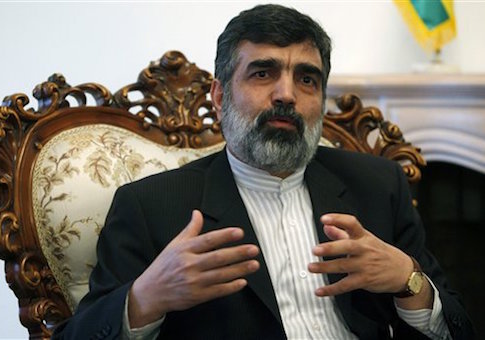
Iran apparently threatened Amano in a letter meant to ensure he did not reveal specific information about the nature of nuclear inspections going forward, according to Iranian AEOI spokesman Behrouz Kamalvandi.
This disclosure has only boosted suspicions among some that the Iranians are willing and able to intimidate the top nuclear watchdog and potentially undermine the verification regime that Obama administration officials have dubbed a key component of the nuclear accord.
“In a letter to Yukiya Amano, we underlined that if the secrets of the agreement (roadmap between Iran and the IAEA) are revealed, we will lose our trust in the Agency; and despite the US Congress’s pressures, he didn’t give any information to them,” Kamalvandi was quoted as saying Monday during a meeting with Iranian lawmakers, according to Tehran’s state-controlled Fars News Agency.
“Had he done so, he himself would have been harmed,” the official added.
Iran revealed in recent weeks that the United States is banned from knowing the details of its nuclear inspections agreement with the IAEA, a disclosure that prompted anger in many circles on Capitol Hill.
Iran also has gained additional leverage over the IAEA by refusing to sign a document known as the Additional Protocol, which forces Iran to disclose certain details of its nuclear program to the IAEA so that it can confirm that Tehran is not operating a clandestine weapons program.
Even supporters of the deal have noted that this gives Iran greater “leverage” over the IAEA going forward.
One source close to the Iran fight on Capitol Hill explained that Iran’s refusal to sign the document gives it up to eight more years to threaten the IAEA.
“The IAEA desperately wanted the Iranians to ratify the Additional Protocol as part of the deal to lock them into formal obligations that would actually be permanent,” the source explained. “The Obama administration failed to win the concessions, and instead Iran got to promise to ascend eight years from now.”
“So for the next eight years the Iranians get to hold the threat over the IAEA: Don’t push your luck or we’ll refuse to accede in eight years,” the source said.
Mark Dubowitz, executive director of the Foundation for Defense of Democracies (FDD), expressed concern that Iran could obstruct future inspections.
“Iranian leverage over the IAEA could impede a proper resolution of issues relating to Tehran’s past and possibly continuing weaponization activities,” Dubowitz said. “It may also prevent the agency from ever getting necessary physical access into suspicious sites including military facilities and prevent detection of Iranian clandestine nuclear activities.”
Further complicating the future inspections regime is the expiration of Amano’s term at the IAEA in 2017. The official could be replaced then.
Meanwhile, Iranian officials disclosed on Monday that any nuclear inspector entering Iran on behalf of the IAEA would first have to be screened by Iran’s Intelligence Ministry.
Iran additionally will be given 24 days notice before inspectors enter any site suspected of being used to build a nuclear weapon. U.S. inspectors also will be banned from entering suspicious sites under the deal.
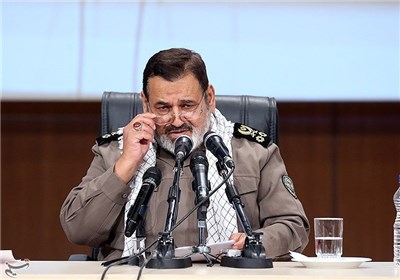
TEHRAN (Tasnim) – Chief of Staff of the Iranian Armed Forces Major General Hassan Firouzabadi underlined that there are not any obstacles to the country’s missile program.
“The Islamic Republic of Iran’s missile activities, as planned inside the country, will not face any obstacles,” the senior officer stressed on Sunday.
The general also reiterated that Iran’s missile tests are going to be carried out in a timely manner according to the plans endorsed by Supreme Leader of the Islamic Revolution Ayatollah Seyed Ali Khamenei.
For any missile test, Firouzabadi noted, a “policy making board” convenes to study the case, and the results are submitted to the Supreme Leader for the final authorization.
Back on Wednesday, the general had announced that Iran’s missile tests will be carried out on schedule.
He had made the comments in response to a statement by some Iranian lawmakers, requesting that the Armed Forces resume conducting missile tests.
In their statement, the MPs had called for the resumption of missile tests in reaction to the US officials’ brazen rhetoric of war against Iran.
While Iran and the Group 5+1 (Russia, China, the US, Britain, France and Germany) could finalize the text of a lasting deal on Tehran’s nuclear program on July 14, US officials have not stopped making provocative comments about military action against Iran.
Back in May, Ayatollah Khamenei reaffirmed that the Iranian nation will not let any possible act of aggression against the country go unanswered.
The Leader said he has already made it clear, even in the tenure of former US president, that “the era of hit and run has ended”, and that the Iranian nation will chase aggressors.
(The views expressed in this article are mine and do not necessarily reflect those of Warsclerotic or its other editors. — DM)
Courtesy of Obama, Iran’s mushroom clouds will be produced by detonating atomic bombs. Obama’s mushroom clouds, with help from His friends, have already been and continue to be detonated. They thrive in the absence of light and contain copious quantities of bovine fecal matter.
This limerick, if applied to Obama, makes sense:
Last night I saw upon the stair A little man who wasn’t there. He wasn’t there again today. Oh how I wish he’d go away!
I. Obama gave Iran its mushroom cloud
Several conservative media recently focused on Obama’s claim, made in His August 5, 2015 address praising His “deal,” that Iran had agreed to negotiate only after President Rouhani replaced Mahmoud Ahmadinejad on August 3, 2013:
it was diplomacy, hard, painstaking diplomacy, not saber rattling, not tough talk, that ratcheted up the pressure on Iran. With the world now unified beside us, Iran’s economy contracted severely, and remains about 20 percent smaller today than it would have otherwise been. No doubt this hardship played a role in Iran’s 2013 elections, when the Iranian people elected a new government, that promised to improve the economy through engagement to the world. [Emphasis added.]
A window had cracked open. Iran came back to the nuclear talks.
Obama did not mention that Rouhani could neither have run for office nor been elected without the backing of Iran’s Supreme Leader Khamenei. As far as I have been able to determine, neither Obama nor Kerry has said anything denying, acknowledging or explaining Senator Kerry’s “negotiations” with Iran which, as I noted here on August 13th, had begun in 2011, long before Ahmadinejad left office in 2013.
During those early “negotiations,” Kerry had already conceded Iran’s right to enrich Uranium, that the nuclear dossier would be closed and that the Possible Military Dimensions (“PMDs”) of Iran’s nuclear program would be ignored resolved.
Although Obama has claimed otherwise, the timing of P5+1 negotiations vis a vis Rouhani’s arrival in office makes little sense. Rouhani sought and got — courtesy of Kerry’s earlier concessions — at least as many concessions from the Obama-led P5+1 farce as Ahmadinejad could have got. Perhaps he got more, due to erroneous perceptions that Rouhani was a moderate and that Iran had changed course for the better. Such perceived changes also led to hopes that Iran would become a helpful U.S. Middle East ally.
In 2013, Hassan Rouhani was, for lack of a better word, “elected” president of Iran replacing the noxious Mahmoud Ahmadinejad. Rouhani, a grandfatherly-like figure with an affable smile, appeared to be, at least outwardly, more moderate than his predecessor, but in reality expressed the same rancid, xenophobic views. He was quoted as saying that “the beautiful cry of ‘Death to America’ unites our nation,” and referred to Israel as a “wound,” “a festering tumor” and the “great Zionist Satan,” among numerous other reprehensible pejoratives.
Israel’s Prime Minister Benjamin Netanyahu, in an address to the United Nations, dryly noted that while Ahmadinejad was a wolf in wolf’s clothing, Rouhani was a wolf in sheep’s clothing, but both were wolves nonetheless. What’s more, real power in Iran vests not with the nation’s president, but with its Supreme Leader, Ali Hosseini Khamenei, a pernicious man who seems incapable of addressing crowds without inserting at least one “death to America” reference somewhere in the speech. Indeed, just four days after signing the Joint Comprehensive Plan of Action (JCPOA) he addressed a large crowd and repeated the tired banalities of “death to America” and “death to Israel.” Khamenei is also solely responsible for vetting and approving presidential candidates which means that he found Rouhani to be an acceptable contender and that speaks volumes about what kind of character Rouhani is. [Emphasis added.]
. . . .
Despite the given realities about the Islamic Republic and its malevolent nature, Obama attempted to sell the American public on the nonsensical notion that the election of Rouhani ushered in a new period of Iranian enlightenment and moderation and afforded the U.S. an opportunity for meaningful engagement with the mullahs on their nuclear program. On that premise, he led the American public to believe that it was only after the election of the “moderate” Rouhani that the U.S. chose to engage Iran. [Emphasis added.]
Kerry had representatives of The Sultanate of Oman deliver a letter he had written to Iranian officials recognizing Iran’s Uranium enrichment rights and suggesting secret negotiations. Omani officials discussed the letter with Iranian officials and, when the Iranians appeared skeptical, the Omani official suggested,
Go tell them that these are our demands. Deliver [the note] during your next visit to Oman.’ On a piece of paper I wrote down four clearly-stated points, one of which was [the demand for] official recognition of the right to enrich uranium. I thought that, if the Americans were sincere in their proposal, they had to accept these four demands of ours. Mr. Souri delivered this short letter to the mediator, stressing that this was the list of Iran’s demands, [and that], if the Americans wanted to resolve the issue, they were welcome to do so [on our terms], otherwise addressing the White House proposals to Iran would be pointless and unjustified. [Emphasis added.]
“All the demands presented in this letter were related to the nuclear challenge. [They were] issues we had always come up against, like the closing of the nuclear dossier, official recognition of [the right to] enrichment, and resolving the issue of Iran’s past activities under the PMD [possible military dimensions] heading. After receiving the letter, the Americans said, ‘We are definitely and sincerely willing, and we can resolve the issues that Iran mentioned.’” [Emphasis added.]
a full accounting of Iran’s possible past atomic weapons research is not necessarily critical to reaching a nuclear deal with Tehran. His comments came amid concerns the Obama administration is backing down on demands that Iran resolve concerns about previous work as part of an agreement that would curb its nuclear program in exchange for sanctions relief. [Emphasis added.]
. . . .
“We know what they did,” Kerry said. “We have no doubt. We have absolute knowledge with respect to certain military activities they were engaged in. What we’re concerned about is going forward. It’s critical to us to know that going forward, those activities have been stopped and that we can account for that in a legitimate way.” [Emphasis added.]
Without knowing what Iran had been doing where, there is no viable way to know what it continues to do. Reliable information of that nature will not be available. Under the apparent terms of its secret deals with Iran, Iranians, not members of the IAEA, will inspect and take samples at military sites used by Iran for nuke weaponization. “Details” of the inspections will not be disclosed.
Kerry also claims to know “exactly” what the secret IAEA – Iran deals say, even though he has neither read nor seen them. In the video provided below, Kerry acknowledges just that beginning at about 10:00.
What aspect(s) of Iran’s nuke weaponization does Kerry have “absolute knowledge” about and how did he get it? The IAEA appears to have accumulated far less information than Kerry claimed to have on June 16th concerning Iran’s nuke militarization. Continuing to quote from the New York Times article linked above,
Much of Iran’s alleged work on warheads, delivery systems and detonators predates 2003, when Iran’s nuclear activity first came to light. But Western intelligence agencies say they don’t know the extent of Iran’s activities or if Iran persisted in covert efforts. An International Atomic Energy Agency investigation has been foiled for more than a decade by Iranian refusals to allow monitors to visit suspicious sites or interview individuals allegedly involved in secret weapons development. [Emphasis added.]
The November 14, 2013 Joint Plan of Action recognized Iran’s right to enrich Uranium for “peaceful purposes” — the reason asserted by Iran for enrichment. Iran’s need to enrich Uranium was mainly premised on its need to generate electricity. However earlier this month, Iran’s Deputy Foreign Minister and senior nuclear negotiator called Iran’s nukes for electricity program “a big loss” economically but necessary to defend the country’s honor.
In a leaked off-the-record meeting with journalists Saturday, Abbas Araqchi stressed that “if we want to calculate the expenses of the production materials, we cannot even think about it.” But, he said, “we paid this price so we protect our honor, independence and progress, and do not surrender to others’ bullying.”
Yet, he explained, “If we value our nuclear program based only on the economic calculations, it is a big loss.” [Emphasis added.]
. . . .
Due to the pressure from above, . . . the original report was removed by the national broadcasting service, which stated that the publication of Araqchi’s statements was a “misunderstanding.”
The November 13, 2013 Joint Plan of Action left open only where, how and how much Uranium Iran could enrich. It substantially ignored the nuclear dossier (i.e., nuke weaponization), Iran’s principal but denied reason for enrichment. It should, therefore, have come as no surprise that the 2015 “deal,” in conjunction with the secret deals between Iran and the International Atomic Energy Agency (IAEA), did the same, eliminating any chance that the IAEA might learn what Iran had been doing and whether it continues to do it.
Even before he became president, Barack Obama was imagining the possibilities of a diplomatic breakthrough with Iran. His willingness to reverse decades of official U.S. hostility was one of the things that set Obama apart on the campaign trail.
. . . .
Limited though it may be, the administration’s negotiation with Iran has shaken traditional allies such as Israel and Saudi Arabia. Meanwhile, through its action and inaction elsewhere in the Middle East, the U.S. has left both friends and enemies uncertain about what it will do next.
. . . .
The White House insists a nuclear deal with Iran would defuse the biggest threat to the region.
The Wilson Center’s Miller agreed a negotiated deal that stops or even stalls Iran’s nuclear program is preferable to the likely alternative of military action. But he dismisses as wishful thinking any expectation that Iran’s diplomatic rehabilitation will produce a new, more stable Middle East.
Iran’s Secretary-General of World Assembly of Islamic Awakening Ali Akbar Velayati praised the recent conclusion of nuclear talks between Iran and six world powers, saying that with the deal, Tehran has more strength to support its friends in the Middle East region. [Emphasis added.]
. . . .
Velayati, who is also the head of the Strategic Research Center of Iran’s Expediency Council, stressed the need for the consolidation of the anti-Israeli Resistance Front in the region. [Emphasis added.]
This is the Iranian mushroom cloud provided by Obama and Kerry:
III. Obama’s own mushroom cloud
Here is a photo of Obama’s mushroom cloud with one of His supporters standing contentedly in front of it:
Obama’s mushroom cloud, made of bovine fecal matter which Obama et al have asked us to swallow, has grown like Topsy. It’s full of many more lies than merely that He waited until Rouhani became Iran’s president to being nuke negotiations. His other lies, and those of His friends, are even less digestible. Here are just a few from Washington Free Beacon Supercuts to serve as aperitifs.
IV. Conclusions
The mushroom cloud detonated by Obama and Friends (“OAFs”) likely means that the “deal” with Iran will soon go into full effect. It will enable Iran to present us with its own nuclear mushroom cloud. It will also be of substantial assistance in furthering Iran’s hegemonic efforts to destabilize the Middle East.
Some mushrooms are good to eat. Obama’s cloud is full of toxic mushrooms. Perhaps they have made Obama, Iran and His other friends drunk with power; they are deadly for the rest of us.
(The views expressed in this article are mine and do not necessarily reflect those of Warsclerotic or its other editors. — DM)
In 2011, well before the multilateral P5+1 “negotiations” with Iran began in February of 2013, Obama put Senator John Kerry in charge of “secret bilateral negotiations on the [Iranian] nuclear dossier.” Kerry then advised Iranian officials that “we are definitely and sincerely willing, and we can resolve the issues” — including Uranium enrichment and the Possible Military Dimensions (PMDs) of Iran’s nuclear program. Iran’s nuclear weaponization and missile development programs have been substantially ignored ever since.
Ernest Moniz, who was to become Kerry’s technical adviser, was brought into the P5+1 negotiations at the specific request of the Iranian official — Moniz’ former MIT classmate — who was to be his counterpart.
The Iran – North Korea nuclear axis, through which the rogue nations cooperate on nuke and missile development, continues to be ignored.
In earlier articles, beginning shortly after the Joint Plan of Action was published in November of 2013, I attempted to show that the focus was on pretending to curtail Iran’s Uranium enrichment programs as they expanded and then granting sanctions relief, while substantially ignoring the program’s “possible military dimensions” (PMDs). Followup articles are here, here and elsewhere. The PMDs have yet to be explored seriously and evidently will not be under the current “comprehensive” joint plan and the secret side deals between the International Atomic Energy Agency (IAEA) and Iran.
Any pretense that the IAEA will have “any time, anywhere” access to Iran’s military sites was mere rhetoric, as acknowledged by US Under Secretary of State Wendy Sherman on July 16th
“I think this is one of those circumstances where we have all been rhetorical from time to time,” Sherman said in a conference call with Israeli diplomatic reporters. “That phrase, anytime, anywhere, is something that became popular rhetoric, but I think people understood that if the IAEA felt it had to have access, and had a justification for that access, that it would be guaranteed, and that is what happened.” [Emphasis added.]
Ms. Sherman was right about the rhetorical nature of administration assertions, but wrong about IAEA access, of which there will apparently be little or none pursuant to the secret deals between Iran and the IAEA.
have “offered the opportunity to provide the nuclear fuel” to Iran, to “test them, see whether or not they were actually looking for it for peaceful purposes.” Mr. Kerry’s words brought comfort to Tehran’s top mullahs, who have been seeking to buy time from the international community for the past two years while they continue perfecting their nuclear weapons capabilities. [Emphasis added.]
. . . .
Top among the pro-regime fund-raisers who have contributed to the Kerry campaign is a recent Iranian immigrant in California named Susan Akbarpour.
. . . .
The Kerry campaign credits Miss Akbarpour and her new husband, Faraj Aalaie, with each raising $50,000 to $100,000 for the presidential campaign. Mr. Aalaie is president of Centillium Communications, a Nasdaq-listed software firm.
These contributions continue . . . even though Miss Akbarpour was not a permanent U.S. resident when she made her initial contribution to Mr. Kerry on June 17, 2002, as this reporter first revealed in March. (To be legal, campaign cash must come from U.S. citizens or permanent residents).
On August 10th of this year, the Middle East Media Research Institute (MEMRI) published a lengthy article quoting Iranian officials on their dealings with Senator Kerry. Obama had put Senator John Kerry in charge of “secret bilateral negotiations on the [Iranian] nuclear dossier” well before the multilateral P5+1 “negotiations” with Iran began in February of 2013.
The MEMRI article states that Kerry had representatives of The Sultanate of Oman deliver a letter he had written to Iranian officials recognizing Iran’s Uranium enrichment rights and suggesting secret negotiations. Omani officials discussed the letter with Iranian officials and, when the Iranians appeared skeptical, the Omani official suggested,
Go tell them that these are our demands. Deliver [the note] during your next visit to Oman.’ On a piece of paper I wrote down four clearly-stated points, one of which was [the demand for] official recognition of the right to enrich uranium. I thought that, if the Americans were sincere in their proposal, they had to accept these four demands of ours. Mr. Souri delivered this short letter to the mediator, stressing that this was the list of Iran’s demands, [and that], if the Americans wanted to resolve the issue, they were welcome to do so [on our terms], otherwise addressing the White House proposals to Iran would be pointless and unjustified. [Emphasis added.]
“All the demands presented in this letter were related to the nuclear challenge. [They were] issues we had always come up against, like the closing of the nuclear dossier, official recognition of [the right to] enrichment, and resolving the issue of Iran’s past activities under the PMD [possible military dimensions] heading. After receiving the letter, the Americans said, ‘We are definitely and sincerely willing, and we can resolve the issues that Iran mentioned.’” [Emphasis added.]
The texts of the November, 2013 Joint Plan of Action, as well as the July 14, 2015 “deal,” could easily have been predicted based on Kerry’s 2011 response to the Iranians.
“After Rohani’s government began working [in August 2013] – this was during Obama’s second term in office – a new [round of] negotiations between Iran and the P5+1 was launched. By this time, Kerry was no longer a senator but had been appointed secretary of state. [But even] before this, when he was still senator, he had already been appointed by Obama to handle the nuclear dossier [vis-à-vis Iran] and later [in December 2012] he was appointed secretary of state. Before this, the Omani mediator, who was in close touch with Kerry, told us that Kerry would soon be appointed secretary of state. In the period of the secret negotiations with the Americans in Oman, there was a more convenient atmosphere for obtaining concessions from the Americans. After the advent of the Rohani government and the American administration [i.e., after the start of Obama’s second term in office], and with Kerry as secretary of state, the Americans expressed a more forceful position. They no longer displayed the same eagerness to advance the negotiations. Their position became more rigid and the threshold of their demands higher. But the situation on the Iranian side changed too, since a very professional team was placed in charge of the negotiations with the P5+1…”
Perhaps Kerry had found it more congenial, and certainly more consistent with his and Obama’s own intentions, to be eager to help Iran during secret negotiations and to appear modestly resistant during the P5+1 sessions; they were at least slightly more in public view. Even so, according to Amir Hossein Motagh, a former aide to President Rouhani,
The US negotiating team are mainly [in Lausanne] to speak on Iran’s behalf with other members of the 5+1 countries and convince them of a deal. [Emphasis added.]
. . . .
French Foreign Minister Laurent Fabius, for example, has long been insisting that Iran come clean on its previous military activities, something we are now told that the American delegation, led by Secretary Kerry, wants to leave out of the negotiation. Why? Because the Iranians have said they will not come clean. [Emphasis added.]
That was too much even for the normally pro-Democrat Washington Post, which wrote in a column attributed to its Editorial Board last Friday that the deal was “a reward for Iran’s noncompliance.”
According to the article linked above,
Some Iranian-Americans believe that Secretary Kerry should have recused himself from the negotiations at the very outset because of his long-standing relationship to his Iranian counter-part, Mohammad Javad Zarif.
The two first met over a decade ago at a dinner party hosted by George Soros at his Manhattan penthouse, according to a 2012 book by Hooman Majd, who frequently translates for Iranian officials.
Iranian-American sources in Los Angeles tell me that Javad Zarif’s son was the best man at the 2009 wedding between Kerry’s daughter Vanessa and Behrouz Vala Nahed, an Iranian-American medical doctor.
The newlyweds went to Iran shortly after their wedding to met Nahed’s family. Kerry ultimately revealed his daughter’s marriage to an Iranian-American once he had taken over as Secretary of State. But the subject never came up in his Senate confirmation hearing, either because Kerry never disclosed it, or because his former colleagues were too polite to bring it up.
Why did Obama designate Kerry to deal with Iran in 2011? Andrew C. McCarthy, writing at The Center for Security Policy, offers this:
Clearly, there are two reasons: Obama needed someone outside the administration, and Kerry’s status and track record made him a natural.
Remember, Obama was running for reelection in 2011–12. Public opposition to Iran’s acquisition of nuclear weapons and, therefore, to Iran’s enrichment of uranium was very strong — and, indeed, remains so. Consequently, Obama pretended on the campaign trail that he would vigorously oppose Iran’s uranium-enrichment efforts . . . even as he was covertly signaling to the jihadist regime that he was open to recognizing Iran as a nuclear power. [Emphasis added.]
As my friend Fred Fleitz of the Center for Security Policy has noted, Obama asserted in the lead-up to the 2008 election that “the world must work to stop Iran’s uranium-enrichment program.” So too, in the run-up to the 2012 election, did Obama continue assuring voters that Iran “needs to give up its nuclear program and abide by the U.N. resolutions that have been in place.” Those U.N. resolutions prohibit Iran’s enrichment activities. Thus did the president proclaim, in seeking reelection, that the only deal he would accept would be one in which the Iranians “end their nuclear program. It’s very straightforward.” [Emphasis added.]
With Obama out feigning opposition to Iran’s enrichment activities, it would not do to have a conflicting message communicated to Iran by his own administration. What if Iran, to embarrass Obama, were to go public about an administration entreaty that directly addressed enrichment? It would have been hugely problematic for the president’s campaign. Obama thus needed an alternative: someone outside the administration whom Obama could trust but disavow if anything went wrong; someone the Iranian regime would regard as authoritative. [Emphasis added.]
John Kerry was the perfect choice.
I agree, but Mr. McCarthy does not address this exchange, quoted above but worth repeating here:
“All the demands presented in this letter were related to the nuclear challenge. [They were] issues we had always come up against, like the closing of the nuclear dossier, official recognition of [the right to] enrichment, and resolving the issue of Iran’s past activities under the PMD [possible military dimensions] heading. After receiving the letter, the Americans said, ‘We are definitely and sincerely willing, and we can resolve the issues that Iran mentioned.’” [Emphasis added.]
Salehi said that he was asked to join the nuclear talks when the discussions on the Natanz enrichment facility reached a dead end. Salehi said he would only join the talks if Moniz, his American counterpart, did as well. According to Salehi, this was approved by Undersecretary Wendy Sherman and Deputy Foreign Minister Abbas Araghchi, which he described as “the communications link between America and Iran.” [Emphasis added.]
Salehi said he and Moniz did not know each other well when they were at MIT, but when they first met during the talks, “there was a feeling that he has known me for years.” Salehi added, “A number of my classmates are now Mr. Moniz’s experts.” [Emphasis added.]
According to Salehi, Moniz entering the talks was important because Salehi expressed that he had been sent with “full authority” to sign off on all technical issues in the nuclear negotiations and Moniz had told him that he had the same authority.He added, “If the negotiations did not take place with the Americans, the reality is that it would not have reached a conclusion. No [other] country was ready to sit with us and negotiate for 16 days with their foreign minister and all of its experts.”
Salehi said that one of the more difficult times negotiating with Moniz was after they reached an agreement on a particular issue. Moniz would take it to the other members of P5+1, who would then make their own requests.
Moniz was likely as forthcoming with the non-US members of P5+1 as he was with members of the U.S. Congress; not at all.
North Korea and Iran, partners in crime
This is a drum I have been beating for years. Recent articles are available here and here. The Obama Administration persists in covering up what it knows on the subject and the current “deal” with Iran is silent on the matter. So, of course, was the November 2013 Joint Plan of Action.
Forbes published an article by Claudia Rosett today (August 13th) on the subject and, beyond noting that Douglas Frantz is Kerry’s Assistant Secretary in charge of the Bureau of Public Affairs, she observes that in his former capacity as a journalist for the Washington Post and New York Times, he wrote about the nature and perils of the axis.
Frantz’ duties under Kerry include
engaging “domestic and international media to communicate timely and accurate information with the goal of furthering U.S. foreign policy and national security interests as well as broadening understanding of American values.”
But it appears that as a State Department advocate of a free and well-informed press, Frantz himself is not free to answer questions from the press about his own reporting on North Korea’s help to Iran in designing a nuclear warhead. The State Department has refused my repeated requests to interview Frantz on this subject. Last year, an official at State’s Bureau of Public Affairs responded to my request with an email saying, “Unfortunately Assistant Secretary Frantz is not available to discuss issues related to Iran’s nuclear program.” This June I asked again, and received the emailed reply: “This is indeed an important topic for Doug, but he feels that speaking about his past work would no longer be appropriate, since he is no longer a journalist.”
The real issue, of course, is not the career timeline of Douglas Frantz, but the likelihood, past and future, of nuclear collaboration between Iran and North Korea. Frantz may no longer be a journalist, but it’s hard to see why that should constrain him, or his boss, Secretary Kerry, from speaking publicly about important details of Iran’s illicit nuclear endeavors — information which Frantz in his incarnation as a star journalist judged credible enough to publish in a major newspaper.
. . . .
President Obama has been telling Congress and the American public that the Iran nuclear deal — the Joint Comprehensive Plan of Action — “cuts off all Iran’s pathways to the bomb.” That’s not true. One of the most dangerous aspects of this deal is that it does not sever the longtime alliance between Tehran and Pyongyang. If there has indeed been cooperation between these two regimes on nuclear weapons, it’s time not only for Iran to come clean, but for the Obama administration to stop covering up. [Emphasis added.]
Although that’s not the only dangerous aspect which the Obama Administration has covered up and lied about cutting off “all [of] Iran’s pathways to the bomb” it is an important one. Meanwhile, it has been reported that
Fresh satellite images suggest North Korea is expanding its uranium extraction capacity, possibly with a view to increasing its stockpile of nuclear weapons.
The images taken in Pyongyang show Kim Jong-un has begun to refurbish a major mill that turns uranium ore into yellowcake – a first step towards producing enriched uranium.
A recent report by U.S. researchers warned that Kim was poised to expand his nuclear programme over the next five years and, in a worst-case scenario, could possess 100 atomic weapons by 2020.
Conclusions
“Negotiations” involving hostile foreign nations such as Iran are easier when led by friendly “negotiators” with compatible interests. At least since his failed 2004 campaign for the presidency, Kerry has been on Iran’s side and has favored it over the United States. While pretending for political purposes to be against Iran’s nuclear program, Obama was and remains in favor of it, pretenses to the contrary notwithstanding.
Obama, Kerry and Moniz got the deal they wanted. They, along with their P5+1 partners, richly deserve their resultant legacy of empowering Iran as an anti-American, anti-Israel, anti-Western civilization, Islamist hegemonic nuclear power with a disgraceful human rights record comparable to that of its partner, North Korea.
The Iran – North Korea nuclear axis has helped both rogue nations to develop and create nuclear bombs and the means to deliver them, with very little in the way of “adult supervision.” The failure to deal with even tangentially, or even to mention, the axis will likely become a significant part of Obama’s legacy. Ours as well.
Bringing Obama’s vision of stability to the Middle East, Allah willing.
This video is from August 2010. Now it may well be too late to stop Iran.
Iran has tested how to conduct an EMP attack, such as by attaching a nuclear weapon to an orbiting satellite or launching a nuclear-armed missile into the atmosphere from a ship.
Iranian military leaders have endorsed an EMP attack against America, according to secret Iranian military documents that Pentagon officials have translated, and the Pentagon’s North American Aerospace Defense Command is moving back into Cheyenne Mountain in Colorado because it can resist an EMP attack.
Those who, in light of this deal and Iran’s missile and EMP work, nevertheless dismiss the “Death to America” threats from Iran as just political rhetoric might heed the words of former Israeli Foreign Minister Abba Eban: “It is our experience that political leaders do not always mean the opposite of what they say.”
********************
Just four days after U.S.-led global powers and Iran completed their nuclear deal, Ayatollah Ali Khamenei, Iran’s supreme leader, reaffirmed the “Death to America” mantra that has pervaded his regime since its establishment in 1979, stating, “The entire country is under the umbrella of this great movement.” Iran has killed hundreds of Americans in the Middle East, both directly and through its terrorist proxies. It has threatened U.S. regional interests by funding anti-Israeli terrorists, propping up Syria’s terror-backing Bashar al-Assad and de-stabilizing U.S.-backed governments.
Moving forward, this deal will enable Tehran to threaten U.S. security more directly in at least two ways: First, Iran could deploy a nuclear warhead on one of its ballistic missiles and fire it at the United States. Iran is building increasingly sophisticated ballistic missiles, with its Shahab-3 able to reach Israel, and the Sejjil that it’s developing capable of reaching Italy and Poland.
Tehran also announced plans to build missile silos in what experts consider a precursor to deploying longer range missiles.
Second, Iran could detonate a nuclear device over the United States in an electromagnetic pulse attack that destroys our electric grid, putting the nation in the dark for months and eventually leaving 90 percent of Americans dead from disease or starvation.
Iran has tested how to conduct an EMP attack, such as by attaching a nuclear weapon to an orbiting satellite or launching a nuclear-armed missile into the atmosphere from a ship.
Iranian military leaders have endorsed an EMP attack against America, according to secret Iranian military documents that Pentagon officials have translated, and the Pentagon’s North American Aerospace Defense Command is moving back into Cheyenne Mountain in Colorado because it can resist an EMP attack.
That Iran can develop nuclear weapons under the deal, making these two scenarios plausible, is clear; the only question is when.
For starters, the deal is time-limited and, as restrictions end in 10-15 years, Iran can pursue two paths to a bomb – enriching uranium to weapons-grade levels or building plutonium-producing reactors, or both.
But Tehran need not wait that long because international inspectors will be hard-pressed to confirm that Iran is abiding by the deal’s restrictions on how much uranium it’s enriching, how many centrifuges it’s operating, and what it may be doing at secret sites that the world has not yet discovered.
That’s because rather than “anywhere, anytime” inspections, Iran will have 24 days to comply with requests from the International Atomic Energy Agency to visit a suspected undeclared site, during which Iran can move, hide, or destroy evidence of its nuclear progress.
If Iran refuses to allow a site visit after 24 days, global leaders likely would begin further negotiations with Iran that would give the latter weeks more to clean up a site.
But Tehran need not wait that long because international inspectors will be hard-pressed to confirm that Iran is abiding by the deal’s restrictions on how much uranium it’s enriching, how many centrifuges it’s operating, and what it may be doing at secret sites that the world has not yet discovered.
That’s because rather than “anywhere, anytime” inspections, Iran will have 24 days to comply with requests from the International Atomic Energy Agency to visit a suspected undeclared site, during which Iran can move, hide, or destroy evidence of its nuclear progress.
If Iran refuses to allow a site visit after 24 days, global leaders likely would begin further negotiations with Iran that would give the latter weeks more to clean up a site.
Nor, under this deal, must Tehran reveal the military-related dimensions of its nuclear work to date, leaving the world dangerously ignorant of how close it already is to developing and deploying a nuclear weapon and also leaving inspectors without a baseline against which to judge Iranian compliance in the future.
Moreover, the $100 billion to $150 billion in sanctions relief will give Iran a huge windfall to develop a more robust infrastructure for nuclear weapons production – either quickly by evading the weak inspections regime or more patiently by waiting about a decade until the world frees Iran of all restrictions.
Those who, in light of this deal and Iran’s missile and EMP work, nevertheless dismiss the “Death to America” threats from Iran as just political rhetoric might heed the words of former Israeli Foreign Minister Abba Eban: “It is our experience that political leaders do not always mean the opposite of what they say.”
[Iranian] military leader [Fadavi] went on to claim that “Iranian Armed Forces are now at the highest level of preparedness” and that “only the dead body of the American troops realizes the power of the Islamic Revolution.”
********************
Two Russian warships have docked in northern Iran for a series of naval training exercises with the Islamic Republic, according to Persian-language reports translated by the CIA’s Open Source Center.
The two Russian ships docked in Iran’s Anzali port on Sunday and will hold “joint naval exercises during the three-day stay of the warships in Iran,” according to a Persian-language report in Iran’s state-controlled Fars News Agency.
“The [Russian] warships, Volgodonsk and Makhachkala docked in Anzali Port [near the Caspian Sea], in the fourth naval zone, on the afternoon of 9 August,” the report says.
The war exercises come just weeks after Iran and global powers inked a nuclear accord that will provide Iran with billions of dollars in sanctions relief in return for slight restrictions on the country’s nuclear program.
Russian and Iran have grown close in recent years, with delegations from each country regularly visiting one another to ink arms deals and other agreements aimed at strengthening Iran’s nuclear program.
Russia and Iran agreed earlier this year to begin construction on several new nuclear power plants. Russia has also agreed to sell Iran a controversial advanced missile defense system that can prevent attacks by Western powers.
The Russian fleet docked in Iran’s port “carrying a message of ‘peace and friendship,’” according to Iranian officials quoted by Fars. The fleet was “welcomed by Iranian naval commanders and staff.”
The Russian commander of the fleet is scheduled to hold meetings with “local political and military officials” in Iran’s northern provinces, according to Fars.
Levan Jagarian, Russia’s ambassador to Tehran, reportedly attended the docking ceremony and called for “for boosting mutual ties between the two countries in various fields,” according to the report.
The two nations went on to say that “expanding bilateral economic, political, and military cooperation is among the priorities of the visit.”
A Russian fleet also docked in northern Iran in October.
Last week, a senior Iranian naval commander warned the United States against ever taking military action on Iranian interests, claiming that the response would be “unpredictably strong.”
“The western media are mocking at the U.S. for speaking of ‘on the table options (against Iran)’ because the U.S. always utters some words without the ability to materialize them,” Iranian Revolutionary Guard Corps Naval Commander Ali Fadavi was quoted as saying by the country’s state-run press.
Iran is “ready to give such a powerful response to the slightest move of the U.S. that it won’t be able to make any other moves,” Fadavi was quoted as saying.
The military leader went on to claim that “Iranian Armed Forces are now at the highest level of preparedness” and that “only the dead body of the American troops realizes the power of the Islamic Revolution.
Michael Rubin, a former Pentagon adviser and expert on rogue regimes, said the Obama administration is fundamentally misreading Iran’s intentions in light of the recently inked nuclear accord.
“We’re witnessing a new great game, and Obama is so self-centered he keeps playing solitaire,” Rubin said. “Obama simply doesn’t understand that the world is full of dictators who seek to checkmate America. What he sees as compromise; they see as weakness to exploit.”
Referring to a visit last week to Russia by IRGC leader Qassem Soleimani, who is responsible for the deaths of Americans, Rubin said it is clear that Moscow and Tehran aim to build a tight military alliance.
“Visiting Russia to talk arms purchases and now this naval visit, it’s clear that Putin and Khamenei will waste no time to really develop their military cooperation,” he said.
An axis between Russia, Iran, and North Korea is beginning to emerge Rubin said, citing official releases that a North Korean delegation is currently visiting Russia to tour war games sites.
“The Russian warship visit combined with North Korea scoping out war game sites in Russia suggest a new Axis of Evil is taking shape with Russia the lynchpin between Iran and North Korea,” Rubin said. “As for the United States, rather than the leader of the free world, Obama and Kerry have transformed us in much of the world’s eyes as the pinnacle of surrender.”
Meanwhile, Obama admitted Monday that Iran’s nuclear breakout time will shrink to “a matter of months” once the nuclear accord expires in around 15 years.
In an interview published by the German newspaper Der Spiegel on Aug. 8, Defense Minister Moshe Ya’alon said: “Ultimately it is very clear, one way or another, Iran’s military nuclear program must be stopped. We will act in any way, including taking military action, and are not willing to tolerate a nuclear-armed Iran. We prefer that this be done by means of sanctions, but in the end, Israel should be able to defend itself.”
*****************
US defense and air industry sources report that the Israeli Air Force may give up on the US Boeing’s KC-46A Pegasus as its future refueling tanker for long-range flights because of delays in its delivery. Israel had first planned to take the Pegasus to replace its converted Boeing 707 when delivery was first to the US Air Force was scheduled for August 2017. But this week, the company put the date back by another eight months and the price increased by half a billion dollars.
American sources point out that if Israel wants to retain the option of attacking Iran’s nuclear facilities when Barack Obama exits the White House in January 2017, it can’t wait for the brand-new US Pegasus tanker, which doubles as a military transport plane, to come off the Boeing production line and be delivered to its air force. The Boeing 707 in current service, after a multibillion investment in its conversion to a long-flight refueling tanker, no longer meets the fluctuating conditions in the Middle East. Work is therefore going ahead on the conversion of the Boeing 767 as its replacement.
On July 22, DEBKAfile’s military sources revealed a mammoth transaction for Iran to purchase Russian UL78 MK1 (Midas) tankers with a range of 7,300km. (The distance from Iran to Israel is 1,200km). Each tanker is capable of spontaneously feeding 6-8 fighter craft.
This purchase represented Tehran’s aspiration – not just to draw level with Israel but to outdo its air force in range and fueling capability. This transaction no doubt spurred the decision by Israel’s defense chiefs to go ahead on its own project, instead of waiting for the American KC-46A to become available.
Israel Aerospace Industries [IAI] is therefore working at top speed on the Boeing 767, a long-range, wide-body, twin-engine jet airliner with a range of 7,000 to 11,000 km. The converted aircraft will be designated 767-200ER MRTT.
In an interview published by the German newspaper Der Spiegel on Aug. 8, Defense Minister Moshe Ya’alon said: “Ultimately it is very clear, one way or another, Iran’s military nuclear program must be stopped. We will act in any way, including taking military action, and are not willing to tolerate a nuclear-armed Iran. We prefer that this be done by means of sanctions, but in the end, Israel should be able to defend itself.”
Who supports the Obama administration’s increasingly unpopular Joint Comprehensive Plan of Action (JCPOA) aimed ostensibly at curbing Iran’s nuclear program? Many of its strongest proponents come from the field of Middle East studies, which boasts widespread animus towards the U.S. and Israel along with a cadre of apologists for the Iranian regime determined to promote ineffectual diplomacy at all costs.
University of California, Riverside creative writing professor Reza Aslan concedes that his generation of Iranian-Americans “feel[s] far removed from the political and religious turmoil of the Iranian revolution” before falling in line with the Iranian regime’s propaganda: the deal will “empower moderates in Iran, strengthen Iranian civil society and spur economic development,” and create “an Iran that is a responsible actor on the global stage, that respects the rights of its citizens and that has warm relations with the rest of the world.” “Warm relations” are the least likely outcome of the increase in funding for Iran’s terrorist proxies Hamas and Hezbollah that even President Obama admits will follow the easing of sanctions.
Flynt Leverett, an international relations professor at Pennsylvania State University, whitewashes these terrorist groups as “constituencies” and “communities” which the Iranian regime “help[s] organize in various ways to press their grievances more effectively,” effective terrorism being, for Leverett, a laudable goal. Characterizing the regime as “a rising regional power” and “legitimate political order for most Iranians,” he urges the U.S., through the JCPOA, to “come to terms with this reality.”
Diablo Valley College Middle East studies instructor Amer Araim’s seemingly wishful thinking is equally supportive of Tehran’s line: “it is sincerely hoped that these funds will be used to help the Iranian people develop their economy and to ensure prosperity in that country.” Meanwhile, Hooshang Amirahmadi, an Iranian-American international relations professor at Rutgers University, attempts to legitimize the regime by delegitimizing the sanctions: “The money that will flow to Iran under this deal is not a gift: this is Iran’s money that has been frozen and otherwise blocked.”
Others deny the Iranian regime intends to build a nuclear bomb. University of Michigan history professor Juan Cole has “long argued that [Iran’s leader Ali] Khamenei is sincere about not wanting a nuclear weapon” because of his “oral fatwas or legal rulings” indicating that “using such weapons is contrary to Islamic law.” His unwarranted confidence in the regime leads him to conclude:
[T]hey have developed all the infrastructure and technical knowledge and equipment that would be necessary to make a nuclear weapon, but stop there, much the way Japan has.
Evidently, Cole has no problem with a tyrannical, terrorist-supporting regime that seeks regional hegemony on the threshold of becoming a nuclear power.
Likewise, William Beeman, an anthropology professor at the University of Minnesota, maintains that, “It was . . . easy for Iran to give up a nuclear weapons program that never existed, and that it never intended to implement.” Like Cole, he uncritically accepts and recites the regime’s disinformation: “Iran’s leaders have regularly denounced nuclear weapons as un-Islamic.”
Beeman—who, in previous negotiations with the Iranian regime, urged the U.S. to be “unfailingly polite and humble” and not to set “pre-conditions” regarding its nuclear program—coldly disregards criticism of the JCPOA for excluding conditions such as the “release of [American] political prisoners” and “recognition of Israel,” calling them “utterly irrelevant.” No doubt the relatives of those prisoners and the Israeli citizens who live in the crosshairs of the regime’s continued threats of annihilation would disagree.
A number of academics have resorted to classic anti-Semitic conspiracy mongering to attack the deal’s Israeli and American opponents, calling them the “Israel Lobby.” Muqtedar Khan, director of the Islamic Studies Program at the University of Delaware, accuses “the Israeli government and all those in the U.S. who are under the influence of its American lobbies” of obstructing the deal, claiming that, “The GOP congress is now being described as the [Israeli Prime Minister Benyamin] Netanyahu congress.”
Hatem Bazian, director of the Islamophobia Research & Documentation Project at the University of California, Berkeley, takes aim at “pro-Israel neo-conservatives,” “neo-conservative warmongers,” “AIPAC,” and (in a mangled version of “Israel-firster”) “Israel’s first D.C. crowd” for “attempting to scuttle the agreement.” Asserting a moral equivalence between the dictatorial Iranian regime and the democratically-elected Israeli government, Bazian demands to know when Israel’s “pile of un-inspected or regulated nuclear weapons stockpile” will be examined before answering, “It is not going to happen anytime soon!” That Israel has never threatened any country with destruction, even after being attacked repeatedly since its rebirth, is a fact ignored by its critics.
The unhinged Facebook posts of Columbia University Iranian studies professor and Iranian native Hamid Dabashi reveal in lurid language his hatred of Israel:
It is now time the exact and identical widely intrusive scrutiny and control compromising the sovereignty of the nation-state of Iran and its nuclear program be applied to the European settler colony of Jewish apartheid state of Israel and its infinitely more dangerous nuclear program! There must be a global uproar against the thuggish vulgarity of Netanyahu and his Zionist gangsters in Israel and the U.S. Congress to force them to dismantle their nuclear program–systematically used to terrorize and murder Palestinian people and steal the rest of Palestine!
Elsewhere, Dabashi attacks adversaries of the JCPOA, including “Israel, Saudi Arabia, the U.S. Neocons, and their treacherous expat Iranian stooges masquerading as ‘Opposition,’” calling them a “terrorizing alliance,” a “gang of murderous war criminals,” and “shameless warmongers.”
Willful blindness to Iran’s brutal, terrorist-supporting regime, moral equivocation, and an irrational hatred for Israel and the West characterize the fawning support enjoyed by the mullahs from these and other professors of Middle East studies. In place of objective, rigorously researched plans for countering Iran’s aggression and advancing the safety of America and its allies, they regurgitate the crudest propaganda from Teheran. Until their field of study is thoroughly reformed, their advice—such as it is—should and must be utterly ignored.
The Iranian curriculum is based on an Iranian-style Islam called the New Islamic Civilization (NIC). The battle between good and evil, which is to be waged on a global scale, “is the responsibility of each Iranian citizen,” and “it begins with defense.” America is seen as “arrogant,” and “any kind of freedom of speech, political debate or appreciation of Iranian culture or values other than those espoused by the regime are intolerable[.]”
[T]reating Iran as a normal country instead of one that inculcates acts of aggression is extraordinarily dangerous.
**********************
We are well past the point where we can ever believe Obama the man because, as those prescient about Obama’s background instinctively understood, whatever was taught Obama the child is what is now being reflected in his dangerous anti-American actions.
Thus, the 17th-century Jesuit-inspired quotation of “give me the child, and I will mold the man” remains true.
This is why the idea that one can trust the Iranians is not only naive, but extraordinarily dangerous, given the education of their children. In the May 2015 Special Interim Report entitled “Imperial Dreams: The Paradox of Iranian Education” by Eldad J. Pardo, the incessant propagandizing and intimidation of Iranian students is proof positive that they are being primed to attack those whom their leaders deem the enemy. The first page of the report shows the map of a “New Dreams of World Power” with Iran at the center. Underneath this map is a picture of “Iranian children preparing for martyrdom.”
Lest one think this is unthinkable, recall the fact that Iran and its proxies regularly send their children as suicidal bombers. Thus, as Pardo recounts, the Iranian education curriculum includes “the ambition to impose Iranian hegemony on the world; a culture of militarism and jihad; blind obedience and martyrdom; and hostility and paranoia toward foreigners.”
In fact, “jihad war is unending,” and “the frenzied rush toward the end-of-time’s ‘horrifying battle'” is the lifeblood of continuous jihad.
The backdrop to all this education is the idea that Iran is committed to “total struggle for the creation of a just world order” and that such a “condition will remain until the coming of the Mahdi, the Shiite Messiah[.]” The messianic ideal here is quite different from what most Westerners believe; that it is ignored will be a fatal mistake. And Obama knows this, which is why Americans must stomach, yet again, his “compendium of demagoguery, historical revisionism and outright lying.”
Iranian students understand that “possible martyrdom on a massive scale and for which they practice from the first grade – could be launched as part of an Iranian ‘attack on countries ruled by oppressive governments.'” Moreover, Iranian students study about “dissimulation” (taqiyya) and “misleading the enemy.” They learn that “in time of need, dissimulation and temporary pacts – even with ‘un-Godly, idolatrous governments’ – are proper (but only until such time as the balance of power should change).” The idea of sacrifice is “constantly instilled in them,” as evidenced by the Teacher’s Guide for Persian, Grade 3 text. Never is there any concern with the “human wave assault,” which includes many sacrificed schoolchildren. Instead, enthusiasm for military participation is promoted in the first grade, for six-year-olds.
Surely Obama’s many Muslim Brotherhood advisers would have informed him of taqiyya, and since Obama early on learned the tenets of Islam, this is part of his worldview. Whether one believes he is a pathological liar or not, the fact remains that Obama defends the Iranian deal with falsehoods and slurs. Moreover, he recently exploited American college students at American University, much as his Iranian counterparts abuse their own children with incessant misinformation and propaganda.
The Iranian educational curriculum makes much of the Aryan-Shiite basis of Iranian identity wherein the Allies, and not Nazi Germany, are vilified, and, of course, the Holocaust is completely avoided. Hence, the unremitting cries of “Death to Israel” fall on ears already primed to hate the Jew. Furthermore, in echoes of Nazism, “children are instructed not to obey their parents in matters regarding martyrdom,” and pictures of soldiers are amply sprinkled in the textbooks.
This is of little concern to Obama, who has been surrounded by anti-Semites for many years. The anti-Jewish hatred does not disturb him, nor does it deter him. While Caroline Glick asserts that Obama maintains that “an anti-Semite is someone who refuses to recognize the 3,000-year connection between the Jews and the Land of Israel,” and “an anti-Semite is also someone who refuses to recognize the long history of persecution that the Jewish people suffered in the Diaspora,” this is hardly a ringing endorsement of ensuring that no harm will come to the Jewish people. Acknowledging a connection to a piece of land is not the same as making certain that that land is not blown to smithereens.
The Iranian curriculum is based on an Iranian-style Islam called the New Islamic Civilization (NIC). The battle between good and evil, which is to be waged on a global scale, “is the responsibility of each Iranian citizen,” and “it begins with defense.” America is seen as “arrogant,” and “any kind of freedom of speech, political debate or appreciation of Iranian culture or values other than those espoused by the regime are intolerable[.]”
In essence, the “school textbooks prepare the entire Iranian population for a constant state of emergency, requiring Iranians to foment revolutions throughout the world, particularly across the Middle East, while evil arrogant enemies – who hate Iran and Islam – scheme against them.” In fact, texts emphasize the martyrdom of women as well as cyber warfare tactics. Most importantly, “students learn that no checks are needed on the Supreme Leader’s authority, including his right to sanctify new weapons” (italics mine). Blind obedience to the Supreme Leader is mandatory.
In a Grade 11 Iranian text, students are enjoined to understand that jihad “covers a range of meanings including killing, massacring, murdering and fighting,” and jihad “permits its use against anyone, anywhere.” There is “defensive jihad,” which refers to an “enemy transgressing the border or city of the Muslims, or defense of one’s own or other’s life, honor and property.” Thus, as Muslims gain in number in American cities, it is clear that defensive jihad can be used, especially since defensive jihad is seen as a warfare that is “gradual” and that can be “military and sometimes cultural,” since it “sometimes aims at conquering a land or part of it and sometimes aims at political-economic control.”
Then there is “internal jihad,” which “represents a war with outlawed people who implement rebellion and disobedience as well as armed uprisings.” Western ideas of freedom will be relegated to the dustbin of history, and those who desire it will be annihilated.
Finally there is “elementary jihad,” which at first glance sounds familiar to Western ears. It is “defined as an attack on countries ruled by oppressive governments that do not allow free religious activities or freedom to listen to the call of religion.” But there is no freedom of religion in Iran. It can be only Islam. There is no room for any other ideas. And, in fact, “non-Islamic moral constraints” have no impact as Hezb’allah, Iran’s Lebanese proxy, or any other Islamic-inspired group engages in jihad.
Thus, as Jeffrey Herf writes, treating Iran as a normal country instead of one that inculcates acts of aggression is extraordinarily dangerous. This is a war of ideas – whose will remain supreme? In essence, Obama is painting a bull’s-eye on America, and not on Iran, who continues the “Death to America” chant on a regular basis. And while Mona Charen claims that “Obama doesn’t take the Iranian chant seriously,” I, for one, beg to disagree.







 anneinpt
 artaxes
 danmillerinpanama
 davidking1530
 Peter Hofman
 Joseph Wouk
 Peter
Peter Louisiana Steve
 WarSclerotic
Recent Comments