Archive for the ‘Iranian Revolutionary Guard’ category

Resistance Axis Opponents Enraged At Photos Of Qods Force Commander Qassem Soleimani In Aleppo: The Photos Are Proof Of Iranian Expansion In Syria, Are Reminiscent Of Nazi Generals Strolling Through Cities They Destroyed

January 5, 2017

Resistance Axis Opponents Enraged At Photos Of Qods Force Commander Qassem Soleimani In Aleppo: The Photos Are Proof Of Iranian Expansion In Syria, Are Reminiscent Of Nazi Generals Strolling Through Cities They Destroyed, MEMRI, January 4, 2017

Several days after the Syrian regime and its allies retook eastern Aleppo, one of the Syrian opposition’s main remaining strongholds, with siege and heavy bombardment, the Iranian press published photos of Qassem Soleimani, the commander of Iran’s Qods Force, which is part of the Islamic Revolutionary Guard Corps (IRGC), as he toured the ruined city, including the medieval citadel at its center.

The photos enraged opponents of the resistance axis, which is headed by Iran and the Syrian regime. They perceived the photos as proof that Aleppo is now occupied by Iran and a signal that Iran is also aiming to occupy other cities in Arab countries, particularly in the Gulf. Articles in the Arab press, especially in the Gulf, called Soleimani a “modern-day Hitler,” and argued that the world is not stopping him, just as it had not stopped Hitler and other mass murderers in modern history.
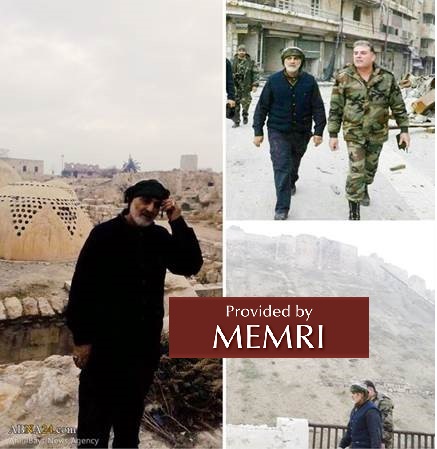
6728aSoleimani tours Aleppo (Qasemsoleimani.ir, December 16, 2016)

Following are excerpts from major reactions in the Arab press to the photos of Soleimani in Aleppo:

Iran Is Signaling Its Intent To Occupy More Cities In The Middle East

Hamad Al-Majed, a Saudi columnist for the London-based daily Al-Sharq Al-Awsat, wrote: “The well-known photo of the Gen. Qassem Soleimani arrogantly walking the empty streets of Aleppo that his forces destroyed and whose residents they killed and expelled… is a massive propaganda message that Iran has leaked to the media, and holds within it thousands [more] messages. It is as if Soleimani, a military peacock arrogant over his victories, is muttering: ‘Yesterday we liberated Baghdad and the other Iraqi cities, and after that Sana’a [in Yemen], and after that we took over Beirut [in Lebanon], and today we are liberating Aleppo. It is only a matter of time before [we] dismantle the other cities in Syria, and then, sooner or later, you will see me strolling through the rubble of other Arab cities in the Middle East…”[1]

‘Ali Al-Husseini, a columnist for the Lebanese daily Al-Mustaqbal, which is affiliated with pro-Saudi and anti-Assad elements in Lebanon, wrote: “Two days ago, the Iranian expansion plan was revealed, [which has now] reached Aleppo after [reaching the Syrian cities of] Al-Qusayr, Al-Zabadani, and Madaya, [occupied by Hizbullah]. [What revealed this plan was] IRGC [Qods Force] commander Qassem Soleimani, who emerged strolling the neighborhoods of Aleppo that reek of destruction, witnessed the killing of children, and are littered with the bodies of dead residents. There is no doubt that this was a painful picture for residents of the city…

“With the aid and assistance of [Afghani, Pakistani, and Iraqi] mercenaries, Soleimani yesterday stepped on the body parts and in the blood of Aleppo residents, and also on the emotions of its orphaned children. This photo birthed, in their souls, a desire for vengeance, and a dream to return [to Aleppo] with fire in their eyes…”[2]

Arabs Should Awaken And Act – Because Iran Poses A Danger To The Gulf States

Saleh Al-Sheikhi, a columnist for the Saudi daily Al-Watan, called on Arabs to awaken and act, in light of what is perceived as an Iranian takeover of yet another Arab city. He wrote: “Two days ago, I stood for nearly an hour, no less, looking at the photo of Iranian commander Qassem Soleimani strolling through the streets of Aleppo – which are no longer streets but ruins and piles of rubble. I struggled, no less, to put out of my mind my visions of Soleimani’s false dreams about strolling through cities in the Gulf [countries]… I searched out society’s reaction to this shocking photo, and what I found was sad: [Instead of reactions to this photo, I found reactions to] Sheikh ‘Abdallah Al-Suwailem, [who,] with all the esteem in which I hold him and his colleagues, has launched an argument that is out of place, with his statement that a sexual relationship between family members who are prohibited from marrying each other is less [grave] than abandoning [the commandment] of prayer. This [statement of his] opinion triggered thousands of debates, tweets, recriminations, gossip, and widespread debates that preoccupied the public.

“Qassem Soleimani is strolling through Syria with his eye on the other Arab capitals – while Sheikh ‘Abdallah Al-Suwailem is arguing with the public on the issue of abandoning morning prayers and sexual relations between relatives who may not marry! If we do not act now and feel our important national responsibility, then when will we act?”[3]

Soleimani Is A “Modern-Day Hitler”; The World Is Not Stopping Him – Just As It Did Not Stop Hitler At The Time

Some resistance axis opponents called Soleimani a “modern-day Hitler,” and argued that the world is not acting to help the Syrian people, just as it did not act to help victims of other massacres throughout modern history. Lebanese MP Muhammad Kabbara, of the Al-Mustaqbal party, stated: “History will show that what happened in Aleppo has surpassed the myths of the Nazi crematoria. The coming generations will never forget that the Persians, Russians, and the Assad regime were the ones who conducted massacres in Aleppo. They will never forget the sight of the modern-day Hitler, Qassem Soleimani, touring, and gloating over, the ill-fated neighborhoods of Aleppo in the company of an officer from Assad’s [army].”[4]

Amr Hamzawy, a former Egyptian MP and a columnist for the London-based daily Al-Quds Al-Arabi, wondered: “Why does the world leave the Syrian people on its own to be massacred by the dictator Bashar Al-Assad, and by Russia and Iran, which sponsor him? Because our evil world only knows how to massacre the weak while turning them into the perpetual victims of criminals and tyrants…

“Any serious action to save Syrians from slaughter would be contrary to the norm in our world, [which kept silent in light of] the massacres of Armenians and Jews in Europe; the extermination of 27 million in the former Soviet Union during WWII, [and] the dropping of two atomic bombs on Japan on the pretext of ending World War II… Any true effort by those who monopolize the industries of weapons, killing, and bloodshed to stop the Syrian massacre would be a bizarre deviation from their past policy and conduct.

“In the late 1930s, didn’t the governments of Britain, France, and the Soviet Union make it possible for the Nazis to spread murder and destruction across several parts of Eastern Europe to avoid a fight, and out of concern for their own interests? Didn’t Hitler emerge due to global disregard for his first crimes, and [didn’t] U.S. neutrality cause him to carry out further attacks and crimes?… Don’t the photos of Nazi generals in areas destroyed by their weapons in Soviet cities… remind you of the photos of Soleimani in Aleppo a few days ago?…”[5]


Endnotes:


[1] Al-Sharq Al-Awsat (London), December 20, 2016.

[2] Al-Mustaqbal (Lebanon), December 18, 2016.

[3] Al-Watan (Saudi Arabia), December 19, 2016.

[4] Al-Mustaqbal (Lebanon), December 18, 2016.

[5] Al-Quds Al-Arabi (London), December 20, 2016.
U.S. Money Transferred To Iran Used To Expand Iran’s Military Budget

December 15, 2016

U.S. Money Transferred To Iran Used To Expand Iran’s Military Budget, MEMRI, Dr. Nimrod Raphaeli*

While we cannot establish whether the money transferred from the U.S. went directly into the expanded defense budget, it, at a minimum, enabled the government to release an equal amount of money for defense purposes. It is noteworthy that the increase in the proposed defense budget for 2017 is approximately equal to the amount transferred by the U.S. Whatever the source of the defense budget increase, the IRGC will have ample resources to expand its nefarious activities far beyond the borders of the Islamic Republic.

*****************************

The government of Iranian President Hassan Rohani has submitted to the Majlis (parliament) a draft budget for the fiscal year March 2017-March 2018 for a total of $99.7 billion equivalent. The budget envisages a growth in expenditure of 13.9 percent over the preceding year, but a sharp increase of 39 percent, or $10.3 billion, in funds earmarked for defense, including a big increase in the budget of Iran’s Islamic Revolutionary Guard Corps (IRGC).

Notwithstanding political, economic and social conflicts between the Rohani government and the IRGC, foreign policy is closely coordinated by the two bodies. Upon reaching power, the Rohani government declared two key priorities: reforming the national economy, and reaching agreement with the West on the nuclear program. The government has shown no objection to the role of the IRGC, a potent military force accountable to the Supreme Leader, in regional politics, and particularly in Syria and Iraq. A branch of the IRGC, the Qods Force Brigade, commanded by Gen. Qasem Soleimani, is responsible for spreading Iran’s subversive and, often, terrorist activities across the Middle East and beyond.

Growth Of Iran’s Defense Budget

Overall, Iran’s defense budget has increased from $6 billion in 2013 during the presidency of Mahmoud Ahmadinejad to $8 billion in 2014, and in access of $10 billion for the next Iranian fiscal year. However, the section of the military budget earmarked for the IRGC has registered a far greater increase than the military budget as a whole. The budget allocation for the Revolutionary Guards was $3.3 billion in 2013, increased to $6 billion in 2015, declined to $4.5 billion in 2016 but increased by 53 percent to $6.9 billion for 2017 which translated into 77 percent of the total defense budget. In fact, under the Rouhani presidency, the total allocations to the military, the IRGC, the Organization for the Mobilization of the Oppressed (Basij), and the General Staff of the Armed Forces all rose to almost 80 percent since mid-2013 when Rohani assumed the presidency.

Apart of its dominant share in the national defense budget, the IRGC derives vast revenues from its control over energy, construction, banking, and marketing (as well as smuggling of contraband.) Much of these economic activities are carried out by a company known as Khatam Al-Anbiya (“Seal of the Prophet”) established by Supreme Leader Ali Khamenei in the late 1980s as the economic arm of the IRGC. Upon the withdrawal of the major oil companies such as Shell Oil (Anglo-Dutch) and Total (French) from Iran’s oil sector following the international sanctions, ownership of the oil and gas fields vacated by these companies was transferred to Khatam Al-Anbiya.[1]

The Ultimate Destiny Of The U.S.-Transferred Cash To Iran

In seeking to strengthen the policy of rapprochement with Iran, the Obama administration (though its Treasury Department) has surreptitiously transferred to Rohani’s government two tranches, in cash, for a total of $1.7 billion, allegedly as the cumulated interest on Iran’s deposits, made during the Shah regime before the 1979 revolution, for the purchase of American weapons

It is a commonly accepted premise that money is fungible. While we cannot establish whether the money transferred from the U.S. went directly into the expanded defense budget, it, at a minimum, enabled the government to release an equal amount of money for defense purposes. It is noteworthy that the increase in the proposed defense budget for 2017 is approximately equal to the amount transferred by the U.S. Whatever the source of the defense budget increase, the IRGC will have ample resources to expand its nefarious activities far beyond the borders of the Islamic Republic.

*Dr. Nimrod Raphaeli is Senior Analyst (emeritus) at MEMRI.


[1] Al-Quds al-Arabi, December 10, 2016

Israel’s First Project with Trump

December 9, 2016

Israel’s First Project with Trump, Front Page MagazineCaroline Glick, December 9, 2016

firstproject

Originally published by the Jerusalem Post

[R]ecently Hezbollah commander Hassan Nasrallah bragged, “We’re open about the fact that Hezbollah’s budget, its income, its expenses, everything it eats and drinks, its weapons and rockets are from the Islamic Republic of Iran.”

******************************

Israeli officials are thrilled with the national security team that US President-elect Donald Trump is assembling. And they are right to be.

The question now is how Israel should respond to the opportunity it presents us with.

The one issue that brings together all of the top officials Trump has named so far to his national security team is Iran.

Gen. (ret.) John Kelly, whom Trump appointed Wednesday to serve as his secretary of homeland security, warned about Iran’s infiltration of the US from Mexico and about Iran’s growing presence in Central and South America when he served as commander of the US’s Southern Command.

Gen. (ret.) James Mattis, Trump’s pick to serve as defense secretary, and Lt.-Gen. (ret.) Michael Flynn, whom he has tapped to serve as his national security adviser, were both fired by outgoing President Barack Obama for their opposition to his nuclear diplomacy with Iran.

During his video address before the Saban Forum last weekend, Prime Minister Binyamin Netanyahu said that he looks forward to discussing Obama’s nuclear Iran nuclear deal with Trump after his inauguration next month. Given that Netanyahu views the Iranian regime’s nuclear program – which the nuclear deal guaranteed would be operational in 14 years at most – as the most serious strategic threat facing Israel, it makes sense that he wishes to discuss the issue first.

But Netanyahu may be better advised to first address the conventional threat Iran poses to Israel, the US and the rest of the region in the aftermath of the nuclear deal.

There are two reasons to start with Iran’s conventional threat, rather than its nuclear program.

First, Trump’s generals are reportedly more concerned about the strategic threat posed by Iran’s regional rise than by its nuclear program – at least in the immediate term.

Israel has a critical interest in aligning its priorities with those of the incoming Trump administration.

The new administration presents Israel with the first chance it has had in 50 years to reshape its alliance with the US on firmer footing than it has stood on to date. The more Israel is able to develop joint strategies with the US for dealing with common threats, the firmer its alliance with the US and the stronger its regional posture will become.

The second reason it makes sense for Israel to begin its strategic discussions with the Trump administration by addressing Iran’s growing regional posture is because Iran’s hegemonic rise is a strategic threat to Israel. And at present, Israel lacks a strategy for dealing with it.

Our leaders today still describe Hezbollah with the same terms they used to describe it a decade ago during the Second Lebanon War. They discuss Hezbollah’s massive missile and rocket arsenal.

With 150,000 projectiles pointed at Israel, in a way it makes sense that Israel does this.

Just this week Israel reinforced the sense that Hezbollah is more or less the same organization it was 10 years ago when – according to Syrian and Hezbollah reports – on Tuesday Israel bombed Syrian military installations outside Damascus.

Following the alleged bombing, Defense Minister Avigdor Liberman told EU ambassadors that Israel is committed to preventing Hezbollah from transferring advanced weapons, including weapons of mass destruction, from Syria to Lebanon.

The underlying message is that having those weapons in Syria is not viewed as a direct threat to Israel.

Statements like Liberman’s also send the message that other than the prospect of weapons of mass destruction or precision missiles being stockpiled in Lebanon, Israel isn’t particularly concerned about what is happening in Lebanon.

These statements are unhelpful because they obfuscate the fact that Hezbollah is not the guerrilla organization it was a decade ago.

Hezbollah has changed in four basic ways since the last war.

First, Hezbollah is no longer coy about the fact that it is an Iranian, rather than Lebanese, organization.

Since Iran’s Revolutionary Guards founded Hezbollah in Lebanon in 1983, the Iranians and Hezbollah terrorists alike have insisted that Hezbollah is an independent organization that simply enjoys warm relations with Iran.

But today, with Hezbollah forming the backbone of Iran’s operations in Syria, and increasingly prominent in Afghanistan and Iraq, neither side cares if the true nature of their relationship is recognized.

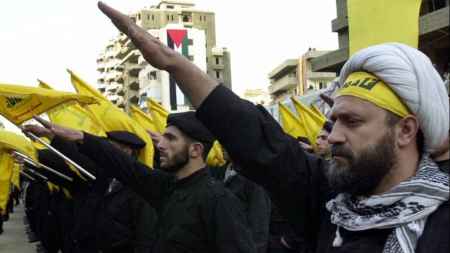
For instance, recently Hezbollah commander Hassan Nasrallah bragged, “We’re open about the fact that Hezbollah’s budget, its income, its expenses, everything it eats and drinks, its weapons and rockets are from the Islamic Republic of Iran.”

What our enemies’ new openness tells us is that Israel must cease discussing Hezbollah and Iran as separate entities. Israel’s next war in Lebanon will not be with Hezbollah, or even with Lebanon. It will be with Iran.

This is not a semantic distinction. It is a strategic one. Making it will have a positive impact on how both Israel and the rest of the world understand the regional strategic reality facing Israel, the US and the rest of the nations of the Middle East.

The second way that Hezbollah is different today is that it is no longer a guerrilla force. It is a regular army with a guerrilla arm and a regional presence. Its arsenal is as deep as Iran’s arsenal.

And at present at least, it operates under the protection of the Russian Air Force and air defense systems.

Hezbollah has deployed at least a thousand fighters to Iraq where they are fighting alongside Iranian forces and Shi’ite militia, which Hezbollah trains. Recent photographs of a Hezbollah column around Mosul showed that in addition to its advanced missiles, Hezbollah also fields an armored corps. Its armored platforms include M1A1 Abrams tanks and M-113 armored personnel carriers.

The footage from Iraq, along with footage from the military parade Hezbollah held last month in Syria, where its forces also showed off their M-113s, makes clear that Hezbollah’s US platform- based maneuver force is not an aberration.

The significance of Hezbollah’s vastly expanded capabilities is clear. Nasrallah’s claims in recent years that in the next war his forces will stage a ground invasion of the Galilee and seek to seize Israeli border towns was not idle talk. Even worse, the open collaboration between Russia and Iran-Hezbollah in Syria, and their recent victories in Aleppo, mean that there is no reason for Israel to assume that Hezbollah will only attack from Lebanon. There is a growing likelihood that Hezbollah will make its move from Syrian territory.

The third major change from 2006 is that like Iran, Hezbollah today is much richer than it was before Obama concluded the nuclear deal with the ayatollahs last year. The deal, which canceled economic and trade sanctions on Iran, has given the mullahs a massive infusion of cash.

Shortly after the sanctions were canceled, the Iranians announced that they were increasing their military budget by 90%. Since Hezbollah officially received $200 million per year before sanctions were canceled, the budget increase means that Hezbollah is now receiving some $400m. per year from Iran.

The final insight that Israel needs to base its strategic planning on is that a month and a half ago, Hezbollah-Iran swallowed Lebanon.

In late October, after a two-and-a-half-year fight, Saad Hariri and his Future Movement caved to Iran and Hezbollah and agreed to support their puppet Michel Aoun in his bid for the Lebanese presidency.

True, Hariri was also elected to serve as prime minister. But his position is now devoid of power.

Hariri cannot raise a finger without Nasrallah’s permission.

Aoun’s election doesn’t merely signal that Hariri caved. It signals that Saudi Arabia – which used the fight over Lebanon’s presidency as a way to block Iran’s completion of its takeover of the country – has lost the influence game to Iran.

Taken together with Saudi ally Egyptian President Abdel Fattah al-Sisi’s announcement last week that he supports Syrian President Bashar Assad’s remaining in power, Aoun’s presidency shows that the Sunnis have accepted that Iran is now the dominant power in Iraq, Syria and Lebanon.

This brings us back to Hezbollah’s tank corps and the reconstruction of the US-Israel alliance.

After the photos of the US-made armored vehicles in Hezbollah’s military columns were posted online, both Hezbollah and the Lebanese Armed Forces insisted that the weapons didn’t come from the LAF.

But there is no reason to believe them.

In 2006, the LAF provided Hezbollah with targeting information for its missiles and intelligence support. Today it must be assumed that in the next war, the LAF, and its entire arsenal will be placed at Hezbollah-Iran’s disposal. In 2016 alone, the US provided the LAF with $216m. in military assistance.

From Israel’s perspective, the most strategically significant aspect of Hezbollah-Iran’s uncontested dominance over all aspects of the Lebanese state is that while they control the country, they are not responsible for it.

Israeli commanders and politicians often insist that the IDF has deterred Hezbollah from attacking Israel. Israel’s deterrence, they claim, is based on the credibility of our pledge to bomb the civilian buildings now housing Hezbollah rockets and missiles in the opening moments of the next conflict.

These claims are untrue, though. Since Hezbollah- Iran are not responsible for Lebanon despite the fact that they control it through their puppet government, Iranian and Hezbollah leaders won’t be held accountable if Israel razes south Lebanon in the next war. They will open the next war not to secure Lebanon, but to harm Israel. If Lebanon burns to the ground, it will be no sweat off their back.

The reason a war hasn’t begun has nothing to do with the credibility of Israel’s threats. It has to do with Iran’s assessment of its interests. So long as the fighting goes on in Syria, it is hard to see Iran ordering Hezbollah to attack Israel. But as soon as it feels comfortable committing Hezbollah forces to a war with Israel, Iran will order it to open fire.

This then brings us back to the incoming Trump administration, and its assessment of the Iranian threat.

Trump’s national security appointments tell us that the 45th president intends to deal with the threat that Iran poses to the US and its interests.

Israel must take advantage of this strategic opening to deal with the most dangerous conventional threat we face.

In our leaders’ conversations with Trump’s team they must make clear that the Iranian conventional threat stretches from Afghanistan to Israel and on to Latin America and Michigan. Whereas Israel will not fight Iran in Iraq and Afghanistan, or in the Americas, it doesn’t expect the US to fight Iran in Lebanon. But at the same time, as both allies begin to roll back the Iranian threat, they should be operating from a joint strategic vision that secures the world from Iran’s conventional threat.

And once that it accomplished, the US and Israel can work together to deal with Iran’s nuclear program.

Iran’s Forces Outnumber Assad’s in Syria

November 24, 2016

Iran’s Forces Outnumber Assad’s in Syria, Gatestone Institute, Majid Rafizadeh, November 24, 2016

Pursuing a sectarian agenda, Iranian leaders have also fueled the conflict by sending religious leaders to Syria to depict the conflict as a religious war.

Iran’s military forces and operations in Syria are significantly more than what has been generally reported so far.

The Syrian war has led to the rise and export of terrorism abroad as well as to one of the worst humanitarian tragedies, in which more than 470,000 people have been killed.

Iran has played a crucial role in maintaining in power President Assad, who has repeatedly used chemical weapons on civilians. Iran has promoted continuing the conflict.

2070

While, according to reports by Iran’s Islamic Revolutionary Guard Corps (IRGC), the Syrian military has fewer than 50,000 men, Iran has deployed more than 70,000 Iranian and non-Iranian forces in Syria, and pays monthly salaries to over 250,000 militiamen and agents. According to a report entitled, “How Iran Fuels Syria War,” published by the National Council of Resistance of Iran (NCRI), non-Iranian mercenaries number around 55,000 men; Iraqi militias are around 20,000 men (from 10 groups), Afghan militias are approximately 15,000 to 20,000 men, Lebanese Hezbollah are around 7,000 to 10,000 men, and Pakistani, Palestinian and other militiamen number approximately 5,000 to 7,000.

In addition, the composition of Iranian IRGC forces are around 8,000 to 10,000 men, and 5,000 to 6,000 from the regular Iranian Army.

The major Iranian decision-makers in the Syrian conflict are Supreme Leader Ayatollah Ali Khamenei and the senior cadre of the Revolutionary Guards. Iran’s so-called moderate leaders — including President Hassan Rouhani and Foreign Minister Javad Zarif — are also in favor of Iran’s military, advisory, financial, and intelligence involvement in Syria. Rouhani repeatedly announced his support for Assad and pledged to “stand by [Syria].”

Khamenei insists on using more military power in Syria:

“[I]n December 2015, Khamenei ordered the IRGC to stand fast in the Aleppo region. He reiterated that if they retreated, their fate would be similar to the Iran-Iraq war and the regime would ultimately be defeated in Syria. Thus, in January 2016, the IRGC doubled the number of its forces in Syria to about 60,000 and launched extensive attacks in the region. However, despite tactical advances in some areas, these forces have been unable to even take control of southern Aleppo. IRGC faced a deadlock. In March 2016, Khamenei ordered the regular Army’s 65th Division (special operations) to be deployed around Aleppo, and increased the number of other forces as well. Plans for a major offensive to capture Aleppo were set in motion. During attacks by the IRGC and the Iranian army in April 2016, dozens of the regime’s forces, including IRGC commanders and staff, Iranian army personnel and foreign mercenaries from Iraq, Lebanon and Afghanistan, were killed. Although the IRGC and the Iranian regime’s regular army forces have failed to change the balance of military power in Syria, Khamenei insists on sending more IRGC and army forces into the Syrian quagmire. Seeing no way forward, and no way back.”

Iran has also played critical role in pushing Russia to intensify its military involvement in Syria by providing air support, so that the IRGC and its allies could help Iran’s military make quick territorial gains.

Iran has spent approximately USD $100 billion on the Syrian war. The sanctions relief given to Iran as a result of the “nuclear agreement” has significantly assisted the Iranian leaders’ ability to continue the war.

Iran also pays salaries to non-Iranian militias to participate in the war: “The Tehran regime spends one billion dollars annually in Syria solely on the salaries of the forces affiliated with the IRGC, including military forces, militias, and Shiite networks.”

Iran, for example, pays nearly USD $1,550 a month to the IRGC’s Iraqi mercenaries who are dispatched to Syria for a month-and-a-half, and approximately USD $100-200 a month to the Syrian militia fighters from the Syrian National Defense.

Pursuing a sectarian agenda, Iranian leaders have also fueled the conflict by sending religious leaders to Syria to depict the conflict as a religious war.

“Iran’s ruling regime has deployed a vast network of its mullahs to Syria, where their warmongering stirs up the fighters. And much like during the Iran/Iraq War, religious zealots are also sent to Syria to fuel the flames of religious fervor among the IRGC’s Basiij fighters and Afghan and Iraqi mercenaries.”

Iran has divided Syria into five divisions and haד over 13 military bases including the “Glass Building” (Maghar Shishe’i), which is the IRGC’s main command center in Syria, located close to the Damascus Airport. The IRGC placed its command center near the airport because,

“the airport would be the last location to fall. IRGC forces airlifted to Syria are dispatched to other areas from this location. One of the commanders stationed at the Glass Building is IRGC Brig. Gen. Seyyed Razi Mousavi, commander of IRGC Quds Force logistics in Syria. Between 500 and 1,000 Revolutionary Guards are stationed there.”

Other Iranian bases are scattered across Syria including in Allepo, Hama, and Latakia.

Since Brig. General Hossein Hamedani was killed in Syria, the current command of Iran’s forces in Syria lies with the Command Council, whose members include: IRGC Brig. Gen. Esmail Qaani (deputy of Qassem Soleimani who is the commander of the Quds Force) and IRGC Brig. Gen. Mohammad Jafaar Assadi (aka Seyyed Ahmad Madani).

The Syrian conflict has become the “root cause” of terrorism, which does not recognize borders and has spread to Europe and America. Since the Syrian war is the epicenter of terrorism, fighting terrorist groups such as ISIS without resolving the Syrian conflict is fruitless.

Terrorist groups such as ISIS are the symptoms, and the Syrian war is the disease. We need to address the disease and the symptoms simultaneously.

The best strategic and tactical approach is to cut off the role of a major player in the conflict: i.e. Iran. Without Iran, Assad would most likely not have survived the beginning phase of the uprising.

Iran kept Assad in power and gave birth to terrorist groups such as ISIS. In other words, Iran and Assad are the fathers of ISIS. Iran and Assad also played the West by claiming that they are fighting terrorism.

Considering the military forces and money invested in Syria, Iran is the single most important player in the Syrian war, and has tremendously increased radicalization of individuals, militarization and terrorism. Iran benefits from the rise of terrorism because it expands its military stranglehold across the region. Iran is top sponsor of terrorism, according to the latest report from U.S. State Department.

Iran will not agree to abandon Assad diplomatically.

In order to resolve this ripe environment of conflict for terrorism in Syria, Iran’s financial and military support to Assad should be strongly countered and cut off.

Obama Gave Iran Money that Belonged to Iran’s Terror Victims

November 3, 2016

Obama Gave Iran Money that Belonged to Iran’s Terror Victims, Counter Jihad, November 2, 2016

iranmoney

Once again, it seems as if neither the law nor the American interest are of great concern to this administration.  When Iran is involved, at least, both the law and our national interests are always set aside.

****************

Here at CounterJihad, we have covered the transfer by the Obama administration of $1.7 billion in giant pallets of cash to the terrorist elements within Iran’s government.  None of the administration’s stories justifying this transfer of wealth to the main state sponsor of terrorism have made sense.  It was not necessary to transfer the money in cash, for example.  The transfer really was a hostage ransom payment, in spite of their denials, to take a second example.

Today, we learned that another aspect of their justification was flawed.  The Obama administration has claimed that the money transferred to Iran belonged to Iran anyway, as a kind of refund for weapons sales that did not happen.  This was always a highly questionable claim, as the government that paid us the money was not the same government that now rules over Iran.  It is unclear why the Iranian revolutionary government would be entitled to moneys advanced by the Shah of Iran.  This makes no more sense than if a homeowner had overpaid property taxes, and the government responded by sending the overpaid money not to him but to the squatters who had forcibly occupied his home over his protest.  Of course, the Shah was no longer in a position to receive a refund, so it wasn’t clear that the money should go to anyone.

What we have learned most recently, however, is that the money did have a proper owner:  victims of Iran’s support of terror.

Alisa Flatow, a twenty-year-old Brandeis University honors student spending her junior year abroad in Israel, boarded a bus in Jerusalem bound for a popular resort area in Gaza. It was the height of the “peace process,” celebrated the year before with Nobel Peace prizes. As the bus entered Gaza, a van filled with explosives slammed into it. Eight people, including Alisa, were killed, and more than 40 others were injured. The attack was carried out by a faction of Islamic Jihad controlled, financed, and directed by the highest levels of Iran’s government….  A federal district court issued a 35-page opinion, Flatow v. Islamic Republic of Iran (1998), awarding a total of $20 million in compensatory damages as well as punitive damages, with both types of damages specifically authorized by the U.S. Congress….

In all, sixteen cases were decided against Iran by courts in the United States between 1998 and 2004, with awards of compensatory damages totaling some $400 million and punitive damages totaling $3.5 billion.

Of course, the problem faced by each victorious plaintiff was collecting the judgment. Stephen Flatow, after unsuccessfully seeking to have the damages paid out of various Iranian assets held in the United States, learned of the $400 million in the FMS fund. The Clinton administration had supported the legislation that allowed suits such as Flatow’s, but then strenuously opposed any effort to have the judgments satisfied from that fund.

In other words, the money was spoken for before the Obama administration elected to transfer it to the IRGC.  It belonged, by the authorization of Congress and the decision of Federal courts, to victims of terrorism sponsored by the Iranian government.  Iran owes them all that money, and a great deal more.

The Obama administration has not rethought its position on sending Iran more and more money, whatever the law may say.  The State Department been busy recently trying to drum up investment for Iran instead.  Secretary of State John F. Kerry has been telling unlikely stories about the sanctions still in place on Iran in order to try to convince bankers to send Iran even more cash.  On this question, it should be noted by anyone thinking of investing, the State Department and the Treasury are very much at odds.

Once again, it seems as if neither the law nor the American interest are of great concern to this administration.  When Iran is involved, at least, both the law and our national interests are always set aside.

We Will Assassinate Enemies of the Republic Abroad: Iran

November 2, 2016

We Will Assassinate Enemies of the Republic Abroad: Iran, Clarion Project, November 2, 2016

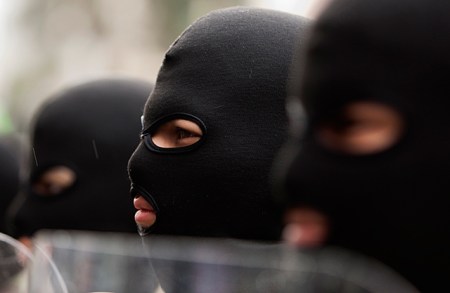
iran-basij-hooded-men-ip_4Members of Iran’s volunteer paramilitary organization Basij (Photo: © Reuters)

Salami accused those who oppose the Iranian regime of being the agents of countries of the region (i.e. Saudi Arabia) and Israel, saying “enemies are seeking to overthrow the system and we have to defeat the enemy using the ‘great jihad’ to confront and fight the infidels.”

******************************

Speaking at a ceremony in Nahavand Mosalla, Salar Abnoush, vice coordinator of the Islamic Republic Guards Corps (IRGC), declared that “soon the IRGC will be formed in Europe and the United States.”

“The Islamic Republic Guards Corps in various cultural, construction fronts have brought the enemy to their knees” the Times of IsraelPersian language edition quotes Abnoush as saying. “This includes the construction of the world’s largest refinery and construction of the world’s largest tunnels – both are a big successes. So all the world must know that soon Revolutionary Guards forces will be formed in the U.S. and Europe.”

The declaration was echoed by Brigadier General Hossein Salami, Iran’s deputy commander of IRGC said, while speaking at a government ceremony in Urmia. Addressing his comments specifically to members of the Kurdistan Democratic Party of Iran, Salami said, “They should not try us again twice because our armed forces proved [they were capable of] this for years, and the enemy suffered heavy losses by the children of this umma (Islamic nation) outside of Iran.”

Salami accused those who oppose the Iranian regime of being the agents of countries of the region (i.e. Saudi Arabia) and Israel, saying “enemies are seeking to overthrow the system and we have to defeat the enemy using the ‘great jihad’ to confront and fight the infidels.”

In reporting Salami’s comments, Iran Global notes that more than 300 members and officials of Kurdish Democratic Party of Iran were assassinated outside of Iran by Iran’s special Intelligence teams within a few years after Iran -Iraq war ended. Two leaders of Kurdish Democratic Party, Dr. Abdol Rahman Ghassemlou and Sadegh Sharafkandi, along with other members and officials of the party, were killed by the Iranian regime in Austria and Germany.

Although Iran later pledged to the European Union it would stop the assassinations of Iranian dissidents in Europe, the news agency notes that history has shown that in order to achieve its goals, the Islamic Republic often does not abide by its international obligations.

According to Tasnim News Agency, Salami declared, “Not long ago, a few mercenaries with provoking from a few regional counties and with the support of the United States and the Zionists tried to re-challenge the Islamic Republic of Iran again, but everyone saw the very strong response of our defenders and how they all were killed by our forces.

“We warn the enemies of Islamic Republic of Iran: Do not make this mistake again as the revolutionary forces will chase them and kill them anywhere in the world. For chasing our enemies, we do not have any limit or red line and our armed forces have proved this in the last few years.”

IRGC commander killed on eve of Aleppo battle

October 28, 2016

IRGC commander killed on eve of Aleppo battle, Long War Journal, , October 28, 2016

While employing foreign fighters minimizes domestic political backlash in Iran, it also serves a long-term strategic objective to develop capable Shiite proxies. A retired IRGC commander who has deployed to Syria recently claimed the formation of a “Shiite liberation army,” and IRGC commanders have openly discussed a global Basij paramilitary taking shape in the laboratory of Syria, with talks of laying the groundwork for the apocalypse and the Mahdi’s arrival in more intimate quarters. The IRGC, however, has not hesitated to inject regular Iranian soldiers and mid-ranked officers during major offensives and whenever the situation has demanded it, such as the offensive in southern Aleppo in October 2015 and the assault north of Aleppo in February 2016.

********************

The Jaysh al Fath and Fath Halab coalitions and their allies launched an anticipated major offensive today west of Aleppo in another bid to break the siege of rebel-held eastern Aleppo, according to Reuters. In early September forces allied with the Syrian government backed by Russian air power repelled the opposition’s first attempt to break the siege following a month-long battle. Pro-regime forces attempted to build upon their momentum and launched major offensives in late September to tighten their grip on Aleppo. They have made slow but steady gains on the city blocks of eastern Aleppo, and have attempted to push their gains in western and southwestern Aleppo to prevent the opposition from breaking the siege again.

The pro-government coalition includes the Syrian Arab Army (SAA), the Shiite expeditionary forces led by Iran’s Islamic Revolutionary Guard Corps (IRGC), as well as Lebanese Hezbollah, Iraqi Harakat al Nujaba, Afghan Fatemiyoun Division and the Pakistani Zeynabiyoun. Furthermore, the Palestinian Quds Brigade, which has effectively become Russia’s proxy, has made gains in the northern Aleppo sector alongside the SAA.

The Russian defense minister has reportedly asked President Vladimir Putin to resume airstrikes today in Aleppo following a 10-day hiatus, citing an upsurge in opposition activities, but Putin has said that airstrikes are unnecessary for now, according to Reuters citing Interfax News Agency. The IRGC provides intelligence to Russia for airstrikes in Syria.

A high-ranking former IRGC commander was killed in Syria on Oct. 26 during an “advisory mission” in Aleppo. according to Iranian media. He was buried in Mashhad, Iran, today along with two Afghan Fatemiyoun Division combatants killed in Syria this past week. The IRGC Qods Force deputy commander Brigadier General Esmail Gha’ani, who delivered remarks at the deceased commander’s funeral, said “the blood of martyrs strengthen the foundation of the Islamic Republic system.”

Qolam-Reza Samai was a retired commander with the rank of Brigadier General or Brigadier General Second Class who had volunteered to fight Syria, and will be buried in his home province of Khorasan. A veteran of the Iran-Iraq War (1980–1988), Samai held several command posts in artillery, intelligence, and operations capacities in several provincial Ground Forces units.

The IRGC has tapped into its retired and active duty Ground Forces, and special forces officer corps to augment the efforts led by the Qods Force in Syria and Iraq. The deployment pattern of Ground Forces commanders depends on the mission need and crisis at hand. For example, there was a surge of commanders in Iraq following the incursion of the Islamic State in mid-2014, and most were called back when the IRGC-backed Shiite militias were able to better manage the situation.

The IRGC Ground Forces have been present in Syria since as early as 2011. Their numbers have increased as the war deteriorated, peaking in Oct. 2015 as Iran deployed significant numbers of its regular forces in coordination with Russia’s military intervention, before spiking again in Feb. 2016 during a major offensive north of Aleppo. More than a dozen senior Guard commanders were killed in Syriaduring the past year, with the overwhelming majority in Aleppo. Fatalities and causalities of high-ranking officers have continued as the Guard has reduced regular Iranian forces since May and has relied more on Shiite proxies. Contrary to the insistence of the IRGC, commanders are engaged in more than just advising: they design and lead operations for the Iranian-led Shiite expeditionary forces.

The high fatality rate of Iranian commanders is explained by the tactically risk-tolerant and egalitarian culture of the Guard, which values martyrdom in battle as the highest honor and takes pride in fighting on the frontline. Whereas the IRGC is tactically risk-tolerant, it is strategically risk-averse and prefers to limit Iranian exposure, as discussed in depth by Ali Alfoneh and Michael Eisenstadt in The Washington Institute. 

While employing foreign fighters minimizes domestic political backlash in Iran, it also serves a long-term strategic objective to develop capable Shiite proxies. A retired IRGC commander who has deployed to Syria recently claimed the formation of a “Shiite liberation army,” and IRGC commanders have openly discussed a global Basij paramilitary taking shape in the laboratory of Syria, with talks of laying the groundwork for the apocalypse and the Mahdi’s arrival in more intimate quarters. The IRGC, however, has not hesitated to inject regular Iranian soldiers and mid-ranked officers during major offensives and whenever the situation has demanded it, such as the offensive in southern Aleppo in October 2015 and the assault north of Aleppo in February 2016.

Mosul assault – a military Tower of Babel

October 17, 2016

Mosul assault – a military Tower of Babel, DEBKAfile, October 17, 2016

mosul_offensive_declaration_16-10-16

The underlying US rationale for embarking on this high-wire operation is President Barack Obama’s aspiration to achieve Mosul’s liberation before his departure from the White House in January, in the hope that this landmark success will provide a major distraction from his administration’s failed policies in Syria.

****************************

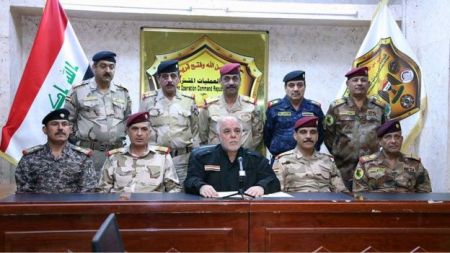
Sunday night, Oct. 16, Iraqi Prime Minister Haidar al-Abadi, supported by a bevy of generals, announced that the military operation to recapture Mosul from its two-year occupation by the Islamic State had begun.

Three formally approved participants are taking part in the operation, DEBKAfile’s military sources report:

1. American special operations, artillery and engineering units – equipped with floating bridges for crossing the Tigris River – plus the US air force for massive bombardment to crush enemy resistance.

2. Iraqi army armored divisions, special ops forces, regular troops and anti-terror police units.

3. The Iraqi Kurds’ Peshmerga.

The Iraqi prime minister pledged formally that only Iraqi fighters would enter Mosul, i.e. no Americans, Kurds or other non-Iraqi forces.

It was a pledge that neither the Iraqi Sunni and Shiite combatants nor the Kurdish and Turkmen fighters trusted him to uphold, after similar promises went by the wayside in the US-led coalition battles fought in the past two years to retake the Iraqi towns of Ramadi, Tikirit, Baiji and Fallujah from ISIS.

The first forces to enter those cities were by and large pro-Iranian Iraqi Shiite militias, especially the Bader Brigades and the Popular Mobilization Units, under Iran’s supreme Middle East commander Gen. Qassem Soleimani. Nonetheless, despite the ravages they wrought in those Sunni cities, US air support was forthcoming for their advance, while in Washington US officials pretended they were helping Iraqi government army units.

With regard to the Mosul campaign, Obama administration officials and military officers, like the Iraqi prime minister, insist there will be no repetition of the Iranian-backed Shiite invasion and conquest of yet another Sunni city, where a million inhabitants still remain.

mosul_offensive_17-10-16

They don’t explain how this will be prevented when those same pro-Iranian Iraqi Shiite forces are already massing northeast of Mosul, near the Iraqi-Syria border, and standing by for the order to advance into the city.

Tehran quite obviously has no intention of being left out of the epic capture of Mosul.

Neither is another uninvited party, Turkish President Tayyip Erdogan. He too has positioned a Turkish military concentration in Iraq, in defiance of strong objections from Washington and Baghdad. Turkish troops stand ready to move forward to do Erdogan’s will and achieve three strategic goals:

a) To actively frustrate Kurdish Peshmerga entry to Mosul, although its 15,000 fighters out of the 25,000 invasion force are a vital element of the spearhead thrust into the city. Ankara has warned that if Kurds set foot in Mosul, Turkish troops will follow.

b)  To block the path of Syrian Kurdish YPG militiamen from entering Iraq and linking up with their Iraqi brothers-in-arms.

c) To provide backing, including Turkish air support, for the Iraqi Turkmen militias still present in the Turkmen quarter of Mosul.

DEBKAfile’s military sources count six assorted military groupings taking part in the liberation of Mosul. They have nothing in common aside from their determination to drive the Islamic State out.

They are utterly divided on the two main aspects of the offensive: How to achieve their common goal and what happens to Mosul after the Islamist invaders are gone.

The underlying US rationale for embarking on this high-wire operation is President Barack Obama’s aspiration to achieve Mosul’s liberation before his departure from the White House in January, in the hope that this landmark success will provide a major distraction from his administration’s failed policies in Syria.

The Islamic State might have been expected to take advantage of the prior warning of the offensive for a stand in defense of the Iraqi capital of Abu Bakr Al-Baghdadi’s caliphate and so exploit the conflicting interests of the invading force.

But ISIS leaders decided against waiting for the combined offensive. Indeed, according to DEBKAfile’s sources, thousands of jihadis made tracks out of the city two or three months ago, relocating the bulk of their combat strength and institutions in two new locations: in the western Iraqi desert province of Anbar at a site between the Jordanian and Saudi borders and eastern Syria. Several hundred fighters were left behind in Mosul to harass the US-Iraq-Kurdish armies as they advance into the city and exploit the invaders’ discord to retain a foothold in Mosul.

US Tomahawks destroy Iran’s radar bases in Yemen

October 13, 2016

US Tomahawks destroy Iran’s radar bases in Yemen, DEBKAfile, October 13, 2016

uss_mason_fires__9-10-16_an_sm-2-1

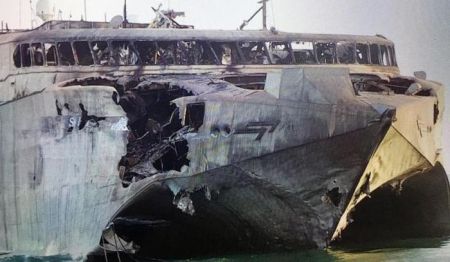
Tomahawk cruise missiles launched by US Navy destroyer USS Nitze early Thursday, Oct. 13, destroyed three Iranian-Yemeni coastal radar stations, after C-802 anti-ship missiles supplied by Iran to Yemeni Houthi rebels were fired at US naval vessels off the Yemeni coast. The stations were built and  operated  by Iran’s Revolutionary Guards (IRGC) for their Yemeni proxies to back up a threat to blockade the Red Sea.

From Oct. 9, the new missiles four times targeted the US flotilla shortly after it arrived to patrol the Red Sea and the Bab al-Mandeb Strait. Neither the US nor Iran has acknowledged their mounting confrontation over control of these strategic waters, which Tehran is waging through its Yemeni proxy.

DEBKAfile was first to disclose this confrontation in a special report Wednesday. (see below)

Iran’s Guards are repeating the mode of operation they employed a decade ago at another Middle East flashpoint. On July 14, 2006, Hizballah used an earlier version of the C-802 to attack and cripple the Israeli Hanit missile ship on the day this Iranian Lebanese proxy launched the Second Lebanese War against Israel. Rev Guards seized control of Lebanese shore radar station to guide their aim.

A highly advanced radar installation is required for the use of the C-802. Two radar stations set up outside Yemen’s two principal Red Sea ports, Mokha and Hudaydah earlier this month were operated by Rev. Guards missile and radar teams until they were destroyed Thursday, DEBKAfile’s military sources report. The third station was added for triangulation. The destruction of all three by a US Tomahawk has knocked out the Houthis’ ability to use C-802 missiles and Iran’s threat to blockade the Red Sea.

To drive this lesson home, the US Pentagon issued the following statement:

“Destroying these radar sites will degrade their ability to track and target ships in the future. These radars were active during previous attacks and attempted attacks on ships in the Red Sea, including last week’s attack on the USA-flagged vessel “Swift-2”, and during attempted attacks on USS Mason and other ships as recently as yesterday.

The official was referring to the United Arab Emirates US-flagged transport ship that was badly damaged last week in the Bab al-Mandeb strait by a Houthi missile..

DEBKAfile reported earlier:

Contrary to Tehran’s assurance to Washington in August that Iranian arms supplies to Yemeni Houthi rebels had been suspended, the rebels took delivery last week of the largest consignment of Iranian weapons to date.

According to DEBKAfile’s military sources, the shipment included highly sophisticated Scud D surface-to-surface missiles with a range of 800km; and C-802 anti-ship missiles (an upgraded version of the Chinese YJ-8 NATO-named CSS-N-8 and renamed by Iran Saccade).

They came with Iranian Revolutionary Guards officers and radar systems to fine-tune the targeting of these missiles by Iran’s Yemeni proxies.

The Scuds were given to the Houthi forces fighting in northern Yemen on the Saudi border, while the C-802s were delivered to the Houthis’ Ansar Allah faction, which is under direct Iranian Rev Guards command.

The missiles were posted at special launch bases constructed by Iran outside Yemen’s two principal Red Sea ports of Mokha and Hudaydah.

Since no more than 62km of Red Sea water divides the Saudi and African coasts, the Iranian missiles are well able to block shipping and tanker traffic plying to and from the Gulf of Suez and the Persian Gulf. Therefore, the threat of blockade hangs imminently over one-third of Saudi and Gulf Emirate oil exports.

The same threat hangs over Israeli civilian and naval shipping from its southern port of Eilat through the Gulf of Aden and out to the Indian Ocean.

One of the most troubling aspects of this pivotal new menace to an international waterway was that US, Saudi, Egyptian and Israeli intelligence agencies missed the huge consignment of Iranian missiles as it headed towards Yemen. Neither did they pick up on the construction by Iranian military engineers of three ballistic missile bases – one facing Saudi Arabia and two Red Sea traffic.

Tehran’s Yemeni proxies moreover landed large-scale military strength on Perim island in the mouth of the Bab al-Mandeb strait, the chokepoint for ingress and egress from the Red Sea.

Since the strait is just 20km wide, control of this island empowers this force to regulate shipping movements through this strategic strait.
Tehran wasted no time after all its assets were in place to begin using them:

1. On Oct. 1, Iran’s Houthi surrogates launched C-8-1 missiles against a United Arab Emirates transport HSV-2 Swift logistics catamaran as it was about to pass through the strait. The ship, on lease from the US Navy, was badly damaged. No information was released about casualties.

uae_hsv-2_1-1-16-1

DEBKAfile’s military and intelligence sources discerned that the aim of this attack was to choke off the movements of UAE warships from the southern Yemeni port of Aden, where large Emirate and Saudi forces are concentrated, to the Eritrean port of Assab, where the UAE has established a large naval base.

This attack did finally evoke a US response. The guided missile destroyers, USS Mason and USS Nitze, were dispatched to the Red Sea, along with the USS Ponceafloat forward staging base, to patrol the strait opposite the Yemeni coast

2. This did not deter Tehran or its Yemeni pawns: On Oct. 9, they fired an additional barrage of C-802 at the American flotilla, which according to a US spokesman, missed aim.

The Mason hit back with two Standard Missile-2s and a single Enhanced Sea Sparrow Missile.

There has been no official word about whether these weapons destroyed a Yemeni launching site. But the event itself was a landmark as the first direct Iranian-Houthi attack of its kind on an American naval vessel.

3. That same day, the Houthis fired Scud-D missiles at the Saudi town of Ta’if, 700 km from the Yemeni border and only 70km from the Muslim shrine city Mecca. This was meant as a direct assault on the Saudi royal house and its claim to legitimacy, by virtue of its role as Guardian of the Holy Places of Islam.

In America’s heated presidential campaign, the Democratic contender Hillary Clinton boasts repeatedly that as Secretary of State she helped “put the lid on Iran’s nuclear program without firing a single shot.”

That is factually true. America did not fire a single shot. Iran did the shooting and still does, constantly upgrading its arsenal with sophisticated ballistic missiles.

Venezuela, Iran, USA and Narco-Terrorism

October 13, 2016

Venezuela, Iran, USA and Narco-Terrorism, Gatestone Institute, Susan Warner, October 13, 2016

There are an estimated six million Muslims living in Latin American cities, who provide a fertile terrorist recruiting environment.

“Iran has opened up more than 80 cultural centers in Latin America in order to export its toxic brand of political influence and serve its interest, focusing on partnering with nations well known for their anti-American rhetoric including Venezuela, Argentina, Bolivia, Ecuador, and Nicaragua.” — US Rep. Ileana Ros-Lehtinen, in testimony for the House Sub-Committee on the Middle East and North Africa.

Amidst the unspeakable economic distress facing residents of Venezuela today, security experts have identified yet another major cause for concern emanating from this once prosperous, oil-rich nation: Iran is moving in, partnering with Venezuela’s prosperous drug traders and creating a foothold there, as well as in other “friendly” Latin American countries. Iran is laundering money in Latin America and presumably secretly plotting to accomplish a strategic long-term goal to penetrate the Western hemisphere.

Iran’s terrorist activities, its partnership with Venezuelan drug traffickers and the general criminal atmosphere affects the citizens of Caracas so much that people reportedly are fearful of even going to the store to wait in the endless lines for food.

In Venezuela, security analysts say, the corruption starts at the very top with President Nicolas Maduro himself, who is looking frantically for money in every crevasse to keep the nation and his presidency afloat. Reports estimate that in Venezuela one police officer dies every day and the number of homicides per capita in Caracas is the highest in the world.

National crime statistics, however, seem to be just the start: deeper and more alarming than the Venezuelan homicide toll, there appears to be an imminent threat to the entire Western hemisphere from partnerships between Venezuelan drug traffickers and terrorist networks like Hamas and Hezbollah, two groups that act a proxies for Iran.

Together, terrorism and illegal drugs represent a significant export for Venezuela. Iran and Venezuela partner together to move terrorist cells and drugs to hubs in the United States and throughout North America.

This alliance has already come to the attention of the House Sub-Committee on the Middle East and North Africa; in 2015, Chairwoman Ileana Ros-Lehtinen headed a hearing entitled, “Iran and Hezbollah in the Western Hemisphere.”

“Drug trafficking funds terrorism,” said Ros-Lehtinen. “The need for a comprehensive strategy must address this fundamental cause of the problem.”

“Recent reports of the connections between Hezbollah and the FARC [Colombia]; the murder of the special prosecutor of Argentina, Alberto Nisman, and the alleged conspiracy between the Argentine Government, Venezuela and Iran to cover up Hezbollah’s activities and involvement in the AMIA [Jewish Community Center] bombing do nothing to quell doubts about Iran’s activities in Latin America.”

Through its Islamic Revolutionary Guard Corps (IRGC) and Hezbollah, Iran’s terrorist proxy in Lebanon, Iran is spreading its roots through legitimate enterprise “laundries” throughout Latin America.

Iran has set up banking entities, embassies, cultural centers and business enterprises, through which it is building an infrastructure to advance expansionist strategies.

Vanessa Neumann wrote in 2011:

“Besides its sponsored terrorist groups, Iran also has a growing direct influence in Latin America, spurred by three principal motivations: 1) a quest for uranium, 2) a quest for gasoline, 3) a quest for a base of operations that is close to the US territory, in order to position itself to resist diplomatic and possible military pressure, possibly by setting up a missile base within striking distance of the mainland US, as the Soviets did in the Cuban Missile Crisis”

“FARC in Columbia, Hezbollah in Lebanon and Al Qaeda all have training camps, recruiting bases and networks of mutual assistance in Venezuela as well as throughout the continent,” the Foreign Policy Research Institute reported.

Jaime Daremblum wrote in 2011:

“An official involved in the fight against terrorism said that the relation between Venezuela and Iran is becoming a strategic association. How to explain otherwise reported regular flights between Caracas and Tehran, for which no tickets are sold and no immigration or customs inspections are required?”

Rachel Ehrenfeld, in her 1990 book on terrorism funding (page xiii), defined the term “narco-terrorism” as “the use of drug trafficking to advance the objectives of certain governments and terrorist organizations.” Two decades after the book’s publication, the term narco-terrorism has almost become a household word, with Venezuela as a hub of activity in the Western hemisphere.

A U.S. State Department report stated:

“Venezuela remained a major drug-transit country in 2014. Venezuela is one of the preferred trafficking routes for illegal drugs from South America to the Caribbean region, Central America, the United States, Western Africa, and Europe, due to its porous western border with Colombia, weak judicial system, sporadic international counternarcotics cooperation, and permissive and corrupt environment.”

Hezbollah’s annual budget of more than 100 million dollars is provided by the Iranian government directly and through a complex system of finance cells scattered around the world, from Bangkok and Paraguay to Michigan and North Carolina.

Far from being the passive beneficiaries of drug-trafficking expats and sympathizers, Hezbollah has high-level officials directly involved in the South American cocaine trade and its most violent cartels, including the Mexican crime syndicate Los Zetas. Hezbollah’s increasing foothold in the cocaine trade is facilitated by an enormous Lebanese diaspora.

There are an estimated six million Muslims living in Latin American cities, who provide a fertile terrorist recruiting environment. Vanessa Neumann writes:

“The Free Trade Zones of Iquique, Chile; Maicao, Colombia; and Colón, Panama, can generate undetected financial and logistical support for terrorist groups. Colombia, Bolivia, and Peru offer cocaine as a lucrative source of income. In addition, Cuba and Venezuela have cooperative agreements with Syria, Libya, and Iran.”

Iran’s Islamic Revolutionary Guards Corps (IRGC) was established by Ayatollah Khomeini in 1979. Today it plays a leading role in Iran’s expansionist enterprises. The IRGC has become a wide-ranging political, social, and economic corporation — with holdings in industry, security, energy, construction, and communications. It is the most robust economic organization in the country. According to reports, many of its former members currently hold senior political and bureaucratic positions in the Iranian government.

According to a 2013 report in Military and Strategic Affairs:

“… the Revolutionary Guards are active on two major complementary levels. First, the organization leads the efforts to export the Iranian Islamic Revolution, seeking to expand the republic’s political, ideological, and religious influences in the Middle East, Central Asia, Africa, and Latin America. Secondly, the Revolutionary Guards continuously exert efforts to undermine the influence of the United States in the Middle East by harming the superpower’s regional interests and its allies. … the Revolutionary Guards make extensive global use of asymmetrical strategies in their struggle against the West and its allies, preferring tactics of subversion and terrorism.”

The Quds Force, an arm of IRGC, is in charge of exporting the Islamic Revolution and organizing terrorist and subversive activity against Iran’s enemies, according to a 2013 report from theAmerican Center for Democracy

The Quds Force uses proxies as a way to disguise Iran’s involvement in terrorist activity. The force’s most prominent ally is the Lebanese Hezbollah, which was established in 1982 with the help of the Revolutionary Guards.

Alongside their efforts to battle their own serious homegrown drug problems in Iran, the Revolutionary Guards are also reportedly working to harness the strategic and tactical potential of the international drug trade in order to advance Iran’s expansion.

Venezuela and Iran seem to have been friendly since the establishment of the Organization of Petroleum Exporting Countries (OPEC) in 1960. They have been reinforcing their bonds since May 2001, when then President Hugo Chavez paid a visit to Tehran. There he coordinated their anti-Western narrative, stressing opposition to all forms of “imperialism and oppression” in the Third World — a code for “lets agree to stay away from any relationship with Western capitalist powers: the United States, Israel and their allies”. This “anti-imperialist” mantra has been used by both Chavez and his successor, Nicolas Maduro, along with Iran as a unifying cry against the U.S. and its allies.

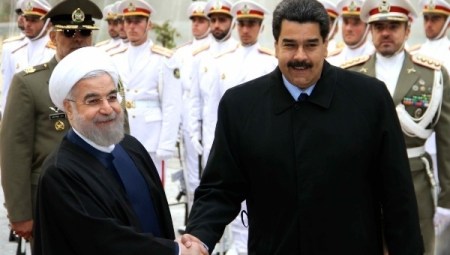
1944Venezuelan President Nicolas Maduro (right) meets with Iranian President Hassan Rouhani in Tehran, January 10, 2015. (Image Source: TeleSUR video screenshot)

According to the testimony of Ileana Ros-Lehtinen:

“Iran has opened up more than 80 cultural centers in Latin America in order to export its toxic brand of political influence and serve its interest, focusing on partnering with nations well known for their anti-American rhetoric including Venezuela, Argentina, Bolivia, Ecuador, and Nicaragua.”

Hamas and Hezbollah, both Iranian proxy terrorist groups, have also established offices in Caracas.

Representatives Ileana Ros-Lehtinen, Jeff Duncan and others say this is an appropriate time for the United States to pay more attention to activities happening in its own backyard.

The Need for a U.S. Response

In his statement to the House Committee on Foreign Affairs, Rep. Jeff Duncan asserted at the 2015 hearing, that the U.S. and its allies must do more to counter Iran’s goals to develop nuclear weapons, export terrorism and develop alliances with the narcotics trade.

Since the (unfortunate) approval of “Iran Nuclear Deal” in 2015, the United States has largely dissolved international sanctions against Iran, which leaves the IRGC free to make uninhibited alliances with networks of transnational organized crime organizations to finance its aspirations. Along with United States’ recent payment of $1.5 billion to Iran, there may be a grave risk to our own national security as Iran marches north from Venezuela into Central America and further into the United States through our southern border with Mexico.

In 2015, according to the US Department of State, U.S. President Barack Obama determined that Venezuela had failed to adhere to its obligations under international counternarcotics agreements. Even so, the US issued a waiver, allowing for continued assistance to be granted to Venezuela “in the interest of U.S. national security“.

The State Department admits that Venezuelan authorities do not effectively prosecute drug traffickers, in part due to their political corruption. Additionally, Venezuelan law enforcement officers lack the equipment, training, and resources required to significantly impede the operations of major drug trafficking organizations.

The U.S. Treasury Department has sanctioned multiple Venezuelan banks and Venezuelan regime operatives, including the former Minister of Interior and Justice. The U.S. State Department has cited Venezuela’s state-owned oil company, PDVSA, and CAVIM, the Venezuelan weapons company, for their role in helping Iran circumvent the sanctions that the U.S. has now lifted altogether.

At the same time, the U.S. administration continues to purchase 10% of its oil (roughly 300 million barrels per year) from Venezuela, the same entity that it sanctioned in 2011 for shipping gasoline to Iran.

This is all happening while terrorist groups are regularly connecting to drug cartels in the region, and forging a deepening narco-terror machine that in turn is funding terrorist activities.

While the US administration — apparently in denial about the clear threats posed by Iran’s expansionist and nuclear aspirations — dismisses Israel’s concerns as “hysteria,” Iran quietly continues its unfettered march westward.