Archive for the ‘Iranian proxies’ category

Hizballah Using Advanced, Iranian Anti-Tank Missiles in Syria

February 2, 2016

Hizballah Using Advanced, Iranian Anti-Tank Missiles in Syria, Investigative Project on Terrorism, February 2, 2016

Israel frequently has voiced concerns over Hizballah acquiring sophisticated weaponry – including new Iranian anti-tank missiles – that could end up being utilized against in a future battle between Israel and the Shi’ite terrorist organization.

*****************

Hizballah terrorists are using Iranian-made anti-tank missiles in Syria that could be used against Israel in a future confrontation, the Investigative Project on Terrorism (IPT) has learned.

On Sunday, Iranian news agency ABNA reported that Hizballah is using Toophan anti-tank missiles manufactured by Iran’s Aerospace Industries Organization.

The Toophan is a reverse-engineered version of the American military BGM-71 TOW missile, with a payload of 3.6 kg warhead that is capable of penetrating up to 550mm of steel armor. The missile can reach a top speed of 310 m/s, with a range of 3,850m.

Israel frequently has voiced concerns over Hizballah acquiring sophisticated weaponry – including new Iranian anti-tank missiles – that could end up being utilized against in a future battle between Israel and the Shi’ite terrorist organization.

This development comes amid growing Iranian expansion in Syria and throughout the region. Since the launch of Iran’s October ground operation in northern Syria, more than 135 Iranian Revolutionary Guard Corps (IRGC) troops have been killed, according to a report written by Raz Zimmt – an expert on Iran’s political and social networks.

Click here for the full analysis published by the Meir Amit Intelligence and Terrorism Information Center.

The commander of IRGC’s Qods Force – Qassem Soleimani – was also seen in public Jan. 21, his first appearance since he was reported injured in Syria. Soleimani spoke at a memorial service for an IRGC brigadier general killed in an alleged Israeli airstrike in January 2015 near Quneitra in the southern Golan Heights. That airstrike also killed six Hizballah terrorists, including Jihad Mugniyeh, son of arch-terrorist Imad Mugniyeh.

Iran is working with Hizballah and other terrorist organizations, including the Palestinian Islamic Jihad, to set up a base of operations along the Syrian border to target the Jewish state.

Iran has also increased its interventions in Iraq and Yemen in recent months, as the Islamic Republic seeks to expand its presence throughout the Middle East in an effort to achieve regional hegemony.


A European-Iranian honeymoon

January 31, 2016

A European-Iranian honeymoon, Israel Hayom, Prof. Eyal Zisser, January 31, 2016

Last week, the European dam burst. While the continent was turning a cold shoulder to Israel and European entities continued with their threats of boycott, its gates were thrown open to Iran. European leaders put their obsession with Israel aside for an hour or two, and after paying the necessary lip service to International Holocaust Memorial Day, gave Iranian President Hassan Rouhani a royal welcome.

The Iranian president, the smiling face of the Islamic republic, arrived for visits to Italy and France. It was the first visit of its kind since the nuclear deal was signed, a visit that signaled the start of a European-Iranian honeymoon, a visit that will be followed by others like it all over the continent. Rouhani’s visit came days after the economic sanctions on Iran were lifted. It’s no wonder that during the visit, announcements were made about contact between the Iranians and a number of Italian and French companies on deals including a return to European cars being manufactured in Iranian plants and, of course, contracts to purchase Iranian oil. The Iranians are hungry for Europe’s products and technology, while European companies are hungry for Iranian money.

As Rouhani was being received in Europe as an honored guest, Iran’s spiritual leader Ayatollah Ali Khamenei was busy with his longtime hobby of denying the Holocaust. He posted a clip on his website in which he called to investigate whether or not the Holocaust had actually happened, as the Zionists claim it did. But no one in Europe bothered Rouhani with any minor matter like that. After all, it was U.S. Secretary of State John Kerry who urged people not to take Tehran’s calls to annihilate Israel and the U.S. seriously, saying it was only talk. The Europeans also didn’t bother to raise the question of Iranian involvement in regional destabilization, such as in Yemen and Syria, or about Tehran’s support of terrorism. Even questions about respecting human rights and freedom of expression and promoting democracy in Iran itself were removed out of respect for the agenda of the day. Europe, as we know, only asks those questions of Israel.

Indeed, despite Rouhani’s smiles, no change has taken place yet in Iran itself. The conservative camp continues to rule with a fist of iron and supreme leader Khamenei remains firmly at the wheel, or in the hands of the Revolutionary Guard and not Rouhani and his people. So while Rouhani was trying to spread the slogan of a “new Iran” throughout Europe and asking his hosts to turn over a new leaf in the relations between Iran and Europe, the conservatives at home were preparing an unpleasant surprise. Most of the reform camp’s candidates for the parliamentary election scheduled to take place on February 26 were rejected. Even the grandson of late Ayatollah Ruhollah Khomeini, Ahmed Khomeini, who wanted to be elected to the Council of Experts — the Iranian body that oversees the supreme spiritual leader and is responsible for choosing his successor — was rejected on the grounds of “not proving appropriate religious capabilities.”

Iran should be judged not by its words, but by its actions, but the Iranian record speaks for itself. A mere two months after it signed the nuclear agreement with the major world powers in July 2015, Tehran sent thousands of soldiers to Syria to fight on the side of Syrian President Bashar Assad. Painful pictures are coming out of Syria of children dying of hunger in cities under siege by Assad’s forces, Hezbollah fighters, and members of the Iranian Revolutionary Guard. But Iran has been rewarded for its doings in Syria and invited by the U.N. and western countries to take part in a discussion on Syria’s future. The Iranian record also includes ballistic missile tests, to show us what Iranian’s military ambitions are; the arrest of U.S. sailors in the Persian Gulf; and — just like in the good old days — an angry mob setting fire to the Saudi Arabian embassy in Tehran.

The Europeans are choosing to ignore all that as they announce a new chapter in Iranian-European relations. The bill for the honeymoon will be footed by others — in Syria, the Persian Gulf, and Israel.

IDF Preparing for Arrival of ISIS on Syrian Border

January 30, 2016

IDF Preparing for Arrival of ISIS on Syrian Border, Investigative Project on Terrorism, Yaakov Lappin, January 29, 2016
934

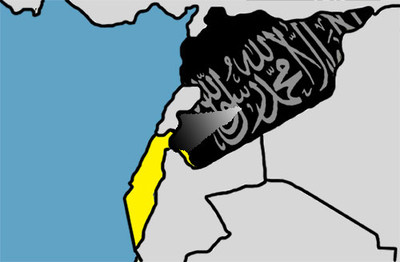
As conflict and mayhem continue to rage across Syria, the Israel Defense Forces (IDF) is preparing to encounter the threat of ISIS and al-Qaida forces right on its borders, and could encounter such threats in the coming months.

The preparations come as the Syrian civil war shows no sign of letting up. This is a conflict that has led to the violent deaths of 300,000 Syrians, and the displacement of more than 10 million others, 4.5 million of whom have fled the country.

Today, the IDF’s Military Intelligence Directorate views Syria as a former state that has broken apart into multiple ‘Syrias.’ The Assad regime controls barely 30 percent of Syria and is fully reliant on the foreign assistance of Russia, Hizballah, and Iran. Sunnis and Shi’ites wage daily war on one another.

It is worth examining the wider recent events in the multifaceted Syrian conflict, and place the IDF’s preparations in their broader regional perspective.

In Syria’s murderous kill-or-be-killed environment, Salafi-jihadist doctrines flourish, in the form of ISIS, which views Shi’ites (including the Assad regime and Hizballah) as infidels who must be destroyed.

ISIS cells have operated recently in Lebanon too, targeting Shi’ite Hizballah’s home turf of Dahiya in southern Beirut with two large bombings in November that claimed over 40 lives, while ISIS in Iraq continues to target Shi’ites.

Today, ISIS has between 30,000-50,000 members who are dedicated to expanding their caliphate and killing all those who disagree with their doctrine, including even fellow Sunni jihadi members of al-Qaida’s branch in Syria, the Al-Nusra Front, which has 8,000-12,000 members.

ISIS continues to use its territory in Syria and Iraq to plot major, mass-casualty terrorist attacks in Western cities. At the same time, its budgetary future looks uncertain, as oil funds have decreased significantly following allied air strikes on oil facilities. In the past year, 45 percent of ISIS’s $1.3 billion budget came from oil, far less than the oil revenue in 2014.

Unlike ISIS, al-Qaida believes in following a phased, slower plan in setting up a caliphate, and the two jihadist organizations have been at war with each other for more than two years in Syria.

Shi’ites led by Iran are fighting to stop the Salafi-jihadis’ spread. Under the command of Iranian Revolutionary Guard Corps (IRGC)-Quds Force unit commander, Qassem Suleimani, Iranian fighting forces and advisers moved into Syria. Iran has sustained more than 300 casualties there thus far.

Hizballah, too, is heavily involved in Syria’s battles, losing an estimated 1,300 fighters and sustaining 10,000 injuries – meaning more than half of its conscripted fighting force has been killed or wounded. Iran and its proxies are using the mayhem to try to spread their own influence in Syria.

Near Israel’s border with Syria, the Al-Yarmouk Martyrs Battalions, which is affiliated with ISIS, has set up many posts.

An estimated 600 members of the group control a population of around 40,000 Syrians. Al-Yarmouk is at war with al-Qaida’s Jabhat Al-Nusra, which maintains a few thousand members in the Syrian Golan near Israel.

Jabhat Al-Nusra’s membership is mostly derived of local Syrians, who tend to be more hesitant to start a war with Israel that would result in their areas, and relatives, being badly affected. Yet 10 to 15 percent of its membership comes from abroad, and have no commitment to the area. These foreign fighters have no qualms about precipitating attacks on Israel. At the moment, however, Jabhat Al-Nusra is bogged down by its fight with Al-Yarmouk.

ISIS has officially put Israel in its sights, and its leader, Abu Bakr Al-Baghdadi, declared his intention at the end of December to attack Israel.

The IDF is taking the threat seriously and is preparing for a range of possible attacks, including strategic terror attacks, cross-border raids, the sending of bomb-laden armored vehicles into Israel, and rocket, missile, small-arms, and mortar fire on the Israeli Golan Heights.

One possibility is that the heavily armed Al-Yarmouk group, which is facing the southern Golan Heights, might follow an Islamic State directive to attack Israel.

In 2014, Al-Yarmouk became an ISIS representative, swearing allegiance to it, though it is not fully subordinate to it.

Al-Yarmouk’s late leader, known as Al Khal (“the uncle”), was killed in November in an attack by Jabhat Al-Nusra. Before his violent end, Al Khal only partially committed himself to ISIS, and turned down ISIS requests to send fighters to Iraq.

Al-Yarmouk’s response to Jabhat Al-Nusra’s attacks came in December, when it assassinated a Jabhat Al-Nusra commander in his armored vehicle, just 400 meters from the Israeli border.

Al-Yarmouk subscribes to the Salafi jihadist ideology and has shoulder-held missiles, tanks, and other weapons looted during raids on the Assad regime military bases.

But Israel is also preparing for the possibility of encountering ISIS itself, not just an affiliate group.

ISIS proper is currently situated 40 kilometers from the Israeli border in southern Syria. One possibility is that Russian airstrikes will cause ISIS forces to ricochet southwards, towards Israel.

The IDF is gathering intelligence on all armed groups near its border, exhausting many resources to assess their capabilities, and intentions.

Israel watched as Shi’ite Hizballah came from Lebanon to block Sunni jihadist advances towards Lebanon in recent months, and as Russian airstrikes blocked the advance of the rebels northwards, to Damascus.

The IDF remains in a heightened state of alert along the Syrian border, though it is also working to avoid the creation of easy targets for the array of predatory forces on the other side.

As part of its preparations, the IDF’s Northern Command has given more autonomy to regional field commanders to enable faster responses to surprise attacks by reducing the initial chain of command during emergencies.

Inter-branch cooperation between intelligence, ground forces, and the air force has also been tightened.

Additionally, the IDF has fortified its border fence with Syria, adding electronic sensors to better be able to detect and respond to a potential attack in time.

The underlying assumption within military circles is that, sooner or later, ISIS will turn its guns on Israel, and the IDF does not intend to be caught off guard when that happens.
Obama’s Fake Syrian Peace Talks Falling Apart

January 29, 2016

Obama’s Fake Syrian Peace Talks Falling Apart, Front Page Magazine, Daniel Greenfield, January 29, 2016

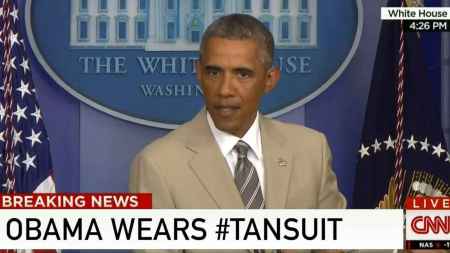
obama-wears-tan-suit-149481242256_6

The peace talks strategy for Syria comes out of Iran and Russia, two countries determined to keep Assad in power. Obama wanted the peace talks in order to rig a fake settlement that would come apart once he was out of office. But the only people fooled by this were stupid enough to get their news from CNN and their talking points from Think Progress. The Sunni side only participated to the extent that they could wreck the talks and extract some demands. They have no intention in signing on to Assad staying in power or to letting Obama get away with a fake solution that does just that.

And, oh yes, no one actually thinks Obama has any credibility.

As the Obama administration pushes for peace in Syria, its credibility is crumbling among Syrian opposition leaders, many of whom increasingly doubt the U.S. is serious about ending the rule of dictator Bashar Assad.

Because he isn’t.

If the talks peter out or collapse, that will further undermine President Barack Obama’s foreign policy legacy, which already has been tarnished by the endless bloodshed in Syria

It’s okay. Obama will blame Tom Cotton or Bush or Israel. Or someone. And the media will go along with it.

“A number of the opposition has expressed the feeling that the U.S. is not acting as an honest broker and that they’ve lost both trust and faith in the ability of the United States to deliver on a political settlement in Syria,” said Andrew Bowen, a senior fellow at the Center for the National Interest who has contacts among Syrian opposition groups.

Obama signed on with Iran. So he’s about as much of an honest broker as any other foreign agent.

“Kerry did not make any promises, nor did he put forward any initiatives,” said Khaled Khoja, president of the opposition Syrian National Coalition, in onestatement questioning U.S. intentions. “He has long been delivering messages similar to those drafted by Iran and Russia, which call for the establishment of a ‘national government’ and allowing Bashar al-Assad to stay in power and stand for re-election.”

Well yes. What else do you expect Kerry to do? This is the only thing he’s been doing since he got to the Senate and even beforehand with the Viet Cong. Traitors gotta traitor.

Among the numerous reports floating around — some of them highly speculative — are those that allege Kerry warned opposition leaders they could lose international support if they didn’t attend Friday’s talks. The reports come as the U.S. has appeared to be backing away from its demand that Assad must leave office by signaling its support for the notion of a transitional period.

And that period will come to an end once Obama is out of office.

But all this is theater anyway as the groups with the most fighters on the ground, including Al Qaeda and ISIS, are not represented. Most of the Islamists aren’t either. So this is just the Muslim Brotherhood, whose actual strength is weak, throwing a tantrum. Even if the Sunni groups signed some sort of deal it would be as worthless as the fake elections Hillary still talks up in Libya

Russians let Hizballah into Daraa, breaking their promise to Israel

January 28, 2016

Russians let Hizballah into Daraa, breaking their promise to Israel, DEBKAfile, January 28, 2016

Syria_South

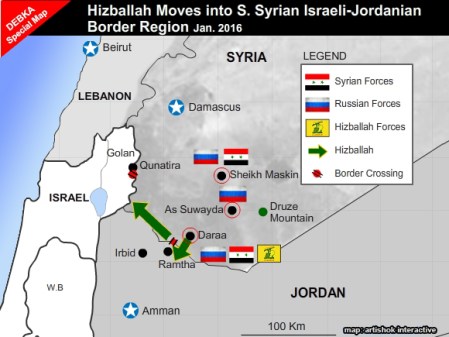
On Wednesday, Jan. 27 a large Hizballah force entered the southern Syrian town of Daraa, a critically dangerous event for Israel’s security. The way to the town, which lies near the Jordanian border and across from the Israeli Golan, was opened before Hizballah by none other than Russian forces. This was a blatant violation of President Vladimir Putin’s commitments to Prime Minister Binyamin Netanyahu and Jordanian King Abdullah not to permit Iranian and Iran-backed forces, such as Hizballah and Iraqi and Afghani Shiite militias, reach their borders in consequence of Russia’s military intervention in the Syria war.

Daraa is just 32 km from the southern Golan and 12 km from the Jordanian border. Hizballah forces in this town are therefore within easy striking distance from northern Israeli and Jordan.

What happened Wednesday was that a sizeable Hizballah contingent made it into Daraa, the day after a Syrian unit under the command of Russian officers captured the town of Sheikh Maskin, cutting off rebel forces east of Daraa from their comrades to the west.

Control of Sheikh Maskin is the key to the crossroads leading to Damascus in the north, the Druze Mountain town of es-Suwaida in the east, and Quneitra on Golan opposite Israel’s northern defenses.

The battle for Sheikh Maskin was the first in the Syrian conflict to be directly fought under Russian command. Its fall sparked accounts of Russian officers commanding Syrian troops in different parts of Syria.

So far, Israel has not reacted to the Hizballah force’s advance, notwithstanding public statements by Prime Minister Binyamin Netanyahu and Defense Minister Moshe Ya’alon that this would never be allowed to happen.

DEBKAfile’s military sources explain this reticence by a persistent misreading of the Syrian crisis in the higher ranks of the Israeli defense establishment. Military Intelligence chief Maj. Gen. Herzl Halevi, who has a good grasp of its complexities, is a lone voice against the defense minister and IDF chief of staff, Lt. Gen. Gady Eisenkot

In Amman, however, King Abdullah and his generals signified both alarm and fury. DEBKAfile’s sources report that Wednesday morning, the king shot off an urgent message to President Putin demanding an explanation for the Russian officers’ action in opening the door of Daraa to hostile Hizballah fighters.

Jordan has fought Hizballah and its conspiracies for three years, ever since its security forces seized an arms cache that Hizballah had smuggled into the kingdom for a terror cell to mount attacks in the northern province of Irbid. Amman is now concerned that Hizballah is close enough to make a grab for Al-Ramtha, the only border crossing between Syria and Jordan. That would be a feather in the cap of Iran’s Lebanese proxy, as the first Arab border crossing to fall to a Hizballah force outside Lebanon, and one, moreover, located athwart a main regional water source, the Yarmouk River.

As of Thursday morning, Jan. 28, Abdullah had not received a reply to his missive from Putin, but a message did come through to Amman from Syrian President Bashar Assad.

Using a back-door intelligence channel, he sent a notice in the name of Gen. Bahjat Suleiman, former Syrian ambassador to Jordan until he was expelled in May 2014, that King Abdullah must now face the consequences of his long support for the rebels of southern Syria.

The monarch was also advised to prepare for the influx of thousands of fleeing rebel fighters whom the combined Syrian and Hizballah forces were pushing towards the Jordanian border.

The next hours will be critical for the development of a similar crisis on the Israel-Syrian border in the Golan region.

Iran’s long arm

January 21, 2016

Iran’s long arm, The Jerusalem Post, JPost Editorial, January 21, 2016

(Please see also, New Iranian-Backed Terror Group Makes Inroads in West Bank, Gaza. — DM)

ShowImage (20)Thousand of Basij soldiers stage mock seige of Temple Mount in Iran. (photo credit:FARS)

If anyone needed proof how the lifting of sanctions on Iran will hurt Israel’s security, this week provided two examples.

Just days after implementation of the Joint Comprehensive Plan of Action nuclear agreement, we received a reminder that Iran and its proxies remain dangerous enemies of Israel.

Five Palestinians from the Tulkarm area were arrested for planning to carry out terrorist attacks under instructions from Hezbollah, the Shin Bet (Israel Security Agency) said on Wednesday.

The head of the cell, Mahmoud Za’alul, had been recruited through social media networks. Using encrypted messages, he enlisted five more men from the Tulkarm area; they were ordered to gather intel and plan terrorist attacks, including preparing explosive vests for suicide bombings.

Hezbollah funded their operation by sending them $5,000 through money changers.

Now that the “crippling” economic sanctions on Iran have been removed, the resources at its disposal – and as an extension at Hezbollah’s – will be significantly greater.

In Lebanon, meanwhile, Hezbollah is consolidating its political power. On Monday, in a development that is nothing short of earth shattering, Samir Geagea, leader of the Christian Lebanese Forces party, publicly endorsed his rival, the formal general Michel Aoun, for president of Lebanon.

In so doing, Geagea abandoned his loyalty to Saad Hariri, head of the anti-Syrian Future (Al-Mustaqbal) Movement, for an alliance with the enemy camp headed by Hezbollah, which supports Aoun for president.

This opens the way to the appointment of a pro-Iranian president in Lebanon.

Hezbollah and Iran are undoubtedly pleased with the development. If Aoun is elected president, Hariri’s influence – and the influence of Hariri’s main patron, Saudi Arabia – will be greatly diminished.

Finally, in the Gaza Strip, Iran has over the past few months been providing funding to a new terrorist group called Al-Sabireen Movement for Supporting Palestine. Al-Sabireen, which means “the patient ones” in Arabic, was formed in the wake of a break between Tehran and the two largest terrorist organizations operating in Gaza – Hamas and Islamic Jihad.

Neither organization has acquiesced to Iran’s demand to support President Bashar Assad in Syria.

Both have incensed the Iranians by remaining silent on Saudi attacks in Yemen against the Iranian-backed Houthis. Both face their worst financial crisis in two decades after Iran’s decision to cut off support.

Al-Sabireen’s emblem – a gun sprouting from the center of its name in Arabic – is nearly identical to Hezbollah’s.

So far, the organization has about 400 followers in the Gaza Strip, each one receiving a monthly salary of $250-$300, while the senior officials get at least $700, according to The Jerusalem Post’s Palestinian Affairs correspondent Khaled Abu Toameh. Iran has been supplying Al-Sabireen with weapons used to attack Israel.

The Iranians are believed to have supplied their new terrorist group in the Gaza Strip with Grad and Fajr missiles that are capable of reaching Tel Aviv. Also, Iranian funds channeled through Al-Sabireen are said to be used to support the families of killed or arrested terrorists living on the West Bank.

The Iranian-backed organization is also wooing Fatah members. Scores of militiamen once belonging to Palestinian Authority President Mahmoud Abbas’s Fatah faction in the Gaza Strip have allied themselves with Al-Sabireen. Most were attracted by the money.

The rise of an unshackled Iran’s influence in the region is bad for Israel. But it is also bad for many of the US’s Sunni allies in the region such as Saudi Arabia and the Palestinian Authority. A shared enemy has created a shared interest – the curtailing of Iranian influence.

Implementation of the JCPOA might delay Tehran’s nuclear weapon program. The removal of sanctions, however, has set the stage for the Islamic Republic to increase its destabilizing influence. Iran and its proxies must be stopped.

The Inside Track From Israel’s Gaza Border Defenders

January 21, 2016

The Inside Track From Israel’s Gaza Border Defenders, Investigative Project on Terrorism, Paul Alster, January 21, 2016

1339Photos courtesy of IDF Spokesperson.

Like it or not, the Iran nuclear deal is done. In much of the Middle East, defense officials in many states believe that a sizeable proportion of the soon-to-be released $100 billion Iranian windfall will be directed toward funding proxy armies of the Islamic Republic, for whom the Jewish state remains the prime target. Israel’s focus is now, more than ever, on defense and surveillance.

In the north, Hizballah, Iran’s proxy Lebanese army, remains a massive threat to regional stability, siding with Syria’s disgraced President Bashar Assad and his saviors from Russia. In Gaza, it is no secret that a previous rift between Iran and Hamas has been smoothed over to further mutual objectives and that another, and possibly more brutal round of hostilities between Israel and Hamas may not be far away.

“The sanctions relief and the nuclear deal with Iran represent a strategic shift that the IDF will have to tackle over the next decade,” Israel Defense Forces (IDF) Chief of Staff Gadi Eizenkot said Monday in a speech at the INSS conference in Tel Aviv. “We also see [Iran’s] attempt to influence Arab Israelis and those in the Gaza Strip, and the estimation is that as Iran’s economic situation improves, over the next one-to-two years, it will divert considerably more resources into opposing Israel, via the Iranian military industry.”

Last week, the Investigative Project on Terrorism (IPT) saw first-hand the situation on Israel’s south-western border, meeting with a senior IDF source who cannot be identified for security reasons. Close to the Kerem Shalom border crossing, where Israel oversees the transfer of many hundreds of tons of goods and supplies every day into Gaza,  we scrambled up a sizeable sand dune that offered a panoramic view of the situation on the ground toward the closed Rafah crossing from Egypt into Gaza.

“We hear the explosions and the fighting [against the Islamists] on the Egyptian side. The Egyptian army is taking it seriously,” the senior IDF source explained as we looked across the triangular border junction and heard distant noises, apparently explosions. “We hear this every day. Terrorists continue to try to cross from Egypt into Gaza.”

Minutes later, a text message announced that the Keren Shalom crossing suddenly had been closed. It turned out that the Egyptian army reportedly engaged and killed 13 jihadists  just a couple of miles away. Two days earlier, an attempt to breach the Israel-Gaza border fence and plant an IED resulted in an Israeli airstrike reportedly eliminating a member of the Al Aqsa Martyrs Brigade.

Meanwhile, Hamas continues to test fire rockets into the sea, and in recent months other Islamic militants in Gaza sporadically lob rockets toward Israel. On the other side of the border triangle, Egypt is doing its best to keep a lid on ISIS and other Islamist forces in the Sinai Peninsula.

It’s clear that relations between the Israeli and Egyptian militaries are good, a dangerous common enemy helping to focus minds. Under President Abdel Fattah el-Sisi, Egypt (despite a lack of support from the United States), has taken the fight to the terror organizations, often at a significant cost in Egyptian military lives. The horrific October downing of the Russian passenger jet out of Sharm el-Sheikh brought the scale of the task facing Egypt into focus. Israel remains alert for the jihadists turning their attention and firepower from Sinai, but for now believes that Gazan-based terror poses its most immediate threat.

“It’s been quite quiet with Hamas [since the 2014 Protective Edge war], but they don’t keep quiet for long,” the IDF source said. “We’re not looking for a fight – we have an interest that there will be quiet here – but if we have to deal with Hamas, this time we’ll deal with them properly.”

Many Israelis were dismayed when Israel unilaterally pulled out of Gaza in 2014 without a ceasefire, some criticism coming notably from members of the left-wing opposition and media for allowing Hamas off the hook when many believed it was in utter disarray. Now, despite ongoing attempts to stem the flow of weapons, reports suggest Hamas is rebuilding fast and may have some surprises in store for Israel if there’s another round of fighting.

“Look, we’re quite certain they are still building tunnels,” the official said, planting his heel in the sand and showing how easy it is to dig. “And yes, I’m sure they have new weapons – anti-tank, anti-aircraft etc. Like us, they will want to be better next time, but we understand more. The reality is different. We’re learning all the time what is going in Gaza. The army is always preparing for the war to come and [Hamas] won’t meet the same thing as in [Protective Edge].”

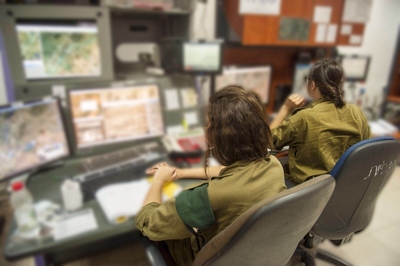
While Israeli soldiers and advanced technology such as its Guardium unmanned patrol vehicles are the first line of defense – the IDF indicated last year that the development of underground tunnel detection systems is also a priority project – the eyes of the military are actually in special units of female soldiers, known as the tazpitanyot. They monitor all movements, looking for suspicious activity, known terror operatives, and attempts to breach the border.

1340 (2)

They work in a series of non-descript trailers and shipping containers belying the fact that inside are massed banks of video screens and radar images, and the ability to combine pictures filmed from aerial blimps with other cameras – both day and night vision. This arrangement allows operatives to zoom in and see Gazans as far as a mile from the border fence.

When anything, or anyone suspicious pops up, there are pictures of ‘Wanted’ terror suspects close to the screens.  They instruct the on-the-ground forces to investigate. Never averting their gaze from the screen during a four-hour shift, each soldier has been trained to identify every landmark, tree, or rock within her specific area of surveillance. “If there’s even a single branch missing from a tree, they’ll spot it” the women’s commanding officer said. They also have remote control of the machine guns sited on border watch towers.

No security system is 100 percent foolproof, and during the first two weeks of the last round of fighting, four terror tunnels emerged on the Israeli side, only being detected at the last moment.  In two cases, the IDF fought gun-battles leaving  at least 10 terrorists and six Israeli soldiers dead. Hamas had hoped to kill civilians before luring Israeli soldiers back through the tunnels then kidnapping them or causing mass casualties.

Methods and practices of surveillance are being continually reviewed, but no-one in the Israeli military doubts the tatzpitanyot’s crucial front-line role in its border security, both north and south.

New Iranian-Backed Terror Group Makes Inroads in West Bank, Gaza

January 19, 2016

New Iranian-Backed Terror Group Makes Inroads in West Bank, Gaza, Washington Free Beacon, January 19, 2016

Screen-shot-from-al-Sabireen-propaganda-videoScreen shot from al-Sabireen propaganda video

A new Iranian-backed terror group is making inroads in the Gaza Strip and West Bank, where it operates underground with the potential capacity to deliver devastating attacks to Israel, according to regional experts who have been investigating the organization’s rise.

The group, which goes by the name Harakat al-Sabireen, was established around May 2014 but has begun in recent months to boost its public profile on social media and brag about its plots to wage jihad against Israel, according to information gathered by regional analysts and provided to the Washington Free Beacon.

Al-Sabireen is believed to receive $10 million a year from Iran via funds that are smuggled through a large network of tunnels built by terrorists to facilitate illicit travel beneath the Gaza Strip, according to estimates disseminated in the Arab language press.

Like Hezbollah, the Iranian-funded terror group that controls territory along Israel’s northern border, al-Sabireen is being used by the Islamic Republic to indirectly wage war on the Jewish state and foster unrest in the Palestinian territories, according to experts, who view the group’s rise as a sign that Iran is not interested in scaling down its global terror network following the recent implementation of the nuclear agreement.

A State Department official who was not authorized to speak on record said that officials are aware of al-Sabireen and its activities. However, the group has not been officially designated as a foreign terrorist organization, though it is possible this could occur in the future.

Al-Sabireen says it has established an armed wing with militants in Jerusalem and the West Bank, according to a recent interview with the Palestinian news agency Ma’an.

“Given the tense relationship between Tehran and Hamas the past few years, it makes sense that Iran would look to form another proxy in Gaza,” Grant Rumley, a Middle East analyst at the Foundation for Defense of Democracies, said. “However, Sabireen’s entire model of expansion hinges on its ability to present itself as a Palestinian, non-sectarian movement.”

Like Hezbollah, al-Sabireen’s official logo closely resembles that of the Iranian Revolutionary Guard Corps, which is responsible for giving orders to these types of terror groups.

The group’s charter condones violent jihad and promotes attacks on “the racist Zionist body” and “America the great Satan,” according to a copy published by the group on its official Arabic-language website.

Al-Sabireen has taken to its website and Facebook page in recent months to praise operatives who have been killed while conducting reconnaissance missions on the group’s behalf.

In one posting from late October, the group celebrated the death of one operative who was killed “after direct targeting from the Zionist forces while he was leading a monitoring and reconnaissance team.”

Mourners raised flags during a funeral ceremony for this individual from a variety of Palestinian political groups, including Fatah, which is largely viewed by Western governments as a moderate voice, according to photographs posted by al-Sabireen on its Facebook page.

It also has been plucking recruits from rival terrorist groups, according to Rumley.

“It’s unclear exactly what Sabireen’s operational capabilities are right now, but we know that they’ve pulled recruits from a more established terror group, Palestinian Islamic Jihad, and that they’ve lost at least two fighters in two separate Israeli strikes, so they’re on Israel’s radar,” Rumley said.

Al-Sabireen has been present at pro-Hezbollah rallies in Gaza that were also attended by leading Hamas officials.

While not much is known about the group’s composition, it appears to have two main leaders, one an operational leader and another who provides intellectual guidance.

Hisham Salem, the terror group’s top leader, formerly served as a member of Palestinian Islamic Jihad, a State Department-designated terror organization, according to information provided by regional analysts. Salem, who is in his early 50s, was raised in the Gaza Strip and began referring to himself as al-Sabireen’s leader in 2014.

Salem claimed in a recent interview with the Palestinian press that armed members of the group are currently in the West Bank and Jerusalem.

“We have an armed branch whose goal it is to wage war on the Israeli occupation everywhere,” Salem was quoted as saying. “Within this framework we have members in the West Bank and Jerusalem who will soon receive financial and military support from us.”

A recent propaganda video produced by the organization and posted to YouTube shows soldiers marching through Gaza with AK-47s.

Al-Sabireen’s second in command, Mohammad Abu Nadi, frequently writes on al-Sabireen’s official website and praises Palestine as integral to the Arab world.

Al-Sabireen has taken a hardline stance against the United States, claiming in September on its Facebook page that the United States is responsible for “producing terrorists.”

The group’s Facebook page remains active with near-daily postings despite attempts by Facebook to shut it down.

While al-Sabireen has faced difficulty in expanding its base in Gaza, where the Hamas-controlled government cracks down on rival terror groups, it has been able to gain a foothold in the West Bank, where it can directly challenge both Israel and the Palestinian Authority.

Saudi Arabia stews in policy hell

January 4, 2016

Saudi Arabia stews in policy hell, Asia Times, January 3, 2016

Last week’s mass executions in Saudi Arabia suggest panic at the highest level of the monarchy. The action is without precedent, even by the grim standards of Saudi repression. In 1980 Riyadh killed 63 jihadists who had attacked the Grand Mosque of Mecca, but that was fresh after the event. Most of the 47 prisoners shot and beheaded on Jan. 2 had sat in Saudi jails for a decade. The decision to kill the prominent Shia cleric Nimr al-Nimr, the most prominent spokesman for restive Saudi Shia Muslims in Eastern Province, betrays fear of subversion with Iranian sponsorship.

Saudi-beheading22-300x183Official Saudi beheading

Why kill them all now? It is very hard to evaluate the scale of internal threats to the Saudi monarchy, but the broader context for its concern is clear: Saudi Arabia finds itself isolated, abandoned by its longstanding American ally, at odds with China, and pressured by Russia’s sudden preeminence in the region. The Saudi-backed Army of Conquest in Syria seems to be crumbling under Russian attack. The Saudi intervention in Yemen against Iran-backed Houthi rebels has gone poorly. And its Turkish ally-of-convenience is consumed by a low-level civil war. Nothing has gone right for Riyadh.

Worst of all, the collapse of Saudi oil revenues threatens to exhaust the kingdom’s $700 billion in financial reserves within five years, according to an October estimate by the International Monetary Fund (as I discussed here). The House of Saud relies on subsidies to buy the loyalty of the vast majority of its subjects, and its reduced spending power is the biggest threat to its rule. Last week Riyadh cut subsidies for water, electricity and gasoline. The timing of the executions may be more than coincidence: the royal family’s capacity to buy popular support is eroding just as its regional security policy has fallen apart.

For decades, Riyadh has presented itself as an ally of the West and a force for stability in the region, while providing financial support for Wahhabi fundamentalism around the world. China has been the kingdom’s largest customer as well as a provider of sophisticated weapons, including surface-to-surface missiles. But China also has lost patience with the monarchy’s support for Wahhabi Islamists in China and bordering countries.

According to a senior Chinese analyst, the Saudis are the main source of funding for Islamist madrassas in Western China, where the “East Turkistan Independence Movement” has launched several large-scale terror attacks. Although the Saudi government has reassured Beijing that it does not support the homegrown terrorists, it either can’t or won’t stop some members of the royal family from channeling funds to the local jihadis through informal financial channels. “Our biggest worry in the Middle East isn’t oil—it’s Saudi Arabia,” the analyst said.

China’s Muslims—mainly Uyghurs in Western China who speak a Turkish dialect—are Sunni rather than Shia.  Like Russia, China does not have to worry about Iranian agitation among Shia jihadis, and tends to prefer Iran to the Sunni powers. As a matter of form, Beijing wants to appear even-handed in its dealings with Iran and Saudi Arabia, for example in recent contacts between their respective navies. Chinese analysts emphasize that Beijing has sold weapons to both—more in absolute to terms to Iran but more sophisticated weapons to the Saudis.

More pertinent than public diplomacy, though, is where China is buying its oil.

Nonetheless, China’s oil import data show a significant shift away from Saudi Arabia towards Russia and Oman (which China considers part of the Iranian sphere of influence). Russia’s oil exports to China have grown fourfold since 2010 while Saudi exports have stagnated. Given the world oil glut, China can pick and choose its suppliers, and it is hard to avoid the inference that Beijing is buying more from Russia for strategic reasons.  According to Russian sources, China also has allowed Russian oil companies to delay physical delivery of oil due under existing contracts, permitting Russia to sell the oil on the open market for cash—the equivalent of a cash loan to Russia.

saudioil1-768x558

China’s interests in Syria coincide with Russia’s. Both have reason to fear the growth of ISIS as a magnet for their own jihadis.  Thousands of Chinese Uyghurs make their way into Southeast Asia via the porous southern border of Yunnan province, with financial assistance from Saudi supporters and logistical support—including passports—from local Turkish consulates. Chinese Uyghurs were implicated in the bombing of Bangkok’s Erawan Temple last August, and have linked up with ISIS supporters as far south as Indonesia. Turkey reported last month that most jihadists crossing its border into Syria to join ISIS are Chinese Muslims.

With Kurdish and allied forces gaining control of Syria’s border with Turkey, aided by Russian air support, Chinese Uyghurs may lose access to Syria. Late in December Kurdish forces crossed to the western bank of the Euphrates River and are in position to link up with Kurdish militias in northwestern Syria, eliminating Turkish hopes of a “safe zone” controlled by Turkey on the southern side of the Syrian border.  For its part, Turkey risks paralysis from a low-intensity civil war with its Kurdish population. The Kurdish-majority southeast of the country is under siege and fighting has spread to Turkey’s western provinces.

It’s an ill wind that blows nobody good, and China seems hopeful that it has contained its jihadist problem. On New Year’s Day, the Communist Party leader in China’s Xinjiang province declared that “the atmosphere for religious extremism has weakened markedly.”

China is extremely reluctant to commit military forces to overseas conflicts, and its military is ill-prepared to do so even if Beijing were to change its mind. The People’s Liberation Army lacks ground attack aircraft like the two squadrons of Russian Su-24 and Su-25 deployed in Syria. Nonetheless, Beijing is happy that Russia is reducing ISIS forces in Syria as well as Saudi- and Turkish-backed Sunni Islamists like the Army of Conquest.

It will be hard to evaluate the success of Russian bombing in Syria until the dust settles, but there is a great deal of dust in the air. According to Israeli sources, Russia is dumping vast amounts of its Cold War inventory of dumb bombs on Syrian Sunnis with devastating effect. The Russian bombing campaign makes up in volume what it lacks in sophistication, killing far more civilians than Western militaries would tolerate, but changing the situation on the ground. That explains Russian President Vladimir Putin’s newfound popularity among world leaders. He is doing their dirty work.

Saudi Arabia’s proxies in Syria are in trouble. Early in 2015, the Army of Conquest (Jaish al-Fateh), a coalition of al-Qaida and other Sunni Islamists backed by the Saudis, Turks and Qataris, had driven the Syrian army out of several key positions in Northwest Syria, threatening the Assad regime’s core Alawite heartland. The coalition began breaking up in November, however, and the Syrian Army recently retook several villages it had lost to the Army of Conquest. One of the Army of Conquest’s constituent militias, Failaq al-Sham, announced Jan. 3 that it was leaving the coalition to defend Aleppo against regime forces reinforced by Russia.

Everything seems to have gone wrong at once for Riyadh. The only consolation the monarchy has under the circumstances is that its nemesis Iran also is suffering from the collapse of oil revenues and the attrition of war. Iran began withdrawing its Revolutionary Guard forces from Syria in December, largely due to high casualties. The high cost of maintaining the war effort as Iran’s finances implode also may have been a factor. Iran’s Lebanese Shia proxy, Hezbollah, has suffered extremely high casualties, virtually neutralizing its whole first echelon of combat troops. And Russia has shown no interest in interfering with Israeli air strikes against Hezbollah.

The oil price collapse turns the competition between Saudi Arabia and Iran into a race to the bottom. But the monarchy’s panicked response to its many setbacks of the past several months raises a difficult question. In the past, the West did what it could to prop up the Saudi royal family as a pillar of stability in the region, despite the Saudis’ support for jihadi terrorism. Soon the West may not be able to keep the House of Saud in power whether it wants to or not.

Iran-Saudi crisis spurs Hizballah strike on Israel

January 4, 2016

Iran-Saudi crisis spurs Hizballah strike on Israel, DEBKAfile, January 3, 2016

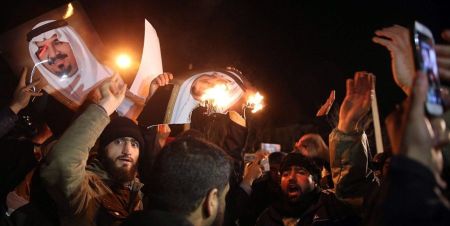
Iranian_protesters_set_fire_to_pictures_of_the_Saudi_royal_family_3.1.16

The heated verbal battle between Tehran and Riyadh over Saudi Arabia’s execution of a Shiite cleric escalated Sunday night, Jan 3, with the severance of diplomatic relations. On the broader front, the repercussions from the quarrel between the two leaders of the Muslim world’s Shia-Sunni split are widely seen in Middle East military and intelligence circles as spurring a fast-track Hizballah attack on Israel.

Among the 47 people executed by Saudi Arabia Saturday on terrorism charges was Sheikh Nimr al-Nimr, Saudi Shiite leader and a prominent Shiite cleric in the region. Put to death with him were several Saudi Shiite and Sunni activists, which enraged Iran’s supreme leader Ayatollah Ali Khamenei to the point of threatening the Saudi royal family with “divine revenge.”

From Iran’s perspective, the Saudis committed the unpardonable act of executing Shiites together with Sunni Al Qaeda and ISIS terrorists. This made the House of Saud the first ruling power ever to treat Shiite and Sunni terrorists alike. This, more than anything, incensed Iran and its Lebanese proxy Hizballah, who are deep in a bloody war against the Sunni Islamic State and the Nusra Front terrorists in Syria. Iran’s Revolutionary Guards are additionally locked in a bitter conflict with ISIS in Iraq.

The Iranian war effort is backed by the US in Iraq and by Russia in Syria.

By the mass executions of both classes of terrorist at the same time, Riyadh issued four messages:

1. Washington and Moscow are wrong. The Iranians and the forces they back in the Persian Gulf, Syria and Iraq are just as much terrorists as ISIS and Al Qaeda.

2. The House of Saud is determined to fight both with equal resolve and severity

3. Riyadh has already taken Tehran on in Yemen, and indirectly in Syria, and is now ready to take the fight against Tehran all the way to the war on terror.

4. Taking off the diplomatic gloves, Saudi Foreign Minister Adel al-Jubeir Monday night severed relations with Iran and ordered all Iranian diplomats to leave the kingdom within 48 hours. The foreign ministry said that by condemning the Nimr execution, Iran was supporting terrorism.

Saudi diplomats were already gone after protesters in Tehran torched and ransacked the Saudi embassy Saturday.

Amid all the sound and fury, Tehran’s attention was drawn to comments made by Israeli Prime Minister Binyamin Netanyahu in the light of a major terrorist attack in Tel Aviv. He pointed out that, in addition to the Palestinians, Israel is threatened by two streams of radical Islam, the Shiites and the Sunnis.

He was clearly referring to Iran and its terrorist arm, Hizballah, on the one hand, and ISIS and Al Qaeda, on the other, inspired less by the Tel Aviv outrage than by the gathering clouds of terror darkening the region, which place the Saudi royal family and Israel on the same side, sharing a similar perception of the two foes facing both countries.

Policymakers in Jerusalem noted the odd statement by Turkish President Tayyip Erdogan to reporters on Saturday, January 1 on the way home from a visit to Riyadh. After years of reviling the Jewish state, he said, “Israel is in need of a country like Turkey in the region. We have to admit that we also need Israel.”

He sounded as though he was urging the resumption of the old political and military alliance binding the two countries years ago.

DEBKAfile’s Middle Eastern sources point out that, since his comment came directly after his talks with Saudi King Salman in Riyadh, it appeared to open a path toward the possible creation of a new Middle East bloc consisting of Turkey, Saudi Arabia, perhaps Egypt, and Israel, bound by the same enemies. This grouping could serve as a counterweight against the Sunni-Shiite bloc of Iran, Iraq, Syria and Hizballah, which has the backing of the US and Russia on one hand, and fights ISIS on the other.

Iran’s leaders may curse the House of Saud without restraint, but they are canny enough not to go from words to deeds, knowing they would be on their own if they attacked the oil kingdom and earn no backing from either Washington or Moscow.

However, it might be easier for Tehran to take advantage of Netanyahu’s tough predicament in his war on terror, by sending Hizballah to strike Israel and, meanwhile, pre-empt the formation of a new anti-Tehran alliance. Speeding up Hassan Nasrallah’s promised revenge for the assassination of its master terrorist Samir Quntar would serve this purpose.

This possibility has prompted the IDF to keep artillery units pounding areas bordering on Israel during the past few days. The IDF says this action is necessary to stop Hizballah exploiting the stormy, snowy winter weather to attack Israel. Its military chiefs appear to be acting on information received of an approaching Hizballah operation as its leader has threatened.