According to our military sources, it is this Iranian-backed network which Thursday, Aug. 20, fired a salvo of four rockets from the Golan into upper Galilee and the Golan. The impact set off brush fires but caused no casualties. A red alert had sent most people running to shelters.
****************
Israel’s top government and military went on a high level of preparedness Tuesday, Aug. 18 in expectation of the first terrorist attack to be orchestrated by Iran from Syrian or Lebanese borders. That is what brought Prime Minister Binyamin Netanyahu, Defense Minister Moshe Ya’alon and Chief of Staff Lt. Gen. Gady Eisenkott on a tour of inspection to the Golan and Northern Command headquarters. Netanyahu said then that Israel is ready for any scenario and would “harm anyone trying to harm us.”
DEBKAfile’s military sources report that these events were sparked by the knowledge reaching Israeli intelligence that Iranian Al Qods and Hizballah officers were building a new terrorist network for mounting large-scale terrorist attacks on Israel from the Syrian border opposite the Golan.
The officers had handed out anti-tank and anti-air rockets to the terrorists, raising Israeli suspicions that one of their plans was to seize an Israeli location or part of one and try and hold out against an Israeli counter-offensive of tanks and assault helicopters.
Our counter-terrorism sources disclose that three radical terrorist movements staff the new network:
One is the hard-line rejectionist Popular Front for Liberation of Palestine – General Command (PFLP-GC).
Another is the Golan-based Syrian Druze group known as Liberators of the Golan. It is headed by the notorious Samir Kuntar, a Lebanese Druze who has set up a Golan terror ring based in the Druze village of Al-Khadar opposite the Israeli border fence.
Also harnessed to Iran’s new Golan terror organization is the Syrian Social Nationalist Party (SSNP) which is made up of radical Christian terrorists. This old timer violent group, which is run by Syrian intelligence, took part in the 1982-3 Hizballah bombing massacres at the US Embassy and Marine headquarters in Beirut.
The first SSNP activists have arrived in the Quneitra district of the Golan.
According to our military sources, it is this Iranian-backed network which Thursday, Aug. 20, fired a salvo of four rockets from the Golan into upper Galilee and the Golan. The impact set off brush fires but caused no casualties. A red alert had sent most people running to shelters.
This was an unusually long-range attack: Previous launches from within Syria, whether deliberate or stray fire from the civil war there, hit the Israeli-held Golan without reaching the Israeli interior. It is now up to Israel to decide how and when to respond to an act of war orchestrated by Tehran, after the prime minister’s warning Tuesday had no deterrent effect.
(The views expressed in this post — which for the most part consists of links to and quotations from recent articles posted at Warsclerotic — are mine and do not necessarily reflect those of Warsclerotic or its other editors. — DM)
Over the past few days, Iranian officials have confirmed that international inspections of its nuke sites will be severely limited if permitted at all. This post provides excerpts from recent articles quoting them.
Iran’s nuke sites
The restrictions noted in this post are in addition to previously disclosed prohibitions on access by International Atomic Energy Agency (IAEA) inspectors to military sites, which Iran itself will inspect instead. Even The Daily Beast has mentioned this problem in reliance on an Associated Press article which states,
All IAEA member countries must give the agency some insight into their nuclear programs. Some are required to do no more than give a yearly accounting of the nuclear material they possess. But nations— like Iran — suspected of possible proliferation are under greater scrutiny that can include stringent inspections. [Emphasis added.]
The agreement in question diverges from normal procedures by allowing Tehran to employ its own experts and equipment in the search for evidence of activities it has consistently denied — trying to develop nuclear weapons. [Emphasis added.]
Olli Heinonen, who was in charge of the Iran probe as deputy IAEA director general from 2005 to 2010, said he could think of no similar concession with any other country.
A senior Iranian official declared on Monday that international nuclear inspectors would only be permitted into the country once they receive approval from the Islamic Republic’s Intelligence Ministry, putting another roadblock between the International Atomic Energy Agency (IAEA) and Iran’s contested nuclear sites.
Sayyed Abbas Araqchi, Iran’s deputy foreign minister and one of the top negotiators in talks that led to the recently inked nuclear deal, told the country’s state-controlled press that Iran’s intelligence apparatus must approve of any inspector who is issued a visa to enter Iran. [Emphasis added.]
International nuclear inspectors will only be permitted into the country after offering proofs of suspicious activity at the sites to be inspected, Iran’s Defense Minister Brig. Gen Hossein Dehqan said Tuesday. DEBKAfile: This condition is not contained either in the nuclear deal Iran signed with the six world powers last month or in its contract with the IAEA. How will the international watchdog obtain proofs if it is denied visits for inspections? [Emphasis added.]
Iranian leaders prevented a top International Atomic Energy Agency (IAEA) official from disclosing to U.S. officials the nature of secret side deals with the Islamic Republic by threatening harm to him, according to regional reports. [Emphasis added.]
Yukiya Amano, IAEA director general, purportedly remained silent about the nature of certain side deals during briefings with top U.S. officials because he feared such disclosures would lead to retaliation by Iran, according to the spokesman for Iran’s Atomic Energy Organization (AEOI).
Amano was in Washington recently to brief members of Congress and others about the recently inked nuclear accord. However, he did not discuss the nature of side deals with Iran that the United States is not permitted to know about.
Iran apparently threatened Amano in a letter meant to ensure he did not reveal specific information about the nature of nuclear inspections going forward, according to Iranian AEOI spokesman Behrouz Kamalvandi.
“In a letter to Yukiya Amano, we underlined that if the secrets of the agreement (roadmap between Iran and the IAEA) are revealed, we will lose our trust in the Agency; and despite the US Congress’s pressures, he didn’t give any information to them,” Kamalvandi was quoted as saying Monday during a meeting with Iranian lawmakers, according to Tehran’s state-controlled Fars News Agency.
“Had he done so, he himself would have been harmed,” the official added. [Emphasis added.]
If these analyses are correct, and they appear to be, there will be no meaningful “anytime anywhere” international inspections of Iranian military sites. Although Obama has repeatedly said that the current nuke “deal” is not based on trust, that appears to its only basis, an absurd one.
Shortly before US Secretary of State John Kerry was due in Qatar Monday, Aug. 3, Iran’s highest authorities led by supreme leader Ayatollah Ali Khamenei Sunday launched a public campaign to support Tehran’s noncompliance with the Vienna nuclear accord and UN Security Council Resolution 2231 of July 20, on its ballistic missile program. The campaign was designed by a team from Khamenei’s office, high-ranking ayatollahs and the top echelons of the Revolutionary Guards, including its chief, Gen. Ali Jafari. [Emphasis added.]
. . . .
The Security Council Resolution, which unanimously endorsed the Joint Comprehensive Plan of Action (Vienna nuclear accord) signed by Iran’s Foreign Minister Mohammed Javad Zarif, called on Iran “not to undertake any activity related to ballistic missiles designed to be capable of delivering nuclear weapons, including launches using such ballistic technology until the date eight years after the JCPOA Adoption Day.” [Emphasis added.]
Tehran retorted that none of its ballistic missiles were designed to deliver nuclear weapons, and so this provision was void. Shortly after its passage, the foreign ministry in Tehran issued an assurance that “…the country’s ballistic missile program and capability is untouched and unrestricted by Resolution 2231.”
On July 30, Ali Akbar Velayati, Khamenei’s senior adviser on international affairs and member of the Expediency Council, told reporters, “The recent UNSC Resolution on Iran’s defensive capabilities, specially (sic) its missiles, is unacceptable to Iran.”
TEHRAN (Tasnim) – Chief of Staff of the Iranian Armed Forces Major General Hassan Firouzabadi underlined that there are not any obstacles to the country’s missile program. [Emphasis added.]
“The Islamic Republic of Iran’s missile activities, as planned inside the country, will not face any obstacles,” the senior officer stressed on Sunday.
The general also reiterated that Iran’s missile tests are going to be carried out in a timely manner according to the plans endorsed by Supreme Leader of the Islamic Revolution Ayatollah Seyed Ali Khamenei.
Iran – North Korea nuke nexis
Nuke cooperation between Iran and North Korea was not considered during the P5+1 “negotiations.” The text of the current “deal” is silent on the subject. Kerry’s State Department has limited media contact with Douglas Frantz, his Assistant Secretary in charge of the Bureau of Public Affairs, to avoid releasing information on the Iran – North Korea nuke nexus. Mr. Frantz, formerly a highly respected journalist, had written extensively on North Korea’s nuclear program.
An honest accounting would quite likely reveal something that many press reports have alleged, but U.S. administration officials have never publicly confirmed: A history of nuclear weapons collaboration between Iran and nuclear-proliferating North Korea.
. . . .
Drawing on “previously secret reports, international officials, independent experts, Iranian exiles and intelligence sources in Europe and the Middle East,” Frantz wrote that “North Korean military scientists recently were monitored entering Iranian nuclear facilities. They are assisting in the design of a nuclear warhead, according to people inside Iran and foreign intelligence officials.”
. . . .
Perhaps Frantz should recycle that article to Secretary of State John Kerry, who while testifying to a congressional panel last month was asked about its allegations by Rep. Christopher Smith, and ducked the question.
. . . .
[I]t appears that as a State Department advocate of a free and well-informed press, Frantz himself is not free to answer questions from the press about his own reporting on North Korea’s help to Iran in designing a nuclear warhead. The State Department has refused my repeated requests to interview Frantz on this subject. Last year, an official at State’s Bureau of Public Affairs responded to my request with an email saying, “Unfortunately Assistant Secretary Frantz is not available to discuss issues related to Iran’s nuclear program.” [Emphasis added.]
. . . .
Of course, the real problem for the Obama administration is that an officially confirmed story of Iran-North Korea collaboration on nuclear warheads could spell further trouble for winning congressional approval of this nuclear deal.
Conclusions
Assuming (a highly dubious assumption) that Kerry and Obama’s other P5+1 “negotiators” wanted to limit Iran’s Uranium enrichment to peaceful purposes, to terminate its nuke weaponization and to restrict its missile development and use they failed. It might have been entertaining to have watched Obama instruct Kerry on how to negotiate for magic carpets in a Persian market. The Persians saw Obama’s P5+1 “negotiators” as suckers and took all of their cash. They then took whatever honor they may once have had.
With international inspections permitted, if at all, only at Iran’s whim, and international sanctions “snap back” a fantasy, Iran has been given a bright green light to do whatever it pleases. What pleases Iran should not please even Obama, who envisions a new era of Middle East stability as a major fruit of His victory in getting the July 2015 “deal.”
Iran plans to “stabilize” Israel first. Israel is the only free and democratic nation in the Middle East; America was once her most reliable ally. No longer, but perhaps one fine day she will be again.
A conference of religious scholars features speaker after speaker calling Israel’s annihilation inevitable and promising that a “new phase” in that effort is about to begin. [Emphasis added]
While some in the United States and among its Western allies may hope that a nuclear weapons deal with Iran might steer the Islamic Republic in a new, more responsible direction, hardliners draw new lines and issue new threats.
On Monday, Iranian Supreme Leader Ali Khamenei took to social media to attack the United States and Israel. “We spare no opportunity to support anyone #FightingTheZionists,” wrote the ayatollah, whose regime supplies Hizballah and Hamas with rockets and other weapons of terror.
Here’s a recent video from Iranian television showing how Iran plans to eliminate Israel.
The July 2015 “deal” remains a mystery shrouded in secrecy and deception. Obama has tried to mislead the the American public and the Congress. He has threatened members who have voiced opposition and characterized them as disloyal. Congress should kill the “deal.” Those members whose ultimate loyalty is to America rather than to Obama will vote to do so and then to override his veto.
Thanks to President Obama, radical Islam is the winner of the nuclear deal and the US emerges as the biggest loser when it comes to its national, economic, geopolitical and strategic interests. In addition, except for Israel and the United States, almost every country in the world (as well as Shiite militia groups) appear to be benefiting from the nuclear deal – economically, strategically, and geopolitically — as a result of rekindling relationships with the Islamic Republic. Not only does this deal damage the US and Israel’s national and economic interests, but it also strengthens the same forces and axis which have repeatedly sworn war and violence against Americans.
A strong argument can be made that one of the major birthplaces of fundamentalist Islamism, which at its core aims at opposing and fighting the United States, is the Islamic Republic of Iran.
The mission of anti-Americanism and anti-Semitism began heavily when the ruling mullahs of Iran, with the leadership of Ayatollah Rooh Allah Khamenei, came to power. This mission remains and will continue to remain the major pillar of the Islamic Republic as well as the keystone of the mullah’s political and ideological establishments.
Since then, the Islamic Republic, with IRGC and its proxies, has been attacking and slaughtering Americans. They also attempt to scuttle US foreign policy. The United States is not their sole target. They also interfere with the national and economic interest of several countries in the Middle East and beyond including Iraq, Lebanon, Syria, Yemen, etc.
Without a doubt, this is a regime that breeds anti-Americanism and hatred towards Jewish and Christian people. So, what is President Obama’s solution to offset such a threat? Surrender — while continuing to give bonuses and gifts to the Iranian regime.
After Russia and China, Switzerland was the first European country to officially lift economic and political sanctions against the Islamic Republic citing the nuclear deal which was reached between the Islamic Republic and six world powers. The sanctions included restrictions on trade in precious metals, petrochemical products, petroleum products as well as the transport of Iranian crude oil. Switzerland issued a statement pointing out that the “Federal Council (government) wishes today’s steps to be seen as a sign of its support for the implementation of the nuclear agreement and its interest in deepening bilateral relations with Iran.” It also added that it will seek to “promote a broad political and economic exchange with Iran.”
Other European countries are going to follow as well. What is going to happen next? Billions off dollars are going to flow into a government whose primary objective is to fight with the United States.
Russia, China, and other rivals will benefit economically, politically, strategically, and ideologically from the nuclear deal. It is the United States which not only is not gaining anything (economically, geopolitically, security-wise, or strategically) from this deal, but also is significantly empowering its rivals.
In the next phase, the nuclear deal will significantly tip the balance of power in favor of US rivals and the anti-American axis. China, Russia and the Iran-Assad-Hezbollah-Haman’s alliance will be considerably strengthened.
What does President Obama think that a political regime — that has been fighting the United States tooth and nail and that is responsible for the killing of many Americans in the Middle East — is going to use the billions of dollars it earns to promote? It certainly will not be pro-American or pro-Israel ideology, democratization, social justice, rule of law, human rights, or freedom of speech, press, and assembly.
Mr. Obama recently delivered a speech at American University pointing out that “just because Iranian hardliners chant ‘Death to America’ does not mean that that’s what all Iranians believe.” He added, “In fact, it’s those hardliners … chanting ‘Death to America’ who’ve been most opposed to the deal. They’re finding common cause with the Republican Caucus.”
There are several fallacies in his statements. First of all, he is implying the Republicans are similar to those Iranian politicians who are anti-American. Republicans are attempting to preserve the national and economic interest of their country when it comes to the Islamic Republic, but Iranian politicians are sworn to fight American interests and wipe out Israel.
Secondly, President Obama argues that Iranian hardliners are against the nuclear deal. This is absolutely inaccurate. It was because of the approval of Iran’s Supreme autocrat, Ayatollah Ali Khamenei, that the deal was signed. The hardliners are the ones who will gain the most from this deal.
Third, it is true that not all Iranian people believe in “Death to America,” but Mr. Obama is dodging the major point. When it comes to international politics and the mission of fighting America, it honestly does not matter what Iranian people believe or do not believe. What matters is the political establishment of the Islamic Republic and the government which has the hard power (weapons, military, financial means, oil, etc) to fight with the US.
Finally, it is not only the hardliners that chant “Death to America,” but the entire group of ruling clerics and leaders of the Islamic Republic that believe this with a passion. We should not forget that a major slogan of President Rouhani (the so-called “moderate”) is: “Saying ‘Death to America’ is easy. We need to express ‘Death to America’ with action.” Or, as the other supposed “moderate” and “pragmatist,” Rafsanjani pointed out, “If a day comes when the world of Islam is duly equipped with the arms Israel has in possession, the strategy of colonialism would face a stalemate because application of an atomic bomb would not leave anything in Israel[.]”
United Nations and European Union sanctions on some of Iranian war criminals will also be lifted as part of the nuclear pact. One of these figures is General Qassem Suleimani, the head of Iran’s Islamic Revolutionary Guard Corps—Qods Force, who is the mastermind behind creating Shiite militia groups and terrorists across the region. He oversaw the training, financing, and arming of these militia groups. These groups are directly or indirectly fighting the United States and American soldiers as well.
As Lt. Gen. (ret.) Michael Barbero stated Sunday in The Weekly Standard, the lifting of international sanctions against Gen. Soleimani is a “shameful betrayal” of the “the American families of Suleimani’s casualties, and …those of us who lost friends and comrades.”
What if the Iranian leaders circumvent the guidelines put into place by the deal down the road? Then, too bad. If the Iranian leaders, as predicted, are caught deceiving their way towards obtaining a nuclear bomb, it will be too late to do anything. The economic and political sanctions will have been lifted, leaving the Iranian government with a surplus of funds. The US, which was in a stronger position when sanctions were imposed on the Islamic Republic, will become the weaker player. Russia and China will block any re-imposition of sanctions on the Islamic Republic. At that point, unfortunately, it will be the US in the desperate position, not the Islamic Republic. Radical Islam will exponentially spread against the US, as well as democratic and Western values around the globe.
Attesting to the seriousness of Iran’s intent, Jmail Majdalani, PLO executive committee member and personal representative of Mahmoud Abbas, chairman of the Palestinian Authority on the West Bank, has arrived in Tehran. He is there to arrange his boss’s first visit in many years to the Iranian capital.
*********************
Al Qods commander Gen. Qassem Soleimani, acting on the orders of Iran’s supreme leader Ayatollah Ali Khamenei, this week set up a new Iranian command to fight Israel, DEBKAfile reports exclusively from its military and intelligence sources.
It has been dubbed the Eastern Command of the Iranian Revolutionary Guards.The Al Qods Brigades, which are the external terrorist arm of the Guards, are organized according to sectors, with commands for Hizballah, the Palestinians, Syria, Iraq and the Gulf.
Their newest sector is the Eastern Command which, our sources report has been assigned as its first task to start handing out weapons, including missiles, to any Palestinian West Bank group willing to receive them. Tehran’s object is to transform the West Bank into a territory hostile to Israel on the model of southern Lebanon which is ruled by the armed Hizballah and the Gaza Strip under the Hamas and Islamic Jihad terrorists.
In the first week of August, Tehran published a book of 416 pages written by Ali Khamenei entitled “Palestine.” The cover image was labeled “The flagbearer of Jihad to liberate Jerusalem.”
The volume was released to Western sources, who reported that the most constantly recurring phrases in the text in relation to Israel are “nabudi” – meaning annihilation; imha – meaning disappearing or fading out; and “zaval” meaning effacement.
Khamenei asserts that Israel must be destroyed because it captured Islam’s third most sacred city and is the foremost ally of “Big Satan” – America.
The Iranian leader goes into detail about exactly how Israel should be annihilated – not by “classical wars” or “massacres of the Jews” but by means of a “long period of low-intensity warfare designed to make life impossible for a majority of Israeli Jews.”
When he visited Beirut on Aug. 12, Iran’s Foreign Minister Mohammed Zavad Zarif said it was necessary after the nuclear deal, to “confront the challenges of the region, the most important of which is the Zionist and extremist regime.”
Members of the Obama administration wave away these disclosures of Iranian intent as no more than letting off steam to pacify the hard-line opponents of the nuclear deal – US Secretary of State John Kerry said on July 24: “I also told them that their chants of Death to American and so forth are neither helpful and they’re pretty stupid.”
But in Iran, the supreme leader’s words are treated as decrees demanding obedience. Indeed, at the first conference of the new Eastern Command, Gen. Soleimani read out passages from Khamenei’s book and told the officers that they were under orders to carry those decrees out to the letter.
Attesting to the seriousness of Iran’s intent, Jmail Majdalani, PLO executive committee member and personal representative of Mahmoud Abbas, chairman of the Palestinian Authority on the West Bank, has arrived in Tehran. He is there to arrange his boss’s first visit in many years to the Iranian capital.
[W]e learned that no Americans are allowed on the inspection teams and that Iran will do its own soil sampling,” Rubin added. “Now the Iranians claim that all IAEA inspectors have to be vetted by Iranian intelligence? It really can’t get any worse than this.”
**********************
A senior Iranian official declared on Monday that international nuclear inspectors would only be permitted into the country once they receive approval from the Islamic Republic’s Intelligence Ministry, putting another roadblock between the International Atomic Energy Agency (IAEA) and Iran’s contested nuclear sites.
Sayyed Abbas Araqchi, Iran’s deputy foreign minister and one of the top negotiators in talks that led to the recently inked nuclear deal, told the country’s state-controlled press that Iran’s intelligence apparatus must approve of any inspector who is issued a visa to enter Iran.
This requirement could complicate efforts to prove to the world that Iran is being fully transparent and that nuclear inspectors inside the country are neutral.
Iran has already stated that no American inspector would be permitted into the country under the deal. The accord also grants Iran a 24-day notice period before inspectors enter any site suspected of being used for nuclear weapons work.
“Any individual, out of IAEA’s Inspection group, who is not approved by the Islamic Republic of Iran cannot enter the country as the agency’s inspector,” Araqchi was quoted as telling the Islamic Consultative Assembly News Agency (ICANA), a government news outlet, according to a translation performed by the CIA’s Open Source Center (OSC).
This type of screening is fully permitted under the nuclear accord, Araqchi said.
The deal “has been set within the framework of the additional protocol and all limitations and supervisions are within the protocol and not beyond that,” he said.
Michael Rubin, a former Pentagon adviser and expert on rogue regimes, said that Obama administration’s promise of strict inspections is a fallacy.
“Administration claims that this was the best possible agreement are pathetic. First Kerry abandoned anytime, anywhere inspections,” Rubin said. “Then Obama claimed this was the most rigorous counter-proliferation regime ever, never mind that it failed to rise to the Libya and South Africa precedents.”
“Then we learned that no Americans are allowed on the inspection teams and that Iran will do its own soil sampling,” Rubin added. “Now the Iranians claim that all IAEA inspectors have to be vetted by Iranian intelligence? It really can’t get any worse than this.”
Iranian Supreme Leader Ali Khamenei also affirmed on Monday that there is no way for the United States to “infiltrate” Iran under the deal.
The “Americans seek to make an excuse to infiltrate Iran through a [nuclear] deal whose fate and whether it will be rejected or approved is not yet certain either in Iran or the U.S.,” Khamenei was quoted as saying on Monday.
“With all our strong capabilities, we will not allow Americans’ economic, political or cultural infiltration or political presence in Iran,” he added.
While Obama administration officials have touted the agreement as a first step toward moderating Iran’s rogue behavior, Khamenei insisted that “Tehran’s policy toward the U.S. will remain unchanged regardless of the ultimate fate of the” nuclear deal, according to Iran’s Tasnim news agency.
Iran also will continue to back any country that seeks Israel’s destruction.
“Iran fully defends the [axis of anti-Israeli] resistance in the region, including the Palestinian resistance, and will support anyone who confronts Israel and hammers the Zionist regime,” the Supreme Leader said.
Meanwhile, further details of secret talks between the Obama administration and Iran in 2012 have come to light.
The White House purportedly made overtures to Iran, guaranteeing its right to enrich uranium, in 2012, while President Barack Obama was locked in an election with Republican challenger Mitt Romney, according to Iranian Vice President Akbar Salehi, who was a senior member of the negotiating team.
This message from the U.S. leadership was then brought to then-President Mahmoud Ahmadinejad, according to Salehi, whose remarks were translated by the Middle East Media Research Institute (MEMRI).
The Iranian official disclosed the U.S. Energy Secretary Ernest Moniz was appointed to the U.S. team per a request by Salahi, who knew him from his time as a doctoral student at MIT.
“Salehi added that Khamenei agreed to open a direct channel of negotiations between Iran and the U.S. on the condition that the talks would yield results from the start and would not deal with any other issue, especially not with U.S.-Iran relations,” according to MEMRI. “Following this, Salehi demanded, via the Omani mediator Sultan Qaboos, that the U.S. recognize Iran’s right to enrich uranium, and received a letter from Qaboos expressing such American recognition, which he relayed to Ahmadinejad.”
Rubin said Congress should carefully consider the new details emerging about the deal and its ability to reign in Iran’s nuclear program
“There really is only one question before Congress now: Is Obama’s legacy and Kerry’s single-minded desire for a Nobel Prize worth sacrificing U.S. security and enabling Iran to maintain an industrial-strength nuclear program?” he asked. “Because this agreement is not about stopping Iran’s nuclear program or security; it is about ego and naiveté. “
JP: Who do you perceive to be a greater security threat, ISIS or the Islamic Republic of Iran?
HL: An Iran with nuclear weapons or a pathway to obtain them is a far more dangerous threat than ISIS.
HL: Iran should not have nuclear weapons, period. Any deal that allows for Iran to enrich uranium is a violation of the NPT (Non-Proliferation Treaty). That the U.S. and global powers have agreed to an arrangement that offers Iran a bridge to nuclear weapons is wrong and dangerous. It will set a notion nuclear proliferation in the region, thereby making the Middle East a tinderbox for explosion.
JP: Should Israel consider a preemptive strike on Iran’s nuclear facilities?
HL: A preemptive strike against Iran by Israel is fraught with complications, but an Iran with nuclear weapons, a delivery capacity and a motivation to destroy Israel leaves the Israeli government with very few alternatives. The choice is indeed existential. An attack will have consequences; blow back with many lives put in jeopardy. Hoping for the best, however, is not a policy since the very survival of Israel is at stake. Hence, I believe Israeli leaders must act to defend the state and its people which means it must make the difficult decision of attack. As Norman Podhoretz so eloquently put it, “fight a conventional war now or a nuclear war later.”
******************
Of the many speakers at the “Stop Iran Rally” on July 22, 2015 in New York’s Times Square, the comments of Dr. Herbert London aroused the most enthusiastic response. His large frame encompasses a magnetic personality, and an incredible gift as a speaker. However, on a personal encounter, he reveals his gentle demeanor.
The 6’5” London played basketball for the Columbia University team, and was drafted by the Syracuse Nationals. He recorded several pop songs, achieving a hit record in 1959 with “Sorry, We’re Not Going Steady.” Herb has been primarily an intellectual steeped in academic life. He was listed among the “outstanding intellectuals of the 21st Century.” Yet, he became a force to be reckoned with far beyond the Ivory Towers of academia.
Dr. Herbert London is currently the president of the London Center for Policy Research, and senior fellow at the Manhattan Institute. He is the former president of the Hudson Institute. Herb is also professor emeritus and the former John M. Olin Professor of Humanities at New York University. He is responsible for creating the Gallatin School of Individualized Study in 1972, and was its dean until 1992. The school promotes the study of “great books and classic texts.”
Herb London graduated from Columbia University in 1960, and received his Ph.D. from New York University in 1966. London is also chairman of the National Association of Scholars and a member of the Council on Foreign Relations.
London believes in a better world for ordinary Americans. That is why he became a nominee of the Conservative party for Mayor of New York City and Governor of New York State. He is an author of a number of books, the latest being The BDS War against Israel.
Given Herb London’s global connections, and his involvement in framing foreign policy, this reporter addressed the following questions to him.
Joseph Puder (JP): Please tell us about the mission of the London Center for Policy Research. What are its goals, and how does it operate?
Herb London (HL): The London Center was organized to promote an independent, non-partisan analysis of “hot spots” on the globe and how to think strategically about them. In the areas where possible mitigation exits, the LCPR offers a variety of recommendations. Because of contacts cultivated in Washington, DC, the LCPR has established a regular seminar series on the Hill for staffers and elected officials, all designed to influence policy and future legislation.
JP: Millions of people from the Third World (mostly Muslims) will be flooding the West, especially Europe. What impact do you think this will have on the current Western democracies?
HL: Europe does not have a tradition of assimilation like the United States. As a consequence, minorities are generally not integrated into these societies. Separate communities, with separate conditions, and even separate laws within a host society is a recipe for tension and violence. Evidence for this can be found in every European nation. Malmo in Sweden, for example, the country’s third largest city, is organized as a Middle East Muslim community with imams determining who enters. Demographically, it is obvious a European population with a replacement level, on average of 1.5 and a Muslim replacement rate of 2.7 will result in significant political and attitudinal shifts in the next two decades rendering the continent an extension of Islamic positions to be.
JP: Who do you perceive to be a greater security threat, ISIS or the Islamic Republic of Iran?
HL: An Iran with nuclear weapons or a pathway to obtain them is a far more dangerous threat than ISIS. Moreover, Iran has created an empire of sorts with capitals in Damascus, Sanna, Bagdad, and Beirut. Should Iran obtain $150 billion with the lifting of sanctions, that money could be used to bolster its interests with Hezbollah, Hamas, and the Houthis. Using surrogates, the Iranians will likely extend their interests throughout the region with the prize being Saudi oil fields in the eastern part of the country which has a regional majority of Shia residents. Should Iran control Saudi and Iraqi oil along with its own deposits, it will control two-thirds of the world’s oil supply and be in a position to dictate oil prices.
ISIS is a relatively minor threat that has morphed into a formidable threat due to inaction and a hopelessly incompetent Iraqi military force. Using barbarism as a tactic, it has carved out a swath of territory in Iraq and Syria. If the U.S. were serious about launching a genuine attack against ISIS, it could be eliminated in a relatively short period.
JP: What alternatives to the nuclear deal with Iran would you propose?
HL: Iran should not have nuclear weapons, period. Any deal that allows for Iran to enrich uranium is a violation of the NPT (Non-Proliferation Treaty). That the U.S. and global powers have agreed to an arrangement that offers Iran a bridge to nuclear weapons is wrong and dangerous. It will set a notion nuclear proliferation in the region, thereby making the Middle East a tinderbox for explosion.
JP: Should Israel consider a preemptive strike on Iran’s nuclear facilities?
HL: A preemptive strike against Iran by Israel is fraught with complications, but an Iran with nuclear weapons, a delivery capacity and a motivation to destroy Israel leaves the Israeli government with very few alternatives. The choice is indeed existential. An attack will have consequences; blow back with many lives put in jeopardy. Hoping for the best, however, is not a policy since the very survival of Israel is at stake. Hence, I believe Israeli leaders must act to defend the state and its people which means it must make the difficult decision of attack. As Norman Podhoretz so eloquently put it, “fight a conventional war now or a nuclear war later.”
JP: How do you assess the performance of the Obama administration in the realm of foreign policy?
HL: From the outset of his presidency, Barak Obama made it clear that U.S. involvement in foreign activity leads inexorably to chaos. With that as the overarching assumption, the president engaged in a precipitous withdrawal from Iraq and a hasty departure from Afghanistan. He claims he ended both wars, but the fact is he extricated the U.S. from the wars, but the wars continue.
Since U.S. foreign policy is regarded as “undesirable,” he wants less of it. That explains his belief that American international positions should be channeled through the United Nations. It also explains why he submitted the P5+1 proposal with Iran to the Security Council before it was given to the Congress.
Although it is often foolhardy to attempt to read minds, the president has seemingly developed his own skewed version of the Iraq war and the role of President Bush and his advisers. As a consequence, all his foreign policy initiatives are based on the experience of the recent past, most specifically his understanding of it. Therefore, the military has been hollowed out and troop deployments abroad have been shrinking. Presumably, this will lead to a more peaceful world. However, empirical evidence suggests the opposite. The U.S. may not want to be the world’s policeman, but a world without a policeman is fraught with tension and potential war.
Articulate and deep thinking, Herb London is a voice worth hearing, and unlike other intellectuals who hide behind the ivory towers of academia to express nefarious ideas, Herb London never sought shelter from the real world.
TEHRAN (Tasnim) – Chief of Staff of the Iranian Armed Forces Major General Hassan Firouzabadi underlined that there are not any obstacles to the country’s missile program.
“The Islamic Republic of Iran’s missile activities, as planned inside the country, will not face any obstacles,” the senior officer stressed on Sunday.
The general also reiterated that Iran’s missile tests are going to be carried out in a timely manner according to the plans endorsed by Supreme Leader of the Islamic Revolution Ayatollah Seyed Ali Khamenei.
For any missile test, Firouzabadi noted, a “policy making board” convenes to study the case, and the results are submitted to the Supreme Leader for the final authorization.
Back on Wednesday, the general had announced that Iran’s missile tests will be carried out on schedule.
He had made the comments in response to a statement by some Iranian lawmakers, requesting that the Armed Forces resume conducting missile tests.
In their statement, the MPs had called for the resumption of missile tests in reaction to the US officials’ brazen rhetoric of war against Iran.
While Iran and the Group 5+1 (Russia, China, the US, Britain, France and Germany) could finalize the text of a lasting deal on Tehran’s nuclear program on July 14, US officials have not stopped making provocative comments about military action against Iran.
Back in May, Ayatollah Khamenei reaffirmed that the Iranian nation will not let any possible act of aggression against the country go unanswered.
The Leader said he has already made it clear, even in the tenure of former US president, that “the era of hit and run has ended”, and that the Iranian nation will chase aggressors.
(The views expressed in this article are mine and do not necessarily reflect those of Warsclerotic or its other editors. — DM)
Courtesy of Obama, Iran’s mushroom clouds will be produced by detonating atomic bombs. Obama’s mushroom clouds, with help from His friends, have already been and continue to be detonated. They thrive in the absence of light and contain copious quantities of bovine fecal matter.
This limerick, if applied to Obama, makes sense:
Last night I saw upon the stair A little man who wasn’t there. He wasn’t there again today. Oh how I wish he’d go away!
I. Obama gave Iran its mushroom cloud
Several conservative media recently focused on Obama’s claim, made in His August 5, 2015 address praising His “deal,” that Iran had agreed to negotiate only after President Rouhani replaced Mahmoud Ahmadinejad on August 3, 2013:
it was diplomacy, hard, painstaking diplomacy, not saber rattling, not tough talk, that ratcheted up the pressure on Iran. With the world now unified beside us, Iran’s economy contracted severely, and remains about 20 percent smaller today than it would have otherwise been. No doubt this hardship played a role in Iran’s 2013 elections, when the Iranian people elected a new government, that promised to improve the economy through engagement to the world. [Emphasis added.]
A window had cracked open. Iran came back to the nuclear talks.
Obama did not mention that Rouhani could neither have run for office nor been elected without the backing of Iran’s Supreme Leader Khamenei. As far as I have been able to determine, neither Obama nor Kerry has said anything denying, acknowledging or explaining Senator Kerry’s “negotiations” with Iran which, as I noted here on August 13th, had begun in 2011, long before Ahmadinejad left office in 2013.
During those early “negotiations,” Kerry had already conceded Iran’s right to enrich Uranium, that the nuclear dossier would be closed and that the Possible Military Dimensions (“PMDs”) of Iran’s nuclear program would be ignored resolved.
Although Obama has claimed otherwise, the timing of P5+1 negotiations vis a vis Rouhani’s arrival in office makes little sense. Rouhani sought and got — courtesy of Kerry’s earlier concessions — at least as many concessions from the Obama-led P5+1 farce as Ahmadinejad could have got. Perhaps he got more, due to erroneous perceptions that Rouhani was a moderate and that Iran had changed course for the better. Such perceived changes also led to hopes that Iran would become a helpful U.S. Middle East ally.
In 2013, Hassan Rouhani was, for lack of a better word, “elected” president of Iran replacing the noxious Mahmoud Ahmadinejad. Rouhani, a grandfatherly-like figure with an affable smile, appeared to be, at least outwardly, more moderate than his predecessor, but in reality expressed the same rancid, xenophobic views. He was quoted as saying that “the beautiful cry of ‘Death to America’ unites our nation,” and referred to Israel as a “wound,” “a festering tumor” and the “great Zionist Satan,” among numerous other reprehensible pejoratives.
Israel’s Prime Minister Benjamin Netanyahu, in an address to the United Nations, dryly noted that while Ahmadinejad was a wolf in wolf’s clothing, Rouhani was a wolf in sheep’s clothing, but both were wolves nonetheless. What’s more, real power in Iran vests not with the nation’s president, but with its Supreme Leader, Ali Hosseini Khamenei, a pernicious man who seems incapable of addressing crowds without inserting at least one “death to America” reference somewhere in the speech. Indeed, just four days after signing the Joint Comprehensive Plan of Action (JCPOA) he addressed a large crowd and repeated the tired banalities of “death to America” and “death to Israel.” Khamenei is also solely responsible for vetting and approving presidential candidates which means that he found Rouhani to be an acceptable contender and that speaks volumes about what kind of character Rouhani is. [Emphasis added.]
. . . .
Despite the given realities about the Islamic Republic and its malevolent nature, Obama attempted to sell the American public on the nonsensical notion that the election of Rouhani ushered in a new period of Iranian enlightenment and moderation and afforded the U.S. an opportunity for meaningful engagement with the mullahs on their nuclear program. On that premise, he led the American public to believe that it was only after the election of the “moderate” Rouhani that the U.S. chose to engage Iran. [Emphasis added.]
Kerry had representatives of The Sultanate of Oman deliver a letter he had written to Iranian officials recognizing Iran’s Uranium enrichment rights and suggesting secret negotiations. Omani officials discussed the letter with Iranian officials and, when the Iranians appeared skeptical, the Omani official suggested,
Go tell them that these are our demands. Deliver [the note] during your next visit to Oman.’ On a piece of paper I wrote down four clearly-stated points, one of which was [the demand for] official recognition of the right to enrich uranium. I thought that, if the Americans were sincere in their proposal, they had to accept these four demands of ours. Mr. Souri delivered this short letter to the mediator, stressing that this was the list of Iran’s demands, [and that], if the Americans wanted to resolve the issue, they were welcome to do so [on our terms], otherwise addressing the White House proposals to Iran would be pointless and unjustified. [Emphasis added.]
“All the demands presented in this letter were related to the nuclear challenge. [They were] issues we had always come up against, like the closing of the nuclear dossier, official recognition of [the right to] enrichment, and resolving the issue of Iran’s past activities under the PMD [possible military dimensions] heading. After receiving the letter, the Americans said, ‘We are definitely and sincerely willing, and we can resolve the issues that Iran mentioned.’” [Emphasis added.]
a full accounting of Iran’s possible past atomic weapons research is not necessarily critical to reaching a nuclear deal with Tehran. His comments came amid concerns the Obama administration is backing down on demands that Iran resolve concerns about previous work as part of an agreement that would curb its nuclear program in exchange for sanctions relief. [Emphasis added.]
. . . .
“We know what they did,” Kerry said. “We have no doubt. We have absolute knowledge with respect to certain military activities they were engaged in. What we’re concerned about is going forward. It’s critical to us to know that going forward, those activities have been stopped and that we can account for that in a legitimate way.” [Emphasis added.]
Without knowing what Iran had been doing where, there is no viable way to know what it continues to do. Reliable information of that nature will not be available. Under the apparent terms of its secret deals with Iran, Iranians, not members of the IAEA, will inspect and take samples at military sites used by Iran for nuke weaponization. “Details” of the inspections will not be disclosed.
Kerry also claims to know “exactly” what the secret IAEA – Iran deals say, even though he has neither read nor seen them. In the video provided below, Kerry acknowledges just that beginning at about 10:00.
What aspect(s) of Iran’s nuke weaponization does Kerry have “absolute knowledge” about and how did he get it? The IAEA appears to have accumulated far less information than Kerry claimed to have on June 16th concerning Iran’s nuke militarization. Continuing to quote from the New York Times article linked above,
Much of Iran’s alleged work on warheads, delivery systems and detonators predates 2003, when Iran’s nuclear activity first came to light. But Western intelligence agencies say they don’t know the extent of Iran’s activities or if Iran persisted in covert efforts. An International Atomic Energy Agency investigation has been foiled for more than a decade by Iranian refusals to allow monitors to visit suspicious sites or interview individuals allegedly involved in secret weapons development. [Emphasis added.]
The November 14, 2013 Joint Plan of Action recognized Iran’s right to enrich Uranium for “peaceful purposes” — the reason asserted by Iran for enrichment. Iran’s need to enrich Uranium was mainly premised on its need to generate electricity. However earlier this month, Iran’s Deputy Foreign Minister and senior nuclear negotiator called Iran’s nukes for electricity program “a big loss” economically but necessary to defend the country’s honor.
In a leaked off-the-record meeting with journalists Saturday, Abbas Araqchi stressed that “if we want to calculate the expenses of the production materials, we cannot even think about it.” But, he said, “we paid this price so we protect our honor, independence and progress, and do not surrender to others’ bullying.”
Yet, he explained, “If we value our nuclear program based only on the economic calculations, it is a big loss.” [Emphasis added.]
. . . .
Due to the pressure from above, . . . the original report was removed by the national broadcasting service, which stated that the publication of Araqchi’s statements was a “misunderstanding.”
The November 13, 2013 Joint Plan of Action left open only where, how and how much Uranium Iran could enrich. It substantially ignored the nuclear dossier (i.e., nuke weaponization), Iran’s principal but denied reason for enrichment. It should, therefore, have come as no surprise that the 2015 “deal,” in conjunction with the secret deals between Iran and the International Atomic Energy Agency (IAEA), did the same, eliminating any chance that the IAEA might learn what Iran had been doing and whether it continues to do it.
Even before he became president, Barack Obama was imagining the possibilities of a diplomatic breakthrough with Iran. His willingness to reverse decades of official U.S. hostility was one of the things that set Obama apart on the campaign trail.
. . . .
Limited though it may be, the administration’s negotiation with Iran has shaken traditional allies such as Israel and Saudi Arabia. Meanwhile, through its action and inaction elsewhere in the Middle East, the U.S. has left both friends and enemies uncertain about what it will do next.
. . . .
The White House insists a nuclear deal with Iran would defuse the biggest threat to the region.
The Wilson Center’s Miller agreed a negotiated deal that stops or even stalls Iran’s nuclear program is preferable to the likely alternative of military action. But he dismisses as wishful thinking any expectation that Iran’s diplomatic rehabilitation will produce a new, more stable Middle East.
Iran’s Secretary-General of World Assembly of Islamic Awakening Ali Akbar Velayati praised the recent conclusion of nuclear talks between Iran and six world powers, saying that with the deal, Tehran has more strength to support its friends in the Middle East region. [Emphasis added.]
. . . .
Velayati, who is also the head of the Strategic Research Center of Iran’s Expediency Council, stressed the need for the consolidation of the anti-Israeli Resistance Front in the region. [Emphasis added.]
This is the Iranian mushroom cloud provided by Obama and Kerry:
III. Obama’s own mushroom cloud
Here is a photo of Obama’s mushroom cloud with one of His supporters standing contentedly in front of it:
Obama’s mushroom cloud, made of bovine fecal matter which Obama et al have asked us to swallow, has grown like Topsy. It’s full of many more lies than merely that He waited until Rouhani became Iran’s president to being nuke negotiations. His other lies, and those of His friends, are even less digestible. Here are just a few from Washington Free Beacon Supercuts to serve as aperitifs.
IV. Conclusions
The mushroom cloud detonated by Obama and Friends (“OAFs”) likely means that the “deal” with Iran will soon go into full effect. It will enable Iran to present us with its own nuclear mushroom cloud. It will also be of substantial assistance in furthering Iran’s hegemonic efforts to destabilize the Middle East.
Some mushrooms are good to eat. Obama’s cloud is full of toxic mushrooms. Perhaps they have made Obama, Iran and His other friends drunk with power; they are deadly for the rest of us.
(Another important Democrat, “Rep. Alcee Hastings (D-Fla.), ranking House Dem on the Commission on Security and Cooperation in Europe, or U.S. Helsinki Commission, and a member of the Congressional Black Caucus,” has now opposed Obama’s deal. In addition, he stated:
“I will also introduce legislation on Sept. 8 that authorizes the sitting president or his successors to use military force to prevent Iran from becoming a nuclear weapons state. Iran’s sincerity in forgoing the procurement of a nuclear weapon makes these steps, in my opinion, an absolute necessity — regardless of how Congress votes.”
Will Obama characterize Hastings as a traitor as well? — DM)
The apocalyptic rhetoric out of the White House is meant to shut down the debate. Threats of war and accusations of treason are not the language of an administration that is confident in its own arguments.
***********************
“I think it’s a bad deal and I’ve said so for several weeks now. I think we need to put country ahead of party,” Senator Jim Webb said. “It troubles me when I see all this debate about whether this is disloyalty to the president or the Democratic Party.”
Webb is a Democrat and he joins a number of other Democrats in criticizing a bad deal that even Obama admitted will allow Iran to get nuclear weapons after a number of years.
Obama and his cronies have pursued an extraordinary campaign of vilification against Republicans and Democrats who dared to question the deal that will allow Iran to upgrade its nuclear program and obtain ICBM missiles, that will fund its terrorist activities around the world and even lift sanctions on terrorists like Anis Naccache, who engaged in nuclear proliferation, over European protests.
The apocalyptic rhetoric out of the White House is meant to shut down the debate. Threats of war and accusations of treason are not the language of an administration that is confident in its own arguments.
Democrats and Republicans have been accused of treason, of warmongering and of making common cause with Iranian leaders who chant “Death to America” by this administration and its allies. These accusations are hysterical, unhinged and contradict themselves. If you take them literally, Obama and his allies are accusing critics of both wanting war with America’s enemies and collaborating with them.
Elected officials who don’t want money going to terrorists are traitors. Anyone who doesn’t want to escalate the conflict in the region by enabling Iran’s arms buildup is a warmonger. And those who think that Obama’s deal with a regime that chants “Death to America” is flawed are aligned with the enemy.
There’s so much abuse coming out of the White House that its officials can’t even coordinate a coherent smear campaign that makes any kind of sense. Senator Schumer is being tarred as a chickenhawk traitor who voted for the Iraq War and secretly works for Israel, but Senator Webb is a Vietnam veteran who was wounded in the war and whose son served in Iraq, but who opposed the Iraq War.
Is he also a chickenhawk traitor or is Obama Inc. going to assemble a different smear for every dissenting Democrat? If so it had better get started because the majority of the country opposes it.
Only 52 percent of Democrats support the deal. Are all the rest traitors too? Is the Democratic Party going to have purge most of its own treasonous base and only retain those fully loyal to Obama?
It is not treason to disagree with Obama. It is not treason for the Senate to assert its rightful powers under the Constitution. It is certainly not treason for the Senate to stand with the majority of Americans who oppose an agreement that will allow a terrorist state to control a deadly nuclear program.
America is not a monarchy. Dissent is not treason. It can be the highest form of patriotism. And if being pro-Israel is treason, then how are we to describe Biden and Kerry’s ties to the Iran Lobby?
We have seen this before. This is an administration that fights ruthlessly against any changes to deeply flawed plans even when they undermine the success of the policy they are meant to implement. That’s what happened with ObamaCare and the administration was forced to illegally tinker with it to try and make it work. It would apparently like to do that with the Iran deal, which is one more reason to distrust all the empty assurances. The deal that the Senate will vote on is not the deal that we will get.
Democrats face a choice between following Senator Webb’s sensible advice and putting country first or putting Obama first.
And that’s what this is really about.
Obama has hoarded unprecedented amounts of authority leading to constant power struggles with Congress, the Supreme Court and even within the White House. Obama is currently quarreling with his own Secretary of Defense and would like Congress to authorize him to free Gitmo terrorists without the approval of his own appointee. Is Obama’s own Secretary of Defense also a traitor?
Every former Secretary of Defense has been critical of Obama’s policies.
Obama fired Chuck Hagel for exactly the reason he is now feuding with his current Secretary of Defense. Former Secretary of Defense Robert Gates said that the “the only military matter, apart from leaks, about which I ever sensed deep passion on his part was ‘Don’t Ask, Don’t Tell.’”
Former Secretary of Defense Leon Panetta blamed Obama for the rise of ISIS. “The White House was so eager to rid itself of Iraq that it was willing to withdraw rather than lock in arrangements that would preserve our influence and interests,” he wrote.
Was every man who served as Secretary of Defense under Obama a worthless traitor or was he the problem all along? Has putting Obama’s ego ahead of country been bad for our influence and interests?
Senate Democrats are on the cusp of a post-Obama era. They will be held accountable for what they do now, then. Five or ten years from now, no one will remember the angry threats from MoveOn, but they will remember that Senate Democrats put the ego of a lame duck politician ahead of their country.
When Iran tests its first nuclear bomb, Obama will be giving paid speeches and the cameras will be on them. They will be asked why they allowed this to happen. The blame for it will fall on them.
As the White House and its allies hurl accusations of treason at anyone who points out the flaws of the Iran nuclear sellout, Democrats must decide whether they are loyal to America or to Obama.
Do they put country first or party first?
Webb, Schumer and Menendez have set a fine example for other Senate Democrats by pointing out the flaws of the deal and how it needs to be improved. All of them have far more policy experience than Obama or his staffers, many of whom were jumped up from driving buses or writing speeches, to taking on the foreign policy of a nation. Are these men committing treason by speaking out against the deal?
Are they traitors? Or are those who put Obama and the Democratic Party ahead of the country betraying their duty? Did the majority of voters, who oppose the deal, elect them to rigidly follow the leader or to use their minds and experiences to represent their interests and look out for them?
We are not a nation of parties. We are a nation of people.
Republicans or Democrats, we know that when Iran’s leaders chant, “Death to America”, they mean it. We remember the Iran Hostage Crisis. We remember the bombing of the Marine barracks in Beirut.
We know that a deal that gives the regime responsible for these atrocities a zero breakout time to a nuclear bomb is a bad deal for America. And supporting a bad deal just because it’s Obama’s bad deal is a betrayal of our national security, a betrayal of our soldiers in harm’s way and a betrayal of our future.
It’s time for Senate Democrats to stop fearing accusations of disloyalty to Obama and put loyalty to their country first.
(The views expressed in this article are mine and do not necessarily reflect those of Warsclerotic or its other editors. — DM)
In 2011, well before the multilateral P5+1 “negotiations” with Iran began in February of 2013, Obama put Senator John Kerry in charge of “secret bilateral negotiations on the [Iranian] nuclear dossier.” Kerry then advised Iranian officials that “we are definitely and sincerely willing, and we can resolve the issues” — including Uranium enrichment and the Possible Military Dimensions (PMDs) of Iran’s nuclear program. Iran’s nuclear weaponization and missile development programs have been substantially ignored ever since.
Ernest Moniz, who was to become Kerry’s technical adviser, was brought into the P5+1 negotiations at the specific request of the Iranian official — Moniz’ former MIT classmate — who was to be his counterpart.
The Iran – North Korea nuclear axis, through which the rogue nations cooperate on nuke and missile development, continues to be ignored.
In earlier articles, beginning shortly after the Joint Plan of Action was published in November of 2013, I attempted to show that the focus was on pretending to curtail Iran’s Uranium enrichment programs as they expanded and then granting sanctions relief, while substantially ignoring the program’s “possible military dimensions” (PMDs). Followup articles are here, here and elsewhere. The PMDs have yet to be explored seriously and evidently will not be under the current “comprehensive” joint plan and the secret side deals between the International Atomic Energy Agency (IAEA) and Iran.
Any pretense that the IAEA will have “any time, anywhere” access to Iran’s military sites was mere rhetoric, as acknowledged by US Under Secretary of State Wendy Sherman on July 16th
“I think this is one of those circumstances where we have all been rhetorical from time to time,” Sherman said in a conference call with Israeli diplomatic reporters. “That phrase, anytime, anywhere, is something that became popular rhetoric, but I think people understood that if the IAEA felt it had to have access, and had a justification for that access, that it would be guaranteed, and that is what happened.” [Emphasis added.]
Ms. Sherman was right about the rhetorical nature of administration assertions, but wrong about IAEA access, of which there will apparently be little or none pursuant to the secret deals between Iran and the IAEA.
have “offered the opportunity to provide the nuclear fuel” to Iran, to “test them, see whether or not they were actually looking for it for peaceful purposes.” Mr. Kerry’s words brought comfort to Tehran’s top mullahs, who have been seeking to buy time from the international community for the past two years while they continue perfecting their nuclear weapons capabilities. [Emphasis added.]
. . . .
Top among the pro-regime fund-raisers who have contributed to the Kerry campaign is a recent Iranian immigrant in California named Susan Akbarpour.
. . . .
The Kerry campaign credits Miss Akbarpour and her new husband, Faraj Aalaie, with each raising $50,000 to $100,000 for the presidential campaign. Mr. Aalaie is president of Centillium Communications, a Nasdaq-listed software firm.
These contributions continue . . . even though Miss Akbarpour was not a permanent U.S. resident when she made her initial contribution to Mr. Kerry on June 17, 2002, as this reporter first revealed in March. (To be legal, campaign cash must come from U.S. citizens or permanent residents).
On August 10th of this year, the Middle East Media Research Institute (MEMRI) published a lengthy article quoting Iranian officials on their dealings with Senator Kerry. Obama had put Senator John Kerry in charge of “secret bilateral negotiations on the [Iranian] nuclear dossier” well before the multilateral P5+1 “negotiations” with Iran began in February of 2013.
The MEMRI article states that Kerry had representatives of The Sultanate of Oman deliver a letter he had written to Iranian officials recognizing Iran’s Uranium enrichment rights and suggesting secret negotiations. Omani officials discussed the letter with Iranian officials and, when the Iranians appeared skeptical, the Omani official suggested,
Go tell them that these are our demands. Deliver [the note] during your next visit to Oman.’ On a piece of paper I wrote down four clearly-stated points, one of which was [the demand for] official recognition of the right to enrich uranium. I thought that, if the Americans were sincere in their proposal, they had to accept these four demands of ours. Mr. Souri delivered this short letter to the mediator, stressing that this was the list of Iran’s demands, [and that], if the Americans wanted to resolve the issue, they were welcome to do so [on our terms], otherwise addressing the White House proposals to Iran would be pointless and unjustified. [Emphasis added.]
“All the demands presented in this letter were related to the nuclear challenge. [They were] issues we had always come up against, like the closing of the nuclear dossier, official recognition of [the right to] enrichment, and resolving the issue of Iran’s past activities under the PMD [possible military dimensions] heading. After receiving the letter, the Americans said, ‘We are definitely and sincerely willing, and we can resolve the issues that Iran mentioned.’” [Emphasis added.]
The texts of the November, 2013 Joint Plan of Action, as well as the July 14, 2015 “deal,” could easily have been predicted based on Kerry’s 2011 response to the Iranians.
“After Rohani’s government began working [in August 2013] – this was during Obama’s second term in office – a new [round of] negotiations between Iran and the P5+1 was launched. By this time, Kerry was no longer a senator but had been appointed secretary of state. [But even] before this, when he was still senator, he had already been appointed by Obama to handle the nuclear dossier [vis-à-vis Iran] and later [in December 2012] he was appointed secretary of state. Before this, the Omani mediator, who was in close touch with Kerry, told us that Kerry would soon be appointed secretary of state. In the period of the secret negotiations with the Americans in Oman, there was a more convenient atmosphere for obtaining concessions from the Americans. After the advent of the Rohani government and the American administration [i.e., after the start of Obama’s second term in office], and with Kerry as secretary of state, the Americans expressed a more forceful position. They no longer displayed the same eagerness to advance the negotiations. Their position became more rigid and the threshold of their demands higher. But the situation on the Iranian side changed too, since a very professional team was placed in charge of the negotiations with the P5+1…”
Perhaps Kerry had found it more congenial, and certainly more consistent with his and Obama’s own intentions, to be eager to help Iran during secret negotiations and to appear modestly resistant during the P5+1 sessions; they were at least slightly more in public view. Even so, according to Amir Hossein Motagh, a former aide to President Rouhani,
The US negotiating team are mainly [in Lausanne] to speak on Iran’s behalf with other members of the 5+1 countries and convince them of a deal. [Emphasis added.]
. . . .
French Foreign Minister Laurent Fabius, for example, has long been insisting that Iran come clean on its previous military activities, something we are now told that the American delegation, led by Secretary Kerry, wants to leave out of the negotiation. Why? Because the Iranians have said they will not come clean. [Emphasis added.]
That was too much even for the normally pro-Democrat Washington Post, which wrote in a column attributed to its Editorial Board last Friday that the deal was “a reward for Iran’s noncompliance.”
According to the article linked above,
Some Iranian-Americans believe that Secretary Kerry should have recused himself from the negotiations at the very outset because of his long-standing relationship to his Iranian counter-part, Mohammad Javad Zarif.
The two first met over a decade ago at a dinner party hosted by George Soros at his Manhattan penthouse, according to a 2012 book by Hooman Majd, who frequently translates for Iranian officials.
Iranian-American sources in Los Angeles tell me that Javad Zarif’s son was the best man at the 2009 wedding between Kerry’s daughter Vanessa and Behrouz Vala Nahed, an Iranian-American medical doctor.
The newlyweds went to Iran shortly after their wedding to met Nahed’s family. Kerry ultimately revealed his daughter’s marriage to an Iranian-American once he had taken over as Secretary of State. But the subject never came up in his Senate confirmation hearing, either because Kerry never disclosed it, or because his former colleagues were too polite to bring it up.
Why did Obama designate Kerry to deal with Iran in 2011? Andrew C. McCarthy, writing at The Center for Security Policy, offers this:
Clearly, there are two reasons: Obama needed someone outside the administration, and Kerry’s status and track record made him a natural.
Remember, Obama was running for reelection in 2011–12. Public opposition to Iran’s acquisition of nuclear weapons and, therefore, to Iran’s enrichment of uranium was very strong — and, indeed, remains so. Consequently, Obama pretended on the campaign trail that he would vigorously oppose Iran’s uranium-enrichment efforts . . . even as he was covertly signaling to the jihadist regime that he was open to recognizing Iran as a nuclear power. [Emphasis added.]
As my friend Fred Fleitz of the Center for Security Policy has noted, Obama asserted in the lead-up to the 2008 election that “the world must work to stop Iran’s uranium-enrichment program.” So too, in the run-up to the 2012 election, did Obama continue assuring voters that Iran “needs to give up its nuclear program and abide by the U.N. resolutions that have been in place.” Those U.N. resolutions prohibit Iran’s enrichment activities. Thus did the president proclaim, in seeking reelection, that the only deal he would accept would be one in which the Iranians “end their nuclear program. It’s very straightforward.” [Emphasis added.]
With Obama out feigning opposition to Iran’s enrichment activities, it would not do to have a conflicting message communicated to Iran by his own administration. What if Iran, to embarrass Obama, were to go public about an administration entreaty that directly addressed enrichment? It would have been hugely problematic for the president’s campaign. Obama thus needed an alternative: someone outside the administration whom Obama could trust but disavow if anything went wrong; someone the Iranian regime would regard as authoritative. [Emphasis added.]
John Kerry was the perfect choice.
I agree, but Mr. McCarthy does not address this exchange, quoted above but worth repeating here:
“All the demands presented in this letter were related to the nuclear challenge. [They were] issues we had always come up against, like the closing of the nuclear dossier, official recognition of [the right to] enrichment, and resolving the issue of Iran’s past activities under the PMD [possible military dimensions] heading. After receiving the letter, the Americans said, ‘We are definitely and sincerely willing, and we can resolve the issues that Iran mentioned.’” [Emphasis added.]
Salehi said that he was asked to join the nuclear talks when the discussions on the Natanz enrichment facility reached a dead end. Salehi said he would only join the talks if Moniz, his American counterpart, did as well. According to Salehi, this was approved by Undersecretary Wendy Sherman and Deputy Foreign Minister Abbas Araghchi, which he described as “the communications link between America and Iran.” [Emphasis added.]
Salehi said he and Moniz did not know each other well when they were at MIT, but when they first met during the talks, “there was a feeling that he has known me for years.” Salehi added, “A number of my classmates are now Mr. Moniz’s experts.” [Emphasis added.]
According to Salehi, Moniz entering the talks was important because Salehi expressed that he had been sent with “full authority” to sign off on all technical issues in the nuclear negotiations and Moniz had told him that he had the same authority.He added, “If the negotiations did not take place with the Americans, the reality is that it would not have reached a conclusion. No [other] country was ready to sit with us and negotiate for 16 days with their foreign minister and all of its experts.”
Salehi said that one of the more difficult times negotiating with Moniz was after they reached an agreement on a particular issue. Moniz would take it to the other members of P5+1, who would then make their own requests.
Moniz was likely as forthcoming with the non-US members of P5+1 as he was with members of the U.S. Congress; not at all.
North Korea and Iran, partners in crime
This is a drum I have been beating for years. Recent articles are available here and here. The Obama Administration persists in covering up what it knows on the subject and the current “deal” with Iran is silent on the matter. So, of course, was the November 2013 Joint Plan of Action.
Forbes published an article by Claudia Rosett today (August 13th) on the subject and, beyond noting that Douglas Frantz is Kerry’s Assistant Secretary in charge of the Bureau of Public Affairs, she observes that in his former capacity as a journalist for the Washington Post and New York Times, he wrote about the nature and perils of the axis.
Frantz’ duties under Kerry include
engaging “domestic and international media to communicate timely and accurate information with the goal of furthering U.S. foreign policy and national security interests as well as broadening understanding of American values.”
But it appears that as a State Department advocate of a free and well-informed press, Frantz himself is not free to answer questions from the press about his own reporting on North Korea’s help to Iran in designing a nuclear warhead. The State Department has refused my repeated requests to interview Frantz on this subject. Last year, an official at State’s Bureau of Public Affairs responded to my request with an email saying, “Unfortunately Assistant Secretary Frantz is not available to discuss issues related to Iran’s nuclear program.” This June I asked again, and received the emailed reply: “This is indeed an important topic for Doug, but he feels that speaking about his past work would no longer be appropriate, since he is no longer a journalist.”
The real issue, of course, is not the career timeline of Douglas Frantz, but the likelihood, past and future, of nuclear collaboration between Iran and North Korea. Frantz may no longer be a journalist, but it’s hard to see why that should constrain him, or his boss, Secretary Kerry, from speaking publicly about important details of Iran’s illicit nuclear endeavors — information which Frantz in his incarnation as a star journalist judged credible enough to publish in a major newspaper.
. . . .
President Obama has been telling Congress and the American public that the Iran nuclear deal — the Joint Comprehensive Plan of Action — “cuts off all Iran’s pathways to the bomb.” That’s not true. One of the most dangerous aspects of this deal is that it does not sever the longtime alliance between Tehran and Pyongyang. If there has indeed been cooperation between these two regimes on nuclear weapons, it’s time not only for Iran to come clean, but for the Obama administration to stop covering up. [Emphasis added.]
Although that’s not the only dangerous aspect which the Obama Administration has covered up and lied about cutting off “all [of] Iran’s pathways to the bomb” it is an important one. Meanwhile, it has been reported that
Fresh satellite images suggest North Korea is expanding its uranium extraction capacity, possibly with a view to increasing its stockpile of nuclear weapons.
The images taken in Pyongyang show Kim Jong-un has begun to refurbish a major mill that turns uranium ore into yellowcake – a first step towards producing enriched uranium.
A recent report by U.S. researchers warned that Kim was poised to expand his nuclear programme over the next five years and, in a worst-case scenario, could possess 100 atomic weapons by 2020.
Conclusions
“Negotiations” involving hostile foreign nations such as Iran are easier when led by friendly “negotiators” with compatible interests. At least since his failed 2004 campaign for the presidency, Kerry has been on Iran’s side and has favored it over the United States. While pretending for political purposes to be against Iran’s nuclear program, Obama was and remains in favor of it, pretenses to the contrary notwithstanding.
Obama, Kerry and Moniz got the deal they wanted. They, along with their P5+1 partners, richly deserve their resultant legacy of empowering Iran as an anti-American, anti-Israel, anti-Western civilization, Islamist hegemonic nuclear power with a disgraceful human rights record comparable to that of its partner, North Korea.
The Iran – North Korea nuclear axis has helped both rogue nations to develop and create nuclear bombs and the means to deliver them, with very little in the way of “adult supervision.” The failure to deal with even tangentially, or even to mention, the axis will likely become a significant part of Obama’s legacy. Ours as well.
Bringing Obama’s vision of stability to the Middle East, Allah willing.
This video is from August 2010. Now it may well be too late to stop Iran.
 Israel leaders at Northern Command HQ this week



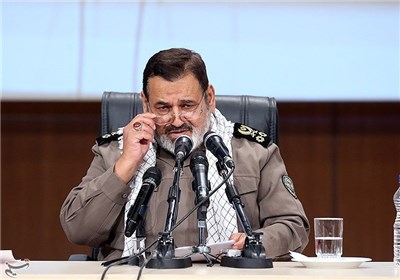


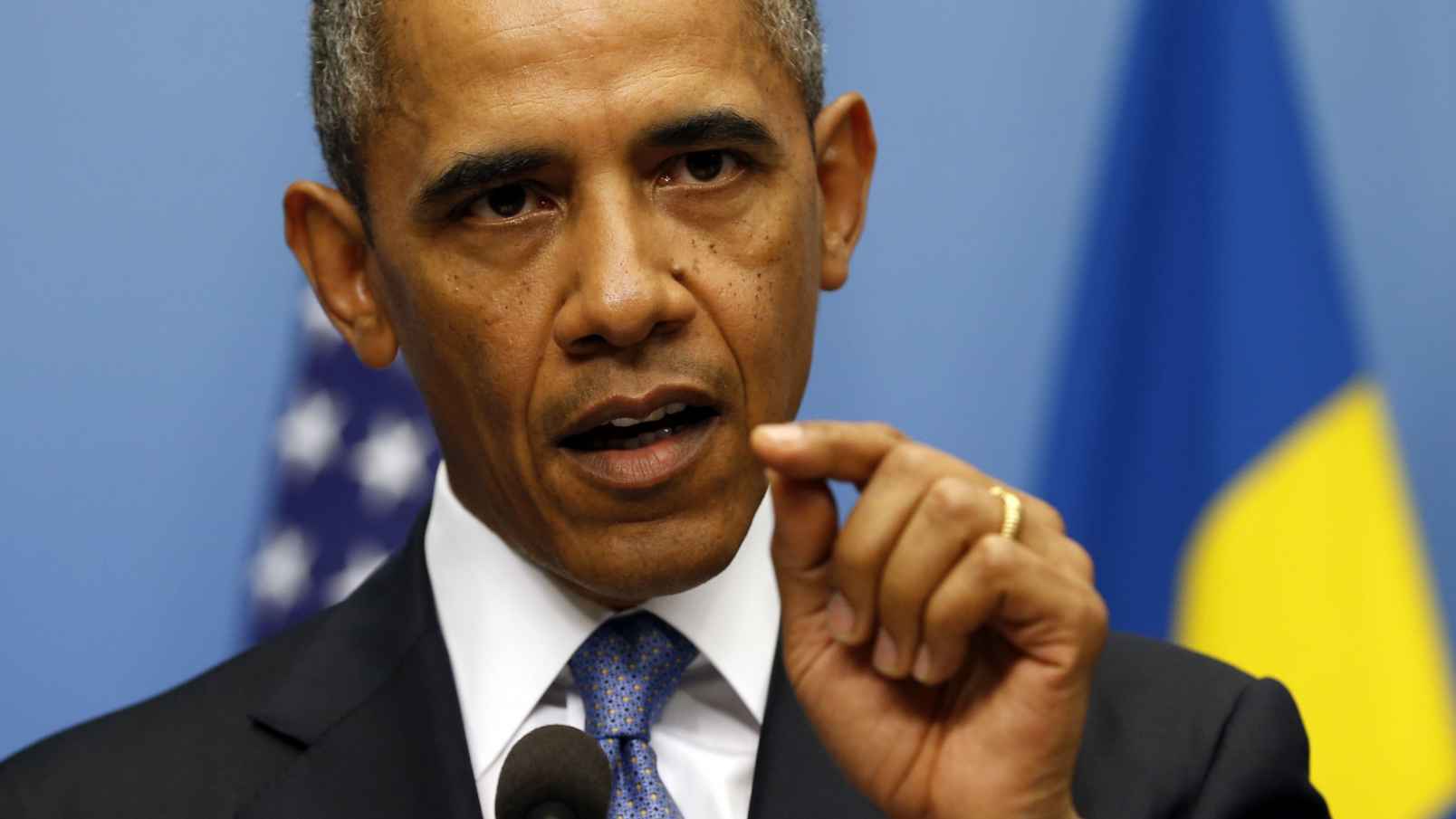





 anneinpt
 artaxes
 danmillerinpanama
 davidking1530
 Peter Hofman
 Joseph Wouk
 Peter
Peter Louisiana Steve
 WarSclerotic
Recent Comments