Archive for the ‘Iran’ category

Syrian-American Reformer Commends Syria Strikes, Urges Vigilance

April 7, 2017

Syrian-American Reformer Commends Syria Strikes, Urges Vigilance, American Islamic Forum for Democracy, April 7, 2017

By reducing a dictator’s capacity to kill, we have a chance of re-establishing America’s position in the world as a moral authority, and we can begin again to re-commit ourselves to the sacred commitment of ‘never again,’ something Barack Obama failed to do.”

***********************

The American Islamic Forum for Democracy (AIFD) welcomes the news of targeted strikes in Syria, meant to send a message to Bashar al-Assad and his allies that the use of chemical weapons will not stand. Dr. M. Zuhdi Jasser, the son of Syrians who fled the regime of Bashar al-Assad’s father, today said:

“When news broke that the United States had begun a narrow campaign of targeted strikes against regime targets in Syria, I felt immediate gratitude – on behalf of my family members there, and for our country, which has watched in horror for six long years as the Assad regime has carried out mass torture and murder of its civilians. While I am hopeful that these strikes are indicative of a bolder, firm Syria strategy – I am under no illusion that they will end Assad’s murderous rule, or that any transition in Syria will happen swiftly or easily. In many ways, we who have loved ones in Syria, and we who care about the human condition – are taking what we can get here – with hope that there will be more, even bolder action in Syria. What this action by President Trump does indicate is that the needle of American policy in Syria is moving closer to being on the right side of history. To secure our place there, however, we must remain vigilant, remembering that a conflict with Assad is necessarily a conflict with Russia, with Iran, and with Hizbollah. These limited, targeted strikes should continue, focused on reducing Assad’s access to resources, especially weapons. Every reduction in his assets is a reduction in his capacity to murder and maim civilians. By reducing a dictator’s capacity to kill, we have a chance of re-establishing America’s position in the world as a moral authority, and we can begin again to re-commit ourselves to the sacred commitment of ‘never again,’ something Barack Obama failed to do.”

The Message in the Missiles

April 7, 2017

The Message in the Missiles, Power Line, Scott Johnson, April 7, 2017

Last night President Trump authorized the destruction of the air base from which the Syrian butcher Assad had launched insidious sarin gas attacks earlier this week. Our destruction of the air base was executed through the use of 59 Tomahawk cruise missiles. I strongly support President Trump’s authorization of the action. As the great William F. Buckley, Jr. used to say, herewith a few observations:

1. Asked about the gas attacks in a Rose Garden press conference with Jordan’s King Abdullah on Wednesday, President Trump had responded: “It crossed a lot of lines for me. When you kill innocent children, innocent babies, babies, little babies, with a chemical gas that is so lethal, people were shocked to hear what gas it was, that crosses many, many lines, beyond a red line. Many, many lines.”

Trump’s language harked back to President Obama’s bloviation on Syria, but he wasn’t done. He went on specifically to cite Obama’s empty threat regarding Assad’s use of chemical weapons. “I think the Obama administration had a great opportunity to solve this crisis a long time ago when he said the red line in the sand,” Trump said. “And when he didn’t cross that line after making the threat, I think that set us back a long ways, not only in Syria, but in many other parts of the world, because it was a blank threat. I think it was something that was not one of our better days as a country.”

I read President Trump’s statement as the predicate of some form of military reprisal by the United States against Assad. Thus it proved to be.

2. Like President Reagan when he fired the striking air traffic controllers in 1981, President Trump sent several messages with the action taken last night. Here are three of them. The Obama era in American foreign policy is over. He doesn’t issue empty threats.

3. President Obama sought to tie the United States down in the world like the Lilliputians did Gulliver. Among the instruments employed by Obama to restrain the United States was the United Nations. President Trump gave the United Nations the opportunity to weigh in yesterday. When it failed to act, Trump proceeded. Again, the Obama era in foreign policy is over.

4. Trump acted with decisive force to achieve a limited objective. He could have gone further to remove more of Assad’s assets. If the goal was limited to deter Assad from doing what he did again, however, I think it highly likely that the mission was accomplished.

5. President Trump also had an unstated messaged for Iran and North Korea. See note 1 above.

6. President Obama put us in bed with Putin and empowered Russia in Syria with the supposed object of removing Assad’s chemical weapons. The agreement entered into by Obama was a complete and utter fraud. One might think that we would revisit this chain of events and pronounce it a scandal and a disgrace. Apparently not.

7. One might think that the attack on Putin’s Syrian ally would put paid to the line of the Democrat/Media Axis that Trump is somehow Putin’s lapdog, but one might think wrong.

8. President Obama and Secretary Kerry entered into the agreement with Russia to remove Syria’s chemical weapons in September 2013, not even four years ago. Yet it has conveniently disappeared from our collective memory as completely as the Wilmot Proviso and the Bland-Allison Act.

9. President Trump had the lawful authority to do what he did yesterday without congressional approval. It was akin to President Reagan’s 1986 bombing of Libya. Obama’s war to remove Qaddafi in Libya — now that was a problem. Last night, however, Trump acted well within his authority.

10. The Trump crew made a mistake advertising their intent to indulge the continuation of the Assad regime’s before the chemical attacks. They may have contributed to Assad’s brazen crime. It should also be noted, however, that the timing coincided with the two-day summit in Brussels, Belgium where European Union leaders had assembled to discuss funding commitments to support war-torn Syria. One knowledgeable observer called the Assad’s chemical attacks “a direct insult” and warning from Assad: you will keep paying and I will keep killing.


President Trump and King Abdullah II Hold a Joint Press Conference

April 5, 2017

President Trump and King Abdullah II Hold a Joint Press Conference, White House via YouTube, April 5, 2017

Lebanese Columnist Warns: Any Hizbullah Aggression Against Israel Will Be Disastrous For Lebanon More Than Anyone Else

April 3, 2017

Lebanese Columnist Warns: Any Hizbullah Aggression Against Israel Will Be Disastrous For Lebanon More Than Anyone Else, MEMRI, April 3, 2017

In an article titled “Does Hizbullah Threaten Israel or Us” in the  English-language Saudi daily Arab News, Lebanese columnist Diana Moukalled commented on the recent escalation in Hizbullah Secretary-General Hassan Nasrallah’s threats against Israel, including his threat to target Israel’s nuclear reactor in Dimona.[1] She assessed that this escalation in Nasrallah’s rhetoric is an attempt to make up for Hizbullah’s military losses in Syria and to garner popular support in light of the decline in Hizbullah’s and Iran’s global standing. She also noted that his threat to target the reactor is irresponsible because thousands of Palestinian and Israeli civilians live near it. Noting that Iran often uses Lebanon as an arena for its “adventures,” she warned that the current political climate might prompt Iran and Hizbullah to renew their aggression against Israel – which would be catastrophic for Lebanon, even more so than in previous confrontations.

The following are excerpts from her article:[2]

Diana Moukalled (image: twitter.com/dianamoukalled)

“Israel has reacted to recent statements by Hezbollah leader Hassan Nasrallah with a mixture of mockery and cynicism, as he said Hezbollah was ready to bomb the Dimona nuclear reactor or ammonia tanks. Israeli websites reported military discussions indicating that Israel believes Hezbollah is facing a dilemma over aid and funds due to the fighting in Syria.

“In the past, Israel dealt more seriously and carefully with Hezbollah threats and movements, but this has seemingly changed. I am in no way praising Israel, an occupying racist state, or minimizing its danger as an aggressor. Rather, this is an attempt to understand the whirlwind of rhetoric recently launched by Nasrallah, which affects Lebanese, Palestinians and others living mere kilometers from the Dimona reactor.

“Everyone, primarily Hezbollah, knows that the results of any war or military action against Israel will be catastrophic. Nasrallah may have learned this lesson, since the southern front with Israel has been calm since the end of the last war 11 years ago.

“As such, escalating rhetoric to target nuclear reactors — near to which thousands of Palestinian and Israeli civilians live, and would be harmed by substantial radioactive fallout — is at the very least irresponsible and no more than a popular mobilization attempt.

“But these empty slogans seem more necessary today than ever, as Nasrallah’s words seem to be an attempt to rebuild a combat position against Israel and make up for Hezbollah’s losses in Syria. This approach seems logical given the view that rapid political developments and the international consensus around Syria will lead to Hezbollah’s exit from the country. This would result in an Iranian response wherever it can do so.

“In a realistic characterization of current politics, now is not the time to make decisions, but to make a show of force and assemble cards to be presented while waiting for a clearer understanding of US regional policy. Continued escalation against Iran and its influence in Syria may lead to Tehran and Hezbollah reverting to a policy of confrontation, including against Israel. Where better than Lebanon as a gateway for new Iranian adventures?

“But the situation is not as it was during the 2006 war, as Israel says its response will be massive against Hezbollah and Lebanon if Hezbollah takes military action against it. This threat includes Israel’s preparedness to target all Lebanese territory. Lebanese President Michel Aoun’s comments that Hezbollah’s weapons complement the role of the army serve as a pretext for Israel to target the army as well.

“The appropriate conditions to target Hezbollah will come soon, but Israel is in no rush for military action as it is monitoring Hezbollah’s financial, moral and military depletion in Syria, amid Arab hostility toward Hezbollah, compared with support in 2006, due to its regional role at Iran’s behest. Any threat posed by Hezbollah will affect Lebanese before anyone else, and more severely than in previous wars and crises.”

____________________________

[1] In a February 16, 2017 address aired on Al-Mayadeen TV, Nasrallah called on Israel “not just to move the ammonia facility out of Haifa, but to dismantle the nuclear plant in Dimona,” saying: “They know what will become of them and of their [Zionist] entity if missiles hit that plant.” See MEMRI TV Clip No. 5896, “Hizbullah Secretary-General Nasrallah Threatens Missile Attack on Israeli Ammonia Facilities and Dimona Nuclear Plant,” February 16, 2017.

[2] Arab News (Saudi Arabia), February 26, 2017.

Israeli borders not cited at Arab Summit

March 30, 2017

Israeli borders not cited at Arab Summit, DEBKAfile, March 30, 2017

Syria’s Bashar Assad still persona non grata in Arab world

In a separate statement issued later, the Arab rulers reaffirmed their commitment to a two-state solution of the Arab-Israeli conflict. They called for a new round of peace talks based on a two-state formula and renewed the 2002 “reconciliation” offer (drawn up by Saudi Arabia) if “Israel quit occupied Arab land and agreed to a deal on Palestinian refugees.”

This was the first Arab summit to refrain from defining Israel’s future borders under a peace deal. This leaves the door open for leeway in the negotiations to take place as part of the new US-Saudi-Egyptian peace initiative we reported earlier now the subject of active exchanges between the US, Saudi Arabia, Egypt, the United Arab Emirates, Israel and the Palestinian Authority.

************************

All 15 resolutions passed by the Arab summit which took place in Jordan Wednesday, March 29, were devoted to an indictment of Iran, its Revolutionary Guards Corps and Lebanese surrogate, Hizballah. They were a testament to the depth of Arab-Iranian animosity and exposed the extent of the rift between the Sunni and Shiite Muslim worlds.

Iran was accused of meddling in the internal affairs of Arab nations, inciting Shiites against Sunnis, and arming and training Shiite terrorist groups for operations against legitimate Arab governments. The Arab rulers combined to put Tehran in the dock for its interference in the Syrian civil war and assault on its sovereignty.

None of the formal resolutions addressed the Palestinian-Israeli conflict. In a separate statement issued later, the Arab rulers reaffirmed their commitment to a two-state solution of the Arab-Israeli conflict. They called for a new round of peace talks based on a two-state formula and renewed the 2002 “reconciliation” offer (drawn up by Saudi Arabia) if “Israel quit occupied Arab land and agreed to a deal on Palestinian refugees.”

DEBKAfile: This was the first Arab summit to refrain from defining Israel’s future borders under a peace deal. This leaves the door open for leeway in the negotiations to take place as part of the new US-Saudi-Egyptian peace initiative we reported earlier now the subject of active exchanges between the US, Saudi Arabia, Egypt, the United Arab Emirates, Israel and the Palestinian Authority. King Abdullah of Jordan, who hosted the summit and Egyptian President Abdel-Fatteh El-Sisi will travel to Washington to report to President Donald Trump on the private discussions on this issue at the session and launch the next stage of the Arab-Israeli peace initiative.

DEBKAfile:  King Abdullah of Jordan, who hosted the summit and Egyptian President Abdel-Fatteh El-Sisi will travel to Washington to report to President Donald Trump on the private discussions on this issue at the session and launch the next stage of the Arab-Israeli peace initiative.
DEBKAfile lists the 15 resolutions submitted to the Arab summit.

1: Good neighborly relations should prevail between Iran and Arab countries and Iran’s meddling in the affairs of Arab countries condemned as a threat to the security and stability of the region.

2: The Islamic Republic of Iran should assume responsibility for an attack on Saudi Arabia’s embassy in Tehran and its consulate in Mashhad and abide by the laws of diplomacy.

3: The Iranian government must tell its officials to desist from hostile, inflammatory remarks against Arab countries.

4: Iran must stop fomenting sectarian rivalries and withdraw support from groups who destabilize the Gulf countries and armed groups inside Arab countries.

5: Iran’s invasion of three Emirate islands (Abu Musa and the Greater and Lesser Tunbs) is condemned. They must be restored to lawful ownership by peaceful means.

6: Iran must stop supporting and training terrorists and sending arms and ammunition to rebel groups fighting the Bahrain government.

7: Bahraini security agencies win praise for foiling a terrorist plot in December 2016 supported by the Iranian Revolutionary Guards and terrorist Hizballah.

8: Iran’s nefarious meddling in the Syrian crisis has threatened its sovereignty, future stability, security and unity.

9: Iranian meddling in Yemen’s affairs by backing forces fighting the legitimate government negatively affects the security of the country, its neighbors and the wider region.

10: The importance of the initiative taken by the Assistance Council of the Arab Gulf Countries is underlined and calls for a positive response from Iran

11: Iran must be bound to compliance with Security Council Resolution 2231 of 2015 and penalized swiftly with effective sanctions for any violations. Iran must be held to its commitments under the nuclear and regional environment treaties.

12: The Secretary General is entrusted with managing the commission of four Arab foreign ministers set up to thwart Iranian interference in Arab affairs.

13:  Arabic assistance forums with countries, regional, and international groups will highlight the ill effects of Iranian meddling in their affairs.

14: This issue will be placed on the UN agenda under Section 2 of Article 7

15: The Arab League Secretary General will monitor the implementation of these resolutions and report on progress to the next Arab summit.

All 15 Arab Summit resolutions blast Iran

March 29, 2017

All 15 Arab Summit resolutions blast Iran, DEBKAfile, March 29, 2017

All 15 resolutions passed by the Arab summit which took place in Jordan Wednesday, March 29, were devoted to an indictment of Iran, its Revolutionary Guards Corps and Lebanese surrogate, Hizballah. They were a testament to the depth of Arab-Iranian animosity and exposed the extent of the rift between the Sunni and Shiite Muslim worlds.

Iran was accused of meddling in the internal affairs of Arab nations, inciting Shiites against Sunnis, and arming and training Shiite terrorist groups for operations against legitimate Arab governments. The Arab rulers combined to put Tehran in the dock for its interference in the Syrian civil war and assault on its sovereignty.

None of the formal resolutions addressed the Palestinian-Israeli conflict. As DEBKAfile reported earlier, this issue is the subject of active exchanges between the US, Saudi Arabia, Egypt, the United Arab Emirates, Israel and the Palestinian Authority. King Abdullah of Jordan, who hosted the summit and Egyptian President Abdel-Fatteh El-Sisi will travel to Washington to report to President Donald Trump on the private discussions on this issue at the session and launch the next stage of the Arab-Israeli peace initiative.

DEBKAfile lists the 15 resolutions submitted to the Arab summit.

1: Good neighborly relations should prevail between Iran and Arab countries and Iran’s meddling in the affairs of Arab countries condemned as a threat to the security and stability of the region.

2: The Islamic Republic of Iran should assume responsibility for an attack on Saudi Arabia’s embassy in Tehran and its consulate in Mashhad and abide by the laws of diplomacy.

3: The Iranian government must tell its officials to desist from hostile, inflammatory remarks against Arab countries.

4: Iran must stop fomenting sectarian rivalries and withdraw support from groups who destabilize the Gulf countries and armed groups inside Arab countries.

5: Iran’s invasion of three Emirate islands (Abu Musa and the Greater and Lesser Tunbs) is condemned. They must be restored to lawful ownership by peaceful means.

6: Iran must stop supporting and training terrorists and sending arms and ammunition to rebel groups fighting the Bahrain government.

7: Bahraini security agencies win praise for foiling a terrorist plot in December 2016 supported by the Iranian Revolutionary Guards and terrorist Hizballah.

8: Iran’s nefarious meddling in the Syrian crisis has threatened its sovereignty, future stability, security and unity.

9: Iranian meddling in Yemen’s affairs by backing forces fighting the legitimate government negatively affects the security of the country, its neighbors and the wider region.

10: The importance of the initiative taken by the Assistance Council of the Arab Gulf Countries is underlined and calls for a positive response from Iran

11: Iran must be bound to compliance with Security Council Resolution 2231 of 2015 and penalized swiftly with effective sanctions for any violations. Iran must be held to its commitments under the nuclear and regional environment treaties.

12: The Secretary General is entrusted with managing the commission of four Arab foreign ministers set up to thwart Iranian interference in Arab affairs.

13:  Arabic assistance forums with countries, regional, and international groups will highlight the ill effects of Iranian meddling in their affairs.

14: This issue will be placed on the UN agenda under Section 2 of Article 7

15: The Arab League Secretary General will monitor the implementation of these resolutions and report on progress to the next Arab summit.
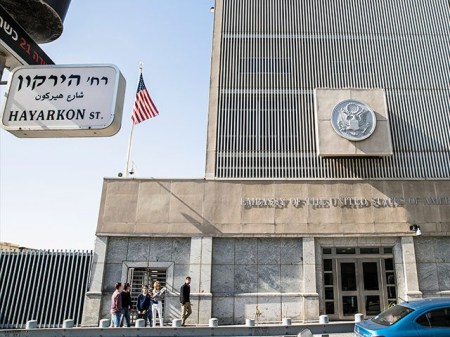
Arab Foreign Ministers Discuss Blocking U.S. Embassy Move to Jerusalem

March 6, 2017

Arab Foreign Ministers Discuss Blocking U.S. Embassy Move to Jerusalem, BreitbartDeborah Danan, March 6, 2017

(There have been credible reports that, when PM Netanyahu met with President Trump, he asked Trump to delay his largely symbolic move of the American embassy to Jerusalem because an otherwise likely and more important agreement with the Arab nations on combatting Iran’s involvement in their spheres of influence could well be jeopardized. — DM)

JACK GUEZ/AFP/Getty Images

TEL AVIV – Ahead of the Arab League Summit later this month, foreign ministers of member states gathered in Cairo on Sunday and Monday to discuss how to prevent President Donald Trump from going through with his promise to move the embassy from Tel Aviv to Jerusalem, the Hebrew news site nrg reported.

The “Palestinian issue,” along with the embassy move to “occupied Jerusalem,” were among 28 items on the agenda, according to a press release from the Arab League’s Deputy Secretary-General Ahmed Bin Hali.

In January, the League’s Assistant Secretary-General for Palestinian Affairs Said Abu Ali urged Trump to “reconsider” the embassy move or else the U.S. will be in danger of losing its status “as an objective sponsor of the peace process.”

Bin Hali said that another item to be discussed by representatives of member states is the “Arab League’s plan to curb the proliferation of weapons of mass destruction in the Middle East.” He added that ahead of the summit in Jordan on March 23, the representatives will discuss the terrorism spreading in the Arab world, and the role of Turkey and Iran in regional conflicts.

Bin Hali also told reporters that Iran’s meddling in other states’ affairs must be stopped and that the member states of the Arab League must view this, as well as Tehran’s nuclear aspirations, as a shared interest. According to Bin Hali, the lack of a “unified stance” on the part of Arab world was its biggest problem.

He said that despite efforts to that end, “there are still Arab officials who remain divisive and who seek to provoke tension in relations between Arab states.”

“We are all in the same boat. We are all affected by the regional security issues and therefore we must work towards resolving our internal strife,” he added.

Dr. Jasser participates in a panel discussion about the state of the Middle East & ISIS

February 25, 2017

Dr. Jasser participates in a panel discussion about the state of the Middle East & ISIS, AIFD via YouTube, February 24, 2017

(It’s an about thirty-five minute long video about Middle East related topics, including America’s relations with Russia, Islamist terrorism, Islamist nations, the clash between Judeo-Christian and Islamist cultures and what the Trump administration can and should do. — DM)


US twin sea buildup against China, NKorea, Iran

February 19, 2017

US twin sea buildup against China, NKorea, Iran, DEBKAfile, February 19, 2017

The conventional thinking until now was that, in the event of an Iranian clash with the US or Gulf states, including Saudi Arabia, Tehran would push back by blocking the strategic Strait of Hormuz. Today, American forces have been placed in position to prevent Iran from blocking the Strait of Mandeb, and so choking the main sea route used by oil and merchant shipping sailing to and from the Mediterranean via the Suez Canal, by posting missile bases on Yemen’s western Red Sea coast.

*********************

Donald Trump marked his first month as US President with two major military gambits in the Middle East, Asia and the South China Sea. Early Sunday, Feb. 19, the US Navy said that the Nimitz-class USS Carl Vinson aircraft carrier and strike group had begun patrols in the disputed waters of the South China Sea. With them are three air squadrons coming from their Naval Air Station Lemoore: the USS Lake Champlain guided missile cruiser and two guided missile destroyers, the USS Michael Murphy and the USS Wayne E. Meyer.

The deployment comes after Beijing’s warning that a US naval unit sailing near the disputed Spralys, where China has built islands and a military presence, would be seen as a violation of sovereignty, which the US and Japan refuse to recognize.

The Trump administration’s move therefore opens up a potential arena of confrontation between the US and China.  It also caries a message for North Korea, which Trump has called “a big, big problem and we will deal with that very strongly.”

A week ago, on Feb. 12, North Korea launched a missile, using new “cold eject” technology which makes it possible to fire a missile from a submarine. Military experts in Washington and Jerusalem estimate that once Pyongyang has perfected the system, it will be passed to Tehran, an eventuality covered in Prime Minister Binyamin Netanyahu’s White House talks with President Trump last week, our sources reveal.

Our military sources add that while Washington has publicly announced the transfer of a naval-air force to the South China Sea, the deployment of the large 11th Marine Expeditionary Combat Unit to the Gulf of Aden and Red Sea is being kept low key.

The conventional thinking until now was that, in the event of an Iranian clash with the US or Gulf states, including Saudi Arabia, Tehran would push back by blocking the strategic Strait of Hormuz. Today, American forces have been placed in position to prevent Iran from blocking the Strait of Mandeb, and so choking the main sea route used by oil and merchant shipping sailing to and from the Mediterranean via the Suez Canal, by posting missile bases on Yemen’s western Red Sea coast.

The 4,500-strong contingent of MEC marines and sailors is supported by the fighters and attack helicopters on board the USS Makin Island amphibious assault ship, the USS Somerset amphibious transport and the USS Comstock dock landing ship. Their task is to keep the strategic waterway open and safe.

The deployment of the USS Cole destroyer around the strait was announced on Feb. 3, days after a suicide boat attack by Yemeni Houthi rebels on the Saudi frigate Al Madinah off the Yemeni port of Al Hudaydah.

DEBKAfile’s military analysts note that the deployment of these naval and air forces in two international maritime arenas offers President Trump a flexible operational scenario. He can order one of those forces to go on the offensive as a warning to hostile elements in the other one – or go into action in both simultaneously – for example the US could strike North Korean and Iranian targets synchronously.

In line with these moves, a US flotilla departed its Arabian Sea base at Duqm in Oman on Feb. 12 and is sailing towards Bab Al Mandeb.

Tehran reacted Monday, Feb. 20, by embarking on a large-scale three-day military exercise titled Grand Prophet 11. Gen. Mohammed Pakpour, commander of the Revolutionary Guards ground forces, announced that the drill would include missile launches, without specifying their types or ranges.

Iranian leaders have repeatedly stated that they would not allow American warnings to deter them from their missile program, any more than Pyongyang hesitated to fly in the face of those warnings. Those warnings are now backed up by America’s sea and air might in combat positions.

Is This The Coup the Left Wanted?

February 15, 2017

Is This The Coup the Left Wanted?, The Resurgent, February 15, 2017

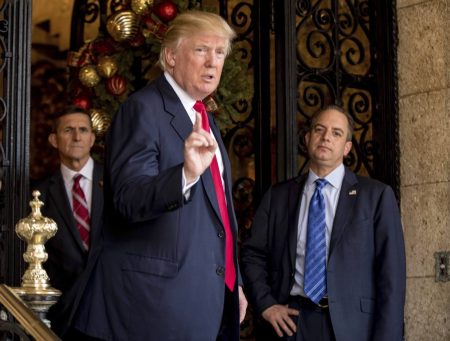
trumpandflynn

There is no evidence that Donald Trump’s campaign and Russian intelligence cooperated to steal the election from Hillary Clinton. But the New York Times waits for the third paragraph of this sensational story to tell you. First, they want you to know intelligence sources say Trump campaign staffers had multiple, repeated contacts with the Russians.

What we are seeing is an intelligence community trying to sabotage the President of the United States. We should all be concerned even if we have our own concerns about the President and Russia.

It is more and more apparent that, while Mike Flynn misled Vice President Pence and should have been fired, we only know this because members of the intelligence community engaged in an opposition research dump on Flynn with the media. They engaged as a separate and distinct branch of government, and that is a dangerous situation.

The left is cheering on the outcomes, as are some on the right, but they are all ignoring the process. When the intelligence community ceases to serve the Commander-in-Chief and instead tries to sabotage him because they do not like the direction he is taking the country, they are putting their interests ahead of the voters and the electoral process.

The same problem exists with the Ninth Circuit Court of Appeals and its decision on the immigration order. In large part, the court based its decision on Donald Trump’s campaign statements that he wanted a Muslim ban. At first blush, that may seem legit to people but consider Barack Obama and Obamacare.

Chief Justice John Roberts upheld Obamacare’s constitutionality because he said it fell under the taxation powers of the constitution. But Barack Obama had campaigned on Obamacare saying that it was not a tax. Had the Supreme Court used President Obama’s campaign statements against him, they would have thrown out Obamacare.

While one may cheer on the outcome from the Ninth Circuit, they should not cheer the process and flawed legal reasoning.

Both the intelligence and court situation raise troubling issues. By cheering outcomes based on deeply problematic processes, people are rapidly moving towards “ends justify the means” reasoning. That will bring about the very creeping authoritarianism the left fears from Donald Trump.

They cheer this on now because it is working to their advantage as rogue leakers try to undermine a President they do not like. But it will eventually happen to them. By then they will have surrendered any and all moral high ground to cry foul.

The intelligence community serves at the pleasure of the President, not the other way around. The President must be able to depend on the intelligence community’s assessments. Right now, the intelligence community is causing a breakdown in trust with the Trump Administration through leaks designed to undermine his authority.

If a terrorist attack on our soil happens because the President felt he could no longer trust the intelligence community’s assessments, that will be on them. This behavior, in a democratic republic, must be considered unacceptable.

It is possible to be happy Mike Flynn is gone and also be deeply bothered by the means through the intelligence community designed his ouster. People on all sides should be speaking up loudly that the behavior of the intelligence community in damaging leaks is unacceptable.

Finally, we know that Mike Flynn intended to reform the intelligence community and expose side deals made with Iran to secure a diplomatic agreement. President Trump should commit to replacing Mike Flynn with someone as hell-bent on reform and exposure of the Iran deal as Mike Flynn was. The intelligence community cannot be rewarded for bad behavior that undermines the democratic processes of this nation, even if some of us are happy Mike Flynn is gone.


