Archive for the ‘Iran’ category

The rational Ayatollah hypothesis

May 29, 2015

The rational Ayatollah hypothesis, Power LineScott Johnson, May 28, 2015

In his Wall Street Journal column this past Tuesday, Bret Stephens took up “The rational ayatollah hypothesis” (accessible via Google here). That hypothesis — asserted, I would say, as a thesis if not a fact by our Supreme Leader about Iran’s Supreme Leader — holds that economics and other such considerations constrain the anti-Semitic behavior of the Islamic Republic of Iran. So about those nuclear weapons that Iran is developing on — Israel is not to worry. Neither are we. It’s the Alfred E. Newman approach writ large.

Obama articulated his thesis in response to a question posed by Jeffrey Goldberg in his recent interview of Obama. I wrote about it in “Obama expounds the limits of Iran’s anti-Semitism.” I struggled because Obama’s observations are both ignorant and obtuse. Stephens takes up Obama’s thesis somewhat more elegantly than I did:

Iran has no border, and no territorial dispute, with Israel. The two countries have a common enemy in Islamic State and other radical Sunni groups. Historically and religiously, Jews have always felt a special debt to Persia. Tehran and Jerusalem were de facto allies until 1979, when Ayatollah Khomeini came to power and 100,000 Jews still lived in Iran. Today, no more than 10,000 Jews are left.

So on the basis of what self-interest does Iran arm and subsidize Hamas, probably devoting more than $1 billion of (scarce) dollars to the effort? What’s the economic rationale for hosting conferences of Holocaust deniers in Tehran, thereby gratuitously damaging ties to otherwise eager economic partners such as Germany and France? What was the political logic to Mahmoud Ahmadinejad’s calls to wipe Israel off the map, which made it so much easier for the U.S. and Europe to impose sanctions? How does the regime shore up its domestic legitimacy by preaching a state ideology that makes the country a global pariah?

Maybe all this behavior serves Tehran’s instrumental purposes by putting the regime at the vanguard of a united Shiite-Sunni “resistance” to Western imperialism and Zionism. If so, it hasn’t worked out too well, as the rise of Islamic State shows. The likelier explanation is that the regime believes what it says, practices what it preaches, and is willing to pay a steep price for doing so.

So it goes with hating Jews. There are casual bigots who may think of Jews as greedy or uncouth, but otherwise aren’t obsessed by their prejudices. But the Jew-hatred of the Iranian regime is of the cosmic variety: Jews, or Zionists, as the agents of everything that is wrong in this world, from poverty and drug addiction to conflict and genocide. If Zionism is the root of evil, then anti-Zionism is the greatest good—a cause to which one might be prepared to sacrifice a great deal, up to and including one’s own life.

This was one of the lessons of the Holocaust, which the Nazis carried out even at the expense of the overall war effort. In 1944, with Russia advancing on a broad front and the Allies landing in Normandy, Adolf Eichmann pulled out all stops to deport more than 400,000 Hungarian Jews to Auschwitz in just two months. The Nazis didn’t even bother to make slaves of most of their prisoners to feed their war machine. Annihilation of the Jews was the higher goal.

Modern Iran is not Nazi Germany, or so Iran’s apologists like to remind us. Then again, how different is the thinking of an Eichmann from that of a Khamenei, who in 2012 told a Friday prayer meeting that Israel was a “cancerous tumor that should be cut and will be cut”?”

Walter Russell Mead has more here, all of it worth reading. I thought readers who have been tracking the deep thoughts of our Supreme Leader, as we all should, might find Mead’s thoughts and Stephens’s column of interest.
White House: We Won’t Fight ISI.S For The Iraqis, They Must Do It – America’s Newsroom

May 28, 2015

White House: We Won’t Fight ISI.S For The Iraqis, They Must Do It – America’s Newsroom via You Tube, May 28, 2015


Top Iranian Negotiator: We Reached Solution with P5+1 on Site Inspection, But Khamenei Rejected It

May 28, 2015

Top Iranian Negotiator: We Reached Solution with P5+1 on Site Inspection, But Khamenei Rejected It, MEMRI-TV videos, May 28, 2015

In an Iranian TV interview, Iranian Deputy Foreign Minister Abbas Araqchi, who is Iran’s top nuclear negotiator, revealed that the Iranian negotiating team had reached possible solutions with the P5+1 on the issue of inspection of Iranian nuclear facilities, but that Iranian Supreme Leader Ali Khamenei had decisively rejected them. Inspection of the facilities is one of the key issues remaining in the nuclear talks. The interview aired on Iran’s Channel 2 TV on May 25.


WH Admits Need To ‘Adapt Our Strategy’ Against IS, Contradicts Previous Admin Statements

May 27, 2015

WH Admits Need To ‘Adapt Our Strategy’ Against IS, Contradicts Previous Admin Statements, Washington Free Beacon via You Tube, May 27, 2015

(“It’s more complicated than that.” Wash, rinse and repeat– DM)


Site inspections must be part of Iran deal: IAEA

May 27, 2015

Site inspections must be part of Iran deal: IAEA, Times of IsraelCECILE FEUILLATRE, May 27, 2015

(France’s foreign minister has also stated that France will not back any deal “unless it provided full access to all installations, including military sites.” – DM)

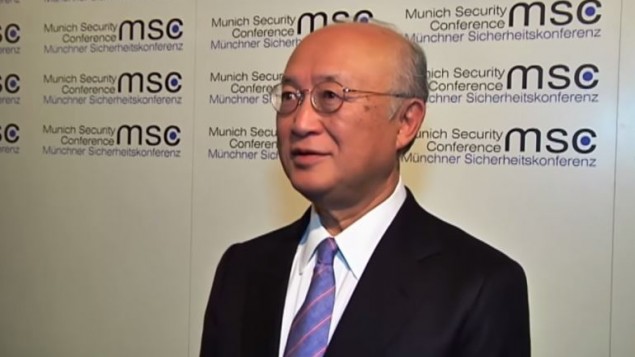
amino-e1432728404999-635x357Director-General of the International Atomic Energy Agency Yukiya Amano. (screen capture: YouTube/FRANCE 24 English)

UN nuclear agency chief Yukiya Amano says months needed to assess military aspects of Iranian nuclear sites.

PARIS, France (AFP) — If Iran signs a nuclear deal with world powers it will have to accept inspections of its military sites, the head of the UN’s atomic watchdog Yukiya Amano told AFP in an interview.

The question of inspections is shaping up to be one of the thorniest issues as world powers try to finalize a deal by June 30 to prevent Iran from developing a nuclear bomb.

Amano said Tehran has agreed to implementing the Additional Protocol of the Nuclear Non-Proliferation Treaty (NPT) that allows for snap inspections of its nuclear facilities, and if required, military sites.

However, differences have emerged over the interpretation of the protocol and the issue is far from resolved.

Iran’s supreme leader Ayatollah Ali Khamenei last week ruled out allowing nuclear inspectors to visit military sites or the questioning of scientists.

And Foreign Minister Mohammad Javad Zarif has said the protocol allows “some access” but not inspections of military sites, in order to protect national “military or economic secrets.”

In an interview with AFP and French daily Le Monde, Amano said that if a deal is reached, Iran will face the same inspections from the International Atomic Energy Agency (IAEA) as any of the 120 countries implementing the additional protocol.

“When we find inconsistency or when we have doubts we can request access to the undeclared location for example, and this could include military sites,” said the Japanese diplomat.

“Some consideration is needed because of the sensitiveness of the site, but the IAEA has the right to request access at all locations, including military ones.”

Iran and the so-called P5+1 group — Britain, China, France, Russia, the United States plus Germany — have been engaged for nearly two years in negotiations on Tehran’s nuclear drive.

The deal is aimed at preventing Iran from developing the atomic bomb in exchange for an easing of crippling economic sanctions.

The two sides signed a framework agreement on April 2 and began meeting in Vienna on Wednesday to start finalizing a deal which is due by June 30.

Possible military dimension

Iran has long asserted its nuclear program is for peaceful energy purposes, and that international concern about it seeking a nuclear bomb is misplaced.

According to the United States, Iran has agreed to cut the number of its centrifuges, used for enriching uranium, by two thirds from 19,000 to about 6,000, and will put excess nuclear equipment into storage monitored by the IAEA.

Iran has also reportedly agreed not to build any new facilities for enriching uranium for 15 years, cut back its stockpile of enriched uranium and mothball some of its plants.

However, Tehran is sensitive over the IAEA’s stringent oversight demands as the agency is at the same time trying to probe allegations that Iran tried to develop nuclear weapons prior to 2003, and possibly since.

Iran denies the allegations, saying they are based on hostile intelligence provided by the US Central Intelligence Agency (CIA) and Israel’s Mossad.

Western officials stress that these claims of “possible military dimensions” need to be cleared up before sanctions can be lifted, but the IAEA’s probe has been stalled since last August.

‘A huge operation’

Amano said that once there is a deal, “several months will be needed” to investigate whether there were any military dimensions to Iran’s research.

“It depends very much on the pace and the intensiveness of the cooperation from Iran. We have identified 12 areas to clarify.”

One notable area the IAEA is interested in is the Parchin military base, where they suspect tests relating to the development of nuclear weapons have taken place.

The IAEA has already visited the sprawling military base near Tehran but wants to return for another look.

Amano said it could take years “to give the credible assurance that all activities in Iran have a peaceful purpose”.

If a deal is reached with the P5+1, the IAEA will be charged with overseeing it and reporting back to the UN Security Council.

“This will be the most extensive safeguard operation of the IAEA. We need to prepare well, we need to plan well, it is a huge operation,” said Amano.

Currently the watchdog has between four and 10 inspectors in Iran at any given time, and if a deal is reached at least 10 will need to be on the ground daily.

The agency will also need to install cameras and seals on sensitive equipment.

Op-Ed: Every Day is “Opposite Day” with President Barack Obama

May 26, 2015

Op-Ed: Every Day is “Opposite Day” with President Barack Obama, Israel National News, Mark Langfan, May 26, 2015

In sum, either Obama is, at best, a Middle-east policy ignoramus or, at worst, an Iranian stooge. If Obama rolled dice to make his Middle-East decisions, he’d have a better average than his current total Middle-East failure on every issue.  So, chances are he is not intending his Middle-East policies to bring peace, but instead planning them to bring war and sow the violence, death and destruction that they have predictably brought.

**********************

Obama has done exactly the opposite of what should be done in the Middle East for his entire term. Israel had better ignore his advice.

Following Obama’s speeches is like watchingSesame Street’s “Opposite Day”, the Sesame Street episode where everything is “opposite.”  ‘Up’ is ‘down,’ ‘left’ is ‘right,’ and so on and so forth.  It’s like Berra saying “It’s deja vu all over again.”

With Obama, for the past seven years, every day is “Opposite Day.”  Everything he says sounds upside-down and backwards, and is proven, in the short-term, to be just that.  Instead of being chastened by reality, Obama blithely still talks-the-talk like he’s reading off the Holy Grail.

Take Obama’s latest upside-down and backwards ‘Opposite-Day’ statement: “I continue to believe a two-state solution is absolutely vital for not only peace between Israelis and Palestinians, but for the long-term security of Israel as a democratic and Jewish state.”  Given Obama’s 0%batting average on Middle-East strategy, it safe to conclude that keeping the “West Bank” is vital for Israel’s security.

For starters, what Middle East policy has Obama gotten right in the last seven years?  Obama’s total retreat from Iraq that empowered Iranian-puppet al Maliki to castrate the Western Iraqi Sunnis that mutated into ISIS?  Obama’s bombing of Qaddafi, and setting North Africa into a ball of flames?  Obama’s toppling of Mubarak and coronation of the Muslim Brotherhood Sunni Islamic State of Egypt?  Obama’s green-lighting Iran to set Shiite Arab against Sunni Arab as he anoints Iran as a nuclear-threshold state, and gives $50 billion to further fund its Islamic “resistance” revolution?  Obama’s total protection of the genocidal Assad as he gasses Sunni Muslims to death?

Obama has made the wrong policy decision on every Middle Eastern issue, yet still speaks as if he’s the Middle-east guru.

The truth is Israel’s retention of the “West Bank” is vital not only for the peace and security of Israel, but also, most importantly, for the moderate Arabs who bathe in the warmth of Israel’s security envelope.  If Israel left the “West Bank”, forget about the resulting Hamastan that once concerned us, because the result would be an  ISIStan. Hamas will soon start asking Israel for protection from ISIS as that organization is beginning to attack it in Gaza.  And after Assad falls, and the Sunnis start really paying Hezbollah back for its genocide against the Syrian Sunnis, the Shiites of South Lebanon will have only one protector: Israel.

Was Israel’s retreat from Gaza good for Egypt?  No, it created a cancer that sent its Iranian-funded Islamic-bedlam to the Sinai, and then to Egypt-proper.  Israel’s “peace-process” regarding Gaza has enabled Hamas to turn the Palestinians of Gaza into cannon-fodder for the world press, and the World Court.  With Gaza’s failed-test-case, Obama’s claim that Israel repeat the same withdrawal from Judea and Samaria almost seems to present evidence of a malevolent intent to eradicate peace and security for Israel, and the moderate Arabs who are now protected by Israel.

And let us not forget Jordan.  Wouldn’t Jordan “love” an ISIStan state to its west?  The analogy is simple, a Hamastan Gaza is to Egypt what an ISIStan “West Bank” would be to Jordan—a formula for Jordan’s total disintegration.  As it is, Jordan’s King Abdullah is facing ISIS to the north and to the south. Jordan can be easily overrun, it hardly needs additional pressure along its western border, now protected by Israel.

In sum, either Obama is, at best, a Middle-east policy ignoramus or, at worst, an Iranian stooge. If Obama rolled dice to make his Middle-East decisions, he’d have a better average than his current total Middle-East failure on every issue.  So, chances are he is not intending his Middle-East policies to bring peace, but instead planning them to bring war and sow the violence, death and destruction that they have predictably brought.

If Obama says “up,” think “down;” and if he advises retreat from Judea and Samaria, Israel had better stay exactly where it is.

No army in Mid East is challenging ISIS. Iran regroups to defend S. Iraqi Shiites, Assad to save Damascus

May 25, 2015

No army in Mid East is challenging ISIS. Iran regroups to defend S. Iraqi Shiites, Assad to save Damascus, DEBKAfile, May 25, 2015

Baiji_22.5.15Iranian troops in fight to evict ISIS from Baiji refinery

Hassan Nasrallah Saturday, May 23, called his Lebanese Shiite Hizballah movement to the flag, because “we are faced with an existential crisis” from the rising belligerence of the Islamist State of Iraq and the Levant. His deputy, Sheik Naim Qssem, sounded even more desperate: “The Middle East is at the risk of partition” in a war with no end in sight, he said. “Solutions for Syria are suspended. We must now see what happens in Iraq.”

The price Iran’s Lebanese proxy has paid for fighting alongside Bashar Assad’s army for four years is cruel: some 1,000 dead and many times that number of wounded. Its leaders now understood that their sacrifice was in vain. ISIS has brought the Syrian civil war to a new dead end.

This week, a 15-year old boy was eulogized by Hizballah’s leaders for performing his “jihadist duty” in Syria.

Clearly, for their last throw in Syria, the group, having run out of adult combatants, is calling up young boys to reinforce the 7,000 fighting there.

The Syrian president Bashar Assad is in no better shape. He too has run dangerously short of fresh fighting manpower. Even his own Alawite community has let him down. Scarcely one-tenth of the 1.8 million Alawites have remained in Syria. Their birthrate is low, and those who stayed behind are hiding their young sons to keep them from being sent to the front lines.

Assad also failed to enlist the Syrian Druze minority to fight for his regime, just as Hizballah’s Nasrallah was rebuffed when he sought to mobilize the Lebanese army to their cause. This has left Hizballah and the Syrian ruler alone in the battlefield with dwindling strength against two rival foes:  ISIS and the radical Syrian opposition coalition calling itself Jaish al-Fatah – the Army of Conquest – which is spearheaded by Al Qaeda’s Nusra Front and backed to topple Assad by Saudi Arabia, Qatar and Turkey.

Nasrallah tried to paint a brave picture of full mobilization to expand the war to all parts of Syria. However, Sunday, May 24, a key adviser to Assad admitted that his regime and its allies were being forced to regroup.

Their forces were withdrawing from the effort to shift the Islamists from the land they have conquered – about three-quarters of Syrian territory – and concentrating on defending the cities, Damascus, Homs and Latakia, home to the bulk of the population, as well as the strategic Damascus highway to the coast and Beirut. Hizballah needed to build up the Lebanese border againest hostile access.

But Syrian cities, the Lebanese border and the highway are still under threat – from Syrian rebel forces.

The Iraqi army, for its part, has been virtually wiped out, along with the many billions of dollars the US spent on training and weapons. There is no longer any military force in Iraq, whether Sunni or Shiite, able to take on ISIS and loosen its grip on the central and western regions.

The Kurdish peshmerga army, to whom President Barack refused to provide armaments for combating the Islamists, has run out of steam. An new offensive would expose the two main towns of the semi-autonomous Kurdish Republic – the capital Irbil and the oil city of Kirkuk – to the depredations of the Islamist belligerents.

A quick scan of Shiite resources reveals that in the space between the Jordan River and the Euphrates and Tigris, Iran commands the only force still intact in Iraq – namely, the Iraqi, Afghan and Pakistani Shiite militias, who are trained and armed by the Revolutionary Guards.

This last remaining fighting force faces its acid test in the battle ongoing to recover Baiji, Iraq’s main oil refinery town. For the first time, Iranian troops are fighting in Iraq, not just their surrogates, but in the Baiji campaign they have made little headway in three weeks of combat. All they have managed to do is break through to the 100 Iraqi troops stranded in the town, but ISIS fighting strength is still not dislodged from the refinery.

The Obama administration can no longer pretend that the pro-Iranian Shiite militias are the panacea for the ISIS peril. Like Assad, Tehran too is being forced to regroup. It is abandoning the effort to uproot the Islamists from central and western Iraq and mustering all its Shiite military assets, such as the Badr Brigade, to defend the Shiite south – the shrine towns of Najef and Karbala, Babil (ancient Babylon) and Qadisiya – as well as planting an obstacle in the path of the Islamists to Iraq’s biggest oil fields and only port of Basra.

The Shiite militias flown in by Tehran from Pakistan and Afghanistan have demonstrated in Syria and Iraq alike that they are neither capable nor willing to jump into any battlefields.

The upshot of this cursory scan is that not a single competent army capable of launching all-out war on ISIS is to be found in the Middle East heartland – in the space between the 1,000km long Jordan and the Euphrates and Tigris to the east, or between Ramadi and the Saudi capital of Riyadh to the south.

By Sunday, May 24, this perception had seeped through to the West. US Defense Secretary Ashton Carter, remarked: “What apparently happened was that the Iraqi forces just showed no will to fight.” The former British army chief Lord Dannatt was more down to earth. Since the coalition air force campaign had failed to stop ISIS’s advance, he said “it was time to think the previously unthinkable” and send 5,000 ground troops to fight the Islamists in Syria and Iraq.

The next day, Monday, Tehran pointed the finger of blame for the latest debacles in Iraq at Washington. Al Qods Brigades chief Gen. Qassem Soleimani was quoted by the English language Revolutionary Guards mouthpiece Javan as commenting: “The US didn’t do a damn thing to stop the extremists’ advance on Ramadi.”

Unconfirmed: Huge explosion kills hundreds in central Tehran

May 24, 2015

Unconfirmed: Huge explosion kills hundreds in central Tehran, DEBKAfile, May 24, 2015

(Update: DEBKAfile has deleted the post, which it had acknowledged had not been confirmed, suggesting that nothing of interest happened.– DM)

According to first unconfirmed reports, central Tehran was hit Sunday night with massive blasts leaving many hundreds of people dead. Witnesses report heavy Revolutionary Guards and Basij forces speeding to the area. Thee are also reports of explosions in the southern Iranian town of Isfahan – also unconfirmed.

US and Hizballah coordinate spy drone flights over Qalamoun, share US combat intelligence

May 23, 2015

US and Hizballah coordinate spy drone flights over Qalamoun, share US combat intelligence, DEBKAfile, May 23, 2015

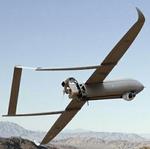
U.S._special_forces_operating_recon_drones_in_Lebanon_5.15Reconnaissance drone operated by US special forces in Lebanon

How do Obama’s repeated commitments to Israel’s security square with close US military and intelligence cooperation with an organization whose vow to destroy Israel is backed by 100,000 missiles – all pointed south?

************************

Another strange pair of bedfellows has turned up in one of the most critical Middle East battlefields: the United States is helping Hizballah, Iran’s Lebanese surrogate, in the battle for control of the strategic Qalamoun Mountains. DEBKAfile’s intelligence sources disclose that a US special operations unit, stationed at the Hamat air base on the coast of northern Lebanon, is directing unarmed Aerosonde MK 4.7 reconnaissance drone intelligence-gathering flights over the Qalamoun Mt arena, 100 km to the west.

Washington set up the base originally in line with an assurance to Beirut of military assistance for the next three years to counter any threatened invasion by extremist elements.

However, it turns out that the data the US drones pass to Lebanese army general staff in Beirut goes straight to Hizballah headquarters – and on to the Iranian officers in Syria running Bashar Assad’s war effort.

The Aerosonde MK 4.7 can stay aloft for 10 to 12 hours at a stretch at an altitude of 4.5 km. It functions day or night, equipped with an advanced laser pointer capability. It is capable of carrying ordnance but US sources say they the aircraft in Lebanon are unarmed.

Since Hizballah is also operating Ababil-3 surveillance drones of its own over Qalamoun, coordination had become necessary between the American team and the Shiite group.  The consequence is that for the first time, the US military is working directly with an internationally-designated terrorist organization – a development with earthshaking ramifications for Israel’s security. This partnership has in fact become a game-changer for the worse in terms of Israel’s security ties with the US and has caused an upheaval in its military and intelligence disposition in the region, in at least six respects:

1. To counter US-Hizballah intelligence collaboration, Israel is obliged to reshuffle the entire intelligence mechanism it maintains to protect its northern borders with Lebanon and Syria.

2.  Israel finds itself forced to monitor the progress of the US special unit’s interface with Hizballah, its avowed enemy.

3.  Israel can no longer trust American intelligence coming in from Lebanon because it is likely tainted by Hizballah sources.

4.  Hizballah is gaining firsthand insights into the operating methods of US special operations forces, which Israel’s methods strongly resemble and must therefore revamp.

5. The Hizballah terrorist group is winning much needed prestige and enhanced status in the region from its collaboration with the US.

6. Hizballah’s Ababil drones are in fact operated by the hostile Iranian Revolutionary Guards, which leaves Israel with no option but to overhaul from top to bottom the intelligence-gathering systems employed by its surveillance drones to track Iranian movements in the region.

At the Washington Adas Israel synagogue Friday, May 22, President Barack Obama wearing a kipah “forcefully” objected to suggestions that policy differences between his administration and the Israeli government signaled his lack of support for the longtime US ally.

This raises a question: How do Obama’s repeated commitments to Israel’s security square with close US military and intelligence cooperation with an organization whose vow to destroy Israel is backed by 100,000 missiles – all pointed south?

Obama expounds the limits of Iran’s anti-semitism

May 23, 2015

Obama expounds the limits of Iran’s anti-semitism, Power LineScott Johnson, May 22, 2015

Assuming that Obama intends his remarks to be taken seriously, which I don’t, I find Obama’s comments among the stupidest and most ignorant he has ever uttered, although I concede on this point that that the competition is stiff.

*********************

In the course of his recent interview of President Obama — painful reading from beginning to end — Jeffrey Goldberg asked a somewhat challenging question regarding the Islamic Republic of Iran. “You have argued,” Goldberg observed, “that people who subscribe to an anti-Semitic worldview, who explain the world through the prism of anti-Semitic ideology, are not rational, are not built for success, are not grounded in a reality that you and I might understand. And yet, you’ve also argued that the regime in Tehran—a regime you’ve described as anti-Semitic, among other problems that they have—is practical, and is responsive to incentive, and shows signs of rationality.” Oh, wise man, how do you square this particular circle? Obama responded:

Well the fact that you are anti-Semitic, or racist, doesn’t preclude you from being interested in survival. It doesn’t preclude you from being rational about the need to keep your economy afloat; it doesn’t preclude you from making strategic decisions about how you stay in power; and so the fact that the supreme leader is anti-Semitic doesn’t mean that this overrides all of his other considerations. You know, if you look at the history of anti-Semitism, Jeff, there were a whole lot of European leaders—and there were deep strains of anti-Semitism in this country—

Goldberg (unfortunately) interrupted him at this point. Obama then continued:

They may make irrational decisions with respect to discrimination, with respect to trying to use anti-Semitic rhetoric as an organizing tool. At the margins, where the costs are low, they may pursue policies based on hatred as opposed to self-interest. But the costs here are not low, and what we’ve been very clear [about] to the Iranian regime over the past six years is that we will continue to ratchet up the costs, not simply for their anti-Semitism, but also for whatever expansionist ambitions they may have. That’s what the sanctions represent. That’s what the military option I’ve made clear I preserve represents. And so I think it is not at all contradictory to say that there are deep strains of anti-Semitism in the core regime, but that they also are interested in maintaining power, having some semblance of legitimacy inside their own country, which requires that they get themselves out of what is a deep economic rut that we’ve put them in, and on that basis they are then willing and prepared potentially to strike an agreement on their nuclear program.

This appears to have been good enough for Goldberg, but it should make a serious man cry. Let me count the ways.

Obama is in the process of finalizing an absurd arrangement with Iran that will at the same time obviate the cost of its pursuit of nuclear weapons and reward the regime for entering into the arrangement. They will reap the economic rewards of taking advantage of President Obama’s surrender to their (absurd) terms.

The Islamic Republic continues its program of ideological anti-Semitism and regional expansion. We await Obama’s “ratchet.” The regime evidently fears it not. This is glorified hot air.

Obama reiterates “military option [he’s] made clear[.]” The word “clear” here is the tell; it demonstrates that Obama is lying. There is no United States military option. Indeed, Obama’s public relations work on behalf of the Islamic Republic of Iran is suggestive of its removal from the shelf.

How does a seriously committed anti-Semitic regime weigh the costs and benefits of its anti-Semitism? I long for Professor Obama to draw from the well of his historical learning to apply the cost-benefit analysis to the Nazi regime of 1933-1945. Somebody get this man a copy of Lucy Dawidowicz’s The War Against the Jews, 1933-1945.

The Israelis draw the lesson they refer to in the slogan “Never again.” Emanuele Ottolenghi offers reflections that are precisely on point.

How does Professor Obama apply his cost-benefit analysis to the Iran’s 1979 bombing of the AMIA (Jewish) in Buenos Aires? It targeted Jews and killed 85 people. What costs was Iran prepared to incur? What costs has Iran incurred? The applicable cost-benefit analysis might illuminate how Iran thinks about the prospect of “eliminating” Israel by means of its proxies and with the nuclear weapons it is striving at all cost to obtain.

As for the regime’s alleged need to maintain a “semblance of legitimacy” inside Iran and therefore its alleged need to “get themselves out of a deep economic rut,” what does he mean? Obama is not saying that the regime lacks a semblance of legitimacy inside Iran at present. Obama himself continues to provide the regime something more than a “semblance of legitimacy.” Is the Supreme Leader feeling the pressure? No one outside Obama’s circle of friends can take this at face value.

Assuming that Obama intends his remarks to be taken seriously, which I don’t, I find Obama’s comments among the stupidest and most ignorant he has ever uttered, although I concede on this point that that the competition is stiff.

NOTE: Noah Rothman also takes a stab at doing justice to Obama’s comments here. It occurs to me that the words of Walter Laqueur in connection with Jan Karski’s mid-war report on the Holocaust in his book The Terrible Secret also apply here: “Democratic societies demonstrated on this occasion as on many others, before and after, that they are incapable of understanding political regimes of a different character….Democratic societies are accustomed to think in liberal, pragmatic categories; conflicts are believed to be based on misunderstandings and can be solved with a minimum of good will; extremism is a temporary aberration, so is irrational behavior in general, such as intolerance, cruelty, etc. The effort needed to overcome such basic psychological handicaps is immense….Each new generation faces this challenge again, for experience cannot be inherited.” In Obama’s world, I would add, experience can’t even be experienced. Ideological blinders render him obtuse (again assuming his words are to be taken at face value, which I don’t).