Archive for the ‘Iran scam’ category

In Media, Iranian Foreign Minister, Majlis Member Clash Over Iran-U.S. Relationship

March 10, 2017

In Media, Iranian Foreign Minister, Majlis Member Clash Over Iran-U.S. Relationship, MEMRI, March 9, 2017

(If we send Kerry, will they keep him?

–DM)

Recently, Iranian Majlis member and National Security and Foreign Policy Committee member Javad Karimi Ghodosi, from the ideological camp that is critical of the JCPOA and of Iranian ties to the U.S. made accusations against Iranian Foreign Minister Mohammad Javad Zarif. In a February 28, 2017 interview, Ghodosi told the YJC website, which belongs to Iran’s Islamic Revolutionary Guards Corps (IRGC), that Zarif had sent a letter to his U.S. counterpart Secretary of State Rex Tillerson requesting, inter alia, that former secretary of state John Kerry be appointed special JCPOA representative. Ghodosi also noted: “[I]t is unclear whether the letter was sent in coordination with regime officials in Iran.”

The Iranian Foreign Ministry immediately denied Ghodosi’s allegations, attributing ulterior motives to him and saying that he was attempting to defame Iran’s diplomatic officials.

These statements must be viewed in the context of the Iranian leadership’s apprehensions about what the Trump administration will do next, after President Trump tweeted, on February 2, that “Iran has been formally PUT ON NOTICE for firing a ballistic missile” and added that the JCPOA was a “terrible deal.” They must also be viewed against the backdrop of the disagreement within the Iranian leadership over what its strategic response to the U.S. should be – whether to work with it, in line with the pragmatic camp’s approach, or to strengthen strategic ties with Russia, in line with the IRGC’s position.

Ghodosi, Zarif. Source: YJC, February 28, 2017

Following is the translation of the YJC interview with Ghodosi and of the Foreign Ministry’s rebuttal:

Majlis Member Ghodosi: Foreign Minister Zarif Asked Secretary Of State Tillerson To Appoint John Kerry As JCPOA Representative Because Of His Ties With The Iranians

“The Foreign Minister [Zarif] has sent a letter to [U.S. Secretary of State] Rex Tillerson with four requests. I hope the foreign minister will not deny this, because everything I say is true.

“One of the requests that Zarif presented to the American secretary of state is that America not take steps to cancel the JCPOA, and that if it did, Iran would submit a complaint to the [UN] Security Council regarding American violations of the JCPOA.

“Zarif’s most important request to the American secretary of state is that the U.S. State Department appoint a special JCPOA representative. The letter stated that John Kerry should be selected for this position, because he has a good and transparent relationship with the [Iranian] negotiating team.

“In this letter, Zarif [also] proposed to the new American secretary of state that he conduct a secret bilateral meeting in Istanbul, Turkey.

“Additionally, Zarif also requested that a direct emergency line be set up for special cases between the two countries’ foreign ministries.

“Thus far, no response from the new American secretary of state to the Iranian foreign minister’s letter has been received, and it is unclear whether the letter was sent in coordination with regime officials in Iran. However, since Iran does not approve of such ties [with the U.S.], we must question [whether it was coordinated with regime officials].

“Additionally, the Iranian foreign minister sent three letters to [EU Representative for Foreign Affairs Federica] Mogherini presenting [Iranian allegations of U.S.] JCPOA violations. This is an excellent revolutionary letter.

“Regime officials stressed to the Iranian foreign minister that the public must be kept up to date regarding such letters and JCPOA violations. In any case, even Zarif’s fourth letter, [which was] to [Iran’s] National Security Committee, mentioned no such JCPOA violations.

“In light of the increasing severity of the sanctions, which keeps rising, the government, and especially [President] Rohani and [Foreign Minister] Zarif, must be more transparent with public opinion on nuclear matters.”

Foreign Ministry Vehemently Denies Ghodosi’s Claims

The Iranian Foreign Ministry announcement stated that “this new, untrue, and unfounded claim by Karimi Ghodosi on the matter of letters by Zarif to the American secretary of state is strongly denied.

“The Foreign Ministry is shocked and saddened by the improper and bizarre thought process of Karimi Ghodosi, who insists on continuing to make false and unfounded allegations about the senior echelon of the Iranian diplomatic corps. The aim of this appears to be disruption of public opinion and self-aggrandizement. As in the past, these claims will not benefit his specific goals.

“The wise and diligent Majlis members are well informed about all of Iran’s foreign policy, and will not be influenced by these false statements.

“Such deviant issues will [also] not influence the continuation of the principled path of the Foreign Ministry, or its general operating frameworks. Measures that disrupt public opinion are against national security and can be dealt with by legal means.”[1]

___________________________

[1] YJC (Iran), February 28, 2017.

Iran honestly abiding by nuclear deal or terrified of changing times?

March 7, 2017

Iran honestly abiding by nuclear deal or terrified of changing times? Al Arabiya, Heshmat Alavi, March 7, 2017

(Al Arabiya is “a Saudi-owned pan-Arab[4] television news channel.” — DM)

International Atomic Energy Agency (IAEA) Director General Yukiya Amano addresses a news conference after a board of governors meeting at the IAEA headquarters in Vienna, Austria March 6, 2017. REUTERS/Heinz-Peter Bader

During the Obama years Iran understood very well his administration would take no serious actions against their aggressive nature, as seen in the West’s relative silence in the face of more than a dozen missile test launches.

To this end, Iran’s recent compliance by JCPOA articles should only be perceived as a result of its deep fear in the new US administration’s possible policies.

************************************

Yukiya Amano, Director General of the International Atomic Energy Agency, recently issued his latest report to the agency’s Board of Governors. At a first glance the text leaves you thinking Iran is honoring the nuclear deal, known as the Joint Comprehensive Plan of Action, JCPOA.

However, considering the rapid pace of international developments, and US President Donald Trump’s harsh remarks against the nuclear deal, we are seeing Iran going the limits to maintain the JCPOA intact. This is a staunchly different approach from the Obama era.

The latest IAEA report contains very important technical aspects, showing how weak Iran has become. Despite all the threats of abandoning the JCPOA ship altogether, Iran’s recent measures proves it needs the JCPOA more than any other party.

By the statistics

On November 8th, 2016 the IAEA verified Iran’s heavy water reserves reached 130.1 metric tons. Iran also informed the IAEA about sending 11 metric tons of heavy water outside of its borders on November 6th and 19th, also verified by the IAEA.

After this transfer Iran has not dared to exceed the 130 metric ton limit, and on February 14th the IAEA verified Iran’s reserves have decreased to 124.2 metric tons, meaning even 6 metric tons less than the JCPOA specified amount.

During the Obama administration Iran had twice exceeded the 130 metric ton limit, and yet rushed to send the excess amount to Oman prior to Donald Trump taking the helm at the White House.

Natanz

Under the JCPOA Iran is permitted to maintain more than 5,060 IR-1 centrifuges in 30 cascades in the Natanz enrichment site. Again, terrified of the incoming Trump administration, reports indicate Iran has significantly lowered the number of such centrifuges.

Iran is continuing to enrich UF6 uranium at Natanz, yet not daring to enrich any uranium above the 3.67 percent standard set for nuclear fuel production. Iran has also not exceeded the 300-kilogram amount of 3.67 percent uranium 235, equal to 202.8 kilograms of uranium.

By February 18th Iran had stored 101.7 kilograms of 3.67 percent uranium, showing the regime has not only abided, but even halved their stocks. This is another sign of Iran’s concerns of the change in guards in Washington.

Ferdow

The controversial Ferdow uranium enrichment, with a capacity of 3,000 centrifuges, currently has 1,044 IR-1 centrifuges, where 1,042 are placed in six cascades, and two such centrifuges are set aside for research purposes.

During the past three months (especially following the November 8th US elections) Iran has suspended all of Ferdow’s uranium enrichment and R & D activities.

Surveillance

All stocked centrifuges, along with their components, are under constant IAEA surveillance. The IAEA enjoys orderly access to related facilities in Natanz, including daily inspections based on IAEA inspectors’ requests.

Iran continues to allow the IAEA use electronic surveillance devices and online seals on its uranium enrichment facilities to provide continuous monitoring. Iran has also agreed to provide for the presence of a larger number IAEA monitors.

Iran has agreed to abide by the Additional Protocol, once considered a red line for the regime, allowing the IAEA monitor a large number of sites and other facilities affiliated to Iran’s nuclear program.

Iran’s enriched uranium in Oman

Another sign of Iran giving in to major setbacks is the regime’s agreement to stock their enriched uranium in Oman, and seek its sale to foreign buyers from there. This also includes stocks of excessive heavy water. And yet, Iran is also concerned about the fate of its money in Oman banks, as expressed by a number of parliament members.

The irony

In the meantime, one cannot say for certain that the mullahs have actually relented their nuclear weapons drive. It is in the mullahs’ nature to continue their pursuit for terrorism, nuclear weapons and domestic crackdown. These are the Iranian regime’s three main pillars.

It is common knowledge that the mullahs enjoy no social base, and this is seen in remarks made by Ali Akbar Salehi, Iran’s Atomic Energy Agency chief saying in most of his interviews how Tehran intends to relaunch the nuclear program once the JCPOA time limit ends.

Despite all this, the mullahs very well understand the language of force. Iran only succumbed to the nuclear talks once international sanctions began crippling their economy.

During the Obama years Iran understood very well his administration would take no serious actions against their aggressive nature, as seen in the West’s relative silence in the face of more than a dozen missile test launches.

To this end, Iran’s recent compliance by JCPOA articles should only be perceived as a result of its deep fear in the new US administration’s possible policies.

Investments

After Obama left office foreign investment in Iran has also witnessed a nosedive, adding to the mullahs’ growing concerns. Tehran curbed a portion of its nuclear program, yet receiving nothing in return and continuously being described as the main state supporter of terrorism, instability and insecurity.

Iran’s unfrozen money has been transferred to Oman, and yet the government says it cannot release the assets to Tehran. Iran has at least $18 billion blocked in China, with no means to gain access to.

British Petroleum also had double thoughts following Trump’s entrance into the White House. This major international oil company has currently taken a major step back from participating in Iran’s oil projects.

Total in France, seeking to develop the major gas fields south of Iran, has also taken similar measures, suspending its activities until the summer of this year to allow Trump to clarify his JCPOA policy.

Foreign banks and companies

Why are French companies unable to invest in Iran? This country’s largest banks are holding back on any cooperation with Tehran, blocking any major investment by large French companies in this country. In addition to Total, Renault, AirBus and others are unable to invest in Iran without the support of major French banks such as Societe Generale.

These banks, however, are very concerned of unilateral punishing measures by the US against foreign entities investing in Iran. For example, the BNP Paribas was slapped with an $8.9 billion fine by Washington for bypassing US sanctions against Iran.

Airline restrictions

Japan’s Mitsubishi ended its negotiations to sell planes to Iran, citing concerns of the new US administration’s possible future sanctions and policies.

Despite Tehran seeking to expand its airlines and reach abroad following the nuclear deal, New Delhi delivered yet another blow by suspending its flights to Iran.

“Air India Express, the low-cost unit of the South Asian nation’s flag carrier, has put on hold a plan to fly to Tehran amid renewed tensions between the US and Iran after President Donald Trump imposed fresh sanctions on the Persian Gulf country,” according to a Bloomberg report.

Money laundry warnings

The Financial Action Task Force, the international body assigned to fight back against money laundering, issued a stark warning to Tehran to live up to its obligations or else face serious actions.

The FATF recently issued a strong reminder saying “in June 2016, the FATF suspended counter-measures for twelve months in order to monitor Iran’s progress in implementing the Action Plan. If the FATF determines that Iran has not demonstrated sufficient progress in implementing the Action Plan at the end of that period, FATF’s call for counter-measures will be re-imposed.”

Conclusion

More than a year after the JCPOA implementation, and with Washington adopting a completely new mentality and overhauling any pro-appeasement policies vis-à-vis Iran, the mullahs in Tehran have realized the global balance of power has shifted completely against their interests.

To this end, their recent measures to curtail their nuclear stocks should not be considered a coming to mind by Tehran. Not at all. The mullahs understand the language of force, just as President Ronald Reagan came to office in 1981 the fledgling mullahs’ regime rushed to release all American hostages after a 444 ordeal.

Now, Tehran is once again comprehending a significant shift in international politics, and it is taking measures accordingly to limit all possible damages. And rest assured they will jump to the occasion if they sense any weakness or hesitation.

As a result, Iran must be held at the ropes and the next necessary step in this regard is the long overdue designation of its Revolutionary Guards as a foreign terrorist organization. This will begin to limit its ability to wreak havoc across the Middle East and limit its human rights atrocities.

This is in the interest of all nations.
_________________________
Heshmat Alavi is a political and rights activist. His writing focuses on Iran, ranging from human rights violations, social crackdown, the regime’s support for terrorism and meddling in foreign countries, and the controversial nuclear program. He tweets at @HeshmatAlavi & blogs at IranCommentary.

Remember When Obama Spied on Congressmen Opposed to Iran Deal?

March 6, 2017

Remember When Obama Spied on Congressmen Opposed to Iran Deal? Front Page Magazine, Daniel Greenfield, March 5, 2017

obamanixon

When the media puts on its befuddled face over Trump’s allegations, remember what Obama was doing little more than a year ago.

The National Security Agency’s (NSA) continued surveillance of Israeli Prime Minister Benjamin Netanyahu and Israeli leaders may also have swept up private conversations involving members of Congress, the Wall Street Journal reported Tuesday night.

Further, the Journal reports that intercepted conversations between Israeli leaders confirmed Israel’s knowledge of the talks, as well as its intent to undermine any nuclear deal with Iran by leaking its details. When Netanyahu and his top aides came to Washington to talk with Jewish-American groups and members of Congress to lobby against the deal, the NSA was there to pick up the conversations.

Senior officials told the WSJ that those conversations collected by the NSA raised fears “that the executive branch would be accused of spying on Congress.” The White House wanted the information anyway, however, because it “believed the intercepted information could be valuable to counter Mr. Netanyahu’s campaign.”

So in order to avoid leaving a trail, the White House left it to the NSA to figure out what to share, and the NSA obliged, deleting names of members and any personal attacks on the administration.

To summarize…

1. Obama Inc. used surveillance of an ally and of domestic groups, even members of Congress, to defend its own political agenda

2. It did so relying on plausible deniability

3. The information was shared across the administration and planted in the media

Kerry justified his accusation by pointing to Israeli media reports, but those reports were a convenient source, given that “Intelligence officials said the media reports allowed the U.S. to put Mr. Netanyahu on notice without revealing they already knew his thinking. The prime minister mentioned no secrets during his speech to Congress,” wrote the Journal.

There was no firewall between spying for national security and for a political agenda. That was the most important point here. Everything else is plausible deniability.

White House officials believed the intercepted information could be valuable to counter Netanyahu’s campaign. They also recognized that asking for it was politically risky. So, wary of a paper trail stemming from a request, the White House let the NSA decide what to share and what to withhold, officials said. “We didn’t say, ‘Do it,’ ” a senior U.S. official said. “We didn’t say, ‘Don’t do it.’ ”

When you hear the current Obama denials, remember that they almost certainly played another variation of the same game.

What every American should know about the CIA analyst who quit and blamed Trump

March 2, 2017

What every American should know about the CIA analyst who quit and blamed Trump, Center for Security Policy, Fred Fleitz, March 1, 2017

cialogo

Last week, Edward Price, a former CIA analyst, became a media darling after the Washington Post published Price’s op-ed announcing his resignation from the CIA because he was unable to serve the Trump administration in good faith because of President Trump’s policies and disregard for the U.S. Intelligence Community.

 While several media outlets rushed to interview Price and depict him as an ethical, non-political CIA officer who rejected what he claimed was the “deceitful” and “delusional” Trump administration, a brief look at the facts suggest not only is this a blatant instance of fake news, but that Price is a “fake” CIA analyst.

 OK, Price really did work for the CIA.  But for the past several years he was a member of the Obama National Security Council staff, apparently on a detail assignment from the CIA.  His NSC job was serving as a spokesman and helping deputy national security adviser Ben Rhodes run the Obama NSC “echo chamber” that misled the news media, Congress and the American people about the July 2015 nuclear deal with Iran.  Price even bragged to New York Times writer David Samuels about how he manipulated and lied to the press to promote the Iran deal.

Price’s selective outrage over Trump administration’s polices – which are still being finalized – while he was part of the Obama Iran deal echo chamber is pretty galling.  It’s also hard to square Price’s NSC position with his statements to the Post that his resignation had “nothing to do with politics” and said “as intelligence professionals, we’re taught to tune out politics.”  Price also apparently had no problem with the CIA crafting politicized talking points on the Benghazi terrorist attacks in 2014 or the Obama administration pressuring CENTCOM intelligence analyststo slant their analysis of ISIS to favor Obama administration policy.

 I also wonder why, if Price is really such a paragon of virtue and a champion of keeping politics out of intelligence, that he didn’t resign last summer after Senator Harry Reid called on intelligence analysts to give Candidate Trump fake intelligence briefings.

But the bigger question is why the CIA was paying Price to be an Obama administration political hack.  Once Price assumed such an extremely partisan NSC job, he stopped being a bona fide intelligence officer.  A CIA officer should never have been allowed to serve in a job like this or to participate in a scheme to mislead the American people and the U.S. Congress.

This also is fake news because the mainstream media left out crucial facts.  For example, Price contributed a total of $5,000 to the Clinton campaign and the Democratic Party in 2016.  This was a huge contribution for a government employee and suggests Price was angling for a senior job in a Clinton administration.  None of the mainstream media press accounts I reviewed mentions this contribution, although the Washington Post added the following clarification to the Price story after it was criticized for omitting this information:

“Clarification: This column should have included a disclosure of donations made by author Edward Price in support of 2016 Democratic presidential nominee Hillary Clinton. In August, Price gave a total of $5,000 to the Clinton campaign and the Democratic Party.”

All of the mainstream media accounts also omitted that Price is a fellow with the Truman Project, a leftwing think tank that served as a mouthpiece for the Obama administration, and that he worked for several Democratic political campaigns.

Price’s resignation had everything to do with politics.  This is the story of a liberal political hack quitting a Republican administration.  Price engineered a splashy resignation advertised on the opinion pages of the Washington Post as part of the Democratic Party’s effort to undermine President Trump and to secure himself a well-paid perch in a liberal think tank to bash the Trump administration.  The media’s coverage of Price’s resignation is typical of its extremely biased coverage of President Trump.

The bottom line: this is fake news about a fake CIA officer.

Dr. Jasser participates in a panel discussion about the state of the Middle East & ISIS

February 25, 2017

Dr. Jasser participates in a panel discussion about the state of the Middle East & ISIS, AIFD via YouTube, February 24, 2017

(It’s an about thirty-five minute long video about Middle East related topics, including America’s relations with Russia, Islamist terrorism, Islamist nations, the clash between Judeo-Christian and Islamist cultures and what the Trump administration can and should do. — DM)


‘Abd Al-Rahman Al-Rashed: We Must Form ‘Arab NATO’ To Confront Iran

February 22, 2017

‘Abd Al-Rahman Al-Rashed: We Must Form ‘Arab NATO’ To Confront Iran, MEMRI, February 22, 2017

In February 2017, prominent Saudi journalist ‘Abd Al-Rahman Al-Rashed, the former editor of Al-Sharq Al-Awsat and former director of Alarabiya TV, published two articles calling to take a firm position vis-à-vis Iran and even form an “Arab NATO” to confront the alliance Iran has formed with Iraq and Syria.

The following are excerpts from the articles, as published in English by Al-Sharq Al-Awsat and Alarabiya, respectively:

alrashed‘Abd Al-Rahman Al-Rashed (image: alarabiya.net)

In one article,[1] Al-Rashed criticized the claim that U.S. President Donald Trump’s declarations against the Iran agreement strengthen the radicals there. He argued that Iran’s belligerence since the signing of the agreement proves that openness and flexibility towards it, like the policy pursued by Obama, only encourage it to escalate its aggression. He added that the radical camp in Iran has controlled the country since the Islamic Revolution, while the moderate camp is merely a front used to encourage the West to be lenient with Iran. Hence, policy towards Iran should be firm:

“Nothing happened during three decades to prove that there’s real competition between radicals and moderates inside the [Iranian] ruling command. Major events rather confirmed that the authority was in fact under the control of the radicals, while moderates were just front men. President Hassan Rouhani and his FM Zarif both represented the moderates and they succeeded [in] winning over the administration of former president Barack Obama. They also managed to convince the administration that lifting sanctions and encouraging Iran’s openness were [in] the interest of moderate figures, the region and the whole world.

“Once again, evidence suggested this assumption was wrong. [The] Iranian leadership became more aggressive than ever and for the first time since the establishment of the Islamic Republic, the regime dared to expand its military activity outside its borders. It is currently participating in and funding four wars outside of Iran. All of this was possible due to the nuclear deal that paved the way for better relations, trade and activity and kept silent over Iran’s threats to the region.

“Trump’s extremist rhetoric is a natural outcome of the disappointment [that] prevailed [in] Washington due to Iran’s behavior after signing the deal. Things will keep on getting worse unless a strict international position against Iran’s adventures is taken and unless Iran is forced to end the chaos it is funding in the region and the world.

“Those familiar with the Iranian regime’s [actions] cannot believe the excuses being made by Iran’s allies which stipulate that being lenient with Iran [may cause it to have a] positive [attitude to] the rest of the world. The nature of the regime in Tehran is religious with a revolutionary ideology. It has a political agenda that has not changed much since it attacked the American embassy in Tehran and held diplomats hostage [in 1979]. The same logic leads us to conclude that Iran will dominate [by] using power via its proxies and militias across the region and [by] encouraging and supporting the rebellious behavior of certain local parties in neighboring countries.

“Iran has not changed much since it announced it plans to export revolutions to the world. The only change that happened is that its financial and military situations improved a lot thanks to the nuclear deal it signed with the West.”

In another article,[2] Al-Rashed wrote that Iran has exploited the political vacuum that formed in the region in recent years, as well as the Obama administration’s policy, including the nuclear agreement with it, to expand its influence in Iraq, Syria and Yemen. In light of this, he advised: “Military cooperation, under any umbrella, is a good idea and a necessary step, especially if expanded beyond [military cooperation]. Establishing an alliance to confront Iran is an essential balance to respond to its military alliance that includes Iraq and Syria.

“Iran also cooperates with Russia and the latter has a military base in Iran. The Russians strongly participate in the war in Syria alongside this Iranian alliance. Tehran has strengthened its alliance by bringing armed militias from Pakistan, Iraq, Lebanon and other countries into Syria and they are fighting there under its banner. Iranian forces, in the guise of ‘experts,’ are fighting in Iraq and to some extent manage the conflict there. Therefore, establishing an Arab NATO… remains a natural reaction to Iran’s ‘Warsaw Pact.'”


[1] For the Arabic version of this article see: Al-Sharq Al-Awsat (London), February 12, 2017; for the English version see: english.aawsat.com, February 13, 2017. The English text has been lightly edited for clarity.

[2] For the Arabic version of the article see: -Sharq Al-Awsat (London), February 20, 2017; for the English version see: alarabiya.net, February 21, 2017. The English text has been lightly edited for clarity.

Obama’s Secret Communications with Mullahs Undermined American Foreign Policy

February 16, 2017

Obama’s Secret Communications with Mullahs Undermined American Foreign Policy, Power LineJohn Hinderaker, February 15, 2017

Obama secretly told the mullahs not to make a deal until he assumed the presidency, when they would be able to make a better agreement. Which is exactly what happened . . . .

***************************************

The Democrats are trying to make a scandal out of the fact that one or more people associated with the Trump presidential campaign had telephone conversations with one or more representatives of the Russian government prior to Trump’s inauguration. Is there anything wrong with that? Not as far as we know. The CIA/NSA leakers have declined to say anything about the content of the conversations, so they must have been benign. Let’s release the tapes and eliminate all doubt, and then let’s fire the leakers and, if appropriate, send them to prison.

But in the meantime, let’s not forget an infinitely bigger scandal: in 2008, while he was running for the presidency, Barack Obama deliberately undermined American foreign policy by secretly encouraging Iran’s mullahs to hold out until he became president, because he would be easier to deal with than President George Bush. I wrote about the Obama scandal here: “HOW BARACK OBAMA UNDERCUT BUSH ADMINISTRATION’S NUCLEAR NEGOTIATIONS WITH IRAN.” Check out the original post for links. Here it is:

In 2008, the Bush administration, along with the “six powers,” was negotiating with Iran concerning that country’s nuclear arms program. The Bush administration’s objective was to prevent Iran from acquiring nuclear weapons. On July 20, 2008, the New York Times headlined: “Nuclear Talks With Iran End in a Deadlock.” What caused the talks to founder? The Times explained:

Iran responded with a written document that failed to address the main issue: international demands that it stop enriching uranium. And Iranian diplomats reiterated before the talks that they considered the issue nonnegotiable.

The Iranians held firm to their position, perhaps because they knew that help was on the way, in the form of a new president. Barack Obama had clinched the Democratic nomination on June 3. At some point either before or after that date, but prior to the election, he secretly let the Iranians know that he would be much easier to bargain with than President Bush. Michael Ledeen reported the story last year:

During his first presidential campaign in 2008, Mr. Obama used a secret back channel to Tehran to assure the mullahs that he was a friend of the Islamic Republic, and that they would be very happy with his policies. The secret channel was Ambassador William G. Miller, who served in Iran during the shah’s rule, as chief of staff for the Senate Select Committee on Intelligence, and as ambassador to Ukraine. Ambassador Miller has confirmed to me his conversations with Iranian leaders during the 2008 campaign.

So Obama secretly told the mullahs not to make a deal until he assumed the presidency, when they would be able to make a better agreement. Which is exactly what happened: Obama abandoned the requirement that Iran stop enriching uranium, so that Iran’s nuclear program has sped ahead over the months and years that negotiations have dragged on. When an interim agreement in the form of a “Joint Plan of Action” was announced in late 2013, Iran’s leaders exulted in the fact that the West had acknowledged its right to continue its uranium enrichment program:

“The (nuclear) program will continue and all the sanctions and violations against the Iranian nation under the pretext of the nuclear program will be removed gradually,” [Foreign Minister Mohammad Javad Zarif] added. …

“Iran’s enrichment program has been recognized both in the first step and in the goals section and in the final step as well,” Zarif said.

“The fact that all these pressures have failed to cease Iran’s enrichment program is a very important success for the Iranian nation’s resistance,” he added.

So Obama delivered the weak agreement that he had secretly promised the mullahs.

That, readers, is what a real scandal looks like.

Iran Warns Trump Against Disclosing Secret Iran Deal Documents

February 16, 2017

Iran Warns Trump Against Disclosing Secret Iran Deal Documents, Washington Free Beacon, February 15, 2017

(Does General Flynn know about secret deals beyond those on file at the U.S. Congress? — DM)

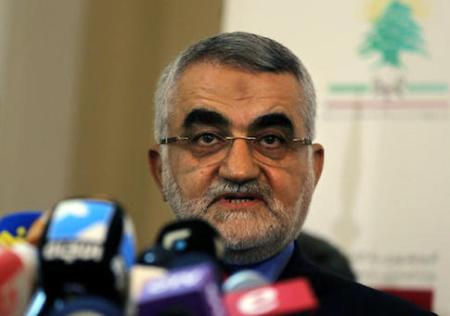
Iranian Alaeddin Boroujerdi, Chairman of the Committee for Foreign Policy and National Security at the Iranian Shura Council, speaks to journalists after meeting with Lebanese Foreign Minister Gibran Bassil, at the Lebanese foreign ministry in Beirut, Lebanon, Monday, Aug. 1, 2016. Boroujerdi arrived in Beirut for two days visit to meet with Lebanese officials. (AP Photo/Bilal Hussein)

Iranian Alaeddin Boroujerdi, Chairman of the Committee for Foreign Policy and National Security at the Iranian Shura Council. . . . (AP Photo/Bilal Hussein)

Senior Iranian officials are warning the Trump administration about disclosing secret deals related to the nuclear deal that have long been hidden from the public by the Obama administration, according to recent comments that prompted pushback from senior sources on Capitol Hill.

Iran’s warning comes on the heels of a Washington Free Beacon report disclosing that former national security adviser Michael Flynn had been pushed out of office partly due to his intention to release these sensitive documents to the American public.

Leading lawmakers in Congress launched multiple investigations last year into the Obama administration’s efforts to keep these documents secret and out of public view. Sources who spoke to the Free Beacon about the matter said that the Trump White House is working on ways to publicize this information despite warnings from Iran.

Secret side deals related to the nuclear agreement remain unclassified but have been stashed in a secure location on Capitol Hill, making it difficult for staffers and lawmakers to view them. Individuals seeking to view these documents must have security clearance and are barred from taking notes or speaking about what they see.

Multiple senior congressional sources familiar with the nature of the documents told the Free Beacon that lawmakers and the Trump administration would not be intimidated by Iranian threats.

Alaeddin Boroujerdi, a senior Iranian lawmaker and head of country’s foreign policy committee, warned the Trump administration against making these documents public in recent remarks.

“If Trump wants to publish confidential documents exchanged between Iran and the International Atomic Energy Agency, it will in fact constitute a violation of the agency’s obligations, because the agency has been committed not to make Iran’s confidential nuclear information and documents available to any country, including the U.S.,” Boroujerdi was quoted as saying in Iran’s state-run media.

Some of these documents surround side deals struck between Iran and the IAEA regarding the Islamic Republic’s ability to enrich uranium. They also include deals about how much information Iran must disclose to international inspectors about the country’s contested nuclear program.

As part of the nuclear deal, U.S. inspectors are not permitted to take part in the review of any Iranian sites.

Rep. Peter Roskam (R., Ill.), a vocal opponent of the Iran deal who has long been fighting for the full disclosure of the Iran deal documents, told the Free Beacon that the Obama administration hid these documents in order to mislead Americans about the true nature of the agreement.

“The administration is under no obligation to conceal information about secret side deals, nor should they feel obligated to protect the anonymity of individuals or institutions who misbehaved at the behest of the Obama administration,” Roskam said.

Included in these documents are details of multiple, secret payments to Iran that totaled close to $2 billion. The money is believed to have been part of an incentive package aimed at securing the release last year of several American hostages in Iran.

None of this information is technically classified, yet it remains hidden from the American public and a large portion of Congress.

“The deal has only survived this long because the Obama administration gave Iran secret exemptions to cheat,” said one veteran congressional adviser familiar with the documents. “The Iranians know that if people found out about those exemptions, it would be obvious that the deal was always a bad, unsustainable deal, and they couldn’t blame Trump. That’s why they’re making up reasons why parts of the deal should be kept secret.”

Iran is expressing opposition to the disclosure of the information in order to force the Trump administration into a corner, the source maintained.

A senior congressional aide familiar with the situation further told the Free Beacon that U.S. lawmakers would not be instructed by Iran about what can and cannot be made public.

“Our declassification procedures are not subject to the whims of Iranian officials,” the source said. “Unclassified documents should be released so the American public can see just how bad of a deal the previous administration negotiated on its behalf.”

A second congressional source explained that federal law mandates these documents be released to lawmakers. This includes side deals and other materials related to the future of Iran’s nuclear program.

“The American public has a right to know what’s really going on behind the scenes with the nuclear agreement. At the very least, Congress is entitled to all relevant documents—including side arrangements or any other related materials—as mandated by federal law under Corker-Cardin,” the source said. “We won’t be intimidated by these empty threats from Iran or any international body. It’s time to make these secret documents public so everyone can for themselves what this deal is really all about.”

Is This The Coup the Left Wanted?

February 15, 2017

Is This The Coup the Left Wanted?, The Resurgent, February 15, 2017

trumpandflynn

There is no evidence that Donald Trump’s campaign and Russian intelligence cooperated to steal the election from Hillary Clinton. But the New York Times waits for the third paragraph of this sensational story to tell you. First, they want you to know intelligence sources say Trump campaign staffers had multiple, repeated contacts with the Russians.

What we are seeing is an intelligence community trying to sabotage the President of the United States. We should all be concerned even if we have our own concerns about the President and Russia.

It is more and more apparent that, while Mike Flynn misled Vice President Pence and should have been fired, we only know this because members of the intelligence community engaged in an opposition research dump on Flynn with the media. They engaged as a separate and distinct branch of government, and that is a dangerous situation.

The left is cheering on the outcomes, as are some on the right, but they are all ignoring the process. When the intelligence community ceases to serve the Commander-in-Chief and instead tries to sabotage him because they do not like the direction he is taking the country, they are putting their interests ahead of the voters and the electoral process.

The same problem exists with the Ninth Circuit Court of Appeals and its decision on the immigration order. In large part, the court based its decision on Donald Trump’s campaign statements that he wanted a Muslim ban. At first blush, that may seem legit to people but consider Barack Obama and Obamacare.

Chief Justice John Roberts upheld Obamacare’s constitutionality because he said it fell under the taxation powers of the constitution. But Barack Obama had campaigned on Obamacare saying that it was not a tax. Had the Supreme Court used President Obama’s campaign statements against him, they would have thrown out Obamacare.

While one may cheer on the outcome from the Ninth Circuit, they should not cheer the process and flawed legal reasoning.

Both the intelligence and court situation raise troubling issues. By cheering outcomes based on deeply problematic processes, people are rapidly moving towards “ends justify the means” reasoning. That will bring about the very creeping authoritarianism the left fears from Donald Trump.

They cheer this on now because it is working to their advantage as rogue leakers try to undermine a President they do not like. But it will eventually happen to them. By then they will have surrendered any and all moral high ground to cry foul.

The intelligence community serves at the pleasure of the President, not the other way around. The President must be able to depend on the intelligence community’s assessments. Right now, the intelligence community is causing a breakdown in trust with the Trump Administration through leaks designed to undermine his authority.

If a terrorist attack on our soil happens because the President felt he could no longer trust the intelligence community’s assessments, that will be on them. This behavior, in a democratic republic, must be considered unacceptable.

It is possible to be happy Mike Flynn is gone and also be deeply bothered by the means through the intelligence community designed his ouster. People on all sides should be speaking up loudly that the behavior of the intelligence community in damaging leaks is unacceptable.

Finally, we know that Mike Flynn intended to reform the intelligence community and expose side deals made with Iran to secure a diplomatic agreement. President Trump should commit to replacing Mike Flynn with someone as hell-bent on reform and exposure of the Iran deal as Mike Flynn was. The intelligence community cannot be rewarded for bad behavior that undermines the democratic processes of this nation, even if some of us are happy Mike Flynn is gone.

US Sanctions on Iran Must be Enforced by Ukraine

February 9, 2017

US Sanctions on Iran Must be Enforced by Ukraine, Iran News Update, February 9, 2017

mahan_air_iran_464855538

The lack of U.S. sanctions enforcement under the Obama administration undermined U.S. credibility and deterrence.

Although the current government is requesting more U.S. military assistance and a tougher Western stance in its current struggle against Russia in Eastern Ukraine, it sees no contradiction between its desire for Western support and its partnership with Iran’s sanctioned aviation sector.

************************

In their February 7 article for The Hill, Emanuele Ottolenghi senior fellow at the Foundation for Defense of Democracies, and Boris Zilberman, deputy director of congressional relations and a Russia analyst, co-contributed an opinion piece on why the US must enforce sanctions on Iran. 

According to Ottolenghi and Zilberman, anti-tank missile components, reportedly the AT-4 Spigot, destined for Iran were seized by the Ukrainian State Border Guard on January 19. These weapons were concealed in the cargo hold of a UM Airlines flight from Kiev to Tehran. While Ukraine captured this illicit cargo, Kiev continues to allow Iran to evade a U.N.- implemented sanctioned international arms embargo and Western sanctions.

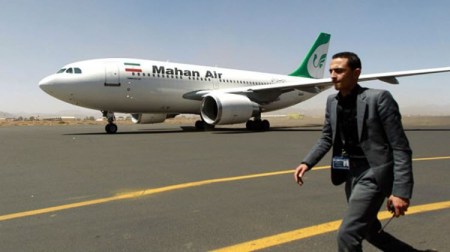
Iranian carriers like Caspian Airlines and Mahan Air are banned, but close cooperation with Ukrainian airlines, and Kiev’s failure to enforce U.S. sanctions against Iran, let’s them continue to benefit, and should become an important part of the Trump administration’s review of its foreign policy options toward Ukraine.

“The Iranian aviation sector’s reliance on Kiev is not new. Publicly available data from commercial flight trackers show that Dart Airlines is currently leasing aircraft to Iran’s privately owned Kish Air. Dart’s fleet is also frequently chartered for Iran and Lebanon routes by unknown operators. Iran Air Tours, ATA Airlines and Zagros Airlines, among others, also lease aircraft from Ukrainian operators,” write Ottolenghi and Zilberman.

These private companies are not under U.S. sanctions, but Ukraine’s fleet caters to sanctioned entities. One of Air Khors’s aircraft is currently leased to the Iraqi Al-Naser Airlines, which the U.S. Treasury sanctioned in May 2015 when the company fronted for Mahan Air, data shows.

Air Khors leased a Boeing 737 to Naft Airlines, which is being operated by U.S. sanctioned Caspian Airlines.

Treasury has also slapped sanctions on two other Ukrainian airlines for assisting Mahan Air, Bukovyna Airlines, as well as UM Airlines, which was carrying the missile parts seized last week.

Lebanese businessman Rodrigue Merhej, UM airlines chairman, is also under U.S. Treasury sanctions since 2013 for their support of Mahan Air. The January 19 flight was a scheduled flight.

Ottolenghi and Silberman say that, “Since last year, there are daily flights between Kiev and Tehran, including a weekly Mahan flight that commenced last March, when Mahan and UM announced an expanded partnership. Their cooperation connects Kiev to Mahan’s Asian destinations through Tehran, giving Ukrainian passengers a convenient connecting hub to Asia.”  “They add, It also enables Mahan to officially enter the Ukrainian market.”

This partnership, that Washington has sanctioned since 2013, was announced by Kiev and Tehran, with the inaugural Mahan flight to Kiev welcomed by former Ukrainian President Viktor Yushchenko, and senior member of the Ukrainian parliament and ally of current President Petro Poroshenko, Oleh Barna. Eugene Dykhne, acting head of Kiev’s Boryspil International Airport; the Iranian ambassador to Kiev; and Mahan Air’s managing director for international relations, also attended.

The lack of U.S. sanctions enforcement under the Obama administration undermined U.S. credibility and deterrence.

Although the current government is requesting more U.S. military assistance and a tougher Western stance in its current struggle against Russia in Eastern Ukraine, it sees no contradiction between its desire for Western support and its partnership with Iran’s sanctioned aviation sector.

This past summer, Merhej boasted about the popularity of the Kiev-Tehran route. He said, ”The occupancy is increasing every day. We have about 75 passengers per flight today. Two months ago, it was 55 passengers. I am confident that we will reach 100 passengers by the end of June.”

“What Merhej failed to address is that UM Airlines, via its support of Mahan Airlines, has been involved in moving illicit cargo for the Syrian regime and the Iranian Revolutionary Guard Corps’ external arm, the Qods Force. The U.S. Treasury confirmed in 2013 that UM Airlines has trained Mahan Air pilots and engineers, and transferred airplanes to Mahan Air. UM has now been caught transferring weapons as well,” write Ottolenghi and Zilberman.

The seizure of weapons last week shows that UM Airlines has not stopped its illicit activity with Mahan Airlines, and that this activity has increased since the initial designations by Treasury. This is a major red flag.

Was last week’s weapons seizure was just the tip of the iceberg in illicit activity facilitated by UM and Mahan Airlines? Ottolenghi and Zilberman say that since conflict erupted in 2014, Ukraine has become a “supermarket” for the illicit arms trade, one that Iran can easily exploit through its direct air connection to Kiev.

“Authorities in Ukraine should be commended for seizing the weapons shipment, but when Kiev asks the United States for economic and military assistance, the least it can do is prevent sanctioned entities such as UM and Mahan Airlines to operate from its soil,” conclude Ottolenghi and Zilberman.