Archive for the ‘Iran scam’ category

Madam Hillary is on the right side of herstory

October 25, 2015

Madam Hillary is on the right side of herstory, Dan Miller’s Blog, October 25, 2015

(The views expressed in this article are mine, and do not necessarily reflect those of Warsclerotic or its other editors.– DM)


Lies are good and truth is bad because truth would damage Madam Hillary’s and even Imam Obama’s sterling images. Both, bravely and proudly, try to feed us what is “good.” Their people love it, so what difference does it make? 

1025151 (1)

According to John Hinderaker at Power Line, Madam Hillary

lies…it’s not exactly a news flash. On the contrary, based on the liberal media’s reaction to her Benghazi testimony, her willingness to lie, brazenly, is a positive virtue.

There’s always an excuse for having “misspoke.” It need not be a credible excuse, because an incredible excuse works just fine. Anyway, whatever happened was in the past and therefore doesn’t matter now:

What has Imam Obama lied about? Plenty. Here’s an incomplete list: Islam, the nuke “deal” with Iran, Libya, His strength and Putin’s weakness in the Middle East, Israel, Immigration, Crime, Obamacare, race relations and on and on and on. As with Madam Hillary’s spewings, the “legitimate media” generally love it.

Madam Hillary blamed the video repeatedly

According to an article titled “I didn’t blame the video,” Madam Hillary did just that while also managing to lie about substantially more than that.

Hillary simply adores arguing and lawyering.

She lives for it and has at least since she was fired from the House Judiciary Committee during its investigation of the Watergate scandal that eventually brought down President Richard M. Nixon in 1974. Hillary’s then-supervisor, lifelong Democrat Jerry Zeifman, said he canned the 27-year-old attorney “because she was a liar … an unethical, dishonest lawyer. She conspired to violate the Constitution, the rules of the House, the rules of the committee and the rules of confidentiality.” [Emphasis added.]

No lie is too big or too small for Hillary, whether it’s a concocted tale of being under enemy fire at an airport in Bosnia, the existence of a “vast right-wing conspiracy” to undermine her husband’s presidency, that she was named after Mt. Everest climber Sir Edmund Hillary even though he rocketed to fame by accomplishing the feat when she was a six-year-old, or that the Clintons were “dead broke” when they exited the White House.

Meanwhile, at the Thursday hearing, Rep. Jim Jordan (R-Ohio) demolished Clinton’s apparently fresh assertion at the hearing that she didn’t actually claim an obscure anti-Islam movie trailer posted on YouTube prompted the terrorist assault in Benghazi on the eleventh anniversary of the 9/11 attacks. She now takes a more nuanced, twisted-like-a-pretzel position in which maybe some non-terrorist Muslims were suddenly stirred to violence in Libya by the video, but really at the same time it was a terrorist attack, something she testified Thursday has been her position the whole time. She talked about the video publicly not to point fingers but as a warning, she testified, to those who might attack U.S. interests in the region. In other words, like a good defense lawyer, Hillary was trying to confuse the issues and muddy the waters. [Emphasis added.]

. . . .

While she was informing the American public that the anti-Islam video was what caused the attack, at the same time she emailed her daughter Chelsea and the governments of Libya and Egypt to pin the blame on Muslim militants, Jordan explained. Around the same time the White House, in the closing weeks of a heated presidential election campaign, was pushing the line that what transpired in Benghazi was a spontaneous demonstration turned violent, but terrorism was not a factor.

“We know that the attack in Libya had nothing to do with the film,” Clinton wrote Egypt’s prime minister the night of the attack. “It was a planned attack, not a protest.” But in public Clinton continued to blame the “offensive” video. The U.S. government acquired $80,000 worth of commercial airtime in Pakistan to apologize for the YouTube clip. [Emphasis added]

Jordan pointed out that there was no video-inspired protest over in Benghazi on Sept. 11, 2012, but there was one in Cairo, Egypt. The same day State Department spokeswoman Victoria Nuland said “Benghazi has been attacked by militants. In Cairo, police have removed demonstrators.”

You want to talk about Madam Hillary’s lies? She didn’t lie, of course, but let’s change the subject to something more important. Right now.

hillary-Nixon-copy


Conclusions

“Her people” not only don’t care, they are delighted with Madam Hillary’s numerous lies. Again, “what difference does it make?” Plenty.

Please think about Madam Hillary’s and Imam Obama’s impunity — and readiness —  to lie, violate laws and do pretty much whatever they please. We have become a nation without law enforcement where we need it most and very much where enforcement of Obama’s executive decrees harms us greatly (climate change and immigration for example). Do we want a nation the governance of which is increasingly based on, and perpetuated through, lies to “We the people?” Do we want Madam Hillary or another Obama clone as the next Commander in Chief?

Here’s what “Commander in Chief” Obama has done with his our military:

Do you approve of those and the other things He has done to our military? Want more of the same? Or even worse? If not, what can we do about it? Supporting Donald Trump may or may not be what we should do, but I think the songs in the video are superb. Back in September, I wrote an article titled To bring America back we need to break some stuff. We still do, and if someone other than Trump is ready, willing and able he (or, of course, she) should also be considered, very seriously.;

Iranian Supreme Leader Khamenei’s Letter Of Guidelines To President Rohani On JCPOA Sets Nine Conditions Nullifying Original Agreement Announced July 14, 2015

October 23, 2015

Iranian Supreme Leader Khamenei’s Letter Of Guidelines To President Rohani On JCPOA Sets Nine Conditions Nullifying Original Agreement Announced July 14, 2015, Middle East Media Research Foundation, Y. Carmon and A. Savyon, October 22, 2015

(Please pay particular attention to Conditions 1 – 6 and their implications as noted by MEMRI. The conditions appear to be quite substantial. Additional material, including Twitter and Facebook messages, is also provided in appendices at the end of the article. I have not reproduced that material here.– DM)

On October 21, 2015, Iranian Supreme Leader Ali Khamenei published a letter of guidelines to Iranian President Hassan Rohani on the execution of the Joint Comprehensive Plan of Action (JCPOA). The letter’s publication coincides with the days of the Ashura that are of vital religious and national significance in Iran and symbolize steadfastness against the forces of evil. Intended as an historical document aimed at assuring Iran’s future, the letter was posted on Khamenei’s website in Persian and tweeted from his Twitter account and posted on his Facebook page in English (see Appendices), and published in English by the official Islamic Republic of Iran Broadcasting authority IRIB (see below). The letter is now a founding document in all things concerning theJCPOA and the conditions under which Iran will be willing to execute it.

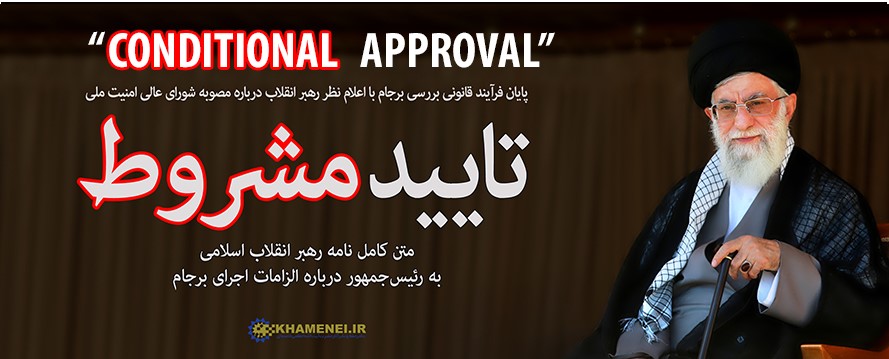
The letter, defined by Khamenei on his website as “conditional approval” of the JCPOA, sets several new conditions for Iran’s execution of the agreement. These conditions constitute late and unilateral additions to the agreement concluded three months previously that fundamentally change it. Khamenei stresses that the agreement awaits his opinion following what he calls “precise and responsible examination” in the Majlis and “clearance of this agreement through legal channels” in Iran’s Supreme National Security Council.  

25366

It should be further noted that in his introduction to the new conditions, Khamenei attacks the U.S. and President Obama with great hostility, and calls for Obama to be prosecuted by international judiciary institutions. He states that Obama had sent him two letters declaring that he has no intention of subverting the regime of the Islamic Republic of Iran, but adds that the U.S.’s support for fitna in Iran (i.e. the popular post-election unrest in 2009), its monetary aid to opponents of the Republic, and its explicit threats to attack Iran have proven the opposite and have exposed the real intent of America’s leaders, whose enmity towards Iran will not end. He wrote that the Americans’ behavior in the nuclear talks is another link in the chain of its enmity towards Iran, that America entered into the talks with the aim of “deception,” and that therefore Iran must remain alert in light of America’s hostile intentions.

The set of conditions laid out by Khamenei creates a situation in which not only does the Iranian side refrain from approving the JCPOA,[1] but, with nearly every point, creates a separate obstacle, such that executing the agreement is not possible.

The following are Khamenei’s nine conditions, and their implications:

Khamenei’s Conditions For Iranian Execution Of The JCPOA

First condition: Khamenei demands that the U.S. and Europe lift the sanctions, not suspend them, and in addition demands “solid and sufficient” guarantees in advance that this will be done, before Iran takes its own steps and meets its own obligations under the agreement. These guarantees, insists Khamenei, must include, inter alia, an official letter from the U.S. president and from the EU undertaking to fully lift the sanctions. Furthermore, he demands that this letter will state that any declaration by the West that the “structure of the sanctions will remain in force” (i.e. allowing snapback) will be considered “non-compliance with the JCPOA” on the part of the West.

Implications: These conditions constitute a total change of the JCPOA. Khamenei is not allowing any execution of the JCPOA by Iran until this is accepted in writing by the other side, and thus he is nullifying the JCPOA as agreed upon on July 14, 2015.

Second condition: Any sanctions against Iran “at every level and on every pretext,” including terrorism and human rights violations, by any one of the countries participating in the negotiations will “constitute a violation of the JCPOA,” and a reason for Iran to stop executing the agreement.

Implications: This demand, that links the JCPOA to other issues and prohibits any punishment of Iran on any issue and for any reason, serves as an excuse for Iran to cancel the agreement.

Third condition: Under the JCPOA, Iran is obligated, following the JCPOA’s Adoption Day, to carry out its obligations concerning changing the function of the nuclear reactor at Arak and shipping out most of its stockpile of enriched uranium. Contrary to this, Khamenei is changing the timetable of the JCPOA, stating that Iran will not carry out these actions until after the International Atomic Energy Agency (IAEA) declares that it is closing its dossier on Iran’s “past and future issues (including the so-called Possible Military Dimensions or PMD of Iran’s nuclear program).”

Implications: This demand to change the timetable creates a situation in which Iran will not take action as stipulated in the JCPOA, and will not meet its obligations, before the sanctions are eased, also according to the JCPOA, but instead dictates that the sanctions must first be lifted completely and states that only then will Iran meet its obligations. Khamenei here is creating a situation in which the IAEA will not be able to report on Iran’s meeting of its obligations regarding the Arak reactor and regarding the shipping out of its enriched uranium by the target date of December 15, 2015, because Iran is not going to do so by then – thus the execution of the agreement is thwarted from the beginning.

Fourth condition: Iran will meet its obligations to “renovate” and change the purpose of the Arak reactor only after there is a signed agreement on an “alternative plan” for changes to the reactor, and after there is “sufficient guarantee” that this alternative plan will be implemented.

Implications: Iran’s fulfillment of its obligations regarding the Arak reactor, as stipulated by the JCPOA, will be postponed until some unknown future date.

Fifth condition: Iran will carry out its obligation to ship out its enriched uranium to another country in exchange for yellowcake “on a gradual basis and on numerous occasions,” and only after “a secure agreement has been clinched to that effect, along with sufficient guarantees” that this exchange will be implemented.

Implications: The date for Iran to ship out its enriched uranium as stipulated by the JCPOA is postponed until some unknown future date. Khamenei is demanding that Iran receive in exchange for the enriched uranium not raw uranium as per the JCPOA, but instead uranium that has been enriched, albeit to a lower level than the uranium it ships out. This is yet another change to the JCPOA as concluded on July 14, 2015.

Sixth condition: Khamenei instructs President Rohani to begin, along with reducing Iran’s ability to enrich uranium under the JCPOA, immediately to expand Iran’s ability to enrich uranium with a 15-year long-term plan for 190,000 centrifuge SWU (Separative Work Units). “This plan,” he says, “must allay any concern stemming from some points entailed in the JCPOA appendices.”

Implications: This article nullifies the declared goal of the JCPOA, which is to reduce Iran’s nuclear enrichment capabilities.

Seventh condition: The Iranian Atomic Energy Organization must ensure continued nuclear research and development, in its various dimensions, such that in eight years’ time, Iran will not be lacking in enrichment technology. This, he says, is all in accordance with the JCPOA.

Eighth condition: In the event of doubt or ambiguity regarding the content of the JCPOA, the source of authority for removing this doubt or ambiguity will be the content of the talks – i.e. it will also include the statements by the Iranian side, not just the “interpretation provided by the opposite party,” that is, the P5+1.

Implications: Any doubt or ambiguity regarding the content of the JCPOA will become the source of unending dispute and will paralyze any possibility of executing the agreement.

Ninth condition: Due to apprehensions that the other side, particularly the U.S., will break its promises or cheat, President Rohani must establish a “well-informed and smart panel” to monitor the execution of the agreement.

Implications: Khamenei is creating an administrative framework for perpetual delays in the execution of the agreement.

Khamenei adds also a 10th condition, directed at Iran, not the P5+1, demanding that Rohani take seriously his instructions in the matter of the “resistance economy,” the main thrust of which is self-reliance instead of basing Iran’s economy on external sources. He also demands that after the sanctions are lifted, there will be no “unbridled imports,” and no imports whatsoever from the U.S.

Political Ramifications In Iran

In February 2016, elections for the Majlis and the Assembly of Experts are set to take place in Iran. The pragmatic camp, headed by Hashemi Rafsanjani and President Rohani, had hoped that a quick execution of the agreement would allow the sanctions to be eased and funds to be released immediately, which in turn would allow the pragmatic camp to present these achievements and triumph in the elections. By setting these conditions, however, Khamenei has thwarted any speedy execution of the agreement, and thus has thwarted the pragmatic camp’s hope for electoral success.

IRIB Translation

The following is the official English translation of Khamenei’s letter, as published by IRIB.[2] This translation was tweeted by Khamenei and also posted on his Facebook page (see Appendix I and II).

“Wednesday, 21 October 2015 17:41
“Ayatollah Khamenei sends a letter to President Hassan Rouhani about the JCPOA

25367

“Ayatollah Seyyed Ali Khamenei, the Leader of the Islamic Revolution, in a letter to President Hassan Rouhani, who also heads the Supreme National Security Council (SNSC), referred to the precise and responsible examination of the Joint Comprehensive Plan of Action (JCPOA) in the Islamic Consultative Assembly (parliament) and also the SNSC, and the clearance of this agreement through legal channels, and issued important instructions regarding the observation of and safeguarding the country’s national interests. Enumerating nine-point requirements for the implementation of the JCPOA, Ayatollah Ali Khamenei endorsed SNSC Resolution 634, dated August 10, 2015, provided that the following provisions and requirements are observed.

“The full text of Ayatollah Khamenei’s letter follows on:

In the Name of Allah, the Most Compassionate, the Most Merciful

“Your Excellency,  Mr Rouhani,
“President of the Islamic Republic of Iran and Head of the Supreme National Security Council
“May God bestow success upon you.
“Greetings to You

“The agreement known as the Joint Comprehensive Plan of Action (JCPOA) has already been cleared through legal channels following precise and responsible examinations in the Islamic Consultative Assembly, [parliamentary] ad hoc committees and other committees as well as the Supreme National Security Council. Since the agreement is waiting for my view, I deem it necessary to remind several points so that Your Excellency and other officials directly or indirectly involved in the issue would have enough time to comply with and safeguard national interests and the country’s best interests.

“1. Before anything else, I deem it necessary to extend my gratitude to all those involved in this challenging procedure throughout all its periods, including the recent nuclear negotiating team whose members tried their best in explaining the positive points and incorporating all those points [into the agreement], critics who reminded all of us of weak points through their appreciable meticulousness, and particularly the chairman and members of the Majlis ad hoc committee [set up to review the JCPOA] as well as the senior members of the SNSC who covered some voids by including their important considerations, and finally the Speaker of Majlis and Members of Parliament who adopted a cautious bill to show the right way of implementation [of the agreement] to the administration, and also national media and the country’s journalists who despite all their differences of view presented a complete image of this agreement to public opinion. This voluminous collection of activity and endeavors and thoughts [spent] on an issue which is thought to be among the unforgettable and instructive issues of the Islamic Republic, deserves appreciation and is a source of satisfaction. Therefore, one can say with certainty that the divine reward for these responsible contributions will, God willing, include assistance and mercy and guidance by Almighty God because the divine promises of assistance in exchange for assisting His religion are unbreakable.

“2. Enjoying decades-long background of presence in the very details of the affairs of the Islamic Republic of Iran, you must have naturally realized that the government of the United States of America, neither in the nuclear issue nor in any other issue, had been pursuing no other approach but hostility and disturbance, and is unlikely to do otherwise in the future either. The remarks by the US President [Barack Obama] in two letters addressed to me on the point that [Washington] has no intention of subverting the Islamic Republic of Iran turned out to be unreal and his open threats of military and even nuclear strike, which can result in a lengthy indictment against him in international courts, laid bare the real intentions of US leaders. Political pundits and public opinion of many nations clearly understand that the case of his never-ending hostility is the nature and identity of the Islamic Republic of Iran, which is born out of the Islamic Revolution. Insistence on rightful Islamic stances and opposition to the hegemonic and arrogant system, perseverance against excessive demands and encroachment upon oppressed nations, revelations on the US support for medieval dictators and suppression of independent nations, incessant defense for the Palestinian nation and patriotic resistance groups, rational and globally popular yelling at the usurping Zionist regime constitute the main items which make the US regime’s enmity against the Islamic Republic inevitable, and this enmity will continue as long as the Islamic Republic [continues to] disappoint them with its internal and sustainable strength.

“The behavior and words of the US government in the nuclear issue and its prolonged and boring negotiations showed that this (nuclear issue) was also another link in their chain of hostile enmity with the Islamic Republic. Their deception through flip-flopping between their initial remarks that came after Iran accepted to hold direct talks with them and their constant non-compliance with their pledges throughout two-year-long negotiations and their alignment with the demands of the Zionist regime and their bullying diplomacy regarding relations with European governments and bodies involved in the negotiations are all indicative of the fact that the US’s deceitful involvement in the nuclear negotiations has been done not with the intention of a fair settlement [of the case], but with the ill intention of pushing ahead with its hostile objectives about the Islamic Republic.

“Doubtlessly, vigilance vis-à-vis the hostile intentions of the US government and instances of resistance on the part of the officials of the Islamic Republic of Iran throughout the negotiations managed, in numerous cases, to prevent heavy damage from being inflicted [upon Iran].

“However, the outcome of the negotiations, which is enshrined in the JCPOA, has numerous ambiguities and structural weaknesses that could inflict big damage on the present and the future of the country in the absence of meticulous and constant monitoring.

“3. The nine-point provisions entailed in the recent bill adopted by the Majlis and the 10-point instructions outlined in the resolution of the Supreme National Security Council carry helpful and effective points which must be taken into consideration. Meantime, there are some other necessary points which are announced here while some of the points mentioned in the two documents are highlighted.

“First, since Iran has accepted to negotiate basically for the objective of removal of unjust economic and financial sanctions and its enforcement (the lifting of sanctions) is tied to Iran’s future actions under the JCPOA, it is necessary that solid and sufficient guarantees be arranged to avoid any infraction by the opposite parties. Written declaration by the US president and the European Union for the lifting of the sanctions is among them. In the statements of the EU and the US president, it must be reiterated that these sanctions will be fully lifted. Any declaration that the structure of the sanctions will remain in force shall imply non-compliance with the JCPOA.

“Second, throughout the eight-year period, any imposition of sanctions at any level and under any pretext (including repetitive and fabricated pretexts of terrorism and human rights) on the part of any of the countries involved in the negotiations will constitute a violation of the JCPOA and the [Iranian] government would be obligated to take the necessary action as per Clause 3 of the Majlis bill and stop its activities committed under the JCPOA .

“Third, the measures related to what is mentioned in the next two clauses will start only after the International Atomic Energy Agency (IAEA) announces [the conclusion of] the past and future issues (including the so-called Possible Military Dimensions or PMD of Iran’s nuclear program).

“Fourth, measures to renovate the Arak plant by preserving its heavy [water] nature will start only after a firm and secure agreement has been signed on an alternative plan, along with sufficient guarantees for its implementation.

“Fifth, the deal with a foreign government for swapping enriched uranium with yellow cake will start only after a secure agreement has been clinched to that effect, along with sufficient guarantees [for its implementation]. The aforesaid deal and exchange must be done on a gradual basis and on numerous occasions.

“Sixth, by virtue of the Majlis bill, the plan and the necessary preparations for mid-term development of the atomic energy industry, which includes the method of advancement in different periods of time for 15 years for the final objective of 190,000 SWU, must be drawn up and carefully reviewed by the Supreme National Security Council. This plan must allay any concern stemming from some points entailed in the JCPOA appendices.

“Seventh, the Atomic Energy Organization of Iran must organize research and development in different aspects such that after the end of the eight-year period, there would be no shortage of technology for the level of [uranium] enrichment entailed in the JCPOA.

“Eighth, it must be noted that on the ambiguous points in the JCPOA document, the interpretation provided by the opposite party is not acceptable and the reference would be the text of the negotiations.

“Ninth, the existence of complications and ambiguities in the text of the JCPOA and the suspicion of breach of promise, infractions and deception by the opposite party, particularly the US, require that a well-informed and smart panel be established to monitor the progress of affairs and [gauge] the opposite party’s commitment and realization of what was mentioned above. The composition and the tasks of this would-be panel should be determined and approved by the Supreme National Security Council.

“In witness whereof, Resolution 634, dated August 10, 2015, of the Supreme National Security Council, is endorsed pending the observation of the aforementioned points.

“In conclusion, as it has been notified in numerous meetings to you and other government officials and also to our dear people in public gatherings, although the lifting of sanctions is a necessary job in order to remove injustice [imposed on people] and regain the rights of the Iranian nation, economic overture and better livelihood and surmounting the current challenges will not be easy unless the Economy of Resistance is taken seriously and followed up on entirely. It is hoped that this objective will be pursued with full seriousness and special attention would be paid to enhancing national production. You should also watch out so that unbridled imports would not follow the lifting of sanctions, and particularly importing any consumer materials from the US must be seriously avoided.

“I pray to Almighty God for your and other contributors’ success.
“Source: www. leader. ir”

__________________

Endnotes:

[2] English.irib.ir/news/leader/item/217470-ayatollah-khamenei-sends-a-letter-to-president-hassan-rouhani-about-the-jcpoa, October 21, 2015.

[3] Twitter.com/khamenei_ir, October 21, 2015.

[4] Facebook.com/www.Khamenei.ir/posts/943612332378368:0, posted October 21, 2015.

Leader Outlines Major Observations in JCPOA Implementation

October 21, 2015

Leader Outlines Major Observations in JCPOA Implementation, Tasnim News Agency (Iran), October 21, 2015

139406041520538615968453

[T]hroughout the 8-year period of implementing the JCPOA, imposing any sanctions, at any level and under any pretext –such as the “recurring and fabricated allegations of terrorism and human rights violation – by any of the parties to the talks”, will be tantamount to breach of the JCPOA and the administration will be obligated to take the necessary measures under the Clause 3 of the Iranian Parliament’s plan and cease the JCPOA activities.

*********************

TEHRAN (Tasnim) – Supreme Leader of the Islamic Revolution Ayatollah Seyed Ali Khamenei in a letter to President Hassan Rouhani highlighted nine main points that the administration will need to take note of regarding the course of implementing a final nuclear deal with six world powers.

In the letter, Ayatollah Khamenei appreciated the efforts made by the country’s different bodies involved in the course of nuclear negotiations with the Group 5+1 (Russia, China, the US, Britain, France and Germany) and the consequent efforts to evaluate the deal.

The Leader, however, noted that the nuclear agreement, dubbed the Joint Comprehensive Plan of Action (JCPOA), contains “ambiguities, structural weak points and multiple points that could inflict heavy losses on the country” at present and in the future in case of lack of strict and constant vigilance.

Ayatollah Khamenei then explicated the observations that the administration should make about the JCPOA and its implementation.

The first point in the Leader’s letter was the necessity for the full termination of the anti-Iran sanctions under the JCPOA.

Since the purpose of Iran’s approval to the nuclear negotiations was the removal of “cruel economic and financial sanctions”, and given the fact that the termination of the sanctions has been subjected to completion of Iran’s undertakings, there needs to be “firm and sufficient guarantees” to avert the other side’s breach, Ayatollah Khamenei underlined.

The US president and the European Union must declare that the anti-Iran sanctions have been “fully lifted”, the Leader noted.

The second observation in the letter was the categorical rejection of imposition of any new sanctions against Iran, which the Leader described as a breach of the JCPOA in which case the Iranian administration would be obligated to stop implementing the deal.

Third, the Leader further said, throughout the 8-year period of implementing the JCPOA, imposing any sanctions, at any level and under any pretext –such as the “recurring and fabricated allegations of terrorism and human rights violation – by any of the parties to the talks”, will be tantamount to breach of the JCPOA and the administration will be obligated to take the necessary measures under the Clause 3 of the Iranian Parliament’s plan and cease the JCPOA activities.

The rest of the observations are as follows:

4. Measures to renovate the Arak plant, which should keep its heavy (water) nature, will begin only after signing a definite and safe contract on an alternative plan and sufficient guarantee for its implementation.

5. The trade of the available enriched uranium with the yellowcake (a type of uranium concentrate powder) with a foreign government will take place when a secure contract with sufficient guarantees is signed. The mentioned trade and exchange (of materials) should occur gradually and in multiple times.

6. In accordance with the bill passed by the Majlis (parliament), a necessary plan should be devised and meticulously discussed by the Supreme National Security Council (SNSC) for mid-term development of (the country’s) nuclear energy industry, including ways to make progress in the next 15 years, leading to the production of 190,000 SWUs (Separative Work Units).

7. The Atomic Energy Agency of Iran (AEOI) should organize research and development in different aspects in such a way that at the end of the 8-year period, there will be no technological shortages for achieving the level of enrichment as accepted in the JCPOA.

8. As for ambiguities in the JCPOA, it should be stressed that the other side’s interpretation is not accepted, and that the reference (for interpretation) is the text of the negotiations.

9. The existence of complexities and ambiguities in the JCPOA and the possibility of breach of commitments and deception on the part of the other side, especially the US, necessitate that a strong, observant and smart committee be formed to monitor the progress of works, fulfilment of the other side’s commitments and  realization of the observations mentioned above. The committee’s arrangement and responsibilities should be formulated and approved by the SNSC.

On October 19 President Obama Will Announce Lifting Of American Sanctions

October 15, 2015

Senior Iranian Negotiators Salehi, Kamalvandi: On October 19 President Obama Will Announce Lifting Of American Sanctions, Middle East Media Research Institute, October 15, 2015

(Please see also, The Iranian Majlis Has Not Approved The JCPOA But Iran’s Amended Version Of It. If the statements by Iranian negotiators are accurate, it appears that Obama plans to implement the Iranian Parliament’s version of the JCPOA rather than the one submitted to the U.S. Congress. The Iranian version calls for the lifting of sanctions, the version submitted to the Congress calls for their suspension. — DM)


According to senior Iranian negotiators, Ali Akbar Salehi, the head of the Atomic Energy Organization of Iran and an architect of the nuclear agreement (JCPOA), and Beherouz Kamalvandi, the spokesman for the Atomic Energy Organization of Iran, on October 19, 2015 President Obama will announce that sanctions will be lifted and not merely suspended, contrary to the July 14, 2015 text of the agreement to which Iran is obligated.[1]

If this report proves accurate, it means that President Obama surrendered to the threats and demands of Iran’s Supreme Leader Ali Khamenei to amend the nuclear agreement (JCPOA) on this critical point, because lifting sanctions instead of suspending them will not allow their automatic reimposition (“snapback”). In this way, President Obama’s promise that the agreement incorporates the security mechanism of restoring the sanctions in the event of an Iranian violation, has been broken.

It should be emphasized that Salehi’s statement has not been verified at this stage by any Western or American source.

Khamenei issued his demands and threat on September 3, 2015 in a public address before Iran’s Assembly of Experts[2] and the Iranian Majlis incorporated them in the text that it approved on October 13, 2015.[3]

Following Khamenei’s address in early September 2015, contacts between Iran and the US and the P5 +1 powers took place September 28, 2015, on the sidelines of the UN General Assembly but their results were not published[4] and subsequently Khamenei issued a guideline on October 7, 2015 banning contacts with the US.[5]

25258

Endnotes:

[1] Fars (Iran), October 15, 2015; ILNA (Iran), October 15, 2015.

[3] See MEMRI Inquiry and Analysis No. 1192, The Iranian Majlis Has Not Approved The JCPOA But Iran’s Amended Version Of It, October 13, 2015.

[5] Twitter.com/khamenei_ir, October 7, 2015.

Czar Putin defends the West

October 14, 2015

Czar Putin defends the West, American ThinkerJames Lewis, October 14, 2015

Vladimir Putin isn’t a nice liberal, but he is a realist, which is much more than any Western leader can say today. Without realism it is impossible to act morally. Without realism, everything turns into an Obamaesque kabuki play.

********************************

Well, Obama has systematically undercut our friends in the Middle East, and Vladimir Putin is picking up the pieces. Obama promised big change — only not the ones we see happening. As Obama promised the radical left, America is now drastically weakened; but oddly enough, peace hasn’t busted out all over.

So here comes the Czar of all Russias to rescue Christian civilization from a bloody nightmare in Syria and Iraq. While the United States is supplying major weapons to brutal Sunni gangs who keep committing horrific war crimes, jihadis are taking advantage of the chaos to make genocidal attacks on Arab Christians, Egyptian Copts, Orthodox Armenians, Kurds, Yazidis, and Druze. (And each other — of course.)

Every time another domino falls, this administration looks more shell-shocked. Their comforting delusions are crumbling. Today they’ve stopped even pretending to understand what’s going on.

Even Obama’s surrender to Iran’s nuclear obsessions is now failing. Today, none of the European “partners” in that miserable appeasement are still willing to sign Obama’s Diktat; not even the Iranians, who are getting everything they want without Obama. It’s a total capitulation, with sinister consequences to come soon.

The Germans have doubled their profitable trade with Tehran, while  Russia and China are making huge military and nuclear power plant sales. Seven thousand Iranian Revolutionary Guards are fighting against U.S.-sponsored jihadis in Syria, along with ten times as many Hizb’allah fighters. Iran’s strategic noose around Saudi Arabia is tightening, and the naval chokepoint of Aden is under direct military threat.

The CIA failed to predict Putin’s intervention in Syria, yet for months everybody from Israel to Saudi Arabia has been sending top-level negotiators to Moscow. It’s the only thing they could do, after we threw them to the sharks. For nations in mortal peril, it’s any port in a storm.

And yes, it’s a fair bet that all the players carried gifts for the Tsar, to make sure they would not be victimized by the new hegemon.

The CIA failed to predict the Russian move into Syria. But you don’t need a huge intelligence “community” to see the obvious. This White House isn’t interested in the truth anyway. Obama can’t stand being contradicted, and the CIA is responding by not telling him what he doesn’t want to hear.

Syria’s President Assad is as ruthless as any dictator in the Middle East, but he based his power on protecting minorities, like his own Alawites. Like Muammar Gadaffi in Libya, he kept a precarious peace among hostile factions.

Christian bishops in the Middle East see Putin as their sole protector in the double bind between jihad and a militantly atheist West. To persecuted minorities in the Middle East, Putin has seized the moral high ground.

We have no idea what Putin is going to do next. Russia has the potential of becoming a major stabilizing force in the Middle East. But his convictions are becoming clearer. He understands Syria along the lines of his war with Chechnya: His actions there were ruthless but effective. ISIS has thousands of Chechnyan jihadis, now with combat experience, and ready to assault Russia. Putin will not tolerate that, just as China won’t tolerate its own Muslim rebels in Syria-Iraq returning to attack its vulnerable Uighur flank.

Putin carries street cred in a world of jihadist gangs. In 2002, Chechnyan terrorists murdered school children in Beslan and bombed the Dubrovka Theater. Putin reacted with brutal efficiency. His rise to power since that time is based on knocking down the Chechnyan rebellion, by bombarding entire cities. Much of Putin’s popularity among regular Russians is based on his brutal suppression of violent Islam.  But the Islamists attacks still continue.

Obama has just spent half a billion dollars to arm and train “Syrian moderates,” who took the money and ran, to join the worst terrorist gangs in the neighborhood. This week we heard that 70% of our military equipment sent to “Syrian moderates” ended up in the hands of ISIS.

I know we’re not supposed to say words like “Christian civilization,” but Vladimir Putin believes them. He isn’t wrong. For four centuries, until Lenin murdered the last Romanovs in 1918, the Tsars prided themselves on being the defenders of Christianity. Like the Vatican, the Russian Orthodox Church claims a direct line of apostolic descent from the early Christian churches, by way of the Byzantine Empire. And yes, there were plenty of wars between Polish Catholics and Russian Orthodox.

There was cruel persecution of Jews whenever a scapegoat was wanted. But today the Ottoman Turks are still remembered with a special horror in Eastern and Southern Europe. Sometimes you have to choose between bad and worse.

(Several years ago Pope Benedict quoted the Byzantine Emperor Manuel Paleologus II, condemning the sadistic cruelties of jihadist Islam. Telling the truth horrified liberals around the world, the way it always does. That quote came from a time shortly before the Byzantine Empire was destroyed by jihad, leaving the remaining Orthodox Churches bereft of their original lands.)

Putin has his picture taken regularly with the Patriarch of Moscow, probably for political reasons, but also because he has a deep sense of history. Unlike every cowardly Western liberal politician who can’t say the words “Muslim barbarism,” Putin is very clear about jihad. He understands the history of horrific Muslim assaults on Russia. He knows that jihad war has not changed one little bit in a thousand years. Like Samuel Huntington, the first historian of the jihad war, Putin also understands in a very profound way that this is a war for civilization.

Vladimir Putin isn’t a nice liberal, but he is a realist, which is much more than any Western leader can say today. Without realism it is impossible to act morally. Without realism, everything turns into an Obamaesque kabuki play.

Putin was raised by an Orthodox mother and a Marxist father. He came to power by brutally putting down a Muslim terrorist rebellion in Chechnya, using the standard Russian method of bombarding entire cities until they surrendered.

As a rising KGB colonel, Putin saw his world falling apart under Gorbachev, who tried to liberalize the Soviet Empire, only to see it collapse. In his eyes, democratic liberalism doesn’t work, Soviet Marxism didn’t work, and he certainly doesn’t want nuclear jihad to win.

Americans are used to thinking of Soviet Russia as a militant atheist regime, which tried to destroy religious faith wherever it could, for seven or eight decades. One of the astonishing facts of the 20th century is the survival of traditional religion under decades of Marxist oppression. It sometimes seems as if faith tends crumble in rich consumer societies; but persecution and misery bring it back.

When the Soviet Union was beginning to crumble in the late 1980s, some members of the Central Committee were quoted as exclaiming “Bozhe moye!” — My God!! whenever another piece of bad news came in. Religion had survived, even at the secret heart of the heart of the Communist Party. The same is happening in China today.

So Putin has gone back to the Tsarist practice of using the Orthodox Church to build national unity. He is also religiously tolerant as long as it’s peaceful. As long as they don’t threaten the Tsar, people can practice their faith. (But not when it comes to militant gay movements).

If Putin is smart, he won’t abuse his new credibility and power in the Middle East. Russia stands to gain numerous benefits, as long as it is perceived to be preserving an acceptable balance of power. That also means finding a position between Iran and Saudi Arabia, between Israel and Iran, and between Europe and the oil it depends on. Russia can reap huge benefits just from protecting mutually hostile oil regimes from each other; by saving their cookies, Putin also gets into the oil game.

Putin now runs the biggest military near the world’s oil spigot, even as shale deposits are quickly being exploited all over the world.

This is a time of constant probing to discover the parameters of the new hegemony.

So far, Putin’s intervention has been cheap,  taking advantage of historically stupid moves by the Euro-American Left. Putin can use his new-found influence in the Middle East to rebuild Russia’s economy in a world of fast-falling oil prices.


Khamenei’s new book preaches hatred and annihilation of America

October 13, 2015

Khamenei’s new book preaches hatred and annihilation of America, Front Page MagazineDr. Majid Rafizadeh, October 13, 2015

(Please see also, The Iranian Majlis Has Not Approved The JCPOA But Iran’s Amended Version Of It. — DM)

bazzi-top-1024x750

[C]an we consider ]US] policy an informed one when the US is compelled to continue to please and spoil the Islamic Republic — by turning a blind eye on its egregious human rights abuses, imprisonment of American citizens without fair and due process, support of  terrorist groups, sabotage of US foreign policy, national, and security interests in the region — all so that Iranian leaders will stick to the nuclear deal?

********************

Ironically, as the financial rewards and the improved legitimacy that have resulted from Obama’s nuclear deal continue to benefit the Iranian ruling clerics, the Iranian political establishment’s hatred towards the United States is reaching its peak. 

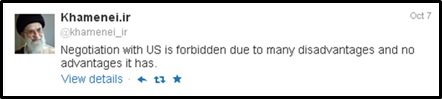
This week, the highest authority in the Islamic Republic, Supreme Leader Ayatollah Ali Khamenei, banned and forbade any further talks and negotiations between his country and the United States: “Negotiation with US is forbidden.”

In addition, he recently made his new e-book available for download in English. The Ayatollah points out: “The regional nations truly hate America and its European branch, England. This hatred is not limited to our people: all regional nations hate them … Why do they complain about being hated? Yes, we hate you.” The book advocates for annihilating America and Israel. It rants about how the Muslim world hates the US and Israel.

As a result, how can President Obama stand behind his promise that the nuclear deal is going to make the ruling clerics of the Islamic Republic more rational, less hostile to the United States and Israel, more civilized and a more constructive player in the region?

Adding to the intrigue is the fact that the theocratic leader has not even officially endorsed the nuclear deal, although the sanctions on the country are being gradually lifted. His strategy is to pull out of the nuclear deal after all economic sanctions have been lifted and Iran has obtained full nuclear capabilities.

The timing of the Supreme Leader’s announcement and other recent equally inflammatory statements is important since they come after the Islamic Republic has ensured that the nuclear deal is sealed and Tehran will be receiving over $150 billion in the short term and other additional financial rewards when the economic sanctions are fully lifted.

In addition, the Supreme Leader has heightened his anti-American and anti-Semitic views and speeches after getting indirect assurance from the Obama administration that the US will not impose any kind of sanctions on the Islamic Republic. Even in the future, no sanctions will be imposed on Iran’s human rights abuses, support for terrorism, or any other outlandish inhumane actions.

As the Secretary of State John Kerry pointed out to US senators, Congress won’t be able to impose new sanction on the Islamic Republic. The administration’s rule of not imposing sanctions applies to anything, whether related to nuclear issues or not, because as Mr. Kerry pointed out, he does not desire to show the Islamic Republic that the US is projecting “bad faith.”

This suggests that the administration will support the Iranian leaders in any way possible in order to show good faith, while Iran’s paramount leader is calling for the complete annihilation of the US and Israel, and increasing his military interventions in the region by dominating Baghdad, Damascus, Lebanon, and Sana’a. He has demonstrated clear support for terrorists groups, is determined to scuttle US national, economic and security interests, and has consistently increased his anti-American and anti-Semitic speeches and foreign policies.

Speaking to the commanders of the Islamic Revolutionary Guard Corps — who spread terrorism, militarism and Islamist ideologies in the region — Ayatollah Khamenei pointed out that “[w]e are in a critical situation now as the enemies are trying to change the mentality of our officials and our people on the revolution and our national interests.” In addition, with all the advantages that President Obama has given to the Supreme Leader through the nuclear deal, Khamenei stated, “Negotiations with the United States open gates to their economic, cultural, political and security influence. Even during the nuclear negotiations they tried to harm our national interests.”

The Obama administration, on the other hand, insists in not imposing any kind of new sanction because it does not want the Iranian government to get discontent and breach the nuclear deal, as recently made clear by Secretary Kerry.

So, can we consider this policy an informed one when the US is compelled to continue to please and spoil the Islamic Republic — by turning a blind eye on its egregious human rights abuses, imprisonment of American citizens without fair and due process, support of  terrorist groups, sabotage of US foreign policy, national, and security interests in the region — all so that Iranian leaders will stick to the nuclear deal?

In other words, what Secretary Kerry is saying is that any time the Iranian leaders feel discontent, the Obama administration’s policy is to give further bonuses to the ruling clerics and implore them not to back out of the nuclear deal. This coddling has created precisely a situation in which the Iranian ruling clerics have the opportunity to take complete advantage of the American government by exploiting the administration’s weak stance. It seems that when it comes to Iran, President Obama has switched the “carrot and stick” approach to a policy anchored in lavishing rewards on the Iranian leaders.

It is also important not to forget that Iranian leaders were the ones who were desperate for the nuclear deal: they are receiving billions of dollars, global legitimacy, and ensuring their hold on power and pursuit of nuclear objectives, as well as enhancing their regional hegemonic ambitions due to this deal. But since they have smelled the weakness of President Obama, they are more than happy to capitalize on it and exploit it.

As long as the theocratic Islamist political establishment is in power in the Islamic Republic, the Iranian leaders will continue their hatred and anti-American policies towards the US even if the US provides Tehran with its every whim and desire.

The Iranian Majlis Has Not Approved The JCPOA But Iran’s Amended Version Of It

October 13, 2015

The Iranian Majlis Has Not Approved The JCPOA But Iran’s Amended Version Of It, Middle East Media Research Institute, A. Savyon* and Y. Carmon, October 13, 2015

(Even Obama’s foggy notions of “common sense” should include the premise that, if there are multiple parties to an agreement, they should all follow the same agreement. — DM)

[T]he inclusion of these new Iranian demands in a Majlis decision constitutes the first written demand by an Iranian authority to amend the agreement, a demand that was mentioned verbally on September 3, 2015 by Iran’s Supreme Leader Ali Khamenei.

****************

On October 13, 2015 the Iranian Majlis approved, by a majority of 161-59 with 13 abstentions, not the JCPOA but rather an Iranian amended version it.

Paragraph 3 of the Majlis decision states that “the government will monitor any non-performance by the other party [to the agreement] in the matter of failing to lift the sanctions, or restoring the canceled sanctions, or imposing sanctions for any another reason, and will take steps to actualize the rights of the Iranian nation and to terminate the voluntary cooperation [this apparently refers to the Additional Protocol, which, according to the JCPOA, Iran will implement voluntarily] and to handle the rapid expansion of the Iranian nuclear program for peaceful purposes, so that within two years the enrichment potential in Iran will reach 190,000 SWU. The Supreme National Security Council will handle this matter, and the government will to submit to the Council a plan in the matter within four months.”[1]

Implications:

Considering that the non-cancellation of the sanctions is part of the JCPOA (according to the JCPOA, U.S. sanctions will be merely “suspended,” rather than canceled, so as to allow their “snapback” in the case of an Iranian violation); and considering that the re-imposition of sanctions, and the imposition of new sanctions, in case of an Iranian violation are likewise part of the JCPOA – the Majlis decision constitutes ratification of a nonexistent document. It was not a ratification of the JCPOA as it stands, but rather of additional demands made by Iran after the JCPOA was agreed upon on July 14, 2015 in Vienna.

Furthermore, the inclusion of these new Iranian demands in a Majlis decision constitutes the first written demand by an Iranian authority to amend the agreement, a demand that was mentioned verbally on September 3, 2015 by Iran’s Supreme Leader Ali Khamenei.[2]

The Majlis decision defines clauses in the JCPOA as “non-performance of the agreement by the other party” and therefore the Majlis’ approval is meaningless.

* A. Savyon is director of the MEMRI Iran Media Project; Y. Carmon is President of MEMRI.

Endnotes:

[1] ISNA (Iran), October 13, 2015.

[2] Khamenei announced explicitly on September 3, 2015 that he does not accept the terms of the agreement and demanded that the sanctions should be immediately removed, rather than suspended, as a condition for accepting the agreement. See the following MEMRI reports:

Special Dispatch No. 6151, “Khamenei Declares That He Will Not Honor The Agreement If Sanctions Are Merely Suspended And Not Lifted,” September 4, 2015; Special Dispatch No. 6162, “Expected September 28 NY Meeting Between P5+1 Foreign Ministers And Iran Could Signify Reopening Of Nuclear Negotiations To Address Khamenei’s September 3 Threat That If Sanctions Are Not Lifted, But Merely Suspended, There Will Be No Agreement,” September 21, 2015.

Obama Will Be the Only Person Sticking to Iran Deal

October 12, 2015

Obama Will Be the Only Person Sticking to Iran Deal, Gatestone InstituteAmir Taheri, October 12, 2015

(Happy implementation day. — DM)

Sometime this week, President Obama is scheduled to sign an executive order to meet the Oct. 15 “adoption day” he has set for the nuclear deal he says he has made with Iran. According to the president’s timetable the next step would be “the start day of implementation,” fixed for Dec. 15.

But as things now stand, Obama may end up being the only person in the world to sign his much-wanted deal, in effect making a treaty with himself.

The Iranians have signed nothing and have no plans for doing so. The so-called Joint Comprehensive Plan of Action (JCPOA) has not even been discussed at the Islamic Republic’s Council of Ministers. Nor has the Tehran government bothered to even provide an official Persian translation of the 159-page text.

The Islamic Majlis, the ersatz parliament, is examining an unofficial text and is due to express its views at an unspecified date in a document “running into more than 1,000 pages,” according to Mohsen Zakani, who heads the “examining committee.”

“The changes we seek would require substantial rewriting of the text,” he adds enigmatically.

Nor have Britain, China, Germany, France and Russia, who were involved in the so-called P5+1 talks that produced the JCPOA, deemed it necessary to provide the Obama “deal” with any legal basis of their own. Obama’s partners have simply decided that the deal he is promoting is really about lifting sanctions against Iran and nothing else.

So they have started doing just that without bothering about JCPOA’s other provisions. Britain has lifted the ban on 22 Iranian banks and companies blacklisted because of alleged involvement in deals linked to the nuclear issue.

German trade with Iran has risen by 33 percent, making it the Islamic Republic’s third-largest partner after China.

China has signed preliminary accords to help Iran build five more nuclear reactors. Russia has started delivering S300 anti-aircraft missile systems and is engaged in talks to sell Sukhoi planes to the Islamic Republic.

France has sent its foreign minister and a 100-man delegation to negotiate big business deals, including projects to double Iran’s crude oil exports.

Other nations have also interpreted JCPOA as a green light for dropping sanctions. Indian trade with Iran has risen by 17 percent, and New Delhi is negotiating massive investment in a rail-and-sea hub in the Iranian port of Chah-Bahar on the Gulf of Oman. With help from Austrian, Turkish and United Arab Emirates banks, the many banking restrictions imposed on Iran because of its nuclear program have been pushed aside.

“The structures of sanctions built over decades is crumbling,” boasts Iranian President Hassan Rouhani.

Meanwhile, the nuclear project is and shall remain “fully intact,” says the head of Iran’s Atomic Energy Agency, Ali Akbar Salehi.

“We have started working on a process of nuclear fusion that will be cutting-edge technology for the next 50 years,” he adds.

Even before Obama’s “implementation day,” the mullahs are receiving an average of $400 million a month, no big sum, but enough to ease the regime’s cash-flow problems and increase pay for its repressive forces by around 21 percent.

Last month, Iran and the P5+1 created a joint commission to establish the modalities of implementation of an accord, a process they wish to complete by December 2017 when the first two-year review of JCPOA is scheduled to take place and when Obama will no longer be in the White House. (If things go awry Obama could always blame his successor or even George W Bush.)

Both Obama and his Secretary of State John Kerry have often claimed that, its obvious shortcomings notwithstanding, their nuke deal with the “moderate faction” in Tehran might encourage positive changes in Iran’s behavior.

That hasn’t happened.

The mullahs see the “deal” as a means with which Obama would oppose any suggestion of trying to curb Iran.

1173 (1)

“Obama won’t do anything that might jeopardize the deal,” says Ziba Kalam, a Rouhani adviser. “This is his biggest, if not the only, foreign policy success.”

If there have been changes in Tehran’s behavior they have been for the worst. Iran has teamed up with Russia to keep Bashar al-Assad in power in Syria, mocking Obama’s “Assad must go” rhetoric. More importantly, Iran has built its direct military presence in Syria to 7,000 men. (One of Iran’s most senior generals was killed in Aleppo on Wednesday.)

Tehran has also pressured Iraqi Premier Haidar al-Abadi’s weak government to distance itself from Washington and join a dubious coalition with Iran, Russia and Syria.

Certain that Obama is paralyzed by his fear of undermining the non-existent “deal” the mullahs have intensified their backing for Houthi rebels in Yemen. Last week a delegation was in Tehran with a long shopping list for arms.

In Lebanon, the mullahs have toughened their stance on choosing the country’s next president. And in Bahrain, Tehran is working on a plan to “ensure an early victory” of the Shiite revolution in the archipelago.

Confident that Obama is determined to abandon traditional allies of the United States, Tehran has also heightened propaganda war against Saudi Arabia, now openly calling for the overthrow of the monarchy there.

The mullahs are also heightening contacts with Palestinian groups in the hope of unleashing a new “Intifada.”

“Palestine is thirsty for a third Intifada,” Supreme Guide Khamenei’s mouthpiece Kayhan said in an editorial last Thursday. “It is the duty of every Muslim to help start it as soon as possible.”

Obama’s hopes of engaging Iran on other issues were dashed last week when Khamenei declared “any dialogue with the American Great Satan” to be” forbidden.”

“We have no need of America” his adviser Ali-Akbar Velayati added later. “Iran is the region’s big power in its own right.”

Obama had hoped that by sucking up to the mullahs he would at least persuade them to moderate their “hate-America campaign.” Not a bit of that.

“Death to America” slogans, adoring official buildings in Tehran have been painted afresh along with US flags, painted at the entrance of offices so that they could be trampled underfoot. None of the US citizens still held hostages in Iran has been released, and one, Washington Post stringer Jason Rezai, is branded as “head of a spy ring “in Tehran. Paralyzed by his fear of undermining the non-existent deal, Obama doesn’t even call for their release.

Government-sponsored anti-American nationwide events are announced for November, anniversary of the seizure of the US Embassy in Tehran. The annual “End of America” week-long conference is planned for February and is to focus on “African-American victims of US police” and the possibility of “self-determination for blacks.”

According to official sources “families of Black American victims” and a number of “black American revolutionaries” have been invited.

Inside Iran, Obama’s “moderate partners” have doubled the number of executions and political prisoners. Last week they crushed marches by teachers calling for release of their leaders. Hundreds of trade unionists have been arrested and a new “anti-insurrection” brigade paraded in Tehran to terrorize possible protestors.

The Obama deal may end up as the biggest diplomatic scam in recent history.

Op-Ed: Chaos and 2nd Cold War, Part II: Israel’s Nuclear Strategy

October 11, 2015

Op-Ed: Chaos and 2nd Cold War, Part II: Israel’s Nuclear Strategy, Israel National News, Prof. Louis René Beres, October 11, 2015

(Part I is available here. — DM)

Israel should now be calculating the exact extent or subtlety with which it should consider communicating key portions of its nuclear posture and positions. Naturally, Israel should never reveal any too-specific information about its nuclear strategy, its nuclear hardening, or even its nuclear yield-related capabilities. Still, sometimes, the duty of finely-honed intelligence services should not be to maximize strategic secrecy, but rather, to carefully “share” certain bits of pertinent information.

**********************************

How will Russia respond to any ramped up American uses of force in the Middle East, and, more plausibly, vice-versa?  One must assume that Jerusalem is already asking these key questions, and even wondering whether, in part, greater mutualities of interest could sometime exist with Moscow than with Washington.

To wit, Prime Minister Benjamin Netanyahu met with Russia’s President Vladimir Putin in September 2015. Among other things, the Israeli leader must  be calculating: 1)Will the Obama Administration’s incoherent retreat from most of the Middle East point toward a more permanent United States detachment from the region; and 2) If it does, what other major powers are apt to fill the resultant vacuum? Just as importantly, and as an obvious corollary to (2), above, the prime minister should be inquiring: “How will the still-emerging Cold War II axis of conflict impact America’s pertinent foreign policy decisions?”

There are some additional ironies yet to be noted. Almost certainly, ISIS, unless it is first crushed by U.S. and/or Russian-assisted counter-measures, will plan to march westward across Jordan, ultimately winding up at the borders of West Bank (Judea/Samaria). There, ISIS Jihadists could likely make fast work of any still-posted Hamas and Fatah forces, in effect, taking over what might once have become “Palestine.” In this now fully imaginable scenario, the most serious impediment to Palestinian statehood is not Israel, but rather a murderous band of Sunni Arab terrorists.[16]

What about the larger picture of “Cold War II?” Israeli defense planners will need to factor into their suitably nuanced calculations the dramatically changing relationship between Washington and Moscow. During “Cold War I,” much of America’s support for the Jewish State had its most fundamental origins in a perceived need to compete successfully in the Middle East with the then Soviet Union. In the progressive development of “Cold War II,” Jerusalem will need to carefully re-calculate whether a similar “bipolar” dynamic is once again underway, and whether the Russian Federation might, this time around, identify certain strategic benefits to favoring Israel in regional geo-politics.

In all such strategic matters, once Israel had systematically sorted through the probable impact of emerging “superpower” involvements in the Middle East, Jerusalem would need to reassess its historic “bomb in the basement.” Conventional wisdom, of course, has routinely pointed in a fundamentally different policy direction. Still, this “wisdom” assumes that credible nuclear deterrence is simply an automatic result of  physically holding nuclear weapons. By the logic of this too-simplistic argument, removing Israel’s nuclear bomb from the “basement” would only elicit new waves of global condemnation, and would likely do so without returning any commensurate security benefits to Jerusalem.

Scholars know, for good reason, that the conventional wisdom is often unwise. Looking ahead, the strategic issues facing Israel are not at all uncomplicated or straightforward.  Moreover, in the immutably arcane world of Israeli nuclear deterrence, it can never really be adequate that enemy states merely acknowledge the Jewish State’s nuclear status. Rather, it is also important that these states should be able to believe that Israel holds usable nuclear weapons, and that Jerusalem/Tel-Aviv would be willing to employ these usable weapons in certain clear, and situationally recognizable, circumstances.

Current instabilities in the Middle East will underscore several good reasons to doubt that Israel could ever benefit from any stubborn continuance of deliberate nuclear ambiguity. It would seem, too, from certain apparent developments already taking place within Mr. Netanyahu’s “inner cabinet,” that portions of Israel’s delegated leadership must now more fully understand the bases of any such informed skepticism.

In essence, Israel is imperiled by compounding and inter-related existential threats that justify its fundamental nuclear posture, and that require a correspondingly purposeful strategic doctrine. This basic need exists well beyond any reasonable doubt. Without such weapons and doctrine, Israel could not expectedly survive over time, especially if certain neighboring regimes, amid expanding chaos,  should soon become more adversarial, more Jihadist, and/or less risk-averse.

Incontestably, a purposeful nuclear doctrine could prove increasingly vital to coping with various more-or-less predictable strategic scenarios for Israel, that is, those believable narratives requiring preemptive action, and/or an appropriate retaliation.

Typically, military doctrine carefully describes how national forces should fight in various combat operations. The literal definition of “doctrine” derives from Middle English, from the Latin doctrina, meaning teaching, learning, andinstruction. Though generally unrecognized, the full importance of doctrine lies not only in the several ways that it can animate and unify military forces, but also in the uniquely particular fashion that it can transmit certain desired “messages.”

In other words, doctrine can serve an increasingly imperiled  state as a critical form of communication, one directed to its friends, and also to its foes.

Israel can benefit from just such broadened understandings of doctrine. The principal security risks now facing Israel are really more specific than general or generic. This is because Israel’s extant adversaries in the region will likely be joined, at some point, by: (1) a new Arab state of “Palestine;” and/or by (2) a newly-nuclear Iran. It is also because of the evidently rekindled global spark of “bipolar” or “superpower” adversity, and the somewhat corollary insertion of additional American military forces to combat certain new configurations of Jihadi terror.

For Israel, merely having nuclear weapons, even when fully recognized in broad outline by enemy states, can never automatically ensure successful deterrence. In this connection, although starkly counter-intuitive, an appropriately selective and thoughtful end to deliberate ambiguity could improve the overall credibility of Israel’s nuclear deterrent.  With this point in mind, the potential of assorted enemy attack prospects in the future could be reduced by making available certain selected information concerning the safety of  Israel’s nuclear weapon response capabilities.

This crucial information, carefully limited, yet more helpfully explicit, would center on the distinctly major and inter-penetrating issues of Israeli nuclear capability and decisional willingness.

Skeptics, no doubt, will disagree. It is, after all, seemingly sensible to assert that nuclear ambiguity has “worked” thus farWhile Israel’s current nuclear policy has done little to deter multiple conventional terrorist attacks, it has succeeded in keeping the country’s enemies, singly or in collaboration, from mounting any authentically existential aggressions. This conclusion is not readily subject to any reasonable disagreement.

But, as the nineteenth-century Prussian strategic theorist, Karl von Clausewitz, observed, in his classic essay, On War, there may come a military tipping point when “mass counts.” Israel is already coming very close to this foreseeable point of no return. Israel is very small.  Its enemies have always had an  undeniable advantage in “mass.”

More than any other imperiled state on earth, Israel needs to steer clear of such a tipping point.

This, too, is not subject to any reasonable disagreement.

Excluding non-Arab Pakistan, which is itself increasingly coup-vulnerable, none of Israel’s extant Jihadi foes has “The Bomb.”  However, acting together, and in a determined collaboration, they could still carry out potentially lethal assaults upon the Jewish State. Until now, this capability had not been possible, largely because of insistent and  persistently overriding fragmentations within the Islamic world. Looking ahead, however, these same fragmentations could sometime become a source of special danger to Israel, rather than remain a continuing source of  national safety and reassurance.

An integral part of Israel’s multi-layered security system lies in the country’s ballistic missile defenses, primarily, the Arrow or “Hetz.” Yet, even the well-regarded and successfully-tested Arrow, now augmented by the newer and shorter-range iterations of “Iron Dome,” could never achieve a sufficiently high probability of intercept to meaningfully protect Israeli civilians.[17] No system of missile defense can ever be “leak proof,” and even a single incoming nuclear missile that somehow managed to penetrate Arrow or corollary defenses could conceivably kill tens or perhaps hundreds of thousands of Israelis.[18]

In principle, at least, this fearsome reality could be rendered less prospectively catastrophic if Israel’s traditional reliance on deliberate ambiguity were suitably altered.

Why alter? The current Israeli policy of an undeclared nuclear capacity is unlikely to work indefinitely. Leaving aside a Jihadi takeover of already-nuclear Pakistan, the most obviously unacceptable “leakage” threat would come from a nuclear Iran. To be effectively deterred, a newly-nuclear Iran would require convincing assurance that Israel’s atomic weapons were both (1) invulnerable, and (2) penetration-capable.

Any Iranian judgments about Israel’s capability and willingness to retaliate with nuclear weapons would then depend largely upon some prior Iranian knowledge of these weapons, including their expected degree of protection from surprise attack, as well as Israel’s expected capacity to “punch-through” all pertinent Iranian active and passive defenses.

Jurisprudentially, at least, following JCPOA in Vienna, a  nuclear weapons-capable Iran is a fait accompli. For whatever reasons, neither the “international community” in general, nor Israel in particular, had ever managed to create sufficient credibility concerning a once-timely preemptive action. Such a critical defensive action would have required very complex operational capabilities, and could have generated Iranian/Hezbollah counter actions that might have a  very significant impact on the entire Middle East. Nevertheless, from a purely legal standpoint, such preemptive postures could still have been justified, under the authoritative criteria of anticipatory self-defense, as permitted under customary international law.

It is likely that Israel has undertaken some very impressive and original steps in cyber-defense and cyber-war, but even the most remarkable efforts in this direction will not be enough to stop Iran altogether. Earlier, the “sanctions” sequentially leveled at Tehran – although certainly better than nothing – could have had no tangible impact on effectively halting Iranian nuclearization.

Strategic assessments can sometimes borrow from a Buddhist mantra. What is, is. Ultimately, a nuclear Iran could decide to share some of its nuclear components and materials with Hezbollah, or with another kindred terrorist group. Ultimately, amid growing regional chaos, such injurious assets could find their way to such specifically U.S- targeted groups as ISIS.

Where relevant, Israeli nuclear ambiguity could be loosened by releasing certain very general information regarding the availability and survivability of appropriately destructive  nuclear weapons.

Israel should now be calculating the exact extent or subtlety with which it should consider communicating key portions of its nuclear posture and positions. Naturally, Israel should never reveal any too-specific information about its nuclear strategy, its nuclear hardening, or even its nuclear yield-related capabilities. Still, sometimes, the duty of finely-honed intelligence services should not be to maximize strategic secrecy, but rather, to carefully “share” certain bits of pertinent information.

What about irrational enemies? An Israeli move from ambiguity to disclosure would not likely help in the case of an irrational nuclear enemy. It is even possible, in this regard, that particular elements of Iranian leadership might meaningfully subscribe to certain end-times visions of a Shiite apocalypse. By definition, any such enemy would not necessarily value its own continued national survival more highly than any other national preference, or combination of preferences. By definition, any such enemy would present a genuinely unprecedented strategic challenge.

Were its leaders to become authentically irrational, or to turn in expressly non-rational directions, Iran could then effectively become a nuclear suicide-bomber in macrocosm.  Such a profoundly destabilizing strategic prospect is improbable, but it is also not inconceivable. A similarly serious prospect exists in already-nuclear Pakistan.

To protect itself against military strikes from irrational enemies, especially those attacks that could carry existential costs, Israel will need to reconsider virtually every aspect and function of its nuclear arsenal and doctrine. This is a strategic reconsideration that must be based upon a number of bewilderingly complex intellectual calculations, and not merely on ad hoc, and more-or-less presumptively expedient political judgments.

Removing the bomb from Israel’s basement could enhance Israel’s strategic deterrence to the extent that it would heighten enemy perceptions of the severe and likely risks involved. This would also bring to mind the so-called Samson Option, which, if suitably acknowledged, could allow various enemy decision-makers to note and underscore a core assumption. This is that Israel is prepared to do whatever is needed to survive. Interestingly, such preparation could be entirely permissible under governing international law, including the 1996 Advisory Opinion of the International Court of Justice.[19]

Irrespective of  its preferred level of ambiguity, Israel’s nuclear strategy must always remain oriented toward deterrence, not to actual war-fighting.[20] The Samson Option refers to a policy that would be based in part upon a more-or-less implicit threat of massive nuclear retaliation for certain anticipated enemy aggressions.  Israel’s small size means, inter alia, that any nuclear attack would threaten Israel’s very existence, and could not be tolerated. Israel’s small size also suggests a compelling need for sea-basing (submarines) at least a recognizably critical portion of its core nuclear assets,

From a credibility standpoint, a Samson Option could make sense only in “last-resort,” or “near last-resort,” circumstances. If the Samson Option is to be part of a convincing deterrent, as it should, an incremental end to Israel’s deliberate ambiguity is essential. The really tough part of this transformational process will lie in determining the proper timing for such action vis-a-vis Israel’s security requirements, and in calculating authoritative expectations (reasonable or unreasonable) of the “international community.”

The Samson Option should never be confused with Israel’s overriding security objective: To seek stable deterrence at the lowest possible levels of military conflict. As a last resort, it basically states the following warning to all potential nuclear attackers:  “We (Israel) may have to `die,` but (this time) we won’t die alone.”

There is a related observation. In our often counter-intuitive strategic world, it can sometimes be rational to pretend irrationality. The nuclear deterrence benefits of any such pretended irrationality would depend, at least in part, upon an enemy state’s awareness of Israel’s intention to apply counter-value targeting when responding to a nuclear attack. But, once again, Israeli decision-makers would need to be aptly wary of ever releasing too-great a level of specific operational information.

In the end, there are specific and valuable critical security benefits that would likely accrue to Israel as the result of a purposefully selective and incremental end to its historic policy of deliberate nuclear ambiguity.   The right time to begin such an “end”  has not yet arrived. But, at the precise moment that Iran verifiably crosses the nuclear threshold, or arguably just before this portentous moment, Israel should  promptly remove The Bomb from its “basement.”

When this critical moment arrives, Israel should already have configured (1) its presumptively optimal allocation of nuclear assets; and (2) the extent to which this preferred configuration should now be disclosed. Such strategic preparation could then enhance the credibility of Israel’s indispensable nuclear deterrence posture.

When it is time for Israel to selectively ease its nuclear ambiguity, a second-strike nuclear force should be revealed in broad outline. This robust strategic force – hardened, multiplied, and dispersed – would need to be fashioned so as to recognizably inflict a decisive retaliatory blow against major enemy cities. Iran, it follows, so long as it is led by rational decision-makers, should be made to understand that the actual costs of  any planned aggressions against Israel would always exceed any expected gains.

In the final analysis, whether or not a shift from deliberate ambiguity to some selected level of nuclear disclosure would actually succeed in enhancing Israeli nuclear deterrence would depend upon several complex and intersecting factors. These include, inter alia, the specific types of nuclear weapons involved; reciprocal assessments and calculations of pertinent enemy leaders; effects on rational decision-making processes by these enemy leaders; and effects on both Israeli and adversarial command/control/communications operations. If  bringing Israel’s bomb out of the “basement” were to result in certain new enemy pre-delegations of nuclear launch authority, and/or in new and simultaneously less stable launch-on-warning procedures, the likelihood of unauthorized and/or accidental nuclear war could then be substantially increased.

Not all adversaries may be entirely rational. To comprehensively protect itself against potentially irrational nuclear adversaries, Israel has no logical alternative to developing an always problematic conventional preemption option, and to fashion this together with a suitable plan for subsequent “escalation dominance.” Operationally, especially at this very late date, there could be no reasonable assurances of success against many multiple hardened and dispersed targets. Regarding deterrence, however, it is noteworthy that “irrational” is not the same as “crazy,” or “mad,” and that even an expectedly irrational Iranian leadership could still maintain susceptible preference orderings that are both consistent and transitive.

Even an irrational Iranian leadership could be subject to threats of deterrence that credibly threaten certain deeply held religious as well as civic values. The relevant difficulty here for Israel is to ascertain the precise nature of these core enemy values. Should it be determined that an Iranian leadership were genuinely “crazy” or “mad,” that is, without any decipherable or predictable ordering of preferences, all deterrence bets could then have to give way to preemption, and possibly even to certain plainly unwanted forms of war fighting.

Such determinations, of course, are broadly strategic, not narrowly jurisprudential. From the discrete standpoint of international law, especially in view of Iran’s expressly genocidal threats against Israel, a preemption option could still represent a permissible expression of anticipatory self-defense. Again, however, this purely legal judgment would be entirely separate from any parallel or coincident assessments of operational success. There would be no point for Israel to champion any strategy of preemption on solely legal grounds if that same strategy were not also expected to succeed in specifically military terms.

Growing chaotic instability in the Middle East plainly heightens the potential for expansive and unpredictable conflicts.[21] While lacking any obviously direct connection to Middle East chaos, Israel’s nuclear strategy must now be purposefully adapted to this perilous potential. Moreover, in making this adaptation, Jerusalem could also have to pay special attention not only to the aforementioned revival of  major “bipolar” animosities, but also, more specifically and particularly, to Russia’s own now-expanding nuclear forces.

This cautionary warning arises not because augmented and modernized Russian nuclear forces would necessarily pose any enlarged military threat to Israel directly, but rather because these strategic forces could determine much of the way in which “Cold-War II” actually evolves and takes shape. Vladimir Putin has already warned Washington of assorted “nuclear countermeasures,” and recently test launched an intercontinental nuclear missile.[22] One such exercise involved a new submarine-launched Bulava missile, a weapon that could deliver a nuclear strike with up to 100 times the force of the 1945 Hiroshima blast.

Current adversarial Russian nuclear posturing vis-à-vis the United States remains oriented toward the Ukraine, not the Middle East.[23] Nevertheless, whatever happens to U.S.-Russian relations in any one part of the world could carry over to certain other parts, either incrementally, or as distinctly sudden interventions or escalations. For Jerusalem, this means, among other things, an unceasing obligation to fashion its own developing nuclear strategy and posture with an informed view to fully worldwide power problems and configurations.

Whether looking toward Gaza, West Bank (Judea/Samaria), Iran, Lebanon, Iraq, Jordan, Egypt, or Syria, Israel will need to systematically prioritize existential threats, and, thereafter, stay carefully focused on critically intersecting and overriding factors of global and regional security. In all such meticulously careful considerations, both chaos and Cold War II should be entitled to occupy a conspicuous pride of place.

Sources:

[16] A further irony here concerns Palestinian “demilitarization,” a pre-independence condition of statehood called for by Israeli Prime Minister Benjamin Netanyahu. Should Palestinian forces (PA plus Hamas) ever actually choose to abide by any such formal legal expectation, it could makes these forces less capable of withstanding any foreseeable ISIS attacks. Realistically, however, any such antecedent compliance would be highly improbable. See, for earlier legal assessments of Palestinian demilitarization, Louis René Beres and (Ambassador) Zalman Shoval, “Why a Demilitarized Palestinian State Would Not Remain Demilitarized: A View Under International Law,” Temple International and Comparative Law Journal, Winter 1998, pp. 347-363; and Louis René Beres and Zalman Shoval, “On Demilitarizing a Palestinian `Entity’ and the Golan Heights: An International Law Perspective,” Vanderbilt Journal of Transnational Law, Vol. 28, No. 5, November 1995, pp. 959-972.

[17] There is another notable and more generic (pre-nuclear age) risk of placing too-great a reliance on defense. This is the risk that a corollary of any such reliance will be a prospectively lethal tendency to avoid taking otherwise advantageous offensive actions. Recall, in this connection, Carol von Clausewitz On War:  “Defensive warfare…does not consist of waiting idly for things to happen. We must wait only if it brings us visible and decisive advantages. That calm before the storm, when the aggressor is gathering new forces for a great blow, is most dangerous for the defender.” See: Carl von Clausewitz, Principles of War, Hans W. Gatzke, tr., New York: Dover Publications, 2003, p. 54.

[18] For early authoritative accounts, by the author, of expected consequences of a nuclear attack, see: Louis René Beres, Apocalypse: Nuclear Catastrophe in World Politics (Chicago: University of Chicago Press, 1980); Louis René Beres, Mimicking Sisyphus: America’s Countervailing Nuclear Strategy (Lexington, Mass., Lexington Books, 1983); Louis René Beres, Reason and Realpolitik: U.S. Foreign Policy and World Order (Lexington, Mass., Lexington Books, 1984); and Louis René Beres, Security or Armageddon: Israel’s Nuclear Strategy (Lexington, Mass., Lexington Books, 1986).

[19] See: “Summary of the Legality of the Threat or Use of Nuclear Weapons,” Advisory Opinion, 1996, I.C.J., 226 (Opinion of 8 July 1996). The key conclusion of this Opinion is as follows: “…in view of the current state of international law, and of the elements of fact at its disposal, the Court cannot conclude definitively whether the threat or use of nuclear weapons would be lawful or unlawful in an extreme circumstance of self-defense, in which the very survival of a State would be at stake.”

[20] This advice was a central recommendation of the Project Daniel Group’s final report,  Israel’s Strategic Future (ACPR, Israel, May 2004: “The overriding priority of Israel’s nuclear deterrent force must always be that it preserves the country’s security without ever having to be fired against any target. The primary point of Israel’s nuclear forces must always be deterrence ex ante, not revenge ex post.” (p. 11). Conceptually, the core argument of optimizing military force by not resorting to any actual use pre-dates the nuclear age. To wit, Sun-Tzu, in his ancient classic, The Art of War, counseled: “Supreme excellence consists of breaking the enemy’s resistance without fighting.”

[21] Once again, Prussian military thinker, Carl von Clausewitz, had already highlighted the generic (pre-nuclear age) dangers of unpredictability, summarizing these core hazards as matters of “friction.”

[22] ICBM test launches are legal and permissible under the terms of New START, It does appear, however,  that Russia has already developed and tested a nuclear-capable cruise missile with a range of 500-5500 KM, which would be in express violation of the Intermediate Nuclear Forces Treaty (INF). At the same time, current research into the U.S. Conventional Prompt Global Strike Program seeks to circle around INF Treaty limitations, by employing a delivery vehicle trajectory that is technically neither ballistic nor cruise.

[23] Russia, of course, is operating much more openly and substantially in Syria, but here, in the Middle East theatre, at least, Moscow’s public tone toward Washington is somewhat less confrontational or adversarial.
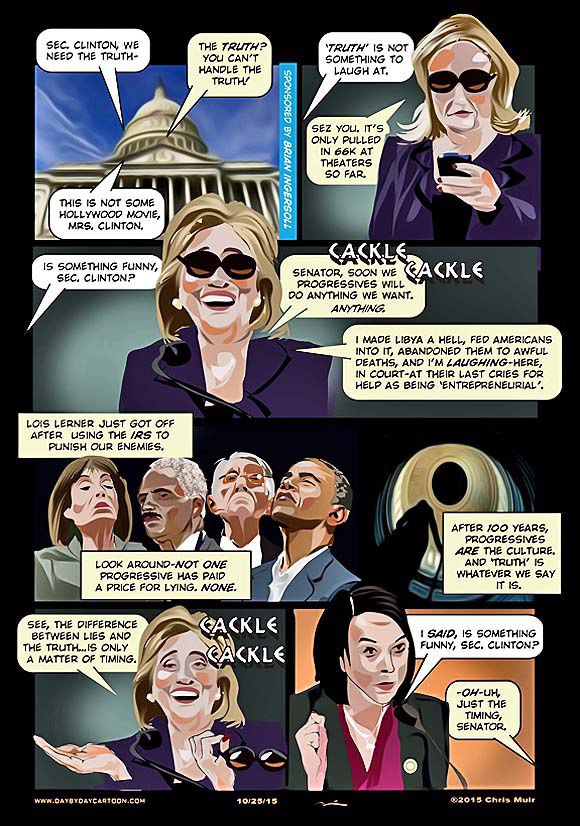
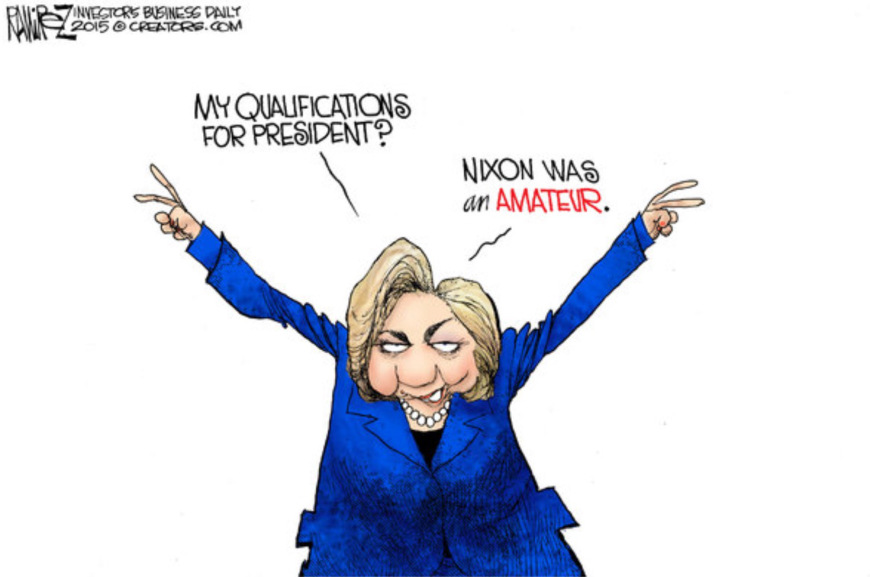
 

Op-Ed: Chaos and 2nd Cold War, Part I: Israel’s Nuclear Strategy

October 11, 2015

Op-Ed: Chaos and 2nd Cold War, Part I: Israel’s Nuclear Strategy, Israel National News,Prof. Louis René Beres, October 9, 2015

To fashion a functional nuclear strategy would be difficult for any state in world politics, but it could be especially challenging for one that keeps its bomb more-or-less securely “in the basement.” Now, as the Middle East descends into an ever more palpable chaos,[1] Israel will have to make certain far-reaching decisions on this very complex task.

Among other nuanced and widely intersecting concerns, Jerusalem’s decisions will need to account for a steadily hardening polarity between Russia and the United States.

Here, almost by definition, there will be no readily available guidebook to help lead the way. For the most part, Israel will need to be directed by an unprecedented fusion of historical and intellectual considerations. In the end, any resultant nuclear strategy will have to represent the prospective triumph of mind over mind, not merely of mind over matter.[2]

Conceivably, at least for the Jewish State that is smaller than America’s Lake Michigan, an emergent “Cold War II” could prove to be as determinative in shaping its national nuclear posture as coinciding regional disintegration. Still, a new Cold War need not necessarily prove disastrous or disadvantageous for Israel. It is also possible, perhaps even plausible, that Jerusalem could sometime discern an even greater commonality of strategic interest with Moscow, than with Washington.

To be sure, any such stark shift of allegiance in Israeli geo-political loyalties ought not to be intentionally sought, or in any way cultivated for its own sake. Moreover, on its face, it would currently be hard to imagine in Jerusalem that a superpower mentor of both Syria and Iran could somehow also find strategic common ground with Israel. Yet, in these relentlessly tumultuous times, any normally counter-intuitive judgments could, at least on rare occasions, prove surprisingly correct.

Credo quia absurdum. “I believe because it is absurd.” In these tumultuous times, certain once preposterous counter-intuitive judgments should no longer be dismissed out of hand. Moreover, in seeking to best understand the Israel-relevant dynamics of any renewed Washington-Moscow bipolar axis of conflict, Jerusalem will need to consider the prospects for a conceivably “looser” form of enmity.

In other words, looking ahead, it would seem realistic that a now “restored” superpower axis might nonetheless reveal greater opportunities for cooperation between the dominant “players.” Understood in the traditional language of international relations theory, this points toward a relationship that could become substantially less “zero-sum.”[3]

By definition, regarding zero-sum relationships in world politics, any one state’s gain is necessarily another state’s loss. But in Cold War II, it is reasonable to expect that the still-emerging axis of conflict will be “softer.” Here, for both major players, choosing a cooperative strategy could sometimes turn out to be judged optimal.[4]

Recognizing this core difference in superpower incentives from the original Cold War, and to accomplish such recognition in a timely fashion,  could prove vitally important for Israel. In essence, it could become a key factor in figuring out what should or should not be done by Jerusalem about any expected further increments of regional nuclear proliferation, and about Iran.

Iranian nuclearization remains the single most potentially daunting peril for Jerusalem. In this regard, virtually nothing has changed because of the recent Iran Nuclear Agreement (Joint Comprehensive Plan of Action, Vienna, 14 July, 2015).[5] To the contrary, in a situation fraught with considerable irony, Iran’s overall strategic latitude will actually have been expanded and improved by the terms of this concessionary pact.[6] Most plainly, these Iranian enhancements are the permissible result of a now no-holds-barred opportunity for transfer of multiple high-technology weapons systems, from Moscow to Tehran.

For the foreseeable future, the nuclear threat from Iran will continue to dwarf all other recognizable security threats.[7] At the same time, this enlarging peril could be impacted by certain multi-sided and hard to measure developments on the terrorism front.  In more precisely military terminology, these intersecting terror threats could function “synergistically,” or as so-called “force multipliers.”

The “whole” of the strategic danger now facing Israel is substantially greater than the simple arithmetic sum of its parts.[8] This true combination could include a persistently shifting regional “correlation of forces,”[9] one that would continue to oscillate menacingly, and also to the  observable benefit of Israel’s mortal enemies, both state and sub-state.

In Jerusalem and Tel-Aviv, serious derivative questions should now be addressed. What does this changing set of adversarial developments mean for Israel in very specifically operational and policy terms? Above all, this configuration of enmity should warn that a steady refinement and improvement of Israel’s nuclear strategy must be brought front and center. For Israel, there can be no other reasonable conclusion, not only because of ominous developments in Iran, but also because of the growing prospect of additional nuclear weapon states in the region, including perhaps Egypt, and/or Saudi Arabia.

Despite U.S. President Barack Obama’s continuing support for a “world free of nuclear weapons,” all of the world’s existing nuclear weapon states are already expanding and modernizing their nuclear arsenals. As of the end of September 2015, the world’s total inventory of nuclear warheads was reliably estimated as 17,000.[10] What Israel must also bear in mind is that this American president’s notion that nuclear weapons are intrinsically destabilizing, or even evil, makes no defensible intellectual sense.

It is plausible, rather, that only the perceived presence of nuclear weapons in the arsenals of both original superpowers prevented World War III. Equally convincing, Israel, without its atomic arsenal – whether ambiguous, or declared – could never survive, especially in a region that may soon combine further nuclear spread with steadily undiminished chaos.

Israel will have to decide, in prompt and sometimes inter-related increments, upon the precise extent to which the nation needs to optimize its composite national security policies on preemption, targeting, deterrence, war fighting, and active defense. A corollary imperative here must be to deal more purposefully with the complicated and politically stubborn issues of “deliberate ambiguity.” Going forward, it will not serve Israel’s best interests to remain ambiguous about ambiguity.

To date, at least, it seems that this longstanding policy of “opacity” (as it is also sometimes called) has made perfectly good sense. After all, one can clearly assume that both friends and enemies of Israel already acknowledge that the Jewish State holds persuasive military nuclear capabilities that are (1) survivable; and (2) capable of penetrating any determined enemy’s active defenses. Concerning projections of nuclear weapon survivability, Israel has made plain, too, its steady and possibly expanding deployment of advanced sea-basing (submarines).

Thus far, “radio silence” on this particular “triad” component has likely not been injurious to Israel. This could change, however, and rather quickly. Here, again, there is no room for error. Already, in delivering his famousFuneral Speech, with its conspicuously high praise of Athenian military power, Pericles had warned: “What I fear more than the strategies of our enemies, is our own mistakes.”[11]

Thus far, there have been no expressed indications that Israel’s slowly growing force of Dolphin-class diesel submarines has anything at all to do with reducing the vulnerability of its second-strike nuclear forces, but any such policy extrapolations about Israeli nuclear retaliatory forces would also be problematic to dismiss.[12]

Also significant for Israel’s overall security considerations is the refractory issue  of “Palestine.” A Palestinian state, any Palestinian state, could pose a serious survival threat to Israel, in part, as a major base of operations for launching increasingly lethal terrorist attacks against Israeli citizens. A possibly more important “Palestine” security issue for Israel lies in an even larger generalized potential for creating a steadily deteriorating correlation of regional forces. More specifically, any such deterioration could include various destabilizing “synergies,” that is, tangible interactive effects resulting from instabilities already evident  in Iraq and Syria, and from a manifestly concomitant Iranian nuclearization.

Leaving aside the various possibilities of any direct nuclear transfer to terrorists, a Palestinian state would  itself remain  non-nuclear. But, when viewed together with Israel’s other regional foes, this new and 23rd Arab state could still have the stunningly consequential effect of becoming a “force multiplier,” thereby impairing Israel’s already-minimal strategic depth, and  further rendering the Jewish State vulnerable to a thoroughly diverse panoply of both conventional and unconventional attacks. Here, for a variety of easily determinable reasons, a “merely” non-nuclear adversary could still heighten the chances of involving Israel in assorted nuclear weapons engagements,[13] including, in the future, a genuine nuclear war.[14]

What, then, should Israel do next about its core nuclear posture, and about its associated “order of  battle?”  How, exactly, should its traditionally ambiguous nuclear stance be adapted to the increasingly convergent and inter-penetrating threats of Middle Eastern chaos, Iranian nuclearization, and “Palestine?” In answering these difficult questions, Jerusalem will have to probe very carefully into the alleged American commitment to “degrade” and “destroy” ISIS(IS).  However well-intentioned, this pledge, especially if actually carried out effectively, could simultaneously aid both Syria’s President Assad, and the surrogate Shiite militia, Hezbollah.[15]

___________________________

[1] Although composed in the seventeenth century, Thomas Hobbes’Leviathan still offers an illuminating and enduring vision of chaos in world politics. Says the English philosopher in Chapter XIII, “Of the Naturall Condition of Mankind, as concerning their Felicity, and Misery:”  during chaos, a condition which Hobbes identifies as a “time of Warre,”  it is a time “…where every man is Enemy to every man… and where the life of man is solitary, poore, nasty, brutish, and short.” At the time of writing, Hobbes believed that the condition of “nature” in world politics was less chaotic than that same condition existing among individual human beings -because of what he called the “dreadful equality” of individual men in nature being able to kill others – but this once-relevant differentiation has effectively disappeared with the global spread of nuclear weapons.

[2] The core importance of literally thoughtful military doctrine – of attention to the complex intellectual antecedents of any actual battle – had already been recognized by early Greek and Macedonian armies. See, on this still-vital recognition, F.E. Adcock, The Greek and Macedonian Art of War (Berkeley, CA: University of California Press, 1962), especially Chapter IV.

[3] For much earlier, but still useful, scholarly assessments of polarity in world politics, by this author, See: Louis René Beres, “Bipolarity, Multipolarity, and the Reliability of Alliance Commitments,” Western Political Quarterly, Vol. 25, No. 4, December 1972, pp. 702-710; Louis René Beres, “Bipolarity, Multipolarity, and the Tragedy of the Commons,” Western Political Quarterly, Vol. 26, No. 4, December 1973, pp. 649-658; and Louis René Beres, “Guerillas, Terrorists, and Polarity: New Structural Models of World Politics,”Western Political Quarterly, Vol. 27, No.4., December 1974, pp. 624-636.

[4] Of course, in the context of any non-zero-sum game, ensuring enforceable agreements between the players (here, the United States and Russia) could still prove more-or-less decisively problematic.

[5]  See Louis René Beres, “After the Vienna Agreement: Could Israel and a Nuclear Iran Coexist?”  IPS Publications, IDC Herzliya, Institute for Policy and Strategy, Israel, September 2015.

[6] Significantly, this agreement also violates two major treaties, the 1968Non-Proliferation Treaty (NPT), and the 1948 Genocide Convention. The first violation has to do with subverting the NPT expectation that all non-nuclear state signatories must remain non-nuclear for a period of “indefinite duration.” The second violation centers on codified U.S. indifference to Genocide Convention obligations concerning responsibility to enforce the prohibition against “incitement to genocide.” In both cases, moreover, per article 6 of theU.S. Constitution – the “Supremacy Clause” – these violations are ipso factoalso violations of U.S. domestic law.

[7] See Louis René Beres, “Like Two Scorpions in a Bottle: Could Israel and a Nuclear Iran Coexist in the Middle East?” The Israel Journal of Foreign Affairs, Vol. 8., No. 1., 2014, pp. 23-32. See, also: Louis René Beres and (General/USAF/ret.) John T. Chain, “Living With Iran: Israel’s Strategic Imperative,” BESA Perspectives Paper No. 249, May 28, 2014, BESA Center for Strategic Studies, Israel. General Chain was Commander-in-Chief, U.S. Strategic Air Command.

[8] See Louis René Beres, “Core Synergies in Israel’s Strategic Planning: When the Adversarial Whole is Greater than the Sum of its Parts,” Harvard National Security Journal, Harvard Law School, June 2, 2015.

[9] See Louis René Beres, “Understanding the Correlation of Forces in the Middle East: Israel’s Urgent Strategic Imperative,” The Israel Journal of Foreign Affairs, Vol. IV, No. 1 (2010). Russia’s Putin, of course, is accustomed to thinking in such strategic terms; in the Soviet days, “correlation of forces” was already a tested yardstick for measuring Moscow’s presumptive military obligations.

[10] Se: Hans M. Kristensen, “Nuclear Weapons Modernization: A Threat to the NPT?”  Arms Control Today, Arms Control Association, September 2015, 11 pp.

[11] From the Funeral Speech of 431 BCE, near the outbreak of the Peloponnesian War, when Sparta first invaded Attica. For greater detail, see:Thucydides, The Speeches of Pericles, H.G. Edinger, tr., New York: Frederick Ungar Publishing Co., 1979), 68 pp.

[12] On nuclear sea-basing by Israel (submarines) see: Louis René Beres and (Admiral/USN/ret.) Leon “Bud” Edney, “Israel’s Nuclear Strategy: A Larger Role for Submarine Basing,” The Jerusalem Post, August 17, 2014; and Professor Beres and Admiral Edney, “A Sea-Based Nuclear Deterrent for Israel,” Washington Times, September 5, 2014. Admiral Edney was NATO Supreme Allied Commander, Atlantic.

[13] Such engagements could include assorted enemy attacks on Israel’sDimona nuclear reactor. Already, in both 1991 and 2014, this small reactor came under combined missile and rocket attack from Iraq and Hamas aggressions, respectively. For fully authoritative assessments of these attacks, and related risks, see: Bennett Ramberg, “Should Israel Close Dimona? The Radiological Consequences of a Military Strike on Israel’s Plutonium-Production Reactor,” Arms Control Today, Arms Control Association, May 2008, pp. 6-13.

[14] Naturally, the risks of a nuclear war would be expected to increase together with any further regional spread of nuclear weapons. In this connection, returning to the prophetic insights of Thomas Hobbes, back in the seventeenth century (see Note #1, above), Leviathan makes clear that the chaotic condition of nature is substantially worse among individual human beings, than among states. This is because, opines Hobbes, also in Chapter XIII, within this particular variant of chaos, “…the weakest has strength enough to kill the strongest….” Now, however, with the spread of nuclear weapons, the “dreadful equality” of Hobbesian man could be replicated, more or less, in the much larger and more consequential arena of world politics.

[15] “Everything is very simple in war,” advises Clausewitz, “but the simplest thing is also very difficult.” See: Carl von Clausewitz, On War.