Archive for the ‘Iran – Middle East’ category

What could a “harsh” Iranian reaction to Riyadh constitute?

October 10, 2015

What could a “harsh” Iranian reaction to Riyadh constitute? Al-MonitorAli Omidi, October 9, 2015

[A]s history has shown, a country’s desire to start a military campaign is not always logical. Iran might decide that no matter what, it must launch a military campaign against Riyadh in order to punish Saudi Arabia.

**********************

TEHRAN, Iran — Hundreds of Iranian pilgrims were killed in the Sept. 24 stampede in Mina, near Mecca. The incident was followed by Saudi negligence in reporting the situation on time, and failure to collaborate with Iranian authorities. This prompted Iran’s Supreme Leader Ayatollah Ali Khamenei to call on Saudi Arabia to apologize to the “Muslim world” and Iran. Ayatollah Khamenei also accused Riyadh of not fulfilling its obligations in returning the bodies of the Iranian pilgrims, and behaving “maliciously.” He further warned, “The slightest disrespect to tens of thousands of Iranian pilgrims in Mecca and Medina as well as the Saudi government’s refusal to fulfill its duties with regard to the transfer of the pure corpses [of those killed during the hajj] will elicit a harsh and tough reaction from Iran.”

Meanwhile, upon the Oct. 3 return of the bodies of 104 Iranian pilgrims, President Hassan Rouhani issued an additional warning. He said, “So far, our language has been one of brotherhood. When necessary, we have used the language of diplomacy; however, if needed, the language of authority will be used as well.”

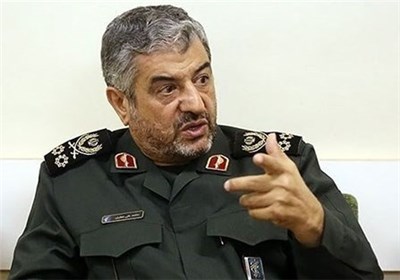
Indeed, on the very same day, Maj. Gen. Mohammad Ali Jafari, the commander of the Islamic Revolutionary Guard Corps (IRGC), said, “The IRGC has prepared all its possible potentials in order to fulfill the will of the great leader of the Islamic Revolution and make the Saudi dynasty answer for the crimes it committed in Mina and restore the rights of the victims. We are ready and are awaiting orders.” Jafari added, “The Muslim World is tired of the Saudis’ betrayals and ignorance, which reminds us of Abu Lahab, including the massacre of the people of Yemen, displacement of the poor people of Syria, repression of the people of Bahrain, ethnic massacres in Iraq, creation of ethnic tension and support of terrorism. The Saudis shall melt in the anger of the Muslims.”

Lastly, former IRGC Cmdr. Mohsen Rezaei, who is also adviser to Ayatollah Khamenei, warned Riyadh, “Don’t play with fire, because the fire will burn you … don’t follow the example of Saddam [Hussein], who in the middle of the Iraq-Iran War had no way out.”

In response, Saudi Arabia has accused Iran of playing politics with the stampede. “I think the Iranians should think of more productive activities than to play politics with a tragedy that has befallen those people who were performing their most sacred religious duty,” Saudi Foreign Minister Adel al-Jubeir told the UN General Assembly. Mindful of the increasingly hostile rhetoric, the question arises of what the “harsh and tough reaction” that Iran has warned of could potentially constitute.

In general, harsh reaction translates into military action. Iran has just finished its negotiations with the six world powers over its nuclear program, and thus considers itself to be in a stronger position. Separately, Iran also assesses that Saudi Arabia is in a desperate situation in Yemen. Therefore, in the case of a possible military confrontation with Saudi Arabia, there are several scenarios that Tehran could consider:

    • A ground campaign. For this kind of campaign to be possible, Iran would need to cross both Iraq and Kuwait. Neither of these countries will allow Iran to enter their territory in order to attack Saudi Arabia. Therefore, this option is not on the table. In addition, such a military campaign requires a large and well-equipped army as well as logistical, financial and economic abilities enjoyed by a superpower. Iran is only considered a mid-level power in the region. There is also the historical example of the US reaction to Iraq’s 1991 invasion of Kuwait for Iran to consider.


    • A naval campaign. This would mean that Iran has to travel a distance of 200 miles to reach the eastern coast of Saudi Arabia. Such a campaign is impossible considering the Iranian armed forces’ lack of strategic depth vis-a-vis Saudi Arabia, as the latter has the advantage of controlling the sea from land.


    • Supporting allies in proxy wars. This would mean that Iran will, more determinedly than ever, support Syrian President Bashar al-Assad in his fight against opposition forces. Tehran would also support Hezbollah against pro-Saudi elements of the Lebanese government, as well as in Israel, and the Houthis in Yemen. Of course, while supporting Hezbollah and Assad is possible and easy, it is more difficult to give military support to the Houthis since Yemen is under naval blockade. Moreover, UN Resolution 2216 forbids provision of military support to the Houthis. Iran can, however, achieve this goal via smugglers and private contractors.


    • Restricting Saudi access to the Strait of Hormuz. Considering Iran’s familiarity with the Strait of Hormuz and the military advantages that it enjoys in this regard, this option is possible. The problem, however, is that this scenario can lead to a battle of tankers, as it did toward the end of the 1980-88 Iran-Iraq War. Indeed, Saudi ships could be prompted to raise a third party flag. In addition, this scenario will give an excuse to world powers to increase their military presence in the Persian Gulf, which runs counter to Iran’s objectives.


    • Destroying the bridge that connects Saudi Arabia to Bahrain. The King Fahd Causeway, which is 25 kilometer (15.5 miles) long, was used for the first time in December 1986. If the bridge is destroyed by high-explosives missiles from the air, the Saudi military support for Bahrain is likely to decrease, which will in turn weaken the Bahraini regime. If such an attack is carried out, and Iran at the same time manages to provide opposition groups in Bahrain with logistic and military support, the Bahraini regime is likely to collapse. However, considering that the United States maintains a military presence in Bahrain, it is not possible for Iran to conduct a direct military campaign against Bahrain.


    • Supporting the Shiite population of Qatif, in Saudi Arabia’s Eastern Province, with the condition that in case of receiving military and logistic support, the Shiites of Saudi Arabia will rebel with the aim of toppling the Saudi government. Considering that Saudi Arabia has built a very long wall on its border with Iraq, and also considering the distance between the Shiite-inhabited region of Saudi Arabia and Iran, this is hardly a probable option. In addition, there are doubts about whether Saudi Shiites will in fact rebel against their government if provided with such support.


  • Firing missiles at Saudi Arabia. As Iran is equipped with multiple types of missiles, it can hit a variety of targets inside Saudi Arabia. Since Saudi Arabia does not have the necessary infrastructure for an effective air defense, such as an Iron Dome, an Iranian missile attack will be effective. The problem, however, is that in such a scenario, Saudi Arabia and its allies will destroy Iran’s oil infrastructure in retaliation.

Considering the options above, and existing limitations, any “harsh” response on the part of Iran will likely be limited to options three through six above. Of course, in case of any kind of confrontation between Iran and Saudi Arabia, all the Arab states of the Persian Gulf — minus Oman — and more than likely the United States and Israel, will offer their complete support to Saudi Arabia. Nevertheless, as history has shown, a country’s desire to start a military campaign is not always logical. Iran might decide that no matter what, it must launch a military campaign against Riyadh in order to punish Saudi Arabia. It is therefore more beneficial, for both Iran and Saudi Arabia, to solve their problems via diplomatic means. However, the current exchange of harsh words between Saudi and Iranian officials shows that the situation will either get critical, or the current cold war will continue.
 

Right Turn Opinion Our ‘Baghdad Bob’ president

October 7, 2015

Right Turn Opinion Our ‘Baghdad Bob’ president, Washington PostJennifer Rubin, October 7, 2015

(Ms. Rubin is WaPo’s token conservative. Do go to the link and read the generally unfavorable comments about her article. — DM). 

So it has come to this: We now can recognize that Carter was not malicious or indifferent to American influence; he was simply slow to catch on. If Carter, widely regarded as the weakest foreign policy president of the second half of the 20th century, looks good in comparison, you can understand how daft is Obama’s worldview. Had he been in Carter’s shoes, I suppose he would have cheered rather than take steps to mitigate imperialistic aggression. Umm, thank goodness Carter was in the White House and not Obama? Yes, it has come to that.

****************************

Mohammed Saeed al-Sahaf, better known as “Baghdad Bob,” was the unintentionally hilarious Iraqi information minister who, no matter what evidence to the contrary, emphatically predicted evisceration of U.S. forces during the Iraq war and denied any news suggesting otherwise. As NBC News recalled, “His last public appearance as information minister was on April 8, 2003, the day before the fall of Baghdad, when he said that the Americans ‘are going to surrender or be burned in their tanks. They will surrender, it is they who will surrender.’ ”

Baghdad Bob now seems to be the model for the Obama White House. Ramadi falls to the Islamic State? No bother, we are winning! Russia invades Ukraine? Russian President Vladimir Putin — take this! — is on the “wrong side of history,” is only going to “wreck his country’s economy and continue Russia’s isolation,” was “desperate” to talk to Obama (and the next day commenced bombing U.S.-backed rebels in Syria) and is about to get “stuck in a quagmire” in Syria. Russia moves more forces into Syria, changing the dynamic in the Middle East? President Obama brushes it aside. Putin is acting out of “weakness,” you see. Next thing you know, the Russians will have to “surrender or be burned in their tanks.”

One is tempted to assume, is hopeful even, that the president and his spokesmen don’t believe what they are saying. It is less frightening to imagine this is ham-handed excuse-mongering for a failed foreign policy than to imagine Obama thinks things are going swimmingly. If Obama actually believes we have Putin just where we want him, why not concede all of Ukraine — or the rest of the former Soviet Union, even. If it’s to our advantage to have Russia prop up Syrian President Bashar al-Assad and destroy the U.S.-backed rebels, then we should be thrilled Russia is now being invited into Iraq to bomb the Islamic State. For that matter, why not welcome Iranian domination of Iraq and a new Shiite-Russian-Iranian crescent?

This is the bizarre parallel universe in which U.S. marginalization is good, chaos is nothing to worry about, the worst human rights offenders are our partners and traditional U.S. allies (Israel, Sunni states, even Turkey) will just have to lump it. It’s a world in which the system of nation-state sovereignty is subsumed to zones of influence — without the United States getting a zone. About the only politician willing to buy into such insanity is Donald Trump, who thinks it is a swell idea to have Putin fighting the Islamic State (except he is not fighting the Islamic State).

You can see why conservatives consider Obama a sharp departure from decades of American foreign policy under Democratic and Republican presidents. Instead of acting as a guarantor of the West’s security, the friend of free peoples and a check against rogue states, we rationalize weakness and abandon innocents. We tend to describe the president’s foreign policy as “feckless,” but it is worse: It is monstrous.

Even Jimmy Carter woke up, it is said, when the Soviets invaded Afghanistan. He did not think it was a good thing that the Soviets were invading an independent nation or that the West should huff and puff but take no action.

To the contrary, in what was surely the best speech of his presidency, Carter told the country: “This invasion is an extremely serious threat to peace because of the threat of further Soviet expansion into neighboring countries in Southwest Asia and also because such an aggressive military policy is unsettling to other peoples throughout the world. This is a callous violation of international law and the United Nations Charter. It is a deliberate effort of a powerful atheistic government to subjugate an independent Islamic people.” Unlike Obama, Carter grasped the danger in letting aggressors succeed: “The United States wants all nations in the region to be free and to be independent. If the Soviets are encouraged in this invasion by eventual success, and if they maintain their dominance over Afghanistan and then extend their control to adjacent countries, the stable, strategic, and peaceful balance of the entire world will be changed. This would threaten the security of all nations including, of course, the United States, our allies, and our friends.” He went on to announce a series of concrete steps — “defer further consideration of the SALT II treaty,” “delay opening of any new American or Soviet consular facilities, and most of the cultural and economic exchanges,” “halt or to reduce exports to the Soviet Union,” suspend licensing of “high technology or other strategic items,” end grain sales, pull out of the Olympics and “provide military equipment, food, and other assistance to help Pakistan defend its independence and its national security against the seriously increased threat it now faces from the north.”

More important, unlike Obama, who is emphatic that we stay on the path of slashing our military, Carter began repairing our military and extending covert efforts, as historian Arthur Herman recalls:

The first was pledging that US defense spending would rise by 4.6 percent per year, every year for five years, starting in 1980. This shocked and infuriated his fellow Democrats — and greased the wheels for President Ronald Reagan’s military buildup. (In the event, Reagan wound up increasing defense outlays less than Carter had planned.)

The second step came in the 1980 State of the Union Address, with announcement of the Carter Doctrine: The United States would use military force if necessary to defend our interests in the Persian Gulf.

To back this up, the president authorized the creation of the first Rapid Deployment Force — the ancestor of US Central Command or CENTCOM, the wheelhouse from which the United States would direct Desert Storm in 1991 and the fall of Saddam Hussein a decade later, and which keeps the Straits of Hormuz, vital to global energy markets, safe and open today.

The last step was authorizing the first covert military aid to Afghan guerrillas fighting their Soviet occupiers. That marked the start of the Soviet quagmire in Afghanistan — a major landmark in the ultimate undoing of the Soviet Union.

You see, a “quagmire” happens only when a power is confronted, stalls and undergoes unjustified losses. Otherwise, it is called a successful invasion.

So it has come to this: We now can recognize that Carter was not malicious or indifferent to American influence; he was simply slow to catch on. If Carter, widely regarded as the weakest foreign policy president of the second half of the 20th century, looks good in comparison, you can understand how daft is Obama’s worldview. Had he been in Carter’s shoes, I suppose he would have cheered rather than take steps to mitigate imperialistic aggression. Umm, thank goodness Carter was in the White House and not Obama? Yes, it has come to that.

Judge Jeanine: New world order emerging thanks to Obama

October 6, 2015

Judge Jeanine: New world order emerging thanks to Obama, Fox News via You Tube, October 4, 2015


Persia, Putin and the Pansy

October 3, 2015

Persia, Putin and the Pansy, Times of Israel, Irwin G. Blank, October 3, 2015

(Guess the name of the Pansy. But please see, The Moscow-Washington-Tehran Axis of Evil. — DM)

Putin, a product of the Soviet Communist system is well acquainted with the dictum of the father of the Bolshevik revolution that gave birth to the regime that he so faithfully served. V. I. Lenin’s famous quote-” Probe with a bayonet. If you meet steel, stop. If you meet mush, then push.”

***************************

In ancient times there was no greater empire than that of Persia. This imperial power stretched from the mountains of Afghanistan all the way to the islands of Greece and the deserts of North Africa and the Middle East. Against the Greeks of Alexander the Great, it could field armies of millions of troops arrayed with the most modern weapons of war at the time. Until the rise of the Roman Empire, no power on Earth, made nations tremble as did the rulers of Persia.

Today the fanatic Ayatollahs in Teheran, with a megalomaniacal apocalyptic dream of Islamist imperialism and world conquest under their banner of jihad are hell bent on the recreation of their ancient empire and the destruction of all they see as infidels and unbelievers. Their conception of faith is a political and social fanaticism that goes even further than the hysterical rantings and horrendous nightmare that Nazi Germany once attempted to foist on mankind. Indeed, the very Nazi terminology for its origin, the word “Aryan” is associated with the nation whose name is a derivative of that racist term-Iran.

However, other than employing proxy allies in Lebanon, Syria and Yemen, the mad mullahs knew that their military, for all its goose stepping soldiers and bombast that they would require the tools necessary to fulfill their wicked aims. Firstly, it was able to build up a nuclear industry with the aim of developing the most lethal weapons of mass destruction. Through deception, deliberate obfuscation and diligent denial, it succeeded in the implantation of this atomic framework under the blindness of the international agency whose responsibility is to curtail the spread of nuclear weapons.

Furthermore, when its nefarious production methods and its open evidence of ballistic missile technology became apparent, Iran successfully parried the efforts to curtail its march toward nuclear weaponry by undertaking a Potemkin village of diplomacy whereby even the most seemingly astute diplomatically experienced national leaders, succumbed to the meanderings and sweetheart deal that Iranian negotiators engineered. The secrets of the Ayatollahs were swept under a Persian rug.

However, in the meantime, the Persian imperialist war mongers still were in great need of the assistance of a powerful ally in order to accomplish their more conventional aims in their desire to continue their conquest throughout the Middle East. What better place to seek this help than to another former empire builder than a nation which was chomping on the bit to return to an area of the globe from which it had been so unceremoniously evicted.

The former Soviet Union, now the Russian Federation, has had dreams of installing its imperial presence in the Mediterranean Sea since the days of the Czars. Until 1972 when the late Egyptian president, Anwar Sadat, evicted ( for the most part as a political move, not a military one) most of the Soviet personnel from his country, the USSR had been ensconced throughout Egypt and the Arab world. Indeed, it was the humiliating defeat of the Egyptian and Syrian forces by the Israel Defense Forces during the Yom Kippur War that demonstrated at that time, the weakness of the Soviet response to American supported Israel which was demonstrating the vapidness of the Soviet promise to come to the aid of its Arab allies. The US response to Soviet threats to directly intervene on behalf of its Egyptian and Syrian clients, by moving the US Navy’s Sixth Fleet towards the Syrian coast and the declaration of a higher war footing by all US forces, made the Soviets back down.

The political and military supported victory of American arms and diplomacy demonstrated the resolve of that world power to face down the threat of Soviet dominance in such a strategic region of Western interests. Not only did the diplomacy of Henry Kissinger and the Nixon White House make a shambles of the massive Soviet involvement in the Arab world, but it brought about the first true demarche of Soviet (Russian) imperial chicanery since the Berlin blockade of 1948 and the Cuban Missile Crisis of 1962.

But the Russian Federation today is led by a president whose demonstration of the old Russian imperial nightmare is alive and well. Vladimir Putin, a former high official of the dreaded KGB,( Soviet Secret Service) has no qualms about restoring the dreams of the Czars and the re-entrenchment of his nation’s appearance in the Middle East. As a significant power player on the world scene and a massive supplier of sophisticated arms to anyone who opposes Western influence anywhere on the planet, the situation in the Levant and the hysterical anti-American paranoia in Teheran led the Ayatollahs to the road towards Moscow.

Sending one of their highest ranking military official to Moscow was a masterstroke of diplomatic skullduggery in presenting Putin with a challenge and an opportunity he could not ignore, For here, he was presented with a silver platter with which to serve up a poisonous dish to his arch-rivals, America and NATO. After witnessing their weakness to confront his military in the Ukraine and the Crimea, as well as his bloody campaign in Chechnya, all Putin had to do was experience orgasmic delight in sending his sea and air forces into a disintegrating Syria and pour weapons by the shipload onto the docks of Bandar Abbas in Iran. In full sight of Western intelligence and American spy satellites, crate after crate of Soviet munitions were soon trundling off the piers of the Syrian port of Latakia.

Iran was facing a significant threat to its allies in that disintegrating country and witnessing the probable demise of its Syrian puppet, Bashar al-Assad. The forces of ISIS (an Iranian rival for control of the Islamic world)  were on the march and its debilitating of the Syrian military as well as its capture of large swaths of Alawite controlled territory would put an end to the mullah’s plans for conquest. The entire northern tier of the Middle East would collapse and the Persian dream of conquering all the Sunni dominated lands of the region would go up in smoke. Iran had invested heavily in its subterfuge of the regimes of Iraq, Yemen and its military adventures in those countries. It required a strong ally and it looked to its northern neighbor with which its shares a common enmity for the West, and Putin, licked his chops and dove onto the plate presented to him.

Not only have Russian military forces seized control of the vital Syrian port of Latakia on the Mediterranean, but it has constructed revetments for air forces and ground personnel unseen in this region since the 1970s. His air forces have conducted bombing raids, not on ISIS, which was a planned political prevarication, but on US backed components of the anti-Assad coalition. Of course, Putin has no conflict with conducting airstrikes on civilians. After all, the West has been all but silent on the massive slaughter of approximately 300,000 civilians by the butcher of Damascus. Even when presented with irrefutable evidence of the use of internationally banned chemical weapons on his own countrymen, the US and NATO have been reticent (cowardly) in confronting this evil practice. Why not? The current leader of Syria’s father dropped poison gas on his own people in Homs when they revolted against his tyrannical rule and the world stood silent.

When the president of the United States declared that the Assad administration’s use of chemical weapons would cross a “red line” and force his hand – well, the red line turned into a yellow streak. The insipid and relatively weak assistance that this erstwhile leader of the world’s greatest superpower has shown to be the denigration and degradation of a once trusted and worthy ally. America’s allies no longer trust her and her enemies no longer fear her. It is not the American people who have lost their courage, it is their incompetently dangerous president and his minions that are responsible.

Not only for the rise of Russian/Iranian imperialism, but for its effect as daily demonstrated by the thousands, if not future hundreds of thousands, of men, women and children, fleeing from the murderous genocide of the Assad aided and abetted by this new Axis of evil-Islamic radicalism and Russian imperialism.

Iran seeks to conquer the Middle East and destroy the Sunni dominated Arab states of the region. With Russian assistance it will expand its imperial power behind Russian bayonets and the threat of its own nuclear umbrella to come. It is biding its time while innocents are being slaughtered and the threats against Israel, Jordan and Lebanon are unrelenting through public declarations and political oratory.

Putin, a product of the Soviet Communist system is well acquainted with the dictum of the father of the Bolshevik revolution that gave birth to the regime that he so faithfully served. V. I. Lenin’s famous quote-” Probe with a bayonet. If you meet steel, stop. If you meet mush, then push.”

The American president, who through Constitutional authority commands the most expansive and well trained military in the history of the world, who purports to be the defender of international human rights, has proven himself to be, in the face of wanton aggression and slaughter, in the abrogation of his country’s duty to defend its most vital and established interests, in his tepid response to evil and his recalcitrance to even identify the greatest threat to Western civilization since the rise of Nazi Germany, has without a doubt, at least in this writer’s estimate, become akin to an ostrich-a bird that buries its head in the sand and presents its foes with an irresistible target.

The Dictionary of American Slang has a word for such a person-a weakling and a wimp-the word is “pansy.” The pansy of the United States will bring the most terrible war upon us all-including by beloved tiny Jewish country.

Ban Ki-moon, Obama work to Humiliate Israel

October 3, 2015

Ban Ki-moon, Obama work to Humiliate Israel, Breitbart, Pamela Geller, October 3, 2015

GettyImages-490838840-640x480Andrew Burton/Getty Images

There has been such a mass (or maybe mess is more fitting) of bad news this week that it is not surprising that a number of shocking news items fell through the cracks — which is always the case with the running dogs in the media when the news reflects so very dreadfully on the community organizer in the White House.

Barack Obama was upstaged, upended and usurped by Russia’s Vladimir Putin this week, when, in one fell swoop, by his actions in Syria and speech at the United Nations, Putin took over the leadership role in the Middle East. Once again, Obama was “caught off guard.” That has become the rallying cry of his presidency.

Obama’s response? To further humiliate and denigrate our one steadfast and true ally.

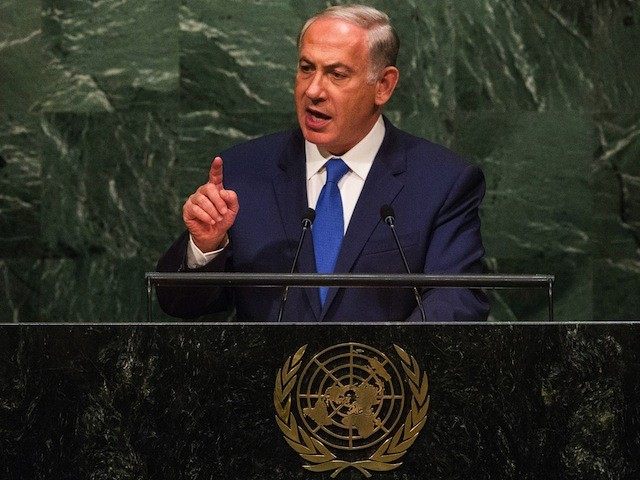
Breitbart News reported that Obama actually went so far as to call Secretary of State John Kerry and the U.S. Ambassador to the United Nations, Samantha Power, into a video conference just before Israel’s Prime Minister Benjamin Netanyahu delivered his historic and courageous speech to the UN General Assembly last Thursday.

The remnants of the U.S. delegation that did attend the speech pointedly did not applaud. The lowlife administration struck again. Obama was casting pearls before swine.

UN Secretary General Ban Ki-moon broke protocol and summarily left when Netanyahu came to the lectern. Deputy UNSG Jan Eliasson slipped into the chair. The UN Secretary General is always present when a head of state addresses the General Assembly. But they broke the rule to humiliate the Jewish people. He left. There is no way that Ban Ki-moon would have shown such disrespect had he not been given the idea or, at the very least, the sanction, by the Jew-hater in the White House.

Why? Why would Obama publicly snub our tried and true ally in the hottest region in the world? Because he is evil. He embodies the hatred of the good for being the good.

Meanwhile, Vladimir Putin has seized the initiative. After announcing that it was beginning operations against the Islamic State (ISIS), Russia is bombing our allies, Bashar Assad’s enemies, in Syria — not ISIS at all. “It’s one thing for us to be humiliated, but another for it to be shown to the world,” said Charles Krauthammer.

Put a fork in him: Barack Obama is done, and he has taken the United States, our allies, and freedom-loving peoples around the world with him. Now that Putin has so thoroughly shown him up, Obama’s only option now is to grovel. And he is groveling assiduously.

Obama’s surrender to the Russians this week has overturned the order of the Middle East and, by extension, the order of the entire world. He relinquished American hegemony in the Middle East–right after paving the way for a nuclear Iran. Obama’s subordinate role to the Russians in the “deconfliction” talks was stunning. Putin had Obama begging for “deconfliction” talks–and how quickly he turned over the deconfliction codes!

Deconfliction codes keep aircraft or missions apart to reduce the likelihood of so-called friendly fire. Has America ever done that before? According to Daniel Dombey in the Financial Times: “Two prior administrations, one of which was seen to be extraordinarily favourably disposed toward anything Israel, declined to do that.” That is, they declined to turn over the deconfliction codes to Israel at the start of the American invasion of the Iraq war and later. But when Russia demanded them, Obama jumped.

I don’t think that Bashar Assad should go. I never have. He kept the Christian and religious minorities safe, and if he goes, the Islamic State is the primary force in place to benefit from his fall. On Assad’s remaining in power as a bulwark against the Islamic State, Putin is right. Even a broken clock is right twice a day.

But this is much bigger than Assad. Obama’s turning the Middle East over to Russia and Iran is one of those terrible moments in history that you can point to, shaking your head in horror and saying, “If only…” Turning over the Middle East to Russia is a major historical blunder. That said, Putin is killing jihadists. Obama whines that Putin is killing the “opposition,” “our allies.” Who is Russia bombing? The 5 recruits that cost the US 500 million to train? “Moderate al Qaeda”? Jabhat al Nusra? #silverlining

The build-out of the Russian air base at Latakia has Russia flexing its muscles. Previously, Israel had a fairly free hand to carry out strikes against arms shipments that go from Iran through Syria to the Iranian-backed jihad group Hizb’Allah in Lebanon. But now the Russian presence in Syria severely limits Israel’s freedom of action.

What the future might hold as a result of Obama’s fecklessness, perfidy, and betrayal of Israel is anyone’s guess, but the catastrophic consequences of the Russia-Iran-Syria axis are far-reaching. The Islamic State is likely not only to survive, but to grow–and Ambassador John Bolton predicts that Putin and Iran’s Hassan Rouhani will eventually make a deal with them, reaching a modus vivendi with the Islamic State.

Catastrophe upon catastrophe, all courtesy of Barack Hussein Obama.

IRGC Ready for Rapid, Tough Response to Al Saud: Commander

October 3, 2015

IRGC Ready for Rapid, Tough Response to Al Saud: Commander, Tasnim News Agency, October 3, 2015

(Iranian rhetoric sounds increasingly like North Korea’s, but is all mere rhetoric? Does the IRGC commander actually contemplate military action against Saudi Arabia? — DM)

139209140106248561674533

Elsewhere in his comments, the IRGC commander pledged that his forces “will take revenge from the Al Saud for the terrible crime.”

***********************

TEHRAN (Tasnim) – Commander of the Islamic Revolution Guards Corps (IRGC) Major General Mohammad Ali Jafari said his forces are ready to show rapid and harsh reaction to make Saudi Arabia accountable after the Kingdom’s mismanagement of Hajj claimed the lives of hundreds of Iranian pilgrims.

Speaking on the sidelines of a military meeting on Saturday, the senior commander underlined that the IRGC enjoys “all possible capacities for Iran’s rapid and tough reaction” to Al Saud and for obliging the monarchy to accept responsibility for the terrible disaster.

On September 24, a crush of pilgrims in Mina, near Mecca, killed around 4,700 people, including 464 Iranians.

Major General Jafari said the IRGC is fully prepared to act under orders from Supreme Leader of the Islamic Revolution Ayatollah Seyed Ali Khamenei.

Back on Wednesday, Ayatollah Khamenei warned Riyadh that any disrespect for the Iranian Hajj pilgrims or its failure to repatriate the bodies of those killed in the Mina crush will draw Iran’s “severe and tough reaction”.

Following the straightforward warning, Saudis began to cooperate with the Iranian officials and have repatriated bodies of some of the victims.

Elsewhere in his comments, the IRGC commander pledged that his forces “will take revenge from the Al Saud for the terrible crime.”

If necessary, the general underscored, the IRGC is firmly and powerfully ready to take any action, in any region and at any time, to protect the dignity of Muslims, particularly to defend the honor of the Iranian people in the face of “oppressive and ignorant rulers of Al Saud.”

Ayatollah Khamenei had announced that Iran has had respect for fraternity in the Islamic world up to now, showing self-restraint and Islamic politeness.

“However,” the Leader had noted, “they (Saudis) should know that the slightest disrespect for tens of thousands of Iranian pilgrims in Mecca and Medina and failing in their duties to transfer the holy bodies (of pilgrims to Iran) will result in Iran’s severe and tough reaction.”

The Moscow-Washington-Tehran Axis of Evil

October 3, 2015

The Moscow-Washington-Tehran Axis of Evil, Canada Free PressCliff Kincaid, October 3, 2015

(I am not posting this because I currently accept its conclusions or some of their bases. However, it’s frightening, interesting and has at least some food for thought. — DM)

KINCAID100315

The conventional wisdom is that Vladimir Putin has blindsided Barack Obama in the Middle East, catching the U.S. off-guard. It’s another Obama “failure,” we’re told. “Obama administration scrambles as Russia attempts to seize initiative in Syria,” is how a Washington Post headline described it. A popular cartoon shows Putin kicking sand in the faces of Obama and Secretary of State John Kerry on a beach.

The conventional wisdom is driven by the notion that Obama has the best of intentions but that he’s been outmaneuvered. What if his intention all along has been to remake the Middle East to the advantage of Moscow and its client state Iran? What if he knows exactly what he’s doing? Too many commentators refuse to consider that Obama is deliberately working against U.S. interests and in favor of the enemies of the U.S. and Israel.

In his U.N. address, Obama said, “As President of the United States, I am mindful of the dangers that we face; they cross my desk every morning. I lead the strongest military that the world has ever known, and I will never hesitate to protect my country or our allies, unilaterally and by force where necessary.”

This is laughable. We still have a strong military, but the inevitable conclusion from what’s recently transpired is that he doesn’t want to protect the interests of the U.S. or its allies in the Middle East. This is not a “failure,” but a deliberate policy.

The trouble with conventional wisdom is the assumption that Obama sees things the way most Americans do. In order to understand Obama’s Middle East policy, it is necessary to consult alternative sources of news and information and analysis. That includes communist news sources.

A fascinating analysis appears in the newspaper of the Socialist Workers Party, The Militant, one of the oldest and most influential publications among the left. You may remember the old photos which surfaced of Lee Harvey Oswald selling copies of The Militant before he killed the American president.

The headline over The Militant story by Maggie Trowe caught my eye: “‘Reset’ with US allows Moscow to send arms, troops to Syria.” It was not about Hillary Clinton’s reset with Moscow years ago, but a more recent one.

Here’s how her story began: “Moscow’s rapid military buildup in Syria is a result of the ‘reset’ in relations forged with the Russian and Iranian governments by the Barack Obama administration. The deal—reshaping alliances and conditions from Syria, Iran and the rest of the Middle East to Ukraine and surrounding region—is the cornerstone of U.S. imperialism’s efforts to establish a new order in the Mideast, but from a much weaker position than when the now-disintegrating order was imposed after World Wars I and II.”

Of course, the idea that “U.S. imperialism” is served by giving the advantage to Russia and Iran is ludicrous. Nevertheless, it does appear that a “reset” of the kind described in this article has in fact taken place. The author writes about Washington’s “strategic shift to Iran and Russia” and the “downgrading” of relations with Israel and Saudi Arabia. She notes that Moscow “seeks more influence and control of the country [Syria] and its Mediterranean ports and a stronger political hand in Mideast politics.” Iran “has sent Revolutionary Guard Quds forces to help prop up Assad, and collaborates with Moscow on operations in Syria,” she notes.

It is sometimes necessary to reject the conventional wisdom and instead analyze developments from the point of view of the Marxists, who understand Obama’s way of thinking. They pretend that Obama is a pawn of the “imperialists” but their analysis also makes sense from a traditional pro-American perspective. Those who accept the evidence that Obama has a Marxist perspective on the world have to consider that his policy is designed to help Moscow and Tehran achieve hegemony in the region.

At the same time, the paper reported, “Since Secretary of State John Kerry’s congenial visit with Putin in May, it has become clear that Washington would accept Moscow’s influence over its ‘near abroad’ in Ukraine and the Baltics, in exchange for help to nail down the nuclear deal with Tehran.” Hence, Obama has put his stamp of approval on Russian aggression in Europe and the Middle East. This analysis, though coming from a Marxist newspaper, fits the facts on the ground. It means that more Russian aggression can be expected in Europe.

The wildcard is Israel and it looks like the Israeli government is being increasingly isolated, not only by Obama but by Putin. The story notes that Israeli Prime Minister Benjamin Netanyahu met with Putin in Moscow on September 21, saying his concern was to “prevent misunderstandings” between Israeli and Russian troops, since Israel has carried out airstrikes in Syrian territory targeting weapons being transported to the Iranian-backed Hezbollah terrorists in Lebanon.

Some reports indicated that Israel had set up a joint mechanism with the Russian military to coordinate their operations in Syria.

However, the Russian leader reportedly told Obama during their U.N. meeting that he opposes Israeli attacks in Syria. The Israeli newspaper Haaretz ran a story that Russia intends to “Clip Israel’s Wings Over [the] Syrian Skies.” The paper added that Putin’s remarks to Obama showed that despite Netanyahu’s meeting with Putin in Moscow, “Russia intends to create new facts on the ground in Syria that will include restricting Israel’s freedom of movement in Syrian skies.”

It hardly seems to be the case that Obama has been outsmarted in the Middle East, or that Putin and Obama don’t like each other. Instead, it appears that Obama is working hand-in-glove with Putin to isolate Israel and that Obama is perfectly content to let the former KGB colonel take the lead.

Israel has always been seen by most U.N. members as the real problem in the region. Obama is the first U.S. President to see Israel in that same manner and to act accordingly. This is why Putin has not caught Obama off-guard in the least. They clearly see eye-to-eye on Israel and Iran.

Don’t forget that Obama actually telephoned Putin to thank him for his part in the nuclear deal with Iran. The White House issued a statement saying, “The President thanked President Putin for Russia’s important role in achieving this milestone, the culmination of nearly 20 months of intense negotiations.”

Building off the Iran nuclear deal, it looks like the plan is for Russia and the United States to force Israel to embrace a U.N. plan for a nuclear-free Middle East. That would mean Israel giving up control of its defensive nuclear weapons to the world body. Iran will be able to claim it has already made a deal to prohibit its own nuclear weapons development.

Such a scheme was outlined back in 2005 in an article by Mohamed Elbaradei, the director-general at the time of the U.N.‘s International Atomic Energy Agency (IAEA). That’s the same body that is now supposed to guarantee Iranian compliance with the terms of the nuclear deal signed by Russia and the U.S.

Elbaradei argued there would have to be “a dialogue on regional security as part of the peace process,” to be followed by an agreement “to make the Middle East a nuclear-weapons-free zone.”

The “dialogue” appears to be taking place now, mostly under the authority and auspices of the Russian government, with President Obama playing a secondary role.

The obvious danger is that Israel would be forced to comply with the plan for a “nuclear-weapons-free-zone,” while Iran would cheat and develop nuclear weapons anyway.

Netanyahu told the U.N. that “Israel deeply appreciates President Obama’s willingness to bolster our security, help Israel maintain its qualitative military edge and help Israel confront the enormous challenges we face.”

This must be his hope. But he must know that Israel’s security is slipping and that the survival of his country is in grave danger in the face of this Moscow-Washington-Tehran axis.

Before Putin further consolidates his military position in the Middle East and Iran makes more progress in nuclear weapons development, Netanyahu will have to launch a preemptive strike on the Islamic state. “Israel will not allow Iran to break in, to sneak in or to walk in to the nuclear weapons club,” the Israeli Prime Minister said.

In launching such a strike before the end of Obama’s second presidential term, Israel would bring down the wrath of the world, led by Russia and the U.S., on the Jewish state.

The Iran Nuclear Deal: What the Next President Should Do

October 2, 2015

The Iran Nuclear Deal: What the Next President Should Do, Heritage Foundation, October 2, 2015

(But please see, The Elephant In The Room. — DM)

The failure of Congress to halt the implementation of the Obama Administration’s nuclear agreement with Tehran means that the U.S. is stuck with a bad deal on Iran’s nuclear program at least for now. Iran’s radical Islamist regime will now benefit from the suspension of international sanctions without dismantling its nuclear infrastructure, which will remain basically intact. Iran’s path to a nuclear weapon is unlikely to be blocked by the Administration’s flawed deal, any more than North Korea was blocked by the Clinton Administration’s 1994 Agreed Framework.

The next President should not passively accept Obama’s risky deal with Tehran as a fait accompli. Instead, he or she should immediately cite any violations of the agreement by Iran, its continued support for terrorism, or other hostile policies as reason to abrogate the agreement. The Bush Administration, faced with bad deals negotiated by the Clinton Administration, eventually withdrew from both the Agreed Framework and the Kyoto Protocol.

Rather than endorsing a dangerous agreement that bolsters Iran’s economy, facilitates its military buildup, and paves the way for an eventual Iranian nuclear breakout, the next Administration must accelerate efforts to deter, contain, and roll back the influence of Iran’s theocratic dictatorship, which continues to call for “death to America.”

How the Next President Should Deal with Iran

Upon entering office, the next Administration should immediately review Iran’s compliance with the existing deal, as well as its behavior in sponsoring terrorism, subverting nearby governments, and attacking U.S. allies. Any evidence that Iran is cheating on the agreement (which is likely given Iran’s past behavior) or continuing hostile acts against the U.S. and its allies should be used to justify nullification of the agreement.

Regrettably, Tehran already will have pocketed up to $100 billion in sanctions relief by the time the next Administration comes to office because of the frontloading of sanctions relief in the early months of the misconceived deal. Continuing to fork over billions of dollars that Tehran can use to finance further terrorism, subversion, and military and nuclear expansion will only worsen the situation.

In place of the flawed nuclear agreement, which would boost Iran’s long-term military and nuclear threat potential, strengthen Iran’s regional influence, strain ties with U.S. allies, and diminish U.S. influence in the region, the new Administration should:

1. Expand sanctions on Iran. The new Administration should immediately reinstate all U.S. sanctions on Iran suspended under the Vienna Agreement and work with Congress to expand sanctions, focusing on Iran’s nuclear program; support of terrorism; ballistic missile program; interventions in Syria, Iraq, and Yemen; human rights violations; and holding of four American hostages (Washington Post reporter Jason Rezaian, Christian pastor Saeed Abedini, former U.S. Marine Amir Hekmati, and former FBI agent Robert Levinson, who has been covertly held hostage by Iran since 2007).

The new Administration should designate Iran’s Islamic Revolutionary Guard Corps (IRGC) as a foreign terrorist organization and apply sanctions to any non-Iranian companies that do business with the IRGC’s extensive economic empire. This measure would help reduce the IRGC’s ability to exploit sanctions relief for its own hostile purposes.

Washington should also cite Iranian violations of the accord as reason for reimposing U.N. sanctions on Iran, thus enhancing international pressure on Tehran and discouraging foreign investment and trade that could boost Iran’s military and nuclear programs. It is critical that U.S. allies and Iran’s trading partners understand that investing or trading with Iran will subject them to U.S. sanctions even if some countries refuse to enforce U.N. sanctions.

2. Strengthen U.S. military forces to provide greater deterrence against an Iranian nuclear breakout.Ultimately, no piece of paper will block an Iranian nuclear breakout. The chief deterrent to Iran’s attaining a nuclear capability is the prospect of a U.S. preventive military attack. It is no coincidence that Iran halted many aspects of its nuclear weapons program in 2003 after the U.S. invasion of and overthrow of hostile regimes in Afghanistan and Iraq. Libyan dictator Muammar Qadhafi, motivated by a similar apprehension about the Bush Administration, also chose to give up his chemical and nuclear weapons programs.

To strengthen this deterrence, it is necessary to rebuild U.S. military strength, which has been sapped in recent years by devastating budget cuts. The Obama Administration’s failure to provide for the national defense will shortly result in the absence of U.S. aircraft carriers from the Persian Gulf region for the first time since 2007. Such signs of declining U.S. military capabilities will exacerbate the risks posed by the nuclear deal.

3. Strengthen U.S. alliances, especially with Israel. The nuclear agreement has had a corrosive effect on bilateral relationships with important U.S. allies in the Middle East, particularly those countries that are most threatened by Iran, such as Israel and Saudi Arabia. Rather than sacrificing the interests of allies in a rush to embrace Iran as the Obama Administration has done, the next Administration should give priority to safeguarding the vital security interests of the U.S. and its allies by maintaining a favorable balance of power in the region to deter and contain Iran. Washington should help rebuild security ties by boosting arms sales to Israel, Saudi Arabia, and other members of the Gulf Cooperation Council (GCC) that are threatened by Tehran, taking care that arms sales to Arab states do not threaten Israel’s qualitative military edge in the event of a flare-up in Arab–Israeli fighting.

To enhance deterrence against an Iranian nuclear breakout, Washington also should transfer to Israel capabilities that could be used to destroy hardened targets such as the Fordow uranium enrichment facility, which is built hundreds of feet beneath a mountain. The only non-nuclear weapon capable of destroying such a target is the Massive Ordnance Penetrator (MOP), a precision-guided, 30,000-pound “bunker buster” bomb. Giving Israel these weapons and the aircraft to deliver them would make Tehran think twice about risking a nuclear breakout.

The U.S. and its European allies also should strengthen military, intelligence, and security cooperation with Israel and the members of the GCC, an alliance of Bahrain, Kuwait, Oman, Qatar, Saudi Arabia, and the United Arab Emirates, founded in 1981 to provide collective security for Arab states threatened by Iran. Such a coalition could help both to contain the expansion of Iranian power and to facilitate military action (if necessary) against Iran.

4. Put a high priority on missile defense. Iran’s ballistic missile force, the largest in the Middle East, poses a growing threat to its neighbors. Washington should help Israel to strengthen its missile defenses and help the GCC countries to build an integrated and layered missile defense architecture to blunt the Iranian missile threat. The U.S. Navy should be prepared to deploy warships equipped with Aegis ballistic missile defense systems to appropriate locations to help defend Israel and the GCC allies against potential Iranian missile attacks as circumstances demand. This will require coordinating missile defense activities among the various U.S. and allied missile defense systems through a joint communications system. The U.S. should also field missile defense interceptors in space for intercepting Iranian missiles in the boost phase, which would add a valuable additional layer to missile defenses.

5. Deter nuclear proliferation. For more than five decades, Washington has opposed the spread of sensitive nuclear technologies such as uranium enrichment, even for its allies. By unwisely making an exception for Iran, the Obama Administration in effect conceded the acceptability of an illicit uranium enrichment program in a rogue state. In fact, the Administration granted Iran’s Islamist dictatorship better terms on uranium enrichment than the Ford and Carter Administrations offered to the Shah of Iran, a U.S. ally back in the 1970s.

The Obama Administration’s shortsighted deal with Iran is likely to spur a cascade of nuclear proliferation among threatened states such as Saudi Arabia, Turkey, Egypt, and the United Arab Emirates. Such a multipolar nuclear Middle East, on hair-trigger alert because of the lack of a survivable second-strike capability, would introduce a new level of instability into an already volatile region. To prevent such an outcome, the next Administration must reassure these countries that it will take military action to prevent Iran from gaining a nuclear capability as well as to deter Iranian military threats to their interests.

6. Expand domestic oil and gas production and lift the ban on U.S. oil exports to put downward pressure on world prices. In addition to sanctions, Iran’s economy has been hurt by falling world oil prices. Its oil export earnings, which constitute more than 80 percent of the regime’s revenue, have been significantly reduced. By removing unnecessary restrictions on oil exploration and drilling in potentially rich offshore and Alaskan oil regions, Washington could help to maximize downward pressure on long-term global oil prices. Lifting the ban on U.S. oil exports, an obsolete legacy of the 1973–1974 energy crisis spawned by the Arab oil embargo, would amplify the benefits of increased oil and gas production. Permitting U.S. oil exports not only would benefit the U.S. economy and balance of trade, but also would marginally lower world oil prices and Iranian oil export revenues, thereby reducing the regime’s ability to finance terrorism, subversion, and military expansion.

7. Negotiate a better deal with Iran. The Obama Administration played a strong hand weakly in its negotiations with Iran. It made it clear that it wanted a nuclear agreement more than Tehran appeared to want one. That gave the Iranians bargaining leverage that they used shrewdly. The Administration made a bad situation worse by downplaying the military option and front-loading sanctions relief early in the interim agreement, which reduced Iran’s incentives to make concessions.

The next Administration should seek an agreement that would permanently bar Iran from acquiring nuclear weapons. At a minimum, this would require:

  • Banning Iran from uranium enrichment activities;
  • Dismantling substantial portions of Iran’s nuclear infrastructure, particularly the Fordow and Natanz uranium enrichment facilities and Arak heavy water reactor;
  • Performing robust inspections on an “anytime anywhere” basis and real-time monitoring of Iranian nuclear facilities;
  • Linking sanctions relief to Iranian compliance;
  • Ensuring that Iran comes clean on its past weaponization efforts; and
  • Determining a clear and rapid process for reimposing all sanctions if Iran is caught cheating.

The Bottom Line

The nuclear deal already has weakened relationships between the U.S. and important allies, undermined the perceived reliability of the U.S. as an ally, and helped Iran to reinvigorate its economy and expand its regional influence. After oil sanctions are lifted, Iran will gain enhanced resources to finance escalating threats to the U.S. and its allies. The next Administration must help put Iran’s nuclear genie back in the bottle by taking a much tougher and more realistic approach to deterring and preventing an Iranian nuclear breakout.

‘Yesterday Russia Turned A New Page In The History Of The World’

October 1, 2015

Chairman Of The Hizbullah-Affiliated ‘Al-Akhbar’ Daily On Russian Air Campaign In Syria: ‘Yesterday Russia Turned A New Page In The History Of The World,’ Middle East Media Research Institute, October 1, 2015

In an article published in the Hizbullah-affiliated Lebanese daily Al-Akhbar on October 1, 2015, the chairman of the newspaper’s board of directors, Ibrahim Al-Amin, predicted that Russia’s air campaign in Syria will be merely a prelude to a larger military offensive involving ground operations by the Syrian Army, Iran, Hizbullah, and even the Iraqi Popular Mobilization Forces. Al-Amin is known to have close ties to Hizbullah, and in the past he has proven a reliable source on matters relating to the Iran-Syria-Hizbullah axis.

24967Ibrahim Al-Amin (source: Siyese.net)

The following is the translation of the article:

“…This is the first test for the granddaughter of the Eastern dynasty [i.e. Russia] since World War II, and it is the first field test of whether America’s unipolar position in the world over the past quarter century has truly been broken. Above all, this is a repositioning of Russian military force in the direct labor market of the regions of ‘cold’ confrontation with the U.S.-led West… Today we find ourselves before the best opportunity of putting Syria on a path to a true solution, even if it be prefaced by fire.

“As for the facts, the Russian air force carried out the first missions of a working program laid out in detailed form in an existing plan of cooperation between Moscow and its allies in the war in Syria and Iraq. This is a plan that is coordinated down to the finest details with the two allies Syria and Iran, and consequently with Hizbullah [as well]… What happened yesterday, and which will soon reach its culmination, is a necessary preface to a larger military action that will include a land component undertaken by other forces in the alliance. To put it more directly, [Russia’s] aerial bombardment of [the rebels’] command and control centers, major weapons arsenals, and artillery positions will be a preface to a military operation carried out by the Syrian army on the ground, with direct support from Iran and Hizbullah, and even from the Iraqi Popular Mobilization Forces… It may be emphasized that Russia’s activity yesterday means clearly that all the discussions in New York didn’t change an iota in the military plan of action…

“The signs of surprise and astonishment on [the faces of] the Americans, the Westerners, the Israelis, the Turks, and the Saudis are an additional proof of the weakness of the prior coordination regarding the fate of the initiatives surrounding the Syria crisis. In fact, the step taken by Russia is a kind of dare to all those who employed every violent means they could against the Syrian regime. If they decide to broaden the confrontation, they will be forced to deal with the new realities, which today are openly represented by the Russian military presence, and tomorrow will be represented by an open Iranian military presence as well…

“This must not hide from our eyes the picture of the complicated reality, which tells us that the joy felt by the regime elements in Syria must not turn into any slackening, not on the part of the regime itself, and not on the part of all those who fight alongside it. It would be naive to consider the Russian strikes sufficient to counter the enemies. It would rather be realistic to profit from the support of Russia – which is a supporting actor, and is not [itself] a member of the axis of resistance – in order to prepare to wage harsh and decisive battles in a number of places in Syria. This is a matter that requires raising the level of readiness and mobilization, and the creation of operative means of benefitting from the Russian military arsenal that is present in or coming to Syria.

“Yesterday Russia turned a new page in the history of the world. However far its military action in the field reaches, it is the political and strategic results that will remain more important. These results will invite those who delude themselves in thinking that America is still the leader of the world and controller of its fate to revise their stance. Those who do not want to change their minds, let them stay as they wish, but they should take into account that they must rely on themselves more than at any time in the past. This goes for Syria, Iraq, Palestine, and even the Arabian Peninsula and North Africa!”