Archive for the ‘International Community’ category

Ayatollah Khamenei Outlines Requirements of Final Iran Nuclear Deal

April 9, 2015

Ayatollah Khamenei Outlines Requirements of Final Iran Nuclear Deal, Tasnim News Agency (Iranian), April 9, 2015

(All bold face print is from the original. — DM)

139401201524404185070453

TEHRAN (Tasnim) – Supreme Leader of the Islamic Revolution Ayatollah Seyed Ali Khamenei on Thursday defined the main points that a final nuclear deal between Iran and world powers should involve, but refused to adopt a stance on the Lausanne statement that entails no binding commitment.

Addressing a gathering in Tehran on Thursday, Ayatollah Khamenei said he has not taken a position on a statement released by Iran and the Group 5+1 (Russia, China, the US, Britain, France and Germany) after the most recent round of nuclear talks in the Swiss city of Lausanne, because nothing has been still agreed upon, nor have the parties reached any binding agreement.

“What has happened so far does not guarantee either the principle of an agreement, or the negotiations that lead to an agreement or even the content of an agreement, and it does not even guarantee that these talks would result in a deal, so congratulation has no meaning,” the Leader said.

The comments came after Iran and the six powers on April 2 reached a framework nuclear agreement after more than a week of intensive negotiations in Lausanne, Switzerland, with both sides committed to push for a final, comprehensive accord until the end of June.

Ayatollah Khamenei then reaffirmed strong support for a deal that respects the Iranian nation’s dignity, and rejected as “untrue” the reports on his opposition to any agreement.

The Leader, however, underlined that “no deal is better than a bad deal.”

Imam Khamenei then explained that he has only outlined the “general issues, the main guidelines, frameworks and red lines” regarding the nuclear talks and has not specified the details.

“I am not indifferent to the negotiations, but have not interfered in the details of the talks so far, and will not interfere in future either,” the Leader stressed.

The Supreme Leader then pointed to the unreliable nature of the US, an obvious sign of which he said was a biased fact sheet that Washington issued only two hours after the Lausanne statement was declared.

“Drafting such a statement (fact sheet) within two hours is not possible, so they (Americans) had been busy preparing a flawed and wrong statement contrary to the content of the talks at the same time that they were negotiating with us.”

The Leader further called on the country’s negotiators to hold consultations with the critics of the Lausanne statement to better deal with the talks, something known as “rapport” among Iranians.

Imam Khamenei once again made it clear that the talks with the US revolve only around the nuclear issue and nothing else, but at the same time noted that such nuclear negotiations provide an experience to test the possibility of talking on other subjects if Washington puts aside objections.

But, the Leader added, if the US keeps raising objections, Iran’s experience of mistrust of the US will be corroborated.

Commenting on the main points that have to be stipulated in a possible final nuclear deal, Ayatollah Khamenei pointed to the removal of anti-Iran sanctions all at once, adding, “This issue is very important and the sanctions should be completely terminated at the very day of the agreement.”

“If the removal of sanctions is to be conditioned by a new process, the fundamental of negotiations will be nonsense, because the purpose of the talks is lifting of the sanctions,” the Leader said.

The Supreme Leader also categorically rejected foreign access to the country’s “security and defensive” sectors under the pretext of nuclear monitoring.

Imam Khamenei said Iran’s military capabilities must be upheld and strengthened day by day, stressing that Iran’s backing for its “brothers” in the resistance front in different regions should never be diminished.

Moreover, the Leader voiced opposition to any deal that subjects Iran to “unconventional” monitoring and would make it a special case in the world, underlining that monitoring of Iran’s peaceful nuclear program should be conventional, like the other countries.

Iran’s “scientific and technical developments in different dimensions” was another requirement that the Leader emphasized a deal must include.

Ayatollah Khamenei finally said the responsibility lies with the country’s negotiators to fulfill those necessary demands in the talks, calling on them to “find the correct ways of negotiations” by using the view points of the informed and reliable individuals and listening to the critics.

The Lausanne deal: Exercise in spin and counter-spin

April 4, 2015

The Lausanne deal: Exercise in spin and counter-spin, DEBKAfile, April 4, 2015

Iranian_Fact_Sheet_3.4.15Iran’s counters US fact sheet on Lausanne deal

Hours after Washington published a “fact sheet” in Lausanne Thursday, April 2 – which enumerated “the parameters of the agreed framework” hammered out by the US world powers and Iran – Tehran countered with its own version the next day, after the lead Iranian negotiator Foreign Minister Mohammed Javad Zarif, dismissed the American accounting as “spin.”

The Iranian version departs substantially from President Barack Obama’s assurance of “a deal that meets our core objections,” and statement,: “There is no way Iran can get around it to build a bomb or produce plutonium at its Arak plan…verification mechanisms built into the agreed framework will ensure that if Iran cheats, the world will know it.”

Tehran’s version had two objects: 1) To refute Obama’s presentation of the outcome of the Lausanne talks, and 2) To show the Iranian people how successful its negotiating team had been in defending its national interest.

DEBKAfile reports that the battle of versions, fought just hours after both sides claimed victory in the diplomatic contest played out at Lausanne, makes it obvious that the gaps between the world powers and Iran are far wider than admitedt. They could not even find a common definition of what if anything was achieved in the talks: “a framework deal” in US terms; or “a package of solutions leading up to a future Comprehensive Plan of Joint Action” – in Iranian parlance.

The gaps on such key issues as enrichment, sanctions, research and development, means of verifying compliance (described by Obama as intrusive”) could no longer be papered over after Tehran issued its version. It was a short document and here are its main points:

Iran’s version of the Lausanne deal

  • Iran’s nuclear program including enrichment will continue.
  • None of Iran’s nuclear facilities or related activities will be stopped or shut down or suspended and activities will continue at Natanz, Fordow, Isfahan and Arak.
  • There is no confirmation of Obama’s claim that the Arak plant will not be allowed to produce plutonium. The Iranians say: The Arak heavy water research reactor will remain – enhanced and updated with re-modifications as a joint international project. In addition to decreasing the amount of plutonium production, the efficiency of the Arak reactor will be increased significantly.
  • After the implementation of the Comprehensive Plan of Joint Action, all the UN Security Council resolutions will be revoked, and all the multilateral economic and financial sanctions of the EU and the unilateral ones of the US (which are detailed) immediately removed.
  • After the preparatory phase and the start of Iran’s nuclear-related implementation work, all the sanctions will be automatically annulled on a single specified day. Furthermore, all P5-1 members are committed to restrain from imposing new nuclear-related sanctions.
  • There is no word in the entire Iranian document on inspections of any kind, which counters the “verification mechanisms built into the agreed framework” referred to by President Obama.
    Instead, the Iranian version says that violations “by any one party” will have “predetermined mechanisms of response.”
  • Sanctions were ruled out by the previous point.

The devil is in the equivocations

According to the US version, Iran’s preparatory work must include the de-tuning of Fordow and Arak, reducing the Natanz centrifuges down to 6,000, with 5,000 working, uranium stocks reduced from 10,000 kilos to 300 and the Additional Protocol activated.

Iran’s version:

  • Fordow will be converted into an advanced nuclear and physics center and keep more than 1,000 centrifuges – in line with the US perception except for the word “more.” But then Iran adds …and all relating infrastructure, out of which two centrifuge cascades will be in operation.
  • The Iranian version also agrees up to a point with the US assertion that 5,000 machines will continue enriching 3.67 percent grade uranium at Natanz. But this too is qualified: Additional machines will not be disabled but held ready to replace any that are damaged – contrary to the US version which places them under IAEA supervision or dismantled.
  • Iran will continue its research and development of advanced centrifuges and the initiation and completion phases of the process for IR-4, IR-5, IR-6 and IR-8 centrifuges during the 10-year period of the Comprehensive Plan of Action.
  • It is claimed by Washington that the new deal binds Iran to stop developing or holding advanced centrifuges (that would speed up uranium enrichment many times over.)
  • Iran will implement the Additional Protocol on a voluntary and temporary basis for the sake of transparency and confidence-building.

A non-binding package

  • The Islamic Republic of Iran declares formally that the package contained in the solutions necessary to attaining the Comprehensive Plan of Joint Action agreed with the P5+1 countries, China, Russia, France, the United States, England and Germany, “does not have legal binding” and will only provide a “conceptual guide for calibrating and assessing the Comprehensive Plan. On these grounds the drafting of this plan will begin in the near future.”
  • The Iranian document ends by saying: “It is far too early to tell if the compromises will survive the next final negotiating round, or review by Washington and Tehran. The timing of sanctions relief remains unresolved, for example, and already the two sides are describing it in different terms.”

How Rouhani explained the Nnclear deal to Iranians

April 4, 2015

How Rouhani explained the Nnclear deal to Iranians, Power LineJohn Hinderaker, April 3, 2015

Iran’s President Hassan Rouhani went on state-run television today to explain the deal that has been reached (in principle, at least) to the Iranian people. FARS News describes the speech:

Iran’s President Hassan Rouhani underlined on Friday that all the UN and economic, financial and banking sanctions against Iran will be annuled the moment a final nuclear deal between Iran and the six world powers goes into effect.

This was a key bargaining point for Iran. Iran’s compliance with the agreement will stretch, problematically, over a period of years, but all sanctions will be lifted immediately.

In a public address on the state-run TV on Friday, President Rouhani reminded his election campaign slogan that he would keep Iran’s nuclear industry running and remove the sanctions against the country, and said the Iranian nation is now closer to this goal more than ever.

He said his administration had a four-step plan, which included the attainment of an interim deal, “and after months of efforts, specially during the last few days, the second objective was also materialized last night”.

In other words, the West caved on the immediate lifting of all sanctions.

“In this second step, we have both maintenance of nuclear rights and removal of sanctions alongside constructive interaction with the world,” the president continued.

This last point–”constructive interaction with the world”–is an important one that hasn’t been emphasized enough. Iran has been considered a rogue state for a long time, and deserves to be considered one still. It remains the world’s largest state sponsor of terrorism. But implicit in the deal that Western countries have struck with Iran is acceptance of Iran as a legitimate regional and world power–one whose peaceful intentions are acknowledged, and against which sanctions are no longer appropriate. This acceptance is a huge benefit to Iran’s theocratic rulers, perhaps as great a psychological benefit as the elimination of sanctions will be a material benefit. Opposition to the mullahs can only be demoralized. This is critically important, as it may well be that the only real way to prevent Iran from becoming a nuclear power is through regime change.

“The Group 5+1 (the US, Britain, France, Russia and China plus Germany) has accepted in the framework understanding attained on Thursday night that Iran will have domestic enrichment on its soil; and this means that those who stated that Iran’s enrichment is a threat to the region and the world have admitted today that enrichment in Iran is no threat to anyone,” said President Rouhani.

The Bush administration’s position was that all enrichment must cease. President Obama yielded on that vital point.

“I, hereby, declare in a straightforward manner now that enrichment and all nuclear-related technologies are only aimed at Iran’s development and will not be used against any other countries and the world has acknowledged very well today that Iran is seeking peaceful purposes,” he added.

In that case, will Iran abandon its ICBM development program? No. It said that continuation of its ICBM program was “non-negotiable.” Why? Has any country ever developed ICBMs for any purpose other than delivery of nuclear weapons? No.

He said Arak Heavy Water Reactor will continue its operation with the help of the most modern technologies and “Fordo (uranium enrichment plant) will remain operational forever with 1,000 centrifuges installed in there and nuclear and physics-related activities and technologies will run there”.

Forever. The mullahs take the long view. The Lausanne agreement, such as it is, will expire in ten years.

Iran, North Korea, nukes and Obama

March 30, 2015

Iran, North Korea, nukes and Obama, Dan Miller’s Blog, March 30, 2015

(The views expressed in this article are mine and do not necessarily reflect those of Warsclerotic or its other editors. — DM)

North Korea has ample nukes and wants money. Iran wants (and may already have) nukes, has money and will have more as sanctions are ended. The two rogue nations have long had a symbiotic relationship and it has not diminished. Yet “our” P5+1 negotiators, under the leadership of Obama’s minions, ignore that inconvenient problem as well as Iran’s missile development, “possible” nuclear weaponization and increasing regional hegemony.

I wrote about the Iran – North Korea connection back in 2013 in articles titled China, Iran and North Korea — a radioactive stew,  Iran, North Korea and Nuke Negotiations and elsewhere. As I noted in the radioactive stew article,

The main thing that puzzles me is why we continue to focus on Iran’s uranium enrichment. Is Iran (again) playing us for suckers? North Korea is fully capable of enriching uranium for Iran (or for anyone else) and would doubtless be happy to enrich as much as may be desired in exchange for the hard currency freely available to Iran if it were only to cease its own enrichment. North Korea needs the money and is not likely very particular about its sources. Just as our sanctions have not impacted Iran’s enrichment capabilities significantly, neither have they impacted those of North Korea. Perhaps we may awaken before it’s too late and notice Iran playing its Korean hole card in our high-stakes poker game.

We have not awakened and the problem has worsened since 2013.

Soure: American in North Korea

Soure: American in North Korea

In 2014, I summarized several earlier articles in one titled The Iran scam continues. There, I pointed out that the English language version of the interim P5+1 deal and the White House summary generally ignore “undisclosed” — but known — Iranian sites for missile and warhead development and the work done there– despite warnings from the International Atomic Energy Agency. I also noted the Iran – North Korea nexus. Again, the situation has become worse since then. As the magic date of March  31, 2015 arrives, Iran is still demanding – and likely will get — more and more concessions.

“The Iranians are again outplaying the Americans,” said one source in Europe familiar with the negotiations. “They know they’ll have to give up certain things eventually. So they’re digging in their heels on issues that mean everything and preparing to give ground on relatively minor issues—but not yet, and not until they see how much more the Americans are willing to give.” [Emphasis added.]

. . . .

“Iran has successfully dragged the administration toward their positions to attain massive concessions, and, sensing that kind of weakness, they are seeking to press their advantage to gain further ground on critical points,” according to the source, who added that on the sanctions relief front, Iran is seeking a rollback “without dismantling anything.” [Emphasis added.]

a1  Obama and Kahameni -building a toaster

What might Iran be willing to give up in order to get additional important concessions? How about stuff that North Korea will be pleased to do in exchange for a share of the extra funds Iran will have as sanctions are eliminated?

Occasionally but not often, news media raise the Iran – North Korea connection. For example, a March 29th article at the Washington Post by Ali Alfoneh and Reuel Marc Gerecht is titled What else is Iran hiding? Another article at the Daily Beast by Gordon G. Chang is titled Does Iran Have Secret Nukes in North Korea?

As noted in the Washington Post article,

The unfinished North Korean-designed reactor that was destroyed by Israeli planes on Sept. 6, 2007, at Deir al-Zour in Syria was in all likelihood an Iranian project, perhaps one meant to serve as a backup site for Iran’s own nuclear plants. We draw this conclusion because of the timing and the close connection between the two regimes: Deir al-Zour was started around the time Iran’s nuclear facilities were disclosed by an Iranian opposition group in 2002, and the relationship between Shiite-ruled Syria and Shiite Iran has been exceptionally tight since Bashar al-Assad came to power in 2000. We also know — because Ali Akbar Hashemi Rafsanjani, the former Iranian president and majordomo of the political clergy, proudly tells us in his multivolume autobiography — that sensitive Iranian-North Korean military cooperation began in 1989. Rafsanjani’s commentary leaves little doubt that the Iranian-North Korean nexus revolved around two items: ballistic missiles and nuclear-weapons technology. [Emphasis added.]

. . . .

The Iranian-North Korean contacts intensify in 1992, the year that Rafsanjani, with Rouhani at his side, launches a policy of commercial engagement with the Europeans. On Jan. 30, Rafsanjani receives intelligence minister Ali Fallahian and Mostafa Pourmohammadi, the ministry’s director of foreign espionage, to discuss “procurement channels for sensitive commodities.” On Feb. 8, Rafsanjani writes, “The North Koreans want oil, but have nothing to give in return but the special commodity. We, too, are inclined to solve their problem.” Rafsanjani orders defense minister Akbar Torkan to organize a task force to analyze the risks and benefits of receiving the “special commodity.” This task force recommends that the president accept the “risk of procuring the commodities in question.” Rafsanjani adds that “I discussed [this] with the Leader [Ayatollah Ali Khamenei] in more general terms and it was decided to take action based on the [task force’s] review.” [Emphasis added.]

It’s most unlikely that the “special commodity” and the technical know-how surrounding it have anything to do with ballistic missiles; Rafsanjani expresses anxiety that the “special commodity” could be intercepted by the United States, but doesn’t share this worry about missile procurement. In a March 9, 1992, journal entry, the cleric gloats about the U.S. Navy having tracked a North Korean ship bound for Syria but not two ships destined for Iran. Two days later, when the “special commodity” is unloaded, he writes: “The Americans were really embarrassed.” [Emphasis added.]

. . . .

Odds are good that North Korea helped to jump-start Iran’s nuclear-weapons program. If so, how long did this nefarious partnership continue?

Rouhani was Rafsanjani’s alter ego. He’s undoubtedly the right man to answer all of the PMD questions that the IAEA keeps asking and the Obama administration keeps avoiding. [Emphasis added.]

As noted at the Daily Beast article,

In October 2012, Iran began stationing personnel at a military base in North Korea, in a mountainous area close to the Chinese border. The Iranians, from the Ministry of Defense and associated firms, reportedly are working on both missiles and nuclear weapons. Ahmed Vahidi, Tehran’s minister of defense at the time, denied sending people to the North, but the unconfirmed dispatches make sense in light of the two states announcing a technical cooperation pact the preceding month.

. . . .

[N]o inspections of Iranian sites will solve a fundamental issue: As can be seen from the North Korean base housing Tehran’s weapons specialists, Iran is only one part of a nuclear weapons effort spanning the Asian continent. North Korea, now the world’s proliferation superstar, is a participant. China, once the mastermind, may still be a co-conspirator. Inspections inside the borders of Iran, therefore, will not give the international community the assurance it needs.

The cross-border nuclear trade is substantial enough to be called a “program.” Larry Niksch of the Center for Strategic and International Studies in Washington, D.C., estimates that the North’s proceeds from this trade with Iran are “between $1.5 billion and $2.0 billion annually.” A portion of this amount is related to missiles and miscellaneous items, the rest derived from building Tehran’s nuclear capabilities. [Emphasis added.]

Iran has bought a lot with its money. Mohsen Fakhrizadeh, thought to be Tehran’s chief nuclear scientist, was almost certainly in North Korea at Punggye-ri in February 2013 to witness Pyongyang’s third atomic test. Reports put Iranian technicians on hand at the site for the first two detonations as well.

The North Koreans have also sold Iran material for bomb cores, perhaps even weapons-grade uranium. The Telegraph reported that in 2002 a barrel of North Korean uranium cracked open and contaminated the tarmac of the new Tehran airport.

. . . .

Even if Iran today were to agree to adhere to the Additional Protocol, it could still continue developing its bomb in North Korea, conducting research there or buying North Korean technology and plans. And as North Korean centrifuges spin in both known and hidden locations, the Kim regime will have a bigger stock of uranium to sell to the Iranians for their warheads. With the removal of sanctions, as the P5+1 is contemplating, Iran will have the cash to accelerate the building of its nuclear arsenal.

So while the international community inspects Iranian facilities pursuant to a framework deal, the Iranians could be busy assembling the components for a bomb elsewhere. In other words, they will be one day away from a bomb—the flight time from Pyongyang to Tehran—not one year as American and other policymakers hope. [Emphasis added.]

Why does the Obama administration persistently avoid raising the Iran – North Korea nexus? Perhaps doing so would scuttle the “negotiations” and thereby Obama’s dreams about His legacy. Perhaps Obama is keen for Iran to have, and be in a position to use, nukes to enhance its hegemony over the Middle East and to displace Israel as well as regional Arab allies in the Gulf states. Since Israel is unwilling to commit suicide in present circumstances by agreeing to a two state solution with Palestinians — intent upon and capable of causing her destruction — that may well be His only way to bring to fruition His desire for Middle east “peace” through submission and “social justice.”

to follow the Constitution.  It's to old and too slow.

to transform the Middle East with social justice

Conclusions

The Iran – North Korea nexus, regardless of its importance, was not considered (or was considered but deemed too intractable to approach) when the framework for the P5+1 negotiations was decided and it will not be considered now. That’s bad and dangerous. If a deal with Iran evolves from the current mess, Obama will gloat about His legacy and the Mad Mullahs will gloat about having put one over on the weak and declining free world. That’s frustrating but otherwise of little consequence.

Because of the Iran – North Korea nexus, Iran would need little time to repair any damage Israel and/or her Arab allies might do to Iran’s existing or future nuclear infrastructure. What can and should be done? I wish I knew. Perhaps Iran’s borders could be sealed adequately to keep North Korean stuff out, but that would require an expensive long term commitment. Perhaps others will think of something better. I hope so.

Saudi Arabia puppet of US, Israel: Houthi leader

March 26, 2015

Saudi Arabia puppet of US, Israel: Houthi leader, Press TV (Iranian), March 26, 2015

(The positions of Obama’s friends in Iran. How soon will he bow, apologize and make more concessions to Iran to atone for his sins? — DM)

bbc72135-d3b0-4924-91b3-4c85d14cbc21Tribal gunmen loyal to the Houthis Ansarullah shout slogans against Saudi Arabia during a gathering in the capital Sana’a on March 26, 2015.

The leader of Yemen’s Houthi fighters has heaped scorn on Saudi Arabia for conducing unjust and heinous attacks on Yemeni people, saying the Arab kingdom is serving as a puppet for the United States and the Israeli regime.

Abdul-Malik al-Houthi made the remarks in a televised address on Thursday in reaction to Saudi Arabia’s “unjustified” deadly attacks targeting Yemeni people in the capital, Sana’a.

Saudi Arabia is a puppet at the disposal of superpowers, the Houthi leader said, adding that Riyadh is putting in action the US-Israeli conspiracy in Yemen.

He noted that the US-Israeli plot in Yemen aims to break up the chaotic country and deprive people of security and freedom.

Al-Houthi said the Saudi invasion of Yemen came after their agents, including al-Qaeda terrorists and the ISIL Takfiri terrorists, failed to execute their plots in Yemen.

He said the “criminal” attacks uncovered the “tyrannical” nature of the Saudi regime.

Al-Houthi warned that Saudi Arabia would face consequences should it push ahead with its aggression against Yemen, saying, “We will confront the criminal forces and their tools in the country.”

“You think you can kill Yemeni people, but this is because of your stupidity,” he said. “This unjustified aggression shows the hostility and arrogance of this regime. The attacks are reflecting the inhumanity of the aggressor.”

Al-Houthi said the “aggressors” should keep in mind that the Yemeni people are “committed to defending their country and revolution” by relying on God.

On Thursday, Saudi warplanes carried out fresh airstrikes against Yemen, hitting the northern cities of Sa’ada and Ta’izz in the south.

Airstrikes also targeted arms depots in the Malaheez region in Sa’ada near the border with Saudi Arabia.

Saudi warplanes started bombing the positions of the Ansarullah fighters and launched attacks against the Sana’a International Airport and the Dulaimi airbase early on Thursday.

Despite Riyadh’s claims that it is attacking Ansarullah positions, Saudi warplanes have flattened a number of homes near the Sana’a airport. Based on early reports, the Saudi airstrikes on Yemen have so far claimed the lives of 18 civilians with more deaths feared, Yemeni sources said.

The Saudi invasion of Yemen has drawn condemnation from many countries such as Iran, Russia, Iraq and Syria, as well as the Lebanese resistance movement, Hezbollah.

The blatant invasion of Yemen’s sovereignty by the Saudi government comes against a backdrop of total silence on the part of international bodies, especially the United Nations. The world body has so far failed to show any reaction whatsoever to the violation of the sovereignty of one of its members by Riyadh.

Gulf states, abandoned against Iran

March 26, 2015

Gulf states, abandoned against Iran, Israel Hayom, Dr. Reuven Berko, March 26, 2015

(At least the Gulf States are awakening. That’s a good start. — DM)

The West’s weakness and apathy toward Iran and the perilous predicament it has created in Yemen again prove the flimsy nature of those security and defense treaties. This lesson justifies Israel’s approach, which is based on the ability to defend itself on its own. In the meantime, following the Houthi takeover, Saudi Arabia has decided to deploy a massive military force along the border with Yemen. The first shot is in the chamber and the finger is already on the trigger.

**********************

Shiite Iran’s increasing involvement in Iraq, Syria and Lebanon, while exploiting the Shiite elements of the population in those target countries, is causing a great deal of concern among leaders of Arab Gulf states. The trauma of Iran’s attempt to topple the regime in Bahrain, where most of the population is Shiite, under the claim that Bahrain is Iran’s 14th province, is still fresh in their minds. The Iranian goal of using Bahrain as a bridgehead from which to spread across the Arabian Peninsula is still in play, despite Iran’s first effort being blocked in March 2011, when some 1,000 Saudi troops and 500 policemen from the United Arab Emirates entered Bahrain to save its regime.

Ever since Saddam Hussein’s sudden invasion of Kuwait, the Gulf states — Saudi Arabia, Oman, Kuwait, Qatar, Bahrain and the UAE — realized the need for a type of “Al Jazeera defense force” to pose a strategic deterrent against Iranian machinations on the peninsula. Their effort has not been a success. Through its latest intervention, via the mobilization of Shiite Houthi tribesmen to capture key targets in Yemen, including the primary port cities and airports in the south of the country leading to control of the Gulf of Aden, Iran is clearly reiterating its ambition of acquiring the straits of Hormuz and Bab el-Mandeb, which will allow Iran to paralyze the Red Sea and Persian Gulf waterways.

Arab stagnation combined with the West turning a blind eye to this Iranian aggression, alongside the willingness of Western powers to sign a deal allowing Iran to acquire a nuclear bomb, is causing sleepless nights among those Arab leaders who are again pushing the need to upgrade the capabilities of the “Al Jazeera defense force.”

Considering the lack of trust in the West and Yemen’s expected fall to the Houthis, the leaders of the Arab Gulf states are again working, feverishly, to build the military capability to curb Iran. As early as December 2009, with the goal of protecting the integrity of Arab territories situated in the Arabian Peninsula, the Arab League decided to establish a massive, unified, heavily funded, rapid-reaction military force comprising hundreds of thousands of troops and naval capabilities, capable of posing a deterrent and striking a decisive blow on the battlefield. Morocco and Jordan were also added to this coalition, as strategic depth, but the initiative ultimately failed to gain traction.

The recent gathering of these partner states in Riyadh gave birth to a multitude of agreements, including support and aid to Egypt, which is considered the strongest true military force in the Sunni Arab Middle East. Additionally, Saudi Arabia has lobbied for Pakistani support in the aftermath of Yemen’s inevitable fall, or worse, when Iran completes its nuclearization with American consent.

As the West falls victim to the fraud peddled by Mohammad Javad Zarif, Iran’s foreign minister, the Arabs (and Israel) have no illusions about Iran’s true intentions. Even as the Bahrain crisis was unfolding, the threats issued by many of Iran’s highest-ranking defense establishment officials — whether in the regime, the military or the Shura (parliament) — reflected the hostile nature of Iran’s foreign policy, and removed any doubt in the minds of neighboring Arab leaders.

Many of the Gulf states with signed security and defense pacts with the West, namely the United States, are currently feeling abandoned. Ever since the events in Bahrain, and to a greater degree following the recent developments in Yemen, the realization is growing in the Gulf that Iran’s aggressive goals and ambitions regarding the Arabian Peninsula have not changed and that they must take care of themselves.

The Arabs have recently come to the realization that not only will they not receive aid from the West in their hour of need, but that the West is forging a deal with Iran at their expense — a deal that will pose the greatest threat to their security. The situation that has been created provides an opportunity for Israel, even if clandestinely, to play a part in the geostrategic plans being formulated by states in the region, and which could help lead to an agreeable deal on the Palestinian issue — which is rather secondary in the current pan-Arab context.

The West’s weakness and apathy toward Iran and the perilous predicament it has created in Yemen again prove the flimsy nature of those security and defense treaties. This lesson justifies Israel’s approach, which is based on the ability to defend itself on its own. In the meantime, following the Houthi takeover, Saudi Arabia has decided to deploy a massive military force along the border with Yemen. The first shot is in the chamber and the finger is already on the trigger.

Security Challenges of the New Israeli Government

March 21, 2015

Security Challenges of the New Israeli Government, Middle East Forum, Efraim Inbar, March 19, 2015

1111Israel lies at the center of the territorial caliphate envisioned by ISIS – and that’s only it’s second greatest security concern.

The US is racing toward an agreement that will legitimize the nuclear threshold status of Iran

Israel’s main challenge is to maintain its freedom of action, while on a collision course with current American policy.

Israel must prepare for worst-case scenarios, not best-case dreams.


************************

A new Likud-led government will take office in Jerusalem in the upcoming weeks. The government will have to face many security challenges emerging from the turbulent strategic environment.

The most important issue is Iran. The US is racing toward an agreement that will legitimize the nuclear threshold status of Iran. Many key Mideast powers have signaled their displeasure with the nascent accord, as well as their desire to develop uranium enrichment capabilities on par with Iran.

The American attempt to offer a nuclear umbrella to forestall regional nuclear proliferation – which is a strategic nightmare – is doomed to failure. No Arab leader trusts President Obama. Therefore, only a military strike to destroy the Iranian capability to produce fissionable material needed for nuclear bombs can stop nuclear proliferation in the region.

The only country with ‘enough guts’ to do this is Israel. This decision must be taken by the next Israeli government. The timetable for such a strike is not to be determined by additional Iranian progress on the nuclear path, but by the perceptions of regional leaders of Iranian ambitions and power. The expansion of Iranian influence to Iraq and Yemen, in addition to its grip over Syria and Lebanon, has heightened threat perceptions. American willingness to accept a greater Iranian regional role undermines American credibility and underscores the need for Israeli action in the near future.

An Israeli strike is needed to prevent nuclear proliferation and to prevent imperial and Islamist Iran from acquiring hegemony in the Middle East. History indicates that such Israeli actions are not welcomed by American administrations, but are highly appreciated later on. In this case, it is Israel that will have to save the Americans from themselves.

Israel’s main challenge is to maintain its freedom of action, while on a collision course with current American policy. This is not an easy endeavor, but Israel has large reservoirs of goodwill in the US that should allow Israel to act on its cardinal security interests against the will of an unpopular American president.

Despite the fact that some of the Arab armies that posed a threat to Israel have largely disintegrated and the power differential between Israel and its Arab neighbors grows constantly, the Jewish state still faces great hostility from Islamist sub-state armed groups. Hezbollah, Hamas and Islamic Jihad cannot conquer Israel, but have acquired impressive capabilities to cause massive damage to Israel. Large armored formations are still needed to tackle those challenges. In addition, Israel’s active defense missile capabilities must be augmented.

Unfortunately, the IDF is underfunded, which has led to cuts in ground forces and in training for the regular army and its reserves. Whoever will be the new defense minister has the task of securing a much larger, multi-year military budget on which the IDF can definitively plan a sustained force build-up. Israel’s strong economy can definitely sustain larger defense layouts.

Another area that needs attention is the navy. Over 90 percent of Israel’s exports travel via the East Mediterranean. Moreover, this area is rich in energy resources that are vital for Israel’s future prosperity. Yet, the East Mediterranean is increasingly becoming an Islamic lake.

Turkey under Erdogan grows more hostile every month. Syria is an Iranian ally, and its civil war has brought about the rise of Islamist militias of all kinds. Lebanon is largely ruled by Hezbollah – a Shiite radical organization aligned with Iran. Hezbollah occasionally perpetrates attacks against Israel and has threatened to hit Israel’s gas rigs at sea. Hamas, a radical Sunni terrorist group linked to Iran, has taken over Gaza. It has launched thousands of rockets into Israel and staged attacks on Israeli gas installations in the Mediterranean. In Sinai, a plethora of Islamist armed groups are challenging the sovereignty of Egypt and even attacked targets along the Suez Canal. Libya is no longer a real state and the Islamist militias are fighting to carve out areas of influence. In short, we may soon see real piracy and terrorist attacks in the East Mediterranean.

Israel’s responses must include a larger and stronger navy. This is an expensive project that has already started. Hopefully, all budgetary problems will be overcome. Fortunately, some of the vessels needed for this are procured in Germany (not the US), while others can be built in Israel if enough money is allocated.

The strategic landscape of the Middle East is begetting new leaders and new ruling elites. Israel’s intelligence apparatus faces a difficult job in identifying the important players and their modus operandi. Many of the devils Israel knew are no longer in power. This means greater uncertainty and higher chances of surprises. Since Israel cannot prevent all surprises (that is their nature), it must prepare for worst-case scenarios rather than be tempted by best-case, rosy dreams.

Iranians break off deadlocked nuclear talks to… attend Tehran funeral. Another pressure gambit

March 20, 2015

Iranians break off deadlocked nuclear talks to… attend Tehran funeral. Another pressure gambit, DEBKAfile, March 20, 2015

nuclear_talks_collapsed__20.3.15Nuclear talks reach deadlock

The Iranian delegation suddenly informed its US, British, French, Germany, Russian and Chinese counterparts Friday, March 20, that they were packing their bags and leaving Lausanne for Tehran later that day to attend the funeral of President Hassan Rouhani’s 90-year-old mother and would return next week.

Earlier, Foreign Minister Mohammed Jawad Zarif and US Secretary of State John Kerry failed to break the impasse on a nuclear accord at their sixth meeting.

Iran’s national security chief Ali Akhbar Salehi was part of the delegation. Another delegation member, Hossein Fereydoun, Rouhani’s brother, left earlier.

The Iranians set no date for resuming the talks, although other sources mentioned Wednesday, March 25. Another sign of a crisis was the cancellation of a briefing Friday in Brussels of British, German, French and European Union leaders on progress in the negotiations, that was supposed to reflect progress toward a deal by the March 31 deadline.

An hour before France, Britain and Germany were to join the talks in Lausanne, the Iranians announced they were about to leave.

It was announced subsequently that Kerry would hold the cancelled Brussels briefing in France Saturday for officials rather than top leaders.

Speaking to Western news agencies Friday, Western and Iranian officials admitted that all the sides were very far apart. “We are not close to anything resembling a draft agreement,” said a European negotiator. Russian Deputy Foreign Minister Sergei Ryabkov said the length of an agreement, the pace of sanctions relief and international monitoring remain points of contention. No draft would be circulated until closer to the June 30 deadline for technical annexes, said the Russian official.

In other words, the March 31 deadline for a framework accord appeared to have gone by the board.

Pres Obama Dismisses Questions About Netanyahu’s Election Win – Cavuto

March 20, 2015

Pres Obama Dismisses Questions About Netanyahu’s Election Win – Cavuto, via You Tube, March 19. 2015


Hero of the Middle East: The Israeli Messenger

March 18, 2015

Hero of the Middle East: The Israeli Messenger, The Gatestone InstituteBassam Tawil, March 18, 2015

In its evident, inexplicable eagerness to sign just about any deal with Iran to allow it nuclear weapons capability, the U.S. State Department has removed Iran and its proxy, Hezbollah — two of the world most undisguised promoters of terror — from its Foreign Terrorist Organizations List.

Iran’s President, Hassan Rouhani, has even openly admitted that Iran’s diplomacy with the U.S. is an active “jihad.” How much plainer does a message have to get?

The Islamists have nothing but contempt for Europe’s weakness.

The West needs to paralyze Iran, rather than appease it.

A series of significant defeats to Islamist organizations will counter the effects of their efforts to entice young people to join them, especially ISIS.

In these terrible times, critical for the future of our region, Netanyahu spoke to the representatives of the American people, despite the objections of many Israelis and Americans. He was willing to accept personal, political and diplomatic setbacks in order to look after his people’s security.

We are all also hoping that that the government of Israel will focus even more on bringing the Arabs of Israel into the Israeli fold. Otherwise a “fifth column” could form and harden that will drive them into the open and waiting arms of Hamas and other terrorist groups.

Arab-Israeli politicians might also focus more on helping such an effort, rather than, as many Arab politicians do, lash out and blame others for what is wrong — a lazy, destructive substitute for actually helping improve the lives of their people.

Ever since Israel’s Prime Minister, Benjamin Netanyahu, came back from his recent visit to the United States, it has repeatedly been shown that he was right to stand before Congress and issue his warnings. Tehran’s Ayatollahs have not only held a naval exercise in the Strait of Hormuz, where they targeted a simulated a U.S. Navy aircraft carrier, they also displayed new missiles that could paralyze all the shipping in the Gulf.

Iran has already surrounded the oilfields of the Middle East, and is openly increasing its efforts to bring down the “Big Satan,” the United States. Iran’s President, Hassan Rouhani, has even openly admitted that Iran’s diplomacy with the U.S. is an active “jihad.” How much plainer does a message have to get?

Iran has not only taken over Yemen, Lebanon and Syria It is also in the process of taking over — presumably with the help of its negotiations with the U.S. — Bahrain, Iraq, Libya and parts of South America, especially Venezuela, with its vast reserves of uranium, and Bolivia, now with a suspected nuclear installation.

In its evident, inexplicable eagerness to sign just about any deal with Iran to allow it to achieve nuclear capability, the U.S. State Department has removed Iran and its proxy, Hezbollah — two of the world’s most undisguised promoters of terror — from its Foreign Terrorist Organizations List, presumably at Iran’s request.

After Republican Senators sent a letter to Iran warning that any agreement with the U.S. would have to be endorsed by Congress, the Iranians used it to claim that the United States is so weak it is about to fall apart. The king of Saudi Arabia said that if the U.S. did not halt Iran’s nuclear program, Saudi Arabia would begin enriching its own uranium, to acquire a nuclear potential equal to that of Iran.

Ashraf Ramelah, president of the Christian human rights organization Voice of the Copts, asked House Speaker John Boehner to invite Egyptian President Abdel Fattah el-Sisi to address Congress, to warn America of the mistake it clearly intends to make. The members of the Arab League met in Riyadh to warn America of the approaching disaster.

U.S. Secretary of State John Kerry recently hinted that the agreement with Iran was not particularly urgent, and claimed that should the talks fail, the United States had alternatives.

Apparently with the sole objective of embarrassing Netanyahu, no one in the U.S. administration was willing to admit that he was right, or that unfortunately there were many American individuals and organizations actively intervening in the Israeli elections, with the goal of toppling Netanyahu. The U.S. Administration clearly wanted to replace him with Yitzhak Herzog, who is weak — another link in the chain of American foreign policy failures, from Allende and the Shah of Iran to Mubarak, all victims of the political and diplomatic elite’s ignorance and lack of political common sense.

The lesson President Obama has not yet learned from his experience with Arabs is that anyone who deliberately ignores or applauds when his own fanatic Muslim nationals (or guests) kill “infidels” will eventually be repaid with the killing of his own non-extremist Muslims. That is exactly what is going to happen in Iran, Turkey, Qatar, Lebanon and other countries that support terrorism.

The Western world should be wary, and not be tempted into breathing a sigh of relief because the Muslim Brotherhood condemned the burning of the Jordanian pilot. The Muslim Brotherhood, which consistently preaches the murder of innocents of every stripe, is currently trying to cover its tracks regarding murder carried out in the name of Islam through the taqiyya, which permits Muslims to lie to “protect” Islam — in this case against the global wave of outrage against Islamist terrorism. Perhaps they condemn the burning alive of the pilot because, according to Islam, only Allah can burn someone to death. But behind their pious declarations they are overjoyed by his death, and continue inciting their followers to murder more of those they have designated as “infidels,” while every day designating still more.

That Hamas and ISIS identify with one another, collaborate and have almost identical goals was made clear recently by the arrests Hamas operatives in the Palestinian Authority on the grounds that they vandalized the memorial set up in Ramallah for the murdered Jordanian pilot.

In their misguided, fumbling experiments, EU officials, along with the Arab League foreign ministers, are forming a united front to fight Islamist terrorism, while including the very countries known consistently to support it. These include Turkey, which mainly supports ISIS, and Qatar, which supports the Islamist terrorist organizations in the Sinai Peninsula and the Gaza Strip.

Despite the fact that the Muslim Brotherhood and the other Islamist terrorist organizations thrive in Arab states — although in some they have been outlawed — the West, especially the Obama Administration, doggedly refuses to outlaw them and insists they are peace-loving religious organizations. For some intriguing reason, the leaders of the Western world find it impossible to see the relationship between the Muslim Brotherhood and the Islamist terrorist organizations it fosters.

Obama’s behavior underlies the conspiracy theory, common in the Middle East, that he is a Muslim Brotherhood mole.

The U.S. Administration refuses to recognize the dangerous game Turkey is playing by ignoring the West’s sanctions on Iran. Despite the fact that Turkey is a member of NATO, it has, in fact, upgraded and improved its trade agreements with Iran.

The European Union, in its cowardice and folly, has removed Hamas, the Muslim Brotherhood’s Palestinian branch, from its list of designated terrorist organizations. Europe refuses to change its stance, even though barely a week ago, Egypt designated the entire Hamas movement a terrorist organization. Hamas supports ISIS in the Sinai Peninsula and within Egypt itself, as they attack government, security and civilian targets.

The Islamists have nothing but contempt for Europe’s weakness, and in the meantime, ISIS’s wave of success in Iraq and Syria, and its brand as “powerful,” encourage young, impressionable Muslims to join its ranks.

In the meantime, in the wake of rising Islamist sentiment in the Muslim communities of Europe and the U.S., imams and Islamist activists have been falling over themselves to reassure the public. They have opened mosques to casual visitors, in an effort to allay their fears and downplay the threat, as if a Westerner on a guided tour could possibly understand the degree of propaganda and incitement churned out behind closed doors, in classrooms and libraries.

* * *

The wages America pays Iran, in return for questionable aid it may or may not receive in the fight against ISIS, only serve to strengthen the Ayatollahs and their collaborators — Russia, Syria and Hezbollah — and ease the sanctions against Iran to make it stronger, enabling further expansion. And that is before Iran achieves nuclear weapons capability. What about after?

The saga will likely end with an agreement ending the sanctions on Iran, permitting it to build its nuclear bomb “for peaceful purposes,” while in the meantime Iran will have taken over Yemen, completed its new line of “defensive” missiles, of the sort that will be able to reach Europe and be loaded onto submarines.

The soon-to-be-signed agreement between Iran and the United States not only abandons the Sunni Arab states and Israel to their fates; it also paves the way for an inevitable nuclear arms race involving Sunni states, carried out in the vain hope that they will be able to contain the Shi’ites before they launch a nuclear Armageddon on the Middle East.

There is also the rumored approaching death of Iran’s Supreme Leader Ali Khamenei. Thus, any agreement signed with the Iranians won’t be worth the paper it is printed on, because no one knows who will replace him and if his replacement will agree to honor any commitments signed by the previous regime.

Instead of strengthening moderate Sunni states such as Egypt and the Gulf States, both of which are exploring an innovative, moderate, contemporary Islam, America has chosen to support the Muslim Brotherhood, which has fooled it into thinking it is not doing its utmost to weaken those moderate states.

The U.S. is driving a wedge into the unity of the Sunni Arab world and weakening its efforts to counter Iran.

To misrepresent the agreement with Iran, the Obama Administration enlisted European countries to create a smokescreen and media white noise, labeling Israel’s failure to reach a peace agreement with the Palestinians as the only important issue problem the Middle East.

They are using Europe to turn Israel into a leper, as if it is Israel’s bound duty to accept American dictates because of its dependence on the American veto in the UN. Obama’s National Security Advisor, Susan Rice, instead of focusing on the catastrophically serious Iranian threat, recently made the hostile statement that Israel must now resolve the Palestinian issue.

The efforts Israeli Prime Minister Benyamin Netanyahu has made to convince Congress not to support the agreement with Iran were brutally attacked by the White House, which is apparently only open to hearing opinions that agree with it.
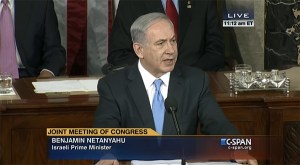
968Israel’s Prime Minister Benjamin Netanyahu speaks before the U.S. Congress, March 4, 2015. (Image source: C-SPAN video screenshot)

Despite reservations regarding Netanyahu’s hard line in Israel’s negotiations with Palestinians, many of us in the Middle East are of the opinion that he is another real hero of the Middle East.

Many people here are also hoping that as the Arab Israeli vote was the third largest bloc in the yesterday’s election, perhaps now the government of Israel will focus more on bringing the Arabs of Israel even closer and more comfortably into the Israeli fold. Otherwise, there is the serious possibility that a “fifth column” could form and harden, one that will drive the Arab Israelis into the open and waiting arms of Hamas and other terrorist groups.

We also hope that the Arab Israeli politicians will focus more on such an effort, rather than, as many Arab politicians do, lashing out and blaming others for what is wrong — a lazy, destructive substitute for actually helping improve the lives of their people.

In these terrible times, critical for the future of our region, Netanyahu spoke to the representatives of the American people, despite the objections of many Israelis and Americans. He was willing to accept personal, political and diplomatic setbacks in order look after his people’s security.

Throughout history, prophets have often been without honor in their own countries, and have been rejected by the very people who should pay attention to them. There is, it seems, in every culture, a deep and real wish to kill the messenger.

The West would do well to understand that anyone really interested in fighting terrorism needs to outlaw the Muslim Brotherhood movement — all its branches, wherever they are. Even more, it needs to paralyze Iran, rather than appease it.

The West’s dark, contradictory dealings with Turkey, Qatar, Iran and other shadowy regimes serve the growth of Islamist terrorist organizations. They destroy the chance for any success against radical Islam.

The fight against Islamist organizations needs to be creative, deliberate and continuous, to keep them from gaining even one victory either on the ground or in their propaganda campaigns. The Muslim public must not view them as attractive, or see joining them a sign of success. A series of significant defeats to Islamist organizations will counter the effects of their efforts to entice young people to join them, especially ISIS.

It is sad that in the face of the coming catastrophe, Western leaders — either blind, naïve or malevolent — are going to make a deal and appease Iran, just as a deal was made to appease Hitler in 1938.


