Archive for the ‘Ideology’ category

Empowering Iran

April 24, 2015

Empowering Iran, Weekly Standard, Lee Smith, May 4, 2015 (print date)

Obama’s foreign policy legacy will be to have tied America’s fortunes to an imperial and nuclear Iran governed by an ambitious and ruthless anti-American regime.

*****************

Last week, the Obama administration urged Saudi Arabia to halt its air campaign against the Iranian-backed Houthi rebels who have wrested control of the Yemeni capital Sanaa. The White House’s professed concern was that Riyadh’s Operation Decisive Storm was killing too many civilians. Unfortunately, that’s hardly surprising since Iranian proxies, like Hezbollah and Hamas, typically stash their missiles and rockets in civilian areas. Presumably, the Houthis have read from the same playbook. The effect of the administration’s diplomatic efforts, then, was to protect Iranian arms in Yemen. And this, in turn, the administration no doubt believes, protects Obama’s nuclear agreement with Iran.

Houthi rallyHouthis rally against Saudi Arabia, April 1. Newscom

In public, Obama is eager to show that the United States still stands by its traditional allies, like Riyadh. But behind the scenes, it’s clear that the White House’s real priority is partnering with Iran. Sure, the White House dispatched an aircraft carrier to the Arabian Sea, but this was not to stop Iran from shipping arms to the Houthis. As Obama himself explained, America’s blue-water Navy was present to ensure freedom of navigation in the Persian Gulf. The notion that the White House really intended to interdict Iranian arms shipments beggars belief. For more than four years Obama has done nothing to stop Bashar al-Assad from killing nearly a quarter of a million people in Syria, lest he endanger his nuclear agreement with Iran. With a deal so close, Obama is certainly not going to risk what he sees as the capstone of his foreign policy legacy by disarming Iranian allies in Yemen.

The problem is that by protecting his nuclear agreement with Iran, the president has protected and empowered the Islamic Republic. Tehran may boast of controlling four Arab capitals, but the reality is that its regional position is a house of cards. Pull out one of those Arab capitals, or the nuclear program, and Iran’s burgeoning empire quickly collapses. It’s Obama who is propping it up.

It’s interesting to imagine how these last six years might have gone for the Islamic Republic had the White House not been so determined to have a nuclear deal. Perhaps the Tehran regime would have been toppled when the Green Movement took to the streets in June 2009 to protest a fraudulent election if the American government had decided to back the opposition early, openly, and resourcefully. Perhaps another administration would at least have seen that uprising as an opportunity to gain leverage over the Iranian regime. Not Obama. He wanted a nuclear deal with the existing regime.

Another White House might have backed the Syrian rebels in order to bring down Assad. Indeed, a good portion of Obama’s cabinet counseled as much. To topple Tehran’s key Arab ally would have been the biggest strategic setback to Iran in 20 years, said Gen. James Mattis. Obama chose to leave Assad alone, and even ignored his own red line against the use of chemical weapons. Instead of the airstrikes he threatened on Syrian regime targets, Obama made a deal to ostensibly remove the chemical weapons that Assad is still employing.

As Assad’s position became weaker, Hezbollah entered the Syrian war to prop him up. The Iranian-backed militia was stretched thin between Syria and Lebanon, but the Obama administration helped the terrorist organization cover its flank by sharing intelligence to keep Sunni car bombs out of Hezbollah strongholds in Beirut. Another administration might have understood this as an opportunity to weaken Iran’s position in Damascus and Beirut, but not Obama. He had his eyes on the prize.

In sum, over the last six years, almost all of Iran’s advances in the region, including its move into Iraq to fill the vacuum in Baghdad after the American withdrawal from that country, has taken place with either the overt or tacit assistance of Obama. The White House brags about it. Israel might have attacked Iranian nuclear facilities, as one administration official told the press, but we deterred Prime Minister Benjamin Netanyahu from striking. If the Iranians strut with confidence these days, that’s because they understand who has their back.

The nuclear deal, as the president has explained, means that within a little more than a decade, Iran’s breakout time will be down to zero—which is a nice way of saying the clerical regime will have the bomb. The likely result is that the agreement will ensure Iran’s regional position long after Obama’s presidency is around to safeguard it. It will strengthen the hand of the hardliners. It is not Rouhani or Zarif or other so-called moderates who hold the nuclear file, but Khamenei and the Revolutionary Guard Corps. And in the future, American policymakers will have a vital interest in ensuring there are no internal regime fights over who controls the bomb.

In other words, Obama’s foreign policy legacy will be to have tied America’s fortunes to an imperial and nuclear Iran governed by an ambitious and ruthless anti-American regime.

Progressives at the Poker Table

April 24, 2015

Progressives at the Poker Table, Mishpacha Magazine, Jonathan Rosenblum, via Jewish Media Resources, April 24, 2015

A comparison of the progressive approach to the threat of climate warming and that of a nuclear-armed Iran offers interesting insights into the progressive mind.

Let’s start with climate warming, which according to the best measures, inconveniently stopped about 18 years ago. First, what is the magnitude of the threat? The most alarmist predictions of future catastrophe are based on computer-generated climate models that have been consistently refuted by events of the real world. According to the alarmists, there would be fifty million refugees from global warming by 2010. Never happened.

Those models are based on a variety of assumptions about “feedback mechanisms” generated by increased CO2 in the atmosphere trapping more heat. NASA satellite date from 2000-2011 showed far more heat escaping the earth’s atmosphere than predicted by the computer models, according to study in the peer-reviewed journal Remote Sensing.

Nor is clear to what extent the global warming of the 20th century was generated by anthropogenic forces – i.e., increased CO2 emissions. Many leading climate scientists now think that solar activity — about which we can do nothing — may be a larger contributor to temperature variation than carbon emissions. That would be consistent with the wide fluctuations between warm and cold periods over the last millennium, even prior to the onset of the Industrial Resolution.

Scientists at CERN, the European Organization of Nuclear Research, which involves 600 universities and national labs and 8,000 scientists, have shown that cosmic rays promote the formation of molecules that grow and seed clouds. And clouds trap heat in the atmosphere. The magnitude of cosmic rays emitted by the sun depends on variations in the sun’s magnetic field.

Finally, that which the alarmists consider an unmitigated disaster — higher levels of CO2in the atmosphere may have many beneficial effects. A 2012 statement signed by 16 distinguished scientists from universities like Harvard, Princeton, MIT, and the Hebrew University, pointed out that CO2 is “not a pollutant,” but rather a “key component of the biosphere’s life cycle.” Higher concentrations of CO2 spur plant growth.

In sum, the threat, if any, is one for the indeterminate future, of unknown magnitude and causation, and may not even be subject to ameliorative action. Yet climate alarmists propose a Global Green Carbon Treaty of such cost and intrusiveness that Yale’s Walter Russell Mead compares it to the 1928 Kellogg-Brand Pact outlawing war for sheer folly. He describes GGCT as less a treaty and more a constitution for world government regulating all economic production in every country on earth. That constitution would be for a “global welfare state with trillions of dollars ultimately sent by the taxpayers of rich countries to governments (however feckless, inept, corrupt or tyrannical) to poor ones.”

These proposals are put forward seemingly oblivious to the economic cost or loss of liberty involved. In his 2001 book The Skeptical Environmentalist, Danish statistician Bjorn Lonborg calculated that enforcement alone of the Kyoto Treaty would cost $150,000 billion a year, money which could save tens of thousands of lives annually.

The above-mentioned statement of the 16 scientists cited the work of Yale economist William Nordhaus, whos showed that the highest benefit-to-cost ratio would be achieved via a policy of fifty years of economic growth unimpeded by greenhouse gas controls. The least developed countries would benefit most by being able to share some of the advantages of material well-being — i.e., health and life expectancy — with the more developed world.

NOW TO THE OTHER SIDE of the comparison. Even President Obama admits that under the unsigned understanding reached at Lausanne, Iran will have zero breakout time to a nuclear weapon thirteen years from now. (Today, he puts the breakout time at three months.)

That fact alone creates a world with as many tripwires leading to war as Europe on the eve of the assassination of Archduke Ferdinand in August 1914. Only this time the weapons of choice will be nuclear.

The proposed agreement with Iran means the end of nuclear non-proliferation. If the world’s leading rogue state and sponsor of terrorism can have its nuclear weapons program effectively endorsed by the members of the U.N. Security Council, every other nation that was dissuaded in the past by international pressure from expanding its civilian nuclear program to include enrichment to weapons level – e.g., South Korea, Brazil – will reconsider.

The most rapid nuclear proliferation will take place in the world’s most volatile region, the Middle East, in which the millennial hatred of Sunnis and Shiites still burns hot. Saudis have made it clear that they will purchase nuclear weapons off-the-shelf from Pakistan, as per a prior agreement, to counter Iran’s ability to obtain nuclear weapons. Egypt and Turkey will almost certainly follow suit.

An already aggressive Iran would become vastly more so with the hundreds of billions of dollars in revenues from the lifting of sanctions and the ability to provide a nuclear umbrella for its regional proxies. As a consequence, the Middle East would become all the more volatile.

The nations most likely to acquire nuclear arms and unstable, which increases the possibility of terrorist groups acquiring nuclear weapons. Iran has long eyed the “holy cities” of Mecca and Medina, and is already stirring up the Shiite population in Saudi Arabia’s eastern, oil-producing provinces and in Yemen on its southern border. Egypt cannot feed its population.

And Iran might find it useful to supply some of its non-state allies, like Hezbollah or Hamas, with dirty nuclear weapons that do not require missiles to deliver. Non-state actors are far harder to deter or hold accountable.

A nuclear Iran should terrify not only Israel, which it has repeatedly threatened to obliterate. Iranian leaders have publicly speculated for years about the grim calculus of a nuclear exchange with Israel: one bomb wipes out Israel; Israeli retaliation still leaves us with tens of millions survivors. Former CIA Director James Woolsey and Peter Fry, a member of the congressional EMP (electro-magnetic pulse) Commission, stress the vulnerability of the United States. The recent “understanding” (the terms of which are unknown and perhaps unknowable given the wide divergence between American and Iranian descriptions of what has been concluded) makes no reference to any limitations on Iran’s ballistic missile program, on which it works closely with North Korea.

Iran may soon possess long-range missiles capable of reaching the United States or the capacity to launch a nuclear-armed satellite above the United States. Even one nuclear weapon detonated above the United States could potentially knock out much of the national power grid. The congressional EMP Commission estimated that a nationwide blackout lasting one year from such an EMP attack could result in the deaths of nine out of ten Americans, with ISIS-like gangs ruling the streets.

Nor are traditional doctrines of nuclear deterrence relevant to the Middle East, in general, and Shiite Iran, in particular. Former secretaries of state Henry Kissinger and George Schultz ask in their devastating critique of the recent agreement how will traditional doctrines of deterrence based on stable state actors “translate into a region where sponsorship of non-state proxies is common, the state structure is under assault, and death on behalf of jihad is a kind of fulfillment?”

As the dean of Middle East scholars Bernard Lewis has pointed out, for Shiite fanatics awaiting the return of the “hidden Imam,” after a cataclysmic event, the destruction of nuclear war might be an inducement rather than a deterrent.

WHAT DOES PRESIDENT OBAMA offer as the response to this description of a nuclear tinderbox waiting to be lit? Pure fantasy.

He and Secretary of State Kerry have made repeated references to a fatwa of the Supreme Leader Ayatollah Khameini against the use of nuclear weapons, which does not exist and certainly is credited by none of Iran’s enemies.

And he speaks hopefully of a newly mellowed Iran after the conclusion of an agreement. What is it about the Supreme Leader’s repeated chants of “Death to America” and insistence that current negotiations have nothing to do with reconciliation that the President can’t hear?

One option that the President has completely excluded is an air campaign to destroy Iran’s nuclear infrastructure and cut of the “head of snake,” as Woolsey once described the Revolutionary Guard to me. Obama has repeatedly accused the opponents of the Lausanne understanding as being advocates of war.

Clearly, then, all the tough talk about “all options are on the table,” “a bad deal is worse than no deal [followed by military attack],” “I will never allow Iran to acquire nuclear weapons,” had the same truth content as “If you like your plan, you can keep your plan.”

Yet no one doubts that the United States has the capability to destroy Iran’s enrichment infrastructure. (If Russia goes through with the delivery of advanced anti-aircraft batteries, as a consequence of the Lausanne understanding, the task will be complicated.) And there will be consequences that cannot be fully known in advance. Iran has terrorist sleeper cells around the world. But it also has lots of assets, besides its nuclear infrastructure, which would be subject to further attacks if it unleashes those cells.

Whatever the Iranian response, the price to be paid will certainly be less than consigning all humanity to live in a world perpetually poised on the cusp of nuclear war.

SO WHY in the case of global warming are progressives willing to incur unbearable costs to combat a future threat of unknown magnitude and immediacy, and against which their solutions may well prove futile, while with respect to the easily identified and imminent danger of a nuclear-armed Iran, they write off from the start a clear and known remedy?

For progressives the solution of worldwide government, run by the executive decree of “the best and the brightest,” is not a cost too great to be contemplated, but rather the fulfillment of the progressive dream. But they will never countenance military action, even to save millions of lives down the road. Churchill’s dictum, “If you want peace, prepare for war,” remains foreign to them.

Obama speaks sweetly to Iran

March 20, 2015

Obama speaks sweetly to Iran, The White House via You Tube, March 19, 2015

(Oh well. It’s Obama. — DM)


Pres Obama Dismisses Questions About Netanyahu’s Election Win – Cavuto

March 20, 2015

Pres Obama Dismisses Questions About Netanyahu’s Election Win – Cavuto, via You Tube, March 19. 2015


Column One: Israel’s next 22 months

March 15, 2015

Column One: Israel’s next 22 months, Jerusalem Post, Caroline Glick, March 12, 2015

(The article is about more than the elections. The disconnect between Israel and the Obama administration seems likely to continue to worsen regardless of who wins, unless Israel falls completely into line with Obama’s views. — DM)

Given the stakes, the choice of Israeli voters next Tuesday is an easy one.

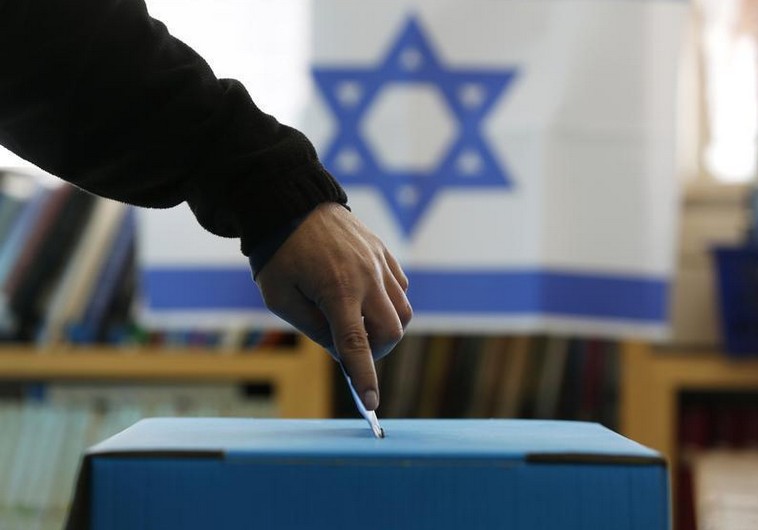
An Israeli flag is seen in the background as a man casts his ballot at a polling in a West Bank Jewish settlement, north of RamallahAn Israeli flag is seen in the background as a man casts his ballot for the parliamentary election at a polling in the West Bank settlement of Ofra. (photo credit:REUTERS)

The next 22 months until President Barack Obama leaves office promise to be the most challenging period in the history of US-Israel relations.

Now unfettered by electoral concerns, over the past week Obama exposed his ill-intentions toward Israel in two different ways.

First, the Justice Department leaked its intention to indict Democratic Sen. Robert Menendez on corruption charges. Menendez is the ranking Democratic member, and the former chairman, of the Senate Foreign Relations Committee. He is also the most outspoken Democratic critic of Obama’s policy of appeasing the Iranian regime.

As former US federal prosecutor Andrew McCarthy wrote this week at PJMedia, “It is perfectly reasonable to believe that Menendez may be guilty of corruption offenses and that his political opposition on Iran is factoring into the administration’s decision to charge him. Put it another way, if Menendez were running interference for Obama on the Iran deal, rather than trying to scupper it, I believe he would not be charged.”

The Menendez prosecution tells us that Obama wishes to leave office after having vastly diminished support for Israel among Democrats. And he will not hesitate to use strong-arm tactics against his fellow Democrats to achieve his goal.

We already experienced Obama’s efforts in this sphere in the lead-up to Prime Minister Benjamin Netanyahu’s speech before the joint houses of Congress on March 3 with his campaign to pressure Democratic lawmakers to boycott Netanyahu’s address.

Now, with his move against Menendez, Obama made clear that support for Israel – even in the form of opposition to the nuclear armament of Iran – will be personally and politically costly for Democrats.

The long-term implications of Obama’s moves to transform US support for Israel into a partisan issue cannot by wished away. It is possible that his successor as the head of the Democratic Party will hold a more sympathetic view of Israel. But it is also possible that the architecture of Democratic fund-raising and grassroots support that Obama has been building for the past six years will survive his presidency and that as a consequence, Democrats will have incentives to oppose Israel.

The reason Obama is so keen to transform Israel into a partisan issue was made clear by the second move he made last week.

Last Thursday, US National Security Adviser Susan Rice announced that the NSC’s Middle East Coordinator Phil Gordon was stepping down and being replaced by serial Israel-basher Robert Malley.

Malley, who served as an NSC junior staffer during the Clinton administration, rose to prominence in late 2000 when, following the failed Camp David peace summit in July 2000 and the outbreak of the Palestinian terror war, Malley co-authored an op-ed in The New York Times blaming Israel and then-prime minister Ehud Barak for the failure of the negotiations.

What was most remarkable at the time about Malley’s positions was that they completely contradicted Bill Clinton’s expressed views. Clinton placed the blame for the failure of the talks squarely on then-Palestinian leader Yasser Arafat’s shoulders.

Not only did Arafat reject Barak’s unprecedented offer of Palestinian statehood and sovereignty over all of Gaza, most of Judea and Samaria and parts of Jerusalem including the Temple Mount, he refused to make a counter-offer. And then two months later, he opened the Palestinian terror war.

As Jonathan Tobin explained in Commentary this week, through his writings and public statements, Malley has legitimized Palestinian rejection of Israel’s right to exist. Malley thinks it is perfectly reasonable that the Palestinians refuse to concede their demand for free immigration of millions of foreign Arabs to the Jewish state in the framework of their concocted “right of return,” even though the clear goal of that demand is to destroy Israel. As Tobin noted, Malley believes that Palestinian terrorism against Israel is “understandable if not necessarily commendable.”

During Obama’s 2008 presidential campaign, then-senator Obama listed Malley as a member of his foreign policy team. When pro-Israel groups criticized his appointment, Obama fired Malley.

But after his 2012 reelection, no longer fearing the ramifications of embracing an openly anti-Israel adviser, one who had documented contacts with Hamas terrorists and has expressed support for recognizing the terror group, Obama appointed Malley to serve as his senior adviser for Iraq-Iran-Syria and the Gulf states. Still facing the 2014 congressional elections, Obama pledged that Malley would have no involvement in issues related to Israel and the Palestinians. But then last week, he appointed him to direct the NSC’s policy in relation to the entire Middle East, including Israel.

The deeper significance of Malley’s appointment is that it demonstrates that Obama’s goal in his remaining time in office is to realign US Middle East policy away from Israel. With his Middle East policy led by a man who thinks the Palestinian goal of destroying Israel is legitimate, Obama can be expected to expand his practice of placing all the blame for the absence of peace between Israel and the Palestinians solely on Israel’s shoulders.

Malley’s appointment indicates that there is nothing Israel can do to stem the tsunami of American pressure it is about to suffer. Electing a left-wing government to replace Prime Minister Binyamin Netanyahu will make no difference.

Just as Malley was willing to blame Barak – a leader who went to Camp David as the head of a minority coalition, whose positions on territorial withdrawals were rejected by a wide majority of Israelis – for the absence of peace, so we can assume that he, and his boss, will blame Israel for the absence of peace over the next 22 months, regardless of who stands at the head of the next government.

In this vein we can expect the administration to expand the anti-Israel positions it has already taken.

The US position paper regarding Israeli-Palestinian negotiation that was leaked this past week to Yediot Aharonot made clear the direction Obama wishes to go. That document called for Israel to withdraw to the indefensible 1949 armistice lines, with minor revisions.

In the coming 22 months we can expect the US to use more and more coercive measures to force Israel to capitulate to its position.

The day the administration-sponsored talks began in July 2013, the EU announced it was barring its member nations from having ties with Israeli entities that operate beyond the 1949 armistice lines unless those operations involve assisting the Palestinians in their anti-Israel activities. The notion that the EU initiated an economic war against Israel the day the talks began without coordinating the move with the Obama administration is, of course, absurd.

We can expect the US to make expanded use of European economic warfare against Israel in the coming years, and to continue to give a backwind to the anti-Semitic BDS movement by escalating its libelous rhetoric conflating Israel with the apartheid regime in South Africa.

US-Israel intelligence and defense ties will also be on the chopping block.

While Obama and his advisers consistently boast that defense and intelligence ties between Israel and the US have grown during his presidency, over the past several years, those ties have suffered blow after blow. During the war with Hamas last summer, acting on direct orders from the White House, the Pentagon instituted a partial – unofficial – embargo on weapons to Israel.

As for intelligence ties, over the past month, the administration announced repeatedly that it is ending its intelligence sharing with Israel on Iran.

We also learned that the vice chairman of the Joint Chiefs of Staff is being fingered as the source of the leak regarding the Stuxnet computer virus that Israel and the US reportedly developed jointly to cripple Iran’s nuclear centrifuges.

In other words, since taking office, Obama has used the US’s intelligence ties with Israel to harm Israel’s national security.*

He has also used diplomacy to harm Israel. Last summer, Obama sought a diplomatic settlement of Hamas’s war with Israel that would have granted Hamas all of its war goals, including its demand for open borders and access to the international financial system.

Now of course, he is running roughshod over his bipartisan opposition, and the opposition of Israel and the Sunni Arab states, in the hopes of concluding a nuclear deal with Iran that will pave the way for the ayatollahs to develop nuclear weapons and expand their hegemonic control over the Middle East.

Amid of this, and facing 22 months of ever more hostility as Obama pursues his goal of ending the US-Israel alliance, Israelis are called on to elect a new government.

This week the consortium of former security brass that has banded together to elect a leftist government led by Isaac Herzog and Tzipi Livni accused Netanyahu of destroying Israel’s relations with the US. The implication was that a government led by Herzog and Livni will restore Israel’s ties to America.

Yet as Obama has made clear both throughout his tenure in office, and, over the past week through Malley’s appointment and Menendez’s indictment, Obama holds sole responsibility for the deterioration of our ties with our primary ally. And as his actions have also made clear, Herzog and Livni at the helm will receive no respite in US pressure. Their willingness to make concessions to the Palestinians that Netanyahu refuses to make will merely cause Obama to move the goalposts further down the field. Given his goal of abandoning the US alliance with Israel, no concession that Israel will deliver will suffice.

And so we need to ask ourselves, which leader will do a better job of limiting the danger and waiting Obama out while maintaining sufficient overall US support for Israel to rebuild the alliance after Obama has left the White House.

The answer, it seems, is self-evident.

The Left’s campaign to blame Netanyahu for Obama’s hostility will make it all but impossible for a Herzog-Livni government to withstand US pressure that they say will disappear the moment Netanyahu leaves office.

In contrast, as the US position paper leaked to Yediot indicated, Netanyahu has demonstrated great skill in parrying US pressure. He agreed to hold negotiations based on a US position that he rejected and went along with the talks for nine months until the Palestinians ended them. In so doing, he achieved a nine-month respite in open US pressure while exposing Palestinian radicalism and opposition to peaceful coexistence.

On the Iranian front, Netanyahu’s courageous speech before Congress last week energized Obama’s opponents to take action and forced Obama onto the defensive for the first time while expanding popular support for Israel.

It is clear that things will only get more difficult in the months ahead. But given the stakes, the choice of Israeli voters next Tuesday is an easy one.

_______________

* Correction: An earlier version of this article incorrectly reported that Hillary Clinton was reportedly involved in leaking sensitive information related to joint Israel-US operations to the media.

The ‘Islamophobia’ Scam Returns

March 6, 2015

The ‘Islamophobia’ Scam Returns, Front Page Magazine, March 6, 2015

(I hadn’t been aware that the scam had gone away. — DM)

LEISURE USA

[A]s far as the hard-Left Center for American Progress (CAP) is concerned, people aren’t suspicious of Muslims and Islam because of jihad terror and Islamic supremacism, but because of “the efforts of a small cadre of funders and misinformation experts” which were amplified by an echo chamber of the religious right, conservative media, grassroots organizations, and politicians who sought to introduce a fringe perspective on American Muslims into the public discourse.”

****************

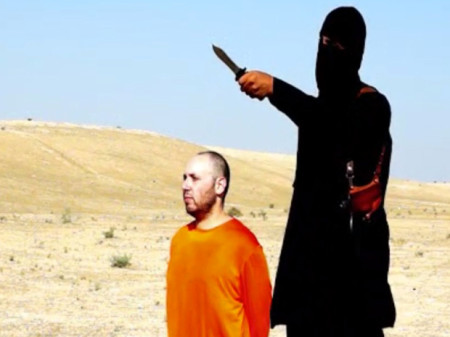
In recent weeks, the terror group calling itself the Islamic State (aka ISIS and ISIL) has beheaded journalists and social workers, burned a pilot alive, and forced hundreds of captive women into sex slavery – all while citing Islamic texts to justify their actions and appeal for new recruits. A Muslim in the latest Islamic State beheading video cited two Qur’an verses (8:12 and 47:4) to refute “those who say [beheading] is cruel.” In New York Wednesday, a Muslim was found guilty of plotting to bomb the New York subway system. The previous day in London, a woman from Nigeria pleaded for asylum, as she faces certain death if she returns to her homeland: an Islamic court has sentenced her to die for being lesbian.

All this and a great deal more like it – a daily horror show of jihad attacks and plots, boasts of coming catastrophic attacks in the West, declarations of imminent conquest, and more, all carried out by people claiming to represent the truest and purest form of Islam  is why, according to a poll released last summer, only twenty-seven percent of Americans have a favorable view of Muslims. Yet as far as the hard-Left Center for American Progress (CAP) is concerned, people aren’t suspicious of Muslims and Islam because of jihad terror and Islamic supremacism, but because of “the efforts of a small cadre of funders and misinformation experts” which were amplified by an echo chamber of the religious right, conservative media, grassroots organizations, and politicians who sought to introduce a fringe perspective on American Muslims into the public discourse.”

This claim appears in the CAP’s new edition of its “Islamophobia” reportFear, Inc. 2.0: The Islamophobia Network’s Efforts to Manufacture Hate in America,” by Matthew Duss, Yasmine Taeb, Ken Gude, and Ken Sofer. It might seem to be peculiarly tone-deaf of the CAP to release this report while the Islamic State is horrifying the world and attacks by lone jihadis (and regular threats that more are on the way) are becoming more frequent in the West, but that is most likely why they felt they had to release it now: with reality threatening to break through their fog of disinformation, they have to pour on more dry ice. 

It wasn’t accidental that Hitler’s Reich had an entire Ministry of Propaganda: lying to the public is a major job, as the cleverest of propaganda constructs is always threatened by the simple facts. CAP is trying to compel non-Muslims to disregard what they see every day — Muslims committing violence against non-Muslims and justifying it by referring to Islamic texts — and instead embrace a fictional construct: Islam is the religion of peace and tolerance. This takes a relentless barrage of propaganda, and “Fear, Inc. 2.0” is just the latest in a steady stream from CAP and its allies, which are exponentially wealthier and better-funded than the groups CAP vilifies in this report

“Fear, Inc. 2.0” is filled with assertions that white is black, and that your lying eyes are deceiving you. We’re told that I myself am “the primary driver in promoting the myth that peaceful Islam is nonexistent and that violent extremism is inherent within traditional Islam. CAP doesn’t offer any evidence for this being a “myth” – it doesn’t have to, as its Leftist constituency takes that as self-evident. 

But CAP flatters me, as it flatters all of us named in “Fear, Inc. 2.0,” simply by suggesting that we have such persuasive power that we can create a nationwide climate of hate and fear against MuslimsI cannot accept their proffered honor of being the “primary driver in promoting the myth that peaceful Islam is nonexistent.” Innumerable others have noted the same reality, including Imran Ahsan Khan Nyazee, Assistant Professor on the Faculty of Shari’ah and Law of the International Islamic University in Islamabad. In his 1994 book The Methodology of Ijtihad, he quotes the twelfth century Maliki jurist Ibn Rushd: “Muslim jurists agreed that the purpose of fighting with the People of the Book…is one of two things: it is either their conversion to Islam or the payment of jizyah.” Nyazee concludes: “This leaves no doubt that the primary goal of the Muslim community, in the eyes of its jurists, is to spread the word of Allah through jihad, and the option of poll-tax [jizya] is to be exercised only after subjugation” of non-Muslims.

But neither Nyazee nor Ibn Rushd are prominent enough to claim the role of “primary driver in promoting the myth that peaceful Islam is nonexistent.” How about the Ayatollah Khomeini, who said: “There are hundreds of other [Qur’anic] psalms and Hadiths [sayings of the Prophet] urging Muslims to value war and to fight. Does all this mean that Islam is a religion that prevents men from waging war? I spit upon those foolish souls who make such a claim.” Better yet, how about Muhammad himself, who is depicted in a hadith saying: “I have been commanded to fight against people, till they testify to the fact that there is no god but Allah, and believe in me (that) I am the messenger (from the Lord) and in all that I have brought.” (Bukhari 1.31)

Another “don’t believe your lying eyes” moment in “Fear, Inc. 2.0” occurs when the report charges the David Horowitz Freedom Center with “promoting the myth that Muslim extremists infiltrated an array of political organizations on both the left and the right. How about the White House? In December 2012, while the Muslim Brotherhood was still in power in Egypt, the Egyptian magazine Rose El-Youssef boasted that Brotherhood infiltrators in the Obama Administration had changed American policy “from a position hostile to Islamic groups and organizations in the world to the largest and most important supporter of the Muslim Brotherhood.”

It may have been an empty boast, but that would be hard to prove in light of Barack Obama’s foreign policy. Similarly, the CAP report claims (quoting Nathan Brown, a George Washington University professor) that the notorious captured internal Muslim Brotherhood document detailing U.S. Muslim groups’ strategy to work toward “eliminating and destroying Western civilization from within, and sabotaging its miserable house” was “the daydream of one enthusiast.” Brown doesn’t explain why a copy of this “daydream” turned up in the offices of the Holy Land Foundation (once the largest Islamic charity in the United States, shut down for funding Hamas) years after it was first written, but an even more telling indication that Brown and CAP are the enthusiasts doing the daydreaming when they dismiss this report is the fact that the Council on American-Islamic Relations and other Muslim groups work indefatigably to oppose virtually every counter-terror measure that has ever been proposed or implemented. Stigmatizing defense against the jihad threat as “bigotry” isn’t trying to “sabotage its miserable house”? Pull my other leg.

I hope the next CAP report will focus on how the “Islamophobes” are so devastatingly effective that they have even been able to infiltrate mosques and Islamic schools, so as to convince young Muslims that the Islamic State is authentically Islamic and has a claim on their loyalties: over 20,000 foreign Muslims have now traveled from all over the world to join the Islamic State, indicating either that imams and other Muslim authorities are singularly failing to communicate to all too many young Muslims the true, peaceful Islam that CAP will charge you with “hatred” and “bigotry” for not believing exists, or that the “Islamophobes” have a reach far greater than Matthew Duss, Yasmine Taeb, Ken Gude, and Ken Sofer ever imagined even in their worst fever dreams.

I also hope that new CAP report will address motive. Nowhere does “Fear, Inc. 2.0” explain why these fiendish “Islamophobes” would care to devote their lives to spreading hatred and fear of a noble, oppressed minority group. Apparently they want us to believe that it’s for the money, but since CAP’s budget is so very much larger than those of all the “Islamophobic” groups combined, if money is all it’s about then the “Islamophobes” would be well-advised to run up the white flag and pick up a copy of How to Get Rich By Betraying One’s Friends and Principles, by David Brock. So is it racism? Then where are the supposedly well-organized, well-heeled groups of smear and fear merchants who are dedicating their time to vilifying Hindus, or Buddhists, or Mormons, or Hard-Shell Baptists?

The effect, intended or not, of the CAP report and others like it is clear enough. When CAP and its cohorts smear those who speak out against jihad and Islamic supremacism as “bigots” and “hatemongers,” they intimidate others into backtrackingapologizing, and looking the other way when they should instead be pressing the Muslim community to address the jihad problem realistically and back up its pro-forma condemnations of terrorism with honest work against the Islamic teachings that jihadists use to justify terror.

The perfect world for the likes of Matthew Duss, Yasmine Taeb, Ken Gude, Ken Sofer and other Islamophobia-mongers would be one in which no one speaks up against jihad violence and Islamic supremacism: they have never, ever seen a counter-jihadist for whom they had any positive words. This would render the U.S. and the West in general mute and hence defenseless before the advancing jihad. As the blood and chaos spreads, will Duss and his cohorts stand up and take a bow?

The World Bows to Iranian Regional Hegemony

March 4, 2015

The World Bows to Iranian Regional Hegemony, Asia Times Online via Middle East Forum, David P. Goldman, March 4, 2015. Originally published under the title, “World Bows to Iran’s Hegemony.”
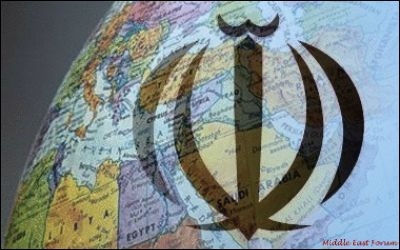
1025The looming nuclear agreement is a dark cloud for countries within range of Iranian ballistic missiles.

The powers of the world hope to delay, but not deter, Iran’s eventual acquisition of nuclear weapons.

The US has tacitly accepted the guiding role of Iranian commanders in Iraq’s military operations against ISIS.

Washington destroyed the balance of power that defined the region’s politics when it pushed through majority rule in Iraq.

****************

The problem with Israeli Prime Minister Benyamin Netanyahu’s address to Congress March 3 was not the risk of offending Washington, but rather Washington’s receding relevance. President Barack Obama is not the only leader who wants to acknowledge what is already a fact in the ground, namely that “Iran has become the preeminent strategic player in West Asia to the increasing disadvantage of the US and its regional allies,” as a former Indian ambassador to Oman wrote this week.

For differing reasons, the powers of the world have elected to legitimize Iran’s dominant position, hoping to delay but not deter its eventual acquisition of nuclear weapons. Except for Israel and the Sunni Arab states, the world has no desire to confront Iran. Short of an American military strike, which is unthinkable for this administration, there may be little that Washington can do to influence the course of events. Its influence has fallen catastrophically in consequence of a chain of policy.

The best that Prime Minister Netanyahu can hope for is that the US Congress will in some way disrupt the Administration’s efforts to strike a deal with Iran by provoking the Iranians. That is what the White House fears, and that explains its rage over Netanyahu’s appearance.

Tehran may overplay its hand, but I do not think it will. The Persians are not the Palestinians, who discovered that they were a people only a generation ago and never miss an opportunity to miss and opportunity; they are ancient and crafty, and know an opportunity when it presents itself.

Most of the world wants a deal, because the alternative would be war. For 10 years I have argued that war is inevitable whatever the diplomats do, and that the question is not if, but how and when. President Obama is not British prime minister Neville Chamberlain selling out to Hitler at Munich in 1938: rather, he is Lord Halifax, that is, Halifax if he had been prime minister in 1938. Unlike the unfortunate Chamberlain, who hoped to buy time for Britain to build warplanes, Halifax liked Hitler, as Obama and his camarilla admire Iran.

China is Chamberlain, hoping to placate Iran in order to buy time. China’s dependence on Middle East oil will increase during the next decade no matter what else China might do, and a war in the Persian Gulf would ruin it.

Until early 2014, China believed that the United States would guarantee the security of the Persian Gulf. After the rise of Islamic State (ISIS), it concluded that the United States no longer cared, or perhaps intended to destabilize the region for nefarious reasons. But China does not have means to replace America’s presence in the Persian Gulf. Like Chamberlain at Munich, it seeks delay.

Obama, to be sure, portrays his policy in the language of balance of power. He told the New Yorker’s David Remnick in 2014,

It would be profoundly in the interest of citizens throughout the region if Sunnis and Shias weren’t intent on killing each other. And although it would not solve the entire problem, if we were able to get Iran to operate in a responsible fashion – not funding terrorist organizations, not trying to stir up sectarian discontent in other countries, and not developing a nuclear weapon – you could see an equilibrium developing between Sunni, or predominantly Sunni, Gulf states and Iran in which there’s competition, perhaps suspicion, but not an active or proxy warfare.

That, as the old joke goes, is the demo version.

On the ground, the US has tacitly accepted the guiding role of Iranian commanders in Iraq’s military operations against ISIS. It is courting the Iran-backed Houthi rebels who just overthrow a Saudi-backed regime in Yemen. It looks the other way while its heavy arms shipments to the Lebanese army are diverted to Hezbollah.

At almost every point at which Iran has tried to assert hegemony over its neighbors, Washington has acquiesced. “In the end, peace can be achieved only by hegemony or by balance of power,” wrote Henry Kissinger. The major powers hope for peace through Iranian hegemony, although they differ in their estimate of how long this will last.

Apart from its nuclear ambitions, the broader deal envisioned by Washington would leave Iran as a de facto suzerain in Iraq. It would also make Iran the dominant power in Lebanon (via Hezbollah), Syria (via its client regime) and Yemen (through its Houthi proxies). Although Sunni Muslims outnumber Shi’ites by 6:1, Sunni populations are concentrated in North Africa, Turkey and South Asia. Iran hopes to dominate the Levant and Mesopotamia, encircling Saudi Arabia and threatening Azerbaijan.

It is grotesque for America to talk of balance of power in the Persian Gulf, because America destroyed the balance of power that defined the region’s politics from the end of the First World War until 2006, when Washington pushed through majority rule in Iraq.

The imperialist powers in their wisdom established a power balance on two levels. First, they created a Sunni-dominated state in Iraq opposite Shi’ite Iran. The two powers fought each other to a standstill during the 1980s with the covert encouragement of the Reagan administration. Nearly a million soldiers died without troubling the world around them.

Second, the Sykes-Picot agreement of 1916 created two states, Syria and Iraq, in which minorities ruled majorities – the Alawite minority in Syria, and the Sunni minority in Iraq. Tyranny of a minority may be brutal, but a minority cannot exterminate a majority.

America’s first great blunder was to force majority rule upon Iraq. As Lt General (ret.) Daniel Bolger explained in a 2014 book,

The stark facts on the ground still sat there, oozing pus and bile. With Saddam gone, any voting would install a Shiite majority. The Sunni wouldn’t run Iraq again. That, at the bottom, caused the insurgency. Absent the genocide of Sunni Arabs, it would keep it going.

Under majority Shi’ite rule, Iraq inevitably became Iran’s ally. Iranian Revolutionary Guards are now leading its campaign against the Sunni resistance, presently dominated by ISIS, and Iranian officers are leading Iraqi army regulars.

This was the work of the George W Bush administration, not Obama. In its ideological fervor for Arab democracy, the Republicans opened the door for Iran to dominate the region. Condoleezza Rice, then Bush’s National Security Advisor, proposed offering an olive branch to Iran as early as 2003. After the Republicans got trounced in the 2006 Congressional elections, defense secretary Donald Rumsfeld got a pink slip, vice president Dick Cheney got benched, and “realist” Robert Gates – the co-chairman of the 2004 Council on Foreign Relations task force that advocated a deal with Iran – took over at Defense.

China and Russia

In the past, China has sought to strike a balance between Saudi Arabia and Iran with weapons sales, among other means. One Chinese analyst observes that although China’s weapons deliveries to Iran are larger in absolute terms than its sales to Saudi Arabia, it has given the Saudis its best medium-range missiles, which constitute a “formidable deterrent” against Iran.

1026A Chinese warship arrives in Bandar Abbas, Iran in September 2014.

As China sees the matter, its overall dependency on imported oil is rising, and the proportion of that oil coming from Iran and its perceived allies is rising. Saudi Arabia may be China’s biggest provider, but Iraq and Oman account for lion’s share of the recent increase in oil imports. China doesn’t want to rock the boat with either prospective adversary.

Among the world’s powers, China is the supreme rationalist: it views the world in terms of cold self-interest and tends to assume that others also view the world this way. One of China’s most respected military strategists told me bluntly that the notion of a nuclear exchange between Israel and Iran (and by implication any regional nuclear power and Iran) was absurd: the Iranians, he argued, know that a nuclear-armed Israel could destroy them in retaliation.

Other Chinese analysts are less convinced and view Iran’s prospective acquisition of nuclear weapons with trepidation. It is not only war with Israel but with Saudi Arabia that concerns the oil-importing Chinese. For the time being, Beijing has decided to accommodate Iran. In a March 2 commentary, Xinhua explicitly rejected Israeli objections:

The US Congress will soon have a guest, Israeli Prime Minster Benjamin Netanyahu, who is expected to try to convince lawmakers that a deal with Iran on its nuclear program could threaten the very existence of the Jewish state.

Despite the upcoming pressure, policymakers in Washington should have a clear mind of the potential dangers of back-pedaling on the current promising efforts for a comprehensive deal on the Iranian nuclear issue before a March 31 deadline …

With a new round of talks in Switzerland pending, it is widely expected that the P5+1 [the five permanent members of the UN Security Council plus Germany] could succeed in reaching a deal with Iran to prevent the latter from developing a nuclear bomb, in exchange for easing sanctions on Tehran.

The momentum does not come easy and could hardly withstand any disturbances such as a surprise announcement by Washington to slap further sanctions on Tehran.

The Obama administration needs no outside reminder to know that any measures at this stage to “overwhelm” Iran will definitely cause havoc to the positive atmosphere that came after years of frustration over the issue.

While it is impossible for Washington to insulate itself from the powerful pro-Israel lobbyist this time, the US policymakers should heed that by deviating from the ongoing endeavor on Iran they may squander a hard-earned opportunity by the international community to move closer to a solution to the Iran nuclear issue, for several years to come if not forever.

Russia has taken Iran’s side explicitly, for several reasons.

First, Russia has stated bluntly that it would help Iran in retaliation for Western policy in Ukraine, as I wrote in this space January 28. Second, Russia’s own Muslim problem is Sunni rather than Shi’ite. It has reason to fear the influence of ISIS among its own Muslims. If Iran fights ISIS, it serves Russian interests. Russia, to be sure, does not like the idea of a nuclear power on its southern border, but its priorities place it squarely in Iran’s camp.

Demographic Time Bomb

The Israeli prime minister asserted that the alternative to a bad deal is not war, but a better deal. I do not think he believes that, but Americans cannot wrap their minds around the notion that West Asia will remain at war indefinitely, especially because the war arises from their own stupidity.

Balance of power in the Middle East is inherently impossible today for the same reason it failed in Europe in 1914, namely a grand demographic disequilibrium: Iran is on a course to demographic disaster, and must assert its hegemony while it still has time.

Game theorists might argue that Iran has a rational self-interest to trade its nuclear ambitions for the removal of sanctions. The solution to a multi-period game – one that takes into account Iran’s worsening demographic weakness – would have a solution in which Iran takes great risks to acquire nuclear weapons.

Between 30% and 40% of Iranians will be older than 60 by mid-century (using the UN Population Prospect’s Constant Fertility and “Low” Variants). Meanwhile, its military-age population will fall by a third to a half.

Belated efforts to promote fertility are unlikely to make a difference. The causes of Iranian infertility are baked into the cake – higher levels of female literacy, an officially-sanctioned culture of sexual license administered by the Shi’ite clergy as “temporary marriage,” epidemic levels of sexually-transmitted disease and inbreeding. Iran, in short, has an apocalyptic regime with a lot to be apocalyptic about.

Henry Kissinger is right: peace can be founded on either hegemony or balance of power. Iran cannot be a hegemon for long because it will implode economically and demographically within a generation. In the absence of either, the result is war. For the past 10 years I have argued in this space that when war is inevitable, preemption is the least damaging course of action. I had hoped that George W Bush would have the gumption to de-fang Iran, and was disappointed when he came under the influence of Condoleezza Rice and Robert Gates. Now we are back in 1938, but with Lord Halifax rather than Neville Chamberlain in charge.

Muslims Trump All Other Minorities Because of the Victim Value Index

February 27, 2015

Muslims Trump All Other Minorities Because of the Victim Value Index, Front Page Magazine, Daniel Greenfield, February 27, 2015

(The Islamic State is not valued like Hamas because, as all good Obamabots know, the Islamic State is “not Islamic” and merely engages in random, senseless violence. Perhaps if  “real” Jews, Christians and other victims of “real” Islamic and other violence (the Holocaust, for example) were, and had in the past been, more violent they would have higher rankings on the Victim Value Index. Much of the world is insane.– DM)

terrorism-2-450x337

SJW code assumes that the angrier you are, the more oppressed you are. (Unless you’re a straight white male who isn’t pretending to be a woman and isn’t angry on behalf of an oppressed minority group.) But your anger is only useful if it serves the left.

The angriest groups, the ones with the newest rawest edge make the cut. A propensity for violence helps.

**********************

James Kirchick has written an extensive piece on the Victimhood Olympics replete with examples and references. He notes that…

Trans beats gay and Muslim beats black. As someone who writes frequently on the topic of homosexuality, I have learned the hard way what happens to those who challenge the orthodoxy of transgender activists…

This is because in the progressive imagination, the perceived plight of Muslims now trumps the sufferings of all other groups. It is this conceit that goes the furthest in explaining President Obama’s remark to Vox earlier this month that the murder of four Jews at a kosher supermarket in Paris last month was “random,”…

But he fails to explain what the basis for this hierarchy is. Why do Muslims trump Jews and why do trannies trump gay men?

There is a clear Victim Value Index. It’s not random. It has a definitive basis. That basis is the value of a victim identity to the left.

The first thing to understand is the dirty little secret of the Victim Value Index. While loud vocal assertions of suffering are very important, the substance of such suffering is unimportant when moving up the ladder of the Victim Value Index…

Actual suffering doesn’t matter. Neither does historical justice. Both of those are easy to make up, and in a dogma-ridden environment no one will look past the politically correct line anyway.

The Victim Value Index is calculated based on one overriding factor: Disruptiveness. Those who are most disruptive go to the head of the line.

This is the most obvious thing that people have noted about the Social Justice Warrior twitter mobs. They’re angry. They’re disruptive. This is also their virtue.

SJW code assumes that the angrier you are, the more oppressed you are. (Unless you’re a straight white male who isn’t pretending to be a woman and isn’t angry on behalf of an oppressed minority group.) But your anger is only useful if it serves the left.

The angriest groups, the ones with the newest rawest edge make the cut. A propensity for violence helps. Ergo, Muslims win.

Progressivism is a revolution in slow motion, and revolutions need revolutionaries. Disruption is more than just grievance, it’s violence. Those who are willing to ruthlessly attack the status quo clearing the ground for revolution are the ones who go to the head of the line and the dais of honor on top. A little murder and mayhem, and progressives will trot out “moderate” versions of the murderers and mayhemists, usually linked to them, and offer to represent them and tamp down the violence in exchange for meeting their demands.

September 11 and its aftermath is why Muslims have gone to the top of the Victim Value Index. The left may swear up and down that they are interested in Muslim civil rights, but if the Muslims were Sikhs, they would merit a place somewhere in the back. Before Muslims began prominently blowing things up in the United States, the left barely paid any attention to them. Once they did, they began outweighing every other group in the country because killing 3,000 people is the gold standard of revolutionary mayhem.

The Victim Value Index places the most disruptive groups at the front, the somewhat disruptive groups in the middle and the least disruptive groups at the back. The status of groups within the Index can change with their behavior. Muslims used to be shelved in the back with Asians, Indians and Jews. The War on Terror dramatically upgraded their status. The other groups are stuck there because they are relatively successful and aren’t rioting or blowing things up.

Latinos are still somewhere in the middle. Native Americans are in the back along with most unclassified minorities. Homosexuals are somewhere near the front, but behind African-Americans. Their status tends to drift wildly depending on current events, but they cannot overtake African-Americans or fall behind Latinos. Not unless some drastic events take place that change their status. Women are, and have always been, in the back.

The hierarchy can and does change. If Muslim violence were to suddenly disappear, the left’s interest in them in the US would go away. That’s a simple fact. The left values violent groups over non-violent ones. In the social media era, that can be virtual  violence, cyberbullying and social media mobs. All that counts as activism and the left is keen to recruit activists for its cause.

On moral blindness

February 27, 2015

On moral blindness, Israel Hayom, Dror Eydar, February 27, 2015

1. Scholars who study our civilization a hundred years in the future will be able to point out the key geopolitical shifts in the Middle East, the collapse of the geographical nations and the return to the ancient social borders, and the rise of radical Islam. They will describe how the Islamic Republic of Iran took over countries like Yemen, Iraq, Syria and Lebanon, its tentacles of terrorism reaching every corner, including Gaza, Judea and Samaria.

They will study the Iranian nuclear issue and be able to quote hundreds of instances in which Iranian leaders vowed to destroy the Jewish state. But when they begin studying the Israeli society of our time, they will encounter a failure of logic. Amid a virtual consensus on preventing an Iranian nuclear bomb, they will not be able to understand the Israeli focus on bottles recycled by the prime minister’s wife, the electrician the prime minister hired and the frivolous reports that grabbed massive headlines while world powers were busy leaving Iran with the ability to manufacture a bomb. They will have trouble understanding what the Jews were arguing about while facing such an obvious threat.

In an effort to solve this mystery, the scholars will turn to historians who studied the 1930s in Europe: Western leaders’ willful blindness to Hitler’s explicit threats; Europe’s desperate longing for reconciliation with the fuhrer. They will review the history of France, which was warned in those years but failed to prepare an army. They will review Neville Chamberlain’s declaration of “peace for our time” while waving a worthless piece of paper. They will examine the history of European Jewry, which failed to accurately read the political map. Among other things, they will look at U.S. Jewry in the 1940s. They may read the memoirs of Rebecca Kook, the daughter of Hillel Kook, a prominent member of the Irgun.

2. In 1940, the members of the Irgun arrived in the U.S. at the behest of Ze’ev Jabotinsky, to recruit a Hebrew army to fight the Nazis alongside the allied forces. In 1942, when the extermination of Europe’s Jewry began to emerge, the delegation changed course and devoted themselves to saving Jewish lives. They had the nerve to challenge the official stance adopted by the Roosevelt administration — accepted with little opposition by the Jewish leaders of the United States — that the only way to save the Jews was to win the war.

The Irgun members pressured the leaders of the free world to make saving Jewish lives a goal of equal importance to winning the war, and to dedicate special resources to making it happen. They focused their efforts on campaigning in the media, among intellectuals, in the U.S. Congress and to the administration. They convinced then-President Franklin D. Roosevelt to establish the War Refugee Board — an executive agency created to save Jews. It is estimated that the board was responsible for saving 200,000 Jewish lives.

The future scholars will delve deep into the battle waged by the Jewish leadership in America against the Irgun’s delegation. The mudslinging campaign against them was not led by the administration. It was spearheaded by House Foreign Affairs Committee Chairman Sol Bloom — a New York Jew, Rabbi Stephen Samuel Wise and Nahum Goldmann of the American Jewish Congress and other Jewish leaders.

Every effort made by the Irgun delegation was met with criticism and active sabotage efforts. They claimed that their activity was too political, too vocal, too aggressive, and that in fact they did not represent anyone. Hundreds of letters were sent to senators and representatives and Jewish leaders. The letters said that the Irgun members were part of a fascist terrorist outfit from Palestine. Jewish activists handed out pamphlets warning that the delegation would bring catastrophe and destruction on the Jewish people.

Several explanations were provided for this hostile behavior. The main explanation was that Jewish leadership’s fear of tarnishing the image of the Jewish community. In a secret British Foreign Office document, Nahum Goldmann was quoted as saying that just as Hitler brought anti-Semitism to Europe, Hillel Kook would bring anti-Semitism to the U.S.

At the end of the 19th century, Germany’s Jews were also fearful of Zionism. It made them susceptible to accusations of dual loyalty, and labeled them as belonging in Palestine. That is why they resisted the Zionist movement and made extra efforts to be even more German than the rest of the Germans.

3. For the last 20 years, Prime Minister Benjamin Netanyahu has been warning anyone who would listen of Iran’s perilous ambitions. Much like Nazi Germany, Iran and radical Islam do not threaten only Israel but the entire free world. But the left-wing liberal mindset, inspired by U.S. President Barack Obama, complacently dismisses these warnings, often with a side of disrespect.

Over the last month, the White House and a long line of cultural figures and politicians have been confronting a far greater threat: Netanyahu’s upcoming speech at the U.S. Congress. The future historians will note the American Jews who disrespected the Israeli prime minister for fighting for the safety of his people. They will add to that list a number of Israelis who took pains to undermine Netanyahu’s legitimacy and sabotage his address.

One of these critics, Peter Beinart, recently slammed Nobel Peace Prize laureate Elie Wiesel for urging Obama to join him at Netanyahu’s address.

“Wiesel is acutely, and understandably, sensitive to the harm Jews suffer. Yet he is largely blind to the harm Jews cause,” Beinart wrote. Cause to whom? To the Palestinians, of course. The American Left is stuck in its 1980s elitist morality that refused to see that the reality has changed.

There is no occupation anymore, Mr. Beinart. Certainly not in the way that you and your friends make it out. The Arabs of Judea and Samaria enjoy expanded autonomy — a de facto state with a national anthem, a flag, a government and enormous budgets. It is true that the IDF is present on the outskirts, because we do not trust our neighbors. But incidentally, they, too, do not trust themselves to ward off Hamas and the radical Islamists. Israel in fact protects the lives of the Palestinian leadership and population from the perils of the Islamic caliphate, which has the ability to turn the lives of these Arabs into a hell devoid of human rights, and heads.

4. This blindness is not just geopolitical, but it is also moral. We are students of the great teacher Rabbi Akiva, who in the second century classified the commandment to “love your neighbor as you love yourself” (Leviticus 19:18) as a great principle of the Torah (Genesis Rabbah 24:7). In this he built on the work of Hillel the Elder who in the first century B.C.E. placed the entire Torah upon the foundation of this dictum (Babylonian Talmud: Tractate Shabbat 31a).

But the same Rabbi Akiva taught us that in the event of a conflict between your life and your neighbor’s life, “your brother shall live with you.” Namely, your own life comes first (Babylonian Talmud: Tractate Baba Mezi’a, 62a). That is the proper way to approach altruistic love. If you do not love your own life, or the lives of your own people, more than the lives of others, especially those who are hostile toward you, then you do not truly possess a moral understanding, but rather a nihilistic intellectualism that plays pretend in living rooms across the east and west coasts of the U.S.

Next Tuesday, truth seekers will be called upon to support Netanyahu when he addresses a joint session of Congress. The State of Israel needs your courageous support.

The Islamic ‘Ghosts on the Roof’

February 23, 2015

The Islamic ‘Ghosts on the Roof’, Front Page Magazine, February 23, 2015

lk-450x296

Chambers’ warnings were largely ignored by Western leaders whose willful blindness to the true nature of communism sealed the fate of millions behind the iron curtain in Europe, in China, Korea, Cuba, Vietnam, Cambodia, and elsewhere.

Today, perhaps the ghosts of Mehemed II and Sulieman the Magnificent are looking down and smiling as Western leaders fecklessly attempt to negotiate with the Iranian mullahs and search for “root causes” of ISIS terror and aggression. The Muse of History would understand, and her sister Melpomene, unfortunately, still has work to do.

*********************

Seventy years ago, Winston Churchill, Franklin Roosevelt, and Joseph Stalin met at Yalta to lay the foundations of the post-World War II world order. Less than one month after their historic meeting,TIME magazine on March 5, 1945, published an unsigned article entitled “Ghosts on the Roof.” The article was written by Whittaker Chambers, then TIME’s foreign news editor and formerly a member of a Washington, D.C.-based Soviet espionage ring. Chambers broke with communism in the late 1930s and in doing so remarked to his wife that they were joining the “losing side” in the great world struggle between communism and the West.

Chambers’ repeated efforts during the late 1930s and early 1940s to alert the State Department and the FBI to communist penetration of our government and the existence and activities of the espionage ring fell on deaf ears, so he used his position at TIME to attempt to warn the American public about the true nature of communism and the goals of Stalin’s Soviet Union.

The Yalta Conference, which took place during February 4-11, 1945, was immediately heralded as foreshadowing a peaceful postwar world order. Chambers, having been in the belly of the beast, knew better. He showed “Ghosts on the Roof” to T.S. Matthews, TIME’s associate executive editor, but doubted thatTIME would publish it. According to Chambers’ biographer Sam Tanenhaus, Matthews showed it toTIME’s owner Henry Luce who called it “a forceful piece of journalism” but was otherwise non-committal on publishing it. Other TIME staffers urged Matthews not to publish the piece fearing that it would poison relations between the wartime allies. With some hesitation, and characterizing it as a “political fairy tale,” Matthews decided to publish it.

Chambers’ story has the ghosts of the murdered Russian Tsar Nicholas II and his family descend on the roof of the Livadia Palace, their former estate and the site where the “big three” allied war leaders negotiated the fate of the world. Clio, the Muse of History, greets them and discusses with Nicholas and Alexandra what just occurred there. Nicholas, the Tsarina remarks, is fascinated by Stalin. “What statesmanship! What vision! What power!,” says Nicholas. “We have known nothing like this since my ancestor, Peter the Great, broke a window into Europe by overrunning the Baltic states in the 18th century. Stalin has made Russia great again.”

“It all began with the German-Russian partition of Poland,” Chambers has Alexandra say, reminding readers that the Second World War was started by Hitler and Stalin. “Stalin,” says the Tsar, “is magnificent. Greater than Rurik, greater than Peter! . . . Stalin embodies the international social revolution . . . the mighty new device of power politics which he has developed for blowing up other countries from within.” The Royal couple then lists the countries conquered by Stalin—Rumania, Bulgaria, Yugoslavia, Hungary, Poland—and those soon to be conquered because of Western appeasement. The Tsarina marvels at Stalin’s ability to persuade Churchill and Roosevelt solve the issues of Central and Eastern Europe to Stalin’s liking in a friendly fashion, remarking that “even peace may be only a tactic of struggle.”

At the end of the tale, the Muse of History foresees the consequences of Yalta as “more wars, more revolutions, greater proscriptions, bloodshed and human misery.” If you can foresee such troubles, the Tsarina asks Clio, why don’t you prevent them. The Muse of History replies that she must leave something for her sister Melpomene, the Muse of Tragedy, to do.

Readers reacted negatively to the piece. TIME’s Moscow correspondent lost his access to Kremlin officials. Chambers, some said, was zealously trying to destroy U.S.-Soviet collaboration that was so essential to world peace. TIME’s own editors noted in a subsequent issue that they did not believe that U.S.-Soviet relations were doomed to failure.

History vindicated Whittaker Chambers. His courageous efforts to reveal the truth about communism and Stalin’s intentions are not unlike the current efforts by writers—several associated with this journal—to alert the United States and the world to the true nature and goals of Islamic jihadists.

In Chambers’ time, the West was confronted by a murderous, expansionist secular totalitarian ideology whose leaders sought a communist world empire. Today, the West is confronted by a murderous, expansionist religion-based totalitarian ideology whose leaders seek a world caliphate where all must submit to Allah or be eradicated.

Chambers’ warnings were largely ignored by Western leaders whose willful blindness to the true nature of communism sealed the fate of millions behind the iron curtain in Europe, in China, Korea, Cuba, Vietnam, Cambodia, and elsewhere.

Today, perhaps the ghosts of Mehemed II and Sulieman the Magnificent are looking down and smiling as Western leaders fecklessly attempt to negotiate with the Iranian mullahs and search for “root causes” of ISIS terror and aggression. The Muse of History would understand, and her sister Melpomene, unfortunately, still has work to do.