Oren blasts Iran nuclear deal: It’s not linked to changed Iranian behavior, Washington Free Beacon via You Tube, June 29, 2015
The Iranian negotiations that never end, Front Page Magazine, Daniel Greenfield, June 28, 2015
(Please see also, On eve of Iran deal, US retreats on inspections of nuclear past, speeds up sanctions relief — DM)
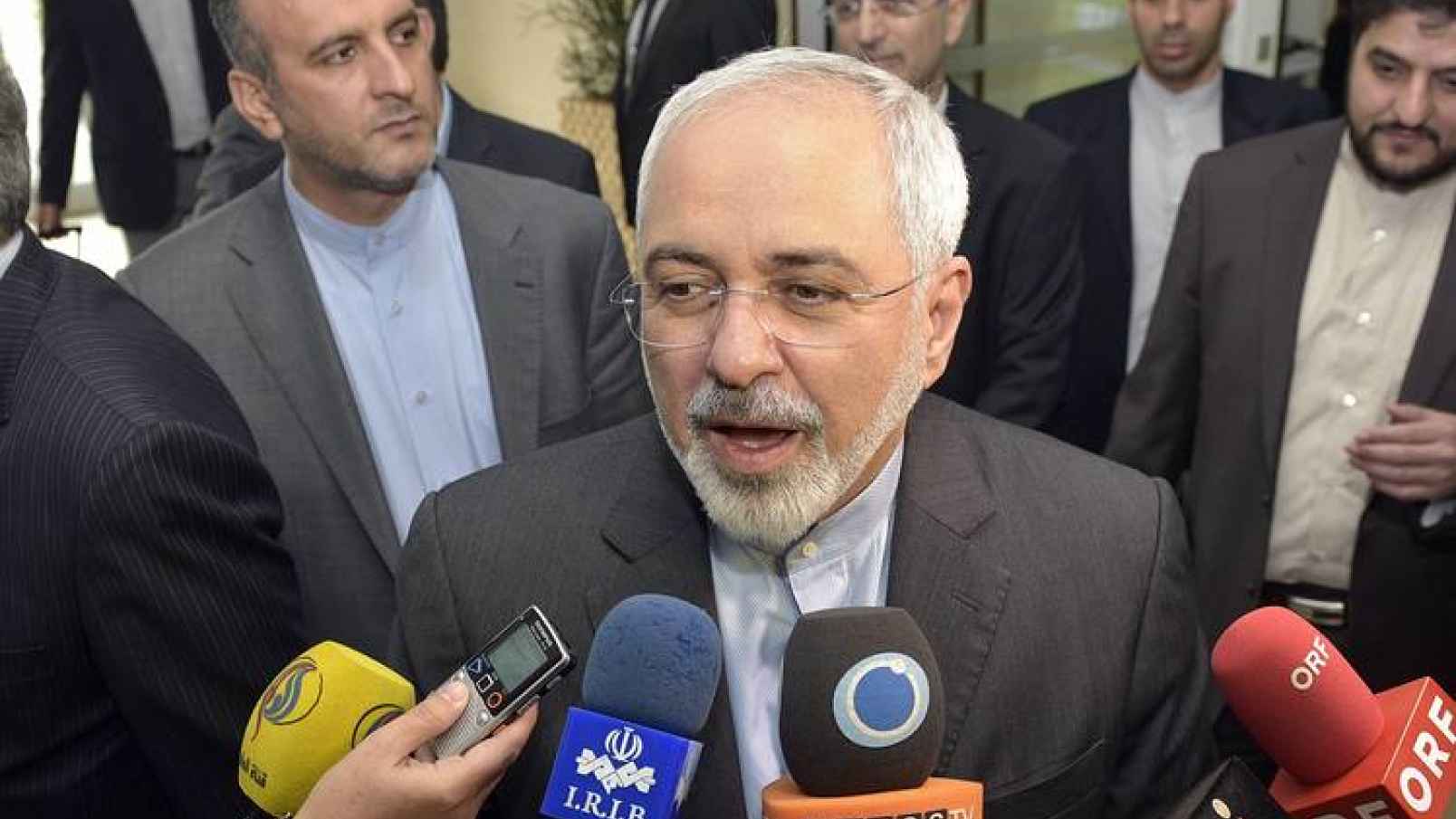
The negotiations will drag on endlessly until a nuclear bomb test is televised complete with chants of “Death to America”. And the appeasers who got us into this will assure us that they don’t really mean it.
********************
It is quite possible that no matter how many concessions Obama makes, there will never be a final agreement with Iran. The deadlines have already been extended so many times that the only reliable thing about the negotiations is that somewhere near the edge, the negotiators will declare that they are close and extend the formerly final deadline some more. And then some more again.
There is currently disagreement over the last agreement that was agreed to in order to extend the deadline. If you find that confusing, so does everyone else.
According to the British Foreign Minister, “There are a number of different areas where we still have major differences of interpretation in detailing what was agreed in Lausanne.”
We are no longer negotiating the issue; instead we’re negotiating the negotiations. The last attempt at getting the PLO to negotiate with Israel collapsed at the negotiating the negotiations stage when the Israeli pre-negotiation appeasement was deemed insufficiently appeasing by the PLO and John Kerry.
Obama will have to offer the Iranians even more concessions, on and under the table, to get them to negotiate the negotiations. Iran’s past nuclear work won’t be looked at and now even nuclear inspections may be off the table. At this rate, we’ll soon be negotiating how many bombs Iran gets, how many bombs it gets to use and then how many countries it gets to nuke.
We’ve already gone from an agreement to shut down Iran’s nuclear program to an agreement to temporarily slow it down to a probable short term agreement with sanctions relief and no inspections. Obama has officially disavowed a military solution so the only thing for Iran to negotiate is how to extract the most sanctions relief without actually conceding anything that matters.
And each time it looks like there’s progress, the Supreme Leader winks and pulls the rug out from under Kerry. Everyone from the Viet Cong to the Sandinistas to Assad has learned how easy that is, so that the more we concede, the more Iran demands. The negotiations approach a finish line and then stall.
Or as an anonymous official put it, “It feels like we haven’t advanced on the technical issues and even gone back on some.”
But that’s typical for the Middle East where no agreement is final and negotiations are just a means of taking the temperature of the other side while keeping them off guard. Agreements are not solemn arrangements, they are a theatrical display. What we take absolutely seriously, they view as a farce.
The Iranian negotiations with an agreeable lackey who pulls back at the last minute and a dictator behind the scenes who denounces the whole thing are a repetition of the disastrous Israel-PLO peace process which have been going on and off for decades with no actual peace or even much of a process.
The only purpose of such negotiations is to extract concessions without actually giving anything in return. Countless preliminary agreements can be negotiated, but no final agreement comes into being. The entire process runs on misleading claims of success by Western negotiators. The terrorist leaders tell their own people that they are committed to destroying the infidels, but this is dismissed as “appeasing the hardliners” by our own negotiators who are desperately invested in their credibility.
The more Iran acts out, the more the negotiators are forced to misrepresent the scale of the disaster to keep the negotiations going. The Iranians lie to the negotiators. The negotiators lie to us. Then the Iranians recant the possible concessions that they dangled as bait in front of the negotiators and the negotiators tear out their hair and promise us that the whole thing will be settled with an extension.
Of course the only way that anything will actually be settled is with Iran getting nuclear weapons.
The negotiations are just tools for getting cash and wearing out the nerves and sanity of the West. After enough years of aimless negotiations, an actual Iranian nuke will seem like a relief. The warnings of Netanyahu and the Republicans will be ignored as the appeasers who promised that sanctions and then sanctions relief would stop Iran’s nuclear program, who assured us that Iran did not want weapons, will cross their hearts and swear that Iran won’t actually use the nukes they swore it would never get.
Obama’s rhetoric is already tipping in that direction. Iran is a rational actor, he insists. And of course it is. But what’s rational by the standards of a theocracy that believes it’s ushering in an age of supreme Shiite rule on earth may differ from the standards of reason for a progressive who believes he’s ushering in an age of supreme liberal rule on earth. And neither Obama nor the Supreme Leader are any good at tests of reason such as eschewing magical thinking and understanding that words mean something.
Iran’s apocalyptic theology and power games require nukes. Obama has chosen to ignore its missile program while pretending to believe that a country swimming in oil needs a civilian nuclear program.
And once he ignored those, it was easy not to sweat the small stuff.
Like the PLO, Iran has responded to the negotiations by escalating its violence, seizing parts of Yemen, attacking ships in international waters and becoming more blatant in its defiance of America. But that’s how dictators even outside the Middle East respond to appeasement. No regime that is built on force can possibly view a show of weakness as anything except an admission of enemy impotence.
Peace negotiations with terrorists are terrorism by another means. The negotiations are a confession of weakness that destabilizes the region. And even when they do succeed in their goal of splitting supposed moderates from hardliners, the hardliners tend to win out making everything even worse than it was before. But the moderates are usually just hardliners in suits with a college degree.
When Obama announced that there was no military solution to Iran’s nuclear program, he had stated out loud that he would not stop the program and that the negotiations were a face-saving measure. The admission came after Obama refused to stop Iranian attacks on Persian Gulf shipping.
Obama expects that Iran will oblige him with a meaningless agreement that he can show off to the cameras, but Iran’s leaders understand the theater of diplomacy better than he does. Their goal is to humiliate the United States so as to show their own dissidents and the region that America can’t protect them. And that is the real purpose of the prolonged and pointless negotiations.
It is quite possible that there will never be an agreement. That Iran will force Obama to make countless concessions, not only on the sanctions or on its nuclear program, but on its presence in Yemen and Iraq, as he already appears to have done, using the promise of a final agreement that will never come.
Obama’s desire for a deal has allowed Iran to roll him not only on sanctions and nukes, but on regional dominance. After all the prestige he has invested in the negotiations, he can’t allow them to collapse.
The negotiations will drag on endlessly until a nuclear bomb test is televised complete with chants of “Death to America”. And the appeasers who got us into this will assure us that they don’t really mean it.
On eve of Iran deal, US retreats on inspections of nuclear past, speeds up sanctions relief, DEBKAfile, June 29, 2015
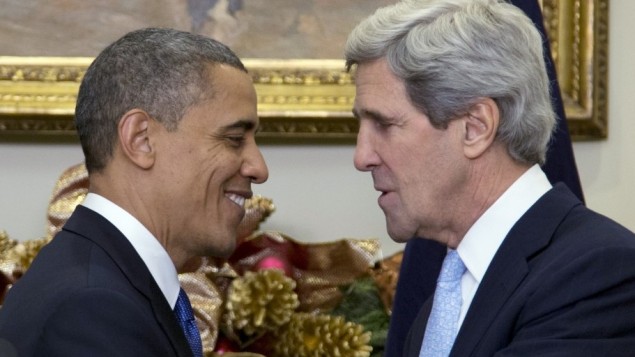 Obama and Kerry upbeat over concessions to Iran
Nothing is therefore left of the original US pledges to link sanctions relief to Iran’s compliance with its commitments or President Obama’s solemn vow to “snap back” sanctions any time for any Iranian violations. The IAEA is virtually left without teeth.
******************
Prime Minister Binyamin Netanyahu said Sunday, June 28: “We are seeing a clear retreat from the red lines that the world powers set recently and publicly.” Addressing the weekly cabinet meeting in Jerusalem and later the Knesset, he added: “There is no reason to rush to sign this bad agreement which is getting worse every day.”
Netanyahu was referring to three major concessions approved by President Barack Obama and Secretary of State John Kerry in the final stage of negotiations for a comprehensive nuclear accord with Iran.
They are outlined here by DEBKAfile:
1. After barring International Atomic Energy Agency (IAEA) inspections of suspect sites for years, Tehran will now be allowed to submit a paper with answers to queries about its past clandestine activities at those military sites, such as suspected tests of nuclear bomb detonators and explosives. That document would effectively draw a line on Iran’s suspect past
DEBKAfile: Iran has submitted countless documents to the IAEA, none of which gave specific replies to specific questions. The UN Security Council accordingly passed a number of resolutions requiring Tehran to come clean on the military aspects of its nuclear program. Tehran ignored them. Now Obama and Kerry are letting Tehran off the hook on its past secrets.
2. Obama and Kerry have withdrawn the “any time, anywhere” stipulation for snap inspections of suspect nuclear facilities, as mandated by the Additional Protocol signed by Iran. They now agree that international monitors must first submit a request to an “Iranian Committee” (not even a joint US-Iranian committee) for advance permission to inspect nuclear facilities.
This would leave Tehran free to approve, deny, or delay permission for inspections.
3. Washington has backed down on its insistence on predicating sanctions relief on Iran’s compliance with its obligations under the final accord. After Tehran countered with a demand for the sanctions to be lifted immediately upon the signing of the accord, the Obama administration agreed to remove them in three stages:
a) Straight after the deal is signed.
b) After ratification of the accord by the US Congress and Iranian Majlis.
This process is expected to take place by the end of 2015, and so Iran will win two multibillion windfalls this year without being required to meet any obligations beyond its signature
Obama counts on the support of 34 US senators. In any case, Congress is not empowered to reject or delay the deal
c) All remaining sanctions will be lifted when implementation of the accord begins.
Nothing is therefore left of the original US pledges to link sanctions relief to Iran’s compliance with its commitments or President Obama’s solemn vow to “snap back” sanctions any time for any Iranian violations. The IAEA is virtually left without teeth.
Iran’s Nuclear Weapons Program and the Failure of Obama’s “Hope and Change Foreign Policy,” ISIS Study Group, June 27, 2015
US Secretary of State John Kerry will be spending this weekend in Vienna in an attempt to salvage the deal the Obama administration is trying to land with the Iranian regime. The reason for his sense of urgency is that Ayatollah Khameini publicly rejected the deal and came out with some new terms just before the 30 JUN deadline. The Obama administration and the US mainstream media are trying to spin this as if the “reformers” are somehow being derailed. That would be true if there were any actual reformers in the Iranian regime. The truth is that this is all by design and that so-called “reformers” like President Rouhani are in on the joke – and the US is the punchline.
John Kerry mounts last push for Iran nuclear agreement
http://www.telegraph.co.uk/news/worldnews/middleeast/iran/11701690/John-Kerry-mounts-last-push-for-Iran-nuclear-agreement.html
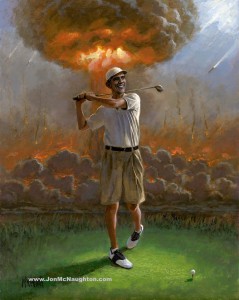
Source: Jon McNaughton
So what did Khameini say? He demanded the following:
1. Iran would only dismantle their program if sanctions were lifted first. In other words, we’d simply have to take them at their word.
2. Inspections and placing a freeze on research and development for 10 yrs is thrown out of the deal.
Huh. So if the key things agreed to back in APR 15 are now “null and void” (which were pretty weak to begin with), then what’s left of this deal? Absolutely nothing. And like we said earlier, this is all by design. The Iranian negotiation team is fully on the same page as Khameini – otherwise they wouldn’t be allowed to be on the team to negotiate with the US State Department (DoS).
Iran nuclear talks: Khamenei rejects key US demands
http://www.bbc.com/news/world-middle-east-33253488
Our loyal readers are fully aware of the Iranian regime’s designs for these negotiations and the Middle East in general. If you’re new to our site, then you will want to check out the following articles:
Today’s Middle East: The Burning Fuse of the 21st Century’s “Great Game”
http://isisstudygroup.com/?p=6193&
The Persian Hustle: Iran Dupes Clueless US State Dept in Nuke Talks and Moves to Dominate the Middle East
http://isisstudygroup.com/?p=5978
Mr. Netanyahu Goes to Washington
http://isisstudygroup.com/?p=5316
Inside Iran’s Middle East: The Nuclear Weapons Program
http://isisstudygroup.com/?p=2640
Inside Iran’s Middle East: The Charm Offensive
http://isisstudygroup.com/?p=2676
Khameini is large and in-charge despite his failing health – don’t ever forget that
Source: Associated Free Press
The original deal both sides agreed to back in APR didn’t allow for inspectors to have full access to key installations nor would we have had any visibility on projects that can improve Iran’s ability to produce a testable nuke. It also wouldn’t keep Iran from converting uranium hexafluoride (UF6) to metal or conducting work that enhances their metallurgy skills. As we previously stated in “Today’s Middle East: The Burning Fuse of the 21st Century’s Great Game,” if asked about it, the regime would simply say that it was for “radiation shielding” or conventional depleted uranium munitions. In fact the Obama administration doesn’t seem to be inclined to do anything about these indicators of increased proliferation. For instance, the regime’s Atomic Energy Organization of Iran (AEOI) has been in the business of supplying Iranian medical research organizations for several years now. In fact, our sources connected to the opposition have informed us that AEOI personnel known to be involved with uranium enrichment manufacturing have set up an entity called the “Persian Health Equipment and Development Company” or “PHEDCO” back in FEB 15. Apparently the company was set up to produce medical-use centrifuges. We assess that the company isn’t capable of enriching uranium itself, but we do think that it can be used to acquire certain components of nuclear suppliers group-controlled aluminum 7075 and quite possibly carbon-fiber.
Atomic Energy Organization of Iran (AEOI)
http://www.iranwatch.org/iranian-entities/atomic-energy-organization-iran-aeoi
We’re also very much aware that the regime is interested in developing uranium metal-based reactor fuels that would improve their ability to produce uranian-based nuclear weapons. These fuels are currently being used in “civilian research reactors.” So what is it, exactly? In a nuclear reactor, the uranium fuel is assembled to where a controlled fission chain reaction can be achieved. The heat created by splitting the U-235 atoms is then used to make steam, which in turn spins a turbine to drive a generator that produces electricity. The chain reaction that take place in the core of a nuclear reactor is controlled by rods which absorb neutrons, enabling the chain reaction to continue. Water, graphite and heavy water are used as moderators in different types of reactors. Due to the kind of fuel being used, if there’s a major malfunction in a reactor, the fuel may overheat and melt – but won’t explode like a bomb. The type of uranium used for bombs is different from what you’d find in a regular nuclear power plant. Military-grade uranium is highly enriched (>90% U-235, instead of up to 5%). Since the 1990s, a lot of otherwise military-grade uranium has become available for producing electricity as the result of the global disarmament effort.
What is Uranium? How Does it Work?
http://www.world-nuclear.org/info/Nuclear-Fuel-Cycle/Introduction/What-is-Uranium–How-Does-it-Work-/
We assess that the regime’s efforts will enable their nuclear technicians to gain enough experience with uranium metal production processes that could shorten the weaponization timeline. That said, we see the timeline accordingly:
1. They may master uranium metal production within the next 6 months.
2. Another 2-3 months will be needed to learn how to fabricate uranium metal components for a weapon.
3. 4-5 months will likely be required to test components and assemble a nuclear device.
This timeline has probably already been shortened due to the collaborative work taking place between Iran and the DPRK (North Korea) that the Obama administration has also failed to address during these negotiations. The two rogue nations have been engaged in a series of joint-projects in both the nuclear weapon and ballistic missile fields. Perhaps the most important part of stopping the development of an Iranian nuclear weapon is to deal with their intercontinental ballistic missile program, since that’s where the delivery system of said weapon will come from. Unfortunately, the Obama administration doesn’t seem to think that’s important. Perhaps one of the American media outlets should pose the question in the next press conference with the President or DoS? We won’t hold our breath.
How the North Korean Regime Affects the Middle East
http://isisstudygroup.com/?p=3038
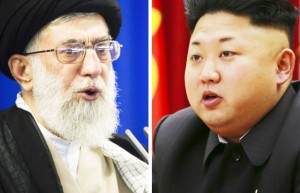
The two rogue nations have been able to circumvent sanctions at every turn thanks to their collaborative efforts and impotence that’s endemic throughout the UN and US government in particular
Source: The Business Insider
This brings us to another problem: The Obama administration’s failure at the issue surrounding our European allies’ refusal to actually enforce the UN sanctions already on the books. As you would guess, the regime has been in the market for procuring military-grade blast valves. What the UN, US government and several other allied nations are aware of (and hoping that the public remain ignorant to) is that one of the top sellers of those valves to the Iranians is Finnish company Temet Oy. This company is a global leader in blast protection and special ventilation technology applied in protective constructions such as civilian shelters and hardened military facilities. In addition to the nuclear and defense industries, Temet is also involved in the energy sector – which is the reason why they’re so keen to help the Iranian regime with its “peaceful” nuclear program. If you don’t believe us see for yourself:
About Temet
http://www.temetprotection.com.ar/about_temet.html
Temet Blast Valves
http://www.temetprotection.com.ar/blast_valves.html
FYI, Temet’s blast valves are specifically designed to protect facilities from munitions strikes – such as a potential Israeli Air Force Operation, for instance. The civil-grade blast valves that they’re publicly selling to the regime for its oil and gas sectors are designed to mitigate the effects of smaller explosions at industrial facilities. Despite Finland’s strong track record in the counter-proliferation arena, they’re likely fully aware of what this company has been up to for some time. If they’re not, then the government should fire all of their most senior intel officials because they’re clearly incompetent. They should be aware and continue tracking Temet’s activities after the 2012 attempt by the company to circumvent EU sanctions by shipping products to Iran and receiving payment via third parties. The problem is Temet is just one of several European companies that have been cashing in big on the poorly-enforced sanctions. Finland isn’t the only government guilty of trading in their morals to make a quick buck – the Germans are just as guilty. Here’s some other incidents over the years that put some cold water on any hopes that even sanctions can be enforced:
German firms sold sensitive equipment to Iran even during sanctions regime
http://www.haaretz.com/news/middle-east/.premium-1.562287
German firms still ship dual-use goods to Iran
http://www.jpost.com/Iranian-Threat/News/German-firms-still-ship-dual-use-goods-to-Iran
A mysterious Iranian-run factory in Germany
http://www.washingtonpost.com/world/europe/a-mysterious-iranian-run-factory-in-germany/2013/04/15/92259d7a-a29f-11e2-82bc-511538ae90a4_story.html
Germans Say 6 Companies Sold Nuclear Parts to Iran Network
http://www.nytimes.com/2006/03/29/international/europe/29germany.html?_r=0
Special Report: How foreign firms tried to sell spy gear to Iran
http://www.reuters.com/article/2012/12/05/us-huawei-iran-idUSBRE8B409820121205
As you can see, the Obama administration’s much-hyped nuclear “deal” with the Iranian regime was a failure from the get-go. Ayatollah Khameini knows the US government is weak because they’ve already caved into earlier demands – so why not raise the stakes and milk an already flaccid Obama administration for even more concessions? Iran’s true intentions for its program isn’t in doubt – its primary function is to produce a nuclear weapon. The Obama administration and the EU are fully aware of this as well – but they still won’t do anything about it. Europe lacks any real convictions and are now a shriveled corpse of what they used to be. People talk about the US in the same breath as “blood money” for oil, but the truth is the European nations are directly responsible along with China and Russia for propping up an increasingly belligerent Iranian regime who interprets “peace” as all opposing voices being silenced – by force. Their refusal to actually enforce sanctions and then turn around and circumvent them – sometimes openly – has led us to where we are. So President Obama isn’t the only one who will have a tarnished legacy.
Regarding our illustrious President, his “Hope and Change Foreign Policy” has been such a miserable failure that he’s now desperate for anything that he can claim as a “victory.” He certainly isn’t going to get that “victory” from his nonexistent strategy to combat the Islamic State (IS), so he’s forced to get a deal – any deal – signed with the Iranians, regardless of how bad it is for America and our allies in the Middle East. The saddest thing about all this is that the deal will empower the regime even more. When that happens – and it will – the biggest losers will be the average Iranian citizen who doesn’t share the regime’s militant ideology. How so? Once the regime is able to produce a nuclear weapon, they know the west won’t do anything to stop them. Period. When that occurs, they will be able to put the final nail in the coffin against the remaining opposition groups in the country. And so it goes…
If you want to know what this regime is all about, then check out the rest of our Inside Iran’s Middle East series:
Inside Iran’s Middle East: The Kurdish Insurgency
http://isisstudygroup.com/?p=4068
Inside Iran’s Middle East: The Southeastern Insurgency
http://isisstudygroup.com/?p=2689
Inside Iran’s Middle East: The “Reformers”
http://isisstudygroup.com/?p=2635
Iran’s supreme leader is laughing, for good reason, Israel Hayom, Boaz Bismuth, June 25, 2015
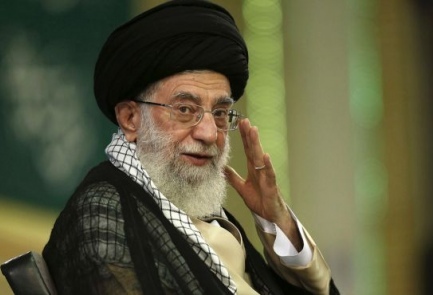 Iranian Ayatollah Ali Khamenei | Photo credit: AP
In Tehran on Tuesday, Khamenei spoke about his country’s “red lines.” Red lines? Can someone maybe explain what those are to the Obama administration?
********************
Iranian Ayatollah Ali Khamenei feels confident enough, only a few days before June 30 (the deadline for a final-status nuclear deal with world powers), to thumb his nose at the international community, including the American government, and declare Iran’s three noes: no to freezing its nuclear program, no to international oversight at its nuclear facilities, no to a phased lifting of sanctions (as proposed by the French). In other words, Khamenei is telling the world: Dear superpowers — bite me.
Meanwhile, almost simultaneously, we have received an Associated Press report from Vienna that the U.S. and its partners conducting the negotiations with Iran are prepared — for the sake of reaching a deal — to even provide the Iranians with advanced nuclear reactors and equipment. This isn’t a joke.
It’s possible, perhaps, to imagine Khamenei rejecting this generous offer outright because the Americans aren’t also including ballistic missiles in the package. If you’re going to be generous, then you might as well go all the way.
Truth be told, this entire business to this point seems quite like a joke. The problem is that it’s coming at our expense. And it’s also not that funny.
French Foreign Minister Laurent Fabius met on Wednesday with his Saudi counterpart and promised him a “tough deal.” The Saudis are no less worried than we are about a bad deal. But who is promising us a “tough deal?” The French, who ultimately always fall in line with the Americans, whose help they need for more burning issues closer to home (Ukraine)? Who? The Russians? The Chinese? The Americans? The Germans? The British? The truth is, it would be best to trust the Iranians to torpedo the deal on their own, but Khamenei’s and even Iranian President Hassan Rouhani’s promulgations from two weeks ago aren’t enough to scare anyone off.
In November 2013, as a reminder, we were just several days before the interim agreement. I remember how the Iranian and Western delegations leaked information about the many difficulties in the negotiations, but that in the end, in the middle of the night, the deal was born (how shocking). Eventually, we saw virtually the same scenario unfold in Lausanne this past March — the numerous problems were made public, the deadline was extended by a few days, and finally on April 2 we received the framework deal.
We can assume that in the coming days we will get to see “the best show in town,” at the end of which, in contrast to the previous rounds, we can expect a final status deal with an Iran that is not only slated to become a nuclear power but a stabilizing force in our crumbling Middle East.
In Tehran on Tuesday, Khamenei spoke about his country’s “red lines.” Red lines? Can someone maybe explain what those are to the Obama administration?
The West’s Misconceptions Over the Final Nuclear Deal, Front Page Magazine,

[W]hat is the Obama administration’s strategy? Apparently, the Obama administration does not have one. This is due to the fact that the administration believes that the Islamic Republic will not cheat, interfere in other nations’ affairs, or do any harm in case sanctions are lifted. In other words, the Islamic Republic is going to be another Switzerland.
****************
In a recent interview that President Obama gave to Israeli outlet Channel 2’s Ilana Dayan, he indirectly defended the Islamic Republic and suggested that the ruling clerics are not going to cheat on the terms of the final nuclear deal. But how can President Obama be so sure about Iran’s compliance if a deal is reached and when economic sanctions are lifted? Is he making such an argument based on Iran’s past history of nuclear defiance? Or based on its current military intervention in several nations and support for Shiite militia groups, proxies, and Islamic Jihad?
It is crucial to point out that the nuclear activities of the Islamic Republic came to the international spotlight due to Iran’s clandestine and underground nuclear sites. Iran had since repeatedly violated the IAEA’s terms by building additional underground nuclear sites and inching towards nuclear capabilities in order to obtain nuclear weapons.
President Obama also argued that sanctions will snap back in case Iran cheats. Nevertheless, the truth is that there is no such thing as automatic snapping back of sanctions. In addition, by the time that the international community realizes that Iran has cheated, Iran would have reduced the nuclear break-out capacity to zero, boosted its Revolutionary Guards’ economy, and gained billions of dollars. Secondly, Russia and China will scuttle any process that would snap back the economic sanctions.
There exists a crucial underlying misconception in the West headed by the Obama administration regarding the final nuclear deal with the Islamic Republic, which is approaching its June 30th deadline.
From President Obama and the Western powers’s perspective, the nuclear deal with the Islamic Republic is going to be transformational and revolutionary. This follows that the West, and particularly the White House, contends that the final nuclear deal or the nuclear resolution is going to transform the character of Iran’s political system in the long term; hence it will fundamentally alter Iran’s regional, domestic policies, shift its support for Shiite militia groups and proxies across the Middle East, moderate Iran’s foreign policy, and probably change the government in the long term.
On the other hand, from the Iranian leaders’s perspective, the nuclear deal is transitory, fleeting, momentary and transactional. In other words, Iranian authorities will follow the rules of the nuclear agreement for the limited time assigned in the deal. They will boost their economy, regain billions of dollars, and reinitiate their nuclear program soon after.
As long as Iran’s Supreme Leader, Ayatollah Ali Khamenei, is alive, the Islamic Republic is going to prioritize its Islamist revolutionary ideologies. The 75-years-old man, who has ruled over 25 years and continuously spread anti-American and anti-Semitic propaganda, is not going to change his position and become a Western-loving person open to forces of globalization and integration. His has created a powerful social base based on his anti-American and anti-Semitic propagandas.
Since Iranian leaders view the final nuclear deal on a short-term basis, from the perspective of Iranian leaders, particularly Ayatollah Ali Khamenei and influential officials of Iran’s Revolutionary Guard Corps (IRGC), reaching a final nuclear deal is a no-brainer, economically speaking. In addition, the leaders of the Islamic Republic are cognizant of the fact that they will not give up their nuclear program based on the current terms of the nuclear agreement.
Most recently, Royal Dutch Shell PLC, which owes the Islamic Republic an outstanding debt of more than $2 billion, has been talking about repaying Iranian leaders the debt after the nuclear deal is signed. and consequently the related sanctions are lifted. Several other foreign companies were unable to pay Iran due to the financial and banking sanctions imposed by the United Nations Security Council and previous US administrations. Nevertheless, President Obama is opening the way for the flow of billions of dollars into the revolutionary Islamist ideology of the Islamic Republic.
It is crucial to point out that the flow of billions of dollars into the Islamic Republic will not trickle down to the Iranian ordinary people or even be distributed equally among the governmental institutions such as Iran’s foreign ministry. An overwhelming majority of the cash will likely be controlled by the IRGC, Quds forces (an elite revolutionary branch of IRGC fighting in foreign countries) and office of the Supreme Leader. The IRGC and office of the Supreme Leader do enjoy a monopoly over major economic sectors of the Islamic Republic.
The issue of immediate access to billions of dollars is particularly appealing and crucial for the Iranian leaders due to the notion that Tehran looks at the final nuclear deal through the prism of short-term, immediate economic and geopolitical boosts.
As a result, the final nuclear deal is viewed as purely short-term business for the IRGC and the Supreme Leader.
Finally, it is rational for every government to have strategies to rein in Iran’s full economic return. But, what is the Obama administration’s strategy? Apparently, the Obama administration does not have one. This is due to the fact that the administration believes that the Islamic Republic will not cheat, interfere in other nations’ affairs, or do any harm in case sanctions are lifted. In other words, the Islamic Republic is going to be another Switzerland.
Can these forces stop a rotten Iran deal? The Washington Post, Jennifer Rubin, June 25, 2015
(Ms. Rubin is one of the Washington Post’s token conservatives, and anything she says is routinely disparaged by many WaPo readers. Others? Not so much. — DM)
Between the press leaks revealing serial concessions, the public incoherence of Secretary of State John Kerry and Ayatollah Ali Khamenei’s public declarations, the forces opposing an imminent Iran deal have plenty of material to work with. And if there is any doubt as to Israel’s position, opposition leader Isaac Herzog — whom President Obama dearly hoped would replace Prime Minister Benjamin Netanyahu, made clear what Israel-watchers already knew:
“There is no difference between me and [Prime Minister Benjamin] Netanyahu in reading the threat of Iran,” Herzog said in an interview with The Telegraph. “There is no daylight between us on this issue at all. I do not oppose the diplomatic process.
However, the proof of the pudding is in the eating.
We want to know ‘what is the deal?’ What’s the best deal possible that can be reached and would it change the region in a better direction? And here we are worried.”
In the article, Telegraph chief foreign correspondent David Blair appeared to express frustration that Herzog did not come across as opposing Netanyahu on Iran.
“If the US administration hoped that Mr. Herzog might dilute Israel’s visceral suspicion of an imminent nuclear deal with Iran, however, then he seems likely to disappoint,” Blair wrote.
There is no divide in the country at large, with 80 percent of Israelis declaring they have no confidence in President Obama’s handling of Iran.
Most GOP presidential hopefuls have decried the president’s giveaways. On Wednesday, former Texas governor Rick Perry, for example, put out a statement, which read in part: “In reckless pursuit of any agreement, President Obama has conceded point after point after point. Iran has used deadlines and extensions as a tactic for eliciting still more concessions from the U.S. We are well past the time where further concessions are tolerable if we still intend to prevent Iran from getting a nuclear weapons capability rather than manage its breakout time. This agreement is shaping up to spark a nuclear arms race in the Middle East and increase the odds of a devastating and catastrophic military conflict in the future. President Obama should abandon these dangerous negotiations and resume international sanctions until Iran understands and accepts that they cannot have a nuclear weapon.”
Meanwhile, the most influential Democrat on Iran, Sen. Robert Menendez (N.J.), has been taking to the Senate floor on a regular basis to denounce the reported concessions. On Wednesday, former Bill Clinton secretary of defense William Cohen denounced the deal as likely to start a nuclear arms race: “Once you say they are allowed to enrich, the game is pretty much up in terms of how do you sustain an inspection regime in a country that has carried on secret programs for 17 years and is still determined to maintain as much of that secrecy as possible.” He echoed multiple critics who saw it was all downhill once Obama did an about-face on the Syrian red line: “It was mishandled and everybody in the region saw how it was handled. And I think it shook their confidence in the administration. … The Saudis, the UAE and the Israelis were all concerned about that. They are looking at what we say, what we do, and what we fail to do, and they make their judgments. In the Middle East now, they are making different calculations.” (While Sen. Lindsey Graham strongly supported military action, none of the other three senators running for president did.)
More bipartisan opposition comes from ex-lawmakers. The American Security Initiative, headed by former senators Joe Lieberman (I-Conn.), Evan Bayh (D-Ind.), Norm Coleman (R-Minn.) and Saxby Chambliss (R-Ga.), announced a $1.4 million ad buy to inform the public about the contents of the imminent deal. Its targets include Democratic Sens. Richard Blumenthal of Connecticut, Michael Bennet of Colorado and Chuck Schumer of New York and independent Angus King of Maine. While Schumer likes to fancy himself as a great friend of Israel, when the chips are down, he has often given the administration cover, as he did in supporting the nomination of former senator Chuck Hagel (R-Neb.) for defense secretary.
In addition, an all-star group of Iran and military experts including former Obama advisers Dennis Ross, Robert Einhorn and Gary Samore warn against a deal that does not include anytime/anywhere inspections, revelation of possible military dimensions of Iran’s program before sanctions relief begins, “strict limits on advanced centrifuge R&D, testing, and deployment in the first ten years, and [measures to] preclude the rapid technical upgrade and expansion of Iran’s enrichment capacity after the initial ten-year period,” gradual lifting of sanctions and no relief from non-nuclear sanctions and a timely mechanism to reimpose sanctions if Iran cheats. In other words, they’ll support a deal utterly unlike the one we are likely to get.
Other voices now are speaking out on the administration’s willingness to lift sanctions while Iran continues its support for terrorism. Manhattan’s long-time Democratic district attorney Robert Morgenthau (who tracked Iranian finances and relations with dictators in our hemisphere) writes that “the fundamental question to be asked is whether the deal the U.S. is negotiating with Iran will curtail its role as a state sponsor of terrorism. The answer appears to be a resounding no. . . . These sanctions, particularly over the past decade, have given the U.S. powerful leverage. It appears that this leverage is being frittered away as U.S. negotiators bend over backward to strike a deal. But meaningful deals are negotiated from strength; not from desperation. Any deal that fails to address or curtail Iran’s role as a state sponsor of terrorism—and that actually undercuts our ability to confront that threat—is a deal that we must not make.”
There is little doubt that the most prominent pro-Israel organization, the American Israel Public Affairs Committee (AIPAC) will go all-out to defeat the deal if it contains the sorts of concessions reported in the media. As we have noted, it already has begun warning lawmakers and the public of the dangers in a deal that does not stop Iran from getting nuclear weapons.
The White House, aided by every left-wing group it can round up (including persistent Israel antagonist J Street) will try to make this a choice between war and its crummy deal. It will strong-arm every Democrat who will listen. It will gloss over concessions, trying to pass off critics as unfamiliar with the fine print of the deal. Working against the president, however — in addition to the ludicrous concessions — are two factors. He, according to every recent public poll out there, is distrusted on foreign policy. And he is increasingly ineffective in bullying his own party, as we saw on the Corker-Menendez bill giving Congress an up-or-down vote. (If not for GOP leadership in both houses, he’d never have gotten trade-promotion authority.) Still, opponents of the deal do not underestimate the task of getting enough votes in the Congress to override the president’s veto of a resolution of disapproval.
The most interesting figure in all this may be Hillary Clinton. Unlike trade authority, it is inconceivable that she could refuse to take a clear position on an Iran nuclear deal. If she breaks with the president (highly unlikely), the left will attack her mercilessly. If she stands by him she risks — as he does — a bipartisan repudiation and an irate electorate. It is fitting that the biggest loser in this may be Clinton, who initiated engagement with Iran and continually opposed congressional efforts to tighten sanctions. Obama’s name may be on the deal, as the president said, but if there is a deal, it will be a direct result of four years of her Iran policy that set the pattern for her successor.
The Iran scam worsens — Part III, Human rights and support for terrorism, Dan Miller’s Blog, June 22, 2015
(The views expressed in this post are mine and do not necessarily reflect those of Warsclerotic or its other editors. — DM)
It is likely that the P5+1 nuke “deal” with Iran will be approved soon. Military and other nuke sites which Iran has not “disclosed” will not be inspected. Nor will Iran’s nuke ties with North Korea — which P5+1 member China seems to be helping, Iran’s massive support for terrorism and abysmal human rights record be considered because they are also deemed unnecessary for “deal” approval. Sanctions against Iran are moribund and will not be revived regardless of whether there is a “deal.” However, a bronze bust of Obama may soon be displayed prominently in Supreme Leader Khamenei’s office and one of Khamenei may soon be displayed proudly in Dear Leader Obama’s office.

Iranian support for terrorism
According to the U.S. State Department, The Islamic Republic of Iran continued its sponsorship of terrorism during 2014. The linked article observes,
Iran has increased its efforts to finance and carry out terrorist activities across the world and remains a top nuclear proliferation threat, according to a new State Department assessment. [Emphasis added.]
Iran is funding and arming leading terrorist groups in the Middle East and elsewhere, according to the State Department’s 2014 Country Reports on Terrorism, which thoroughly documents how Tehran continues to act as a leading sponsor terror groups that pose a direct threat to the United States.
The report comes as Western powers work to finalize a nuclear deal with Iran ahead of a self-imposed June 30 deadline, though it is unclear whether the new findings will come up in negotiations.
It seems clear that the new findings will not be considered.
Among many other terrorist organizations, Iran supports the Taliban.
Afghan and Western officials say Tehran has quietly increased its supply of weapons, ammunition and funding to the Taliban, and is now recruiting and training their fighters, posing a new threat to Afghanistan’s fragile security.
Iran’s strategy in backing the Taliban is twofold, these officials say: countering U.S. influence in the region and providing a counterweight to Islamic State’s move into the Taliban’s territory in Afghanistan. [Emphasis added.]
According to James Clapper, the U.S. Director of National Intelligence, the intelligence community considers Iran to be the “foremost state sponsor of terrorism.”
The assessment came after criticism from the Senate that the information was omitted in a global threat assessment submitted to Congress [in February of this year.] Initially, Iran and Hezbollah were not included as terror threats in the intelligence community’s report to the Senate in February. [Emphasis added.]
Might the Obama administration have been trying to ignore Iran’s continuing support for terrorist activities because of its fixation on getting a “deal” with Iran in the ongoing P5+1 “negotiations?” Probably, but that was then. Now, it is apparently not a problem to report on Iran’s terrorist activities because they are deemed unworthy of consideration by the P5+1 negotiators. It’s terrible, but so what?
Iran is the world’s biggest sponsor of terrorism. Its tentacles have a hold on Syria, Lebanon, Iraq, Afghanistan, Yemen and the Gaza Strip. Its terrorist operations know no border and its proxies partake in mass killings and war crimes. But as it has been demonstrated time and time again, the West appears unperturbed by all that. It views Iran as a potentially constructive state actor, which, as long as it gets its way, could serve to stabilize the region. [Emphasis added.]
Iran could, of course, “stabilize” the region with its own military and its terror proxies in much the same way that Hitler tried to “stabilize” Europe — by gaining military control and forcing his ideology on subjugated residents. At first, there was some resistance but that was shown to be useless as Britain under Chamberlain gave Hitler Czechoslovakia. Eventually, Britain and later her ally, the United States, became sufficiently upset to intervene militarily.
As noted in an article at Asia Times on Line, the “free world” is unwilling to confront Iranian hegemony:
For differing reasons, the powers of the world have elected to legitimize Iran’s dominant position, hoping to delay but not deter its eventual acquisition of nuclear weapons. Except for Israel and the Sunni Arab states, the world has no desire to confront Iran. Short of an American military strike, which is unthinkable for this administration, there may be little that Washington can do to influence the course of events. Its influence has fallen catastrophically in consequence of a chain of policy.
. . . .
President Obama is not British prime minister Neville Chamberlain selling out to Hitler at Munich in 1938: rather, he is Lord Halifax, that is, Halifax if he had been prime minister in 1938. Unlike the unfortunate Chamberlain, who hoped to buy time for Britain to build warplanes, Halifax liked Hitler, as Obama and his camarilla admire Iran. [Emphasis added.]
The bountiful windfall soon to be given to Iran if the P5+1 “deal” is approved, via a “signing bonus” and other Sanctions relief, will help Iran’s terror sponsorship.
[S]hould the “treaty” with Iran be consummated, this sponsor of global terrorism will receive at least $100 billion in sanctions relief. Not only will this money be used for Assad, but it will bankroll Hezbollah and Hamas with a new generation of rockets and weapons.
For Tehran, money buys weapons, and weapons buy power and influence. President Obama is counting on an accommodative Iran that receives foreign assistance. But is there any reason to embrace this hypothesis? And even if someone does, at what point can the International Atomic Energy Agency (IAEA), or any other relevant body, determine the turnabout in Iran’s nuclear program? How do we know when a genuine peace has arrived? [Emphasis added.]
Iranian leaders have made it clear that dreams of a Persian kingdom dance like sugar plums in their imagination. For that to happen, the money pump cannot run dry. There is a need to support their Houthi surrogates in Yemen; resupply Hamas rockets that were destroyed in the last war with Israel; continue to add to the Hezbollah war machine that is poised to attack Israel; and keep Assad afloat, the mechanism by which control of Lebanon is retained. [Emphasis added.]
Iran’s abysmal human rights record is getting worse

According to Iranian Human Rights,
[T]he Iranian regime has executed a prisoner every two hours this month.
“So far in 2015, more than 560 have been executed, and we are just in the first half of the year… What we are witnessing today is not so much different from what ISIS is doing. The difference is that the Iranian authorities do it in a more controlled manner, and represent a country which is a full member of the international community with good diplomatic relations with the West.” — Mahmood Amiry-Moghaddam, spokesman for Iran Human Rights. [Emphasis added.]
Now the West, with the possibility of a nuclear deal, stands to increase Iran’s diplomatic standing.
According to officials of the Islamic Republic of Iran,
Iran has “the best human rights record” in the Muslim world;[11] that it is not obliged to follow “the West’s interpretation” of human rights;[12] and that the Islamic Republic is a victim of “biased propaganda of enemies” which is “part of a greater plan against the world of Islam“.[13] According to Iranian officials, those who human rights activists say are peaceful political activists being denied due process rights are actually guilty of offenses against the national security of the country,[14] and those protesters claiming Ahmadinejad stole the 2009 election are actually part of a foreign-backed plot to topple Iran’s leaders.[15] [Emphasis added.]
Conclusions
Iran’s abysmal and already worsening records of human rights violations and support for terrorism will likely get even worse as it gets (or gets to keep) the bomb, along with a reward of massive further sanctions relief. None of that is deemed worthy of consideration by the P5+1 “negotiators,” lest Iran decline to sign a deal or lest its feelings be hurt — as they would be were IAEA inspections of “undisclosed” sites be demanded or if any Iranian demands were not met.
Iran and North Korea share not only nuclear weaponization technology; they also share a common contempt for human rights. Yet the North Korea – Iran nuclear nexus (denied by Iran) appears to be of no concern to the P5+1 “negotiators.”
Obama long ago “opened his heart” to the Muslim world.
“To the Muslim world, we seek a new way forward based on mutual interest and mutual respect,” Obama declared in his first inaugural address. The underlying assumption was that America’s previous relations with Muslims were characterized by dissention and contempt. More significant, though, was the president’s use of the term “Muslim world,” a rough translation of the Arabic ummah. A concept developed by classical Islam, ummah refers to a community of believers that transcends borders, cultures, and nationalities. Obama not only believed that such a community existed but that he could address and accommodate it.
The novelty of this approach was surpassed only by Obama’s claim that he, personally, represented the bridge between this Muslim world and the West.

ALL of My policies are the best ever
Obama does deserve some credit: His foreign policies are the most foreign in U.S. history to the security of the United States and of what’s left of the free world. Much the same is true of His domestic policies.
Obama offers further concessions to keep Iran nuclear deal alive, Breitbart, John Hayward, June 17, 2015

Why is current intransigence — the refusal to engage in honest disclosure about past activities — not taken as a very major clue about Iran’s likelihood to make good on assurances about the future? This is like waving aside the arrest record of an infamous thief to hire him as a bank security guard, insisting that what he writes on his employment application today matters far more than whatever the cops were so upset about a few years ago.
*****************
As if the Iran nuclear deal farce were not ridiculous enough already, President Obama is ready to reward Tehran for its intransigence once again.
Until now, a sticking point in the deal was Iran’s refusal to come clean about its history of nuclear cheating, to establish an honest baseline from which future compliance can be measured. Secretary of State John Kerry just signaled the Administration is willing to unstick this point and give Iran what it wants, immediate sanctions relief, without resolving those issues.
“In his first State Department news conference since breaking his leg last month in a bicycling accident, Mr. Kerry suggested major sanctions might be lifted long before international inspectors get definitive answers to their longstanding questions about Iranian experiments and nuclear design work that appeared aimed at developing a bomb. The sanctions block oil sales and financial transfers,” the New York Times reports.
In a video conference from Boston, Kerry said, “We’re not fixated on Iran specifically accounting for what they did at one point in time or another. It’s critical to us to know that going forward, those activities have been stopped, and that we can account for that in a legitimate way. That clearly is one of the requirements in our judgment for what has to be achieved in order to have a legitimate agreement.”
The move reveals this “nuclear deal” as a bit of badly-staged theater in which Obama pretends to be securing Peace In Our Time by working out a tough deal, when in reality Iran is completely driving this process, extracting one concession after another from Obama because they know he cannot afford to walk away from the table. Obama’s concern about his reputation and political legacy, and the damage to his party that would result in the 2016 election cycle if his much-ballyhooed deal falls apart, trump any and all concerns he has about exactly when Iran gets the bomb.
Without knowing what Iran has been up to in the past, it is impossible to accurately judge whether they are complying with whatever sketchy agreement they sign now. The New York Times does a good job of explaining this, and warning that capitulation to Iran will set a dangerous example to other aspiring rogue nuclear states:
Those favoring full disclosure of what diplomats have delicately called the “possible military dimensions” of Iranian nuclear research say that the West will never know exactly how long it would take Iran to manufacture a weapon — if it ever developed or obtained bomb-grade uranium or plutonium — unless there is a full picture of its success in suspected experiments to design the detonation systems for a weapon and learn how to shrink it to fit atop a missile.
For a decade, since obtaining data from an Iranian scientist on a laptop that was spirited out of the country, the C.I.A. and Israel have devoted enormous energy to understanding the scope and success of the program.
Failing to require disclosure, they argue, would also undercut the atomic agency — a quiet signal to other countries that they, too, could be given a pass.
Support for the concessions Kerry teases is based on the idea that Iran will never allow its national pride to be injured by divulging the details of its past mischief. When only one side in a negotiation is permitted to introduce its pride as leverage, that is the winning side. The people trading away vital security considerations to curry favor with the prideful party are the losers.
The Times finds Kerry suggesting “assurances about the future were more important than excavating the past.” What good are those assurances when there is no evidence on where the Iranian program stands on the day a new deal is signed?
Why is current intransigence — the refusal to engage in honest disclosure about past activities — not taken as a very major clue about Iran’s likelihood to make good on assurances about the future? This is like waving aside the arrest record of an infamous thief to hire him as a bank security guard, insisting that what he writes on his employment application today matters far more than whatever the cops were so upset about a few years ago.
No one on Earth, outside the Obama White House and its friends in U.S. media, will interpret capitulation on this issue as anything less than a major victory for Iran. As Lawrence J. Haas notes at U.S. News and World Report, the White House was loudly insisting it would never make this concession, just a few months ago. “They have to do it. It will be done. If there’s going to be a deal, it will be done,” Haas recalls Kerry saying in a PBS interview in April. But suddenly they don’t have to do it, and it won’t be done.
Another discarded scrap of Obama rhetoric will be the President’s repeated assurances that Iran is X number of years away from having a nuclear weapon. Without the historical evidence Iran refuses to provide, there is really no way to be sure how far Iran is from a deliverable weapon. Once again, it seems as if Obama’s major concern is making sure it happens after he collects a round of applause for striking a “historic” deal, enters a comfortable retirement, and watches the whole mess become someone else’s problem.
The Iran scam worsens — Part II, North Korea – China connection, Dan Miller’s Blog, June 17, 2015
(The views expressed in this article are mine and do not necessarily reflect those of Warsclerotic or its other editors. — DM)
It is likely that the P5+1 nuke “deal” with Iran will be approved soon. Military and other nuke sites which Iran has not “disclosed” will not be inspected. Nor will Iran’s nuke ties with North Korea — which P5+1 member China seems to be helping, Iran’s massive support for terrorism and abysmal human rights record be considered because they are also deemed unnecessary for “deal” approval. Sanctions against Iran are moribund and will not be revived regardless of whether there is a “deal.” However, a bronze bust of Obama may soon be displayed prominently in Supreme Leader Khamenei’s office and one of Khamenei may soon be displayed proudly in Dear Leader Obama’s office.
Part II — The North Korea – China connection
The North – Korea connection is a “natural,” and its basis should be obvious: Iran has been receiving funds through sanctions relief and will get substantially more when the P5+1 “deal” is made. North Korea needs money, not to help its starving and depressed masses, but to keep the Kim regime in power and for its favorites to continue their opulent lifestyles.
As I have written here, here and elsewhere, North Korea has been making substantial progress on nuclear weapons and means to deliver them, which it shares with Iran. Now, China appears to be intimately involved in their transfers of nuclear and missile technology as well as equipment.
As noted in an April 15, 2015 article titled Obama Hid North Korea Rocket Component Transfer to Iran,
US intelligence officials revealed that during the ongoing Iran nuclear negotiations, North Korea has provided several shipments of advanced missile components to the Islamic regime in violation of UN sanctions – and the US hid the violations from the UN. [Emphasis added.]
The officials, who spoke to the Washington Free Beacon on Wednesday on condition of anonymity, said more than two shipments of missile parts since last September have been monitored by the US going from North Korea to Iran.[Emphasis added.]
One official detailed that the components included large diameter engines, which could be used to build a long-range missile system, potentially capable of bearing a nuclear warhead. [Emphasis added.]
The information is particularly damaging given that Admiral Bill Gortney, Commander of North American Aerospace Defense Command (NORAD) and US Northern Command (USNORTHCOM), admitted this month that the Pentagon fears that North Korea and possibly Iran can target the US with a nuclear EMP strike.
Critics have pointed out that the nuclear framework deal reached with Iran earlier this month completely avoids this question of Iran’s intercontinental ballistic missile (ICBM) program, which would allow it to conduct nuclear strikes. [Emphasis added.]
US President Barack Obama was given details of the shipments in his daily intelligence briefings, but the officials say the information was hidden from the UN by the White House so that it would not take action on the sanctions violations. [Emphasis added.]
On June 17th, Secretary Kerry stated, just before leaving to participate in P5+1 negotiations, that the
“US and its negotiating partners are not fixated on the issue of so-called possible military dimensions [of the Iranian nuclear program] because they already have a complete picture of Iran’s past activities.”
This comment was a compendium of contradictions and untruths.
Sure, John. A June 17th article at Power Line on the same subject is titled Kerry’s absolute idiocy.
Here are the highlights from a March 29, 2015 article at The Daily Beast titled Does Iran Have Secret Nukes in North Korea?
As can be seen from the North Korean base housing Tehran’s weapons specialists, Iran is only one part of a nuclear weapons effort spanning the Asian continent. North Korea, now the world’s proliferation superstar, is a participant. China, once the mastermind, may still be a co-conspirator. Inspections inside the borders of Iran, therefore, will not give the international community the assurance it needs. [Emphasis added.]
Inspections? We don’t need and won’t get no stinkin inspections since His Omniscience Kerry knows everything and is not troubled by it.
The cross-border nuclear trade is substantial enough to be called a “program.” Larry Niksch of the Center for Strategic and International Studies in Washington, D.C., estimates that the North’s proceeds from this trade with Iran are “between $1.5 billion and $2.0 billion annually.” A portion of this amount is related to missiles and miscellaneous items, the rest derived from building Tehran’s nuclear capabilities.
Iran has bought a lot with its money. Mohsen Fakhrizadeh, thought to be Tehran’s chief nuclear scientist, was almost certainly in North Korea at Punggye-ri in February 2013 to witness Pyongyang’s third atomic test. Reports put Iranian technicians on hand at the site for the first two detonations as well.
. . . .
The North Koreans have also sold Iran material for bomb cores, perhaps even weapons-grade uranium. The Telegraph reported that in 2002 a barrel of North Korean uranium cracked open and contaminated the tarmac of the new Tehran airport.
The relationship between the two regimes has been long-lasting. Hundreds of North Koreans have worked at about 10 nuclear and missile facilities in Iran. There were so many nuclear and missile scientists, specialists, and technicians that they took over their own coastal resort there, according to Henry Sokolski, the proliferation maven, writing in 2003.
As noted in a January 31, 2014 Daily Beast article titled Iran and North Korea: The Nuclear ‘Axis of Resistance,’
Last September, at the same time Iran was secretly meeting with U.S. officials to set up the current nuclear talks, North Korea leaders visited Tehran and signed a science and technology agreement that is widely seen as a public sign the two countries are ramping up their nuclear cooperation.
“Iran declared Sept. 1, 2012 North Korea was part of their ‘Axis of Resistance,’ which only includes Iran, Syria, and Hezbollah. They’ve announced to the world they are essentially allies with North Korea,” said David Asher, the State Department’s coordinator for North Korea from 2001 to 2005. [Emphasis added.]
On February 13, 2013, DEBKAfile reported that North Korea — Iran nuclear connection is substantial.
There is full awareness in Washington and Jerusalem that the North Korean nuclear test conducted Tuesday, Feb. 12, brings Iran that much closer to conducting a test of its own. A completed bomb or warhead are not necessary for an underground nuclear test; a device which an aircraft or missile can carry is enough. [Emphasis added.]
Mahmoud Ahmadinejad’s boast this week that Iran will soon place a satellite in orbit at an altitude of 36,000 kilometers – and Tehran’s claim on Feb. 4 to have sent a monkey into space – highlight Iran’s role in the division of labor Pyongyang and Tehran have achieved in years of collaboration: the former focusing on a nuclear armament and the latter on long-range missile technology to deliver it. [Emphasis added.]
Their advances are pooled. Pyongyang maintains a permanent mission of nuclear and missile scientists in Tehran, whereas Iranian experts are in regular attendance at North Korea’s nuclear and missile tests.[Emphasis added.]
Since the detonation of the “miniature atomic bomb” reported by Pyongyang Tuesday – which US President Barack Obama called “a threat to US National security”- Iran must be presumed to have acquired the same “miniature atomic bomb” capabilities – or even assisted in the detonation. [Emphasis added.]
On the same day, an article at Fox News observed,
In an exclusive interview with Fox News, Ambassador Thomas Graham, Jr, who has advised five U.S. presidents as a world renowned authority on arms control and nuclear non-proliferation, noted “If the assessments are correct as to his (Fakhrizadeh’s) role in the Iranian nuclear program, if China knowingly permitted him transfer from Iran across China to witness the North Korea test … then it would appear that China or at least some element in China are cooperating with nuclear programs in North Korea and Iran.” [Emphasis added.]
The Feb. 11 test has been described by experts as a miniaturized atomic bomb test of a relatively small yield of 6-7 kilotons, mounted on a Nodong missile.
. . . .
Ambassador Graham added: “The objective of this test has said to be the development of a compact highly explosive nuclear warhead mated with a North Korean missile. Iranian missiles were developed from North Korean prototypes. It could appear that North Korea is building nuclear weapons for transfer to Iran.” [Emphasis added.]
A June 11, 2015 Gatestone Institute article titled North Korea’s Serious New Nuclear Missile Threat, noted that North Korea already has upwards of twenty nukes and that
if North Korea’s technical advances are substantive, its missiles, armed with small nuclear weapons, might soon be able to reach the continental United States — not just Hawaii and Alaska. Further, if such missile threats were to come from submarines near the U.S., North Korea would be able to launch a surprise nuclear-armed missile attack on an American city. In this view, time is not on the side of the U.S. Submarine-launched missiles come without a “return address” to indicate what country or terrorist organization fired the missile.
The implications for American security do not stop there. As North Korea is Iran’s primary missile-development partner, whatever North Korea can do with its missiles and nuclear warheads, Iran will presumably be able to do as well. One can assume the arrangement is reciprocal.
Although attempts have been made to debunk recent photoshopped images of North Korea firing of a missile from a submerged platform, the immediately linked Gatestone article offers substantial reasons to think that it was indeed fired and that it is troubling.
The linked Gatestone article continues, despite hopes that China may force or talk North Korea into halting its missile development program and sharing with Iran, such hopes are
painfully at odds with China’s established and documented track record in supporting and carrying out nuclear proliferation with such collapsed or rogue states as Iran, Syria, Pakistan, North Korea and Libya, as detailed by the 2009 book The Nuclear Express, by Tom C. Reed (former Secretary of the Air Force under President Gerald Ford and Special Assistant to the President of National Security Affairs during the Ronald Reagan administration) and Daniel Stillman (former Director of the Lawrence Livermore National Laboratory).(Emphasis added.]
Far from being a potential partner in seeking a non-nuclear Korean peninsula, China, say the authors, has been and is actually actively pushing the spread of nuclear weapons to rogue states, as a means of asserting Chinese hegemony, complicating American security policy and undermining American influence. [Emphasis added.]
The problem is not that China has little influence with North Korea, as China’s leadership repeatedly claims. The problem is that China has no interest in pushing North Korea away from its nuclear weapons path because the North Korean nuclear program serves China’s geostrategic purposes. [Emphasis added.]
As Reed and Stillman write, “China has been using North Korea as the re-transfer point for the sale of nuclear and missile technology to Iran, Syria, Pakistan, Libya and Yemen”. They explain, “Chinese and North Korean military officers were in close communication prior to North Korea’s missile tests of 1998 and 2006.″ [Emphasis added.]
Thus, if China takes action to curtail North Korea’s nuclear program, China will likely be under pressure from the United States and its allies to take similar action against Iran and vice versa. China, however, seems to want to curry favor with Iran because of its vast oil and gas supplies, as well as to use North Korea to sell and transfer nuclear technology to both North Korea and Iran, as well as other states such as Pakistan. As Reed again explains, “China has catered to the nuclear ambitions of the Iranian ayatollahs in a blatant attempt to secure an ongoing supply of oil.” [Emphasis added.]
What about Russia which, like China, is a P5+1 member? Russia announced in late May of this year that it would build an Iranian nuclear reactor for “peaceful” generation of electricity. It announced in April that it would provide accurate, long range S-300 missiles to Iran.
Iranian news sources are reporting that negotiations with Russia to buy the S-300 surface-to-air missile systems were “successful.”
Western officials say delivery of the system would essentially eliminate the military option to stop Iran from obtaining nuclear weapons.
During a press conference Monday, Iran’s Deputy Foreign Minister for Arab and African Affairs Hossein Amir-Abdollahian said that the missiles will be delivered as soon as possible.
On September 23, 2014, the Iranian FARS News Agency announced that Iran was completing its own version of the S-330 missile.
Last month, senior Iranian military officials announced that their home-grown version of the Russian S-300 missile defense system, called Bavar (Belief)-373, has already been put into test-run operation and has once shot at a target successfully.
Commander of Khatam ol-Anbia Air Defense Base Brigadier General Farzad Esmayeeli told the Iranian state-run TV that “Bavar-373 has fired a first successful shot”.
Might Russia have given Iran the plans needed to build its own version of the Russian missile? Why not?
Conclusions
We have to guess far more than we actually know about the North Korea – China – Iran nuclear connection. That is unfortunate. It is absurd that the P5+1 joint plan of action and the White House summary focus on Iran’s uranium enrichment to the exclusion of its militarization of nukes. Since nuke militarization, among other substantial matters, is deemed irrelevant to whether there is a “deal,” so is the connection with North Korea, China and possibly Russia.
Obama wants a “deal” with Iran, regardless of what it may say or — more importantly — what it may not say.





 anneinpt
 artaxes
 danmillerinpanama
 davidking1530
 Peter Hofman
 Joseph Wouk
 Peter
Peter Louisiana Steve
 WarSclerotic
Recent Comments