Archive for the ‘Hamas’ category

IDF Racing to Restructure Itself for New Middle East Warfare

February 24, 2016

IDF Racing to Restructure Itself for New Middle East Warfare, Investigative Project on Terrorism, Yaakov Lappin, February 23, 2016
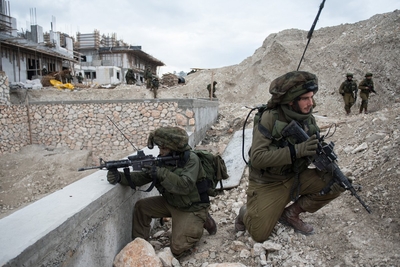
1362Photo Credit: IDF Spokesperson

The Israel Defense Forces (IDF) is in a race against time, and it is a race that is relevant to how other Western powers will also deal with the rise of radical, armed, Islamic groups proliferating across the Middle East.

As the IDF’s commanders look around the region, they see heavily armed, hybrid, Islamic sub-state foes that are replacing states. The traditional threat of hierarchical armies is fading quickly away, into obscurity.

The Sunni and Shi’ite jihadist entities on Israel’s borders – Hamas, Hizballah, ISIS-affiliated groups in Syria, Jabhat Al-Nusra, as well as elements of Iran’s IRGC forces – are all building their power and preparing for a future unknown point in time when they will clash with Israel.

The IDF is preparing, too, but it is not only counting how many soldiers, tanks, fighter planes, and artillery cannons it can call up in the next round. The IDF is in a race to adapt to 21st century Middle Eastern warfare, which bears no resemblance to how wars were fought in the 20th century.

In this new type of conflict, enemies appear and vanish quickly, use their own civilians as cover, bombard Israeli cities with projectiles, seek out the weakest link in Israel’s chain, and send killing squads through tunnels to attack Israeli border villages.

In this type of clash, the enemy looks for a ‘winning picture’ at the start of any escalation. This means landing a surprise blow that will knock Israeli society off balance, at least for a short while.

To be clear, all of the hostile sub-state actors currently are deterred by Israel’s considerable firepower and are unlikely to initiate a direct, all-out attack right now.

The price they would pay for such action is deemed too high, for now.

Yet, opportunities and circumstances can suddenly arise that would alter these calculations, and put these terrorist organizations on a direct collision course with the IDF.

Israel has fought four conflicts against Hamas and Hizballah in the past 10 years, and emerged with the conclusion that the era of state military versus state military warfare is over.

Acknowledging this development is one thing; the organizational transformation that must follow is quite another. Israel did not want to enter any of the past four conflicts that were forced upon it, but since they occurred, they have aided in the IDF’s adaptation process, which has been as complex as it has been painful, and is far from over.

“What you have to do against an enemy like this, and it is a great difficulty for militaries, including the IDF, is to operate in a combined, cross-branch [air force, ground forces, navy] manner, and to keep it [operations] focused. Focus the ground maneuver and firepower, on the basis of the intelligence you get,” a senior IDF source said earlier this month in Tel Aviv, while addressing the challenges of adaptation.

Taking southern Lebanon, the home base of Hizballah, as an example, the area has well over 100 Shi’ite villages that have been converted into mass rocket launching zones.

With one out of every 10 Lebanese homes doubling up as a Hizballah rocket launching site (complete with roofs that open and close to allow the rocket to launch), Hizballah has amassed over 120,000 projectiles – some of them GPS guided – with Iran’s help. This arsenal, pointed at Israel, forms one of the largest surface to surface rocket arsenals on Earth.

Would sending several military divisions into such an area be sufficient for Israel in stopping the rocket attacks? Without focused intelligence, the military source argued, the answer is a resounding no. Israel’s reliance on intelligence has never been more paramount in the age of sub-state, radical enemies.

“The urban areas swallow up our forces. If we can’t focus the maneuver, no amount of forces will be sufficient in dealing with this issue. It must be focused, and the information that must direct this focus is real-time intelligence,” the source said.

The IDF’s Military Intelligence Directorate has the mammoth task of building up a battle picture and a database of targets ahead of any conflict. After a conflict erupts, it must start the process all over again within a few days, when the entire map of threats changes in the modern dynamic battlefield.

This is a far cry from the old intelligence work that looked at enemy tank divisions and infantry formation.

IDF planners believe that any future conflict with a hybrid, terror-guerrilla military force will consist of five stages. An “opening picture” – that surprise blow intended to shock Israelis – will mark the start of hostilities, in which Israel must deny the adversary its “winning picture.” This will be followed by an exchange of firepower. After a few days, Israel would need to call up reserves, and then launch a ground offensive. Throughout this period, the Israeli home front would absorb heavy rocket fire, while the Israel Air Force would pound enemy targets. The IAF could fire thousands of precision-guided munitions every 24 hours, if it deploys its firepower to the maximum, as it would in an all-out clash with Hizballah.

Israeli air defense systems like Iron Dome could soften the blow to the home front significantly, but this is truer with respect to Gazan rockets than against the downpour of Hizballah rockets and missiles, which would overwhelm air defenses.

The ground offensive must destroy “70 to 75 percent of [enemy] capabilities,” the source said. “If there are 100 missiles and two operatives on the other side, and you kill the operatives, than the missiles become irrelevant.”

The last phase is the end stage, and it is unlikely that an entity like Hamas or Hizballah would wave a white flag when hostilities conclude, even if most of their capabilities have been destroyed.

The era of clear-cut military victories, like Israel experienced in the 1967 Six Day War, is gone, the source said.

With this reality in view, the IDF’s steps to adapt itself to modern threats include the ability to gather huge quantities of intelligence and deliver them, in real-time, to the forces that need them most in the battlefield, right down to the level of a battalion commander.

This requirement includes establishing an “operational Internet,” an internal IDF network that allows battalion commanders to access Military Intelligence target data in their area, and direct their units accordingly.

It would also allow field commanders to communicate directly with a fighter jet pilot or drone operator, or even a missile ship commander, for the type of cross-forces cooperation the IDF thinks will be most effective in shutting down threats.

As a result, the IDF’s C4i Branch has spent recent years overcoming many hurdles and objections and integrating the command and control networks of the air force, navy, and ground forces. It then directly linked them up to Military Intelligence.

By the end of this year, the first IDF division will have a “military Internet” network, complete with applications and browsers, up and running.

“I don’t want a squad commander walking around with a screen in his hand. He has to be aware of his soldiers. [But] the battalion commander should certainly have this,” the source said.

In 2014, the IDF did not do a good enough job in detecting, in real-time, the location of Hamas rocket launches in Gaza. It got away with this failure because of the effectiveness of the Iron Dome anti-rocket batteries. But against Hizballah’s much larger arsenal, no amount of air defenses will be sufficient, and the IDF therefore is working on improving its rocket detection and accurate return fire abilities.

“In the next stage [of our development], if you detect the rocket launch areas and the centers of activity of the enemy, and transmit them [to your own forces], you can learn the enemy’s patterns better,” the officer said.

Knowing the enemy has never been more important for Israel’s ability to defend itself against the jihadist entities that are replacing states in the Middle East. As these radical Islamist organizations prepare for the day of battle, Israel does the same, through updating its old 20th century battle doctrines and bringing them up to speed with its rapidly changing and chaotic environment.
Canadian PM: ‘Islam is compatible with secular West’

February 22, 2016

Canadian PM: ‘Islam is compatible with secular West’, Israel National News, Ari Yashar, February 22, 2016

Canadian Prime Minister Justin Trudeau of the Liberal Party has already made a number of eyebrow-raising statements since taking office last November, but on Sunday CIJ News revealed yet another questionable sentiment he raised twice in TV interviews in recent months.

In the two interviews, both with CBC, Trudeau insisted that Islam is “not incompatible with the Western secular democracy.”

In the most recent interview on January 31, he said “we need to make sure that we’re working with communities like the Muslim community, for example, to demonstrate that Islam is not incompatible with free and open Western societies.”

The statement echoed his words from another interview last November 24, when he said, “Canadians are quick to point out that ISIS is wrong, that Islam is not incompatible with the Western secular democracy, a free place like Canada.”

CIJ News went further in documenting the trend by pointing out a video message from Trudeau to the annual Reviving the Islamic Spirit convention at the Metro Toronto Convention Center last December 25-27.

In the message, Trudeau said the convention “is also about celebrating our shared beliefs in justice, fairness, equality of opportunity and acceptance. The work you do in communities across the country is what builds and strengthens our multicultural fabric.”

Trudeau’s stance towards the Islamic world has been raising question marks. Last Tuesday he was grilled in parliament for proposing to give UNRWA $15 million despite its well-documented ties to the Hamas terrorist organization in Gaza, and largely ignored the question on the topic.

In more questionable behavior vis-a-vis Hamas, Trudeau appointed Omar Alghabra as Parliamentary Secretary to the Minister of Foreign Affairs; Alghabra was previously the head of the radical Canadian Arab Federation (CAF), which ran afoul of the state for its open support of Hamas.

Last month amid heavy concerns that jihadists and rapists have infiltrated the massive influx of migrants from the Middle East to the West, Trudeau defended his policy of mass immigration, saying he is confident in people who “don’t think a lot about politics, don’t think a lot about terrorism.”

Turkey planning $5 billion for Gaza seaport

February 5, 2016

Turkey planning $5 billion for Gaza seaport, Israel National News, Ari Yashar, February 5, 2016

In the midst of ongoing normalization talks with Israel, Turkey is planning to invest $5 billion in reconstructing the Hamas stronghold of Gaza including a seaport – which Israel has fiercely opposed due to the blatant threat of weapons smuggling.

The Turkish Hurriyet Daily News on Friday reported that a team of the Union of Chambers and Commodity Exchanges of Turkey (TOBB) announced the expensive rebuilding plan, which is being prepared by the Center for Multilateral Trade Studies at the Economic Policy Research Foundation of Turkey (TEPAV).

The plans to reconstruct the Hamas-held region came after meetings with Palestinian Authority (PA) and Hamas officials, as well as Israeli officials.

“As the Turkish business world, we can fulfill this work,” said TOBB chairman Rifat Hisarciklioglu, who led the group. TEPAV claims that by 2020, Gaza will be “unlivable” with no drinking water left.

Indicating the subversive nature of the plan, TEPAV Executive Director Guven Sak said, “we made a strategic plan. A Gaza port will be one of the most important projects in this plan.”

Prime Minister Binyamin Netanyahu has rejected the idea of a port or lifting the maritime blockade on Gaza, which is meant to block the influx of weapons and which is fully legal according to international law, contrary to the claims of Israel’s opponents. Surprisingly, Agriculture Minister Uri Ariel (Jewish Home) in December called to build a seaport in Gaza.

The matter of the naval blockade has been a key sticking point in the reconciliation talks with Turkey, which continues to firmly support the Hamas terrorist organization. Turkey also continues to host Hamas terrorists, including those planning attacks in Israel.

With Israeli permission

Regarding the Turkish plan, TEPAV’s Sak said, “Turkish contractors will be an important part of this project,” while Hisarciklioglu said, “our contractors are materializing world-class works. They rank second in the world.”

The group met with Israeli officials unnamed in the report, and also met with Palestine Liberation Organization (PLO) Prime Minister Rami Hamdallah as well as several PA ministers and officials, in addition to Hamas officials and the Gaza Chamber of Commerce.

Israel gave the Turkish team permission to visit Gaza and plan the project according to the report, in an apparent sign of the growing rapprochement between the two states.

“It is not possible to go to Gaza without the permission of Israel,” said Hisarciklioglu. “But we did this. This is an indicator that the tensions between Turkey and Israel are easing.”

Israel’s normalization talks with Turkey have caused outrage in Egypt, where officials have urged Israel not to normalize ties.

Turkish defense sources revealed in December that Turkey is primarily interested in rapprochement so as to buy Israeli military hardware, with Ankara interested in buying more advanced Israeli drones as well as reconnaissance and surveillance systems for its fighter jets.

Turkish Prime Minister Ahmet Davutoglu in December also said that Turkey is only interested in the normalization talks so as to “benefit…Palestine and Gaza.”

Senior Israeli security sources for their part said they doubt Turkey is serious about rapprochement, noting on the crisis in ties with Russia – a key gas supplier for Turkey – that apparently prompted the desire for natural gas trade with Israel as Ankara hurts financially.

Bilateral ties disintegrated in the infamous 2010 Mavi Marmara flotilla incident, when IDF soldiers were forced to board the Turkish ship that had ignored repeated warnings to stop its attempt to breach the maritime blockade on Gaza.

The soldiers were brutally attacked by IHH Islamist extremists on board wielding knives and metal bars, and had no choice but to open fire, killing ten of the IHH members on board. After an investigation, Israeli authorities discovered the vessel to be carrying no humanitarian aid, despite the flotilla’s claims that it was on a “humanitarian” mission.

Hamas PM Haniya in Friday Sermon: We Are Digging Tunnels East of Gaza

February 2, 2016

Hamas PM Haniya in Friday Sermon: We Are Digging Tunnels East of Gaza, MEMRI-TV via You Tube, February 2, 2016


Hamas: The “Merchants of War” Who Seek to Destroy Israel

February 2, 2016

Hamas: The “Merchants of War” Who Seek to Destroy Israel, Gatestone InstituteKhaled Abu Toameh, February 2, 2016

♦ In the words of Hamas leader Ismail Haniyeh, the tunnels are being dug not only to “defend the Gaza Strip, but to serve as a launching pad to reach all of Palestine.” As one can see from any map of Palestine, “all of Palestine” does not mean living in peace alongside Israel; it means supplanting Israel.

♦ To its credit, Hamas has been refreshingly transparent about its ambition, the elimination of Israel. Hamas wants the Palestinians to continue living in misery and bitterness. It is fertile soil for jihad recruitment.

♦ A Palestinian Authority-Hamas unity government would mean tunnels not only along the border between the Gaza Strip and Israel, but also from the West Bank into Israel.

♦ Forever looming, of course, is the illusion that Abbas will be able to persuade Hamas to abandon its aim to destroy Israel.

The myth that Hamas uses tunnels to smuggle food and other necessities to the “besieged” Gaza Strip has been buried under the rubble of the tunnel that collapsed last week east of Gaza City.

The incident, in which seven members of Hamas’s armed wing, Ezaddin Al-Qassam, were killed when the tunnel they were working in collapsed, provides further proof that the Islamist movement has stayed true to its charter, which calls for the total destruction of Israel.

The Hamas men who were killed in the tunnel collapse belonged to the movement’s elite “Tunnel Unit.” According to Ezaddin Al-Qassam, the men were busy repairing one of the tunnels (damaged during the 2014 war with Israel) when it collapsed due to severe weather conditions.

Contrary to popular belief, the tunnel was not being renovated to allow Palestinians to smuggle basic goods from Egypt to the Gaza Strip. This was one of many tunnels that Hamas has dug over the past few years to infiltrate Israel and carry out terror attacks.

Hamas makes no secret of the goal of its renovations. Hamas leader Mahmoud Zahar readily admits that the tunnels are being rebuilt to target Israel.

Indeed, clarity seems to be the name of the game with Hamas. Senior Hamas official Khalil Al-Hayeh explained that his organization would continue to dig tunnels for use in future confrontations with Israel. “We have enough mujahideen [jihad warriors] to replace their brothers who were martyred [in the tunnel collapse],” he said during the funeral of the seven Hamas members.

Hamas leader Ismail Haniyeh went a step further: the tunnels were not only designed to launch terror attacks against Israelis, but to “liberate all of Palestine.” In the words of Haniyeh, the tunnels are being dug not only to “defend the Gaza Strip, but to serve as a launching pad to reach all of Palestine.” As one can see from any map of Palestine, “all of Palestine” does not mean living in peace alongside Israel; it means supplanting Israel.

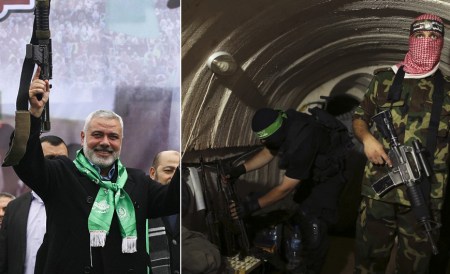
1452In the words of Hamas leader Ismail Haniyeh (left), the tunnels Hamas digs from Gaza into Israel (right) are not only to “defend the Gaza Strip, but to serve as a launching pad to reach all of Palestine.”

For Haniyeh, the tunnels are a “strategic weapon” in Hamas’s jihad to destroy Israel. Hamas’s military wing dug the tunnels around the Gaza Strip “to defend our people and liberate the Al-Aqsa Mosque and Jerusalem,” the Hamas leader stated.

Hamas, it is argued, has changed it colors. It is now ready, the theory goes, to reject its own charter and accept a two-state solution.

So much for a Hamas change of heart.

To its credit, Hamas has been refreshingly transparent about its ambition, the elimination of Israel. Yet Hamas has few ambitions for those now clasped in its grip. Nearly a decade after its violent seizure of Gaza, the movement and its leaders have offered the 1.9 million Palestinians stranded there precious little but destruction and death.

Oh, and tunnels. Hamas has tunnels — two types. The tunnels running under the border with Egypt are designed as conduits for weapons. The tunnels running under the border with Israel are reserved for Israel’s destruction.

Hamas’s Palestinian political rivals have pointed out in the past few days that the tunnels have turned the leaders of the Islamist movement into “merchants of war.” These “merchants,” according to the Palestinians, have long been using the smuggling tunnels to increase their personal wealth at the expense of dozens of underpaid workers who work as diggers around the clock.

As Al-Hayeh has made evident, Hamas is prepared to sacrifice as many Palestinians as it takes to advance its deadly goals. Between 2006 and 2011, 188 Palestinians were killed while working in Hamas’s tunnels throughout the Gaza Strip, according to figures released by the Palestinian Ministry of Health.

Moreover, child-labor legislation seems not to have made many inroads in Hamas-run Gaza. Children under the age of 18 constitute at least 10% of the dead in the tunnel-digging industry.

And while the economy of Gaza is in tatters, Hamas has invested millions of dollars into its tunnel-building projects.

Unemployment in the Gaza Strip during the year 2015 topped 40%, while more than 65% of the population live under the poverty line. More than half of its population is now almost entirely dependent on aid from different relief and humanitarian organizations. Economic experts predict a gloomier scenario for the Gaza Strip during 2016.

Despite its claims to the contrary, however, the last thing Hamas cares about is the welfare of the Palestinians in the Gaza Strip. In fact, Hamas wants the Palestinians to continue living in misery and bitterness. It is fertile soil for jihad recruitment.

The collapse of the tunnel last week and renewed Hamas threats to pursue the fight against Israel coincide with reports that Palestinian Authority (PA) President Mahmoud Abbas has decided to resume his efforts to achieve “national reconciliation” and “unity” with the Islamist movement.

According to the reports, representatives of the two sides are scheduled to meet in Qatar next week in yet another bid to end their dispute and pave the way for a new Palestinian unity government and elections.

Forever looming, of course, is the illusion that Abbas will be able to persuade Hamas to abandon its aim to destroy Israel.

Hamas will never exchange its attack tunnels for PA cabinet portfolios. Abbas recently announced an interest in resuming peace talks with Israel. His interest, however, has been for some time taken up by reaching out to Hamas. A PA-Hamas unity government would mean tunnels not only along the border between the Gaza Strip and Israel, but also from the West Bank into Israel.

It was not only seven men, then, who were buried beneath the rubble of the collapsed attack tunnel last week. Along with them was buried the persistent but utterly naïve hope that Hamas will somehow transform itself into a “peace partner” for Israel, the Palestinian Authority or even the Palestinian people.

Obama’s Source for Israel Says Country Run by Evil “Elders of Zion”

February 1, 2016

Obama’s Source for Israel Says Country Run by Evil “Elders of Zion” Front Page Magazine, Daniel Greenfield, February 1, 2016

(Shocking, perhaps, but not surprising. — DM)

amirahass

Anti-Zionism is just Anti-Semitism misspelled. The Anti-Zionist left continues to remind us of that.

Haaretz is a crazed anti-Israel paper operating out of Israel even though a number of its high profile writers have publicly announced that they refuse to live in the country. It’s also the voice of Israel’s left-wing establishment. A voice that is growing crazier and crazier by the minute.

Obama however is [sic] a phone. Addressing the last HaaretzQ conference, at which the Israeli flag had to be taken down, he said, “As Israel’s oldest newspaper, Haaretz has never been afraid to speak truth to power. Over the years, I’ve turned to you as well for your reporting and analysis.”

This is the kind of deranged anti-Israel hate that Obama has “turned to” for understanding Israel.

After the last election, Haaretz’s Gideon Levy, who really hates Israel demanded “The nation must be replaced. Not another election for the country’s leadership, but general elections to choose a new Israeli people – immediately.”

He has justified Muslim terror attacks against Israelis. Gideon Levy demanded, “Did Israel Really Think Hamas Would Turn the Other Cheek”. Levy pushes BDS and calls for the destruction of Israel via a “one state solution”.

But then there’s Amira Hass, who justifies Muslim violence against Jews and tried to live in Gaza. She claimed that Jews moving to Israel are committing a crime, calls Israel an “apartheid state” and called Gaza a “concentration camp”. She claimed that throwing stones at Jews is, “a metaphor for resistance.” Hass is the official Haaretz correspondent.

In Haaretz’s race to the bottom, Amira Hass decided to invoke the Elders of Zion just to remind everyone once again that the left is anti-Semitic and that it’s opposition to Israel is based entirely on its hatred of Jews.

As David Collier reports,

“Amira Hass said was that what we see today is the result of deliberate planning by a hidden group of Jews called the ‘Elders of Zion’. It was all planned. In a liberal democracy that bends to the will of the elected government, the idea of hidden plans and puppet masters is the stuff of conspiracy theorists. This is a conspiracy about Jews and secret plans for domination. You can listen to the comment itself here:”

Here’s the direct quote from Hass, whose last name appropriately enough means hate.

“Did the Elders of Zion really sit together at the beginning of the seventies and then during the nineties and planned, and have all these military decrees, military orders and changes? Viewing this tremendous change, I believe that they were.”

And this is Obama’s source for analysis and reporting on Israel. If a Republican candidate had named a source synonymous with crazed bigotry as a source for understanding Israel, there would have been outrage. But Obama gets a pass for viewing Amira Hass and Gideon Levy as legitimate sources for understanding what is going on in Israel.


MB Apologists Arrive In U.S. For Anti-Sisi Rallies

January 22, 2016

MB Apologists Arrive In U.S. For Anti-Sisi Rallies, Investigative Project on Terrorism, John Rossomando, January 21, 2016

(Please see also, UK Review of Muslim Brotherhood: Top 13 Quotes. — DM)

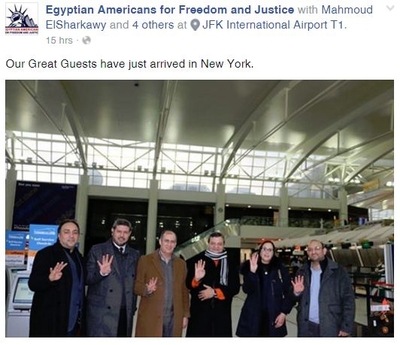
Three Muslim Brotherhood supporters who caused a row in Egypt last year after they met with Obama administration officials and members of Congress returned to the U.S. Wednesday, according to the Facebook page of Egyptian Americans for Freedom and Justice (EAFJ).

During their 2015 trip, Brotherhood leader Gamal Heshmat, former Egyptian Judge Waleed Sharaby and Maha Azzam, head of the Egyptian Revolutionary Council (ERC) lobbied State Department and White House officials for help against the government of Egyptian President Abdel Fatal al-Sisi.

The ERC formed in 2014 with the aim of toppling Sisi and bringing the Brotherhood back to power in Egypt. Sisi took power in 2013 after the Egyptian army ousted President Mohamed Morsi, the leader of the Muslim Brotherhood’s Freedom and Justice Party.

Heshmat has a long history of supporting Palestinian terrorists and was photographed in June 2014 with Hamas political chief Khaled Meshaal.

The State Department agreed with the delegation’s position that Sisi had not brought stability to Egypt, and that his removal would pave the way for a transition to democracy, Sharaby told Egypt’s Mekameleen TV in an interview last February. But that has not translated into concrete action to topple Sisi.

1341 (1)

EAFJ leaders Mahmoud El-Sharkawy, Hani Elkadi and Aber Mostafa greeted Heshmat, Sharaby and Azzam at New York’s JFK airport and posed for a picture with them displaying the Brotherhood’s four-fingered Rabaa salute which has become representative among those wanting the Brotherhood’s return to power in Egypt.

The three are scheduled to speak Friday at an event titled “Egyptian Revolution from Sacrifices to Victory” in North Bergen, N.J.

The event is timed to commemorate the Jan. 25 anniversary of dictator Hosni Mubarak’s fall from power in 2011. Heshmat wrote that his group had no plans to meet with Obama administration representatives during this visit, due to their “position biased” toward Sisi’s regime. They hope to speak with some congressmen, academics and others.

El-Sharkawy is a Brotherhood member and serves as liaison with Brotherhood members exiled in Turkey, Egypt’s Al-Bawaba newspaper reported last April.

He frequently reposts Muslim Brotherhood communiqués on his Facebook page. In December, El Sharkawy encouraged “all youth and revolutionaries” to distribute the official page of Brotherhood spokesman Muhammad Muntasir.

1342

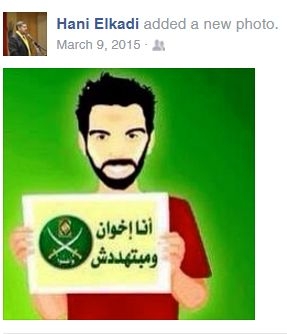
Elkadi seemed to self-identify as a Brotherhood member in a March 9 Facebook post showing an cartoon of a man holding a sign with the Brotherhood logo and the words which translate to, “I am [Muslim] Brotherhood and I’m not threatened.”

Last year, Elkadi, El Sharkawy and Mostafa posted graphics on their Facebook pages seeming to support violence in Egypt.

El Sharkawy and Elkadi posted a Feb. 10 communiqué from the Popular Resistance Movement (PRM) which has launched attacks against Egyptian police and other targets. It features an image of a blood-red map of Egypt with a fist superimposed over it. It claims responsibility for targeting two police cars. “God, martyrs, Revolution,” it said.

Mostafa posted the personal information of a pro-Sisi owner of an Egyptian soccer team with the word “Attaaack!” the same day.

Iran’s long arm

January 21, 2016

Iran’s long arm, The Jerusalem Post, JPost Editorial, January 21, 2016

(Please see also, New Iranian-Backed Terror Group Makes Inroads in West Bank, Gaza. — DM)

ShowImage (20)Thousand of Basij soldiers stage mock seige of Temple Mount in Iran. (photo credit:FARS)

If anyone needed proof how the lifting of sanctions on Iran will hurt Israel’s security, this week provided two examples.

Just days after implementation of the Joint Comprehensive Plan of Action nuclear agreement, we received a reminder that Iran and its proxies remain dangerous enemies of Israel.

Five Palestinians from the Tulkarm area were arrested for planning to carry out terrorist attacks under instructions from Hezbollah, the Shin Bet (Israel Security Agency) said on Wednesday.

The head of the cell, Mahmoud Za’alul, had been recruited through social media networks. Using encrypted messages, he enlisted five more men from the Tulkarm area; they were ordered to gather intel and plan terrorist attacks, including preparing explosive vests for suicide bombings.

Hezbollah funded their operation by sending them $5,000 through money changers.

Now that the “crippling” economic sanctions on Iran have been removed, the resources at its disposal – and as an extension at Hezbollah’s – will be significantly greater.

In Lebanon, meanwhile, Hezbollah is consolidating its political power. On Monday, in a development that is nothing short of earth shattering, Samir Geagea, leader of the Christian Lebanese Forces party, publicly endorsed his rival, the formal general Michel Aoun, for president of Lebanon.

In so doing, Geagea abandoned his loyalty to Saad Hariri, head of the anti-Syrian Future (Al-Mustaqbal) Movement, for an alliance with the enemy camp headed by Hezbollah, which supports Aoun for president.

This opens the way to the appointment of a pro-Iranian president in Lebanon.

Hezbollah and Iran are undoubtedly pleased with the development. If Aoun is elected president, Hariri’s influence – and the influence of Hariri’s main patron, Saudi Arabia – will be greatly diminished.

Finally, in the Gaza Strip, Iran has over the past few months been providing funding to a new terrorist group called Al-Sabireen Movement for Supporting Palestine. Al-Sabireen, which means “the patient ones” in Arabic, was formed in the wake of a break between Tehran and the two largest terrorist organizations operating in Gaza – Hamas and Islamic Jihad.

Neither organization has acquiesced to Iran’s demand to support President Bashar Assad in Syria.

Both have incensed the Iranians by remaining silent on Saudi attacks in Yemen against the Iranian-backed Houthis. Both face their worst financial crisis in two decades after Iran’s decision to cut off support.

Al-Sabireen’s emblem – a gun sprouting from the center of its name in Arabic – is nearly identical to Hezbollah’s.

So far, the organization has about 400 followers in the Gaza Strip, each one receiving a monthly salary of $250-$300, while the senior officials get at least $700, according to The Jerusalem Post’s Palestinian Affairs correspondent Khaled Abu Toameh. Iran has been supplying Al-Sabireen with weapons used to attack Israel.

The Iranians are believed to have supplied their new terrorist group in the Gaza Strip with Grad and Fajr missiles that are capable of reaching Tel Aviv. Also, Iranian funds channeled through Al-Sabireen are said to be used to support the families of killed or arrested terrorists living on the West Bank.

The Iranian-backed organization is also wooing Fatah members. Scores of militiamen once belonging to Palestinian Authority President Mahmoud Abbas’s Fatah faction in the Gaza Strip have allied themselves with Al-Sabireen. Most were attracted by the money.

The rise of an unshackled Iran’s influence in the region is bad for Israel. But it is also bad for many of the US’s Sunni allies in the region such as Saudi Arabia and the Palestinian Authority. A shared enemy has created a shared interest – the curtailing of Iranian influence.

Implementation of the JCPOA might delay Tehran’s nuclear weapon program. The removal of sanctions, however, has set the stage for the Islamic Republic to increase its destabilizing influence. Iran and its proxies must be stopped.

The Inside Track From Israel’s Gaza Border Defenders

January 21, 2016

The Inside Track From Israel’s Gaza Border Defenders, Investigative Project on Terrorism, Paul Alster, January 21, 2016

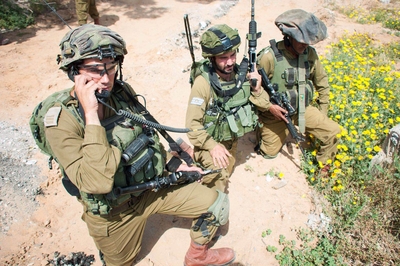
1339Photos courtesy of IDF Spokesperson.

Like it or not, the Iran nuclear deal is done. In much of the Middle East, defense officials in many states believe that a sizeable proportion of the soon-to-be released $100 billion Iranian windfall will be directed toward funding proxy armies of the Islamic Republic, for whom the Jewish state remains the prime target. Israel’s focus is now, more than ever, on defense and surveillance.

In the north, Hizballah, Iran’s proxy Lebanese army, remains a massive threat to regional stability, siding with Syria’s disgraced President Bashar Assad and his saviors from Russia. In Gaza, it is no secret that a previous rift between Iran and Hamas has been smoothed over to further mutual objectives and that another, and possibly more brutal round of hostilities between Israel and Hamas may not be far away.

“The sanctions relief and the nuclear deal with Iran represent a strategic shift that the IDF will have to tackle over the next decade,” Israel Defense Forces (IDF) Chief of Staff Gadi Eizenkot said Monday in a speech at the INSS conference in Tel Aviv. “We also see [Iran’s] attempt to influence Arab Israelis and those in the Gaza Strip, and the estimation is that as Iran’s economic situation improves, over the next one-to-two years, it will divert considerably more resources into opposing Israel, via the Iranian military industry.”

Last week, the Investigative Project on Terrorism (IPT) saw first-hand the situation on Israel’s south-western border, meeting with a senior IDF source who cannot be identified for security reasons. Close to the Kerem Shalom border crossing, where Israel oversees the transfer of many hundreds of tons of goods and supplies every day into Gaza,  we scrambled up a sizeable sand dune that offered a panoramic view of the situation on the ground toward the closed Rafah crossing from Egypt into Gaza.

“We hear the explosions and the fighting [against the Islamists] on the Egyptian side. The Egyptian army is taking it seriously,” the senior IDF source explained as we looked across the triangular border junction and heard distant noises, apparently explosions. “We hear this every day. Terrorists continue to try to cross from Egypt into Gaza.”

Minutes later, a text message announced that the Keren Shalom crossing suddenly had been closed. It turned out that the Egyptian army reportedly engaged and killed 13 jihadists  just a couple of miles away. Two days earlier, an attempt to breach the Israel-Gaza border fence and plant an IED resulted in an Israeli airstrike reportedly eliminating a member of the Al Aqsa Martyrs Brigade.

Meanwhile, Hamas continues to test fire rockets into the sea, and in recent months other Islamic militants in Gaza sporadically lob rockets toward Israel. On the other side of the border triangle, Egypt is doing its best to keep a lid on ISIS and other Islamist forces in the Sinai Peninsula.

It’s clear that relations between the Israeli and Egyptian militaries are good, a dangerous common enemy helping to focus minds. Under President Abdel Fattah el-Sisi, Egypt (despite a lack of support from the United States), has taken the fight to the terror organizations, often at a significant cost in Egyptian military lives. The horrific October downing of the Russian passenger jet out of Sharm el-Sheikh brought the scale of the task facing Egypt into focus. Israel remains alert for the jihadists turning their attention and firepower from Sinai, but for now believes that Gazan-based terror poses its most immediate threat.

“It’s been quite quiet with Hamas [since the 2014 Protective Edge war], but they don’t keep quiet for long,” the IDF source said. “We’re not looking for a fight – we have an interest that there will be quiet here – but if we have to deal with Hamas, this time we’ll deal with them properly.”

Many Israelis were dismayed when Israel unilaterally pulled out of Gaza in 2014 without a ceasefire, some criticism coming notably from members of the left-wing opposition and media for allowing Hamas off the hook when many believed it was in utter disarray. Now, despite ongoing attempts to stem the flow of weapons, reports suggest Hamas is rebuilding fast and may have some surprises in store for Israel if there’s another round of fighting.

“Look, we’re quite certain they are still building tunnels,” the official said, planting his heel in the sand and showing how easy it is to dig. “And yes, I’m sure they have new weapons – anti-tank, anti-aircraft etc. Like us, they will want to be better next time, but we understand more. The reality is different. We’re learning all the time what is going in Gaza. The army is always preparing for the war to come and [Hamas] won’t meet the same thing as in [Protective Edge].”

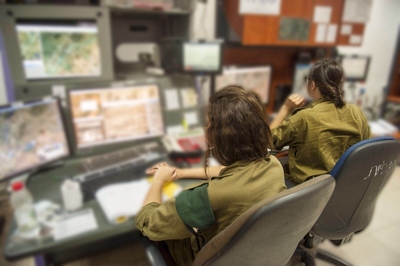
While Israeli soldiers and advanced technology such as its Guardium unmanned patrol vehicles are the first line of defense – the IDF indicated last year that the development of underground tunnel detection systems is also a priority project – the eyes of the military are actually in special units of female soldiers, known as the tazpitanyot. They monitor all movements, looking for suspicious activity, known terror operatives, and attempts to breach the border.

1340 (2)

They work in a series of non-descript trailers and shipping containers belying the fact that inside are massed banks of video screens and radar images, and the ability to combine pictures filmed from aerial blimps with other cameras – both day and night vision. This arrangement allows operatives to zoom in and see Gazans as far as a mile from the border fence.

When anything, or anyone suspicious pops up, there are pictures of ‘Wanted’ terror suspects close to the screens.  They instruct the on-the-ground forces to investigate. Never averting their gaze from the screen during a four-hour shift, each soldier has been trained to identify every landmark, tree, or rock within her specific area of surveillance. “If there’s even a single branch missing from a tree, they’ll spot it” the women’s commanding officer said. They also have remote control of the machine guns sited on border watch towers.

No security system is 100 percent foolproof, and during the first two weeks of the last round of fighting, four terror tunnels emerged on the Israeli side, only being detected at the last moment.  In two cases, the IDF fought gun-battles leaving  at least 10 terrorists and six Israeli soldiers dead. Hamas had hoped to kill civilians before luring Israeli soldiers back through the tunnels then kidnapping them or causing mass casualties.

Methods and practices of surveillance are being continually reviewed, but no-one in the Israeli military doubts the tatzpitanyot’s crucial front-line role in its border security, both north and south.

New Iranian-Backed Terror Group Makes Inroads in West Bank, Gaza

January 19, 2016

New Iranian-Backed Terror Group Makes Inroads in West Bank, Gaza, Washington Free Beacon, January 19, 2016

Screen-shot-from-al-Sabireen-propaganda-videoScreen shot from al-Sabireen propaganda video

A new Iranian-backed terror group is making inroads in the Gaza Strip and West Bank, where it operates underground with the potential capacity to deliver devastating attacks to Israel, according to regional experts who have been investigating the organization’s rise.

The group, which goes by the name Harakat al-Sabireen, was established around May 2014 but has begun in recent months to boost its public profile on social media and brag about its plots to wage jihad against Israel, according to information gathered by regional analysts and provided to the Washington Free Beacon.

Al-Sabireen is believed to receive $10 million a year from Iran via funds that are smuggled through a large network of tunnels built by terrorists to facilitate illicit travel beneath the Gaza Strip, according to estimates disseminated in the Arab language press.

Like Hezbollah, the Iranian-funded terror group that controls territory along Israel’s northern border, al-Sabireen is being used by the Islamic Republic to indirectly wage war on the Jewish state and foster unrest in the Palestinian territories, according to experts, who view the group’s rise as a sign that Iran is not interested in scaling down its global terror network following the recent implementation of the nuclear agreement.

A State Department official who was not authorized to speak on record said that officials are aware of al-Sabireen and its activities. However, the group has not been officially designated as a foreign terrorist organization, though it is possible this could occur in the future.

Al-Sabireen says it has established an armed wing with militants in Jerusalem and the West Bank, according to a recent interview with the Palestinian news agency Ma’an.

“Given the tense relationship between Tehran and Hamas the past few years, it makes sense that Iran would look to form another proxy in Gaza,” Grant Rumley, a Middle East analyst at the Foundation for Defense of Democracies, said. “However, Sabireen’s entire model of expansion hinges on its ability to present itself as a Palestinian, non-sectarian movement.”

Like Hezbollah, al-Sabireen’s official logo closely resembles that of the Iranian Revolutionary Guard Corps, which is responsible for giving orders to these types of terror groups.

The group’s charter condones violent jihad and promotes attacks on “the racist Zionist body” and “America the great Satan,” according to a copy published by the group on its official Arabic-language website.

Al-Sabireen has taken to its website and Facebook page in recent months to praise operatives who have been killed while conducting reconnaissance missions on the group’s behalf.

In one posting from late October, the group celebrated the death of one operative who was killed “after direct targeting from the Zionist forces while he was leading a monitoring and reconnaissance team.”

Mourners raised flags during a funeral ceremony for this individual from a variety of Palestinian political groups, including Fatah, which is largely viewed by Western governments as a moderate voice, according to photographs posted by al-Sabireen on its Facebook page.

It also has been plucking recruits from rival terrorist groups, according to Rumley.

“It’s unclear exactly what Sabireen’s operational capabilities are right now, but we know that they’ve pulled recruits from a more established terror group, Palestinian Islamic Jihad, and that they’ve lost at least two fighters in two separate Israeli strikes, so they’re on Israel’s radar,” Rumley said.

Al-Sabireen has been present at pro-Hezbollah rallies in Gaza that were also attended by leading Hamas officials.

While not much is known about the group’s composition, it appears to have two main leaders, one an operational leader and another who provides intellectual guidance.

Hisham Salem, the terror group’s top leader, formerly served as a member of Palestinian Islamic Jihad, a State Department-designated terror organization, according to information provided by regional analysts. Salem, who is in his early 50s, was raised in the Gaza Strip and began referring to himself as al-Sabireen’s leader in 2014.

Salem claimed in a recent interview with the Palestinian press that armed members of the group are currently in the West Bank and Jerusalem.

“We have an armed branch whose goal it is to wage war on the Israeli occupation everywhere,” Salem was quoted as saying. “Within this framework we have members in the West Bank and Jerusalem who will soon receive financial and military support from us.”

A recent propaganda video produced by the organization and posted to YouTube shows soldiers marching through Gaza with AK-47s.

Al-Sabireen’s second in command, Mohammad Abu Nadi, frequently writes on al-Sabireen’s official website and praises Palestine as integral to the Arab world.

Al-Sabireen has taken a hardline stance against the United States, claiming in September on its Facebook page that the United States is responsible for “producing terrorists.”

The group’s Facebook page remains active with near-daily postings despite attempts by Facebook to shut it down.

While al-Sabireen has faced difficulty in expanding its base in Gaza, where the Hamas-controlled government cracks down on rival terror groups, it has been able to gain a foothold in the West Bank, where it can directly challenge both Israel and the Palestinian Authority.