Archive for the ‘Gaza’ category

Op-Ed: Read Peter Beinart and you’ll vote Donald Trump

May 6, 2016

Op-Ed: Read Peter Beinart and you’ll vote Donald Trump, Israel National News, David Friedman, May 6, 2016

Several weeks ago, I was “outed” as one of Donald Trump’s two advisors on the relationship between the United States of America and the State of Israel. It is an honor and a privilege to advise Mr. Trump on a critical issue that is near and dear to my heart, and I fervently hope that I have the opportunity to assist him in developing and implementing policies that strengthen both countries and the unbreakable bond between them.

Right now, however, the bloodsport of American presidential politics is in full bloom, and within that scented garden emerges a recent Op-Ed piece by CNN panelist, Peter Beinart, published in Israel’s left-wing paper Haaretz. Beinart, a well-known supporter of J Street, New Israel Fund and the BDS movement, decries Trump’s selection of Israel advisors as a cynical charade by which Trump leverages Jews in his employ to go “all in” on Israel solely to garner political capital. According to Beinart, these token Jews, myself included, are just willing pawns in a modern day Game of Thrones, all willing to fall on their proverbial swords for Trump the King.

I have never met Mr. Beinart nor do I care to, and he knows absolutely nothing about me. Had he made the slightest inquiry (apparently no longer necessary for modern journalists), he would have known that I am not in Mr. Trump’s employ,  have hundreds of other clients, and hold views on Israel that are entirely independent of any political movement or candidate.  Those views have been developed over more than thirty years of study of historical accounts and scholarly works, interaction with Israeli political, military and business leaders, and probably 100 trips or more to the Holy Land. I didn’t just come out of “central casting,” as Beinart implies, to facilitate some political theatre, and my beliefs are not for sale to the highest bidder. The same holds true for Jason Greenblatt, Mr. Trump’s other advisor, whom I have known for years.

But I do want to thank Mr. Beinart for getting this issue out on the table, albeit clumsily and disingenuously. Because his reflexive reaction to my involvement in the Trump candidacy lays bare how dangerous the Jewish left is to the State of Israel.

Let’s look at the criticisms offered by Mr. Beinart of views that I have previously expressed. He thinks I’m no good because  (1) I have accused President Obama of “blatant anti-Semitism,” (2) I have questioned the wisdom of Israel bestowing the benefits of citizenship, including free tuition at some of its best universities, upon those who advocate the overthrow of the State, and (3) I have likened J Street supporters to “kapos during the Nazi era.” Let’s unpack each of those a bit.

First, Obama’s anti-Semitism. Here’s the context – Hamas puts on school plays in which 10 year olds dressed as terrorists plunge fake knives into 10 year olds dressed as Jews to the delight of the audience, and Palestinian Authority leaders (they’re supposed to be the “moderate ones”) bestow praise upon all participating in the “knife intifada.” Asked to comment on the unspeakable tragedy of innocent Jewish civilians being murdered by knife-wielding Islamic radicals, Obama and Kerry do little more than condemn the proverbial “cycle of violence.” I’m sorry, but this is pure and outright murder and any public figure who finds it difficult to condemn it as such without diluting the message with geo-political drivel is engaging in “blatant anti-Semitism.”

Second, the wisdom of free stuff for those engaged in advocating the overthrow of the State of Israel. Every civilized country other than Israel punishes treason. In the United States, advocating to overthrow the government by force or violence can get you life in prison. In Israel, Islamic radical citizens speak this way all the time, often on the way back and forth from world class institutions of higher learning which they attend for free. Is this a good idea? Is there no minimal allegiance required for Israeli citizenship? Sure seems like a fair question to me.

Finally, are J Street supporters really as bad as kapos? The answer, actually, is no. They are far worse than kapos – Jews who turned in their fellow Jews in the Nazi death camps. The kapos faced extraordinary cruelty and who knows what any of us would have done under those circumstances to save a loved one? But J Street? They are just smug advocates of Israel’s destruction delivered from the comfort of their secure American sofas – it’s hard to imagine anyone worse.

Mr. Beinart, therefore, has done us a service, albeit unintentionally. He has shown us the danger of the Jewish left – the lost souls who blame Israel for not making a suicidal “peace” with hateful radical Islamists hell bent on Israel’s destruction. This is Hillary Clinton’s crowd, and they are no friends of Israel.

Donald Trump’s view of Israel isn’t quite as nuanced as that of Mr. Beinart nor as academic as that of President Obama. He thinks that when radical Islamic terrorists are trying to kill you, the right thing to do is kill them first. Don’t negotiate, reason or cajole. Just defeat them. Or as Mr. Trump would say, “win.”

So please read Peter Beinart’s latest column. It will leave you convinced to vote for Donald Trump.
‘Tunnel war’ heralds Hamas-IDF next clash

May 6, 2016

‘Tunnel war’ heralds Hamas-IDF next clash, DEBKAfile, May 6, 2016

NahalOz_Tunnel_480_Kotert

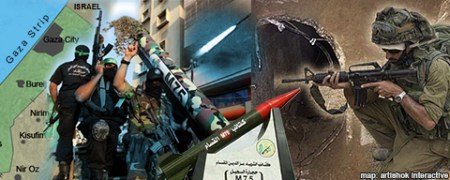
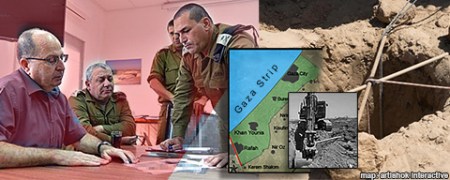
The IDF and Hamas are engaged in another round of warfare both above and below ground. The two sides are exchanging fire in the Gaza border area while the IDF continues its operations to locate the terror tunnels of the Hamas military wing. The IDF did the correct thing on Thursday by declaring areas near Gaza with suspected  tunnels as “closed military zones”, amid concern that Hamas has already infiltrated into Israeli territory, even as training exercises. It is also important that the IDF is maintaining secrecy on the technological tools being used to locate the tunnels.

The exchanges of fire between the IDF and Hamas in the Gaza border area during the last few days have rattled the terrorist organization, making it fire mortar shells, rockets and light weapons at IDF forces in the area. The firing that intensifies each time that the troops approach a tunnel is helping the IDF locate the openings of the tunnels.

More than a year after the end of “Operation Protective Edge” in 2014, which was supposed to eliminate the threat of tunnels to southern Israel and restore calm among citizens, the Israeli government finally ordered the Defense Ministry and the IDF to listen to the complaints of Gaza border area residents, and to what was happening beneath the ground.

The noises from underground that were recorded over the last few months by frightened residents in the area’s communities and the shaking of the ground at night left no doubt that the digging was taking place nearby. In order to eradicate in  order to end the tunnel threat. IDF experts tested hundreds of devices, ideas, methods and means from various fields of research, including some that could be defined as bizarre.  Many new tunnels were been discovered with the help of hitherto untested technologies.

This with the human sources of intelligence like Mohammad Atauna, a commander in the Hamas tunnel network whose capture by Israeli intelligence was published on Thursday, could lead to the elimination of the tunnels in the coming days and weeks. All of these developments have made it clear to the heads of the military wing of Hamas, the Izzudin al-Qassam brigades, among whom only some follow the orders of the Hamas leadership and its political wing, that their biggest strategic asset, the tunnels, may disappear in the very near future. Whether the process takes a month or six months, it should now be very obvious to them that in the very near future the majority of the underground Hamas infrastructure will be destroyed, whether by explosives or flooding.

Since the heads of the Hamas military wing invested most of their budget and efforts in the digging, fortification and reinforcement of the tunnels that they planned to use to invade and attack Israel, the destruction of the underground network may have three main results:

1. In the coming days, the Hamas military wing may lash out in a desperate attempt to land a major blow against Israel. It is expected to be significantly weakened by the IDF operations in the near future but regain strength in the long term.

2. The military wing of Hamas will suffer a major defeat in the battle for popular support. The dire economic situation in Gaza that is partially due to the diversion of resources to the tunnels and other military means will weaken support among the public.

3. These developments will bring about a change in the balance of forces in Gaza that will benefit the political wing and weaken the military wing.

Under these circumstances, the desire by the head of the Izzuddin al-Qassam brigades, Mohammed Deif, who was seriously injured but is still alive and kicking, to get revenge against Israel has not been forgotten in IDF command in Tel Aviv and at the Prime Minister’s Office in Jerusalem. The assessment in Israel’s intelligence community is that in the coming days he will use all the means at his disposal, with or without the permission of the political wing, and just before his last tunnels are discovered, in an attempt to launch a strike to deal a powerful and painful blow to Israel.

In the meantime, on Thursday, the IDF continued its preparations to bombard Hamas from the ground and the air as the terrorist organization’s mortar shelling increases.

Shin Bet gleans vast tunnel data from Hamas member

May 5, 2016

Shin Bet gleans vast tunnel data from Hamas member, Jerusalem Post, Yaakov Lappin, May 5, 2016

(Video at the link. — DM)

The Shin Bet Intelligence agency announced on Thursday that it had obtained a treasure trove of information after capturing a Hamas member who snuck into Israel with the intention of killing Israelis in April.

Mahmoud Atauna, 29, of Jabaliya in Gaza, was arrested on April 16 after infiltrating Israel. He was in possession of two knives, and during subsequent questioning, “it emerged that he intended to murder soldiers or civilians that he happened to encounter in Israeli territory,” said the Shin Bet.

The investigation also resulted in much information being gleaned about Hamas’s tunnel activities, the agency added. Atauna was involved in the military wing’s activities, including planting bombs against IDF forces, and mostly, in tunnel activities during recent years.

“Atauna told his interrogators much about the physical features of tunnels in northern Gaza, about techniques used by Hamas in digging them, and the use of private homes and institutions by Hamas, from which it digs the tunnels. He also provided information on the means and materials Hamas uses,” the Shin Bet said.

“During questioning, Atauna pointed to many digging centers, and to tunnel shafts that are supposed to serve the Nuhba (Hamas’s elite unit) operatives for attacks during fighting with Israel,” it stated.

“Atauna said Hamas set up a network of tunnels branching out in Gaza for the passage of fighters and weapons. The tunnel network includes waiting rooms and has showers and dining tables, to improve the living conditions of Hamas fighters,” according to the Shin Bet.

The Izzadin Al-Kassam member provided the names of “many operatives who worked with him in the eastern battalion of Hamas’s northern brigade, and received information on the use of hospitals and civilians for the storage of weapons.” The investigation also revealed that Atauna’s home was a storage center for many weapons, including bombs, assault rifles, and suicide bomb vests, which he was supposed to distribute before a conflict broke out.

“Atauna is one of a series of military Hamas members who are under Shin Bet investigation at this time, and these investigations have revealed a lot of internal information on Hamas’s activities in tunnels,” the Shin Bet said.

Southern District prosecutors have charged the suspect at the Beersheva District Court.

Israel Thwarted Attempted Smuggling of Ammonium Chloride to Gaza

May 3, 2016

Israel Thwarted Attempted Smuggling of Ammonium Chloride to Gaza, Israel DefenseOr Heller, May 3, 2016

Amonium chloridePhoto: Nitzana Customs

Before the Passover holiday, customs and ISA officials at the Nitzana Border Crossing used by Egypt, Israel and the Palestinian Authority seized four tons of ammonium chloride concealed within a shipment of salt. Ammonium chloride can be used in the production of long-range rockets and the quantity of material seized had the potential to yield hundreds of such weapons.

About a week before the Passover holiday, a shipment arrived at the Nitzana crossing, used for the passage of goods between Israel, Egypt and the Palestinian Authority. The shipment was intended for delivery to Gaza and was declared to contain 40 tons of salt. A thorough examination performed by Customs at Nitzana revealed that amidst the 40 tons of salt, 4 tons of ammonium chloride was concealed. Ammonium chloride is defined as dual-purpose and the transfer of such material to the Gaza Strip requires a license because it can be used by terrorist organizations, such as Hamas and Palestinian Islamic Jihad to manufacture long-range rockets. Recently, the ISA has grown increasingly concerned regarding the large amount of salt ordered to Gaza and that the shipments of salt are used for smuggling of chemicals designated for the production lines in the Gaza Strip, especially rocket production.

The ISA estimates that the importer of the latest smuggling attempt is a Gaza resident associated with Hamas. The importer was believed to have been urged by the terrorist group to bring the materials into the Strip for manufacturing use by Hamas. The ISA emphasized that this case illustrates that terrorist operatives in Gaza smuggle dual-use materials into the coastal Palestinian enclave for militant purposes under the guise of imports intended for the civilian population and construction of restoration projects.

ISA and the Customs Administration view this incident as severe and intend to continue to identify and thwart the smuggling of dual-use materials, while prosecuting those involved in smuggling attempts. The cooperation between the Customs Administration and ISA has already led to the thwarting of dozens of smuggling attempts of prohibited products and materials into Gaza, which were allegedly intended for terrorist organizations, including: sulfuric acid, diving Suits, polyurethane propellant for rockets, sulfur rods, fiberglass rolls, and a special coal used to fuel iron furnaces for processing metals.

UK: The Left’s Little Antisemitism Problem

May 1, 2016

UK: The Left’s Little Antisemitism Problem, Gatestone InstituteDouglas Murray, May 1, 2016

♦ Within a week, Britain’s Labour party leadership was forced to suspend one of its newest MPs and one of its oldest grandees — and both for the same reason.

♦ Labour party leader Jeremy Corbyn and Ken Livingstone both say that they condemn anti-Semitism. They always tend to add that they also condemn “Islamophobia and all other forms of racism,” a disclaimer that always seems a deliberate attempt to hide a hatred of Jews under the skirts of any and all criticism of Islam. What is most fascinating is that all the while they are saying this, they stoke the very thing they claim to condemn.

♦ They pretend that the Jewish state does such things for no reason. There is no mention of the thousands of rockets that Hamas and other Islamist groups rain down on Israel from the Gaza Strip. The comment turns a highly-targeted set of retaliatory strikes by Israel against Hamas in the Gaza Strip into a “brutal” attack “on the Palestinians” as a whole. While mentioning those death-tolls, Livingstone has no interest in explaining that the State of Israel builds bunkers for its citizens to shelter in, while Hamas uses Palestinians as human shields and useful dead bodies for the television cameras, to help Hamas appear as an aggrieved “victim.”

♦ It is the narrative of the “left” on Israel that is causing the resurgence of anti-Semitism. It is not coming from nowhere. It is coming from them. If the left wants to deal with it, they first have to deal with themselves.

Every time anyone thinks Britain’s Labour party has reached a new low of anti-Semitism, entirely new depths seems to open. In September, I wrote here about how the election of Jeremy Corbyn to the leadership of the Labour party constituted a “mainstreaming” of racism in the UK. Although Mr. Corbyn claims he does not have any tolerance for any hatred of anyone, he is a man who has spent his political life cosying up to anti-Semites and terrorist groups that express genocidal intent against the Jewish people. He has worked closely with Holocaust deniers, praised anti-Semitic extremists and described Hamas and Hezbollah as his friends.

During his leadership so far, it is clear that the lead he is given is being followed farther down the party hierarchy. In March, I described how the party appeared to be rotting from the head down, with the discovery that the Labour Club at Oxford University had become an entity rife with anti-Semitic insults. Yet anyone who thought that the party could fall no farther had not imagined its turns of the past week.

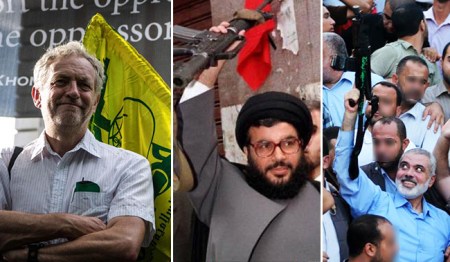
1267In 2009, Jeremy Corbyn (left, posing before a Hezbollah flag) said: “It will be my pleasure and my honour to host an event in Parliament where our friends from Hezbollah will be speaking. I also invited friends from Hamas to come and speak as well.” Pictured in the middle is Hezbollah leader Hassan Nasrallah. Pictured at right is Hamas leader Ismail Haniyeh.

At the start of the week, the MP for Bradford West, Naz Shah, was found to have posted on Facebook threads such ideas as the deportation of all the Jews from Israel over to America; the caption read, “problem solved.” Elsewhere she wrote on a discussion thread, “The Jews are rallying.” Ms. Shah happens to be a Muslim and represents a constituency which, until the last election, was represented by George Galloway. Other luminaries of the area include the former Liberal Democrat MP and David Ward.

So it is fair to say that among her peers, what Ms. Shah said was not unusual. The posts are from 2014, a year before she became an MP, and during the latest of Israel’s engagements in Gaza. In her apology, once she was found out, Ms. Shah talked of the fact that it was period in which “feelings were running high.” Of course, not everyone during a period of heightened feelings calls for the destruction of a UN member state, but Ms. Shah did, and within a day of the exposé of these messages, and an appropriate political outcry, she was suspended from the Labour party, pending a full investigation.

Labour’s week had barely begun. Within hours, another Labour MP, Rupa Huq, tried to come to Ms. Shah’s rescue. In a BBC interview, Ms. Huq tried to compare calls to eradicate the State of Israel with any other “amusing” thing one might find on Twitter. After a swift U-turn, Ms. Huq managed to restrain herself and remained in the party.

Next, from stage far-left, the former Mayor of London, Ken Livingstone, currently on Labour’s National Executive Committee, made his intervention. Mr. Livingstone has been in the Labour party for almost five decades and in the same trenches as the party’s current leader all of his political life. They have marched together for many a terrible cause and stood shoulder-to-shoulder on many a forsaken platform. But as Ken Livingstone went on several BBC programs, he probably did not expect that within hours, his own Labour party membership would be suspended, as was Ms. Shah’s. Livingstone had used his media opportunities to start talking about Hitler — specifically to claim, that Zionism was an early policy of Hitler’s. Perhaps sensing that he had got himself onto unfortunate ground, Livingstone then stressed that this was all before Hitler “went mad” and killed six million Jews.

So within a week, the Labour party leadership was forced to suspend one of its newest MPs and one of its oldest grandees — and both for the same reason. Presently, Jeremy Corbyn and his spinners are desperately trying to pretend that they have cut out the problem and are dealing with it appropriately. But there are reasons why they cannot do this with the problem that the Labour party — and the wider left in Europe and America — now has when it comes to Jews and the State of Israel.

Both Jeremy Corbyn and Ken Livingstone say that they condemn anti-Semitism. They always tend to add that they also condemn “Islamophobia and all other forms of racism,” a disclaimer that always seems a deliberate attempt to hide a hatred of Jews under the skirts of any and all criticism of Islam. But doubtless on one level they believe it. What is most fascinating is that all the while they are saying this, they stoke the very thing they claim to condemn.

There was much outcry to one answer Ken Livingstone gave this week when he tried to excuse Naz Shah’s original comments by saying that they were “over the top and rude.” But it was what he said earlier and has so far gone uncommented upon that was far more revealing and points to the left’s central problem here. In an earlier interview that morning with BBC London, Livingstone had said:

“The simple fact in all of this is that Naz made these comments at a time when there was another brutal Israeli attack on the Palestinians.

“And there’s one stark fact that virtually no one in the British media ever reports, in almost all these conflicts the death toll is usually between 60 and 100 Palestinians killed for every Israeli. Now, any other country doing that would be accused of war crimes but it’s like we have a double standard about the policies of the Israeli government.”

That right there is what is at the centre of Labour’s anti-Semitism problem. It pretends that the Jewish state does such things for no reason. There is no mention of the thousands of rockets that Hamas and other Islamist groups rain down on Israel from the Gaza Strip. The comment turns a highly-targeted set of retaliatory strikes by Israel against Hamas in the Gaza Strip into a “brutal” attack “on the Palestinians” as a whole. While mentioning those death-tolls, Livingstone has no interest in explaining that the State of Israel builds bunkers for its citizens to shelter in, while Hamas uses Palestinians as human shields and useful dead bodies for the television cameras, to help Hamas appear as an aggrieved “victim.”

In pretending that a state, Israel, in protecting itself from a rain of rockets, stabbings and car-rammings in the best way it possibly can, is, instead, committing war-crimes, not only is there a perpetuation of one lie; there is the subtle placing of a kernel of a thought. Why, a naïf might wonder, do these double-standards exist only in regard to Israel, and not to, say, Iran, China, Sudan, North Korea or Russia? Might it be because some people just hate Jews?

Such a comment is also the reason why even if the party pretends to “root it out,” it no longer can. What Livingstone said there passed without comment because it is the sort of thing which many MPs in the party and countless members of the party believe. Yet every time they say it, they are propagating a lie. Excusing Naz Shah’s comments by saying that they came “at a time when there was another brutal Israeli attack on the Palestinians” parcels a whole pack of lies into one.

That is the problem. It is the narrative of the “left” on Israel that is causing the resurgence of anti-Semitism. It is not coming from nowhere. It is coming from them. If the left wants to deal with it, they first have to deal with themselves.

US Sinai pullback payback for islands handover

April 27, 2016

US Sinai pullback payback for islands handover, DEBKAfile, April 27, 2016

RedSeaBab2

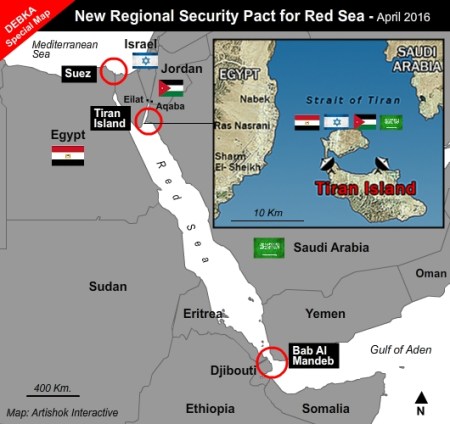
The US withdrew its forces from the Sinai Peninsula last weekend in retaliation for Egypt’s transfer of sovereignty over Tiran and Sanafir islands to Saudi Arabia, according to DEBKAfile’s military and intelligence sources. They also report that the move came after Washington protested to Egyptian President Abdel Fattah al-Sisi over its exclusion from the consultations and military coordination between Egypt, Saudi Arabia and Israel regarding the islands.

The US message was clear. Since Riyadh, Cairo and Jerusalem do not report their military steps in the Sinai Peninsula, the Gulf of Aqaba and the Red Sea to Washington, the US sees no need to inform them of its military steps in the Sinai.

That message was conveyed by the chairman of the US Joint Chiefs of Staff, Joseph F. Dunford, to the Egyptian president during their meeting on Saturday, April 23 in Cairo.

On Tuesday, DEBKAfile’s military sources reported that several days earlier the US military secretly withdrew about 100 of its officers and enlisted men from the multinational peacekeeping force in the northern part of the Sinai. As far as Riyadh, Cairo and Jerusalem are concerned, there is no doubt that it was a retaliatory measure.

US sources refused to specify the current location of the troops. The American force was withdrawn from El Gorah base, located next to the town of Sheikh Zuweid. Gen. Dunford told al-Sisi that the Obama administration is no longer willing to maintain forces in the northern Sinai following the recent shelling of the base by the ISIS affiliate in the restive area. The incident marked the terrorist organization’s first attack on US troops in the Sinai, but its second on an American force in the Middle East.

On March 19, ISIS shelled Fire Base Bell, a US marine base in Makhmur, northern Iraq, about 77 kilometers southeast of the terrorist organization’s de facto capital of Mosul. One marine was killed.

It was not by chance that shortly before he visited Cairo, Gen. Dunford made a visit lasting no more than 90 minutes to the US forward base to award purple hearts to four marines for their bravery during the ISIS shelling.

But while Washington is determined to maintain Fire Base Bell, where it has deployed HIMARS rocket launchers that can fire GPS-guided rockets known as GMLRS capable of reaching Mosul, and awards medals to soldiers serving at the base, it is not ready to treat its soldiers in the Sinai in the same manner because they have the status of multinational observers. Rather than giving out medals, it withdrew those soldiers immediately after the first ISIS attack.

At the same time, US sources launched an unprecedented personal attack on Egypt’s president over his decision to hand over the two islands to Riyadh. Articles attacking El-Sisi’s policy started to appear in the American media, with one saying “The decision to transfer the islands to Saudi Arabia may be the final nail in Sissi’s coffin.” It also described Egypt as being on the verge of a revolution against al-Sisi.

Two other Middle Eastern figures who were involved in Cairo’s decision regarding the islands were Saudi Deputy Crown Prince and Defense Minister Mohammad bin Salman and Israeli Defense Minister Moshe Ya’alon, who said recently that Cairo consulted Jerusalem regarding the transfer of the islands. However, his comment was not mentioned in US media reports, as if the development was not related to Saudi Arabia or Israel.

DEBKAfile’s military and intelligence sources report that one of the main reasons for Washington’s rage was the fact that Egypt, Saudi Arabia, Jordan and Israel decided to establish and coordinate by themselves a regional defense mechanism covering the Suez Canal, the gulfs of Suez and Aqaba, and the Red Sea.

The Obama administration prefers to ignore the fact that the US withdrawal of its naval and air forces from those areas over the last three years has enabled the Iranian fleet to start operating in those waters.

New Palestinian pact-for-terror

April 25, 2016

New Palestinian pact-for-terror, DEBKAfile, April 25, 2016

TerrorTunnels480

Israel embarked on a P. R. campaign to play down the extent of the threat which surfaced in one day in the discovery of Hamas tunnel near Kibbutz Sufa, and the suicide bombing of Jerusalem bus No. 12 on April 18, with 20 people injured. The police initially claimed for example that the explosion was due to a technical problem with the engine. But the two developments actually represented a sharp and serious escalation of the Palestinian wave of terror against Israel.

Neither of the operations was carried out by “lone wolves” but rather by large terror networks. The secret tunnel discovered in the Gaza border area was built by the Hamas military wing, the Izaddin al-Qassam brigades, while the suicide bombing in Jerusalem was carried out by the Hamas infrastructure in Judea and Samaria, specifically its operatives in the Bethlehem area.

Each of these terror networks poses a different challenge to Israel.

In Gaza, the Hamas political leadership is no longer in contact with the heads of its military wing. Neither the top commanders nor the regional commanders of the brigades obey any Hamas political body. They only heed three sources:

1. The Hamas military command framework headed by Mohammad Deif and Marwan Issa.

2. Iranian or Hizballah intelligence services, which maintain contacts with them and often provide funds or weapons.

3. The ISIS affiliate in the Sinai, with which the Hamas military wing maintains operational ties.

There is an equally serious problem in Judea and Samaria. Over the past few weeks, the Hamas terror networks have started to make contact with sleeper cells from Fatah’s Tanzim paramilitary force that have the knowledge, ability, means and experience for major terrorist attacks against Israel, such as the Jerusalem bus bombing.

This dormant wing of Mohammad Abbas’s Fatah has began to show signs of life and willingness to return to the path of terror.

These contacts began immediately after publication of a letter from jailed Tanzim leader Marwan Barghouti to members of the force that called on them to start coordinating their operations against Israel with Hamas. Nobody has bothered to explain how a senior terrorist jailed in a high-security Israeli prison succeeded in smuggling such a letter out.

The link between part of the Tanzim and the Hamas terror networks is no less dangerous than the tunnel discovered near Kibbutz Sufa, and it presages an escalation of terror operations in the future.

The only way to prevent a major deterioration of the security situation is to strike targets of the Izzadin al-Qassam brigades. There is no need to launch a total war against Hamas or to occupy Gaza.

But instead of responding as needed, Israel’s government and security establishment have released pictures of digging equipment that has finally succeeded in locating a single Hamas infiltration tunnel out of the many that exist, and claimed that those responsible for the Jerusalem bombing have yet to be identified. At the same time, senior officials and IDF officers continue to assert that Hamas is not seeking escalation.

Unfortunately, this can only mean a resurgence of the wave of terror.

Senior Hamas tunnel network defector tried to flee to Israel by sea: sources

April 18, 2016

Senior Hamas tunnel network defector tried to flee to Israel by sea: sources, DEBKAfile, April 18, 2016

Alauwana_Hamas_18.4.16

Western intelligence sources monitoring events in Gaza confirmed Monday that a senior operative from the Hamas tunnel network defected to Israel last week. The sources identified the defector as Sami Atauna, a resident of the Jebalya refugee camp who came to the border fence by himself and surrendered to an IDF patrol. The sources added that the senior operative had also made an unsuccessful attempt to defect to Israel by sea during the past few weeks. It is not clear whether there is any connection between the defection and the discovery of a Hamas tunnel leading into Israel, which was announced by the IDF on Monday.

Israel, Turkey, Russia and Egypt

April 17, 2016

Israel, Turkey, Russia and Egypt, Gatestone InstituteShoshana Bryen, April 17, 2016

(A blast from the past:

— DM)

♦ In 2011, the UN Palmer Commission Report found the blockade of Gaza — jointly administered with Egypt — to be legal, and said Israel owed Turkey neither an apology nor compensation.

♦ Lifting the Israel/Egypt embargo on Gaza would empower Hamas, and thereby the Muslim Brotherhood, Iran and ISIS — which would seem an enormous risk for no gain.

Turkish sources assert that Turkish-Israeli governmental relations are about to come out of the deep freeze. But this is a reflection of Turkey’s regional unpopularity and glides over Turkish demands for Israel to end the blockade of Gaza. To meet Turkey’s condition, Israel would have to abandon the security arrangement it shares with Egypt — which has increased Israel’s security and has begun to pay regional dividends. To restore full relations between Israel and Turkey would irritate Russia, with which Israel has good trade and political relations, and a respectful series of understandings regarding Syria. Israel’s relations with the Kurds are also at issue here.

After the 2010 Mavi Marmara flotilla — in which Turkey supported the Hamas-related Turkish organization, the IHH, in its effort to break the blockade of Gaza — Turkey made three demands of Israel: an Israeli apology for the deaths of Turkish activists; a financial settlement; and lifting the Gaza blockade, which Turkey claimed was illegal. The last would provide IHH with the victory it was unable to achieve with the flotilla.

1080 (1)The Turkish-owned ship Mavi Marmara took part in a 2010 “Gaza flotilla” attempting to break Israel’s naval blockade of Gaza, which is in place to prevent the terrorist group Hamas from bringing arms into Gaza. (Image source: “Free Gaza movement”/Flickr)

In 2011, however, the UN Palmer Commission Report found the blockade of Gaza — jointly administered with Egypt — to be legal, and said Israel owed Turkey neither an apology nor compensation. In 2013, at the urging of President Obama and to move the conversation off the impasse, Prime Minister Netanyahu did apologize for the loss of life and agree to discuss compensation. While President Obama was pleased, Prime Minister Erdogan repaid the gesture by denigrating Israel on Turkish television and announcing he would force the end of the blockade. Israel’s condition — that the office of Hamas in Ankara be closed — was ignored.

Nevertheless, in February 2014, Turkish Foreign Minister Ahmet Davutoglu told Turkish television that Israel and Turkey were “closer than ever” to normalizing relations.” In December 2015, it was more of the same. And in February 2016, there was yet another announcement of imminent restoration of government-to-government ties. In March, Kurdish sources said Turkey was demanding weapons from Israel, but that Israel wanted to ensure that Turkey would not use them against Kurdish forces.

Israel finds itself in an odd position — choosing among those who want its cooperation.

Israel and Egypt have come to a deep understanding of the sources of instability and insecurity in Sinai, and the relationship between Hamas in Gaza and its primary sponsor, Iran, as well as ISIS. Former IDF Chief of Staff Benny Gantz told inFOCUS magazine recently:

Coordination between us is very high and very important because we have identical interests. Period. The way to achieve them might look different, but Egypt is a very important country. It is crucial to the world to ensure its stability – progress in the fight against ISIS that is present in Sinai, and protecting the Suez Canal, and other things… They are all good reasons for Egypt to take these responsibilities seriously and do something about the threats. I’m very happy to see what they’re doing. It is a good track.

This month, Egypt and Saudi Arabia upgraded relations with Egypt, ceding back to the Saudis two islands that Saudi Arabia had given Egypt in 1950 to help Egypt fight Israel in the Red Sea. According to a report in the Egyptian daily al-Ahram, as reported by the Jerusalem Post, the Egyptian government informed Israel of the parameters of the deal, noting that Riyadh would be obligated to honor all of Egypt’s commitments in the peace treaty with Israel, including the presence of international peacekeepers on the islands and freedom of maritime movement in the Gulf of Aqaba. Israel approved the deal “on condition that the Saudis fill in the Egyptians’ shoes in the military appendix of the peace agreement,” according to Defense Minister Moshe Yaalon.

This makes Saudi Arabia an active partner in the Camp David Accords. And it follows on the heels of the Gulf Cooperation Council (GCC) labeling Hezbollah “a terror organization” without the weasel words the Europeans used to condemn only the “military wing” of the organization.

In the face of these developments, it is hard to imagine a benefit that would accrue to Israel by negating the Israel-Egypt blockade of Gaza on behalf of Turkey.

Russia presents a similar series of circumstances. Relations between Russia and Turkey have taken a nosedive over the Syrian civil war, particularly after Turkey shot down a Russian plane. But even before that, Turkey’s support of Sunni jihadist organizations was a thorn in the side of Russia, which still fears Sunni jihad inside southern Russia.

Russia has goals in Syria and Israel also has requirements. In his inFOCUS interview, former Chief of Staff Gantz noted:

The [Israeli] Prime Minister and Chief of Staff [Gantz’s successor] flew to Russia and had some important of discussions of intentions, deconfliction, and we expressed our interests… stability, preventing terrorist activity… preventing armament that will go from Iran through Syria to Hezbollah, or from Russia to Syria and then to Hezbollah…. People can see what it is that Israel does once in a while when it has to protect itself.

Add to this Israel’s generally good economic and political relations with Russia and, again, it is hard to see the benefit that would accrue to Israel by forging closer relations with Turkey while Russia and Turkey are doing a slow burn.

Turkey is doing a faster burn on the Kurds. Having waged a fierce war against Kurdish separatists in southern Turkey, the Turkish government has taken military action against the Kurds of Iraq and Syria to prevent Kurdish forces from connecting two enclaves — one in Iraq and one in Syria — that could form the geographic beginning of an independent Kurdistan.

Even at the peak of Israeli-Turkish relations, Israel’s support of the Kurds has been a relatively open political secret. Although the Israeli government consistently denies providing weapons, reputable sources suggest, at a minimum, training for Kurdish forces. Most recently, Israel acknowledged buying oil from Kurdish sources in Northern Iraq, and IsraAid, an Israeli humanitarian organization, provided assistance to Kurdish refugees fleeing ISIS. Prime Minister Netanyahu has publicly supported the establishment of a Kurdish state.

For Israel to trade its increasingly important relations with Russia, with Egypt — and thereby with Saudi Arabia — and with the Kurds for Turkish political approval and a promise to buy Israeli natural gas would seem to be a bad deal. For Israel to accompany that with the lifting of the Israel/Egypt embargo on Gaza that would empower Hamas — and thereby the Muslim Brotherhood, Iran and ISIS — would seem an enormous risk for no gain.

Israeli hysteria magnifies Hamas rocket threat

April 15, 2016

Israeli hysteria magnifies Hamas rocket threat, DEBKAfile, April 15, 2016

epa01962019 A Palestinian Hamas masked militant stands near a Hamas flag as he takes part in protest and a military parade in central Gaza Strip, 11 December 2009. Israeli settlers vandalized a mosque in a northern West Bank village early 11 December, spray-painting hate slogans in Hebrew and setting ablaze bookshelves and a carpet, Palestinian police and the Israeli military said. Palestinian police spokesman Munir Jagoub told the German Press Agency dpa that the fire in the grand mosque in the village of Yasouf, south-west of the city of Nablus, in the northern West Bank, caused heavy damage to the library, where copies of the Holy Quran are kept, as well as to prayer rugs and the wall. EPA/MOHAMMED SABER I

A Palestinian Hamas masked militant stands near a Hamas flag as he takes part in protest and a military parade in central Gaza Strip, 11 December 2009.

Hamas Political Bureau Chairman Musa Abu Marzuk led an SOS delegation to Tehran last month in a desperate effort to persuade Iran to end its boycott and renew the flow of funds and weapons to the Gaza Strip. But on April 4, the delegation returned home empty-handed.

This was a last-ditch effort since the Palestinian fundamentalist Hamas which rules the Gaza Strip is flat broke.

Since March 1, it has been forced to slash by two-thirds the wages paid to members of its military wing, the Ezz-a-din Qassem Brigades: each fighter now takes home $200 instead of $600 per month, and officers used to earning $1,000 must be satisfied with $350.

Since March 1, it has been forced to slash by two-thirds the wages paid to members of its military wing, the Ezz-a-din Qassem Brigades: each fighter now takes home $200 instead of $600 per month, and officers used to earning $1,000 must be satisfied with $350.

DEBKA’s military and intelligence sources add: The terrorist group has moreover halted recruitment for lack of funds to pay, accommodate or train new fighters.

The cash crunch has also hit the Hamas government. Most of Gaza’s municipal services are suspended because city officials have not been paid.

Iran’s boycott on military and financial assistance to the Gaza Strip was clamped down in mid-2015 over Hamas’ refusal to line up behind Iran’s unqualified endorsement of its allies, Syrian President Bashar Assad and Yemen’s Houthi rebels.

Since then, Hamas has spared no effort to end the shutdown. Its leaders even tried asking their friend and ally, Hizballah’s Hassan Nasrallah, to intercede on their behalf with his masters in Tehran. Nasrallah pulled some strings, suggesting that his group would be allowed to renew military and intelligence operations in Gaza to make it worthwhile for Iran to restore its support.

But that proposition like all previous applications was thrown out.

This time, the Hamas visitors were initially received by high Iranian officials, including Ali Shamkhani, secretary of the Iranian Supreme National Security Council, and Ali Larijiani, chairman of the Shura Council. Abu Marzuk asked them to put the case for ending the boycott before Iran’s supreme leader Ayatollah Ali Khamenei.

After the Palestinian officials cooled their heels for two weeks, Gen. Qassem Soleimani, commander of the Revolutionary Guards’ Al Qods Brigades, finally gave them a hearing.

But, according to DEBKA’s Iranian sources report, he told them bluntly that no more largesse would be forthcoming from the Islamic Republic until Hamas publicly declared its support for Syrian President Assad and ordered its fighting assets in Lebanon to join Hizballah’s military campaign in support of the Syrian ruler.

This confrontation has broad ramifications over and above Iran’s relations with the Palestinian terrorists.

Hamas_480_Kotert

1. Tehran demonstrated that its support for Assad is absolute and brooks no opposition. This should dash any hopes underlying the US-Russian understanding for a political resolution of the Syrian conflict that Assad would at some point agree to hand over power to a broad coalition.

Iran is ruthless in bending all its allies and dependents into toeing its line in defense of the Syrian ruler

2. Gen. Soleimani has resurfaced after a five-month disappearance from public view. Rumors abounded that he had been seriously wounded in a Syrian battle, or else fallen into disfavor with Khamenei and cast aside. His reappearance in Tehran with the Hamas delegation means he has been reinstated to the command of Iran’s forces in Syria and the role of operations coordinator with the Russian military.

3. After Iran’s door was slammed in their faces, Hamas leaders reluctantly tried patching up their tattered ties with Egyptian President Abdel-Fatteh El-Sisi.

But a delegation to Cairo found Egyptian military and intelligence officials as tough-minded as the Iranians. Hamas terrorists were put on notice that, to mend relations, they would have to prove their good faith by cooperating with Cairo in the war against the Islamic State in Sinai. Specifically, the Palestinian terrorists must hand over to the Egyptian army all the intelligence data they had accumulated on the ISIS networks in Sinai with whom they were playing ball.

Though insolvent, Hamas decided it could not afford to comply with Egypt’s terms for assistance. As DEBKA’s sources explain, breaking up with the Islamic State affiliates in Sinai, would also snap Hamas’ last remaining conduit for the receipt of smuggled funds and weapons from Islamist sources in Libya.

Having burned their boats to Tehran and Cairo, the Palestinian terrorists have run themselves into a dead end.

Hysteria regarding the threat posed by Hamas resurfaced in Israel this week, even though the terrorist organization’s military strength is gradually disintegrating mainly amid a cash crunch that nobody in the Hamas  political or military leadership has been able to resolve.

It all started from a briefing given by the head of the IDF Southern Command, Maj. Gen. Eyal Zamir, to military correspondents following a defensive exercise in the Gaza border area.

Afterwards, the heads of the Israeli defense establishment commented on the threat posed by Hamas using clichés that have been familiar to the Israeli public for years. Perhaps the most common one is “Hamas is not interested in an escalation now… but.” Another one is “Israel and the IDF are not interested in an escalation now…but.”

One of the heads of the Israeli local councils in the Gaza border area added that he was not surprised by recent comments by senior IDF officers on the strengthening of the Hamas. “The statements that Hamas operatives are continuing terror operations can only surprise those who are detached from reality,” he said.

Amid the terrorist organization’s weakness, Israeli hysteria is helping Hamas conceal its true situation from the Palestinian public.