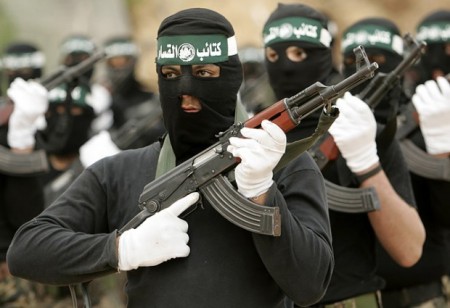
Archive for the ‘Gaza’ category

The UN’s Anti-Israel Children and Armed Conflict Report

June 10, 2015

The UN’s Anti-Israel Children and Armed Conflict Report, Front Page Magazine, June 10, 2015

(Please see also, Legal Experts Slam IDF for Over-Warning Gazans. — DM)

UN_Secretary-General_Ban_Ki-moon_-_Flickr_-_The_Official_CTBTO_Photostream_13-431x350

According to the New York Times, citing unnamed diplomats, United Nations Secretary General Ban Ki-moon bowed to “unusual pressure from Israel and the United States” in deciding not to include either Israel or Hamas on a list of “armies and guerilla groups that kill and maim children in conflicts worldwide.” The list is included in an annex to an annual report by the Secretary General entitled “Children and armed conflict,” which he just released for 2015. The list, as its title states, is intended to identify specifically the entities that “recruit or use children, kill or maim children, commit rape and other forms of sexual violence against children, or engage in attacks on schools and/or hospitals in situations of armed conflict.”

Ban Ki-moon considered the recommendation of his special representative for children and armed conflict, Leila Zerrougui, to include both Israel and Hamas on this list as a reflection of their actions and the deadly consequences to children arising from the Gaza conflict last summer. The list already includes such Islamic jihad terrorist groups as the Islamic State, the al-Nusra Front, Boko Haram, the Taliban, Al Shabaaba, Al-Qaida in the Arab Peninsula and the Houthis, as well as government forces of the Syrian regime, Yemen, Sudan and Afghanistan.

While the Secretary General rejected his special representative’s recommendation, leaving both the terrorist jihadist group Hamas and Israel off the list in a display of moral equivalence, the body of the report is far more condemnatory of Israel than of Hamas or other Palestinian militants. There were more than three times as many paragraphs devoted to alleged Israeli violations of children’s rights relating to the Gaza war than devoted to the actions of Hamas or other Palestinian terrorists. When there was any criticism of Palestinian actions, it was stated in the mildest of terms. Israel, on the other hand, received the full brunt of the Secretary General’s censure:

“I am deeply alarmed at the extent of grave violations suffered by children as a result of Israeli military operations in 2014. The unprecedented and unacceptable scale of the impact on children in 2014 raises grave concerns about Israel’s compliance with international humanitarian law, notably the principles of distinction, proportionality and precaution in attack, and respect for international human rights law, particularly in relation to excessive use of force.” (Paragraph 110)

Nevertheless, Riyad Mansour, Permanent Observer of the State of Palestine to the United Nations, was not satisfied. He issued a blistering statement declaring that “It is without doubt that Israel, the occupying Power, flagrantly, systematically and grossly commits human rights violations against Palestinian children constituting grave violations that qualify it for such a listing in the annex to the Annual Report on Children and Armed Conflict. The UN’s inaction, submitting to the inordinate pressures exerted, sends a most regrettable signal that the same criteria do not apply in all situations for all children, undermining the credibility of the UN system as a whole…”

As usual, Mr. Mansour stands the truth on its head. Indeed, Ban Ki-moon should have accepted his special representative’s recommendation to include Hamas on the annex list. Hamas and its other jihadist allies, not Israel, belong on the list alongside their Islamic State and al Qaeda brethren. They use children as human shields, deliberately store weapons in schools, homes hospitals and mosques where they know children are likely to be, and recruit children for jihad including the establishment of youth military training camps. They prepare children for the glory of martyrdom, extolling the virtues of suicide bombings that kill Jews.

Ban Ki-moon properly rejected his special representative’s recommendation to include Israel on the annex list. Israel does not belong on the same list as non-state and state entities that deliberately kill children with abandon, recruit children as soldiers, abduct and rape little girls, and kill their parents before their very eyes. To the contrary, the Israeli armed forces took great pains to minimize civilian casualties. It took the unprecedented step of warning civilians in advance of impending attacks on facilities that Hamas was using as launching pads from which to fire rockets at Israeli population centers and from which they were building their terrorist tunnels to sneak their fighters into Israel for the purpose of killing Israeli civilians, including women and children.

However, putting the annex list aside, Mr. Mansour should have been happy that the Secretary General reflected the institutional bias of the United Nations against Israel in the body of his report. In a crucial paragraph urging corrective actions to remedy the report’s catalogue of alleged violation of children’s rights – mostly said to be committed by Israel – the report focused solely on what Israel should do:

“I urge Israel to take concrete and immediate steps, including by reviewing existing policies and practices, to protect children, to prevent the killing and maiming of children, and to respect the special protections afforded to schools and hospitals. An essential measure in this regard is ensuring accountability for perpetrators of alleged violations. I further urge Israel to engage in a dialogue with my Special Representative and the United Nations to ensure that there is no recurrence in grave violations against children.” (Paragraph 111)

As usual, nothing is asked of the Palestinians. They are not urged to stop storing weapons in schools and hospitals. They are not asked “to protect children, to prevent the killing and maiming of children,” which they could begin to do by not using children as human shields, and not deliberately conducting rocket attacks against Israeli civilians including children and conducting other military activities from areas where they know Palestinian children are likely to be. They are not asked to close the youth military training camps or stop the online propaganda that indoctrinates Palestinian children into believing that martyrdom through jihad against Jews is the way to paradise.

We should not be surprised. Such anti-Israel bias is par for the course at the United Nations. Its Human Rights Council passes more resolutions condemning Israel than all of the other 192 member states combined. The Human Rights Council’s agenda item 7 requires that Israel’s – and only Israel’s – record of human rights be debated at every session. Investigations launched by the Human Rights Council and the UN Secretary General of alleged human rights and other international law violations in Gaza during the repeated wars there initiated by Hamas’s terrorist attacks against Israeli civilians are blatantly one-sided against Israel.

Israel was the only country in the world to be named as a violator of “health rights” during the UN World Health Organization’s annual assembly in May 2015. Never mind about Syria, Iran, Iraq, Libya, or North Korea where basic medical care and health services are scarce, if existent at all. Israel facilitates the delivery of humanitarian aid and takes care of the sick and injured, whether they be Palestinians or not. The Syrian regime prevents humanitarian aid including medical supplies from reaching besieged civilians, including Palestinian children trapped in Yarmouk. Yet the World Health Organization chose to ignore all this and adopt a resolution focusing solely on health conditions in the occupied Palestinian territory, including East Jerusalem, and in the Golan Heights, for which Israel is held responsible.

The UN Commission on the Status of Women, whose latest annual meeting concluded on March 20, 2015, marched to the same anti-Israel tune. The only country it condemned for its women’s rights record was Israel, presumably because of its alleged treatment of Palestinian women.

“If anyone had any doubt that there was demonization of Israel at the United Nations, here is the entire truth before our eyes,” said Israel’s Ambassador to the UN, Ron Prosor. “There are 193 member states in the UN, and they include countries that butcher men and women, jail both male and female journalists, execute female oppositionists and legislate laws against women. All of these countries receive immunity in the UN. The UN Commission on the Status of Women is itself comprised of some of the worst violators of women’s rights, including Iran and Sudan, two of the more moderate members by comparison.”

Every day it seems that there is new proof of the demonization and attempts to delegitimize the Jewish state of Israel at the United Nations. Secretary General Ban Ki-moon’s report on “children and armed conflict” is but the latest example. There will certainly be more to come.

Op-Ed: Core Synergies in Israel’s Strategic Planning

June 9, 2015

Op-Ed: Core Synergies in Israel’s Strategic Planning, Harvard Law School National Security Journal via Israel National News, Prof. Louis René Beres, June 9, 2016

(Rather “high brow,” but well worth considering seriously. — DM)

Significantly, the most insidious synergy of all could involve a rudimentary failure to understand that belligerent enemy intentions ultimately depend for their efficacy upon confused, partial, or inadequately thoughtful Israeli responses.

*****************

To best serve Israel, the country’s strategic studies community should favor more conceptual or “molecular” assessments of expected security perils. Going forward therefore, it will not suffice for this community to operate in ways that are roughly comparable to the purely reportorial activities of journalists and pundits, that is, of ordinary observers who focus exclusively on current personalities and events. With this timely warning in mind, the following brief essay explains and argues for a specifically enhanced Israeli consideration of enemy “synergies.”

For the most part, the concept of synergy is already familiar to capable scientists and scholars. It signifies, above all, that the usually binding axioms of geometry can sometimes be overridden by various intersecting phenomena. Applied to Israel, this concept suggests that certain identifiable threats to the Jewish State should no longer be considered as wholly separate or discrete, but instead, as more-or-less interpenetrating and mutually-reinforcing.

The most obvious and portentous example of pertinent synergy for Jerusalem is represented by Iranian nuclear weapons and Palestinian statehood.[1]

At first, any such talk of “synergy” may sound needlessly pretentious, or at least more contrived, concocted, or complicated than is really the case. In medicine, after all, it would already seem plain that the dangers of smoking cigarettes and drinking alcohol together must exceed either one behavior without the other. This is because the synergistic effect is presumptively much greater than those consequences ascertained by merely adding these two injurious activities together.

For Israeli planners, the still-widely-unrecognized synergy between Iranian nuclearization and “Palestine” should finally be treated with a more emphatic intellectual regard.[2] Notwithstanding the declared assumptions of virtually all acknowledged national strategists, Iran and Palestine,[3] as “negative force multipliers,”[4] do not represent thoroughly separate or unrelated hazards to Israel. To continue to assess each one independently of the other would be a serious conceptual error. It would be to consciously obscure what is potentially most revealing and most ominous.

Israel’s main security policies must involve carefully nuanced considerations of active defense, as well as of deterrence, preemption, and war-fighting. The country’s multilayered missile defenses are central to national survival. As long as incoming rocket aggressions from Gaza, West Bank, and/or Lebanon (Hezbollah) were to remain “only” conventional, the inevitable leakage could still be tolerable. But once these rockets were fitted with chemical and/or biological materials, such porosity could quickly prove “unacceptable.[5] This means, among other things, that the projected harms of rocket attacks upon Israel would depend not only upon the inherent dangers posed by a particular weapon system, but also upon the ways in which these individual harms would intersect.[6]

Once facing Iranian nuclear missiles, Israel’s “Arrow” ballistic missile defense system would require a fully 100% reliability of interception. To achieve any such level of reliability, however, would be impossible. Now, assuming that the prime minister has already abandoned any residual hopes for a cost-effective eleventh-hour preemption against pertinent Iranian nuclear assets , this means that Israeli defense planners must prepare instead, and longer-term, for stable deterrence.[7]

Theory is a net. Only those who cast, can catch.[8] Because of the expectedly corrosive interactive effects involving Iranian nuclear weapons and Palestinian statehood, for example, Israel will need to update and refine its existing theories of deterrence.

Looking ahead, there are various antecedent issues of theoretical concern. For one, Israel’s leaders will have to accept that certain more-or-less identifiable leaders of prospectively overlapping enemies might not necessarily satisfy the complex criteria of rational behavior in world politics. In such partially improbable but still conceivable circumstances, assorted Jihadist adversaries in Palestine, Iran, Syria, Iraq, Lebanon, or elsewhere might sometime refuse to renounce certain still-contemplated aggressions against Israel.[9]

By definition, these irrational enemies could exhibit such more-or-less plausible refusals even in anticipation of fully devastating Israeli reprisals. But, would they still remain subject to alternative threats or forms of deterrence? And might an entire state sometime exhibit such non-rational orientations, thereby becoming, in essence, a suicide terrorist writ large?

These utterly core questions can no longer be ignored. Sooner rather than later, and facing new and prospectively incalculable synergies from Iranian and Palestinian aggressions, Israel will need to take appropriate steps to assure that: (1) it does not become the object of any non-conventional attacks from these enemies; and (2) it can successfully deter all possible forms of non-conventional conflict. To meet this ambitious but indispensable goal, Jerusalem, inter alia, absolutely must retain its recognizably far-reaching conventional superiority in pertinent weapons and capable manpower, including effective tactical/operational control over the Jordan Valley.

In this connection, a Palestinian state could make Israeli military and civilian targets more opportune for Iranian rockets. It could simultaneously undermine the Jewish State’s critical early-warning systems.

Maintaining a qualitative edge in conventional war-fighting capacity could reduce Israel’s overall likelihood of ever actually having to enter into a chemical, biological, or even nuclear exchange with regional adversaries. CorrespondinglyIsrael should plan to begin to move incrementally beyond its increasingly perilous posture of “deliberate nuclear ambiguity.”[10] By preparing to shift toward prudently selective and partial kinds of “nuclear disclosure” – in other words, by getting ready to take its “bomb” out of the “basement,” but in carefully controlled phases[11] – Israel could best ensure that its relevant enemies will remain sufficiently subject to Israeli nuclear deterrence.

In matters of defense strategy, truth may emerge through paradox. Israeli planners, it follows, may soon have to acknowledge that the efficacy and credibility of their country’s nuclear deterrence posture could sometime vary inversely with enemy perceptions of Israeli nuclear destructiveness. However ironic or counter-intuitive, enemy views of a too-large or too-destructive Israeli nuclear deterrent force, or of an Israeli force that is not sufficiently invulnerable to first-strike attacks,[12] could substantially undermine this deterrence posture.

Here, too, carving “Palestine” out of the still-living body of Israel (whatamounts to the unhidden Palestinian Authority plan for a “one state solution”), could impact the Iranian nuclear threat, and vice-versa. Once again, Israel’s defense planning must account for possible and prospectively prohibitive synergies.

Also critical, of course, is that Israel’s current and future adversaries will always acknowledge the Jewish State’s nuclear retaliatory forces as “penetration capable.” This suggests forces that will seem “assuredly capable” of penetrating any Arab or Iranian aggressor’s active defenses. Naturally, a new state of Palestine would be non-nuclear itself, but it could still present a new “nuclear danger” to Israel by its probable impact upon the prevailing regional “correlation of forces.”[13] Palestine, therefore, could represent an indirect but nonetheless markedly serious nuclear threat to Israel. Here, yet again, is an example of the need for Israeli planners to think synergistically.

More remains to be done. Israel should continue to strengthen its active defenses, but Jerusalem must also do everything possible to improve each critical and interpenetrating component of its nuanced deterrence posture. In this bewilderingly complex and dialectical[14] process of strategic dissuasion, the Israeli task may require more incrementally explicit disclosures of nuclear targeting doctrine, and, accordingly, a steadily expanding role for cyber-defense and cyber-war.

Even before undertaking such delicately important refinements, Israel will need to more systematically differentiate between adversaries that are presumably rational,[15] irrational, or “mad.”[16]

Overall, the success of Israel’s national deterrence strategies will be contingent, inter alia, upon an informed prior awareness of enemy preferences, and of specific enemy hierarchies of preferences. In this connection, altogether new and open-minded attention will need to be focused on the seeming emergence of “Cold War II” between Russia and the United States. Any such emergence, of course, could have meaningful effects upon both Israeli and adversarial military postures.[17]

If, within a pattern of “Cold War II,” a newly-formalized state of Palestine does not find itself in the same ideological orbit as Iran, the net hazard to Decision-makers will then need to explore and acknowledge what amounts, paradoxically, to a geometry of chaos. Israel could still exceed the sum of relevant intersecting threats. While attempting to survive amid growing regional disorder, therefore, Israel’s leaders should learn to understand the profound strategic limits of normal “geometry”—where, quite mundanely, the whole is always expected to equal to the sum of its parts—and to augment an enhanced understanding with certain new geometric orthodoxies. In essence, these decision-makers will then need to explore and acknowledge what amounts, paradoxically, to a geometry of chaos.

Still, even this long-hidden geometry could reveal a discernible sense of symmetry and form, including the precise shape of certain critically interwoven enemy threats. Wherever the belligerent whole might add up to more than the sum of its constituent parts, Israel’s leaders could discover lethal hazards of adversarial synergies. Significantly, the most insidious synergy of all could involve a rudimentary failure to understand that belligerent enemy intentions ultimately depend for their efficacy upon confused, partial, or inadequately thoughtful Israeli responses.

When Pericles delivered his famous Funeral Oration, with its meticulously elaborate praise of Athenian civilization, his geostrategic perspective was applicable to more than the particular struggle at hand. Recorded by Thucydides, Pericles had expressed confidence in a military victory for Athens (a confidence, of course, that turned out to be misplaced), but also grave concern for any self-imposed limitations along the way: “What I fear more than the strategies of our enemies,” he had warned, “is our own mistakes.” However unforeseen, there is a vital lesson here for present-day Israel: In observing enemy preparations for war and terror, never forget that the ultimate success of these preparations will depend upon Israel’s selected responses.

There exists an overarching or determinative synergy between certain individual or intersecting enemy preparations and Israel’s own prepared policies and reactions.

In all world politics, but especially in the Middle East, we are present at the gradual unveiling of a “big picture,” but the nucleus of meaning—the essential truth of what is taking place—involves what is left out. For the foreseeable future, Israel’s enemies will continue with their ardent preparations for every form of war and terrorism. Unaffected by any civilizing expectations of international law of comity, these calculated preparations will proceed largely on their own track, culminating, if left suitably unobstructed, in new and ever more serious aggressions against Israel. The Jewish State must remain vigilant of such an emergent “big picture,” but also of every imaginable intersection or pattern of intersections between its component parts.

Always, Israel’s leaders and planners must reflect, core dangers to national security are profoundly synergistic.

Always, Israeli policy must recall, these fundamental dangers are potentially much greater than the additive sum of their  respective parts.

Always, Jerusalem must insightfully recognize, even a bewildering geometry of chaos has potentially meaningful sense and form.

Always, it must be Israel’s consuming task, to discover this synergistic truth.

Sources: 

[1] There are other still more complex synergies that need to be examined. These concern, especially, the intersecting roles of ISIS and al-Qaeda, including pertinent sub/state-state relationships with Syria, Iran, Libya, Lebanon, Yemen, and Saudi Arabia. Also worth exploring, in this connection, is the plausible escalation of “Cold War II,” a broadly transforming context of world politics that could create a “synergy of synergies.” Although all such bewildering hypotheticals may be intimidating or annoying to scholars and policy-makers, there remains no reasonable explanatory alternative to taking them into account.

[2] Rabbi Eleazar quoted Rabbi Hanina, who said: “Scholars build the structure of peace in the world.” See: The Babylonian Talmud, Order Zera’im, Tractate Berakoth, and IX.

[3] Once a Palestinian state were created, it would more likely become subject to destruction by assorted Arab forces, than by Israel. Plausibly, in this connection, ISIS forces fighting their way westward across Jordan could quickly arrive at the West Bank (Judea/Samaria), and make fast work of any now indigenous Hamas/PA national “army.” In such dire circumstances, the citizens of “Palestine” would assuredly rue the day of their recently-declared “independence.”

[4] This is a term that will likely be favored by the generals, over synergy.

[5] See, on this issue: Louis René Beres and (Major-General/IDF/Res.) Isaac Ben-Israel, “Think Anticipatory Self-Defense,” The Jerusalem Post, October 22, 2007; Professor Beres and MG Ben-Israel, “The Limits of Deterrence,” Washington Times, November 21, 2007; Professor Beres and MG Ben-Israel, “Deterring Iran,”Washington Times, June 10, 2007; Professor Beres and MG Ben-Israel, “Deterring Iranian Nuclear Attack,” Washington Times, January 27, 2009; and Professor Beres and MG Ben-Israel, “Defending Israel from Iranian Nuclear Attack,” The Jewish Press, March 13, 2013. See also: Louis René Beres and (General/USAF/ret.) John T. Chain, “Could Israel Safely Deter a Nuclear Iran?” The Atlantic, August 9, 2012; Professor Beres and General Chain, “Living With Iran,” BESA Center for Strategic Studies, Israel, May 2014; and Louis René Beres and (Lt.General/USAF/ret.) Thomas McInerney, “Obama’s Inconceivable, Undesirable, Nuclear-Free Dream,” U.S. News & World Report, August 29, 2013.

[6] Here, it warrants mention that Palestinian statehood could represent an enlarged set of risks to Israel’s Dimona nuclear reactor. Already, in 1991 and 2014, this small reactor came under missile and rocket attack from Iraqi and Hamas aggressions respectively. For authoritative assessments of these attacks and related risks, see: Bennett Ramberg, “Should Israel Close Dimona? The Radiological Consequences of a Military Strike on Israel’s Plutonium-Production Reactor,” Arms Control Today, May 2008, pp. 6-13.

[7] With particular reference to nuclear deterrence, the primary function of Israel’s nuclear forces must always be dissuasion ex ante, rather than revenge ex post.

[8] This convenient metaphor is generally attributed to Novalis, the late 18th-century German poet and scholar. See, for example, introductory citation by Karl R. Popper, in his The Logic of Scientific Discovery (1959). Ironically, perhaps, Novalis’ fellow German poet, Goethe, had declared, in his early Faust fragment (Urfaust): “All theory, dear friend, is grey. But the golden tree of life is green.” (Grau, theurer Freund, ist alle Theorie, Und grűn des Lebens goldner Baum.)

[9] See, on this point: Louis René Beres, “Religious Extremism and International Legal Norms: Perfidy, Preemption, and Irrationality,” Case Western Reserve Journal of International Law, Vol. 39, No.3., 2007-2008, pp. 709-730.

[10] See: Louis René Beres, “Like Two Scorpions in a Bottle: Could Israel and a Nuclear Iran Coexist in the Middle East,” The Israel Journal of Foreign Affairs, Vol. 8, No. 1., 2014, pp. 23-32; Louis René Beres, “Facing Myriad Enemies: Core Elements of Israeli Nuclear Deterrence,” The Brown Journal of World Affairs, Vol. XX, Issue 1., Fall/Winter 2013, pp. 17-30; Louis René Beres, “Lessons for Israel from Ancient Chinese Military Thought: Facing Iranian Nuclearization with Sun-Tzu,”Harvard National Security Journal, 2013; Louis René Beres, “Striking Hezbollah-Bound Weapons in Syria: Israel’s Actions Under International Law,” Harvard National Security Journal, 2013; Louis René Beres, “Looking Ahead: Revising Israel’s Nuclear Ambiguity in the Middle East,” Herzliya Conference presentation, 2013; March 2013; IDC, Herzliya; Louis René Beres and (General/USAF/ret) John T. Chain, “Could Israel Safely Deter a Nuclear Iran?” The Atlantic, 2012.

[11] On identifying alternative nuclear disclosure options, see: Louis René Beres, “Israel’s Strategic Doctrine: Updating Intelligence Community Responsibilities,”International Journal of Intelligence and Counterintelligence, Vol. 28, No. 1, Spring, 2015, pp. 89-104.

[12] On Israeli submarine basing measures, see: Louis René Beres and (Admiral/USN/ret.) Leon “Bud” Edney, “Israel’s Nuclear Strategy: A Larger Role for Submarine-Basing,” The Jerusalem Post, August 17, 2014; and Professor Beres and Admiral Edney, “A Sea-Based Nuclear Deterrent for Israel,” Washington Times, September 5, 2014.

[13] See: Louis René Beres, “Understanding the Correlation of Forces in the Middle East: Israel’s Urgent Strategic Imperative,” The Israel Journal of Foreign Affairs,Vol. IV, No. 1 (2010).

[14] Dialectic formally originated in the fifth century BCE, as Zeno, author of the Paradoxes, had been acknowledged by Aristotle as its inventor. In the middle dialogues of Plato, dialectic emerges as the supreme form of philosophical/analytic method. Here, Plato describes the dialectician as one who knows best how to ask and answer questions. This particular knowledge – how to ask, and to answer questions, sequentially – should now be insistently transposed to the organized study of Israeli security issues.

[15] Israelis, like Americans, are inclined to project their own dominant sense of rationality upon adversaries. Acknowledging that western philosophy has always oscillated between Plato and Nietzsche, between rationalism and irrationalism, we have all routinely cast our psychological lot with the Greek thinkers and their inheritors. Significantly, however, Israel is now up against a steadily transforming ordering of the geostrategic universe; now, Israel’s strategists might sometimes be better advised to read Dostoyevsky and Kafka, than to dwell too fixedly on Platonic rationalism.

[16] “Do you know what it means to find yourselves face to face with a madman,” inquires Luigi Pirandello, “with one who shakes the foundations of all you have built up in yourselves, your logic, and the logic of all your constructions? Madmen, lucky folk, construct without logic, or rather, with a logic that flies like a feather.”

[17] On this point, see: Louis René Beres, “Staying Strong: Enhancing Israel’s Essential Strategic Options,” Harvard National Security Journal, Harvard Law School, June 13, 2014.


IDF Rehearsing for Nightmare Scenario: 4,000 Killed in Days

June 7, 2015

IDF Rehearsing for Nightmare Scenario: 4,000 Killed in Days, Israel National News, Gil Ronen, June 7, 2015

Security forces are currently rehearsing and preparing for a scenario in which Israel’s enemies launch a “carpet” missile attack that Iron Dome will be unable to counter, due to the sheer number of missiles involved, Arutz Sheva has learned from knowledgeable sources that wish to remain anonymous.

In this scenario, up to 4,000 Israelis will be killed in the first days of the attack, which could happen as early as this summer.

“Iran is seeking to cover Israel with intense fire,” Prime Minister Binyamin Netanyahu warned in a special briefing for journalists at the week’s end.

“In Lebanon, the Iranians are inserting the most advanced weapons in the world, and strengthening Hezbollah, so that it can hit any spot in Israel,” Netanyahu was quoted as saying in the daily Makor Rishon. “They are trying to build a second front in the Golan, and of course, in Gaza.”

‘Earth-shaking shock’ 

Former prime minister and defense minister Ehud Barak also sounded dire warnings last week, regarding Hezbollah’s ability to deal a heavy blow to Israel, and Israel’s unpreparedness for this.

“Our rival is serious, and we have no room for smugness on any front,” he said. “We must not be smug and take our superiority as something that is self-evident and supposedly God-given. Superiority is the result of serious work. We have not really dealt with 100,000 rockets, and we have not started to deal with the matter of their accuracy. When the rockets are accurate, it is not more of the same thing. It is something completely different.”

“The country has no choice but to reach conclusions,” Barak warned. “One cannot deal with this challenge by deploying in all of the places, from which [anti-missile] missiles can be fired. These things are very expensive: Iron Dome and Magic Wand, Arrow and Super-Arrow are expensive projects.

“One cannot exaggerate the importance of safeguarding security,” he added, “and one cannot exaggerate the earth-shaking shock that can take place when it turns out that we did not prepare and we did not understand the urgency and practicality of challenges of this sort, and the need to translate clear thought to conclusions, and we will find ourselves [in a situation where] citizens suddenly discover that one cannot walk slowly and lackadaisically to the bomb shelters, knowing that nothing can happen, as we did in during Operation Protective Edge. These things must be done now, we must not wait.”

Israel’s Revenge Is That “We Are Still Here”

June 7, 2015

Israel’s Revenge Is That “We Are Still Here” The Legal Insurrection, June 7, 2015

My wife and I are back, after an intense two weeks in Israel.

From the Lebanese to Gaza borders, from the Mediterranean Sea to Judea and Samaria, from the cool evenings of Jerusalem to the heat of the Negev Desert, from an apartment in the Jewish Quarter of the Old City of Jerusalem to Bedouin villages in the north and south, from university campuses to military bases, from faculty to students, from Jews to Muslims … I can’t say we saw it all, but we saw a lot.

I’ve documented most of our big events in daily posts, with the exception of our emotional meetings with the families of Edward Joffe and Leon Kanner, students killed in the 1969 Supersol supermarket bombing by Rasmea Odeh; that post is coming, but I still have new photos, documents and information I have to work through.

Here are my 5 Big Takeaways from the trip:

1. Our Revenge Is That “We Are Still Here”

Near the start of our trip, we visited Moshav Avivim straddling the Lebanese border, where we met Shimon Biton, a survivor of the 1970 bazooka attack on a school bus by the Popular Front for the Liberation of Palestine.

Biton, who was six and one-half years old, lost his father in the attack, and himself was shot point blank range by the terrorists when they realized he survived the bazooka attack.  Ten days before we met Biton, he was reunited for the first time in 45 years with the nurse who helped save him.  (Featured Image)

When we asked whether he ever wanted revenge, Biton told us that the revenge was that “we are still here and building for another 70 families.”

Moshav-Aviviv-Shimon-Biton-e1432683043370[Shimon Biton, Moshav Avivim, Israel]

When we related that story to numerous people we met along the rest of the trip, heads vigorously shook up and down.  It struck a chord, since almost every Israeli has a relative or friend impacted by terror.

Despite several decades of terrorism, particularly intense during the Second Intifada, and a world campaign against it, the People of Israel are still there.

The will to resist is underestimated.  Israel has a longer-term view, and a history.  It will not give in to boycotts, or Obama, or outside pressure that puts its security at risk.

2. “I don’t like Bibi, BUT….”

For whatever the reason, most of the people with whom we interacted self-identified as center-left or left.

There was no shortage of criticism of Israeli Prime Minister Benjamin Netanyahu: He’s egotistical, he doesn’t keep his tough promises, he is only interested in his own political survival, he’s a liar, his pre-election comment about Arab voting was shameful, and so on.

Yet with only a couple of exceptions, the negative comments always were followed with a big BUT.

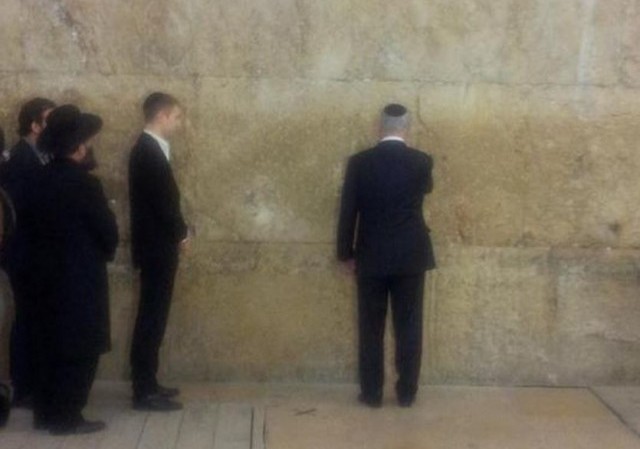
Benjamin-Netanyahu-at-Western-Wall-post-election-2015-e1426681806959[Israeli Prime Minister Benjamin Netanyahu at Western Wall after 2015 election victory.]

But he is the only Israeli politician who has the stature to handle the world pressure; but I don’t envy the position he is in with so many forces against us; but [opposition leader Yitzhak “Bougie” Herzog] Bougie is weak and no one will fear him; and so on.

These opinions pretty much were reflected in polling and the election results — Many people may not like Netanyahu, but he is the only Israeli politician capable of standing up for Israel in a hostile world.

3. I don’t like Obama, no BUTs about it

Polling in Israel shows Obama is hugely unpopular.  Our anecdotal interactions with Israelis confirmed that polling.

I  can’t recall anyone, from left to right, who had anything nice to say about Obama.  The most consistent theme was that Obama is naive and weak, and that naivitee and weakness had resulted in disaster in the Arab world as it encouraged the most aggressive Islamist elements.

They see Syria falling apart with al-Qaeda or ISIS groups likely to control large parts of the country; or if not, then Iran in control. There are no good outcomes for Israel’s Golan Heights border. Along the Lebanese border there is Hezbollah, and in Gaza Hamas and increasingly even more radical Salafist-ISIS groups.

Against this background of being surrounded by a sea of increasing threats resulting from Obama administration policy, not a single person thought the Iran nuclear deal made any sense, or trusted the Obama administration on it.

In other words, Israelis live in the real world, not the world of Obama’s delusional hope.  And they don’t appreciate Obama taking risks with their lives.

4. Are we really that popular in the United States?

The anti-Israel Boycott, Divestment and Sanctions movement was a frequent topic of conversation, almost always brought up by us as part of describing the type of coverage at Legal Insurrection.  This coincided with what I consider an irrational panic the past two weeks in the Israeli press and political discourse about BDS (more on that in a later post.)

I tried to explain that there is a complete disconnect between the BDS movement in the U.S. and the vast majority of Americans.  Gallup and Pew polling shows Israel at or near historical highs in terms of Israel’s favorability both abolutely and relative to favorability of Palestinians.  The gap between those who pick Israel over Palestinians when the question forces a choice, also is historically high.

Virtually every Israeli we met was shocked that Israel is actually so popular in the United States.  Even Israelis who have extensive American contacts and visit the U.S.

That’s not all so surprising.  Both the U.S. and Israeli media focus on the negative, though for different reasons.  The U.S. media long has had in implicit anti-Israel bias, compounded by the rise of left-leaning new media, while the Israeli media competes for readers with a “sky is falling” outlook.

(added) Israel’s enormous popularity among Americans is a strategic asset.  That strategic asset needs to be used more effectively to minimize the damage from the narrow but influential slices of the American population — radical faculty, some students, and mainstream journalists — who have explicit or implicit anti-Israel biases. The American people as a whole are the “Israeli Lobby.”

5. The Next War is Only a Matter of Time

While we were in Jerusalem, Israel underwent a national defense drill, including sirens warningof incoming rockets.

Our tour along the Gaza border, particularly near Sderot, also reflected preparation for the next round of rocket fire through reinforcing key civilian infrastructures, such as schools.

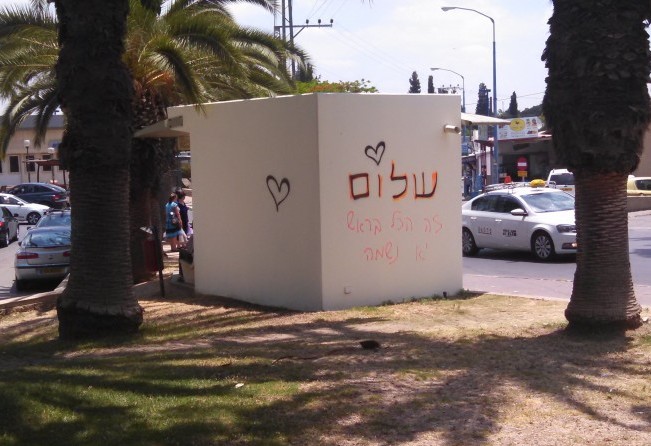
Sderot-Israel-bomb-shelter-street-e1433110130989[Sderot, Israel, street bomb shelter with “Shalom” grafitti]

There was a pervasive feeling that the calm cannot last.  And sure enough, while we were there and just after we left, rockets were fired from Gaza to Israel by Salafists suffering from a Hamas crackdown, and groups competing with Hamas for control.

That’s the logic of the region in which Israel lives: Radical groups retaliate against each other by firing rockets at … Israel.

The next war is coming.  Every Israeli knows it. It’s only a matter of time.

*  *  *  *  *

Those are my big takeaways.  I hope you enjoyed the coverage.

We will be back in Israel, hopefully next year.

Two major Mid East escalations: Yemeni rebels fire Scuds at Saudi air base. ISIS warns Syrian rebels

June 6, 2015

Two major Mid East escalations: Yemeni rebels fire Scuds at Saudi air base. ISIS warns Syrian rebels, DEBKAfile, June 6, 2015

us_patriot_missiles_saudi_arabia_6.6.15US Patriots stationed in Saudi Arabia

Saudi military sources reported Saturday, June 6, that Patriot air defense batteries had intercepted Scud missiles fired by Yemen Houthi rebels against the kingdom’s largest air base at Khamis al-Mushait in the south west. It is from there that Saudi jets take off to strike the Yemeni rebels. DEBKAfile’s military sources report that the Patriot anti-missile systems, which were activated for the first time, were manned by American teams. This was the first direct US military intervention on the Saudi side of the Yemen conflict.

It was also the first time that Houthi rebels or their allies had fired Scud missile into the oil kingdom. Our sources add that the launch was supervised by Hizballah officers. They were transferred by Tehran to Yemen to ratchet up the conflict – although US, Saudi, Yemeni government and Houthi representatives meeting secretly in Muscat Friday agreed to attend a peace conference in Geneva this month.

Nonetheless, through Friday night and Saturday morning, Houthi forces and allied military units kept on battering at Saudi army and National Guard defense lines, in an effort to break through and seize territory in the kingdom’s southern provinces. The insurgents were evidently grabbing for strategic assets to strengthen their hand at the peace conference.

Iran’s supreme leader Ayatollah Ali Khamenei is also juggling his chips on the deteriorating Syrian warfront. In the coming hours, he is widely expected to announce the activation of the mutual defense pact signed between Iran and Syria in 2006, under which each signatory is committed to send military troops if necessary to defend its partner.

Thursday, June 4, Khamenei fired sharp verbal arrows at the Obama administration: “The United States tolerates extremist groups in Syria and Iraq and even helps them in secret,” he charged.

Our military sources add that although various Mid East publications, especially in Lebanon, are reporting that Iran has already sent units in numbers ranging from 7.000 to 15,000 troops to Syria, none have so far landed, except for the Shiite militias brought over at an earlier stage of the Syrian conflict. The expected Khamenei announcement may change this situation.

ISIS was not waiting. Saturday morning, the group issued a warning to the Syrian rebel forces fighting in the south – the Deraa sector of southern Syria near the meeting point of the Jordanian and Israeli borders and the Quneitra sector opposite the Israeli Golan. They were ordered to break off contact with the US Central Command Forward Jordan-CF-J which is located north of Amman, and the IDF operations command center in northern Israel. Any Syrian rebels remaining in contact with the two command centers would be treated as infidels and liable to the extreme penalty of beheading, the group warned.

The impression of ominous events brewing in the regime was rounded off Friday night by an unusual announcement by the Israeli army spokesman that Iron Dome anti-missile batteries had been deployed around towns and other locations in the south, although no reference was made to any fresh rocket attacks expected from the Gaza Strip. DEBKAfile adds: The first batteries were arrayed Thursday night, June 4, at vulnerable points in southern Israel – from the southernmost Port of Eilat on the Gulf of Aqaba to the western Port of Ashdod on the Mediterranean.

Who Is Blocking Palestinian Elections?

June 4, 2015

Who Is Blocking Palestinian Elections? The Gatestone InstituteKhaled Abu Toameh, June 4, 2015

  • Fatah is afraid that Hamas’s chances of winning the elections, especially in the West Bank, are very high. Hamas is not willing to relinquish control over the Gaza Strip, certainly not to Abbas and the Palestinian Authority, who were expelled from there in 2007.
  • Each party cares only about its own interests, while at the same time lying to the world that it is all Israel’s fault. Hamas continues to invest enormous resources in digging new tunnels, in preparation for a new war with Israel.
  • All this is being done with the help of anti-Israel governments around the world, and groups such as the Boycott, Divestment and Sanctions (BDS) movement, whose only goal is to delegitimize Israel and demonize Jews rather than to help the Palestinians.

One year after Palestinian Authority (PA) President Mahmoud Abbas announced the establishment of the Palestinian Fatah-Hamas “national consensus” government, the two rival parties remain as far apart as ever.

The “national consensus” government, headed by Prime Minister Rami Hamdallah, was formed after a series of “understandings” between Fatah and Hamas on the basis of previous “reconciliation” agreements between the two sides.

A year later, it has become obvious that the “national consensus” government has failed to achieve its main objectives: the reconstruction of the Gaza Strip; ending the conflict between Hamas and Fatah, and preparing for new presidential and parliamentary elections.

Fatah and Hamas can only blame each other for the failure of the latest attempt to end their dispute and do something good for their people. There is no way this time that they could lay the blame on Israel.

The two parties had a chance to cooperate on the reconstruction of the Gaza Strip in the aftermath of last year’s military confrontation between Israel and Hamas. The international community even offered to assist in the mission, but Fatah and Hamas chose to continue fighting each other at the expense of Palestinians in the Gaza Strip. Until today, the two rival Palestinian parties have not been able to reach agreement on a mechanism for the transfer of funds from international donors to the Gaza Strip.

Fatah claims that Hamas wants to steal the money, while Hamas is already accusing Fatah and the Palestinian Authority government of working to lay their hands on the funds.

Fatah and Hamas agreed back then that the Hamdallah government would remain in office for only six months — the period needed to prepare for long overdue presidential and legislative elections in the West Bank and Gaza Strip. But the “interim” government has just completed its first year in power, while the chances of holding new elections under the current circumstances are non-existent.

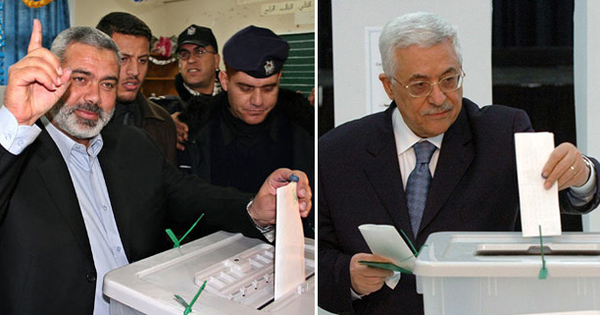
1096One man, one vote, one time? Hamas leader Ismail Haniyeh (left) and Fatah leader Mahmoud Abbas (also president of the Palestinian Authority) are pictured voting in the last election for the Palestinian Legislative Council, which took place in 2006.

Again, the two sides do not seem to be interested at all in sending Palestinians to the ballot boxes. Each side has many good reasons to avoid holding new elections in the West Bank and Gaza Strip.

First, Fatah and Hamas do not trust each other, and each side is convinced that the other would try to steal the vote. How can there be free and democratic elections while Hamas and Fatah continue to arrest and torture each other’s supporters in the Gaza Strip and West Bank?

Second, Fatah is afraid that Hamas’s chances of winning the elections, especially in the West Bank, are very high. That is because many Palestinians still do not trust Abbas and Fatah, whom they accuse of maintaining close security ties with Israel. Moreover, many Palestinians remain disillusioned with Fatah because of its failure to combat financial and administrative corruption and pave the way for the emergence of new leaders.

There is no way that Hamas and Fatah can cast the blame on Israel regarding the issue of elections. If they were really interested in holding new elections, they could do so with the help of the international community, as was the case with previous votes in 2005 and 2006. Israel even helped the Palestinian hold those elections.

When several Hamas candidates from east Jerusalem ran in the January 2006 parliamentary election, Israel did nothing to stop them. Israel even opened its post offices in the city to allow Arab voters from the city (who hold Israeli-issued ID cards) to vote in the election.

Charges made by some Palestinians and anti-Israel groups around the world, to the effect that Israel is responsible for “foiling” efforts to achieve Palestinian unity, are baseless. Although the Israeli government initially opposed the Fatah-Hamas “reconciliation” deal that was reached in 2014, it has not stopped the Palestinian prime minister and some of his cabinet members from visiting the Gaza Strip to pursue the implementation of the accord. In fact, Prime Minister Hamdallah has since visited the Gaza Strip twice, after receiving permission from Israel to go through the Erez border crossing.

Recently, ten Palestinian ministers were forced to leave the Gaza Strip, after Hamas placed them under house arrest in their hotel and banned them from meeting with locals. The ministers entered the Gaza Strip through the Erez border crossing. They came to the Gaza Strip to help solve the problem of thousands of Hamas government employees who have not received salaries for more than a year, and to discuss issues related to the reconstruction of the Gaza Strip.

So while Israel facilitated the visits by Hamdallah and his ministers to the Gaza Strip, it was Hamas that expelled them and prevented them from carrying out their duties. Had Israel expelled the ministers from the Gaza Strip or stopped them from entering the area, the country would have been condemned by the international community for “blocking” efforts to achieve Palestinian unity and rebuild the Gaza Strip.

Today, it has become unavoidably clear that Fatah and Hamas, and not Israel, are responsible for the ongoing plight of the Palestinians in the Gaza Strip. The two parties are unlikely to resolve their differences in the near future, further exacerbating the misery of their people. Each party cares only about its own interests, while at the same time lying to the world that it is all Israel’s fault. Hamas is not willing to relinquish control over the Gaza Strip, certainly not to Abbas and the Palestinian Authority, who were expelled from there in 2007. As for Abbas, he does not seem to be interested in regaining control over a problematic area such as the Gaza Strip, where most of the population lives under the poverty line and in refugee camps.

Yet instead of being honest with their people and admitting their failure to improve their people’s living conditions, Hamas and Fatah continue to wage smear campaigns against each other and, at the same time, also against Israel.

The campaigns that Hamas and Fatah are waging against Israel, particularly in the international community, are designed to divert attention from their failure to provide their people with basic services or any kind of hope.

While ignoring the plight of the Palestinians in the Gaza Strip, the Palestinian Authority leaders were prepared to invest huge efforts and resources in trying to have Israel suspended from the International Federation of Association Football (FIFA). It is as if the Palestinians had solved all their major problems and all that they needed to do now was to stop Israeli soccer players from playing in international matches.

Hamas, for its part, continues to invest enormous resources in digging new tunnels, in preparation for another war with Israel. The money that is being invested in the tunnels and the purchase and smuggling of weapons could benefit many families who lost their homes during the last war. But Hamas, like the Palestinian Authority, does not care about the misery of the Palestinians in the Gaza Strip. They want to fight Israel to the last Palestinian. And this is all being done with the help of anti-Israel governments around the world, and groups such the Boycott, Divestment and Sanctions (BDS) movement, whose only goal is to delegitimize Israel and demonize Jews rather than to help the Palestinians.

ISIS arrives in Gaza: Supporters of the “Islamic State of Jerusalem” sighted on Israeli border

June 1, 2015

ISIS arrives in Gaza: Supporters of the “Islamic State of Jerusalem” sighted on Israeli border, DEBKAfile, June 1, 2015

ISIS-Gaza_5.15ISIS lands in Gaza

Followers of the Islamic State of Iraq and the Levant were spotted for the first time in the Gaza Strip this week, DEBKAfile’s military sources report. Their arrival on Israel’s border was confirmed as a division-strength IDF force launched its large-scale “Turning Point 2015” exercise for repelling Islamist cross-border incursions. The Islamist group which has established a substantial anti-Hamas presence in the Gaza Strip is Ansar al Dawa al-Islamia, renamed “Supporters of the Islamic State of Jerusalem.

Israeli, Egyptian and Hamas’ military sources are all concerned to make light of this development. When asked, they say that the group’s nature and scope have not yet been evaluated. Western and Middle East governments took the same tack two years ago, when ISIS first embarked on its calamitous course in Syria.

DEBKAfile’s military sources point to eight signs of the ISIS presence in the Gaza Strip:

1. In the last 48 hours, Hamas security authorities have suddenly set up scores of roadblocks across the Strip, including Gaza City.

2. They acted after senior Hamas security officer Sabah Siam was murdered Saturday, May 30, by a gang of five gunmen sporting ISIS insignia.

Hamas tried pretending that the officer died in a bomb planted in his vehicle by a local rival faction.  But the attack was too public to be concealed. The ISIS gunmen burst into a shop owned by the officer’s family in the center of Gaza City while he was visiting. They cut him down in front of his relatives and dozens of passersby, none of whom made any move to stop them as they made off in two vehicles.

The terrorists later issued a communiqué saying: “Sabah Siam was liquidated because he was a partner in a war declared against religion and against Muslims working for the heretical government in the Gaza Strip.”
In a declaration of war, ISIS warned the Palestinian Hamas to “end its war against religion in Gaza or face the consequences.”

3. Israeli and Egyptian security services, most likely in conjunction with Hamas, set up a tight ring of bodyguards to protect German Foreign Minister Frank-Walter Steinmeier against possible assassins when he visited Gaza Monday, June 1.  He insisted on going through with his visit in the face of the internecine Islamist fighting which had erupted in the Palestinian-ruled territory.

4.  On the day of the visit, Ansar al Dawa al-Islamia posted a social media notice calling on Gazans to discontinue their cooperation with the “heretical Hamas regime.”

5.  The same group also claimed responsibility for a string of bombings outside Hamas headquarters and offices in Gaza during the month of May.

6.  On May 8, the ISIS Sinai branch Ansar Bait Maqdis shelled the Hamas facility in Khan Younis, in southern Gaza.

7.   On May 28, ISIS-Sinai threatened to “target Eilat Port in the coming days,” as a joint project with the ISIS wing in the Gaza Strip, which would also attack Hamas’s military arm, Ezz e-din Al-Qassam, and take control of the Gaza Strip.

8.  DEBKAfile’s counter-terror sources report that Ansar al Dawa is preparing to declare the Gaza Strip a province of the Islamic State of Iraq and the Levant.

Op-Ed: Every Day is “Opposite Day” with President Barack Obama

May 26, 2015

Op-Ed: Every Day is “Opposite Day” with President Barack Obama, Israel National News, Mark Langfan, May 26, 2015

In sum, either Obama is, at best, a Middle-east policy ignoramus or, at worst, an Iranian stooge. If Obama rolled dice to make his Middle-East decisions, he’d have a better average than his current total Middle-East failure on every issue.  So, chances are he is not intending his Middle-East policies to bring peace, but instead planning them to bring war and sow the violence, death and destruction that they have predictably brought.

**********************

Obama has done exactly the opposite of what should be done in the Middle East for his entire term. Israel had better ignore his advice.

Following Obama’s speeches is like watchingSesame Street’s “Opposite Day”, the Sesame Street episode where everything is “opposite.”  ‘Up’ is ‘down,’ ‘left’ is ‘right,’ and so on and so forth.  It’s like Berra saying “It’s deja vu all over again.”

With Obama, for the past seven years, every day is “Opposite Day.”  Everything he says sounds upside-down and backwards, and is proven, in the short-term, to be just that.  Instead of being chastened by reality, Obama blithely still talks-the-talk like he’s reading off the Holy Grail.

Take Obama’s latest upside-down and backwards ‘Opposite-Day’ statement: “I continue to believe a two-state solution is absolutely vital for not only peace between Israelis and Palestinians, but for the long-term security of Israel as a democratic and Jewish state.”  Given Obama’s 0%batting average on Middle-East strategy, it safe to conclude that keeping the “West Bank” is vital for Israel’s security.

For starters, what Middle East policy has Obama gotten right in the last seven years?  Obama’s total retreat from Iraq that empowered Iranian-puppet al Maliki to castrate the Western Iraqi Sunnis that mutated into ISIS?  Obama’s bombing of Qaddafi, and setting North Africa into a ball of flames?  Obama’s toppling of Mubarak and coronation of the Muslim Brotherhood Sunni Islamic State of Egypt?  Obama’s green-lighting Iran to set Shiite Arab against Sunni Arab as he anoints Iran as a nuclear-threshold state, and gives $50 billion to further fund its Islamic “resistance” revolution?  Obama’s total protection of the genocidal Assad as he gasses Sunni Muslims to death?

Obama has made the wrong policy decision on every Middle Eastern issue, yet still speaks as if he’s the Middle-east guru.

The truth is Israel’s retention of the “West Bank” is vital not only for the peace and security of Israel, but also, most importantly, for the moderate Arabs who bathe in the warmth of Israel’s security envelope.  If Israel left the “West Bank”, forget about the resulting Hamastan that once concerned us, because the result would be an  ISIStan. Hamas will soon start asking Israel for protection from ISIS as that organization is beginning to attack it in Gaza.  And after Assad falls, and the Sunnis start really paying Hezbollah back for its genocide against the Syrian Sunnis, the Shiites of South Lebanon will have only one protector: Israel.

Was Israel’s retreat from Gaza good for Egypt?  No, it created a cancer that sent its Iranian-funded Islamic-bedlam to the Sinai, and then to Egypt-proper.  Israel’s “peace-process” regarding Gaza has enabled Hamas to turn the Palestinians of Gaza into cannon-fodder for the world press, and the World Court.  With Gaza’s failed-test-case, Obama’s claim that Israel repeat the same withdrawal from Judea and Samaria almost seems to present evidence of a malevolent intent to eradicate peace and security for Israel, and the moderate Arabs who are now protected by Israel.

And let us not forget Jordan.  Wouldn’t Jordan “love” an ISIStan state to its west?  The analogy is simple, a Hamastan Gaza is to Egypt what an ISIStan “West Bank” would be to Jordan—a formula for Jordan’s total disintegration.  As it is, Jordan’s King Abdullah is facing ISIS to the north and to the south. Jordan can be easily overrun, it hardly needs additional pressure along its western border, now protected by Israel.

In sum, either Obama is, at best, a Middle-east policy ignoramus or, at worst, an Iranian stooge. If Obama rolled dice to make his Middle-East decisions, he’d have a better average than his current total Middle-East failure on every issue.  So, chances are he is not intending his Middle-East policies to bring peace, but instead planning them to bring war and sow the violence, death and destruction that they have predictably brought.

If Obama says “up,” think “down;” and if he advises retreat from Judea and Samaria, Israel had better stay exactly where it is.

The Pope and the Palestinians

May 20, 2015

The Pope and the Palestinians, Front Page Magazine, May 20, 2015

(The article also deal with Islam in general, as to which the Pope’s fantasies reflect those of the Obama Administration and others. — DM)

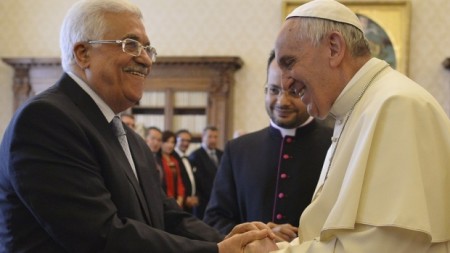
francis-and-abbas-450x253

Perhaps the ultimate expression of this faith in Islam was Pope Francis’ assertion in Evangelii Gaudium that “authentic Islam and the proper reading of the Koran are opposed to every form of violence.”

**************************

Contrary to reports in the mainstream press, Pope Francis did not call Palestinian Authority leader Mahmoud Abbas “an angel of peace.” The correct translation of the pope’s words is “I have thought of you: that you could be an angel of peace.”

Why, then, was it so easy to believe the initial reports? Perhaps because the initial reports seemed to align with previous papal overtures to Palestinian leaders. Pope Francis had previously called Abbas a “man of peace,” he has shown sympathy for Palestinian grievances, and other popes have given the appearance of lending legitimacy to the Palestinian cause. For example, Pope John Paul II is reported to have received PLO leader Yasser Arafat on twelve different occasions.

Arafat was a terrorist. One would think that the Vatican would have wanted to limit its contacts with him. The same goes for Abbas. He has repeatedly honored and praised Palestinian “martyrs” who have slaughtered innocent Jews. There is evidence that he helped fund the 1972 operation that killed eleven Israeli athletes at the Munich Olympic Games. Why is he accorded such a cordial reception at the Vatican?

Although the Church has often declared its spiritual bond with Jews, it has had a less harmonious relationship with the nation where approximately half the world’s Jews now reside. The Vatican was the last Western government to accord diplomatic recognition to the State of Israel (in 1993). In addition, on several occasions, prominent prelates have likened Israel to King Herod, the murderer of innocents; and others have accused Israel of being an apartheid state. Meanwhile, Catholic NGOs such as Pax Christi and Trocaire have been major players in the boycott, divest, and sanctions campaign against Israel.

Of course, the BDS campaign directly impinges on Israeli security. So do the calls by numerous Christian leaders to tear down the security barrier that divides Israel from the West Bank. On his trip to the Holy Land a year ago, Pope Francis allowed himself to be photographed in prayer at a section of the wall where a large graffiti message compared Bethlehem to the Warsaw Ghetto. In a naïve gesture of solidarity with Palestinians, the pope was unwittingly lending credence to the idea that the Israelis could be compared to the Nazi occupiers of Poland.

The wall was constructed to prevent suicide attacks against Israeli citizens. It’s estimated that its construction has saved thousands of lives. To suggest that the wall is offensive, as many Christians have done, is to suggest that Jewish lives don’t matter. Moreover, such judgments betray an entirely lopsided view of the situation. Take the Gaza conflict. The Catholic hierarchy typically had little to say about the daily rocket barrages launched against Israeli citizens from Gaza, but it was quick to condemn Israel on those occasions when it finally retaliated. In a similar vein, Fouad Twal, the Latin Patriarch of Jerusalem, blamed last year’s Gaza war on the Israeli embargo which, he said, had turned Gaza into “a factory of desperate people, designed to easily turn into extremists.”

In short, many Catholic leaders have shown a tendency to blame Israel for defending itself. The implication, of course, is that there would be no need for defense if Israel would only go to the peace table and make the concessions demanded of it by the Palestinians. The Vatican’s recent recognition of the “State of Palestine” reflects this naïve view of the situation. The supposition is that the Palestinians only want to be left in peace, whereas there is abundant evidence that the deepest desire of Palestinian leaders is for the extermination of Israel. Have Vatican officials never seen the photos of Abbas holding up a map of Palestine that encompasses all of the territory currently known as Israel? Are they unaware that he has personally called for a Palestine that is Judenrein? Didn’t they notice that when Israel gambled on disengaging from the Gaza Strip in 2005, Gaza soon turned into a terrorist state governed by an obsession to destroy Israel?

From the Israeli point of view, the call to cooperate with the Palestinian “peace” agenda is a call to cooperate in its own demise. Whenever I hear a UN representative or a Vatican spokesman call for peace talks between Israel and Palestine, I think of that scene from Goldfinger in which James Bond is about to be sliced in two by a laser beam. “Do you expect me to talk?” he asks. “No, Mr. Bond,” replies Goldfinger, “I expect you to die.” The Vatican hasn’t yet grasped the point that the Palestinian leadership doesn’t want the Israelis to talk, it wants them to die.

By words and by actions, the Vatican continues to suggest that there is a moral equivalence between Israel and the Palestinian Authority. This policy not only does a disservice to Jews, it also does a disservice to Catholics and other Christians. The main effect of the moral equivalence stance is to sow confusion among Catholics at a time when they need to be clear and unconfused—clear about Islam, that is. The Vatican policy toward Palestine reflects it overall stance toward the Islamic world. In other words, let’s overlook the dark side—the terrorism, the anti-Semitism, the oppression of Christians and other minorities—and let’s put the best face on the Mohammedan faith. For the sake of peace. And also for the sake of maintaining the threadbare narrative that Islam is a close cousin of Catholicism and, therefore, a religion of peace. Perhaps the ultimate expression of this faith in Islam was Pope Francis’ assertion in Evangelii Gaudium that “authentic Islam and the proper reading of the Koran are opposed to every form of violence.”

How well has this policy worked? Not very. Catholics and other Christians who lived in Muslim lands and who took seriously the Catholic version of “this has nothing to do with Islam” soon found that the tiny minority of misunderstanders were legion and had murder on their minds. Many found out too late. Years of indoctrination in the myth of Islam’s pacific nature had left them unprepared for the violence. Not that the Church was the only culprit. The secular opinion-makers had been preaching the same gospel. The irony is that the Church wants Israel to adopt the same policy of make-believe about Islam that has contributed to the death and displacement of millions of Christians.

The policy requires an almost total denial of facts. In the case of the Arab-Israeli crisis it means ignoring the terrorist ties of the Palestinian government, its unity coalition with Hamas, the massive state-sponsored indoctrination of Palestinian children, and the oft-stated goal of eliminating Israel. Ironically, it also necessitates that one ignore the ongoing persecution of Christians in the Palestinian territories.

The Palestinian leaders do a good job of hijacking Christian themes and imagery in order to gull Christians into thinking that they are, indeed, brothers in Christ. Thus, Palestinians have milked the massacre-of-the-innocents meme for all its worth. They also like to claim that Jesus was the first Palestinian. Another favorite theme is that the Palestinian people are the “new Jesus” who is being crucified by the Israelis.

Many in the Catholic hierarchy seem to fall for the ruse, but the steady exodus of Christians from the Palestinian territories tells a different story. The overall population of Christians in the Palestinian areas has declined from 15 percent in 1950 to 2 percent today. After the Palestinian Authority took control over Bethlehem in 1995, the Christian population there declined by half. In the Gaza Strip, only a few hundred Christians remain. That’s because Christians in Palestine, like Christians in most Muslim-majority societies, are treated as second-class citizens—subject to rape, intimidation, and legalized theft.

Meanwhile, the Christian population of Israel continues to grow. Palestinian Christians want to live there and so do persecuted Christians in other parts of the Middle East. Despite years of propaganda to the contrary, they have come to realize that Israel is a safe haven in a world of Islamic chaos.

Do Christians who migrate to Israel know something that the Vatican doesn’t know? The facts are there for everyone to see, but not everyone sees them. Why do Catholic leaders persist in assigning moral equivalence when there is no moral equivalence? Normally, a belief in moral equivalence grows out of a relativistic outlook. But presumably we can rule that out in the case of Catholic prelates. A more likely cause of their moral neutrality is a misapplication of the principle of “judge not.” Christians today are highly conscious of the sins of Western civilization and are therefore reluctant to judge those who lie outside it—in this case, Muslims. However, the principle is meant to apply to judgments about the state of an individual’s soul, not his behavior. And it was never meant to apply to withholding judgments about ideologies and belief systems.

The reluctance to see the mote in the other’s eye can eventually slide over into willful blindness. There are numerous warnings in the New Testament about spiritual blindness and they apply to those within the Church as well as to those without. The big danger for Church leaders is not that they will be seen as judgmental in the eyes of the world, but that they will be seen as foolishly naïve in the eyes of history.

“First comes Saturday, then comes Sunday” is a well-known slogan in the Middle East. It means that after the Islamists finish with the Jews, they will come after the Christians. The fate of the Saturday people and the Sunday people is intertwined. And the fate of both is put in jeopardy when Christian leaders insist on holding on to a fantasy-based picture of Islam.

A Preview of ‘Palestine’

May 12, 2015

A Preview of ‘Palestine’, Front Page Magazine, May 12, 2015

Hamas-450x308

[W]hy is the Obama administration placing mammoth pressure on Israel to cede vital strategic territory and why is it besotted with the idea of dismembering Israel by tearing away parts of its ancestral heartland? The answer lies in a flawed foreign policy that rewards tyrannical regimes while back-stabbing allies; a foreign policy that favors Iranian Fatwas over concrete empirical evidence of malfeasance.

******************

Anyone wishing to get a glimpse of what a future “Palestinian” state might look like, need look no further than recent actions taken and official statements made by both the Palestinian Authority and its rival Hamas this past month. While these two governing entities detest each other (perhaps even more so than the infidel Yahuds), it is difficult to discern why, since both of these governing bodies spew forth nearly identical xenophobic rhetoric and act with typical autocratic ruthlessness to stifle any whiff of internal dissent. In essence, they both act in a manner that is not dissimilar to the 20 or so chauvinistic, anti-democratic Muslim pseudo-states of the Middle East.

Most Israelis harbor deep reservations about the creation of an “independent Palestinian state” for a multitude of reasons. Chief among them is the fear that a Palestinian state would devolve into an entity similar to that found in Gaza and that’s a best case scenario. There are far worse, more frightening scenarios. But while Gaza is contained in the southwest corner of Israel and can, relatively speaking, be monitored and controlled, the same cannot be said about the West Bank with its long, torturous border along the imaginary Green Line (the 1949 armistice lines). Moreover, in contrast to the Gaza periphery, much of Israel’s population and industry faces the West Bank, which juts out like a bone into Israel’s throat.

But even if the Palestinian Authority, headed by its aging, autocratic leader Mahmoud Abbas, succeeds in rebuffing a Hamas takeover – an unlikely prospect – the Palestinian Authority’s leadership has proven to be just as extreme, xenophobic and malevolent as its rivals in Gaza. Palestinian Authority TV and media outlets as well as PA-backed NGOs, routinely spew forth ancient anti-Semitic canards involving ritualistic Passover blood libels and conspiracy theories involving Jewish attempts at world domination.

On April 5, in an official PA television interview, Fatah spokesperson, Osama Al-Qawasmi, invoked the notorious early 20th century Czarist forgery known as the Protocols of the Elders of Zion to back up his spurious claims against Israel. For the sake of perspective, both Hitler’sMein Kampf and the Hamas Charter incorporate the Protocols to buttress repugnant supremacist views and reinforce ancient calumnies.

Al-Qawasmi comments, largely ignored by the West, represent views that are commonplace within the Palestinian Authority. In fact, most high-level officials within the PA subscribe to Hitleresque positions and this comes as no surprise given that the father of the modern “Palestinian” movement and the man who gave birth to Palestinian nationalism, Haj Amin al Husseini, was a Nazi collaborator and a dear friend of the Fuhrer.  In January 2013, “President” Abbas, whose own ventures into Holocaust denial are well known, showered the Hitler-supporting Husseini with acclaim.

The Palestinian Authority has also been known to perpetuate ancient ritualistic Passover blood libels. In July 2014 Mahmoud Abbas’ official PA daily, Al-Hayat Al-Jadida, featured an op-ed which claimed that Jews use the “blood of [Palestinian] children” as a key ingredient in Matzah or unleavened bread used by Jews during the Passover holiday. Shortly thereafter, in a variation of that insidious theme, Palestinian Authority TV claimed that Israel was injecting poison into the Palestinian water supply.

In 2013, a Western funded Palestinian propaganda outfit called MIFTAH (which publishes in both English and Arabic) published an article in Arabic criticizing President Obama for speaking of Passover in a favorable light. The author then went on to invoke the ancient blood libel stating,

Does Obama in fact know the relationship, for example, between “Passover” and “Christian blood”..?! Or “Passover” and “Jewish blood rituals?!’ Much of the chatter and gossip about historical Jewish blood rituals in Europe are real and not fake as they claim; the Jews used the blood of Christians in the Jewish Passover.

Palestinians routinely spew forth revolting babble and nonsensical conspiracy theories in Arabic but are substantially more reserved when addressing Western audiences who would find such utterances disquieting to say the least.

MIFTAH was founded by the Palestinian Authority’s spokeswoman and PLO Central Committee Member Hanan Ashrawi. Incredibly, when confronted with the outrage, Ashrawi, a seasoned politician who makes frequent guest appearances on Western news programs, refused to acknowledge any wrongdoing and actually attacked the blogger who exposed the incident claiming that she was the victim of a “smear campaign.” She also risibly noted that she was committed to “open dialogue” and in any event, a “disclaimer” in the publication absolved her and her organization of any culpability.

To a vile terror apologist like Ashrawi, blood libels are part of her concept of “open dialogue.” Only after drawing the ire of her Western donors did Ashrawi express contrition and posted an apologylaced with the requisite dose of crocodile tears. That served to placate MIFTAH’s gullible Western enablers.

But while Palestinians are free to spew forth the vilest canards against Israel and Jews, any whiff of criticism or dissention directed against any Palestinian body, Hamas or the Palestinian Authority, is ruthlessly dealt with. In April, a Palestinian civil servant was arrested for expressing views on Facebook critical of Yassir Arafat. More precisely, he failed to subscribe to the view that Arafat was a “martyr.” He was charged with “attacking and harming the martyr, eternal leader and symbol of the Palestinian people Abu Ammar,” Arafat’s nom de guerre. His niece was expelled from Birzeit University near Ramallah for expressing similar views and all other Palestinian universities have been instructed to deny her admission.

In Hamas-controlled Gaza, in a rare show of defiance, a group of between 150 to 200 Palestinians demonstrated against the governing authorities. The demonstrators were beaten with sticks and some were herded off in jeeps by thug-like Hamas enforcers.

These two incidents are demonstrative of the complete absence of freedom of speech and freedom of assembly in areas governed by Palestinians. Conversely, Palestinians are completely free to let loose with the vilest canards as long as the objects of derision, defamation and ridicule are Jews.

A Palestinians state, whether governed by Hamas or the “moderate” Palestinian Authority, will almost certainly resemble the 20 or so Arab pseudo-states currently in existence.  It will be dysfunctional, autocratic, xenophobic and unable to survive without massive financial assistance. That will be the nature of the state that lives alongside Israel’s long and tortuous border with the West Bank. That will be the state that will have full view of all commercial airlines that come and go from Ben Gurion International Airport. And that will be the state that juts into Israel’s narrow 9-mile wide waistline overlooking Israel’s heavily populated coastline.

Considering these facts, why is the Obama administration placing mammoth pressure on Israel to cede vital strategic territory and why is it besotted with the idea of dismembering Israel by tearing away parts of its ancestral heartland? The answer lies in a flawed foreign policy that rewards tyrannical regimes while back-stabbing allies; a foreign policy that favors Iranian Fatwas over concrete empirical evidence of malfeasance.

Prime Minister Netanyahu has just formed a governing coalition with a razor thin majority. Yet his coalition partners, cognizant of the dangers they face, both on the battlefield and in the political arena, appear to be solidly behind their Prime Minister. One can only hope that the Prime Minister will stand fast in the face of massive pressure he is sure to encounter from an extremely hostile Obama administration. Good luck Mr. Prime Minister, you’re going to need every bit of it for the next 18 months.