Archive for the ‘Fatah’ category

Obama’s Favorite Islamic Terror Group Praises Murderer of 13-Year-Old Girl

June 30, 2016

Obama’s Favorite Islamic Terror Group Praises Murderer of 13-Year-Old Girl, Front Page Magazine, Daniel Greenfield, June 30, 2016

(Please see also, Terrorist kills 13-year-old in her bedroom in Kiryat Arba. — DM)

hillel-yafa-ariel-300x225

Obama insisted that PA terror boss Abbas had “renounced violence”. This was news to Abbas who had said on television that he was just like Hamas.

“I have to commend President Abbas. He has been somebody who has consistently renounced violence, has consistently sought a diplomatic and peaceful solution that allows for two states, side by side, in peace and security; a state that allows for the dignity and sovereignty of the Palestinian people and a state that allows for Israelis to feel secure and at peace with their neighbors,” Obama said.

Around the time that Obama visited him, Abbas gave an interview to Putin’s RT in which he claimed that he was just like Hamas.

“As far as I am concerned, there is no difference between our policies and those of Hamas. So why are they labeled as terrorists? In my opinion, [the EU] can remove Hamas [from the list], why not?”

The Palestinian Authority terrorist organization promotes and funds terrorism against Americans and Israelis. This includes the latest terror attack in which a Muslim terrorist stabbed a 13-year-old girl to death in her bedroom. The core Fatah organization quickly declared the Muslim man who was shot after murdering the young girl a martyr as Palestinian Media Watch reported.

Fatah’s official Facebook page immediately posted his picture, declaring him a Martyr – “Shahid,” the highest honor achievable in Islam according to the Palestinian Authority.

WAFA, the official PA news agency, likewise honored the terrorist, referring to him as a Martyr – “Shahid.”

According to Palestinian Authority law, the family of today’s murderer will immediately start receiving a monthly PA stipend that the PA pays to the families of all the “Martyrs.”

All of this is funded by the US and overseen by Abbas, the president who won’t run for election, who renounced violence.

‘Uneaten birthday cakes next to pools of blood’

June 9, 2016

‘Uneaten birthday cakes next to pools of blood’, Israel Hayom, Ruthie Blum, June 9, 2016

The rest of us in Israel, meanwhile, will be treated by the international community to reprimands about the need for peace, just as we are already being bombarded on local talk shows with the urgency for “an agreement with the Palestinians.” Like the terrorist attacks themselves, these pronouncements are repeated virtually without let-up.

***********************

An Israeli parliamentarian who arrived on the scene of Wednesday night’s Palestinian terrorist attack in Tel Aviv summed up in a phrase what terrorism is all about.

“Uneaten birthday cakes next to pools of blood,” is how Likud MK Amir Ohana described what he encountered in the immediate aftermath of the shooting spree at the Max Brenner chocolate shop and cafe in the Sarona shopping complex.

No matter how precisely witnesses describe the attacks Israelis experience on a regular basis — the fear, the screams, and the killings — it is rare for words to capture carnage so well.

Yes, “uneaten birthday cakes next to pools of blood” tells us everything we need to know about the setting and its significance in the twisted, brainwashed minds of young people in the Palestinian Authority. It is precisely what the two young men, relatives from the village of Yatta near Hebron who brought makeshift assault rifles with them to an eatery on a summer’s eve, had envisioned. It was exactly their goal to slaughter Jews, some of them in casual dress and flip-flops, enjoying a respite from the oppressive heat of the day, others dressed to the nines, celebrating personal milestones.

Indeed, “uneaten birthday cakes next to pools of blood” says it all. It is a reminder of the funerals that will soon take place and the devastation entire families will feel for the rest of their lives; the months of physical rehabilitation and trauma awaiting those who were injured; and the tears of mothers, fathers, sons and daughters praying at bedsides.

“You never get used to it,” said a surgeon from the Sourasky Medical Center, where the wounded — among them one of the two terrorists — are being treated.

The rest of us in Israel, meanwhile, will be treated by the international community to reprimands about the need for peace, just as we are already being bombarded on local talk shows with the urgency for “an agreement with the Palestinians.” Like the terrorist attacks themselves, these pronouncements are repeated virtually without let-up.

The difference this time is the addition of the discussion about how Avigdor Lieberman, Israel’s new defense minister, who assumed his role only last week, is going to meet the challenge, particularly as a proponent of the death penalty for terrorists, which the Jewish state does not have. Natch.

This is something the Arabs in Judea and Samaria, east Jerusalem and Gaza are keenly aware of, along with the knowledge that if they engage in particularly gruesome violence, they will be hailed as heroes by their society and leaders. Those who are killed while murdering Jews can look forward not only to paradise in the afterlife, but being martyrs after whom sports arenas, cultural events and streets are named.

Thankfully, Lieberman — whose alleged first order of business over the weekend was to strike terrorist bases in Syria — did not talk politics. Instead, he gave a brief press conference at the scene of the attack with Prime Minister Benjamin Netanyahu. Netanyahu had just landed in Tel Aviv from a two-and-a-half-day trip to Russia, ostensibly to mark the 25th anniversary of the establishment of full diplomatic relations with Moscow, but really to cement growing ties with Russian President Vladimir Putin. This is the sad but necessary upshot of the Obama administration’s attitude toward Israel in particular and the Middle East in general.

Netanyahu understands that he has to have an alternative ally on whom to rely when it comes to safeguarding Israel from the dangers posed by the civil war in Syria, chief among them Iran’s presence and Palestinian proxy Hezbollah. Oh, and there’s the Islamic State group, too, which is also increasing its foothold in the Sinai, along Israel’s southern border, adjacent to Gaza. You know, where Hamas continues to build tunnels through which to smuggle weapons and kidnap and kill Israelis.

For his part, Putin is only too happy to oblige and replace the United States as the world’s superpower, a status his country lost when the Soviet Union fell 26 years ago. And the Palestinian “problem” was no more connected to that past event than it is to today’s global reality. It is simply a convenient excuse employed to hold Israel accountable and responsible for all ills. It is the politically correct contemporary anti-Semitic outlook, according to which Jews control the world.

What a hoot. We can’t even eat our birthday cakes at a chocolate shop without pools of our blood being spilled.

Israel’s PM seeks role in Russian-US duo in Syria

June 6, 2016

Israel’s PM seeks role in Russian-US duo in Syria, DEBKAfile, June 6, 2016

PutinBibi2-480 (1)

During his 48-hour trip to Moscow (Monday and Tuesday June 6-7), Prime Minister Binyamin Netanyahu will try and talk President Vladimir Putin into cutting Israel into the military teamwork evolving between Washington and Moscow for combating the Islamic State in Syria. As a quid pro quo, he will offer to elevate Moscow to senior broker in the Israeli-Palestinian dispute, with Moscow or Geneva selected as the venue for direct Israeli-Palestinian talks, if they occur – and with US participation. Netanyahu is also keen on a role for Egypt’s Presidents Abdek-Fattah al-Sisi.

DEBKAfile sources in Jerusalem and Moscow report exclusively that the floating of this deal was the reason why Russia’s Foreign Minister Sergey Lavrov abstained from attending the Mid East conference staged last weekend by France’s President Francois Hollande in Paris. The UK and German foreign ministers followed the Russian lead and stayed away.

And Friday, June 3, on the day of the Paris meeting, Russian Deputy Foreign Minister Mikihail Bogdanov, who is in charge of Kremlin Middle East policy, offered a formula for resolving the problem of Israeli settlements on the West Bank.  That formula was very similar to the land swaps plan proposed by Defense Minister Avigdor Lieberman a few years ago.

It consisted essentially of the transfer to the Palestinian state of parts of Israel with dense Arab populations, in return for Palestinian recognition of Israeli sovereignty over the Israeli communities of Judea and Samaria.

In comments to Tass news service, Bogdanov said that Moscow is willing to host an Israeli-Palestinian peace conference, and also offered to mediate between the rival Palestinian factions, including Abu Mazen’s Fatah and the radical Hamas which rules the aza Strip.

While some Israeli politicians see the French initiative as offering President Barack Obama a handle for settling accounts with PM Netanyahu before he leaves the White House at the end of the year, Moscow and Jerusalem are concocting a parallel strategy – not merely to block the Franco-American move, but also to lift Washington’s drive for an Israeli-Palestinian accord from Paris to Moscow.

DEBKAfile sources say that this maneuver is based on the early stages of military and political coordination between Washington and Moscow in the Syrian arena, including the fight against ISIS.

No such coordination exists between Washington and Paris.

Netanyahu envisages the tightening military cooperation between Russia and Israel for Syria, along with Israel’s active participation in the airstrikes against ISIS, as becoming integral to American-Russian understandings, and extending also to the Israeli-Palestinian issue.

Moscow and Jerusalem both estimate that an offer of US-Russian-Arab guarantees to the Palestinians, underwritten by Egypt and Saudi Arabia, can move the negotiations forward.

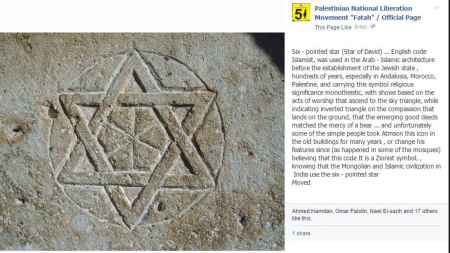
“Palestinians” Attempt to Appropriate “Star of David” as Muslim Symbol

May 17, 2016

“Palestinians” Attempt to Appropriate “Star of David” as Muslim Symbol, Front Page Magazine, Daniel Greenfield, May 17, 2016

fatah

The whole “Palestinian” identity is a parasitic entity that can only exist in terms related to its hostility to the indigenous Jewish inhabitants. The desperate attempts to appropriate Jewish identity has now led Fatah, the core terrorist organization behind the “Palestinian” state to claim that the Jewish Star of David is really an Islamic symbol.

This comes from the official Facebook page of Fatah which claims that the Star of David was used in Arab-Islamic architecture hundreds of years before the rebirth of the State of Israel.

Considering that the symbol dates back to the House of David, thousands of years ago, that’s pretty much last week. Also the Islamic six pointed “stars” referenced tend to look like Chinese checkers boards and not like the very distinctive ‘knot’ design of the Star of David.

Why even bother doing this? Because the entire fake Palestinian identity is a colonial Islamic effort based on erasing the identity of the Jewish indigenous population. That means claiming that classic Jewish historical figures were Muslim or, even more ridiculously, Palestinian. It means claiming that the Star of David is an Islamic symbol.

Meanwhile Muslim students in the US protest that Israelis are “culturally appropriating” falafel.

Gaza Salafists look to ISIS for inspiration

May 12, 2016

Gaza Salafists look to ISIS for inspiration, Israel National News, Adel Zaanoun, May 12, 2016

Isl State in GazaISIS supporters in Gaza Reuters

(AFP) Terrrorists inspired by the Islamic State (ISIS) jihadist group’s ideology are seeking to benefit from the desperation of young Palestinians to strengthen their foothold in the Gaza Strip.

But the Salafists in the enclave tread a fine line to avoid conflict with Hamas, the Islamist terrorist group which has ruled the strip for a decade but does not share all of ISIS’s world view.

Leaders of the Salafists, who are adherents of a strict Sunni interpretation of Islam, claim to have 3,000 fighters in Gaza.

While the figure is impossible to verify, experts see an increasing use of ISIS-style rhetoric to attract support.

“Some groups use the Islamic State label and claim to have adopted jihadist ideology to attract teenagers who have lost all hope,” said Assaad Abu Charakh, a professor at Al-Azhar University in Gaza.

Last week saw the heaviest cross-border clashes between Israeli forces and Hamas and other terrorist groups since 2014, raising fears of a return to hostilities, though calm has since returned.

Israel has maintained a blockade on Gaza since 2006 aimed at containing Hamas, which is sworn to the destruction of Jewish state and whose charter calls for the annihilation of the Jewish people.

At almost 45 percent, the unemployment rate in the Gaza Strip is among the world’s highest.

Hamas won the 2006 Palestinian parliamentary elections, and then one year later staged a violent purge of its Fatah rivals, killing scores and ousting the Palestinian Authority from Gaza entirely.

Qassam Brigades defectors

But some members of the Ezzedine al-Qassam Brigades, Hamas’ armed wing, argued elections were un-Islamic and defected to form Salafist groups.

Abu al-Ansari al-Ina, a leader of the “Young Salafist Fighters,” one of the major jihadist groups in Gaza, is one such defector.

The priority, he argues, is the “fight against the Jews in Palestine, even if the strategic goal is the introduction of Islamic law in the world.”

He says he is under surveillance and took precautions before meeting anAFP journalist.

Two hundred Gazans, including some of his movement, have crossed into Egypt to join the ranks of the Islamic State “despite Hamas’ attempts to stop them,” he says.

Most used the tunnels that once linked Gaza to Egypt, while others took advantage of the occasional openings of the Rafah border crossing, the only of Gaza’s borders crossings not controlled by Israel, and which is the subject of a total blockade by Egypt.

The vast Sinai desert is gripped by an insurgency that Egypt regularly accuses Hamas of supporting.

Egypt’s air force has destroyed a large number of the tunnels and established a buffer zone along the Gazan border.

Abu Sayyaf, military commander of another Salafi movement, insists Israel is the primary enemy.

“Our priority now is to strengthen the military capabilities of our fighters to kill the Jews, the enemies of God,” he said.

“We do not want confrontation with Hamas,” but “we will not hesitate to fight the infidels or anyone who stands in the way of our fighters.”

Escalation fears

Hamas security services reached an agreement last year with the jihadists after arresting about 100 of them: in exchange for their release, the groups committed to respect the truce with Israel and not to attack Palestinian or foreign institutions in Gaza.

Though limited, Salafi attacks endanger the ceasefire which Hamas is tactically keen to uphold.

Gazan groups have been firing rockets into Israel for years, with Israel retaliating by striking Hamas positions – holding the terrorist group responsible for all attacks emanating from territory it governs.

Many fear the tensions could escalate into clashes between Hamas and jihadi groups if rocket attacks occur.

Salafi jihadists have occasionally threatened Hamas in online videos, with some claiming the shelling of Qassam bases. “We met our commitments but Hamas did not, they again arrested some of our fighters,” says Abu al-Ina.

Mahmoud Zahar, a top Hamas official, says the authorities “discuss and are trying to reason” with the imprisoned Salafists, but have no choice but to use force against aggressors.

A Salafist was killed last year by Hamas forces who had come to arrest him.

Some jihadists “were planning to kill their neighbors and relatives,” Zahar said, provoking Hamas to step in to prevent “a huge explosion.”

Asked about the ISIS links, Abu al-Ina al-Ansari says they merely consist of “an exchange of ideas but are not organizational.”

“We agree with the clear message sent by the Islamic State to the miscreant West: ‘Stop your attacks, we will stop our attacks’.”

New Palestinian pact-for-terror

April 25, 2016

New Palestinian pact-for-terror, DEBKAfile, April 25, 2016

TerrorTunnels480

Israel embarked on a P. R. campaign to play down the extent of the threat which surfaced in one day in the discovery of Hamas tunnel near Kibbutz Sufa, and the suicide bombing of Jerusalem bus No. 12 on April 18, with 20 people injured. The police initially claimed for example that the explosion was due to a technical problem with the engine. But the two developments actually represented a sharp and serious escalation of the Palestinian wave of terror against Israel.

Neither of the operations was carried out by “lone wolves” but rather by large terror networks. The secret tunnel discovered in the Gaza border area was built by the Hamas military wing, the Izaddin al-Qassam brigades, while the suicide bombing in Jerusalem was carried out by the Hamas infrastructure in Judea and Samaria, specifically its operatives in the Bethlehem area.

Each of these terror networks poses a different challenge to Israel.

In Gaza, the Hamas political leadership is no longer in contact with the heads of its military wing. Neither the top commanders nor the regional commanders of the brigades obey any Hamas political body. They only heed three sources:

1. The Hamas military command framework headed by Mohammad Deif and Marwan Issa.

2. Iranian or Hizballah intelligence services, which maintain contacts with them and often provide funds or weapons.

3. The ISIS affiliate in the Sinai, with which the Hamas military wing maintains operational ties.

There is an equally serious problem in Judea and Samaria. Over the past few weeks, the Hamas terror networks have started to make contact with sleeper cells from Fatah’s Tanzim paramilitary force that have the knowledge, ability, means and experience for major terrorist attacks against Israel, such as the Jerusalem bus bombing.

This dormant wing of Mohammad Abbas’s Fatah has began to show signs of life and willingness to return to the path of terror.

These contacts began immediately after publication of a letter from jailed Tanzim leader Marwan Barghouti to members of the force that called on them to start coordinating their operations against Israel with Hamas. Nobody has bothered to explain how a senior terrorist jailed in a high-security Israeli prison succeeded in smuggling such a letter out.

The link between part of the Tanzim and the Hamas terror networks is no less dangerous than the tunnel discovered near Kibbutz Sufa, and it presages an escalation of terror operations in the future.

The only way to prevent a major deterioration of the security situation is to strike targets of the Izzadin al-Qassam brigades. There is no need to launch a total war against Hamas or to occupy Gaza.

But instead of responding as needed, Israel’s government and security establishment have released pictures of digging equipment that has finally succeeded in locating a single Hamas infiltration tunnel out of the many that exist, and claimed that those responsible for the Jerusalem bombing have yet to be identified. At the same time, senior officials and IDF officers continue to assert that Hamas is not seeking escalation.

Unfortunately, this can only mean a resurgence of the wave of terror.

Make or Break Moment for Palestinian Violence

April 21, 2016

Make or Break Moment for Palestinian Violence, Investigative Project on Terrorism, Yaakov Lappin, April 21, 2016
1502 (1)

The coming Passover holiday represents a make-or-break moment that could decide whether Palestinian violence and terrorism fizzles out, or escalates into a new and more dangerous phase.

Israel’s defense establishment is on alert to the possibility that tensions surrounding Jerusalem’s Temple Mount (known to Palestinians as the Al-Aqsa holy site) could resurface and trigger a new outburst of terrorism, just as a seven-month wave of largely unorganized terrorist attacks begins to draw down.

The tensions could well appear again during Passover, when the number of visits by religious Jews to the Temple Mount rises. There is no shortage of elements in the Palestinian arena – from Hamas media outlets to social media users – who will eagerly present such visits as part of an imagined Israeli conspiracy to take over the site.

As a result, Israel’s defense establishment has advised the government to prohibit any politicians, from any political party, to further inflame tensions by visiting the site.

Against this background, the Shin Bet domestic intelligence agency has quietly thwarted a steady flow of mass-casualty, organized terror plots, planned and orchestrated by Hamas. Any one of these plots could have changed the strategic picture and led to an escalation on multiple fronts had they materialized.

Hamas has been deeply disappointed by the recent decrease in terrorism and by its failure to bypass Shin Bet’s intelligence networks.

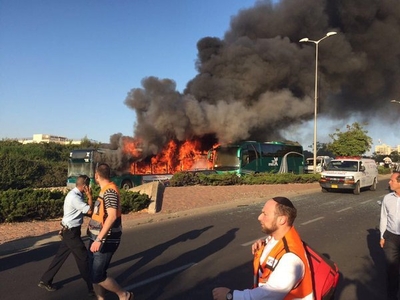
On April 18, a Palestinian bomb blew up on board a bus in Jerusalem and injured 21 civilians, including, possibly, the bomber himself. A media ban is in place that prevents publication of further details on the investigation.

Israelis watched TV news broadcasts of scenes of a bus in flames and emergency vehicles attending the site with much concern. They had hoped such bombings, which tore through Israeli cities in the dark days of the second Palestinian Intifada 15 years ago, were long behind them.

Unlike 15 years ago, Israel’s security forces operate all across the West Bank on a nightly basis to thwart attacks. Yet it only takes one plot to slip through the cracks for the terrorists to achieve their goal.

The bus bombing goes to show the inherently unstable nature of the security situation. On one hand, the number of terror stabbings, shootings, and car ramming attacks – all part of the unorganized violence – have plummeted in the past two months. On the other, such incidents could soon resurge and be joined by organized, more lethal events.

Fatah’s official Facebook account praised the bus attack, but this is only part of the real picture.

Away from the rhetoric, on the ground, the Fatah-ruled Palestinian Authority has actually improved its security coordination with Israel, and has stopped 20 percent of organized terrorism plots brewing in the West Bank, according to figures cited recently by Defense Minister Moshe Ya’alon.

A senior Israeli military source said in April that “tensions in Jerusalem, particularly in the context of Al-Aqsa, are there. It characterizes the holiday period. We are going with the working assumption that we will encounter this.”

The source described seeing “a lot of orchestrated terror attempts by [the large Palestinian] organizations. We can see many attempts being made on a continuous basis.” In West Bank raids, security forces discovered ready-made explosive devices and high-quality assault rifles, like M-16s and Kalashnikovs in the possession of would-be terror cells.

“The numbers [of such attempts] are high,” the source said. “But we are very effective. “The Shin Bet is a very significant aspect of this. Although there are attempts, and there is very high motivation [to carry out attacks], we succeed in thwarting them, and they have not been able to reach a situation in which they can really launch a quality attack.”

Ten would-be kidnapping terror plots were thwarted since October, the source added.

Israel’s defense establishment also is improving in an area that it has, until now, really struggled to deliver results – the ability to pick up warning signs of a lone-wolf attack and stop it in time.

Improved social media analysis, using new big data algorithms, are part of this improvement, defense sources say.

1503

Meanwhile, to the south, the IDF announced this week the detection of a new Hamas cross-border attack tunnel, stretching from the Gaza Strip into southern Israel.

It is the first tunnel discovered since the cessation of hostilities in August 2014 between Hamas and Israel and represents the renewed effort by Hamas’s military wing to prepare attack options for when war breaks out again.

Hamas views the current ceasefire as a tactical regrouping break. It has no intention of stopping its multi-generational jihad against Israel’s very existence, and it views Gaza as its base of operations for this “holy war.”

The Hamas military wing, the Izzadin Al-Qassam Brigades, is readying itself for future conflict. It is manufacturing rockets, mortar shells, and digging tunnels for Hamas’s elite Nuhba force of 5,000 heavily armed guerilla-terrorists who make up one quarter of all of Hamas’s armed members.

The plan was to inject these murder and kidnap squads into southern Israel through tunnels. But Hamas’s tunnel tactics are now in trouble. Israel used new technological and intelligence capabilities to detect the new tunnel, and has invested hundreds of millions of shekels in the research and development of new detection systems.

If the IDF’s Southern Command can begin to systematically detect tunnels as Hamas digs them, and destroy them, Hamas would find itself wasting treasure and blood (many workers die in tunnel collapses during the construction stage) for very little return. Hamas would lose one of its main investments in its future offensive capabilities.

That frustration could spur Hamas to try even harder to set up cells remotely that sow death and destruction in Israeli cities. Israel’s intelligence personnel will continue to work around the clock, away from the headlines and spotlights, to prevent that from happening.

Fatah Spokesman Osama Qawasmeh: The West Sponsors Islamic Extremism; 9/11 Was No Coincidence

April 12, 2016

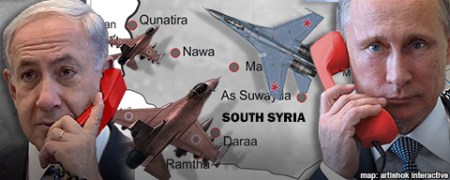
Fatah Spokesman Osama Qawasmeh: The West Sponsors Islamic Extremism; 9/11 Was No Coincidence, MEMRI-TV via You Tube, April 11, 2016

The blurb following the video states,

In an interview, broadcast by the Palestinian Authority’s official TV channel, Fatah spokesman Osama Qawasmeh talked about the situation in Syria, and said that “it was the [Americans] who worked to create Islamic extremism,” adding that “they are indoctrinated with certain notions, and leaders created in the West and in Israel are planted in their midst.” Qawasmeh further said that the timing of 9/11 was “no coincidence”: it pushed the Palestinian cause to the sidelines in the international media. The interview aired on April 5, 2016.


Palestinians: Presidents for Life, No Elections

April 1, 2016

Palestinians: Presidents for Life, No Elections, Gatestone InstituteKhaled Abu Toameh, April 1, 2016

♦ We hear often that Mahmoud Abbas is keen on having Palestinians vote in a democratic election. Yet Abbas turned 81 last week and appears ready to remain at the helm until his last day — free elections for Palestinians be damned. That makes sense: Hamas could easily best Abbas in such an election.

♦ Hamas and Abbas’s Fatah are still far from achieving any form of reconciliation. This, despite all the talk about “progress” that has been reportedly achieved in talks between the two parties taking place in Doha, Qatar.

♦ Hamas is also cracking down on journalists, academics, unionists and even lawyers in the Gaza Strip.

♦ Yet Abbas’s West Bank rivals Hamas in Gaza, in terms of a lack of human rights and freedom of speech. The idea of free and democratic elections there is a joke. Abbas will leave a legacy of chaos.

Best birthday wishes to Palestinian Authority (PA) President Mahmoud Abbas, who turned 81 last week. The octogenarian appears ready to remain at the helm until his last day — free elections for Palestinians be damned.

Abbas has inherited a tradition of tyranny. His predecessor, Yasser Arafat, was also president for life. Both have plenty of company, joining a long list of African presidents who earned the notorious title of “President for Life” – in Uganda, Equatorial Guinea, Angola, Zimbabwe, Sudan, Chad, Eritrea and Gambia. And let us not forget the Arab dictators in these ranks.

One might hope for at least a deputy — someone to fill the impending and inevitable power vacuum in the PA. Not likely.

Abbas has fiercely resisted demands from leaders of his ruling Fatah faction to name a deputy president or a successor. His reasoning: the time is not “appropriate” for such a move. Palestinians should instead concentrate their energies on rallying international support for a Palestinian state.

The PA president acquired his “private fiefdom,” as it is called by his detractors, in a January 2005 election, when Abbas was given a four-year mandate.

Such mandate seems to have been rewritten by the standing president. January 2016 marked the beginning of the eleventh year of Abbas’s four-year term in office. But it is business as usual in Ramallah.

We hear on a monthly basis that Abbas is keen on having Palestinians cast their ballots in a free and democratic vote. Yet we have seen no evidence to this effect. That make sense: Hamas could easily best Abbas in such an election. Despite his advancing age, Abbas still has clear memories of January 2006, when Hamas was permitted to run in the parliamentary election and won.

Abbas is also acutely aware that Hamas, which holds hostage nearly two million Palestinians in the Gaza Strip, would never allow a free vote there — especially for Abbas loyalists who have been seeking to undermine its rule.

Just a few days ago, a Hamas “military” court in the Gaza Strip sentenced two senior Palestinian Authority security officers, Sami Nisman and Naim Abu Ful, to 15 and 12 years in prison respectively, on charges of spying for the Palestinian Authority and plotting terror attacks against Hamas targets.

The verdicts are yet another sign that Hamas and Abbas’s Fatah are still far from achieving any form of reconciliation. This, despite all the talk about “progress” that has been reportedly achieved in talks between the two parties. Unconfirmed reports earlier this week leaked details of sticking points between Hamas and Fatah negotiators, have been meeting in Doha, Qatar, under the auspices of the Gulf state, towards forming a new unity government and holding new presidential and parliamentary elections. Qatar is the largest source of funds for the Muslim Brotherhood and its offshoot, Hamas.

Abbas’s fear of holding elections in the Gaza Strip is not without justification. In addition to the crackdown on his loyalists and security officers there, Hamas is also cracking down on journalists, academics, unionists and even lawyers.

Last week, Hamas security forces raided the offices of the Palestinian Bar Association in Gaza City and confiscated computers. The raid came as a result of the controversy surrounding the Bar Association not submitting lawyers’ financial and administrative records, in addition to complaints filed by some lawyers against the Bar Association, according to a statement released by the Palestinian Center for Human Rights (PCHR). The raid, some Palestinians claim, is in the context of Hamas’s effort to crack down on lawyers who are affiliated with the rival Fatah faction.

Yet Abbas’s West Bank rivals Hamas in Gaza, in terms of a lack of human rights and freedom of speech. The president’s security forces are in the midst of a massive and ongoing crackdown on political opponents of all stripes, making the idea of free and democratic elections there a joke. Abbas cannot tolerate the idea of having a deputy: how would he consider the establishment of a new party or the emergence of a potential candidate for the presidency.

Senior figures who have dared to challenge Abbas’s autocratic rule have already found themselves targeted by the president and his men. Ask former Prime Minister Salam Fayyad, who had his organization’s bank accounts seized by Abbas, or Mohamed Dahlan, the former Fatah commander and minister who was forced to flee the Palestinian territories after falling out with Abbas and his sons. Perhaps deposed PLO Secretary-General Yasser Abed Rabbo, who overnight was stripped of his powers and thrown to the dogs for speaking out against the president, would have a word to say. In Ramallah, they call them the “Abbas victims.”

909Palestinian Authority President Mahmoud Abbas (left), who turned 81 last week, has fiercely resisted demands from leaders of his ruling Fatah faction to name a deputy president or a successor. Senior figures who have dared to challenge Abbas’s autocratic rule have been targeted by the president — such as Mohamed Dahlan (right), the former Fatah commander and minister who was forced to flee the Palestinian territories after falling out with Abbas and his sons. (Image sources: U.S. State Dept., M. Dahlan Office)

We would need a crystal ball to know what will happen the day after Abbas disappears from the scene. Perhaps, say some, we shall witness a scene reminiscent of the old days of the Soviet Union “Politburo,” with the next president chosen by a group of Fatah and PLO leaders who will meet in Ramallah. This seems the most likely scenario, in the absence of any chance of free and democratic elections, and in light of the continued split between the two Palestinian entities in the West Bank and Gaza Strip.

We do not need a crystal ball, however, to know that Abbas will leave a legacy of chaos. His adamant refusal to name a deputy or even discuss the issue of succession in public has already created tensions among the top brass of the PLO and Fatah. The Palestinian public, for its part, has precious little confidence in its leaders.

The behind-the-scenes power struggle that has been quietly raging in Ramallah for the past few months is likely to lead to a state of paralysis in the Palestinian arena and leave the Palestinians without an acceptable leader. Or, as senior Fatah official Tawfik Tirawi put it, Abbas will be the last president for the Palestinians.

Palestinians are plagued with leaders who desire one thing: personal power. The Palestinians are marching away from achieving a state, partly because they seem incapable of the fundamental political principle of free and democratic elections. The day after does not look promising.

Fatah Official Jamal Muhaisen: The U.S. Is No. 1 Enemy of the Palestinians and Arab-Islamic Nation

March 31, 2016

Fatah Official Jamal Muhaisen: The U.S. Is No. 1 Enemy of the Palestinians and Arab-Islamic Nation, MEMRI TV via You Tube, March 31, 2016